Cactus Fruit: How To Cut, Health Benefits, Tips, And Risks

Disclaimer: The author is not a medical doctor or veterinarian. The information presented is purely to share our experience and for entertainment purposes. As always, check with a doctor and/or veterinarian before making any health or nutrition decisions and consult with a doctor and/or veterinarian regarding any question or problem that you have. The author and blog disclaim liability for any damage, mishap, or injury that may occur from engaging in any activities or ideas from this site.

Cactus fruit is a staple produce item for many people in Mexico, especially during the summer when the fruit is at its most ripe. The fruit is widely available across Mexico as it grows wild, on plantations for mass production, and can even be grown at home.

What is cactus fruit? How to cut and eat cactus fruit? Cactus fruit refers to the fruit that grows on the prickly pear cactus, often called tunas. The fruit can be eaten after using a knife to score and then remove the skin. The fruit may be cut into chunks and eaten raw or is used as a key ingredient in many dishes and beverages.

The popularity of cactus fruit is growing outside of Mexico because of its delicious natural flavors, versatility, and health benefits. You may have heard of cactus fruit referred to as prickly pear or tuna fruit. If you do not know much about the fruit, how to eat it, or what to use it in this article will give you all you need to know.

All About the Prickly Pear and Its Fruit

A prickly pear cactus.
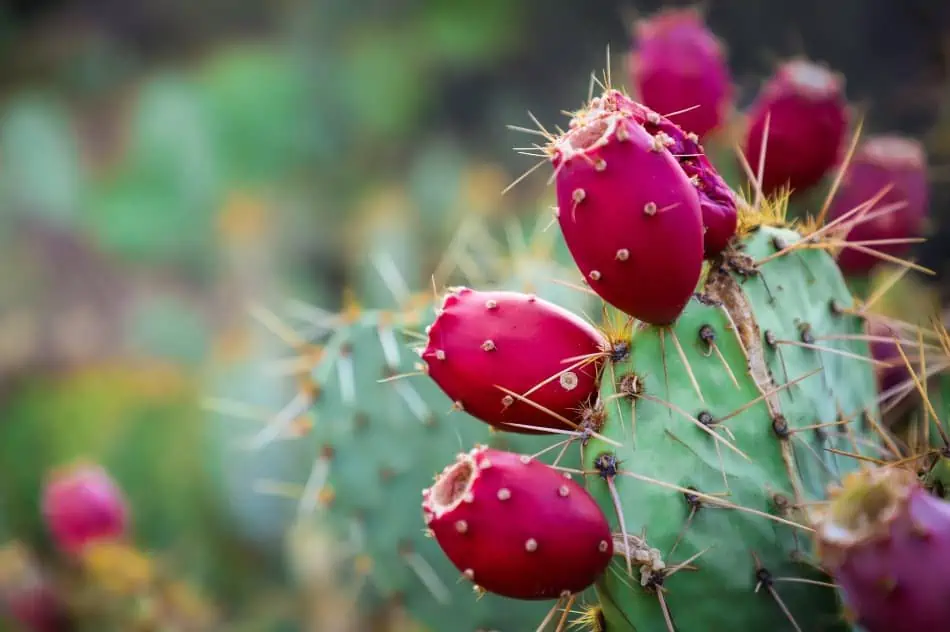
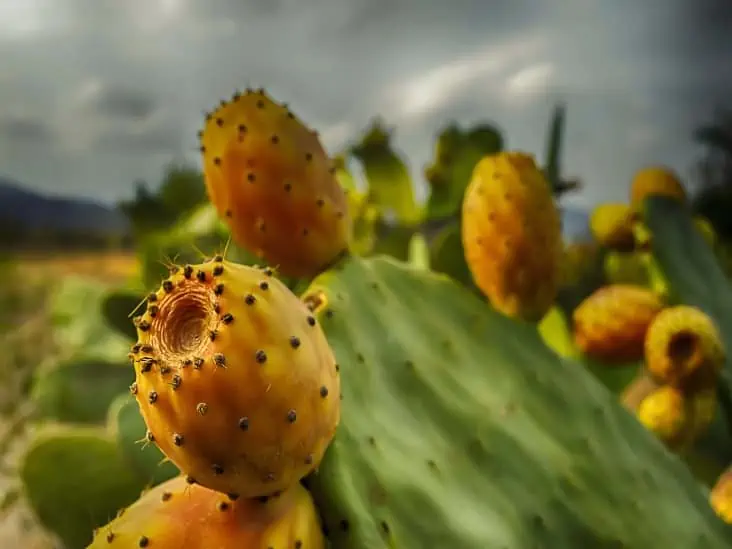
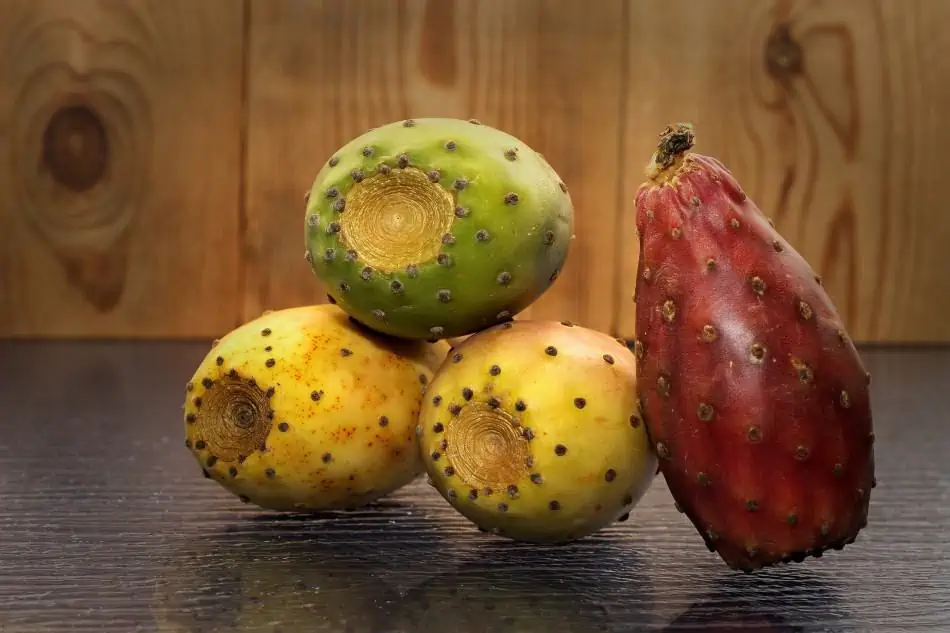
Prickly pear cactus bears fruit that might have yellowish-orange, green, or dark pinkish color.

Prickly pear cacti have flat, thick pads that look like large leaves, but actually function more like branches or stems to the plant. The pads are responsible for water storage, photosynthesis, and flower production. These pads are also known as nopales. Nopales are edible and often sold in stores under the name nopalito.

The fruits of prickly pears, more commonly known and sold in stores as tunas, vary based on the species of prickly pear. The cactus fruit will vary in size, with the largest varieties comparable to the size of a kiwi. The cactus fruit is round, with some varieties being longer and others more spherical. The color of cactus fruit can vary from shades of yellow, green, and deep magenta. The sweetness of the cactus fruit will depend largely on the color of its skin.

Yellow-green cactus fruits are the less sweet variety, but they are most popular in Mexico. In contrast, the deep magenta cactus fruits are very sweet; they are compared to bubblegum or syrup by some.

On both the cactus fruit and cactus pads are glochids, tiny, barbed spines. These spines can be difficult to see, making them extra bothersome if one is to stick to your skin. Glochids need to be removed entirely before consuming the cactus fruit, which will be explained further in the article!

Where Can You Get Cactus Fruit?

Cactus fruits can be store-bought or, depending on where you live, harvested fresh off the prickly pear cactus. Keep reading to know what to keep in mind while picking your cactus fruit!

Picking Cactus Fruit

A gloves.
To protect your hands from glochids and spines, wear safety gloves while handling cactus fruit.

For safety, protecting your hands is very important while picking cactus fruit. Because of spines on the cactus pads, and glochids on both the fruit and pads, you will not want to touch the cactus or its fruit with your bare hands.

To protect your hands, you can use:

  • Thick, protective gloves
  • A thick towel or cloth
  • A pair of long tongs

You will also need a durable bag or basket to safely hold the fruit until you get the chance to remove the glochids later.

No cactus fruit is poisonous, so all are safe to pick, but some will be better tasting and for cooking than others. You will want to look for the darker-skinned, sweeter fruits. Fruits of lighter color are less ripe and will taste less sweet. However, check darker fruits for any wrinkling or bruising that may suggest they are over-ripe. To pick the fruit off the plant, just grip and twist the fruit. Ripe fruits should come off without much force.

Store-Bought Cactus Fruit
A cactus fruit.
If you do not want to waste time and energy on removing glochids, you can purchase the fruit in the store.

Store-bought cactus fruit will usually have the glochids removed before being put on the shelves. This makes picking up the cactus fruit at a store a convenient option. 

When shopping in your store’s produce section, you will want to be mindful of the color of the cactus fruit to get the sweetness you are looking for. Also, look out for any bruising that may have been caused by damage to the fruit during shipping or any wrinkling that may suggest the cactus fruit is overripe.

How to Remove the Glochids

A potato peeler, tape, glue and flame.
You can use household items to remove glochids from cactus fruit: potato peeler, flame, non-toxic glue, or tape.

Luckily, the skin of cactus fruit is not eaten. With the skin removed, it is highly unlikely any glochids would ever be consumed. Still, you will want to be very careful that there are no glochids on the fruit before you begin handling it.

Removing glochids is essential if you picked cactus fruit yourself. Again, store brought fruit is, in most cases, safe to handle already. Remember to pay attention to the tops and bottoms of the fruit, because the glochids are often more closely clustered there.

There are a few ways to go about removing the glochids. Pick one that is most convenient for you and what you have handy in your kitchen!

  1. A Potato Peeler. With thick gloves and a potato peeler, you can remove the glochids by cutting them off with the potato peeler.
  1. An Open Flame. A flame will singe off any glochids. You can take advantage of this by using a small flame and a long pair of tongs to hold the cactus fruit over it. Rotate the fruit carefully as not to burn the skin. Continue until all the glochids are removed.

The spots where the glochids are clustered and growing from getting darker when they have fallen off. Do not worry if you hear popping noises or see little sparks from the fruit as the glochids are coming off.

  1. Non-Toxic Elmer’s Glue. This method will use the stickiness of the glue to pluck the glochids off the fruit. Again, while using gloves, apply a thin layer of glue over the surface of the fruit. It may be helpful to use a small brush to apply the glue, as you cannot smooth the glue out with your hands. When the glue is visibly dry, peel it back gently, lifting the glochids from the cactus fruit’s skin.
  1. Tape. If you do not have glue, you can follow the same process using tape that has a non-toxic adhesive. Just secure the tape on to the fruit’s skin and gently peel back, removing the glochids.

Helpful Tip: If any glochids, especially the hard to see ones, do latch on to you, you can use the glue or tape method to remove them from the skin as well!

How to Thoroughly Wash Cactus Fruit
A person washing his hands.
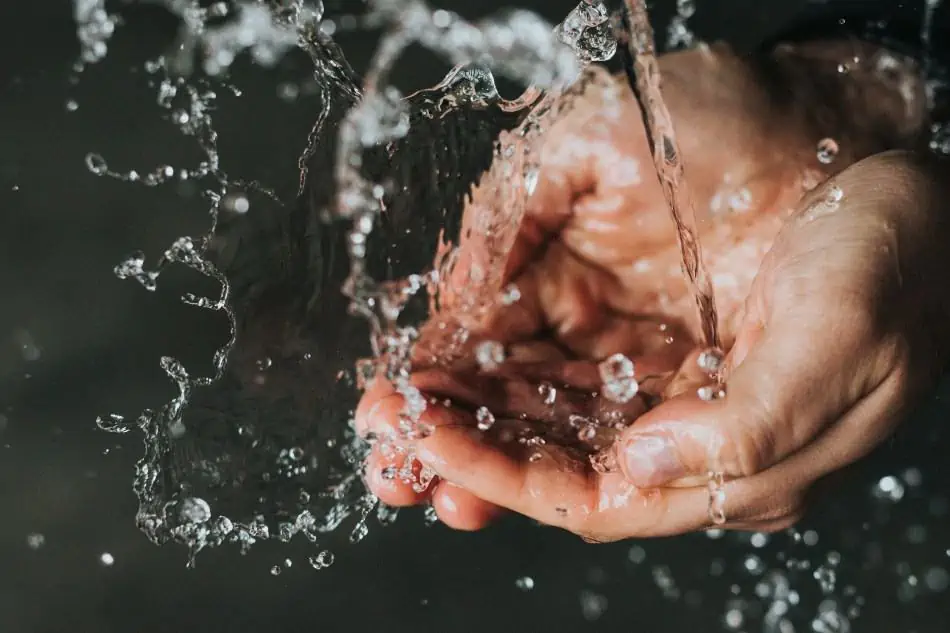
Before consuming cactus fruit, it is crucial to thoroughly wash it and remove remaining glochids.

Washing the cactus fruit is important as is washing any fruit, but also because washing will further remove any of the finer, hard to see glochids.

If you picked your cactus fruit, you will want to make sure it is clean after coming in from outside. If you bought your cactus fruit you will want to make sure it is cleaned thoroughly after any shipping and handling and can ensure any glochids missed in large scale removal are washed away.

  1. Use a colander and place enough cactus fruit to fill only roughly halfway, the exact amount will vary with the size of your colander and cactus fruits.
  2. Rinse under cold water, gently swirling around the cactus fruit in the colander for at least thirty seconds to a minute. You can add fruit and vegetable wash to this step if you wish. Be careful to be abrasive enough that they are all moved around and rinsed thoroughly, but without bruising the fruit.
  3. When finished, lay out to dry or carefully pat dry.

How To Cut Cactus Fruit and Remove the Skin

A cactus fruit.
After getting rid of all glochids, you should cut the cactus fruit and remove the two layers.

Once your glochids are thoroughly removed, and the fruit is clean, you are ready to cut into it! Cutting a cactus fruit will mainly serve to remove the skin, revealing the delicious pear-shaped fruit inside.

The skin of the cactus fruit has two layers to it. This is important to know, so you are sure to remove the skin thoroughly. There is the thin outer layer of skin and attached to that is a thicker, softer layer around the fruit as well. The underneath layer may seem like part of the fruit as it has a pulp-like consistency, but it should be noticeably different than the fruit underneath, and it is attached to the outer layer, so it should easily peel off it with it.

  1. Start by slicing off the end of the fruit. Remove about a quarter of an inch off each end.
  2. Make four lengthwise slices in the skin from top to bottom. The slices should cut through the tough outer skin and the pulpy layer of skin underneath too.
  3. Now your skin should be divided into four sections. Starting from the top peel back each section one by one.

Once you have the cactus fruit peeled, how you eat it is up to you! Eating the fruit raw is very common. To do so, you can simply cut the fruit in half lengthwise and eat it with your hands, or you can enjoy it by chopping the fruit into cubes or slices.

When you cut open the cactus fruit, you will see that the center has small, round seeds. These seeds are tough and cannot be bitten through but are safe to consume. It is a personal preference if you choose to remove the seeds by scooping them out or spitting them out while eating or to eat the fruit and seeds in entirety simply. 

Health Benefits of Cactus Fruit

A person measuring her waist line.
Cactus fruit is a nutrient promoting weight loss, decreasing blood sugar levels, and improving digestion.

Like any other fruit, cactus fruit can be a healthy and nutritious part of any diet. Choosemyplate.gov recommends 2 cups of fruit a day for most women and men. Cactus fruit is a great way to get your daily fruit intake up!

Cactus fruit has many health benefits:

  • Cactus fruit is micronutrient dense.

Like all fruits, cactus fruit contains essential micronutrients. The cactus fruit is a source of iron, magnesium, vitamin C, potassium, calcium, and vitamin B6. Vitamin C and magnesium have the highest percentage values in a serving of cactus fruit.

  • Cactus fruit is a great weight-loss food.

As a food low in calories, but high in micronutrients, cactus fruit is a great choice for those looking to lose weight or maintain a healthy weight. The fiber found in the cactus fruit keeps people fuller for longer, a helpful component to weight loss.

  • Cactus fruit can improve digestion.

High levels of fiber and anti-inflammatory properties make the cactus fruit a great way to support proper digestion. The fruit can help food move along the digestive tract and be digested efficiently.

  • Cactus fruit is good for heart health.

The cactus fruit is a great source of fiber, which is why the fruit has been associated with lowering cholesterol. Soluble fiber may help lower total blood cholesterol levels and provide other heart benefits as well. (Source:mayoclinic.org)

  • Cactus fruit can decrease blood sugar levels.

Cactus fruit has been shown to decrease blood sugar levels, making this fruit a helpful dietary component for many people with diabetes. (Source:webmd.com)

Cosmetic Uses of Cactus Fruit

An oil being applied on the skin.
Olives derived from prickly pear are rich in vitamin E and can be used as a skincare product.

Just as the prickly pear cactus has an array of positive health effects when eaten, it can be a powerful ingredient in cosmetic products. Specifically, the oil derived from seeds found in the prickly pear cactus have become a major ingredient in many skincare products.

Prickly pear seed oil is high in vitamin E.  The oil has been found to have three times the vitamin E found in argan oil. (Source: munskin.com) Along with vitamin E the oil contains lower concentrations of other essential fatty acids, antioxidants, and vitamin K.

Prickly pear seed oil benefits the skin by reducing the appearance of fine lines, preventing the formation of wrinkles prematurely, brightening dark under-eye circles and reducing hyperpigmentation. Some find that the prickly pear oil’s antiinflammation properties can be of help to those who suffer from rosacea as well. (Source: victoriahealth.com)

Using prickly pear seed oil protects the skin’s barrier and increases moisture. The moisturizing properties of prickly pear seed oil can also benefit dry, damaged hair or dry, brittle nails, and cuticles.

The oil from prickly pear seeds in light and absorbs quickly when used. Unfortunately, prickly pear seed oil is among the costliest of beauty oils available. The price tag reflects the large amount of seeds that are required to exact even just an ounce of the oil.

Possible Side Effects and Risks

While cactus fruit has many potential health benefits, you should exercise caution introducing any new food into your diet, and the fruit is no exception.

Some side effects of eating prickly pear can include:

  • Nausea
  • Diarrhea
  • Increased stool volume and/or frequency
  • Headaches

When eating cactus fruit, be sure to practice healthy portions and proper washing for the safest possible experience. If you are pregnant, breastfeeding, or on any medication ask your doctor if cactus fruit is a safe addition to your diet and discuss possible consequences.

Ways to Eat Cactus Fruit

Cactus fruits on deserts, salads, and sweetener.
Cactus fruit can be used as a primary ingredient in salads, sorbet, syrup, jam, or gummy candy.

While cactus fruit is great when eaten raw, it can also make a great key ingredient in many delicious recipes. The sweet flavor of cactus fruit can be used in many different recipes and treat, ranging from simple to more complex. Here are a few ideas on how to use your cactus fruits in a new way!

  1. Add Cactus Fruit to Salad. Whether adding it into a fruit salad or as a sweet note in a savory salad, the cactus fruit mixes well with other fresh flavors. Adding cactus fruit to a salad brings in a kick of sweetness and pop of color to the dish.
  2. Fruit Jam. Cactus fruit can be a great base for a beautifully bright jam. The jam will store well and be a versatile item to have around the kitchen, going great with toast, on yogurt, in pastries, and more!
  3. Cactus Fruit Sorbet. A perfect summer treat to cool down with can be a scoop of sweet and brightly colored cactus fruit sorbet. Simply substitute cactus fruit, the main ingredient in your favorite sorbet recipe. You can even save from fresh cactus fruit to throw on top!
  4. Cactus Fruit Gummy Candy. The sweet taste of cactus fruit is reminiscent of candy naturally. By combining the fruit with pectin, added sugar, and optional ingredients, you can make your own gummy candy from the cactus fruit!
  5. Cactus Fruit Simple Syrup. By cooking prickly pear fruit down in a simple syrup recipe, you can create a fruity syrup that is perfect for adding to drinks or topping ice cream.

Drinks Made with Cactus Fruit

Drinks made from cactus fruits.
Cactus fruit can be used to make different drinks, including lemonade, aguas frescas, margaritas, and sangria.

Prickly pear syrup and juice are also commonly used to add flavor and sweetest to drink. Whether you prefer non-alcoholic options or want to add a boozy kick with the cactus fruit flavor, there is a drink option for everyone to try and enjoy.

Prickly pear juice or syrup are commonly added to:

  • Lemonade. The sweet flavor of the cactus fruit combines with the tartness of lemon to make a perfect balance of flavors. The combination is a mix of refreshing summery flavors everyone can enjoy.
  • Aguas Frescas. Aguas frescas, meaning cool waters, are non-alcoholic drinks made by mixing fruit juices, sugar or honey, and water. Cactus fruits are a perfect compliment to these sweet refreshments.
  • Margaritas. The sweetness of cactus fruit syrup pairs great with the sourness from lime juice and adds a pop of bright pink color that will surely make your margaritas stand out!
  • Sangria. Adding cubes of cactus fruit to this fruity drink only makes sense! You can add cactus fruit to your favorite sangria recipe or find a new recipe made just to compliment the fruit’s flavor. Popular ingredients in a cactus fruit sangria are white wine, citrus, and even mint leaves.

Different Types of Prickly Pear Cactus Fruit

As mentioned earlier, there are many species of prickly pear cactus, which is where the variation in fruit size, color, and taste comes from.

  • Indian Fig Prickly Pear. This is the most commonly known and consumed species of the prickly pear cactus. The fruits of this cactus vary in color yellow, to shades of pink and red. The fruits are very sweet and commonly used to make cactus fruit flavored candies, jellies, or drinks.
  • Spineless Prickly Pears. While this species does not have sharp spines, the glochids are still present on the cactus pads and fruits. This variety is very similar to the Indian fig prickly pear. Spineless prickly pears bear sweet fruit with flavor that is compared to kiwi. The fruits of this prickly pear cactus are smaller in size than most and contain smaller seeds than other varieties.
  • Purple Prickly Pear. These prickly pears are recognized for a beautiful, light purple hue on the pads. Cooler temperatures, drought, and other stresses on the plant will bring out the blue hue more significantly. The fruits of this prickly pear cactus are mildly sweet in taste.
  • Naranjona. Naranjona is a type of cactus fruit with a honey-sweet flavor that has a subtle spice to it. The texture is especially smooth. These cactus fruits are round and orange in color, which is where they get their name from. Naranja is the Spanish word for orange.
  • Juana. Juana cactus fruit, also called roja, are a notably tart variety. The juana cactus fruit is round and with purple and reddish toned skin. The seeds are this fruit are chewier than other varieties, making it preferable to some people who enjoy eating the raw fruit and seeds.
  • Xoconostle. This species of cactus fruit is very sour and best when used in cooking as opposed to being eaten fresh. This species is also unique in that it has an edible peel, which is sour as well. This cactus fruit may be used in sauces and as a spice. Xoconostle cactus fruit is small and a light yellowish green in color.

If you are interested in the fruit of the prickly pear cactus, knowing a bit about the different types can be helpful knowledge. Likewise, if you are following a recipe which uses prickly pear, be sure to get the suggested species or that the species you use compliments the recipe you are making.

Cooking the Pads of the Prickly Pear Cactus
A prickly pear cactus bearing fruits.
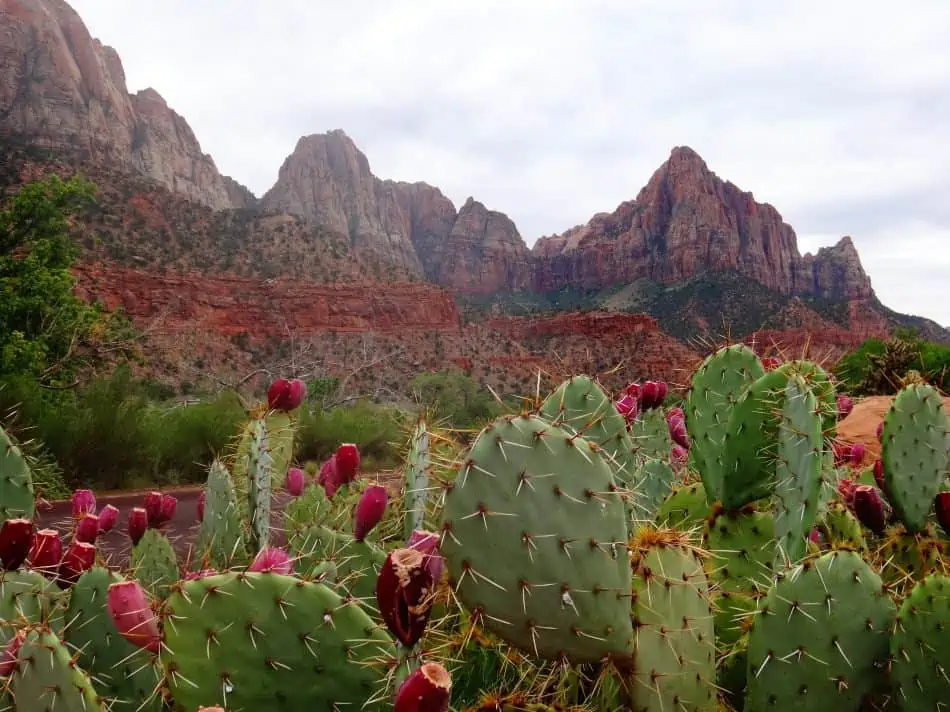
Prickly pear pads can be used as a food ingredient. Nopales is a Mexican dish incorporating these cactus pads.

Just as the fruits of the prickly pear cactus are edible and commonly incorporated into Mexican cuisine, so are the pads of the cactus. As mentioned, they are sold as nopales or nopatilos and are eaten like a vegetable. The pads are thick and fleshy; some may even describe them as appearing slimy before being cooked.

When they are cooked, the flavor of nopales is comparable to green beans. For cooking, nopales are sold whole or can be found cut into strips or cubes for convenience.

Nopales can be cooked in a variety of ways:

  • Boiling Nopale. Boiling nopales may require multiple changes of water, because the sap in the pads is very thick and gets released during boiling. Once the nopale is soft and finished boiling, rinse the pads in cold water to remove any sap that may have been in the last batch of water.
  • Grilling Nopale. Grilled nopale is tender and should have slightly browned skin.
  • Sautéing Nopale. Sautéed nopale will be similar to grilled with a tender texture and browning on the skin.  
  • Steaming Nopale. Another method of cooking nopale is steaming. This will make the skin and insider texture entirely tender.

Once cooked nopales are very versatile and useful in a wide variety of dishes. Common ways of eating nopales include:

  • Tossing into salads
  • Cooking into stews and soups
  • Adding into omelets
  • Baked into breads
  • As a side serving of vegetables
  • Soaking the noaples in brine and using it as a condiment

Conclusion

Cacti are an intriguing group of plants that are unique in their appearance and resilience in tough terrain. Among cacti, the prickly pear cactus stands out on its own. With all of the uses and benefits from the plant’s fruit and pads, it is no wonder the little plant with a spiky, tough exterior is so widely consumed and enjoyed.

Interest in the cactus fruit is widely growing. Research continues to strengthen the relationship of cactus fruit consumption to health benefits, to the point some are beginning to argue it deserves the title of superfood. The cosmetic industry is just learning of its powerful cosmetic effects and finding new ways to incorporate the prickly pear’s seed oil into beneficial products for consumers.

A peeled prickly peared cactus fruit.
Research continues to strengthen the relationship of cactus fruit consumption to health benefits, to the point some are beginning to argue it deserves the title of superfood.

And of course, the traditional Mexican recipes of cactus fruit and the raw, natural flavor of the fruit are being enjoyed by more and more people. Likewise, those just discovering the fruit are sure to get creative and cultivate new, delicious recipes with it.

Whatever way you come to hear of cactus fruit, you now know what this little fruit is all about, and that it is more than just a passing fad on the market. Share your favorite way of eating or preparing cactus fruit with us below. We’d love to try it out!
How to Water Cactus: The Ultimate Guide

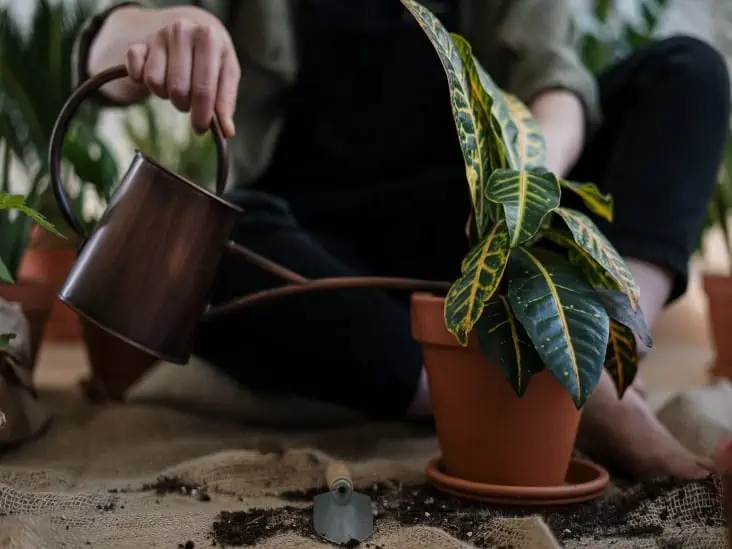
Cacti and succulents can be a gardener’s best friend. They are easy, low maintenance, and can grow just about anywhere, indoors or out. Some might say they require no care at all.  But those folks would be wrong. Just like any other plant, cacti and succulents do require care. It is just a different kind of care than many traditional plants you are accustomed to.

How do you water a cactus?  Saturate the soil, then allow it to fully dry out before watering again. In landscape, for desert cacti, you want a dry depth of 2” or more, depending on cactus size. For indoor potted cacti, a dry depth of at least 1½” to 2” is best. Good drainage is key to avoiding root rot.

There is an old joke… how do you water a cactus?  VERY carefully! Though that is true, there is a lot more involved than wearing chain mail gloves and standing 6’ away. Issues include where is the cactus located, what season is it, what kind of cactus or succulent do you have, what type of soil are you using, what is the ambient temperature and on and on and on?  Each answer can play a role in “how to water cactus.”

Cactus or Succulent?

A top view of different kinds of succulents and cactus,
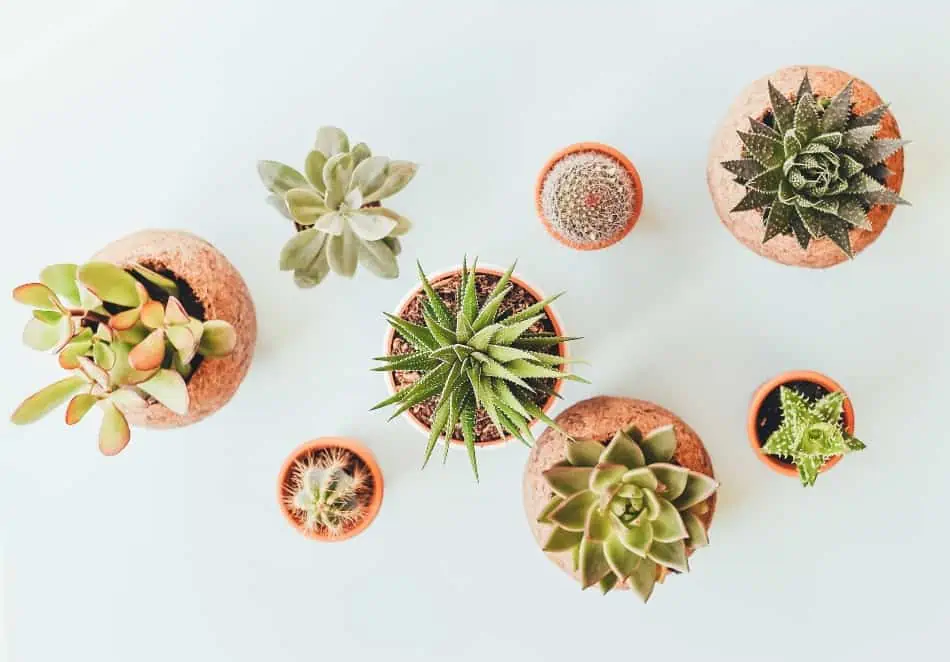
To know how to properly water your plant, you should first identify if it is a cactus or other type of succulent

First, not everyone knows if they have a cactus or a succulent. These are different, but related plants. A cactus is a type of succulent, but not all succulents are cacti.  With me so far? An example might help. A Prickly Pear or Saguaro is a cactus. Aloe Vera is not a cactus, but it is a succulent.

In this context, a succulent is defined by Cambridge Dictionary as “a plant such as a cactus in which the leaves and stem are thick and can store a lot of water.” On the other hand, a cactus is defined as “any of a type of plant that grows in the desert, having thick stems for storing water and usually spines”. There are more than 1,750 different cactus species throughout the world.

In a true cactus, the base or “stem” is extremely thick and almost tree-like in some species.  The “spines” or “thorns” are actually modified leaves, that help reduce moisture loss by being tightly furled. Like more traditional plants, cacti have stomata to exchange oxygen and carbon dioxide with their environment. However, in cacti, the stomata are located in the base or trunk, rather than the leaves.

A cactus stores water in its trunk/stem. In some species, you can actually see the plant change in size and shape before and after thorough watering.  The barrel cactus and the saguaro cactus are both good examples of that. Pad-type cacti, like the prickly pear for example, also store water in their pads.

There is an incorrect assumption that cacti (the plural of cactus) do not need water, or at least not much. Not accurate. Cacti are much better at storing water than other plants, but that does not reduce their need for water.

Cacti are simply very drought resistant. Their natural environment is the desert, where water comes and goes intermittently. When there is good access to water, the base will expand or the “pads” will expand, depending on species.

If you have ever cut into a cactus or a succulent, you know the interior is a wet, juicy, pulpy material. This is how the water is stored. As water is needed, the cactus can pull it from the pulp and use it in normal cellular functions.

Additionally, during dry time or drought conditions, most cacti can go into an almost suspended state. Growth is greatly reduced or stopped until conditions improve.

Succulents, overall, also need less frequent watering than cactus because they also are able to store water in their fleshy areas. Unlike cacti, succulents lack substantial spines or thorns as a prominent feature.

Location and Soil Type

Now that we’ve identified if you have a cactus or a succulent, the next thing to note is where is your plant located and what type of soil does it have?

Indoors

A cactus near the window.
You can always monitor and modify soil type, heat, humidity, and sunlight for indoor cacti.

If your cactus is indoors, planted in a pot, you are able to control external variables like heat, humidity and sunlight. The most important thing to note, in this event, is what type of soil is in your container? Cacti, and succulents in general, prefer soils that drain or percolate very well.  The worst thing you can do to your spiny little friend is to put him in some peat moss and keep him damp all the time.

Cacti do best in loose, porous, pebbly or sandy soil materials.  They require good aeration and, as noted, plenty of drainage. Their root systems are specialized to live within these harsh conditions. 

  • First, they are covered with a cork-like outer layer, that helps reduce water loss to the soil itself.
  • Second, they have an extensive shallow root system that acts almost web-like to catch as much water as possible when it is available. New roots form quickly when water is available.
  • Third, cacti are able to dehydrate new root growth when the soil begins to dry. This leaves small air pockets in the soil, preventing any water from seeping back out of the root system.

Living in a pot in your home, you need to keep this root system in mind. Make certain your pot is more than adequate to allow for good root growth. Remember, we’re talking lateral growth, not vertical. With controlled environments, most cacti will not need to be watered more than every 10 days, or so. The biggest risk you have with this situation is overwatering the little guy and causing “root rot”.

Cactus roots are simply not designed to sit in a wet environment. You need to water very thoroughly, then allow the soil to completely dry out before another watering occurs. Check soil depths as far down as 2” to make sure they are fully dried before you water again. Do not “mist” your cactus. It does no good, whatsoever.

Outdoors

A matured cactus.
You can take proper care of outdoor cacti by thorough observations.

I live in Arizona. We get less than 9” of rain annually. However, over 2/3 of that comes in a 2-month timeframe.  We call them the “monsoons”. A storm will build over the course of the day. In the afternoon, a torrential rain may occur. It can drop up to ½ inch or more in less than 30 minutes. Then, it’s gone.  These storms pop up in different locations and rain off and on throughout the entire southern third of the state in the months of July and August.

Beyond that….it’s dry as a bone. Seriously, the lead-in story on the news is when it rains. Cacti LOVE it! Most desert environments are comparable.  It is VERY hot and dry 9-10 months per year. Then, you have a short “wet” season, where the rains will torrent down. Flash flooding is common.  This is prime growth season for cacti.

Because deserts tend to have sandy soils, the water drenches the roots well, but does not linger. This wet/dry cycle is the key to good cactus water management. You need to mimic this watering cycle, as best possible. You need a good draining, loose type of soil. Do not go out and buy moisture-retaining mulches, this will just lead to root rot.

When the weather is hot, DRY, and sunny, you will water more frequently. If it is cooler, or you live in a humid area, your watering levels will decrease. Some species actually go dormant during the off-growing season. In that event, you may go months without needing to water, depending on the rainfall in your area.

If there is a lot of humidity, the ground will stay wet longer, reducing your watering frequency. Like an indoor plant, when you do water, you will want to saturate the soil, then allow it to fully dry out before watering again. With larger outdoor plants, you may need to check down as far as 6” to 8” to make certain that soil has dried.

What Type of Cactus Is It?

Regular, houseplant types of cacti generally come in two forms. The first is the “traditional” cactus. You know, spiny thorns, lives in the desert, grows in shapes likes paddles, balls and obelisks. 

The other form is the “forest” cacti. This type of cactus is native to wetter, more temperate areas. Like their name indicates, they are indigenous to temperature forests, and include tropical and subtropical regions. A good example is the Christmas cactus. As you can probably guess just from that information, these cacti have very different care needs, including watering.

Traditional or Desert Cacti

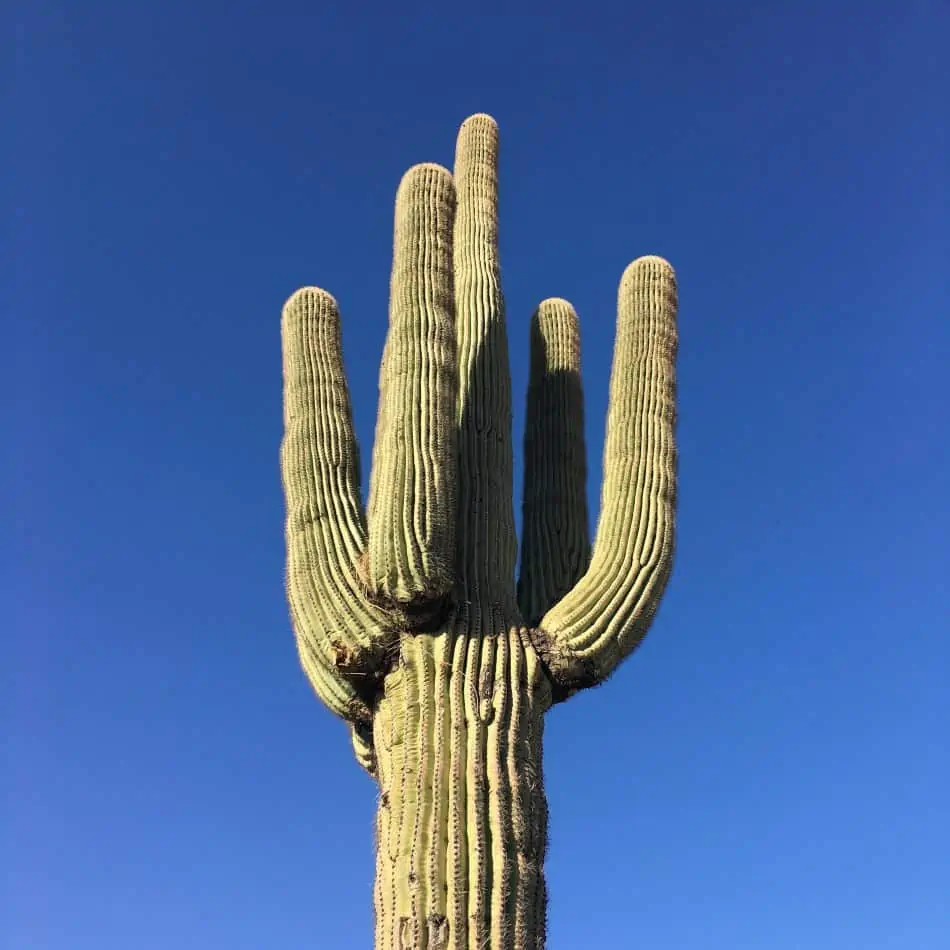
A Saguaro cactus.
Saguaro is one of the desert cacti, which prefers drained soil and temperatures from 55 to 55° to 80°F.

As we discussed earlier, traditional or desert cacti prefer well drained soil. If you’re using a commercial brand, make sure it has a high perlite content. For forest cacti, regular potting mix is fine.

Traditional or desert cacti prefer temperatures in the 55° to 80°F plus areas. During their growth season, traditional cacti will do much better in the warmer temperatures, but you will want to keep them cooler and protect from drafts during their rest periods. They are also not fond of a lot of humidity. If you live in a humid area or it is during your rainy season, the desert/traditional cacti water frequency needs to drop substantially.

Forest or Jungle Cacti

A Rhipsalis clavata.
Rhipsalis Clavata needs to be watered more often compared to desert cactus species.

Many forest cacti don’t really look much like cactus at all. They lack the spines or thorns we generally associate with cactus. They are usually either epiphytic, meaning they grow on trees or other organic materials or they are lithophytic, meaning they grow on rocks. Both get their water and nutrients from rain, dust, air, dead leaves, etc. Neither are parasitic, they simply utilize the other structures for support.

For obvious reasons, you will want your soil to mimic these conditions as closely as possible. Good soil materials include orchid bark, potting soil, pumice and oak leaf mold. It is important that the soil is loose, airy and provides extremely good drainage. Forest cacti are watered more like a regular houseplant than like a cactus. You will want to water it regularly during the summer months and especially when buds begin to appear.

During its resting period, you will water only when the soil is dry to the touch. Like other succulents and cacti, overwatering can result in root rot. Forest cacti have a temperature range comparable to desert cacti but will do well dropping to the 50s even during their growth season.

Unlike desert cacti, you will want to re-pot your forest cactus every 2-3 years. The best time to do so is after it has finished blooming. Providing fresh new soil mix at that time is a good idea.

With your forest or jungle cacti, you will want to water after the top 0.5cm (a little less than 1/4”) is dry. It the stem segments are shriveled, and the soil is dry, the plant is probably in need of water. Be careful, shriveled stem segments can also be a symptom of overwatering. The soil itself is the best gauge of watering frequency.

Other concerns that may affect your forest cacti include lighting and humidity levels.  A really great resource for forest cacti specifically is worldofsucculents.com.

Identifying your type of cactus may be as easy as reading the little tag in the pot when you buy it. If not, you may need to do some research.  There are some very good online sources for identification. My favorites include plantsam.com, cactiguide.com, and drought-smart-plants.com.

Watering Your Cacti

A person watering plants.
Knowing how to water different types of cacti is of enormous importance for their proper growth.

We’ve been addressing this question throughout our conversation, but I think it’s best if we pull it all together in one location. That way, we avoid any misunderstandings.

Watering Your Indoor Desert Cacti

Starting with indoor desert cacti. You will generally water these about every 10 days, or so. For the first month or two, there will be a little trial until you identify the best schedule for your cactus to thrive.

Thoroughly soak the soil. If your pot has a hole at the bottom, make sure the water is running through the hole.  Begin checking soil moisture about 7 days later. If you have a moisture guide, that makes it easy. If not, put your finger in the soil. You want to be dry at least 2” down.

If you aren’t sure if it’s dry or not, a telltale sign is the soil being cooler toward the top than it is lower, that temperature gradient is indicative of moisture. When you hit that magic 2” mark, it is time to water again. Over the course of a couple of watering cycles, you’ll establish how often to water. Remember, watering frequency will need to increase when it is hotter than normal indoors. If you have evaporative cooling, it will need to decrease based on the increased humidity in your home.

Watering Your Indoor Forest Cacti

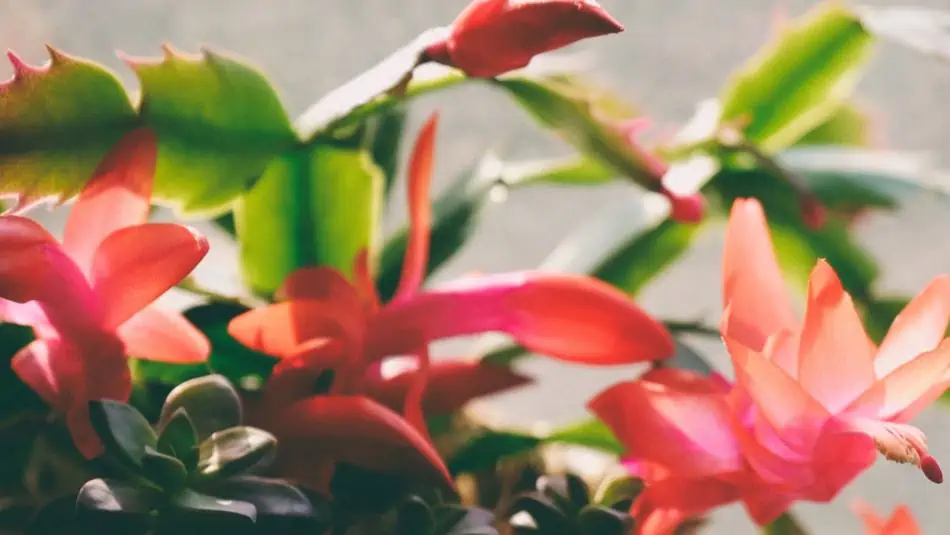
A christmas cactus.
Christmas cactus requires fully saturated soil that can drain through the hole at the bottom of the pot.

If you have indoor forest cacti, you want to fully saturate the soil. Again, if you have a pot with a hole at the bottom, make sure the water is running out the hole. If not, don’t be afraid to put some significant water on it.

Begin checking soil after 5 days. With forest cacti, you only need to be dry down about ¼”, rather than the 2” for desert cacti.

Some aficionados prefer to place a saucer of water under the pot and allow the cacti roots to pull the water up. This can work, but it is imperative the roots do not touch directly in the water, as that would lead to root rot. The safest way for your cactus is the soil down method.

There is no need to spritz or mist either type of cactus. They don’t get their moisture in this fashion, so it does absolutely no good, whatsoever.

Watering your Outdoor Forest Cacti

A watered cactus.
Outdoor forest cacti should be watered every 3 days during hot months and once a week during winter.

Honestly, most people keep forest cacti indoors, as they are a very decorative plant. However, that is not a requirement, so we should address the possibility here.  Most do not do well in direct sun, so please be sure you have planted in an appropriate location.

You will probably want to maintain this in a pot, rather than plant it directly in the ground. If that is true for your forest cacti, begin with the same instructions as indoor plants. Do not be surprised if you have to increase water frequency to less than once per week, however.

During the warmer, summer months, the watering frequency may increase to as often as every 3 days, depending on temperature, wind and humidity levels.

Watering Your Outdoor Desert Cacti

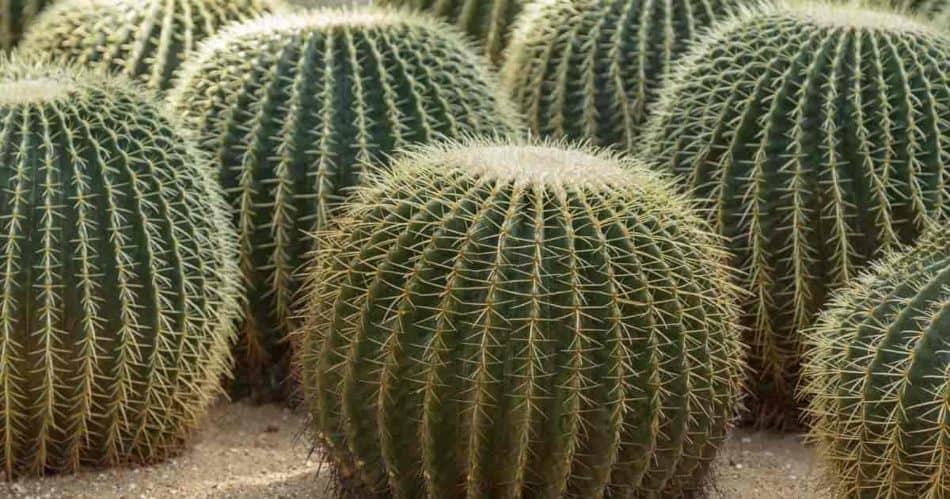
A matured golden barrel cactus.
Golden Barrel cactus needs to be watered considering the temperature, humidity level, and size.

Outdoor desert cacti are the trickiest of the bunch. So much is dependent on the temperature, humidity level, size of the plant and other variables. With smaller plants, less than 2’ high, the 2” depth margin for dry soil remains a good yardstick. However, if you have larger plants, like saguaro or good-sized prickly pear, you need to adjust accordingly.

Recommendations would be waiting to water until soil conditions are dry 3” down for plants 2’ to 4’ tall and dry down to 4” for plants taller than 4’. Regardless of height, you will want to saturate the soil thoroughly, remembering this must be good draining soil.

Overwatering = Root Rot

A different kinds of plants.
To prevent your cacti roots from rotting, you should never overwater them.

The biggest risk to your cacti, whether it is indoor or outdoor, desert or forest is the risk of overwatering. Remember how we talked about cactus roots being specialized to live in low-water environments? This specialization is what lead to problems with overwatering. When your cactus sits in too much water, the roots can’t handle it properly. The outer coating begins to break down and rot sets in.

Over time, you can actually see the rot occurring, as your base near the soil turns first mushy, then brown, then ultimately black and shriveled.  All hope is not lost! The sooner you identify the rot, the more likely you are to salvage the situation and save the plant.

Here are the steps to salvaging an indoor plant with root rot:

1.        Remove the entire cactus from the pot. You’ll probably want to use kitchen tongs or a comparable tool to do this. Place it gently on its side and remove as much dirt from the root system as you can without causing any further damage.

2.        Trim off any roots that are brown, black, smelly, or oozing.  The affected roots will be very obvious. It is recommended you use bypass pruners for this step. Dust the remaining roots with powdered sulfur and allow the plant to lay in the air, roots exposed for 1-7 days, to allow the cuts to scab over. Be sure to disinfect the pruners thoroughly before you put them away.

3.        Using a pot (terra cotta is best) slightly larger than the former pot the cactus was in, fill it about 2/3 full of commercial cactus potting mix. Place the cactus carefully in the pot, without bending any of the now brittle roots. Fan the feet across the soil. Continue filling the pot loosely with enough soil to bring the level back to where it was in the former pot.

4.        Wait about 2 weeks before watering the cactus deeply.  Then, begin your water regimen again, remember to check soil moisture levels carefully before re-watering.

Steps to salvage an outdoor (landscape) cactus with root rot are a little different:

1.        Mark the north side of the cactus with chalk before you begin to dig it up. It is important to keep the cactus oriented the same way when you re-plant. Uproot the cactus by cutting a circle around it with a shovel about 6” from the base. Be sure you use the shovel to lift it gently from the base area before lifting it from the ground.

2.        Using tongs for smaller cacti or a garden hose for larger ones, move the cactus into a wheelbarrow and transport to a shady area to assess the situation.

3.        Lay it on its side, with plastic sheeting underneath. Brush away as much loose dirt as possible to get a good view of those roots. Using pruning shears, remove any roots that are black, brown, soggy or smelly. Dust the remaining roots with powdered sulfur. Place a shade cover over the cactus and leave the roots exposed to air for at least 2 days to allow for scabbing over the cuts. Disinfect your pruners!!!

4.        While you wait for the scabs to form, we need to identify the problem. It is probably a drainage issue, so let’s dig a hole about a foot deep where you’re going to re-plant. Fill the hole with water and wait for it to drain. Then, fill it again. This second-time monitor how long it takes to drain. If you’re draining less than 2” per hour, you have some work to do.

5.        If we’ve identified a drainage issue in step 4, we’re going to address it here. Loosen the soil 18” to 24”. Add 2” of sand to the loosened soil and mix thoroughly. Test the drainage again by filling the hole and monitoring the drainage rate. If you have added more than 4” of sand with no improvement in drainage, you will need to prepare a large terra cotta pot full of commercial cactus mix to re-plant the pot in.

6.        To re-plant, carefully place with cactus in the hole you’ve prepared or the partially filled terra cotta pot. Remember to face the chalk mark north. Carefully spread the roots out on the soil, while being careful not to bend them. Fill in soil around the cactus until you’ve reached the area the soil was at prior to the rot occurring.

Withhold water for 2 weeks. Then water deeply. Allow soil to dry out to a depth of 2” to 3” before watering again. Monitor your water frequency closely and check soil moisture routinely prior to watering.

Final Thoughts

Though cacti and succulents are wonderful plants to grow both indoor and outdoor, lack of knowledge about their needs and requirements can be deadly. I’m not suggesting you need to go become a cacti expert if Aunt Edna gives you a nice little Christmas cactus, but I am saying your lack to understanding its needs can be detrimental.

If you want that gift to thrive, or even survive, first you need to know what you have and how to care for it. Remember, Christmas cactus and other forest-type cacti prefer indirect sunlight, moderate temperatures and moisture frequencies of around a week.  Let their soil dry out to a depth of at least ¼” before watering again.

A freshly watered christmas cactus.
Water requirements will fluctuate greatly throughout the year.

Water requirements will fluctuate primarily based on growing season, interior temperature and humidity. Desert cacti love direct sunlight, warm temperatures and low humidity. Remember to let their soil dry out to a depth of at least 1½ “ to 2” if they are in pots and 2” or more if they are landscaped, depending on size.

Water requirements will fluctuate greatly throughout the year. Primary variables will include temperature, sunlight, wind, humidity and growing season. Take care of your cactus or succulent and you can enjoy it for years.

Can You Cut Off A Piece Of Cactus And Plant It?

Overly active children, marauding cats, a careless bump, or an unexpected accident can easily knock a piece off your loved cactus plant. If such a thing ever happens to you, no need to worry because you don’t have to throw away the cut piece.

While the main plant can still survive even after losing part of its stem, it may seem wasteful to throw away the dislodged part and forget everything.

So, can you cut off a piece of cactus and plant it? The simple answer is yes. A significant number of cacti species can easily be propagated from cuttings. Some of the common cacti species usually propagated from cuttings include a hedgehog, prickly pear, and branching columnar cacti such as the night-blooming cereus. 

Also, if a section of your cactus breaks off accidentally, don’t throw away the broken piece. Instead, root it and let it grow into a new plant.

In this post, we discuss everything you need to know about propagating cacti plants from cuttings. Whether you have taken the cutting from your plant intentionally or it has broken off accidentally, we are going to teach you how to grow new plants from the cuttings.

Taking a Cutting from Your Cactus

A small pot with a different kinds of cactus.
Carefully taking the cuttings is essential for the proper growth of the cactus.

When it comes to propagating a cactus from cuttings, you need to be careful with how and where you take your cutting. In fact, this step will determine your success in the long run. If you make a mistake at this point, your cactus cutting may fail to grow into a new plant.

The first thing you need to do is choose a healthy and mature plant where you will be taking your cutting from. If your plant has pads, be sure to select a mature one even if other smaller pads have started growing on top of it.

Once you have identified a good plant to take cuttings from, put on protective gloves and carefully cut off a section of the plant that is at least a few inches from the top. You can use a sharp knife or hand saw to accomplish this step.

Make sure you take the cutting at an angle so that rainwater doesn’t start collecting on the parent plant because it can lead to rot issues. You should also disinfect the knife or handsaw before you take the cutting.

This is to ensure that you don’t transmit bacteria to the plant via existing wounds on its surface. If you don’t feel comfortable holding a cactus plant with your hands, feel free to use a pair of cactus pliers or tongs.

Rooting Your Cactus Cutting

Once you have your cutting, you will need to do a few things before you root it.

First, set your cutting in a dry, cool area away from direct sunlight for a few days. If possible, keep the cutting in a vertical position to prevent roots from growing out on the sides of the cutting and to help it remain straight while drying.

Let the cutting rest for a few days to form a callous at the cut end. Don’t take the cutting and plant right away because it will only rot and you will have nothing at the end of it.

Callousing seals and protects the wound from bacterial and fungal organisms that could easily cause the cutting to rot once it has been planted.

1. Rooting in a pot

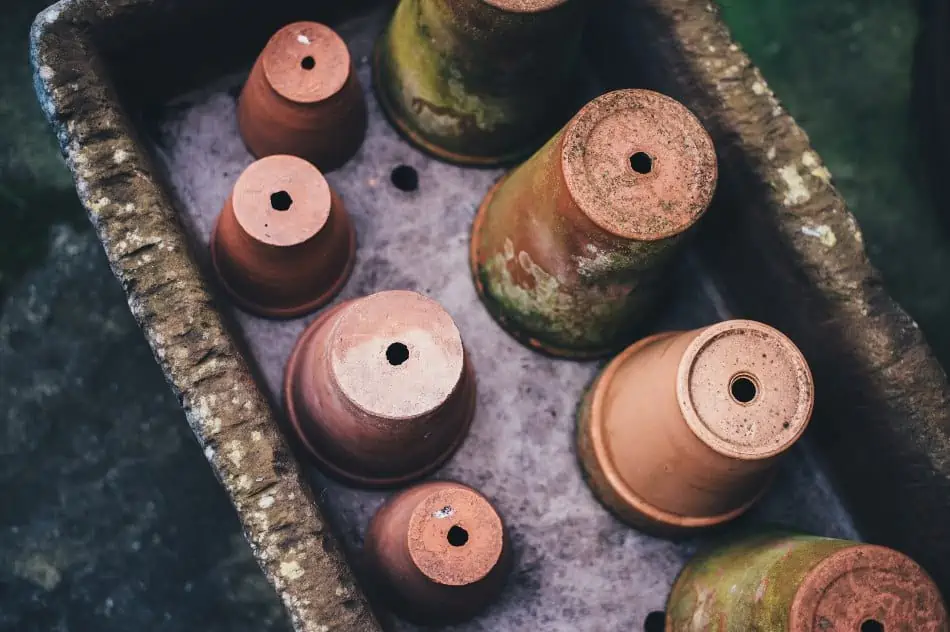
A pot with drainage holes.
While rooting the cuttings, you should select a proper container along with suitable potting mix.

Once your cutting has dried and calloused completely, it is time to root it so it can start growing into a new plant. You can choose to root your cutting in a planting pot or the ground. We shall talk about both methods.

If you decide to root your cutting in a pot, make sure you find the right pot size. For a cutting, you don’t need an enormous container.  Just find something appropriate that won’t appear too large for your cutting. Ensure the container you choose has plenty of drainage holes.

The next thing you need to do is fill your pot with an appropriate potting mix. Let us discuss a few things about the soil because it plays a crucial role in the survival and rooting of your cactus cutting.

Just like mature cacti plants, your cactus requires porous, well-draining soil. Keep in mind that if the soil holds water for too long, it may cause rotting of the cutting at the base. To be on a safe side, consider adding plenty of perlite or sand to your soil to improve drainage.

Now, fill the growing pot with the potting mix and carefully insert the cutting into the container.  Your cutting should penetrate at least two inches into the soil if it is small (less than six inches) and three to four inches deep if the cutting is more than six inches long.

Consider supporting your cutting with small stones or two wooden stakes with twine to keep it in an upright position.

Keep the newly planted cuttings away from direct sunlight. You can position your pot in a brightly lit location but make sure the cutting is well protected from direct sunlight until roots are well established.

You want to avoid sunburns and dehydrating your cutting before it develops a stable root system.

2. Rooting in the ground

If you don’t have an appropriate pot size, you can still root your cutting in the ground.  If you choose to take this route, be sure to loosen the soil in the spot where you want to plant your cutting.

After that, dig a hole in the loosened soil that is deep enough to place the calloused end of your cutting in the ground a few inches deep.

Small cactuses on the ground.
Be sure to loosen the soil in the spot where you want to plant your cutting.

In most cases, you may be forced to mound small stones around the cutting for support, especially if the cutting is from a columnar cactus.

Once you are sure that roots have successfully formed and your cutting is now firmly anchored in the ground, remove the stones.

Should I Water the Cutting Immediately After Planting?

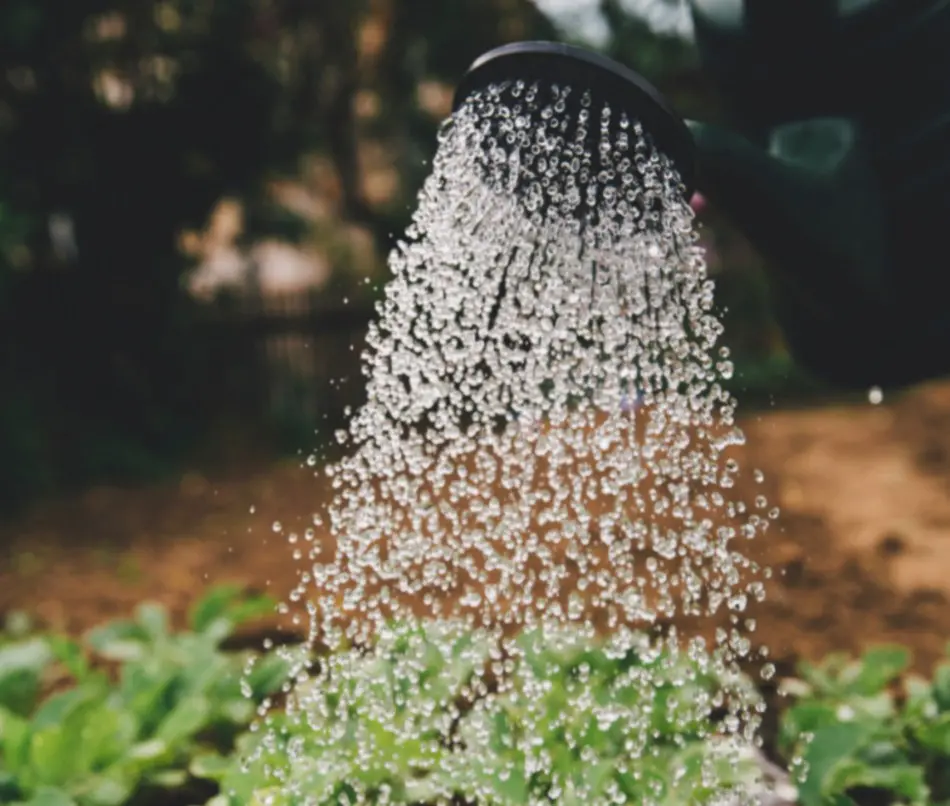
A person watering the plant.
Overwatering will not make the cactus grow faster. Excess water will rot them and might even kill your plant.

When it comes to taking care of cacti plants, watering is a critical factor that you need to handle carefully. By now, you must be aware of the fact that overwatering kills these succulents much faster than underwatering.

So, how often should you water your cutting after rooting?  At the time of planting, consider wetting the soil thoroughly. From there, you don’t have to worry so much about watering because the cutting can remain in good shape for a few days or weeks before it requires another watering.

Any subsequent watering must be light and consistent. A good rule of the thumb is to lightly water your cutting once every week to keep it moist.  You should aim to keep the soil damp, not too wet.

Don’t try to force faster rooting by overwatering because the cuttings will only rot.

How Long Does It Take a Cactus Cutting to Develop Roots?

Typically, the rates at which cuttings develop new roots depend on a wide range of factors such as the size of cutting, type of cactus, and watering regimen.

Generally, it takes four to six weeks for the roots to form, but smaller cuttings tend to develop roots much faster than large cuttings.

To achieve better results, make sure you take time to prepare your cuttings properly beforehand and pot them in sterile rooting material to keep them from rotting or withering before they root. After rooting, most cacti plants will be ready for transplantation approximately one month later.

If a Cactus Breaks Off, Can I Plant the Broken Pieces?

Yes, you can.  Don’t throw away broken pieces of your plant because they can give you new plants. The only thing you need to do is to make sure that you are following the right steps in preparing the broken pieces for planting.

The first thing you need to do is to check the broken end of the piece. If it is crooked or broke, use a sharp knife to make a fresh cut to even the end out.

Set the broken piece aside for a few days to allow the wound to callous over in preparation for rooting. Make sure the cut end is dry and sealed over before you proceed to root it.

3 Tips for Successful Propagation

As a gardener, your joy is to see your cuttings /seeds develop into new plants to increase your plant collection. These tips will help you when it comes to propagating cacti plants:

1. Develop technical and mechanical skills

Take time to train your hand and eye because they are crucial in propagation. Most of the time, your head will know how, but your hand won’t be willing to do it. The best way to improve your skills is by practice.

2. Know your cacti species and its best form of propagation

A cactus on a claypot outdoors.
Each cactus is unique, know your plant species and what that works best for it

There are over 2500 cacti species in the world, and each one of them is unique. Therefore, strive to know your plant species and the form of propagation that works best for it.

3. Know the different plant structures and how they grow

The best way to learn about your cactus is to study it. Make an effort to know something new about your plant every day. Let it teach you, and once you understand how they grow, you will have an easy time propagating them.

Final Thought

Now that you know how to propagate cacti plants from cuttings, it’s time to go out there and practice what you have learned.

Feel free to experiment with new things and let us know how it goes. We love talking to cacti lovers all over the world. Subscribe to our email list for the latest gardening tips.

How To Propagate Cactus Pups?

A significant number of people start out with cacti plants as a gift plant and usually don’t think about propagation in the early days. However, as it grows and starts to blossom, many of them quickly turn into collectors, and questions such as “how do I propagate my cactus?” begin to rise. Fortunately, there are several ways of propagating cactus. 

So, how to propagate cactus pups? Generally, this is one of the easiest methods of propagating cacti since it doesn’t involve a lot of things. Pups are smaller versions of the parent plant that tend to grow at the base.  The process involves removing the offsets from the parent, rooting them in appropriate potting mix and watering appropriately.

Propagating cacti pups not only produces new plants but also plays a critical role in decongesting crowded pots.

Read on to find out everything you need to know about cactus propagation from pups and how to take care of newly propagated offsets.

Propagating Cactus from Pups- A Quick Overview

Top view of different kinds of cactus plants.
Various cactus species produce small offsets, called pups, which can be used for vegetative propagation.

Propagating cactus by pups is a vegetative form of plant propagation because it doesn’t involve transfer of seeds. The parent plant produces an offset asexually, and this is what you use to get a new plant.

The pup occurs as a small clump that you can easily separate from the parent plant and grow a new cactus from it. This is probably the easiest method of propagating cacti. Most of the time, it is relatively easy to separate the pup from the parent plant, and it will grow its roots and settle pretty quickly and often successfully.

In most cases, the pups will already have a small set of their own roots. Unfortunately, not all cacti species can produce pups. Therefore, before you start considering this propagation method, make sure the cactus species in your garden can produce offsets.

Types of cacti that grow pups/offsets

A golden barrel cactus.
The majority of barrel cacti produce pups at the base of the plant.

Many of the barrel and rosette types of cacti do produce offsets. Typically, the big barrel cacti form the biggest pups, and it is one of the best types of succulents to propagate using this method. The barrel cactus has a unique way of providing nutrients and water to its offsets and shading them from the harsh sun.

Most pups form at the base of the plant, but you may also find some along the stem or even on the pads. You can remove any of these offsets and root them in a container so they can grow into a new plant.

Cactus propagation by offsets/pups is easy and fast as long as you take clean cuts and allow the offsets to callous before rooting.

Generally, cacti plants you should consider propagating with pups must be large, round, and clump producing. The parent plant must be large, and the offsets must be at least the size of a small ball.

How to Propagate Cacti Using Pups- The Process

Once you are fully convinced your plant has good offsets/pups for propagation, follow the steps outlined below to turn your pups into new plants.

Removing cactus pups from the parent plant

A person checking the moisture content of the plant.
To successfully propagate cactus pups, you should cut away the offset at a 45o angle.

The first thing you need to learn is how to remove the offsets from the parent plant. Get a sharp kitchen knife and wipe it with some alcohol or a 10% bleach solution. This will disinfect it and prevent pathogens from finding their way into your cactus through the cut areas.

Locate a good pup and carefully cut it away at a 45o angle. Make sure your cut is slanted to deflect water so that the cut area doesn’t rot before it callus. Some gardeners love to dust the cut end of the pup with sulfur powder to prevent rot issues and fungal infection.

However, sulfur powder may not be necessary as long as you allow the cut end to callus fully before rooting. This may take a few weeks or one month, depending on the conditions in your home. You will know that the offset is ready for rooting when the cut end is dry, hardened, slightly shriveled, and whitish.

When obtaining the offset, make sure you remove soil from the top of the pup to see the joint between the parent plant and the offset. If the joint is clear, you may realize that disconnecting the pup manually is much easier.

If there is any part of the parent plant on the offset, be sure to cut it off. Otherwise, it will start to rot, and that may affect your pup severely.

Rooting the pup

After obtaining the pup, the next thing you need to do is root it. This step is only necessary if your pup doesn’t have any roots. To root your pup, consider placing it in a dry soil with some gravel for a few days or up to one week. Monitor it carefully and get it out as soon as it grows a few roots.

You can also place the offset in a small pot with sand, ground charcoal, and some perlite for it to grow roots.  Skip this step with all pups that have small roots.

Growing the offset

Once your pups have developed a few roots, it is time to pot them. Start by preparing the container and the potting mix for your offsets. Make sure the container has plenty of drainage holes and is of the right size. Cactus pups need a pot that is just slightly larger than their diameter at the base.

The soil should also have good drainage and gritty. You can purchase commercial soil or make your own by combining 50% perlite or pumice with 50% compost or peat.

Carefully place your pup in the soil, but do not push inside the potting mix too much. Only ¼ of the pup’s stem should be under the soil. Ensure your pup is stable enough so that it doesn’t fall over. Place the pot in a spot that receives bright but indirect sunlight and keep the soil moist.

However, do not water your offsets straight after planting. Wait for at least five days or one week before watering. This minimizes the chances of root rotting and fungal infections.

Another critical point to note is that some cacti plants tend to produce tiny pups beneath their stems. These offsets are often too small because they get less sunlight.

After separating such pups from the parent plant, dry them up for a couple of days before planting. After planting, leave them in the shade for a few days before you gradually move them to a bright spot.

What Kind of Potting Mix Should You Use for Pups?

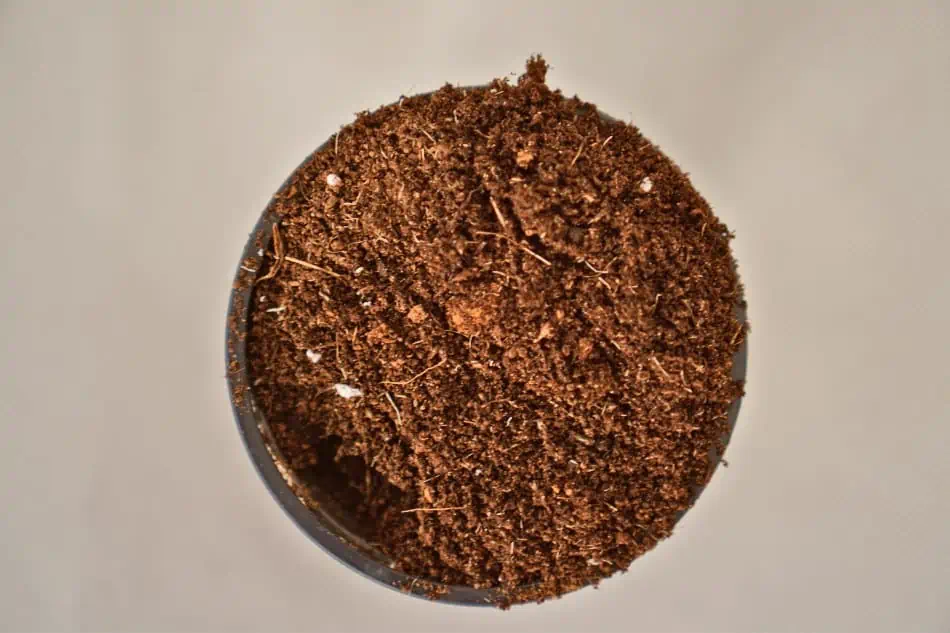
A soil.
To properly propagate cactus pups, well-draining soil should be used.

The most crucial consideration when it comes to choosing cactus soil is drainage. Cacti plants love well-draining soil that doesn’t hold water for too long. If you are a beginner, we’d recommend going for a commercially prepared cactus soil.

However, if you are an experienced gardener, then you probably know how to make your own potting mix. Here are a few tips for success:

  • Dampen the potting mix thoroughly, but do not get it too soggy. Remember the fact that wetter soil encourages rapid fungal growth and root rot. Before introducing your pups into the soil, consider dipping them in a rooting powder containing a fungicide.
  • If you want to avoid the moisture problem completely, consider using pumice to start your pups and then transplant them to their permanent containers after they get some growth.
  • Keep your pups in a relatively warm area with plenty of bright, indirect sunlight and excellent air circulation. Give the offsets a little misting once in a while but do not water them heavily.
  • To achieve better results, just set the offsets on top of the soil. There is no need to bury them deep into the soil. As long as they are stable, they will automatically send out roots in search of soil.

How Often Should You Fertilize Propagated Pups

For a start, there is no need to fertilize your pups. Moderate watering and exposure to a sufficient amount of sunlight should do the trick. However, as the pups start to grow into plants, you should begin to apply fertilizer at least once in a year.

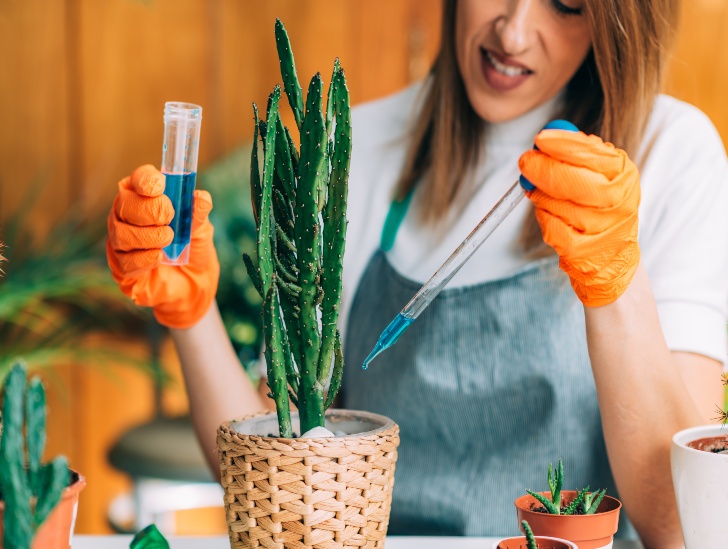
Woman applying fertilizer to the cactus.
Consult experts from your local plant nursery to establish the best type of fertilizer for your plant.

Do not apply fertilizer during winter because your cactus is dormant. Wait until spring or summer when the active growing season begins and give your plant a good dose of recommended fertilizer to promote growth and blooming.  Consult experts from your local plant nursery to establish the best type of fertilizer for your plant.

PS: After you give your cactus plant water that contains fertilizer, make sure you rinse the plant body. Otherwise, if you leave any fertilizer on the skin of the plant, there is an increased risk of the plant being sunburned or burned by the chemical itself.

Summary

That is it on how to propagate cacti from pups/offsets. Keep in mind that this is probably the easiest way to propagate cacti, and you shouldn’t experience any problems if you stick to the procedure outlined in this article.

The best time to propagate pups is late spring or early summer. Just make sure your pups dry up completely before planting.

If you have any comments or questions, let us know in the comments section below.

What Is The White Hair On Some Cacti Plants? Introducing The “Old Man” Cactus

Cacti plants have different appearances depending on their species and where they grow. For instance, a jungle cactus such as the holiday cactus plant has a different appearance from the Saguaro plant that thrives in arid areas.  However, one cacti species that stands out from the rest is the Cephalocereus senilis that is covered in white hair.

What is the white hair on some cacti plants?  The white-haired cactus plant is known as the “old man” cactus or Cephalocereus senilis. The most striking feature of this cactus is the shaggy coat of relatively long white hairs suggestive of unkempt hair on an old man. The coat is particularly noticeable in young plants. As the plant grows old, its stem begins to lose its covering, and some of the hairs start to fade away. Therefore, if your cactus plant is covered with white hairs, you could be cultivating the old man cactus plant.

In this post, we discuss everything you need to know about the old man cactus plant. Read on to find out where this beautiful grows, its optimum growing conditions, and how to take good care of it.

Why Cephalocereus Senilis Called The Old Man Cactus?

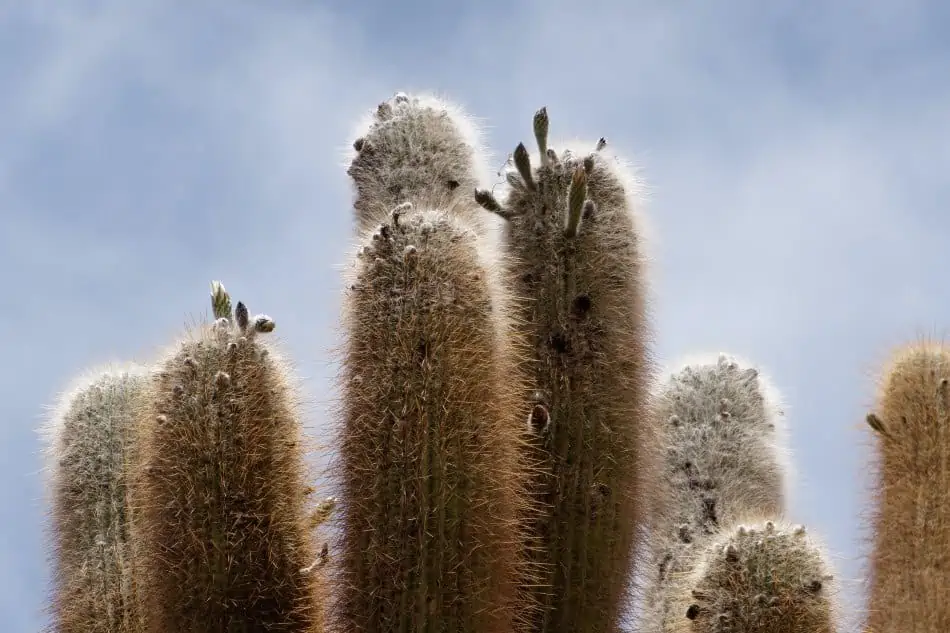
A matured old man cactus.
Due to white hairs all along the stems, Cephalocereus Senilis is commonly known as an Old Man Cactus.

Before we dive deep into other aspects of this plant, it is good to know why many people out there choose to call it the Old Man cactus.

One of the reasons why this plant is known as the Old Man cactus is obvious; the existence of long white hairs on the surface. After all, most of us associate white hair with old people. However, this is not the only reason why this plant attracted such a unique name.

Apart from the white hair, the plant is also incredibly long-lived. Typically, when grown in the wild, the Old Man cactus can live for as long as 200 years and grow to about 20 feet tall.

Cacti experts say that the primary reason why this plant can survive for such a long time is that its long, soft, and white hair protects it from both excessive heat and cold, which helps it to retain moisture for a relatively long period.

Although the relatively long hairs are quite soft, the plant still needs to be handled with a lot of care. The shaggy white hair covers sharp spines that can cause severe injuries when they penetrate your skin.

The species name of this plant (Senilis) is derived from Latin and loosely translates to “Old Man” in English.  The Old Man cactus is typically tall, thin, and its head and stem are covered with white hairs just like an old man.

Cephalocereus Senilis: A Brief Background

The Old Man cactus is a native of Mexico. It is one of the many species of cacti that grow in this country. The plant is also known as the Hoary Old Man cactus, and it thrives in semi-desert regions and rocky slopes at elevations of up to 5,900 feet above sea level.

The plant is a member of the family Cactaceae and the genus Cephalocereus. The Old Man cactus is closely related to other cacti species such as the Peruvian old man, Hedgehog cactus, and old man of Mexico. It blooms between April and May. The flowers are nocturnal and white or pale pink.

The Old Man cactus is one of the slowest-growing cacti. However, if you provide it with optimum growing conditions, it can grow up to 1 inch per year.

The plant can grow to a height of about 20 feet and a diameter of 2 feet. It typically takes between 50 and 60 years for the plant to reach its full potential size.

Growing an Old Man Cactus at Home

If you are looking for a beautiful houseplant with unique properties, then you should consider growing the Old Man cactus. Its unique appearance is quite reminiscent of an old man lightly cushioned by beautiful long wavy hair.

In this section, we cover some of the essential things you need to know about growing the Old Man cactus at home.

Cultivation

A pot with drainage hole.
Along with using suitable soil mix, you should select a pot with drainage holes for the soil to drain properly.

The Old Man cactus does well in fast-draining soil and full sun. If you prefer potting your plant, make sure you use a good potting mix, and the container should also have plenty of drainage holes to let out water pretty quickly.

You can purchase commercial soil or prepare your own potting mix by adding equal parts of pumice, perlite, or coarse sand to regular soil. If you are growing your plant outdoors, be sure to mix grit or sand with equal parts of native soil or compost to improve drainage.

The plant does well in slightly alkaline soil, so adding a handful of calcium to the soil at the planting time is an excellent way of keeping it happy.

When it comes to watering, make sure you water your Old Man cactus only when the potting mix is completely dry. During watering, soak the pot thoroughly and allow excess water to drain out as quickly as possible.

This plant requires very little fertilizer to thrive. Therefore, there is no need for overfeeding it because the results can be catastrophic. Always use a well-balanced water-soluble fertilizer once or twice a year to feed the plant.

Feeding should happen between April and October and make sure you dilute the fertilizer top its half strength.

Propagation

A top view of a soil, container and other gardening materials.
To propagate Old Man cactus, you should either use seeds or obtain fresh cuttings and root them in soil.

There are several ways of propagating Old Man cactus, but propagating from seed is the most effective way. In fact, some experts believe that it is the only way of propagating the plant. However, when kept indoors, these plants rarely produce any flowers or fruits, which make propagating from seed quite difficult.

Another way of propagating the plant is by removing and potting the small offsets that usually form at the base of the plant.

Be patient until the offsets are about two inches tall, and then break them off from the main plant. The good news is that pieces of any part of the Old Man cactus can easily grow into a new plant.

Once you take a cutting, let it cure for at least two days before rooting. This helps to prevent rotting.

Once the cutting form callus, carefully insert it into a mixture of half sand and half moist peat moss.  Position your container in a brightly light space, but make sure you are keeping your plant out of direct sunlight.

Keep in mind that it might sometime before you start noticing any significant growth. Just be patient and give your cuttings the best care possible.

Watering and Feeding

Water your Old Man cactus only when the potting mix is completely dry. During watering, soak the pot thoroughly and allow excess water to drain out as quickly as possible.

This plant requires very little fertilizer to thrive. Therefore, there is no need to overfeed it because the results can be catastrophic. Always use a well-balanced water-soluble fertilizer once or twice a year to feed the plant.

Feeding should happen between April and October, and make sure you dilute the fertilizer to its half strength.

Pests and Diseases

One of the good things about the Old Man cactus is that it is not susceptible to any serious pests or diseases. However, mealybugs and scale can be a problem, especially when the plant is not getting enough light.

If you notice any pests on your plant, the best course of action is to remove them by hand. You can also use a cotton swab dipped in rubbing alcohol to remove them.

Make sure you check for any signs of rotting, such as yellowing or wilting of the plant. This usually happens when the plant is getting too much water. If you notice any of these signs, cut back on watering and ensure the pot has good drainage.

Old Man cactus requires extra care

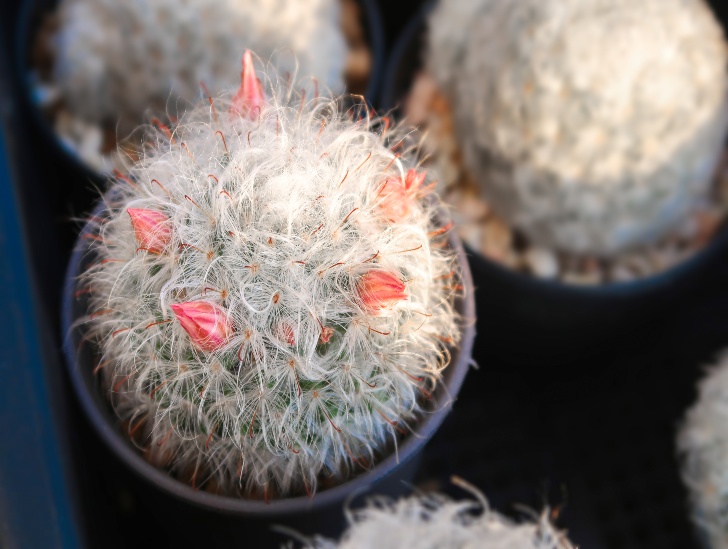
Old man cactus on hand.
The Old Man cactus requires special care to grow healthy and stay alive for years.

Unlike other cacti plants, the Old Man plant requires a bit of special care if you want to keep it alive for many years.  But it doesn’t mean that the Cephalocereus Senilis is hard to grow at home. It only requires special attention to thrive.

Everything starts with the potting mix- therefore; make sure you follow our advice on a well-draining potting mix. In fact, the plant is an endangered species, and having one in your home can be a massive privilege.

During summertime, when the sun is so bright, don’t be afraid to take your plant out and let it enjoy the bright light. The Old Man cactus loves the bright light and heat. If you don’t want to move it out, position it in a window that receives plenty of sunlight and let it rest there throughout the summertime.

During winter, keep your plant indoors but strive to provide as much light as possible in a cool and dry setting.  Typically, the plant grows well in temperatures of between 50oF and 60oF. Also, make sure you reduce the watering frequency during winter.

Bonus care tip: Consider planting your Old Man cactus in terracotta or unglazed pots because they are good at absorbing moisture and keeping the potting mix relatively dry.

Once you have potted your plant, do not disturb it at all. Avoid changing spots now and then and only consider repotting once every three to five years.

Does the Old Man Cactus Grow Better Outdoors or Indoors?

This plant is native to Guanajuato and Hidalgo in Eastern Mexico. These areas are relatively dry most parts of the year.  Coming from such conditions means that the plant is a little bit picky and requires specific conditions to survive and thrive at home.

If you can provide the right conditions outdoors, your plant will grow massively large and flower impressively.  You will have every reason to smile because the Old Man cactus can be a stunning addition to your outdoor cactus garden.

Old Man cactus expose to sunlight.
Don’t be afraid to take it outdoors during summer because it loves bright light and heat.

However, if you feel like you cannot provide the plant with the right growing conditions outdoors, feel free to keep it indoors where you can easily control the environment.  But don’t be afraid to take it outdoors during summer because it loves bright light and heat.

After How Long Does the Old Man Cactus Flower?

Just like other cacti plants, the Old Man cactus will flower under the right conditions. But one thing you must keep in mind is that this is a slow-growing plant, and you might have to wait for a relatively long time before you start to see it bloom.

When everything is done right, it can take between 10 and 20 years for this cactus to start blooming. If you feel like you have waited for too long, be sure to consult a cactus expert in your area to help you out.

Sometimes, you might not be providing your plant with the right conditions to aid in its flowering.

How Many Years Does the Old Man Cactus Live?

The lifespan of this plant is relatively long. If you can provide it with the right growing conditions, your plant will live for decades and might even outlive you. That’s why we advise that you take good care of it and ensure it stays healthy all year round.

On average, an Old Man cactus growing outdoors can live up to 100 years. However, those kept indoors have a shorter lifespan of between 50 and 60 years.

But this is still a long time, and you can be sure your plant will provide you with plenty of enjoyment during its lifetime.

The Old Man Cactus Is an Incredible Cactus!

The Old Man cactus is a unique plant that can add joy and personality to your home. The plant is popular because of its long, white hair that makes it look like an old man or a fairy tale troll.

Over the past few years, a few people have shifted to calling it “The Bunny cactus or the White Persian Cat cactus.”

No matter how you call it, we can’t deny the fact that this is a personable cactus that you should consider adding to your collection!

Can You Grow A Cactus From A Cutting?

Gardeners must always find a way of propagating new cacti plants to minimize the cost of acquiring new plants. In the wilderness, propagation from seeds is the most common way these succulents use to multiply, but that doesn’t mean it is the only way. As natural habitats of cacti and other succulents decline, the need to propagate and maintain these species through home gardening is more crucial.

So, the big question is, can you grow a cactus from cutting? The simpler answer is “yes.” In fact, propagating a cactus from a cutting is one of the easiest and cheapest ways of growing new cacti from existing cacti. A significant number of cacti species can be propagated by small cuttings taken from the stem of an existing plant, which are then allowed to dry out and be callous.

It doesn’t take long before the cuttings eventually start rooting from the cut end and growing into a new plant.

In this post, we discuss everything you need to know about propagating cactus from a cutting. Keep reading to discover how to expand your cactus collection easily.

Propagating Cacti from a Stem Cutting

Let us take a look at the process of propagating a new cactus from an existing plant. To complete this process, you will need the following materials:

  • A healthy cactus
  • Heavy-duty gloves
  • Well-draining soil
  • A pot/container
  • A clean, sharp knife
  • Rooting powder (optional)
  • Tongs or cactus pliers (optional)

Once you have all the mentioned requirements, proceed with the steps outlined below:

Obtaining a stem cutting

A person arranging small plant in a small pot.
Taking healthy cuttings from the cactus is the first step for propagation.

You will be taking a healthy cutting from the top of your cactus plant. If your cactus has pads, make sure you choose one that is mature enough- even if a few smaller pads have started growing on top of it.

Using a young pad is quite dangerous because it may fail to root successfully. For columnar cacti, be sure to select a thin stem that will root much faster than a chunky one.

On columnar cacti, carefully cut off the stem at least a few inches from the top. Make the cut clean and straight and be careful not to crush the rest of the stem. If you are dealing with pads, then you can easily snap off one by hand.

Before you begin obtaining cuttings from your existing plant, make sure you disinfect your knife thoroughly. Keep in mind that there may be open wounds on your cactus that can easily contract bacteria leading to other issues. Also, wear gloves to avoid coming into direct contact with the spines.

For extra protection, consider holding the cactus cuttings with tongs or a pair of cactus pliers instead of your hands.

Rooting your cactus cuttings

A gravel with a soil.
After drying up the cut ends, you can root your cuttings into a proper-sized pot.

So, you now have your cuttings, what do you do next?  Set the cutting aside for a few days to allow the cut end to dry up. Make sure the cutting is stored in a safe place away from sunlight and soil. Once the wound has healed, it will form a callous, which is an indicator that the cutting is ready for potting.

Sometimes, you may be forced to use a little sulfur on the cut end to speed up drying and protect the cutting from bacterial infection. The sulfur may turn a few colors, but that should worry you at all. Just check after a few days to see if the end is dry.

Once the cut end has formed callous, you are ready to jump on to rooting.

Fill your new pot with a moist potting mix and level the soil. Carefully stick your cutting into the potting mix with the cut side down. Be careful while sticking it into the container to avoid opening up the dried wound.

If it can’t stand on its own, simply lay it on top of the soil. If you have rooting hormone powder, make sure you dip your cutting into it right before planting.

Use the right type of soil

A soil on hand.
Choosing a suitable soil type for your specific cactus is essential for growing the cuttings.

The type of soil plays a critical role in establishing whether the cutting grows into a new plant or not. Therefore, you need to ensure you are using the right type of soil.

Go for a porous potting mix that is well-draining. Typically, almost all cacti plants require soil that drains much quicker than your average houseplant soil. If the soil holds water for too long, it may cause severe rotting of your cutting at the base.

Consider adding gravel, sand, or perlite to your soil to improve its drainage.  If the soil is already moist, do not water the cutting after planting. If you are not sure of anything, feel free to ask your local nursery center for basic cactus soil mix, and you are good to go.

Watering a Newly Planted Cactus Cutting

While the roots are developing, your newly planted cutting will mainly be relying on stored nutrients and water. Therefore, you need to keep the soil continually moist to supplement the supply and encourage deep root growth.

Consistent watering may also play a critical role in yielding great results.  Light water the soil every few days to keep it moist. However, be careful not to soak the soil with water since it may lead to rot issues. Just keep it damp.

The root-growing speed will largely depend on the type of cactus, size of cutting, and watering frequency. In most cases, small cuttings grow roots faster than large cuttings. Your cactus cutting can take anything from a couple of days to one month or even more to develop roots.

Once the roots have settled fully into the soil, switch to a typical cactus watering regime. Always make sure the soil dries out completely between watering sessions.

At this point, start introducing your young cactus to more sunlight gradually. Keep in mind that even though the roots are growing, you won’t see any significant stem growth for at least one year.

Can You Root a Cactus in Water?

A plant in the water.
While desert cacti cannot be rooted in water, jungle cacti cuttings are perfectly fine for water rooting technique.

To answer this question efficiently, you need to understand the type of cactus you are dealing with. Typically, there are two broad types of cacti; desert cacti and jungle cacti. 

A desert cactus only thrives in arid areas and is extremely drought-resistant, while jungle desert grows in tropical regions that receive plenty of rainfall. A good example of a jungle cactus is the Christmas cactus.

Although you cannot root a desert cactus in water, jungle cacti (specifically the Christmas cactus) can be rooted in water. If you prefer taking this root, you will need to do everything right to achieve better results.

Start with obtaining between one and four cuttings from a healthy Christmas cactus. Make sure each cutting is approximately four inches long, with a minimum of three leaves on each.

From there, take an empty glass jar and fill the bottom with pebbles/stones to about two inches deep. Carefully add water such that it rises above the stones/pebbles.

Carefully place your Christmas cactus cuttings in the glass jar containing water and make sure the bottom of each cutting touches the water. The majority part of the cutting should be in the glass jar but above the water level.

The humidity in the glass jar will help your cuttings to root without rotting. Always keep a close eye on the water level so that it doesn’t evaporate. Add more water to the glass jar every time you notice a significant drop.

Also, consider using rainwater or distilled water for better results. If you must use tap water, let it sit for at least 48 hours so that the chemicals and salts can evaporate.

Tap water contains significant amounts of fluoride, which is harmful to young cuttings since it travels through the plant and settles on the leaves. This makes the leaves turn brown, which can spread to the rest of the plant quickly if you continue feeding it with fluoridated water.

Can You Replant a Broken Cactus Part?

Yes. Just like the cuttings, you can also replant a broken part. However, you will need to inspect it carefully to determine if it is mature.

Once you are satisfied that the broken part is mature enough for propagation, carefully check the broken end of the cactus. If it is uneven or crooked, make a fresh cut to even it out.

Baby cuttings.
Remember the fact that the cut end must be dry and sealed over before you root it.

From there, set the piece aside for a few days to allow the cut end to heal and callous over. Remember the fact that the cut end must be dry and sealed over before you root it.

The amount of time it takes for the cut end to dry and callous will depend on the thickness of the cut and amount of humidity in the air.

After it has dried and calloused over, follow the steps outlined above to root it.

Should I Fertilize a Newly Propagated Cactus Cutting?

Yes. Applying small amounts of succulent fertilizer is essential for a newly propagated cactus to maintain its health and grow rapidly.

However, be careful not to feed the young plant too much fertilizer since it may cause significant damage. Also, avoid using chemical-based fertilizers since they may contain too many salts that can burn the young cactus plant.

You should only fertilize the cutting once it has grown roots. From there, apply fertilizer twice every month but reduce the amount with time as the cactus grows. If you are unsure of anything, consult your local nursery center for basic fertilizer guidelines specific to cacti plants.

It is also essential to ensure that the other conditions for your newly propagated cactus are optimal, such as the right soil mixture and watering frequency. Pay attention to these aspects, and you will have a healthy cactus in no time.

Is Propagation from Cuttings Same as Grafting?

Many people confuse propagation from cuttings with grafting. The two techniques are entirely different and should never be confused.

Grafting is the process of attaching a part of one plant onto another to form a new plant. When done correctly, the two plants can grow side by side as one unit. This method is mainly used when it’s practically impossible to propagate from cuttings.

Propagation from cuttings, on the other hand, is a much simpler and straightforward process. As explained above, it only involves creating small cactus cuttings and rooting them in soil or water. The new plant produced will be genetically similar to the original parent plant.

Grafting is generally more complicated and requires more expertise. It is mainly used when a certain plant species or variety cannot be propagated from cuttings. Therefore, it is best to try the propagation from cuttings method before trying your hands on grafting.

If things fail, you can consider grafting as an alternative technique. However, propagating cuttings is the best way to go if you want to clone your favorite cactus plant and have more of them without breaking the bank.

Final Thought

Cactus plants are relatively easy to propagate from cuttings. In most cases, you will get faster and more predictable results if you decide to propagate a cactus from cuttings than you would from planting seeds.

While it is more common to propagate cacti from cuttings indoors, you can also do it outdoors and expand your home garden. 

How Does A Cactus Live Without Water?

Some of us seem to be born with a green thumb, while others among us are constantly accused of houseplant homicide. Fortunately, for those of us who are herbology-challenged, there is a wide variety of cacti capable of tolerating our foibles. Cactus plants require little attention, can withstand infrequent watering, and do okay in a fairly wide range of temperatures. They may be the perfect option.

How does a cactus live without water? Well, simply put, it doesn’t—but it’s easy to understand why you might think otherwise. The truth is that cacti, like all living things, need water to survive. But they’ve evolved and adapted in ways that make them very efficient users of the water they receive. That means that they’re able to go long stretches between watering and get by well on just a little bit. 

Whether you live in an area with a climate that is perfect for outdoor cactus cultivation or you’re just looking for a houseplant that you can’t kill—you can’t go wrong with a cactus. Once you understand all of the ways they’ve adapted to become resistant to drought, you’ll have a better idea of how to keep them happy. They will add beauty to your indoor or outdoor spaces and require little in return.

A Cactus Can Be Happy Without Much Water

A water can with a plant.
Cacti are drought-resistant and do not require frequent watering.

Perhaps the first and most important thing that you need to know about cacti is that there are more than 1,000 individual species. In fact, the plant genus that is home to all cactus plants is so diverse that it includes some cacti that have leaves instead of spines. The natural habitat of cacti ranges from the southernmost tip of South America all the way north to western Canada.

If you’re like a lot of people, the first thing that comes to mind when you think of a cactus is cartoon coyotes or cowboys in ponchos with stubby cigars. But the tall, lobe-branched cacti that you see in those settings are just one of a wide variety of species. Unless you live in the desert southwest of the United States or in northern Mexico, that probably isn’t the best cactus to set your sights on.

One thing that works in your favor is that no matter what species of cactus you decide to bring home as an indoor or outdoor botanical confidence builder, you’ll be getting a drought-resistant and hearty houseguest. Let’s look at some of the ways that cacti have evolved to be such efficient water users.

Leaves

A cactus plant.
Having sharp spines can help cacti absorb water and stay hydrated.

The easiest way to recognize a plant as a member of the cactus is family is to notice what they don’t have—leaves! But that’s not 100% accurate for a couple of different reasons. The first reason is that their spines are highly-adapted leaves. The second is that some members of the cactus family have leaves instead of spines.

So why did most cacti evolve spines where their leaves ought to be? And how do spines make a cactus more efficient at water consumption than other plant species? The leaves of most broad-leafed plant species have at least two important jobs to do. First, they are an important part of the plant’s respiratory system. Second, they play a crucial role in photosynthesis. Many broad-leafed plants rely on their leaves to contribute significantly to their water gathering efforts as well.

The part of a plant that takes in the carbon dioxide that the plant will convert to oxygen during photosynthesis is called a stoma, and it is usually located in the leaf stem of broad-leafed plants. Of course, photosynthesis is the process by which plants convert sunlight to nourishment.

So, beyond taking in the fuel for photosynthesis, leaves also collect the sunlight that provides the missing ingredients. Cacti have come up with creative twists on each of these processes to become better at surviving without much water.

Stomata

Most plants don’t have to worry about conserving water the way that cacti do. So, their stomata are located in places that tend to permit a great deal of evaporation. They open during daylight hours, which further compounds the rate of evaporation. Cacti can’t afford to be so cavalier with their precious stores of water.

Because most cacti have evolved and adapted to make survival possible in environments that would kill most broad-leafed plants, they’ve had to get creative about the respiratory and light-absorbing processes that they use to accomplish photosynthesis.

A cacti’s stomata are still located at the base of their spines, which we noted earlier, are just highly-adapted leaves. The spines themselves make a big difference in the rate of evaporation because of their reduced surface area in comparison to broad leaves. But the real difference in how a cactus plant’s stomata help them survive on limited water can be found in their adopted schedule.

Most plants take the easiest route between where they are and where they want to be. When it comes to photosynthesis, that means opening their stoma during daylight hours to take advantage of the abundant light. But if a cactus were to do this, they would lose unacceptable amounts of moisture to evaporation during the heat of the day.

Day and Night

Cactus on a storage near the window.
Compared to other plant families, cacti respire at night to prevent evaporation of too much water.

Because cacti have to do everything they can to conserve water, they’ve adapted a unique biological clock that strikes a balance between the need to breathe and the fear of losing all of their stored water. A cacti’s stomata open at night when there is less risk of evaporation. Since desert environments have plentiful sunlight, they are able to get by on what they collect through the membranous coatings on their stalks.

Conducting all of their breathing at night means that cacti have to store the carbon dioxide that they take in overnight until they can use it in photosynthesis when the sun comes up. This is another evolutionary adaptation that makes cacti capable of doing what they do in the places where they do it.

Spines

A top view of a cactus plants.
Spine not only protect cacti from predators but also help them absorb more water.

We’ve already noted the difference that surface area makes in the different rates of evaporation between leaves and spines. The fact that a cactus taps the cells of its main body for light absorption means that cacti don’t miss the metabolic contributions that are lost in this trade-off. When you get right down to it, most cacti are nothing more than fleshy, leafless stems with an array of spines.

But why does a cactus have spines if the stomata are located on the stalk, and the stalk does the lion’s share of the photosynthetic work? There are two main functions that the spines serve in the life of the cactus plant. The first one is pretty obvious if you think about it, but the second function might not be as easy to pick up on just by looking at a cactus.

The first thing that spines do for a cactus is to protect it from grazing animals. Think about all of the broad-leafed plants that get munched on by birds, insects, and mammals. Now, think about how attractive a plant would be to those same grazers if it was located in the middle of a desert and filled with life-sustaining moisture. If it weren’t for their body armor of effective spines, cacti wouldn’t stand a chance.

Spines also do their part to help a cactus plant capture every drop of water that comes within its range. The spines may be angled to channel water toward the plant’s stalk and downward toward the root system, or they may be fine enough to gather the morning dew until it forms droplets that will fall to the ground. Each species has its way of doing things, but in the end, it’s all about the H2O.

Stalks

When you look at a tree, you see a trunk, branches, stems, and leaves. When you look at ornamental or edible flowering plants, you see a stalk, stems, leaves, and flowers. But, as we noted earlier, a cactus is just a root network underground with a single stem that is covered in spines. The body of the cactus plant has a number of advantages that cacti rely on to survive in dry climates.

It isn’t as simple as changing one or two things about the way you do business when you set out to evolve and adapt to the harshest climates on the face of the planet. It takes an all-hands-on-deck approach. So, cacti have had to incorporate contributions from every part of its body to maximize water efficiency and become capable of thriving where other plants wouldn’t survive at all.

Body Styles

Cactus in a clay pot.
The majority of cacti have globular body shape, which enhance the ability of a cactus to preserve water.

The stem or stalk that makes up the main body of a cactus plant is a highly specialized version of a trunk or stalk that you would find on broad-leafed plants like trees and flowers. It has evolved to be as efficient at water storage and conservation as it is possible for a plant to be. This has required cacti to adapt the internal composition, exterior surface, and even shapes that their main bodies feature.

Most cacti bodies are globular, and some even incorporate ridges. These features enhance a cactus plant’s ability to conserve water. Storage capacity and water retention are the primary concerns for most cactus plants, so it just makes sense that they devote so much of their bodies to ensuring that these two tasks get taken care of.

Of course, everything that lives also wants to grow and reproduce. Even the way that cacti approach these basic biological imperatives reflects the central importance of making the most out of the limited amount of water they get. The life cycle of a cactus plant is directly linked to its ability to gather, store, and conserve water.

Storage and Conservation

Cactus in a pot.
Globular shape, the presence of ridges, and waxy surface allow cacti to better absorb and conserve water.

There are at least three key features of a cactus plant’s body that play important roles in the ability to store and conserve water. The first is the globe-shaped body style that many cactus plants have. The second is the presence of ribs or ridges on the body that act like accordion folds that allow the cactus plant’s body to expand as it absorbs more water. The third feature is a thick, waxy exterior surface.

The benefit of a globular body is that it offers more internal storage capacity with less exposure to the pressures of evaporation. Whereas a vining body-style like you find with ivy or a tall, thin stalk and broad flower like you find with sunflowers leave the plant at a disadvantage to evaporation, a cactus holds all of its water inside.

The ridges and ribs that accentuate many cactus plants’ bodies offer important benefits to this approach toward water conservation. When rain is infrequent, and dewfall is minimal, a cactus has to be able to grab as much as it can during the rare times when water is plentiful. If the plant’s body weren’t capable of accommodating the swelling that comes along with taking on water, it wouldn’t be able to make the feasts sustain it through the famines.

Of course, it wouldn’t matter how much water a cactus could absorb if it weren’t able to hold onto that water for long periods of time. The wax-like coating that is on a cactus plant’s exterior surface works like a waterproof raincoat in reverse. Instead of keeping the water out, it works to hold the water in.

Life Cycle

Without getting too philosophical about it, we can probably agree that there is more to life than simply surviving. So, it makes sense that a cactus wants to survive not just for the sake of surviving but for the purpose of growing and reproducing. But with water at a premium, the cactus has to factor the energy demands of growth and reproduction into its plans.

A cactus seed growing.
It makes sense that a cactus wants to survive not just for the sake of surviving but for the purpose of growing and reproducing.

That means that most cacti only grow larger during times when water is abundant. It also means that most cacti have evolved to go dormant with regard to blossoming except for those times when water is plentiful. In this way, their life cycle resembles those of other species that have evolved as highly-specialized desert dwellers. A desert landscape after a rainstorm will look vibrant for a time only to return to normal as things dry out.

But even the end of its life isn’t enough to get a cactus plant to give up its water reserve. Scientists have cut into the bodies of cactus plants many months after they have died only to find that they still retain the essential, life-sustaining moisture that they were storing when they died.

Roots

Succulent plants with roots shown.
Broadly dispersed root system of cacti is dedicating to saving the plant when there is a deficit of water.

The final aspect of a cactus plant’s physical adaptations that need to be considered in relation to its water consumption is the root system. Most plants can rely on their root system for stability and water collection at the same time without having to make any trade-offs in the process. But for a cactus, that just isn’t the case.

Most cactus plants have shallow and broadly dispersed root systems. This means that all of the water gathering capacity of the plant is close to the surface. The approach makes sense when you consider the low availability of moisture deeper in the soils of desert landscapes. But the trade-off is that some cacti are susceptible to blowing over in strong windstorms.

Even the root system of a cactus plant is committed to the survival of the plant during long stretches when water isn’t available. The root network of a plant will grow when water is plentiful but die-off and shrink back toward the plant’s body when the plant can’t afford to spare the water required to sustain the wider root system.

While it is true that sending roots deeper would provide the plant with more stability, it would also require more energy to grow and more water to sustain. For most cacti, the extra stability just isn’t worth the expenditure of vital resources. Cacti get a better return on their investment by keeping their roots closer to the surface where they can soak up every drop of rainfall possible.

Summary

This article has outlined the numerous ways that cactus plants have evolved and adapted to be the premier specialists at water conservation in the plant world. The evolutionary tricks that the cacti have picked up throughout history incorporate the leaves, stems, stalks, and roots. It is a team effort when it comes to being efficient at water consumption. That is what it takes to thrive where few other plant species can survive, and that is what set cacti apart from most plants.

If you want to add more greenery to your apartment, office, or home, then you can’t go wrong with a cactus. You won’t have to worry about getting someone to water your plants while you’re on vacation or what will happen to your office décor if you’re traveling for business for a week or two. And now that you know how rare cactus blossoming is, you’ll appreciate the beauty of their flowers that much more.

Help! My Cactus Is Dying! Why Is My Cactus Dying?

Bringing a new cactus home is enough to excite any home gardener, but when it begins to die without an apparent reason, it can be a frustrating process. Luckily, there are ways to get to the bottom of your cactus woes and address the issue to get its health back on track.

So why is your cactus dying? Cacti are generally resilient plants, so a dying cactus mainly stems from improper care or harsh environments. The three possible reasons that your cactus is dying include:

  • You are overwatering (or underwatering) your cactus.
  • Your cactus is not getting its recommended daily sunlight.
  • The soil drainage for your cactus is inadequate.

In this article, we’ll be discussing a few reasons why your cactus may be dying, along with providing you with some proper care tips to help you better maintain your cactus plants.

Why Your Cactus May Be Dying

The following three reasons are the most common bad habits that new cactus owners make that result in a dying cactus:

1.   You Are Overwatering (or Underwatering) Your Cactus

A water can with a plant.
If you overwater or underwater your cacti, the plant might die.

Cacti are very specific about how much water they receive, and on average, less is more when it comes to watering them. Cactus plants are prone to root rot, a condition that affects plants that are sitting in pooled water or are watered too often. This causes the cactus to rot from the roots, killing the plant slowly (but surely). If you’re watering your cactus daily, or even weekly, this could be the reason why it’s dying.

On the contrary, you could also not be watering your cactus enough. If half a year has gone by before you think of watering your cactus, and it doesn’t have access to rain, that’s probably the issue. Though cacti don’t need as much water as most other plants, they still need some access to water to thrive.

If you’re a “plant and forget” type gardener, be sure that you have planted your cactus in an area that receives rainfall. Leaving the watering up to nature’s natural cycle is usually plenty for a cactus anyway.

2.   Your Cactus is not Getting Its Daily Recommended Sunlight

A desert cactus plant.
If your plants are getting either less or more light than required, they might slowly die.

Cacti are desert plants. Because they’re native to desert landscapes, they’re naturally exposed to heaps of sunlight. Not allowing your cactus to get enough sun can result in:

  • drooping or shriveled stems
  • scraggly hairs
  • dull coloring
  • little to no flowering or fruiting during the season

Likewise, placing your cactus in an area that receives too much sun at high temperatures can result in:

  • sunburn
  • blackened or browned ends of the stems
  • a dried or dull appearance

3.   The Soil Drainage for Your Cactus is Inadequate

A pot with a drainage hole.
Cacti should be planted in pots with drainage holes for the soil to drain well and get rid of excess water.

Though it’s essential to water your cactus whenever it needs it, it’s just as crucial to ensure that your cactus is planted in a soil that drains well. A cactus should never be left to sit in water and requires a preferably sandy or slightly gravelly soil. If you have your cactus planted in a pot without a drainage hole or in soil that absorbs too much water, this may be what’s killing your plant.

Another problem to consider is the fertility of your cactus’ soil. Even if you have it planted in cactus-perfect dirt, it could be lacking the nutrients it needs to stay healthy and green. To combat any lack of nutrients in the soil, you should fertilize your cacti, though infrequently.

Additional Reasons for a Dying Cactus

You may be watering your cacti only when necessary, giving it adequate sunlight and proper soil and yet still have an issue with dying cacti. Here are a few additional reasons for a dying cactus that may have slipped your mind:

  • You’re not covering it in the winter. Some cacti don’t tolerate winter conditions and temperatures as well as other species and will need to be covered in burlap or in a flower house to prevent frostbite.
  • You’re watering your cactus in the winter. Cacti should not be watered in the winter, as this could result in them freezing internally. During the warmer months, cacti will store the necessary amounts of water needed to last through their dormant season.

Though there are cacti that can survive frigid temperatures, your average garden cactus likely will not (or will receive some damage in the process). Covering them and refraining from watering them whenever the temperature drops will help them to endure the colder months better.

How to Properly Care for a Cactus

Now that you’ve found out the possible culprits behind your dying cactus, it’s time to take a look at how to care for your plant to keep it looking its best.

Watering

A person watering the plants.
One of the best ways to prevent your cacti from dying is to properly water your plant once a month.

Cacti are incredibly hardy plants and will store water in their cells to prepare for drought or their dormant season (the winter). In most areas throughout the United States, rainfall is enough to keep an outdoor cactus adequately moist and healthy.

However, if you’re experiencing a particularly rough drought or your cactus is indoors, it’s recommended that you water your cactus once a month. If the soil still looks moist when the next watering cycle comes around, wait another week before watering.

Watering in the winter is something that shouldn’t be done unless you’re in an area where winters don’t drop below the mid-60s degrees Fahrenheit. If your winters are practically none, you should still water your cactus less than you would during the warmer months — only about once or twice during the winter, depending on the temperatures.

How to Water Cacti

Though there are a few jungle varieties of cacti, in general, cacti are desert plants. Rather than receiving their water from spritzes of humidity or constant rainfall, a cactus’s roots deeply penetrate the soil to reach the remaining water from the last rainfall and stores as much as possible until the next rain shower.

Because cacti aren’t native to areas with high humidity, watering your cactus with a fine mist or by pouring water directly on its stem will dull the appearance of your cacti, and eventually, lead to surface rot. Instead, you should either apply water directly to the soil (taking care not to water the base of the plant directly) or set your potted cactus in a saucer of water so that its roots can reach and water themselves. Be sure to take the cactus out of the saucer once the soil is dampened.

When watering the soil directly, you should use a slow-moving stream, such as a garden hose turned on low, and water deep enough so that it begins draining from the pot.

Sunlight Requirements

A sunlight.
Typically, cacti need an average of 4-6 hours to be exposed to sunlight.

Though the amount, and type, of sunlight a cactus needs varies from species to species, most cacti will need about 4 to 6 hours of sunlight per day. Remember to check the light requirements for your particular plant, as some species will need full sun, part sun, or minimal sun each day.

If your cactus isn’t receiving the proper amount of sunlight, it will begin to display signs of weakness and discolorations such as:

  • Paleness or other discoloration
  • Stems begin to stretch out to reach more light
  • Cactus isn’t blooming or producing fruits in season
  • Branches become weak or squishy
  • Hairs look dull or browned

On the other hand, a cactus that receives adequate light will:

  • Be a vibrant deep green
  • May produce colorful flowers and fruit
  • Have visually strong stems, needles, or hairs

Placing your indoor cactus in a south-facing window will ensure that it receives enough light during the day. Most cacti will not need direct sunlight and can thrive on indirect light, so just as long as the window is receiving bright, indirect light, your cactus should do well.

As for outdoor cacti, it’s best to plant them in an area that is shielded from intense, direct sunlight at the hottest hours of the day. For example, plant your cactus in an area that is shaded around noon, but receives around 6 hours of sunlight in the afternoon and evening.

The Effects of Too Much Sun

If you place your cactus in an area that receives too much sun, especially the direct sun, you risk sunburn damage to your plant. Sunburn in cactus manifests itself in brown or yellow spots on the pads of the cactus and will also lead to a dried appearance if the problem isn’t remedied.

An excellent way to combat the effects of sunburn is simply by moving your cactus to another area or by planting taller, thicker plants, such as desert shrubs, next to the cactus to block any harsh sunlight. You’ll want to act swiftly, though, because sunburn in cacti happens rapidly and will end in an unfortunate demise for your plant if nothing is done.

Soil Conditions

A soil for plant,
You might want to choose sandy or gravelly soil for your cactus to grow in a soil that drains well.

Because cacti were created to retain water for extended periods, they also suck any moisture up quickly and won’t need to have wet soil to stay healthy. In fact, moist soil will actually cause root rot in cacti, so it’s essential to plant your cactus in a soil that drains well to avoid any health issues.

Sandy or gravelly soil is best and is especially useful for seasons where rain is frequent or abundant. This is because well-drained soil allows any excess moisture that may be provided to your cactus to move away from the roots, protecting them from pooling and rot. You can either find a premade cactus soil online or at your local plant nursery or substitute ⅓ of your regular potting soil with sand to create the ideal soil for cacti.

The Best Soil for Cacti

Our favorite cactus potting mix is the Hoffman 10404 Organic Cactus and Succulent Soil Mix. It’s formulated with both jungle cacti (like Christmas Cactus) and desert cacti in mind, providing the proper drainage to allow your cactus to get adequate water without puddling excess moisture at the roots.

It’s also organic, meaning that it’s a healthier formula not only for your cacti but also for the earth and your family. Lastly, it contains an abundance of nutrients to encourage growth, vibrant colors, and brilliant floral blooms in the spring and summer.

What We Like:

  • Affordable, even for those that may be on a budget
  • Formulated organically for a safer product
  • Contains a wide variety of nutrients to keep your cacti looking its best and prolong the life of your plant
  • Drains properly without stripping moisture from your cactus
  • Perfect for both desert and jungle species

Fertilizing Your Cactus

A plant fertilizer.
Cacti should be fertilized in the spring for them to store nutrients for winter months.

There is a time and place for everything, and that includes fertilizing your cactus. Cacti should be fertilized, but infrequently (only once every 2 to 4 weeks), and only in the spring when the plant is growing and preparing for the upcoming months of dormancy.

Fertilizing your cactus in the spring will help it to store essential nutrients to sustain itself whenever nutrients are scarce in the winter. You don’t want to fertilize your cactus during the harsher months of summer and winter because your plant’s primary focus during those times is to stay alive rather than grow.

The Best Plant Food for Cacti

Of course, you should always opt for a fertilizer that is formulated especially for succulents and cacti. We suggest the Miracle-Gro Succulent Plant Food for indoor cacti. It’s very affordable for all gardeners (even the budget-conscious) and works well to provide instant nutrients to your plants.

This fertilizer is a liquid and comes in an easy-to-use pump bottle. You can apply it directly to the soil or mix it with water the next time you water your cactus to give it an additional boost. It’s recommended that you use this fertilizer once every two weeks for cacti that have been relocated to a new area of your yard, repotted, or brought indoors after being purchased.

Once your cactus plant is established in its new home, you can lengthen the amount of time between fertilizing to 4 weeks or a month. Take special care not to apply this fertilizer directly to the cactus, as it will cause chemical burns on the pads.

What We Like:

  • Affordable, lasting fertilizer
  • Perfect for both new and established cacti
  • Only needs to be applied every 2 to 4 weeks for best results
  • Encourages rapid, but healthy, growth and blooms if applicable to your cactus species
  • Simple, pump-action bottle
  • Can be applied directly to the soil or mixed with water
  • Instantly provides top-notch nutrients to the soil for the cactus’s roots to absorb

Overall, the Miracle-Gro formula for cacti is an excellent option for potted cacti or outdoor cacti that aren’t receiving the nutrients they need from the soil.

Maintaining Cacti During the Cold Months

No matter how well you care for your cactus during the spring and summer, when winter strikes, it can be a death sentence for many cacti species. Though there are cacti that can withstand temperatures sometimes as low as -30 degrees Fahrenheit, the majority of cactus species on the market for home gardening can only survive down to freezing — and for very short periods.

It’s essential to take the necessary precautions before winter rolls around to prevent frostbite or potential withering of your cactus. Care (watering, light, and temperature) for your cactus also changes slightly from care during the rest of the year.

In the next few sections, you will learn how to care for your indoor and outdoor cacti in the winter.

Caring for Your Indoor Cactus

Winter is the dormant season for cacti, meaning their processes naturally slow to keep them from expending energy and nutrients during the harsh season. Indoor cacti have the advantage of not being directly exposed to outdoor elements. However, with the decrease in light and increase in the frigid temperatures, there is some improvising involved in its care.

General Tips:

  • If your cactus isn’t getting 4 to 6 hours of sunlight during the winter,try using a grow light to supplement the lack of sun it’s getting.
  • Keep watering your indoor cactus regularly. Watering during the winter should be as often as you do around the year (about once a month).
  • The indoor temperature should be a warm, comfortable 65 to 70 degrees Fahrenheit. Cold spells can kill a cactus, so keep the temperature of your home consistent.
  • If your cactus is by a frequently-used door to the outside, move it. Once again, cold bursts of air can potentially harm your cactus. It’s best to move it as far away from the chilly outside world as possible.
  • If your cactus usually sits close to a window, move it a little farther away. Glass gets chilly, and having your cactus too close to a window can make your plant colder than it needs to be.
  • When you water your cactus, use room-temperature water rather than cold water from the tap.

Caring for Your Outdoor Cactus

Because your outdoor cactus is in direct contact with the icy elements, there will be a bit more work to do on your part to keep it from too much exposure. Frigid winds can lead to frostbite in exposed cacti, and too much snow can lead to both surface and root rot once it begins to melt.

General Tips:

  • Cover your cactus in burlap sacks. The burlap sacks are porous enough to allow sunlight to come through, but thick enough to keep some heat in and protect the cactus from snow, ice, and wind.
  • If your winters are particularly harsh, consider a plant house. Pop up greenhouses, like this flower house, help to increase the temperature around the cactus and protect from winter elements without blocking sunlight.
  • Do not water your cactus. Watering an outdoor cactus during the winter will almost certainly kill it because of the water freezing inside of the cactus. Instead, water consistently during the months leading up to winter so that your cactus has enough stored in its cells to survive.
  • If your winters aren’t too bad and you have a large, potted outdoor cactus, you can move it to a covered deck to block it from the wind and snow.

The Toughest Cacti Species for Forgetful Gardeners

If your thumb just doesn’t turn green no matter how hard you try, the following hard-to-kill cactus plants may be the perfect choice for giving you a lively indoor or outdoor garden — with as little effort as possible on your part.

1.   Barrel Cactus

A cactus on a pot.
Barrel Cactus can handle direct sunlight for up to 8 hours and does not require fertilizing at all.

One of the most popular cacti species among desert gardeners, the Barrel Cactus, is hardy and cute. This Mexican desert-native can endure winters of mild frost and scorching temperatures. Their sizes can vary and can either sit low to the ground or grow as tall as 10 feet and 3 feet wide.

They do well both indoors and outdoors and can withstand direct sunlight for upwards of 6 to 8 hours. They won’t need to be watered, but once every 3 to 4 weeks if indoors and, if outdoors, rainfall will keep this beautiful cactus going with no problems whatsoever (in most North American regions). Sufficient water in the spring will result in a large yellow flower.

Barrel Cactus also won’t need any fertilization, as they naturally grow in low-fertile areas. If you want to keep it looking vibrant, you can fertilize it once a year during the spring.

2.   Prickly Pear Cactus

A fruit bearing prickly pear cactus.
Prickly Pear is a fruit-bearing cactus, which blooms in the spring and summer.

Found in all of the deserts of the American SouthWest, Prickly Pear has adapted to survive harsh summers, and some varieties have even adapted to withstand the cold of winters further north (as low as -35 degrees Fahrenheit!). 

These cacti are a fantastic option for an outdoor garden because they:

  • Do well in full, direct sun
  • Only need watering when the soil is dry and rainfall is infrequent
  • Can grow several feet wide and tall over time

In the spring and summer, with enough rainfall, Prickly Pear Cactus will bloom bright yellow flowers and, later on, edible fruits.

3.   Chollas

Chollas is a SouthWest American desert native cactus that:

  • is drought-resistant
  • can withstand temperatures as low as 5 degrees Fahrenheit
  • is tolerant of full sun conditions
  • has moderate watering needs and little overall care requirements

Chollas is probably one of the toughest cacti on the market and won’t need to be watered often. Too much water is the problem this cactus species faces the most, as they’re incredibly prone to root rot. Watering only whenever droughts are persistent is all that’s needed for Chollas if they’re outdoors.

While you can have chollas indoors, it is strongly advised against, as its tiny, thin, and clustered barbs are prone to sticking to anything and everything and are extremely painful to remove, digging deeper into the skin with every tug. It is recommended that you plant these tall-growing plants away from your home or at the rear of a desert garden.

4.   Saguaro Cactus

A matured Saguaro cactus.
Saguaro is a long-lasting cactus growing about 30 feet in height, which can handle even harsh conditions.

One of the longest-living cactus species in the world, the Saguaro Cactus, is said to live as long (or longer) than people do. Some are even as old as an estimated 200 years! This cactus is as tough as they come and can withstand drought and hours of direct, hot sunlight.

Rainfall is more than enough to keep this cactus thriving, as it has such a large capacity for water storage — enough to allow it to bloom creamy white flowers every year, regardless of the amount of rainfall during the rainy season.

Though slow-growing, these cacti have the potential of reaching 30 feet in height and several feet in diameter, so it’s best to plant them outdoors in an area that is well-drained and receives a lot of light.

5.   Pencil Plant

Native to African deserts, the Pencil Plant is no stranger to high heat and harsh conditions. When water is plenty, they’re green in color, but when lacking water, turn a bright coral color. It’s not at all uncommon for gardeners to purposefully restrict water from their Pencil Plants to achieve these brilliant colors, and this cactus does perfectly well without the abundance.

A pencil cactus.
When water is plenty, they’re green in color, but when lacking water, turn a bright coral color.

Rainfall is generally enough for this cactus. However, you can water it once a month if the summers are too hot. Plant in an area that receives partial to full sun.

Final Thoughts

When a cactus begins dying, it comes down to basic care. Cacti are such resilient plants that it’s practically impossible to kill them unless you’re merely caring for them too much. Overwatering is one of the most common mistakes new gardeners make with these desert plants, as root rot is an actual reality with these species. Take care to provide your cactus with adequate sunlight, water only when necessary, and keep it out of direct cold elements.

Some species require more care than others. If you find yourself unable to care for your cactus correctly, consider purchasing one of the previously mentioned species. Cacti like Saguaro Cactus don’t require much upkeep and can live in an arid environment for decades.

What Is The Difference Between Succulents And Cacti?

Succulents and cacti are unique plants in that they are explicitly designed with survival tactics in mind. Found in dry and often hot climates, these plants have adapted for efficient water retention, given their harsh environment. Their unusual structure and appearance have made them popular in many homes.  

What Is the difference between succulents and cacti? Succulents comprise a broad category of plants that store water. Cacti are a family of plants within the larger succulent family, making all cacti forms of succulent. For a succulent to be considered a cactus, it needs to have an areole, which is specific only to cacti species. 

Areoles and other specific characteristics help you to identify cacti from similar-looking succulent variations. Succulents are found in a wide variety of plant families, all with the ability to store water, bringing their similarities into view. In this article, we will break down the different types of succulents and cacti, so you know what to look for in spotting the differences. 

Scientific Differences Between Succulents and Cacti 

Top view of different succulent plant.
Succulents represent a broad category of plants among which cacti are just one of the families.

Let’s first examine the differences between succulents and cacti in their classification and scientific differences. This will help to explain how they are related to one another and what separates them. 

A succulent is defined as any plant that has naturally adapted its structure to maximize the storage of water. They are characterized by thick tissue that can store water in their stems, leaves, or roots depending on the specific plant species. Cacti are a type of succulent that use their stems and branches for storing water. 

Therefore, all cacti are succulents, but not all succulents are cacti.

Plant Taxonomy Classification Hierarchy for Succulents and Cacti 

Plants are classified into hierarchal categories to organize and group related plants. This hierarchy starts with larger groupings and becomes more specific as plants are more similar to one another. Knowing how this classification works is essential to understand how succulents and cacti are related (as well as any other plants). 

The general classification hierarchy for plants and organisms is: 

  1. Kingdom: This category differentiates between different varieties of life, including animals, plants, fungi, bacteria, and other small organisms. 
  2. Phylum/Division: Division is the more common term used in botany, and there are around four divisions in the plant kingdom. These divisions point to plants with ferns, conifers, flowers, and mosses.  
  3. Class: This splits plants into groups of dicots and monocots. It differentiates between plants with two seed leaves and one seed leaf, respectively. 
  4. Order: This classification further breaks down the different classes into more specific groups. 
  5. Family: Plants that start to share many features are arranged into families. Usually, this is where groupings of plants are referred to with species of plants being placed into these categories. 
  6. Genus: Within a family, specific plants are grouped that are more similar to each other than others. 
  7. Species:  This refers to the individual plant that is being examined. Typically, plants are written as genus and then species for their scientific classification. For example, a saguaro cactus is scientifically known as Carnegiea gigantea, with Carnegiea being the genus and gigantea being the species within the genus. 
  8. Variety: Some plants may be further broken down into variety if there are minor differences within a species. This will be noted with ‘var’ and the variation name, but many species will not have variations. 


In comparing succulents and cacti, we are going to go as far down as differences in family. Of the 452 plant families identified by botanists, over 50 families contain succulent plants. Not all families that contain succulents are entirely comprised of them, but all cacti are classified under the Cactaceae family. This specific family contains over 1,800 species of plants. 

Some of the common plant families that include succulents are:  

A Yucca, Adenium, Faucaria, and Aloe Vera plants.
Yucca, Adenium, Faucaria, and Aloe Vera are from the following succulent families: Agavaceae, Apocynaceae, Aizoaceae, and Aloaceae respectively.
  • Agavaceae/Asparagaceae: This family includes popular plants like Agave and Yucca.
  • Aizoaceae: This family contains a significant number of succulent species, with nearly 2,000 different ones falling under this category. Popular plants include ice plant, Conophytum, Faucaria, and Lithops. 
  • Aloaceae: This family includes aloe, which has been further broken down for specificity into the Xanthorrhoeaceae family. 
  • Apocynaceae: Adenium and Pachypodium are among popular plants in this family. Periwinkle, milkweeds, and oleander also fall into this category. 
  • Bromeliaceae: Pineapples, Dyckia, and Spanish moss are popular plants in this family. 
  • Cactaceae: Other than the Aizoaceae family, Cactaceae make up the largest family of succulents. These are the families that contain plants with the definable areoles that separate cacti from other succulents. 
  • Crassulaceae: In this family, you’ll find jade plant and stonecrop, among other succulents. This family is responsible for the identification of unique photosynthesis processes that are specific to cacti and some succulent variations. This is known as CAM photosynthesis. 
  • Euphorbiaceae: Many plants in this family are not succulents, but the ones that are usually have leaf and stem succulents. They are one of the few succulent varieties that can be poisonous. 

Succulent is a general term for plants that store water with cacti being a specific family of succulent plants. If you break down the classification hierarchy for cacti, it looks like this: 

  • Kingdom: Plantae (plants)
  • Division: Magnoliophyta (flowering plants) 
  • Class: Magnoliopsida (two seed leaves, larger flowers) 
  • Order: Caryophyllales (includes many succulent plants) 
  • Family: Cactaceae (Cactus family) 
  • Genus: Will vary by specific plant 
  • Species: Most specific to individual cactus plants
  • Variety: Must be looked at on an individual cacti species basis 

Noting the scientific differences in taxonomy and classification helps botanists and gardeners to understand how the plants they work with are organized better as well as similar behaviors for growth patterns and care. 

Structural and Visual Differences Between Succulents and Cacti 

A cactus in a pot.
Cactus comprises areoles, small spots out of which hair-like spines or spikes grow.

Looking at the specific structure and characteristics of a cactus makes it easier to know what to look for in comparing them to a broader range of succulents. Cacti separate themselves from other succulent families and species in specific ways. Remember, all cacti are considered succulents, but some succulents are not related to cacti. 

The most significant difference that separates a cactus from any other succulent or plant is the presence of areoles. These are spots on a cactus that hair, spines, bristles, and spikes come out of. These may vary in their appearance, including size, color, and shape. Some species may grow new branches from these areas, but they are most similar to the creation of a bud. 

Areoles are specific to cacti, so you can easily spot the difference between this family and other succulent plants. Because there are so many species of cacti, areoles are one of the only characteristics that remain consistent across the family of plants. 

Other characteristics that are common among this family (but not all) include: 

Top view of different kinds of succulent.
While succulents have regular leaves, cacti species comprise spines, which mainly protect them from predators.
  • Stem succulents: Most water is stored in the stems of the cacti as there is often most space and mass for water retention. 
  • No leaves: Cacti do not have leaves – they have spines instead. 
  • Dormant in winter: To protect themselves from low desert temperatures, cacti remain dormant during wintertime and will continue to grow in the summer. 
  • Spiny protection: The spikes that protrude from the areoles are designed as a defense mechanism against animals and predators. 
  • Flower producing: All cacti will produce some form of flower, as they are classified under the Magnoliophyta division of plants. 

Many other succulent species may also contain similar characteristics to cacti but will not contain areoles. The only similarity among all succulents is their ability to store water. There is significant variation between various succulent plants, with cacti typically being distinguished and separated due to the different characteristics and sheer number of variations to study. 

While cacti typically store water in their stems, other succulents use their leaves (no leaves for cacti) and roots for water storage as well. Most succulents do contain leaves, with many of them being oriented in unique and mesmerizing patterns. These leaves are often thick to retain water. Additionally, not all succulents are flowering plants, unlike cacti, and they don’t typically have spikes. 

Differences in Care and Survival for Succulents and Cacti 

The survival and growth of succulents and cacti vary widely as different species are native to varying environments. These plants have adapted to maximize their chances of survival, whether it is related to climate, nutrients, or protection from their surroundings. 

There are five primary categories where succulents and cacti draw both similarities and differences:  

  • Water demands and care
  • Light requirements and photosynthesis methods 
  • Weather variations and needs 
  • Protection from predators 
  • Propagation methods and techniques 

Understanding these requirements and needs for survival not only compares succulents to cacti, but it also allows for more effective care techniques and approaches. 

Water Demands for Succulents and Cacti 

A person watering.
Since succulents and cacti similarly store water, water demand and care techniques are related.

Succulents and cacti are more similar than they are different in terms of plant care as they are both designed for survival. Specific species of both may have different care routines, but for the most part, they need to be cared for in similar ways. In terms of watering, these plants do not do well in wet environments or if they are overwatered. 

All succulents are designed to take advantage of environments where little water is provided, making sparse watering necessary. For at-home care, it is recommended that these plants are only watered once a week and with ample drainage. This is a fairly regular schedule for these plants to be best suited for growth, especially during the summer months. 

Cacti and succulents also need lots of water when they are watered. This means that they need to be drenched to absorb enough water to fill their stems (cacti) or leaves and roots (succulents). This will leave them with a plump or bloated appearance as they fill with water. 

In the winter months, watering should occur far less frequently due to dormancy. Almost all cacti and some succulent species will become dormant in the wintertime. Specific succulents will not become dormant, creating another difference between cacti and succulents. 

Light Requirements and Use for Succulents and Cacti 

Trees exposed to direct sunlight.
While both succulents and cacti need lots of sunlight to survive, cacti require more direct sunlight.

All succulents need sufficient light to survive. Some succulent varieties, including the cacti family, have adapted their photosynthesis process to account for arid climate conditions. Many desert succulents use CAM photosynthesis or crassulacean acid metabolism photosynthesis. It was named for the succulent family that this method was discovered. 

Stomata (holes in leaves) in all plants will open to complete photosynthesis by collecting carbon dioxide. In CAM photosynthesis, this opening only occurs at nighttime during cooler temperatures so that the cacti do not lose moisture they need to maintain. They hold the carbon dioxide until the daytime when the process is completed with sunlight. 

Some, but not all succulents, will use this CAM photosynthesis process to best adapt to their natural environments. Pineapple is another common succulent that uses this process. This is another difference that distinguishes between cacti and many succulent species. 

While succulents and cacti do not need much water to survive, they do need lots of sunlight. Most species of both will require full sun to thrive, with cacti generally requiring more sun than other succulent varieties. For succulents, sunlight often impacts their ability to maintain vibrant colors, with limited sunlight keeping them green. 

Weather Variations and Needs for Succulents and Cacti 

The four seasons.
Despite similarities, cacti and other succulent families differ in how they deal with different seasons and weather conditions. Cacti are more tolerant to hot and dry environments, while any other succulent prefers mild climates.

While both designed for water retention, the environments that succulents and cacti grow in can be quite different. Cacti and other desert succulents are quite similar in the tolerance to hot and dry weather conditions, while other succulents are native to tropical environments with more temperate climates. 

Cacti can withstand more considerable temperature changes than many succulent species as deserts get very hot in the summer and very cold in the winter. This helps to explain why they practice dormancy in the winter months when temperatures drop significantly. Many succulents cannot survive these massive temperature fluctuations. 

Most succulents and cacti thrive in warm environments, between 65 and 90 degrees Fahrenheit, with specific variations adapting to temperatures that fall above and below. Most cacti do not do well in humid environments, while some succulents, especially tropical variations, are more welcoming and tolerant of these wetter conditions. 

To compare the two, cacti are typically far more tolerant of extreme weather conditions than most common succulent species. This hardiness is due to their native environments, which are typically desert-based compared to succulents, which can be found in many conditions. While they may have limited access to water, succulents are found all over the world in high and low climates.  

Protection from Predators for Succulents and Cacti 

A reptile.
Cacti have developed various types of spiky and sharp spines to defend against predators.

Many plants grow or adapt in structure to protect themselves from predators. Especially in desert climates, succulents are susceptible to being eaten as they often contain water and can be nourishing to many animals. To avoid this, many plants have developed rigid or harmful defense mechanisms to keep animals away. 

Cacti are most famous for this protection as they often contain a variety of spines and sharp, spiky features. Growing from the areoles, these structures can be dangerous and injure those who try to touch or eat them. A vast majority of succulent varieties do not contain these spikes, making them much easier to uproot and eat if needed. 

Cacti separate themselves from most succulents in their threatening appearance and ability to ward off predators. If you have touched many common succulents, you’ll find that they are quite soft to the touch. These make it easy for animals to eat them. Plants such as aloe and agave contain sharp edges on their leaves for similar defense purposes. 

Beyond physical structure, their chemical composition is also used for protection. The majority of cacti species are not poisonous, relying on the anatomical structure for defense. Conversely, some succulents are deemed poisonous, especially for animals. 

These are some common succulent species that may be harmful to humans or animals: 

  • Aloe vera: While it can be ingested or used topically (and often is by humans) for antioxidants and burn relief, aloe is toxic for dogs, cats, and horses. 
  • Euphorbia family: This family of plants is toxic to both humans and animals. The sap found in them can be irritating to your skin. This same reaction can occur internally if ingested.
  • Jade: This is a common succulent variety, and it is toxic to animals. There are different variations of jade plants, and all should be avoided by animals. 
  • Kalanchoes: These succulents are not dangerous to humans but can make animals sick if ingested. They are characterized by small pink or red flowers arranged in clusters. 

Generally speaking, most succulents and cacti are not poisonous.

The most danger arises from their structural spikes and injuries that may occur from physical contact. This is more of a concern with cacti than succulents as they are not usually as spiky. 

Propagation (Breeding) Requirements for Succulents and Cacti 

A person arranging small plants in a small pot.
To propagate succulents, you need to remove its part from the root of the plant. On the contrary, propagation of cactus can be done by removing its stems.

Propagation is the process of reproducing or breeding a plant by taking a portion of the plant from its parent. This can be completed with sexual reproduction, requiring pollen and egg to join for seed creation. This occurs in the floral sections of a plant. Asexual reproduction uses roots, stems, or leaves to create identical offspring from one parent plant.  

Succulents and cacti propagate quickly, which is another survival strategy for various species. This is not only important in nature, but if you are interested in growing these plants, it makes it a simple process to do at home. Succulents are generally reproduced by separating them from the root of the plant, while cacti can be propagated by removing individual heads. 

The method of cutting succulents and cacti for propagation engages in asexual reproduction. Because not all succulents are flowering, this method is taken advantage of most frequently. Because all cacti are flowering plants and not all contain structures for cutting, cacti can reproduce through both sexual and asexual reproduction. Stem cutting is often the easiest. 

You may find that leaves or structures of both succulents and cacti that naturally fall have formed into a new plant. This is a survival mechanism, especially if the plant has been damaged or tampered with. Its fallen component can grow into a new plant and continue the survival of the species. 

Different Types of Succulents and Cacti 

There are thousands of species of both succulents and cacti, offering an extensive range of plants that vary in conditions for growth as well as physical appearance. We wanted to point out some of the most common variations in succulents and cacti and the key characteristics that separate them from one another. 

While cacti are considered succulents, they are generally not included among popular succulent species because they have such specific characteristics and thousands of species within their own family. We will break them down into two separate categories for clarity. 

The most common and popular succulent varieties include: 

A Haworthia plant, Echeveria plant, Jade plant, and Sempervivum.
Haworthia, Echeveria, Jade Plant, and Sempervivum are among the most common succulent
  • Aloe vera: One of the most popular succulents for their historical healing qualities, they are characterized by long and thick leaves that branch out from one stem. Aloe is often covered in small serrations as protection. 
  • Zebra plant: Scientifically known as Haworthia, they are white and green with a pattern similar to a zebra. They have pointy leaves and will bloom small flowers.
  • Snake plant: Also known as Sansevieria trifasciata, they have tall and upright leaves, giving them a unique look compared to other succulent varieties. The leaves have unique streak patterns and will thrive in low-light environments. 
  • Echeveria: One of the most popular succulent varieties for their rose-like configuration, this genus is found in the Crassulaceae family. They come in a beautiful range of colors and have commercially become most recognizable among all succulents.
  • Agave: Native to Mexico and the southwestern United States, multiple species fall under this genus. Many agaves are spiked for protection, and some species are edible. Flowers, stalks, and the sap are used to make many edible products, including syrups and nectars.  
  • Stonecrop: Sedum is a popular succulent that is often used as a groundcover in garden applications. They come in many varieties, often with small spiky leaves and will produce flowers. 
  • Jade: Scientifically known as Crassula ovata, they are characterized by thick branches with hearty but small leaves. ‘Jade’ points to their green coloring, but this can vary based on the plant. 
  • Hens and chicks: Also known as Sempervivum, these are also rose-like in appearance. Their leaves are typically more pointed and spikier than Echeveria. 

All of these plants are designed to thrive in low-water environments are typically characterized by having waxy or glossy looking surfaces to retain moisture best.

When filled with water, the leaves, roots, or stems will appear swollen or expand to accommodate more water in their tissues. 

Cacti also come in a variety of species (over 1,800!), and most of them are found in the Western Hemisphere. Because there are so many, we have broken them down by their growth shape and appearance, with specific species mentioned in each. 

These are general categories for different types of cacti: 

  • Tree-like: Your larger cacti typically fall into this category, including saguaro (Carnegiea gigantea) with a long stem and tall branches. This is one of the most popular visual representations of large cacti in the desert. Pereskia is a rarer genus that looks like tropical trees, with bark that does not often resemble most cacti. 
  • Columnar: Tall and shaped like a column, these cacti are usually single tubes and are put into the Cereus genus due to their elongated bodies. These include organ pipe cacti (Stenocereus thurberi) and hedgehog cactus (Echinocereus).
  • Globular: As their name suggests, these small cacti are shaped like little globes or balls. Some common types include golden barrel (Echinocactus grusonii) and moon cactus (Gymnocalycium mihanovichii). 
  • Bush-like: These often grow in a cluster-formation with various branches and pads growing from stems. Popular variations include prickly pear (Opuntia) and Christmas cactus (Schlumbergera), 

The broad species variety has made both succulents and cacti popular because they appear in very unique and beautiful appearances. For home growth, they are both easy to care for and low maintenance due to their limited watering requirements and ability to grow in a wide variety of environments. 

Succulents vs. Cacti

This article has demonstrated that succulents and cacti have specific differences but draw many similarities as all cacti fall under the broad category of succulent plants. With areoles being there one key distinguisher, physical appearance is often the best way to determine the difference between the two upon visual inspection. 

Cacti and succulent terrarium.
Succulents represent a broad category of plants among which cacti are just one of the families.

Cacti tend to be much more resilient plants as they are often found in more arid and challenging climate environments, such as the desert. Many succulents cannot withstand the intense temperature fluctuations that cacti experience in their native environments. Natural environments for species determine the conditions in which they can best thrive. 

Whether you plan to grow them at home or merely appreciate them in nature, their unique adaptations for survival have resulted in long-lasting and exciting looking plants that are appreciated by scientists and gardeners alike. While all cacti are succulents for their water-storing abilities, not all succulents are cacti, and they definitely stand out! 
How Do You Water A Cactus From The Bottom?

 Most of us tend to think that cacti plants don’t require water to survive. Images of these plants growing in deserts abound in media tend to reinforce this perception. However, the reality is quite different. Just like any other living thing, cacti plants require plenty of water to thrive. When it comes to growing cacti plants at home, it is not just about watering but how you do it that matters.  Let us see how you are supposed to water cacti from the bottom.

So, how do you water cactus from the bottom? The method involves immersing your potted plant in a sink or water pan. The drainage holes in your pot allow the potting mix to absorb water over some time (usually five to ten minutes) without over-saturating it. After that, you let the excess water drain out before taking your plant back to its resting place.

The most important thing you need to know about the bottom watering method is that your pot must contain sufficient drainage holes.

In this post, we discuss everything you need to know about bottom watering. How to do it right, its effect on your cactus, and much more. Read on to discover more.

What Is Bottom Watering?

In simple terms, bottom watering refers to watering your cactus plant from the bottom up. When you water potted cactus using this technique, its roots get stronger because they are always growing downwards towards the moisture.

Also, you will always be sure that water reaches the bottom of the container and drains out as expected. When you do it correctly, this watering method can help you achieve great success with both indoor and outdoor cacti plants.

How to Bottom Water Your Cactus Plant

When it comes to bottom watering, the key is timing. You need to know when your plant is thirsty to avoid overwatering it. The best way to accomplish this is by checking the dryness of your potting mix. Keep in mind that good potting soil should be fast-draining.

To check if the soil is completely dry, carefully stick your finger into the pot. Make sure your finger penetrates at least two inches deep. If the soil feels damp, wet, or colder than the surface, then you shouldn’t water your plant. Give it a few more days.

You can also use a moisture meter to check the moisture level before watering. Once you are fully satisfied that the soil is dry and your cactus needs watering, follow these steps:

Step 1: Fill a container or sink with water

A sink.
As the first step of bottom watering procedure, you should fill a sink or large container with sufficient water.

The first thing you need to do is fill a sink or large container with enough water that will accommodate your plant pot. If your plant pot is filled with soil and nothing else, then you are good with any water level.

However, if you have got pebbles or drainage rocks at the bottom of the container, the level of water in your sink or container needs to be a little higher than the rocks/pebbles so that it can reach the soil.

You should also keep in mind that different types of potting mix will absorb water differently. If you are using cactus soil that has a lot of pebbles and perlite, it might take a longer period to absorb water.

But for a standard potting mix with minimal inorganic matter, you should expect the process to be faster.

No matter the type of your potting mix, make sure you have got enough water in your sink/container that will allow your cactus to soak in as much as it wants. If you don’t put enough water in your container/sink, you will simply underwater your plant.

Step 2:  carefully immerse your pot in the water

Cactus in a pot on hand.
You will need to carefully place the pot with the cactus in the sink or water container.

Carefully immerse your plant pot into the sink or container containing water. If you are still using a grow pot and the soil is too dry, the pot may start floating. If this happens, you’re your pot upright for a few minutes before you leave it alone.

If you don’t take necessary precautions, the plant may tip over and cause a mess that you will have to clear.

Step 3: Leave the plant to rest in the water

Don’t be so quick to take the cactus plant out of water. Leave it to rest in the bath for approximately ten minutes before you check on the progress. You will know that it is time to take it out when the soil is sufficiently moist to the top.

Sometimes, the very top of the potting mix may fail to get wet, which is okay. If that is the case, let your plant rest in the water for about ten minutes, take it off, and water the dry tip manually.

Step 4: Drain out your sink/container

After ten minutes, drain out the sink or container that was holding the water and let your plant stand out for a few minutes to drain fully.

Bonus tip: Use distilled or filtered water to bottom water your cactus. Avoid using tap water because it contains too much chlorine, which might damage your plant in the long run. You should also keep in mind that bottom-up watering works best on small to medium-sized cacti plants that are easy to move.

Why Do Experts Recommend Bottom Watering?

Different kinds of cacti in a pot.
Bottom watering technique makes the cactus roots grow downwards and absorb sufficient water.

Well, the truth is that top watering never saturates your potting mix. Technically, it means that water is not reaching the roots of your plant.

With top watering, small amounts of water trickle down to the soil and start dripping to the bottom. This gives you a false impression that you have watered your plant adequately. 

In reality, you are underwatering and leaving your plant feeling thirsty most of the time. Cacti plants need complete soaking to absorb as much water as possible. The difference should be in how frequently you water your plant, not how thoroughly you do it.

Bottom watering ensures the entire root system is getting sufficient water. This watering technique also saves you a lot of water and time in the long run.

Instead of dripping each plant individually, you can keep putting more plants into the same sink/ container of water until the water is used up.

In a nutshell, bottom watering keeps your cactus healthier, and it is easy to use. 

How Often Should You Water Your Cactus?

Now that you know how to water your cactus using the bottom watering technique, you might be wondering how often you should do it. Cacti plants are hardy and may not need frequent watering compared to other plants. Nonetheless, you need to make sure you aren’t underwatering.

Specific signs in the leaves and stem of the plant could indicate that the plant is becoming stressed and needs watering. Recognizing these signs and acting promptly can help you take good care of your plant.

Some of the factors that influence the timing of watering include; are your plants grown in the ground or containers? How much light are they exposed to? What is the air temperature, humidity, and soil type where they are growing?

Keeping everything constant, one thing you must keep in mind while watering a cactus is its inability to survive in standing water. This is the primary reason why you must ensure your potting mix is fast draining.

As long as the soil is porous enough, occasional overwatering may not be a big issue since the excess water can easily drain away quickly. Heavy and compact soils that capture and retain water for a long time may cause root rot.

A water can with cactus in a pot.
You need to be cautious with watering to avoid causing problems.

Generally, you need to water your plants more frequently in warmer seasons than colder seasons. During summer, your plant requires frequent watering to fuel growth. At this time, you should consider watering your plant once or twice a week.

However, things change during the colder seasons. In winter, most cacti species enter into a state of dormancy. No growth occurs at this time. Therefore, you need to be cautious with watering to avoid causing problems. Generally, water your plant once every three or four weeks during the colder season.

More Tips for Success

Cactus plant in a pot outdoor.
You should never overwater the plants. Add some fertilizer to the water to provide extra nutrients.

Here are a few more tips to help you utilize bottom watering effectively:

1. Watch the time, carefully

While this method is good in making your plant stronger and healthier, you should also keep in mind that it is easy to overwater it.

If you leave the plant to sit in the pool of water for too long, the effects can be devastating. Overwatering can result in death. Always keep an eye on your plant and find the perfect time to let it sit in the water, based on the size of your pot and soil type.

2. Add nutrients to the water

If you are giving your plant more food, bottom watering is an incredible way to do that. Just add the food/fertilizer to your water, and you are good to go.

 3. Do not overcrowd the pool

Be careful not to overcrowd the sink with plant pots. The best approach is to water one plant at a time.

Technically, the number of plants you have got in the sink will change the amount of water you require. Be extra careful with young plants that can break easily.

Final Thought

That is it about bottom watering. Just remember to be sensible when watering your cactus and find out what works best for you. If you haven’t tried the bottom watering technique, be sure to try it out and let us know the outcome.