Hello! As the founder of Cactusway, I'm passionate about everything cacti. Inspired by their resilience and charm, I created this platform to share my knowledge and love for these unique plants. Through Cactusway, I offer comprehensive guides, latest news, and practical tips to help you care for your own cacti and succulents. I've also curated a range of cactus-themed merchandise to infuse your daily life with a touch of desert charm. Join me in exploring the prickly yet captivating world of cacti!
Cacti plants are known for their different shapes, sizes, and colors. While most of them are green, some are white and some purple. One of the best things about these plants is that they do not need a lot of care to thrive. But what happens when you realize your cactus has overgrown and isn’t looking its best? Well, you cut it back and manage its size.
So, when do you need to cut back/prune your cacti plants? Generally speaking, most cacti plants require little to no pruning because they grow slowly and will take many years before they become large. However, overgrown plants can benefit from a bit of pruning to get rid of old stems.
Typically, you should consider pruning your cactus when it is crowded, suffering from top-bottom rotting, showing signs of pest infestation, and after blooming. Before you start pruning your plant, you must have a clear target in mind. What do you want to achieve with the pruning?
If you are still confused about whether you should prune your plant or not, read on to find out everything you need to know. We cover the basics of cactus pruning and how you should do it right.
Can You Cut Back a Cactus Plant?
The simple answer is “yes.” As mentioned above, there comes a time when you need to cut back your cactus plant to manage its size and avoid overcrowding. In some instances, pruning can also help save your plant from death (in case of top-bottom rotting and pest infestation).
However, you need to keep in mind that most cacti species really don’t need any form of trimming and shaping unless they have developed a huge limb that looks to tip your plant over. The only time that most gardeners are forced to cut back their cacti plants is when they are removing parts to root for new plants.
Cactus pruning, if done right, can enhance the overall appearance of your plant and prevent overcrowding which can increase the chances of pest infestation and disease. Overcrowding can also result in mildew and unhealthy plants.
There comes a time when you need to cut back your cactus plant to manage its size and avoid overcrowding.
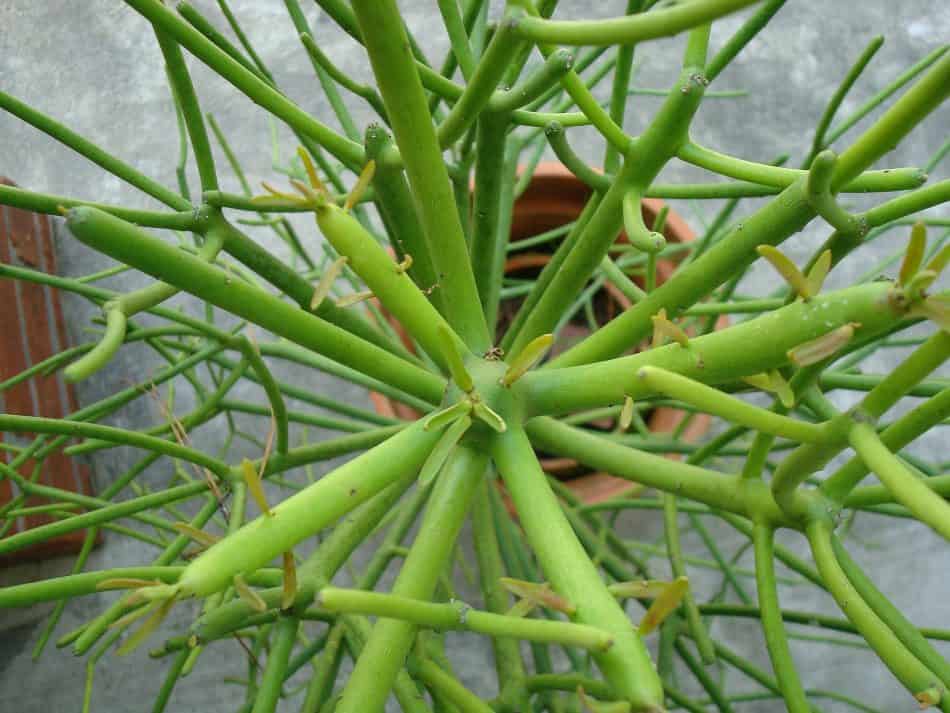
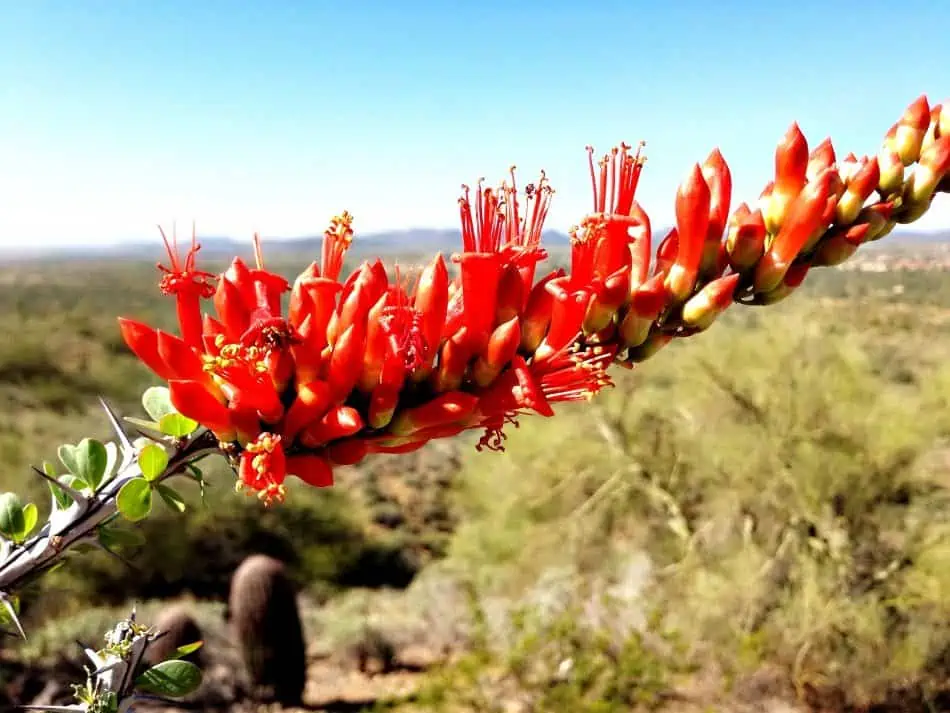
Columnar cacti plants such as organ pipe cacti and totem pole cacti can get spindly or tall and require regular pruning to force thicker stems or lateral branching.
The Opuntia has flat pads that serve as the leaves. In such a case, you can remove some pads and use them to start new plants. This is still a form of pruning/ cutting back.
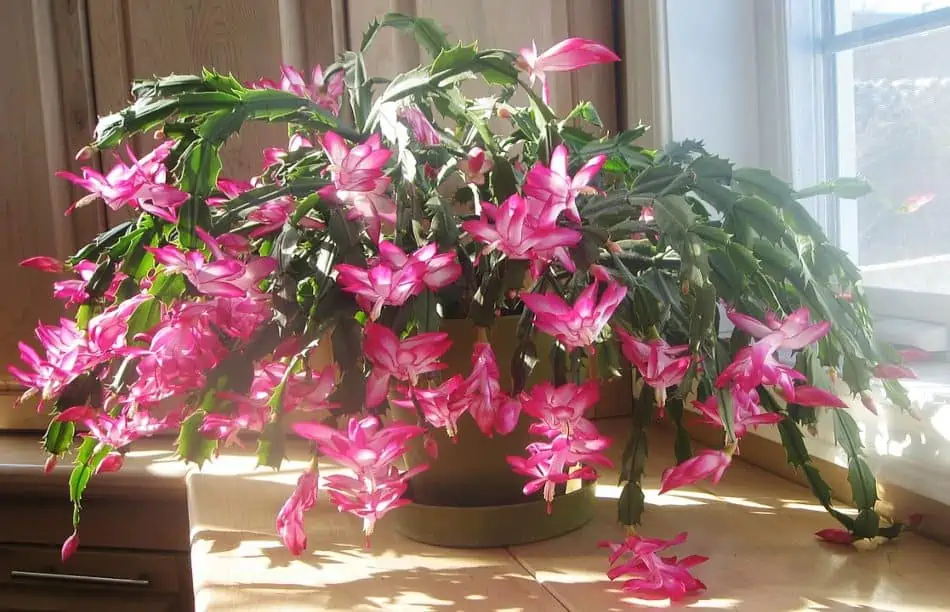
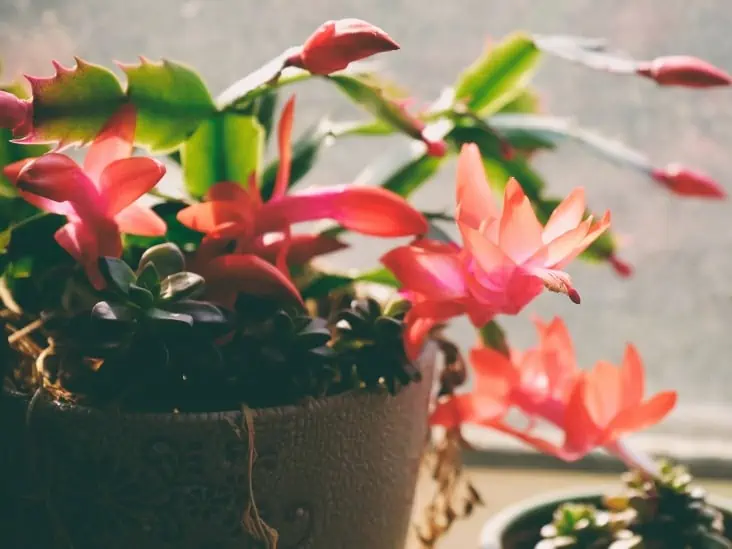
The other plants in the family of cactus such as the Christmas cactus produce flower stalks when blooming. These flower stalks become ugly when dead, and the only way of getting rid of them is by trimming your plant.
Although trimming serves different purposes, the most significant part of it is that you can always use the parts you cut back to start new plants.
Signs That You Need to Cut Back Your Cactus
Now that you understand some of the reasons why cactus pruning is essential, you need to know when to do it. In this section, we discuss the top five signs that you need to prune your plant.
1. The plant has become too large
Although most cacti species grow slowly and never reach destructive heights, there are a few exceptions. Members of the jungle cactus family grow relatively fast and can become too huge when the growth conditions are right.
As a result, you may want to reduce your plant size when you notice that it is becoming too large or one side is growing much faster than the other, and you want it to be asymmetrical.
To keep your cactus healthy, you should cut back the plant whenever it seems to be too large.
Typically, if you are pruning to reduce the size of the plant, consider cutting back the plant by at least a third each year. Regular pruning will eventually result in a slightly bushier plant with more spots for blooms to develop.
Keeping smaller sized plants makes things a little easier because you can position them anywhere in your house. You can fit them on your window sills without overcrowding the limited indoor space.
2. Pest infestation
While most cacti species have sharp spines that deter pests, certain types of pests can still find a way to your plant. Some of the common pests that may attack your cactus include cactus bugs, mealy bugs, spider mites, cactus longhorn beetles, and scale insects.
Some of these insects multiply rapidly, and if you don’t take action to stop them early, the effect can be catastrophic. Most of them attack the stems, but others may find their way to the roots.
The moment you notice signs of pest infestation on your cactus, you need to take appropriate action to stop them. If the pests are large, you can simply remove them by hand. But, if they are tiny such as the spider mites, you may be forced to call in a professional pest exterminator.
The bad news is that some cacti pests are so tough and chemical-resistant such that even the most experienced pest exterminator won’t stop them. If you have tried using an exterminator to get rid of bugs, but you don’t see results, pruning the affected part is the only solution.
Identify the part of the stem attacked by the bugs and carefully cut it back. Make sure you prune all the affected sections of the stem to avoid re-infestation.
3. Top-bottom rotting
Rotting is a common cactus issue that you have to deal with promptly to save your succulent. Rotting can start from the bottom (roots) and spread upwards to the stem. It can also start at the top and spread down.
When your cactus starts to turn brown and soft at the tip, you could be staring at tip rot, also known as cactus stem rot. Once your cactus starts rotting from the top, it won’t stop, and if you don’t act fast to save the plant, it will die.
If your cactus is changing the color and getting softer, you should prune the damaged parts of the plant.
Stem rot is caused by a fungus and pest infestation, or water penetrating through an open wound on the plant. If your cactus is damaged in any way, it could be susceptible to stem rot.
Once you start noticing signs of stem rot on your plant, the most important thing you need to do is prune/ cut back all the affected sections of the stem to save the rest of the plant. If you don’t prune off the affected parts, the rot will continue to spread and eventually kill your plant.
Keep in mind that rot spreads pretty fast and you may not have a lot of time left to save the cactus. You can use pruning shears or a sharp knife to prune the affected sections of the stem.
4. The appearance of dead stalks after blooming season
The appearance of dead flower stalks just after the blooming season is another sign you need to prune your cactus. This is especially true for Christmas cacti that flowers massively.
If you notice dead stalks after the flowering season, you should cut back the unhealthy leaves and stems.
Do not prune before the flowering season to avoid losing the precious blooms. However, once the blooming season is over, you may notice that the flower stalks left behind appear ugly. Take time and carefully cut them back to give your cactus a new look.
Apart from getting rid of the dead stalks, pruning after the flowering season will also make your cactus bushier which will eventually lead to the development of more blooms the next time the plant flowers. Ensure you cut back all the dead stalks and unhealthy branches.
5. Cactus is getting too tall for its pot
Lastly, you should also consider pruning when you realize that your cactus plant is getting too tall for its pot. Ideally, you should repot your cactus every two or three years, but this is not always the case.
Therefore, if you realize that your plant is getting taller for its pot, consider pruning it so that it doesn’t topple over. In most cases, plants grown in light plastic containers tend to grow taller and thin. Reducing the plant to an appropriate height helps it to become thicker and healthy.
If your cactus is too tall compared to its pot, you should consider pruning the plant.
Keeping Safe While Cutting Back Your Cactus
Ensure you observe safety measures when pruning a cactus. Wear protective clothing such as long pants, sturdy shoes, leather gloves, and a long-sleeved shirt. You should also put on protective eye glasses if you are pruning a prickly pear because the glochids can become loose and blown into your eye by the wind.
Make sure your gloves are waterproof to protect you against the milky sap, which might cause severe inflammation and irritation if it comes in contact with your skin. You might also need a water-based marker to help you mark the exact sections of the stem you need to prune.
Final Thought
That is it about pruning/cutting back your cactus plant. Keep in mind that these succulents are quite dangerous, and you need to be careful while pruning.
Now that you have a complete guide on how and when to prune your cactus, it is time to put on your gear and get down to work. Always give your cacti plants the face-lift they deserve so that they look healthy and beautiful throughout the year.
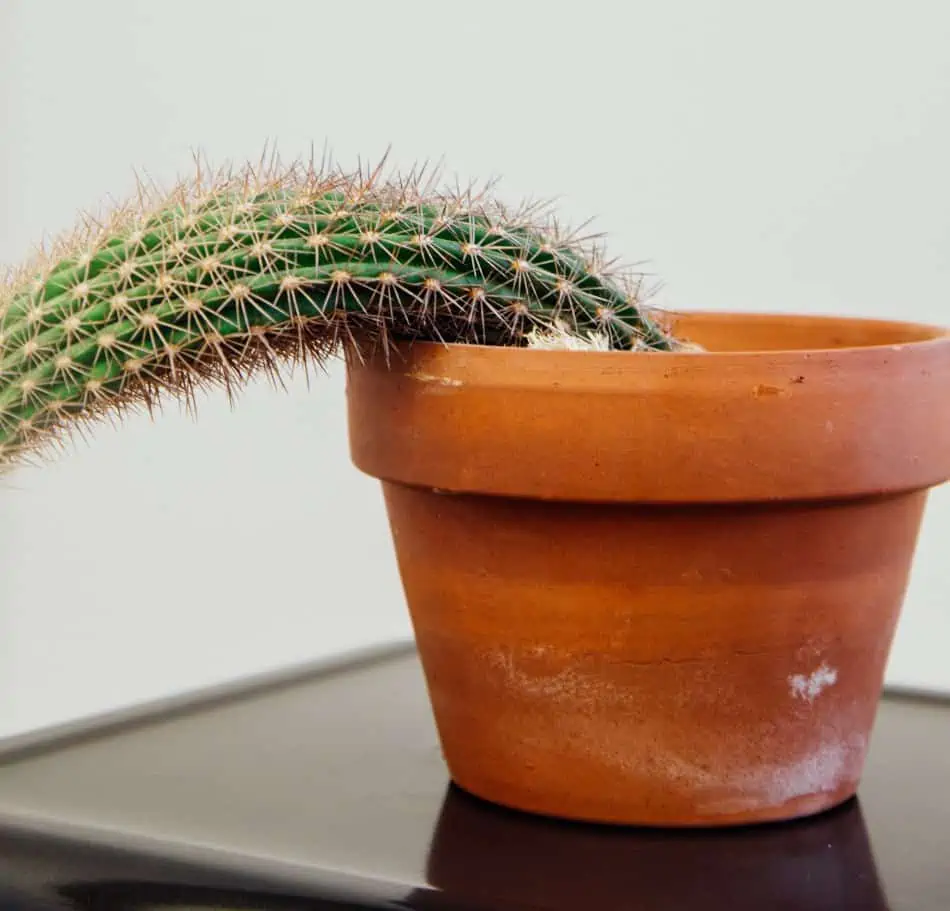
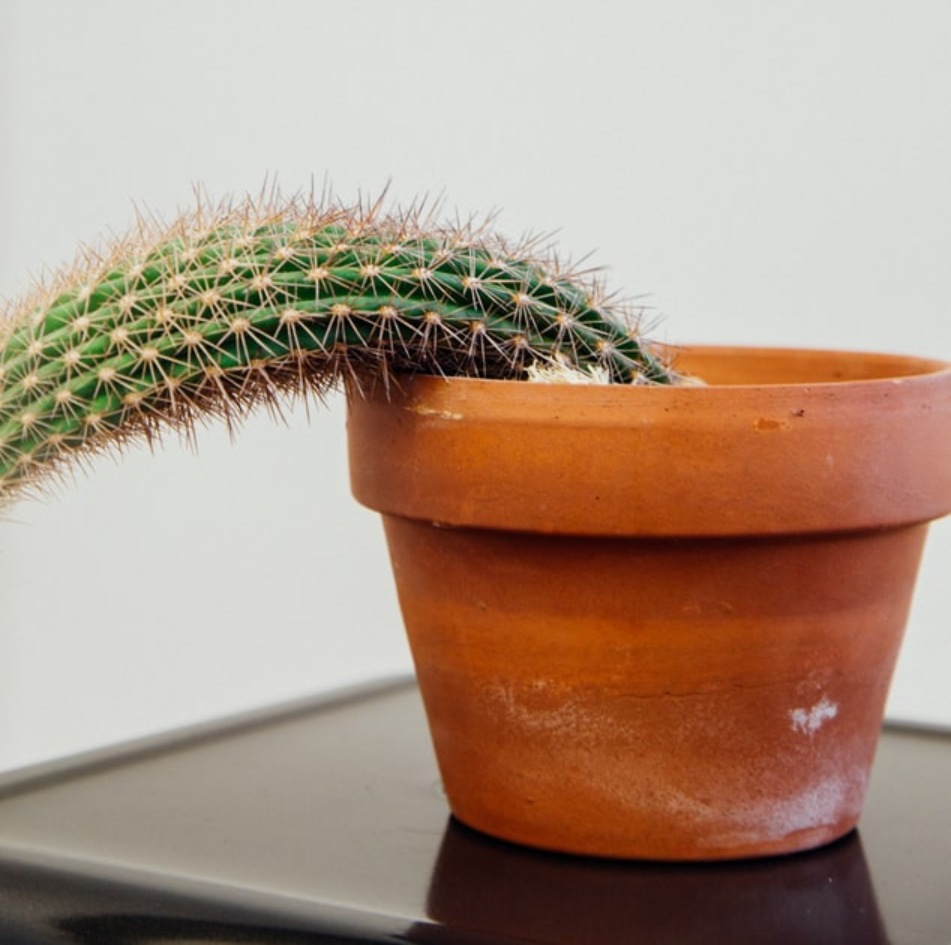
Cacti are hardy plants that can survive and thrive with minimal care. In most cases, these succulents aren’t affected by too many issues.But it doesn’t mean your plant won’t experience any issues whatsoever. One of the common issues that affect cacti plants is drooping or a cactus falling over. If you notice sections of your plant falling over, then it means it is stressed in some way, and you need to find out the cause as soon as possible.
So, why is my cactus falling over? Falling over is a sign of stress in cacti plants. Even though the plant may appear to be perfectly healthy, something could be ailing it and the sooner you find it out the better. Some of the leading causes of drooping in cacti plants include overwatering/underwatering, a plant potted in a container that is too large, weak roots/root rot, pest infestation, or lack of sufficient sunlight.
In this post, we discuss some of the common reasons why your cactus plant may be falling over and what you can do to save it. Remember the fact that the earlier you identify the problem and deal with it, the better.
So, let us get started
1. Underwatering
Let us start with one of the most common causes of this issue; underwatering. Typically, if you don’t water your plant sufficiently, it will start becoming too dry, and with time, it will start falling over. An underwatered cactus may also become dormant and purplish.
An underwatered cactus lacks sufficient water in its cells, which results in a relatively weak stem hence the falling over.
The more the plant loses roots, the more fragile and weak it is, leading to a wide range of issues, including drooping.
This problem is most likely to arise in winter when most people believe that they don’t have to water their cacti plants. While most cacti species don’t require watering during this period, ensure you keep your plant in relatively cool conditions if you will not be watering it.
Also, don’t abandon watering completely just because it is winter. Instead, reduce your watering and monitor how the plant responds to the change. If you have been watering once every two weeks, you can lower it to once every three or four weeks.
Keep in mind that underwatering in winter, especially when your plant is in a warm place, may lead to loss of roots. The more the plant loses roots, the more fragile and weak it is, leading to a wide range of issues, including drooping
2. Overwatering
Closely related to underwatering is overwatering. In fact, overwatering is a much bigger issue than underwatering because it is rampant and dangerous.
A typical cactus plant prefers airy and fast-draining soil. Generally, your potting mix must not be kept wet or waterlogged for too long because it can cause irreversible damage.
Cactus soil should never be overwatered and too wet.
That is especially true during the winter season when temperatures fall to below freezing point. During this time, you should only water your cactus lightly and when it is absolutely necessary. A good rule of thumb is watering once every five or six weeks.
Before you water your plant, always ensure that the potting mix is completely dry. You can check for soil dryness by sticking your finger into the container. If it feels wet, don’t water. You can also use a moisture meter to be 100% sure that you aren’t watering at the wrong time.
Overwatering causes root rot, which can result in drooping. Desert cacti are highly prone to root rot compared to jungle cacti. An overwatered plant will become soft, mushy, and may become brighter in color.
3. Pest infestation (Mealybug)
Sometimes, your cactus may start falling over due to pest infestation. If your plant looks weak, damaged, or has visible spots on its surface, it could be a sign of mealybug infestation.
These insects usually attack cacti plants and start sucking juice from the stem, leaving behind blemishes. If you don’t deal with these pests promptly, they can spread to every part of the plant, making it difficult to salvage the situation.
The good news is that you can easily kill mealybugs by hand. Alternatively, consider rinsing the plant with insecticidal soap or a concentrated solution of liquid dish soap and clean water. After rinsing the plant in the soap solution, let it sit for at least one day before rinsing it with clean water.
Avoid exposing the cactus to direct sunlight during this period to prevent sunburn. Remember that it may take several attempts to get rid of all the mealybugs because newly hatched bugs may not be killed with the first attempt.
4. Your Cactus is potted in a container that is too big
Another reason why your cactus may be falling over is that it could be potted in a container that is too big for it. These succulents don’t like being potted in large containers even if they have overgrown their current pots.
Choosing the right size container can play a critical role in ensuring that your plant is happy and healthy. Ideally, you want a container that will only allow a small amount of space from both sides. You also need to allow one or two inches on the bottom to provide roots with sufficient space to grow.
To keep your cactus healthy, you should plant it in a container that is neither too big nor too small.
Monitor your plant’s progress closely and only repot when it is clear that it has outgrown its current container. A good rule of thumb is to repot once every two or three years.
However, if you are using tap water to keep your plant hydrated, consider repotting once every year because tap water is hard water and contains a lot of minerals that tend to accumulate in the potting mix pretty fast. High quantities of these minerals can damage your plant and its roots.
When roots start sticking out of the container’s drainage holes, it is a sign that it is time to repot. Repotting must be done just before the growing season and avoid repotting your cactus when it is flowering.
5. Freeze damage
Most cacti species are native to deserts and other dry areas. This means that these plants are not accustomed to growing in cold climates that experience extremely low temperatures. Therefore, if temperatures drop to below freezing point even for a few hours, cacti plants can easily suffer freeze damage.
Most of the cacti species do not tolerate cold and freezy weather.
Exposed parts of the plant will start developing black spots, and within a few days or weeks, the black areas will dry out and start to droop. If the freezing occurred only for a few hours, then the damage is most likely cosmetic, and your plant will eventually grow out of it.
Exposure to adequate sunlight, warmth, and proper watering will help your plant to overcome the problem quite easily. If your plants are growing outdoors, transfer them to spots that receive plenty of radiated heat at night, such as close to a wall.
If temperatures continue to drop, be sure to cover your cacti plants with a cotton sheet to provide additional warmth and protect them from frost damage. If they are potted, consider moving them indoors.
6. Lack of sufficient sunlight
Most cacti species require a lot of sunlight to thrive. Some cacti plants can even tolerate full sunlight without an issue. Just like other plants, these succulents require sunlight to photosynthesize.
Without sufficient sunlight, they won’t manufacture enough food leading to a significant imbalance in the metabolic process. Over time, the plant becomes weak and droopy because it lacks sufficient nutrients to sustain its metabolic process.
Insufficient sunlight is one of the common reasons why your cactus is slowly falling over.
Each cactus plant has its own light requirements. Ensure you understand the light requirements of your plant and stick to the recommendations.
Generally, epiphytic cacti require more shade compared to desert cacti. Therefore, if you are growing such cacti indoors, consider positioning them on south-west and south-east facing windowsills. If you place them on a north-facing windowsill, you will need to provide more shade to avoid sunburn.
Significant differences in light and temperature can also cause your cactus to fall over. For instance, if the temperature inside your house is too high, but there is no light, your plant may start stretching out in search of light. Some of its parts may start falling over in the process.
This is the primary reason why you must always be careful with sudden temperature drops. For example, if you are taking your plants out after winter, you must be cautious with how you introduce them to the outside temperature. Make sure the process is slow and gradual to avoid problems.
Also, you should avoid watering your plant with cold water. Gardening experts say that you stand a good chance of achieving better results if you use lukewarm water.
Final Thought
Drooping is a relatively common problem that affects cacti plants. While there is no specific cause of the issue, a close inspection of your succulent can help you determine why it is falling over.
Take time to assess how you have been treating your plant and you will find the answer. The secret to dealing with this problem is identifying the cause as early as possible and dealing with it before it gets out of hand.
There is no doubt cacti plants are pretty and vibrant, but they can also be picky. Unlike your average houseplant, cacti are quite selective with soil, which is one of the reasons why they are so special. Whether you are a pro gardener or the new kid on the block, consider making your own cactus soil because it is cheaper than buying a commercial one and it is also super easy.
So, how do you make your own cactus soil? To make your own cactus soil, you will need a few ingredients: regular garden soil, perlite/pumice, coarse sand, gravel/lava rocks, and peat. You can purchase these ingredients at any home improvement store near you. Once you have the ingredients, measure and mix them appropriately.
For general cacti soil, you need to mix three cups of sand with three cups of regular soil and two cups of perlite or pumice. Combining the right amounts of ingredients is paramount to achieving desired compactness, aeration, and drainage.
In this post, we will take you through a step-by-step analysis of how to make your own cactus soil and how to achieve the best results. Read on to find out everything you need to know.
Soil should be well-draining and sandy for the cactus to stay healthy.
Most cacti plants have thick, fleshy stems that are adapted to storing water. In other words, these plants are adapted to growing in hot and dry conditions. The plants are native to desert regions of North and South America, parts of Europe and parts of Africa.
Their unique ability to store water for prolonged times is one of their coveted adaptations to surviving in deserts. Since it rarely rains in deserts, these plants store water in their stems for use during the prolonged dry season.
Therefore, for cacti plants, their roots don’t absorb water regularly, which is backed up by the type of soil found in deserts. The soil is mostly sandy, and the dry conditions help water to drain quickly whenever it rains. These plants don’t sit on water for prolonged periods.
In a nutshell, cactus soil must be well-draining, non- compact and must have proper aeration. There is no alternative to this requirement. Keep in mind that cacti plants don’t love damp soil because it can lead to root rot, fungal diseases, and a host of other pests.
In fact, the biggest threat to cacti survival is root rot because it attacks the main channel for water absorption and can easily spread to the stem where water is stored. This leads to a weak and shriveled plant whose fate is almost sealed- death.
Therefore, if you are making your own cactus soil, you need to make sure you end up with good soil that will drain pretty quickly. Typically, loose and grainy soil is the perfect choice for growing cacti plants.
You should also ensure your soil has good aeration and is non-compact. The roots need to have sufficient space for breathing because it makes it easier for water and nutrient absorption. Non-compact soil doesn’t hold moisture for too long and aid the roots in breathing.
Lastly, avoid adding excessive nutrients to your cactus soil. Typically, cactus soil containing too many nutrients, especially nitrogen, may lead to brittle, lean, and unpleasant plants. We are pretty sure you don’t want such kind of goofy-looking plants near your home.
Soil texture is critical for cacti plants
Different types of cacti plants require different types of soil to thrive. Although the soil might be similar, there will be differences in soil mixes for epiphytic, desert, and lithophytic cacti.
Selecting the right texture and composition of cactus soil is extremely important.
Apart from the specific soil ingredients we mentioned in our introduction, cacti plants require a specific soil texture and composition. It is critical to ensure your cactus soil remains loose and airy even when watering.
Avoid adding manure to your cactus soil because it can lead to the growth of fungus that cactus roots can’t fight. You should also avoid using any organic fertilizers for cacti except for epiphytic plants.
Maintain proper pH Levels in your cactus soil
Almost all types of cacti require slightly acidic soil to thrive, although some plants require higher acidity potting mix than others. Generally, you need to make sure the pH level of your cactus soil ranges between five and six.
The only exception is for button cacti that tend to do well in much more alkaline soil with pH levels of 6.5-7.
You can use litmus paper to monitor pH level of your cactus soil.
Potting mix with pH levels of less than four or higher than seven will kill your plant. This type of soil is not ideal for the survival of your cactus plant. If you prepare your soil and realize that the pH is still too high, you can lower it by adding peat.
To determine the pH of your cactus soil, use a well-calibrated meter that measures moisture, light, and pH levels.
Benefits of Making Your Own Cactus Soil
Some of the most significant benefits of preparing your own cactus soil are that it is relatively cheaper than commercial soil, and you can control the ingredients. Since you are in charge of everything, you can modify your soil recipe in different ways to get the perfect result that your plant will love.
To make your own cactus soil, you will need a few ingredients discussed below. You can purchase most of these ingredients from your local plant or home improvement store.
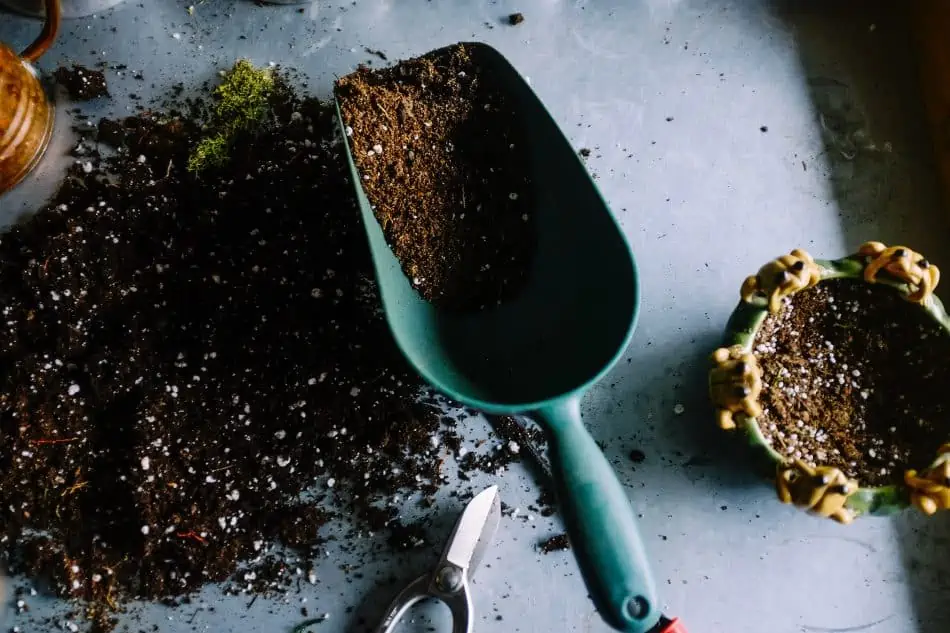
1. Regular potting soil
Any type of regular potting soil will work fine as the base to prepare your own cactus mix. Feel free to use whatever you have at hand as long as it is fresh and sterile potting soil.
Regular potting soil works as a base for preparing your own cactus soil.
If you can get light, porous soil to use as the base, it will be great because that will make your work pretty easy. Avoid using heavy garden soils or potting soils that contain vermiculite or any other moisture control elementsthat helps the soil retain moisture for prolonged periods.
Keep in mind that your cacti plants require well-draining soil, not one that retains moisture for too long. Therefore, you need to be careful when choosing a type of potting soil as the base because it will determine the outcome.
2. Coarse sand
Cacti plants thrive in a porous sandy potting mix. So, adding some coarse sand to your regular potting soil is critical. Feel free to use any type of sand but ensure you achieve good drainage at the end. Consider purchasing coarse sand other than the fine stuff you might come across in your compound.
Don’t use sand from your garden, beach, or a traditional sandbox. That type of sand is not good enough, and it won’t help you achieve better results.
If you prefer, you can use poultry grit or turface instead of sand. Either of those serves as an excellent alternative to coarse sand in this recipe.
3. Perlite/pumice
Perlite is a lightweight organic soil addition. It is the white pieces that resemble Styrofoam that you see in commercial potting soils. The primary purpose of perlite is to prevent soil compaction and enhance the aeration. It also improves the drainage of your cactus soil.
The use of perlite or pumice will improve drainage and make the soil arable.
In other words, perlite helps your soil drain faster, which is precisely what you are looking for in good soil. You can purchase perlite and pumice at your local plant/home improvement store. It is usually in the same section as commercial potting mix for sale.
If you cannot find it in your local home improvement store, buy it online.
4. Peat
You need to ensure your soil has the right pH level. Sometimes, you may prepare your cactus soil and discover that the pH level is pretty high. To lower the pH level, add a small portion of peat to your recipe. However, you should keep in mind that this component can make it difficult to re-wet the soil.
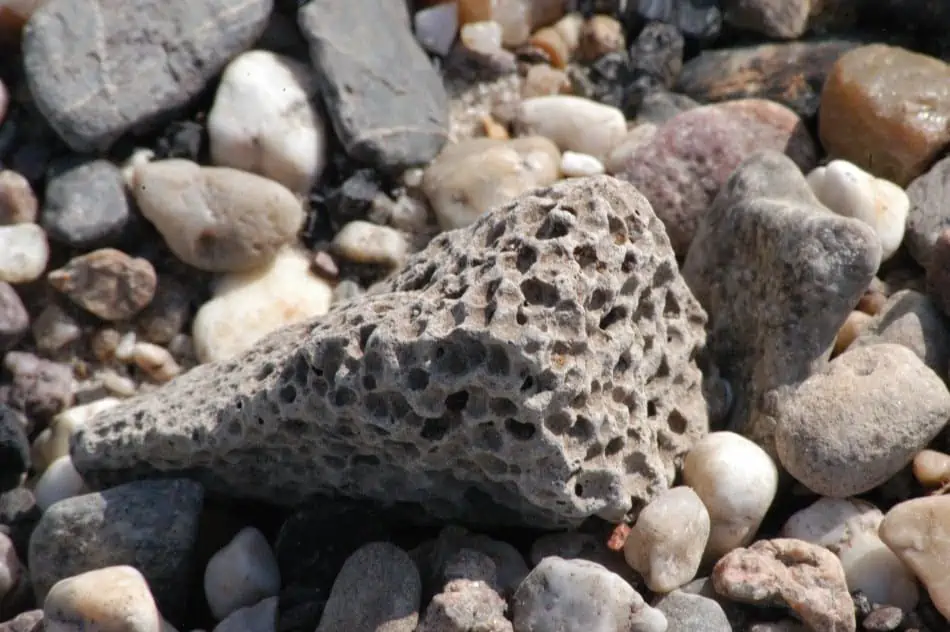
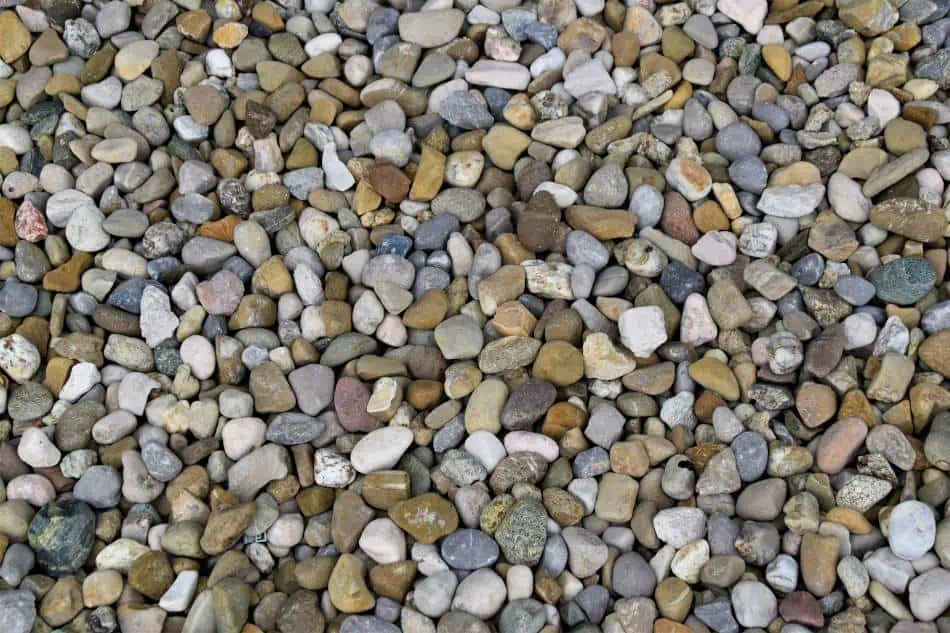
5. Gravel/lava rocks
Gravel and lava rocks are another decent addition to your cactus soil recipe. They are coarse and will help make the potting mix loose and airy.
The addition of gravel and lava rocks will make the soil breezy.
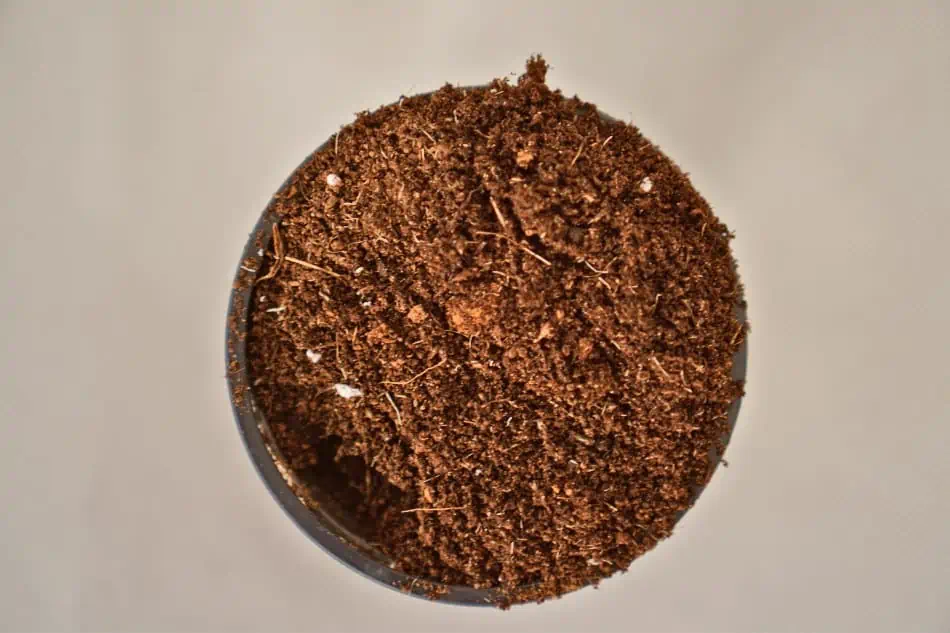
Coir helps to retain small amounts of moisture in the soil and also provides a non-compact structure. Some people use coir to replace peat moss.
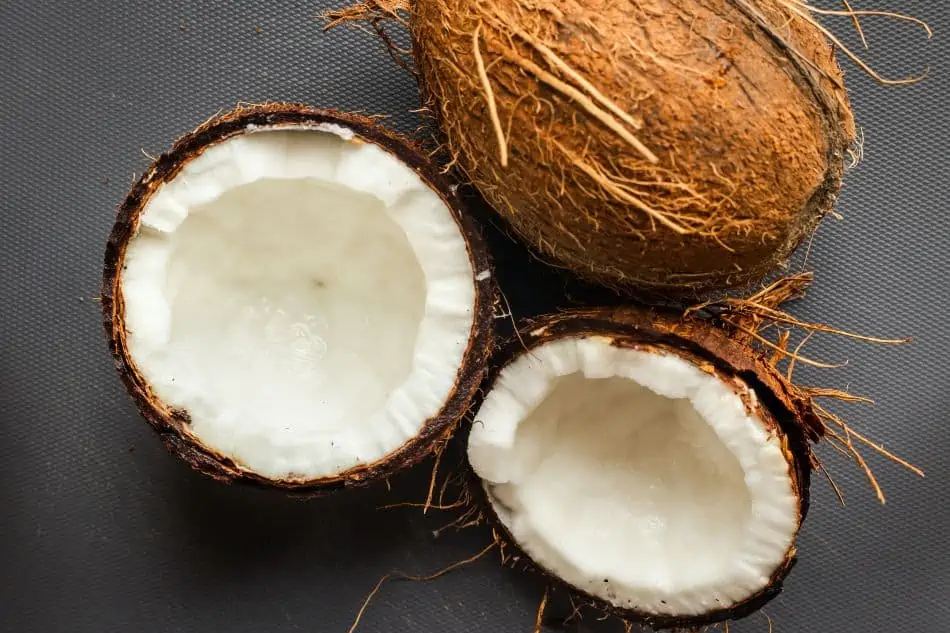
Coir (coconut fiber) helps soil remain a little bit moist.
Apart from the ingredients, you will also need other supplies to make your own potting soil. They include:
Measuring container/cup.
A container for mixing (you can use a bucket or tabletop potting tray for this purpose).
Trowel (a small shovel).
Gardening gloves.
Let Us Get Started Making Our Own Cactus Soil
Now that you understand the basics of what is needed to make your own cactus soil, it is time to get down to business. You need the following to make your own cactus soil using this recipe:
3 parts regular potting soil
3 parts coarse sand/ turface/ poultry grit/gravel
2 parts perlite/pumice
In this recipe, the term “part” refers to a generic unit of measure that describes your potting mix ratio. Feel free to use any type of container to measure your ingredients as long as you use the same type of measure for each “part.”
For instance, if you use a scoop measure for “one part,” then be sure to use the same scoop twice for “two parts” and three times for “three parts.” So, if you are using a cup as a unit of measure, this recipe would convert to 3 cups regular potting soil, 3 cups coarse sand/ turface, and 2 cups perlite/pumice.
Mixing your cactus soil
Once you have measured the ingredients as required, you need to move on to the next stage of cactus soil preparation; mixing. So, put on your gardening gloves and let us get started.
Start by moistening the regular garden soil to prevent dust from coming out of the bucket or mixing container. The next thing you need to do is add sand to the regular garden soil and mix the two thoroughly.
Use hands to stir and mix the two ingredients to achieve better results. Mix for at least seven minutes.
Now scoop the already measured perlite or pumice and add it to the mixture. Stir and mix thoroughly the same way you did after adding sand. Mix for at least five minutes.
At this point, you have good cactus soil, but you need to measure its pH level. So, take a small sample of it and head to the pH measuring meter.
If the pH is below or beyond the recommended values, consider adding a small amount of peat to the mixture, stir thoroughly, and take another reading. Repeat the process until you achieve the desired pH level.
Good work! You have just prepared your first cactus soil. From the procedure described above, you must have realized how easy it is to prepare cactus soil. It is just a matter of understanding the right types of ingredients to use and getting the measurements right.
As long as you use the right ingredients and stick to the correct measurements, you can always make your own cactus soil that you can use for potting, propagating, repotting, or even store it for future use. You need to keep in mind that you need to leave the soil to dry out before you pot your plants.
Sterilizing the Cactus Soil before Use
Making your own cactus soil is a good idea, but you need to ensure you are not exposing your plants to bacterial or microorganism growth in the process.
Cacti plants are quite sensitive to microorganisms and bacterial growth in the potting mix. You need to be even more careful when you use ingredients from outdoors or have purchased them from a local home improvement store.
If the potting mix is contaminated, it can cause severe infections that can lead to the death of your plant. To avoid such scenarios, make sure you sterilize the soil before using it. One of the best ways of sterilizing cactus soil is by heating.
To do this, place the soil in a pot or glass container, then put it in another larger pot with hot water and keep it on slow cooking mode. This method is commonly referred to as the bain-marie sterilization method.
Keep heating the water inside the larger pot until it reaches the boiling point. This can take anything between 20-30 minutes, depending on the volume of water in the container. Once it has reached the boiling point, turn the heat off and leave the soil to cool down gradually.
Bonus Tip: Leave your newly prepared cactus soil outside for a few days before potting your cacti plants.
Storing Your Leftover Cactus Soil
One of the best things you will love about making your own cactus soil is that you can always mix a big batch and store the excess for future use. Fortunately, storing cactus soil isn’t a difficult thing to accomplish.
You can store your DIY cactus soil on a shelf in your garage, basement, or garden shed. This gives you a good option of preparing your cactus soil ahead of time and storing it for future use.
Just make sure you store your potting mix in an air-tight container to keep pesky bugs out. If you don’t have an air-tight container to use, ensure you purchase one from the nearest general store. A transparent plastic container is the best option because it allows you to monitor the soil’s general condition 24/7.
How Do I Know If I Need Different Soil?
Sometimes, the cactus soil you make may not be ideal for your plant. Keep in mind different types of cacti species thrive in different types of soil. Therefore, it is critical to understand your plant’s natural habitat and soil type before you start preparing your soil.
If you notice a decline in your plant’s health after potting it in your DIY soil, it could be a sign of problems. Unfortunately, by the time you start noticing signs of stress in your cactus, it could be too late.
The only way to avoid this is to ensure you have the right type of soil. For desert species, use a blend of fine sand, grit, perlite, and regular garden soil. However, if you have the tropical cacti species, add plenty of peat to your soil.
Final Thought
Making your own cactus soil can save you a lot of money and time. In fact, homemade soil is much better than a commercial potting mix because you can control the amount of ingredients you use. The process is also easy to follow.
Anyone can fall in love with cacti plants, especially when they are blooming. They are unique plants that can survive with relatively low maintenance and care. Since cacti plants are living things, they consume and radiate energy.
Therefore, if you keep these plants indoors, you need to ensure their placement is subtle and in harmony with the overall look of your room. Basic Feng Shui principles should guide you in accomplishing this task.
So, where should you place your cactus to ensure good Feng Shui? According to basic Feng Shui principles, to bring good Feng Shui, make sure your plants go in the fame and reputation quadrant. This is the section of your house dedicated to your personality and what you desire to show to the outside world. The fame and reputation Bagua quadrant corner corresponds to the fire element, and colors present in this section should be bright and fiery such as red, yellow, or orange.
In this post, we discuss everything you need to know about good Feng Shui and cacti plants. We shall help you understand what Feng Shui is all about and how you can use the practice to arrange your cacti plants to bring good vibes to your indoors.
So, let us get started.
The Basic Principles of Feng Shui: A Quick Overview
Feng Shui is a Chinese term used to refer to the practice of looking at our living spaces and working environment and finding a way of striking balance with the natural world. The two words translate to “wind” and “water,” respectively.
The concept was derived from an ancient poem that talks about our lives flowing with and being connected to the environment around it. The basic principles of Feng Shui are; the commanding position, the Bagua, and the five elements.
1. The commanding position
This refers to the spot in a room that is furthest from the entrance and not in direct line with it. Basically, the commanding position practice puts you diagonal to the door when you are sitting at this spot. However, it maintains a clear line of sight with the door.
The commanding position practice puts you diagonal to the door when you are sitting at this spot.
Ideally, this is where you should be spending most of your time. Feng Shui principles suggest that you determine this spot in your favorite room then place your stove, desk, or bed in a diagonal alignment if possible.
The three items are important because they represent essential parts of your life. The bed represents you (who you are), the stove represents your health and nourishment, and the desk acts as an extension of your career.
2. The Bagua Map
A Bagua is a term used in Feng Shui to mean an energy map that is superimposed on the floor plan of your house. The word “Bagua” translates to “eight areas.” According to Feng Shui principles, each of the eight areas on the map represent a different life circumstance such as career, wealth, or family.
Each of the eight areas corresponds to different shapes, colors, seasons, earthly elements, and numbers. At the center of this map is a ninth element that represents your overall health and wellness. The element is, you.
3. The five elements
Metal, water, fire, wood, and earth are the elements of Feng Shui, which represent different phases of the life.
The five elements of Feng Shui are metal, water, fire, wood, and earth. These elements represent five interrelated phases in your life that work together to create a complete system.
Feng Shui works to create a balance between the five elements and integrate them into different areas of your life.
To integrate the five elements in your home and life, you must decide where you want to focus your energy.
From the commanding position, you can only choose one area of your life that you want to improve, and then you strengthen your energy in that area by adding specific colors and shapes. You can read more about Feng Shui here.
What Is Wrong with Cacti Plants?
The presence of spines all around the cacti bodies generates negative energy.
Now that you understand the basic principles of Feng Shui let us evaluate why you need to be careful with these succulents when growing them indoors.
Generally, plants bring positive Feng Shui to your home. However, cacti plants are quite different, and you have to place them in specific spots to enjoy positive energy. We do not deny the fact that these are nice plants that emit strong protective energy.
However, the biggest problem is their spines/needles. Since their spines are tiny and look like hundreds of arrows, they tend to shoot negative energy into the surrounding space.
This is the primary reason why you need to choose a good placement for your cacti plants, according to Feng Shui. Cacti plants can bring bad vibes if you place them in the wrong area.
Areas Where You Shouldn’t Put a cactus Plant in Your Home
You should avoid putting your cacti in the living room, kitchen, bathroom, and bedroom.
If you suddenly get itchy, irritable, or nervous after you have just purchased a cactus plant and placed it in your indoor areas, then you should conduct quick research to find out what is disturbing you. It might be the plant that you have just brought in.
Typically, cacti plants shouldn’t be placed in the following areas of your home:
1. Living room
A living room is a place that should have good Feng Shui. It should be calm and secluded from the other areas of your house because this is where you come when you want to feel comfort and peace.
If you have cacti plants all over the place, they will continuously poke you with their pointed spines, making you feel uncomfortable. Therefore, unless the fame and reputation Bagua quadrant is in your living room, do not put cacti plants there.
2. Kitchen
A kitchen is a place where you prepare meals and drinks for your family or guests, and you don’t want your food to taste awkward.
Positioning a cactus plant in the kitchen area might spoil the taste of your food because the plant’s spines produce negative energy, which could be transferred to the food you are preparing and eventually to the people eating the food.
3. Bathroom
Bathrooms are also not a good place to put cacti plants because when you are there, you need peace of mind. However, there is one exception. If you want to convert your bathroom to your fame and reputation quadrant, then you can position your cactus plant there.
4. Bedroom
Your bedroom is probably the only place you find comfort and peace while you sleep. Therefore, you wouldn’t want any negative energy to disturb your peace and sleep after a long day at work. If you place cacti plants in your bedroom, you may get pricked now and then.
5. Areas close to the entrance or outside your main door
Don’t place your cacti plants close to the main door unless you have annoying neighbors that you want to keep away. If that is not the case, you want the area around the main door to be free to allow new and refreshing energy to stream into your house.
6. Office desk
Placing a cactus plant on your office desk is also a bad idea because it can chase away potential customers and business partners. You want to keep your working space as tidy as possible and free from negative energy.
So, Where Should You Place Your Cactus to Ensure Good Feng Shui
Putting your cactus in the fame and reputation Bagua quadrantwill generate good Feng Shui.
If you have read this article up to this point, I’m sure you already know where to place your cactus to ensure good Feng Shui. Don’t worry if you skipped directly to this section because we shall explain everything in detail.
Generally, if you want to bring good Feng Shui to your home, you need to make sure that your cacti plants go into the fame and reputation Bagua quadrant.
The fame and reputation Bagua quadrant is part of your house that is dedicated to your personality and what you desire to show to the outside world. The section is usually located in the far back corner of the middle portion of your living space.
As mentioned earlier, there are nine quadrants on the Bagua map. The ninth section of the map is dedicated to you and your reputation. It defines what you and what you want to contribute to the outside world.
The main element of this quadrant is fire. You can use any fire symbol, including a bright red color, to bring good Feng Shui to this section. Orange and yellow are also acceptable.
The fame corner is always the right place to place any personal achievements such as medals, trophies, awards, degree certificates, and so on. This is also the right place to install a fireplace.
Additionally, you can position your cacti plants on windows to keep away enemies. When positioned on windows, these plants will work towards protecting your home, career, and reputation.
Final Thoughts
Cacti plants are good indoor plants but where you position them in the house matters. The safest position for a cactus plant in your home is the fame and reputation Bagua quadrant that represents your personality and what you desire to show to the outside world.
Make sure your cacti plants are not positioned in your living room, bathroom, kitchen, bedroom, or close to the main door. Otherwise, these succulents may affect your life in ways you didn’t expect.
Do you have cacti plants in your home? Let us know where you have positioned them and how they have impacted your life in the comments section below.
Cacti are unique and popular plants that are known for their distinct appearance and exceptional characteristics. Most of these succulents thrive in relatively hot and dry climates. Unlike most plants, a cactus requires minimal amounts of water to survive since it can store water in its stem for a relatively long period.
So, how many types of cactus are there? The Cactaceae family consists of approximately 150 genera and 2,500 species found in different parts of the world. A significant number of these species are adapted to growing in arid environments, although some of them are native to rainforests and tropical climate. Most of them have reduced leaves that are modified into spines and photosynthetic stems.
While most cacti plants are known to be desert plants, they can grow and thrive in a home environment too. But before you start growing these amazing plants, you need to know the different types of cacti that exist and their unique needs.
In this post, we discuss essential information about cacti plants that you need to know. We shall talk about their classification, some of the unique physical characteristics they possess, and some of the common types of cacti plants you can grow in your home.
Classifications of a Cactus Plant
Classification refers to the process of listing an organism or plant into different groups to which it belongs. The classification starts from the highest group, which is the Kingdom to the lowest group; the species.
As you move from the top group (kingdom) to the lowest group (species), the characteristics of the organism become more specific and defined. So, let us see how a cactus plant is classified into the seven different groups.
All cacti are succulents but not all succulents are cacti
1. Kingdom
Since a cactus is a plant, it falls into Kingdom Plantae. This is the highest group in our classification, and there nothing unique about it except for the fact that it houses all plants.
2. Phylum and Division
All cacti plants belong to thePhylum Tracheophyta and division Anthophyta. Phylum Tracheophyta features all vascular plants, while division Anthophyta features flowering plants or angiosperms.
3. Class and Subclass
These succulents are part of class Magnoliopsida, also referred to as dicots and subclass Caryophyllidae. All plants in this class and subclass are typically insect-pollinated, and their seeds have two cotyledons hence the name dicots.
4. Order and Family
Cacti plants belong to order Caryophyllales andfamily Cactaceae. Order Caryophyllales features a group of approximately 26 families of flowering plants subdivided into about 12,500 different species. The families in this order include Cactaceae (cacti), Portulacaceae (purslanes), Didiereaceae, and the carnivorous plant families Nepenthes and Droseraceae.
5. Genus
There are approximately 150 different genera in the family of Cactaceae divided into three broad subgroups or tribes. The subgroups are:
Opunitieae:Genera Opuntia features branched plants that may or may not have spines but have fine hairs referred to as glochids. Their leaves are cylindrical or flat, and their fruit is usually seedy. The most common example of plants in this genus is the prickly pear cactus.
Pereskieae: Plants in this subgroup have woody stems, and their areolas are spiny and woolly at the leaf axis. Their leaves are also semideciduous, and their fruits are mostly fleshy.
Cactoidea: This tribe has about 100 genera, and most cacti plants are found here. Some of the common subtribes of Cactoidea include cactinae, Trichocereinae, Echinocereinae, Browninginae, and Hylocereinae.
Physical Characteristics of Cacti Plants
Now that you understand the general classification of these succulents, it is time to discuss the unique physical characteristics that distinguish them from other plants.
In most cases, cacti plants can easily be distinguished from other succulent plants by the presence of areoles on their surface. These are small hair-like structures and occur in almost all cacti species. Areoles are modified branches from which other branches, leaves, and flowers grow.
Cacti plants also have a relatively thick and herbaceous stem. The primary function of the stem is to store water and photosynthesize. Keep in mind that the spines which serve as leaves on these plants cannot photosynthesize.
In most cacti species, leaves are reduced and modified into spines, which minimize the amount of water lost through transpiration. Only the tropical genera Pereskopsis and Pereskia have true looking and photosynthetic leaves. The Christmas and Holiday cacti that are native to rainforests of Brazil also have true leaves.
The roots of these plants are generally thin, fibrous, and shallow to absorb water effectively.
These succulents also vary in size and appearance, from the low clumps of Opuntia prickly to the relatively tall columns of barrel cacti and the imposing stature of the giant saguaro. Most of them grow in the ground, but a few species, including the leaf cactus (Epiphyllum), Schlumbergera, and Rhipsalis, are epiphytes meaning they grow on other plants or hard surfaces such as rocks.
However, this doesn’t mean that these cacti plants are parasitic. They only use other plants and rocks to gain support but have their own means of obtaining food and water.
The primary method of reproduction is by seeds, although you can propagate cacti plants from cuttings. They produce beautiful flowers mostly during summer. Their flowers are often large and colorful. Some cacti species, such as the prickly pear, produce edible fruits.
Some of the Common Types of Cacti Plants
Although these plants are well known for growing outdoors in arid areas, some of them do great in a home setting when watered and taken care of properly. If you are looking to bring some cacti plants into your home, you should consider going for one of the following common types of cacti:
1. Christmas Cactus
One of the most popular types of cacti is the Christmas cactus that is native to the tropical rainforest of Brazil. This plant is in the Schlumbergera family.
Christmas cactus doesn’t have true leaves but its long, flat stems extend to form leaf-like structures. Its name is derived from its unique characteristic of flowering during winter, just around Christmas time.
Christmas cactus
It produces yellow, red, pink, or white flowers. To ensure that your Christmas cactus flowers, you need to keep it in a relatively cool environment, water sparingly, and expose it to prolonged periods of darkness. Typically, the plant should get between 12-14 hours of darkness every day.
2. Barrel Cactus
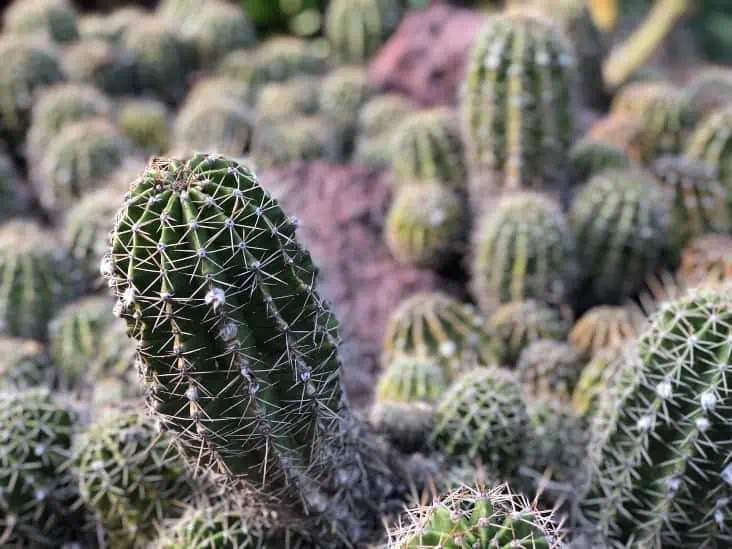
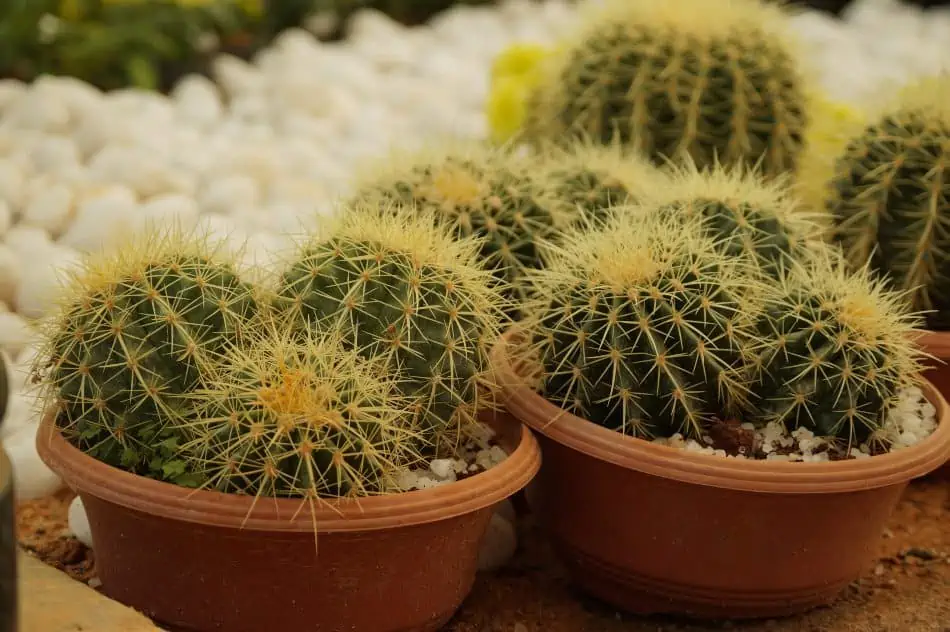
Barrel cactus is a group name for a specific type of barrel-shaped cacti native to North and South America. Plants that fall into this group are characterized by their ribbed, cylindrical shape. They come in different sizes, but all of them are cylindrical.
The barrel cactus usually requires plenty of sunlight but not much water. In fact, a barrel cactus can still survive and thrive even with one watering session every three months as long as you expose it to sufficient lighting.
Therefore, make sure you keep potted barrel cactus in the warmest room of your house and position it on north-facing windows if you live in the southern hemisphere or east-facing windows if you live in the northern hemisphere.
3. Old Lady Cactus
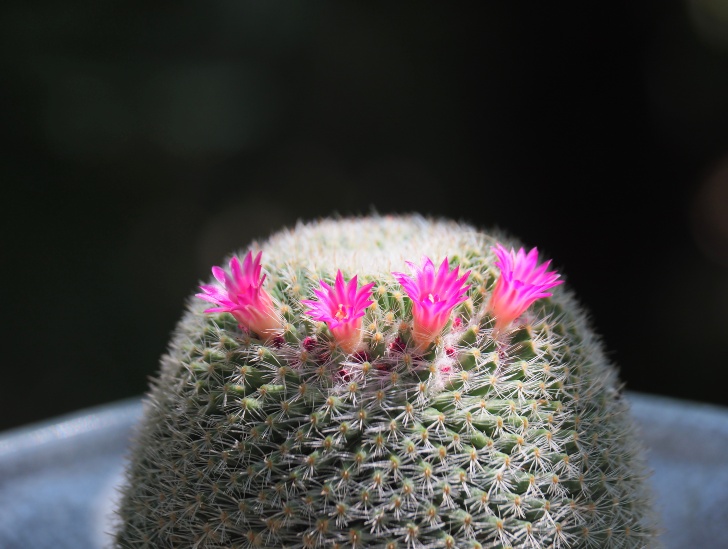
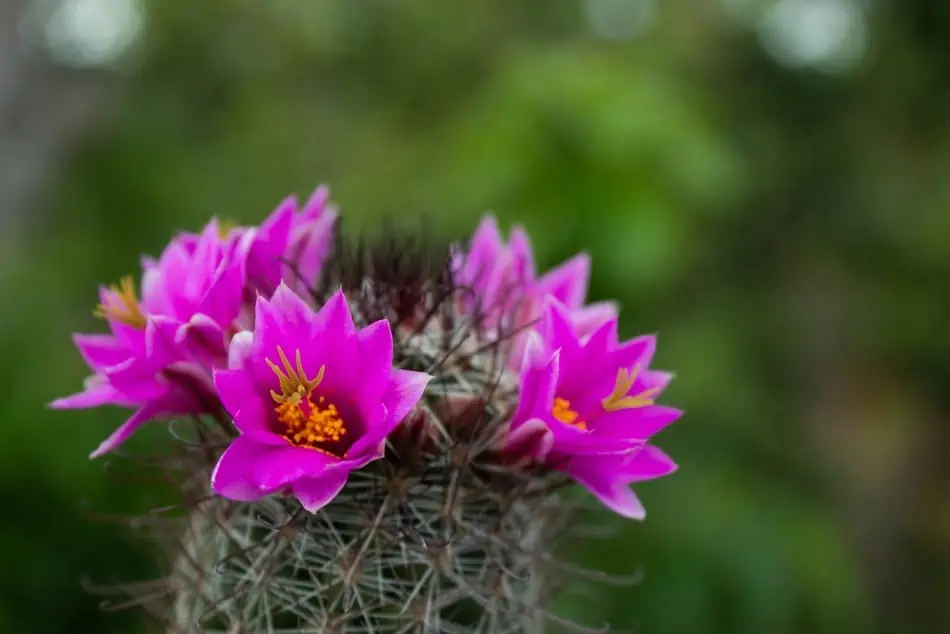
TheMammillaria Hahniana, commonly referred to as the Old Lady Cactus, is native to Mexico and grows up to ten inches tall and 20 inches broad. Its stunning spherical stems are usually covered in sharp white spines and white hairs hence the name Old lady cactus.
The Old Lady cactus is easy to take care of, and as long as you do everything right.
This plant doesn’t like being lonely, which explains the reason why you will always find them growing in groups creating a beautiful collection of spheres. During summer, the spherical ball of the plant begins to take a new look.
The balls start flowering with reddish-purple flowers forming a stunning crown at the tip of the plants. The flowers look like a headband creating a perfect halo effect. The Old Lady cactus is easy to take care of, and as long as you do everything right, you will always have a show to savor every summer.
4. Bunny Ears Cactus
Bunny Ears cactus is also native to Mexico and grows indoors quite well. Some people call it the Bunny cactus, while others refer to it as Angel’s Wings cactus.
The plant looks comical thanks to its large green pads that resemble a rabbit’s ears. An indoor bunny cactus can grow to a height of 60cm. However, just like most cacti, the bunny cactus is slow-growing and will take some years to reach the maximum height.
It doesn’t flower regularly, but its general appearance is beautiful. The plant has fine hair-like glochids that are extremely thin. Its glochids can cause severe irritation if they penetrate through your skin hence the need to be careful if you decide to grow this plant in your home.
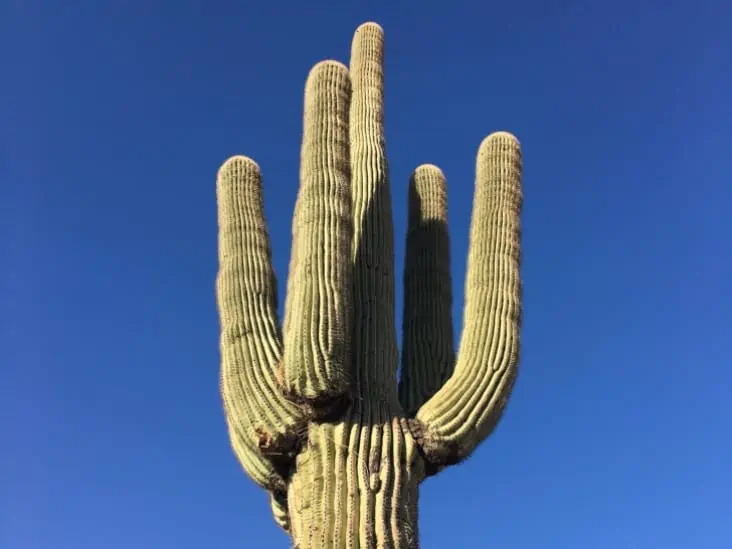
5. Saguaro
The final cactus on our list of top five common types of cacti is the saguaro plant that is native to the Sonoran Desert in Arizona. Although this plant is slow-growing, it can reach a height of 60 feet and can be used as a good indoor plant for many years before the need to move it outdoors.
The saguaro has a barrel-shaped body, which gives it a classical cactus appearance. It requires a lot of sunlight to thrive. Therefore, if you are keeping it indoors, be sure to position it in a spot that receives plenty of direct sunlight.
The plant can hold water for long, so you don’t have to water it frequently. However, when watering, ensure you do so deeply and wait until the soil is completely dry before watering again.
Saguaro cactus
6. Moon Cactus
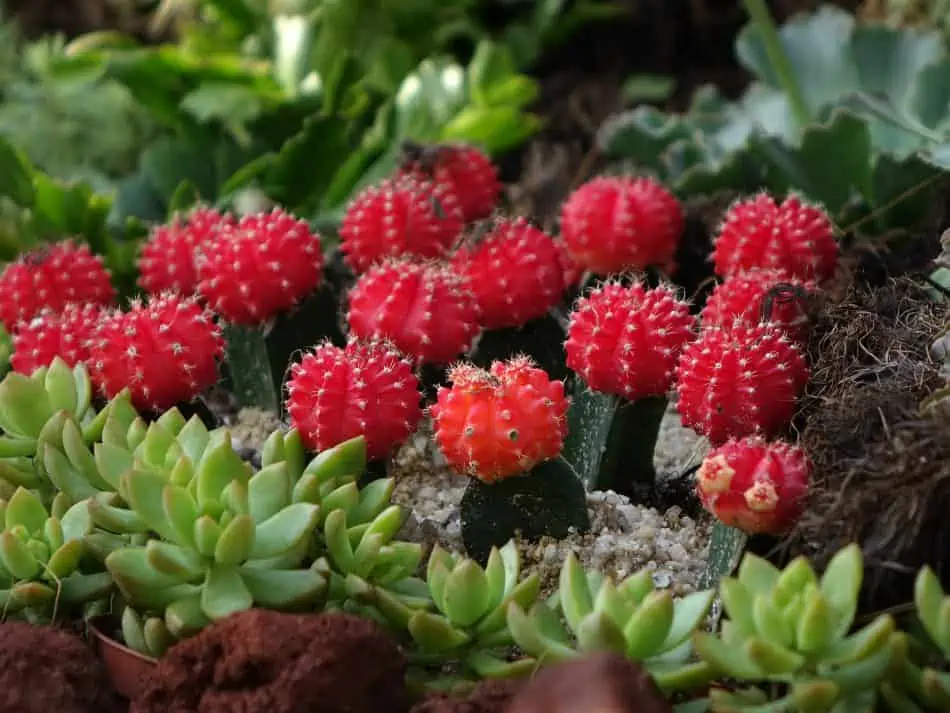
The moon cactus is a type of cactus that is native to Brazil. It is a small cactus that only grows to be about 3-5 inches tall. The moon cactus gets its name from its shape, which resembles a round ball. The top of the moon cactus is usually brightly colored with colors such as yellow, pink, or red. The bottom of the plant is usually green.
The moon cactus does not require a lot of care. It does best in bright, indirect light but can also tolerate low light conditions. When watering, allow the soil to dry out completely before watering again. Moon cacti are not heavy feeders, so they do not need to be fertilized often.
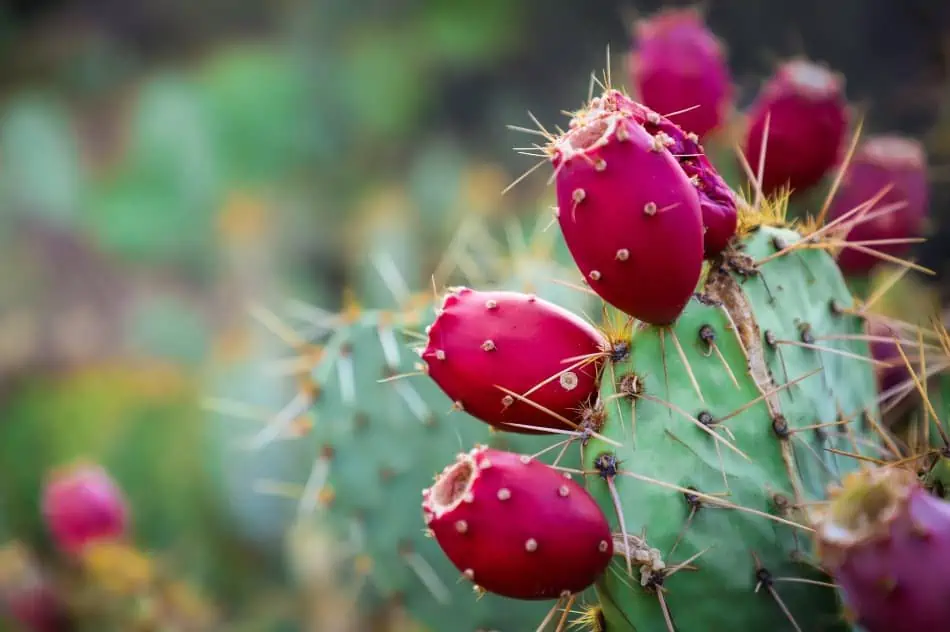
7. Prickly Pear Cactus
The prickly pear cactus is a type of cactus that is native to Mexico. It is a large cactus that can grow up to 6 feet tall and 10 feet wide.
The prickly pear cactus gets its name from the round, fleshy fruits it produces, also called prickly pears. The fruits of the prickly pear cactus are edible and have a sweet, juicy taste.
The prickly pear cactus does best in full sun but can also tolerate partial shade. When watering, allow the soil to dry out completely before watering again. Prickly pear cacti are not heavy feeders, so they do not need to be fertilized often.
8. Spiny Pincushion Cactus
The spiny pincushion cactus is mostly found in the deserts of Arizona and Mexico. It is a small cactus that only grows to be about 2-4 inches tall.
The spiny pincushion cactus gets its name from its small, spiny flowers that bloom on the plant. The flowers are usually white or yellow.
The spiny pincushion cactus does best in full sun but can also tolerate partial shade. When watering, allow the soil to dry out completely before watering again. Spiny pincushion cacti do not need to be fertilized to thrive.
9. Star Cactus
The star cactus is native to Mexico and can grow to about four inches tall. It is a small, round cactus that gets its name from the star-shaped flowers that it produces. The flowers of the star cactus are usually pink or white.
The star cactus does best in full sun but can tolerate partial shade. When watering, allow the soil to dry out completely before watering again.
Summary
If you have been feeling that inner calling to grow plants and you want to embrace it, then acquiring a cactus plant is a great place to start. These plants are relatively easy to maintain and don’t require much attention to thrive.
We hope you enjoyed reading this post, and we’d love to hear from you. So, feel free to leave your comments, queries, or contributions in the comments section below.
“Low maintenance” – that is probably the first thing that comes to your mind when you hear the word “cactus.” While there is no doubt about the fact that these plants require minimal care and attention to thrive, there are still a few things you need to do to ensure they survive and thrive. Rot is one of the common cacti problems that you need to avoid at all cost. Rot can occur on any part of a cactus plant, from the tip to the roots.
So, do you want to know how to save a rotting cactus plant? It is possible to save a rotting cactus as long as the damage isn’t severe. No matter the part of your cactus plant that is rotting; there are a few things you can always do to save the plant. You can fix root rot by avoiding overwatering, repotting the cactus in dry soil, and getting rid of the rotted sections.
In this post, we discuss some of the common signs and symptoms of rot in cacti plants, and some of the steps you can take to save a rotting cactus. Read on to find out everything you need to know.
Why Is My Cactus Plant Turning Brown At the Top?
If you realize that your cactus plant is starting to turn brown and mushy at the top, then it could be a sign of tip rot, also known as cactus stem rot. In simple terms, it means that sections of the plant’s stem are rotting, and you need to act fast to save it.
If you don’t act quickly, the rotting may spread down to the entire stem and will eventually kill your plant.
If you cacti starting to turn brown then it could be a sign of tip rot, also known as cactus stem rot
Keep in mind that once your plant starts rotting from the tip downwards, it won’t stop unless you get rid of the rotted sections. Therefore, if you discover tip rot, be sure to act promptly to save the plant.
Why Is My Cactus Plant Rotting Top Down?
There are few things that can cause your cactus to start rotting from the tip downwards. Fungus, disease, or water penetrating an open wound on the plant can cause this type of rotting.
If your plant is damaged in any way, it is always vulnerable to being infected with fungus spores or diseases. Water may also settle into the wound, causing the plant to rot from inside out.
Cactus is always vulnerable to being infected with fungus spores or diseases.
Sometimes, this type of rotting could also be caused by animals and bugs feeding on the plant, or someone could have brushed it and left a wound behind.
Chances of knowing the exact cause of the problem are minimal, so don’t curse yourself about it.
The good news is that the steps you need to follow to save your rotting cactus are pretty the same, no matter the cause of the problem. We shall discuss what you need to do to stop the rot from spreading in a few minutes.
How to Save a Rotting Cactus Plant
Once your plant starts rotting, there is only one way to save it; get rid of all the rotten parts so that the rot doesn’t spread to other parts of the cactus. If you fail to remove the rotten sections, the rot will continue to spread, and within no time, your plant will be dead.
So, let us see how you can save stem rot and root rot.
Saving a cactus plant from stem rot
When the rotting occurs near the tip of the plant or in the middle stem, all you have to do is cut and toss off the rotting section using pruning shears or a sharp knife.
If your plant has been wounded, study the wound carefully to be sure there are no signs of stem rot. The existence of a dark tissue or even a slight orange discoloration could be a sign of rot.
If you notice such signs, be sure to cut that section of the stem until you remain with a healthy tissue.
Once you have gotten rid of all the rotting areas, consider treating the wound with powdered sulfur to avoid infections and help it heal relatively faster.
If you notice rotting signs, be sure to cut that section of the stem until you remain with a healthy tissue
Over time, the wound will callus over, and multiple new stems will start to form just below the cut areas. Decide if you want to keep all of them or not. As long as you provide the cactus with the right conditions, it will heal fully and thrive again.
Saving a cactus plant from root rot
Root rot is more difficult to detect because it occurs underground. In fact, when your plant starts to show signs of root rot, you need to act swiftly and re-pot it to stand any chance of saving the plant.
Keep in mind that this will only work if the top part of your cactus is still healthy and green. If it is already yellowing or going soft, it might be a little late, and all you have to do is forget about the plant and go out to purchase a new one.
Assuming the top part of the plant is still healthy, use a sharp knife or pruning shears to cut it off from the roots. Make sure the top section you remain with doesn’t have any wounded parts. Dispose off the bottom part of the plant.
Re-pot your cacti to stand any chance of saving
Examine the wound carefully to ensure the remaining part of the plant that you want to repot doesn’t show any signs of rotting. If you notice even the slightest tinge of orange or brown, slice it off until you end up with a section with no signs of rot.
Sometimes, you may discover that the rot has spread from the roots right through the stem of your plant. In such a case, it is game over, and there is nothing you can do to save your cactus.
Once you are sure that you have remained with a healthy piece of your plant, consider applying sulfur powder to the wound to prevent fungi infestation. The powder usually acts as a natural fungicide.
Set aside the piece for a few days to allow the wound to callus over. Callus formation can take a few days or weeks, depending on the thickness of the stem and weather conditions. Thicker stems may take much longer to callus over.
If you notice that the wound is taking more than one month to callus over, consider turning the stem quite frequently to prevent its tip from starting to grow upward from the prone position because it may ruin the plant’s future symmetry.
If you want to avoid turning the cutting every time, make sure it is standing in an upright position in a safe location.
When the has calloused over, and the entire cut is dry and hard, it is time to repot. Consider using a new pot, but if you decide to keep the previous container, ensure you empty and clean it thoroughly to get rid of any disease spores.
Also, use a dry potting mix and avoid watering your plant immediately after potting because it may lead to a new wave of rot. Give it a few weeks in the dry potting mix until new roots start to form then water it lightly.
Watch Your Watering
Although cacti plants love water, too much of it can be detrimental. Overwatering is the primary cause of root rot in these desert plants. In fact, when it comes to good cacti care, it is better to underwater than overwater.
Therefore, if you notice that you have been overwatering your plant, you need to find a way of helping it shed as much water as possible. To do that, consider transferring the plant to a dry potting mix and stop watering for a few weeks or months.
Overwatering is the primary cause of root rot in these desert plants
Also, make sure you are using the right pot size that contains plenty of drainage holes to let out the excess water during watering. Your potting mix must also be porous to drain excess water out quickly.
If you are growing your cacti plants outdoors, consider planting them directly in the ground because it gives you less control over watering. That way, the plant will mostly rely on nature for its water needs unless there is a prolonged drought in your area.
If you still have any doubts about how best to water your indoor or outdoor cacti plants, be sure to read our watering guide here.
Final Thought
Now that you know how to save a rotting cactus, nothing can stop you. Be sure to take action as soon as you notice any signs of rot on your cactus plant. Keep in mind that this is a serious problem that can easily lead to the death of your plant if you don’t take appropriate action as soon as you realize it.
If you are not sure of how to deal with cactus rot, be sure to consult an expert and let them help you.
Cacti have become increasingly popular plants among garden enthusiasts throughout recent years. But when you move a desert-native to an area with frigid winter landscapes, keeping these prickly plant companions healthy can seem like an impossible task. Luckily, there are ways in which you can help your cactus thrive, even when the weather outside is more frightful than it is delightful.
So, how do you care for cactus in the winter?How you care for a cactus in the winter varies, depending on if they’re indoors or outdoors. For indoor cacti, you’ll need to maintain a comfortable temperature, water about once a month, and allow adequate sunlight. Outdoor cacti need to be watered less and covered with burlap to protect them from the cold.
In this article, we’ll review how to prepare cacti for winter weather and how to care for indoor and outdoor cactiduring the season. We will also be providing you with a few suggestions on winter-tolerant cactus species that may be better adjusted to your area’s winter temperatures.
Preparing Your Cactus Before Winter Arrives
You should plan your cacti in nutritious soil and fertilize before winter.
First things first: your cactus should be well-equipped to deal with winter before it strikes. A cactus that is overall unhealthy before the cold comes will undoubtedly be worse off when it finally hits.
Here are a couple of ways that you can ensure that the odds are in your cactus’ favor this winter:
Plant your cactus in a nutrient-dense, sandy soil to allow for proper water drainage. You can supplement regular potting mix with ⅓ sand to make the dirt more favorable for your cactus. Or, you can purchase a soil tailored to the needs of cacti, like the Hoffman Organic Cactus and Succulent Soil Mix. This mix is specially crafted for both jungle and desert cacti and is organically made, making it better for your cactus and the earth.
A few months before winter strikes, fertilize your cactus with a fertilizer that contains nutrients such as minerals. A 10-10-10 fertilizer, like this Lilly Miller All Purpose Planting And Growing Food, will give your cactus that extra oomph as it prepares for the upcoming cold weather.
Taking especially good care of your cactus (or cacti) during the times when the weather is dandy will help your cactus better prepare itself for any potential damage that may come from being dormant in winter.
How to Care for Indoor Cactus in the Winter
Caring for cacti indoors is worlds easier in the winter than caring for them whenever they’re planted outside. This is because your home’s temperature can be easily adjusted to the liking of your plant, and where there is a lack of sunlight, you can supplement with a grow light.
The following steps will help you to maintain your indoor cactus during the colder months:
1. Watering
Only water your indoor cacti once a month during winter and make sure the soil is well-drained.
The amount of water your cactus will need differs from species to species, but as a general rule of thumb, you should only water your indoor cactus once a month during the winter. With indoor cacti, watering is “business as usual,” so however much you water your cactus in the warmer seasons is exactly how much you should be watering it during the cooler seasons.
Avoid overwatering your cactus. When it comes to moisture, less is more. Too much water can lead to root rot in cacti.
Ensure that your cactus is draining water properly. While overwatering can be a cactus-killer, so can poor drainage. Use a sandy soil in your cactus pots to encourage drainage.
Double-check the water requirements for your specific cactus plant if you’re unsure of how often you should be watering it.
2. Temperature Control
Make sure the temperature is in the 65-70-degrees Fahrenheit range during winter.
The average indoor temperature of a home is generally perfect for maintaining a cactus plant. Anywhere between 65- and 70-degrees Fahrenheit is ideal for most cactus species and will prevent the outdoor temperatures from having too much of an influence on your cactus if it’s close to a window or glass door.
Temperature Control Tips
Take care not to fluctuate the temperatures in your home dramatically. Maintaining a consistent temperature is best for keeping cacti healthy in the winter.
Be sure that the area your cactus is in isn’t exposed to freezing drafts. Cacti will go dormant during the colder months whenever temperatures drop below approximately 55 degrees Fahrenheit. Any lower could possibly even kill your cactus.
If your cactus is placed near a frequently used door to the outside, it may be best to move it to a different location until the weather begins to warm. Even if the overall temperature in your home is consistent, frequent exposure to freezing temperatures isn’t ideal.
3. Sunlight Exposure
During winter months, you should expose your cacti to sun for 4-8 hours a day.
During the winter, the sun is less beneficial for everyone involved: people get sick with more colds and flu due to the lack of Vitamin D, and cacti become dormant, colorless, and droopy.
As with watering, the amount of sunlight your cactus will need depends on its species. Some cacti will only require 4 hours of sunlight to be happy, while others will need between 6 to 8 hours. Find an area of your home that receives the most sunlight and place your cactus plant there (preferably a little way from the window itself).
Sunlight Exposure Tip
To supplement the light your cactus may be lacking, try using a grow light. Grow lights, like the KINGBO 5000Lux Led Grow Light, will provide your cactus with any light that it misses throughout the day. It could also provide additional warmth to a cactus in homes that get chillier during the winter nights.
Remember that while sufficient sunlight is necessary for a healthy cactus, too much light can be harmful, leading to spine discoloration, an unattractive texture in furred cacti, and overall wilting and sunburn. If you’re unsure as to how much light your cactus will need during the winter, refer back to its species information.
How to Care for Outdoor Cactus in the Winter
When it comes to caring for outdoor cacti in the winter, the process can be a tad trickier. Depending on the species of your cacti, some may tolerate colder temperatures, and others may die off completely without your added care. In general, you’ll want to water your outdoor cactus less in the winter than you do during the warmer months, and you’ll also need to provide the proper protection from freezing winds (as this could lead to frostbite).
Consider the following steps to keeping your outdoor cactus safe and secure during the winter season:
1. Watering Your Outdoor Cactus
During winter months, most of the outdoor cacti do not require to be watered at all.
This is because, during the winter, it’s best just to let nature run its course and water the plants whenever need be. Melting snow can provide your cacti with adequate water, thus making your added watering efforts void. Additionally, if you decide to water your cacti during the winter (and the temperatures are freezing—or will get there), this could result in freezing the cactus internally and killing it.
Outdoor cacti that have been growing in your yard are likely acclimated to the seasons and, before winter strikes, will begin preparing for the upcoming coldness by storing the water they need.
2. Preventing Runoff
If your cactus is planted in a particularly low area of your yard, you may want to consider taking measures to revert water (namely, melted snow) away from your plants. Excess water—near-freezing water—is a death sentence for cacti.
If your cactus is potted, you can solve runoff problems simply by relocating your cactus to another area of your property. An excellent place to set an outdoor, potted cactus is on a covered patio or woodshed. Moving a cactus to these areas could also block biting winds.
On the other hand, if your cactus is planted in the ground, you could consider adding an attractive and efficient landscaping feature, such as a dry riverbed, around the surrounding area. The sunken ground and spaces between the rocks will encourage any melted snow runoff to disperse away from your cacti. You could also consider placing a water drain in your yard that leads to the road.
3. Protecting Outdoor Cacti from the Elements
Cacti won’t need protection so much from a little snowfall here and there—it’s the nipping winds and cold and dryness that can lead to frostbitten plants.
To prevent your outdoor cactus (no matter if it’s potted or planted in the ground) from becoming frostbitten, gently cover it with burlap. Burlap is porous enough to allow cacti to breathe but sturdy enough to keep ice and strong winds from negatively impacting your cactus.
Flower houses are relatively affordable and will somewhat maintain a tolerable temperature for your cactus.
If you’re especially worried about the elements harming your cacti, you can place a flower house, like this one, over them. Flower houses are relatively affordable and will somewhat maintain a tolerable temperature for your cactus while it protects it from the harshest outdoor elements.
Choosing Cacti That Tolerate the Cold
While you can take measures to protect your cactus plants from the cold, some species of cactus are simply too sensitive to freezing temperatures to survive. If you live in a region that sees snowy winters or chilly temperatures frequently, it’s in your best interest to raise hardy cacti.
In the next few sections, we’ll be discussing a few of our favorite low temperature-tolerant cacti.
Able to withstand temperatures as low as -35 degrees Fahrenheit, it’s safe to say that the Brittle Prickly Pear cactus could last throughout winters practically all over North America.
This gorgeous cactus can bloom vibrant, 2-inch, yellow flowers during the spring and summer. However, blooming can be iffy, as some plants only bloom once a year (or once every other year), while some don’t even bloom at all. The spikes on the Brittle Prickly Pear are no laughing matter, as they can grow up to an inch long and are generally in clusters. These plants can grow quite large, spanning multiple feet wide and tall, making them suitable for outdoor use.
In general, the Brittle Prickly Pear is a beautiful option that would fare well in large gardens that receive yearly doses of dramatically dropping temperatures.
Tiny Pincushion Cactus is adapted to harsh environments and can tolerate winter cold.
Short and stout, the Pincushion cactus may be small and cute, but it is mighty.
Sitting low to the ground at approximately 5 inches tall, and only reaching about 2 to 8 inches in diameter, the round cluster of cacti known as the Pincushion or Spinystar can withstand temperatures as low as 0 degrees Fahrenheit. It’s very well adapted to the climates of multiple regions and can be found naturally from Mexico to Canada. Remarkably, the Pincushion Cactus is one cactus species out of only four that can tolerate the climates found in Canada.
Hundreds of spines are clustered over the entirety of these little cacti, and, during the late spring and summer, flashy pink blooms can be seen atop the plant. Later in the season, the Pincushion Cactus will develop green fruits.
Known for its glorious 3-inch red blooms that span across the entirety of the plant, the Kingcup Cactus is nothing short of what you would expect from a self-proclaimed royal. During the spring and summer months, this cactus is adorned in vibrant colors, and the body of this cactus spans multiple feet (around 4) across, though it stays relatively low to the ground. Following the orange-red blooms are bright red fruits.
These cacti can tolerate temperatures as low as -10 degrees Fahrenheit and do best when they’re hugging up against taller plants.
Eastern Prickly Pear contains anti-freeze chemicals allowing the plant survive in cold weather.
Withstanding temperatures that drop into the negatives, the Eastern Prickly Pear is a hardy cactus plant that will last throughout the winters to see the next spring. Interestingly enough, these cacti actually contain anti-freeze chemicals within their cells to prevent them from dying off during the harsh winter months of northern and middle America.
These are mostly low-lying cacti that generally spread further outwards than they do upwards. Eastern Prickly Pear will only grow a little over a foot tall on average and are usually found in large clusters across the United States. However, in the hotter southern states, these cacti have been known to grow as tall as 6 to 7 feet, appearing more shrub-like.
During the late spring and early summer months, Easter Prickly Pear will boast yellow flowers at the ends of their pads, with some flowers displaying a deep orange ring in the innermost part of the petals.
Growing in wiry, long, cylindrical bristles, Chollas (a Mexican native) can endure temperatures reaching lows of approximately -30 degrees Fahrenheit. Chollas extends upwards as they grow, rather than along the ground, and will branch out the taller they get. Generally, Chollas will not extend past 10 feet tall.
Thousands of thin spines cluster tightly on the branches, insomuch that you often won’t be able to see the green coloring of the cactus’ skin underneath.
Chollas extends upwards as they grow, rather than along the ground, and will branch out the taller they get.
Warning: these cactus plants have the potential of being extremely dangerous to children and pets. Their spines are readily available to stick to anyone or anything that ever-so-slightly brushes against it, and trying to remove these thin spines is a painful process. It’s best to admire from a distance, as the barbs will even cling to hair, fur, and clothing.
The flowers that bloom late spring or early summer are cup-shaped and can come in a variety of colors. Though the flowers are most commonly yellow, colors can range from light green and orange to red tones.
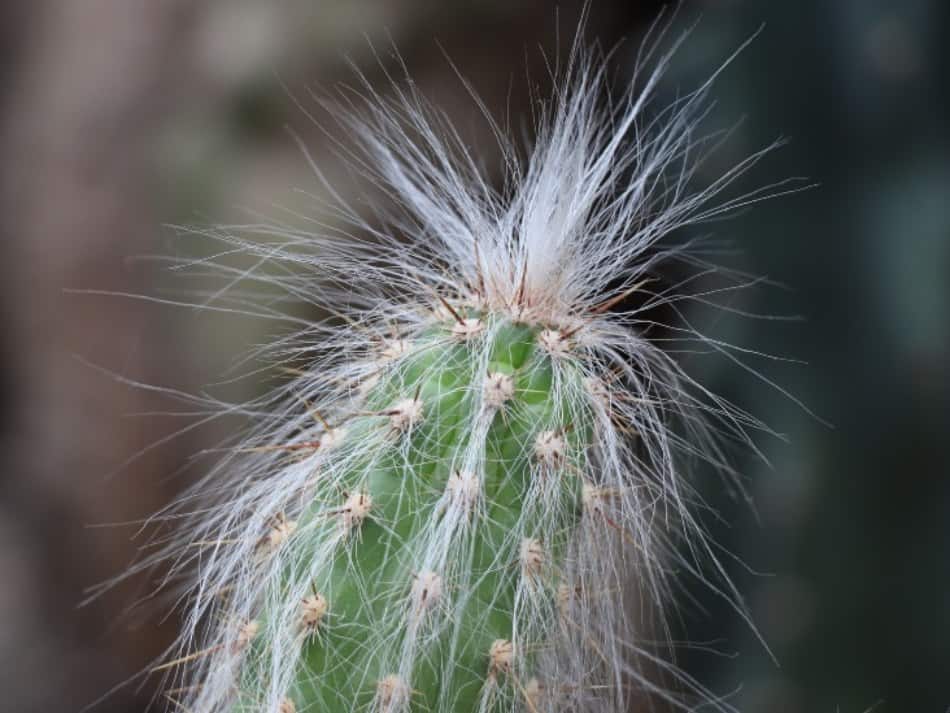
Wool-like white hairs of Old Man cactus protect the plant from cold winds.
Resembling the white beard of an older man, it’s no wonder that this cactus is labeled as the Old Man of the Andes. Able to withstand short periods of frost, the white hairs surrounding this cactus plant protect against cold winds.
Though this cactus will fare well in areas where winters aren’t as harsh, it may not survive temperatures far below freezing.
Final Thoughts
No matter if you’re trying to care for your indoor or outdoor cactus during the winter, it’s vital that you take the proper actions to strengthen and protect your cactus—not only when winter strikes but in the months leading up to it, as well. Keep in mind that, before winter rolls around, you should fertilize your cactus at least once (but not too often) to give it a boost of nutrients.
And, when Jack Frost begins nipping at your nose, ensure that your indoor cactus is in a room with a consistent temperature, adequate light (whether it be artificial or natural), and a good watering once a month. As for your outdoor cactus, don’t water it. And, if it isn’t so tolerant of the lower temperatures as the species we mentioned at the end of our article, consider covering it with burlap or a flower house to protect it from stinging winds and moisture.
Knowing how often to water your cactus is vital to support blooming and fruiting. How often you should water your cactus will depend on what kind of cactus you have. While we most often associate cacti with deserts, some cacti have adapted to growing in the rainforest.
How often should a cactus be watered? A cactus typically needs to be watered about once a week, depending on the season and the cacti’s environment. A cactus can survive in extremely dry conditions. However, the key is making sure your cactus is thriving and not merely surviving.
You can do many things to make sure your cactus is thriving no matter the season or the environment. Keep reading for more water and cactus care tips.
How Often to Water a Cactus
Each cacti species is different and requires a different amount of water, so the best thing you can do is look up your specific species and learn all you can about it. Let’s walk through a few things that influence how much you should water your cactus.
Indoor Cacti
Smaller indoor cacti need to be watered more often than larger ones.
Keeping an eye on your plant is the best way to know when and how often to water your cacti. Once your soil has thoroughly dried, it’s time to water your cactus again.
Here are a few other factors that will help determine how often you should water your indoor cactus:
The size of your cactus. Smaller cacti are younger and need more water, whereas larger cacti are older and don’t need to be watered as frequently.
The size and type of your pot. If your cactus is in a large pot, it won’t need to be watered very often as its volume will contribute to holding water; however, a smaller pot will need to be watered more frequently. Smaller pots are recommended for cacti since it’s not good for them to sit in water.
Plastic pots tend to hold onto moisture for a while. While they can still be used for planting cacti, keep in mind that plants probably won’t need to be watered as much and be sure to check the soil before watering. Terra cotta pots are porous and allow the soil to dry quicker. Terra cotta is also a super inexpensive pot that can be purchased in any size or shape. Regardless of what type of pot you choose, keep in mind a pot with drainage holes is the way to go.
The specific species of your cactus can also help you determine how much water will ensure your cactus is thriving.
Checking your soil is essential when it comes to watering your cactus, but also a great way to ensure you’re not over-watering your plant. To properly check your soil, you should:
Poke a finger into the drainage holes and check if the soil is dry.
Use a small stick or skewer to check if the soil is dry or damp at the bottom. If the soil is still damp, it will adhere to the stick or skewer, and if the soil is dry, the stick or skewer will come up clean.
Poke your finger a few inches into the soil, if the soil is dry, you can add some water, and if the soil is still damp, you can hold off on watering.
Outdoor Cacti
Typically, outdoor cacti need to be watered every two weeks.
Watering cacti outdoors can be a little trial and error, so if you do your research and find a routine that works for you and you notice your plants thriving, stick with it.
Generally speaking, a deep soak is great for outdoor cacti. This mimics its natural environment more. A deep soak is achieved by allowing your hose to drip steadily for several hours, depending on how big or small your cacti are.
As a general rule, you’ll want to plan on watering cacti every two weeks; however, if you live in a warmer climate you may find yourself needing to water cacti more often, and if you live in a cooler climate you’ll probably find you won’t need to water your cacti as frequently. Just as with indoor plants, smaller cacti will require more water while larger cacti are able to store more water and won’t need to be watered as much as smaller ones.
A super helpful tip if you’re repotting or planing a new cactus, plant it dry and give them roots about one week before exposing them to water.
Spring, Summer, Fall, & Winter
Cacti need to be watered roughly once a week during warm months and less frequently in winter.
Spring and summer are the peak growing season for cacti, so plants will need to be watered about once a week during these warmer months. Still make sure before you water again that the soil is mostly dried out to avoid overwatering.
During this time, when plants are thriving and experiencing a lot of growth, it’s also a good idea to fertilize plants once a month.
The cooler months of fall and winter are dormant, or rest periods, for cacti. This means plants are alive, but not actively growing If you have a cactus that will flower during the winter, it’s important to keep your plant warm and to water regularly; however, if your cactus doesn’t bloom during the winter and prefers warm, dry climates, you’ll find yourself watering your cactus less frequently.
More Watering Tips
Here are a few more tips to keep in mind as you fall into a routine of watering your cactus:
Make sure you always allow the soil to dry completely before adding water to your cactus. To ensure your soil is dry, you can opt to use a water gauge or simply dig your finger a few inches into the dirt.
If your cactus is planted in a pot, it will need watered more frequently than cacti that are planted outdoors.
It’s important to note that the hardness of your water will affect your cactus. If you have hard water, you’ll want to plan on repotting your cacti every couple of years to avoid salt buildup.
Too Little Water? Or Too Much?
Just as easy as it is for some to neglect a cactus, you can easily over water a cactus as well. Here are a few signs you may be neglecting your cactus, as well as signs you may be killing your cactus with kindness.
Signs of Under Watering
Cacti might get softer, change color, and lean to one sight in the case of water deficiency.
Cacti can still survive even if you’ve neglected them for a little while, but if you start noticing any of the following signs, it’s time to give your cactus some love and maybe start a cactus watering schedule.
Cactus appears to be limp and/or soft.
Cactus is leaning to one side.
Cactus has changed color; typically when cacti are suffering from drought, they will turn a paler color.
It’s important to keep an eye on your cactus and if or when you start to notice any of these things occurring to go ahead and increase the amount of water your cactus is getting. Consider keeping a spray bottle of water near you or your plant and using it as you need to give your plant some extra moisture.
Signs of Over Watering
Overwatering your cacti can change the color of the stems to brownish-yellow.
Too much watering will cause cactus roots to rot, can cause bacterial and fungal growth, and doesn’t allow the cactus to absorb nutrients properly. Unfortunately, your plant will appear to be happy and healthy on top, while it is suffering underneath. Here are a couple of signs you may be giving your cactus too much water:
Look for extremely fast growth. If you notice your cactus has recently gotten plum and is growing quickly, cup back on watering for a bit.
If you notice your cactus turning yellow, wilting, or softening, it may be too late to save it.
To avoid overwatering, make sure that the pot you have your cactus planted in has drainage holes in the bottom so that the roots aren’t sitting in water, and opt for a fast-draining soil to plant your cactus in. It may also be helpful to track when you water your cactus by creating a plant schedule.
More Cactus Care Tips
Using suitable soil mix for your specific cactus species is essential.
Cacti are pretty low-maintenance plants, but they still require a certain amount of love and attention. Here are a few things you can do to make sure your cacti are staying happy and healthy:
The soil you plant your cactus in is super important, and soil used to plant a cactus in needs to allow drainage to avoid allowing the cactus to sit in water. Check out this Succulent Planter Soil Kit or this Succulent and Cactus Soil Mix. Research the kind of soil your specific cacti prefer; some prefer soils with more gravel, while others prefer a sandy mix.
Cacti love sunshine, but there is such a thing as too much. Cacti can begin to burn if they happen to be sitting in a window that receives a lot of direct sunlight. Look for color changes on the side facing the sun. Your cactus may need to be moved to a different spot with less sunshine if you notice they begin to burn.
Read up on your cactus and learn how to care for your specific plant, and should you have any questions, don’t be afraid to ask a local nursery. Plants typically come with a tag that includes basic information, including the name, for your plant; if not, take a picture to your local nursery, and they can help you identify your plant, or look at pictures online to discover what species of cacti you have.
Cacti can benefit greatly from some fertilizer, especially fertilizers that are made specifically for cacti and succulents such as Cactus Juice or this Dynamite Cactus and Succulent Food. Typically you’ll just sprinkle a little fertilizer with each watering, but read the instructions on your fertilizer before use.
Using a peat-based moss. Many nurseries use this moss for cacti and succulents, and while peat moss may work for a while, at some point, it will get and stay too wet, which isn’t good for cacti.
If you plan on using cacti for landscaping, consider your cacti’s specific needs before planting. Poor planning can lead to unhealthy and potentially dead cacti. Again, be sure to do your research on the specific species of cacti you have so you can find the perfect spot outdoors with sufficient sun and shade.
Roots need room to grow, and as they become too tight, the roots may not be acquiring the nutrients the plant needs causing the plant to die. If you can see roots through the drain hole, it’s time to re-pot.
While succulent and cacti gardens are super popular right now and look great, mixing different species of plants that require different watering schedules and amounts of sunshine could cause cacti, or other succulents, to die. While it takes a little more research and planning, taking the time to choose cacti and/or succulents with similar needs will be worth it in the long run.
Best Indoor Cacti
Some of the best indoor cacti species include Old Lady Cactus, Christmas Cactus, and Angel Wings Cactus.
If you’re wanting an indoor cactus, but aren’t really sure what species to go for, here are a few ideas:
Rat Tail Cactus – The Rat Tail cactus is a hanging basket cactus that can grow up to 3 feet long. This cactus blooms bright magenta and takes direct sunlight.
Old Lady Cactus – The Old Lady cactus is a unique looking plant that consists of spheres with white hairs and spines. On the healthiest of plants, you’ll notice small pink blooms that form a circle at the top of the spheres. Old lady cacti like sandy potting mix, bright light, and to be watered bi-weekly to monthly.
Christmas Cactus – The Christmas cactus has no prickles and bears beautiful flowers that bloom in red, pink, orange, or white. This cactus requires diffused light, and slightly cooler temps during the winter months.
Angel Wings Cactus – This cactus has hair instead of spines, grows to be about two feet tall, requires full sun, and will have pale yellow blooms.
African Milk Cactus – The African Milk cactus is a slow grower but can grow up to 8 feet tall. This cactus likes partial to full sun and likes watered about twice a month.
Best Outdoor Cacti
Cacti typically thrive indoors, but there are some that do great outdoors as well. If you’re interested in planting cacti outside, check out these species:
Claret Cup Cactus – The Claret Cup cactus can grow up to 3 feet high and 6 feet wide. These cacti bear a juicy fruit that turns bright orange as it ripens. Claret Cups like soil with a lot of gravel and prefer full sun.
Golden Ball Cactus – Golden ball cacti are also known as Lemon Ball or Yellow Tower because of its color. These cacti can grow up to 3 feet tall, are great for beginners, and enjoy some shade during the hottest part of the day.
These cacti can grow up to 3 feet tall and are great for beginners.
Strawberry Hedgehog Cactus – The Strawberry Hedgehog cactus grows to be about 28 inches tall, loves all the sun, and has beautiful purple-magenta blooms.
Old Man Cactus – Old Man cacti grow as tall columns covered by woolly white hair. These cacti can grow an impressive 49 feet tall and enjoy full sun.
Orchid Cactus – The Orchid cactus is a beautiful plant that can grow as long as 225 feet, and grow gorgeous blooms in pink, red, white, yellow, or orange. These cacti require filtered sunlight.
Final Thoughts
How often you water your cactus is vital to making sure it’s not only surviving but also thriving. Several factors will contribute to how often you water your cactus, such as the location of your plant and what climates you experience where you live, among other things.
For example, if you keep your plants indoors, you will want to keep an eye on the soil, and once it’s dry, you can add water. For indoor cacti, you’ll more than likely fall into a routine after a while. For outdoor cacti, the general rule to follow is a deep soak about once a week.
During the warmer months, it’s normal to need to water cacti more frequently and to hold off on watering during the cooler months.
Something to be mindful of with a cactus is that while they can die from not getting enough water, too much water is just as bad for them. Softness, leaning to one side, and lightening in color are all signs your cactus may be thirsty, while extremely quick growth may be a sign your cactus is being overwatered.
Being mindful of the soil you use, noting how much sunshine your cactus is getting versus how much it requires, researching the specific species of cactus you have, and fertilizing your cactus are all ways you can ensure your cactus is staying happy and healthy.
Cacti are pretty versatile, low-maintenance plants making them great for beginners and green thumbs alike, so whether this is your first plant or one of many, enjoy the process and happy gardening!
If there’s one plant that seems easy to grow, especially for newcomers trying to have houseplants, it’s cactus. It’s easy to see why. They are low maintenance and look gorgeous all year long. There are so many though that it is not easy to know which ones to start with.
Finding the right cactus for your home can be a little tough, especially if you are new to growing plants. Each cactus has its own needs, blossoms, and aesthetics. Before you decide to buy, it is a good idea to know what you should look for.
The 13 Best Cacti to Grow Indoors
Are you looking to get your indoor gardening on, but don’t quite know where to begin with cacti? You are not alone. Thankfully, we decided to break down the perks, pitfalls, and needs of each type of indoor-friendly cactus to make the decision easier for you.
Star Cactus – Best for Desktop Growth
Star Cactus with white-yellow to pinkish flowers can be used as a beautiful desktop decoration.
It’s hard to ignore the beauty of this petite flowering cactus type. These gorgeous cacti offer up white-yellow flowers with a red center when they hit their blooming season. Since they don’t grow too large, they are an ideal choice for desktop gardening.
These cacti reach a top diameter of six inches and spend their first two years as small, round, slightly star-shaped cacti. If you’re patient and care for your cactus, you should expect to see it blossom in two years.
Believe it or not, these cacti work well in the cold. They typically thrive from 20 to 50 degrees Fahrenheit and require easy-draining soil. With a little watering and love, they will be amazing flowery companions.
Bunny Ears – Best for Statements
Bunny Ears Cactus, is a plant with soft pricks. The cactus needs lots of daylight to blossom.
These humorously nicknamed cacti are a favorite in the American Southwest for both indoors and outdoors growing. Unlike the Star Cactus, Bunny Ears cactus grow to a reasonably large size. Depending on care and age, you can expect these clump-forming cacti to grow up to six feet in height and three feet in width.
Plant parents who are looking for a large, attention-grabbing cactus will like Bunny Ears. These cacti don’t have spines but do have pricks. When cared for properly, you can expect a small amount of milky yellow flowers, followed up with deep purple fruits.
Bunny Ears cacti are major sun lovers, so you will need a bunch of daylight to make these cacti blossom. To ensure that you get the gorgeous blooms you want, you’ll need to have indoor temperatures ranging from 55 to 100 degrees Fahrenheit.
Old Lady Cactus – Best for Easy Care
Old Lady Cactus is a low-maintenance cactus with gorgeous purple flowers.
Old Lady Cacti, also known as Mammillaria Hahniana, are one of the most popular types of cacti to grow in Central Mexico. Though it’s a favorite among modern homes, it still has a greyish, fuzzy appearance caused by its many, many spines.
Round and petite, the Old Lady Cactus is adorable with its petite four-inch high stature. When it’s in bloom, it shows off beautiful purple flowers that are bound to get compliments from those who visit.
This plant is an excellent indoor-outdoor cactus. It requires loads of sun, minimal watering, and time outdoors during the warmer months of the year. This makes it one of the best cacti for people who want a plant with minimal care.
Fairy Castle Cacti – Best for New Gardeners
Fairy Castle Cactus with several long spiny stems can grow up to 6-feet tall.
With its traditional “cactus” appearance, the Fairy Castle Cactus is known for its multiple long stems and noticeable spines. Because it tends to look somewhat like a pint-sized building due to its bulkiness, people call it a “fairy castle.”
This beautiful cactus is a great option for people who are looking for a long-term project. Though you can buy them at a very petite size, these cacti can grow to a whopping six feet in height. They grow very slowly, so you won’t have to worry about them outgrowing your home for years.
If you’re interested in getting a Fairy Castle of your own, you should grab some cactus potting soil and expect to place it in full-grown sun. After ten years or so, you should expect to see some beautiful white blooms.
Barrel Cactus – Best for Low Nutrient Growers
Barrel cacti are characterized by cylindrical shape with spines all over the surface.
Barrel cacti come in a wide range of sizes, but they all have the same cylindrical, ribbed, and spiny appearance in common. Most barrel cacti that are sold in stores don’t get too large in height, making them a great mid-size cactus that will draw attention with ease.
Among interior designers, they love the look of these cacti and their (typical) foot-long height. Among gardeners, barrel cacti are known for being exceptionally low maintenance, even among other cactus species.
These cacti require minimal (read: almost no) watering and do better in low-nutrient soil. These cacti are so easy to work with, you only need to fertilize them once a year!
Barbary Fig – Best for People Who Want Homegrown Food
Barbary Fig, also known as Prickly Pear, is a fruit-bearing cactus with initial red and yellow blossoms.
The Barbary Fig is a unique cactus in the sense that it is a popular cactus to grow for commercial purposes. While it’s got the potential to reach a staggering 33 feet in height, it will stay petite if placed in a small pot. So, you have a lot of control when it comes to the size it grows to.
You might be wondering why commercial growers love the idea of growing Barbary Figs. The reason is simple: they are one of the few cacti that grow mouthwateringly delicious fruit in large quantities. Needless to say, having a Barbary Fig is a great addition to your kitchen!
If you want to get a Barbary Fig, you can expect to see beautiful red and yellow flowers shortly before this cactus bears fruit. Like most other cacti, these cacti work best with minimal watering and full sun. If possible, try to grow these in a hot climate since they require hot temperatures!
As for the actual fruit, they’re best peeled and eaten raw. Yum!
Moon Cactus – Best for Shady Homes
Growing up to 8 inches in height, Moon Cactus is a plant with bright pink, orange, or yellow upper body.
It’s hard to ignore the beauty of a moon cactus. These impressive cacti grow anywhere from one to eight inches in height. What makes them unique is that they take a lot of effort to seed, graft, and cultivate due to a novel mutation. Thankfully, growing them once they have sprouted is a cinch.
With their bright pink, orange, or yellow tops, moon cacti must be specially cultivated due to their inability to produce chlorophyll. Store-bought cacti are already made grafted and ready to produce chlorophyll, which is why they are your best option.
Moon cacti are one of the rare types of cacti that work well with shade. Too much sun can and will scorch them. Though they do not need too much sunlight, they will need a little heat. Temperatures as lower than 48 degrees will hurt them.
Easter Cactus – Best for Flower Lovers
Easter Cactus features bright red lotus-like blossoms during April and May.
Most cacti flower, but rarely enough that it’s a big deal when they do. This is not the case with Easter Cacti, which are known for their bright, beautiful, lotus-like flowers that shoot right out of its green stem. They have so many flowers that you would be forgiven if you mistook them for a regular flowerbed plant!
The thing about Easter Cacti you should be aware of is that they only flower two months in the year—April and May. However, they’re perennial and will bloom again and again. When cared for properly, you can expect these cacti to grow to a size of one square foot. That makes them great plants for smaller homes.
Considering their top blooming season, it’s unsurprising that they like warm-ish temperatures. Do not put them in direct sunlight, though, since the harsh sun can easily wilt those tender flowers. A better option would be to put them in bright, yet indirect natural sun—-much like what you would get from light through sheer curtains.
Ladyfinger Cactus – Best for Windowsills
With its petite “towers” of spiny greenery, it’s easy to see where the nickname of “ladyfinger” came from. They bear a remarkable similarity to the sandwich cookies. Unlike those popular cookies, these cacti bear pretty little flowers that will bring a splash of color to any home.
People looking for a small cactus that thrives in sun to partial shade are going to love the small, cute, and easy to care for fun that ladyfingers offer. This cactus requires minimal water during the summer. When it goes dormant in winter, you might not need to water it at all.
This cactus has strikingly similar needs to succulents, especially when you consider the low maintenance requirements. That makes it a great starter plant for people who just want a little windowsill beauty.
Dwarf Chin Cactus – Best for Heavy Shade
If there is one thing that this list proves, it’s that cacti rarely ever are just all green towers of spines. They have the propensity to have flowers and fruit that add serious color that can rival any rose, tulip, or peony. The Dwarf Chin Cactus is an excellent example of this in action.
Though these spiny cacti will only grow to a maximum of six inches, they pack a serious punch of beauty. When they are in full bloom, these cacti produce flowers that come in a wide range of colors—brilliant red, sunny yellow, rich salmon, and hot pink, just to name a few.
Surprisingly, these cacti do best in heavy shade. So, if you thought that you needed to have brightly lit areas to have a cactus inside your home, you’re wrong. The Dwarf Chin Cactus is a perfect pick for your indoor garden.
Christmas Cactus – Best for Wintery Cheer
Christmas Cactus requires nutrient-rich soil to blossom in the middle of winter, usually in December.
The Christmas Cactus doesn’t get its name for its orange blooms atop its green spine. Rather, it gets its nickname from its tendency to bloom in the middle of winter, mostly in the middle of December. The stalks of these cacti droop over pots and have leaf-like folds, giving them a unique shape that raises eyebrows.
If you decided to go indoor gardening during the winter, this might be one of the few cacti you will see for sale. They are regularly offered up as Christmas centerpieces, particularly in the American Southwest. Finding them during other times of the year can prove to be a little tricky.
This cactus is unusual in that it needs a lot of lush, nutrient-rich soil to thrive. Aside from that, doing the routine of minimal water and moderate sunlight is all you need to make them happy.
Saguaro Cactus – Best for Traditionalists
When most people think of a cactus, they are thinking of a Saguaro cactus. These cacti are the tall, spiny plants that are typically tower above people when they’re left to grow out in the United States. Their reputation for being extremely tall often dissuades people from having them, but don’t dismiss them quite yet.
Saguaro cacti are known for being huge, but they start off incredibly petite. They also are notoriously slow growers, so the fear of having your cactus poke holes in your ceiling is unfounded. If you love petite cacti, you will love how cute Saguaros can be when they are young and placed in a small pot.
If you choose to get a Saguaro, you might need to be a little more involved than a typical cactus owner. You will need to house it in draining grit and give it minimal water. Lots of sun and warm weather are a must-have for these gentle giants.
Believe it or not, Saguaro cacti can blossom. However, chances are you will not see them bloom since it can take up to 35 years or more before a single blossom can happen.
Queen of the Night Cactus – Best for Night Owls
Queen of the Night Cactus displays its mesmerizing pearly white to pinkish blooms during nighttime.
Cacti typically bloom in the daytime, but not this one. The Queen of the Night only will display its gorgeous flowers during nighttime. Despite the gothic name, the flowers on this home-friendly cactus are a beautiful, almost pearly white.
Like Saguaros, the Queen of the Night is a cactus species that has a reputation for being a tall grower—and rightfully so. These perennials can grow up to a whopping 10 feet tall if they are given enough space and time. These plants love shady areas that mimic the darkness of jungle floors.
When adding soil, make sure that your cactus gets a nice amount of ventilation. If you want then to bloom, make sure to add fertilizer to their soil once during the spring. These cacti are slow growers, so don’t be disappointed if they do not seem to noticeably grow.
Picking the Right Cacti for You
Every cactus is a little different in terms of maintenance, biological needs, and appearance. Some cacti are known for being a little on the plain side, while others are celebrated for their vibrant flowers. Some, such as the Barbary Fig, are noted for their edible fruits.
You cannot treat cacti like a “one size fits all” matter. If you want to choose a good cactus for your lifestyle, it’s important to consider these factors:
Sunlight. Most cacti require bright, direct sunlight. If you live in a shady area, this limits the number of cacti you can grow. You might be better off with a Queen of the Night, or a Moon Cactus in those cases.
Free Space. Cacti vary greatly in size. Some can be as tiny as an inch high. Others can grow up to dozens of feet tall. If you have limited space, it’s important to choose a cactus that “maxes out” at a small size or that grows exceptionally slowly.
Temperature. Though some cacti can survive in temperatures as low as 10 degrees Fahrenheit, most require a temperature around 50 to 70 degrees to live. Some thrive in even higher daily temperatures, so placing your cactus near a heater might not be a bad idea.
Blooms. Not all cactuses have flowers, though most of them do. If you are focused on aesthetics, then you might want to learn more about how each cactus blooms and what it means for your apartment or home’s look.
Potting.Believe it or not, some cacti have a hard time sharing pots with others. For example, the Saguaros are famous for competing with other plants’ resources and killing them through nutrient draining. Other cacti work well in groups.
Required Maintenance. Cacti might be low maintenance compared to most other types of plant life, but that does not mean they all have virtually no need for help. Some cacti are more demanding than others—especially when it comes to fertilization, water, or sunlight. If you are worried about being tight on time, getting a notably low-maintenance cactus is ideal.
What Are the Best Types of Cacti to Grow Indoors?
The best cacti for newbies all have a couple of traits in common. They are hardy, they require little water, and they are not going to grow too tall too quickly.
Are Cacti Safe to Have Around Pets?
Unlike other plants, cacti are generally not poisonous. This makes them a great choice for people who have pets that like to chew on things or kids who might be a little too curious for their own good. Though they might not be poisonous, they still aren’t for every household.
Some cacti have spines that harbor bacteria on their spikes, which can cause a variety of ailments. You should research the cactus’ toxicity before bringing it indoors if you’re concerned about poisonous plants near your pets or children. While most commercially sold cacti are not poisonous, it’s always better to be safe than sorry.
What Do You Need to Grow Cactus?
Growing cactus is not as demanding as other flowers, like roses or orchids. That’s one of the reasons why they’re appealing to newbie gardeners and why busy homeowners tend to love having them around.
Though they are easy to grow, you still need to get supplies. While the distinct needs of each cactus species can vary, these supplies below are usually advisable:
Clay Pots. Most cacti need to be in clay pots rather than plastic pots. The clay helps wick away excess moisture and keep soil dry.
Cactus Soil. While some cacti can use regular potting soil or a mixture of sand and soil, getting quality soil designed with cacti in mind is usually ideal. If you cannot find cactus soil near you, most cactus types can also make do with potting soil that has small amounts of sand mixed in.
Fertilizer. Though cacti don’t need a lot of nutrients in most cases, a little fertilizer is still necessary. This is doubly true if you want them to bloom.
Gravel. This isn’t required, per se, but a lot of homeowners find that adding a light (or sparse) layer of multicolored gravel can help bring a new level of beauty to a potted cactus or succulent.
Are Cacti Safe to Have Around Kids?
Since cacti are generally prickly (unlike succulents), it’s important to make sure that any cacti you choose to raise will not be near klutzy people or near kids who might get reckless and prick themselves.
Certain age groups are at particular risk of getting pricked or having cactus-related injuries. If you are a parent to a toddler or children under the age of six, it’s best to consider getting plants other than a cactus.
Are There Any Types of Cacti You Should Avoid?
For the most part, commercial growers do not sell cacti that are openly dangerous or unusually high maintenance. If you are new to growing cacti, you should stick to common, mainstream species.
Exotic species are rare to find in households for a reason. They are often species that require extremely specific growing conditions, cannot be sprouted naturally, or are poisonous to the touch. There are also exotic cacti that cannot be grown indoors or transplanted into a different pot. That is usually why stores are hesitant to sell them.
It’s not always easy to know if a cactus is exotic or poisonous. If you are in a specialty store, the best thing you can do is ask some of the staff members to advise you on which cacti are better for indoor gardens or beginners.
Can You Plant Multiple Cacti in One Pot?
The general answer is yes, as long as the cactus types you choose are not known for competing for resources and are given ample space. Many cactus gardeners start out their indoor gardens with larger pots containing multiple types of cacti.
It’s better to stick multiple plants of the same type in a single pot.
If you choose to go this route, make sure to choose cacti that require similar soil types. Otherwise, you might end up causing one plant to suffer due to improper potting. If you want to keep things on the safe side, it’s better to stick multiple plants of the same type in a single pot.
How to Keep Your Cactus Alive During the Winter
Cacti are perennials that are a lot hardier than people make them out to be. The worry about keeping them at high heat is often unfounded since most cacti only need to have an average temperature between 40- and 60-degrees Fahrenheit. Some can go even lower, with a minimum temperature of 20 degrees.
It’s a common misconception that cacti look the same year-round, Many, if not most, cacti go dormant in the winter. If you notice your cactus looking a little wilted or brown, do not panic. Check to see if it’s time for it to go dormant and reduce your watering schedule. With time, it will be able to bloom once more.
Conclusion
When you’re just starting your own indoor garden, getting a cactus seems like an easy way to get a splash of color for minimal effort—and it absolutely can be. When in a house filled with responsible individuals, owning one or more cacti can be a great way to have a low-maintenance indoor garden that makes a serious statement.
Choosing a cactus that is appropriate for your indoor garden isn’t something you should take lightly. While everyone loves Moon Cacti, Barbary Figs, and Saguaros, the space and conditions you have available to you will need to play a deciding factor in which plants you choose to get.
After you choose the right cacti, the rest of your indoor gardening journey is pretty straightforward. All you have to do is follow the care instructions your cactus comes with, and with time, you’ll be able to see beautiful cactus blossoms and enjoy your garden for years to come.
No matter if you live in an arid environment or your thumb just isn’t as green as you’d like it to be, desert plants can make a gorgeous addition to your landscaping and give you a garden you can be proud of. Usually, when the desert is mentioned, our minds automatically revert to miles of sand and nothingness. Surprisingly, there is a large variety of desert plants with different colors, textures, sizes, and features to make your yard stand out.
The top ten desert plants you can plant in your garden are:
Texas Sage
Mexican Feather Grass
Pencil Plant
Living Stone
Zebra Cactus
Desert Marigold
Ocotillo
Aloe Vera
Fox Tail Agave
Paddle Plant
In this article, we’ll be discussing each of the above plants in detail, as well as providing you with some desert garden inspiration.
Texas Sage is a beautiful low-maintenance desert plant with purple blooms.
A drought-tolerant desert shrub, Texas Sage is a hardy plant that can withstand areas with high heat and even low winter temperatures (down to 10 degrees Fahrenheit).
Though its thin branches and rounded, soft leaves may give this plant a dainty appearance, Texas Sage is tough and long-lasting, providing deer resistance to your garden and acting as a preventative to soil erosion thanks to its robust root system. Perfect for filling in significant gaps in your desert garden, this sage plant can grow upwards of 5 feet tall and wide.
While Texas Sage is mostly a pale green throughout the year, during summer, this shrub produces vibrant blooms of primarily lavender purple or white on each stem and continues to blossom through the fall.
Texas Sage Care
Because Texas sage is a desert plant, care is minimal and infrequent. Follow these guidelines for healthy Texas Sage:
Texas Sage should be placed in an area of your garden that receives full sun daily (around 6 to 8 hours).
This desert plant won’t need to be pruned. It’s best to let it be to keep it healthy and lush.
You should water Texas Sage once every week for about three weeks until your plants are well established in your garden. Then, rainfall should suffice to keep your Texas Sage quenched. If drought persists, water once and then water again when the soil is visibly dry. Don’t overwater. Too much water can kill Texas Sage.
Soil should drain quickly. Texas Sage is prone to root rot and should not be placed in areas that hold water for long periods.
In general, Texas Sage is a breeze to care for. You’ll barely have to water it and won’t have to water it at all during the rainy season, and it can survive pretty extreme year-round temperatures. Take care not to overwater, as these desert plants are sensitive to too much water.
Texas Sage Uses
Place at the back of a desert garden bed as a backdrop.
Use as a privacy screen around a patio or along the line between you and your neighbor’s property (be sure the plants are obviously on your side to avoid potential conflict).
Plant Texas Sage as a natural border around pool areas or to separate gardens.
Use as an outline around garden features such as dry riverbeds.
If you’re looking to add a flowy appearance to your desert garden, Mexican Feather Grass is the way to go. Hundreds of thin, long blades cluster together to create a wispy aura and are darker in color the closer you get to the roots. In the summer, this desert plant’s seed heads are a pale golden color and silky in appearance.
Mexican Feather Grass is a drought-resistant plant, as well as a deer preventative, making it great for hot climates. However, this ornamental grass is quite invasive and will readily spread to wherever it pleases. A plus side to its invasiveness is that it helps immensely with erosion, thanks to Mexican Feather Grass’ complex and deep root system.
Mexican Feather Grass Care
Like most desert plants, Mexican Feather Grass doesn’t require much babysitting. Here’s how to maintain these beautiful, dancing plants:
Plant in an area that receives full sun each day (around 6 to 8 hours) for the best results.
For the most part, rainfall is enough to keep Mexican Feather Grass watered sufficiently. However, for particularly hard summers, you may want to deeply water these plants once every month or two months.
Mexican Feather Grass should be planted in an area with well-drained soil that doesn’t flood.
To prevent spreading, remove the seed heads from your Mexican Feather Grass each summer and early Fall.
Pencil Plant is a drought-tolerant with rounded branches.
Native to Africa, the Pencil Plant is a highly drought-tolerant and interesting plant that would bring intrigue to any desert garden.
Naturally green in color, the Pencil plant will turn a coral or yellowish shade if it’s under environmental stresses such as too little water or cooler temperatures. Its branches are rounded and smooth in appearance and branch off of a central stem. In their ideal habitat, Pencil Plants can grow as tall as 30 feet and a few feet wide. In most North American habitats, it’s not unusual to see them reach heights of 6 or more feet.
Pencil Plant Care
Care for a Pencil Plant, though a little more than the previous plants on our list, is still relatively low:
The plant should receive between6 to 8 hours of full sun each day.
Pencil Plant should be watered once every 2 or 3 weeks in the summer. Not at all in the winter.
Plant in soil that is gritty and well-drained.
Pencil Plant Uses
Use as a splash of color in your desert garden. Purposefully withholding water (for example, only watering once a month) can change the color of your green Pencil Plant to coral.
Plant on any high ground. Because Pencil Plant can grow so large, their towering figures would look beautiful on hilly landscapes.
Living Stone is characterized by the stone-like appearance and the ability to stay alive in harsh conditions.
A definite show-stopper and conversation-starter, Living Stone is a desert plant you won’t want to miss out on. A low-lying succulent (around an inch tall) with a slick-top surface, Living Stone resembles just that — a colorful, patterned desert stone. This Africa Native thrives in blistering temperatures and would make a unique addition as fillers for your desert garden.
Living Stone Care
Doing best in extreme environments, it’s important not to baby your Living Stone plants to keep them happy and healthy.
Don’t water when dormant (fall to spring). In the summer, rainfall should suffice. If it’s particularly dry, water once a month when the ground is visibly parched.
Zebra Cactus is pretty similar to Aloe Vera, but it has white stripes like a zebra.
To add a pattern to your desert garden, consider the eye-catching Zebra Cactus. With a similar appearance to Aloe Vera, one striking difference of this plant is its oddball coloring resembling the stripes of a zebra.
Though the rigid leaves are dark green, they boast bright white stripes that are enough to draw anyone’s attention right to your desert landscape. They’re generally small in size, around 5 inches tall, and slow-growing, making them great for virtually any garden.
Zebra Cactus Care
These plants aren’t one to make a fuss out of severe living conditions. Care is minimal and infrequent:
Zebra Cactus does best in partial sun (4 to 6 hours daily).
Watering is okay every 3 to 4 weeks. As a general rule of thumb, water thoroughly and then allow the soil to dry out before watering again.
Soil should be well-drained. Rocky soil is also okay.
Desert Marigold forms bright yellow flowers with 2-inch diameter.
For a splash of color in a neutral-toned desert garden, the Desert Marigold has your back. These dashing desert perennials can grow to two feet tall and wide and adorn themselves in bright yellow florets at the end of each stem. You can expect them to bloom in spring and continue to bloom throughout the summer. Frequent rains in the fall have even been known to encourage a few more blooms.
These colorful flowers are sturdy, seedy, and will come back year after year, providing you with an even more colorful garden as their offspring take root.
Desert Marigold Care
Caring for Desert Marigold isn’t very difficult. For the most part, these flowers can thrive just about anywhere and are practically self-sufficient.
Desert Marigold should be planted in an area that receives full sun (around 6 to 8 hours daily).
Generally, rainfall is enough to keep these plants happy. However, you can water whenever the soil is completely dried out to encourage more prominent blooms.
Desert Marigolds don’t require a specific soil, as long as it’s well-drained.
Desert Marigold Uses
A great option for color. Could be used as a focal point or for splashes of color throughout a large desert garden.
Ocotillo comprises 20 to 30-feet tall individual spiny stems and bright red flowers at the end of each branch.
Another excellent choice for color in a desert landscape, Ocotillo is a desert-native that features red tubular flowers at the end of each spiny branch. They bloom March through June and their flowers cluster. When water is plentiful, Ocotillo will grow 2-inch leaves along the length of their stems, creating a fluffy, wispy appearance.
These beautiful plants can grow to heights as tall as 20 feet and have a lifespan similar to that of the average person. They’re also a friend to hummingbirds and finches, thanks to their bright red florals and abundant supply of nectar. Ocotillo can withstand the highest of desert temperatures and make it through winters with temperatures that drop as low as 10 degrees Fahrenheit.
Ocotillo Care
Strong and adapted to harsh weather, Ocotillo won’t need a hand to hold throughout its long life. A little care here and there is all that this desert plant needs:
Watering is few and far between. For newly planted Ocotillo, water once every couple of weeks in the summer. Once they’re established, water your Ocotillo plants once a month.
Plant Ocotillo in full sun (6 to 8 hours daily).
Ocotillo grows best in rocky, sandy, well-drained areas. A well-drained, sandy, or gritty soil will help your Ocotillo thrive.
Ocotillo Uses
As a natural barrier. Because it grows so tall and wide, Ocotillo would make the perfect natural fence.
For landscaping on hillsides or land that is barren. If you own acreage or have hilly land, these tall shrubs would add some color to your landscape.
Growing in sunny areas, Aloe Vera comprises long and spiny leaves with a triangular shape.
Aloe Vera isn’t only good for burns and cuts — it’s also a staple in desert gardens. With a variety of Aloe species on the market (and an even greater variety of sizes, textures, and colors), you’re bound to find one that fits your desert garden perfectly.
The size of Aloe ranges anywhere between 2 feet to the much larger 70-foot plants and consist of long, spiny, triangular leaves that spread upwards and outwards as they grow. They’re generally green in color, but can be yellow or sprout flowers of bright orange and red.
Overall, Aloe is an excellent option for desert gardens, especially gardens that are gravelly or sandy and receive lots of sun.
Aloe Vera Care
While Aloe Vera is generally drought-resistant and tolerant to bugs, its care can vary based on species. The following are general guidelines for keeping your Aloe healthy:
Sunlight requirements vary for Aloe. As a general rule of thumb, the smaller the species, the less light it needs. Small Aloe varieties usually do best in part sun (around 4 to 6 hours each day). Larger Aloe plants require full sun (6 to 8 hours per day).
As with the majority of desert plants, Aloe Vera should only be watered when the soil is visibly dry all the way through — about once every three weeks.
Plant in a well-drained, gravelly, or sandy soil for best results.
Don’t plant in a low-lying area that collects water.
Take care not to overwater your Aloe Vera plant, as these desert plants are most often killed by root rot and cannot tolerate sitting in water for long periods.
Aloe Vera Uses
Would look brilliant in a succulent desert garden.
Place them in between low-lying, bushy desert plants for height and texture variation.
Plant alongside walkways for a dramatic visual to the front door.
Fox Tail Agave needs slightly acidic and sandy soil which can also be well-drained.
Unlike the other desert garden plants on our list, the Fox Tail Agave is an evergreen succulent, meaning that it’s green and gorgeous all-year-round. With the appearance of a flower, Fox Tail Agave consists of multiple, triangular-shaped leaves that curve upwards, creating a cupped look. This plant can reach 4 feet wide and 4 feet tall and often features a 5 to 10 feet tall flowering stalk that emerges from its rosette in the summer.
If you live in an area with plentiful fauna, you’ll be happy to know that Fox Tail Agave is deer-resistant and virtually pest and disease-free.
Fox Tail Agave Care
Though still a fantastic choice for a desert garden, Fox Tail Agave is a bit more sensitive to actual desert conditions:
Place Fox Tail Agave in full sun (6 to 8 hours daily). If your garden doesn’t receive full sun, place in a part shade area.
Soil should be slightly acidic, rocky, sandy, and well-drained.
Though it tolerates drought, Fox Tail Agave should be watered whenever the soil is visibly dry.
This plant doesn’t do well in harsh winter conditions. Be sure to cover to protect from the cold.
Though Fox Tail Agave is a Mexican desert native, it still requires a bit more care than the other desert natives on our list. Be sure to water whenever the soil looks dry.
Fox Tail Agave Uses
Great as a focal point plant. If your desert garden consists of mainly low-lying plants and shrubs, Fox Tail Agave will serve as an eye-catching focal point.
Plant with other large succulents, like Aloe, to create a lush desert oasis feel.
An increasingly popular plant for desert gardens, the Paddle Plant features bright red coloring along the edge of each of their green leaves — ideal for adding a pop of color to your desert landscaping. The texture of the Paddle Plant is smooth with rosettes of round, flat leaves, reaching 6 inches in length. Paddle Plants may grow as tall as 2 feet. During the summer, a mature Paddle Plant may sprout sweet-smelling, yellow blooms.
The texture of the Paddle Plant is smooth with rosettes of round, flat leaves, reaching 6 inches in length.
Paddle Plant Care
An Africa native, Paddle Plants are pleasantly drought-resistant and heat-tolerant. They require minimal care but can burn when exposed to too much sun.
Place in an area that receivespart sun daily (around 4 to 6 hours) or in an area that receives bright, indirect full-sun.
Water whenever the soil is visibly dry. Do not overwater, as Paddle Plants are prone to root rot.
Plant in soil that is sandy and well-drained.
Place in an area that doesn’t retain water.Higher elevation is best.
Take care not to water the leaves of Paddle Plants. This will help to prevent the leaves from rotting and result in a longer lifespan.
Paddle Plant Uses
Paddle Plant would look beautiful in between large cacti or wide-spread, tall succulents.
Perfect for adding vibrant color in areas that are dull, such as rock gardens or desert gardens with neutral-colored plants.
Final Thoughts
As you can see, desert gardens aren’t limited to cacti. Desert plants such as Fox Tail Agave, Ocotillo, and Desert Marigolds can add a splash of color and interesting textures to your landscape without increasing the amount of time you spend maintaining your garden.