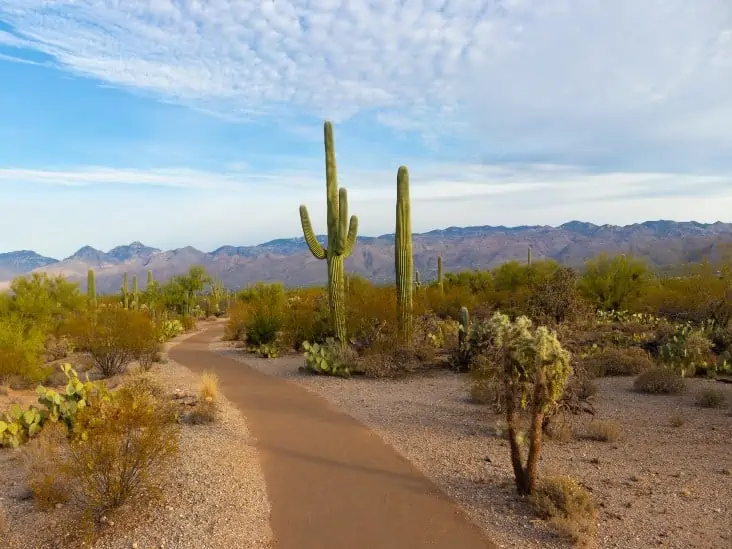
Desert Plant Adaptations: How Desert Plants Survive Extreme Drought

Introduction

Ever wondered how a cactus can live for months under the scorching sun without a drop of rain? Desert plants survive and even thrive in some of the harshest environments on Earth thanks to remarkable adaptations. In this article, we’ll explore desert plant adaptations – the clever strategies and features that enable plants to endure extreme heat, intense sunlight, and very little water. You’ll learn how desert plants survive prolonged droughts by storing water, minimizing water loss, growing special roots, and timing their life cycles to make the most of rare rains. By the end, you’ll have a deep understanding of plant adaptations in deserts and why they’re so important for life in these arid regions.

What to Expect: We’ll start by looking at the challenges of the desert climate. Then, we’ll dive into the key adaptation strategies desert plants use: succulence (water storage), drought tolerance (withstanding dry periods), and drought avoidance (escaping dry seasons entirely). Along the way, we’ll discuss examples of cacti, shrubs, and wildflowers with unique survival mechanisms, bust some common myths, and answer frequently asked questions. Let’s uncover the secrets of how desert plants beat the heat and drought!

The Challenges of Desert Climates

Deserts are defined by their dryness. In general, a desert is an area that receives less than about 10 inches (250 mm) of precipitation per year

Rainfall is infrequent and unpredictable, often coming in short bursts separated by long rainless stretches. On top of that, high temperatures, intense sunlight, and strong winds lead to rapid evaporation, so any moisture in the soil doesn’t last long. The result is a climate where water is extremely scarce most of the time.

Such arid conditions create multiple challenges for plants:

  • Water scarcity: Obviously, the biggest challenge is the lack of water. Plants need water for photosynthesis and cooling (via transpiration). In deserts, they must survive on meager rainfall and conserve every drop.
  • Extreme heat: Daytime temperatures in hot deserts routinely soar above 100°F (38°C). High heat can dry out plant tissues and soil quickly. Plants must avoid overheating and excessive water loss.
  • Intense sunlight: With few clouds, deserts get a lot of sun. The sunlight is so strong it can damage plant tissues (UV exposure) and heat them up, increasing evaporation.
  • Cold nights: Surprisingly, deserts can get very cold at night (and cold deserts have frigid winters). Plants may face not only heat by day but cold stress at night, needing adaptations for a wide temperature range.
  • Poor soils: Desert soils are often sandy or rocky with low organic matter, meaning they hold little water and nutrients. Some desert soils are also high in salt, which can be another stress on plants.

In short, desert plants live in an environment that would quickly kill most regular plants. They survive by adaptingthrough specialized structures, behaviors, and life cycle strategies that tackle these challenges head-on​

Let’s examine the main categories of desert plant adaptations.

Overview of Desert Plant Adaptation Strategies

Desert plants have evolved an array of strategies to cope with drought. Most of their adaptations fall into three broad categories: succulence, drought tolerance, and drought avoidance

Think of these as three different game plans for dealing with water scarcity:

  • SucculenceStore water when it’s available and use it slowly. Succulent plants (like cacti and aloes) have fleshy tissues that hold water, giving them a reserve to survive dry spells.
  • Drought ToleranceWithstand drying out. These plants can tolerate significant dehydration or go dormant during drought. They often have features to reduce water loss (like dropping leaves) and deep roots to find any available moisture.
  • Drought AvoidanceEscape the drought. These are often short-lived plants (annual wildflowers) that avoid dry periods altogether. They germinate, grow, and reproduce only during the rare wet periods, then persist as seeds when conditions turn harsh.

Many desert plants use a combination of these strategies. For example, a cactus is succulent (stores water) but also highly drought-tolerant (it can survive losing a lot of water and essentially “pause” during extreme drought). A creosote bush has some succulence in its tissues, is very drought-tolerant (dropping leaves, enduring dehydration), and can live a long time through cycles of rain and drought. In the sections below, we’ll explore each strategy in detail and highlight the fascinating adaptations that make them possible.

Succulence: Storing Water for the Dry Times
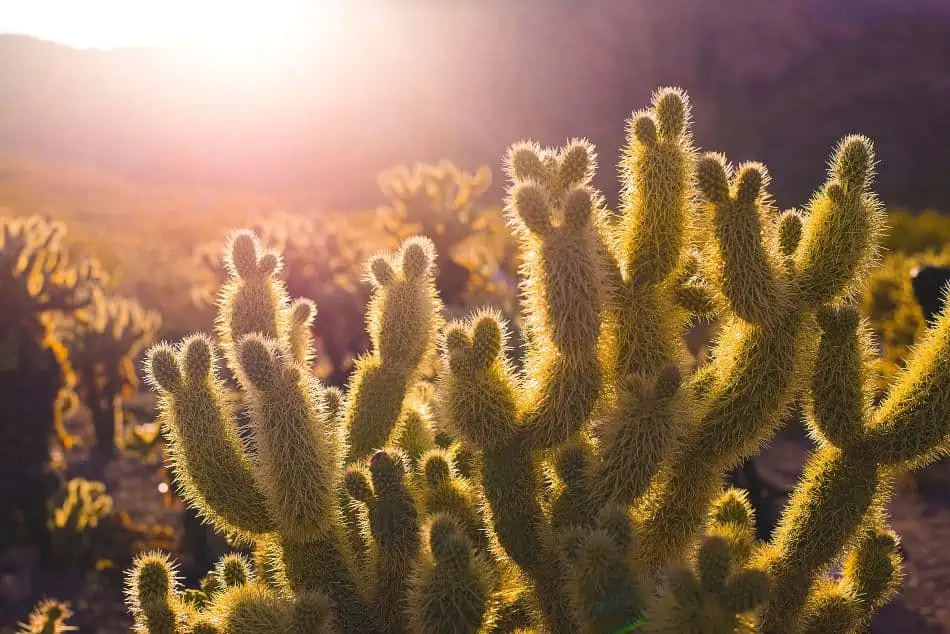
A cholla cactus.
In hot deserts, cacti increase water intake through roots and minimize the loss by reducing leaf amount or size.

One of the most common desert plant adaptations is succulence – the storage of water in fleshy, swollen stems, leaves, or roots. Succulent plants essentially act like living water tanks. When rain does fall, they absorb as much water as possible and hold onto it, then slowly use it over time. This is how a cactus can survive months (or even years) without rain.

How Succulence Works: Succulent plants have specialized tissues filled with water-storage cells. For example, a cactus’s thick green stem is packed with sponge-like tissue that can soak up water quickly and swells up after a good rain. An adult saguaro cactus can hold over a thousand gallons of water in its tissues when fully hydrated​ enough to sustain it for an entire year without any new water supply​. These plants often visibly expand after rainfall; many cacti have pleated, accordion-like stems that can expand and contract like a bellows as water is stored or used up​. This flexibility prevents the cactus skin from splitting under the internal water pressure.

Extensive Shallow Roots: To maximize water uptake, most succulents have broad, shallow root systems. Desert rains tend to be brief and light, wetting only the upper layers of soil. Succulent roots stay close to the surface to rapidly collect this water before it evaporates​. For instance, the roots of a large saguaro cactus extend horizontally about as far as the plant is tall, but are usually only a few inches deep​. By spreading wide but not deep, the cactus can soak up water from a large area during a rainshower. In fact, most of a saguaro’s water-absorbing roots lie in just the top half-inch (1.3 cm) of soil​! This adaptation lets succulents grab moisture from even a light drizzle.

Water Conservation Features: Storing water is only half the battle – succulents must also guard that precious water against loss. Succulent desert plants exhibit multiple traits to conserve water:

  • Waxy, waterproof skin: Succulent stems and leaves are often covered in a thick waxy cuticle. This waxy layer makes the surface almost waterproof when the plant’s pores are closed, greatly reducing evaporation​. You might notice many cacti and agaves have a glossy or bluish “waxy” look – that’s the cuticle doing its job.
  • Reduced or no leaves: Leaves are usually the biggest source of water loss in plants (through transpiration). Many succulents minimize this by having very small leaves or none at all. Cacti are extreme examples – most cacti have no traditional leaves. Instead, their leaves have evolved into spines (more on spines in a moment). Other succulents like agave have thick leaves with small surface area relative to volume. Some succulents that do have normal leaves will shed them in dry seasons to save water. For example, the ocotillo (a desert shrub) grows clusters of small green leaves after rain, but drops them during drought, surviving on water stored in its stems.
  • CAM Photosynthesis: Many succulents use a special form of photosynthesis called CAM (Crassulacean Acid Metabolism) to reduce water loss. In regular plants, stomata (tiny openings in leaves/stems) open during the day to take in CO₂ for photosynthesis, but this also lets water vapor escape. CAM plants do the opposite – they open stomata at night when the air is cooler and more humid, taking in CO₂ and storing it. Then during the hot day, CAM plants keep stomata closed while using the stored CO₂ for photosynthesis. This adaptation means they lose far less water – CAM plants lose only about one-tenth as much water per unit of carbohydrate produced compared to typical plants (C3 plants)​. Cacti, aloes, and many agaves are CAM plants. This clever timing allows succulents to photosynthesize efficiently without the massive water loss that most plants experience under the desert sun.
  • “Idling” metabolism: In extreme drought, CAM plants have another trick – they can enter a standby mode. If things get so dry that even opening stomata at night would lose too much water, a CAM plant will keep its stomata closed day and night. Essentially, it temporarily stops normal gas exchange. In this state, the plant’s metabolism slows to a crawl (like an engine idling) just to maintain basic cell functions​. The succulent can sit tight like this, using minimal water, until a rain comes. Once rain arrives, the plant can ramp up from idle to full metabolic activity within a day or two​, rapidly resuming growth and reproduction when water is available. This ability to “wait it out” is a key drought survival tactic for succulents.

Defense and Sun Protection: Succulents often need to defend their stored water from thirsty animals. A juicy cactus is a tempting meal for wildlife seeking water. Thus, many succulents are armored with spines, thorns, or toxic compounds:

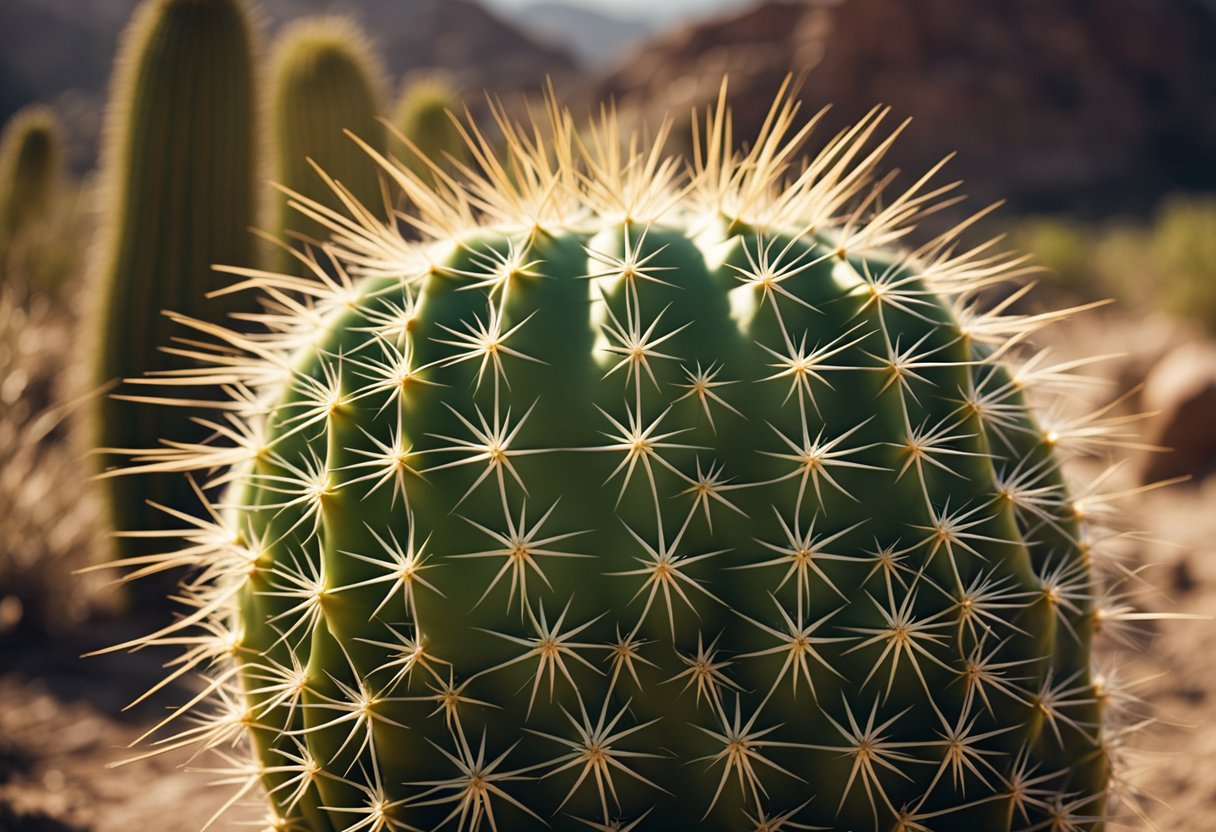
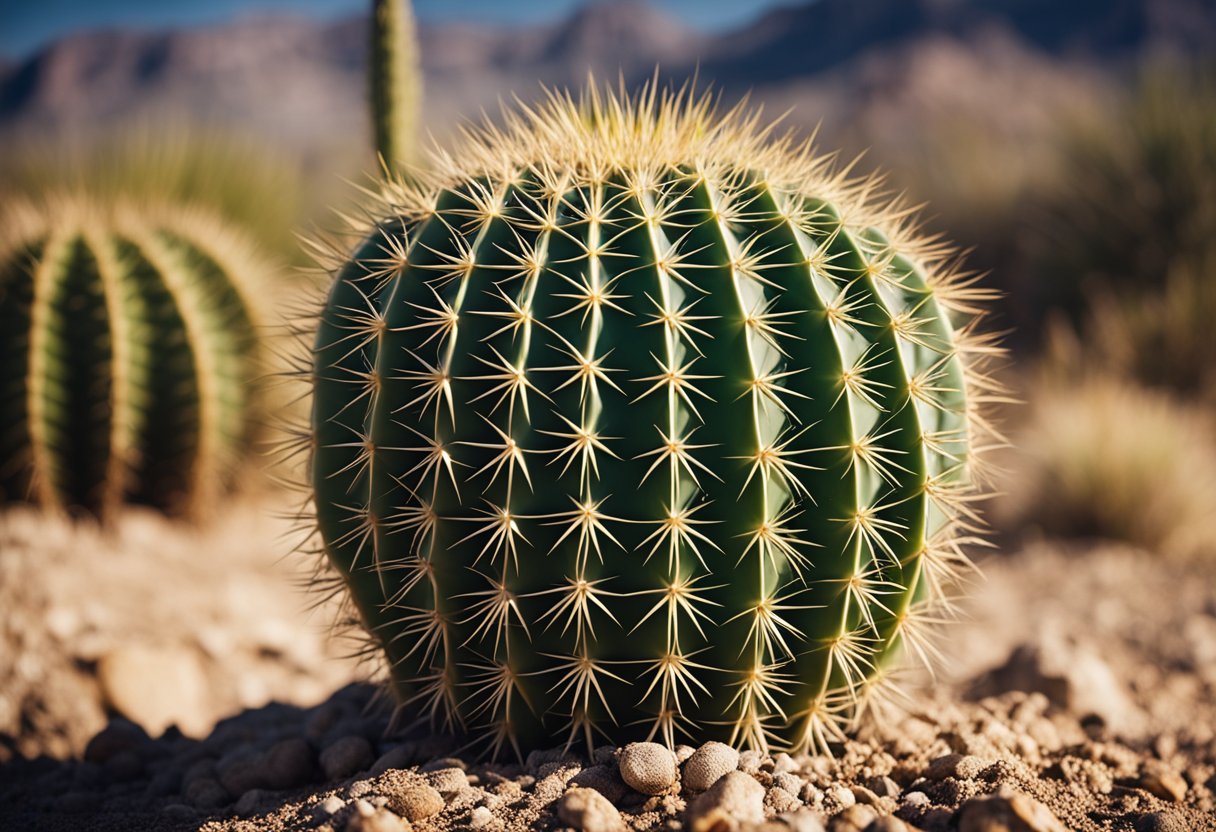
  • Spines and Thorns: Cactus spines are actually modified leaves that have lost their surface area and become hard, pointed needles – a perfect example of form following function. Spines obviously deter animals from munching on the plant’s flesh, but they have other benefits too. Spines provide shade to the cactus surface, breaking up the sunlight that hits the green stem. This helps keep the plant a bit cooler and reduces evaporation. A dense spine covering can even create a layer of slightly cooler, more humid air next to the cactus skin, further reducing water loss. Spines also disrupt air flow around the cactus, which helps prevent drying winds from whisking away moisture. Additionally, in some cacti, spines aid in collecting moisture from the air: they can trap dew or fog, which then drips down to the base of the plant for uptake​. So while they look menacing, spines are multi-purpose survival tools.
  • Chemical defenses: Some desert succulents produce bitter or toxic chemicals in their tissues to make them unpalatable. The milky sap of certain euphorbia succulents, for example, is irritant or poisonous. This discourages animals (and even insects) from tapping the plant for water.
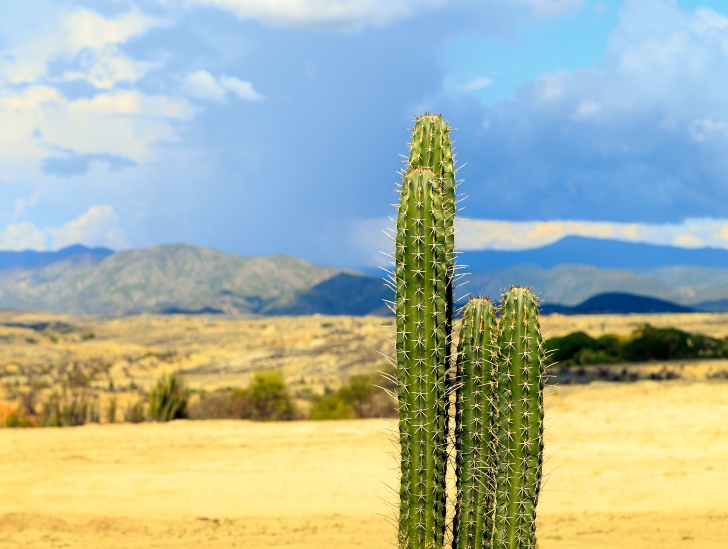
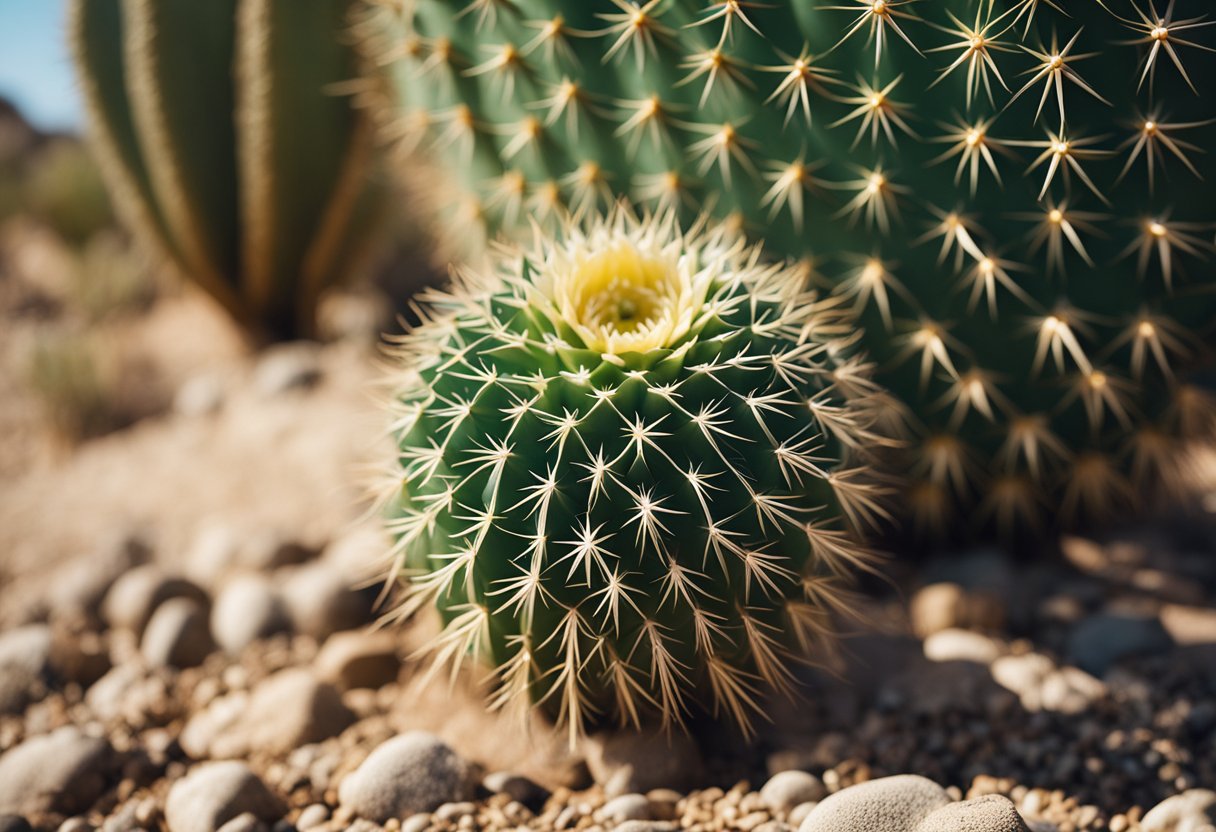
A desert cactus.
These plants also grow very small leaves to prevent water loss.

Examples of Succulent Desert Plants: When thinking of desert plants, succulents often come to mind first:

  • Cacti (Family Cactaceae): Almost all cacti are succulents. The saguaro of the Sonoran Desert is a famous example – it can weigh over 2 tons when filled with water and sustain itself through long droughts​. Prickly pear cacti have thick pads (stems) that store water and are armed with clusters of spines and tiny hair-like glochids. Many cactus species have shallow roots and CAM metabolism as described above.
  • Agaves and Aloes: These are succulents with fleshy leaves. Agaves (like the century plant) store water in sword-like leaves that have waxy coatings and often spines on the tips or edges. Aloes (found in Old World deserts) similarly have plump, gel-filled leaves (think of Aloe vera) to hold water.
  • Elephant Tree (Bursera microphylla): A succulent tree of the Sonoran desert, it has a swollen trunk to store water and tiny leaves that drop during drought.
  • Euphorbias: In African and Asian deserts, Euphorbia species have evolved to resemble cacti (with succulent, water-storing stems and spines), despite being unrelated – a case of convergent evolution in desert environments.
  • Stone Plants (Lithops): In African deserts, lithops are small succulents that look like pebbles. They store water in two fleshy leaves and avoid detection (and dehydration) by blending into the rocky landscape!

Succulence is a highly successful strategy in deserts around the world. However, not all desert plants are succulents. Next, we’ll look at those that survive by tolerating drought and reducing water loss without necessarily storing much water.

Conserving Water: Minimizing Water Loss

Whether or not a plant is a succulent, any desert plant must conserve water to survive. Water conservation adaptations focus on reducing transpiration (the loss of water vapor from leaves) and avoiding tissue damage from heat and sun. We’ve already touched on some in the succulence section, like waxy coatings, CAM photosynthesis, and spines replacing leaves. Here we’ll expand on additional clever tricks desert plants use to minimize water loss:

  • Tiny or No Leaves: Many desert plants have very small leaves, or they shed their leaves during the driest months. Less leaf surface area means less area from which water can evaporate. For instance, the creosote bush (Larrea tridentata), common in the Mojave and Sonoran deserts, has tiny evergreen leaves that are just a few millimeters long. During extreme drought, creosote can drop some leaves to further cut down water loss​. Some desert acacias and palo verde trees have tiny compound leaves that cast dappled shade but don’t lose much water. No leaves at all is even more effective: the cactus-as-stems strategy shows that leaves aren’t always necessary if the stem can do the photosynthesis.
  • Waxy or Oily Coatings: Desert shrubs often have leaves with waxy, resinous coatings (like a thin layer of varnish). This adaptation, seen in creosote bush and many others, helps seal in moisture. The resin on creosote leaves, for example, makes them shiny and waterproof, greatly slowing evaporation.​ You can often feel this if you touch such leaves – they may feel thick or sticky with oils. These coatings can also reflect some sunlight. Similarly, many succulents’ waxy bloom (the whitish or bluish film on cactus pads or agave leaves) reflects sunlight and reduces UV damage.
  • Leaf Orientation and Movement: Some desert plants avoid direct sun by how they position their leaves. Vertical orientation is one strategy – for example, the palo verde tree has tiny leaves that stand vertically (upright) so that the midday sun hits only their edges rather than broad faces, thereby reducing solar heating. Leaf folding or drooping is another: certain grasses or shrubs will fold their leaves or make them droop during the hottest part of the day, then reopen in the cooler evening. By folding, the leaf hides its stomata and reduces exposure to dry air. Some Australian desert plants (like certain eucalypts or acacias) present only a narrow edge to the midday sun.
  • Reflective or Hairy Surfaces: A number of desert plants have leaves or even stems covered in fine hairs or light-colored scales. These hairs reflect sunlight, shading the surface of the leaf, and also trap a layer of moisture. A great example is the brittlebush (Encelia farinosa) of the Sonoran Desert. Its leaves are covered in tiny white hairs, giving the plant a grayish look. The hairs help reflect intense sunlight and keep the leaf cooler​. During extreme drought, brittlebush will drop its leaves, but when conditions improve, it regrows them quickly​. Another example is desert sage and winterfat (Krascheninnikovia) – these have silvery fuzzy leaves that act like natural sunblock and windbreaks. This hairy coat strategy is mentioned broadly as a xerophytic adaptation: developing a dense, hairy leaf covering to reduce water loss​.
  • Sunken Stomata and Other Leaf Anatomy Tricks: Some desert plants have stomata (pores) that are sunken in pits or grooves on the leaf surface, sometimes also lined with hairs. This creates a pocket of humid air near the stomata, cutting down on water loss. Others might only have stomata on the underside of leaves (in shade). Thick leaves with internal water-storage (succulence) also tend to have fewer stomata.
  • High Temperature Tolerance: To avoid needing water for cooling, desert plants are often just very tough in the face of heat. Their enzymes and cell membranes can function at higher temperatures than those of most plants, meaning they don’t need to transpire as much for cooling. Some produce special heat-shock proteins that protect cellular functions during extreme heat.
  • Drought-Deciduous Behavior: We touched on this with ocotillo and creosote – many desert perennials simply decide to drop leaves and go dormant when moisture is insufficient. By shedding leaves, a plant dramatically cuts down its water loss (no leaves, no transpiration). The trade-off is that it can’t photosynthesize during that time, but surviving dry years is more critical. When rain finally comes, these plants quickly grow new leaves and resume normal function. Ocotillo can leaf out within days of a good rain and then turn bare a few weeks later as the soil dries – doing this multiple times a year if the rains are intermittent.

In essence, desert plants have an arsenal of features to hold onto every bit of water they have. Shiny wax, tiny or no leaves, protective hairs, and smart timing of gas exchange all contribute to making desert plants incredibly water-efficient. These are the kinds of plant adaptations in deserts that make the difference between life and death when rain is absent for months on end.

Next, we’ll explore root adaptations – because finding water is just as important as saving it.

Root Adaptations: Finding and Absorbing Water

When water is scarce, you have to grab it before it’s gone. Desert plants show extreme adaptations in their root systems to locate water in the soil. Generally, desert plant roots employ one of two tactics (or a mix of both): spread wide or go deep. Each strategy is suited to different types of water availability.

  • Shallow, Spreading Roots: As mentioned with succulents, many desert plants have shallow roots that radiate far from the plant’s base. This allows them to quickly soak up water from a large area during brief rain events. After a rain, the upper soil may only stay moist for a short time, so these roots must be efficient. Cacti, for example, often have a mat of fibrous roots just beneath the soil surface. A young saguaro cactus (only a few feet tall) can have roots extending out several yards in all directions but staying within a couple inches of the surface. When a downpour happens, the ground might get wet, say, 2 inches deep over a broad area – and the cactus will take full advantage of that. Agaves and other succulents similarly have radial root systems to capture fleeting moisture. Some desert plants even grow additional temporary roots after rain – they sense the moisture and sprout new rootlets to absorb it. Once the soil dries, those fine roots may wither away to avoid wasting energy.
  • Deep Taproots: The opposite approach is seen in certain desert trees and shrubs – they send down extremely deep roots to reach groundwater or permanent moisture reserves. These are often called phreatophytes, meaning they tap into the phreatic (groundwater) zone. A classic example is the mesquite tree (Prosopis). Mesquites are known to have some of the deepest roots in the plant kingdom. In favorable soil conditions, mesquite roots have been documented reaching 50 to 60 meters (over 150–200 feet) deep in search of water! This incredible depth lets them find water long after the surface has dried out. Even if no rain falls for months, a mesquite with a deep taproot can drink from the water table or damp subsoil. Similarly, the Desert Willow and certain acacias push taproots down toward underground moisture. In the Namib Desert, the famous Welwitschia plant has a long taproot system believed to reach deep water sources (while its two long leaves also gather dew above ground).
  • Extensive Lateral Roots in Woody Shrubs: Desert shrubs like creosote combine strategies – they have relatively deep roots (not as extreme as mesquite) but also wide-ranging lateral roots. A creosote bush’s root system can cover an area many times the diameter of its canopy, intertwining with neighbors. This wide reach ensures that the plant can scavenge any rainfall that percolates down as well as draw from a larger soil volume in dry times​. Creosote roots might extend a few meters deep at most, but spread very broadly.
  • Shallow vs. Deep Trade-offs: Each root strategy has pros and cons. Shallow roots (as in succulents) allow immediate use of light rains but can’t access deeper moisture. Deep roots (as in mesquite) grant access to reliable water but usually require the plant to invest energy in growing slowly until it hits water; also, deep-rooted plants often need a good soaking rain to recharge the deep soil before they can really thrive. Interestingly, these strategies can influence when a plant grows: shallow-rooted succulents often capitalize on ephemeral moisture (they’ll green up quickly after a small rain), whereas deep-rooted shrubs/trees might stay dormant until a significant rain has come to penetrate the soil. Once the deep soil is moist, they can sustain growth for weeks or months, even if the surface dries out​. Neither strategy is “better” – they are just different ways to deal with desert conditions. That’s why in deserts you often see a mix of succulents (small, shallow-rooted) and shrubs/trees (deep-rooted) occupying different ecological niches.
  • Roots for Storage: A few desert plants even use their roots as water storage organs (a form of succulence underground). Some caudiciform desert plants and bulbs will store water in thick, swollen roots or tubers safe from the heat above.

Remarkable Root Feats: It’s worth marveling at some record-setters. We noted mesquite’s 200-foot deep roots​ that’s roughly equivalent to a 20-story building depth! Another plant, the wild desert gourd (Cucumis humifructus in the Kalahari) is known as the “wild watermelon”; its thick taproot helps it endure, and it even deposits its watermelon-like fruits underground for moisture. In the Sahara, acacia trees have been found with roots over 100 feet long to find water. These root adaptations underline a key point: if water won’t come to the plant, the plant will go to the water.

By either spreading wide or drilling deep, desert plants maximize their water uptake opportunities. Along with water storage and conservation traits, a well-adapted root system gives desert plants a critical edge in a dry land.

Drought Tolerance: Surviving Extreme Dryness

Some desert plants survive drought by tolerating very dry conditions within their tissues – conditions that would kill ordinary plants. Drought tolerance adaptations allow the plant to continue living (though often in a suspended state) even as it loses water and the soil remains dry for long periods. This often involves entering a dormant state and protecting the most vital parts of the plant until better conditions return.

Key aspects of drought tolerance include:

  • Desiccation Tolerance: A few remarkable plants can lose a huge percentage of their water content and essentially “dry out” almost completely, then rehydrate and spring back to life when water is available. These are sometimes called “resurrection plants.” While most resurrection plants are small herbs or mosses (e.g., the Rose of Jericho in arid regions), even some desert shrubs can withstand severe dehydration. During drought, their cells produce special sugars and proteins that stabilize membranes and enzymes, allowing the plant’s tissues to survive without water. When rain comes, they rehydrate and resume normal metabolism. This is uncommon among large desert plants, but some smaller ones (certain ferns, mosses, and a few angiosperms) have this ability.
  • Dormancy (Drought Deciduousness): As discussed, many desert perennials avoid damage by going dormant in dry times. This can mean dropping leaves, halting growth, and essentially shutting down most functions to conserve water and energy. The plant lives off stored resources (like water in its stems or carbohydrates in its roots) at a very low metabolic rate until moisture returns. We see this in shrubs like brittlebush and jojoba, and in trees like mesquite which may shed leaves in a prolonged drought. The above-ground parts might even appear dead, but the plant is still alive. Once rain comes, these plants quickly leaf out and resume activity, using their deep roots or stored water to get started.
  • Protective Compounds: During dormancy or drought stress, plants often accumulate compounds like proline (an amino acid) or other osmoprotectants that help maintain cell structure. They might also increase antioxidants to deal with stress. While these changes aren’t visible externally, they are part of physiological drought tolerance.
  • Heat Tolerance and Recovery: Drought usually coincides with heat, so drought-tolerant plants are also heat-tolerant. Some can endure leaf temperatures that would scald other plants, or they have mechanisms to dissipate heat (like rough bark that radiates heat away, or small insulated leaves). When rain comes, drought-tolerant plants can be quick responders. For instance, brittlebush that looked like a bunch of dry sticks can leaf out and even bloom within weeks of significant rainfall​.
  • Longevity and Patience: Many drought-tolerant desert plants are long-lived, enduring many cycles of drought and rain. The creosote bush is a prime example – individual creosote plants can live for decades, and clonal colonies (a ring of stems that are one genetic individual) can survive for thousands of years by slowly replacing themselves. One clonal creosote ring in the Mojave Desert, nicknamed “King Clone,” is estimated to be over 11,000 years old! Such longevity is possible because in bad years the plant conserves resources, and in good years it grows a bit – a slow and steady strategy.
  • Rapid Recovery: When conditions improve, drought-tolerant plants often have the ability to recover quickly. They may have buds that are ready to sprout new leaves or flowers as soon as they get a signal (water). Some cacti that look shriveled will plump up within days of rain. CAM succulents, as mentioned, can go from idle to full throttle in 24–48 hours after a rain​. This rapid turnaround is crucial: in the desert, you take advantage of moisture while you have it.

Example – Creosote Bush (Larrea tridentata): This iconic desert shrub employs multiple drought tolerance tricks. Its small wax-coated leaves conserve water, and it can drop them in severe drought​. It has an extensive root system to draw from a large soil volume. Even when surface soils are parched, creosote can often find a bit of moisture below. The resin on its leaves not only prevents water loss but also tastes bad to herbivores (so it doesn’t get eaten when it’s one of the few green things around). Creosote can essentially pause growth during dry years, then live on and on, sprouting new shoots when rains come. That’s how it dominates large areas of the southwestern US deserts.

Example – Saguaro Cactus: We usually think of saguaros as succulents (they are), but they are also extremely drought-tolerant. A fully hydrated saguaro can use its stored water to survive for a year or more without any rain​. As it uses water, it slowly shrinks in girth, but it can tolerate this gradual depletion. Its pleated skin folds in without harm. The cactus can lose a significant fraction of its weight in water and not die; it’s basically designed to function while dehydrated. Only when it nears a critical threshold will it really suffer. If rains return in time, the saguaro quickly rehydrates and even can go on to flower and set seed using the water it saved.

In summary, drought tolerance is about enduring the hardship. These desert plants may not look perky during the worst of times (many look dry, leafless, or scraggly when water is scarce), but they are alive and waiting. Their ability to ride out extreme dryness is what makes them true survivors.
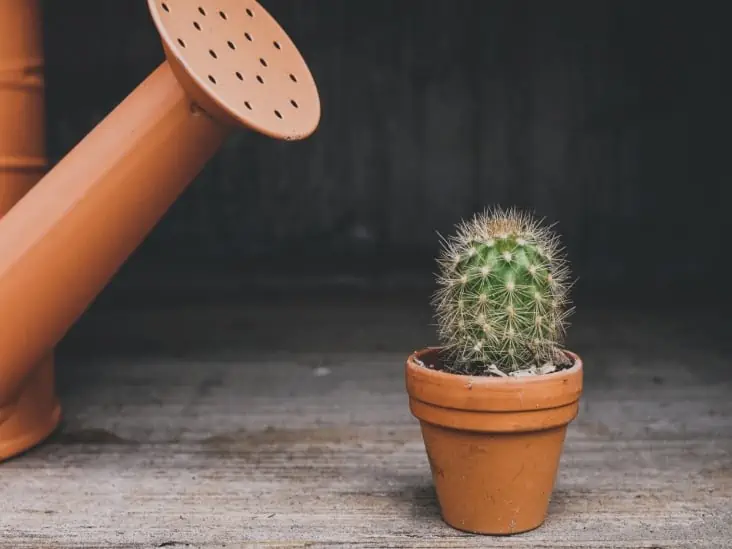
A small cactus with a water can.
Transpiration is the circulation of water throughout the plant which then evaporates into the air.

Drought Avoidance: Living Fast and Dying Young (But Leaving Seeds)

The third major strategy is completely different: instead of enduring drought, avoid it altogether. Enter the world of desert annuals and ephemerals – plants that time their life cycle to the rare wet periods and lie low (as dormant seeds) during drought.

How Drought Avoidance Works: These plants are often called ephemeral wildflowers or annuals (though some are short-lived perennials). They have short lifespans, maturing from seed to flowering to seeding in as little as a few weeks. They typically germinate after substantial rainfall, when the desert soil is moist enough to sustain growth for a while. They quickly grow leaves, shoot up, and bloom with vibrant flowers, then produce a bunch of seeds and die before the dry season kicks in. The new seeds then remain dormant in the soil seed bank, which can last for years until the next good rains trigger the cycle again​.

This strategy is all about timing and opportunity:

  • Rainfall Triggers: Desert annual seeds are very picky about when they germinate. They often have tough seed coats or chemical dormancy mechanisms that prevent sprouting until conditions are just right. For many, it’s not enough to just have a little rain – they wait for a significant soaking that signals a likely sustained wet period. For example, in the Sonoran Desert, many annuals will only germinate after about 1 inch (2.5 cm) or more of rain within a short period during the cooler season​. This ensures that once they sprout, there will be enough moisture for them to grow, flower, and set seed.
  • Cool-Season Growth: In some deserts (like Sonoran and Mojave), the favorable growing window is the winter or early spring, when temperatures are milder. Seeds often germinate in fall or winter after rains, plants grow slowly through the cool months, then burst into bloom in spring. By late spring, as heat and aridity return, they’ve already produced seeds and dried up. That’s why desert wildflower displays happen in spring.
  • Seed Dormancy & Longevity: Not all seeds germinate in the first rain. A portion will remain dormant even if conditions seem good – this is a bet-hedging strategy. For instance, only some desert lupine seeds will sprout in a given year; others will wait, sometimes 5, 10, or more years in the soil​. This way, even if a “false start” wet period happens and then the seedlings die of drought, there are backup seeds for future attempts. Some desert plant seeds can remain viable for decades, ready for the once-in-a-decade “superbloom” when heavy rains come.
  • Rapid Life Cycle: Once conditions are right, these plants move fast. Many have preformed buds that quickly develop, or they can grow leaves and stems in a matter of days. They put most of their energy into flowering and seed production (since they have no guarantee of a next year). They often channel all resources into seeds and then the parent plant withers. There’s no saving itself – the seeds carry the torch forward. Because of this, desert annuals can carpet the desert floor with color after rains, then vanish completely, existing only as hidden seeds when the desert is dry.
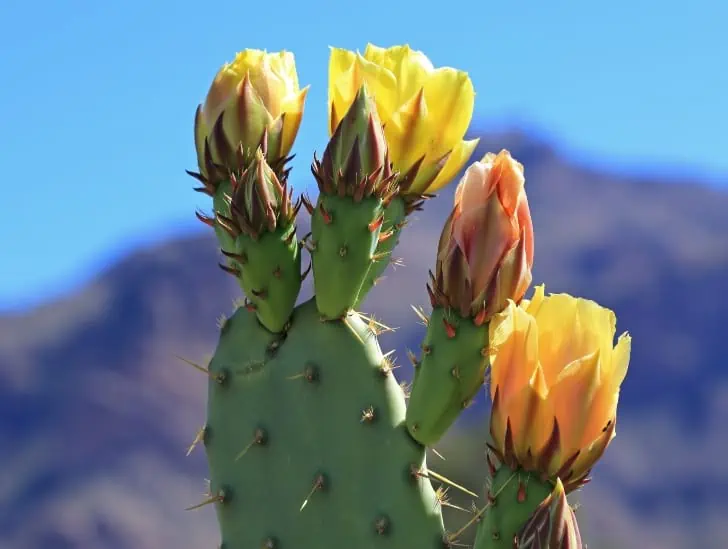
A prickly pear cactus with fruits.
Prickly Pear is a fruit-bearing cactus requiring low maintenance and hot climate.

Examples of Drought Avoiders: Desert wildflowers are a highlight of many arid regions:

  • Desert Gold Poppies (Eschscholzia glyptosperma) and Arizona Lupines (Lupinus arizonicus): These are part of the spring wildflower displays in the Sonoran Desert. They germinate in fall/winter, bloom in spring with brilliant orange or purple flowers, set seeds, and die by summer​.
  • Desert Marigold (Baileya multiradiata): A yellow wildflower that can bloom multiple times a year if rains allow, but also survives as short-lived perennial in better conditions. It times its growth to moisture availability.
  • Annual grasses: Some desert grasses avoid drought by the same seed strategy, growing only in wetter years.
  • Devil’s Claw (Proboscidea althaeifolia): This interesting plant in the Southwest has sprawling green growth and unique seed pods in good seasons, but survives as a durable seed otherwise.
  • Rain Lilies and Bulbs: Not all drought-avoiders are annuals; some are bulbs or perennials that stay dormant underground. For example, desert lily (Hesperocallis) bulbs wait out dry times and sprout leaves and a lily flower after significant rains. Similarly, rain lilies in arid areas bloom days after a rain then disappear.

The drought avoidance strategy is all about exploiting good times and enduring bad times as a dormant seed or bulb. It’s a boom-and-bust lifestyle. When conditions are right, these plants “boom” – growing rapidly and often stealing the show with lush greenery and flowers in an otherwise brown landscape. When the short wet season is over, they “bust” – dying off, but having left a bank of seeds that can ensure the species continues.

This approach is so effective that in some deserts, the majority of plant species are annuals or ephemerals. For example, in parts of the Sonoran Desert, hundreds of species of wildflowers and small plants fit this profile, lying unseen as seeds most years and only occasionally blanketing the desert after winter rains.

Other Fascinating Desert Plant Adaptations

In addition to the big three strategies above, desert plants have some other interesting adaptations worth mentioning:

  • Night Blooming: Some desert plants (especially succulents like cacti and yuccas) bloom at night. The night-blooming cereus cactus, for example, opens its fragrant white flowers after sunset. Why? Because nighttime is cooler and more humid, so the flowers won’t dry out as quickly and the plant loses less water by opening them then. Additionally, night bloomers often rely on nocturnal pollinators (like bats or moths). By avoiding the daytime heat, they conserve water and still get pollinated. The beautiful large white flower of a saguaro cactus also tends to open at night and into early morning, taking advantage of cooler hours.
  • Spatial Distribution: Desert plants often grow spaced far apart, a pattern that minimizes competition for scarce water. In some cases, plants even produce natural herbicides or growth inhibitors to keep other plants away. For example, creosote bush roots secrete chemicals that suppress the growth of nearby seedlings (a phenomenon called allelopathy). This ensures less competition for water around established creosotes.
  • Succession and Nurse Plants: Young cactus seedlings might actually need a bit of help to get started. Often, they sprout under the partial shade of “nurse plants” like palo verde or mesquite. The nurse plant’s shade provides cooler temperatures and protection for the seedling’s early growth. Once established, the cactus can survive on its own and the nurse may die off or coexist. This is an adaptation at the community level – desert plants often form partnerships that aid survival of new generations.
  • Salt Tolerance: Some deserts have salty soils (like playas or coastal deserts). Halophytic adaptations (salt tolerance) are necessary there. Certain desert succulents can excrete excess salt or compartmentalize it in their tissues. For instance, saltbush (Atriplex) has bladder cells on leaves that store salt, and it can shed those leaves to dump the salt. This isn’t about drought per se, but it’s another stress desert plants handle.
  • Efficient Photosynthesis and Growth: Deserts might lack water, but they often have abundant sunlight. Many desert plants have high photosynthetic rates when water is available, converting sunlight to biomass very efficiently. Cacti and CAM plants take in CO₂ at night very effectively. Some grasses and shrubs use the C4 photosynthetic pathway, which is more water-efficient than the normal C3 pathway and is advantageous in high light and heat. These biochemical tweaks maximize productivity per drop of water.
  • Thick Bark and Trunks: Desert trees like the baobab (in African arid regions) or certain arid-climate acacias have thick trunks not just for water storage but also as insulation against heat and fire. A thick corky bark can reduce water loss and reflect heat. Baobabs store water in their massive trunks (succulence in a tree form) and shed leaves annually to avoid drought stress.
  • Reduced Growth Form: Many desert plants are short or low-growing (think of mats or small shrubs) – this helps avoid excessive exposure to wind and creates a boundary layer of still air. By hugging the ground, they also may take advantage of slightly higher humidity right at the soil surface.

Each desert plant species is a case study in survival, with its own mix of adaptations. The variety of desert plant adaptations is truly astonishing – from cacti that swell with water and brandish spines, to wiry shrubs that wait patiently for rain, to seeds that can sleep for years until awakened by a downpour. These strategies all center on a common goal: get water, save water, and make it to the next opportunity to reproduce.

FAQ: Desert Plant Survival

Q: How do desert plants survive with so little water?
A: Desert plants survive by using specialized adaptations to collect water, store it, and drastically reduce water loss. They often have extensive root systems to gather water quickly from rain or from deep underground. Many store water in fleshy tissues (succulents) and have protective features like waxy coatings and spines to prevent evaporation. They may also drop leaves or go dormant during extreme drought. In short, every part of a desert plant is geared towards saving water and enduring dry periods.

Q: Why do desert plants have thorns or spines instead of leaves?
A: The spines on cacti and other desert succulents are actually modified leaves that have evolved to minimize water loss. Regular leaves would transpire too much water in the desert, so cacti ditched them in favor of spines. Spines have a tiny surface area (so they don’t lose water like a broad leaf would) and they help in other ways – they protect the plant from animals and provide shade and wind protection to the plant’s surface​. Essentially, spines let the cactus have the benefits of defense and a bit of shading without the water cost of real leaves.

Q: What is CAM photosynthesis and why is it important for desert plants?
A: CAM (Crassulacean Acid Metabolism) is a special type of photosynthesis where a plant opens its stomata at night to take in carbon dioxide, then closes them in the day while it photosynthesizes. This adaptation is important for desert plants because it drastically cuts down on water loss. By opening stomata at night when it’s cooler and more humid, CAM plants like cacti and agaves lose far less water than if they did so in the hot daytime. It’s a key reason succulents can live in extremely dry climates – they’re photosynthesizing on a night schedule!

Q: How long can a cactus live without water?
A: It depends on the species and conditions, but many large cacti can survive many months, even years, without rainfall. For example, a fully hydrated saguaro cactus can live about a year or more by using the water stored in its tissues​. Smaller cacti with less storage might last a few months. They survive by slowing down their growth and metabolism to use water very efficiently. Cacti will shrink and use up their water reserve gradually. They’re experts at “stretching” their water supply over long droughts.

Q: Can I grow desert plants (like cacti or succulents) in non-desert climates?
A: Yes, many desert succulents and plants can be grown in gardens or indoors around the world, but you have to mimic some of their preferred conditions. They generally need lots of sunlight and very well-draining soil (to avoid root rot, since they’re not used to sitting in water). You should water them sparingly, allowing the soil to dry out between waterings – essentially imitating the infrequent rains of a desert. Be careful in humid or rainy climates; too much water is usually the biggest threat to desert plants in cultivation. Also, some desert plants are sensitive to frost, since they don’t experience hard freezes in their native range. As long as you provide a bright, dry environment and protect from extreme cold, you can enjoy cacti and other desert plants far from the desert.

Q: Why are many desert plants spaced far apart?
A: If you hike in a desert, you’ll notice plants often aren’t growing in dense clusters; instead, each plant occupies its own patch of soil. This spacing is partly due to competition – each plant needs a certain amount of water from the soil, and if they grow too closely, there isn’t enough to go around. Some desert plants actively prevent others from growing nearby by using up all available water or even by secreting inhibitory chemicals into the soil (for example, creosote bush does this) to create a zone where its own offspring or other plants can’t easily sprout. The result is a more even spacing, which ensures each plant gets its share of limited resources.

Q: Do desert plants need sunlight since they try to avoid it (with spines, hairs, etc.)?
A: Desert plants do need sunlight – they are still doing photosynthesis and typically get plenty of sun in their open habitats. The adaptations like spines or hairs that reduce sunlight on the plant are there to moderate extremes, not to eliminate light. Desert sun can be so intense that it could overheat or dehydrate the plant, so features like reflective hairs or spines casting shade just reduce the stress a bit. But there’s still ample sunlight hitting the green tissues for photosynthesis. In fact, many desert plants are adapted to full sun and would not do well in shade. They just have adaptations to use that sun without getting scorched or losing too much water.

Conclusion

Desert plants have evolved an incredible suite of adaptations to survive in an environment that is hostile to plant life. From water-storing cacti that hoard rainwater behind waxy skins, to hardy shrubs that drop leaves and wait out droughts, to fleeting wildflowers that spring to life with the rain and then vanish as seeds – each strategy shows the ingenuity of evolution in solving the problem of extreme water scarcity.

Key Takeaways: Desert plant adaptations include:

  • Water Storage (Succulence): Many desert plants store water in fleshy stems or leaves, combined with shallow roots and CAM photosynthesis, allowing them to weather long dry periods.
  • Water Conservation: Adaptations like waxy coatings, spines instead of leaves​, tiny or deciduous leaves, hairy reflective surfaces, and nighttime activity all help minimize water loss​.
  • Special Roots: Desert plants either spread wide, shallow roots to grab quick rains, or send deep taproots to find underground water​.
  • Drought Tolerance: They can withstand drying out by going dormant, dropping leaves, or surviving on minimal water, then quickly recover when moisture returns​.
  • Drought Avoidance: Many annuals avoid drought by living only in wet spells, completing their life cycle rapidly and enduring dry years as seeds​.
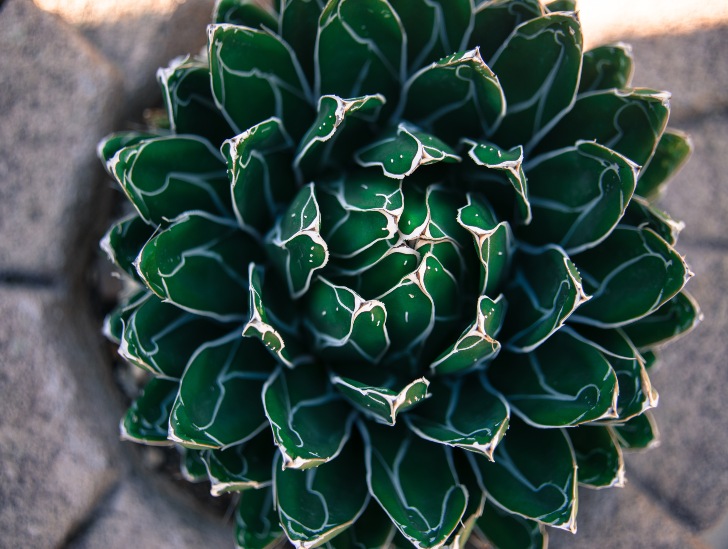
A agave plant.
Agave is among the species which store water in their roots and leaves.

Understanding these adaptations not only gives us an appreciation for the resilience of life, but it’s also important for conservation. Deserts are fragile ecosystems, and their plants are often slow-growing and long-lived. Human impacts and climate change (altering rainfall patterns) can threaten these specialized species. By knowing how desert plants survive, we can better protect them and even learn from them. For instance, xeriscaping (water-wise landscaping) takes inspiration from desert plants to create gardens that use less water – a practical application of this knowledge.

Next time you see a cactus or a desert wildflower, you’ll recognize it as a master of survival. These plants have turned the desert – a place of extreme heat, aridity, and challenge – into their home, using ingenious adaptations to every challenge the environment throws at them. In the story of life on Earth, desert plants stand out as some of the most resourceful and tough beings around. Their ability to survive and thrive in extreme deserts is not just a curiosity; it’s an inspiration for efficient water use and resilience in the face of scarcity.

References:

How Is The Cactus Adapted To The Desert?

The truth is that all plants that grow in such an ecosystem, including cacti, develop unique characteristics that help them to survive the intense heat and limited water supply.

So, how the cactus is adapted to the desert? The primary reason why cacti survive in that ecosystem is because of their numerous adaptations, which include:

  • The leaves of this plant are reduced to needle-like structures referred to as spines that limit water loss, which could occur during the process of transpiration.
  • The needle-like leaves act as a self-defense mechanism that protects the plant from predators.
  • The stem of the cactus plant is swollen and contain numerous collapsible water-storage cells that store water for a relatively long period
  • The stem is green and performs photosynthesis.
  • The plant has a shallow root system that absorbs maximum water even during light showers.
  • The plant is covered with a thick waxy cuticle that helps to conserve water and protect it from desiccation in the scorching heat.

other flowering plant, cacti reproduce sexually depending on the ability of pollen to reach the stigma. They rely on simple pollination methods such as wind transfer.

Survival Strategies Unveiled

Cacti are the jewels of the desert, known for their remarkable ability to thrive in some of the harshest conditions on Earth. The desert environment presents extreme challenges like intense heat, scarce water, and nutrient-poor soils, yet cacti have evolved various unique adaptations that enable them to not only survive but also to flourish. From their distinct morphological characteristics to intricate physiological processes, cacti showcase a spectacular example of evolutionary ingenuity.

Morphologically, many cacti have evolved thick, succulent stems that store water, providing reserves during prolonged droughts. Their spines, which are modified leaves, serve multiple purposes including defense against herbivores, providing shade, and reducing water loss by breaking up wind flow across the plant surface. Furthermore, their extensive root systems spread out widely to capture any available moisture. Physiologically, cacti often utilize a specialized form of photosynthesis known as CAM (Crassulacean Acid Metabolism), which allows them to open their stomata at night to reduce water loss, yet still manage essential gas exchanges for survival.

Key Takeaways

  • Cacti exhibit unique adaptations such as water-storing stems and spines for defense and water conservation.
  • Extensive root systems assist in water absorption from the surrounding arid soil.
  • CAM photosynthesis enables cacti to minimize water loss while maintaining gas exchange during cool nights.

Cactus Adaptations to Arid Environments

In environments like deserts where water is scarce and conditions extreme, cacti demonstrate remarkable adaptations that enable them to not only survive but thrive.

Essential Adaptations for Survival

Cacti have developed a range of structural characteristics and behavioral mechanisms that are essential to their survival in the desert. These adaptations address the primary challenges of arid environments: intense heat, minimal water, and the need for defense against herbivores.

Water Storage Mechanisms

The thick, fleshy stems of cactus plants are fundamental in their ability to store water. This succulence is a result of the stem’s capacity to expand and contract, accommodating fluctuating water levels. For example, the saguaro cactus has pleated stems that allow for such expansion.

Reducing Water Loss

A waxy coating on the stem surface, along with spines instead of leaves, significantly reduces water loss through evaporation. The spines also provide shade, lowering the plant’s temperature and further reducing evaporation.

Root Systems Optimized for Desert Survival

Cactus roots are uniquely adapted to desert life, with some species having a shallow root system that can quickly absorb water from rainfall, while others may possess a taproot that reaches deep underground sources. The sprouting of temporary root hairs after rain is another strategy to maximize water absorption.

Photosynthesis Under Extreme Conditions

Instead of the typical photosynthetic process, cacti utilize Crassulacean Acid Metabolism (CAM), which allows them to open their stomata at night, reducing water loss while still performing photosynthesis. This remarkable process transforms malic acid to sugar under low solar radiation.

Adaptations to Desert Predators

Spines on cacti are not only vital for water conservation but also serve as a protection against herbivores. They are an effective deterrent, making cacti less appealing as a source of food or water.

Reproductive Strategies

Cacti have adapted to ensure their species’ continuation in harsh conditions through various reproductive strategies. They produce seeds that can remain dormant until conditions are favorable and flowers that attract specific pollinators despite the desert’s sparse offerings.

Morphological Characteristics of Desert Cacti

Desert cacti exhibit a range of structural adaptations that enable them to thrive in an arid environment. These adaptations reduce water loss and maximize water storage.

Structural Features of Cacti

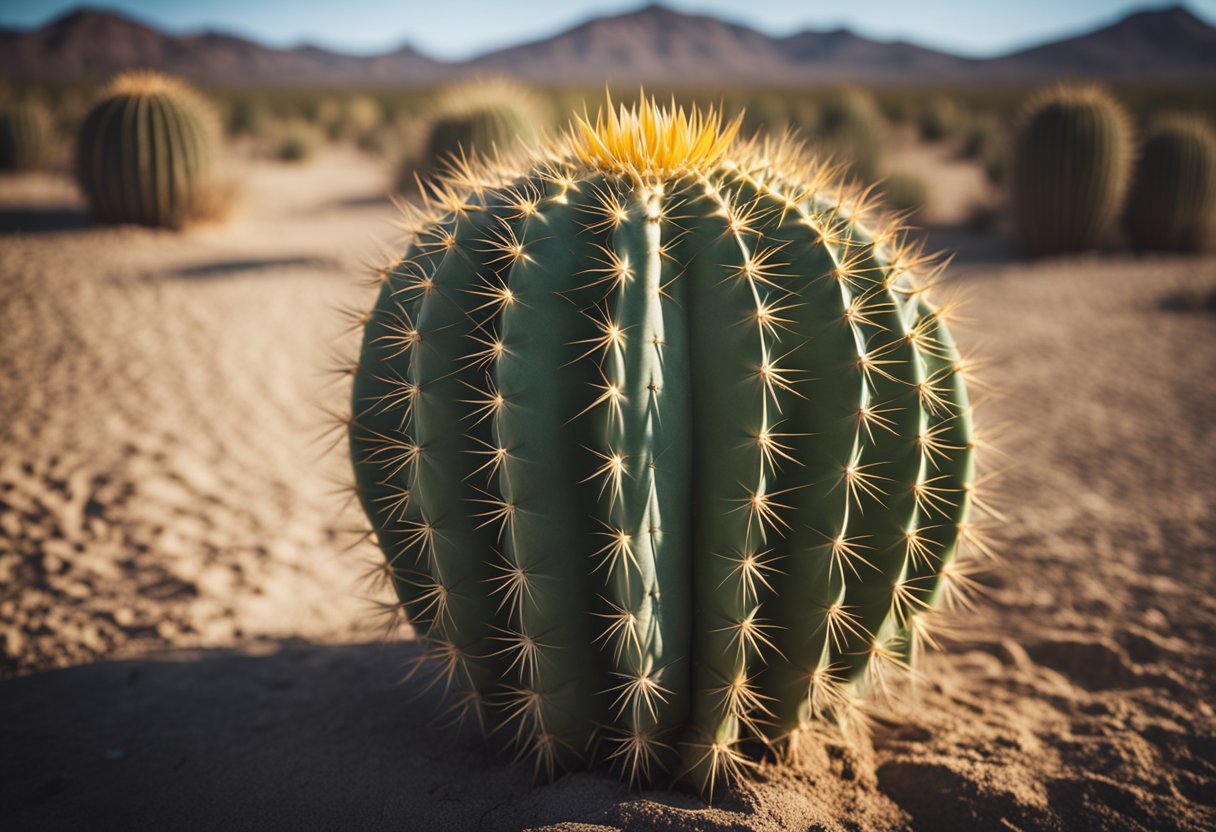
Desert cacti, such as the saguaro and barrel cactus, display unique structural traits that contribute to their survival. These cacti often have thick, waxy skin, which helps to reduce water loss through evaporation. The skin is also often folded into ribs, allowing for expansion during water intake and minimizing surface area exposed to the sun.

  • Areoles: These small, cushion-like pads are where spines, flowers, and new branches emerge.
  • Spines: Modified leaves serving as defense against herbivores and providing shade.
  • Succulence: Tissues that store water swell with moisture, which is used during drought.

The stems of these cacti perform the functions typically associated with leaves, which include photosynthesis.

Advantage of Reduced Leaf Area

Cacti, including the iconic saguaro and various species of barrel cacti, have evolved to either have very small leaves or a complete lack of leaves. This significant reduction in leaf area diminishes water loss through transpiration.

  • Modified leaves: Cacti have adapted by turning their leaves into spines, which reduces the loss of water that larger leaf surfaces would experience.
  • Areoles: Leaves have been repurposed into specialized structures from which spines emerge, providing the plant with an efficient form of defense and further reducing water loss.

Overall, the morphological characteristics of desert cacti fundamentally revolve around effective water conservation and protection from the harsh desert climate.

Physiological Processes in Desert Cacti

Desert cacti have developed impressive physiological processes to ensure their survival in the harsh desert environment. They employ specific strategies to regulate their water loss and to use available water efficiently.

Regulation of Transpiration

Cacti minimize water loss primarily by opening their stomata at night, a process known as crassulacean acid metabolism (CAM) photosynthesis. This allows them to avoid the intense heat of the day which would increase transpiration. Their waxy cuticle further reduces water loss, covering the succulent stems and giving them a shiny appearance. This layer is particularly thick on desert cacti, creating a tight seal that holds moisture in.

Efficient Use of Available Water

The survival of cacti in dry environments is largely due to their highly efficient use of water. Cacti have water-storage cells throughout their succulent stems, which soak up and retain water like a sponge. Their root systems are also adapted to collect as much water as possible. They rapidly absorb water sources like rain or dew, with roots that can quickly expand to increase the area for absorption. This intricate root network coupled with their water retention abilities ensures that every drop of water is conserved for times of drought.

Ecological Role of Cacti in Desert Ecosystems

Cacti play a pivotal role in maintaining the delicate balance of desert ecosystems, offering vital resources for fauna and shaping the desert landscape.

Relationship With Desert Fauna

Cacti form a symbiotic relationship with the fauna of desert regions. The saguaro cactus, native to Arizona’s Sonoran Desert, acts as a crucial habitat and water source. Birds, such as woodpeckers, create nests in the saguaro’s flesh, while its fruit provides nutrition for species including bats and doves. Insects, like bees, are often attracted to cacti for their flowers, facilitating pollination and thereby ensuring the survival of these desert plants.

Contribution to the Desert Landscape

Cacti significantly influence the desert landscape with their water-storing capabilities and structural features. Unlike other plants, cacti possess shallow root systems which allow them to absorb rainwater efficiently across a broad area, minimizing soil erosion. Their thick, fleshy stems are adapted to store water, making them well-equipped to endure arid conditions. Because of these adaptations, cacti are able to thrive in deserts, contributing to the Earth’s biodiversity by supporting complex desert ecosystems.

Significance of Cacti Beyond Their Habitat

Cacti’s adaptations not only allow them to thrive in arid environments, but also contribute significantly to human culture, industry, and scientific study, greatly exceeding their ecological roles.

Cacti in Human Culture and Industry

In human culture, cacti are esteemed as decorative plants due to their unique shapes and resilience. They feature prominently in gardens and interior spaces, often symbolizing endurance. Industrially, the Saguaro cactus, recognized by its towering presence on Earth’s landscape, is harvested for its wood by Native American tribes. Cacti also play a role in agriculture, as certain species’ fruits are edible and others possess medicinal properties believed to help with ailments such as diabetes.

Scientific Study of Cacti

Researchers focus on cacti for their unique adaptations in plant biology and ecology, seeking to understand how these plants conserve water and thrive in nutrient-poor soils. This research has important implications for agriculture, especially in areas where water is scarce and soil conditions are challenging. The study of cacti also contributes to the wider field of plant biology, offering insights into possible strategies for crop improvement.

Challenges Faced by Desert Cacti

Desert cacti, emblematic of arid areas, are subject to a rigorous environment that tests their survival capacities. They encounter extreme heat and water scarcity, alongside a short growing season that demands efficient adaptations.

Environmental Threats and Protection Efforts

Extreme Heat and Water Scarcity: The most prominent challenge for desert cacti is the extreme heat of desert environments, which can lead to dehydration and heat stress. These plants have evolved to minimize water loss, but prolonged high temperatures can still be detrimental. In addition to heat, water scarcity creates a harsh setting for growth. Cacti counter this by having shallow root systems that can quickly absorb any available moisture.

Short Growing Season: Desert cacti are further challenged by a short growing season, during which they must complete their life cycle more efficiently. Their growth and reproductive processes have adapted to take advantage of this limited period.

Climate Change: The effects of climate change pose a significant threat to the stability of desert ecosystems, altering temperature and precipitation patterns. This can lead to habitat loss and create conditions unsuitable for native cacti, potentially resulting in decreased populations.

Conservation: Efforts to conserve desert cacti involve declaring some species protected to prevent overharvesting and ensure that their natural habitats are preserved. Various cacti are now recognized as protected species, and conservation programs work to safeguard these symbols of desert resilience against growing environmental and anthropogenic pressures.

Conclusion

Cacti exhibit a remarkable ability to survive in deserts through a series of specialized adaptations. These plants have evolved to overcome the challenges imposed by extreme temperature fluctuations, minimal water availability, and intense solar radiation.

  • Water Storage: With succulent stems that store water, cacti can endure long periods of drought. Their stems expand when water is abundant and contract as it is used, making the most of the sporadic desert rainfall.
  • Reduced Water Loss: The transformation of leaves into spines minimizes surface area and thus water loss, while also providing a defense mechanism against herbivores. Furthermore, cacti utilize a distinct form of photosynthesis called Crassulacean Acid Metabolism (CAM), which allows stomata to remain closed during the day and open at night to reduce water loss.
  • Sun Protection: The spines shade the plant’s surface, and the often light-colored and reflective skin reduces the amount of heat absorbed.
  • Root System: Desert cacti typically have extensive root systems that spread out wide or go deep into the soil to absorb as much moisture as possible from the surrounding environment.

These characteristics underscore the cactus’s adeptness at making the most of its resources, securing its survival in the arid desert habitat. Through such efficacious strategies, these plants not only persist but thrive in some of the most formidable ecosystems on Earth.


Can Camels Eat Cactus? Everything You Need To Know About

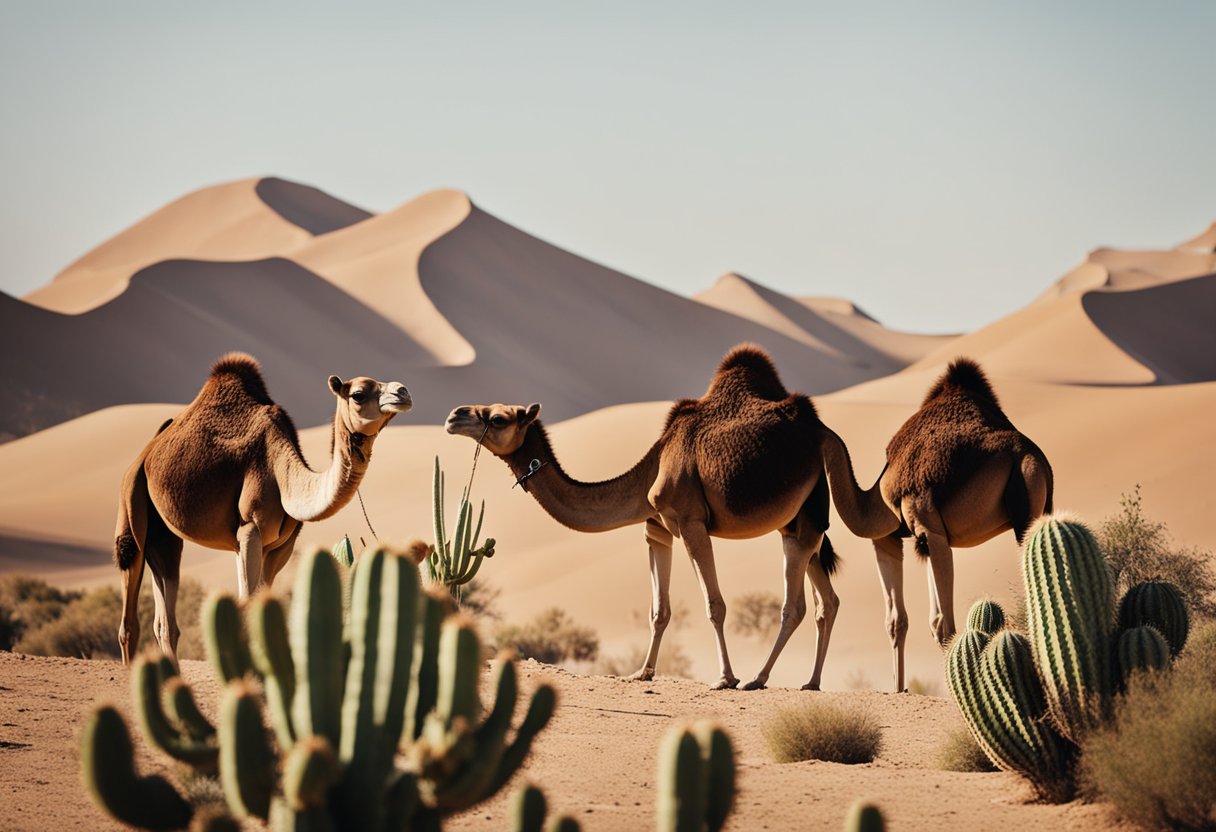
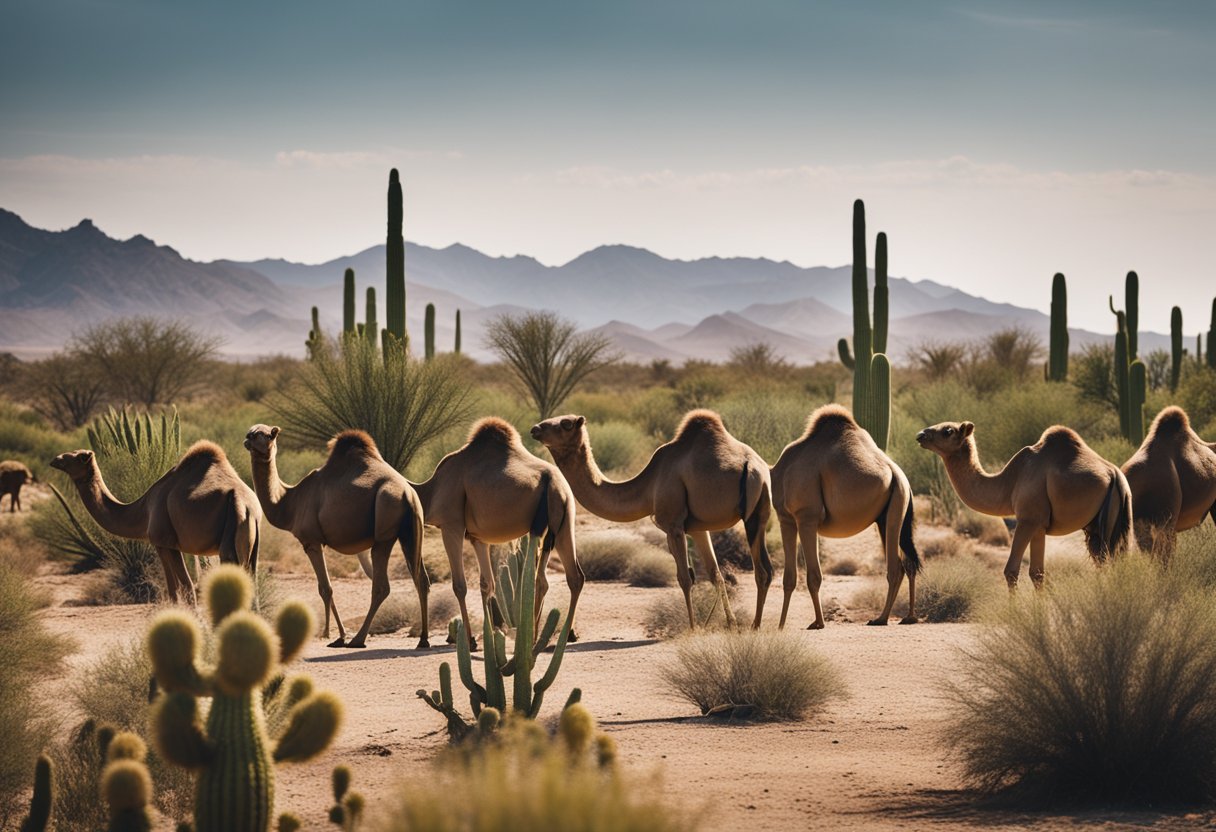
Camels, commonly referred to as ‘ships of the desert’ have bodies built for harsh weather conditions, which is why they can survive the desert.

So, can a camel eat cactus? Camels can eat cactus. Their mouths are lined with what is referred to as Papillae. The papillae help prevent any damage when they are eating the cactus and helps food flow in one direction which goes straight to the stomach. 

Understanding Their Desert Diet

Camels, the ships of the desert, are remarkable creatures that have evolved to thrive in some of the harshest environments on Earth. One question that often arises is whether these hardy animals can eat cacti, the spiny desert plants that seem to discourage most herbivores. Indeed, camels are not only able to consume cacti but do so regularly. This is due to their unique anatomical adaptations that allow them to safely ingest and digest these prickly plants.

Their mouths are specialized for such a diet, equipped with tough, leathery projections called papillae, which protect the camel’s mouth from the sharp spines of the cactus. These structural features, together with their ability to metabolize the water stored in cactus flesh, make camels well-adapted to their arid habitats. Despite the apparent harshness of the desert ecosystem, camels manage to extract sufficient nutrients and hydration from their environment, showcasing an impressive level of adaptation and survival.

Key Takeaways

  • Camels have evolved to consume cacti despite their spines, thanks to specialized mouth structures.
  • These dietary habits display camels’ remarkable adaptations to survive in desert conditions.
  • The ability to eat cacti is one example of the camel’s overall efficiency in utilizing the sparse resources of their habitat.

Anatomy of Camels Relevant to Diet

Camels have evolved a unique anatomy that enables them to thrive on a diet that includes tough, spiny plants like cacti. Their specialized mouth structures and a sophisticated multi-chambered stomach system are central to their remarkable dietary adaptations.

Specialized Mouth Structure

Camels possess a set of rugged oral adaptations suited for a desert diet. The hard palate and teeth work in tandem to efficiently grind down fibrous plants. Most notable are the papillae, which are finger-like keratinized projections in their mouths. These papillae prevent injury by directing the cactus needles away from the taste buds and sensitive tissue, allowing the camels to consume thorny plants with minimal harm. Additionally, camel lips are tough yet flexible, enabling them to forage among thorns without injury.

Multi-Chambered Stomach

The camel’s digestive system is exceptionally efficient, owing much to its multi-chambered stomach. The first chamber, called the rumen, stores food and begins the fermentation process with the help of microbes, breaking down cellulose and other complex plant materials. The succulent parts of the cactus can be digested here, aided by the abundant water stored within the plant’s flesh. The subsequent chambers handle further digestion and water reabsorption, essential features for conservation in their arid habitats. This setup allows for a slow and thorough digestion of tough and fibrous plant matter, contributing significantly to the camel’s resilience in harsh conditions.

Dietary Habits of Camels

Camels have evolved to thrive in harsh environments where food variety is limited and water is scarce. Their dietary habits reflect adaptations to make the most of the resources available in desert conditions.

Typical Food Intake

Camels are herbivores with a diet mainly comprising of grass, leaves, grains, and whatever sparse vegetation they can find in the arid desert. They can survive for days without water due to their ability to extract moisture from the food they consume. Camels are also ruminants, meaning they have a multi-chambered stomach that allows for efficient breakdown and absorption of nutrients from their fibrous diet.

What do camels eat:

  • Grasses and grains
  • Leaves from plants and shrubs
  • Seeds and other vegetation components
  • Occasionally, twigs and fruits like the prickly pear

These foods provide vital nutrients and are high in fiber, which is essential for the camels’ digestive systems. The fat stored in their humps acts as a reserve, providing energy when food is scarce.

Camels and Cactus Consumption

Despite the spines and tough exterior, camels can safely consume various types of cacti, including the prickly pear. Their thick lips and specialized mouthparts allow them to handle the prickly surfaces without injury. Eating cactus provides additional moisture and nutrition during periods when other food sources are even more limited. Their ability to feed on cacti is a critical adaptation for surviving in desert landscapes, where such plants are abundant.

The Desert Ecosystem

The desert ecosystem is a complex web of life, remarkably adapted to its extreme conditions. Here, both flora and fauna have evolved in fascinating ways to survive the scorching heat and scarce resources.

Flora and Fauna

Deserts are home to a variety of plants and animals that have developed unique adaptations. Cacti, with their thick, fleshy parts, are the quintessential desert flora, specifically designed to retain water. These succulents serve as a vital resource for many desert animals. The food chain includes jackrabbits, ground squirrels, and gophers, which may nibble on the plants. Rodents often seek shelter beneath them. Predators like the collared peccary, or javelina, rely on these smaller animals for food. Bird species such as the Gila woodpecker take advantage of both the plants and the animal populations for nourishment and nesting.

Desert Climate Impact on Diet

Desert species contend with harsh weather and extreme weather fluctuations that shape their dietary habits. The sparse resources prompt a diet that is diverse and opportunistic. Animals, such as the prairie dogs and javelinas, make do with a variety of desert plants and any other available resources. In desert conditions where water is a luxury, some animals derive hydration from their food, particularly cacti, which store water in their tissues.

Interactions with Cacti

Camels have adapted remarkable strategies to safely consume cacti, a resource that offers them both nutritional support and hydration in arid environments.

How Camels Handle Cactus Spines

Camels possess a tough mouth lining that allows them to eat thorny plants such as the prickly pear cactus without sustaining significant damage or pain. They have lips that can navigate around thorns, and muscular tongues that help them pick the parts of the cactus that are less harmful. These unique physiological traits enable them to consume cacti, which are a common component of their diet in desert regions, without harmful consequences.

Nutritional Value of Cactus for Camels

The cactus is not only a source of hydration for camels, but also provides them with essential nutrients. Cacti are succulent perennial plants that store significant amounts of water, making them a crucial resource for camels to maintain hydration. Moreover, the flesh of cacti is rich in nutrition, containing carbohydrates and other beneficial compounds that are crucial for a camel’s survival in its natural habitat. The multi-chambered stomach of camels allows them to maximize the extraction of these nutrients, ensuring they get the most out of what might seem like an inhospitable food source to other species.

Adaptations for Desert Survival

Camels, often referred to as “ships of the desert,” have evolved a range of physical and behavioral adaptations that enable them to thrive in the harsh desert environments of the Middle East, Africa, and even parts of Mexico.

Physical Adaptations

Arabian camels, also known as dromedaries, boast a series of physical adaptations tailored to desert life. Their thick eyelashes and narrow, slit-like nostrils can close to block out sand during intense windstorms. The camels’ feet are broad and flat, acting as natural snowshoes to prevent sinking into the sand—a crucial adaptation in the vast dunes of the desert. A camel’s hump is a reservoir of fatty tissue, allowing the animal to tap into energy reserves when food sources are scarce.

Behavioral Feeding Adaptations

In terms of behavioral adaptations, camels have developed remarkable feeding strategies to outlast the scarcity of the desert. They consume parts of plants that most herbivores avoid, such as cacti with spiky defenses. This is made possible through a tough mouth lining that is resistant to punctures and cuts. Camels maintain hydration not only through the water they drink but also by metabolizing the water in the plants they consume, allowing them to go for days or even weeks without direct water sources.

Comparison with Other Desert Herbivores

In the harsh landscapes of deserts, herbivores have adapted to thrive despite scarce resources. Their survival hinges on specific dietary habits and the ability to consume native flora, including various types of cacti.

Dietary Patterns of Other Desert Dwellers

Desert herbivores such as jackrabbits and ground squirrels exhibit diverse feeding behaviors. Jackrabbits primarily consume grasses and herbs, whereas ground squirrels can be more opportunistic, often eating seeds, twigs, and even cactus fruits. Both have developed physical adaptations to process their food: jackrabbits utilize their hard palates to grind vegetation, while ground squirrels have cheek pouches to carry their forage. Javelinas, on the other hand, are ruminants like camels and can digest tougher plant material, including prickly pear cacti. They typically feed on a variety of shrubs and tree parts, seeking out the base part and the juiciest parts of plants.

Cactus as a Food Source for Other Animals

While camels possess specialized mouth structures to consume cactus spines, other desert dwellers have differing approaches. The packrats or trade rats, for example, strip off spiny defenses to reach succulent cactus interiors. Similarly, the Galapagos land iguana has adapted to feed on cacti like the prickly pear, by avoiding the sharp spines to consume the fruit and pads. The eastern cottontail rabbit also partakes in eating cacti, but like the wood rat, they tend to focus on the less defended, new growth. These adaptations highlight the myriad ways desert animals have evolved to utilize the sparse, but nutrient-rich, desert plants for sustenance.

Camel Feeding Practices in Captivity

In captivity, camels’ dietary needs are met with precision, ensuring their health and well-being are well-managed by zoo and reserve staff.

Managed Diet in Zoos and Reserves

When camels are kept in zoos and other conservation reserves, their diet is carefully regulated. They typically receive a mix of hay and specialized fodder formulated to provide the necessary nutrients required for their unique physiological makeup. The staff often incorporates wheat and cacti, such as nopales, prepared in a way to avoid harm from the spines, into the diet to mimic the plants they would encounter naturally.

  • Hay: Forms the staple of their diet, chosen carefully to be free from mold and dust.
  • Cacti: Provided occasionally, ensuring that it is spine-free and safe for consumption.

Water intake is closely monitored, as camels are renowned for their ability to store water efficiently, an adaptation from being desert-dwelling animals. In captivity, however, they have regular access to water, reducing the need for them to utilize their natural water conservation abilities to the same extent as they would in the wild. Professionals in captivity management ensure that camels are not only fed but are also hydrated as per their specific needs.

Conservation and Ecological Impact

In desert ecosystems, camels play a critical role in maintaining ecological balance, which includes their interaction with various forms of vegetation such as cacti.

The Role of Camels in Their Habitat

Camels are quintessential to their arid habitats, often acting as key species in promoting ecological stability. They contribute to the dispersal of seeds as they roam, facilitating the propagation of various plant species, including cacti. Their ability to consume tough, fibrous plants such as cacti is vital in their role within the ecosystem. The digestion process of camels can break down complex cellulose found in cactus, turning it into nutrients that can benefit the soil. This digestion aids in returning essential nutrients to the desert soil, which is typically nutrient-poor.

Moreover, camels can help in controlling the spread of cacti, preventing any one species from becoming overly dominant and disrupting the balance of the desert vegetation. This is particularly important since some cactus species, if left unchecked, can become invasive and may push out other native plants, thus altering the ecosystem. By feeding on these plants, camels contribute to the regulation of the plant community structure.

Understanding the ecological dynamics between camels and cactus can also aid in conservation efforts, ensuring that both can thrive without disrupting the delicate desert ecosystem. Awareness of potential toxins within certain cacti is also significant, as it informs conservationists and local populations about safe practices when involving camels in habitat management.

In summary, camels serve a multifaceted role in desert ecosystems, from seed dispersal to vegetation management, which underscores their importance in conservation and ecological impact assessments.

Creative Sculpting and Pruning Techniques for Cacti and Succulents

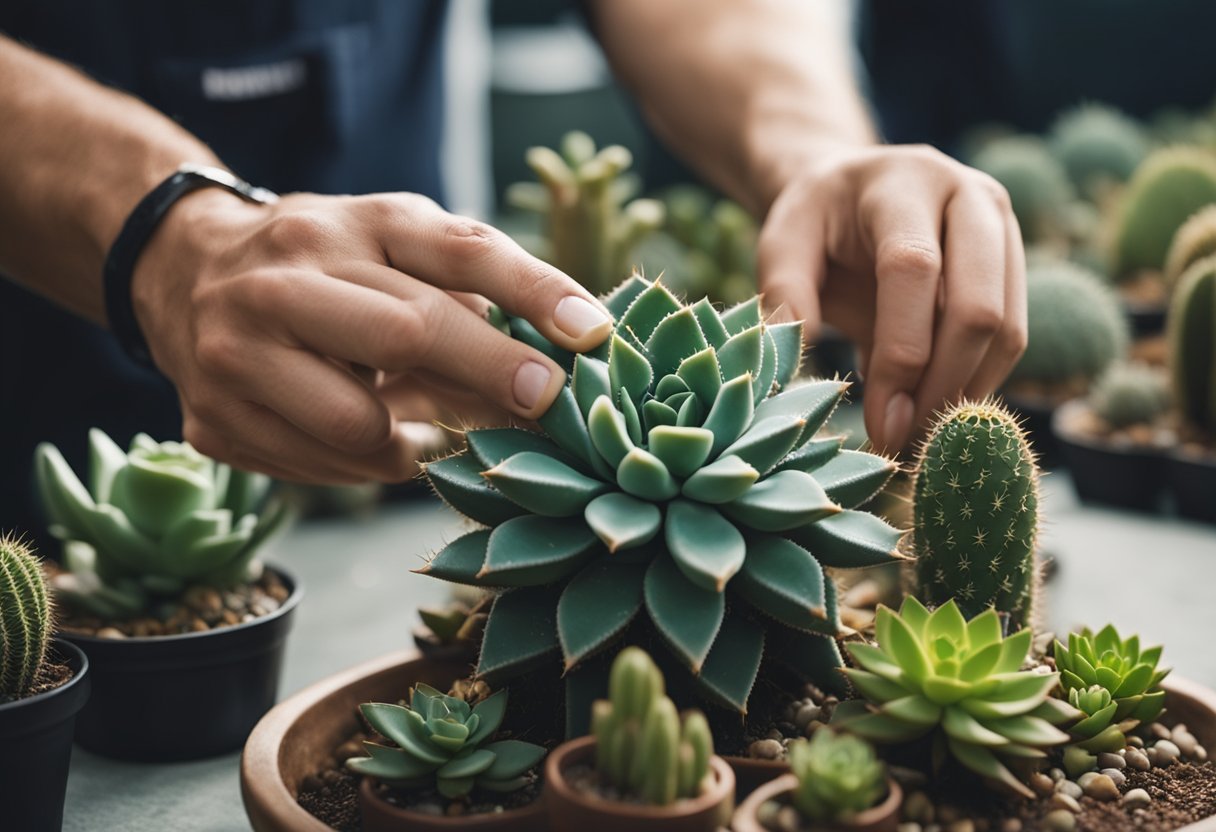
Creative sculpting and pruning are not just maintenance tasks for cacti and succulents; they’re an art form that helps to enhance the natural beauty of these resilient plants. By carefully removing parts of the plant, gardeners can encourage a more favorable shape, control size, and even influence blooming patterns. The key to success lies in understanding the unique growth habits and requirements of these plants, along with the use of the correct techniques and tools.

Knowing when and how to prune or sculpt is crucial for the health of cacti and succulents. Pruning can aid in the removal of dead or diseased tissue, and promote air circulation to reduce the risk of fungal infections. For those looking to showcase their cacti and succulents as living art, advanced sculpting techniques can transform a simple plant into a stunning piece of living sculpture, creating a focal point in any space.

Key Takeaways

  • Proper pruning can enhance the shape and health of cacti and succulents.
  • The right tools are essential for safe and effective sculpting and pruning.
  • Aftercare is vital to ensure the longevity and aesthetic appeal of pruned plants.

Essentials of Cacti and Succulent Care

Cacti and succulents are favored for their unique beauty and low-maintenance nature, but they still require specific care to thrive. Here we outline the vital care techniques to keep these plants healthy, focusing on their basic needs, defense against diseases and pests, optimal watering practices, and soil requirements.

Understanding the Basics

Cacti and succulents demand particular conditions to flourish. They typically need a bright environment with several hours of sunlight each day, though certain species prefer indirect light. These plants store water in their leaves, stems, or roots, which enables them to withstand arid climates. However, when cultivated in non-native environments, they must have their specific light and temperature needs met to maintain their overall health.

Common Diseases and Pests

Disease often stems from overwatering, which can cause root rot, and poor air circulation, which may lead to mold. The most common pests affecting these plants include spider mites, mealybugs, and scale insects. Regular inspections can catch early signs of infestations, such as discolored or misshapen leaves. Treatment involves isolating affected plants, removing pests manually, or using an appropriate insecticide.

Proper Watering Techniques

Proper watering is critical for these plants’ health. Overwatering is a common mistake and can lead to root rot, whereas underwatering might cause shriveling.

  • Cacti generally require less water than succulents.
  • During active growth in spring and summer, water when the top inch of soil feels dry.
  • In winter, reduce watering to once a month, or when the soil is completely dry.
  • Always ensure that the container has proper drainage to prevent water accumulation at the roots.

Selecting the Right Soil

Choosing the appropriate soil is essential for ensuring the health of these plants. Cacti and succulents require well-draining soil that mimics their natural sandy habitats.

  • A mix rich in inorganic materials like perlite, sand, or gravel aids in drainage.
  • Avoid heavy garden soils as they retain moisture and could lead to root rot.
  • Ensure the pot has enough holes at the bottom to allow excess water to escape, protecting the roots from stagnation and decay.

Essential Tools for Pruning

Before undertaking the delicate task of pruning cacti and succulents, it is paramount to equip oneself with the appropriate tools. Ensuring you have the right instruments and understanding their upkeep will pave the way for a smooth and successful pruning experience.

Types of Pruning Tools

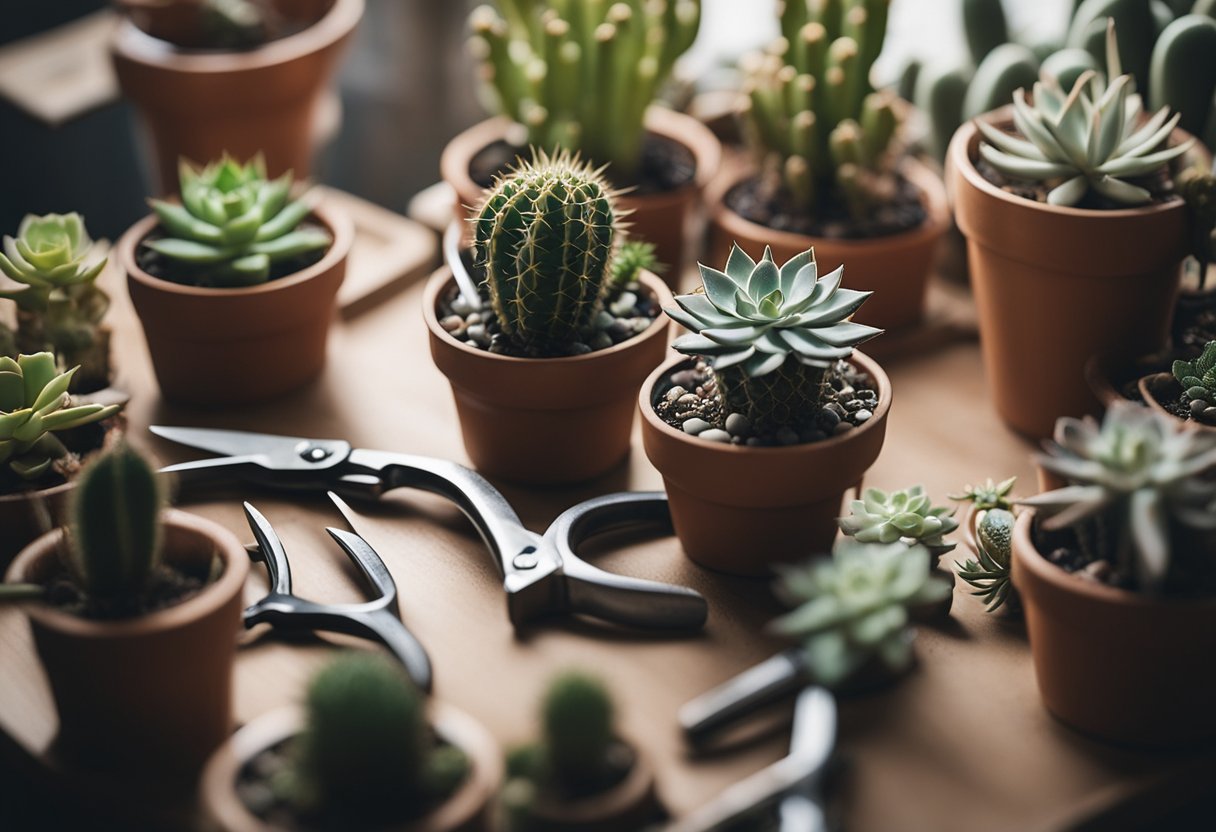
For the precise trimming and shaping of succulents, a variety of specialized gardening tools are essential. Pruning shears are a must-have for clean cuts on thicker stems. A sharp knife is ideal for more intricate work or for slicing through tough, fleshy leaves. For hard-to-reach areas or sensitive operations, scissors and tweezers provide additional precision. Larger species may require a saw to manage thick branches. It is also crucial to use gardening gloves and protective clothing to shield the skin from spines and sap.

  • Pruning Shears: Ideal for clean cuts on thicker stems.
  • Sharp Knife: Best for intricate work on tough leaves.
  • Scissors/Tweezers: Suited for precision work and sensitive operations.
  • Saw: Necessary for thick branches on larger species.
  • Protective Gear: Including gloves and clothing to prevent injury from spines.

Maintenance and Sanitization of Tools

To ensure the longevity and effectiveness of pruning tools, proper maintenance and sanitization cannot be overstated. Tools should be cleaned after each use to remove sap and debris. Sanitizing them with rubbing alcohol or a bleach solution is critical to prevent the spread of disease among plants. Dull blades can damage plants and should be sharpened regularly. Storing tools in a dry environment will prevent rust and corrosion, extending their usefulness.

  • Cleaning: Remove sap and debris post-use.
  • Sanitize: Use rubbing alcohol or bleach solution to disinfect tools.
  • Sharpening: Keep blades sharp for clean cuts and reduced plant stress.
  • Storage: Dry environments prevent rust and keep tools in optimal condition.

Pruning Techniques

Effective pruning can help maintain the health and aesthetics of succulents and cacti. Precision and timing are key to prevent them from becoming overgrown and ensuring their unique forms remain beautiful and healthy.

Pruning Overgrown Succulents

Overgrown succulents often become leggy or stretched out, losing their compact shape. To prune succulents that have outgrown their space, locate the healthy parts close to the stem. Using sterilized sharp scissors, cut above a leaf node to encourage bushier growth. Careful removal of overgrown parts not only reshapes the plant but also encourages a fuller, healthy appearance.

Shaping and Maintenance

Regular maintenance and shaping involve removing dead or dying leaves from the plant base to prevent rot. For trimming succulents, target sections that are detracting from the plant’s overall shape and aesthetic. One can also prune succulents to control their height and promote a desired growth pattern, enhancing their visual appeal.

Cactus Specific Pruning

When you prune a cactus, caution is required due to their spines and glochids. Use tongs or wear thick gloves to handle the plant. Cactus pruning typically involves removing dead or damaged sections. Cut at the natural joints of the plant to minimize stress. For segmented cacti like organ pipe, remove entire segments to trim for shape or health.

When to Prune

The optimal time for pruning succulents and cacti is during their growing season, which is often in early spring or fall. This timing ensures that the plants heal quickly and stress is minimized. Pruning outside of the active growth period can hinder the plants’ recovery and should be done with caution.

Advanced Sculpting Techniques

Mastering advanced sculpting techniques allows one to transform cacti and succulents into living sculptures. These methods entail precise trimming to create aesthetic forms and encourage healthy growth patterns, ultimately enhancing any plant collection.

Creating Artistic Shapes

Sculpting artistic shapes in cacti and succulents begins with envisioning the desired end result. Artists must decide on the shape they aim to achieve—be it spherical, angular, or any abstract form. They then carefully reshape the plant by trimming away specific parts. For example, an agave can be pruned to highlight its architectural rosettes, accentuating its symmetry and lines. It’s crucial to use sharp, clean cutting tools to prevent infection and promote quick healing.

Encouraging Healthy Growth Patterns

To encourage new growth patterns in succulents, strategic cuts are made at growth points. By trimming or pinching back the main stem or specific branches, one can stimulate the growth of new branches, resulting in a fuller and more balanced plant. It’s a meticulous process that uses knowledge of each species’ growth habits to guide the cuts in a direction that enhances both the plant’s health and aesthetic appeal. Proper timing is also vital; the best pruning period varies among different species but is generally during their active growing season.

Propagation from Prunings

Propagating cacti and succulents from prunings is an effective way to create new plants from your existing collection. This technique involves careful preparation of the cuttings and specific methods for encouraging growth in the offshoots.

Preparing Cuttings for Propagation

To propagate from cuttings, one must begin with trimmings that are clean and healthy. The steps are precise:

  1. Trim the cutting from the parent plant with a sterile, sharp knife or pair of scissors.
  2. Clean the cutting of any debris or unwanted leaves.
  3. Allow the cutting to heal, which means letting the cut end callous over for a few days to prevent rot and disease when planted.

For detailed guidance on the initial steps of obtaining and preparing succulent leaves for propagation, one can explore information on how to propagate succulents. Knowing the proper technique for the initial cut and preparation is critical for successful propagation.

Methods for Propagating Offshoots

Once cuttings are prepared, the propagation process begins. This can be carried out through different methods:

  • Soil Propagation: Plant the calloused cutting in well-draining soil, ensuring that the cut end is buried slightly.
  • Water Propagation: For specific succulent types, the cutting may be suspended above water, allowing roots to grow towards the moisture source.

Cacti can also be propagated from cuttings. A guide mentioned in Learn How to Propagate Cacti offers a sequence of actions for cacti propagation, specifically through cuttings, which often promises quicker growth of sizable plants.

Interestingly, not only stem cuttings can foster new growth, but so can offsets or pups which are the little clones that form at the base of some succulents. These pups can be separated from the parent plant and treated in much the same way as stem cuttings to propagate new, independent plants.

Aftercare of Pruned Plants

After pruning cacti and succulents, it’s crucial to manage the healing process, maintain plant health, and perform thorough clean up and disposal to prevent disease and promote recovery.

Healing Process and Care

Immediately after pruning, it is important for the plant to heal. Just as a scab forms on human skin, cacti and succulents also develop a callous over their cuts, which protects the vulnerable tissue underneath. During this period, refrain from watering to allow the wound to dry and form a hard scab. This can take anywhere from a few days to a week, depending on the size of the cut and the humidity levels in the environment.

Maintaining Plant Health Post-Pruning

To maintain the health of the plant after pruning, ensure it is placed in an environment with suitable light, temperature, and ventilation. Avoid fertilizing the plant immediately as this can stress the freshly pruned plant. Monitor for signs of distress or infection, as the open wounds can be susceptible to disease. Healthy growth post-pruning requires vigilance and care to ensure the plant does not succumb to rot or infection.

Clean Up and Disposal

Safety should be a priority during clean up. Dispose of the pruned material responsibly, as cactus spines can cause injury. Utilize protective gloves and tools like tongs to collect the debris. Ensure all tools used in the pruning process are clean and sterilized to prevent the spread of disease to other plants. Proper disposal and sanitation practices contribute significantly to the overall health and maintenance of the cactus or succulent garden.

Safety and Handling Tips

When sculpting and pruning cacti and succulents, the gardener’s safety is paramount. Proper gear and mindful handling are essential to prevent injuries from sharp plant parts such as spines and glochids.

Protective Measures While Pruning

A gardener should always wear thick gloves; a sturdy pair made of leather or another puncture-resistant material is recommended for handling cacti to avoid injuries from spines. Additionally, long-sleeved shirts and protective pants offer an extra layer of defense against accidental scratches or pricks. If extensive pruning is involved, safety goggles should be considered to protect the eyes from flying debris.

Dealing with Sharp Plant Parts

Understanding the cacti’s defense mechanisms is key. Both spines and tiny, barbed glochids can be a hazard. Handling cacti requires tools like tongs or a folded piece of newspaper to keep hands and fingers at a safe distance. In the event a spine or glochid becomes embedded in the skin, using tweezers and magnification assists in safe removal. If longer spikes or hairs are encountered, consider cutting them back carefully with sharp pruning tools to manage the plant safely.

Case Studies and Examples

Unique and artful approaches have transformed everyday cacti and succulents into remarkable showcases. These case studies exemplify how precise techniques can elevate a plant’s aesthetic, enhance the health of the succulent, and reshape the landscape.

Succulent Sculpting Showcases

In a Californian botanical garden, sculptors used trimming techniques to shape Echeveria rosettes into delicate floral-like arrangements, complementing the natural symmetry of the succulents. Regular pruning of dead flower stalks allowed the rosettes to maintain their pristine form.

Cactus Pruning Success Stories

A popular Southwest resort displayed notable success stories, where they rejuvenated a variety of columnar cacti to create an inviting desert landscape. They skillfully trimmed the main stem of overgrown Saguaro specimens to encourage branching, which resulted in a visually engaging cactus garden.

Reviving Neglected Plants

A community garden project demonstrated the revival of neglected succulents suffering from disease and rot. Volunteers meticulously removed diseased leaves and trimmed away the dead parts, allowing healthy growth to flourish once more. Their efforts turned fading landscapes into vibrant gardens.

Integrating Pruned Plants into Landscapes

Pruned cacti and succulents, when integrated into landscapes, offer both an aesthetic appeal and contribute to the health of the plants. Their distinctive forms can complement various landscape designs.

Designing with Pruned Cacti and Succulents

When incorporating pruned cacti and succulents into a landscape, attention must be paid to the flower stalks and trunk structures of these plants. The strategic removal of excess growth not only enhances their unique shapes but also ensures they blend seamlessly with the overall landscape design. For a cohesive look:

  • Balance and Scale: Position pruned cacti and succulents in a way that maintains proportion with other garden elements.
  • Color Coordination: Choose species with complementary colors that fit the existing landscape palette.

Combining Aesthetics and Health in Garden Design

Pruning cacti and succulents in a landscape centers on both their visual impact and their vitality. Pruning encourages healthy growth and flowering, maintaining the plant’s vigor. It is essential to:

  • Sunlight Exposure: Ensure each plant receives adequate light, preventing overgrowth on one side.
  • Air Circulation: Prune to allow airflow, reducing the risk of disease in dense areas.

Carefully chosen and maintained pruned cacti and succulents can serve as sculptural centerpieces or subtle complements to a garden, enhancing the overall aesthetic while promoting a robust environment for both houseplants and outdoor specimens.

How to Easily Propagate Mangaves at Home? Step-by-Step Guide

A queen victoria agave plant.

Mangaves, the enchanting botanical fusion of Agave and Manfreda, have taken the succulent world by storm with their striking appearance and remarkable hardiness. These captivating succulents are a perfect blend of Agave’s architectural elegance and Manfreda’s distinctive colors and patterns. But what’s even more fascinating is their propensity for propagation, making it possible for you to multiply your Mangave collection and share their beauty with friends and family.

So, how can you propagate Mangaves at home easily? Mangaves can be propagated through leaf cuttings, offsets (pups), stem cuttings, and seed germination. The most common and easiest propagation method is through offsets or stem cuttings. While seed germination is a bit more challenging, it can also be rewarding. You only need a little patience, and soon, you’ll have your Mangave family flourishing.

Today, we embark on a journey into the world of Mangave propagation, unveiling the secrets to multiplying these unique succulents effortlessly. Read on to find out everything you need to know.

Mangaves: Quick Overview

Mangaves are like nature’s delightful experiments, blending the toughness of Agave with the creativity of Manfreda. These unique succulents have caught the eye of plant lovers around the world.

They come from a mix of two different succulent families. The first part of their name, “Man,” comes from Manfreda, while “gave” comes from Agave.

Manfreda, a relative of Agave, adds exciting colors and patterns to the Mangave family. This hybrid combination is like a succulent superhero, blending the best traits of both plants.

Some Mangaves have rosette shapes, with leaves forming a circle like a beautiful green rose. Others have long, arching leaves that can make them look like elegant, flowing fountains. No matter the pattern, they always look cool.

One thing that makes Mangaves special is their leaves. They can be bold and spiky or soft and wavy, and they often have amazing colors and patterns.

Some Mangaves have spots, stripes, or even splashes of red, making them stand out in the succulent world. Plus, these plants are tough cookies, able to handle hot sun and dry spells like champs.

A variegated agave.
No matter the pattern, they always look cool.

These succulents are highly versatile, meaning you can grow them in your garden or pots. Their spiky or flowing forms can add a touch of drama to your outdoor space. In pots, they look fantastic on a patio or as an indoor houseplant.

If you’re looking for easy-to-care-for plants, Mangaves are a great choice. They don’t need much attention. Just give them lots of sunlight, well-draining soil, and don’t water them too often. They’ll reward you with their unique beauty.

How to Propagate Mangaves at Home

Now that you have a little background on these lovely succulents, let’s dive into how to propagate them at home.

Propagating Through Offsets (Pups)

Offsets are small baby plants that grow around the base of the parent Mangave. These tiny replicas are genetically identical to the parent plant and can easily be separated and replanted to create new individuals.

Propagation of Mangave through offsets is one of the most reliable and straightforward methods.

You’ll need a healthy Mangave plant that has produced offsets (pups) at its base. Use a clean, sharp knife or pruning shears to separate the offset from the parent plant.

However, you need to prepare the offset before making the cut. Carefully remove any surrounding soil to expose its base and root system. Inspect the offset to ensure it is healthy, with no signs of rot, pests, or disease.

Agave pups.
Use a clean, sharp knife or pruning shears to separate the offset from the parent plant.

Gently and carefully separate the offset from the parent plant. Make the cut close to the base of the offset to minimize damage.

Once separated, place the offset in a dry, shaded area for a day or two to allow the cut end to callus. This step helps prevent rot when planting.

Prepare a pot or container with a well-draining succulent or cactus potting mix for propagation.

After the callusing period, plant the offset in the prepared container. Create a small hole in the potting mix, insert the offset (root end down), and gently pack the soil around it to secure it in place.

While it is not necessary for Mangave offset propagation, you can use rooting hormone to encourage root development if you wish.

Water the newly planted offset lightly, ensuring the soil is evenly moist but not soaked. Overwatering can lead to root rot, so exercise caution.

Timing is crucial for offset propagation. Wait until the offset (pup) has grown large enough to be separated from the parent Mangave plant.

Typically, this occurs when the offset has several roots and a few inches of leaf growth. Do not rush this process because the offset needs to be strong enough to thrive on its own.

Growing from offset is the fastest way to propagate Mangaves, with a high success rate.

Propagating Through Stem Cuttings

Stem cuttings are another easy and fast way of propagating Mangaves. This method works best if you have a leggy or stretched-out Mangave plant with a long stem.

Use a clean, sharp knife or pruning shears to cut off a small stem section. Ensure you have several inches of stem with some leaves at the top.

A agave stem.
Stem cuttings are another easy and fast way of propagating Mangaves.

Leave the cutting in a dry, shaded area for a day or two to callus over before planting. Then, plant the cutting in well-draining soil and water lightly, as you would with offsets.

With proper care and environmental conditions, your Mangave cutting will develop roots and new leaves in a few weeks. Be patient, and you’ll soon have a new Mangave plant.

Propagating Through Leaf Cuttings

Leaf cuttings are an excellent way to propagate Mangaves, especially if you have limited space or want to grow several plants from one. This method may take longer than offsets and stem cuttings, but it’s still worth trying.

Choose a healthy, plump leaf from the parent Mangave plant. Use clean scissors or pruning shears to cut the leaf off at the base, ensuring a clean cut without jagged edges.

Place the cutting in a dry, shaded area to callus for a day or two before planting. Once it is calloused, prepare a pot with well-draining soil and insert the leaf-cutting into it, burying about half of it.

A agave plant with water droplets.
Choose a healthy, plump leaf from the parent Mangave plant.

After a few weeks, you should see new roots forming at the base of the leaf. Once these roots are a few inches long, you can gently transplant the new Mangave plant into its own container or garden bed.

Propagating Through Seed Germination

Propagating Mangave through seed germination is a rewarding but relatively slow method. The success rate can vary due to the hybrid nature of Mangave plants, but it’s a great way to grow unique plants.

Ensure you have a healthy Mangave plant that has produced mature seeds. Collect the seeds when they are fully ripe and ready for propagation.

Once you have collected your seeds, the next thing you need to do is fill the seed tray or small pots with the seed-starting mix, leaving some space at the top. Moisten the mix slightly before sowing the seeds.

Carefully scatter the Mangave seeds evenly over the surface of the seed-starting mix. Do not bury the seeds; they need light to germinate.

Agave seed on hand.
Ensure you have a healthy Mangave plant that has produced mature seeds.

Place the seed tray or pots in a shallow container or tray and cover them with clear plastic wrap or a plastic dome. This creates a mini-greenhouse effect and helps retain moisture.

Place the containers in a warm, brightly lit area without direct sunlight. The seeds should germinate within two to four weeks.

Once the seedlings have developed a few leaves and are strong enough to handle, transplant them into individual pots with well-draining soil. Continue caring for them as you would with mature Mangave plants.

Growing your Mangave plants from seeds is a fantastic way to experiment with new hybrids and create unique plants. However, it can take several years for the plant to reach maturity, so patience is key.

How Do I Care for Newly Propagated Mangave Plants?

When propagating Mangaves, providing them with the right care and environment is essential to ensure success. Here are some tips for caring for newly propagated Mangave plants:

  • Proper Lighting: Like mature Mangave plants, offsets, stem cuttings, leaf cuttings, and seedlings require bright but indirect sunlight. Place them in a location where they can receive at least six hours of sunlight daily.
  • Adequate Watering: Mangaves are drought-tolerant plants, and too much water can lead to root rot. Water newly propagated plants sparingly, only when the soil is dry.
  • Proper Drainage: Ensure the pot or container you use for propagation has proper drainage holes. This will prevent water from accumulating and causing root rot.
  • Suitable Soil: Mangaves thrive in well-draining soil, so use a cactus or succulent potting mix when propagating them. You can also add some sand or perlite to improve drainage.
  • Temperature and Humidity: Mangaves prefer warm temperatures between 65-85°F and low humidity levels. Avoid placing them in rooms with high humidity, such as bathrooms.

Final Thoughts

Propagating Mangave plants is a fun and rewarding process that allows you to create new plants from your existing ones.

Whether you propagate through offsets, stem or leaf cuttings, or seed germination, each method has advantages and challenges.

By following these methods and tips, you can successfully propagate your Mangave plants and expand your collection.

Revolutionize Your Garden with Pumice: Here’s How

A pumice on a cactus pot.

Creating organic soil is vital to growing healthy succulents. To achieve this, it is critical to select the right soil amendment. Pumice is one of the best options available. This lightweight volcanic rock has become increasingly popular among gardeners due to its many benefits. Pumice is formed from volcanic eruptions, producing frothy lava with high gas bubbles. As the lava cools, these bubbles are trapped, resulting in a porous and lightweight stone.

So, how can you revolutionize your garden with pumice? Pumice plays a crucial role in improving the drainage and aeration of soil, which are both essential for succulent growth. Adding pumice to your garden soil also helps with water retention, preventing overwatering and root rot. Its porous nature also allows for better absorption of nutrients by plant roots. Furthermore, pumice is environmentally friendly and sustainable. It is a natural resource that does not harm the earth when mined. It can also be used as a top-dressing option for succulent plants. This helps to reduce soil compaction and aids in preventing weeds from growing. The rough texture of pumice also acts as a natural barrier against pests, making it an excellent choice for organic gardening.

This blog post discusses everything you need to know about pumice and how you can use it to revolutionize your garden. Read on to find out everything you need to know.

What Is Pumice?

Pumice is the result of volcanic activity. When volcanoes erupt, they expel a mix of hot gases and molten lava. As this lava cools rapidly, it traps the expanding gases, creating a frothy, sponge-like structure.

These pockets of trapped gas define the unique characteristics of pumice, such as its lightweight nature and exceptional porosity.

One of pumice’s distinctive features is its lightweight composition. Unlike dense rocks, pumice has a low density, due to its porous structure.

It can float on water; even the largest pumice stones are significantly lighter than other volcanic rocks.

A closeup image of a pumice.
When volcanoes erupt, they expel a mix of hot gases and molten lava.

Pumice stones often appear in shades of white, gray, or even pale green, depending on the mineral content of the volcanic source.

The numerous pores and cavities in pumice are a boon for soil. Pumice’s exceptional porosity allows it to absorb and hold water and nutrients, making it a valuable addition to soil. These tiny pores retain moisture and provide space for oxygen, a vital element for healthy root development.

Pumice has a porous structure, which aids in soil aeration and drainage. When mixed into soil, pumice creates air pockets that allow roots to access oxygen while preventing soil compaction. This promotes root health and overall plant vitality.

Depending on the volcanic source, pumice may contain trace minerals such as potassium, phosphorus, and calcium, which can provide essential nutrients to plants over time. These minerals contribute to the multifaceted benefits of using pumice in soil.

Pumice is an excellent soil conditioner for improving soil structure. It can be incorporated into heavy clay soils to increase drainage and aeration, preventing waterlogged conditions.

Conversely, it can be added to sandy soils to enhance water and nutrient retention. Its ability to balance soil moisture levels makes it a versatile amendment for various soil types.

Using Pumice as a Soil Amendment Option

With its exceptional qualities, pumice can be a game-changer when incorporated as a soil amendment.

Before adding pumice to your soil, choosing the right type of pumice is important. Look for horticultural-grade pumice since it’s been cleaned and screened to remove impurities.

You can typically find pumice at garden centers or online suppliers. Ensure the pumice is dry and free from contaminants.

The ideal ratio of pumice to soil depends on the specific needs of your plants and the existing soil conditions. In general, adding 10-20% pumice to your soil mix can significantly improve aeration and drainage.

You might use a higher percentage for heavy clay soils to enhance drainage, while a lower percentage for sandy soils will help with water retention.

For container gardening, add pumice directly to your potting mix. Blend it thoroughly with the soil, ensuring an even distribution. This will create a well-aerated, fast-draining medium, ideal for container plants.

Fertilizer on the soil mix.
For container gardening, add pumice directly to your potting mix.

Ensure there’s a layer of pumice at the bottom of the pot to prevent soil compaction.

When amending in-ground soil, first determine the type of soil you’re working with. Dig a hole or trench and mix the pumice into the soil you’ve removed.

Add it at the recommended ratio for your specific soil type. Then, place the amended soil back into the hole, creating a pumice-enriched planting area.

Monitoring the moisture levels of your soil regularly is crucial when using pumice. While it enhances drainage, it also improves water retention.

Ensure your plants receive adequate watering, especially during hot and dry periods, to moisten the soil.

After adding pumice as a soil amendment, keep a watchful eye on your plants. Observe their growth, overall health, and response to the amended soil.

Adjust your pumice usage or watering practices as necessary, ensuring your plants receive the right balance of nutrients and moisture.

How To Use Pumice in Your Garden

Pumice is available in different grades and sizes, but the most suitable size for gardening is 1/8″ to 3/8″. It is usually sold in bags, making it easy to handle and apply. Here are some ways you can use pumice in your garden:

  • Add it directly to the potting mix – Mix pumice into your succulent or cactus soil mix for improved drainage and aeration.
  • Use as a top dressing – Spread a layer of pumice on top of your soil to prevent compaction, retain moisture, and deter weeds.
  • Amend garden beds – Mix pumice into your existing garden bed soil for improved drainage and aeration.
  • Use as mulch – Mulching with pumice can help regulate soil temperature and prevent water loss through evaporation.
  • Create a pumice garden bed – For a more extensive succulent or cactus garden, consider creating a raised bed filled with pumice for optimal drainage and moisture control.

What Are the Advantages of Using Pumice as a Soil Amendment Option?

Let us now explore the numerous benefits of incorporating pumice into your soil:

1. Enhanced Aeration

Pumice’s porous structure creates air pockets in the soil, improving aeration. This is crucial for healthy root growth because plant roots require plenty of oxygen to thrive.

2. Improved Drainage

Pumice is exceptional at promoting drainage. When mixed into heavy or clayey soils, it helps excess water to move away from the root zone efficiently.

A bonsai plant repotted.
Pumice is exceptional at promoting drainage.

This prevents waterlogged conditions that can lead to root rot and other issues. In sandy soils, pumice aids in retaining moisture, ensuring a consistent water supply for plants.

3. Root Health and Development

Healthy roots are the foundation of healthy plants. Pumice’s ability to enhance aeration and drainage directly contributes to robust root systems. This, in turn, leads to better nutrient uptake and overall plant vitality.

4. Water Retention

While pumice excels at promoting drainage, it also retains moisture. The numerous pores in pumice can hold water, providing a steady supply to plants, even during dry spells. This makes it a versatile option for various soil types and climates.

5. pH Neutral

Pumice is pH neutral, meaning it won’t alter the alkalinity or acidity of your soil. This makes it a versatile choice for many plants, whether they prefer acidic or alkaline growing conditions.

6. Nutrient Retention

Pumice can help your soil retain essential nutrients. As water passes through the pumice-amended soil, it holds onto nutrients, preventing them from leaching away. This is valuable in maintaining healthy nutrient levels for your plants.

A caudex bonsai in a pot.
Pumice can help your soil retain essential nutrients.

7. Weed Suppression

Using pumice as a top dressing or mulch in your garden can help suppress weeds. Its presence on the soil surface makes it difficult for weed seeds to germinate and establish, reducing the need for manual weeding.

8. Environmental Sustainability

Pumice is a natural and sustainable soil amendment. It is mined from volcanic deposits, and its use minimizes the need for chemical additives or artificial soil conditioners. This aligns with eco-friendly gardening practices and minimizes the environmental impact.

9. Versatility

Pumice is a versatile soil amendment used in various gardening applications. Whether you’re working with container plants, in-ground gardens, or specialty gardens like succulent arrangements, pumice can suit your needs.

What Are the Disadvantages of Using Pumice as a Soil Amendment Option?

While pumice offers a range of benefits as a soil amendment, it’s important to consider potential disadvantages to make an informed decision about its use in your garden.

Horticultural-grade pumice can be relatively expensive, especially if you have a large garden or plan to use it as the primary component of your soil mix. Its cost may be a limiting factor for gardeners on a tight budget.

Pumice is a relatively inert material, meaning it doesn’t provide significant nutrients to plants. While its ability to retain nutrients is advantageous, it doesn’t supply essential elements such as nitrogen, phosphorus, or potassium. This necessitates the addition of fertilizers to ensure plants receive adequate nutrition.

A sack of soil and a bonsai without a pot.
Pumice is a relatively inert material, meaning it doesn’t provide significant nutrients to plants.

For gardeners working with specific plants that require acidic or alkaline soils, pumice’s pH neutrality may be a disadvantage. It won’t contribute to altering the pH of the soil, which may be necessary for certain plant species.

Final Thoughts

Pumice is a versatile and environmentally friendly soil amendment option that can revolutionize your garden.

Its lightweight and porous structure makes it suitable for various gardening applications, including improving drainage, moisture retention, and root health.

While it may have some limitations, its numerous benefits make it a valuable addition to any garden.

Unveiling Cactus Secrets: What Makes Spine Diversity So Unique?

Cactus in a pot with pebbles.

Cacti, those iconic desert dwellers, have long fascinated botanists, gardeners, and nature enthusiasts alike. Their ability to thrive in harsh, arid landscapes seems almost mystical, and their strikingly diverse forms and shapes never fail to capture our imaginations. While the hardiness of cacti is well-known, one of their most intriguing features often hides in plain sight – their spines. The incredible diversity of cactus spines is a closely guarded secret. Each spine is not merely a defense mechanism; it’s a testament to the evolutionary ingenuity of these remarkable plants.

So, what makes spine diversity in cacti so unique? Spines have evolved in diverse forms to help cacti plants adapt to their specific environmental challenges, whether it’s to deter herbivores or reduce water loss in arid regions. The shape, size, and arrangement of spines are often key identifiers for plant species, aiding botanists and enthusiasts in classification. Spine diversity also adds unique aesthetics to plants, contributing to their visual appeal and making them popular in horticulture and landscaping.

Today, we will delve deep into the captivating world of cactus spines, uncovering the hidden secrets that make their diversity unique and utterly astonishing. Read on to learn more.

Adaptation to the Environment

The diverse forms of spines found in plants such as cacti and succulents are a result of their remarkable ability to adapt to the specific challenges presented by their environments.

This adaptation is a crucial survival strategy that allows these plants to thrive in some of the harshest and most arid regions.

One of the primary environmental challenges cacti and succulents face is water scarcity. In arid and desert environments, rainfall is infrequent, and water resources are limited.

Spines help these plants conserve precious water by reducing the surface area through which water can be lost.

Unlike broad leaves that would lose water rapidly through transpiration, the reduced surface area of spines minimizes this loss, allowing the plant to store water for extended periods.

A blooming cactus.
One of the primary environmental challenges cacti and succulents face is water scarcity.

Spines also serve as a deterrent to herbivores. In harsh desert environments where food sources are scarce, herbivores may be tempted to feed on succulent plants.

Spines, often sharp and pointed, create a formidable defense mechanism, discouraging animals from grazing on the plant.

This protection ensures the plant’s survival, allowing it to grow and reproduce despite the constant threat of herbivores.

The other core function of spines is temperature fluctuation. The environments where cacti and succulents thrive can experience extreme temperature fluctuations between day and night.

Spines play a role in temperature regulation by providing shade to the plant’s surface during the hottest parts of the day.

This shading effect reduces heat absorption and helps maintain a more stable temperature within the plant’s tissues, protecting it from the damaging effects of extreme heat.

Moreover, spines play a crucial role in reducing wind stress. In open desert landscapes, strong winds can be a significant stress factor for plants.

Spines can help reduce wind stress by breaking up and diffusing the force of the wind as it blows across the plant’s surface. This prevents physical damage to the plant and reduces the risk of uprooting.

Classification and Identification

Cactus spines’ diversity is an intriguing evolutionary feature and a vital tool for botanists in classification and identification.

The shape, size, color, and arrangement of spines can vary greatly between different species of cacti and succulents, making them key identifiers.

For example, the iconic saguaro cactus has long, sharp spines that grow in clusters along its ridges, while the prickly pear cactus has smaller, more numerous spines that cover its surface.

The flowering golden barrel cactus has dense and woolly spines that provide insulation in colder environments, while the cholla cactus has barbed spines that detach easily to disperse seeds.

The precise location of spines on a plant can also be a distinguishing feature.

A cactus plant.
The iconic saguaro cactus has long, sharp spines that grow in clusters along its ridges.

Some species have spines primarily on the stem, while others may have spines on both stems and leaves. The presence or absence of spines on specific plant parts is a critical identifying factor.

Spines can exhibit a wide range of colors, including white, brown, black, and even vibrant hues like red or yellow.

When combined with other identifying features, the color of spines helps botanists and enthusiasts differentiate between species.

Some species feature specialized spines with unique characteristics. These may include flattened, ribbon-like spines, hooked spines, or spines with distinctive patterns or textures. These specialized spines are particularly valuable for pinpointing specific species.

Aesthetic Appeal

The aesthetic appeal of spines is a fascinating aspect of cacti and succulents, contributing significantly to the allure of these plants.

Their diverse forms and striking visual characteristics make them highly prized in horticulture and landscaping.

Spines introduce a unique texture to the overall appearance of cacti and succulents. They break up the monotony of the plant’s surface, creating intricate patterns and visual interest.

Whether short and densely packed or long and gracefully arched, spines add a layer of complexity to the plant’s texture.

Many cacti and succulents, particularly those with columnar or globular growth forms, take on an architectural quality thanks to their spines. These plants resemble living sculptures; the spines contribute to their structural elegance.

A cactus plant.
The iconic saguaro cactus has long, sharp spines that grow in clusters along its ridges.

Moreover, some cacti and succulents undergo fascinating seasonal changes in their spines.

Spines may change color or take on different textures during different times of the year, providing an ever-evolving visual spectacle in the garden.

In landscape design, cacti and succulents with striking spines can serve as focal points, drawing attention and providing visual interest. They create captivating scenes when used as standalone specimens or in group plantings.

The visual intrigue of spined plants makes them appealing subjects for photographers. Their intricate details and the play of light and shadow on their spines offer endless creative opportunities.

Water Storage

Spines have adapted to store water in certain species, enhancing a plant’s survival ability in harsh environments.

These specialized spines have a hollow center that acts as a reservoir for water, which the plant can access during periods of drought.

The old man cactus, with its long white spines, is an excellent example of this adaptation. Its dense covering of spines protects it from sun and wind damage while also serving as a water storage system.

Similarly, the golden barrel cactus has a spongy inner tissue that can hold large amounts of water, making it highly resilient during drought.

Old man cactus exposed to sunlight.
The old man cactus, with its long white spines, is an excellent example of this adaptation.

The ability to store water in spines is an essential survival strategy for plants growing in arid regions, where rainfall may be scarce and unpredictable.

It allows them to thrive even in the most challenging conditions and contributes to their remarkable resilience.

Cultural Significance

Spines are often associated with the symbolism of resilience and fortitude. The ability of cacti and succulents to thrive in harsh, arid environments despite limited resources is a powerful metaphor for enduring challenges and adversity in life.

In many cultures, spined plants are revered as symbols of strength and tenacity, inspiring people to overcome difficulties.

Some cultures believe that spines have protective qualities, capable of warding off evil spirits or negative energies.

Spined plants may be planted near homes, entrances, or sacred places to provide a spiritual shield or safeguard against evil forces.

In fact, spined plants have played essential roles in religious and spiritual ceremonies for centuries. They are sometimes used as ritual offerings or symbolic representations of sacred elements.

The presence of spined plants in rituals underscores their spiritual significance and connection to the divine.

In some cultures, these plants are cultivated and displayed for their decorative value. Their unique and exotic appearance makes them popular choices for ornamental landscaping, botanical gardens, and interior décor. Spined plants add a touch of authenticity and cultural diversity to living spaces.

A lady finger cactus exposed to light.
Spined plants have played essential roles in religious and spiritual ceremonies for centuries.

These plants are sometimes featured in cultural celebrations and festivals.

For instance, cacti with vibrant blooms may be incorporated into floral arrangements for special occasions, adding a touch of natural beauty and cultural significance to the event.
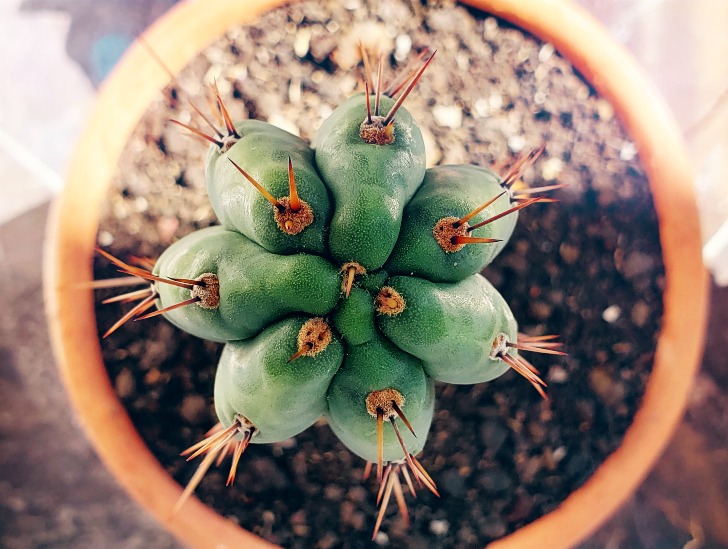
Spined plants have also inspired artists, poets, and writers for generations. Their unique forms, textures, and symbolism have been featured in various forms of artistic expression, from paintings and sculptures to literature and music.

Light Reflection

The reflective properties of spines can help plants reduce solar radiation and conserve water. The spines’ color and orientation determine their ability to reflect sunlight, protecting the plant from excessive heat and evaporation.

In some species, spines are arranged in a way that minimizes light absorption while maximizing reflection.

This allows plants to maintain a more temperate microclimate around themselves, shielding them from extreme temperatures.

The reflective properties of spines also contribute to a plant’s energy efficiency.

By reducing the amount of solar radiation they absorb, plants can conserve water and reduce their metabolic rate, allowing them to survive longer periods without rainfall.

A san pedro cactus top view.
The spines’ color and orientation determine their ability to reflect sunlight, protecting the plant from excessive heat and evaporation.

In addition, spines help protect plants from UV radiation, which can cause damage to cells and disrupt photosynthesis. This is particularly important in high-altitude environments where sunlight intensity is much stronger.

The reflective properties of spines help mitigate the effects of UV radiation, allowing plants to thrive in these challenging conditions.

Summary

Spines are a defining feature of cacti and succulents, serving essential functions in their survival, classification, and aesthetic appeal.

Their diverse forms and functions make them an integral part of these unique plants’ fascinating adaptations to thrive in challenging environments.

So, next time you admire a cactus or succulent’s dazzling display of spines, take a moment to appreciate their complex role in the plant’s growth and resilience.

How to Encourage Flapjack Plant Blooms Every Time: Expert Advice

A flapjack plant.

Do you consider yourself a true succulent enthusiast? If so, you’re likely familiar with the Flapjack plant. Also known as Kalanchoe luciae, this succulent is a fascinating species famous for its distinctive, pancake-shaped leaves and stunning flowers. The flowers add a burst of color to your indoor or outdoor garden. Unfortunately, the Flapjack plant doesn’t bloom consistently. Sometimes, the succulent can go for several seasons without blossoming. However, with the right care, you can encourage your Flapjack plant to bloom consistently.

So, how do you encourage a Flapjack plant to bloom every time? The biggest trick in encouraging your Flapjack plant to bloom every time is giving it plenty of sun and water. If planted indoors, ensure it gets at least six hours of direct sun daily during spring and summer. You’ll need to provide outdoor plants with at least eight hours of direct sun each day.  Keep your plant well-watered but not overly saturated to encourage blooming. You should also consider providing it with adequate humidity, pruning dead/wilted leaves, feeding it with well-balanced fertilizer, and promoting dormancy during winter to prepare it for the flowering season.

This blog post discusses crucial steps you need to take to ensure your Flapjack plant graces you with its vibrant flowers regularly. Read on to learn more.

1. Provide Adequate Sunlight

Sunlight plays a crucial role in the flowering process. It serves as the primary energy source for plants, driving the process of photosynthesis. The energy produced as a result of photosynthesis is essential for both growth and flowering.

Flowering in most plants, including Flapjack plants, is often regulated by specific light conditions. Adequate sunlight serves as a signal that triggers the plant’s transition from vegetative growth to reproductive mode.

This transition involves complex hormonal changes, with light acting as a critical external factor.

A flapjack plant in a pot exposed to sunlight,
Sunlight plays a crucial role in the flowering process.

When Flapjack receives sufficient light, it stimulates the production of flowering hormones, ultimately leading to the development of flower buds.

The intensity and duration of sunlight are crucial factors. Flapjack usually thrives in bright, indirect sunlight that mimics their natural habitat conditions.

Placing them near a sunny window with filtered light or in a location that receives several hours of indirect sunlight daily is ideal.

Inadequate light can result in reduced photosynthesis, limiting the plant’s ability to accumulate the resources needed for flowering.

While these plants require adequate sunlight for flowering, striking a balance is essential. Too much direct sunlight, especially in hot climates, can scorch the leaves and stress the plant.

Therefore, providing bright, filtered light rather than harsh, direct sun is vital to nurturing a healthy Flapjack plant primed for prolific flowering.

2. Proper Watering

Like sunlight, water is essential for a Flapjack plant to bloom. A consistent watering schedule ensures the plant stays healthy and hydrated, helping it build up the resources needed for flowering.

When watering your plant, ensure you don’t saturate the soil because it can lead to root rot. It’s best to water them when the top inch or two of the soil has dried out.

A closeup image of a flapjack plants,
Like sunlight, water is essential for a Flapjack plant to bloom.

Additionally, you should water the plant more often during spring and summer when it’s actively growing than in winter when growth is slow.

3. Maintain Consistent Temperature

Flapjack plants are naturally adapted to specific temperature conditions, and variations outside this range can significantly affect their growth and flowering patterns.

These succulents thrive in temperatures similar to their native habitat, characterized by mild, consistent conditions. The ideal temperature range for these succulents falls between 60°F to 75°F (15°C to 24°C).

Flapjack experiences optimal growth within this range and are most likely to produce spectacular blooms.

Temperature fluctuations, especially extreme ones, can induce stress in your plant. Sudden drops in temperature, particularly below 50°F (10°C), can trigger a protective response in the plant, causing it to redirect its energy away from flowering.

A flapjack cactus paddle plant.
These succulents thrive in temperatures similar to their native habitat, characterized by mild, consistent conditions.

This survival mechanism prioritizes the plant’s basic needs over reproduction when conditions become unfavorable.

4. Provide Adequate Humidity

Flapjack thrives in humid environments, with an ideal range of 40-50% humidity being recommended. Keeping these plants in a dry environment can lead to flower bud drop and reduced intensity of blooms.

If you can’t increase the humidity in your home, try misting your plant with water every day or so to provide it with enough moisture.

Alternatively, place a humidifier near the plant to keep its environment humid.

5. Balanced Fertilization

Fertilization is a vital component of this plant’s routine care schedule. In fact, achieving a balanced approach to fertilization is critical to encouraging these succulents to bloom consistently.

These succulents have specific nutrient requirements, and a balanced fertilizer meets these needs effectively. Your Flapjack plant will benefit massively from a fertilizer that is well-suited for succulents.

A balanced, diluted liquid or granular fertilizer with an NPK (Nitrogen, Phosphorus, Potassium) ratio of approximately 20-20-20 or 10-10-10 is typically suitable for Flapjack plants.

These succulents usually experience active growth during spring and summer when they invest energy in foliage development and flower bud formation.

A liqued fertilizer.
These succulents have specific nutrient requirements, and a balanced fertilizer meets these needs effectively.

To encourage flowering, it’s crucial to apply a balanced fertilizer during this period. Fertilize your plant every 4-6 weeks throughout the growing season.

The key to successful fertilization is to dilute the fertilizer to half or one-quarter of the recommended strength.

Flapjack plants are adapted to low-nutrient environments, so providing a highly concentrated fertilizer can lead to nutrient imbalances, affecting overall health and potentially inhibiting flower production.

However, it is crucial to avoid overfertilization because excessive nutrients can cause salt buildup in the soil, leading to root damage and reduced flowering.

It is essential to follow recommended dilution ratios and avoid the temptation to over-fertilize, thinking it will promote more blooms.

6. Prune Dead Leaves

Dead and wilted leaves will not only make your plant look unsightly but can also cause it to divert its energy away from flowering. Pruning dead leaves encourages healthy growth and promotes flowering.

To prune your Flapjack plant, begin by removing any dead or wilted leaves with a pair of sharp scissors, taking care not to damage the healthy tissue adjacent to the affected area.

Be sure to sterilize your scissors with rubbing alcohol or diluted bleach solution to prevent the spread of fungi and bacteria.

You should also watch out for leaves that are yellowing beyond the usual coloration. If you notice any abnormally yellow leaves, remove them as soon as possible to avoid further damage to your plant.

7. Promote Dormancy

Promoting dormancy is an essential step in encouraging consistent and robust blooms. The natural resting period is crucial for the plant’s overall health and flowering cycle, and understanding how to facilitate dormancy is critical to optimizing flowering potential.

Dormancy is a seasonal phase in a plant’s life cycle during which growth and metabolic activities slow down or temporarily cease. In the case of Flapjack plants, dormancy typically occurs in late fall and winter.

During this period, the plant enters a state of rest, conserving energy and resources for future growth and flowering.

Dormancy allows these succulents to recover from the active growing season, where they invest energy in foliage development and flower bud formation.

Secondly, it offers a respite from the stress of extreme temperature fluctuations, low light levels, and potentially unfavorable environmental conditions.

To promote dormancy, you should adjust your care routine. Reduce both watering and fertilization during this period.

The reduced water intake mimics the drier conditions typical of the plant’s native habitat during winter, preventing issues like root rot and stress-related problems.

8. Avoid Ethylene Gas

Ethylene is often referred to as the “ripening hormone” because it plays a significant role in the ripening of fruits and the aging of flowers.

When Flapjack plants are exposed to ethylene gas, particularly in higher concentrations, it can disrupt the hormonal balance within the plant, affecting the development of flower buds and potentially causing premature flower drop.

Ethylene is naturally produced by certain fruits, vegetables, and flowers as they ripen or decay.

Common ethylene-producing culprits include apples, bananas, avocados, and tomatoes. Ethylene gas can also be emitted from vehicle exhaust and combustion engines.

To protect your Flapjack plants from ethylene exposure, it’s essential to isolate them from potential sources of this gas.

Avoid placing your succulents near ripening fruits or vegetables in the kitchen, as the gases released during ripening can easily reach your indoor plants.

Ensure proper ventilation in the area where your plant is located. Adequate airflow helps disperse any ethylene gas that may be present, reducing its concentration around the plants.

A closeup image of echeveria in a pot outdoor.
it’s essential to isolate them from potential sources of this gas.

Alternatively, consider using ethylene absorption products near your Flapjack plant, such as activated carbon filters or ethylene-absorbing packets.

These products can help neutralize ethylene gas and protect your succulents from its adverse effects.

Summary

Proper care and maintenance of Flapjack are essential for encouraging flowering and achieving a beautiful display.

By providing adequate light, humidity, fertilizer, pruning dead leaves, promoting dormancy, and avoiding ethylene gas exposure, you can optimize flowering potential and ensure stunning floral displays.

With these tips in mind, you can be confident that your Flapjack will bloom with beautiful flowers consistently. Enjoy the show!

Top 10 Secrets to Mastering Bonsai Tree Growing

A person pruning a bonsai.

Bonsai tree cultivation is an art form steeped in tradition, requiring patience, precision, and a deep understanding of plant life. While it takes time to become a true bonsai master, fear not because we are here to help you get started. With the right knowledge and tools, you can unlock the secrets to mastering bonsai tree growing in no time.

So, what are some of the secrets to mastering bonsai tree growing? Selecting the right tree species is one of the biggest secrets to mastering bonsai art. In fact, most bonsai masters argue that choosing the right species is the most important factor in determining success as a bonsai tree grower. Different species have different characteristics, so it’s important to understand what kind of environment your tree will need and how much care it will require to thrive. From there, you need to choose the right bonsai pot and master different wiring and pruning techniques. Master watering skills and take time to learn different bonsai styles. You should also strive to understand the art of repotting and be patient to achieve success.

Today, we unravel the top ten secrets behind successful bonsai cultivation. Read on to find out everything you need to know.

Art of Creating Bonsai Trees: Overview

The art of creating bonsai trees, known as “bonsai,” is a captivating and ancient horticultural practice that has been cultivated for centuries. This meticulous and meditative art form involves carefully nurturing and shaping miniature trees to create living works of art.

In the early stages of its development, the practice of cultivating miniature trees and landscapes in containers was known as “penjing” and originated in ancient China.

These early efforts laid the foundation for the art of bonsai. However, in Japan, bonsai truly blossomed into the distinct art form we know today.

Over time, bonsai has continued to evolve and expand globally. Its popularity soared, with enthusiasts worldwide contributing to its diversity and appeal.

A bonsai indoor.
The art of creating bonsai trees, known as “bonsai”.

Many people don’t know that bonsai transcends the mere cultivation of miniature trees; it encompasses a profound connection between humanity and the natural world.

Bonsai invites mindfulness, patience, and an intimate bond with nature. Artists strive to capture the essence of a full-sized tree within the confines of a small container, creating living sculptures that celebrate the beauty and resilience of the natural world.

Top 10 Secrets to Mastering Bonsai Tree Growing

Creating a bonsai tree involves a blend of artistry and horticultural skill. Below are the top ten secrets to mastering the art of bonsai tree growing:

Secret #1: Select the Right Species

The choice of an appropriate tree species is pivotal in bonsai cultivation. In fact, some experts believe that selecting the right species is the most important factor in determining success as a bonsai tree grower.

Different species have different characteristics. Therefore, it is important to understand what kind of environment your tree will need and how much care it will require to thrive.

Remember that different climates call for different trees. So, research carefully before you begin your project. Some of the best species for bonsai cultivation are ficus, juniper, cypress, maple, and pine.

Secret #2: Choose the Right Bonsai Pot

A suitable pot is essential to your bonsai tree’s success. Selecting an appropriate size and shape pot is key to ensuring your tree grows and thrives in its container.

Choose a pot that is proportionate to the size of the tree – it should be large enough so that there’s ample room for root growth but not too big because it would impede the aesthetics of the bonsai.

A small wired bonsai on hand.
Selecting an appropriate size and shape pot is key to ensuring your tree grows and thrives in its container.

Be sure to consider shape and color when selecting your pot, and always opt for pots with drainage holes.

Secret #3: Master Pruning and Wiring Techniques

Wiring is an essential technique in bonsai tree cultivation. It involves wrapping a wire around the tree trunk to form a desired shape.

Proper wiring techniques are key for creating your bonsai’s silhouette. It is important to use wires that are not too thick and to ensure that the wires are not left on for too long.

Pruning is another essential technique in bonsai tree culture. It involves carefully trimming and sculpting your bonsai tree’s foliage to promote healthy growth and create an aesthetically pleasing tree.

Use sharp, clean pruning shears, and be careful not to over-prune your bonsai tree.

Secret #4: Learn the Art of Repotting

Bonsai trees need to be repotted periodically to refresh the soil and promote root health. Therefore, you must figure out when and how to repot your bonsai, keeping in mind the specific needs of your tree species.

Repotting should be done during spring or summer when your bonsai is in its active growth phase. Use suitable soil mix and repotting tools like chopsticks to minimize root damage.

Secret #5: Master Watering Skills

Watering is one of the most crucial elements in bonsai care. Too little water could lead to wilting, and too much water could lead to rot.

The amount of water a bonsai tree needs will depend on various factors, such as the species, size, and environment.

Therefore, it is important to understand how much water your individual tree requires to stay healthy.

A person spraying water at the bonsai.
The amount of water a bonsai tree needs will depend on various factors.

Generally, bonsai trees should be watered thoroughly at least once a day during summer and every few days during winter. Always use rainwater or filtered water for better results.

Secret #6: Balance Light and Shade

Bonsai trees require the right balance of sunlight and shade to thrive. Position your tree where it receives adequate light but is protected from harsh, direct sunlight that may scorch and dry out its leaves.

Ensure you observe the daily light cycle of your bonsai tree. Different species require different levels of exposure to thrive.

So, research your specific tree before positioning it in a sunny location.

Secret #7: Fertilize Your Bonsai Trees Appropriately

Like any other tree in your home garden, bonsai trees need to be fertilized. Fertilizing helps promote healthy growth in your bonsai tree and keeps it looking lush and vibrant.

However, it is important to understand that too much fertilizer can cause damage to your tree. Therefore, err on the side of caution when fertilizing your bonsai.

A sack of soil and a bonsai without a pot.
Like any other tree in your home garden, bonsai trees need to be fertilized.

Use organic slow-release fertilizers and only fertilize when the tree is actively growing to avoid burning or stressing out the roots.

Secret #8: Learn How to Combat Pests and Diseases

Bonsai trees can be prone to pests and disease, just like any other type of tree. To ensure your bonsai remains healthy, it is important to inspect it regularly and take note of any changes to the leaves or branches.

If you suspect a pest infestation, act quickly. Take measures to remove pests and treat diseases immediately to prevent further damage.

Secret #9: Understand Different Bonsai Styles

Bonsai trees can be trained in various styles, and understanding the different bonsai styles is key to creating beautiful and harmonious living sculptures.

Some of the most popular styles include the formal upright (chokkan) style, informal upright (moyogi) style, slanting (shakan) style, cascade (kengai) style, and literati (bunjin) style.

Each style has unique characteristics and requires specific techniques to be mastered to create a beautiful bonsai tree.

Studying the different styles will help you select the right style for your species.

Secret #10: Be Patient and Consistent

Creating a successful bonsai tree takes time, dedication, and patience.

Be consistent with your bonsai tree’s care and pay attention to how it responds to ensure that it stays healthy and vibrant.

Bonsai trees require regular maintenance, so ensure you set aside some time each day for care.

With enough dedication, you will be able to master the art of bonsai cultivation and create beautiful, living works of art.

Bonus Tip: Seek Guidance and Practice

Join a bonsai club or community to learn from experienced growers. Attend workshops and classes to improve your skills. You can even engage a bonsai mentor to help guide you.

The best way to learn is through practice, so don’t be afraid to experiment and make mistakes.

A copper wire at the bonsai.
Attend workshops and classes to improve your skills.

Be dedicated, and you will soon master the art of bonsai cultivation and enjoy countless hours of serenity with your living works of art.

How Long Does It Take to Master Bonsai?

The answer to this question depends on your experience and dedication.

Everyone has different goals when it comes to bonsai cultivation, so the timeline for mastering will vary depending on individual needs and expectations.

For those who want to become an expert in bonsai care, expect to invest a significant amount of time and practice.

Over time, you will develop a better understanding of the art and science behind bonsai cultivation and be able to create beautiful living sculptures.

Wrapping Up

If you want to learn how to cultivate bonsai, mastering the essential techniques is key to success. Follow these tips and advice to become an expert in bonsai care.

The key to success lies in understanding your bonsai tree’s needs and paying attention to its reaction to different treatments and techniques.

With enough dedication, you will soon be well on your way to creating breathtaking works of art. Good luck!

Is Your Bonsai Healthy? Here’s How to Tell!

A japanese bonsai.

The exquisite art of bonsai has fascinated and captivated enthusiasts for centuries. The tiny trees are beautiful to behold and living symbols of patience, care, and an intimate bond between humans and nature. However, bonsai trees require more than an aesthetic appreciation; they demand meticulous care and understanding. Nurturing a bonsai tree can be daunting for beginners, but the rewards are immeasurable with the proper knowledge and patience.

So, how can you tell if your bonsai is healthy? A healthy bonsai tree typically has vibrant leaves, robust resistance to pests and diseases, and a strong root system. The leaf color can tell you volumes about your bonsai’s health – a bright, uniform green typically signals vitality, while yellowing or browning leaves may indicate a problem. The texture of the leaves is another critical indicator; they should be plump and firm, not wilted or dry. A healthy bonsai tree also exhibits strong resistance to pests and diseases.

In this article, we’ll delve deep into the world of bonsai trees, highlighting the signs of healthy bonsai. Read on to find out everything you need to know.

Bonsai Trees: Quick Overview

Bonsai trees, an art form originating in China and perfected by the Japanese, are miniature trees meticulously cultivated to mirror the proportions and aesthetics of their full-sized counterparts.

Despite not representing a specific tree species, bonsai combines horticulture and artistry.

Central to bonsai is proportion, where the balance between trunk, branches, leaves, and overall form is meticulously maintained.

Beyond horticulture, bonsai is a form of artistic expression, with growers shaping and sculpting the tree to evoke specific emotions and visual impressions. The attention to detail aims to create a natural appearance despite their diminutive size.

A hand wiring a bonsai.
Despite not representing a specific tree species, bonsai combines horticulture and artistry.
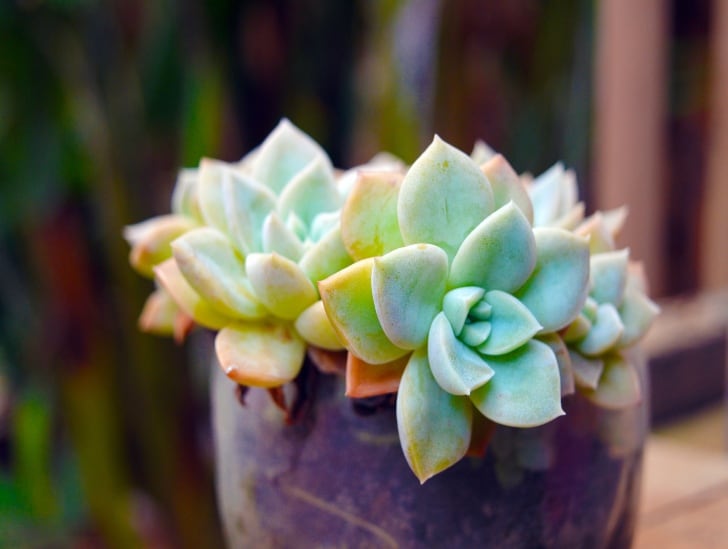
Various bonsai styles capture distinct aspects of nature, each reflecting different growth conditions.

The formal upright style mimics trees found in open spaces, with an upward-growing trunk and gradual taper.

Conversely, the cascade style portrays trees that grow on slopes or cliffs, with the trunk cascading downward.

The informal upright style imitates trees shaped by wind or crowded environments for a more organic appearance. Moreover, the broom style sees branches radiating symmetrically, echoing trees in open fields.

Caring for bonsai trees is a challenge due to their compact size and contained environment. Adequate watering is crucial because these trees need consistent moisture to thrive. But you must resist the temptation of overwatering to avoid causing root rot issues.

Tailored light levels are essential based on tree species, with some requiring full sun exposure and others thriving in partial shade.

Pruning is a routine practice to sustain the intended shape and encourage new growth. Wiring facilitates the shaping of branches and trunks, allowing the trees to transform into a desired style.

Furthermore, repotting every two or three years is crucial since it prevents root congestion and maintains nutrient availability.

What Are the Signs of a Healthy Bonsai Tree?

Now that you understand bonsai trees better let’s discuss the tell-tale signs of a healthy one.

1. Vibrant Leaf Color

When assessing the health of a bonsai tree, the condition of its leaves is a crucial indicator.

Healthy bonsai leaves exhibit a vibrant and consistent color characteristic of the species. Different bonsai species have their natural leaf color variations, ranging from shades of green to even red or variegated patterns.

Discoloration, such as yellowing, browning, or unusual spots, can indicate nutrient deficiencies, diseases, or pests.

A healthy bonsai tree will have leaves that match its species’ typical shape and size. Any significant deviation from the normal leaf characteristics could indicate stress or improper care.

A outdoor bonsai exposed to sunlight.
A healthy bonsai tree will have leaves that match its species’ typical shape and size.

Misshapen or overly small leaves might indicate inadequate light, poor nutrition, or other environmental factors affecting the tree’s health.

Furthermore, the leaves should be firm and turgid when touched. Wilting, limp, or overly brittle leaves suggest a problem, possibly related to watering issues.

Conversely, excessively glossy or overly thick leaves could indicate nutrient imbalances or other stressors.

You should also pay attention to unnatural leaf drops. While some leaf shedding is natural, especially during certain seasons, an unusually high rate of leaf drop, particularly outside the typical shedding period, could point to stress, pests, or diseases affecting the bonsai.

2. Even Growth

Bonsai trees usually experience balanced and even growth with no overly long branches or disproportionate structures.

Uneven growth can be a sign of improper pruning, inadequate nutrition, pest infestations, or environmental stressors such as frost.

A healthy bonsai tree should have uniform branch lengths that represent the species and age of the tree.

3. Resistance to Pests and Diseases

Pest invasions, fungal infections, or viral infestations can wreak havoc on bonsai trees, so you should regularly inspect your trees for signs of an attack.

A bonsai indoor.
Inspect the branches and trunks for signs of damage caused by animals or insects.

Check for any unusual leaf discoloration; yellow spots could indicate spider mites, while white spots might indicate fungal growth. Also, look out for pests such as aphids or mealybugs.

Finally, inspect the branches and trunks for signs of damage caused by animals or insects.

4. Healthy Roots

The roots of a bonsai serve as its foundation, anchoring the tree in the soil and absorbing water and nutrients essential for growth. The roots’ health directly influences the bonsai tree’s overall health.

A robust root system enables the tree to efficiently uptake water and nutrients, promoting vigorous growth, lush foliage, and the capacity to withstand stressors.

When examining the health status of bonsai tree roots, the degree to which they fill the pot is critical. Healthy roots should naturally fill the available space within the container.

This indicates that the tree has an ample network of roots that can access moisture and nutrients from the surrounding soil.

Roots extending throughout the pot demonstrate the tree’s capacity to absorb resources necessary for optimal growth.

Some signs of healthy roots include minimal circling, firmness, visible growth, and a healthy white color.

Additionally, young root tips indicate the tree’s capacity for growth and future health potential.

5. Responsive Care

A healthy bonsai tree will respond positively to routine care, showing improved growth and increased resilience to environmental stressors.

Regular pruning, adequate watering, fertilizer application, and other care practices should improve health over time.

A bonsai tree being trimmed.
A healthy bonsai tree will respond positively to routine care.

You will usually observe an increase in foliage growth, with healthy new shoots and leaves emerging as the tree acclimates to its environment.

Healthy bonsai trees should also show signs of resilience and recovery when exposed to unexpected events such as harsh weather, pests, or diseases.

6. Sturdy Trunk

A sturdy and straight trunk free of visible cracks or signs of weaknesses is another sign of a healthy bonsai tree.

Bonsai trunks should be straight, with minimal curves or bends. In addition, they should exhibit an even thickness from top to bottom and feel firm to the touch.

The trunk also indicates the species’ age, so look for characteristics such as pronounced bark ridges or callused scars that vary depending on the species.

7. Appropriate Tree Size

The size of your bonsai tree should be in direct proportion to the pot and style. A healthy bonsai tree should never outgrow its container.

Furthermore, the bonsai tree’s style should align with the species’ natural form and characteristics.

For instance, a typical juniper bonsai features thick foliage spread across an informal upright or slanted form with slightly curved branches; any deviations from this shape should be addressed through proper pruning and care.

What Can You Do to Improve the Health of Your Bonsai Tree?

Luckily, you can do a few things to improve your bonsai tree’s health.

First and foremost, provide adequate sunlight to ensure the tree receives enough light for photosynthesis.

Most species require 4-6 hours of direct sunlight daily; however, depending on the species and environmental conditions, you may need to adjust this.

Secondly, regularly inspect your bonsai for signs of pests, diseases, or environmental stressors. Ensure to eliminate the pests and address any other problems immediately.

A person watering a bonsai.
Overwatering can lead to root rot, while underwatering will stunt growth.

Thirdly, ensure that you provide proper watering and feeding with age-appropriate fertilizer for the tree species.

Overwatering can lead to root rot, while underwatering will stunt growth; similarly, too much fertilizer can burn the roots, while too little won’t provide sufficient nutrition.

The best time to fertilize bonsai is during the growing season, usually from spring to autumn. Avoid applying fertilizer during winter when the tree isn’t growing.

Finally, ensure that you perform regular pruning and styling practices to maintain the desired look of your bonsai tree.

Trim off overgrown branches and twigs to keep your tree balanced. This will encourage even growth and prevent any unevenness or disproportionality.

Trimming should be done during the active growing season to ensure your bonsai looks healthy and attractive.

Final Thoughts

Caring for bonsai trees requires patience, precision, and dedication to achieve the desired results.

Applying these practices will ultimately lead to healthier and more beautiful plants that can be a source of pride and joy.

You can keep your bonsai healthy and attractive for years with the proper care and attention.

To ensure optimal health, staying in tune with any changes or problems and addressing them quickly before they become too challenging to manage is crucial.