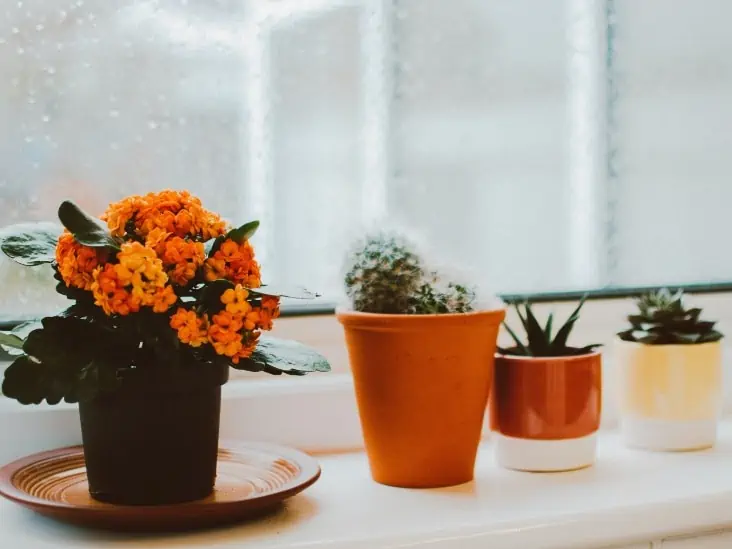
Do Cacti Plants Die After Flowering?

If you are a plant lover and have a few cacti plants in your outdoor garden or indoor spaces, you already know that these succulents are unique.  While most of them grow slowly, they tend to bloom when the right time comes, and the conditions are right. In fact, many gardeners get a lot of satisfaction from seeing their cacti plants flower.  It is always a validation that they are happy and doing well. But what happens after cacti plants flower? Do they die? We shall find out shortly.

So do cacti plants die after flowering?  The simple answer is “no.”  Most cacti plants do not die after blooming, although some do.  It depends on the cacti species you have in your home and how you take care of it during the blooming season.  If you do everything right and your cactus plant still dies after blooming, it could be a monocarpic species. When a cactus plant dies after blooming, it is commonly referred to as the “bloom of death.

This post covers everything you need to know about the bloom of death and whether cacti plants experience this phenomenon. We shall also highlight some of the things you need to do to take care of your cactus during and after the flowering season. So, let us get started.

Why Do Cacti Plants Flower

The truth is that a majority of cacti species do flower. Some species such as the Christmas cactus start flowering early, while others such as the Saguaro won’t start blooming until they are 30 years old.

With over 2,000 species in the cactus family, diversity also reigns on the size of flowers they produce. While some cactuses produce relatively smaller and inconspicuous flowers, others produce large and bold flowers that provide a magical floral display.

It is the flowers and the magical show that they put on which distinguishes cacti plants from other succulents. However, one thing you must remember is that these succulents only bloom during seasons of active growth.
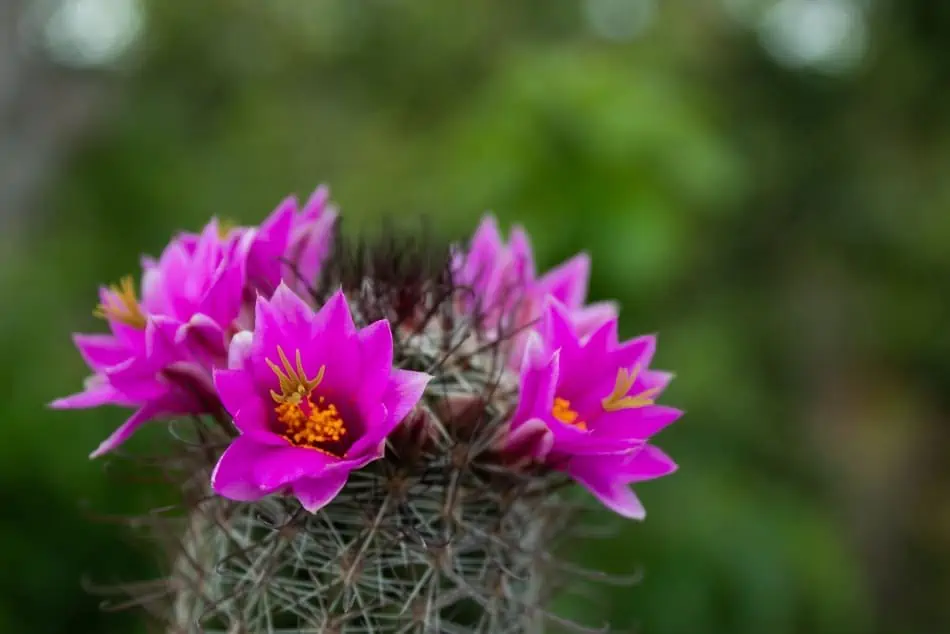
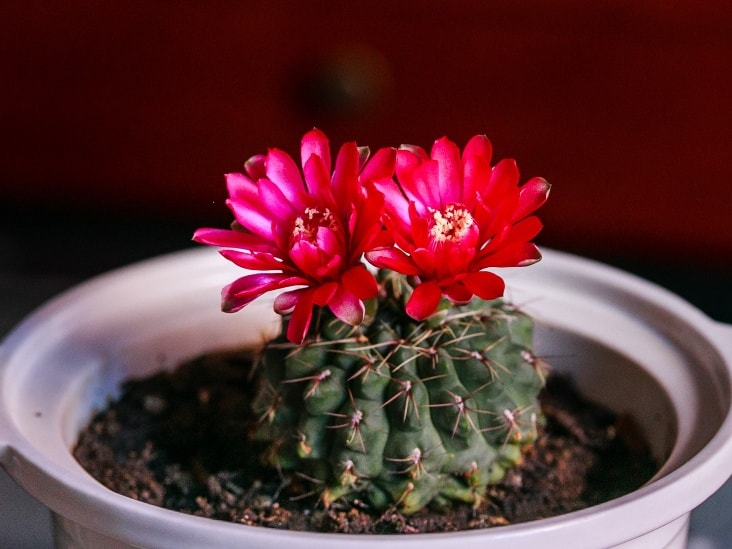
The majority of cactus species produce colorful flowers during specific blooming seasons.

But what does a flowering cactus mean? Like all plants, cactuses bloom to attract pollinators. It is one of their natural ways of surviving in the relatively harsh environment to ensure the production of the next generation.

But how do they do this? It is quite simple. They produce seeds within the flowers, which later on fall to the ground and germinate. Flowers contain the primary reproductive parts for most plants. The flowers are mostly brightly colored to attract birds, butterflies, and bees for pollination.

In the wild, these plants mostly rely on birds and insects for pollination to reproduce.  However, if grown at home, you can use a standard paintbrush to facilitate cross pollination. The goal is still the same- to produce seeds.  You can then harvest the seeds and germinate them to produce new plants.

Most cacti plant gardeners use this approach to expand their plant collection. However, there are still other ways of reproducing cacti plants, such as stem propagation.

When Do Cacti Plants Flower?

Most cacti species flower at some point in their growth cycle. However, there is no definitive answer to this question since the flowering time for cacti plants can vary greatly.

Some cacti species will flower early during their growth cycle, while others won’t flower until they are much older.

For example, the Christmas cactus usually flowers within 2-3 years from seed, while the Saguaro cactus can take up to 30 years before it produces its first bloom.

The main flowering season for most cacti is spring. However, some species, such as the Christmas cactus, can flower during other seasons, such as winter. In general, the blooming season for cacti is mostly determined by the type of cactus plant and the climate conditions in its natural habitat.

For example, cacti plants that originate from tropical regions, such as the Christmas cactus, are more likely to flower all year round than those from desert regions with a shorter blooming season.

Do Cacti Plants Die After Flowering?

As mentioned earlier, most cacti species don’t die after blooming, although we have a few species that do. Plants that die after flowering are known as monocarpic, and it is a natural phenomenon that you can’t avoid. If your cactus dies after blooming, then it is known as the “bloom of death.”

One way to tell if your cactus is monocarpic is by the way it blooms.  If the flowers tend to come out from the center of the plant and the entire plant transforms into a flower stalk, there is a high probability that it is monocarpic. Typically, the flowers should grow from the sides of the cactus.
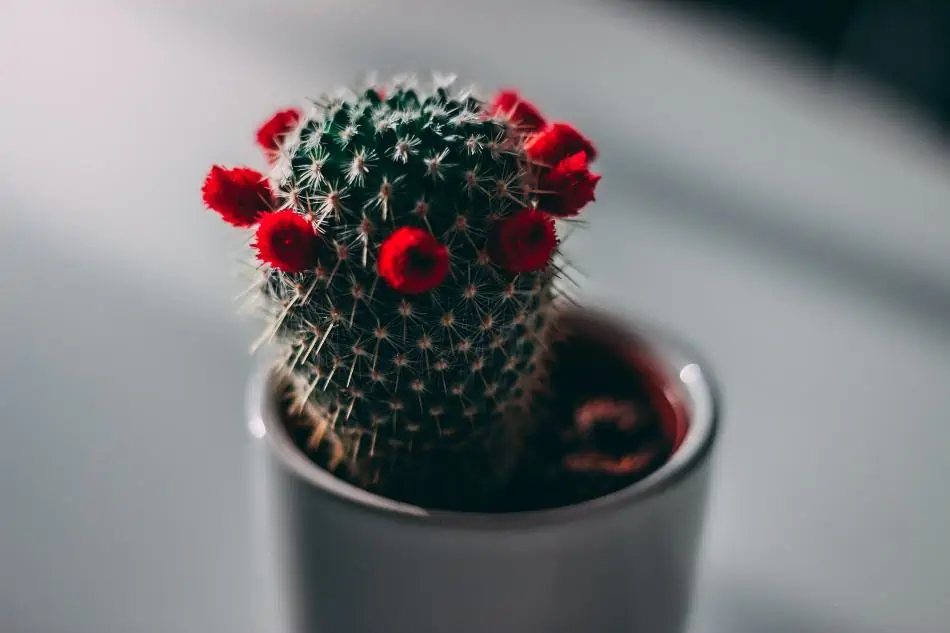
If your cactus produces flowers on the sides, it can be the sign that the plant is NOT monocarpic.

There is nothing you can do once you realize your cactus is monocarpic. Nothing can stop the process because it is natural. All you have to do is enjoy the floral display while it lasts and be prepared to say goodbye to your plant.

Although it may sound tragic, you will be surprised to learn that most monocarpic plants don’t die in vain.  Most of them are great producers and tend to produce plenty of pups just before they flower and die. 

In most cases, the pups will continue living and transform into beautiful plants. Only the mother plant dies after a massive blooming.

How Do I Care for a Blooming Cactus?

In most cases, you don’t need to provide a flowering cactus with any special treatment. In fact, blooming is a sign that the plant is meeting all of its needs just as it is. The only thing you need to do is continue providing it with the normal daily care, and it will do the rest.

Some gardeners like to supply their cacti plants with extra nutrients during the flowering season to ensure that the plant receives all it wants to sustain the flowers.

If you must feed the plant during this time, make sure you administer the fertilizer at ¼ or ½ strength every two or three weeks. This is enough to provide the cactus with sufficient nutrients it needs during the blooming season.

However, you need to be careful with watering. If you overwater a cactus, it won’t achieve full bloom. If you overwater before the first flowers appear, the plant will only start shooting out what appears to be a bloom stalk, but it won’t bloom.

This is common with overwatered cacti. If you want to see the best of your cacti plants during the blooming season, it is necessary to provide enough water but don’t overwater.

How Do I Take Care of the Christmas Cactus After the Blooming Season?

The Christmas cactus is one of the most commonly grown cacti species in homes. Most people love it for its beautiful appearance and regular blooming. As long as you take good care of a Christmas cactus, it will always bloom around the holiday season.

Since a Christmas cactus blooms furiously, you need to know how to take care of it after the flowering season so that you don’t end up with a mess.

The first thing you need to do immediately after the blooming season is to prune your Christmas cactus to transform it into a full bushy plant so that it can flower better the next holiday season

The best time to prune your Christmas cactus is four to six weeks after it has stopped flowering.
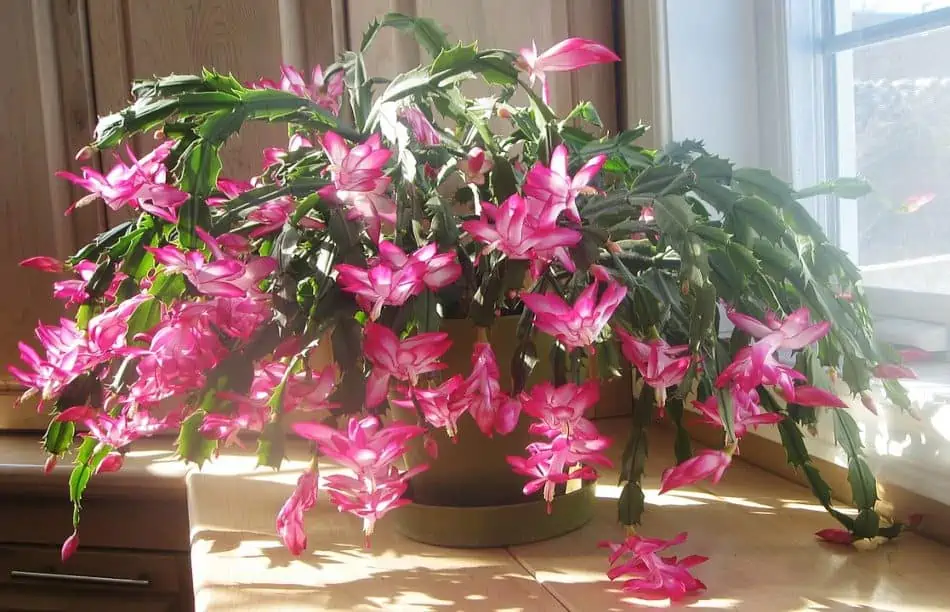
Christmas Cactus produces gorgeous pinkish flowers right around the holiday season.

During the first 30 days after the blooming, consider keeping the soil slightly drier than usual. However, you should never prune your Christmas cactus after May. You can easily propagate this cactus species from stem tip cuttings.

Make sure you use at least three jointed segments from a healthy stem to achieve good results. Allow your cuttings to dry out for a couple of hours before you plant them in a pot to avoid rotting.

You should also avoid moving your Christmas cactus into a larger container. The cactus will typically grow better and produce more flowers when it is in a slightly smaller container.

If you must re-pot your cactus, wait until the blooming season is over. The best time to do the re-potting is in the spring.

How Long Do Cactus Blooms Last?

The answer to this question largely depends on the type of cactus. There are several types of cacti, and each one has a unique blooming period. Some cacti have flowers that only last for a day, while others can keep their flowers for months.

The length of time a cactus bloom lasts also depends on the environment and how you take care of the plant.

For instance, if you live in an area with high humidity, your cactus bloom is likely to last shorter than in a drier climate.

The same goes for how you take care of the plant. If you overwater your cactus, the flowers will most likely rot and fall off sooner than if you kept the plant healthy and hydrated.

In general, cactus blooms usually last anywhere from a few days to several weeks. However, some types of cacti can keep their flowers for months.

A Saguaro cactus flower only stays open for one night, while other species’ blooms may last much longer—a week or more in some cases. The duration of a cactus bloom also varies depending on the age of the plant. Younger plants tend to have shorter-lived blooms than older plants.

Should I Deadhead My Cactus Blooms?

In most cases, deadheading cactus blooms isn’t necessary because the blooms tend to fall off automatically when they dry.

Getting rid of the spent cactus blooms is relatively easier in such a situation. All you have to do is pick them up from the ground where they have fallen and dispose of them appropriately.

However, you need to be careful when picking the blooms because you may come into contact with the dreaded spines that can pierce through your skin, causing severe injuries.
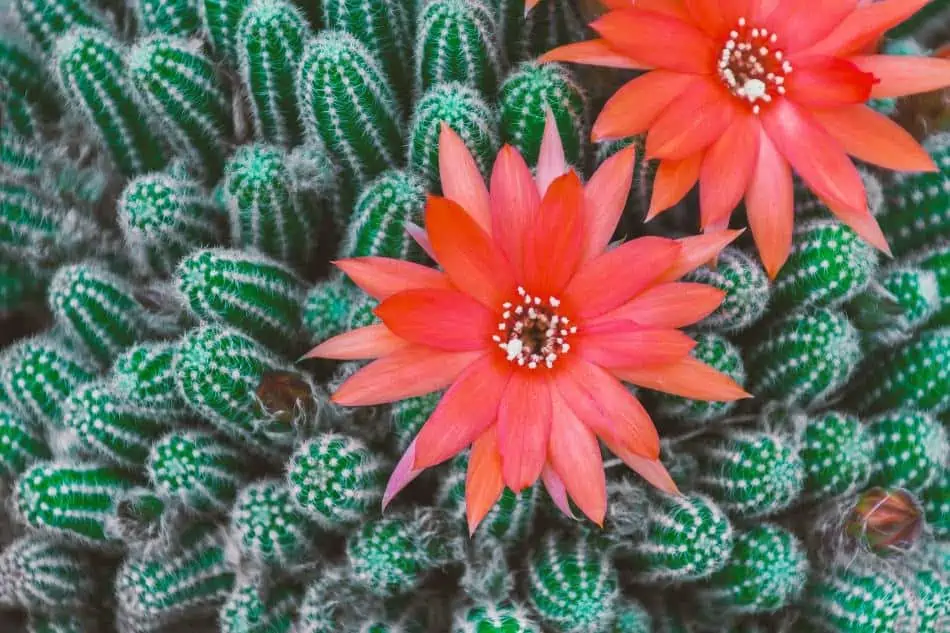
Typically, there is no need to deadhead your cactus blooms since they easily fall off when they are dry.

In some cases, the faded blooms will cling to the cactus and start rotting when it rains or when you water the plant. With careful observation, you will know which blooms have clung to the plant for deadheading. In this situation, it is best to remove the stalks as soon as the bloom starts to fade away.

Look for seeds that may reproduce before you get rid of the blooms. If you know the exact names of the cacti species in your garden, look them up to see if they usually produce viable seeds inside the flowers. 

In some cases, you may be forced to leave the seeds inside the flower for them to mature before planting.

Should I Water My Cactus When It Is Blooming?

It is crucial to water your cactus when it is in bloom to ensure that the blooms last longer. The extra moisture will also help the plant produce more flowers.

It is best to use lukewarm water when watering your cactus during the blooming season. You can water the plant at the base or use a misting can to avoid damaging the blooms.

Avoid getting water on the flowers as much as possible because this can cause them to rot. Water the plant in the morning so the leaves have time to dry before nightfall.

It is also important to fertilize your cactus when it is in bloom. Use a fertilizer that is high in phosphorus to encourage blooming. You can either apply the fertilizer directly to the soil or mix it with the water when you water the plant.

How often you need to fertilize your cactus depends on the fertilizer you use. Follow the instructions on the package for best results.

Final Thoughts

Cacti are great plants to have in your home. While there are different cacti varieties, most of them bloom at one stage in their lives. As long as you provide your cactus with the right conditions, you can be sure to witness a beautiful floral display when the right time comes.

Although most cacti species don’t die after flowering, a few of them do. Cacti plants that die after flowering are known as monocarpic, and there is nothing you can do about it.  Fortunately, the monocarpic cacti species usually leave behind plenty of pups that mature into new plants.

Your primary responsibility as a gardener is to keep doing what you are supposed to do, and your cactus will reward you with plenty of blooms when the right time comes.

What Is The Best Fertilizer For Your Cactus?

Cacti are desert plants adapted to survive in arid and semi-arid conditions. In most cases, these areas are low on nutrients. Based on this fact, there is a classic misconception that cactus does not need any fertilizer when grown at home. Nothing could be further from the truth. As much as cactus is known to grow in areas with limited nutrients and water, it needs a little fertilizer to keep it healthier, stronger and better bloomers. However, cactus is notably selective when it comes to fertilization. There are specific characteristics that make up a good choice of fertilizer for cacti.

So, what is the best fertilizer for cacti? While a cactus does not need a specific blend of fertilizer, it requires preferably organic, low on NPK, containing humic acids and beneficial soil microbes like mycorrhizae and probiotics. It should also be slow release and higher in phosphorous than nitrogen.

This article will be looking at the best fertilizer for cacti regarding their characteristics, importance, and how best to apply. It will be looking at the various options available, application frequency, and soil compatibility.

Before we start, here is a list of our favorite and recommended Fertilizer (Here)

Importance of fertilizer on cactus

As a cacti enthusiast, you would already know that this succulent will thrive with the right temperatures, air, water, and soil, but is that all? Once in a while, you may stumble upon some talk about fertilizer.  Does your cactus need fertilizer? This may not be a simple question to answer because while research shows most cacti would survive in the barren deserts, the same cannot be said about indoor or garden cactus. You want your cactus to remain healthy, strong and glowing. This is where the importance of fertilizer comes in.

To ensure your cactus grows healthy and produces gorgeous flowers, consider using a fertilizer if needed.

A good fertilizer is the much-needed confidence booster for your plant to bloom and flower better and deal with other environmental stresses much easily. Cactus fertilizer can be administered by mixing it into the soil, top dressing, or liquid form.

Importance of NPK fertilizer on cactus

Cactus plants need a balanced blend of NPK  to help promote the growth of the plant. As such, nitrogen, potassium, and phosphorous come in handy. Nitrogen helps cactus plants grow healthier and more robust.  This means brighter colors and brighter, larger, fuller leaves. This, in turn, prolongs the plant’s life.

 Potassium, on the other hand, works best for flowering cactus as it encourages better blooms and eventually improved fruit production. Finally phosphorous helps cactus plants fight diseases and remain healthy throughout their lifetime. Notably, cactus is not affected much by diseases while in its natural habitat, but potted plant tends to be susceptible to diseases and pests.

Balancing the right amount of fertilizer for cactus

Getting the right fertilizer is one thing but understanding the right balance in terms of application is a different ball game altogether. Remember, it is not much about frequency or the amount but more about doing it right.

While over-fertilization can lead to quick growth of weak stems, under-fertilization can cause nutrition deficiencies.

Succulents are known to hold on to a good amount of dissolved nutrients. As such, the risk of over-fertilization is imminent. Too much in terms of nutrient boost and the plant will grow too quickly, thus leading to some stringy cacti getting weak on the stems. On the other hand, under-fertilization could also mean your cactus run the risk of facing nutrition deficiencies.  Based on this, it is advisable that you fully study your cacti type and determine the best way to fertilize for better growth. This may call for the services of an experienced arborist.

Why do cactus prefer organic fertilizer

As already established, a cactus needs fertilizer with lower doses of NPK. Based on this, organic fertilizer will work best because it contains lower doses of NPK. What’s more, nutrients from organic fertilizers stay much longer in the soil. This gives enough time for the fertilizer to work symbiotically with the soil to better feed the plant. Organic fertilizer also offers your cacti some beneficial compounds that can be taken up by the plant much naturally as needed by the plant.

Typically, cacti plants prefer organic fertilizers since they can easily absorb the right amount of nutrients.

The slow absorption of organic fertilizer by cacti plants means that the plant takes in just the right amounts of nutrients at a time. This prevents the plant from being overwhelmed or chocked as would usually be seen in some cases of chemical fertilizers. What’s more, organic fertilizers encourage the development of living soil microbes that help break down the plant’s nutrients for better absorption.

Importance of Humic Acid, Probiotics and Mycorrhizae in cactus fertilizers

Cactus need simple organic compounds for their nutritional needs. In this regard, humic acid comes in handy to act as chelators that break down minerals into simple organic compounds. This ensures easier availability of such compounds for the nutritional needs of your cactus. Additionally, humic acid also ensures that unwanted toxins in the soil are neutralized and do not get absorbed by the plant.

Probiotics and Mycorrhizae, on the other hand, help ensure that the soil remains ‘alive.’ Over time, it improves the soil’s nutrient content and its ability to keep plant growth for much longer. This symbiotic relationship helps keep the soil improving over time. Considering that cactus live longer, this comes in handy.

Probiotics not only benefit humans’ digestive system but also help the soil maintain the nutrient content.

However, as a word of caution, do not use fertilizer meant for lawn care on your cactus. As much as they may contain the same composition, these have high nitrogen content that can be detrimental to your cactus. The high nitrogen content speeds up vegetative growth, and this is counterproductive when applied to cactus plants.

Top 6 Best Fertilizers for Your Cacti

1.      Compost manure

Compost manure is as natural as Mother Nature can get. Compost manure from grazing animals like goats, sheep, horses, and cows have been proven to be the best fertilizer for cactus. This type of fertilizer is slow to break down and stays longer in the soil thus keeping the plant healthier and more productive for longer.

Compost manure from goats, sheep, horses, and cows is the most effective fertilizer for both outdoor and indoor cacti.

Compost manure is ideal for outdoor cactus owing to its strong lingering smell.  However, it can still work for indoor plants that do not need frequent attention with just the right mix. This fertilizer works by releasing beneficial carbon content, revitalizing the soil composition, and improving aeration for better plant growth.

2.      Dr. Earth Premium Gold Pure & Natural Fertilizer

With just the right balance of NPK, Dr. Earth Dr. Earth Premium Gold Pure & Natural Fertilizer proves to be the best option for your cactus. This is especially so in cases where you notice your plants changing color. With a concentration of 10-10-10, the fertilizer works its magic to improve the health of leaves, fight diseases, improve root growth, and encourage better blooms.

When mixing this fertilizer, practice much caution to ensure that it is not too concentrated. Too much of the same, and you run the risk of burning up the roots and eventually killing the plant. For better results, apply this fertilizer by mixing it with water during watering. One teaspoonful of the fertilizer will work with one gallon of water.

3.      Organic Worms

Are you looking into going fully organic with your cactus fertilizer? Then it may be time to get yourself some wiggly worms. Organic worms are known to release some nutrient-rich waste in the form of castings beneficial to your cactus. These worms can be bred in small containers and fed on vegetable waste.

As these earthworms eat away, they, in turn, excrete waste that helps enrich the soil around. With time, they will multiply and release enough casting to help improve the soil’s organic matter. Worms are known to release up to 60 different nutrients that include calcium, carbon, magnesium, nitrogen, and much more. You can apply worm castings by working into the soil, side dressing or top dressing.

Fully organic fertilizers usually consist of worms that promote the production of nutrient-rich waste and balance the pH in the soil.

Worm castings come in handy to help balance the soil’s pH, thus making it easier for your cacti to absorb all the much-needed nutrients. For better results, ensure that you mix your worm castings with soil during potting.

4.      Grow Better Organic Cactus & Succulent Fertilizer

Your cactus needs enough food for an extended period. As such, you need just the right slow-release fertilizer for this cause. Grow Better Organic Cactus & Succulent Fertilizer is the best choice in this case as it takes at least two months to release all its nutrients. This means a longer time for your cactus to receive enough nutrients. This keeps the cactus healthy and productive all through its growth period.

Grow Better Organic Cactus & Succulent Fertilizer works for both indoor and outdoor cactus. What’s more, it blends well with a variety of soil types. You can choose to apply by either adding to your top dressing or mixing it when making your potting soil.

5.      Miracle-Gro Succulent Plant Food

Miracle-Gro Succulent Plant Food is a liquid-based fertilizer that helps give your cacti a healthy boost. Cactus love liquid fertilizer as it seeps deep into the soil much faster to offer the much need nutrition to the thirsty roots. In cases where your cacti portray signs of being a little under the weather, Miracle-Gro Succulent Plant Food steps in to improve its nutrient uptake and offer the plant the much-needed strength.

Since the fertilizer comes concentrated, it helps offer an instant boost to weak plants and restores them to their healthy ways in record time. When using Miracle-Gro Succulent Plant Food, make sure that you read its instructions carefully as the wrong portions could be detrimental to your cactus.

 You can choose to apply the fertilizer directly to the soil or, better still, mix it with water and include it in your watering regime.  The frequency of application may vary based on the season and weather conditions but once a week is the recommended frequency to help keep the cacti vibrant.

6.      Authentic Haven Brand Manure Tea

If you prefer going organic for your fertilizer, then you may be tempted to create your own manure tea. While this may be possible, it may call for enough expertise, time and resources to make it a reality. Based on this fact, you are better off going for a tried and tested option in the name of Authentic Haven Brand Manure Tea. This cactus fertilizer has been expertly balanced to ensure that it works best for your succulents without the risk of burns to the roots.

Using manure tea as a fertilizer for your cactus will help the plant grow healthy and prevent the burns of its roots.

Preparation for this type of manure is similar to that of your regular cup of tea. Steep your manure tea into some water to help tap into the nutrients.  Let it sit in the water for more than 24 hours. The result will be some dark brown water. You can then use this solution on your plants once the soil is dry. The manure tea, just like a teabag, can be used a second time. For the second time, however, you will need to steep a while longer than the first.

The best option for manure tea comes from horse and cow manure. This is closely followed by goat and sheep manure.  However, manure from pigs and chicken may not be ideal, thanks to their high nitrogen concentration. You may opt to make your own fresh-cured manure or go for the ready-made manure tea bags.

Here is a list of our favorite and recommended Fertilizer (Here)

Best Season to apply cactus fertilizer

You may have the best fertilizer, but if you do not understand the right timing for application, this will be all in vain. When planning to fertilize your cactus, keep in mind the weather conditions and growth progress of the cactus. Usually, cacti experience slow growth during the winter, which may not be the best time to apply fertilizer.

Fertilization of cactus should be done when the plant is growing actively. Doing so will help deter toxic salts from multiplying in the soil. This is, preferably, during the summer months.  However, if you are using true organic fertilizer like compost manure, you may need to worry too much about timing as these can remain in the soil much longer and will only be sued by the plant when the need arises.

How ideal are chemical fertilizers for cactus?

While chemical or inorganic fertilizer could be an option when seeking cactus fertilizer, its application can be tricky. To start with, chemical fertilizers are made from fast-acting, unnatural elements, and procedures. This gives it the ability to feed the plant directly with high supplement concentration for rapid nutrition. While this can be advantageous to other types of plants, the same cannot be said about cactus. Being a plant adapted for arid areas with limited nutrients, cactus is not accustomed to rapid intake of nutrients. As such, inorganic fertilizer may lead to the plant getting overwhelmed and shocked.

If you have to use chemical fertilizers for cactus, it is recommended that you dilute the same to the right proportions. The dilution ratio may differ depending on the type of soil, size and type of cactus in question. As such, you may need the services of an experienced arborist to complete this feat.

Consideration when using cactus fertilizer

Cacti and succulents, in general, are specific on the type of fertilizer and soil needed to remain healthy and flourishing. However, you would also appreciate the fact that this specification may differ from species to species. For better fertilization, it is important to keep in mind the following factors in relation to soil and type of fertilizer:

Well-draining  – For success in your fertilization endeavor, it is prudent to make sure the soil in question is well-draining. When potting your cactus, ensure that the potting mix contains lighter material like gravel, sand, and such other small but hard matter. These are well suited for cactus since they are not tightly packed and thus allow room for both water and fertilizer to filter through and feed the plant in the right portions. In the case of excess water, the soil can easily drain off to avoid cases of root rot.

Balanced nutrition – since cactus requires a balanced combination of nitrogen, phosphorus, and potassium, it is crucial to ensure the fertilizer you go for adhere to the right ratios. Nitrogen is the most important element among these, and so getting fertilizer and soil with just the right amounts of nitrogen is a win for cactus growth.

Neutral pH – Soil pH is an important factor when determining the right fertilizer for your cactus. Ensure that your potting mix has a neutral pH. This should be anywhere between 6 and 8 on the pH scale.

Cactus is one of the most resilient plants that can withstand the harshest of weather. This makes them low maintenance even when grown at home. This is especially so in terms of watering and fertilization. Cactus does not need a specific blend of fertilizer but will thrive best on organic fertilizer made with low NPK. While chemical fertilizer can still be used on cactus, it is not recommended if you do not understand the right proportions, thanks to its high concentration of NPK.

Hope you enjoy this article, here is a list of our favorite and recommended Fertilizer (Here)

Is It Easy To Take Care of A Cactus Plant?

Whether you are a budding houseplant enthusiast or you have been tending them for yours, you must have heard or come across a cactus plant. Cactus may be a unique plant-based on its growth pattern, size and shape, but it is the easiest to care. When looking for that one plant to add some pomp in your space, a cactus should be on top of your list thanks to its low maintenance and ease of care.

So, Is cactus easy to take care of? Caring for a cactus depends on how well you approach factors like potting, drainage, fertilization and lighting. By choosing healthy seedlings, getting the right potting soil that easily drains water, moderate lighting and occasional fertilization with the right balance of NPK fertilizer, then caring for cactus should be easy.

This article will be looking at how easy it can be to care for a cactus by considering the right care tips.  It will delve into the dos, and don’ts when tending to cactus plants. It would then wrap up with factors that will make it super easy to care for cactus plants.

Choosing the right pots and potting soil

While in its natural habitat, cactus plants thrive best under arid conditions. Based on this, it is advisable to try as much as possible and replicate the same conditions when growing cactus at home. After choosing a healthy seedling, ensure that you get an ideal pot. A good pot for cactus should have drainage holes to help drain out excess water.

To grow a healthy cactus, select the right-sized pot and use a well-drained soil mixture, depending on the species of the plant.

Cactus also needs the right soil mix. You want to get a soil mix that does not hold much water nor drain out too fast. Cactus prefers soil with enough sand and rock to replicate their natural habitat. When it comes to soil, you may choose to go with commercial mixes or make your own soil mix at home. The type of soil mix to go for depends on your cactus variety, but as a rule of thumb, a good soil mix should have some bit of peat that helps hold moisture.

Cactus thrives best with a soil mixture that includes potting soil, pumice and coir in the ratio of 5:2:1 respectively. With this mixture, the soil will dry out evenly and give room for the plant to use up its nutrients effectively. However, you may see the need to tweak this recipe depending on the cactus variety in question.

Watering

Watering a cactus can be a tricky affair. On one hand, you know they are plants and would, obviously need water to survive. On the other hand, you are also conscious of the fact that these are desert plants adapted to survive in areas with little water. The trick here is knowing how best to balance the two. The truth is, cacti need enough water to thrive; they just happen to have a unique ability to survive longer without water.

To avoid overwatering your cacti, water them only when the soil is dry.

If you are looking to get vibrant cacti that will produce healthy blooms, you got to get your watering regime right. As a rule of thumb, always make sure that the soil is dry between your watering routines. Too much water can easily lead to root rot, and this can mean premature death of your prickly companion.

You would fare much better in sunny areas or locations with high heat conditions by watering your cactus once every week. However, when winter hits, you can cut down on watering since, at this point, the plant is dormant and won’t need much nutrient uptake. If you are not sure when to water, you may want to check on the soil moisture from time to time. Once you note that the first 2 or  3 inches of the potting soil is dry, it is time to water. Always make sure that excess water drains out from the pot. This helps prevent chances of root rot.

Lighting

Cacti are desert plants, and so it is only natural that they will prefer some adequate amounts of sunlight. However, when positioning your cactus at home, they should not be exposed to direct sunlight as this can led to burns. Based on the variety, cacti need varying amounts of light throughout the day. As such, you may see the need to keep changing their positions or simply place them in moderate light all through the day. In this case, a south-facing window will work best.

Although cacti love sunlight, too much direct light might damage their stems and leaves.

Some signs of too much light may include the plant turning brown or yellow on the side facing the sun. In case this happens, relocate the plant to a cooler location for some time and let it heal up. In cases where you cannot access the natural sunlight, then you may opt for artificial lighting in the name of grow lights. This is a special type of lighting that can replicate that of the sun and help keep your plants healthy.

Fertilization

Think of a cactus and the picture that comes to mind is a plant that can survive in arid conditions with limited nutrient supply.  With this notion, you may be tempted to think that cactus does not need any fertilizer. Nothing could be further from the truth. Cactus needs the right amounts of fertilizer just like any other plant to help it grow actively, bloom better and multiply much faster.

If your cacti start growing fresh needles or leaves, you should consider fertilizing the soil.

A good fertilizer for cactus should have the right balance of NPK (Nitrogen, Phosphorous and Potassium) where in this case, phosphorous should be higher than nitrogen. Cactus will work best with soluble or liquid fertilizer as these can be taken up easily by the plant.

Make a weekly inspection of your cactus for any signs of new growth regarding fresh needles, new leaves or a general increase in size. Any new growth noted should be a sign that the plant needs fertilizer. Otherwise, it is recommended that you fertilize your cactus at least once a year. Only apply fertilizer when the plant is actively growing and cut down the same during the winter months as the plant will be in a semi-dormant state at this point.

Success tips when caring for a cactus

Understand your specific cactus species care tips

Good lighting, the right soil, watering and fertilization are not enough to guarantees success when caring for cactus. Success in cactus care starts from making the right choice of cacti for the right conditions. Cactus will thrive better in certain conditions depending on the species. As such, you must choose a cactus species that can easily fit into your weather conditions apart from fulfilling its purpose of adding some pomp in your indoors or garden.

When buying your prickly companion, take time to determine the exact species of the plant you are buying. Your arborist should be in a position to expound more on the specific care tips for your particular choice.  On the other hand, knowing your cactus type will help you do your own research online or elsewhere in terms of how best to take care of the plant.

Look out for pests

Contrary to popular opinion, cactus is occasionally susceptible to pests.  As such, it is advisable to keep a close watch on your cactus pans for any signs of pests from time to time. Some of the common pests that attack cactus plants include mealy bugs, scale and spider mites. The earlier you note them, the better as this will give you ample time to get rid of them without much hassle. You can use several pesticides to get rid of such pests, which will depend on your cactus variety and the type of pest in question.

Avoid getting pricked

By planting cactus indoors, it can only mean one thing; constant contact from time to time. Considering that most cactus plants have pricks or spikes, these may cause bodily harm if not handled carefully. When relocating or inspecting your cactus plants, use some thick hand gloves or wrap some sheets of paper around the plant before handling them. Alternatively, you may also use moving blankets to help protect your hands from the plant’s spines.

Keep Succulents Clean

Depending on the position of your cactus indoors or out in the garden, they will pick up dust and all sorts of dirt with time.  This can be detrimental to its growth. As such, it is advisable to wipe its leaves regularly and stems with a clean cloth. This not only helps keep the plant vibrant but also improves is overall outlook and appearance.  This should be done as per need basis depending on the overall conditions of the room, but as a rule of thumb, clean your cactus whenever you are cleaning your room and tending to your garden. With a clean cactus, you can easily note any changes in terms of discoloration, dents or even pest infestation.

Great Companion Plants And Flowers For Your Cactus

Adored by gardeners for their fascinating textures, drought resistance, vibrant colors, and beautiful shapes, cacti plants are a joy to behold and a delight to have in your home. These succulents are well suited for climates with relatively high temperatures and low rainfall, thanks to their ability to store water in their stems for longer periods. Most of them are easy to grow and are tolerant to diseases and insect problems.  However, when designing your cactus garden, don’t limit yourself to these succulents alone.

So, what are some of the great companion plants and flowers for your cactus?  There is a wide range of companion plants and flowers that can bring out the best qualities of your cactus and share its space with a serene balance. These plants and flowers include the red valerian, African daisy, autumn sage, hummingbird plant, trailing lantana, and some types of Euphorbia.  These plants/flowers can highlight your cacti’s form and color and have almost similar maintenance requirements to your cacti.

In this post, we discuss some of the top companion plants and flowers for your cactus plant and some of their unique properties. The plants featured in the list have been carefully selected to ensure they bring out the best in your cactus. So, let us get started.

1. African Daisy

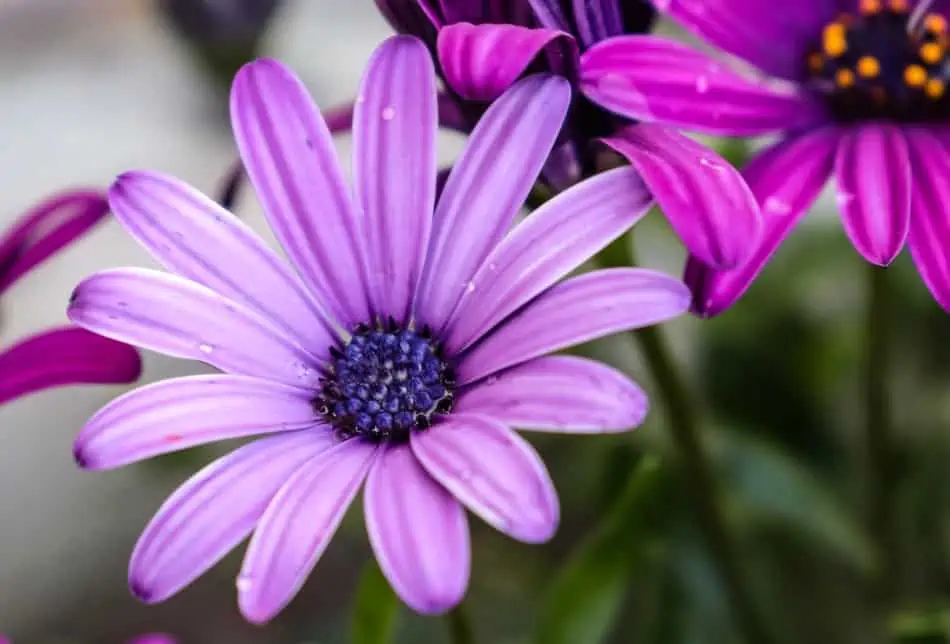
The African daisy is mostly native to South Africa and can grow up to four feet high if you provide it with the optimal growing conditions.  The plant has a mounding/trailing habit and can produce many daisies over a long period, especially in warm or mild climates.

Their flowers mostly open when the sun is up and close in the evening.  The centre disks of their flowers look as though they have been colored with metallic paint.

The plant does well when grown in containers or the garden. Blooms tend to peak in late spring or early summer and again in late summer or early fall.

African Daisy can produce many purple daisies and is an ideal plant to be paired with various cacti species.

Since the African daisy stops blooming during the hot days, it is good to pair them with cacti species that will pick up the slack during the warm summers to provide you with a non-stop floral display.

Although the plant is somewhat drought resistant, it is crucial to ensure you water it sufficiently. Most African daisies need at least one inch of water per week to thrive.  During periods of intense heat, the plant will most likely slow down and go into dormancy.

The plant also prefers relatively cooler weather. During prolonged periods of drought it will gradually cease flowering and go dormant. This is the best time to prune it but keep it watered.

It also needs some supplemental fertilizer every three weeks, especially when you grow it in a container. Make sure you choose a water-soluble fertilizer and follow the instructions on the label when administering it.

2. Red Valerian

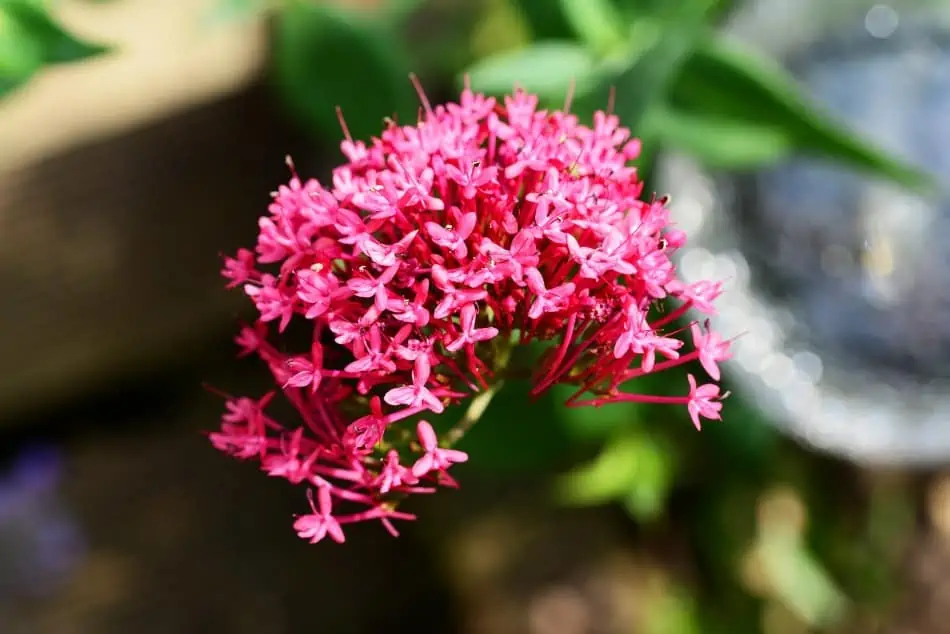
The Red Valerian is bushy, well-branched, and has one of the longest flowering seasons. The plant is popularly grown for its ornamental and magnificent star-shaped flowers. It is also relatively easy to grow and fairly resistant to pests and diseases.

The Red Valerian is an amazing bloomer from summer to late fall. It produces plenty of well-rounded flowers that may be pink, white, or blue-green, depending on the species.

When placed in a spot with a plenty of sunlight, Red Valerian can produce lots of star-shaped flowers with a pinkish red color.

The plant does pretty well in a full sunlight position, but it can also tolerate partial shade. However, it may not produce a lot of flowers when it is under partial shade.  Providing your red valerian with plenty of sunlight is all you need to do to witness the best of it.

The plant can also thrive in poor soil conditions since it copes well with dry, infertile soils. It can also thrive in compact form areas in spots where other plants may not survive.  

It prefers a slightly alkaline soil type, which can be achieved by adding limestone to your regular soil. If the potting soil you want to use is a richer variety, the plant will benefit greatly from staking.

Red Valerian is drought-resistant and doesn’t need a lot of water to survive. Young seedlings require light watering, but old plants can survive with natural rainfall or light watering when the soil is completely dry.

However, this plant doesn’t withstand overwatering. In fact, the only time you will need to water mature red valerian is when there has been a prolonged dry spell, and the potting soil is excessively dry.  For fertilization, you don’t need to fertilize your red valerian.

3. Hummingbird Plant

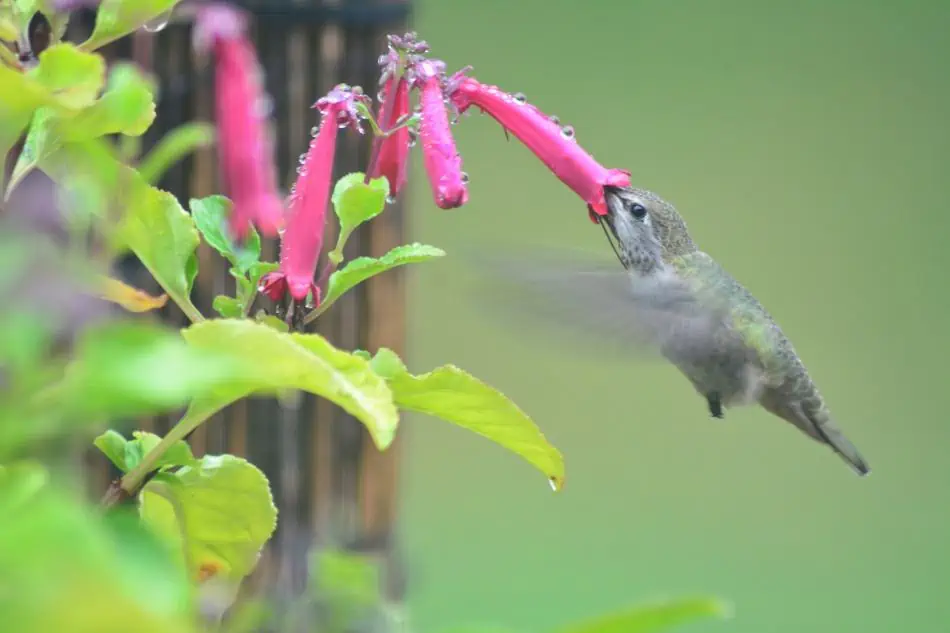
The Hummingbird plant is also known as the “Uruguayan Firecracker” plant and is a great attractor of bees and hummingbirds. It produces beautiful orange flowers from July to late October.

The plant is hardy and nearly indestructible. Therefore, you can expect it to thrive even with minimal care. Although it likes dry soil, it can benefit greatly from occasional watering during the hot and dry season. But you don’t need to fertilize it at all.

If you are growing the plant as a perennial, make sure you cut it nearly to the ground once the blooming season is over. The plant enters a dormancy stage during winter and bursts back to life once the temperatures start to rise in spring.

The Hummingbird Plant is an easy-to-grow plant that produces reddish orange flowers from July to late October.

The hummingbird plant is highly resistant to most pests and diseases and may rot in soggy and poorly drained soil.

The plant is relatively easy to grow, and it is usually propagated by dividing the root ball of mature plants.  It requires exposure to full sunlight to thrive and can do well in average to below-average soils.

The hummingbird plant is usually bushy and can reach heights of up to two feet tall with a similar spread when provided with optimal growing conditions. Their velvety leaves and stems are pretty attractive and offer you a spectacular view throughout the year.

4. Trailing Lantana Plant

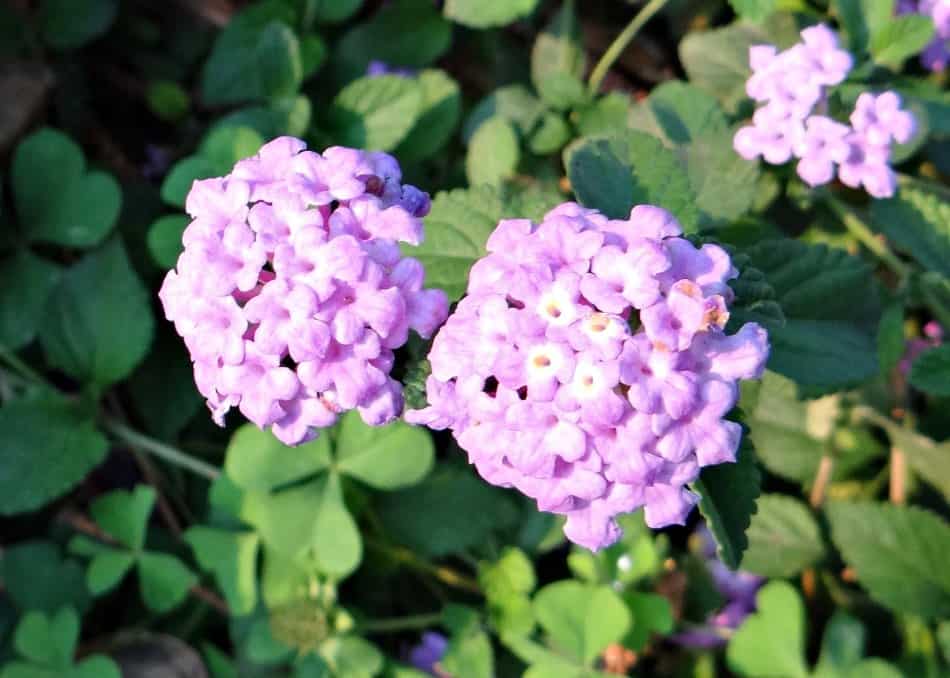
The trailing lantana plant is a popular landscaping plant that can also serve as a great companion to your cactus.  The sprawling woody shrub usually forms a dense and colorful groundcover with its evergreen foliage of strongly scented and dark-green leaves.

The plant produces small, tight clusters of beautiful flowers and spreads up to ten feet wide.  The trailing lantana is mostly used as a bank cover to control soil erosion, but it can also be used in raised plant gardens to complement the beautiful green view.

When grown in a relatively warm climate, Trailing Lantana produces white-purplish flowers during the entire year.

Trailing lantana blooms year-round in most frost-free areas. It can thrive in full sunlight or partial shade and can survive outdoors in warm regions. However, excessive frost and freezing will most likely kill the plant quickly.

If you stay in areas that experience temperatures close to freezing and still want to grow trailing lantana, ensure you cover the top of the soil with enough mulch just before winter.

This is a relatively low-maintenance plant that requires moderate watering and medium moisture to thrive. Once the plant becomes well established, it only needs light watering when the soil starts to show signs of drying. Never allow the soil to dry out completely.

Potted plants require frequent watering but make sure the soil doesn’t become soggy.  Place a layer of mulch around newly planted lantana to prevent weeds until the plant covers the entire area with its foliage.

Always prune perennial trailing lantana back to 6-12 inches from the ground level in the spring. Pruning helps to remove the old growth to reinvigorate the plant.

5. Mountain Pepper

Mountain pepper bush is a lovely evergreen shrub that can complement your cactus quite well. The plant has beautiful red stems and dark green leaves that add a unique appearance to your garden or interior spaces.

Once established the plant is drought-resistant and can thrive with minimal care. Mountain pepper is named for its pungent and hot-tasting oils found in its leaves. The plant produces clusters of relatively small, sweet-smelling, pale yellow or creamy white flowers that mostly appear in late winter and early spring.

The flowers are usually followed by dark red fruits that turn black when ripe. The mountain pepper can reach heights of up to 13 feet tall at full maturity. It can also spread to a width of up to eight feet. It usually works well as a privacy screen or hedge plant and will always hold its own focal point in your garden.

The easiest way to grow this plant is by purchasing the male and female plants at your local plant nursery. Alternatively, you can acquire mature seeds and plant them. Seeds tend to germinate well when they are still fresh.

Water the plant deeply during the first few months to help it establish a deep root system but always allows the soil to dry completely between watering to prevent root rot. Even at maturity, you still need to water the plant regularly, especially during the hot and dry seasons.

Consider pruning the plant slightly during spring to maintain its natural form. Fertilization is not necessary.

Final Thoughts

Growing cacti plants in your home garden or indoors helps to fill areas that might not be ideal for the growth of high-maintenance plants. However, you need more than cacti plants to make your garden look stunning and well balanced.

We hope you now have an idea of some of the plants that can act as great companions to your cactus. Let us know if you have any questions or suggestions in the comments section below.

Best Small Cactus Species For Your Indoors

Cactus is a unique plant that comes in a variety of sizes. While some are huge and may grow to heights of up to 40 feet, others are small enough to fit into small pots at home. Small cactus have recently become a huge sensation and used as indoor plants. These come in a variety of colors and shapes and provide additional ambience to the home when blended with other notable house plants. While most of these small cactus varieties are adapted for the deserts, they can also thrive as indoor plants with the right propagation and care.

So what are the best small cactus for your indoors? Small cactus varieties come in various shapes and colors, but the most ideal species for indoors are those that do not need much sunlight can fit into small pots and are slow-growing. Some of these include the following:

  1. Moon Cactus
  2. Bunny Ear cactus
  3. Rat Tail
  4. Old Lady Cactus
  5. Christmas Cactus
  6. Star Cactus

This article will be looking at some of the smallest cactus can be grown as indoor plants. It will look at their features in terms of propagation, adaptations and suitability as indoor plants.

1.     Moon Cactus

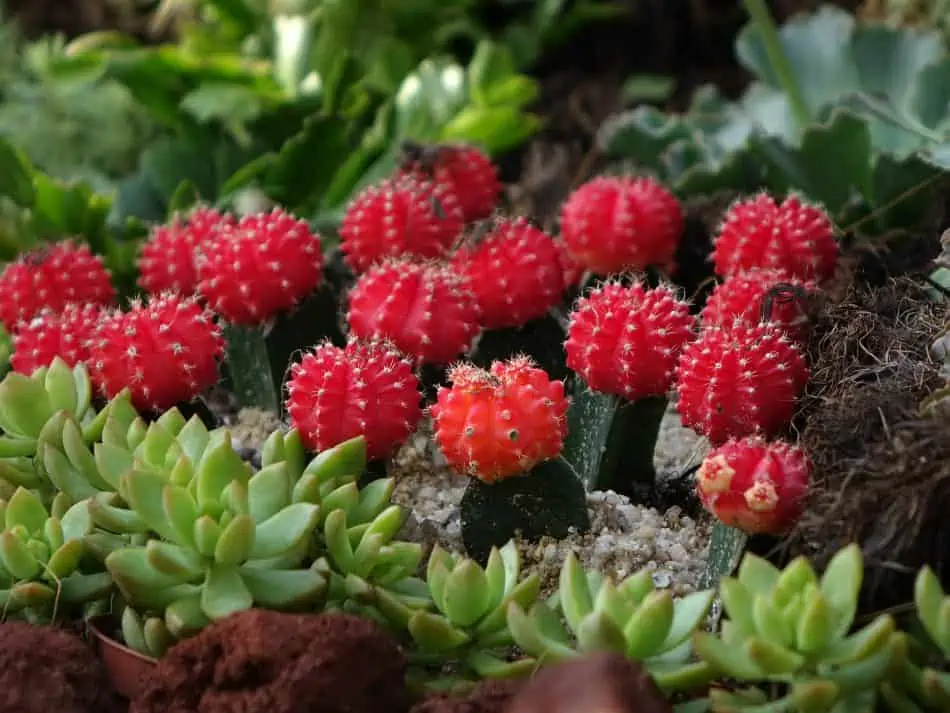
Moon cactus is one of the most recognizable indoor cacti, thanks to its unique shape and a variety of colors that range from yellow to pink, red and orange. These bright neon colors are usually noted in its ball-shaped appearance. They would usually be sitting on top of another green colored typed of cacti.

The moon cactus is a product of human design as the cactus on its own cannot thrive. As such, it needs to be grafted on another green cactus to help offer chlorophyll to make its food. This makes it two plants in one. The beautifully, brightly colored part of the moon cactus cannot produce chlorophyll independently, thus the need to graft it onto another plant.

Moon Cactus is characterized by a ball-shaped appearance and bright colors, including red, pink, yellow, and orange.

Moon cactus is an ideal indoor cacti, especially to the first-timers in horticulture because it’s low on maintenance. They can be used to add some pomp and color to your window seal, living room or porch area. For best results, moon cactus should be positioned in a bright area but away from direct sunlight. In terms of water requirements, moon cactus, just like any other cactus adapted for the deserts do not need much water. Be careful not to overwater as this may lead to root rot and eventually death of the cactus.

When grown indoors, moon cactus can drastically improve the overall look of your home and complement the indoor décor thanks to its variety of colors. You may choose to go for one specific color or use a mix of what is available. What’s more, moon cacti are slow-growing and can grow to a maximum of about six inches. Remember, the health of your moon cactus will highly depend on that of the stock. As such, it is important to choose an ideal stock cactus that will blend well with your moon cactus.

2.     Bunny Ear cactus

The bunny ear cactus is a small desert plant that perfectly fits the indoor environment. It is native to Mexico but can be found in most arid and semi-arid areas. It is one of the most popular indoor plants thanks to its unique appearance with pads that mimic rabbit ears. Growing the bunny ears as an indoor plant is simple; all you have to do is ensure the growing conditions are as close to its natural habitat as possible. So with some dry, sunny and low humidity conditions, you can easily grow the bunny ears as an indoor plant.

Bunny Ear Cactus is a small desert plant native to Mexico that can reach a height of 2 feet when grown indoors.

While in its natural habitat, bunny ears can grow to a height of 3 feet. When grown indoors, however, the cactus grows to a maximum height of 2 feet, making it a perfect indoor plant. What’s more, it is slow-growing, thus giving you enough time to enjoy its trappings and beauty. The bunny ears does not grow spines but instead develop glochids in the form of whitish brown prickles.

For better development, bunny ears should be repotted after every one or two years. This should give you more time to enjoy its interesting features.

3.     Rat Tail Cactus

 The rat tail cactus is an exciting plant native to Central America and southwestern Mexico. It stands out with its long, trailing steps that mimic a rat’s tail, thus its nickname. These stems grow to a maximum of 4 feet. When grown indoors, the rat rail cactus will thrive best when grown in hanging baskets or pots. This enables its trailing stems to get enough space to manifest in its natural growth sequence. 

Rat rain cactus comes in many varieties and will bloom in spring and early summer with violet-red blooms. Depending on the variety, however, it can sometimes produce orange and pink-colored flowers. The flowers are fairly large and tubular but will only last a couple of days. Rat rail cactus can be propagated using its stems that grow rapidly under the right conditions. However, you will need to be careful when handling its stems as it grows spines that can prick your skin easily.

4.     Old Lady Cactus

The Old Lady cactus, otherwise known as Mammallaria Hahniana is a popular, sun-loving powder puff cactus that can be grown indoors. It stands out with its lone spherical stems that can grow to about 4 inches tall and 8 inches wide. When grown indoors, the cactus should be positioned in a sunny area for better development.  If this is not possible, provide some outdoor time during the summer months.

Old Lady Cactus is a small indoor plant that should be placed in a spot with sufficient sunlight.

The best spots to position your Old lady cactus indoors would be by the window as these spots tend to receive enough sun or light for most of the day. However, in cases where you cannot find the best spot with enough light, you may consider using grow lights to help supplement the lighting needs for your cactus.

The Old lady cactus gets its nickname from its white, thin and flexible hairs that may grow as long as 5 centimeters. As the plant reaches maturity, these hairs grow richer and thicker and tend to curl, thus cloaking the plant.

5.     Christmas Cactus

The Christmas cactus (Schlumbergera bridgessii) otherwise known as the Easter or Thanksgiving cactus is an interesting plant that blooms just in time for the holidays, thus its name. Its propagation and care are pretty simple, making it a favorite for holiday gift-giving.

Christmas Cactus is an indoor plant that produces reddish pink flowers when grown away from too much sunlight.

The cactus can be propagated from cuttings and will thrive better under moderate indoor conditions. However, Christmas cactus should be kept away from too much sunlight to avoid its leaves getting burnt. Notably, the Christmas cactus blooms with bright colors, but dramatic temperature swings and lack of enough water may cause flower buds to drop prematurely.

 To help maximize its blooming period, ensure that you maintain optimal temperatures of about 65 degrees and always keep the soil moist during the blooming period. It is also a good idea to apply for high potassium fertilizer once every two weeks and report yearly after every flowering period.

6.     Star Cactus

The Star Cactus (Astrophytum asteria) is one of the few spineless cacti and stands out with its chubby round body that mimics a sand dollar. The fact that it is also easy to grow makes it a perfect candidate for an indoor plant. Its round body may grow to about 6 inches wide. It features some gently ridged sides and covered with some tiny white dots.

The Astrophytum cactus blooms between March and May. Its flowers are bright yellow with orange centers. These would later fade out to give way for some berries or drupes in late spring. When grown indoors, this cactus will not need much attention apart from the occasional watering and access to full sunlight. The star cactus is known to store a lot of water, thanks to its shape. These come in handy in times of drought. However, be careful and avoid over-watering as this may lead to root rot.

The cactus is not poisonous to animals and humans, thus making it just the perfect indoor plant. However, it would be best if you practiced caution when handling it as it can be pretty prickly.

When it comes to keeping your indoors as serene as possible, you do not want to take chances. If you are a cactus enthusiast, you would see the need to go for one of the various small cactus species suitable for indoor environments. While the list is endless, there are common ones that can survive in most environments and are readily available. The best thing about these small cactus species is that they are easy to maintain and will not need much attention apart from the occasional watering and fertilization.

Best Indoor Plants That Don’t Need Sun

Most of us love indoor plants because they make interior spaces feel prettier, greener, and brighter. Indoor plants also purify the air and promote feelings of inspiration and happiness.  They reconnect us with nature and remind us of the need to preserve our environment. However, most plants need water, sunlight, and air to grow. So, what happens if you live in a house that doesn’t receive plenty of sunlight? Does it mean you cannot have indoor plants? The answer is “no.”

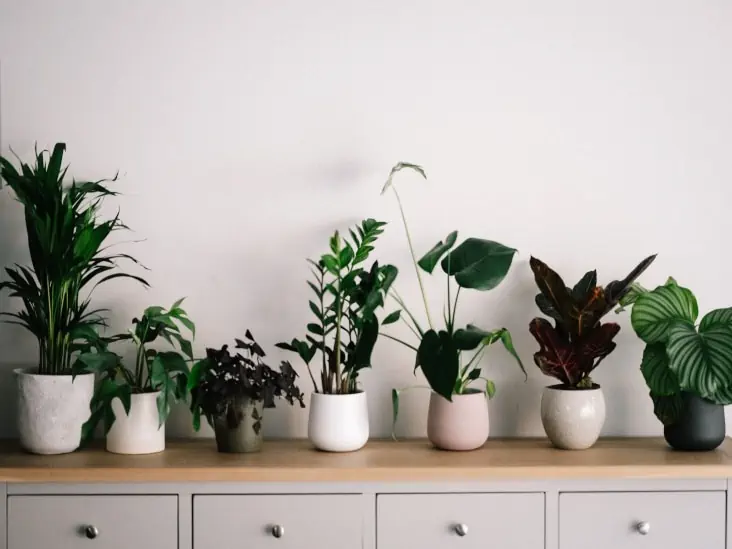
Some indoor plants don’t need direct sunlight to thrive.  There are plenty of low-light plants that you can grow indoors. They include bromeliad, cast iron plant, spider plant, snake plant, parlor palm, dracaena, and many more.  These plants are great for spots in a room that need touches of green but don’t receive plenty of direct sunlight for most indoor plants to survive. These plants can survive in low light conditions quite comfortably while others only need artificial light to thrive.

In this post, we look at some of the most famous low-light indoor plants that don’t need the sun to survive. You can pick any of them when you want to add some green touches to your home, but your indoor spaces don’t receive plenty of sunlight.

So, let us get started.

1. Bromeliad

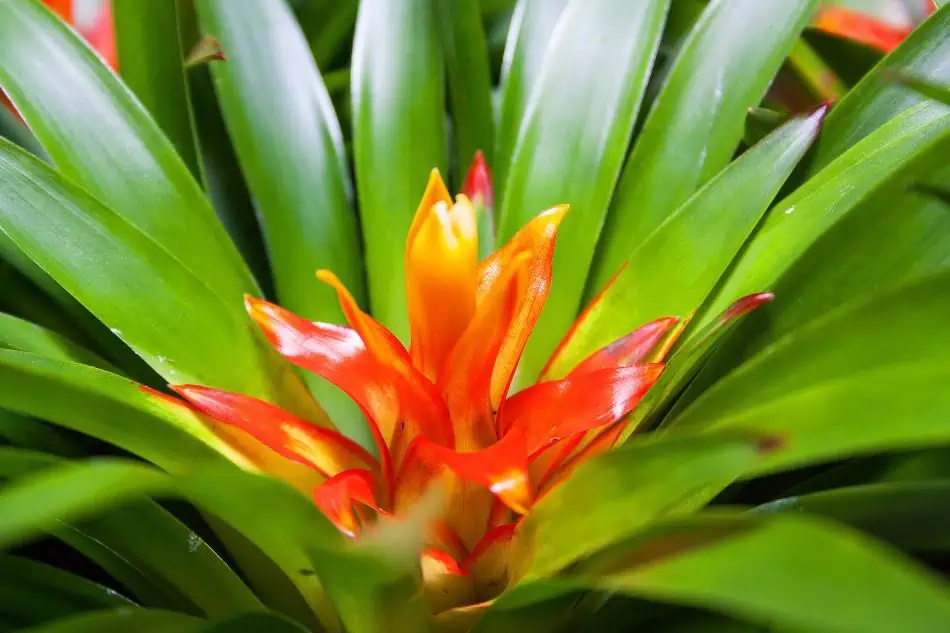
Bromeliad is one of the most common tropical plants that usually come with a vibrant pop of color. Their tropical feel and unique appearance make it an excellent houseplant choice. This plant looks best on tabletops, shelves, or even the floor, depending on the species you choose.

Over the years, bromeliads have adapted to average home conditions attracting much attention from homeowners. Their showy flower displays create a beautiful show. They have strappy leaves with bands, spots, stripes, and other features.

Bromeliads are low-maintenance plants that do not require sunlight, special fertilizer, or regular watering.

Their leaves can be yellow, orange, purple, red, or green.  Bromeliads are more tolerant to careless feeding, fluctuations in temperature, and drought.  In the natural environment, bromeliad plants are usually epiphytic and cling to trees and other structures.

However, they are not parasitic and only use other plants for support and to reach direct sunlight.

When growing bromeliads indoors, you need to keep in mind that they don’t need deep containers or thick potting mix. In most cases, they do well in relatively shallow containers and may still thrive in low potting mix mediums such as sphagnum moss, orchid mix, and other soils.

The plant doesn’t require special fertilizers to thrive. All you have to do is feed it with half-strength fertilizer once every month. For water needs, fill the cup at the base of the leaves, and you are good to go.

Water that may collect in the pot must be emptied every week to eliminate dead insects and debris that stagnant water attracts into the cup.

2. Cast Iron Plant

The cast-iron plant is a relatively hardy plant that can endure unfavorable conditions.  The plant usually thrives in a wide range of conditions, including low light areas. In fact, keeping them in direct sunlight can easily scorch and burn their beautiful leaves. They require very little maintenance to survive and thrive.

However, the cast-iron plant is extremely slow to grow. This makes it a perfect choice for forgetful or busy plant owners who won’t have a lot of time to take care of them. The plant’s rich green leaves provide you with a perfect way of adding a natural touch of greenery to your indoor spaces.

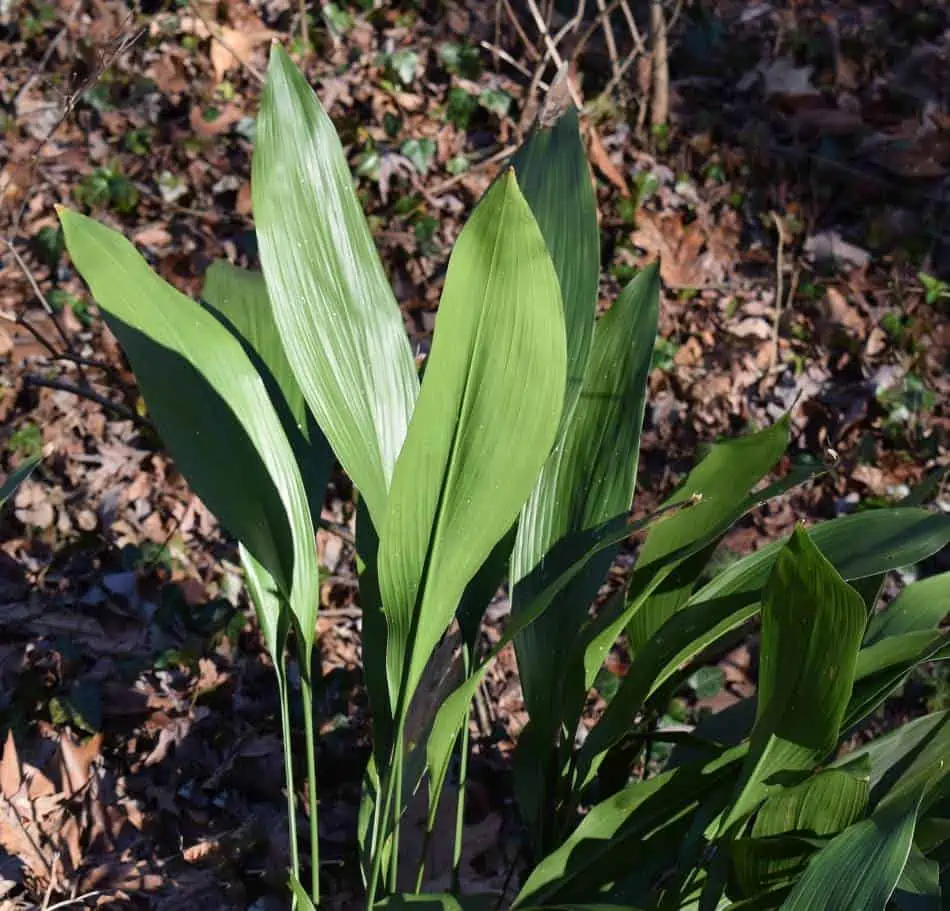
Cast Iron Plant is a low-maintenance plant that thrives in low-light areas and produces purple flowers when grown outdoors.

When grown outdoors, the plant usually produces slightly creamy purple flowers near the base, but the blossoms rarely appear when the plant is grown indoors. The cast-iron plant is always green and can handle deep shade along wall foundations or under deck stairs that receive almost no sunlight.

The plant tends to grow during the hot summers and hibernates during winter. Insects don’t like it, and it is rarely bothered by any diseases.  Its leaves are upright and strappy and grow from an underground rhizome.

The only threat to cast iron plants is too much water and direct sunlight. It dislikes waterlogged potting mix and exposure to direct sunlight.  When exposed to these conditions, the plant’s leaves will start to turn yellow, and then brown, before it eventually dies.

3. Snake Plant

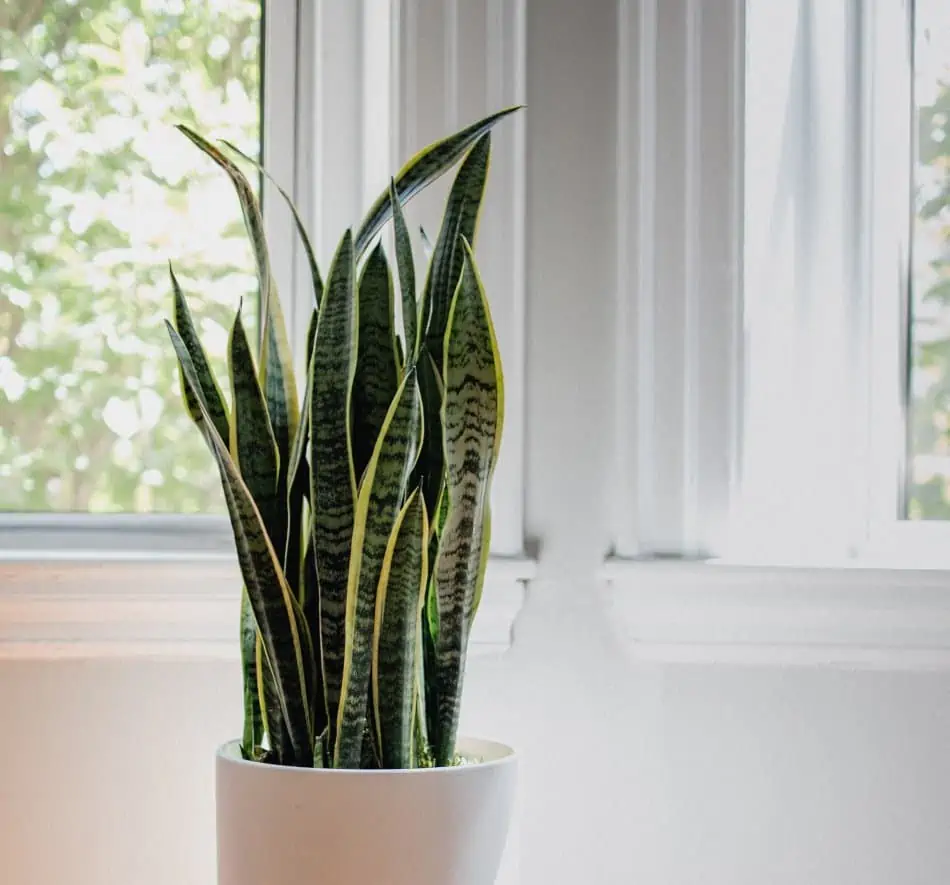
The snake plant is incredibly tolerant to neglect and tends to do well when tucked into one of the corners of your house, far away from the window.  The plant has stiff leaves that range from slightly six inches to over eight feet tall, depending on its variety.

The plant is a member of the Asparagaceae family, a close relative of the asparagus plant.  It is native to China, where it is highly treasured because many people believe that the gods bestow important virtues upon individuals who grow and take care of the plant.

The plant is also among the few plant species chosen by NASA for a scientific study on how houseplants can be used for air purification and how they eliminate the “sick building syndrome.”

If you are looking for a plant for your low-light corners of the room, the Snake Plant might be the ideal option for you.

According to joint research run by the Institute for Environmental Research at Yonsei University in South Korea and the Department of Horticulture at the University of Georgia in the United States, the snake plant has demonstrated a unique ability to remove benzene and formaldehyde from the air.

Growing snake plants from cuttings is relatively easy, but the most crucial thing you need to remember is that the cuttings can easily rot. To avoid rotting, ensure you use free-draining soil.

Once you have propagated your snake successfully, put it in indirect sunlight and avoid overwatering, especially during winter. In fact, it is always good to let the plant dry out between watering. If the plant is in a pot, consider applying a little general-purpose fertilizer.

When potting/repotting the plant, choose a relatively sturdy material because its strong roots can easily break fragile pots.  The snake plant is generally slow-growing and rarely needs repotting, but if you expose it to ample sunlight, it might grow quickly and require dividing or repotting annually.

4. Parlor Palm

If your preference for indoor plants is more Bohemian, the parlor palm is the perfect choice for you. Also known as the “good luck palm,” this plant will add good vibes to your indoor spaces and make you feel better.

The plant is a relatively slow grower that can only reach three feet high or six feet high if you dedicate yourself to repeated repotting.

Like most tropical plants, the parlor palm thrives in slightly warm and humid spots. Therefore, be sure to mist them or position them strategically on a tray filled with moist pebbles.

The plant was first discovered in Central America and transferred to the United States, where it immediately became a popular indoor plant.

Parlor Palm grows healthy in low-light and low-temperature environments while adding good vibes to your house.

Besides being adapted to relatively low light, it can also handle lower temperatures quite well and grow into beautiful clumps with light-textured leaves cloaking its thin trunks.

Since it is tolerant to low light and quite sensitive to excess water, it is the perfect choice for gardeners who are forgetful or too busy to take care of their indoor houseplants regularly.

However, the parlor palm is highly vulnerable to pests such as mealybugs, whitefly, and aphids. It is always crucial to inspect the plant regularly to identify pest infestation signs as early as possible and treat it with the least toxic option.

5. Dracaena

The dracaena is one of the most popular houseplants that are easy to care for in your home.  The plant comes in a wide range of varieties and looks excellent on your tabletops, shelves, and floor décor. The relatively large varieties, such as the dracaena massangeana, have a tree-like appearance and work especially well when used as floor décor.

It thrives in bright, indirect sunlight but can still survive in medium and low light if need be. The plant has excellent air purification properties and can filter out some of the toxic elements from the air.

The stems of a dracaena plant are known as canes and can be pruned at any point to keep its size under control. The plant can grow up to ten feet high, so pruning is essential. When you prune the plant, new leaves will grow below the cut after a few days.

Care for this plant involves keeping the soil moist but not soggy. Yellowing or drooping leaves indicate overwatering or poor drainage. Appropriate fertilization is also part of the plant care routine.

Typically, dracaena requires feeding every two weeks in spring and summer. However, you need to reduce the fertilization rate to once a month during fall and stop feeding the plant completely during winter.

6. Chinese Evergreen Plants

The Chinese Evergreen plants are relatively easy to care for and are fairly resistant to pests or diseases. They usually have leathery, dark green leaves with white and gray veins like a jigsaw puzzle on the foliage.

The plant does well in low to medium light but prefers bright indirect sunlight during summer. During winter, you can keep it away from direct sun. In fact, artificial lights are enough to keep it healthy and happy.

Chinese Evergreen plants are incredibly hardy plants, making them ideal for beginners. They require consistent watering and can tolerate short periods of drought.

During the growing season (spring to summer), water your plant weekly, allowing the soil to dry out in between watering sessions.

Overall, the Chinese Evergreen makes a great low-light option for anyone looking to add plants with beautiful color and texture to their home.

7. Peace Lily

Peace Lilies are among the most beautiful and easiest to care for house plants. They are tough, low-maintenance, and love shade. Peace lilies thrive in indirect or filtered light and don’t need direct sunlight to survive.

These plants require weekly watering during the summer when they are actively growing. During winter months, you can water them every two or three weeks. Overwatering can cause root rot, so ensure the soil is completely dry between watering sessions.

Peace lilies are incredibly tolerant of low-light conditions and will bloom flowers in darker areas around your house.

Their white blooms help to purify the air by reducing harmful toxins like formaldehyde, benzene, and carbon monoxide.

Peace lilies are also very resistant to pests and diseases and can be grown in average indoor temperatures of 65-75°F (18-24°C).

They can sometimes suffer from overwatering or too much fertilizer, but they are otherwise hardy plants that require minimal effort to keep them happy.

8. Spider Plants

Spider plants usually grow in relatively cold and wet conditions and are incredibly tolerant of low light or total darkness.

These plants have a wispy appearance due to the thin green leaves that stretch out from their central stem, resembling spiders’ legs.

Spider plants enjoy regular watering in slightly acidic soil (between 6.5-7.0). Your spider plant will generally be happy if you allow soil to dry out between watering sessions.

These plants prefer bright indirect light and temperatures between 65-75°F (18-24°C). If you expose them to direct sunlight, they might suffer leaf damage.

The best way to prevent this is by shading them with sheer curtains or by placing them in the corner of a room, away from direct sunlight.

Spider plants often sprout small, white flowers during warm seasons like spring and summer. These flowers eventually turn into tiny spider plantlets that you can pluck from the mother plant and propagate independently.

These plants are also incredibly effective natural air purifiers, filtering the air of toxins like formaldehyde, benzene, and carbon monoxide.

Summary

Now that you know some of the houseplants that don’t need direct sunlight to survive, you should go out there and acquire one that suits you. Just make sure you take good care of the plant, and you will end up adding the right touches of green to your indoor spaces.

If you are having trouble deciding on the right houseplant, seek expert advice from your local plant nursery. We hope you enjoyed reading this post and you will be back for more.  Feel free to share this post with your friends, leave a comment and subscribe to our email list for the latest gardening tips and tricks.

Here are 10 amazing desert plants with flowers

When you think about the desert, what comes to mind? Most probably, an endless mass of sandy soil and rocks. While it is true that this is the case with most deserts, it does not mean that nothing good comes out of the same. The desert is home to some of the most colorful plants you will ever encounter.  These drought-resistant plants help add pomp and color to the otherwise dull desert terrain. These may range from trees to shrubs, cacti, succulents and wildflowers. These flowering desert plants come in a variety of sizes, shapes and colors.

So, what are some of the most common types of flowering desert plants? Truth, is most desert plants have flowers, but some have more distinctive, brighter flowers that the rest. Some of the most common flowering desert plants include the following:

  1. Arizona Poppy
  2. Desert Marigold
  3. Tacoma stans
  4. Prickly pear
  5. Ice plant
  6. Muhly Grass
  7. Lantana
  8. Desert Lily
  9. Mojave Aster
  10. Bottlebrush

This article will take a look at each of these flowering desert plants in detail. It will look at their characteristics, type and color of flowers, the flowering seasons, and the importance of the same.

1. Arizona Poppy

The Arizona Poppy (Kallistroema Grandiflora) is a flowering herb native to Arizona and found in Northern Mexico and California. It stands out with its herbaceous stems that rise from the stout and the numerous branching.

This flowering desert plant features abundant flowers that measure about one inch. The flowers are five-petaled and rise above the plant. Usually, the flowers are bright orange with a noticeable red basal spot. Its petals feature a number of nectar guides and are distinctively ultraviolet reflective.

Arizona Poppy is a desert herb with yellow to bright orange flowers.

The flowers from the Arizona Poppy remain open for one day, during which cross-fertilizing takes place. As the flower closes, however, this opens ways for self-fertilizing. Its blooms may lack any fragrance, but it still attracts over 46 species of insects, including wasps, bees, butterflies and flies.

2. Desert Marigold

The desert marigold, also commonly known as ‘paper daisy,’ is an outstanding desert plant that can grow to about one foot in height. It stands out with its flowers that produce many seeds. The plant is usually short-lived and would only live through one season and germinate the following year through its seeds. Blooms from that desert marigold start during spring and may last through summer.

The bright yellow flowers form clusters about two inches in diameter. Its leaves are green coupled with some silver-white hairs that grow very low on its thick stems. When planning to grow these in your garden, it helps to note that they are poisonous to sheep and goats but have not been proven to harm larger animals like horses and cattle.

3. Tacoma stans

The Tacoma stans, also commonly referred to as yellow bells, is a flowering desert plant native to the Sanora desert. It thrives best in sunny conditions or filtered shade. The plant produces bright yellow flowers that assume the shape of a bell, thus its name. Yellow bells bloom at the end of spring and would last through the start of fall.

The Yellow Bells is a favorite for bees and hummingbirds, thanks to its tubular, yellow blooms. It also stands out with its vibrant leaves that mimic feathers. These features make it a perfect choice for a butterfly garden. When not blooming, the plant still adds some ambiance to your garden as it turns into an appealing backdrop for other plants in the garden.

4. Prickly Pear

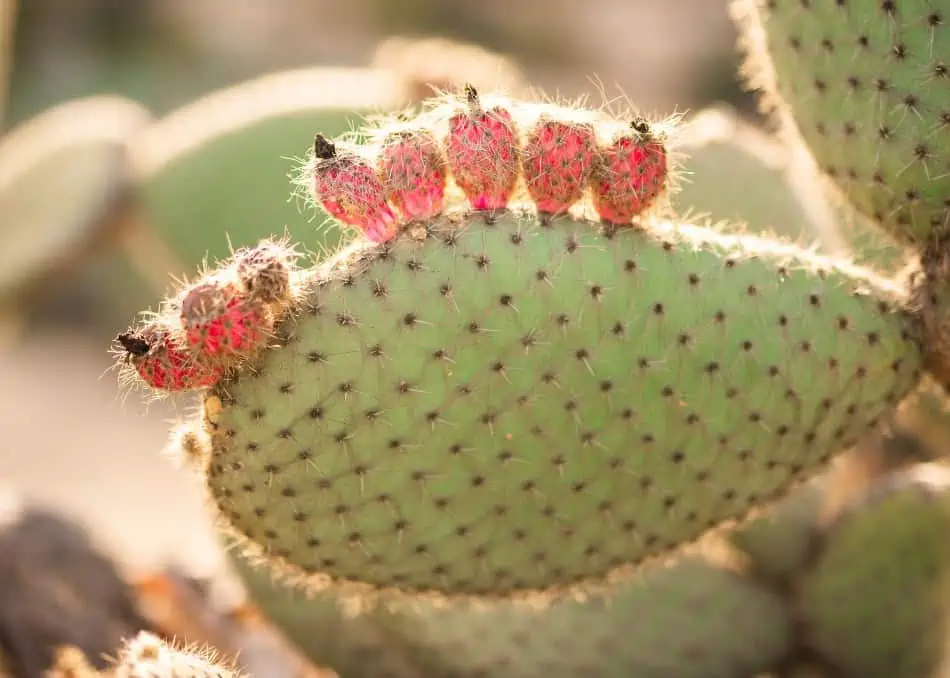
Prickly pear is a type of flowering cactus that blooms bright flowers during the spring season. These would eventually lead to some edible fruits on maturity. Also known as Opuntia, this desert plant stands out with its paddle-shaped stems. It is one of the most adaptable blooming cacti that you can include in your desert garden.

The Prickly Pear cactus features red, pink, or purple flowers that lead to the growth of edible fruits.

The prickly pear is rarely noticed until it starts to bloom. Its flowers range from white to red, to pink and purple. Apart from its fruits, the pads from prickly pear are also edible and can be harvested at any time of the year. Both the pads and fruits can be eaten raw or cooked.

5. Ice plant

The Ice Plant is an easily recognizable flowering desert plant that can help add color to your desert garden or landscape. This colorful succulent features bright flowers that come in a variety of colors ranging from pink to yellow, red and purple. This is an excellent recipe to attract various species of insects like bees, butterflies and even birds.

The Ice Plant’s daisy-like flowers help add some pomp to your desert garden and act as a perennial ground cover even when not in bloom. It acquires its name from the fact that its leaves and flowers tend to shimmer as though they have been covered in some ice crystals. The plant grows to about one meter wide and 6 inches tall.

6. Muhly Grass

Muhly grass (Muhlenbergia) is an ornamental grass that blooms into a beautiful white or pink spectacle. It is commonly found throughout Canada, Mexico, South and Central America. Usually, individual species of the plant would assume a capillary-like branching system, thus forming some form of shrubs. Its green leaves would cover the understory while the pink flowers would outgrow them.

Muhly Grass consists of green leaves surrounded by white to pinkish flowers.

This flowering desert grass may grow in clumps but does not spread through underground or above-ground stems. Being a warm-season plant, Muhly Grass thrives during the summer, and by autumn, it would be in full bloom.  This makes it an excellent garden plant as it also attracts notable insects like the ladybird and butterflies.

7. Lantana

Lantana is a genus that involves over 100 flowering plants.  These are native to tropical regions in Africa, central and south America. Lantana grows to form clusters of rounded flowers, usually very bright in color.  Colors from its flowers vary from species to species. These may range from orange to red, yellow, white, purple, and much more. In fact, some species may depict more than one color in one cluster. Lantana’s leaves and flowers have an aromatic fragrance that attracts insects and birds, thus helping in desert pollination.  Its leaves are also used to make perfumes, thanks to its fragrance. However, the plant is toxic when raw and should be kept out of reach of children when grown in the garden or indoors.

Lantana blooms almost all year round in tropical climates. In the United States, this flowering can be seen from spring to fall.  Notably, the flowers’ colors tend to change through the season. This may see a yellow flower at the start of the season turn to reddish-brown or orange by the end of the season.

8. Mojave Aster

The Mojave aster is a delightful desert plant, also known as the Mojave woody aster. It is a perennial plant that can grow up to 30 inches high. As the name suggests, the plant is native to the Mojave desert. When it blooms, the plant produces large daisy-like flowers. Mojave aster stands out with its petals that resemble lavender and features white rays that come right from its yellow center. Its overall flowerhead grows to about 2 inches in diameter. Normally, the Mojave aster blooms in spring, but it can sometimes flower in the fall too. During this time, each plant may bear up to 20 flowers.

Apart from the Mojave desert, this desert flowering plant also grows in the Great Basin Desert and the Sonoran Desert. Usually, the plant grows alongside other notable desert plants like the creosote bushes, Joshua tree, and saltbush shrubs.

9. Desert Lily

Lilies are hugely popular for their colorful flowers. This is not different for the desert lily. Well, it may not be a true lily, but its flowers resemble that of a lily, thus the name. When the desert lily blooms, it produces some large white or cream-colored, funnel-shaped flowers that mimic a true lily.

Desert Lily is similar to a regular Lily and produce funnel-shaped white to yellowish flowers.

The blooming happens between March and May, with flowers growing up to 2 inches wide.  The flower features some six petal-like segments, each bearing some silver-green band on the back. Usually, this bluish-gray plant would grow to a height of about 6 feet.

10. Bottlebrush

Bottlebrush is a flowering desert plant that grows as a shrub. They are native to Australia and would produce colorful red flowers. These would contrast with its light green foliage, making it an ideal candidate for a desert garden or landscape. The plant gets its name from its flowers that mimic a bottle brush.

Usually, the bottle brush blooms during the summer months.  While a majority produces red flowers, some varieties have crimson and even light yellow flowers. When grown at home, the plant needs regular pruning and removal of suckers.

Flowering desert plants are delightful additions to the desert environment. This makes them the perfect options when looking to design a desert landscape or garden. These would also come in handy when looking to create a butterfly garden since most of these plants attract a large variety of insects and birds.