How To Identify Different Kinds Of Cactus Plants

The world is a jungle of cactus plants, their presence occupying almost every other continent. The Cactaceae family is most endemic in South America, Africa, and the drier parts of the Mediterranean. The cactus is a family name, which encompasses a plethora of about 2000 cacti species and 87 genera. When you next take a look at cacti species, you get to realize that they come in different forms, shapes, and sizes.

So, how can you tell apart the different species of cacti? This all boils down to the physical and internal characteristics of the the plant. To tackle this identification problem, behold is a list of traits to pay attention to while trying to make out the differences between cacti species;

  • Flowering style
  • Seeds
  • Fruits
  • Size
  • Shape
  • Spines
  • Stems
  • Geographical location

Defining the morphological differences between the different cactus species is a big deal for cactus enthusiasts and botanists. This guide has been coined to help ease your troubles by looking into the factors to look out for when differentiating the various cactus types. Whether this is for your self-gratification or vocational purposes, telling apart this deceptive species requires keen observation and understanding of botany and is definitely worth getting a medal for.

Where is the difference?

To the inexperienced, beginning to comprehend these differences can seem tedious and nearly impossible. These taxonomic differences arise from the species’ different morphological presentations. These differences inspire a conclusive comprehensive narrative on how to identify these desert species. Having a panoramic glance sweeping across the desert, you are bound to count cacti in their numbers at any given time. Cacti bear striking semblance with each other, yet they are different- probably not even in the same species. Cacti are the desert hardcores that thrive on the bare minimum. These plants are made to survive the hot inclement weather. They are leafless, which helps to keep transpiration rates at a minimum. The leaves are in fact, modified into tufts of thorn bristles and spikes. These survive as a protective mechanism to shoo away herbivores and destructive humans. Since water is such a rarity in the desert, cacti have fleshy succulent barks that act as their water storage reservoirs.

To propagate the progeny, cacti produce flashy, brightly colored flowers that attract desert pollinators. Some species of cacti are a great breed with their seeds, bearing seeds in their thousands inside the fruits. These xerophytes are shallow-rooted with tap roots that rapidly absorb the moisture before it leaks deeper into the grounds and beat evaporation. Bearing these phylogenetic characteristics in mind, differentiating cacti from other succulents is a mere stroll in the park. The arduous task is to help differentiate the species within the same family.

1.         Check out the sizes

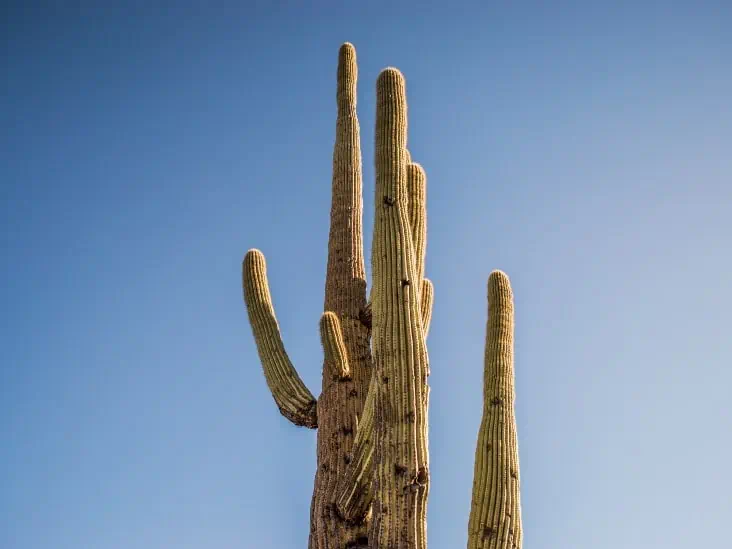
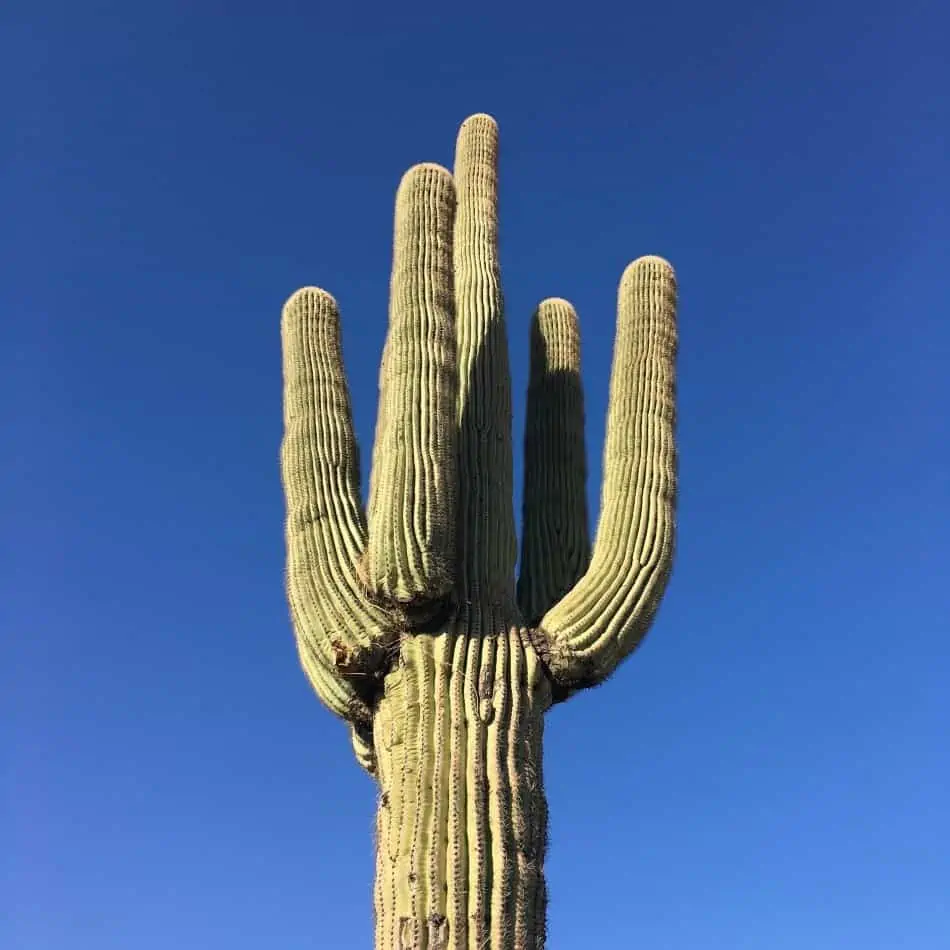
Size is an important pointer that can help to distinguish these ridiculously similar plants easily. Some are tall plants, while others remain short, spiny but aggressive on the ground. The majority of the species are shrubs, growing to about 2 m in height. Blossfeldia species, for instance  are small in stature with a maximum circumference of 12 mm. The family diversity is so imminent, keeping in mind that the tree-like 10 m tall Browningia species falls in the same group as the dwarfyBlossfeldia. The mighty saguaro tree Carnegiea cacti, the wild west’s epitome, on the other hand, towers the desert skies with gigantic heights (50 ft tall) and offers reliable shades to desert animals.

 The fact that there are tiny species doesn’t mean that their ability to survive the wild is diminished. These short, overlooked species tend to have profusely prominent features. For instance, the diminished Cleistocactus bears numerous spines and brightly colored flowers, fully optimizing protection and reproduction.

2.         You can never go wrong with the shapes

Cacti are one of the most adaptable species considering the bizarre shapes they grow in, some that you wouldn’t imagine on living plants! Their shape diversity can help illuminate the cloud of ignorance surrounding the cacti family’s deceptive and uncanny similarities.

The peculiarity in nature never ceases, even in a desert scenario. Some species undergo a spectacular metamorphosis, one that includes a change in shape as the plant matures. For example, the Geohintonia species is globular when younger, but as it progresses into older age, the plant becomes columnar.
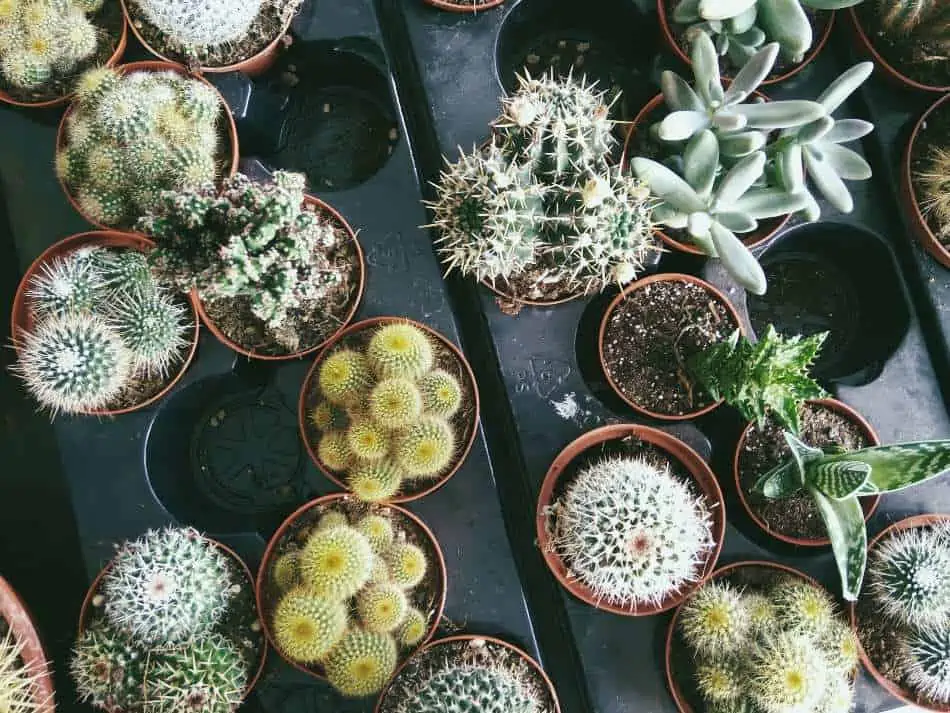
Cactus plants feature different shapes, including cylindrical, columnar, spherical, star-shaped, and others.

Most cacti species are either fleshly cylindrical trunks or stubby globular plants, or even star-shaped. While these are the most common shapes associated with cactus, a unique member of the Hylocereus species grows in a winding manner, climbing their way up tree trunks. They are epiphytes growing in moderately fair weather conditions. An even more baffling genus is the flat-like mat growing Maihuenia cactus. Its stem segments form cushions on the ground.

Then, there is the highly romanticized barrel-shaped Ferocactus species assumed to offer quick relief for a parched desert wanderer because of the barrel-shaped tank we assume has water. The Cephalocereus species, on the other hand, are large and columnar.

The other distinctive feature is its accordion-like ribbed trunk. While having these ribs is not only aesthetically pleasing, they act as water storage pockets for these plants. However, not all cacti species feature ribbed trunks. A famous player on matters ribbed trunks is the Cereus species, which stands out with its 5 to 10 properly defined ribs.

3.         What about the Leaves?

Leaves are a rarity amongst the cacti family. Seeing leaves on a cactus can help rule out almost 90% of the entire cacti family, as it is a rarely observed phenomenon. Even in cases where leaves are present, they are minor and diminished.
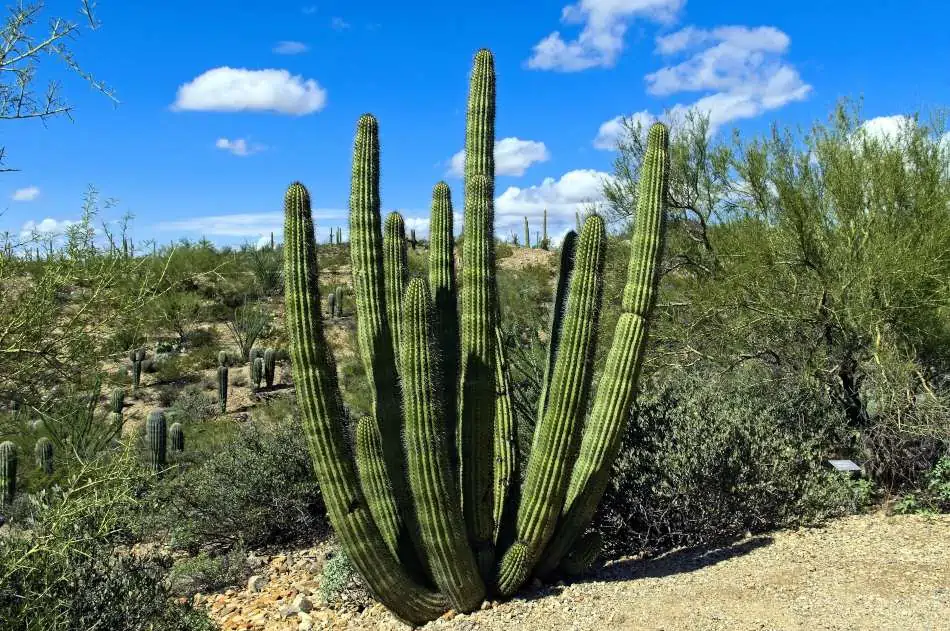
Since the majority of cacti do not feature leaves, you can easily determine the species of a plant if observing the leaves.

In fact, most of these leaves can only be spotted when there is a new growth emerging. You can easily differentiate the different cacti species by its ability to grow leaves, either at the seedking stage or when growing new sections. Still, some do not grow any irrespective of its growth stage.

4.         A look at the spines

The vicious spines protruding from their fleshy stems and even fruits is a typical characteristic of most cacti plants. While most cacti species bear this defining characteristic, others like the Ariocarpus do not spot any. If you can spot spines on them, the chances are that you have narrowed down your categorization to a given cacti.

 The spines can be thin or stout, scarce or dense, and these depend on the specific plant morphology. Some cactus types feature crooked hooks while others are straight as we know them. They can either be hair-like, pectinate, or bristle-like depending on the type of cactus in question.  Some cacti types feature spines that appear shiny owing to the waxy sheaths that coat their spine frames. Still others are rough and dry. While spines in some species grow anywhere on the plant without any precise symmetry, some more organized species sprout spines only on the ribs.
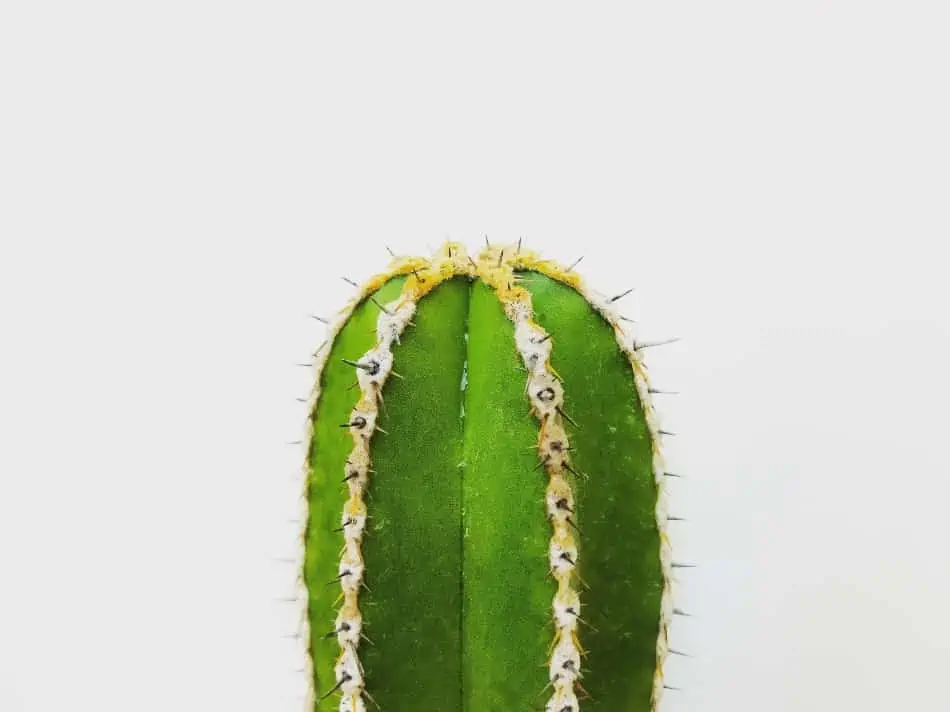
Observe cacti spines to determine the species of your plant.

Areoles are found in highly specialized branches or shoots; they are points from which spines arise on the stem. Some cactus types like Frailea features spines that are so weak and frail that they possess little to no threat against your fingertips.

A number of cactus species are blessed enough to bear colored spines. Some can even assume alternating patterns. There is also a unique tendency for younger cacti to grow numerous spines that slowly reduce in number as the plant ages.

5.         Stems can give a hint

Want to tell two cacti apart? It is probably all in the stem. The stems can either be smooth, littered with spines, ribbed, or at least have areoles emerging from them. Some areoles can be closely spaced, while others are neatly packed against each other. Areoles are the emergence points for spines. This presentation gives the impression that a plant has a jointed stem or not.

Take a look at the Tubercles when trying to tell apart some cactus species. These are warty growths that sprout on any outer part of a plant. The rounded projections arise from the cactus stem. While round tubercles are a more common feature in most cacti, triangular tubercles exist on some members of the Leuchtenbergia species.

6.         The Flowers can tell a story

Color

One of its most peculiar features about cactis  is how they flower. They bear slight semblance to angiosperms, blooming out brightly colored large flowers while others have pale colors.
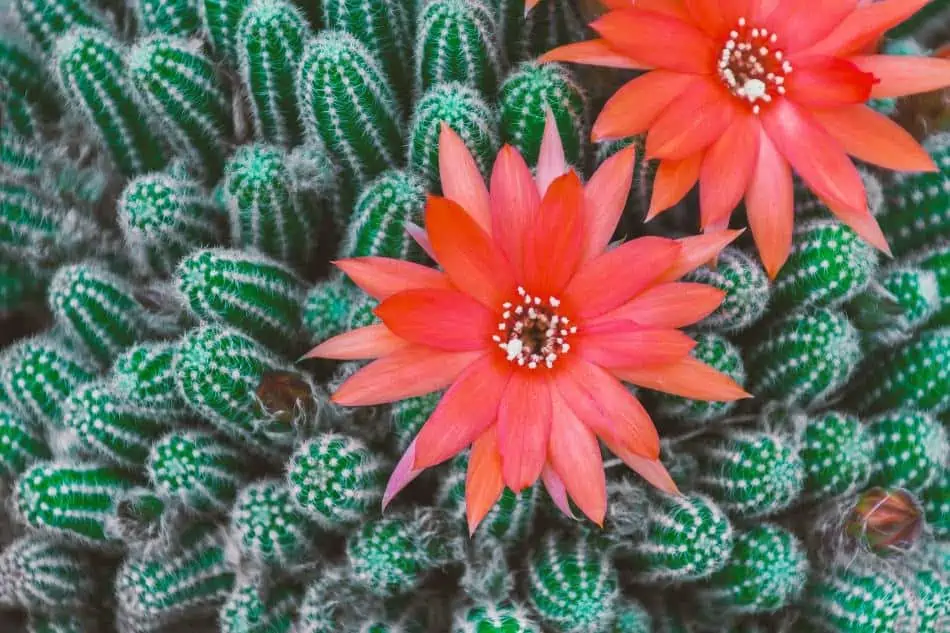
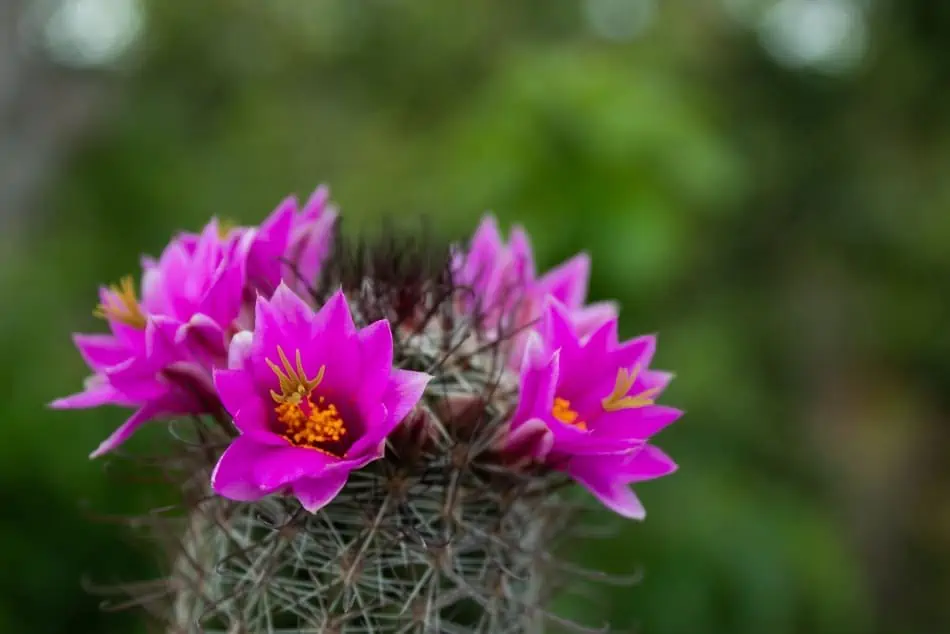
Cactus species produce flowers of different colors, allowing you to easily determine the type of your plant.

In some cacti species, flowers may fail to emerge and are hereby termed as cleistogamous. Such rare cacti species rely on self-pollination. Cacti flowers come in a variety of colors depending on the cacti type. They can range from deep hues of blue to an electric pink array of color. It is also worth noting that some cacti  flowers are duotone;  they feature two colors- one color towards the outer parts of the flower and the other towards the center.

Blooming habit

You can easily tell cacti types apart based on their blooming habits, timings and seasons. An even more spectacular trait is the nocturnal blooming characteristic associated with some of these desert cacti flowers. Most of them are night bloomers, but should they bloom in the heat of the day, they will open for only a short period. The flowers bloom at night when the transpiration rates are subdued, and daytime heat that can easily scorch these flowers to their death has subsided.

The other feature takes into consideration the aspect of time and season. Cacti have different flowering times depending on whether the plant is seasonal, annual, biannual, or perennial. In hindsight, one can differentiate a flower based on the time they blossom. They may also blossom for some given time during the day till they wither and fall off.

Position of the flower on the plant

You can tell a cactus’ species by the position of the flowers. Some tend to bloom flowers on the plant’s apex, while others have their flowers growing on the barks or stems. Other flowers like those from the Chin cactus are naked because they grow without any bristles, wool, or spines.

Fragrance and floral parts

 Some cacti flowers happen to be pleasantly fragrant while others produce flowers with pungent or strong smell. Some cacti flowers can be delicate and frail while some species boast large conspicuous flowers. The flower tubes may be either hairy or naked and least expected spiny, each unique variation giving the species a competitive edge for survival in the desert.

Flower shape

Depending on the species, the flowers can assume different shapes. These can range from cup-shaped to tube-shaped, star-shaped and funnel-shaped flowers.

7.         They just appear different from most of the plants you’ve seen before

Here is a bonus point with a lot of truth in it.This is not to say that any unfamiliar spiny plant growing along the road is cactus, but have you seen the Ariocarpus species? To a majority of people, these species will appear surreal and alien. These geophytes resemble the stones on the ground as if to mimic an actual land feature. They are quite a marvel to behold. In extreme conditions, these plants appear almost dead; they grow laterally on the ground and are firmly rooted on the ground with the help of the long tap roots that they possess.

8.         Take a look at their fruits

Color

Different types of desert cacti have fruits that are a product of successful fertilization amid climatic adversities. Each species has its own color pigmentation on the fruit and this helps to tell them apart. While most cacti fruits can be green when raw, they eventually turn into a myriad of colors when ripe and this may range from yellow to black and even red. The fruits are hardly an average presentation of the usual.
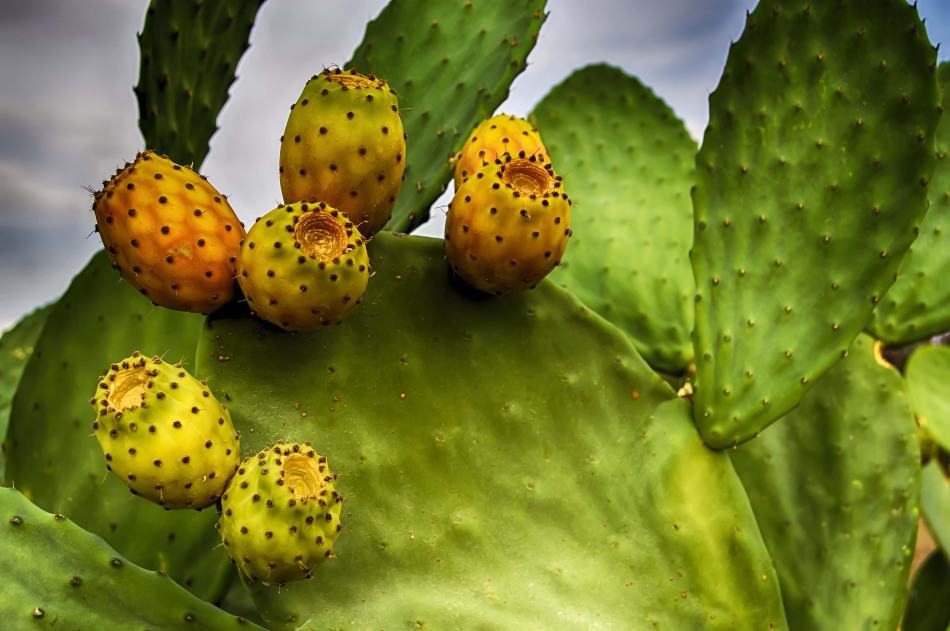
Fruit-bearing cactus species can be recognized by observing the color of the fruit.

 Shape

While some may have the familiar rounded shape, some species make their fruits a little more dramatic; for instance, the Epithelantha fruits are long erect tubes with conspicuous bright red color that you cannot to conceal. Some fruits may resemble pineapples. This happens when the plant species retains the dried parts of the flower on the apex of the elongated fruit. Then there exist other unique fruit manifestations that are club-shaped and have bracts.

Fruit skin texture

The fruits can either be smooth-skinned or have bristles pointing out from them. These glochids prevent the fruits from being easily foraged by animals and other predators. Being hard enough to keep the progeny alive through reproduction makes total sense to have some of these cacti species protect their fruits, conceived in these harsh weather.

The fruit’s insides

The physical appearance of cactus fruits can be deceiving, take a look inside. This is when you can easily differentiate one cactus fruit from another. When observing the insides, they may appear to be fleshy and juicy, while others can be dry. For species such as Harrisia, fruits can be a vital identification factor. Some species such as the Dragon fruit of the Hylocereus species bear big exotic fruits, while other species feature relatively small fruits. The truth is that much as the fruit contents may appear appealing and palatable, it is safe not to judge by the appearances.

The inside of a cactus fruit tells you more about the species of your plant.

9.         What’s to say about cactus seeds?

It may seem like a rather far-fetched way to bog down the differences, but it still is a significant one nonetheless. Cactus seeds can have smooth, shiny exterior or appear rough and hairy depending on the cactus type.  These seeds can either be foveolate or reticulate. As most cacti bear fruit berries, this means that fruit, if ripped open, contains countless seeds which can either appear black or brown.

10.      Are they solitary, or do they grow in a group?

Cactus growth patterns can help offer some insight into what kind of cactus species they are. Some, like the giant Saguaro cactus grow in solitude as if in isolation while others like members of the Echinocereus species tend to have their stems growing out in piles of hundreds. They grow out as a closely-knit cluster. 

One of the reasons that might explain this distribution pattern is a species’ pollination technique or characteristics. If the seeds are heavy, they will most likely drop off closest from the source, and if they are numerous and lucky enough to germinate, so will see the tufty shrub emerge.

11.      Geographical location

Sometimes the answer is right there with us. The native grounds on which these cacti grow can aid significantly in their identification. As much as these are survivors of the plant kingdom thriving in extreme conditions, they all have their geographical preferences. While some do well in the arid deserts, others thrive in cold alpine high altitude regions, and these differences are remarkable for identification. Others grow on trees that are found in wet and humid areas as epiphytes.

Geographical location can help you determine the type of a cactus, since they are native to certain areas and climates.

The current literature and studies have helped create this intensive simplistic list of characteristics that can help you tick the right boxes in your quest to identify the various cactus species. Cacti family is an excellent source of fascination and bewilderment for scientists, botanists and hobbyists alike. An even easier and practical way of reinforcing this knowledge is by making comparative characteristic analysis using familiar species. Working with what you know is a great way to learn even more. These incredible insights are bound to turn you into a great botanist, especially on matters cacti.

Succulents Care 15 Essential Tips For Beginners

Succulents are hardy houseplants that don’t require much water or fertilizer. As such, they are an excellent choice for gardeners of all skill levels. If you are a beginner on the succulent plant scene, you may not be aware of their care requirements and other ways to make the process simpler.

You are encouraged to continue below to learn more about how to plant succulents and how to ensure that they can stay happy and healthy.

1. Succulents Are Plants with Water-Storing Organs, Priming Them for Arid Climates

The term succulent refers to any plant that contains a thick water-storing organ that itself is called a succulent. These plants are capable of storing water in their leaves, stems, and roots. For this reason, they are primed for arid climates or for homes where they won’t have to receive constant watering.

Succulents can store enough water to grow perfectly healthy in arid climates.

They are capable of surviving in locations where other plants will croak. They won’t mind being grown in poor soil, on slopes, or in-between paving stones. Despite their reputation for being nearly indestructible, they do come with some care requirements, as outlined in sections below.

2. Succulents Need Plenty of Sunlight

Succulents need plenty of sunlight to stay healthy, as you would anticipate being a need for a plant typically grown in desert regions. Adequate sunlight is an absolute necessity, perhaps even more critical to health than water and fertilizer.

Succulents require plenty of sunlight but avoid placing them under direct sunlight.

While access to sunlight is critical, it is also possible to have too much of a good thing. Succulents should be placed in slightly shaded locations during the day so that the leaves do not wilt under intense sunlight.

3. Succulents Have a Wide Temperature Tolerance

Some Succulents do tolerate low temperatures. For example, Sempervivum is capable of tolerating temperatures as low as 30 degrees F. The wide temperature tolerance range does make sense since deserts do experience dramatic temperature swings.

Ideal Growing Temperature Range Is 70-80 Degrees

For maximum growth, you will want to ensure that succulents are where they experience daytime temperatures between 70-80 degrees F during the daytime and 50-55 degrees F during the nighttime. Occasional extreme temperature swings won’t generally kill them, but they will need to be taken indoors for wintering in locations that experience hard winters.

Allow Succulents a Chance to Be Acclimated To Temperature Swings

You can always transfer succulents from the interior of the house to an outdoor space and vice versa, but be sure to allow the plants a chance to acclimate to the new climate by slowly introducing them to their new home: 

  • Start your succulents in an area with a temperature similar to what they have experienced outside, such as a windowsill that gets cool at night.
  • When bringing indoor plants outdoors, place them in a location that receives at least partial shade.
  • Newly planted succulents need to be kept in the shade longer than plants that have established root systems.
  • Add an hour or two of sunlight to the plant’s routine every day, focusing on the less-intense morning sunlight.

4. Use Containers with Drainage Holes at the Bottom

It’s easy to overwhelm succulents with too much water. When you plant in pots, you need to ensure proper drainage to prevent root decay and rotting. Fungi and bacteria also thrive in these types of environments. To prevent these familiar sources of plant damage: look for pots and containers with drainage holes at the bottom.

To get rid of excess water, succulents should always be planted in containers with a drainage hole.

If your gardening pots have no drainage holes, place coarse gravel at the bottom of the pot. This will help drainage to some extent. An example of coarse gravel would be these Outy Rocks.

5. Avoid Planting Succulents in Pots That Are Too Large

You’ll want to avoid planting succulents in pots that are excessively large for the species. This is because the plant can quickly die in an oversized container due to the root structure that the plant will grow. Every time you water the plant, the roots won’t be able to draw out all the moisture. Lingering water in the soil leads to root rot.

It is better to plant succulents in relatively small containers instead of those that are too large for them.

Don’t worry too much about giving the roots of succulents enough room for growth. These plants can comfortably adjust to the confines of the container that you decide to plant them in.

What Container Size Should You Plant Succulents In?

Houseplant containers should be matched appropriately to the size and growth requirements of the specific plant. Succulents do not often need to be transferred to larger containers: 

  • Most succulents reach maturity at a small size.
  • Shallow pots are better than deep ones, as they will be able to drain faster.
  • Plastic and ceramic pots do not need to be watered as frequently as clay pots.
  • Succulents only need to be transferred to larger pots every 1-3 years.

Be Careful To Protect the Roots When Transferring Succulents to New Pots/Containers

Although they are tough, succulents are susceptible to damage during the replanting process. The roots are easy to break, requiring gentle handling when they are spread into the new dirt. Also, most succulents have shallow root systems that shouldn’t be planted too deep. 

Be careful when transferring your succulent to a new container to ensure that you do not damage the roots.

Allow repotted plants a chance to adjust to the new container by leaving them out of direct sunlight for the first week. Also, avoid watering the new plants for 1-2 weeks. Houseplants typically do fine with diluted fertilizer. Adding a strong fertilizer to a repotted houseplant can promote fast growth that may lead to the plant drooping over.

6. Be Careful About Grouping Cacti with Other Succulents 

Cacti and other succulent varieties do grow at different rates and come with varying watering and care requirements. You are encouraged to group plants that have similar growing characteristics as much as you can.

Otherwise, you may accidentally overwater or add too much fertilizer to any plants within the grouping. It will also help prevent faster-growing plants from overshadowing the slower and smaller plants in your garden.

7. You Can Get Succulents and Cacti to Bloom Indoors During Winter

Succulents also hold the advantage of being easy to care for in the indoor setting. All you need to do is replicate the native winter climate for these types of plants. The ideal wintering location for succulents is along the edge of the windowsill. 

Succulents and cacti can bloom in winter if placed on windowsills.

What makes the windowsill such a suitable candidate is the fact that the succulents will have access to both light and cool night temperatures. In their native desert climate, these plants are used to the temperature dropping quite low at night, so your windowsill should be an accurate replication of the native climate.

8. Succulents Grow Best In Sandy Soil

These plants are best grown in well-drained sandy soil. Suitable potting mixes fall apart if they are watered and then squeezed between the hands. 

You can find specialty mixes for succulents that have been found to hold up pretty well. Examples of succulent potting mixes include:

  • Miracle-Gro Succulent Potting Mix With Fertilized Soil
  • Organic Succulent and Cactus Mix, Fast-Draining Blend
  • Superfly Bonsai Succulent and Cactus Soil Mix

You are encouraged to further improve specialty potting mixes by adding a coarse material (but not fine sand) to the potting mix at a rate of 1 part soil to up to 4 parts of added material. Suitable coarse soils or sands include coarse building sand, agricultural pumice, perlite, and poultry grit. As you will see in the section below, there are scenarios in which you should use more potting soil than drainage material and vice versa.

9. Use a Higher Percentage of Potting Soil in Your Mix If You Water Your Plants Infrequently

A standard potting mix for succulents consists of potting soil and some added drainage material. The recommended ratio of potting soil to drainage material depends upon several factors.

Choose potting mix by considering your watering schedule, pot size and material, and the type of your succulents.

Use mostly potting soil in your growth medium if:

  • You do not water plants very often.
  • Shallow pots less than 2.25″ in diameter are being used.
  • Clay pots are being used.
  • You are planting tropical varieties of succulents.

Use mostly drainage material in your growth medium if:

  • You water your plants often.
  • Large pots are being used.
  • Plastic or ceramic pots are containers.
  • For growing sensitive plants native to arid climates

10. Succulents Only Need Fertilizer 3-4 Times During the Growing Months

Cacti only need fertilizer once or twice per year during the growing season, and other succulents require just 3-4 applications of fertilizer during the summer growing months. This is a big part of what makes succulents such great house plants: no green thumb required!

You should use a fertilizer only 3-4 times during your succulents’ growing months.

11. Use a Fertilizer That’s High in Phosphorus 

When you do apply a fertilizer, be sure to use one that is higher in phosphorus than Nitrogen. Phosphorous is responsible for promoting root, stem, and flower growth, while Nitrogen adds to leaf growth. 

Here’s How to Find out If Your Fertilizer Is High in Phosphorus 

There are always three numbers on the labels of fertilizer bags. These numbers correspond to the proportion of each macronutrient. The first number in the ratio is the proportion of Nitrogen in the mix, the second is phosphorous, and the third is potassium. 

For example, if you saw a label that read 0.5-1-1, it would be composed of:

  • 0.5 parts Nitrogen (N)
  • 1 part phosphorus (P)
  • 1 part potassium (K)

There are plant foods that are specifically marketed for succulents, such as Miracle-Gro Succulent Plant Flower Food. You will also find general-purpose fertilizers with high concentrations of phosphorus, such as EZ-grow Indoor Plant Food. You need not worry too much about fertilizer with succulents, just as long as you apply it during the growing season and make sure that phosphorus delivery is emphasized.

Water One Day, Add Fertilizer the Next Day

When you do add fertilizer, do so the day after you water the succulent. It is recommended that you apply the fertilizer at 1/4th its normal strength during the growing season. Avoid fertilizing the plant entirely during the winter months. If you add fertilizer to dry soil, you can burn the plant tissue.

12. How Often Do Succulents Need To Be Watered?

Although succulents are indeed plants that thrive in arid conditions, they still need to be watered on a routine schedule. They will need to be accounted for most often during the growing season. 

You should water your succulents once a week during growing months and once every 2-3 weeks during winter.

During Growing Season: Water Succulents Once Per Week 

During the growing season, which occurs over the spring and summer months, you will need to water these plants at least once per week. A good rule-of-thumb is to water the plants only when you notice that the soil is dry. It is far too easy to drown succulents due to their low water demands.

This is where pots with drainage holes come in handy: you will be able to tell that it is time to stop pouring water as soon as you notice water flowing from the holes at the bottom of the container.

During Winter: Water Succulents Once Every 2-3 Weeks

You only have to water succulents once every 2-3 weeks during the winter months. The main reason for doing this is to prevent the leaves from wilting due to thirst. Since the plant is not using many resources during this time of the year, it will not be nearly as parched as it would be during the spring and summer.

Signs of Underwatering & Overwatering In Succulents: When to Take Action

There are some telltale signs of overwatering and underwatering that should be responded to with some kind of action. These events will often occur due to the container or growth medium that you are using.

Signs of Overwatering:

  • Unusually soft texture 
  • Discoloration, yellowing of leaves
  • Browning and rotting

If the plant has reached a point where it is becoming rotted due to the soil’s over-saturation, then it is time to transfer the plant to a new growth medium. Make a new container of a dryer medium.

Signs of Underwatering:

  • The plant has stopped growing
  • Shedding of leaves
  • Brown spots on the leaves

If the plant appears to be under-watered, then this is a sign that you need to water the plant more frequently. If the plant is in a clay pot, you might consider transferring the plant to a ceramic or plastic pot, which will do a better job of holding water.

13. Aphids and Mealybugs Are the Most Common Pests for Succulents

Mealybugs or woolly aphids are the most prominent pests of succulents. These insects, unfortunately, have a strong appetite and are capable of wiping out even a large amount in a relatively short time. They can reproduce rapidly and develop resistance to pesticides quickly. 

Populations of mealybugs have developed resistance to many of the traditional pesticides used against them. This includes insecticides based on an organophosphorus compound. There are less-invasive alternatives listed in the section below that you may find successful.

Pests Can Be Controlled Using Chemicals That Won’t Damage the Leaves

You can control pests like mealybugs and aphids using chemical solutions that won’t damage the leaves. Harsh herbicides or insecticides can do more harm than good if used in excess, so you are encouraged to use less-harmful solutions when practical.

Minimally-harmful pest control solutions that work include:

  • Rinsing affected areas with water
  • Neem oil
  • insecticidal soaps
  • Squirt bottles of rubbing alcohol, which won’t damage leaves if sprayed lightly

Mealybugs are typically introduced to a garden as hitchhikers on new plants, and on pots and tools. They are challenging to get rid of once their population takes hold, but the good news is that adult females cannot fly, and they crawl slowly. The best practice to avoid mealybugs is to regularly inspect new plants for signs of the pest on new pots and tools. If you find any live specimens, you can apply a 10-25% isopropyl alcohol spray.

14. If You Want New Plants: Consider Propagation

There are two ways that succulents reproduce new plants: either through seeds or through the process of propagation. This refers to the method of creating a clone of the parent plant via stem cuttings, leaf cuttings, and offsets.

Wait Until Offsets Grow Roots for Propagation 

Offsets are tissues that are generated by some varieties of succulents. They form as leaf buds along with the root tissue of the plant. 

Here’s how to tell that offsets are ready for propagation:

  • Gently tug on the offset. If you feel any resistance at all, this is a sign that the offset is ready to be propagated into its container.

Let Stem and Leaf Cuttings Callus before Planting

Most succulents can be propagated through stem or leaf cuttings, which will need to be given ample opportunity to heal and callus before being planted. After cutting, leave the stems and leaves on the counter to air dry for at least 4-7 days.

  • Find a growing stem on the mother plant and cut a section 3-4 inches long.
  • Remove the lowest leaves before replanting the removed stems, but leave the upper foliage intact.
  • For propagating leaves: remove an actively-growing leaf from the mother plant.

Use Potting Mix, Perlite, or Coarse Sand as a Growing Medium

Always be sure to use a sharp knife for propagation to ensure a clean cut.  Appropriate growing mediums for the propagated materials include recommended combinations of potting mix, perlite, or coarse sand as listed before.

  • 1 part potting mix, 1 part perlite
  • 3 parts potting mix, 2 parts coarse sand, 1 part perlite
  • You can speed up the rooting process by dipping the stem or leaf in rooting hormone.

You can anticipate it taking at least 1 month for the propagated portion to grow roots. Avoid overwatering the young plants during the growing process.

15. Choosing The Right Variety: What Are The Best Succulents For Your Garden?

If you have tried growing succulents in the past and failed, there is a chance you were planting the wrong variety for your garden’s climate. There are many different varieties of succulents, so it’ll be worthwhile to learn which ones are most compatible with your growing space.

Haworthias Are the Best Succulents For Indoors & Small Spaces

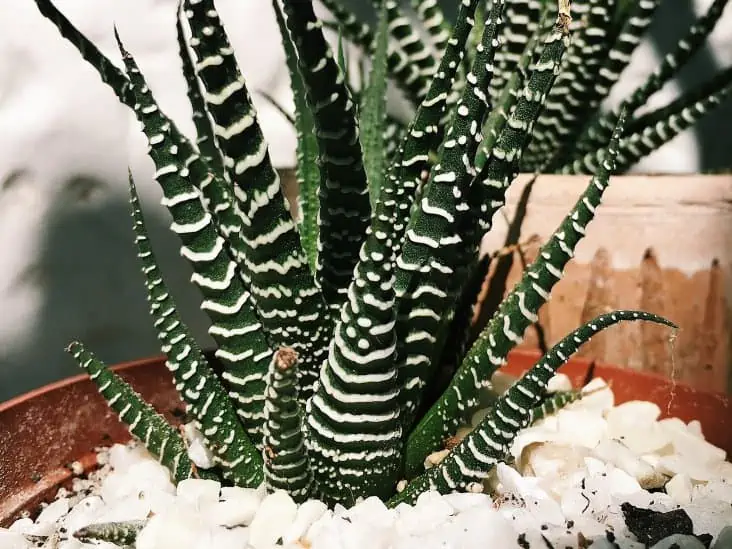
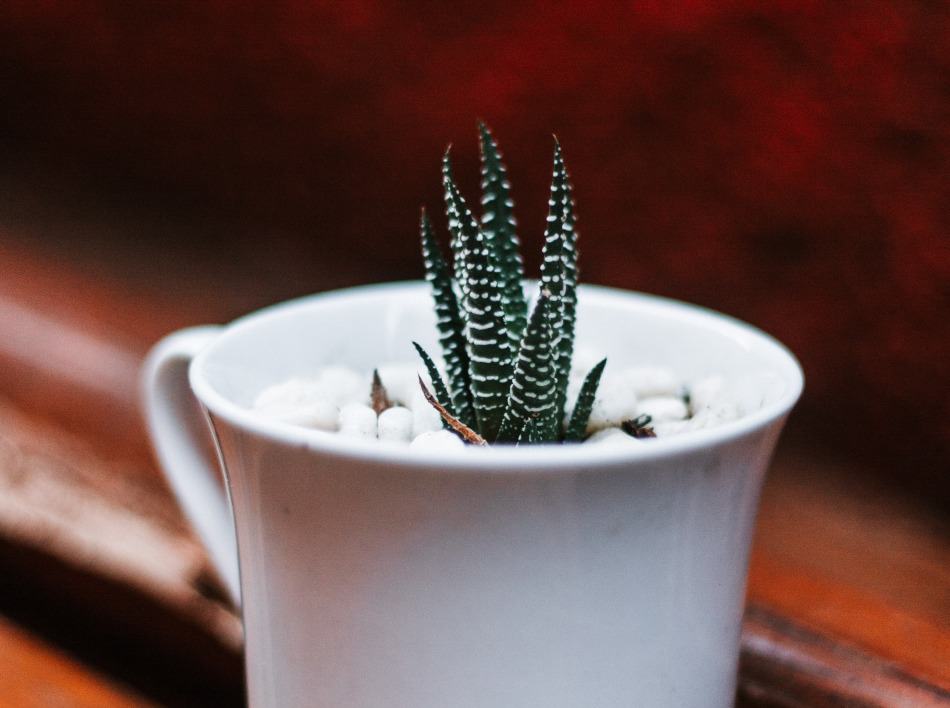
Haworthias are the best succulents for your indoor garden and for crowded spaces where the supply of sunlight may be choked out by larger plants. There are many different varieties of Haworthias, from star-shaped plants to zebra plants.

Haworthia is a small succulent that grows healthy and gorgeous under subtle lighting conditions.
  • They tolerate subtle lighting better than most other succulents.
  • These plants are small and conveniently-sized.
  • Colors vary with shades of green, red, and brown, depending upon the species.
  • Leaves also vary in structure from thin to thick.

Another nice feature of Haworthias is that they offset readily, making them excellent candidates for propagation. Once you buy a batch of Haworthias for your home, you will be able to continually generate new young plants without having to visit the store for more unless, of course, you want to add more variety to your garden later on.

Echeverias and Sedums Need a Healthy Supply of Sunlight

Echeverias and Sedums are two varieties of succulents that are tailor-made for outdoor gardens and window sills. These varieties do need more sunlight than Haworthias. Many sedums and echeverias do require at least 3-4 hours per day out in the sunlight.

  • Sedum is an excellent candidate for a groundcover since it has a low profile. 
  • Echeverias do well in partial to full sun and are typically not susceptible to disease.

Jade Plants Are Easy To Grow

Jade plants are houseplants that are simple to grow. They hold the great benefit of being able to live for a long time and can even grow into 5-foot tall shrubs when grown indoors. Leaf coloring varies by species and cultivar, as you’ll see round or oval jade leaves that are dark green, blue-gray, or edged in red.

  • They look like miniature trees with a bonsai quality, so be sure that you have enough room for them. 
  • Plant diseases are rarely a problem, primarily if grown indoors.
  • They look the best if they can get at least 3-4 hours of sunlight per day.
  • Well-drained soil will be necessary.

Suppose these plants become too large for the interior of your home. In that case, they are not necessarily easy to transfer to a year-round outdoor setting because you will have to bring them indoors during the winter months in temperate climates. If you live in an area with a relatively mild climate year-round, you will be able to plant Jade plants outdoors.

Ponytail Palms Don’t Require Much Watering

If you don’t have much of a green thumb, then the Ponytail Palm is the plant for you. The Palm is not a true palm tree, although it certainly does an excellent job of imitating one. This plant is gaped much like a fountain and is a perfect candidate as a houseplant in temperate regions.

  • Ponytail Palms do not require much watering since they have a swollen trunk at their base that stores water.
  • When planted in the ground, it can grow to 30 feet tall.
  • Its size will be limited if it is grown in a container.
  • The evergreen leaves are long and resemble palm leaves in appearance. 

Ponytail palms grow the best when they can be placed near a window, where they will receive as much light as possible. You can transfer these plants outside during the summer, but be sure to acclimate them to the full sun by moving them to a shaded area during the most intense times of sunlight. Otherwise, sunburn can occur on the leaves.

Best Succulent for Hanging Baskets: Burro’s Tail

The Burro’s Tail is a succulent that is great for hanging baskets. This plant produces trailing stems that are up to 24″ inches in length. The downside is that the leaves are delicate and can break off easily if they happen to brush against a surface or passerby. Still, these plants do hold many beneficial characteristics for the gardener searching for a unique hanging basket.

  • They can tolerate temperatures as low as 40 degrees F.
  • Prefers locations with plenty of sunlight
  • Pest and disease problems are limited, usually only occurring when these plants are overwatered.
  • It can also be grown indoors, on a windowsill with partial sun.

Burro’s Tail plants do grow small pink to red blossoms during the summer. However, this typically only occurs when they are grown outdoors in a hanging basket, where they receive full sunlight. They also produce abundant nectar, making them an excellent addition for gardeners looking to provide nectar for native bees.

Conclusion

Succulents are plants that are native to arid climates. They are equipped with particular organs that are capable of holding water. Still, you will need to water succulents at least once per week during the growing season. Change your watering routine if the plant’s condition deteriorates. This may also be a sign that you need to add the plant to dryer soil. You might even consider adding gravel to the bottom of the container to improve drainage.

What Animals Depend On Cacti Plants?

Cactus plants have many benefits for both humans and animals. Some cacti have edible leaves, backs, and fruits. Others act as a source of water in arid regions; hence, helps many desert animals to survive.

Cactus plants such as prickly pear are food for various bird species, mammals, and insects. Many birds, lizards, mammals, insects, and bats rely on the flowers, fruits, and flesh of saguaro to survive in the desert. Some birds of prey and other ground animals make their nests in cactus.

There are different ways cactuses help various kinds of animals. Whether it’s for food, shelter or a source of water, cactuses are essential for many animals’ survival. Here is a list of different animals that depend on cactus and how they do so.

Camels

Camels are among the animals that depend on cactus. These animals eat Prickly Pear cactus’s pads and spines. You must be wondering how they manage to eat this cactus with sharp spines. Well, it’s all thanks to their hard palate on their mouths. They teed grind the cactus against the plate. They chew the food in a rotating manner and redistribute pressure from the cactus in the mouth. Their papillae slide the cactus needles down on their throat without poking them.

Although prickly pear cactus features sharp spines, camels are capable of eating not only the cactus pads but spines as well.

With this chewing technique, the sharp spines of prickly pear cactus don’t prickle them when they ingest. Well, you cannot deny that the sharp spines hurt the camels while eating this cactus. However, they choose to enjoy the flesh beneath these spines and endure the discomfort that comes with it. After all, they only eat a few times because they’re capable of preserving food in their body for a long time.

Desert Birds like Gila Woodpecker

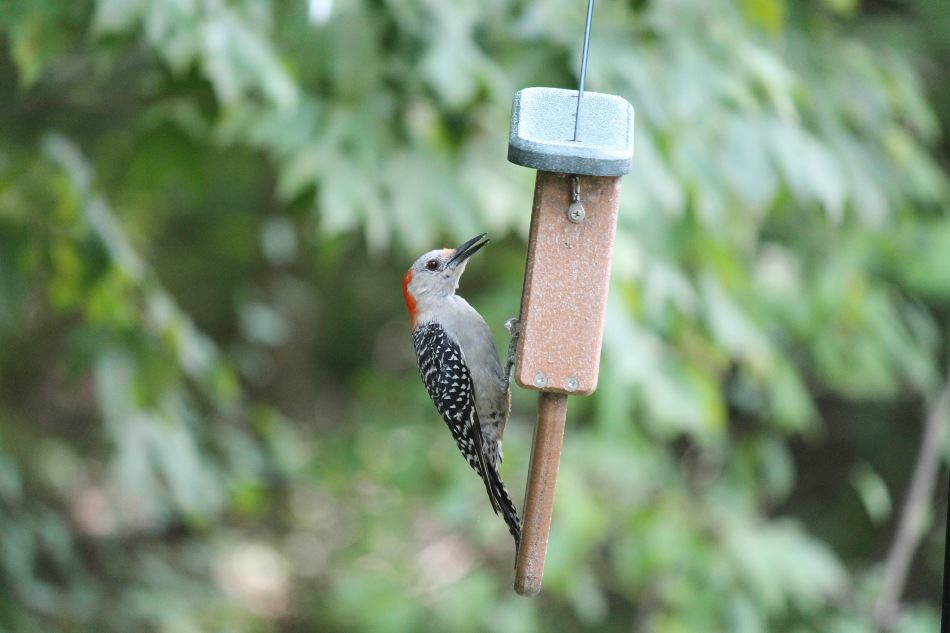
For several desert birds, cactus is not only a source of food but a good shelter. These birds use the inside of the cactus plants to make themselves comfortable homes. Saguaro cactus makes a perfect host for most of these birds. These birds are the Gila woodpecker which excavates their nests on the saguaro’s pulpy flesh.

Desert birds like Gila Woodpecker typically make nests in the Saguaro cactus.

Gila woodpecker is a bird found in the Sonoran Desert. Like the name, this bird pecks the wood of the saguaro cactus tree to make its nest. You’ll identify these birds with their brown feathers and black and white marks on the wings. The makes have some red patch on top of their heads.

The good thing about these birds is that they only make holes on the outside layer of the cactus, allowing the plant to heal and continue growing normally. They only cause superficial damage that will not kill the plant. They create a pocket of scar tissue that acts as their home. Sometimes the Native Americans collect this scar tissue to use for carrying water.

Gilded Flicker Birds

Another desert bird species that dwells inside the saguaro cactus is the gilded flicker. The bird is a common one in the Sonoran desert and has a healthy population. Its wings are about 11 inches long and 19 inches wide. You’ll identify this bird with its brown and has some red and black marks. The non-dessert species of this bird not only live in cactus but also eat the fruit.

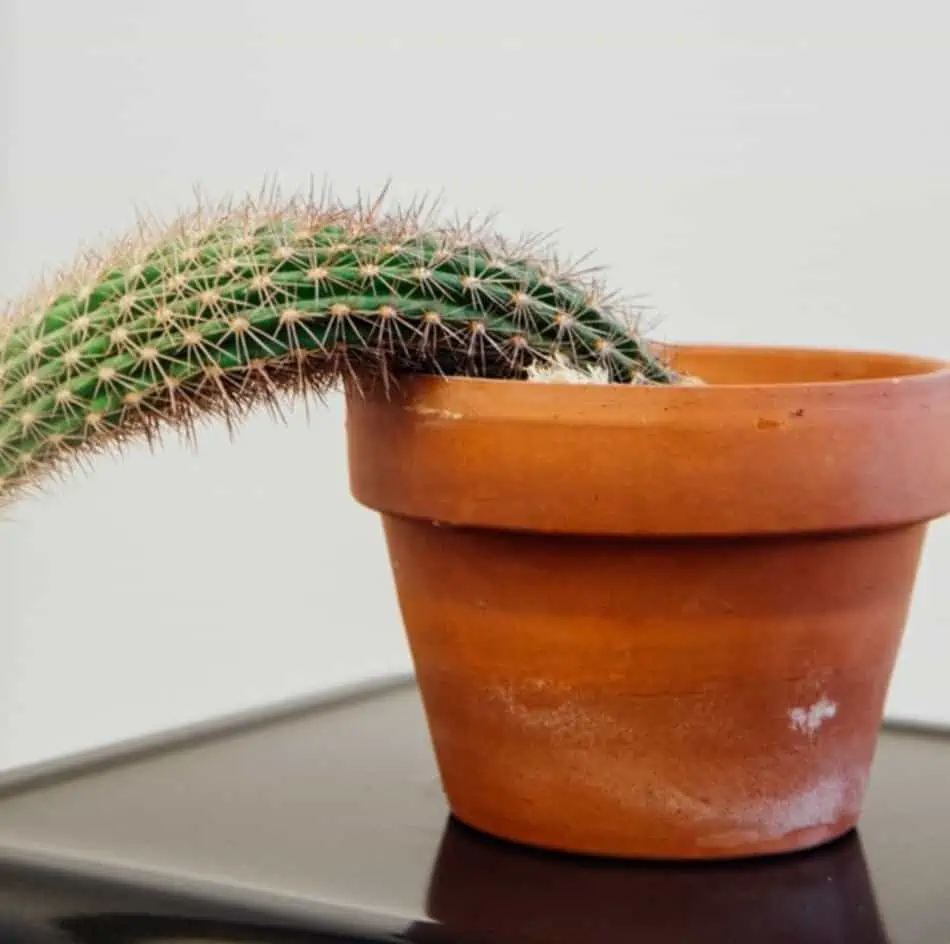
The bird hammers saguaro cactus through to the center. Their holes are so deep that above them, you can see the helpless cactus leaning over sharply. The cactus may even start drooping because the hole makes it lose its structural integrity. These birds can abandon the cavities, and elf owls, purple martins, screech owls, sparrows, and finches take over the homes.

The Western Screech Owl

This owl is another desert animal that lives inside the saguaro cactus. The owl lives in the holes abandoned by birds or make their nests in the cactus. This owl has brown and white feathers. It has a wingspan of 21 to 22 inches and large eyes. The western screech owl is a nocturnal animal. This means it comes out at night and rests in its nest during the day. It’s also a territorial animal that can attack other animals and humans. It doesn’t eat cactus. It depends on small birds, rodents, and insects for survival.

The Western Screech Owl builds a nest and lives inside the Saguaro cactus.

Bats

Bats not only use the holes left by other birds for their shelter. They also eat nectar and pollen from saguaro cactus. Bats such as the Mexican Long-tongued and Lesser long-nosed pollinate the saguaro. The bats, mammals, and other bird species eat the ripening fruits, which also act as their moisture source.

Collard Peccary

Collard peccary or javelina are also mammals that live in the desert and depend on cactus and other plants to survive.  The peccaries almost look like pigs with their sharp spears. They’re smaller in size as compared to pigs with almost invisible and tiny tails. Their small tails have some scent which they use to find their family members and mark their territory.

The animals also have sharp tusks under their snouts that they use to dig roots of the cacti to find food. They also get their water from the juicy cactus pads. They also dig up other plants to eat their roots. They’re not shy and can even visit homes in search of food in moist plants.

Harris’s Antelope Squirrels

This is another group of desert animals that eat cactus seeds and fruits to survive. You’ll see them dashing out often in search of food with their fluffy tails held at their backs. They also dig underground burrows, which are mostly under prickly pear cactus and other shrubs.

You’ll see these animals jumping on top of spiny barrel cactus to get the juicy cactus fruit for the meal of the day. The funny thing is that they’re very careful on top of the spiny cactus that they never get poked. When it’s too hot, these wonderful squirrels drop their bellies and spread their legs to cool off in shady soil when it gets too hot.

Woodrat

Most cacti plants from those prickly spines to scare away predators. These spines are everywhere, starting from the stems, leaves to the fruits. The spines force most hungry animals to stay away or risk being poked and wounded.

But this is not the same case with the white-throated woodrat. The rodent that mostly lives in the dessert is not scared of the spines. In fact, to them, these thorns seem like an invitation for a feast. It even looks like these animals will prefer cacti with thorns to the ones without.

Apart from collecting the fruits from these spiny cacti, like the prickly pear cactus, they also collect the spines to create their defense. The rodents use the cacti spines to surround their nests, so anyone who dares to pay them a visit will get a sharp welcome. This strategy has protected these rats from predators such as snakes.

Jackrabbits

This is another fun to watch desert mammal that the cacti plants help to survive. They have very long ears that help them sense danger from far away and cool their body temperatures in the hot desert climates. Their ears and short tails have black fur that got them the name jackrabbits.

Despite the name rabbits, these mammals are in the hare’s family. They move about in open and flat areas, searching for food. The animals depend on cacti, leaves, shrubs, and grass for survival. Jackrabbits eat the flesh of young saguaro to get the moisture, especially when they run out of water completely.

The Coyote

This animal is a dog-like animal that you won’t believe can eat cactus since they look more like carnivorous animals. However, they’re omnivores that eat anything from plants to other small animals. The coyote can survive on anything from fruits of cacti, mesquite beans to dead animals. The coyote survives on prickly pear cactus, especially the fruits.

They also eat all kinds of rodents, including squirrels, woodrats, and rabbits. They have a variety of food to eat, making it easy for them to survive in the desert.

Although the Coyote eats other animals, it can also survive on the prickly pear cactus and its fruits.

The Kangaroo Rat

This is another exciting animal that you’ll come across in the desert and survive on cacti plants. You’ll identify these rodents with their long tails of about 8 to 14 inches.  They also have kangaroo-like feet that give them the name. They resemble kangaroos in many ways, including using their long tails for balance and having pouches, not on the stomach.

They use the pouches to carry seeds they collect from plants like cactus to their burrows. They also eat fresh pads from different species of cactus. The rats join the long list of animals that depend on prickly pear cactus for food.

Summary

Looking at the cactus plants, especially the prickly pear cactus, you’ll think that no one will dare eat them. It seems like both animals and humans will do anything to reach the juicy fruits that these cacti produce. Cactus fruits make a good source of food, and some Native Americans use them for various culinary dishes. Now what humans can eat comfortably, animals will not spare.

But animals don’t only depend on cacti plants for food. Others use them as their homes by building nests on them. Others like the woodrat collect the spines to use as a defense against predators such as snakes. The cacti plants are indeed helpful to many desert animals.

Which Cactus Can You Drink Water From?

Sometimes, life can throw tricky situations your way, and you must learn how to deal with them. In most cases, you won’t know a survival situation until you are faced with one. There have been many reported cases of individuals getting lost or injured on a day hike in the desert.  Being stuck in the desert means that your water supply can get depleted quite fast, and you need to find means of staying hydrated. But the big question is, where do you find water in the desert? Can you drink water from a cactus? Let us find out.

So, which cactus can you drink from?  Typically, cactus is not a safe substitute for portable water. Drinking cactus water, especially on an empty stomach, can cause severe diarrhea and vomiting, leading to more dehydration.  However, in extreme situations, you can always have a few sips from the fishhook barrel cactus.  This is the only cactus that is safe to drink water from but make sure you ingest only small amounts of the water. 

In this post, we cover everything you need to know about drinking water from a cactus and whether it is safe to do so.  Without further ado, let us dive in and get started.

Is Cactus Water Safe to Drink?

You may have heard or read that you can always get water from a cactus plant if you are ever lost in a desert and become dehydrated. It sounds like a nice survival tip but is it that simple?  

The truth is that a cactus plant is not a spine-covered basin of freshwater.  Since we are talking about a desert, we can all agree that water is a big treasure and most cacti plants know how to protect their treasure from predators.

No! We are not talking about the spines in this case. We are talking about the fleshy stem of the succulent. The fleshy stem of cacti plants is usually protected by acids and alkaloids, which can be quite harmful.

In some movies, you might have watched one of the actors cut a barrel cactus, dip his/her hand into the fleshy stem and bring out a hand full of water to drink. Most of us don’t know that the fluid that comes out isn’t exactly water.

It is a noxious jelly-like fluid that is still toxic to human beings.  Remember that when you are already exhausted and dehydrated, your kidneys are weak. Therefore, if you ingest the liquid, your kidneys will be forced to work harder to break it down, which might put you in trouble.

Although cacti can store large amounts of water, the fluid is not always fresh and safe for human consumption.

Another significant problem of ingesting the fluid is that it causes severe diarrhea, vomiting and can even result in temporary paralysis.  You don’t want to experience any of these symptoms while in the middle of a desert.

But that doesn’t mean you cannot drink water from cactus completely. In extreme situations, a fishhook barrel cactus can come in handy. Many individuals have used this cactus as a source of emergency water, and only a few experienced side effects. 

The only thing you need to do is to avoid drinking the cactus water on an empty stomach.

Which Cactus Is Safe to Drink Water From?

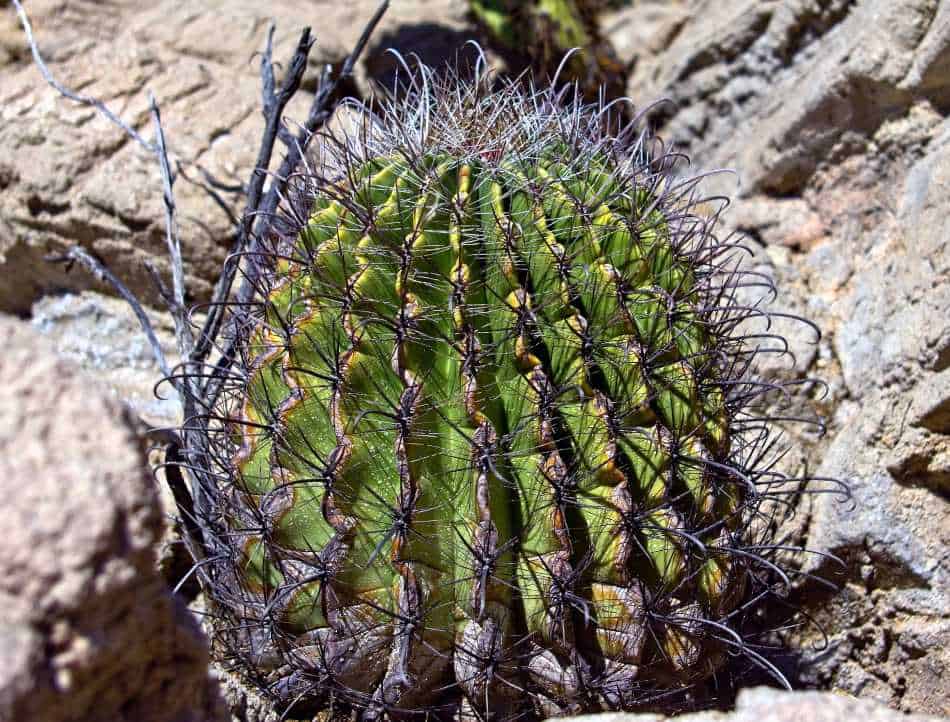
As mentioned early, the only cactus you can drink water from is the fishhook barrel cactus.  Still, the cactus water should be ingested in small quantities and in extreme situations only. Plant experts say that the fishhook barrel cactus is the least problematic of the extensive cacti family when used as a water source in the desert.

But, there is still a slight concern about risking your health. In situations where you are extremely dehydrated, you should consider drinking small amounts of water from this cactus to soothe your thirst and hope you don’t experience the side effects.

Fishhook Barrel Cactus is the only cactus plant that you can drink water from in extreme situations.

Cactus water is typically acidic and may also contain alkaloids. Like any other ingested substance, your body must digest it, which requires it to expel more energy than you would gain from the water. As such, you may experience slight body aches, joint pains, vomiting, and diarrhea after drinking the water.

In most cases, it is upon you to decide whether or not to risk depending on your situation. Will you risk dehydration or becoming sick?  You have to make the right decision that you won’t regret later.

How Do Cacti Plants Store Water?

Most people think that these succulents have long roots that grow deep into the ground in search of water.

On the contrary, cacti plants usually have a relatively shallow root system. They are only a few inches below the ground surface, and some of them even pop out of the ground. The roots might not even be vertical. In fact, almost all cacti plants usually develop a horizontal root system.

Cacti plants absorb water through their several-feet-long roots.

The roots can be several feet long and are always ready to absorb water from the light showers experienced in deserts. Whenever it rains, the roots absorb as much water as they can since they are highly specialized to absorb water pretty quickly.

When the short rain season is over, most of the roots dry and break off from the plant. This is done to help preserve the stored water in the plant. During the rainy season, the extensive root system absorbs too much water until the plant becomes more hydrated than the soil.

Is Commercial Cactus Water Still Harmful?

There is a big difference between the water you acquire from a cactus plant in its natural environment and what is sold commercially.  Commercially sold cactus water has been refined and evaluated to ensure it is safe for human consumption.

Cactus water is the latest beverage drink in the market alongside other plant-based drinks such as aloe vera juice and coconut water.

Commercially available cactus water is made by squeezing juice from the fruit of the prickly pear. That is why the commercially available cactus water is pink and not clear.

The water is naturally low in sugar and calories but rich in health-boosting nutrients and powerful antioxidants. It is often marketed to athletes since it contains a significant amount of electrolytes that aid in hydration.

There are several cactus water brands in the market, and you can still make your own using the prickly pear fruit and a few common kitchen items.

However, you still need to be cautious when drinking the commercial cactus water. Since it is manufactured from prickly pear fruit, it can have a laxative effect. It can also cause gastrointestinal problems and diarrhea in some individuals.

Some cactus water beverages also contain added sugar, and excess sugar in your diet can lead to heart disease, type 2 diabetes, and weight gain.

Can Desert Cactus Be Used to Purify Water?

Without getting off-topic, we thought this is something interesting that our readers might want to know. After all, we are still talking about cacti plants and water.

Extensive research has been conducted in regards to purifying drinking water using cactus mucilage. This is a process that is commonly practiced in Latin America using the prickly pear.

The process usually starts with boiling the cactus pads that are also edible. The liquid water gel left behind after boiling the pads will then be poured into the drinking water supply.

Within five to ten minutes, the contaminants present in the water automatically fall to the bottom of the container, and the topwater is more purified for drinking. The results can even be better if you leave the cactus mucilage in the container for at least 36 hours.

Always Be Careful When Handling Cacti Plants

When handling a cactus plant, you must be careful with the spines. The spines are a defensive mechanism that these succulents use to protect themselves from potential predators.

To avoid severe injuries and skin irritation caused by spines, handle cacti plants with extreme care.

Cacti spines can easily hook themselves onto your skin, causing severe injuries. In some cases, you will need tweezers to get rid of them. If you don’t have tweezers, you may be forced to wait for a few days before they can start coming out on their own.

During this time, you should be careful with the wound so that it doesn’t catch other infections and make things worse for you. Keep it clean and avoid touching it from time to time. You should also consider covering it with a clean piece of cloth or bandage.

Summary

When going hiking or exploring outdoors, it is always critical to carry enough water. You need to carry even more water when you are going to desert places where temperatures can easily get past 120oF.

Should you be in a desert and something happens such that you run out of water, you still need to find a way of surviving. In such desperate times, drinking cactus water might sound like a good idea.

Don’t make that mistake because the results can be catastrophic. Typically, the short relief you will experience may be followed by pain, weakness, vomiting, diarrhea, and other illness making things worse.

Your best option in such a case would be to consume the cactus fruit even though it might not be enough to end your thirst. If you must drink water, you should only consider sipping small amounts from the fishhook barrel cactus since it is the only safe cactus you can drink water from.

15 Tall Cactus Plants With Names

Cactus plants are known to be many homeowners’ favorite plants because of the statement they create. And not only that, these are plants that are easy to plant and care for and can thrive almost everywhere. They come in various personalities, with others tall, short, and others growing in clusters.

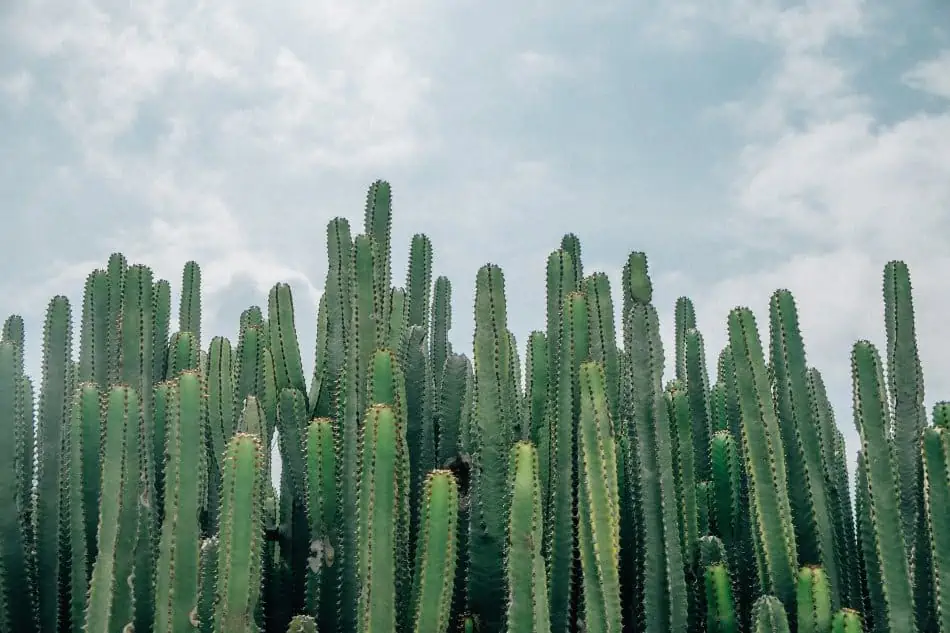
Tall cactus creates that bold and trendy look perfect for giving your home an incredible look. If you provide them with enough sunlight, you’ll be amazed at how tall your cactus plants can grow. The tallest cactus plants range from 15 feet to over 60 feet. The likes of saguaro, Mexican fence posts, and orchid cactus are among the tallest you can find at home and in the desert.

Well, if you love your plants standing tall and bold, you’re going to have to be picky with your cactus choice. Not all of them grow tall, no matter how much you care for them. Here is a list of 15 tall cactus plants with names that you should look for.

1.    Mexican Fence Post (Lemaireocereus marginatus)

Just the word fence post is enough to tell you that the Mexican fence post is a tall plant. If you start by growing this plant indoors, it will grow up to 8 feet tall. After reaching the height,  you can now move it outdoors to continue its growth without any interference. In outdoor temperatures, Mexican fence posts can grow tall and bold up 20 feet tall at maturity.

A mature Mexican Fence Post Cactus.
Mature Mexican Fence Post cactus reaches 20 feet in height if grown outdoors.

The plant grows in columnar form, producing some bright white margins that define its beauty. It would be fun to grow this plant from scratch and see it grow to maturity. You can then give yourself a part in the back for being an incredible gardener.

2.    Mexican Giant Cardon Cactus (Pachycereus pringlei)

It looks like the universe blessed Mexico with some of the tallest cactuses on the planet. The Mexican giant cardon makes one of the tallest cacti you can plant in your home garden. Thanks to its upright growth, the cactus got its name because many people use it as fence posts. This cactus can grow up to 63 feet tall and 39 inches. The unique look of this plant also makes it a perfect indoor plant. It’s a pretty easy plant to care for.

Despite being the tallest plant, it’s a slow-growing cactus and will take a long time before reaching its maturity. Just make sure you expose it to desert-like conditions, and no matter how long it takes, it won’t disappoint.

3.    Saguaro Cactus (Carnegiea gigantea)

Saguaro won’t miss the list of some of the tallest cactuses in the world. See it in the desert, which is its natural habitat, and you’ll be thrilled at how tall and huge it can get. This plant works well when exposed to full sun. It takes years to reach its full maturity, say about 200 years. When it’s fully matured, the cactus can take up to 40-60 feet tall.

A huge Saguaro Cactus.
It takes around 200 years for Saguaro Cactus to reach maturity and grow up to 40-60 feet tall.

You’ll easily identify saguaro even if you see it in the desert, thanks to its classic cactus appearance. The tall central body also forms arms. It also forms some sharp hard spines that you should be careful of. Saguaro also produces some white flowers, which later turn into red edible fruits. Saguaro fruits are very fleshy and sweet.

4.    San Pedro Cactus (Echinopsis pachanoi)

San Pedro Cactus is another fairly tall cactus plant to grow at home. It’s a rather easy plant to grow indoors, and it grows so fast in mild climates. This plant is drought tolerant and is perfect for xeriscaping.  San Pedro cactus is native to Andean slopes and will do well when grown in almost the same climates. The plant grows up to 20 feet tall under favorable climates. If you’re growing it at home, make sure it gets well-drained soils and full sun.

You’ll identify San Pedro with its multi-stemmed columnar look that forms small trees with several branches. The stem color is pale green to blue-green at its young age but turns dark green when it reaches its maturity. It blooms in large white flowers that form a trumpet shape. You’ll love the beautiful flowers for their sweet fragrance. The flowers dry into fruits.

5.    Blue Myrtle Cactus (Myrtillocactus geometrizans)

Blue Myrtle cactus is a very fast-growing one that looks like a tree as it ages. The cactus can grow up to 16 feet tall. Even at maturity, this cactus still looks shrubby and as beautiful as a young plant. This cactus produces bluish-grey stems that grow in candelabra-like style. At maturity, blue myrtle cactus might produce white flowers and dark purple ones in spring.

The cactus can remain without any branches for a long time, but once it matures, you’ll start noticing several branches. Mature ones form dense green stems which grow closely together and are highly branched. It will form a crown that spreads up to 12 feet in width when it grows in its natural habitat. If you don’t want this cactus to grow too tall and huge, you can control it in a small container indoors.

6.    Old Man Cactus (Cephalocereus senilis)

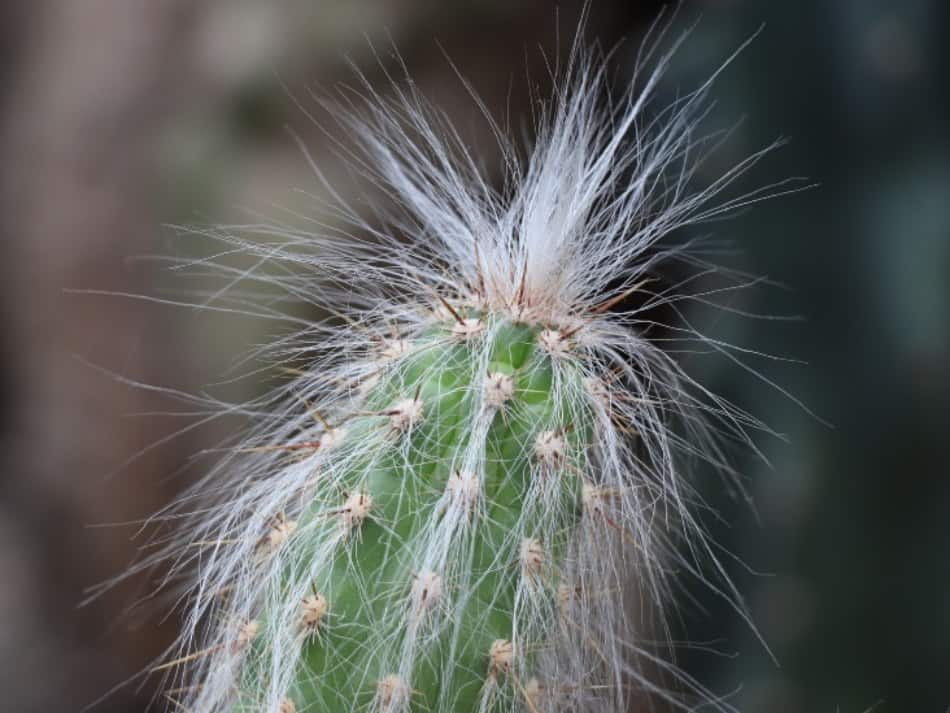
Old man cactus will not only wow you with its beauty, but its height is also mesmerizing.  The beautiful plant grows covered with silky white hair that gives it its beauty and the name. It also has other names such as Old Man of the Andes and hairy cactus, which also describe its appearance. The cactus plant does well in high altitudes and can grow to 6 feet while indoors and up to 49 feet when you take it outdoors.

A Old Man cactus with silky white hair.
The Old Man Cactus with silky white hair can reach 49 feet in height when grown outdoors.

The stems of this cactus produce beautiful blooms at night as soon as it reaches a height of 20 feet. If it gets some drought-tolerant gardens, you’ll get the old man cactus to grow in beautiful clusters that you can use to decorate the sides of your entryway. Give it lots of sunlight, and it will reward you with long and thick white hairs that cover the entire plant as it grows.

7. Armatocereus Oligogonus

This is another tall variety of tree-like cactus native to South America. The tall cactus grows up to 40 feet when mature and forms distinct features such as segmented stems. It also forms tough spines, which earned it the Latin name ‘Armed Cereus.’ Others have no spines, while others have very little. Apart from the spines, you’ll also notice this cactus with its grey to blue-looking stems.

Like other beautiful cactuses you plant at home, Armatocereus will adorn your garden with beautiful red flowers. You have to be careful when picking the flowers because they’re also armed with some sharp spines. The cactus also produces red or green fruits that have spines at first but later lose them when ripe.

8.    Organ Pipe Cactus (Stenocereus thurberi)

Organ pipe cactus is another tall cactus we can never miss on the list. After saguaro, this is the second-largest cactus grown in the U.S.  Its trunk can go up to 6 inches in diameter. It doesn’t grow into a single stem-like saguaro but will form several branches from the ground level. This tall cactus is also edible as it produces pulp jelly that can also be fermented. Native Americans have used organ pipe cactus as their food source for several years.

Organ Pipe cactus is the second-largest cactus in the US after Saguaro cactus.

Its green to the gray stem can grow up to 26 feet under favorable conditions. It also grows some brown spines that densely cover the spines. This plant falls into the category of night-blooming cactus that form pinking-red, funnel-shaped flowers. It also forms large, round fruits that are edible when ripe.

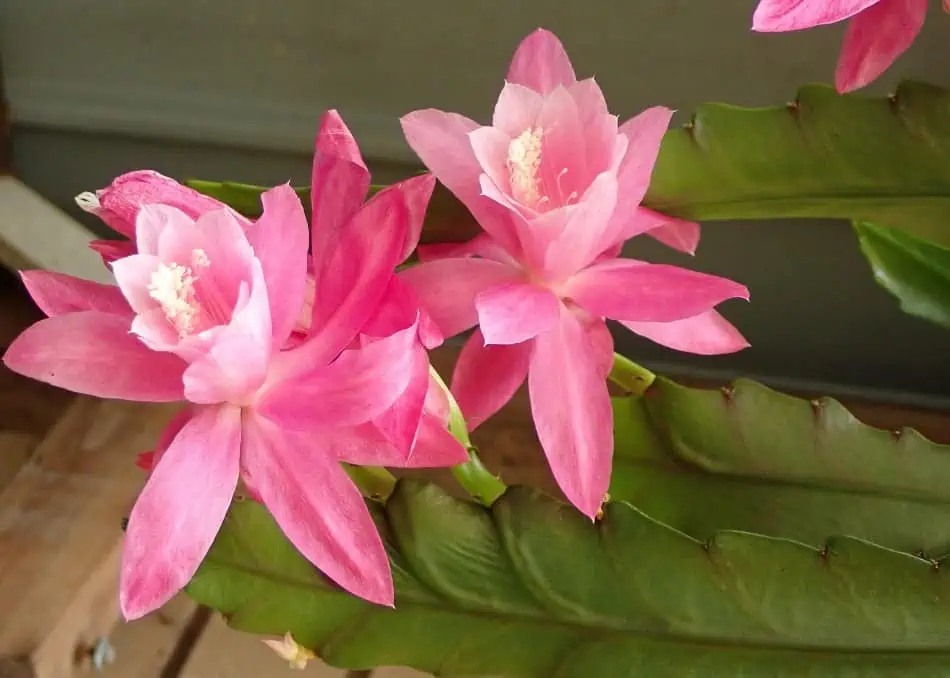
9.    Orchid Cactus (Epiphyllum hybrids or phyllotactic)

The orchid cactus is the tall plant on our list as it grows up to 30 feet in full maturity. The plant is mostly found in tropical rain forests and can still do well in different areas as long as you mimic its natural habitat. Don’t let the height scare you if you love indoor plants. Orchid cactus still makes a wonderful indoor plant that you can grow in hanging baskets until it’s too large to fit indoors.

A flowering Orchid Cactus.
Orchid Cactus is a tropical rain forest plant that produces pint, white, red, yellow, or orange flowers in late spring or summer.

Give this plant some bright light but not direct sunlight. Be prepared to see some pink, white, red, yellow, orange blooms in late spring into summer if you give it the best conditions. The plant got its name from these big, cup-shaped blooms. You’ll notice waves of blooms in mature plants that open several weeks during the plants blooming circle.

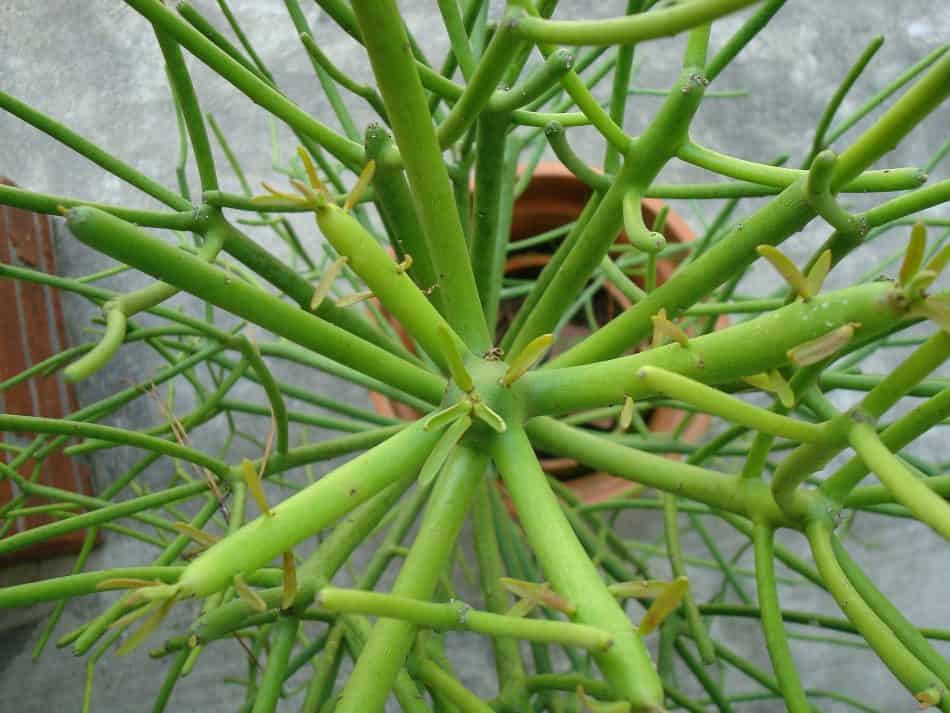
10.   Pencil Cactus (Euphorbia tirucalli)

Pencil cactus is another beautiful plant that grows up to 6 feet indoors and 30 feet outdoors. The plant is native to India and Africa. You can use pencil cactus as a houseplant and maintain its height up to the ceiling height. It grows in a slender and toothed look with foliage which is not easily noticeable. Its branches can only grow to a diameter of a pencil; hence, the name.

A top view of a Pencil cactus.
Native to India and Africa, Pencil Cactus can reach 30 feet in height if grown outdoors at temperatures around 25 degrees.

If you grow it at temperatures of 25 degrees, pencil cactus will be sure to reward your efforts. Another name for pencil cactus is milkbush. It got this name from its cloudy sap, which can be toxic to some people and pets. Be careful with it if you plant it indoors.

New plants have some tinged pink and tiny leaves, which will disappear with age. The plant is perfect for your home garden as it grows well with very minimal care.

11.   Eve Needle Cactus

Eve Needle is another fairly large cactus you can find in the desert. The cactus is a maintenance-free plant that you only need to give lots of sunlight, and it will be good to go. The cactus plant can grow up to 13 feet tall in its native habitat and 5 feet tall indoor environments. The cactus takes a tree-like form as it matures.

The beautiful cactus has deep green stems which can grow up to 3 inches in diameter. They grow covered in tubercles along with the upper parts of the stem.  The tubercles are sharply pointed and appear semi-cylindrical. This is where the plant derives its name from. South Americans eat the leaves of the Eve’s Needle cactus. They also produce pretty flowers which are red in color and form a cup shape. You’ll see the blooms around spring and summer.

12.  Senita Cactus

At a glance, you won’t think senita is a cactus due to its unusual shape. It grows into a smooth and silky surface, making it one of the most attractive cactus collection plants. Senita is a perfect indoor cactus, thanks to its slow growth rate. It can grow up to 6 feet tall in a container and up to 15 feet tall when you take it outdoors.

The beautiful plant forms some clumps when it branches near the base. There are some short spines in the stem. New senita grow appears in a purple tint which takes a powdery light green color as it matures. The frost tolerant plant can survive well in areas that receive long winters.

13.   Totem Pole Cactus (Pachycereus schottii Monstrosus)

Totem pole cactus takes years to reach its full potential, which is around 12 feet tall. Despite the slow growth, it’s one of the easiest cactus plants to grow. Although it’s not so many feet tall like the saguaro and the others, its upright growth qualifies it to be in this list of the tallest cactus plants. Its short trunk at the base forms tall stems with smooth skin and medium green color. It also features areolas with small bumps, which give it an appearance of many faces.

Mature totem pole cactus have hair-like sharp grey bristles on the tips of the stems. The plant doesn’t get bothered by insects and is immune to diseases. All you have to do is avoid overwatering it, and it will serve you perfectly. It grows pretty well in both indoor and outdoor environments.

14.   Candelabra Cactus (Euphorbia lactea compacta)

Candelabra cactus is a tree-like plant that grows up to 15 feet tall in its natural habitats and 10 feet in pots. It’s one of the best cacti to grow indoors, thanks to its form of growth and beauty. The beautiful tall plant is native to coastal and inland South Africa in dry and rocky habitats. The plant forms a stem with distinctive ridges with rows of the spine. It also blooms in some yellow-green flowers with vertical ribs.

Due to its form of growth, Candelabra cactus is among the best large cactus species to grow indoors.

The euphorbia family cactus has a milky sap that oozes when you cut the stem. It looks like a saguaro cactus with upright stems and branches. Its stems resemble dragon bones. They have thick, three-side branches with paired spines running down the ridges. They also have milky green lines on the three flat faces. Some branches also have some spoon-shaped leaves.

15.   Peruvian Apple Cactus (Cereus peruvianus)

Don’t associate this cactus with the Peruvian forests because of its name. Peruvian Apple cactus is native to Brazil and Uruguay. This incredible plant can grow up to 20 feet tall in the right outdoor conditions. Thanks to its size, it has also earned the nickname of hedge cactus or giant club cactus.

Don’t let the height scare you. Peruvian apple cactus can also grow pretty well indoors. But you must prepare yourself to prune it once it outgrows the container. Unlike other cacti, this plant grows very quickly and can acquire up to four feet in a single year. You should not leave it unchecked for long if it’s indoors.

If you love blooms, this cactus will not disappoint as it will adorn your garden with beautiful flowers during summer.  The stunning flowers bloom in shades of yellow, pink, and white. However, the Peruvian Apple cactus only blooms one night in a year; hence its flowers are very short-lived. If you get to fertilize it on time as it blooms, it might reward you with some fruits.

Summary

Just because a cactus plant grows tall doesn’t mean it’s only suitable for the desert. There are many tall cactus varieties that you can grow both indoors and outdoors. A good rule of thumb is to grow them indoors then take them out once they’re too tall to fit in the confines of a room. You’ll love growing them outdoors as a décor for your yard or even a fence post.

The good thing about these cactus varieties is that they’re very easy to maintain and care for. Some of them can do so well even if you don’t water and fertilize. Others grow so fast that within a short time, they’ll give you a beautiful-looking garden. Find yours in the list above and join many gardeners who’re already enjoying the beauty of cacti plants.

What Are The Benefits Of Having A Cactus?

Everyone can see and appreciate the fact that cacti plants are beautiful and make an incredible home décor. But that is not all succulents are good for.  Cactus is also a staple in many parts of Latin America. Some of the cacti species that grow throughout Latin America are edible, and many people love their fruits and nopales. There are also other benefits of having a cactus in your home.

So, what are the benefits of having a cactusCacti plants play a critical role in our day-to-day lives. They improve air quality, offer lots of medicinal uses, and can also increase your concentration.  Some cacti species produce fruits that make for a tasty snack, while others can increase your productivity.  Having these succulents on your office desk can lower your stress levels. Cactus plant owners also say that they enjoy a lot of satisfaction and peace of mind whenever they are involved in taking care of these succulents.

In this post, we focus on some of the top benefits of having a cactus in your home garden or indoors. Read on to find out everything you need to know.

1. Cacti Plants Improve Air Quality

Some cacti species are particularly good at removing toxins from the air. You can still benefit from growing a cactus plant indoors because it improves the air quality.

All cacti plants have tiny spores on their stems that allow them to absorb gases from the atmosphere. Some of the gases that these plants absorb, such as ammonia and benzene, are harmful for human beings if inhaled.

So, it is time to ditch that large and electricity-intensive air purifier and get a few cacti plants.

These succulents also humidify the air, which plays a critical role in improving your indoor air quality even more. They release water vapor into the atmosphere through the numerous pores on their stems during photosynthesis. This helps to put extra moisture into your indoor air preventing it from getting too dry.

Keep in mind that dry indoor air can cause a wide range of unpleasant symptoms such as dry skin and sore throat that nobody wants to experience.

2. Low Maintenance

Cacti plants tend to be low-maintenance compared to other indoor plants. In the natural environment, they usually survive for several months with little or no water at all. Therefore, they are well adapted to surviving long periods without maintenance.

As a plant owner, you are only required to water your cactus when the potting mix dries.  In fact, some cacti species can survive the entire winter season without water.

Cacti are low-maintenance plants that require watering once a week or even less often.

Even the most thirsty cacti plants may only need to be watered once a week. The low water needs can be highly beneficial in regions where water is scarce or too expensive.

You also don’t need to feed your cacti plants regularly. In fact, plant experts recommend feeding your cactus only during the growing season. No need to apply fertilizer during winter or fall because the plants go into dormancy.

3. Having Cacti Plants in Your Home Helps to Keep the Environment in Your Head

This is particularly true if you use these succulents as an office plant. In addition to improving your productivity, cacti plants will continuously remind you about the need to take care of the environment and protect plants.

Tending to a tiny and colorful cactus plant every day will make you happy and remind you of the critical role plants play in the natural ecosystem. It may make you more aware of other ways to help the environment, such as using less paper, conserving energy, or recycling.

Having a cactus at home will influence the way you think about the environment and teach you how to take care of it.

If everyone develops the mindset of caring for our environment, it can make a huge difference in the long run. 

With the increase of harmful emissions to the atmosphere and the looming danger of global warming, there is an increasing need for more people to take up the responsibility of caring for plants. You can play your small part by taking care of that cactus.

4. Longevity

Cacti plants tend to be long-lived succulents. Therefore, you won’t have to replace them often.  Generally, a typical desert cactus’s lifespan ranges from ten years to more than 200 years, depending on the cacti species.

Outdoor species tend to live longer than their indoor counterparts because the outdoor conditions are perfect for their survival.  However, with the right conditions and ideal care, an indoor cactus can still survive for many years.

The Saguaro cactus remains the longest living cactus species. It is native to Arizona and Mexico and can survive for up to 200 years. A fully grown Saguaro can reach a height of up to 50 feet. However, as the plant grows older, it becomes more susceptible to diseases and infections.

The Saguaro Cactus is the longest living cactus species that can last up to 200 years.

Cacti plants live long because they are adapted to surviving in a harsh environment. Therefore, when they are brought into the friendly home environment, they can relax and live comfortably.

To get the best out of your cactus plant, make sure you water it properly and expose it to sufficient light so that it can survive for many years.

5. Cacti Plants Offer Medicinal Benefits

Most cacti plants are known for their nutrients and medicinal value.  The cactus fruit and pads contain powerful antioxidants that can help fight a wide range of infections and ease symptoms of different diseases.

Some of the health benefits of cacti plants include:

a. Eases hangovers

Cactus fruit juice contains vitamins C, E, A, calcium, and much more. These nutrients play a critical role in managing inflammation in your body. In fact, scientific research has proved that taking cactus extract after drinking at least five alcoholic drinks resulted in significantly fewer hangover symptoms such as dry mouth, vomiting, and nausea.

The cactus juice extract also plays a critical role in reducing inflammation in the body, often linked to increased alcohol intake.

b. Soothes joint inflammations

Cactus juice usually inhabits leukocyte migration in your body. Leukocyte is a chemical substance that acts as a catalyst in the development of a wide range of inflammatory diseases.

The juice contains vitamins A, B2, and C, which are great for rheumatoid arthritis patients.

The potent anti-inflammatory properties of cactus juice can also play a critical role in relieving joint pain and soothing joint inflammation. It also eases the stiffness and severe soreness that usually accompany rheumatoid arthritis.

c. Controls blood sugar levels

High blood pressure can be a symptom of a wide range of illnesses such as stroke, diabetes, and heart disease. A study conducted in Mexico revealed that individuals who included at least one piece of a cactus pad in their daily diet record a significant decrease in their blood sugar over time.

Since cactus fruit and pads can lower blood sugar levels, they are ideal products for those diagnoses with diabetes.

Scientific experts and doctors suggest that consuming cactus fruit or pads can be an effective and low-cost way to lower blood sugar for individuals diagnosed with diabetes. 

Fortunately, you don’t have to spend money on fruits and pads if you have cacti plants in your home garden.

d. Boosts immunity

Regular consumption of cactus fruit or cactus juice plays a critical role in eliminating deadly viruses in your body, strengthening your body’s immune system.  Cactus fruit/ juice contain high levels of phytochemicals that inhibit tumor growth and increase immune response in the body.

The fruit is also an excellent source of Vitamin C, which is a powerful immune booster. Regular doses of vitamin C boost the production of white blood cells that make your body less susceptible to diseases.

It also helps your body fight off viruses and other disease-causing microorganisms quite effectively.

e. Improves the health of your gut

The juice aids in the growth of good bacteria needed in the gut area. Since cactus juice is a natural detoxifying agent, it can be used to treat diverticular colitis. Also, the laxative properties of the juice make it an excellent natural remedy for constipation.

The juice’s anti-inflammatory properties play a critical role in easing the inflammation that may develop in your urethra or bladder, especially if you are diagnosed with urinary bladder infections or gallstones.

f. Natural antidote for skin disorders

Cactus juice is a powerful natural remedy for skin disorders like acne, wounds, and insect bites. The antioxidants present in cactus juice can reduce the inflammation caused by these skin conditions.

A study conducted on rabbits revealed that topical application of cactus juice helped reduce signs of redness, swelling, and pain associated with an insect bite.

The topical application can also help reduce acne breakouts and give you clear, healthy-looking skin. Cactus juice is known to be an effective natural remedy for skin disorders due to its antibacterial properties.

g. Prevents onset of cancer

A study conducted in Mexico revealed that cactus juice contains powerful antioxidants, which can help to reduce oxidative stress and prevent the onset of cancer.

The cactus plant extract contains powerful antioxidants such as vitamins A, E, and C, flavonoids, phenols, and other substances. These nutrients play a critical role in reducing the risk of cancer by reducing the damage to cells caused by free radicals.

Cactus juice can also reduce inflammation in your body and repairs damaged tissues, which further helps to prevent cancer. Regular consumption of cactus juice is a great way to prevent the onset of cancer and other diseases.

6. Cacti Plants Have a Relatively Slow Growth Rate

Most cacti species tend to grow slowly compared to other plants, making them an excellent option for individuals who don’t want their indoor plants to change significantly over a short period.

Most homes have limited space for plants. Therefore, fast-growing plants can easily become a nuisance if they outgrow their designated spaces and start encroaching into pathways or corridors.

Fast-growing plants are also tiresome to look after because they usually need regular pruning and repotting.

A typical cactus plant may grow less than an inch in height in a full year. Many cacti varieties also tend to grow upwards, meaning branches and leaves/spines won’t encroach into your living spaces.

7. Enhancing Your Memory

Psychology research conducted by the University of Michigan in the U.S. outlined the numerous benefits one enjoys when interacting with nature. One of the benefits is improved memory.

Cacti plants are particularly beneficial in improving memory since they don’t require much care.

When you frequently engage with your cactus plant, such as watering it or pruning its branches, your brain will actively work and remember various tasks. This helps to improve both short-term and long-term memory.

These plants also have a calming effect on the mind since they don’t require much care and attention.

Therefore, you can spend some time admiring them or simply meditating in their presence without feeling guilty about being unproductive.

By reducing stress levels, cacti plants make it easy for your brain to focus and remember things easily.

8. Sense of Responsibility

Taking care of your cactus plant gives you a sense of responsibility. You will have to ensure that its needs are met, such as providing the right amount of water and sunlight, protecting it from pests and diseases, etc.

By learning how to take care of a cactus plant in the best manner possible, you are teaching yourself valuable lessons about responsibility. This equips you with the skills needed to take on other tasks or responsibilities in life.

Plus, by taking care of something, such as a cactus plant, you experience the joy of watching it grow and develop over time. Knowing that you have created something beautiful can be a great way to boost your self-esteem.

Summary

Now that you know the benefits of having cacti plants in your home, we hope you will acquire a few and start experiencing the magic. To continue enhancing your knowledge on cacti plants, take a look at some of our other posts and subscribe to our email list.

Happy planting!

How to save a rotting cactus Plant?

Cactus rot is one f the worst nightmares you can encounter as a cactus enthusiast. Depending on the extent of the rot, this may spell the end of your cactus or a chance to save it. While cactus rot may be detrimental, there are a number of steps you can take to save it.

So, how can you save a rotting cactus plantThe best way to save a rotting cactus plant is first to determine the type and extent of the rot. In cases where the plant is rotting from the top down, the best way to save it is by pruning off the rotten sections or layers of the stem. This prevents further spread to the healthy parts of the plant. In instances where the plant is rotting from the bottom up, the best remedy would be to cut off the healthy upper part and propagate it to produce a healthy plant.

This article will be looking at practical ways to save a rotting cactus plant. It will start by looking at the causes of such rot. This will help inform the best approach to saving your cactus from imminent death. It will then look at the practical ways to save the cactus based on the root cause and extent of the damage.

Why is my cactus rotting from the top down?

Several factors may cause your cactus to rot from the top down. These may include fungal attacks, too much water or an open dent caused by animals and other environmental factors. Once the water settles on such a dent, the stem may start rotting from the inside out.

Overwatering your cactus plant might lead to rotting from the top down.

The issue of too much water is mainly caused by overwatering. You must remember that cacti plants are adapted to growing in arid and semi-arid conditions. Therefore, they are susceptible to too much moisture.

When you overwater a cactus, the potting mix becomes waterlogged, affecting the oxygen supply to the roots. Reduced oxygen supply to the roots may lead to anaerobic conditions stimulating bacteria and fungi growth.

These microorganisms may end up attacking the root tissues causing them to decay and eventually die. As the plant’s roots rot, they lose their ability to absorb and store water, which affects the entire plant.

Fungal infections and diseases are another common cause of cactus rot. The most common fungi that cause cactus rot are Fusarium spp, Pythium spp, and Phytophthora cactorum. These pathogens can attack a cactus’s root system and stem.

In some cases, they even attack the leaves causing them to turn soft/mushy and eventually rot.

Moreover, overfertilizing your cactus can also cause rot from the top down. Too much fertilizer, especially nitrogen-rich fertilizers, may cause your cactus to “burn,” leading to stem and root rot.

When this happens, you will notice brown or black patches on the leaves/stems of a cactus.

In cases where animals such as squirrels and birds cause an open dent/hole in a cactus stem, this may also lead to rot.

When the water settles on such a dent, it can easily travel into the plant leading to rot from the inside out.

In some cases, a cactus plant may start turning brown at the tip of its stem or pads. This is a condition called tip rot or stem rot. This rot usually spreads fast and eventually affects the whole plant if not attended to in time. 

While some causes of stem rot may be obvious, others are not. As such, you may never get to know the exact cause of the rot, and this is not something to worry about. The good news is, no matter the kind of stem rot you may encounter, its remedy is almost universal.

How to save a cactus rotting top down

Once you notice any early signs of stem rot on your cactus, act as fast as you can. Cactus rot spreads rather fast, and you will need to prune off the affected parts to help save the plant. 

If you notice any dark spots on your cactus plant, you should try to save the cactus as soon as you can.

However, it is also worth noting that some external signs of cactus rot can be deceiving. By the time you notice some small brown spots on your cactus, chances are that the damage may be worse on the inside. Nevertheless, you will need to undergo a couple of steps to effectively save your cactus from stem rot. You will need to:

  • Choose an appropriate pruning tool. Usually, pruning shears or a sharp knife will get the job done
  • Make sure your cutting tool is clean or well disinfected. This helps prevent the chances of fungus spread from plant to plant.
  • Remove the rotten sections gently from layer to layer. Keep doing this until all signs of rot are gone.
  • Ensure that the last cut is at an angle. This will avoid any changes of water settling on the wound, thus causing further damage.
  • Move your cactus to a dry area. The stem should not get in contact with rain or water until the wound heals up.
  • In cases of fungal attack, wash away the fungal spot using a disinfectant and a small brush. Do this by scrubbing away the black or yellow spots.

In other instances, you may not necessarily have to prune your stem. If the condition looks mild and reversible, place the plant in some sort of quarantine. Here, you can subject it to a mock drought. Simulate a dry environment by placing your cactus in sand, using bright heat lamps and avoid watering. These steps alone may be enough to kill destructive patches of Drescher fungus.

Taking Care of a Cactus After Pruning Due to Rot

If you are forced to prune a section of your cactus plant due to rot, you must keep a close eye on it afterward to ensure it doesn’t continue to rot. After pruning, place the plant in an area with well-draining soil and lots of light.

You can also use a fungicide spray or powder on the wound to reduce any chances of a fungal attack. If you decide to use a fungicide, ensure it is safe for cactus plants.

Lastly, do not water the plant until a callus forms around the wound. This usually takes one to two weeks, depending on the extent of rot and the size of the cactus.

How to save a cactus rotting bottom up

Apart from rotting top-down, a cactus may also rot from the roots. This is usually termed as root rot. While it may be caused by a number of factors ranging from bugs to overwatering, its remedy follows a similar path.

A cactus rotting bottom up can be a challenge to reverse. While there may be some supplements that help dry up the rotten parts and spur new root rot, the success of this technique negligible. As such, the best way to deal with the rot in cactus is cutting off the healthy part of the stem and propagating it to produce new roots and a new plant.

If your cactus is rotting bottom up, obtain the healthy part of the stem and propagate it.

For this practice, follow the following steps:

  • Determine the extent of the root rot and cut off the rotten section
  • Allow the cut stem to calluse by keeping it in a dry place for several days
  • Get some good cactus soil mix ready for propagation, here are our recommended ones.
  • Dip your cactus stem in rooting hormone to help spur root growth before repotting your cactus
  • Do not add any water to the soil until some new growth on the cutting develops.

By following these steps religiously, your cactus should root within a few weeks, and in no time, your plant will be up and healthy again.

How to prevent root rot in cactus

Well, instead of going through the hassle of treating root rot or saving the plant from the same, why don’t you take steps to prevent it from happening in the first place? Here are some practical steps you can take to prevent new infections after saving a plant to avoid root rot all together:

  • Do not plant or repot your cactus in the same soil you used for a previously affected plant. Since it is not always easy to determine the exact cause of root rot, you do not want to risk re-planting it in the same soil.
  • Use well-draining soil for your cactus (here are our recommended ones). Whether we are talking about the commercial or homemade mix, it is important to drain excess water effectively. One of the main causes of root rot in cactus is overwatering, and you do not want to increase the chance by using thick soil.
  • Use proper containers or pots that allow the draining of excess water from the soil through drainage holes. Your container should also be big enough to allow the healthy growth of roots without the risk of overcrowding and clogging.
  • Avoid using too much water during your watering regime. As a rule of thumb, water your cactus once you notice the upper two inches of the soil feel dry.

Is a cactus turning soft sign of rot?

A cactus stem is usually mushy. However, it may sometimes turn uncharacteristically soft. This could be an indication of poor health, and several factors can cause this. It may be a result of disease, poor cultivation practices, and improper watering regimes.

Diseases, poor cultivation techniques, and improper watering might make the cactus too soft to the touch.

In other instances, a cactus going soft may also be a sign of stem or root rot. Alternatively, the condition may be a result of a fungal or bacterial infection. This would usually attack the plant from its openings in the flesh. The process may be accelerated by warm and moist conditions. Common signs of such attacks may include sunken spots and soft areas around the pads or stem. In other instances, some oozing may be noted from the stem.  

Common signs of cactus root rot

Root rot may not be noticeable in its early stages, unlike stem rot that can be physically examined in real-time. As such, it may take a keen eye to notice such signs. Usually, the signs may be noted from the condition of the stem or pads. These may include:

Discoloration – The majority of cactus stems is usually green. However, root rot may see the plant deprived of essential nutrients from the soil, thus changing its normal coloration. In this case, the plant may turn black or brown.

Shakiness – Roots act as the support for the whole plant. When root rot happens, the roots become weak and may not hold up the plant as expected. This shakiness could mean some root rot.

Mushy roots – The best way to notice signs of root rot is by carefully uprooting your cactus. If you notice signs of mushiness in the roots, chances are the roots are rotten. You may need to cut off the rotten section and repot the plant in such a case. 

Foul Odor – A foul odor from the roots may also be a sign of root rot. This smell usually indicates a bacteria or fungal attack on your plant, which warrants immediate action if you are to save it.

Stem bending – Roots are critical in anchoring the plant to the ground. As such, when they become infected with root rot, it is possible that the stem bends and falls over because the entire root system has become weak.

Summary

Cactus rot is one of the main causes of death in cactus. As such, you must look out for any early signs before the damage becomes irreversible.

While the causes of cactus rot may differ from one species to another, the signs are almost always universal. Take your time to study your plant to help you notice any early signs of poor health. 

5 Warning Signs For Cactus Root Rot

Cacti are plants that take a very long time to grow. Sometimes you may think your plant is dead when it’s perfectly healthy. But there are times when the cactus is just portraying stunted growth as an indication of trouble. You may think it’s a normal slow growth when your cactus is rotting.

Root rot is one of the most common cactus problems that every gardener should look for. It’s many gardeners’ nightmare. Many things can cause your precious cactus plant to rot. One of those problems includes giving your plant too much water, especially during the cold seasons. Other causes of root rot include attacks by diseases, pests, and pathogens.

If you discover root rot issues early enough, you might be able to save your precious cactus from dying. But since the problem occurs underground, you might not see it until it affects the entire plant. Well, there are signs you can discover early enough, but there are those that you only see when the plant is already too affected. This article will look at various signs of root rot in your cactus and what you can do to save it.

1.  Change in Color

Sometimes root rot in the cactus may not be visible on the root itself but the upper parts. Many cactus plants begin to change their color when they’re disturbed. If you know the natural color of your precious plant, you’ll easily identify when it starts to take a weird color.

Some color changes may be a sign of happy cactus, so you must do your research. A reddish cactus means it’s getting a good amount of sunlight. The color change is also common in an older cactus. If your cactus is old enough, you might notice some brown patches on the stem going upwards. As the cactus continues growing older, the brown patches turn gray.

Root rot might make your cactus plant change the color from green to brown or yellow.

However, if your cactus plant starts taking a brown or yellow color, it will probably have a deep rooted problem. Some cactuses may also take a darker shade or just turn black. When you notice a sudden color change on the leaves or the stem of your cactus, you might have overwatered your plant, and the roots have had enough.

You can still save a cactus from this kind of root rot, especially if you notice that the source of trouble is overwatering. Make sure you adjust your watering routine before things fall apart. You can also consider removing the discolored areas so they don’t spread all over and cover the entire plant.

2.  A Bad Smell

If you uproot a healthy cactus, you’ll notice a very comforting earthly smell. This would be the smell of the soil that the cactus was sitting on and not the smell of the roots. But not always will you uproot your cactus and get greeted with that beautiful smell. A rotting cactus will not smell nice at all.

If you get some strong odor that you can’t stand instead of the early smell, you should know that there’s a problem. And that problem may not involve removing the cactus and planting somewhere else. The problem of a smelly root involved finding the virus behind the problem and killing it.

As the rot continues to spread in the plant, the smell also becomes stronger each passing day. Sometimes the root that is rotten to the extent of emitting a foul odor is already dead. There’s nothing much you can do to save it. The best solution is to throw it away, so the disease doesn’t spread to other healthy plants.

3.  A Shaky Plant

A disturbed root may not be strong enough to hold the entire cactus plant. If a disease or fungi attacks your cactus, some of the roots may begin to fall off. The root may not have the strength to go deeper. Your plant will start getting weaker and shaky.

Root rot makes your cactus plant weak and it might no longer be able to stay in place.

If you try pulling off a shaky plant, it will easily come off. You won’t need to apply the slightest amount of force. The wobbliness of the plant is also characterized by loss of turgidity and firmness of the leaves and stem of the plant. Unfortunately, by the time you notice these symptoms in your plant, its roots would have been damaged beyond repair.

4.  Soft Segments in the Plant

Another sign of a rotting cactus involves soft and swollen plants. You can easily break off the soft parts without applying any force. Try pulling the spine off the plant to see if it comes out without any struggle. That should be a sign of a problematic root and a dying cactus. You’ll also notice several soft spots in the flesh of the plant.

If the spines of your cactus plant come out easily, it might be experiencing root rot.

Another instance of a rotting cactus is some cockiness and discoloration around the soft spots.  The center of the plant can portray some wetness and mushiness. Sometimes the softness of some parts of the plant may not be rot but a mechanical injury to the stems. But if you’re certain it’s root rot, you need to deal with it immediately. This way, you’ll stop it from spreading to the rest of the plant and killing it.

5.  Severe Wilting and Drooping

A rotting cactus will start to droop and will portray stunted growth. The cactus portrays some wrinkly appearance on the leaves. The stems will appear droop. This happens because the roots become weaker and weaker every day.

The first reaction that many people undertake to save a wilting cactus is watering. But sometimes too much water can be the cause of the problem. So, if you add more water, you’ll make the situation even worse.

The best way to save the situation may involve transferring your plant to a new container and adjusting your watering schedule. Make sure you choose the right soil when you decide to re-pot your plant here are our recommended ones. And remember not to overwater. Too much water is the main cause of root rot in the cactus. Pay attention to the kind of soil you give it, and only water when you see that the soil is completely dry.

Cactus Root Rot Questions

How do healthy roots look?

One way to find out if your roots are rotting is to start by knowing how healthy roots look like. You should not mistake healthy roots for rotting ones. Healthy roots are yellowish-white with white fuzzy layers on the surface. The layers are either hair that the plants use to absorb water or mycorrhizal fungi that help the plant absorb nutrients.

If you happen to uproot a cactus with healthy roots, you’ll notice they have an earthly smell. Rotting roots emit a foul odor. Now that you know how to tell healthy roots from rotting ones, you can now understand how to better care for your plants. You’ll also know how to identify problems before they kill your plants.

Can cactus recover from root rot?

Depending on the magnitude of the rot and how early you identify it, your cactus can recover. But this will only happen if you get rid of the things that cause the rot in the first place. You should avoid overwatering if that’s what’s causing the cactus to rot. If it’s a disease, you should look for an appropriate way to eliminate the infection. You should also remove the parts that show signs of rot by doing drastic surgery.

How do you know if you’re overwatering your cactus?

Most cactus plants originated from the deserts. You have to give them desert-like conditions for them to thrive. However, many people don’t understand this and give their plants too much water than they need. You might think you’re doing your plants justice by giving them enough water when you’re just causing them more damage.

Overwatering is one of the most common causes of the root rot of a cactus plant.

An overwatered cactus may start to rot from the roots. You’ll see this in the change of color of your leaves and stem. The leaves and the stems will turn either brown or black.   

One way to refuse the temptation of overwatering your plant is to grow them indoors. Once indoors, you should not water often. The best thing to do is hold water for two or more days until the soil dries out. Cactus has their own water reserve, and they won’t die even if you hold water for a week.

Summary

If you’re an experienced gardener, you must know that cacti are one of the easiest plants to care for. They don’t need much care and can survive well without too much water. But these plants are not immune to diseases and fungi attacks. They develop problems that get into the roots and cause rot.

Usually, there’s very little you can do to save rotting cactus roots. But you shouldn’t lose hope because there are also several ways to save a cactus that’s affected by root rot. One way is to cut off the rotting part, change the soil (Here are our recommended ones), or adjust your watering schedule. Another way is to destroy the plant so that the rotting doesn’t spread to nearby plants.

How to Care for Haworthia Plant?

Succulents are notoriously hardy plants that need little water or care to grow and thrive. The Haworthia plant is a mini-succulent that may need a little bit more care and attention than you may typically need with other regular-sized succulents. This beautiful and spiny plant gives satisfaction to those looking for a challenging succulent.

Since the Haworthia plant is one of the less hardy succulent varieties, it is essential to understand the limitations and extremes that it will endure. Also, a schedule of care is vital to keep the Haworthia succulent thriving and growing larger. Read on to find out more about this beautiful succulent and how to care for it like a professional botanist. 

How to Care for a Haworthia Plant

Even if you have significant experience with succulents, you must know where the succulent that you are growing comes from in the world. Information about the origins of plants is crucial for proper care. You may even change the positioning of your plant based on this knowledge. 

Haworthia is one of the lowest maintenance houseplants, but the plant requires a bit more care when grown outdoors.

The Haworthia plant is from the southern hemisphere near South Africa. Knowing that the Haworthia plant is from South Africa gives you a number of different insights about what it likes and how you should care for it. 

Haworthia is a notoriously easy plant to care for as a houseplant, so you shouldn’t have much trouble with it if you plan on keeping it indoors. However, things may get trickier if you plan on keeping your Haworthia plant outdoors. Make sure you read through and follow the guidelines for each of the recommendations in this list. 

(Source: The Sill)

Watering

The Haworthia plant doesn’t require much water for thriving conditions, as succulents are known for their ability to get by on only small amounts of water. Also, the Haworthia plant gets acclimated to the hot and arid conditions in South Africa, so it gets genetically designed for handling dry conditions. This information could get used for the placement of your plant out in the sun or dry, windy conditions.

Haworthia does not require much water. You just need to water the plant 2-3 times a week.

Make sure that you give your Haworthia plant water two or three times per week. Any more and the succulent will begin molding and becoming oversaturated. Any less and the leaves may begin wilting. 

Sunlight Required

As with most succulents, the Haworthia plant does best when left in direct sunlight throughout the day. However, the mini structure of the Haworthia succulent is ideal for hot conditions. Since the leaves on the Haworthia succulent are so small and compact, their stoutness can withstand direct and hot sunlight better than other succulents. 

Haworthia plants can grow healthy when exposed to direct and hot sunlight.

Climate

The South African climate where the Haworthia plant is indigenous is arid, warm, and sunny. However, there are spells of humid weather. The Haworthia plant is adept at maintaining and even thriving in the typical humidity in a home, Mediterranean climates, and warmer outside. 

Haworthia plant cannot grow in cold and freezing climate.

Cold, excess moisture, and freezing temperatures all affect the growth health of a Haworthia plant. In regions where the ground regularly freezes, most succulents cannot grow. The cold and freezing temperature causes the Haworthia to wilt, become discolored, and even die. 

Trimming

The Haworthia plant is a mini-succulent, which means that it will not grow much more in height than about two inches. The diameter of the plant can grow a bit larger if left untrimmed. However, trimming helps to spread new rhizomes around and create a larger surface area of growth for the plant. 

Although Haworthia plant does not grow tall, trimming is still essential to promote the growth of new rhizomes.

Trimming a Haworthia plant requires little skill and gets done much more quickly when you take your time and practice very carefully. Trimming and replanting pieces of Haworthia give your succulent garden a more comprehensive ground coverage and fantastic look! 

(Source: Apartment Therapy)

Soil 

The soil for your succulent plants is very important. The tiny structure of the Haworthia plant requires substrate and soil mixture because it does not like its roots getting wet for long periods. 

Drainage is critical for succulents and especially tiny varieties like Haworthia. There are a few different ways to ensure your succulent plant maintains proper hydration. You don’t want to overburden with water without adequate drainage. However, too little water will result in problems like drying leaves, leaves falling off, and the entire plant’s discoloration. Ensure that there is no excess moisture from a blockage in the soil, as they can contribute to molding, wilting, or death. 

Haworthia requires high-quality commercial potting soil with sufficient drainage.

You never want sand used as a substrate for your Haworthia soil mixture because it is too delicate and can get trapped in the soil’s pores. Also, if you use peat-based substrate, you may need replacement soil in a few years. However, it is good practice to replant Haworthia with new soil and substrate every two to three years. 

No matter the type of substrate you add, you should use high-quality commercial potting soil. Along with potting soil, you could mix in: 

  • Perlite: This additive to the soil is not organic. The substrate of perlite gets added to the soil for aeration and drainage. The compound itself is a volcanic rock with tiny air pockets throughout it, which have excellent surface area and space for moisture to leach out of the soil. Perlite is available at all gardening stores. (Source: Gardening Know How)
  • Aquarium Gravel: Usually, aquarium gravel gets made of small ground rock bits with a smooth edge from tumbling. You probably don’t want to use the aquarium gravel that has coloration added to your plant soil. This gravel is available at almost all pet stores. 
  • Poultry Grit: There are two types of poultry or “chicken” grit made from either oyster shells or flint. The shells or flint are ground down into a sandy powder that helps with drainage in soil and won’t affect moisture. Poultry grit is found at most feed stores or agricultural supply stores.  (Source: Organic Feeds)
  • Horticultural Pumice: A pumice is a delicate and aerated hard substance that helps with drainage. Horticultural pumice is a specially designed additive for soil that separates the dirt for better draining. This pumice substrate gets formed from volcanic processes and is eventually made into a rock by volcanic gases. This rigid foam has air pockets in it and is excellent for drainage in the soil. (Source: Acme Sand)

Containers

Succulents are healthy and hearty plants that can get grown virtually any place you like. Although they can do just fine in most places, there are favored and ideal situations and containers for succulents such as Haworthia growth. 

Of all the available container materials, terracotta material is the best for holding succulents like Haworthia. Terracotta is known for its porous material and gets made from clay. The terracotta’s porous material is ideal for succulents like Haworthia because it helps release moisture well and works great for a soil system built for aeration. 

Since terracotta is a porous material and offers superb drainage, this type of container is the best option for Haworthia.

Also, terracotta is better for heat regulation and won’t fluctuate with changing temperatures like porcelain. The terracotta’s ability to maintain heat exposure is excellent for succulents like Haworthia, which thrive in hot and arid conditions. 

(Source: Wisconsin Horticulture)

Succulent Dish

One of the most popular ways that succulents such as Haworthia are grown is in the succulent dish. The succulent dish is ideal for growing small succulents with only a small amount of quickly dried soil. The succulent dish is a beautiful addition for any yard, home, or garden because it showcases many plants at once and places them at different levels, in some cases. 

Pros:

  • Looks great and shows off multiple succulents at once
  • Great for drainage and soil use
  • Can place as a hanging container 
  • Good for shallow roots

Cons

  • More expensive than other containers
  • Larger than other containers
  • Not ideal for deeper roots 
  • Not suitable for mature and large succulents that weigh a lot

Small Pot

A small pot is an excellent choice for propagating a new Haworthia or growing one for several years. Succulents will only spread roots and propagate on their own if there is soil for their expansion. If there is not, their energy gets spent growing fuller and more prominent. 

Pros

  • Great for small and single Haworthia plants
  • Excellent for replanting and propagating
  • Nice if you don’t have much room for expansion of roots

Cons

  • Hard for growing more succulents 
  • No room for expansion of roots
  • Not ideal for sizeable mature Haworthia
  • Need to replant and re-soil occasionally

(Source: Wisconsin Horticulture)

Common Problems and Solutions When Growing Haworthia Plant

Even with the best care plan for your Haworthia plant, some problems will arise. Ensure that you know the various signs of a succulent plant in distress so that you can alleviate the distress before it kills your Haworthia plant. 

Below are some of the most common problems that tiny succulents, such as the Haworthia plant, suffer. Taking on the care of Haworthia is not tricky. There are only a few symptoms that your Haworthia plant is dying or unhealthy. Once you read on and figure out these symptoms, keeping your Haworthia plant healthy at all times will get much easier for you. However, without the knowledge of the problem and identifying the symptoms, your Haworthia plant may die. 

Leaves Curling

Curling leaves is a clear sign that your Haworthia plant is not receiving enough water. When a succulent like a Haworthia is under-watered, it begins to use the stored moisture in its leaves to survive. The leaves’ outer tips give up their moisture first, meaning they are the first to dry up and begin curling as though they were dying. 

If the leaves are curling, another symptom that you may notice is dry potting soil or mix. The potting soil of all succulents, including your Haworthia plant, needs some moisture. The succulent plants live without a water well, but only for a short time. After Haworthia has a dry potting mix for an extended time, it causes curling leaves.

If your Haworthia plant leaves are curling, it means that the soil is too dry and the plant is not getting enough water.

When you notice the leaves curling, check the soil. If the soil is also dry, the leaves curling are most likely due to under watering. A thirsty plant is a dying plant. Ensure that you water the Haworthia plant immediately and increase your watering schedule so that the soil is a little moist at all times. 

If you have consistent watering practices but still notice that the soil gets dry quickly, it may be time for a new soil mixture with less substrate. The substrate is the hard, usually porous material that helps drain the soil more quickly. If a soil mixture has too much substrate mixed in, it doesn’t retain water long enough. The plant won’t get the moisture that it needs before it gets drained away. 

Yellowing Leaves 

The color of your Haworthia leaves also tells you a lot about your plant’s health and the soil that it gets planted in. Yellowing leaves are a sure sign that something is wrong with your Haworthia plant and that it is dying. Don’t wait until your leaves turn fully yellow. If you notice any discoloration of yellow on the leaves of your Haworthia, take action immediately. 

Even plants that have a yellow hue to the leaves will not have spotty and completely yellow leaves. If the leaves are all yellow, or some of the leaves have completely changed color, make sure that you are not overwatering your Haworthia plant. 

If the leaves are yellowing, check the potting soil and ensure that the mix is not too wet. If there is standing water or the soil is very moist, the plant’s yellowing and health may get damaged from something called root rot. Haworthia gets damaged with too little or too much water. Standing water in the pot of your Haworthia plant is not good. The Haworthia plant and leaves don’t thrive in moist or submerged soil at all times. 

Make sure that you spread out your watering and set an on-again-off-again watering schedule. Also, make sure there is a leach hole at the bottom of the pot for your Haworthia and if there is not one, drill one in to promote draining. Finally, if all else fails, replant your Haworthia in soil with more substrate mixed in for increased drainage. 

The Leaves Keep Falling Off

Unless your Haworthia plant is tussled or knocked over, the leaves should not fall off on their own. Instead, an unhealthy Haworthia plant may lose leaves completely when stressed or in other less than-ideal-situations. If your leaves are falling off your succulent plant, it could be from one of the following conditions:

Way, Way Too Much Water

If the leaves are mushy and soft when they come off the Haworthia plant, it is probably because of overwatering. What tends to happen is that Haworthia continues to suck up the water that it is sitting in. Some leaves can’t take anymore, and instead of stopping, their connection to the plant itself becomes weakened, and it eventually falls off. 

Too Much Sun

Too much sunlight and extreme heat conditions or climate contribute to leaves falling off your Haworthia plant. If your Haworthia is in direct sunlight and the leaves start looking dry, or tight and shriveled, it could be because of dehydration. Make sure your Haworthia plant gets a break indoors during long periods of extreme sun and heat.

Although Haworthia loves direct sunlight, too much light and hot conditions can make the leaves fall off.

Dropping leaves in extreme heat is a natural response and helps the succulent conserve water. You can minimize the stress on your Haworthia by bringing it inside, covering it with a damp cloth, or shading it for the hotter parts of the day. If the leaves are damaged too much, the Haworthia plant needs better shade and a break from extreme climate. 

Discoloration of Leaves and Stem

The discoloration of succulents like Haworthia is usually because it is not getting enough nutrients in its soil. The leaves may turn red, yellow, or brown, and the stem can get solid brown or black. 

Even though you may add nutrients in the soil when you first plant or replant your Haworthia, these nutrients may leach out of the soil with continued watering. Adding nutrients to your watering schedule is not a bad idea and should get considered every three or four months. 

There are many fertilizers out there on the market which are great for succulents like Haworthia. Look for a well-balanced houseplant fertilizer or one specifically designed for cactus and succulents. Also, slow-release fertilizer is the best for succulents, since the nutrients tend to get leached out with the drainage substrate in the soil. 

Some of the best Haworthia fertilizers, based on reviews and our research, are listed below. Our research includes different approaches for fertilizer both indoors and outdoors: 

Osmocote Smart-Release Plant Food 

Any fertilizer gets leached out of the soil. However, fertilizers like this smart-release one are great for the slow release of continued high levels of nutrients. This is an excellent fertilizer for succulents as the soil drainage tends to leach nutrients from fertilizer even more quickly than ordinary soil. 

Pros:

  • It contains eleven nutrients that give your plants the full spectrum of nutrient balance and support. 
  • It lasts six months for average soil and watering conditions.

Cons

  • A potent formula that can burn plants and roots if used incorrectly

Cute Farms Succulent, Cacti, & Aloe Fertilizer 

Some of the fertilizers on the market may be great for larger gardens, which have room for spreading granulated products. However, this liquid gel form of succulent fertilizer is ideally sold in a squeeze bottle for a continuous and easy aim and squirt application on small succulent plants. 

Pros

  • Easy for smaller plants with the squeeze bottle nozzle
  • Great for continuous and small batches of use
  • Can get used on aloe, cactus, and other succulents, along with Haworthia

Cons

  • More expensive than other large format fertilizers
  • Leaches out of the soil more quickly than other slow-release fertilizers
  • Must get applied once a month

Miracle-Gro Indoor Plant Food

Miracle-Gro is a household name for fertilizer, and this squeeze bottle applicator is perfect for all of those house plants and succulents with small bases. The formula is mild enough for monthly use. The application is as easy as using a liquid hand soap dispenser. 

Pros

  • Easy for smaller plants with the squeeze bottle nozzle
  • Great for continuous and small batches of use
  • Can get used on aloe, cactus, and other succulents, along with Haworthia

Cons

  • More expensive than other large format fertilizers
  • Leaches out of the soil more quickly than other slow-release fertilizers
  • Must get applied once a month

Fat Plants San Diego Premium

Why deal with adding the fertilizer yourself, when you can replant your Haworthia in soil that is blended professionally and enriched with fertilizer and nutrients? This soil and fertilizer mixture is nutrient-rich and ready for planting. By using this product, you take the guesswork out of mixing your own nutrients into the soil of your plants. 

Pros:

  • Easy to use; you don’t have to mix the nutrients into the soil yourself.
  • Great and long-lasting nutrient-rich soil
  • Contains many nutrients that grow plants larger and stronger

Cons:

  • No control over the amount of fertilizer used
  • More difficult to get substrate drainage mixture correctly mixed for replanting

(Source: Succulent Plant Care)

How to Propagate a Haworthia Plant

Succulents are easy plants for propagating. The process of transferring mature rhizomes from one thriving Haworthia plant to the soil for replanting has several easy steps. Once replanted, the Haworthia is an excellent ground cover and propagates reasonably well on its own. 

The only thing that should get considered before attempting to propagate a Haworthia plant is where the replanting is taking place. As always, make sure you consider the climate, temperature, moisture level, and sunlight exposure before replanting and propagating Haworthia cuttings. The steps for propagating a healthy plant are useless without proper care.

To propagate Haworthia, transfer mature rhizomes from the plant to the soil.

The steps for propagating Haworthia are relatively simple and straightforward because this succulent is one of the world’s best plants at propagating on its own. Most of the leaves will get too heavy and then start growing small red roots and fall off on their own, spreading the plant’s surface area out as they fall off and set roots down. 

Although they are hardy succulents that are easy for propagating, growing Haworthia from clippings requires a little bit of time and a few materials and tools. Before beginning the propagation process for Haworthia plants, you need to include the port used for replanting, a soil mixture of commercial potting soil and substrate, and a small pair of scissors. 

The steps for propagating a Haworthia plant include: 

  1. Look for new roots: Typically, Haworthia likes to spread out and propagate on their own. If you have the original plant in a larger pot or the plant has leaves hanging over its side, they will naturally begin sprouting new roots. Identify these new roots that may already be showing without digging out any roots. 
  2. Snip a leaf: Identify the growth of Haworthia that you would like. The best leaf for propagating is the leaf with red roots already dangling from it. These new roots help the propagating process go more smoothly and quickly. Next, find the coarse and dried connecting point between it and other leaves and snip it from the plant. If you can’t find new roots, try snipping a leaf without roots, it will propagate once in soil independently. 
  3. Create the replant pot: Mix soil and substrate equally and pour into the new pot that gets the new clipping of Haworthia. Make sure there is not too much soil or depth for new and immature roots. Remember that terracotta pots are usually best.
  4. Replant: Take your snipping of Haworthia and place the cut end with exposed roots down into the soil. Gently cover with soil until about half of the leaf is exposed. Water thoroughly and gently. Follow regular care steps after the initial replanting gets completed. 

(Source: Gardening Know How)

Is Haworthia Toxic?

Although most succulents you have in your home are not known for being toxic, kids and pets should keep away. Haworthia is not known for its toxicity; however, it should not be ingested. 

Pick a safe place, possibly up high, for growing your Haworthia plant. This way, pets or children cannot get access and will not accidentally ingest any leaves that might happen to fall off. When Hawothria leaves get engorged and develop secondary red roots they will begin falling off. 

Haworthia has two varieties, and neither is known for its toxic qualities towards cats, dogs, or kids. However, the leaves tend to fall off freely and propagate on their own. It is better to be safe than sorry for choking small leaves or possibly toxic episodes due to ingesting Haworthia. 

(Source: Succulents Box)

Conclusion

Haworthia succulents are among the most successful and popular plants that people grow in their homes and gardens. This beautiful plant is easy and looks great as both a young and mature succulent. 

The fact that Haworthia is non-toxic for most individuals, propagates freely on its own, and grows in various climates makes it one of the best succulents that you can buy and grow. Take advantage of this excellent succulent from South Africa and add some beauty to your garden and life.