Where Is the Best Place to Buy Succulents?

Whether an experienced gardener or just starting, succulents are a great plant to add to your collection. They’re easy to care for and thrive even in neglected environments. If you want to add some succulents to your home, you have come to the right place. We fully understand how tough it can be to find quality succulents and want to make your life easier.

So, where is the best place to buy succulents? Fortunately, a few great options are available, whether you’re looking for an online nursery or a brick-and-mortar store. You can purchase succulents from Amazon, Etsy, Cactus Store, or your local nursery. If you live in a rural area, your best bet is to order online. However, if you live in an urban area, you should have no problem finding a store that sells succulents.

The most important thing is to find a seller that you trust. There are a lot of nurseries and stores that sell succulents, but not all of them are created equal. Do your research and read reviews before purchasing from any seller, whether online or in person.

This blog post discusses the best places to buy succulents in detail. We’ll review each option’s pros and cons and help you decide what is right for you. Read on to learn more.

Why Are Succulents a Great Option for Home Gardens?

Before we dive deep into discussing the best places to buy succulents, let’s first discuss why they make such a great addition to your home garden.

Succulents are an excellent option for home gardens because they’re easy to care for and can thrive in neglectful environments. If you’re looking for a low-maintenance plant, succulents are a great choice.
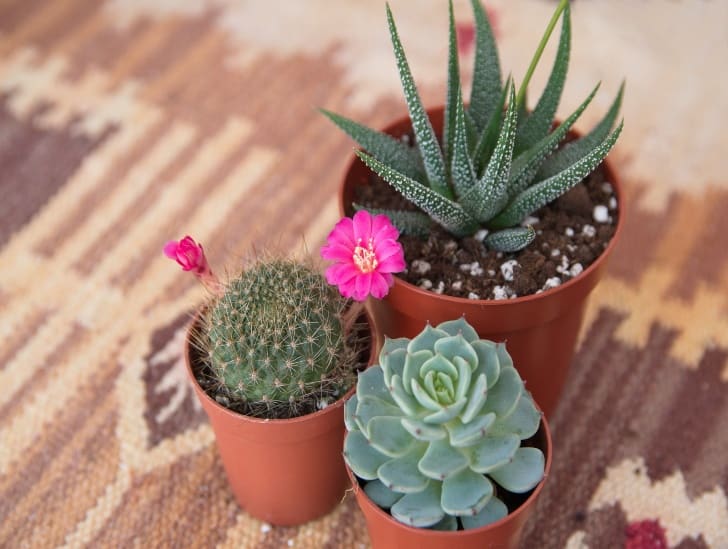
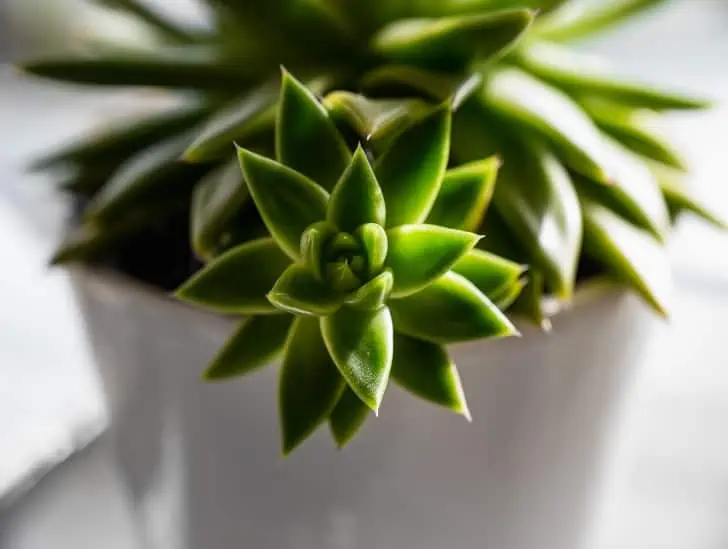
Succulent on a pot indoors.
They come in a wide range of shapes, sizes, and colors, so you can find the perfect plant for your home.

They don’t need much water or attention and can tolerate a wide range of light conditions. Whether you have a green thumb or not, succulents are a great plant to add to your collection.

In addition to being easy to care for, succulents are also versatile. They come in a wide range of shapes, sizes, and colors, so you can find the perfect plant for your home, no matter your style.

Whether you’re looking for a statement piece or a plant that will blend in with your existing décor, you’re sure to find a succulent that’s right for you.

Succulents are also relatively inexpensive. You can find basic succulents for as little as $5, and rare or exotic varieties can cost up to $100. No matter your budget, you’re sure to find the right succulent for you.

The Best Places to Buy Succulents

Now that we’ve discussed why succulents make a great addition to your home garden let’s discuss the best places to buy them.

1. Amazon

Amazon is one of the most popular places to buy succulents online. They have a massive selection of plants, including succulents, and offer competitive prices. One of the best things about Amazon is that you can find almost anything you’re looking for, including hard-to-find species.
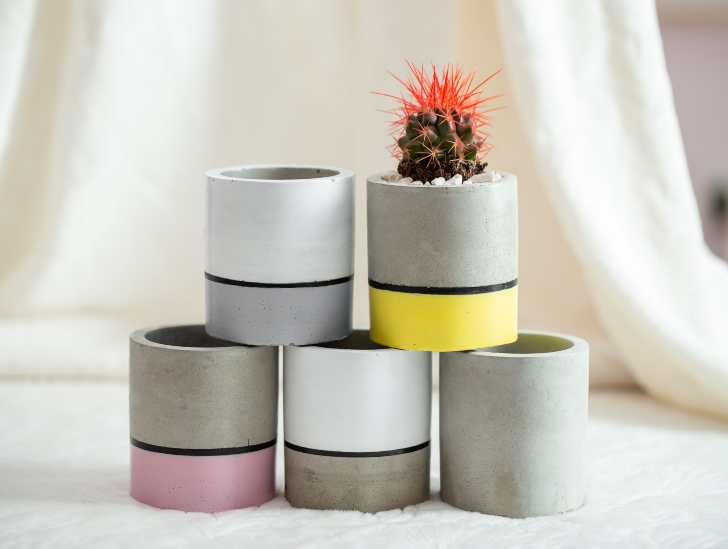
Red needle cactus in a pot.
They have a massive selection of plants, including succulents, and offer competitive prices.

However, one downside of shopping on Amazon is that you won’t be able to see the plants in person before purchasing. This can make it difficult to gauge the quality of the plant and ensure that you’re getting what you expected.

Another downside is that Amazon’s return policy can be challenging to navigate, so ensure you’re 100% certain about the plant you want before buying it.

2. Etsy

Etsy is another great option for buying succulents online. It’s a marketplace for handmade and vintage items, so you’ll support small businesses when you purchase.

Etsy is an excellent option if you’re looking for rare or hard-to-find plants. You can also find a wide range of succulent-related items, such as planters, pots, and decorations.

The downside of Etsy is that the prices can be higher than other online retailers, and the quality of the plants can vary. Do your research and read the reviews before purchasing from any seller.

3. The Sill

The Sill is an online plant store that sells potted plants, including succulents. They have a wide variety of succulents available, and they also offer plant care services.

This is an excellent option if you’re looking for high-quality succulents and want peace of mind knowing that your plants will be taken care of properly.

In fact, it is one of the best places to buy succulents online. The website is easy to navigate, and the plants are clearly labeled with care instructions.
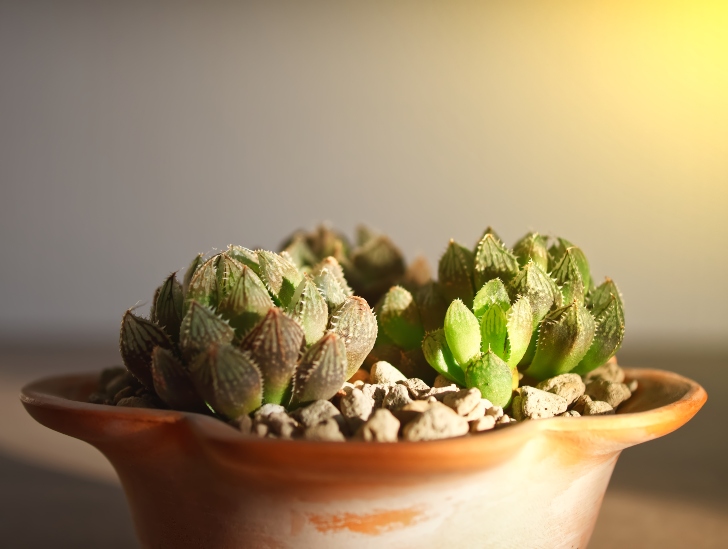
Hwothoria succulent plant.
They have a wide variety of succulents available, and they also offer plant care services.

The Sill also offers free shipping on orders over $100, so it’s a great option if you’re looking to purchase multiple plants.

However, the downside of The Sill is that their plants are on the pricier side. If you’re on a budget, you may want to look elsewhere.

4. Cactus Store

Cactus Store is an excellent option if you’re looking for a large selection of succulents. They offer a wide range of plants, including rare and hard-to-find varieties.

They also have a helpful team of customer service representatives who can answer any questions you may have about caring for your succulents.

One downside of Cactus Store is that they only have one location (in California), so shipping can take a few days (and incur additional charges). Another downside is that their plants are slightly pricier than other online retailers.

5. Local Nurseries and Plant Stores

Do you want to see the plants in person before purchasing? If so, your best bet is to head to your local nursery or plant store.

This way, you get an opportunity to inspect the plants for any damage or pests, and you can ask the staff any questions you may have about care and maintenance.

Your local nursery is also great for finding rare or hard-to-find plants. However, remember that the selection will be limited compared to online retailers.

The downside of buying from a local retailer is that you may have to pay more for the plants. But this may be the best option if you want quality over quantity.

6. Mountain Crest Gardens

Mountain Crest Gardens is an online nursery that sells cacti and other desert plants, including succulents.

They have a variety of common and rare types of cacti and other desert plants and offer plant care services.

This is an excellent option if you’re looking for rare or hard-to-find varieties of cacti and other desert plants that are not so common in many parts of the world.

7. The Succulent Source

Succulent Source is another excellent option for buying succulents online. One benefit of shopping at Succulent Source is that they offer a wide variety of rare and hard-to-find plants.

Another benefit of shopping at Succulent Source is that they offer free shipping on orders over $75. Just be sure to check the shipping policies before you place your order.   

Succulent collections on a store.
One benefit of shopping at Succulent Source is that they offer a wide variety of rare and hard-to-find plants.

However, one downside of Succulent Source is that they only ship to the United States. So, if you’re looking for succulents and live outside of the US, you’ll need to find another retailer.

Tips For Buying Succulents Online

When shopping for succulents online, it’s essential to do your research and choose a reputable retailer. Make sure to read the reviews before purchasing from any seller and be aware of the potential downsides of each option.

It’s also important to pay attention to the shipping policies, as some retailers only ship to specific locations. And finally, check the return policy if you’re unsatisfied with your purchase.

What Is the Best Time to Buy Succulents?

The best time to buy succulents is in the spring or summer. This is when most nurseries and plant stores have the best selection. However, you can usually find succulents year-round if you know where to look.

If you’re looking for rare or hard-to-find varieties, your best bet is to shop at an online nursery or plant store. This way, you’ll have a broader selection to choose from.

Ensure you research before purchasing, as some retailers may not ship to your location. And be aware of the potential downsides of each option, such as higher prices or longer shipping times.
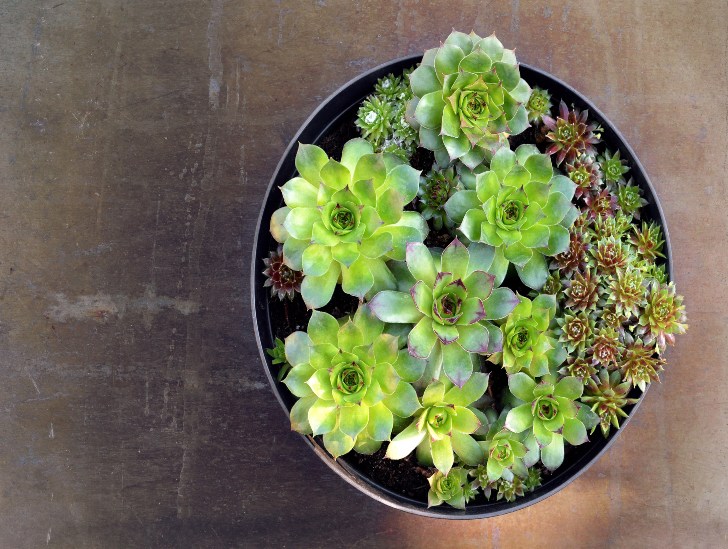
Succulent and offsets.
You can find the perfect succulents for your home or garden with some research.

When buying succulents online, choosing a reputable retailer and paying attention to the shipping policies are crucial.

Remember to check the return policy as well, in case you’re unsatisfied with your purchase. You can find the perfect succulents for your home or garden with some research.

Can I Buy Succulents Wholesale?

Yes, you can buy succulents wholesale from some retailers. This is an excellent option if you’re looking to purchase many plants.

But remember that the price per plant will be lower when buying in bulk, so you may not get the best quality. And be sure to do your research before purchasing, as some retailers may not ship to your location.

Summary

There are many great places to buy succulents online and offline, but the options discussed above are some of the best!

Whether you’re looking for a wide selection of the best deals, one of these options is sure to have what you’re looking for at the right price. So, what are you waiting for? Start shopping for your new plants today!
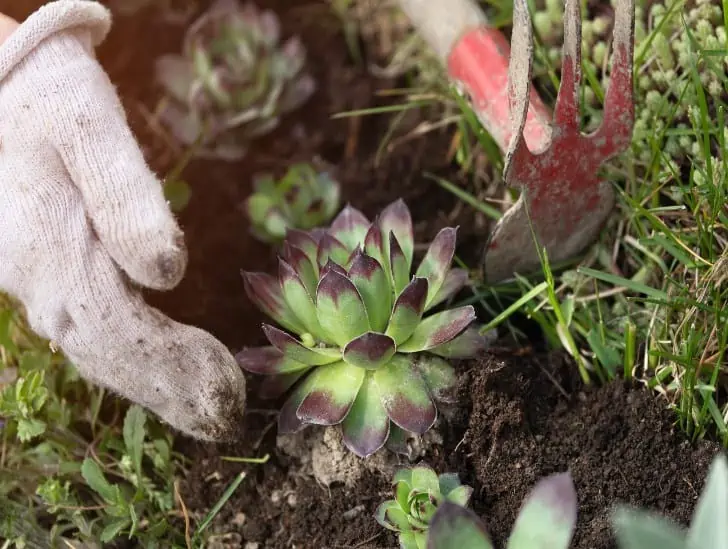
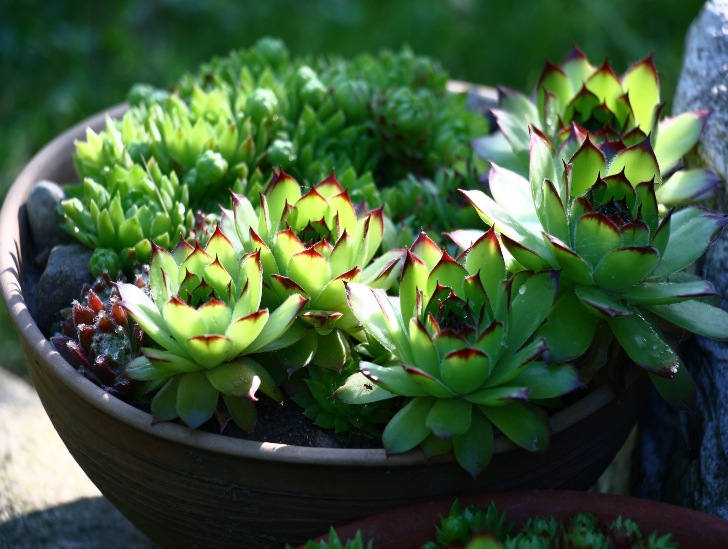
Is Sempervivum an Indoor or Outdoor Plant?

Sempervivum, more commonly known as house leek or hen-and-chickens, is a succulent plant native to the mountains of Europe. In the wild, sempervivum grows in crevices and on rocky slopes. These plants are tolerant of drought and poor soil conditions and are often used as ground cover in gardens. Sempervivum is also a popular houseplant because they are low-maintenance and can tolerate periods of neglect.

So, is sempervivum an indoor or outdoor plant? The answer is both! These plants can be grown indoors or outdoors, in pots, or on the ground. If you live in an area with a cold climate, it is best to grow sempervivum as houseplants. You can bring them indoors during winter to protect them from the cold weather. The most important thing is to provide it with the right growing conditions, whether you are growing it indoors or outdoors.

This blog post discusses everything you need to know about growing sempervivum, whether you are growing it indoors or outdoors. We will cover sempervivum care, soil, watering, and more topics.

By the end of this post, you will know everything you need to know about growing healthy and happy sempervivum plants!

Sempervivum Plant: A Brief Overview

Sempervivum is a genus of succulent plants that is part of the Crassulaceae family. These plants are native to Europe, North Africa, and Asia. The name sempervivum comes from the Latin words “Semper” and “vivus,” which means “forever alive.” This is likely because these plants can live for many years.

Sempervivum plants are known by various names, including houseleek, hen-and-chickens, and live forever. The most popular sempervivum plant is Sempervivum tectorum, also known as common houseleek or roof houseleek.

This plant gets its common name from the fact that it was often planted on the roofs of houses in Europe to help protect against fires.

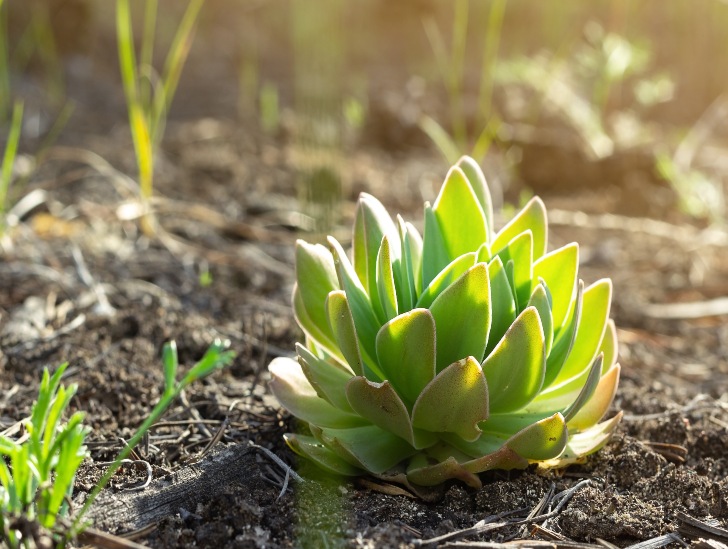
Sempervivum exposed to a partial sunlight.
Sempervivum is a genus of succulent plants that is part of the Crassulaceae family.

The succulent is characterized by its rosette shape and thick, fleshy leaves. These plants vary in size from just a few inches to over a foot wide. The leaves of sempervivum plants are often green, but they can also be red, brown, or purple. The flowers of sempervivum are small and star-shaped, and they can be white, pink, or red.

The plant reproduces through offsets, small plantlets forming around the mother plant’s base. These offsets can be removed and planted on their own, and they will eventually grow into full-sized plants.

Sempervivum is a low-maintenance plant that requires simple care and maintenance. They are tolerant of neglect and can go for long periods without water. These plants are also resistant to most pests and diseases.

Sempervivum is a popular houseplant but can also be grown outdoors in gardens. These plants make an excellent ground cover because they spread quickly and tolerate poor soil conditions. They are also drought-tolerant and can survive in hot, dry conditions.

Sempervivum as an Indoor Plant

Sempervivum makes great houseplants because they are easy to care for and tolerate periods of neglect. These plants prefer bright, indirect light but can survive in low-light conditions.

They should be planted in a well-draining potting mix and allowed to dry out completely between watering. Sempervivum is a drought-tolerant plant, so it doesn’t need to be watered often. Allow the potting mixture to dry out completely before watering again.

These plants can go for long periods without water, so they are perfect for busy people or those who often forget to water their plants.

However, sempervivum will start to look unhealthy if they are allowed to go too long without water. If the leaves begin to wither or the plant looks otherwise weak, it is time to water.

The best spots to grow sempervivum indoors are in bright, indirect light. These plants can tolerate low-light conditions but grow best in brighter light. South- or west-facing windows are ideal for growing sempervivum indoors.

A close up image of sempervivum.
Sempervivum makes great houseplants because they are easy to care for and tolerate periods of neglect.

You can grow sempervivum under artificial grow lights if you don’t have a spot in your home that gets enough natural light.

Since these plants don’t need much light, you can get away with using inexpensive fluorescent tubes or CFL bulbs. Place the lights about 12 inches above the plant and leave them on for 14 to 16 hours daily.

Sempervivum as an Outdoor Plant

Sempervivum is a naturally outdoor plant grown in gardens or other outdoor spaces. The succulent prefers full sunlight but can also tolerate partial shade. Consider planting it in well-draining, sandy soil.

When grown in an outdoor garden, sempervivum spreads quickly and forms a dense ground cover. It is a drought-tolerant plant that can survive in hot, dry conditions.

Sempervivum can also be used as an annual bedding plant. Feel free to plant the succulent in the spring so it can bloom in the summer. When the weather starts to cool off in the fall, the succulent dies back and can be removed from the garden.

A sempervivum exposed to morning sunlight.
Feel free to plant the succulent in the spring so it can bloom in the summer.

If you live in an area where the winters are icy, you can grow sempervivum as a houseplant and then move it outdoors for the summer. These plants can tolerate hot and cold temperatures, making them an excellent option for indoor and outdoor gardens.

Sempervivum Care

Sempervivum is a low-maintenance plant that is easy to care for. However, there are a few things you need to keep in mind when caring for these plants. Let’s take a look at some sempervivum care tips:

1. Light and Temperature

Sempervivum thrives in bright, indirect light. They can tolerate some direct sun, but too much direct sun will cause the leaves to scorch. The sempervivum plant prefers relatively cool temperatures and will not do well in hot, humid environments.

If you live in an area with hot summers, it is best to grow sempervivum in a shady spot outdoors or move them indoors until the weather cools off.

2. Watering

As succulents, sempervivum are very drought tolerant. However, they will need some water to survive. It is best to water your plants about once a week, allowing the soil to dry out completely between watering.

During the winter months, you can reduce watering to once every two weeks or even once a month. Be sure not to overwater your plants, as this can cause root rot.

3. Fertilizing

Sempervivum is not a heavy feeder and does not need to be fertilized often. Once a month during the growing season is sufficient. Be sure to use a light hand when fertilizing, as too much fertilizer can burn the roots of these plants.

4. Pests and Diseases

Sempervivum is generally disease and pest free. However, they can be susceptible to mealybugs and root rot if they are overwatered. Be sure to provide well-draining soil and water your plants only when the soil is dry to prevent these problems.

If you notice any pests on your plants, you can remove them by hand or treat them with insecticidal soap.

5. Pruning

As sempervivum grow, they will produce offsets—miniature replicas of the parent plant. These offsets can be removed from the parent plant and transplanted into their pot or planted in the garden.

If left unchecked, offsets will eventually overtake the parent plant. Remove any offsets that appear throughout the growing season to keep your plant looking its best.

Sempervivum in a succulent pot.
These offsets can be removed from the parent plant and transplanted into their pot or planted in the garden.

While pruning, you may also want to remove any damaged or dying leaves. This will help keep your plant healthy and looking its best.

How to Propagate Sempervivum

Sempervivum is easy to propagate from offsets, small plantlets forming around the mother plant’s base. These offsets can be removed and planted on their own, and they will eventually grow into full-sized plants.

To remove an offset from the mother plant, gently twist it until it comes loose. Once removed, allow the offset to callous over for a few days before planting. Be sure to plant the offsets in well-draining soil.

You can also propagate sempervivum from leaf cuttings. To do this, cut a leaf from the mother plant and allow it to callous for a few days. Once the leaf has calloused, you can insert it into well-draining soil. The leaf will eventually produce roots and form a new plant.

Taking care of a newly propagated plant is the same as taking care of a mature plant. Be sure to provide only bright, indirect light and water when the soil is dry. Don’t forget to fertilize once a month during the peak growing season!

Does Sempervivum Bloom?

Sempervivum does bloom, but the flowers are not particularly showy. The blooms are small and greenish-white in color. They appear in the summer and are followed by seed pods.

A blooming sempervivum.
Sempervivum does bloom, but the flowers are not particularly showy.

The blooms of sempervivum are not what these plants are grown for—it is the exciting foliage that makes them so popular. However, the blooms can be a pleasant surprise for gardeners who are not expecting them.

Wrapping Up

Sempervivum is an easy-to-care-for plant that makes a great addition to any garden. With their ability to tolerate both hot and cold temperatures, these plants can be grown indoors and outdoors.

Keep in mind the sempervivum care tips we listed above, and you’ll indeed have a healthy, thriving plant. We hope you enjoyed learning about sempervivum and that you are ready to add one to your home or garden!

How Big Does a Golden Barrel Cactus Get?

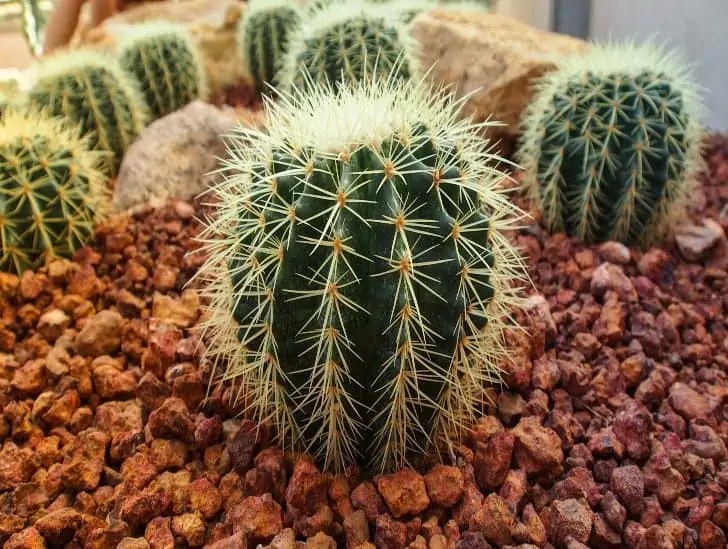
The Golden Barrel Cactus is a popular cactus species native to Mexico. It is commonly grown as a houseplant or outdoor decorative plant in warm climates. The Golden Barrel Cactus gets its name from its round, barrel-shaped body, reaching 3 feet in diameter. This cactus species is easily recognized by its yellow-gold spines covering the entire plant surface. Read on to learn more about the size, care, and uses of the Golden Barrel Cactus.

So, how big does the golden barrel cactus get? The golden barrel cactus is a relatively slow-growing succulent. In ideal conditions, it can grow up to 12 inches (30 cm) in height and width per year. However, it only grows 1-2 inches (2.5-5 cm) per year. It can take many years for a golden barrel cactus to reach its full size. The largest recorded golden barrel cactus was 6 feet (1.8 m) tall and 8 feet (2.4 m) wide.

Most golden barrel cacti will not get quite that large, however. If you are growing your cactus in a pot, it is unlikely to exceed 3-4 feet (90-120 cm) in height or width due to limited root space. Outdoors, golden barrel cacti can reach up to 6-8 feet (1.8-2.4 m) in height and width.

This article covers everything you need to know about the actual size of a golden barrel cactus, including its height, width, and how fast it grows.

We’ll also discuss critical factors that affect the size of a golden barrel cactus and how to care for one so that it reaches its full potential. Read on to learn more.

Golden Barrel Cactus Size

Golden barrel cactus is a generally slow-growing succulent. In ideal conditions, it can grow up to 12 inches (30 cm) in height and width per year. However, that is not always the case. The plant mostly grows only 1-2 inches (2.5-5 cm) per year. That means it can take many years for a golden barrel cactus to reach its full size.

The largest recorded golden barrel cactus was 6 feet (1.8 m) tall and 8 feet (2.4 m) wide. In most cases, the cactus won’t get quite that large.

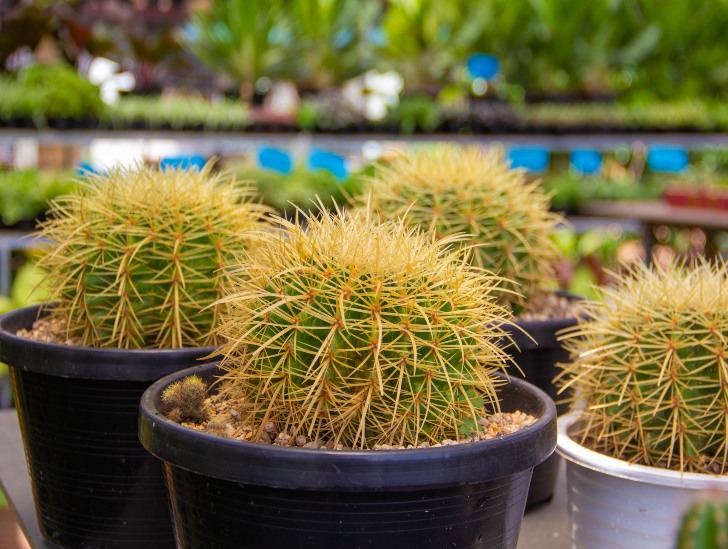
Golden barrel cactus in a black pot.
With proper care your golden barrel cactus will eventually reach its full potential.

If growing in a pot, it is unlikely to exceed 3-4 feet (90-120 cm) in height or width due to limited root space. Outdoors, the golden barrel cactus can reach up to 8 feet in height and width.

The most important thing you need to remember is that the golden barrel cactus grows slowly. Patience is critical when it comes to this plant.

Do not expect it to reach its full size overnight. With proper care, however, your golden barrel cactus will eventually reach its full potential.

What Factors Affect the Size of a Golden Barrel Cactus?

Several factors can affect the size of a golden barrel cactus. These include the following:

1. Soil Type

The type of soil you use can affect the growth rate of your golden barrel cactus. Cacti prefer sandy, well-draining soils. If soil is too dense or clay-like, it can impede the plant’s growth.

Likewise, if your soil does not drain well, this can also lead to stunted growth. For best results, use a cactus or succulent potting mix.

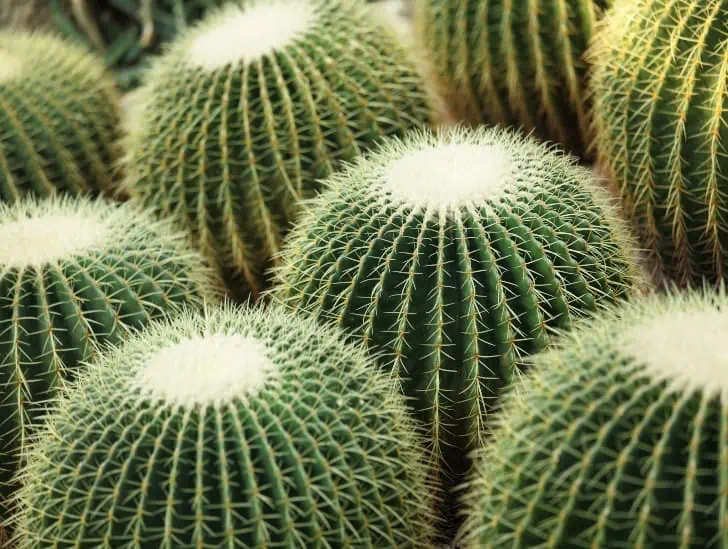
Golden barrel cactus.
The type of soil you use can affect the growth rate of your golden barrel cactus.

Ensure that the potting mix is well-ventilated to allow the roots to breathe. A good way to achieve this is to add some perlite, pumice, or grit to the potting mix. This will help improve drainage while providing the roots with enough moisture and nutrients.

2. Temperature

The temperature can also affect the size of your golden barrel cactus. Cacti are native to warm, arid climates. As such, they do not tolerate cold temperatures well. If the temperature dips below 50°F (10°C), this can damage the plant and lead to stunted growth.

It is best to grow your golden barrel cactus indoors in particularly cold regions. Doing this will protect it from the cold weather and help it to thrive.

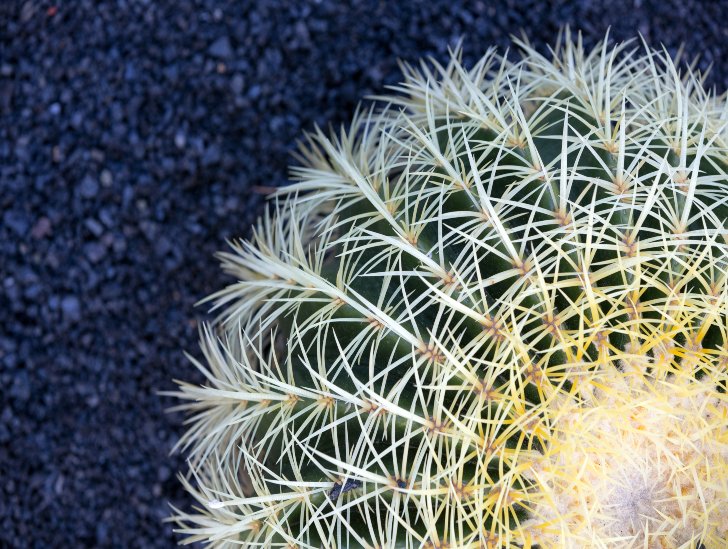
A topview of a golden barrel cactus.
Cacti are native to warm, arid climates. As such, they do not tolerate cold temperatures well.

If you live in a hot climate, ensure to provide your cactus with some shade during the hottest hours of the day. That will prevent the plant from getting too much sun and becoming stressed.

3. Pot Size

The size of the pot you use can also affect the size of your golden barrel cactus. If the pot is too small, it will restrict the plant’s root growth, leading to stunted overall growth.

If the pot is too large, the roots will have too much room to spread out. This can lead to slower growth as the roots will not be as dense. For best results, use a pot that is only slightly larger than the root ball of your plant.

4. Watering Schedule

How often you water your golden barrel cactus can also affect its size. If you water too often, the roots will become waterlogged and can begin to rot. Too much water will lead to stunted growth or even the death of your cactus.

On the other hand, if you fail to water them often enough, the plant will begin to dehydrate. Lack of water can also lead to stunted growth as the plant will not have enough moisture to support its growth.

A huge golden barrel cactus,
You may need to water less often in cooler climates or during the winter months.

Water your golden barrel cactus every 1-2 weeks, allowing the soil to dry out completely between waterings. If you live in a hot, arid climate, you may need to water more often. You may need to water less often in cooler climates or during the winter months.

5. Light Conditions

The light your golden barrel cactus receives can also affect its size. If the plant does not get enough light, it will stretch out and become leggy as it tries to reach for the light. Eventually, this may lead to stunted growth.

On the other hand, if the plant gets too much light, it can begin to scorch and turn brown. Excessive light will also lead to stunted growth as the plant cannot photosynthesize properly.

For best results, place your golden barrel cactus in an area that receives full sun to partial shade. If you live in a hot climate, provide your cactus with some afternoon shade to prevent it from getting too much direct sunlight.

6. Fertilizing Schedule

How often you fertilize your golden barrel cactus can also affect its size. If you fertilize too often, the plant can become overfed and begin to grow too quickly. Too much fertilizer can lead to weak, leggy growth more susceptible to damage.

If you do not use fertilizer often enough, the plant will not have the nutrients it needs to grow properly.

For best results, fertilize your golden barrel cactus every 2-4 weeks during the growing season. Use a balanced cactus fertilizer diluted to half-strength.

7. Humidity

Lastly, the humidity levels in your home can also affect the size of your golden barrel cactus. Cacti are native to dry, arid environments and do not tolerate high humidity well. If the humidity level in your home is too high, it can lead to fungal growth or root rot.

High humidity can damage the plant and lead to stunted growth. If you live in a humid climate, it is best to grow your golden barrel cactus in an area with good air circulation to prevent these problems.

General Golden Barrel Cactus Growth Rate

Golden Barrels are slow-growing cacti; they typically only add about 1 inch of height per year. However, they can grow a bit faster if they are given extra water and fertilizer.

Be patient if you want your Golden Barrel to reach its full potential! It will take several years to reach its mature height and width.

Golden Barrel Cactus Care

The Golden Barrel Cactus is a relatively low-maintenance plant that does not require much care. It should be planted in well-draining soil and placed in an area that receives full sun.

Water the plant deeply but infrequently, allowing the soil to dry out completely between watering sessions.

During the winter months, water even less frequently to prevent root rot. Apply fertilizer once per month during the spring and summer growing seasons.

If you live in a hot, arid climate, it is best to provide some afternoon shade to prevent the plant from getting too much direct sunlight.

A gardener repotting the golden barrel cactus.
The Golden Barrel Cactus is a relatively low-maintenance plant that does not require much care.

If you live in a humid climate, it is best to grow your Golden Barrel Cactus in an area with good air circulation to prevent problems with fungal growth or root rot.

With proper care, your Golden Barrel Cactus will thrive and provide you with years of enjoyment!

Golden Barrel Cactus Uses

The Golden Barrel Cactus makes an excellent houseplant or outdoor decorative plant. Due to its dense growth habit, it can also be used as a living fence or hedge.

This cactus species is also popular among gardeners who enjoy collecting and growing different cacti and succulents.

Summary

The Golden Barrel Cactus is a beautiful and popular plant that can grow quite large. However, its slow growth rate means it will take many years to reach its full-size potential.

Gardeners who are patient enough to wait will be rewarded with a stunning addition to their landscape!

We hope you enjoyed the Golden Barrel Cactus growth rate and care article. So, feel free to add a Golden Barrel Cactus to your collection today! Thanks for reading!

How to Propagate Pencil Cactus (Firestick Plant)

The pencil cactus (Euphorbia tirucalli) is a succulent native to Africa and parts of India. The plant gets its name from its long, thin, pencil-like stems. Pencil cactus is easy to grow and care for, making it a popular plant for indoor and outdoor gardens. If you’re looking to add a pencil cactus to your collection, propagation is a great way to do it. Fortunately, we are here to guide you through the process of propagating your very own pencil cactus.

So, how do you propagate pencil cactus? Pencil cactus can be propagated either through stem cuttings or seed germination. Stem cuttings are the most common propagation method, as they are easy to do and have a high success rate. To take a stem cutting, use a sharp knife or pair of scissors to cut a 2-3″ section from the end of a healthy stem. Remove any leaves from the cutting, then allow it to callus over for a few days before potting it in well-draining cactus soil. Water the cutting lightly and place it in a bright, sunny spot. Keep an eye on the cutting and water it when the soil begins to dry. In 4-6 weeks, you should see new growth appearing at the base of the cutting. If you’re more ambitious, you can propagate pencil cactus from seed.

This blog post discusses everything you need to know about propagating a pencil cactus. Read on to learn more.

Why Is Pencil Cactus Propagation Important?

Before we dive into the details of how to propagate pencil cactus, let’s talk about why propagation is essential.

The pencil cactus is a slow-growing plant that can take years to reach its full size. Propagation allows you to create new plants without waiting for the parent plant to produce offsets (or baby plants).

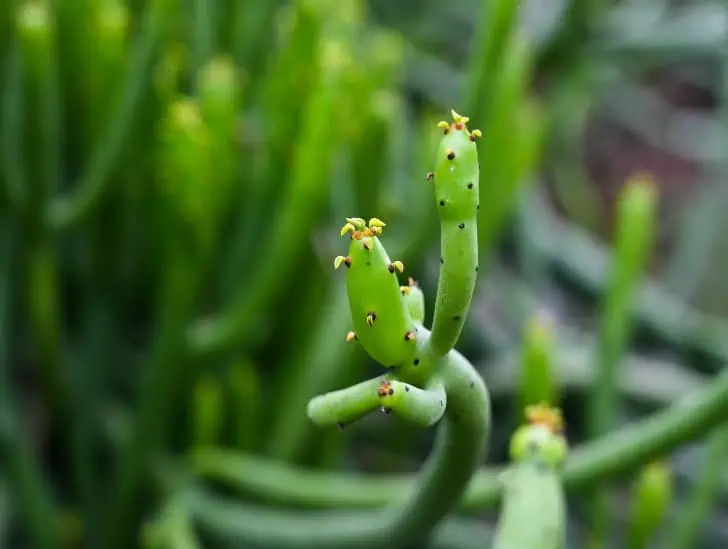
A floweing pencil cactus.
The pencil cactus is a slow-growing plant that can take years to reach its full size.

Not only does propagation save you time, but it’s also a great way to preserve the health of your existing plants. You’re not damaging the parent plant when you take cuttings from a pencil cactus. Many gardeners find that their plants benefit from removing some of their stems.

Different Ways to Propagate a Pencil Cactus

Now that you know a little about why propagation is essential, let’s talk about the different ways you can propagate pencil cactus.

As mentioned earlier, stem cuttings and seed germination are the two most common propagation methods. We’ll discuss both of these methods in more detail below.

Propagating Pencil Cactus from Stem Cuttings

Propagating pencil cactus from stem cuttings is the most common method of propagation. It’s also the most straightforward method, as there is no need to worry about germinating seeds.

To take a stem cutting, use a sharp knife or pair of scissors to cut a 2-3” section from the end of a healthy stem. Remove any leaves from the cutting, then allow it to callus over for a few days before potting it in well-draining cactus soil.

Water the cutting lightly and place it in a bright, sunny spot. Keep an eye on the cutting and water it when the soil begins to dry. In 4-6 weeks, you should see new growth appearing at the base of the cutting.

The stem cutting you obtain can be rooted in water or soil. Each method has its advantages and disadvantages, which we will discuss below.

Rooting Pencil Cactus Stem Cuttings in Water

Rooting pencil cactus stem cuttings in water is a popular method among gardeners, as it is effortless. The main advantage of this method is that it allows you to see when the roots are growing, as they will be visible in the water.

The main disadvantage of this method is that it can be tricky to transition the rooted cutting into the soil. This is because the roots that develop in water are very delicate and can easily be damaged.

If you decide to root your stem cutting in water, we recommend using a clear glass or jar. This will allow you to keep an eye on the roots and ensure they are healthy.

To root your stem cutting in water, fill your glass or jar with room-temperature water and place the cutting inside. Make sure that the bottom inch or so of the stem is submerged.

Place the glass or jar in a bright, sunny spot and check on it every few days to ensure the water level hasn’t dropped too low. When it does, add more water to keep the stem submerged.

It can take anywhere from 2-8 weeks for roots to develop. Once they do, you can transplant the cutting into the soil.

Rooting Pencil Cactus Stem Cuttings in Soil

Rooting pencil cactus stem cuttings in the soil is a bit more complex than rooting them in water, but it’s doable.

The main advantage of this method is that there is no need to transition the cutting into soil, as it will already be rooted in soil when you take it.

However, the main disadvantage of rooting your pencil cactus cutting in the soil is that it can be difficult to tell when the roots are growing, as they will be hidden beneath the ground.

A person hoolding a pencil cactus in a pot.
The main advantage of this method is that there is no need to transition the cutting into soil.

We recommend using a pot at least 6″ wide with drainage holes if you decide to root your stem cutting in soil. This will give the roots plenty of room to grow.

Fill the pot with well-draining cactus soil, then make a small hole in the center of the soil. Place the stem cutting in the hole, so the bottom inch or so is buried.

Water the soil lightly, then place the pot in a bright, sunny spot. Keep an eye on the soil and water it when it begins to dry. In 4-6 weeks, you should see new growth appearing at the base of the cutting.

Propagating Pencil Cactus from Seed

You can try propagating pencil cactus from seed if you’re more adventurous. This method’s main advantage is gratifying, as you watch the plant grow from a tiny seed into a mature cactus.

But remember that propagating pencil cactus from seed takes time and patience. It can also be challenging to get the seeds to germinate, so don’t get discouraged if it doesn’t happen on the first try.

Seeds on hand.
Propagating pencil cactus from seed takes time and patience.

To propagate pencil cactus from seed, you will need to obtain a fresh batch of seeds. You can purchase the seeds online or at a local nursery. Once you have your seeds, sow them in a well-draining cactus soil mix.

Place the pot in a bright, sunny spot and water the soil lightly. Keep an eye on the soil and water it when it begins to dry.

It can take anywhere from 2-8 weeks for the seeds to germinate. Once they do, you can transplant the seedlings into individual pots.

Propagating Pencil Cactus by Division

Besides stem cuttings and seeds, division is another popular method for propagating pencil cactus. This is an excellent option if you already have a mature pencil cactus that you want to propagate.

The main advantage of this method is that it’s easy to accomplish. The main disadvantage is that it can be challenging to find a mature pencil cactus that is big enough to divide.

If you do find a mature pencil cactus that you want to divide, the first thing you need to do is carefully remove it from its pot. Once it’s out of the pot, you can see its root system.

Close up image of a pencil cactus.
This is an excellent option if you already have a mature pencil cactus that you want to propagate.

Using a sharp knife, carefully divide the root ball into two or three sections. Make sure that each section has a good amount of roots attached to it.

Once you have divided the root ball, you can replant the sections in individual pots. Water the soil lightly and place the jars in a bright, sunny spot.

Keep an eye on the soil and water it when it begins to dry. In 4-6 weeks, you should see new growth appearing at the base of the plant.

Caring for a Newly Propagated Pencil Cactus

Once you have successfully propagated your pencil cactus, it’s time to start caring for it. The good news is that these plants are easy to care for and require little attention.

The most important thing to remember when caring for a newly propagated pencil cactus is not to overwater it. These plants are highly susceptible to root rot, so it’s essential to ensure the soil is always on the dry side.

Water the soil when it begins to dry out, then allow the water to drain completely before putting the pot back in its place.

Another critical thing to remember is to protect the plant from frost. These plants are native to warm, arid climates and cannot tolerate cold temperatures. Keeping your pencil cactus indoors is best if you live in an area with frosty winters.

A pencil cactus exposed to sunlight.
Close up image of a pencil cactus. This is an excellent option if you already have a mature pencil cactus that you want to propagate.

Place the pot in a bright, sunny spot and keep an eye on the soil. Water it when it begins to dry out and fertilize it once a month during the growing season. Your newly propagated pencil cactus should thrive and grow into a healthy plant with proper care.

Summary

Pencil cacti are beautiful, easy-to-care-for plants that make great houseplants or additions to any garden. And the best part about them is that they are straightforward to propagate!

With just a few simple tools and materials, you can have a new pencil cactus plant in no time. Thanks for reading, and happy gardening!

9 Best Types of Euphorbia to Grow

If you’re looking for a unique and interesting plant to add to your garden, look no further than the Euphorbia! Also known as spurge, this diverse group of plants comes in all shapes and sizes and can add a touch of whimsy to any garden. They are not only beautiful but also easy to care for.

So, what are the different types of euphorbias to grow in your garden? Some of the most common types of euphorbias include euphorbia amygdaloides, or wood spurge; euphorbia characias, or Mediterranean spurge; euphorbia dulcis, or sweet splurge, and euphorbia myrsinites, or donkey tail spurge. Others include more unusual varieties such as Euphorbia x martini and Euphorbia lathyris.

Each plant has unique features that make it stand out from the rest. For example, wood spurge is a low-growing plant that is perfect for covering the ground in shady areas of the garden. On the other hand, Mediterranean spurge is a taller plant that produces beautiful yellow flowers.

This blog post discusses common types of euphorbias to grow in your garden. Read on to find out everything you need to know.

What Makes Euphorbia a Great Plant for Your Garden

Contrary to popular belief that all succulents are cacti, not all cacti are succulents. In fact, there is only one family of plants classified as succulent and cactus, the Euphorbiaceae Family, which contains over 7,500 members, including the genus Euphorbia.

The vast majority of euphorbias are not cacti, but they are often confused as such because of their similarities. Both plants are adapted to arid climates and have thickened, fleshy leaves or stem that store water. They both produce flowers, but Euphorbias produce a much wider variety of flower shapes, colors, and sizes.

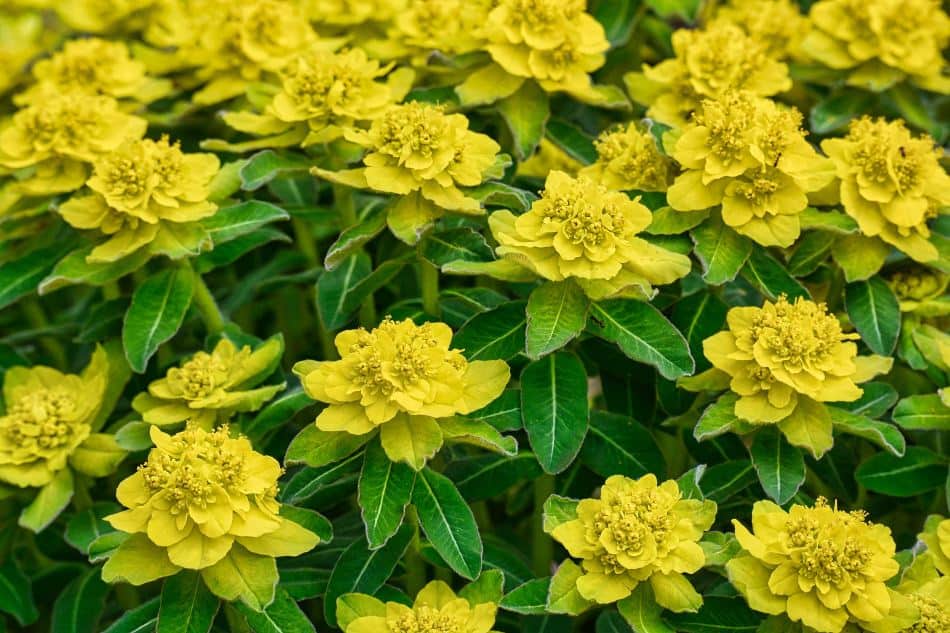
A blooming Euphorbia.
There is only one family of plants classified as succulent and cactus, the Euphorbiaceae Family

Euphorbias are native to every continent except Antarctica and can be found in various habitats, from deserts to rainforests. There are both annual and perennial varieties and succulent and non-succulent types. In other words, there is a type of Euphorbia for every garden!

Here are some reasons why Euphorbia makes an excellent plant for your garden. They are:

  • Easy to care for and require very little maintenance.
  • Drought-tolerant and can thrive in areas with little water.
  • Heat-tolerant and can withstand high temperatures.
  • Adaptable and can grow in a wide variety of climates and habitats.
  • Available in a wide range of colors, shapes, and sizes.

What Are the Different Types of Euphorbias to Grow in Your Garden?

Now that you know a little bit more about Euphorbia and why it makes an excellent plant for your garden, let’s look at some of the different types you can grow.

1. Euphorbia amygdaloides

Euphorbia amygdaloides, also known as wood spurge, is a low-growing succulent that is perfect for covering the ground in shady areas of the garden. It has dark green leaves with purple veins and small, yellow flowers that bloom in the spring.

This Euphorbia is native to Europe and Asia and can grow up to 18 inches tall. The plant is easy to care for and requires very little maintenance. Typically, it thrives in moist, well-drained soils and does not require much water.

A close up image of Euphorbia amygdaloides.
It has dark green leaves with purple veins and small, yellow flowers that bloom in the spring.

It is best for USDA hardiness zones 4-8 and relatively rich tones. The Euphorbia amygdaloides will self-seed happily in the right conditions making it an excellent ground cover for those difficult-to-fill shady spots in your garden.

It looks excellent when planted with other shade-loving plants such as hostas, ferns, and impatiens.

2. Euphorbia characias

Euphorbia characias, also known as Mediterranean spurge, is a tall, evergreen succulent that produces beautiful yellow flowers. It is native to Europe and Asia and typically grows up to 3 feet tall.

This Euphorbia is easy to care for and requires very little maintenance. It thrives in well-drained soils and does not require much water. It is best for USDA hardiness zones 8-10.

The Euphorbia characias is an excellent choice for gardens that receive much sun. It looks gorgeous when planted in mass as a border or accent plant. It also makes a perfect cut flower for bouquets and arrangements.

3. Euphorbia x martini

This hybrid euphorbia has characteristic deep green leaves with creamy yellow margins. It’s a compact plant that grows about 12 inches tall and wide, making it perfect for small gardens or planting in containers.

Euphorbia x martini is also relatively low-maintenance, requiring little more than occasional watering and fertilizing. It is best for USDA hardiness zones 9-11 and an excellent choice for gardeners looking for a splash of color.

It looks beautiful when planted in mass as an accent plant or border. It also makes a great cut flower for bouquets and arrangements.

Euphorbia x martini is native to Europe and Asia and typically blooms in the spring. Its blooms are small and yellow and last for several weeks.

4. Euphorbia Lactea

The Euphorbia lactea is a succulent plant that originates from India. It has thick, fleshy leaves arranged in a rosette shape. The leaves are shades of green, with some varieties having white or cream-colored stripes running through them.

The Euphorbia lactea grows best in full sun to partial shade and well-drained soil. It is tolerant of drought and heat, making it an ideal choice for gardens in hot, dry climates.

This type of Euphorbia typically blooms in the spring or summer. Its flowers are small and yellow and last for several weeks.

The Euphorbia lactea is an excellent choice for gardeners looking for a succulent that is easy to care for and provides beautiful color and interest to the garden.

5. Euphorbia myrsinites

Euphorbia myrsinites, also known as donkey tail spurge or myrtle spurge, is a low-growing succulent that produces long, cascading stems covered in blue-green leaves. It is native to Europe and Asia and typically grows up to 12 inches tall.

This Euphorbia is easy to care for and requires very little maintenance. It thrives in well-drained soils and does not require much water. It is best for USDA hardiness zones 4-8.

A close up image of euphorbia myrsinites.
Euphorbia myrsinites, also known as donkey tail spurge or myrtle spurge.

The Euphorbia myrsinites is an excellent choice for gardens that receive enough sunlight. It looks stunning when planted in mass as a border or accent plant. It also makes a great cut flower for bouquets and arrangements.

Euphorbia myrsinites is also known to be deer resistant, making it a good choice for gardeners who live in areas where deer are a problem.

6. Euphorbia Milii

The Euphorbia milii, also known as the crown of thorns or Christ plant, is a shrub that originates from Madagascar. It gets its name from the sharp thorns that line its stems. The Euphorbia milii has small, oval-shaped leaves that are deep green.

The flowers are small and yellow and grow in clusters at the tips of the stems. The Euphorbia milii grows best in full sun to partial shade and well-drained soil. It is tolerant of drought and heat, making it an ideal choice for gardens in hot, dry climates.

7. Euphorbia cyparissias

Euphorbia cyparissias, also known as cypress spurge, is a low-growing succulent that produces long, cascading stems covered in blue-green leaves. It is native to Europe and Asia and typically grows up to 12 inches tall.

This type of Euphorbia is easy to care for and requires very little maintenance. It thrives in well-drained soils and does not require much water. It is best for USDA hardiness zones 4-8.

A close up image of euphorbia cyparissias.
It makes a great cut flower for bouquets and arrangements.

The Euphorbia cyparissias is an excellent choice for gardens that receive much sun. It looks gorgeous when planted in mass as a border or accent plant. It also makes a great cut flower for bouquets and arrangements.

Euphorbia cyparissias is also known to be deer resistant, making it a good choice for gardeners who live in areas where deer are a problem.

8. Euphorbia Marginata

One of the most popular types of euphorbias is the Euphorbia marginata, also known as snow on the mountain. This perennial plant is native to the mountainous regions of Europe, Asia, and North America.

It’s easily recognizable by its white margins and small, round leaves. The Euphorbia marginata is a low-maintenance plant that’s perfect for beginner gardeners. It thrives in well-drained soils and prefers full sun to partial shade.

The Euphorbia marginata is an excellent choice for gardens that receive adequate sun. It looks lovely when planted in mass as a border or accent plant. It also makes a great cut flower for bouquets and arrangements.

9. Euphorbia Tirucalli

The Euphorbia tirucalli, also known as the pencil cactus or milk bush, is a succulent that originates from Africa. It gets its name from its thin, pencil-like stems that can grow up to 20 feet long. The Euphorbia tirucalli has small, oval-shaped leaves that are deep green.

A flowering pencil cactus.
It is tolerant of drought and heat, making it an ideal choice for gardens in hot, dry climates.

The flowers are small and yellow and grow in clusters at the tips of the stems. The Euphorbia tirucalli grows best in full sun to partial shade and well-drained soil. It is tolerant of drought and heat, making it an ideal choice for gardens in hot, dry climates.

Summary

As you can see, there are many different types of euphorbias to choose from. Whether you’re looking for a low-maintenance plant or something that will add height and interest to your garden, there’s sure to be a type of Euphorbia that’s right for you. So why not add one (or more!) of these unique plants to your garden today?