
10 Desert Plants ideas When Landscaping

You are finally through building your dream home, but wait; your outdoors look plain and unpleasant. This is the time to think about landscaping to help improve the overall outlook of your backyard. While you may consider several options for the purpose, using desert plants for the same can be a unique approach to your landscaping endeavors. While many may picture the desert as a barren endless mass of sand, nothing could be further from the truth. The desert is home to various plants that include cactus, trees, shrubs, grass, and other attractive, flowery plants. These come in multiple shapes, sizes, and colors to help transform your outdoors into some work of art.

So what are the ideal desert plants you can use for your landscaping? While the choices are endless, the following are the most common options based on their growth patterns, size and visual appeal:

  1. Golden Barrel Cactus
  2. Yellow bells
  3. Bottle Brush
  4. Texas Sage
  5. Aloe Vera (Aloe)
  6. Flaming Katy
  7. Jade Plant or Friendship Tree
  8. Mexican Feather Grass
  9. Paddle Plant or Red Pancake
  10. Ghost Plant Succulent

This article takes a closer look at each of these desert plants and their suitability for landscaping.  We will discuss more about their adaptations and what attractive features they bring to your landscaping design.

1. Golden Barrel Cactus

You may have heard about the huge barrel cactus; this is not it. The Golden Barrel Cactus (Echinocactus grusonii) is from the same family, but smaller and round-shaped. This unique shape makes it an attractive feature to add to your landscape design. If you are working on a rock garden or cactus garden, then this is your best bet to include in the mix. Its spherical form makes it an ideal option for anyone looking to create a geometrically inclined landscaping design. As the cactus grows, however, it may change shape and turn cylindrical. You can find the golden barrel cactus in various shades of green coupled with spikes that come in multiple shades of yellow. Occasionally, the cacti may surprise with some bright yellow flowers.

Golden Barrel is a round-shaped cactus species that can produce bright yellow flowers when blooming.

2. Yellow Bells

Are you looking to go flowery for your landscaping project? Well, what better option to go for other than the flowery bell? These unique desert flowery plants stand out with their bright yellow flowers that bloom abundantly within a short period. As the name suggests, its flowers are bell-shaped and vibrant. The plant works best when mixed with other flowery or non-flowery plants to give your landscaping design the much-desired ambience.

3. Bottlebrush

The bottlebrush (Callistemon) gets its name from its flowers that bear some striking resemblance to bottle brushes. This desert plant stands out with its brightly colored needles that form the flower. Although the plant is sometimes referred to as a bottlebrush tree, it also grows as a shrub. This makes it an ideal option to include in a list of low-growing landscape plants. The plant commonly bears red flowers, although there are species that bloom a variety of other colors. Add color, intriguing texture, and drama to your garden with this unique desert plant.

For best effects, first determine what the bottlebrush needs to do in your landscaping design. Usually, this would come in to enhance the color scheme, support local birds, or even liven up that dull corner in your garden.

4. Texas Sage

Are you looking to add some natural purple to your landscape? Well, the Texas Sage (Leucophyllum frutescens) does just that. It helps bring in that neutral tone that helps blend with other desert plants in your garden. Its lavender and purple colored blooms may be significantly small but stand out with their sturdiness.

 This desert plant remains green for the better part of the year but come summer, the tiny flowers in shades of lavender, blue and purple will cover its branches. This bloom will remain all through the fall. The texas sage does not need any pruning, making it ideal for gardens that do not require much disturbance all through the year.

5. Aloe Vera (Aloe)

If you live in a mild climate and love succulents, then the aloe vera should be your best bet when designing your landscapes. This drought-resistant succulent not only helps add some drama to your garden but also gives your landscape a contemporary look, especially when planted in geometrical blocks. For better results, bring in a mix of two or three varieties of aloe vera. They work best when mixed with some drought resistant flowering perennials or ornamental grass.
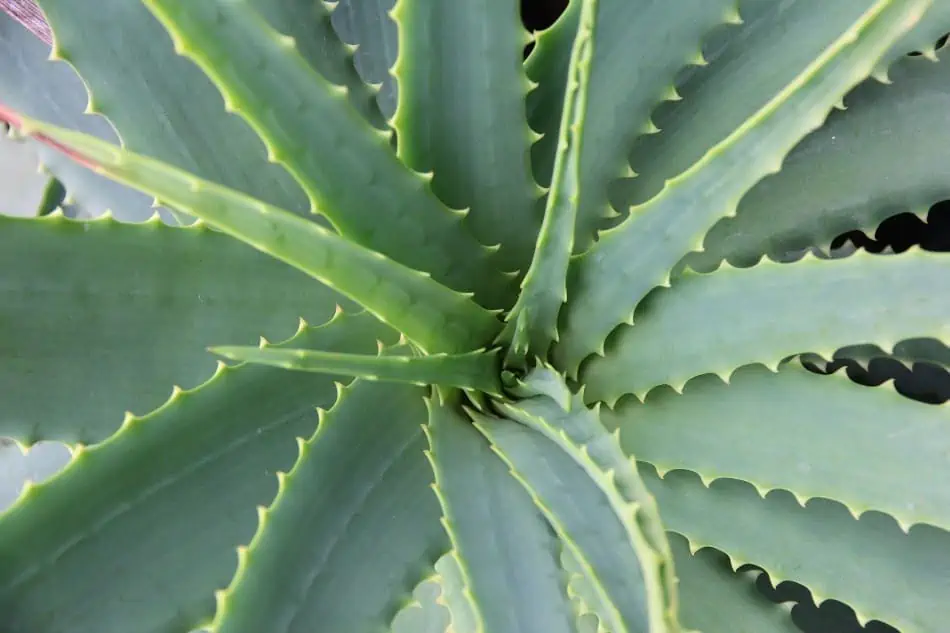
Aloe Vera is a drought-resistant succulent that carries a variety of health benefits.

What’s more, you will be glad to benefit from aloe vera’s medicinal values right at your doorstep. However, you may need to approach this feat with care as some aloe species are poisonous and require the expertise of an experienced arborist to help differentiate the same. With the right mix, aloe vera brings in a versatile addition to your landscape design.

6. Flaming Katy

Have you been searching for the best way to add some color to your landscaping design? The Flaming Katy (Kalanchoe blossfeldiana) would be an ideal pick for this purpose. This easy-to-grow succulent helps bring some vibrancy to your garden or backyard. The best thing about the Flaming Katy is that it is not an invasive plant. As such, you need not worry about it crawling all over the place when used for landscaping.

This delightful plant not only helps add some striking colors to your landscape but also gives you an easy time on maintenance. With just the right lighting and temperatures, you can be assured of getting some gorgeous blooms to make it a strikingly attractive centerpiece for your landscaping design. You will love the giant splash of color the plant comes with when they bloom.

7. Jade Plant or Friendship Tree

The fact that the Jade plant (Crassula ovata) falls somewhere between a flower, a tree, and a shrub makes it a unique addition to your desert landscape. Usually, the plant grows to take up the shape of a small bush. During the winter and fall months, the plant blooms with some slightly pinkish but white flowers. This gives your garden some color, especially when mixed with other flowery plants. Jade plants or friendship tree will flourish best in loamy quick-draining soil as it is prone to root rot easily when exposed to slow-draining soil.
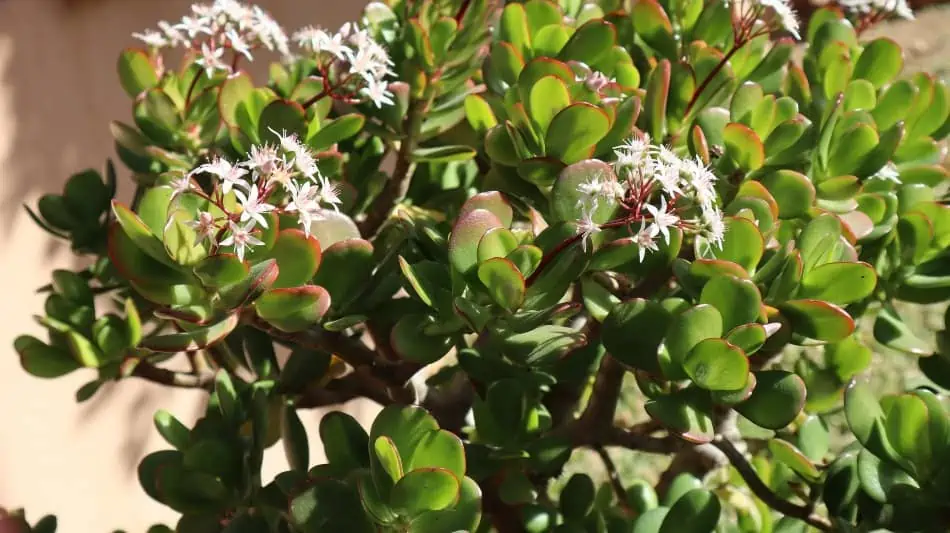
The Jade Plant is a desert plant with white to pinkish flowers that can give your garden a more lively look.

8. Mexican Feather Grass

A landscaping design cannot be complete without some grass and the Mexican Feather Grass (Stipa tenuissima) come in to complete the design by giving your garden that feathery feel. As an ornamental grass, the Mexican Feather Grass stands out with its delicate but graceful and fine texture. Its growth pattern cascades just like a water fountain, making it appealing to the eye. Its delicate blades blend in to create that magical beach-like environment. Add this allure to its drought resistance, and you have just the right desert plant for your landscape design. When planting, however, be careful not to overdo it as the grass spreads quickly and can become invasive.

9. Paddle Plant or Red Pancake

The Paddle Plant  (Kalanchoe thyrsiflora) is a popular succulent in the world of landscape design.  It stands out with its rounded and thick paddle-shaped leaves. The Paddle Plant is a crowd favorite thanks to its easy disposition, coupled with its eccentric shape and coloring. It may look bizarre in its growth pattern, but this uniqueness makes it even more appealing as a landscaping plant.

 For better results, intertwine the paddle plant with other succulents to create an attractive silhouette. Add some dramatic splashes of red to your landscape design using this color-changing low maintenance desert succulent.

10. Ghost Plant Succulent (Graptopetalum paraguayense)

The Ghost Plant (Graptopetalum paraguayense) is a cold-hardy desert succulent featuring some whitish or pale grey leaves. Its stands out as an ideal landscaping plant thanks to its versatile growth. You will love how it cascades down the pot or container to make an unprecedented groundcover.
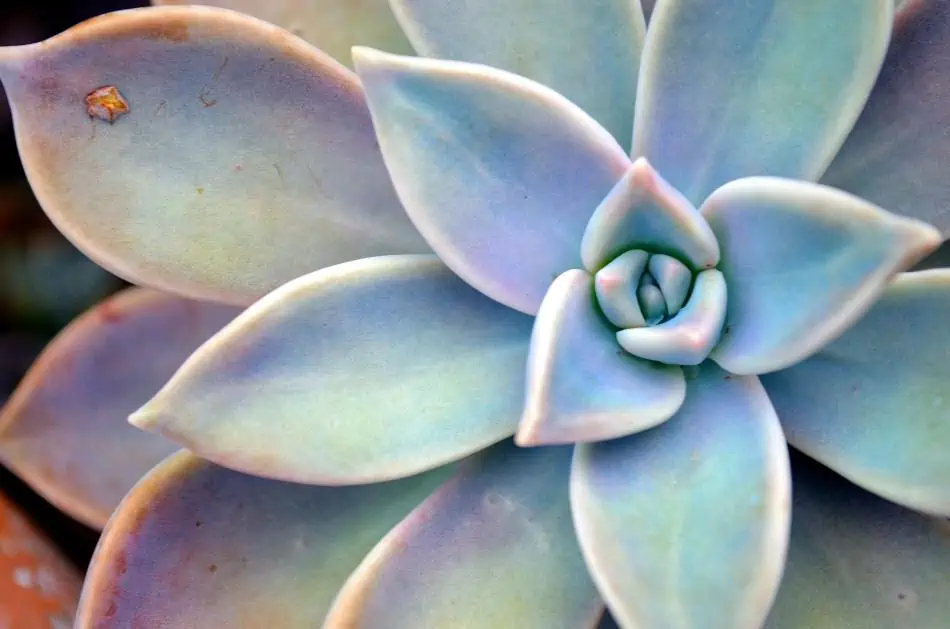
The Ghost Plant is a desert succulent with pale green, grey, pinkish, or blueish leaves.

The plant gets its name from the powdery coating on its leaves that give it a ghostly look. This coating should be handled with care as it fades with ease. Its trailing stems and form rosettes that range from yellow-pink to blue-gray gives the plant an edge as an attractive landscaping addition. They work best when planted along pathways, in rock gardens, arranged in planters, or as garden borders.

Final Thoughts

Your idea of a desert landscape doesn’t necessarily have to be all about green, brown and other dull colors. You will be surprised to realize that there is a myriad of colorful, ornamental, and attractive desert plants you can use for your landscape idea or outdoor garden. It all boils down to how best you can mix and blend them to give you that appealing look. Break up the plant pattern by mixing desert plants of different sizes, shapes and colors in your landscape design. 

Apart from plants, you can also consider throwing in some desert oriented items like stones and sand. This will help complement the desert plants and give you that natural desert feel and look.

Top 8 Desert Plants To Grow Indoors

Bringing some plants into your house is a great way to freshen up your space. Not only that, but having indoor plants has many benefits!

The hard thing about growing plants indoors is that not everyone has a green thumb. In fact, many people find it difficult to keep indoor plants.

But that’s where desert plants come in! Due to the nature of their origin, desert plants like cacti are very hearty and can withstand even rough, indoor conditions. Once you learn about your desert plant and understand their light and water requirements, you could find yourself growing a plant that could live upwards of 50 years!

So, what are the top 8 desert plants to grow indoors? Our top eight best selection include aloe vera, lithops, old lady cactus, adenium plant, ghost plant, ponytail palm, African milk tree and the prickly pear cactus.

So, are you ready to get started growing your indoor garden? Check out the top eight desert plants to grow indoors!

1. Old Lady Cactus

The Old Lady Cactus is a great desert plant to grow indoors. Usually, it is grown as an outdoor plant but with the right care, it can thrive indoors.

The Old Lady Cactus, which is native to central Mexico, is also known as the Birthday Cake Cactus or the Old Lady Pincushion.

This spherical succulent does not like growing alone, so it does best in a pot with other similar cactuses. On average, it grows four to five inches tall and about five inches wide. If you take great care of it, it could grow as tall as 10 inches!

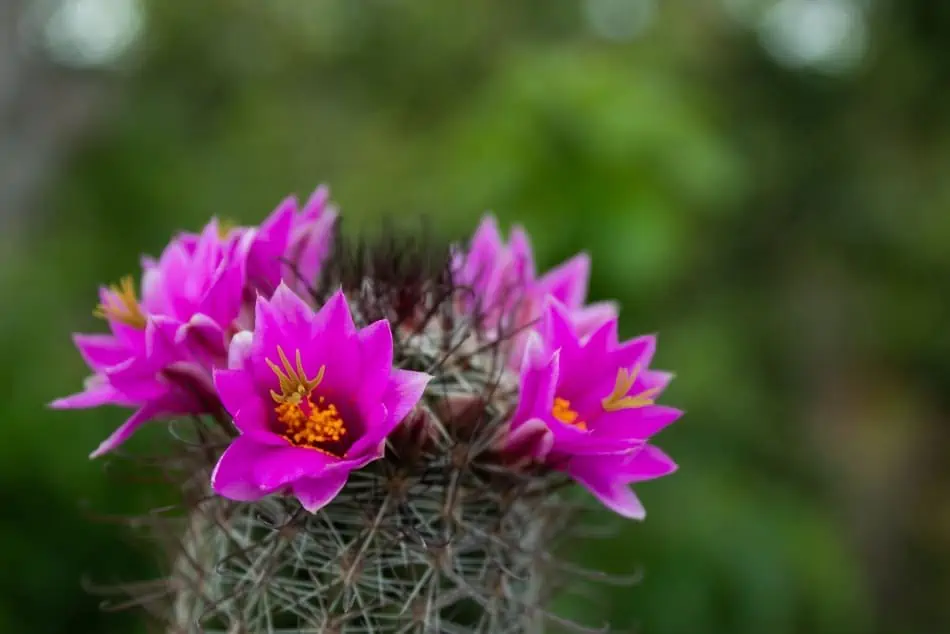
A old lady cactus flowering.
To help your Old Lady Cactus bloom and produce magenta flowers, make sure it gets enough sunlight and just a bit of water.

The most beautiful part of the Old Lady Cactus is its magenta flowers that look like a hero around its top. It also features thin, white spikes in dense groupings all over its surface. They may look soft, but be careful! They can be prickly!

To get your Old Lady Cactus to thrive and bloom indoors, you have to get its conditions just right. It is a very durable plant, but it needs plenty of sunlight and only a little water. And you should consider choosing a cactus mix soil because it is porous and well draining- perfect for your Old Lady Cactus.

Make sure that your Old Lady Cactus gets 4-6 hours of sunlight a day. If you don’t have a window that gets that much sun, you can use a grow light instead. And only water it when the soil is completely dry to avoid overwatering.

With the proper care, your Old Lady Cactus could live for 10 years or more!

2. Aloe Vera

Aloe Vera plants are great desert plants to grow indoors, especially in the kitchen! Aloe is not only pretty, but all of its medicinal properties can come in handy.

For starters, the gel from inside the leaves on aloe plants can be applied to burns, scrapes, and even sun burns to relieve the pain! Aloe is also used in various beauty treatments for your skin, hair, or scalp.

You can even eat aloe! It’s not uncommon for aloe to be added to smoothies as the juice has plenty of digestive benefits. You can even dry out the leaves and eat them like a chip. Aloe has plenty of uses!

A aloe vera.
When growing Aloe Vera indoors, you should allow 3-4 years for the plant to reach maturity.

Aloe Vera, which is also known as the Lily of the Desert and Plant of Immortality in Egypt, has many thick and fleshy leaves. When the plant is healthy, it is a shade of grey green or blue green.

When an aloe plant reaches maturity, they can get as big as 25 to 40 inches tall. When grown indoors, it can take about three to four years to reach maturity. Plus, it can also spread or create new, smaller plants through offsets.

Aloe vera plants can live up to 25 years with the right care. However, you learn how to propagate your aloe plant, you can see its offspring live on and on for years!

To care for your aloe plant, first make sure that it gets plenty of sunlight, about six hours a day. It needs to be in a bright spot with indirect sunlight. Full, direct sunlight could actually burn your aloe! You should also turn it regularly to avoid the leaves getting yellow on one side.

When it comes to watering your aloe plant, make sure that its soil dries completely before you water it. It will also do better in a pot that has plenty of drainage holes. Without drainage holes, the roots of your aloe plant might start to rot. Finally, aloe grows better in cactus mix soil.

Aloe is a very safe plant to grow in your home. However, if you have pets, be aware that it has been known to cause mild to moderate effects of toxicity in both cats and dogs when ingested. Side effects include vomiting and diarrhea.

3. Ghost Plant

The Ghost Plant is one of the most common types of succulents you see and it is a great desert plant to grow indoors. In fact, the Ghost Plant is also very popular as a fake plant!

Also known as the Mother of Pearl plant, the Ghost Plant has short, fleshy leaves and is often found in a light green or pink/grey color. When full grown, they can get up to 20 inches wide and 12 inches tall.

When it comes to its lifespan, the Ghost Plant, which is part of the Jade Plant family, can live anywhere from a whopping 70 to 100 years. So if you give it the love and care it needs, you could see it live a long, long time.

A Ghost plant.
The Ghost Plant is one of the most widespread succulent species characterized by a light green or pink-greyish color.

The best part about the Ghost Plant is that it is non-toxic to both humans and pets, making it a very safe plant to have around your home!

To care for your Ghost Plant, make sure that it gets plenty of full sunlight. If full sunlight isn’t available, it can still thrive in partial sun. However, be aware that the kind of light it gets will affect its coloring.

Full sunlight will make a Ghost Plant bushier while partial sunlight can give a grey tone to their leaves.

Just like most succulents and desert plants, make sure your Ghost Plant’s soil is completely dry before you water it. You may even only end up watering it every other week. Talk about low maintenance!

And don’t forget it’s soil! Like the rest of the desert plants we have discussed, a cactus mix soil will be best for your Ghost Plant.

4. African Milk Tree

The African Milk Tree is another great desert plant that is easy to take care of. This plant that is native to Central Africa grows quite quickly and is also known as the Good Luck Plant.

It got its name from the milky latex that is right beneath its outer layer. However, be careful with this milky layer if the outer layer breaks and you become exposed to it. The milky latex layer can be a harmful irritant.

When it is full grown, the African Milk Tree can grow up to eight feet tall. However, when grown indoors, it is possible it won’t grow taller than four feet. It can also live up to 60 years with the right care!

A african milk tree.
Your African Milk Tree will only need water once a week, after the soil has had time to dry out.

The African Milk Tree has at least one large, green stalk with protruding leaves. If you have a Rubra or Royal Red variety of the African Milk Tree, you will see your plant’s leaves turn red late in the season.

When deciding where to put your African Milk Tree, choose a spot that has indirect sunlight. If you can’t completely avoid direct sunlight, make sure to keep an eye on it on days when temperatures get high as it could damage its leaves.

Your African Milk Tree will only need water once a week, after the soil has had time to dry out. Also make sure that you plant it in soil that has good drainage, such as Sandy Loam soil.

Again, be careful of coming into contact with the milky latex layer. If the plant is damaged, this layer will become exposed and can be harmful to both pets and humans if it is ingested or if it comes into contact with skin.

Side effects of coming into contact with the milky latex layer includes redness in the affected areas and swelling. If it comes into contact with your eyes, it could cause temporary blindness and in extreme cases, ingestion could cause death.

So be extra careful if you bring this plant into a home with pets or small children.

5. Prickly Pear Cactus

The Prickly Pear Cactus is what most people think of when they picture a cactus. It is also easy to grow indoors!

A fun fact about the Prickly Pear Cactus is that it grows fruit that is known as “tuna.” This fruit is high in Vitamin C and many people describe its taste as a cross between raspberries, watermelon, and bubblegum!

The pads of the Prickly Pear Cactus are also edible once its skin and spines are removed. This part of the cactus is used in tacos and salads a lot.

Since the Prickly Pear Cactus is edible, it is a safe and non-toxic plant. However, its protruding spines do raise another safety issue. Because of that, make sure it is out of the reach of small children and pets.

A pricly pear cactus with fruit.
The Prickly Pear Cactus is a fruit-bearing cactus species that requires about 4-6 hours of sunlight daily.

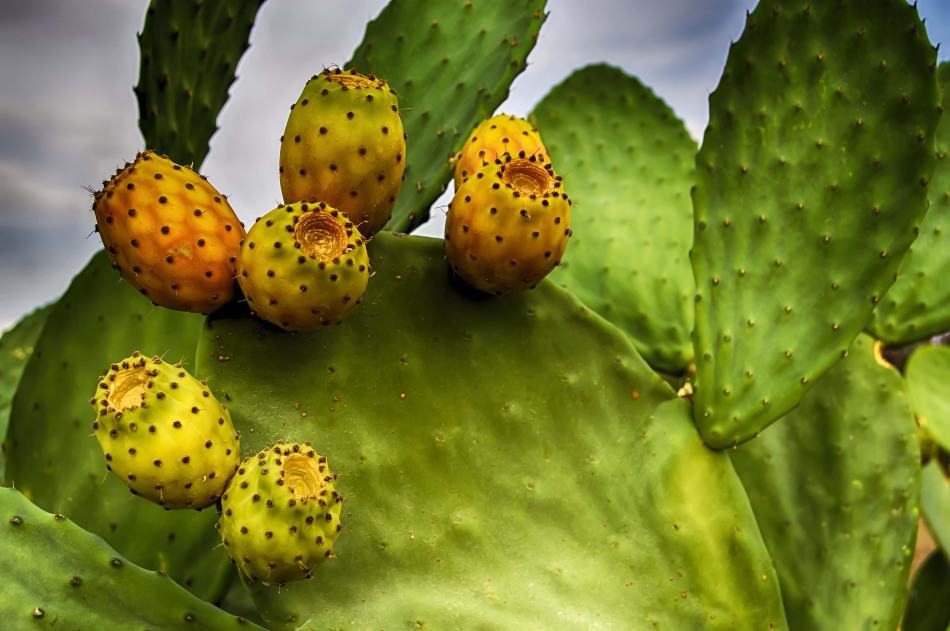
The Prickly Pear Cactus has pads that are flat, green ovals. Spikes spread across the surface of the pads that protrude outward and the “tuna” fruit grows in clusters around the tops of the pads. The “tuna” are either light red or magenta and have their own smaller clusters of spikes.

With the right care, your Prickly Pear Cactus can grow anywhere from one foot tall to 18 feet tall, and can ever live to be over 20-years-old.

Prickly Pear Cacti love to get 4 to 6 hours of sunlight a day. They are also one of the most drought resistant desert plants. In the summer, they only need water once every two weeks. For the rest of the year, they only need watering once a month.

When planting your Prickly Pear Cacti, a mix of sand and potting soil would be best.

Adenium Plant

Adenium plant is a type of flowering plant native to the deserts of Arabia and Africa. It is also known as the “Desert Rose.” The Adenium Plant is a beautiful, low-maintenance plant that can be grown both indoors and outdoors.

The Adenium plant has a thick, fleshy stem with glossy, dark green leaves. The flowers are beautiful and come in various colors, such as pink, red, white, and yellow. The Adenium Plant is also known for its poisonous sap, which can cause irritation to the skin.

Choose a spot with bright, indirect sunlight when deciding where to put your Adenium Plant. If you can’t avoid direct sunlight, make sure to keep an eye on it, as the leaves can get scorched.

Your Adenium plant will need water once a week, after the soil has had time to dry out. Also, make sure that you plant it in well-drained soil.

Since the Adenium Plant is poisonous, keeping it out of reach of children and pets is crucial. The sap can cause irritation to the skin, so be careful when handling the plant.

The Adenium plant is a beautiful, low-maintenance plant that makes a great addition to any home. Just make sure to keep it out of reach of children and pets!

Ponytail Palm

The ponytail palm is a popular houseplant because it is easy to take care of and can tolerate neglect. It is native to Mexico and gets its name from its long, curved leaves that resemble a ponytail.

This plant does best in bright, indirect sunlight but can also tolerate low-light conditions. Water your ponytail palm when the top inch of soil is dry.

Ponytail palms are poisonous to pets, so keep them out of reach. If ingested, they can cause vomiting, diarrhea, and tremors.

The ponytail palm is a beautiful, easy-to-care-for plant that makes a great addition to any home. Just make sure to keep it out of reach of children and pets!

Lithops

Lithops is perhaps the most beautiful plant on this list. It is a succulent that resembles a stone or pebble, hence its nickname, “living stones.”

Lithops are native to southern Africa and can be found in different colors, such as yellow, white, pink, and red. They do best in bright, indirect sunlight but can also tolerate low-light conditions.

Water your lithops when the top inch of soil is dry. Lithops are poisonous to pets, so keep them out of reach. If ingested, they can cause vomiting, diarrhea, and tremors.

Generally, lithops is an easy-to-care-for plant that makes a great addition to any home. However, it is essential to handle them with care because they are so delicate.

Summary

Desert plants are some of the world’s most resilient and adaptive plants. While they may thrive in hot, dry climates, many of these plants can also be grown indoors with a bit of extra care. We hope you enjoyed reading this blog post and are ready to explore your options.

Here Are The Most Popular Plants You Can Find In The Desert

Think about the desert and all you can picture is endless sand mass, high humidity, high temperatures, and low precipitation. All these may be a recipe for infertility and barrenness, but the fact is; the desert can be anything but barren. This is home to a number of plants that have adapted to these conditions and go ahead to thrive and reproduce.  These plants are unique in their own way, and you wouldn’t find them anywhere else. In fact, some are so rare that they have turned into a major tourist attraction. The cactus may be the most popular desert plant, but there are a couple of others that call the desert home.

So what are the most popular plants you can find in the desert? The desert is home to hundreds of plant species, but the most popular include cacti species like prickly pear, barrel cactus, organ pipe cactus, and Saguaro. There are also flowery dessert plants like desert lily, desert marigold, and California Poppy. The desert is also home to various trees and tree-like species such as the acacia tree, elephant tree, desert willow tree, Joshua tree, and palm tree.

In this article, we take a look at some of the most common desert plants. This will include their full descriptions and their adaptation to the desert environments.

Cactus

The cactus is the most recognizable desert plant thanks to their interesting adaptations, unique shapes and weird adaptive features. There are literally thousands of cactus species, but the most common cactus varieties that grow and thrive in the desert include Saguaro, organ pipe cactus, barrel cactus, hedgehog cactus and prickly pear cactus.

Cactus is among the most widespread desert plants that can grow healthy in harsh climates.

Cactus is known to grow and thrive on the otherwise barren washes, the rocky hillsides and the alluvial fans of the desert. The cactus is fully adapted to the desert thanks to its succulent stems, spines to ward off predators and roots that grow close the ground to take advantage of the little rainfall.

Elephant Tree

The elephant tree belongs to the family of small trees or shrubs. They are easily recognizable by their thick, swollen trunks. Despite the large trunks, its branches are uncharacteristically small and feature pinnate leaves that are usually shed during drought. 

The elephant tree is fully adapted for the desert thanks to the following features:

Large trunk – this serves as a water reservoir

Leave shedding – during drought, the leaves shed off, and the plant can photosynthesize through its stem and branches.

Palm tree

The palm tree may be synonymous with the coastal regions, but some species are specially adapted for the desert. Some notable palm tree species that thrive in the desert include the doum palm tree, date palm tree and Bismarck palm tree. Most desert palm trees are long-lived with lifespans of about  150 years.

Although palm trees are associated with coastal regions, particular species can also thrive in deserts.

Palm trees are adapted for the desert conditions thanks to their thick and long trunks that help store water for more extended periods. They also feature broad leaves, hereby called fronds. The fronds help convert the desert sunlight into sugars that can then be used by the tree in times of scarcity.

Acacia tree

The desert acacia tree is one of the most resilient trees in the desert and one of the few true trees that survive the harsh weather conditions. In fact, research shows that the desert acacia thrives more during the hot, dry summer months compared to the slightly wetter winters.

The acacia tree takes advantage of its long taproot that runs deep to fetch water from the underground reservoirs. On the other hand, the acacia tree attracts a range of insects and animals that help in pollination, thus improving the survival rate of the species. During the drought, it sheds its leaves to help reduce water loss through stomata.

Desert Willow Tree

The desert willow tree otherwise referred to as Chilopsis is a small shrubby plant mostly found in the Mexican and American deserts. It produces bright lavender and light pink flowers around May and would last till September.

The plant stands out with its lower lip and throat designed with purple lines and yellow ridges. The desert willow occurs in clusters to make maximum use of the little nutrients and water in the desert.

Joshua Tree

The Joshua tree may not be a true tree, but a desert-dwelling plant stuck between a cactus and a tree. It is actually a Yucca and is native to the Mojave desert. Joshua tree is fast-growing and can get to heights of between 15 and 40 feet with a diameter of up to 3 feet.

Joshua Tree can withstand the desert climate and grow up to about 40 feet in height.

With a lifespan of about 200 years, this desert plant is rightly adapted for the desert conditions thanks to its extended root system that goes up to 36 feet deep to fetch as much water as possible. Additionally, the Joshua tree features thick waxy skins that help prevent water loss by evaporation. It also relies on the yucca moth to help in its pollination and subsequent reproduction.

Desert Lily

One would expect to find lilies in places with plenty of rainfall and nutrients, but the desert lily disapproves this notion. Well, it may not be a true lily, but its large white lily-like flowers give it the lily similarities. This bluish-grey desert plant may not be a succulent either but has mastered the art of thriving in the deserts. It stands out with its heat tolerance and is related to the agave plants.

The desert lily adapts to the desert environments by replacing leaves with barbs to help prevent water loss through evaporation. Its green structure in the form of stems not only helps hold water but also work to defend it against animals. Most importantly, the desert lily features an underground bulb that would remain dormant during most seasons but will only swing to action during drought to provide water and nutrients to the plant.

Desert Marigold

The desert marigold is a perennial, short-live flowery plant native to the arid regions of Utah, Mexico, Arizona and California. Its bright yellow flowers add life and color to the otherwise dull desert landscape. Notably, the large disk flowers bloom during the spring season and would last through the hot months of the year.  This is usually between March and September. Interestingly, any additional rainfall will trigger a new round of flowering irrespective of the season. The plant grows to about 30 inches tall and features a basal rosette about 4 inches long.

The desert marigold is suitably adapted to the desert thanks to its pinnate leaves the help reduce water loss through evaporation. The leaves are also hairy, and this helps increase light reflection, thus lower temperatures.

Aloe Vera

There are hundreds of aloe plants, but the aloe vera is the most common and thrives in desert conditions. This fleshy-leaved plant can comfortably grow in bone-dry sandy soil. In fact, it thrives best in the rocky regions of the desert. Being a succulent, this desert plant stores its water in its fleshy leaves and would use it up in times of drought.

Aloe Vera is a desert plant that can grow in dry soil by storing water in its chubby leaves.

Aloe Vera also adapts to the desert using Crassulacean acid metabolism (CAM). This is an adaptation that largest the photosynthetic pathways during the hot seasons by forming malic acid. Besides, the aloe vera gel found in the leaf pulp acts as an energy and water storage component.

Tumbleweed

Tumbleweed is probably the most recognizable desert plant after cactus. Its unique growth pattern that gives it the appearance of some assembled weeds stands out. This desert dweller is native to Russia and the United States. They start off as tiny seedlings before finally taking its round shape as it matures. It later grows flowers in between its thorny leaves. This would eventually lead to the formation of little fruits with one tiny seed. By fall, the plant is usually fully mature and will start to dry out. It will only take some gusts of wind to break the dead plant and get it tumbling over.

The tumbleweed is fully adapted to the desert thanks to their ‘tumbling’ nature that helps it spread its seeds as efficiently as possible. The seeds would grow within a few days with just some little signs of water. When seedling, tumbleweed produces tube-shaped leaves, and this minimized surface area helps reduce water loss through evaporation.

The desert may be dry for the better part of the year, but this does not mean it is lifeless. Thousands of animal and plant species live and thrive in the desert. Most of these plants have developed unique adaptive features that give it an edge to survive in such harsh environments. These plants defy all odds to live up to maturity and reproduce to increase their chances of survival. There are literally thousands of plant species that live in the desert, but the above are the most common and easily recognizable. They would be found in a majority of desert regions across the world.

How To Grow And Care Fore Moon Cactus?

You cannot mistake moon cacti thanks to their bright neon colors that come in round-looking balls of yellow, bright pink or orange. They would usually be sitting atop another green colored cactus since it does not produce chlorophyll on its own. A moon cactus is usually a product of human design through grafting to make it two plants in one. This makes it two plants in one with the bottom part being the rootstock while the top part or scion being the actual moon cactus.

So, how do you grow a moon cactus? Moon cacti can be grown from seed, but this takes at least one year to germinate. As such, the best way to grow moon cacti is by grafting it onto a green rootstock with the ability to produce chlorophyll. Choose a cactus soil mix that is rich in organic matter, low pH and fast draining. They do not tolerate direct sunlight or too much water and should be grown in a moderately bright spot using well-draining pots.

Propagating moon cactus

Generally, moon cacti are not ideal for propagation. However, you can easily learn how to graft them at home. Graft a moon cactus by cutting off the scion (the upper part of the moon cactus) from the old rootstock with a sterilized knife. You will notice a circular, vascular tissue on both the host cactus and the scion. Bring them together by aligning their vascular tissues.

Once aligned, use some rubber bands to wrap the scion cactus as well as the bottom of the host container. Once the tissues heal up, you can remove the rubber bands. In some rare cases where you get a moon cactus that produces offsets, you may propagate it on maturity.

Offsets are much easier to separate from the mother plant. Remove one offset and let it dry for a day or two before planting it in a cacti-friendly potting soil. With time, however, you will need to graft it onto a host cactus to increase its chances of survival for longer.

You can propagate your moon cacti either using its scion or by removing one offset from the mother plant.

There are cases where moon cacti require re-grafting. This may become necessary in case the rootstock becomes mushy due to overwatering or other causes. In such a case, you will follow the above grafting procedure to re-graft the scion onto another healthy rootstock.

This said, most moon cactus purchased online or at most gardening stores come complete with instructions on how to graft if not already grafted. If this is not the case, you need not worry as most of its care and cultivation needs do not vary much with the rest of the succulents.

Watering moon cactus

Just like most of the cacti plants, moon cactus doesn’t need much attention when it comes to watering. Usually, the bottom half or host cactus would be adapted for drought and will be tolerant even when neglected for some time.

In cases where the temperatures are a little high, however, moon cactus will require regular watering. In such a case, you will need to pay much attention to the type of soil in question. Moon cactus will not tolerate swampy sol, even for a day. As such, always ensure the soil is completely dry before you embark on your next watering regime.

Ideally, you should plant your moon cactus in a container with drainage holes and water it about once a week.

To avoid too much exposure to moisture, you are better off using containers with drainage holes to help drain excess water from the cactus. Exposing the cactus to too much water can lead to root rot that can eventually kill the whole plant. Watering moon cacti also depends on the size of pot used. For instance, if you grow moon cactus on a small pot, watering once a week will be enough.

Frequency of watering moon cacti also depends on the season and location. During the summer months, for instance, you may see the need to increase the frequency of watering. This is especially so if your cacti grow outdoors. At this time, heat may come in excess, thus causing increased evaporation. During the winter, you can reduce the frequency or stop completely, but just ensure that you always keep them misty.

Just like most of the succulents, moon cactus will thrive in places with low humidity. Use a dehumidifier to help you maintain an ideal amount of moisture for your moon cactus. You do not want to keep it too low or too high as these extremes can be detrimental to your moon cactus.

Potting and repotting moon cactus

Being an indoor plant, the moon cactus will need repotting at some point. This is especially so if you grow the plant indoors. While this can be a seamless process, there are various factors that one must keep in mind to make this process successful and increase the chances of the plant’s survival. We detail eh me below.

Time

While moon cactus can be re-planted at any time, experienced gardeners recommend the springtime as the most ideal for repotting your moon cactus.  This is because at this time, moon cactus will be actively growing, and root development will be developing backup roots. As such, the cactus will be most willing to be moved and will most likely thrive more in its new environment.

Frequency

Moon cacti have a cramped root system. As such, it would be most ideal to repot them once every 3 to 4 years.

Type of Pot

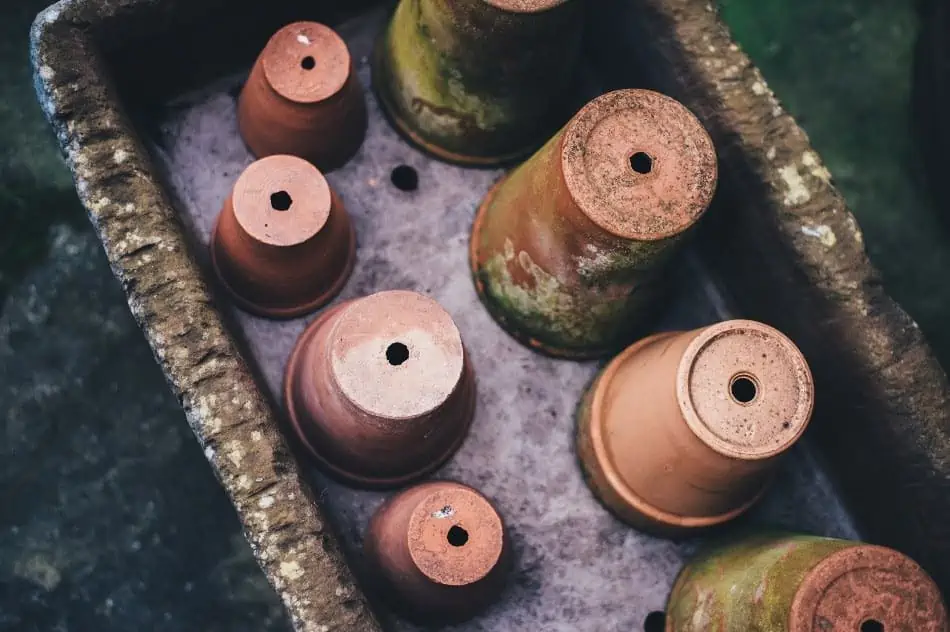
Following its cramped root system, moon cacti do not need a large pot. A small pot with sufficient drainage holes to drain excess water will work best for the moon cactus. For better results, use unglazed shallow pots with drainage holes beneath to avoid water collecting at the root zone.

You should use a small pot for your moon cactus with enough drainage holes for the plant to grow healthy.

Soil Change

One of the main purposes of repotting a cactus is to change the old soil that would, by now, be drained of the necessary nutrients. For moon cactus, you may consider using store-bought soil mix already prepared for planting. Otherwise, you may manually mix coarse sand and peat soil when refilling the new pot. Moisten this mix slightly before repotting the moon cactus into it. Remember the type of soil you choose for planting moon cactus will determine the growth and overall health of the moon cactus.

Preparation for Repotting

Repotting moon cactus needs preparation several days before the actual process. This will involve watering the cactus in its original pot or location to ensure the roots remain moistened. Once ready to move, carefully lift the plant from its original pot, shake off excess soils, and gently place it into the new pot. Fill the empty spaces with the previously prepared new soil. You will need to wait for at least once a week before you start watering your moon cactus in the new pot. This helps give it enough time to use up the previous water, fertilizer and other nutrients.

To successfully repot your moon cactus, water it in its original pot first and then place in a pot with prepared soil.

With successful repotting, your moon cactus should be good for at least 3 to 4 years. During this time, you will be performing the basic care practices like watering, fertilizing and pruning as desired.

Sunlight and temperature

Being a desert plant, moon cactus would thrive in temperatures that you would expect in their natural habitat. They prefer a bright environment but should not be exposed to direct sunlight as this can greatly affect the overall growth of the cactus. As such, it would be best to cover the plant or place it in a shade in cases where it is grown outdoors.

You should place your moon cactus in a bright place but never expose the plant to direct sunlight.

While moon cacti may survive the winter breeze, it is advisable to take it indoors during such conditions. If this is not possible, you may consider covering them with a piece of cloth or light blanket to help shield them from the harsh winter conditions.

Common problems with moon cactus

Moon cactus may be a resistant plant, but this does not make it immune to problems, diseases and other shortcomings. We take a look at some of them.

Short lifespan

Unlike other types of indoor cacti, moon cactus is not destined to live long. This has nothing to do with diseases or harsh conditions but everything to do with its parasitic nature. Since the scion acts as a parasite to the lower rootstock, the food produced by the rootstock is not enough to sustain both plants indefinitely. Over time, it fails to produce enough food, weakens from malnourishment, and eventually dies.

However, there are other notable problems and diseases faced by the moon cactus. This is usually caused by four main factors: water humidity, moisture and light. Too little or too much of these can lead to moon cactus developing growth problems. Some of these problems include the following:

Root rot

Root rot is a common problem with moon cactus. This is mostly brought about by overwatering.  Being a desert plant, moon cactus does not need too much watering, and when this happens, root rot follows. The following are some telltale signs that your moon cactus is overwatered:

  • The rootstock becomes mushy or turns brown
  • The soil remains soggy even after skipping watering for long
  • The roots may turn black, brown or mushy

Remedies of root rot

Salvaging moon cactus suffering from root rot depends on the condition and extent of the rot. If the rootstock is affected and is already mushy, there is nothing much to do other than re-grafting the scion to a new rootstock. However, if the scion is still healthy and only the roots are affected, you can cut off the mushy or black roots, leaving out the white, healthy ones. You can then repot the plant in well-draining soil, and wait for a couple of weeks before watering.

Sudden color change

Moon cactus is known for its bright colors. However, a sudden change in its natural color pigmentation may be a sign of danger. Usually, the plant may turn yellow with white or black spots. This is usually a result of too much light or exposure to direct sunshine.

Salvaging this situation depends on the extent of the damage, while some will simply require change of environment other may call for complete re-grafting for better results.

Fertilizing moon cactus

Moon cactus may be adapted for the desert with little nutrients, but this does not mean it won’t need fertilizer. Fertilizing moon cactus helps it adapt much better to home environments. It also thrives more, and its colors bloom more brightly with the right fertilizer.

For better results, mix one gallon of water with ¼ teaspoon of 15-15-15 water-soluble fertilizer for moon cactus. This should be done weekly during summer and spring seasons.  Apply fertilizer by replacing one of your watering schedules. Do this by applying just the same amount of solution as you would when watering the plant. During winter, moon cactus won’t need much fertilizer and so once a month will do.

To help your moon cactus adept to an indoor environment, you should consider fertilizing the soil.

For the monthly fertilizing or feeding, you may consider flushing the soil completely to refresh the plant nutrients therein. Do this by watering your cactus thoroughly. Ideally you will need to use four times the water volume capacity of the pot. After all the water drains completely, you can then add your cactus fertilizer. Apart from improving nutrient uptake, soil flushing helps prevent the build-up of mineral salts that derail growth. Be careful not to use too much fertilizer or risk weakening the cactus or killing it altogether.

Pests

As resistant as it is, moon cactus can sometimes be infested with mealybugs. If not attended to in time, these white, fury pests can slowly kill the plant. Luckily, you can easily get rid of these pests by brushing them off with a Q-tip. You can then spray it with a mixture of water and half rubbing alcohol. This should be done consistently for a while since they keep coming back. In cases where selected plants have been infected, you may consider separating them from healthy plants.

Pruning

Considering its small size and slow growth, moon cactus does not need much attention in terms of pruning. However, in cases where it gets overgrown, you may consider trimming offer any excessive or broken foliage. This is usually done just after the cactus completes flowering. Take clean and sharp pruning shears and follow the leaves all the way to the main stem to cut from this point. Dispose the plant tissue appropriately and leave the cactus free to blossom once again.

Interesting facts to note about growing moon cactus

Apart from their unique color pigmentations, moon cactus exhibits some other interesting features. The colorful part, hereby referred to as the scion is usually the main plant while the lower part can be any species of cacti that acts as the rootstock. While many species of cacti can be used as the rootstock, the Hylocereus cactus is usually preferred because it roots easily and grows fast.

While many people mistake the colorful part of the moon cacti with their flowers, this is not the case. Moon cactus rarely flowers, but when they do, the flowers come in varying shades of pink. Flowers would usually shoot from the top colored scion and not from the green rootstock. This happens mostly in late spring or early summer. Seeds can also be achieved if the conditions are right and the cactus thrives as expected

Moon Cactus is widely known and highly valued of all cacti. Growing moon cactus is a popular skill among gardening enthusiasts for its beautiful appearance, ease of growth and productivity.

If you are wondering how to grow moon cactus, you have come to the right place. This succulent plant is very beautiful and unusual looking with its interesting color and shape. Its moon-like appearance makes it very popular among people for its beautiful appearance, ease of growth, and productivity.

Moon cacti rarely bloom, but when they do, the colored scion produces pinkish flowers.

Moon cactus can grow to various heights. This will be dependent on the rootstock, but generally, the cactus will stop growing at about 4 inches. Its maximum diameter is between 1 and 2 inches. Even with such size, its stands out with its interesting growth patterns. The plant features 8 to 14 ribs, usually slightly notched and with narrow edges. It grows several slightly curved, weak and flexible graying-yellow thorns.

The moon cactus can be grown together with several other cacti varieties but blends best with the Schlumbergera, otherwise known as the Christmas, Thanksgiving or Easter cactus. Both cacti varieties require the same environmental conditions to thrive. It needs plenty of light but should not be direct. When grown indoors, you may consider positioning it in an east or west-facing window. Some notable signs of too much light is a bleached white pigment or scars developing on the ribs. In some cases, the whole plant may suddenly turn yellow.

Moon cacti cannot survive in temperatures below 9 degrees. However, it prefers relatively humid conditions. As such, they are easy-going in terms of their moisture needs. Always make sure the soil is completely dry before adding in more moisture. Additionally, you may consider misting the top of the cactus to keep their pink, orange, red and yellow colors even more vibrant. Misting helps offer the much-needed moisture without necessarily adding more water to the soil underneath.

Growing moon cacti doesn’t have to be too complicated. However, you will need to keep in mind that you are caring for two plants in one. In most cases, the rootstock may require different conditions and care needs from the main moon cactus at the top. As such, you need much diligence to ensure that you strike a balance for a better relationship between the two. With these in place, this colorful mutant cactus will give your home that ornamental look for much longer.