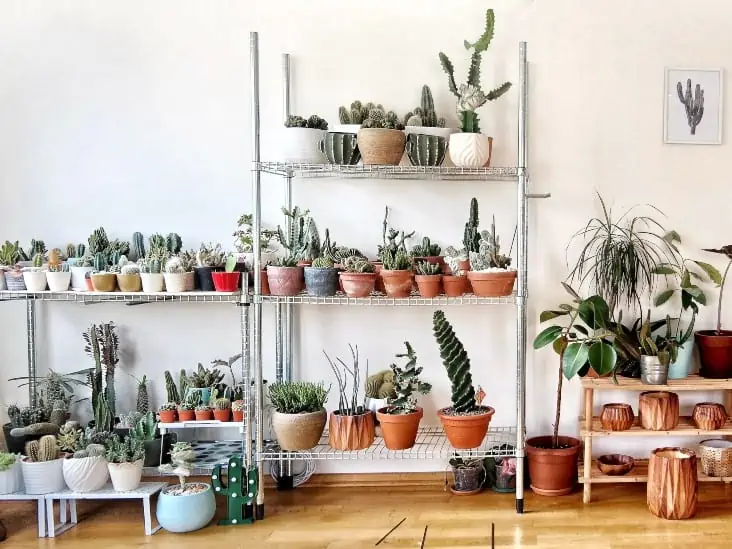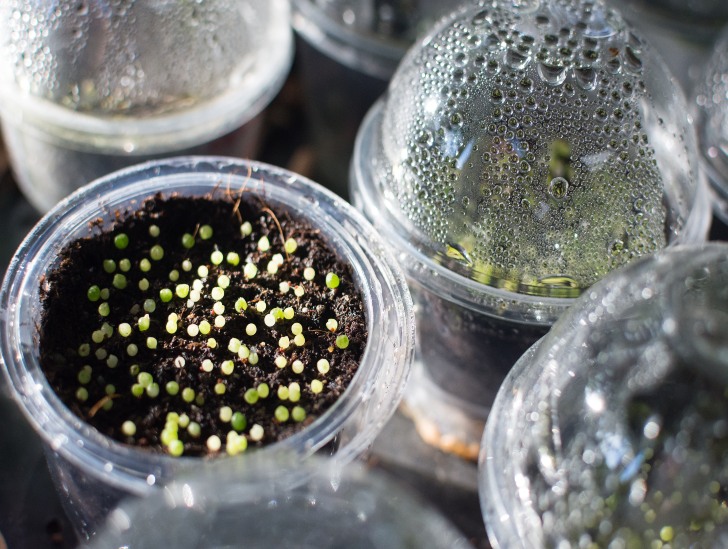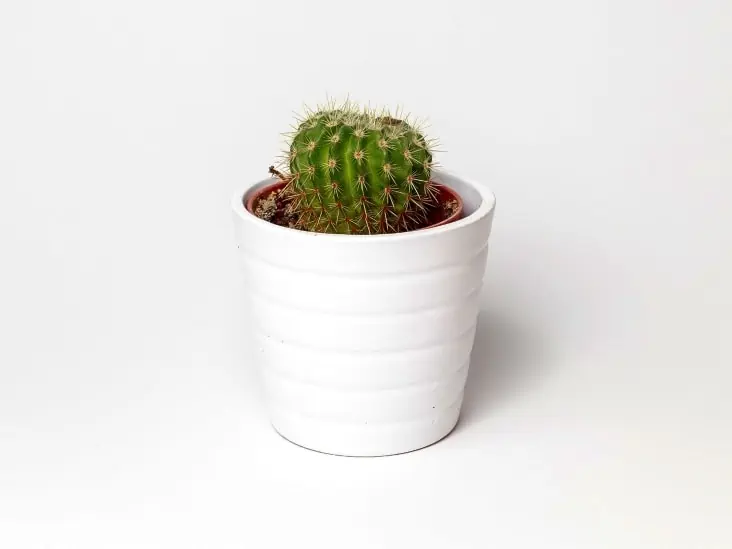
Just like other plants, you need the correct fertilizer for proper growth and helping them adapt quickly. Even though these plants may be used to harsh conditions, once you take them in as a houseplant or grow them outside in your garden, they require some care and maintenance.
When is the right time to feed cactus?
It is natural to think that your cactus doesn’t need any sort of feeding because of the environment they are used to growing. However, they have the same needs as other leafy plants.
First, you need to know that cactus don’t need excess water or fertilizer. Knowing when to feed them is important because you don’t want to have stunted growth. Fertilizing once in a year is okay, but in case you have a schedule, you can do so two to three times a year. Preferably during spring, fall and summer. However, some cacti species grow in winter, make sure you fertilize them during that period.
During their active growth periods, cactus require fertilizer. However, too much fertilizer will ultimately weaken the plant. Avoid overfeeding them as this will give them the chance to stay healthy.
Is it necessary to use fertilizer?
The truth is, cactus can survive without using any fertilizer on them. However, fertilizer is just a way of boosting them by making them healthier and more colorful. Be careful with indoor cactus and preferably fertilize once a year. Once you feed them, make sure you take them out under a shade in a bright place.
Some people don’t have enough space outside, grow lights can be an alternative, mainly when you use fertilizer.
Grow lights are alternative artificial lighting to help make it sufficient just as natural light would. They help increase the chances of your plant’s vibrancy.
There are three types of grow lights: fluorescent grow lights, LED grow lights, and Positioning grow lights.
What nutrients does a cactus need?
Cacti are not heavy feeders hence need a diluted fertilizer that’s half or quarter the strength. Too much concentration may lead to root rot, which is one of the leading causes of cacti deaths.
Root rot may not be evident in the first weeks, but as you progress, the cactus starts turning pale, you notice black spots as well. Once you notice this, the damage may be a lot worse. You need to remove the cactus from the pot to see if you can save it or not.
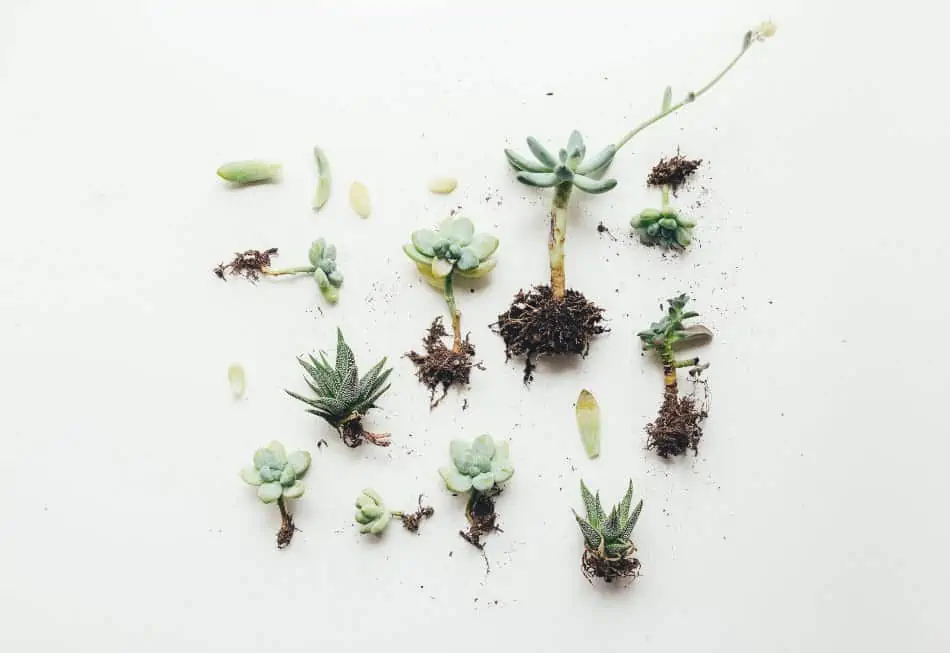
When removing the cactus, ensure you are protected, especially if it has spines. Get leather gloves and wrap the plant with a newspaper before pulling it out. To make the process easier, dig around the cactus to soften the soil, then you can slowly remove it.
Once you remove it, you can now access the damage. Sometimes, it may be just some roots that have rot, and you can easily prune them and re-pot the other part of the cactus.
Fertilizers with high nitrogen content are more likely to cause root rot. Get the right blend of fertilizers. Get one with a reasonable ratio of Nitrogen(N), Phosphorous (P) and Potassium (K); N:P:K.
Nitrogen is mainly responsible for assisting in the growth of leaves while Phosphorous is helpful in the root growth and fruit and flower development. Potassium improves the overall functionality of the plant.

Ideal Fertilizer Blends
Keep in mind that a fertilizer that’s high in nitrogen promotes plant growth while one with a higher potassium ratio is suitable for flowering. Lastly, one with a high phosphorous ratio will be better for disease resistance.
Different ratio formulas can work. You can use equal blends of 10-10-10, 10% nitrogen, 10% phosphorous, 10% potassium. A low balanced soluble houseplant fertilizer does the trick for the plant. Also, the ratio of 5-10-5 is ideal.
If you are using the ratio of 5-10-5, if the instructions say you use 1 tablespoon of the fertilizer with 1 gallon of water, when using it on cactus, use ½ the tablespoon. In case your cacti species is a tropical type one like the Christmas Cactus, use ¼ of the tablespoon.
Another alternative is getting a specified cactus fertilizer blend. These ones usually have a ratio of 1-7-6 or 2-7-7. They will generally instruct you on how to use the fertilizer on your cactus. Water your plant with the fertilizer solution just the same way you do when watering them. Let the excess one drain out of the soil to avoid the plant sitting on the solution and risking root rot.
Dry fertilizers available
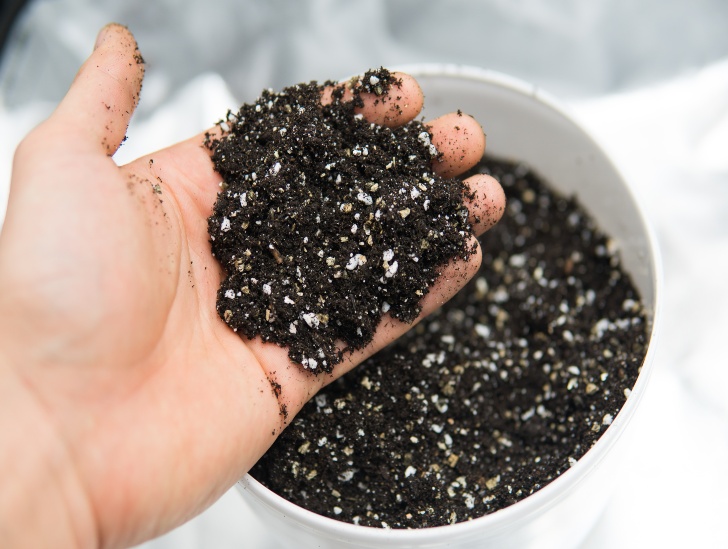
Instead of making a solution of fertilizer and water, there are dry fertilizers available on the market. We have granular slow-release fertilizers. For these, you need to mix them with the potting mix or the topsoil. However, be on the lookout as sprinkling them on top of the soil can make them not sip down to the roots when you water them.
Types of slow-release fertilizers:
1. Synthetic Organic Slow-Release Fertilizers (nitrogen-based)
When shopping for fertilizer, you may have seen some labeled Methylene Urea or Urea Formaldehyde. These ones are the synthetic ones, and they are usually composed of 70% WIN( Water Insoluble Nitrogen)
The rate at which these fertilizers release nutrients depends majorly on the bacterial activity. These particular ones can provide nutrition for a couple of weeks others extending to months.
There are also other known as IBDU/isobutylidene-diurea that is 90% WIN. The rate at which nutrients are released from this product depends on pH levels and soil moisture.
What determines the rate at which nutrients are released from these fertilizers is the size of particles. In case the fertilizer has small particles, nutrients are released faster.
2. Natural Organic
We have natural organic fertilizers as well, which makes them a popular choice for most people. Different types of organic fertilizers release nutrients at different rates. What affects these speeds is temperature, bacteria, and fungi in the soil.
Some examples of these organic ones are:
- Manure
- Compost
- Fish emulsion
- Soybean meal
- Cottonseed meal
- Blood meal
Considering indoor cactus when using fertilizer
Since indoor cactus may not receive enough sunlight when growing, fertilize them sparingly as they may become weak. Also, in case you use containers that have no drainage holes, use these fertilizers sparingly because they don’t drain water.
Cacti planted outside on the ground may need as much fertilizer because they quickly get nutrients from the soil. Only use half/quarter the slow-release fertilizers during the active growing seasons.
Using manure teas as an alternative fertilizer
Manure tea is similar to compost tea and is an organic alternative to the chemical-based fertilizers. It is made from collecting manure from any livestock. Manure tea is quite easy to make.

Steps to making manure tea
- Fill a bucket (5 gallons/18.9l) with water
- Shovel your manure into a sack (use the ratio of 5 parts water to 1 part manure)
- After putting manure into the sack, tie a knot
- Then place the tied sack into the water in the bucket
- Make sure to cover the bucket with a lid due to the bad smell attracting flies
- Leave the mixture for a few days so that it forms a golden brown color
- Slowly remove the sack in the bucket and allow the solution to drip into the bucket until it doesn’t anymore
- For the solution strained from the sack, dilute it with clean water
- Once you dilute it, you can pour in the manure tea into the cactus soil for fertilizing
When using the manure tea, you can use a spray bottle or simply pour it until it drains away through the drainage holes
What makes manure tea a great organic fertilizer is a fact that it’s sustainable and mild such that there are no chances of burning the cactus. Also, the tea dissolves quickly in water, and it’s quite easy to use a spray can.
The manure that was left after straining the tea can be used in the garden too.
Benefits of using manure tea
1. It is natural
Manure tea contains no synthetic or chemical additives; it is natural. What’s even exciting is you can use cow, goat, horse manure, among others.
2. Less expensive
If you own any livestock or know somebody who does, then it can be inexpensive and a great option other than purchasing the ones available. The process itself is also quick, with easy steps to follow.

3. Doesn’t burn the plant and is friendly to the soil
Some other fertilizers can easily destroy the soil and burn your cactus. However, for the manure tea, it doesn’t kill beneficial fungi, but it conditions the soil so that the plant can absorb the much-needed nutrients.
4. Quick to provide nutrients
Unlike other chemical products that are slow-release and may take up to months for the fertilizer to take effect on the plant, the tea is quite the opposite. It provides the plant quickly with essential nutrients for better growth.
5. No measuring
Sometimes, it can be a bit tedious to keep measuring the ratio of water to the fertilizer and making sure you don’t put too much fertilizer that risks burning your cactus. Manure tea does not need measuring, you just need to pour it to the soil, and you are good to go. It is a total time saver.
However, it is easy to overwater your plant, which is a leading cause of root rot. Use the manure tea sparingly and ensure the soil dries first before using it again on your plant.
Manure tea is rich in nitrogen and is perfect for the growth of your cactus. However, you might want to back off when the cactus wants to flower (if you have a species that blooms.)
Some of the best manures to make your tea from are:
- Cow manure (the best)
- Horse manure
- Goat manure
- Chicken litter
- Turkey litter
- Pig/cat/dog manure
Out of all the above, chicken litter has the highest nitrogen composition. Use it sparingly as it can burn the plants. Before using it, make sure it is well-aged. The same applies to all manures when you are making them. Make sure they have composted in the sun long enough (a week or so) for better results.
As much as it’s easy to make manure tea bags, some people don’t have access to the resources. Therefore, you can purchase readily available manure tea bags sold and are a great alternative to chemical fertilizers. Be sure to use nose plugs as it doesn’t exactly have a great smell.
Storing Manure Tea
Manure tea can be stored for between four to six days in a sealed container that is light-proof. However, if you need to store it for a longer time, you need to provide aeration with an aquarium pump or bubbler stone.
Be on the lookout to avoid storing it for a long time because the longer it stays, the higher the chances of losing its nutrient value.
Organic vs. Inorganic Fertilizers
Before settling for a particular fertilizer, you need to know the different types available. The broadest categories are organic and inorganic.
Both types are used to provide nutrients to the cactus. Organic (natural) fertilizers work gradually to provide a healthy environment for the growth of your plant. They contain plant and animal-based products as their work is to provide nitrogen, phosphorus, and potassium. The reason they work slowly is that the first work on enriching the soil instead of quick action.
On the other side, inorganic fertilizers provide more rapid/quick nutrition for them as they feed the cactus with high concentrations of nitrogen, phosphorus, and potassium directly to your cactus.
What determines what you use is your cacti needs, the environmental impact, and the costs. Note, inorganic fertilizers may leave product buildup on your cacti over time, and they don’t enrich the soil.
I. Organic fertilizers

Organic fertilizers consist of only animal or plant-based materials that are usually end-products or by-products of processes that are naturally occurring. Such examples can be manure, compost, or leaves.
These types of fertilizers only produce nutrients when the soil is moist or warm. Nutrients are often released quite slowly because they mainly rely on soil organisms in breaking down the organic matter.
When it comes to using them, there are no exact rates of nutrients they contain. This makes it hard for you to know if the particular fertilizer meets your plant’s needs. However, cactus have a low requirement, which makes them perfect.
Natural fertilizers are initially expensive, but since they enrich the soil over a long period even when the plants take the nutrients they need, they become worthwhile.
When you look at the environmental impact, these fertilizers may cause a buildup of some nutrients. However, this buildup is not toxic.
Since organic fertilizers are from natural sources, the greenhouse gas that’s emitted into the air is low.
II. Inorganic fertilizers
They are commonly referred to as synthetic fertilizers meaning they are not natural. This means they are manufactured artificially and they contain synthetic chemicals/minerals. Fertilizers that are high in the three main macronutrients will almost certainly contain products such as magnesium sulfate, ammonium sulfate, ammonium nitrate, and triple superphosphate.
Inorganic fertilizers are ‘quick-release’ types meaning they are plant-ready. They should be used sparingly, especially on your cactus, because of the chances of the quick-release increase of burning them.
The application process is usually straightforward because there are instructions on how to use them. You can specifically get fertilizers that are designed for your cactus. You will commonly see them written 12-6-4 which meant the particular fertilizer contains 12% of nitrogen, 6% of phosphorous and 4% of potassium (N-P-K.) Sometimes, it is crucial to know the ratio of nutrients so that you can know what to use for your cactus because different plants have different needs.
Their ease of use makes them favorable as they are available in water-soluble powders, liquid concentrates, and dry granules. Some other tabular forms or spikes are specifically designed for container or indoor plants.

These fertilizers are not costly and are quite affordable. The reason for their cheap costs is that they are usually mass-produced. The dry granular controlled-release fertilizers are cost-efficient than even the other types. The downside though is they only work on providing nutrients to the plant but do nothing to the soil over time.
Even though the fertilizers are immediately available to your cactus, unlike the organic ones, they are susceptible to leaching.
These fertilizers can be washed away by rainwater or when watering them, especially if you have planted your cactus outside. This way, the nutrients are washed away, which could leave your plant deprived of the fertilizer.
Chemical imbalances are quite popular with this kind of fertilizers because they can quickly burn your plant, which causes a buildup of toxic salt that concentrates on the soil. It then ends up destroying your once vibrant plant.
Applying fertilizer on your cactus
Using the correct fertilizer is what determines the growth of your cactus. Here’s an example of how to use your fertilizer.
What you’ll need:
- Measuring spoon
- A watering can
- Low nitrogen fertilizer that is soluble
- 1-gallon container with a lid
1. To know when to fertilize your cactus, start inspecting it early spring to see if there are any growths such as the size of spines, increased stem size. Etc. If you notice new growth, you can now start the fertilization process.
2. Assuming that you had already purchased a low nitrogen fertilizer, which is a 5-10-10 blend, use 1 tablespoon of it and dissolve it in 1 gallon of water. After mixing the solution, water your cactus until the soil becomes moist.
Another option is using a 1-7-6 cactus blend. Take 1 tablespoon of the mixture and mix it with 1 gallon of water and pout it into the soil until it’s moist.
3. For the 5-10-10 blend, apply every eight weeks during spring and summer for three fertilizer applications. If you choose to use the 1-7-6 blend, apply after every two weeks during the cactus growing season.
Note: cactus don’t require fertilizer during fall and winter as they enter the dormant and semi-dormant period.
4. In case the fertilizer you are using remains, you need to seal it in an air-tight container until the next time you use it.
Some cactus species such as the Christmas cactus grow and flower during winter and are dormant during summer. Therefore, you need to reverse your fertilization process during winter. Feed them during winter because that’s their active growing period.
The difference between composting and fertilizing
Composting is the use of natural decaying organic matter from the kitchen or garden and decomposing them to have rich nutrients that have the capability of fertilizing the soil. Some people refer to this as “black gold” because it is fertile soil. I
Advantages of using compost
- They feed the entire soil which helps in the overall health of the soil
- They help in soil aeration and help retain moisture
- They enrich the soil in a way that it can provide nutrients to your plants
- Enhances healthy microbe growth within the soil
- Helps in assisting in the resistance against diseases
- For your outdoor garden cactus, it’s easy to control weeds.
- The only major setback for using compost is that, if you are planning to make your own, it takes quite some time before it’s effective for use. Make months before using to allow it to decay.

Making your own compost
Things you need:
- A carpet or polythene
- Fresh soil and manure
- Garden waste
- A coarse draining material such as twigs
- Water (optional)
Method:
1. You need to apply about four inches of the coarse material to the bottom of the self-assembly bin.
2. In alternate layers of different materials, apply six inches of garden waste to form a sandwich.
3. You can add water when applying garden waste if the mixture is quite dry.
4. Since compost needs to heat up so that it can work effectively, make sure you add some vital mass to your mixture. To easily do this, you can sprinkle some soil or manure on top so that it brings bacteria so that it breaks down the organic matter.
5. After you are done, cover the mixture with your piece of carpet or polythene.
6. You then leave it for about three months. Once you exhaust the months, you can then uncover the mixture and remove the compost. After allowing in some air, you can then leave it for another three months.
7. After the extra three months, your compost turns brown and is crumbly to touch, which is then ready to use.
Fertilizing involves using fertilizers to feed your cactus. As earlier mentioned, it’s either organic or synthetic.
Using fertilizers is equally beneficial as it enables your cactus to grow faster, especially if you choose the fast-release ones. Fertilizing though may have a few disadvantages such as becoming high risk, especially in case they find their way to nearby water bodies.
All in all, go with whatever option you feel works for your plants.

Learning how and when to fertilize your cactus is equally essential as having a watering schedule and choosing the right potting mix. All these factors work hand in hand in providing the right environment for the proper growth of your succulents.
Remember that; you only use fertilizers or compost when the cactus needs them. Don’t overfeed them because just like other succulents, their fertilizer needs are minimal.
Related Questions
Can you use coffee grounds on your cactus?
Coffee grounds can be used in place of a seasonal fertilizer by merely shaking them on the cactus. They help increase the chances of blooming.
Can Miracle Grow Cactus Fertilizer be used on cactus? Yes, you can use this type of fertilizer but be careful not to overfertilize the cactus. Too much fertilizer burns the plants, and the effects can be as extreme such that your plant dies. Be cautious on the portioning to avoid burns and build up.
What is the best fertilizer for a Christmas Cactus? Unlike most cacti species, the Christmas Cactus blooms during winter as opposed to summer. The best fertilizer depends on what it needs; either blooming or plant strength and nutrition. A 20-20-20 or 10-10-10 fertilizer would be ideal with nitrogen, phosphorus, and potassium having equal percentages. Get a water-soluble one for better effects.