Golden Rules for Watering Echeveria

In Echeveria care, watering is probably the most challenging task that gardeners have to deal with. Keep in mind that, like other succulents, overwatering your Echeveria can result in death-causing effects. In fact, you are much better off underwatering your Echeveria than overwatering. A slight overwatering mistake and you could remain with a dead plant to dispose.

So, what are the golden rules for watering Echeveria?  Generally, you want to ensure that the soil is completely dry before watering. It is almost impossible to say how many days should pass between watering because different areas experience different climatic conditions that affect how slow or fast the soil loses moisture. While watering, consider watering from the bottom to achieve better results.

If you cultivate Echeveria and have been struggling with watering, you have come to the right place. By the end of this blog post, you should be able to water your plant with confidence, even if you are a beginner.

Know When Your Echeveria Is Active/Dormant and How It Impacts Watering

Like many succulents, Echeveria plants are summer growers. It means that the plant becomes super active during spring and summer and will require frequent watering.

Since most of the plant’s growth will happen during this time, feel free to take advantage of it and feed it as well. Growth will start to slow down in fall as the winter season approaches.

During summer, you can feed your plant with fertilizer every two weeks, but you need to keep in mind that some fertilizers can be really strong for it. Therefore, consider diluting it by at least half before offering it to your plant.

succulent plants getting sunlight
Plants that are very active during the summer will require more frequent watering

If you over-fertilize your Echeveria, it may experience severe fertilizer burn, resulting in root damage and discolored leaves.

If your plant has already suffered fertilizer burn, consider replacing the potting mix with an unfertilized one which can help prevent further damage.

Carefully prune off the burned leaves. If everything is already burned, consider leaving a few leaves because the plant requires them to continue growing.

Winter Dormancy

During winter, your Echeveria will slowly slip into dormancy, and growth slows down drastically. In fact, the dormancy starts late fall.

As the growth slows down, the plant also absorbs less amount of water and requires less frequent watering. Therefore, it is critical to cut down on your watering schedule during winter.

We recommend giving it half the amount of water you usually give it during spring or summer. For instance, if you usually water it every week during spring and summer, start watering it every two weeks.

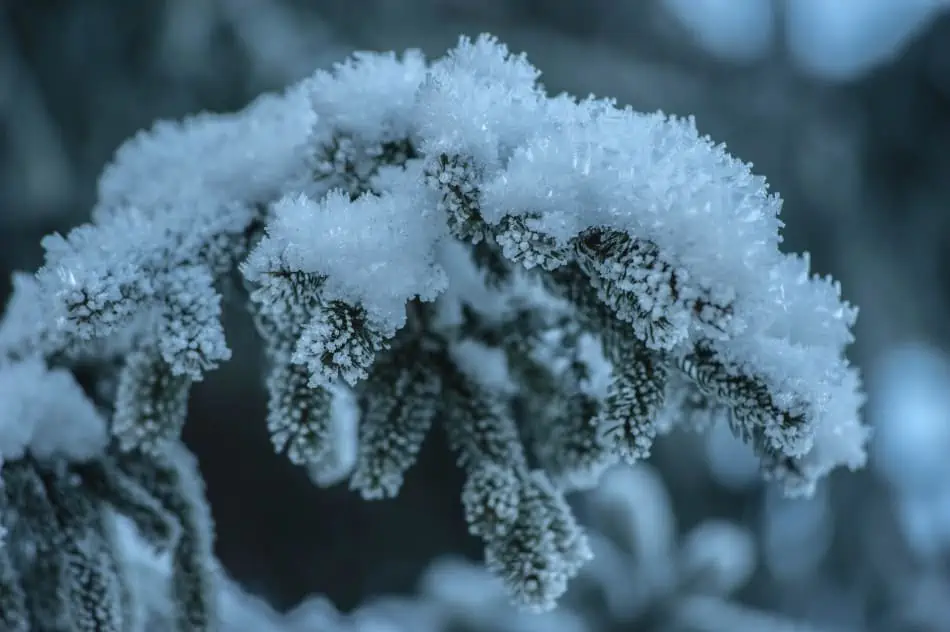
plants in winter
During winter, you should water your plants less for it absorbs water slowly

Echeveria is a succulent and well adapted to surviving in dry areas. Typically, the plant will show you signs of dehydration when it is fully dehydrated. These signs include wrinkled leaves and contracted stems.

Feel free to water your plant whenever you notice these signs. However, you need to be careful not to overwater it because overwatering is the #1 cause of death for Echeveria plants.

If you notice that you have overwatered your Echeveria, get rid of all the blackened spots with a clean pair of shearers. Leave it to sit in a relatively dry area for up to three days so that the cut wound can callous over.

Once the wound has been calloused over, repot your plant in dry potting mix and mist it every three or four days until it starts to show signs of life again.

Use the Right Watering Method

The truth is that most gardeners water their plants from top to bottom, directly onto the soil. For many, it is the perfect way of providing their plants with the much-needed water supply.

However, it is recommended not to water Echeveria this way and instead use the bottom watering method. In the top-down watering method, water only remains at the top of the potting mix, encouraging the growth of odd leaves.

However, the bottom watering method completely wets the soil, ensuring your plant absorbs as much water as possible.

echeveria plant getting watered
Use the right watering method depending on your plant type to allow it to grow more

But there is another reason why top watering won’t work well with Echeveria. Generally, these plants will be delivered when they are already potted in a potting mix that comprises peat moss. When peat moss is allowed to dry completely, it cannot absorb water when it is poured from the top.

The water will only run through the soil pretty quickly, leaving the bulk of it completely dry.  The only way you can get it wet is by gradual wicking found with the bottom watering method.

How Do You Bottom Water Echeveria?

To bottom water your Echeveria or any other succulent plant, start by submerging the growing pot in a water basin up to its rim. Let the pot stay under the water for up to 20 minutes.

This allows enough water to enter the potting mix through the drainage holes and saturate the soil. Once the soil is fully saturated, allow the excess water to drain away before taking the plant back to its spot.

But the biggest disadvantage of bottom watering you need to know is that the method can lead to the build-up of excess fertilizer, which isn’t washed out of the potting mix as it is when the plant is watered from the top.

sample of bottom water method
This is an example of a bottom water method for plants like the Echeveria

Therefore, it is highly recommended you fertilize a bottom watered plant less often. Furthermore, you should use relatively weaker fertilizer strength. Watering from the top after every five or six bottom watering sessions can help rinse out the excess fertilizer.

The best time to water your Echeveria plant is early in the morning so that any water spilled on your plant’s leaves can evaporate rapidly during the day.

Water Sparingly

When it comes to watering Echeveria, less is definitely better than more. Since you should always wait until the soil is completely dry before watering, it’s safe to assume that you should water your Echeveria at most once every two weeks.

Watering an Echeveria too often can cause root rot and eventually lead to plant death. So, you must be cautious and only water when absolutely necessary.

If you let the soil dry out completely, your Echeveria will begin to show signs of drought stress.

It’s a good idea to use a moisture meter or an electronic soil tester to check the water level in your potting mix and determine whether it is the right time for watering.

These devices will save you from over-watering and let you control how much water your Echeveria needs.

Use a Growing Pot with Plenty of Drainage Holes

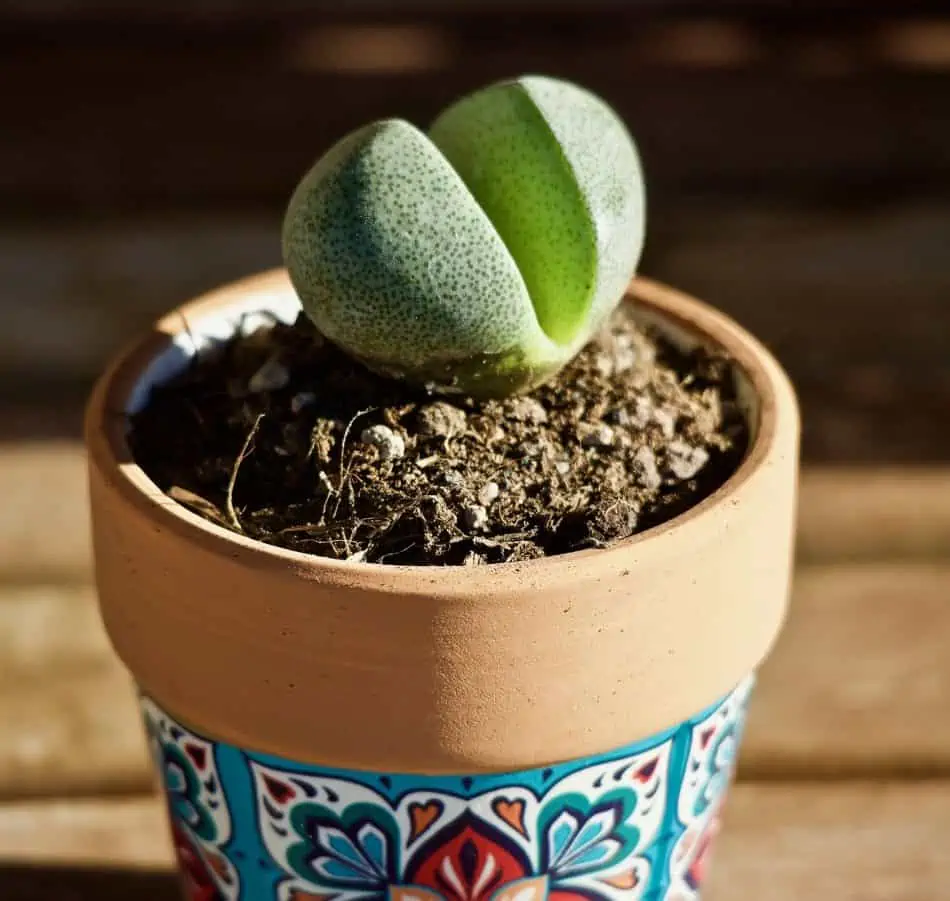
No matter how attractive it may seem, you should never be tempted to grow Echeveria directly in a glazed pot without enough drainage holes. While it may be possible to keep your plant alive in such a pot, you will have to pay extraordinary attention to the amount of water and watering method you use.

If you must grow your Echeveria in a beautiful glazed pot, be sure to get at least a terracotta pot with proper drainage. You can always slip the plant in and out of the container easily when it is time for watering.

You should also choose the right size pot. Don’t choose a too big pot because Echeveria doesn’t like a lot of room for its roots. Generally, you should go for a shallow pot that is slightly larger than your plant’s root ball.

Keep in mind that if there is a lot of soil around your plant’s roots, it has a great potential of holding a lot of moisture, which can result in root rot.

Know the Signs of Improper Watering

If you want to keep your plant happy, you should be able to tell when you are not watering correctly. In this case, improper watering refers to either overwatering or underwatering.

The good thing is that your Echeveria plant will always show you signs when it is unhappy with how you water it. For instance, if you are underwatering, you will notice your plant dropping leaves, wilting, shriveling up, and becoming weak.

succulent leaves turning brown
To know if you are underwatering your plant, it will start turning black or brown

If you are overwatering, you will start to notice sections of your plant turning black or brown. The stem may also start bulging and feeling soft. The dark areas are signs of rotting, and you need to act pretty quickly before you lose your entire plant.

If you notice any of these signs, take time to examine your plant for rot and other issues. Sometimes, you may be forced to repot it if the problem has already become severe.

Ensure you cut off all rotted parts of the plant before repotting in fresh potting mix. You should also allow the plant to lie out in the open air for at least one day before repotting it in fresh soil.

Water At the Right Time of the Day

The time of the day you choose to water your Echeveria is critical to its overall health. You should avoid watering your Echeveria early in the morning or late at night because the temperature is low at these times of the day, which increases the chances of fungal disease and root rot.

The best time to water a succulent is between 9:00 am and mid-day when it’s relatively sunny and hot. This will help the water evaporate faster from the soil and leaves, reducing moisture-related problems.

If you cannot afford to water at this time, t aim for the hours between 3:00 pm and 5:00 pm when there is still plenty of sunlight to help the water dry faster.

Avoid watering Echeveria in the late evening since the water will stay in the soil for extended periods, promoting fungal disease and root rot.

How Often Should You Water Your Echeveria?

Typically, the frequency of watering will depend so much on where you live. If you live in a relatively humid area, you need to water your plant less frequently because it takes time before the soil is completely dry.

However, if you live in a dry area or have a central heating device installed in your house, you may be forced to water more frequently.

Generally, consider watering Echeveria once every week or ten days. But keep in mind that other factors such as your plant size and pot size may influence the watering schedule.

It is always good to check the top few inches of the potting mix and only water when the soil is completely dry.

Use the Right Type of Water

Did you know that succulents are highly sensitive to the type of water you use? If you use hard water, rich in minerals, the plant may experience calcification.

The best type of water to use is soft water, preferably rainwater. If you don’t have access to it, use distilled or reverse osmosis-filtered water, free from minerals.

Avoid using tap water because it may lead to mineral buildup. This may cause your Echeveria to suffer from a condition known as lime disease and will die with time.

If you must use tap water, allow it to sit for about 24 hours before using it.

You should also avoid sprinkling water directly on the plant’s foliage since it may cause issues such as leaf rot, discoloration, and even death.

Summary

Knowing how to water your Echeveria plant correctly is critical to its survival. Take time to study your plant and determine how much water it requires based on its size, then adjust your watering schedule appropriately.

As long as you do everything right, you don’t have to worry about some things such as root rot and wilting.

Once you figure out its wagering requirements, you can focus on other things that will make it stay healthy and happy.
Caring for Succulents in Winter – Complete Guide

If you are used to working with succulents, you know they take time and patience. They have different seasons when they flourish and when they are dormant. Caring for succulents in the winter is a worthwhile pastime.

When caring for succulents in winter, take precautions regarding the plant and the possibility of it freezing. You should bring Soft Succulents inside, and Hardy succulents can remain outside if you live in the proper planting zone. The plants also need water and nutrition during this time.

If you are interested in raising succulents or are a seasoned grower, continue reading for facts regarding the care and feeding of succulents in winter.

What Temperature is too Cold for Succulents?

The temperature your succulent can tolerate depends upon what type of plant you have. Hardy succulents can withstand -30 degrees Fahrenheit, and their bodies will close slightly and turn from green to red. The soft succulents will tolerate anything over 32 degrees Fahrenheit.

Although some succulents can withstand -32 degrees Fahrenheit, they thrive at temperatures 40 degrees and higher.

However, they thrive at 40 degrees and up. When the temperature falls below 32 degrees Fahrenheit, the leaves which store the water will freeze and rot the plant.

The cold temperatures can affect the plants, and they can go dormant. However, if temperatures fall between 40 and 50 degrees, the succulents change into magnificent colors. If temperatures fall below 32 degrees, you should bring plants inside.

Winter Dormancy Explained

Winter dormant soft succulents cease growth during this season to survive the harsh weather. These plants tend to grow faster during the summer. They typically respond to the rain and more tolerable weather.

Succulents come in three categories. These include:

  • Winter growing
  • Partially dormant
  • Fully dormant 

Dormancy is a process that is essential to plant survival. As the days shorten, plants begin to slow their growth, and dormancy begins in each succulent. Fully dormant succulents will die back entirely above ground. Their root systems live on, and new growth occurs each spring.

Partial Dormancy During Winter 

Partial dormancy is expected in the winter. This inactivity means that they do not change significantly in appearance, and they do not grow too much. Partially dormant succulents do not require as much water. They also do not require fertilizer. They need good drainage so the roots will not rot. 

See below for examples of Partial dormancy succulents.

Agave

The main visual characteristic of agave is its sizeable rosettes of firm, plump leaves. Dormancy occurs in the winter, and the plant will begin to grow again in the spring when the temperature goes above 40 degrees.   It is used for sweetener, and it is also used to make tequila.

Mammillaria

This plant is one of the largest plants in the cactus family. A native to Mexico and the United States, they contain sharp spines and delicate flowers. Their common name is called “pincushion cactus.” Also, winter dormant, it will come back in the spring at 40 degrees or above.

Mammillaria is a winter dormant plant that comes back in the spring when the temperature is above 40 degrees Fahrenheit.

Echeveria

A popular succulent found in gardens and floral arrangements is Echeveria. The leaves come in various colors, including pink, purple, blue, peach, and rainbow. This plant is winter dormant at below 40 degrees. When the temperature rises in the spring, you will see new growth.

Echeveria is a popular winter dormant succulent that continues to grow once the temperature rises in spring.

Winter Growing Succulents

Other types of succulents are called winter growing. The shorter days and cooler temperatures allow for these plants to grow. During their summer dormancy, they need water so that their roots stay cool in the summer heat. There is no change in appearance, and if indoors, they never go dormant. 

See below for examples of winter growing succulents.

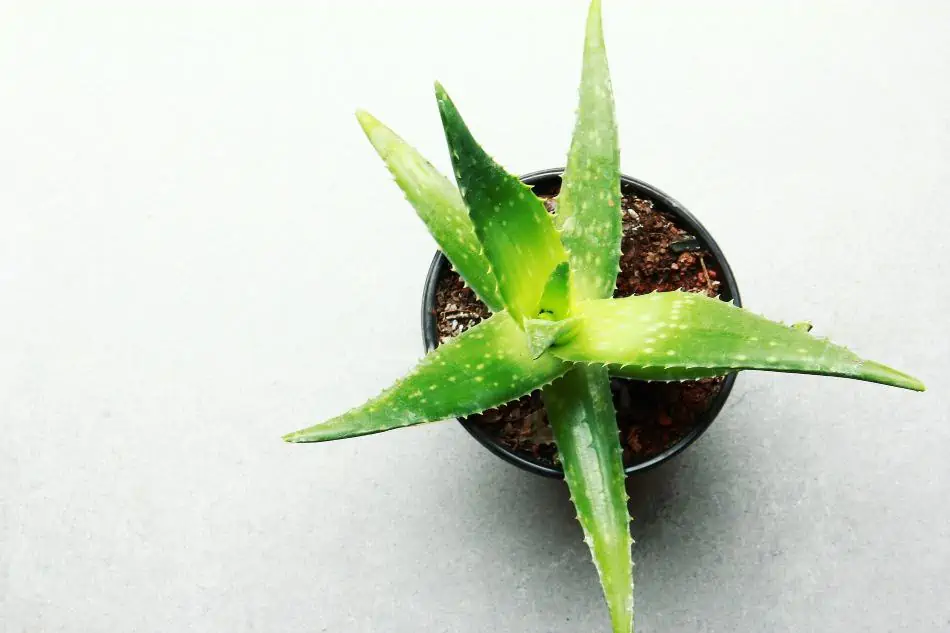
Aloe 

Aloe is a familiar succulent plant for the home gardener. The sap inside the leaves is used for burn treatment and in ultrasound gel.  The leaves are spear-shaped with white dots, and they grow both inside and outside. They are summer dormant and do well at 25 – 40 degrees.

Aloe vera is a summer dormant succulent that grows perfectly healthy at 25-40 degrees Fahrenheit.

Avonia

Avonia is a perennial evergreen that grows well in temperatures of 30 to 40 degrees. It resembles a dragon and produces flowers that can be pink, white, or yellow. It does not need much water and is drought tolerant. 

Crassula

The Crassula plant has many variants; you could use it as a ground cover or grow ten feet tall. This plant grows well in 25 to 40-degree temperatures. They require good draining soil and do well in dry areas.

Winter dormant succulents include cactus plants, air plants, and others. Winter dormant means that the plant takes a rest from growing during this season. As you can see, whether your plant sleeps in summer or winter, succulents are easy to care for and are easy on the eyes.

Fully Dormant Succulents

Some succulents go into a deep dormancy, and they die off above the ground. They resemble deciduous trees in that they lose their leaves. Some disappear above ground, and only the roots remain. See below for examples:

Sedum spurium

This plant is a perennial, which means it comes back to life yearly. It loses its leaves like a deciduous tree, and all that is left are the bare stems. The plant “dies off” in late fall and winter and returns in late spring to early summer.

Sedum Kamtschaticum

This succulent is also a perennial that actually disintegrates above the ground, and you will not see it.  This deep dormancy occurs from November through March, and the plant will regrow in April.

Orostachys Spinosa

This succulent also degenerates above ground. It is very hardy and can survive – 30 degrees. This plant is a small, slow-growing succulent that is very rare. It can survive at -40 degrees and is from Mongolia.

Fully dormant succulents are very cold hardy. You will not see them during the winter because they are in a deep sleep beneath the ground. They are dormant between November and March, and like all perennials, no care is needed.

Why Succulents go Dormant

Dormancy is nature’s way of allowing plants to take a break and rest.  During this time, they do not grow, and they are protected from their surroundings. For succulents, the dormant period is brought on by a decrease or increase in temperature.

If plants could grow in the winter, the water in the trunk stems and leaves would freeze. This process would cause a lot of damage to the plant. Winter also does not provide enough sunlight for the plants to use. 

Succulents take a break and stop growing during their dormancy months.

When the soil is frozen, the water is insufficient. This freezing renders it difficult for plants to get much water during this dark, cold time of year. Dormancy gives plants a fresh start by resting and growing again when the weather is warm.

When the temperature is hot in the summer, some succulents go dormant to cope with the increase in heat. Again, the plant will emerge from dormancy when the temperature decreases. 

Can Succulents Survive Inside?

Succulents can survive inside and outside, and they need dry indoor air to make it through the winter. Their fleshy leaves are puffy and filled with water, and these robust leaves can survive in a dry environment.  

Many succulents resemble an artichoke with thick leaves. Remember, do not give them too much water or direct sunlight. The light is good but should be filtered, or you could use a grow light.

Because of their brilliant colors, they can be very decorative. The colors of these plants can be surprising. They can produce:

  • pink
  • blue
  • yellow
  • Burgundy
  • Orange

These colors can be dynamic in that they can go slightly lighter or shades darker.

When grown indoors or outdoors, many succulents feature bright and vibrant colors.

If you have a soft succulent outside and it is winter, you must bring them indoors. Soft succulents are sensitive to freezing weather. The ice and snow are hazardous for these types of succulents. Fortunately, many succulents will thrive indoors.

The Jade likes full or partial sun, and it can live outside in 30 to 50-degree temperatures. It is mainly seen indoors where the http://www.buyxanax.org/ environment is more steady. It has fleshy oval-shaped leaves and is dark green.

Burro’s Tail looks like an animal tail with short cylindrical leaves with points on the end. It is grown as a house plant or outside if above 40 degrees. It does not like overwatering, so keep the soil on the dry side.

Flaming Katy is related to the Jade plant and will produce beautiful salmon-colored flowers. They do not stay very long, but with patience, the plant will bloom for you again. The plant is poisonous to humans and cats, so you may want to keep it out of reach. They like bright light and little water.

How to Keep Your Succulents Healthy Inside During Winter

It takes knowledge to grow succulents indoors during the winter successfully. Many people inadvertently kill their succulents due to overwatering. There is no prescribed amount of water for your plant. The soil should be moist, not saturated, and you should only water when the soil is dry.

If you look at the plant and see specific symptoms, you will know that you have overwatered.

  • Leaves turning brown
  • Leaves falling off
  • Plant looking pruney, like your fingers when you stay in the tub too long
  • Edema in the leaves

You need to accommodate their dormancy periods. This lack of growth means the plant is dormant, so do not keep watering. Here are some tips.

Create a Seasonal Calendar

You need to know when winter begins for succulents. Winter begins mid to late fall for succulents when the days shorten and the trees lose their leaves. This period is the time to bring your soft succulents inside. Always bring them indoors before the first frost.

Give Your Plants Plenty of Light

Place your plants where they will catch the light, not direct but filtered. Rotate your plants so they get even light. When the weather turns freezing, move them away from the window to maintain warmth for them. 

Fluorescent bulbs will help succulents grow. The color of light needs to be in the visible color spectrum. The lights need to be about 6 to 12 inches away from the plants.

Group Your Plants According to Their Schedule

Try to group your plants according to the light and water needed. Different plant species have different needs, and it will be easier to keep the watering and feeding schedule straight. 

For example, the Jade is a species of the genus Crassula. The Jade is mainly grown indoors but can survive in 30 to 50-degree weather. The plant can take the full or partial sun and if inside, should be rotated to grow straight—water when the ground feels dry.  

Mother-In-Laws tongue is a species of the genus Sansevieria trifasciata is a hardy evergreen perennial plant. It is a great houseplant. You should water around the edges of the container, not on the leaves. This plant likes temperatures above 60 degrees.

Cut Down on Watering and Stop Feeding

You must cut back on the watering for cacti because they can get root rot with too much water. Even though cacti and succulents are related, all cacti are succulents; however, not all succulents are cacti.

During their winter, which is September to March, they do not flower.  They should not be fertilized and only water when dry. 

Winter is a tricky time for succulents. They require adequate amounts of water to keep them healthy. You want to water your winter plants when the soil is entirely dry. You should space out the watering to about once a week or once every two weeks. 

You will know when your succulents get thirsty because the soil will be dry. Also, if the plant leaves look shriveled, that is a good indicator that your plant needs water. 

The actual test to tell when your plant needs water, find a free area of soil.  Put your finger into the dirt up to the first knuckle. If the soil feels moist, wait a couple of days and check again. However, if the soil is dry, it is time to water.

Succulents should not be fertilized because their growth is slowed, and the food can stress them and burn the roots

Prepare the Pot for Inside

Before you bring your succulents inside, you need to make sure your pot is set up. You should clean the pot and make sure it is free of dirt, leaves, or cobwebs. It is important to remove dead leaves so that your pot does not become infected by bacteria or fungus. 

Without cleaning, you could also bring pest eggs into your home, and they could hatch. Hence, you could have spiders inside that belong outside.

Watch Out for Insects

Mealybugs and armored scale bugs love to come inside where it is dry and warm. They like to feast on succulents and will make their home in them. Use 70% rubbing alcohol in a spray bottle and lightly mist the plant. A kitchen sink or stationary tub is a good place for this.

Pretty up the Pot

When your succulent is in the process of growing, it will shed leaves. You should make sure that your plant is pruned and kept looking polished. This cutback is what you need to be mindful of before bringing your succulents in for the winter. Removing the dead leaves will prevent rotting.

What Happens in the Spring

Do not hesitate to move your plants back outside—these plants like the sunlight, heat, and air movement. You have to do this slowly, beginning over two weeks.  Put them in the shade and gradually move them into the sun. They can get sunburned if placed in direct sunlight too quickly.

Taking care of your succulents during winter can be a challenge, but know how to take care of them will keep your plant alive and thriving. If you follow these simple tips, you will have a beautiful succulent to admire by the time spring arrives.

Once spring comes and the temperature rises, you can put your succulents back outdoors.

Are Succulents Hardy?

Most succulents like to be in warmer climates. The winter-hardy ones are a bit of a rarity. The hardy ones belong to specific families. This plant type includes but is not limited to:

  • Sempervivums 
  • Sedums 
  • Yucca 
  • Lewisias 

These hardy succulents can withstand brutally cold temperatures. As long as they are kept within their temperature range, they should continue to flourish. They tend to be larger, which helps them to survive colder climates.  See the table below:

BOTANICAL NAMECOMMON NAMEPLANT SIZETEMPERATUREPLANTING ZONE
Sempervivum TectorumHens and Chicks2-foot width20 – (40) degrees3 – 8
Sedum spathulifoliumBroadleaf Stonecrop2 inches ground cover5 – 10 degrees7
Hesperaloe ParvifloraRed Yucca2 – 3 feet10 – 20 degrees8
Siskiyou LewisiaLewisia Cotyledon12 inches20 – (40) degrees3 – 8

Do not be intimidated to work with succulents during the winter.  Let the chart be your guide if you live in colder climates. Choosing the succulent for your planting zone will help ensure successful growing. 

See below winter succulents that you should consider:

  • Hens and Chicks
  • Sempervivum Red Lion
  • Sempervivum Mahogany
  • Sempervivum Calcareum 
  • Sempervivum Cobweb
  • Sedum Dasyphyllum Major
  • Dragon’s Blood Sedum

Sempervivum and Sedum both have a broad spectrum of different succulents that are fun and unique. These are all plants that prosper when the temperature drops. They require proper care and attention for the winter. 

Frost Damage to Winter Succulents

If your succulents are put into temperatures that they cannot handle, frost damage is always possible. In zones 8 or 9, temperatures only drop below freezing for one or two nights. This situation is when you introduce the succulent to a “frost cloth.” Frost damage takes a couple of days to become apparent. 

A frost cloth does not inhibit air from getting to the plant. However, it protects the leaves from frost. It also gives a layer of protection, retaining warmer temperatures between the plant and the outside air. It provides protection as low as 20 degrees.

Amazon sells frost covers for plants, and they cost about $25.00. This is a worthwhile purchase to protect your succulents. Because succulents are water-bearing plants, they can freeze, and the leaves can rupture. This damage only happens if they are exposed to below freezing for several days.

Conclusion

If you have outdoor succulents, it is important to know how to care for them year-round. If you have a dormant winter plant, you cut back on the water to not freeze. You can transition plants indoors for the winter, and then they will not go into dormancy, and you would take care of them as usual. 

Can Succulents Survive The Winter? Tips For Protecting Your Succulent

Succulents are a popular plant that many people nowadays love to own. They add color and liveliness to any space and are usually easy to care for. However, most people like to have succulents inside their homes, so what if you want to keep them outside year-round? Can succulents survive the harshness of winter months and, if so, how can you help them? 

People like succulents for their hardy nature, making them easy to care for; but this hardiness also allows them to withstand extremely cold climates and winter conditions. Sempervivum, Hardy Sedum, and Hardy Opuntia are great succulent genera for surviving tough winters. To help, water them sparingly, keep them dry, and place them in a sunny spot. 

If you want to spruce up your outdoor garden with some charming succulents, but you live somewhere with cold, harsh winters, don’t worry. We can tell you exactly which succulents are best equipped to survive these conditions and which to keep inside. We’ll also supply lifesaving and sustaining tips to ensure your winter-bearing succulents survive to see spring. 

Can Succulents Survive the Winter?

Yes. Many, but not all, succulents can survive throughout winter. When one hears the word “succulent,” they usually think of the spiky little plants found spotting the dry, arid terrain of deserts or semi-deserts. 

This gives people the misconception that these plants only thrive in really barren and hot environments when, in reality, deserts can plummet to temperatures of about 25°F (-3.9°C ) or colder, which is comparable to the average temperature in various U.S. states throughout winter. 

While the average nightly temperature varies depending on the region, these conditions mean that many succulent species have learned how to adapt to extreme temperatures on both sides of the spectrum. 

While some succulents can withstand extremely cold climates, others simply die when the temperature is too low.

Now, some of you might be thinking that with winter comes snow, and the days don’t heat up drastically like they do in the desert. A succulent has to be able to survive winter conditions for months versus the handful of hours until a desert sunrise. But a cold-hardy succulent won’t find either to be an issue. 

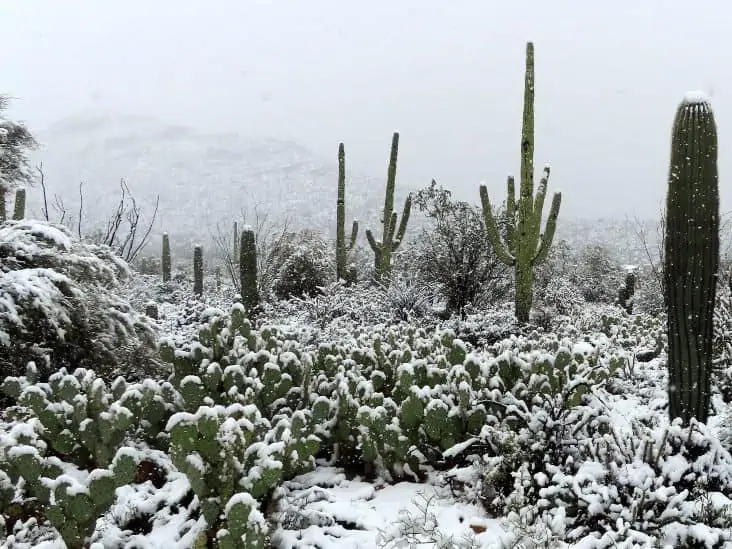
Succulents are extremely hardy plants, and many can easily endure being outside in the winter elements for months, especially with some help from you. Species found naturally in the desert, or even mountain ranges are no strangers to snowfall and prolonged cold. 

Therefore, if you’re seeking a succulent that can survive year-round, especially throughout winter, this largely depends on you planting the right one. 

Which Succulents Can Survive Winter and Which Should be Kept Inside?

While many succulents can hunker down, survive, and sometimes thrive throughout the winter months due to their origins in deserts or mountains with extreme conditions, many are also from rain forests and will struggle immensely in these conditions. 

Therefore, it is important to know which succulents can handle the winter months with ease and which ones you are better off keeping indoors. 

Succulents That Can Survive the Winter

There is a vast list of succulent species and/or genus that will embrace the challenges of winter with open arms and can even do so looking as vibrant and beautiful as a rose blooming in spring. The catch is knowing which ones are capable of this and which will perish under the pressure. 

To help, we’ve compiled a list below of the succulents that are best equipped for surviving harsh winter months and will likely thrive year-round. The majority of them fall under three genus: Sempervivum, Hardy Sedum, and Hardy Opuntia.

GenusOptimal temperaturesSpecies
SempervivumAs low as – 30 degrees FahrenheitSempervivum heuffelii (aka. Purple Haze or Job’s Beard)Sempervivum red lionSempervivum mahoganySempervivum calcareumSempervivum cobweb
Hardy SedumAs low as -20 to -40 degrees FahrenheitSedum Dasyphyllum MajorSedum Golden MossDragon’s Blood SedumCape Blanco Sedum
Hardy OpuntiasAs low as -35 degrees FahrenheitEastern prickly-pear cactusBrittle prickly-pear cactusPlains prickly-pear cactus
Other(Includes cacti of the following families:Echinocereus, Ferocactus, Echinopsis, and Mammillaria)Varies depending on cactus and family, but all are considered cold hardyBeehive or Pincushion cactusClaret cup or Hedgehog cactusChollaPineapple cactusOld Man cactusOrange Snowball cactusBarrel cactus

For most regions, you can’t go wrong choosing one of the succulents listed above if you’re looking for one that will last through the winter. All you need to do is research them, choose one you can afford, and give proper care and that has your ideal aesthetic.

Succulents That Can’t Survive Winter

Some succulents can undoubtedly survive the bitter cold and inches of snow that come with winter, but some will suffer greatly and likely succumb to these conditions. 

Like we mentioned previously, there are a decent number of succulents that feel most at home in the heat and moist conditions of the rain forest, and so, many can’t even survive moderately cold temperatures for two or three nights, let alone months of winter. 

These are the plants that you really need to keep inside and manage their conditions if you want to ensure their survival. 

While we won’t supply a list as extensive as the one detailed above, we can tell you that, for the most part, if a succulent is part of one of the following genus, it isn’t cold-hardy and shouldn’t be left outside in the winter or cold fall months for some regions. 

  • Echeverias: ideal temperature range= 65 to 70 °F, low of 50°F in winter
  • Aeoniums: ideal temperature range= 40 to 100 °F
  • Haworthias: ideal temperature range= 75 to 90°F
  • Most Aloes: ideal temperature range= 55 and 80°F
Haworthia is one of the succulents that cannot survive cold winters.

You should always check the growing zone of your residence in the USDA hardiness map before planting these succulents outdoors if you feel you have the optimal external conditions. It will match your zip code to its planting zone and provide information vital to plant survival. Checking this before planting cold-hardy succulents or any plant, in general, is always a good idea. 

Tips for Protecting Your Succulent in the Winter

Alright, so you know now which succulent can survive the winter months best, but that doesn’t mean the plan of action should be to plant them outside and leave them to fend for themselves. 

Taking proper care of your succulents is key to growing healthy plants.

You still need to provide your succulent with optimal care while they are surviving outdoors, especially if you live in a region with particularly harsh winters, such as Marquette, Michigan, Buffalo, New York, Caribou, Maine, and frankly, anywhere in Alaska. 

Here are our best tips for protecting your succulent in the winter, so you can give your beloved plants their best chance when braving these difficult months.

Provide Your Succulent with Minimal Water During Winter Months

When winter comes around, you don’t want to overwater your succulents with the assumption they’re dehydrating without rain. 

These plants are extremely hardy and used to surviving with minimal water, so you should only water them when there are prolonged periods without snow and you notice your succulent surrounding dirt is extremely dry. 

Even then, you want to water them sparingly and only provide enough to prevent dehydration. Odds are, it will snow at some point, and when it does, the snow will melt and provide water to your succulent, maybe even too much water. 

This is why it is important to research the succulents you want to plant outdoors and ensure their needs and optimal environment match where you live. You should also know if your succulent is dormant or active during the winter, as an active succulent will require more water and care. 

Plant Them In a Sunny Location

The number of daylight hours decreases significantly during the winter months, so you’ll want to make sure your succulent is planted somewhere it can obtain sufficient amounts of sunlight in the limited time it has daily. 

Position your succulent so that it gets sufficient sunlight to survive winter.

Be conscious of what kind of succulent you have and how it prefers to obtain sunlight. Some can sit in direct sunlight for hours and thrive, while others prefer indirect sunlight and should be planted accordingly. 

Keep Your Succulent Dry

One rule of thumb that applies to essentially all succulents is that they don’t need mass amounts of water to stay alive. The plant is very good at reserving and efficiently using any small amounts of water it can acquire, which is why winter can sometimes pose a life-threatening challenge to even the cold-hardiest of succulents. 

There are few cities and even fewer states in the U.S. that don’t receive any precipitation during their winter months. Mass amounts of snow can be dangerous for your succulents, especially when it starts to melt, as the risk of overwatering increases drastically. 

To prevent this, you’re biggest priority during the winter months is to keep your succulent dry. A good way to do this is to actually keep it in a pot with drainage holes instead of burying it directly in the ground and filling the pot with a fast-draining, gritty mix.

The pot will give you more control over your succulent’s condition, and the mix will prevent the soil around your succulent from retaining too much moisture from snowfall or occasional rain. 

Know When to Quit

If you’ve chosen one of the succulents from the provided chart, odds are it will survive just fine during the winter, as long as it gets the right amount of sunlight, water and is kept dry. 

However, winters can be unpredictable, and you might find your succulent is struggling more than usual. In these cases, it’s best for the plant’s health and longevity to bring it inside. 

If you notice clear signs of frost damage or other ailments, you don’t want to wait and see if your succulent can stick it out for the remaining days, weeks, or months you might have left in winter. Instead, carefully transition it indoors, restore it back to health, and keep it inside for as long as necessary.

Final Thoughts

Gardeners and succulent enthusiasts living in colder regions will be ecstatic to know that having a succulent garden outdoors that will survive the winter is indeed possible. There are countless beautiful and cold-hardy options to choose from, but the most important element here is you. 

While your cold-hardy succulent has the basic tools to survive harsh winters, it’s still going to need your help. Research the plant and make sure it’s a good fit for the region where you live and provide it with all of the life-sustaining elements it needs. If winter is being uncharacteristically brutal, there’s nothing wrong with bringing these plants indoors until more optimal conditions arrive. 

How To Water Succulents In Winter

Succulents are a fun, laidback plant for that requires only a little watering here and there, including during the winter months. Not only are they hardy and require little maintenance, but they can also be a whimsical and beautiful addition to any office desk or windowsill. 

Succulents thrive during the warmer months of the year, but what about during those chilly winter months? Read on to find out how to water succulents in winter, what to avoid, and the steps you can take to keep your succulents thriving and healthy even when it’s chilly out.

Bring Your Succulents Inside for the Winter

We are talking about watering, but first, it must be stated that succulents are not going to thrive in frigid conditions. Anything below 40 degrees Fahrenheit will likely damage or even kill your succulents. So, if you anticipate temperatures dropping below 40 degrees in winter, it’s best to set your succulents up indoors.

Properly preparing and weatherizing your succulents will guarantee that they don’t die in suboptimal temperatures. Make sure to keep your succulents in a warm (but not overly hot) room with plenty of sunlight. 

Keep your succulents indoors during cold winter months to prevent them from dying.

Check them for bugs and infections, tidy them up, and get them ready for their new indoor winter life. Transfer them to the appropriate indoor pots if necessary. 

Also, note that succulents, like most plants, go “dormant” in winter. This means that they are preserving energy and not actively growing or really doing much at all during the cold winter months. Dormant plants require less active maintenance and actually make a passive approach to daily care better for their long-term success. 

Prepare Your Succulents for Successful Watering 

Making sure your succulents have optimal conditions for watering will help ensure they have a successful winter season. A pot that allows adequate drainage will be crucial to not overwatering and allow the unneeded and possibly damaging moisture to pass through the soil and not pool at the roots. 

The appropriate soil that allows for quality nutrients but doesn’t retain water will be ideal for your succulent, but the best soil will be dependent on the actual species of succulents and can vary from plant to plant.

Make sure your succulents are potted in well-draining soils with sufficient nutrients for the plants to grow healthy.

Water your succulents at the root, not on the leaves. Standing water on the leaves can cause damage or decay, so make sure the water goes directly into the soil. Using a mister or spray bottle can actually do more harm than good, and experts recommend a watering can that will allow the water to bypass the leaves and goes straight into the roots. 

Water Your Succulents When Their Dirt Becomes Dry

One of the nice features of most succulents is that they are actually quite low-key and require a lot less maintenance than the average house plant. Succulents should not be watered until their dirt is dry to the touch and not until then. 

Always check if the soil is dry before watering your succulents.

Succulents retain water inside their leaves, meaning while you may feel like you aren’t watering your little plant enough, your succulent is actually holding onto a lot more water than it may seem. Overwatering is one of the leading causes of succulents becoming infected or dying, so be mindful of how much water you’re giving them and how often. 

Water Succulents Less in the Winter

We’ve discussed that succulents shouldn’t be watered when the dirt is wet, but how often will you actually be watering your plants? While each plant and species is different, the average succulent will not require watering more than once a month, possibly even once every other month. 

This contrasts significantly with the once-a-week watering required during summer for most succulent species.

That being said, time is not the best indicator of whether or not you should plant your succulents. The soil is really going to be your best guide, so checking the dirt of your succulents for moisture will be the most consistent and reliable indicator of watering needs. If the dirt is still wet, wait a few days or even another week or so to check again before watering. 

Don’t Overwater or Underwater Your Succulents

Unlike most traditional plants that require more frequent watering, succulents will develop rot or mold if overwatered. Many people worry about their standard houseplants going dry as it can be damaging or even fatal, but this is not the case for succulents. 

Succulents thrive in dry, arid conditions with minimal water, so don’t worry about waiting several weeks between watering, particularly in winter.

Signs of overwatering include:

  • Leaves that fall off
  • Soft leaves
  • Discolored or semitransparent leaves
  • Yellowing leaves
  • Black spots

Additionally, underwatering can be damaging as well to succulents. While succulents require infrequent watering, not watering them at all or forgetting for too long will cause them to wither away. Making sure to check your succulents regularly, even throughout the winter months, will ensure that they are getting adequate hydration.

Signs of Underwatering Include:

  • Shriveled leaves
  • Dried leaves/roots
  • Crunchy leaves
  • Browning/discoloration

It’s much better to underwater than overwater when it comes to succulents, even in winter. Succulents have ways to protect themselves during long periods of minimal water, but they are very susceptible to a whole host of infections and problems related to too much water. 

It is easier to revive a succulent that has received too little water, but too much water might be a death sentence for this plant species.

Provide Proper Drainage

If your succulent is in a pot that doesn’t have drainage holes, consider repotting it for the winter months. While some pots drain just fine outside, they might not be so efficient with draining and the indoor air. Draining is key for succulents during the winter months. 

Succulents should be potted in containers with sufficient drainage holes for the plants to get rid of excess moisture.

When you repot your succulent for the winter months, again make sure you use soil that’s meant for these plants. This will also help with ensuring they’re draining properly. 

Allowing roots to get soaked without airing out invites all kinds of problems, including root rot and bugs. Ew!

Add Humidity in Particularly Dry Climates

If you live in an area that has very dry winter air, then use a humidifier or even keep your succulent in the bathroom. These are both efficient ways to add moisture to the air and keep your succulent from drying out. You can also try a pebble tray under your pot for another source of humidity. 

Know Your Succulent Species for Optimal Care

“Succulent” is a broad term covering a wide and diverse range of plant species, but each succulent, and each succulent variety, is different. Knowing what species your succulents are will allow you to provide the optimal care, soil, and watering schedule. 

For example, the succulent species String-of-Pearls is known by succulent enthusiasts to be a great winter plant because they are so low maintenance, particularly in winter. This plant thrives in colder conditions and isn’t prone to the same problems as more temperamental plants.

Finding a species of succulents that is capable of thriving in your climate will likely help you attain gardening success with minimal effort. Consult your local nursery if you are unable to identify your species of succulents or for further suggestions about what kind of succulents would be most successful in your home. 

A Special Note on Cactus Care

Cacti and traditional succulents are often confused due to their similar look and comparable drought resistant, but cacti are a somewhat distinctive species and require a slightly different approach to certain aspects of their care. 

However, the winter watering schedule should remain the same for cacti as it is for other succulents. Cacti should not be watered until the soil is dry. Just like regular succulents, cacti are susceptible to overwatering, and too much water can damage these hardy little plants.

How To Care Of Cactus In The Winter?

Cacti have become increasingly popular plants among garden enthusiasts throughout recent years. But when you move a desert-native to an area with frigid winter landscapes, keeping these prickly plant companions healthy can seem like an impossible task. Luckily, there are ways in which you can help your cactus thrive, even when the weather outside is more frightful than it is delightful.

So, how do you care for cactus in the winter? How you care for a cactus in the winter varies, depending on if they’re indoors or outdoors. For indoor cacti, you’ll need to maintain a comfortable temperature, water about once a month, and allow adequate sunlight. Outdoor cacti need to be watered less and covered with burlap to protect them from the cold.

In this article, we’ll review how to prepare cacti for winter weather and how to care for indoor and outdoor cacti during the season. We will also be providing you with a few suggestions on winter-tolerant cactus species that may be better adjusted to your area’s winter temperatures.

Preparing Your Cactus Before Winter Arrives

Different kinds of cactus.
You should plan your cacti in nutritious soil and fertilize before winter.

First things first: your cactus should be well-equipped to deal with winter before it strikes. A cactus that is overall unhealthy before the cold comes will undoubtedly be worse off when it finally hits.


Here are a couple of ways that you can ensure that the odds are in your cactus’ favor this winter:

  • Plant your cactus in a nutrient-dense, sandy soil to allow for proper water drainage. You can supplement regular potting mix with ⅓ sand to make the dirt more favorable for your cactus. Or, you can purchase a soil tailored to the needs of cacti, like the Hoffman Organic Cactus and Succulent Soil Mix. This mix is specially crafted for both jungle and desert cacti and is organically made, making it better for your cactus and the earth.
  • A few months before winter strikes, fertilize your cactus with a fertilizer that contains nutrients such as minerals. A 10-10-10 fertilizer, like this Lilly Miller All Purpose Planting And Growing Food, will give your cactus that extra oomph as it prepares for the upcoming cold weather.

Taking especially good care of your cactus (or cacti) during the times when the weather is dandy will help your cactus better prepare itself for any potential damage that may come from being dormant in winter.

How to Care for Indoor Cactus in the Winter

Caring for cacti indoors is worlds easier in the winter than caring for them whenever they’re planted outside. This is because your home’s temperature can be easily adjusted to the liking of your plant, and where there is a lack of sunlight, you can supplement with a grow light.

The following steps will help you to maintain your indoor cactus during the colder months:

1.   Watering

A person watering.
Only water your indoor cacti once a month during winter and make sure the soil is well-drained.

The amount of water your cactus will need differs from species to species, but as a general rule of thumb, you should only water your indoor cactus once a month during the winter. With indoor cacti, watering is “business as usual,” so however much you water your cactus in the warmer seasons is exactly how much you should be watering it during the cooler seasons.

Watering Tips

  • Avoid overwatering your cactus. When it comes to moisture, less is more. Too much water can lead to root rot in cacti.
  • Ensure that your cactus is draining water properly. While overwatering can be a cactus-killer, so can poor drainage. Use a sandy soil in your cactus pots to encourage drainage.

Double-check the water requirements for your specific cactus plant if you’re unsure of how often you should be watering it.

2.   Temperature Control

A thermostat.
Make sure the temperature is in the 65-70-degrees Fahrenheit range during winter.

The average indoor temperature of a home is generally perfect for maintaining a cactus plant. Anywhere between 65- and 70-degrees Fahrenheit is ideal for most cactus species and will prevent the outdoor temperatures from having too much of an influence on your cactus if it’s close to a window or glass door.

Temperature Control Tips

  • Take care not to fluctuate the temperatures in your home dramatically. Maintaining a consistent temperature is best for keeping cacti healthy in the winter.
  • Be sure that the area your cactus is in isn’t exposed to freezing drafts. Cacti will go dormant during the colder months whenever temperatures drop below approximately 55 degrees Fahrenheit. Any lower could possibly even kill your cactus.

If your cactus is placed near a frequently used door to the outside, it may be best to move it to a different location until the weather begins to warm. Even if the overall temperature in your home is consistent, frequent exposure to freezing temperatures isn’t ideal.

3.   Sunlight Exposure

A sunlight.
During winter months, you should expose your cacti to sun for 4-8 hours a day.

During the winter, the sun is less beneficial for everyone involved: people get sick with more colds and flu due to the lack of Vitamin D, and cacti become dormant, colorless, and droopy.

As with watering, the amount of sunlight your cactus will need depends on its species. Some cacti will only require 4 hours of sunlight to be happy, while others will need between 6 to 8 hours. Find an area of your home that receives the most sunlight and place your cactus plant there (preferably a little way from the window itself).

Sunlight Exposure Tip

To supplement the light your cactus may be lacking, try using a grow light. Grow lights, like the KINGBO 5000Lux Led Grow Light, will provide your cactus with any light that it misses throughout the day. It could also provide additional warmth to a cactus in homes that get chillier during the winter nights.

Remember that while sufficient sunlight is necessary for a healthy cactus, too much light can be harmful, leading to spine discoloration, an unattractive texture in furred cacti, and overall wilting and sunburn. If you’re unsure as to how much light your cactus will need during the winter, refer back to its species information.

How to Care for Outdoor Cactus in the Winter

When it comes to caring for outdoor cacti in the winter, the process can be a tad trickier. Depending on the species of your cacti, some may tolerate colder temperatures, and others may die off completely without your added care. In general, you’ll want to water your outdoor cactus less in the winter than you do during the warmer months, and you’ll also need to provide the proper protection from freezing winds (as this could lead to frostbite).

Consider the following steps to keeping your outdoor cactus safe and secure during the winter season:

1.   Watering Your Outdoor Cactus

A plant on the water can.
During winter months, most of the outdoor cacti do not require to be watered at all.

Though cacti are usually watered about once each month, during the winter, you may not need to water your outdoor cactus at all.

This is because, during the winter, it’s best just to let nature run its course and water the plants whenever need be. Melting snow can provide your cacti with adequate water, thus making your added watering efforts void. Additionally, if you decide to water your cacti during the winter (and the temperatures are freezing—or will get there), this could result in freezing the cactus internally and killing it.

Outdoor cacti that have been growing in your yard are likely acclimated to the seasons and, before winter strikes, will begin preparing for the upcoming coldness by storing the water they need.

2.   Preventing Runoff

If your cactus is planted in a particularly low area of your yard, you may want to consider taking measures to revert water (namely, melted snow) away from your plants. Excess water—near-freezing water—is a death sentence for cacti.

If your cactus is potted, you can solve runoff problems simply by relocating your cactus to another area of your property. An excellent place to set an outdoor, potted cactus is on a covered patio or woodshed. Moving a cactus to these areas could also block biting winds.

On the other hand, if your cactus is planted in the ground, you could consider adding an attractive and efficient landscaping feature, such as a dry riverbed, around the surrounding area. The sunken ground and spaces between the rocks will encourage any melted snow runoff to disperse away from your cacti. You could also consider placing a water drain in your yard that leads to the road.

3.   Protecting Outdoor Cacti from the Elements

Cacti won’t need protection so much from a little snowfall here and there—it’s the nipping winds and cold and dryness that can lead to frostbitten plants.

To prevent your outdoor cactus (no matter if it’s potted or planted in the ground) from becoming frostbitten, gently cover it with burlap. Burlap is porous enough to allow cacti to breathe but sturdy enough to keep ice and strong winds from negatively impacting your cactus.

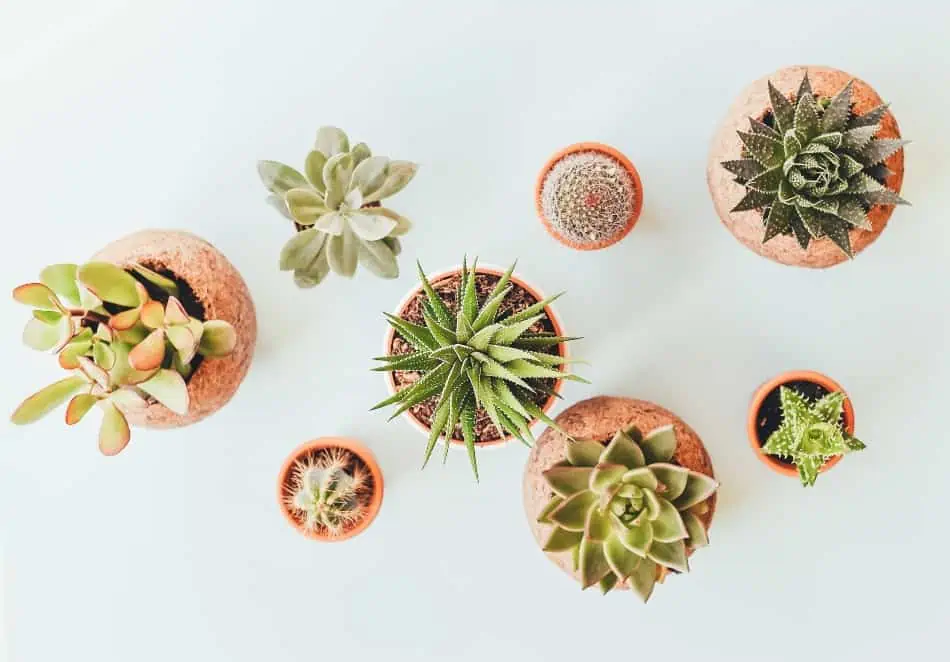
A mix of succulent and cactus plants.
Flower houses are relatively affordable and will somewhat maintain a tolerable temperature for your cactus.

If you’re especially worried about the elements harming your cacti, you can place a flower house, like this one, over them. Flower houses are relatively affordable and will somewhat maintain a tolerable temperature for your cactus while it protects it from the harshest outdoor elements.

Choosing Cacti That Tolerate the Cold

While you can take measures to protect your cactus plants from the cold, some species of cactus are simply too sensitive to freezing temperatures to survive. If you live in a region that sees snowy winters or chilly temperatures frequently, it’s in your best interest to raise hardy cacti.

In the next few sections, we’ll be discussing a few of our favorite low temperature-tolerant cacti.

1.   Brittle Prickly Pear (Opuntia fragilis)

Able to withstand temperatures as low as -35 degrees Fahrenheit, it’s safe to say that the Brittle Prickly Pear cactus could last throughout winters practically all over North America.

This gorgeous cactus can bloom vibrant, 2-inch, yellow flowers during the spring and summer. However, blooming can be iffy, as some plants only bloom once a year (or once every other year), while some don’t even bloom at all. The spikes on the Brittle Prickly Pear are no laughing matter, as they can grow up to an inch long and are generally in clusters. These plants can grow quite large, spanning multiple feet wide and tall, making them suitable for outdoor use.

In general, the Brittle Prickly Pear is a beautiful option that would fare well in large gardens that receive yearly doses of dramatically dropping temperatures.

2.   Pincushion Cactus (Escobaria vivipara)

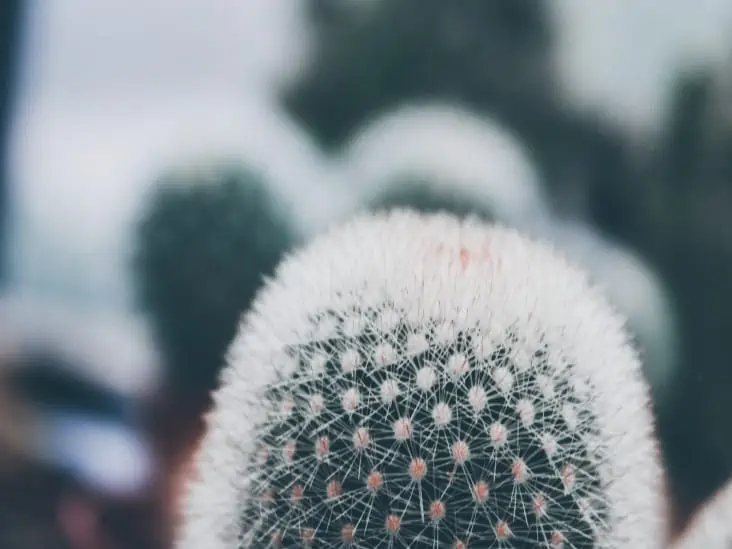
A top view of tiny Pincushion Cactus.
Tiny Pincushion Cactus is adapted to harsh environments and can tolerate winter cold.

Short and stout, the Pincushion cactus may be small and cute, but it is mighty.

Sitting low to the ground at approximately 5 inches tall, and only reaching about 2 to 8 inches in diameter, the round cluster of cacti known as the Pincushion or Spinystar can withstand temperatures as low as 0 degrees Fahrenheit. It’s very well adapted to the climates of multiple regions and can be found naturally from Mexico to Canada. Remarkably, the Pincushion Cactus is one cactus species out of only four that can tolerate the climates found in Canada.

Hundreds of spines are clustered over the entirety of these little cacti, and, during the late spring and summer, flashy pink blooms can be seen atop the plant. Later in the season, the Pincushion Cactus will develop green fruits.

3.   Kingcup Cactus (Echinocereus triglochidiatus)

Known for its glorious 3-inch red blooms that span across the entirety of the plant, the Kingcup Cactus is nothing short of what you would expect from a self-proclaimed royal. During the spring and summer months, this cactus is adorned in vibrant colors, and the body of this cactus spans multiple feet (around 4) across, though it stays relatively low to the ground. Following the orange-red blooms are bright red fruits.

These cacti can tolerate temperatures as low as -10 degrees Fahrenheit and do best when they’re hugging up against taller plants.

4.   Eastern Prickly Pear (Opuntia humifusa)

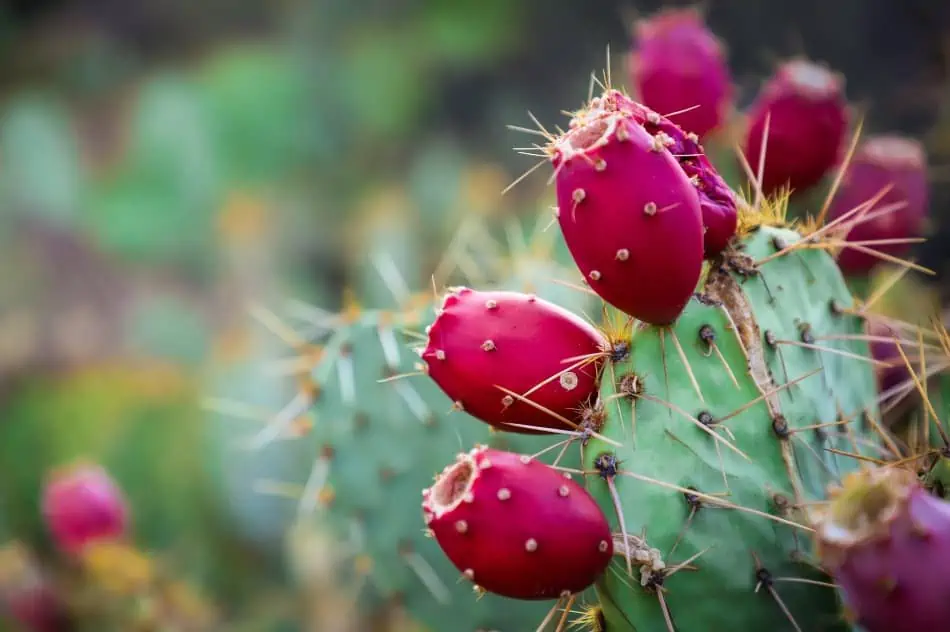
A prickly pear cactus bearing fruit.
Eastern Prickly Pear contains anti-freeze chemicals allowing the plant survive in cold weather.

Withstanding temperatures that drop into the negatives, the Eastern Prickly Pear is a hardy cactus plant that will last throughout the winters to see the next spring. Interestingly enough, these cacti actually contain anti-freeze chemicals within their cells to prevent them from dying off during the harsh winter months of northern and middle America.

These are mostly low-lying cacti that generally spread further outwards than they do upwards. Eastern Prickly Pear will only grow a little over a foot tall on average and are usually found in large clusters across the United States. However, in the hotter southern states, these cacti have been known to grow as tall as 6 to 7 feet, appearing more shrub-like.

During the late spring and early summer months, Easter Prickly Pear will boast yellow flowers at the ends of their pads, with some flowers displaying a deep orange ring in the innermost part of the petals.

5.   Chollas (Cylindropuntia)

Growing in wiry, long, cylindrical bristles, Chollas (a Mexican native) can endure temperatures reaching lows of approximately -30 degrees Fahrenheit. Chollas extends upwards as they grow, rather than along the ground, and will branch out the taller they get. Generally, Chollas will not extend past 10 feet tall.

Thousands of thin spines cluster tightly on the branches, insomuch that you often won’t be able to see the green coloring of the cactus’ skin underneath.

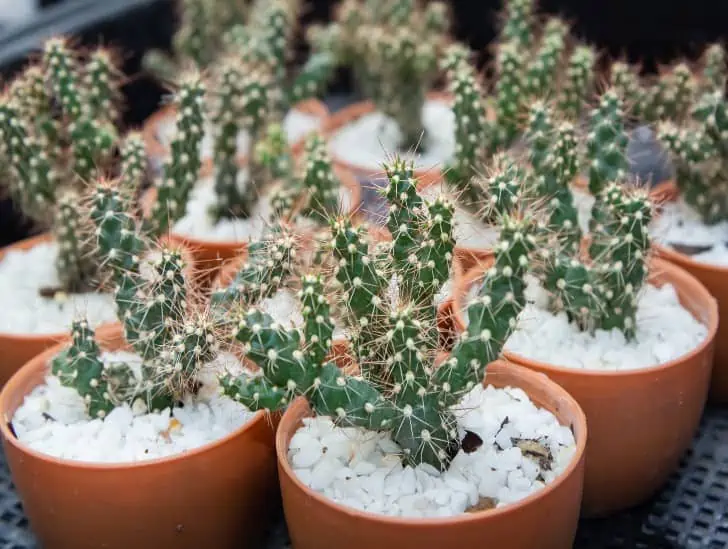
Cholla cactus in a pot.
Chollas extends upwards as they grow, rather than along the ground, and will branch out the taller they get.

Warning: these cactus plants have the potential of being extremely dangerous to children and pets. Their spines are readily available to stick to anyone or anything that ever-so-slightly brushes against it, and trying to remove these thin spines is a painful process. It’s best to admire from a distance, as the barbs will even cling to hair, fur, and clothing.

The flowers that bloom late spring or early summer are cup-shaped and can come in a variety of colors. Though the flowers are most commonly yellow, colors can range from light green and orange to red tones.

6.   Old Man of the Andes (Oreocereus celsianus)

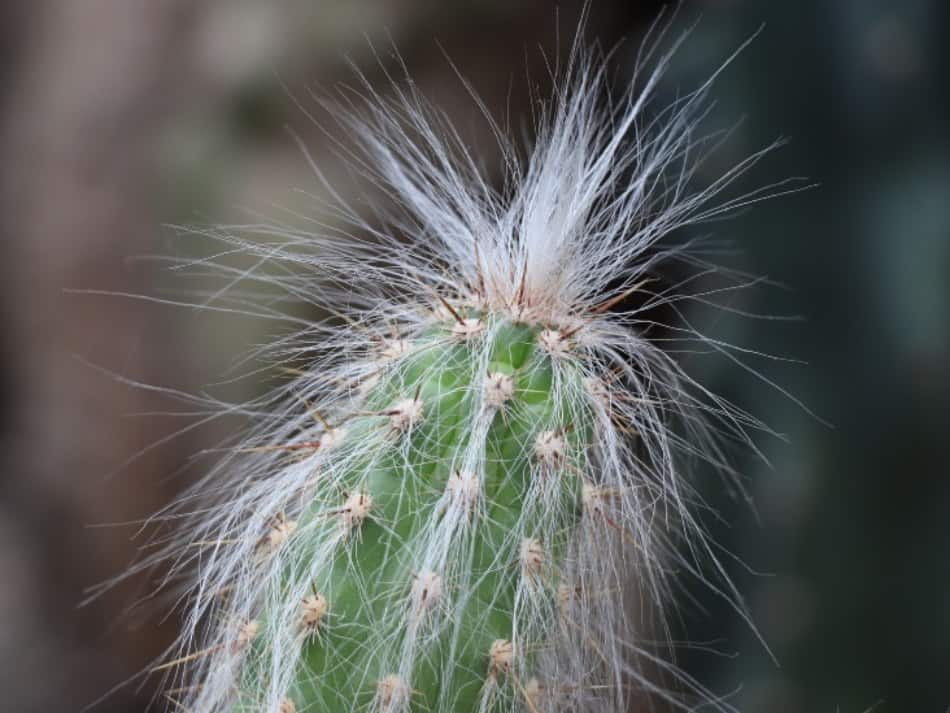
A old man cactus.
Wool-like white hairs of Old Man cactus protect the plant from cold winds.

Resembling the white beard of an older man, it’s no wonder that this cactus is labeled as the Old Man of the Andes. Able to withstand short periods of frost, the white hairs surrounding this cactus plant protect against cold winds.

Though this cactus will fare well in areas where winters aren’t as harsh, it may not survive temperatures far below freezing.

Final Thoughts

No matter if you’re trying to care for your indoor or outdoor cactus during the winter, it’s vital that you take the proper actions to strengthen and protect your cactus—not only when winter strikes but in the months leading up to it, as well. Keep in mind that, before winter rolls around, you should fertilize your cactus at least once (but not too often) to give it a boost of nutrients.

And, when Jack Frost begins nipping at your nose, ensure that your indoor cactus is in a room with a consistent temperature, adequate light (whether it be artificial or natural), and a good watering once a month. As for your outdoor cactus, don’t water it. And, if it isn’t so tolerant of the lower temperatures as the species we mentioned at the end of our article, consider covering it with burlap or a flower house to protect it from stinging winds and moisture.

How to water cactus in winter? Here’s How to do it

During the cold winter months, many gardeners believe their cacti plants only need a little amount of water- almost none at all. While this perception may be right in some cases, it can also be wrong. As a gardener, the last thing you want is your cactus plant to die due to dehydration.

Are you wondering how to water cactus in winter? During the low-light winter months, cacti should be watered only enough to prevent withering and shrinking. When watering your cactus, make sure you do it thoroughly. Water must flow through the drain holes and discard the excess after a few minutes. Avoid a series of repeated shallow sprinkling because it often results in distorted growth. However, you should always allow the soil to dry out completely between watering.

Understanding the water requirements of your cactus plant during different seasons is critical. Even though cacti are drought-resistant plants, they still need a sufficient supply of water to survive.

In this post, we discuss everything you need to know about watering your cactus in winter.

How Often Should You Water Cacti During Winter?

During the cold winter months, when cacti become dormant, it is usually advisable to water less frequently.

Consider watering your plant two to three times less often than during the summer. But, be careful not to dehydrate it. 

Test and observe your plant to establish how much water it needs. Watch for signs in the stems and leaves that might show the plant is getting stressed due to lack of or excess moisture. We shall cover these signs later on in this post. 

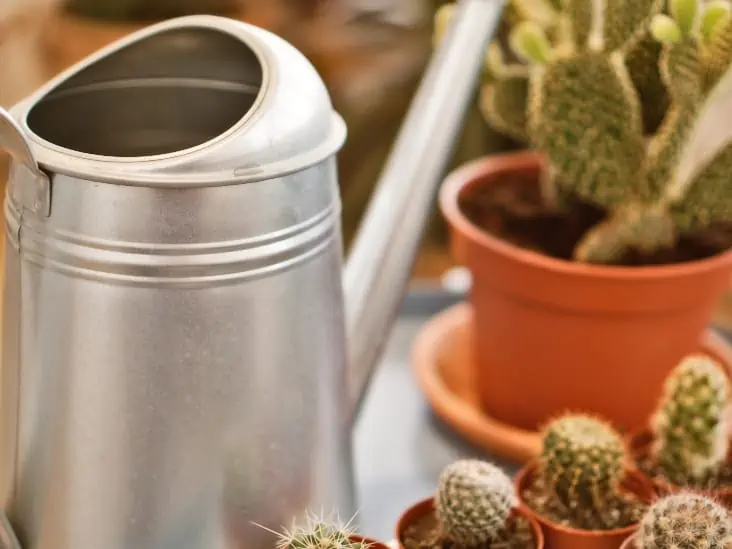
A water can and cactus.
Consider watering your plant two to three times less often than during the summer.

Most gardeners trying to grow cacti tend to suffer the greatest amount of plant losses during winter as a result of incorrect watering. Be careful not to be one of them.

While there is no simple recipe for advising on the exact amount of water or frequency of watering required during winter, there are many environmental and non-environmental factors that will determine your plant’s water needs.

What Is the Best Watering Method for Cacti?

While there are many watering techniques that can be used, it is best to use the soak-and-dry approach. The soak-and-dry watering method involves giving your cactus a good soaking by immersing it in water for fifteen minutes or so.

This ensures that the cactus plant absorbs enough moisture to last until the next watering schedule.

Once done, remove the pot from the water and discard the excess water. Allow the soil to dry completely between watering sessions.

You can also use the bottom watering method, which involves setting the container with its pot on a plate or shallow tray filled with water. Allow the plant to soak up the moisture for fifteen minutes, then discard the excess water.

Factors that Influence How Often to Water Cactus in Winter

Your cacti plants will only thrive when they are watered sufficiently throughout the year.  As mentioned earlier, these desert plants tend to grow best when they are watered sufficiently and left until the potting soil has completely dried up before watering again.

Some of the factors that affect how quickly your potting media will dry out include:

Size of cactus

You might be thinking that the larger the cactus, the more frequently it will need to be watered. However, that is not the case.

Younger and smaller cacti plants typically have higher growth rates and will require more water uptake compared to fully grown cacti plants.

The larger plants have a smaller surface area to volume ratio, which helps to lower the rate of evaporation of water from the surface of the plant.

Practically, you may need to provide a little bit more water to larger cacti plants during watering, but you will soon find that the smaller, faster-growing cactus plant planted in smaller pots require frequent watering.

Cactus near the pot.
Younger and smaller cacti plants typically have higher growth rates.

Species

The type of cacti species also affects how often you need to water your plant.  One thing you need to keep in mind is that not all cacti are the same.

In fact, the term “cacti” is a short form for a specific plant family known as Cactaceae.  The umbrella term encompasses different types of plants that live in different habitats and have varying needs.

Those from genus Ferocactus are the typical desert dwellers and require little amounts of water to survive. However, those from genus Echinopsis mostly found in South American and those from genus Oreocereus from high Andes Mountains need more water to survive.

To know the species of your cactus plant, be sure to look at the container it came in. Typically, there will be a tag or sticker somewhere on the container with the plant information.

You can also take it to your local nursery for identification. Once you know the exact plant species, it becomes easier to understand how often you need to water it.

A cactus on a pot.
One thing you need to keep in mind is that not all cacti are the same

Type of potting media

For better results with growing cacti, make sure your potting media is fast draining. You can either go for a commercial cactus mix or a simple DIY combination of coarse sand, potting soil, and perlite.

A well-draining cactus mix allows excess water to drain easily and the soil to dry quickly. Although this will mean that you need to water your plants more frequently, the results will also be much better.

Type of pot and drainage

For a cactus plant, the best strategy is to provide a lot of water and then leave the excess to drain rapidly, leaving the potting media dry and ready for another watering session.

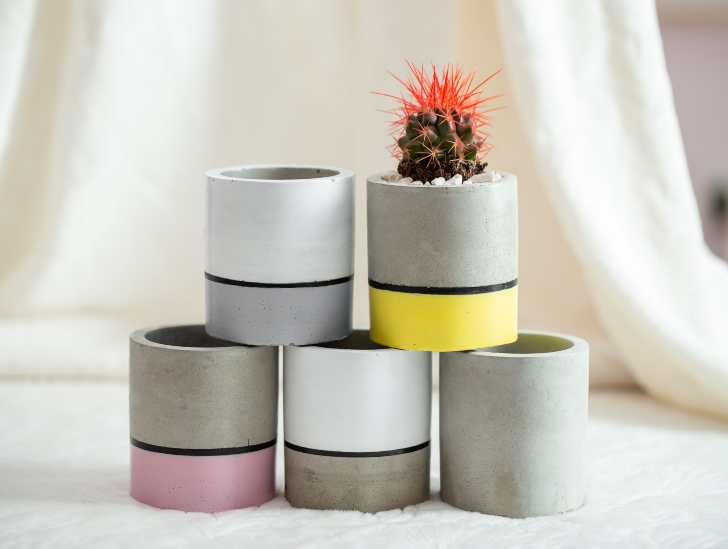
While choosing your pot, avoid plastic pots because they trap a lot of moisture hence increasing the time it takes for the soil to dry out.

Terracotta pots are a good choice because they are porous and allow the excess water in the pot to slowly drain out through its walls and evaporate into the air.

This helps to reduce the time it takes for the soil to dry out.  Conventional plant pots with lots of holes are also good.

Red needle cactus in a pot.
Avoid plastic pots because they trap a lot of moisture.

Humidity levels

The rate of evaporation tends to be higher in desert conditions. Wet cactus potting mix in dry areas will typically dry up faster because the air will have sufficient capacity to take up much more water.

Monitoring the humidity levels in your house is always a good idea when caring for your cacti and other indoor plants since it can help you predict water requirements for these plants.

Although natural succulents tend to do much better in arid conditions, you won’t achieve success if you deny them water. However, as long as you monitor soil dryness and levels of humidity in your house, you can be sure of achieving great success.

Temperature

Another crucial factor affecting cacti’s water requirements during winter is temperature. Even though most areas experience cold temperatures during winter, the desert environment of the cacti species is exposed to lower temperatures.

It means you will need to water your cactus less frequently when temperatures are lower. The plant’s metabolic rate also slows down in winter, and so does its uptake of nutrients, water, and other vital elements.

You should also remember that the temperature inside your home can be higher than outside. Therefore, you need to pay attention to the temperature inside and outside when deciding how much water your cacti need during winter.

For instance, if you use artificial grow lights to keep your cactus warm during winter, you must water it more frequently because the plants will still be active. The potting mix may also dry up faster.

How Do You Know Your Potting Soil Is Dry?

 It is quite easy to know when your cactus plant needs watering – whether in winter or summer. As a rule of thumb, the potting soil must completely dry out before watering. But, how can you check the soil at the bottom of your pot for dryness? Use any of these methods:

  • Push a skewer or stick gently into the potting mix right up to the bottom. Leave it for a few seconds before you remove it. If the skewer or stick feels or looks damp, then leave the plant for a while before watering.
  • Carefully poke one of your fingers into one of the drainage holes at the bottom of your pot to feel the amount of moisture. If the soil feels dry, then it is time to water your plants.
  • You can also use your finger to poke into the top few inches of your potting mix. If the soil feels dry up to a few inches down, then consider watering your plant. If the soil is still wet and clings to your finger, you can wait for a little longer before you add more water.
  • Use a moisture meter to measure the moisture content of your soil. This can be quite accurate and will clearly indicate when it is time to water your plants.
A group of cactus.
As a rule of thumb, the potting soil must completely dry out before watering

How to Water Cactus in Winter- Signs of an Under-Watered Cactus

An under-watered cactus will show signs of distress. The best way to tell whether your cactus is thirsty is by the overall appearance of its leaves.

If your plant has wrinkly or shriveled up leaves, it could be an indicator that it is under-watered.  You may also notice plenty of dried up, brown, or dead leaves from the bottom of the plant.

Typically, as the plant starts losing its water storage, it is the bottom leaves that will start drying up first.   

If the leaves feel soft and flat when touched, it could also be an indicator of under-watering. The leaves tend to lose their plumpness and firmness when a cactus plant is under-watered.

Luckily, you don’t have to panic when you notice signs of under-watering in your cactus plant. Under-watering is usually far less harmful than overwatering.  

A underwatered golden barrel cactus.
The best way to tell whether your cactus is thirsty is by the overall appearance of its leaves.

If your plant is showing signs of under-watering, you can simply correct the problem by thoroughly watering the plant as soon as possible. The plant should rejuvenate fairly quickly and bounce back to its former state.

How to Water Cactus in Winter- Signs of an Overwatered Cactus

 Overwatering a cactus plant is much more dangerous than under-watering it. When a cactus plants absorb too much water, it literally runs out of storage space, which can cause its cell walls to rupture. 

A cactus plant with ruptured cell walls will feel mushy when you gently press or squeeze it. This is the most significant difference between an overwatered and under-watered cactus plan; the mushiness.

The other signs of an overwatered cactus include:

  • The base of the plant will start turning black or brown
  • The cactus leaves and stems will start changing color to black or brown
  • The plant will start to appear as if it is decaying or rotting
  • The cactus becomes mushy and may start leaking

Can You Save an Overwatered Cactus

The truth is that most cacti plants are highly sensitive to overwatering, and it can be quite challenging to bring them back from the brink of death.

If you have an overwatered cactus, your best chance of saving it is by taking action as soon as possible. Remove all the dead parts of the plant and repot in fresh soil with better drainage.

Allow the soil to completely dry out before watering again, and keep the plant in an area with plenty of sunshine.

You may also need to reduce the amount of water you give your cactus during winter. The best way to know when it is time to water your cactus is by feeling the soil with your fingers or using a moisture meter.

It is essential to understand the signs of both under-watering and overwatering when caring for your cactus during winter months. This will help you provide the best possible care for your plant and ensure it stays healthy and happy all year round. 

Summary

Learning how to water your cacti plants in winter can take a little bit of trial and error. Watching for obvious signs of distress or overwatering can be an essential part of being a successful cactus plant gardener.

The most important thing to remember is to monitor your plant’s potting mix throughout winter to know when it needs watering. Once you develop the techniques of being able to understand when your cactus needs watering, everything falls into place, and your cacti will start to thrive.