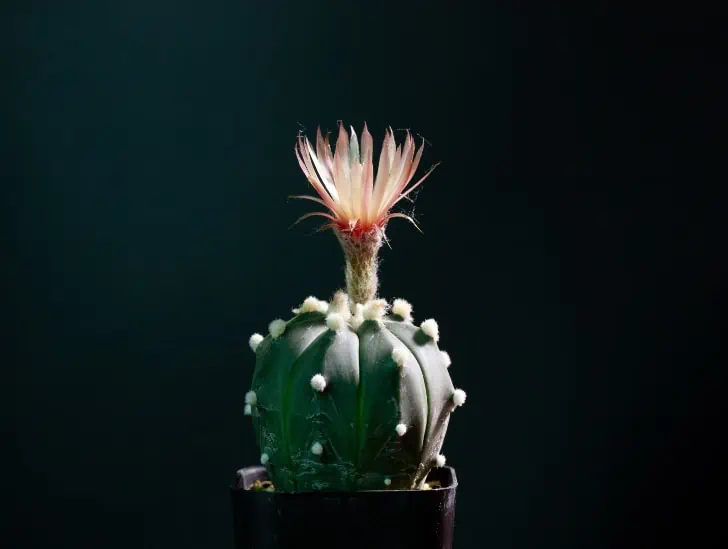
Is Your Rosemary Plant Dying? Here’s Why

A rosemary plant.

Rosemary is an evergreen, tender herb mostly found in relatively warm and sunny climates. The plant thrives both indoors and outdoors as long as the growing conditions are right. Unfortunately, Rosemary plants are prone to some diseases and pests that can lead to death. So, if you discover your plant dying, there can be a list of potential causes you need to examine to save it.

So, what are some of the common causes of rosemary plant dying? The most common cause of Rosemary plant death is underwatering or overwatering. Although these plants require consistent watering to thrive, too much or too little water can be just as deadly. Ensure the potting mix is not overly saturated for long periods, and the soil is allowed to dry out between watering sessions. Other causes of rosemary plant dying include inadequate light, the soil being too acidic, extreme winter, high humidity, over-fertilization/lack of fertilization, excessive pruning, and nutrient imbalance.

This blog post discusses the common causes of rosemary plant dying and what you can do to protect it from premature death. Read on to learn more.

Reason #1: Lack of Enough Sunlight

As mentioned above, rosemary prefers warm and sunny climates to thrive. The herb is native to the Mediterranean region that receives lots of direct sunlight and heat. Therefore, the herb is generally heat-tolerant and can survive in full sun.

Rosemary requires 10-12 hours of direct sunlight daily, but it can still survive with eight to six hours of full sun. If you have the herb in your outdoor garden, ensure other plants do not cover it. It must be positioned in an open spot that receives plenty of full sun every day.

Rosemary exposed to sunlight in a pot.
Rosemary requires 10-12 hours of direct sunlight daily.

If you grow the herb outdoors and prefer bringing it indoors for winter, ensure you provide it with at least six hours of strong light daily. Taking it from 10-12 hours of direct sunlight to four or five hours of indirect, low light can be catastrophic.

If you must bring the herb indoors for winter, help it adjust or acclimate to its new environment. The process must be gradual and done over a few weeks. Otherwise, your Rosemary plant may die.

Place it near a south-facing window, or use grow lights to ensure it receives adequate light for its growth and survival.

If you notice your plant has started to yellow, wilt, and drop leaves, it is an indication of inadequate sunlight. Move it closer to the window or add more artificial lighting.

Reason #2: Overwatering

Overwatering your rosemary plant can lead to irreversible damage. The rosemary plant is naturally drought-resistant and prefers dryer conditions to thrive. Too much watering usually creates damp conditions, promoting root rot. This can, in turn, lead to death.

The herb requires infrequent watering to stay healthy and produce strong and unique aromatic leaves.

Young rosemary plants may still survive with frequent watering, but everything changes when they mature.

Watering a rosemary in a pot.
Rosemary pots tend to dry out quickly since the plant prefers full sun.

Mature rosemary plants in temperate climates don’t need any form of additional watering since they can attain all their moisture requirements from rainfall, even during the dry summer months.

Rosemary pots tend to dry out quickly since the plant prefers full sun. Therefore, watering once every two weeks is appropriate during spring and summer. If you water your rosemary more than twice a month, you are most likely overwatering it.

If the plant is watered frequently, the soil stays moist/saturated with water, interfering with the roots’ ability to perform their functions.

This will eventually lead to root rot and other fungal diseases. If your rosemary turns black or brown, it could be signs of root rot or fungal infection. You must act quickly to save your plant from imminent death.

The best way to prevent overwatering is to check the soil before you water. A moisture meter or your finger can help determine if it needs more water.

If the top inch of the soil feels dry, then add some water. Otherwise, hold off until after a couple of days when you can check again.

Reason #3: Pests and Diseases

Although rosemary plant is known to be somehow resistant to pests and diseases, it can still fall victim to certain common pests and fungi.

The most notorious rosemary pest is the whitefly. This small insect is usually found on the underside of rosemary leaves, causing significant damage as a result of its feeding activities.

The whitefly feeds on plant sap using its piercing mouthpart leading to the yellowing and wilting of the leaves. It may also spread plant diseases such as tomato spotted wilt virus and other viral infections.

A closeup image of a rosemary beetle.
it can still fall victim to certain common pests and fungi.

Rosemary plants are also prone to root rot, fungal infections, and other types of disease. High humidity levels (overwatering) or too much shade can provide favorable conditions for fungus and bacterial growth, leading to diseases.

If you notice your rosemary has wilted leaves, black spots on its stems, or yellowing of the leaves, it could be a sign of  a disease.

To prevent pests and diseases from attacking your rosemary plants, ensure that you maintain good hygiene practices around.

Furthermore, avoid overwatering, use sterile potting soil, and move them away from overly wet areas. You may also need to apply a fungicide or insecticide to prevent further damage if the above measures don’t work.

Reason #4: Extreme Winter

Rosemary is a typical Mediterranean herb that thrives in relatively sunny locations. This plant is cold-tolerant since it belongs to the hardiness zone of 8-11. Anything below freezing temperatures can be catastrophic.

However, some varieties of this herb, such as the Madeline Hill and “Arp,” are quite hardy and can survive in low temperatures. In fact, these two varieties can survive in temperatures of up to -5 Degrees Fahrenheit.

Rosemary outdoors covered with snow.
This plant is cold-tolerant since it belongs to the hardiness zone of 8-11.

If you live in a location where temperatures drop significantly during winter, you must ensure that your rosemary plant is protected from frost and snow. Consider bringing them indoors or to a warmer spot like the basement or garage.

The plant will become dry and brittle if you ignore it during winter and turn yellow or brown. The early signs of winter neglect will only kill a few branches. However, further neglect will completely kill the roots and the entire plant.

If you have planted your rosemary outdoors, in-ground making it impossible to move them indoors during winter, ensure you provide enough shelter that helps them avoid harsh winter winds.

If you discover signs of frost damage on your plant, quickly cut off the damaged stems and leaves and provide more protection.

Avoid pruning your rosemary during winter when there is still a risk of frost damage. The pruned areas will become susceptible to frost damage.

Pruning should be done in spring or summer when the weather is warm enough to stimulate new, healthy growth.

Consider mulching in fall with about three inches of mulch added on top of the soil.

Reason #5: The Soil Is Too Acidic

Rosemary grows in mildly acidic soil with a soil pH of between 6 and 7.5. If the soil is too acidic, it will limit essential nutrients from being available to your plant. This can lead to stunted growth, yellowing of leaves, and in some cases, death.

If you are not sure about the exact pH of your preferred soil, go for the typical garden soil that is mostly pH neutral or slightly acidic. This will provide your plant with the balance it needs to thrive.

You may also consider adding organic matter and compost to improve soil fertility. If you have been using chemical fertilizers, switch to natural fertilizers.

Organic fertilizers will ensure that your soil is adequately aerated and nutrients are available in adequate amounts.

Test your soil to know the exact pH level and make the necessary adjustments. Organic mulch can also help maintain a more neutral pH by decreasing acidity levels in the soil.

Reason #6: Excessive Pruning

While you can harvest your rosemary anytime during the active growing season, be careful not to overdo it.

Rosemary plants respond to pruning by producing more foliage and branches, which means you will get a bushy plant. But if you over-prune it, the plant won’t produce enough new growth, and its overall health will be affected.

When pruning rosemary, always use clean scissors and make sure to avoid cutting more than one-third of the plant’s foliage. Prune away dead and damaged stems and any overly long branches.

Prune only in spring or summer when the weather is warm enough for new growth. Doing so will ensure that your rosemary has enough time to recover before winter.

Reason #7: Overcrowding

Lastly, a rosemary plant may also die due to insufficient space between the plants. This is especially true for outdoor rosemary plants.

Overcrowding prevents optimal airflow to the plant leading to relatively slow water evaporation at the bottom of the plant, which is a recipe for fungal infections and root rot.
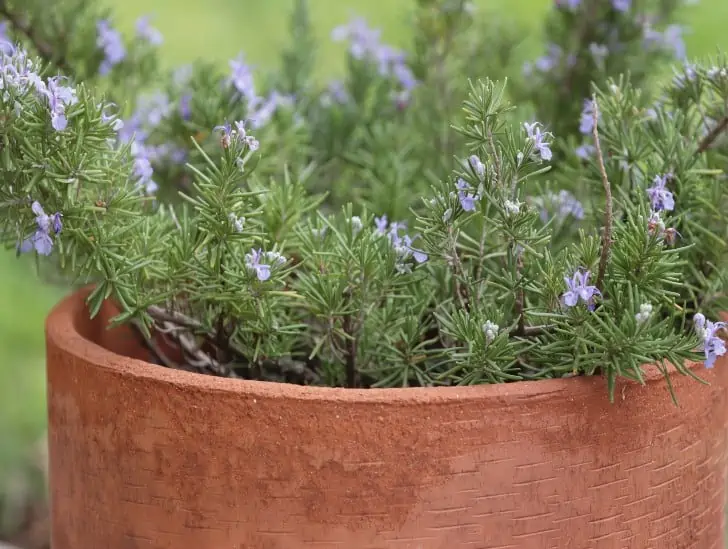
rosemary flowering in a pot.
A rosemary plant may also die due to insufficient space between the plants.

Therefore, ensuring your rosemary plants are spaced out nicely is always good to allow enough air and sunlight to reach each plant.

Final Thought

Rosemary is a hardy, fragrant herb that grows well both indoors and outdoors. However, if you are having trouble growing it, there could be several causes to examine. From too much or too little water to acidic soil or frost damage.

Keeping an eye out for these common issues and making the necessary changes to your growing condition can help you successfully grow a healthy rosemary plant.
Everything You Need to Know About Monocarpic Cacti

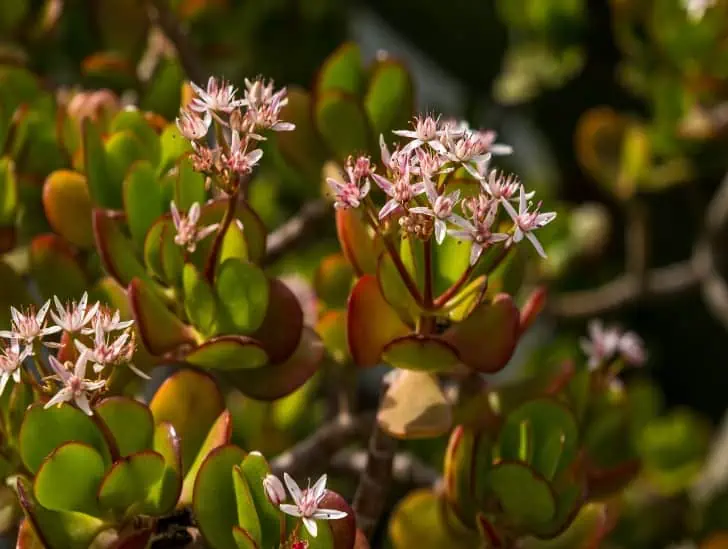
A flowering crassula ovata.

One of the most exciting moments in a succulent gardener’s life is seeing their succulent bloom. These plants usually produce beautiful flowers in many colors, such as purple, white, yellow, red, and pink. Your face is filled with a big smile once you start to see bloom stalks shooting up from the succulent, and you can’t wait for the flowers to pop up in full. However, some succulents turn black after a single blooming season and eventually die. Such succulents are known as monocarpic, and there is nothing you can do about it.

So, what is a monocarpic succulent? A monocarpic succulent is a succulent that blooms and dies thereafter. While most succulents bloom yearly, monocarpic succulents only bloom once during their lifetime and die shortly afterwards. While this may sound sad, there are several advantages to having one of these succulents in your garden or home. Generally, they require less maintenance and care than other types of succulents. Furthermore, monocarpic succulents are quite rare and unique. So, you can show off your succulent collection with pride.

This blog post discusses everything you need to know about monocarpic succulents. Read on to learn more.

Monocarpic Succulents: Overview

The term monocarpic comes from two words: Mono and caprice. Mono means one, while caprice means fruit.

Therefore, you can think of a monocarpic succulent as a plant that only blooms once before it dies. That is why some people call it the bloom of death.

Although the term doesn’t sound so good, it shouldn’t worry you much once you decide to have them in your collection.

You will soon realize that the bloom of death has nothing to do with you and how you take care of your succulent. In fact, even the best gardening experts can’t do anything about it.

The succulent usually starts turning black as soon as it finishes flowering. While watching your succulent die on you is upsetting and depressing, you must accept that this process is natural with monocarpic succulents.

Some plant experts believe that monocarpy is a strategy of many plants to produce progeny. Most of these plants usually produce so many pups before they bloom.

So, by the time they are ready to flower and die, they have created more than enough young plants to replace them.

Types of Monocarpic Succulents

You can find two types of monocarpic succulents in nurseries and garden centers: hardy and tender. Hardy monocarps can tolerate cold temperatures, while tender monocarps are more sensitive to temperature shifts.

Hardy monocarps include Dudleya, Agave, Aloe, and Haworthia. These succulents are best for outdoor gardens and can tolerate temperatures as low as -20°F (-29°C).

Tender monocarps, on the other hand, cannot tolerate cold temperatures. Some of the most popular tender monocarps include Kalanchoe, Echeveria, Crassula, and Aeonium.

These succulents are best for indoor gardens or outdoor gardens in warm climates where temperatures never fall below 40°F (4°C).

Below is a quick overview of some of the most common genera of succulents that are monocarpic (both hard and tender):

1. Agave

Some Agave plants are monocarpic. These plants are generally slow growers and may take up to 25 years to reach the blooming stage.

Agave plant with water droplets.
The dying process of monocarpic agave plants is relatively slow.

When they are ready to bloom, the plant will put all of its efforts into producing thick stems and beautiful blooms to their last breath.

The stems grow from the center of the rosette and can be up to eight feet high. The dying process of monocarpic agave plants is relatively slow compared to other monocarpic succulents. It may take several months or even one year to wither and die.

2. Aloe

Aloes are some of the most popular succulents around the world. They can make wonderful houseplants and add a lot of color to your garden.

Most aloes are not monocarpic. However, one aloe species is: Aloe dichotoma or quiver tree.

Aloe vera plant outdoors.
They can make wonderful houseplants and add a lot of color to your garden.

This plant is a slow grower and takes around ten years to flower. The inflorescence grows from the center of the rosette. After flowering, it will die but not before producing numerous offsets.

3. Crassula

Crassulas are some of the easiest succulents to take care of. Some species form clumps, while others grow in rosettes. One of the most popular monocarpic species is Crassula ovata, also known as the jade plant or money tree.

This plant produces a thick stem from its center and produces white flowers in its last days. After flowering, the stem quickly dies, but not before it produces offsets that will replace it.

4. Sempervivum

All sempervivums are monocarpic, but that should not stop you from getting one since it will take a long time for them to bloom. And when they do, they produce a lot of offsets to make up for their eventual death.

A sempervivum exposed to a morning sunlight.
These plants are best for rock gardens, wall pockets and troughs.

Sempervivum takes four or five years to bloom. Commonly referred to as the hen and chicks, these plants are best for rock gardens, wall pockets and troughs.

5. Kalanchoe

Kalanchoes come in many varieties, and you can find a range of sizes from small to large. Most kalanchoes are monocarpic and will die after flowering. The blooms may last up to eight weeks, and the death process can take several weeks to a few months.

6.    Haworthia

Haworthias are beautiful succulents that can be grown both indoors and outdoors. Haworthia cooperi is a monocarpic species that produces a long inflorescence with white flowers. This plant takes five to seven years to bloom and will die shortly after flowering.

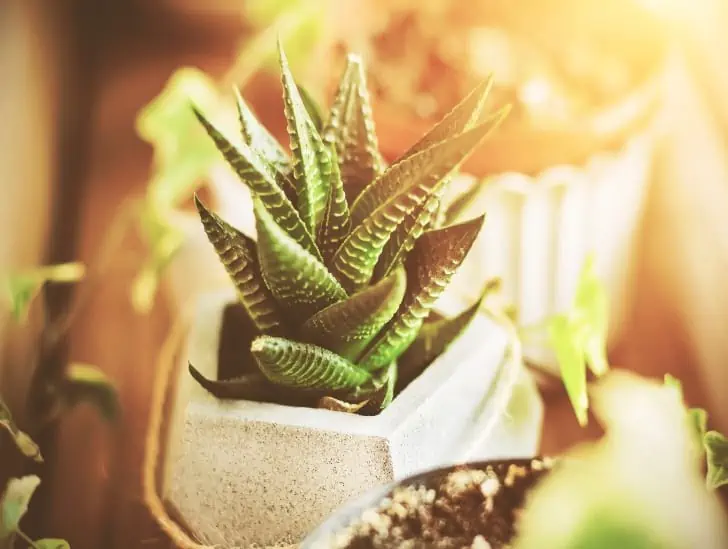
A haworthia plant exposed to sunlight.
Haworthias are beautiful succulents that can be grown both indoors and outdoors.

How Do I Know If a Succulent Is Monocarpic?

The easiest and most reliable way to determine if a succulent is monocarpic is to research the succulent before purchasing it. Gather all the information you can find and read up on its life cycle to determine whether it is monocarpic.

If you already have the succulent in your succulent, pay attention to how the blooms start forming.

If the flowers are coming from the center of the succulent (which makes it look like the whole plant is evolving into one big flower), then the succulent is most likely monocarpic.

A kalachoe outdoors exposed to sunlight.
Pay attention to how the blooms start forming.

But if you notice the flowers coming from different parts of the plant, you can assume that the succulent is not monocarpic. In that case, you can clip off the flowers and enjoy your succulent for many years.

What To Do Before, During, and After a Bloom

Now that you know your succulent is monocarpic, it is important to know what to do before, during, and after the blooming. Just because a succulent is monocarpic doesn’t mean it will have a short lifespan.

The fact that it only blooms once in its lifetime doesn’t mean anything. Before your plant starts to bloom, take time to look for offsets and propagate them.  This way, you will have the same succulent but in a different form after it dies.

However, you must also remember that the time your succulent is prepping to flower is the most critical in its lifecycle.

It needs to be healthy and stress-free to produce the best flowers. Consider giving it a little extra care but don’t overdo it to avoid causing problems.

During blooming, give your plant plenty of sunlight and water. This is the other time that your plant needs the most care. You can even fertilize it if necessary for maximum flower production.

Once the parent plant has dried out completely and become brittle, carefully harvest the seeds and remaining pups.

Detach the pups from the mother plant and plant them into a well-draining potting mix. Water them and let the growth cycle begin again.

Can You Prevent a Monocarpic Succulent from Dying After Blooming?

There is no guarantee that you can keep monocarpic succulents alive after they have bloomed. However, you can take a few steps to increase the chances of survival.

The first step is to gather as many offsets as possible from the plant before it blooms. These offsets will be your only hope after the original plant has died because they will become new plants and replace the parent.

Secondly, make sure your succulent is healthy and stress-free before it blooms. Provide plenty of sunlight and water and fertilize if needed for maximum flower production.

Once the flowers have faded, you can try to keep the parent plant alive by pruning away the wilted flowers. This will help promote new growth.

However, this doesn’t guarantee any chance of keeping the succulent alive.

Can I Replant a Monocarpic Succulent After It Blooms?

Yes, you can replant a monocarpic succulent after it blooms. As mentioned earlier, this is best done by taking offsets from the mother plant and planting them into individual containers with a well-draining potting mix.

Water your succulents and give them plenty of sunlight. Once they are established, you can enjoy your new succulent plants for many years.

Final Thoughts

Monocarpic succulents are a unique and exciting addition to any garden. Although they only bloom once, they can bring beauty to your yard or home.

Plus, you don’t have to worry about taking extra care of them since their lifecycle is predetermined.

So, if you want something different, consider adding a monocarpic succulent to your collection!

Discover the 9 Stunning Types of Flowering Succulents

The truth is that succulents can be found in almost every household. They are probably the most popular houseplants because they are relatively easy to care for and thrive even with neglect. But despite their immense popularity, only a few succulents flower. Flowering succulents are an amazing enrichment for every space because they bring more than just greenery to the table. So, if you are looking for a flowering succulent but are not sure what to pick, you have come to the right place.

What are some of the common types of flowering succulents? The most fabulous flowering succulents include aloe species, echeveria, prickly pear cactus, the string of pearls, Easter cactus, and sempervivum. Others include Christ thorn, desert rose, flaming beetle, houseleek, the crown of thorns, flaming katy, Ice plant, and graptopetalum.

This blog post discusses some of the most common types of flowering succulents and their characteristics. Read on to find out everything you need to know.

Why Do Succulents Bloom?

Before we explain the different types of flowering succulents, it is crucial to understand why these amazing plants bloom.

Succulents can flower in response to environmental changes such as temperature and light. They typically bloom when exposed to more daylight hours than usual or during drought conditions when water is scarce.

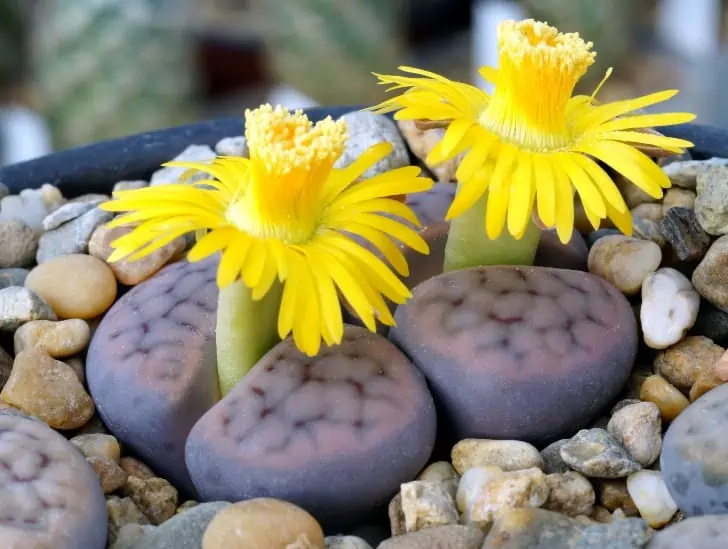
A blooming lithops.
It is good to mention that not all succulents flower because of environmental changes.

These plants produce lovely flowers that vary in shape, size, and color. The incredible range of flower colors and shapes makes them unique and attractive.

Some of the flowers are pollinated and produce edible fruits. For instance, the prickly pear cactus produces yellow flowers that turn into pear-shaped fruit. The fruit is known to provide numerous health benefits.

That said, it is good to mention that not all succulents flower because of environmental changes — some may never bloom in the same environment.

Types of Flowering Succulents

So, what are some of the most common types of flowering succulents? Let us find out:

1. Aloe Species

Let us start our list with one of the most classic succulents, the aloe genus. Even though members of the aloe genus are a little stuffy, they remain one of the most popular succulents in the world.

The genus has more than 500 species that thrive in tropical regions worldwide.

These species mostly thrive indoors because their growth requirements are relatively easy to meet. They are even suitable for beginners. All you have to do is provide basic succulent care, and everything will be fine.

Generally, caring for an aloe plant isn’t so hard. One of the most important things you need to remember is that this succulent doesn’t like cold temperatures and frost. That is why it is best to grow it indoors.

It grows relatively fast and can reach full maturity in one or two years. Therefore, be sure to find the right pot and spot for it.

Its leaves contain a gel that offers plenty of cosmetic and wellness applications. It is also known to have many medicinal properties.

As long as you provide it with plenty of sunlight exposure and grow it in a well-draining potting mix, the succulent will reward you with an array of exotic flowers.

Its orange flowers put on a magical show that is a real sight.

2. Easter Cactus

The Easter cactus is an unusual succulent that belongs to the Rhipsalidopsis genus. This flowering succulent is known for its vibrant and long-lasting blooms, making it a favorite among gardeners worldwide.

It typically produces yellow, orange, pink, and red flowers, making it a great indoor plant.

The succulent is native to Central and South American tropical forests but can also be found in parts of Africa.

Waster cactus flowering.
Easter cactus will produce a spectacular display of bright blooms from late winter to spring.

It loves moderate temperatures between 15°C-25°C (60°F-75°F). When grown indoors, this succulent should get plenty of indirect sunlight.

To get the best results, water it when the soil is dry and avoid overwatering, which can cause root rot.

Easter cactus will produce a spectacular display of bright blooms from late winter to spring when grown in optimal conditions.

3. String Of Pearls

Another popular flowering succulent is a string of pearls. This plant is native to the deserts of South Africa and thrive in dry conditions with plenty of sunlight.

The string of pearls is a unique-looking succulent that gets its name from the shape of its leaves — each leaf looks like a pearl.

It produces an array of vibrant flowers ranging from yellow to pink. These flowers attract pollinators like bees and butterflies, which help to further propagate the species.

To get the best results with this succulent, ensure you provide it with well-drained soil, occasional watering and bright, indirect light.

4. Desert Rose

Adenium Obesum commonly referred to as the desert rose, is one of the real gems when it comes to flowering succulents. Its caudex can take on bizarre shapes making the plant an extraordinary eye-catcher.

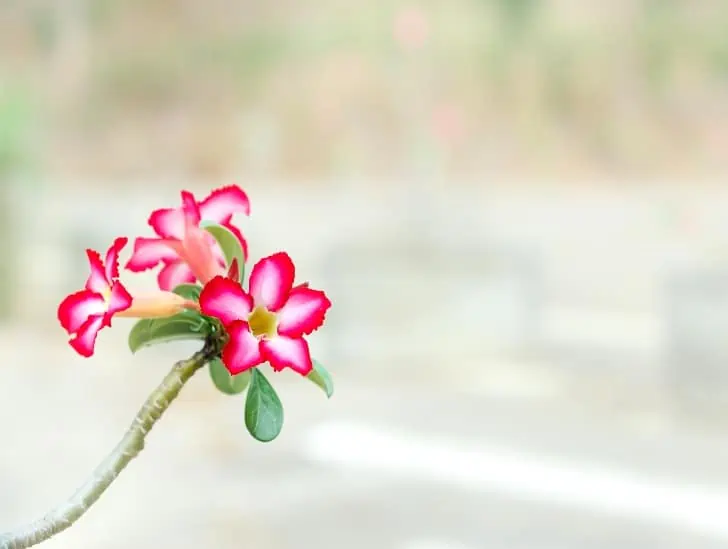
In fact, the desert rose only reaches its full beauty when it blooms. Its gorgeous red/pink flowers are reminiscent of a wild rose. In its native environment, this succulent is mostly found in the tropical regions of Africa and the Arabian Peninsula.

A desert rose stem flowering.
When given the right care, this stunning succulent will reward you with its fabulous flowers!

The desert rose loves bright, indirect light but can survive a few hours of direct sunlight exposure every day. Water it when the soil is dry and avoid overwatering at all costs.

Furthermore, be sure to use gritty soil and don’t forget to repot it every 2-3 years. When given the right care, this stunning succulent will reward you with its fabulous flowers!

5. Crown of Thorns

The crown of thorns is an exotic-looking succulent native to the dry regions of Madagascar. This succulent gets its name from its thorny stems, which look like a crown.

It also produces an array of bright flowers, typically ranging from red to pink, giving it an even more beautiful appearance.

This plant thrives in warm temperatures and direct sunlight. Be sure to provide it with well-drained soil, and water it when the topsoil is completely dry.

If given the right care, the crown of thorns will reward you with striking flowers!

6. Prickly Pear Cactus

The prickly pear cactus is from the opuntia genus that produces edible fruits. The prickly pear fruit is a fantastic addition to different dishes as long as it is harvested and peeled properly.

Some varieties of the prickly pear cactus produce beautiful fruits, and the leaf pads are also edible. The most important thing you need to do is get rid of the pesky spines, and you are good to go.

With over 100 cacti species in the opuntia genus, there is something for everyone.

The prickly pear cactus is an excellent choice for gardeners looking to add an interesting and unique plant to their landscape. It does best in full sun, well-draining soil, and occasional watering.

You must also find the perfect blend of low humidity, relatively high temperatures, and fertilizer to get the best out of your prickly pear cactus.

Before fruits form, the cactus will produce beautiful yellow or reddish-orange flowers in the spring and summer.

7. Sempervivum

Sempervivum, commonly referred to as the hens and chicks plant, usually thrives outdoors because it can survive everything.

In fact, this is the perfect flowering succulent for beginners. It is incredibly drought-resistant, given that they grow in crevices and rocky cracks in deserts and hillsides.

Sempervivum flowering.
The hens and chicks are known for their unique green, red, purple, or yellow rosette-like foliage.

This beautiful succulent can tolerate a wide range of temperatures from hot to cold and bright, direct sunlight to shade. The hens and chicks are known for their unique green, red, purple, or yellow rosette-like foliage.

During spring, they produce an array of starry pinkish-white flowers that attract pollinators. Depending on the weather conditions, they require well-drained soil and only occasional to no watering.

8. Carrion Flower

The carrion flower is one of the funky flowering succulents from the Huernia genus. These plants are native to southern parts of Africa and thrive in dry, rocky areas.

Typically, they remain small and only produce stems instead of stems and leaves.

Their shape is a true eye-catcher; their flowers are usually white or yellow with a purple center, looking like something from another world.

A carrion flower.
These plants are native to southern parts of Africa and thrive in dry, rocky areas.

The carrion flower may also produce small fruits that can be eaten raw or cooked for different dishes.

The succulent loves bright sunlight and nutrient-rich soil. Take care not to overwater it for the best results. Keep the soil relatively dry and only water during the active growing season.

9. Flaming Beetle

Lastly, we discuss the flaming beetle succulent. This succulent produces bright red flowers that turn the houseplant into a magnificent eye-catcher.

The flaming beetle is relatively low-maintenance succulent that can survive in different environments. It prefers bright light and temperatures between 18 to 24 degrees Celsius.

It requires well-draining soil  and occasional watering during summer to thrive.

Summary

Blooming succulents are a beautiful and unique sight. By understanding why they bloom, and which types of succulents will flower, you can add these lovely plants to your home or garden.

Seeds for each of the nine varieties listed above can be purchased online or at your local nursery. Give one (or more) of these flowering succulent species a try today!

The Ultimate Guide to Growing Sand Dollar Cactus

San dollar cactus blo

Astrophytum asterias, commonly referred to as the sand dollar cactus is a spineless cactus species native to Mexico and parts of Texas. It is a popular choice among cacti enthusiasts due to its unique and attractive shape that resembles the shape of a sand dollar. This plant has eight ribs covered in dense white fuzz and can reach up to six inches in height and eight inches wide when fully grown.

So, what do you need to know about the sand dollar cactus? The cactus belongs to family Cactaceae, subfamily cactoideae, tribe cacteae, and genus astrophytum. The cactus has a dark green stem covered with ribs and woolly areoles. Its stem can grow up to eight inches wide and six inches tall. The plant produces yellow flowers with orange-green centers and small, round fruits that are edible. The fruits are usually covered with dense wooly hairs. The sand dollar cactus thrives in USDA hardiness zones 9a to 11b. The cactus is considered easy to grow. It prefers a warm, sunny location with well-draining soil.

This blog post discusses some interesting facts about the sand dollar cactus that you should know. Read on to learn more.

Sand Dollar Cactus: Overview and Classification

As mentioned earlier, the sand dollar cactus, or Astrophytum asterias, is a spineless cactus species native to Mexico and parts of Texas. It belongs to family Cactaceae, subfamily Cactoideae, tribe Cacteae, and genus Astrophytum.

Its disc-shaped body is divided into 7-10 distinct sections known as ribs. The middle of each rib contains woolly areoles. The areoles give rise to spines and glochids, the primary means of self-defense for the sand dollar cactus.

A top view of a sand dollar cactus.
The most important distinguishing feature of this cactus is its resemblance to a sand dollar.

The sand dollar cactus produces yellow flowers with orange-green centers along with small, round fruits that are edible when ripe. The green stems of this cacti are covered with dense white hairs.

Sometimes, the body may appear speckled since it is covered with white scales known as trichomes. Perhaps, the most important distinguishing feature of this cactus is its resemblance to a sand dollar.

Sand Dollar Cactus: Biology

The sand dollar cactus usually reproduces asexually through cross-pollination. The cactus reaches sexual maturity after two or three years (once they attain about three centimeters in diameter).

The cactus flowers between March and June, and fruiting occurs from late April to June. During this time, small, round fruits are produced, which are edible when ripe.

This cactus is considered a slow-growing species since it may take up to three years for it to reach its mature size of six inches tall and eight inches wide.

The succulent bears a close resemblance to Euphorbia obesa, even though the two are unrelated. In fact, Euphorbia Obesa isn’t even a cactus.

Sand Dollar Cactus: Distribution and Habitat

The cactus is native to parts of Texas in the U.S. and the states of Tamaulipas and Nuevo Leon in Mexico. They mainly occupy the parts to the east of the famous Sierra Madre Oriental Mountain ranges.

A sand dollar cactus bloom under the bright blue sky.
Most of it is associated with thorn scrub in rocky grounds that were previously flat and fertile grasslands.

Although the sand dollar cactus was previously available in abundance in this region, it has become increasingly rare due to habitat destruction.

Today, the succulent is restricted to a very small part of Starr County in Texas and a few parts in Tamaulipas. Most of it is associated with thorn scrub in rocky grounds that were previously flat and fertile grasslands.

Sand Dollar Cactus: Cultivation

This cactus has mainly been grown as a houseplant since the 1950s. It is a relatively easy-to-grow species that thrive in warm, sunny locations with well-draining soil.

It outshines other members of its genus despite its rarity. The cactus is usually propagated from seed.

Most of the young plants you will come across in nurseries are seed grown. The popularity of the cactus among gardeners and collectors has ensured that the species remains available in the market.

Furthermore, it has given rise to several cultivars. One of the most famous sand dollar cactus cultivars is the Super Kabuto.

Sand dollar fruit seeds.
Most of the young plants you will come across in nurseries are seed grown.

This plant resembles the sand dollar cactus, although it has relatively large trichomes that congregate in dense spots arranged in a highly striking and exciting pattern.

The other common cultivar is the Hoshinoko. This one has smaller and more densely packed trichomes.

It also grows faster than the regular plant, making it a handy choice for gardeners who want to see quick results.

Sand Dollar Cactus: Growth Rate

As mentioned earlier, the sand dollar cactus is a slow-growing species. It may take up to three years for the succulent to reach its mature size.

It is important to provide enough light for the plant for it to thrive properly. The cactus does not require frequent watering and can be watered only when the soil is dry.

Generally, this cactus species is not prone to disease or pests and can do well in favorable indoor conditions. With the right care, it can live for many years in your home.

Sand Dollar Cactus: Care and Maintenance

Typically, the sand dollar cactus prefers a warm, sunny location with well-draining soil. Water it moderately during spring/summer months and keep it dry during winter. The temperature should remain between 10-25 degrees Celsius to ensure proper growth.

Maintain the humidity levels at about 40-50%, as this is the optimal range for the cactus’ growth. Too much humidity can encourage fungal diseases.

Sand dollar cactus in a pot.
It is important to use fertilizer specifically meant for cacti and succulents.

The cactus should be fed with a balanced fertilizer once every two or three months to ensure proper growth. To prevent any nutrient deficiencies, it is important to use fertilizer specifically meant for cacti and succulents.

It can also be grown outdoors, although this cactus species is mostly viewed as an indoor plant due to its slow growth rate and spectacular appearance.

Depending on its size, it is important to repot the sand dollar cactus every spring or once in two years. Don’t forget to remove dead leaves and stems before repotting.

The cactus should be pruned regularly to maintain its shape and size and promote the healthy growth of the plant. It is also important to check for pests or diseases from time to time and take appropriate action if needed.

Ensure the soil remains slightly acidic or neutral and use a fertilizer rich in potassium and nitrogen.

Finally, you must be careful when handling the cactus because its spines can cause skin irritation. When it comes to maintenance, regular pruning may be necessary depending on the state of your plant.

Sand Dollar Cactus: Flowering

This cactus usually flowers during summer or spring. The flowers are small, white, and bell-shaped with yellow stamens and light green sepals. They may be solitary or in clusters, lasting only a few days.

A sand dollar cactus flowering outdoors.
The flowers are small, white, and bell-shaped with yellow stamens and light green sepals.

Once the cactus is mature enough, it will produce many flowers before going dormant during winter. Consider leaving the flowers in place because they will eventually die on their own.

Sand Dollar Cactus: Toxicity

The sand dollar cactus is not toxic to humans or pets. However, it is important to be careful when handling the plant because its spines can cause skin irritation.

Keep it away from children and pets to prevent accidental ingestion and be sure to seek medical help in case of ingestion.

Its fruit is edible, but you need to prepare it properly before consumption. The seeds of the cactus may also be used for propagation.

To prepare the fruit, remove the spines and cut it into small pieces before cooking. The cooked fruit can be eaten as is or added to other dishes such as salads.

Sand Dollar Cactus: Propagation

The sand dollar cactus can be propagated by seed germination or stem cuttings. If propagating by seed, sow them in small pots with well-draining soil mix and cover them lightly with sand.

Keep the soil moist but not wet and place the pot in a warm location where sunlight is available. The seedlings will take about two to three weeks to germinate.

For stem cuttings, you can use a sharp knife or scissors to carefully remove the stems from the mother plant. Allow the cuttings to dry for a few days before planting them in pots filled with well-draining soil mix.

Keep the soil moist but not wet and place the pot in a warm location with plenty of indirect sunlight. The cuttings may take several weeks to root.

Sand Dollar Cactus: Conservation

The cactus is listed as an endangered species in some parts of the world and is thus protected by law.

To prevent its extinction, it is important to take measures such as propagating it sustainably, avoiding habitat destruction, and using only legal sources when buying or selling this cactus.

It is also essential to avoid over-harvesting its fruit and seeds, which can reduce its population. Taking these steps can ensure that this unique and beautiful cactus remains in our environment for many years.

Final Thoughts

The sand dollar cactus is a unique plant that adds beauty and character to any indoor or outdoor garden.

It requires minimal effort to maintain and is ideal for novice gardeners who want something easy to care for and interesting to look at.

With its slow growth rate, a striking pattern, and unusual flowers, this cactus is definitely worth adding to your collection.