Want Giant Succulents? Here’s How to Grow Them Like a Pro!

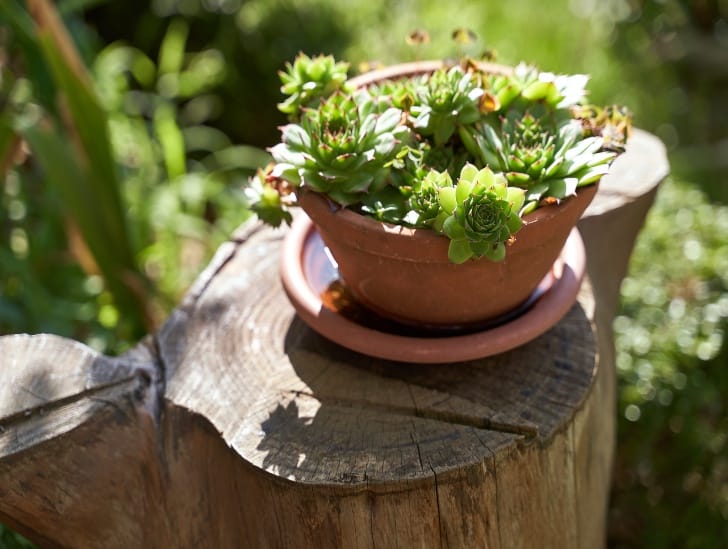
Giant succulent plant exposed to sunlight.

There is something undeniably mesmerizing about giant succulents that command attention and create a botanical spectacle like no other. Their sheer size, striking presence, and unique beauty make them stand out in the world of succulents. If you’ve ever dreamed of nurturing these botanical giants and turning your succulent collection into a living masterpiece, you’ve come to the right place. Welcome to our exclusive guide on growing giant succulents like a seasoned pro.

So, how can you grow giant succulents like a pro? Everything starts with choosing the right species. Some succulent species naturally grow larger than others. Research and select succulent varieties known for their potential to grow large, such as Echeveria, Aeonium, and Agave. Once you have chosen the right species, focus on creating an ideal environment for your giant succulents. The key here is to strike a balance between water, light, and soil quality. Water your succulents sparingly and use a well-draining potting mix. Be sure to provide your giant succulents with enough space to grow and thrive. Additionally, regular pruning can also help your giant succulents reach their full potential.

This blog post highlights the secrets of growing giant succulents like a pro. Read on to find out everything you need to know.

What Is Considered a Giant Succulent?

A “giant succulent” is not an official botanical classification but rather a term used informally to describe succulent plants that are exceptionally large compared to their typical counterparts.

The size of a succulent is relative, and what is considered “giant” may vary depending on the species and context.

You must remember the fact that succulents come in a wide range of shapes, sizes, and forms. While many succulents are small to medium-sized, some certain species or varieties can grow significantly larger than the average.

Several factors influence the size of a succulent, including its genetics, environmental conditions, age, and care.

In some cases, a succulent may be genetically predisposed to grow larger, while others might achieve giant status due to favorable growing conditions and proper care.

A agave plant blooming.
You must remember the fact that succulents come in a wide range of shapes, sizes, and forms.

Therefore, the term “giant succulent” is highly subjective and may vary among individuals and gardening communities.

Generally, a succulent is considered “giant” when it significantly exceeds the typical size of its species or variety. This can manifest in various ways, such as taller stems, larger rosettes, or a more extensive spread.

Gardeners and landscapers often use giant succulents as focal points in their designs due to their striking appearance and size. These larger succulents can add a bold and dramatic element to outdoor spaces.

How Do You Grow Giant Succulents?

Below are some essential tips to help you grow giant succulents like a pro:

Choosing the Right Species

When it comes to growing giant succulents, choosing the right species is crucial. Some succulent varieties are naturally more compact and smaller in size, while others tend to grow larger.

Start by researching various succulent species. There is a wide range of succulents to choose from, each with its unique growth habits, sizes, colors, and shapes.

Consider the climate and conditions in your area when selecting species. Some succulents are better suited for specific climates, such as desert or Mediterranean varieties.

Take time to identify succulents that are naturally larger or have the potential to grow large over time. Examples of large succulent species include Agave americana, Agave titanota, and Aeonium arboreum.

Pay attention to the growth habit of the succulent. Some species grow in rosettes, while others form tree-like structures or sprawling ground covers. Choose a growth habit that appeals to your aesthetic preferences.

Aeonium with white flower.
Pay attention to the growth habit of the succulent.

You should also remember that some succulents are slow growers, taking many years to reach a significant size, while others grow more rapidly. Decide if you’re willing to invest the time and effort required for slow growers.

And most importantly, consider the maintenance requirements of the species you’re interested in. Some succulents are more low-maintenance and forgiving of occasional neglect, while others require more precise care.

Creating the Ideal Environment

Once you have picked the right species, creating an ideal environment for your giant succulents is critical. These plants require specific conditions to thrive and reach their full potential.

The first and most important factor is water. Succulents are known for their ability to store water in their stems and roots. It means they don’t need frequent watering to thrive.

In fact, overwatering is one of the most common causes of succulent death. For giant succulents, it’s essential to water them sparingly and allow the soil to dry out completely between watering sessions.

Using a well-draining potting mix is another crucial aspect of creating an ideal environment for your giant succulents.

Agave in a pot.
Succulents are known for their ability to store water in their stems and roots.

The soil should be able to drain quickly, allowing excess water to escape. You can achieve this by adding materials like perlite, pumice, or coarse sand to your potting mix.

Light is another essential factor for the growth of succulents. Most succulents prefer bright, indirect light.

However, giant succulents may require more direct sunlight due to their larger size and need for energy production. Be sure to place your giant succulents in a location that receives plenty of natural light.

Proper spacing is also crucial for giant succulents. These plants require enough room to spread out their roots and grow comfortably. If grown in containers, be sure to choose pots that are large enough for the plant’s mature size.

Pruning for Optimal Growth

Pruning and trimming are essential practices for maintaining the health and appearance of your succulent plants. This is more important for large succulents.

Pruning and trimming involve the careful removal of dead, damaged, or overgrown plant material to encourage healthy growth and maintain an attractive appearance. Here’s how to effectively prune and trim your succulents.

Be sure to gather the necessary tools before you start the process. Typically, you will need sharp, clean scissors or pruning shears. Ensure your tools are sanitized to prevent the spread of diseases between plants.

Regularly inspect your succulents for dead or yellowing leaves. These can be breeding grounds for pests and diseases and should be removed promptly.
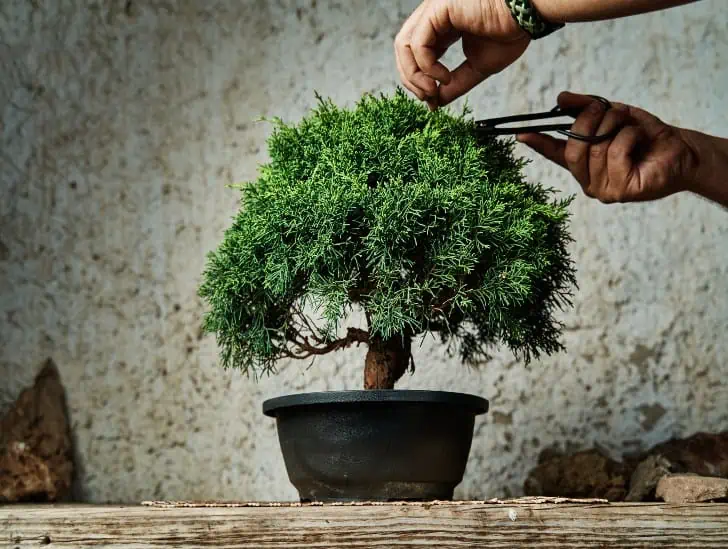
A person pruning a bonsai.
Be sure to gather the necessary tools before you start the process.

Use your scissors or shears to snip off the dead leaves as close to the base of the plant as possible.

You should also keep in mind that giant succulents can become leggy or elongated, especially if they’re not getting enough light.

To maintain a compact and attractive shape, trim back any leggy growth. Cut just above a leaf node (the point where a leaf attaches to the stem). This encourages new growth to emerge from the cut area.

The best time to prune or trim succulents is during their active growing season, typically in spring or early summer. Avoid major pruning during their dormant period since it can stress the plant.

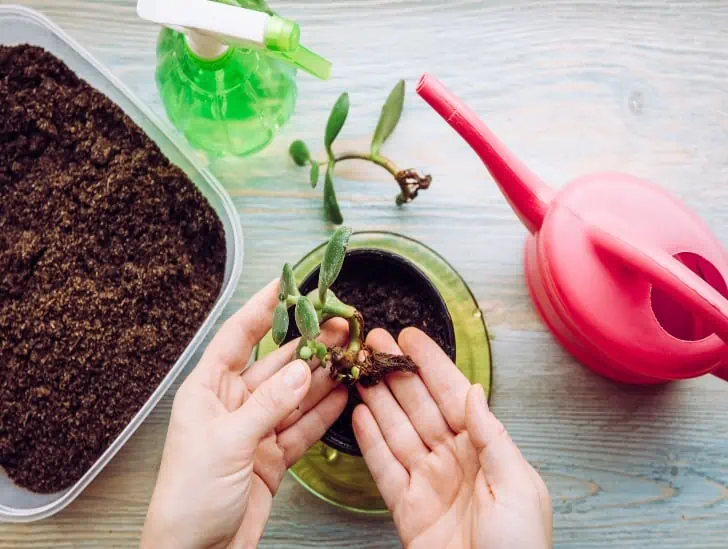
And don’t let the pruned pieces go to waste. Many succulents can be propagated from stem or leaf cuttings. Allow the cut ends to callus for a few days before planting them in well-draining soil to grow new plants.

Make pruning and trimming a part of your regular succulent maintenance routine. This prevents overgrowth, maintains plant health, and ensures your succulents remain visually appealing.

Provide Your Succulents with Enough Space

Giant succulents require adequate space to grow and thrive.

When choosing pots or containers for your plants, be mindful of their mature size and ensure they have enough room to spread out their roots. Overcrowded succulents can quickly become stressed and stop growing.

If you’re growing your succulents in the ground, be sure to space them accordingly as well. This allows for proper root growth and prevents competition for nutrients and space.

Providing enough space allows for better air circulation around the plants, reducing the risk of fungal diseases.

It also makes it easier to access your plants for regular maintenance tasks like pruning and watering.

Monitor for Pests and Diseases

Succulents, like any other plants, can fall victim to a variety of pests. Regular monitoring and early detection are crucial to preventing infestations from damaging your succulents.

Make it a habit to inspect your succulents regularly, both indoors and outdoors. Check the leaves, stems, and soil for any signs of pests or pest damage.

Pay attention to symptoms of pest damage, including yellowing or wilting leaves, deformed growth, brown or discolored spots, and stunted growth. These signs can indicate a pest problem.
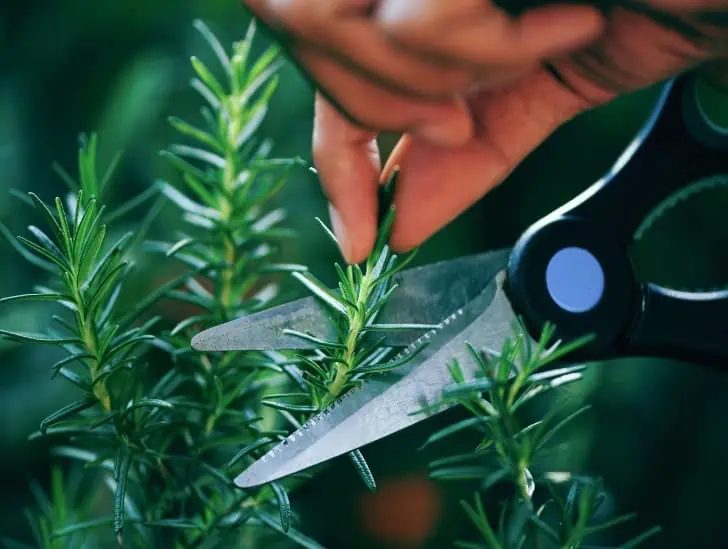
A person pruning a rosemary.
Check the leaves, stems, and soil for any signs of pests or pest damage.

Since many pests prefer to hide on the undersides of leaves, lift the leaves gently and examine them for signs of infestation, such as clusters of insects or white, cottony masses (mealybugs). You can even use a magnifying glass for a closer inspection.

If you detect pests, promptly isolate the affected plant and treat it with an appropriate insecticide.

For larger infestations, consider using natural methods like neem oil or introducing beneficial predatory insects to control the pest population.

In addition to pests, succulents can also suffer from diseases, such as root rot or fungal infections. To prevent these diseases, always use well-draining soil and avoid overwatering.

If you notice any signs of disease, remove the affected parts immediately to prevent spreading.

Summary

Growing giant succulents requires careful consideration of species selection, creating an ideal environment, and regular maintenance practices like pruning and providing enough space.

With proper care, these stunning plants can reach their full potential and add a unique touch to your indoor or outdoor space.

Remember to research the specific needs of your chosen succulent species and adjust as necessary for optimal growth and health.

Succulent Hunting: Where to Find Rare and Exotic Varieties for Your Collection

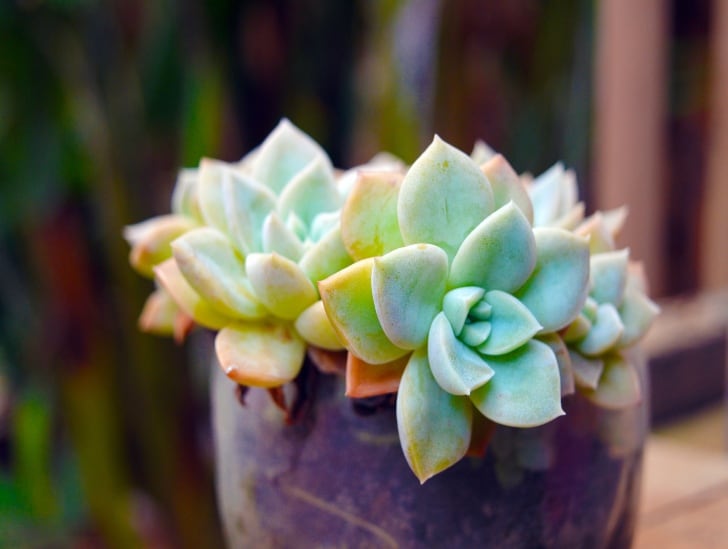
A topsy debbie.

If you are convinced that you have had enough collection of succulents, you need to pause and think again. The succulent family has so many species for collection. In fact, some people have turned succulent hunting into a perfect hobby. Succulent hunting involves searching for rare and unusual varieties of these unique plants in their natural habitat or plant stores.

So, where can one find rare and exotic succulent varieties for their collection? First, you need to list some of the best rare succulent species you want to go after. The list may include succulents such as the baseball plant, disco cactus subterraneo-proliferans, plover eggs plant, and crinkle leaf plant. Once you have your list, it is time to step out and start hunting for these precious plants. Some of the best places to buy rare succulents include Mountain Crest Gardens, Harddy, Succulents Box, Succulent Market, and The Succulent Source. You can also find them in online plant forums, rare plant shows, botanical gardens, and specialty nurseries.

This article will provide an overview of how and where to go on a successful succulent hunt. Read on to find out everything you need to know.

What Is Rare/ Exotic Succulent?

A rare succulent is a succulent plant that is uncommon and difficult to find in homes or its natural habitat. Several factors contribute to the rarity of succulents:

1. Limited Distribution

Some succulents have a restricted natural distribution, meaning they are found only in specific regions or habitats.

These plants may be endemic to a particular area or found in isolated pockets, making them naturally scarce.

A zebra plant.
Some succulents have a restricted natural distribution.

Limited distribution can be due to specific climatic requirements or habitat destruction.

2. Slow Growth and Low Propagation

Certain succulents have slow growth rates, making them rare to find on the market.

Additionally, these plants may be challenging to propagate, requiring specialized techniques such as grafting, offsets, or leaf cuttings.

The combination of slow growth and low propagation rates contributes to their rarity.

3. A rarity in the Wild

Succulents that are rare in their natural habitats due to habitat loss, over-collection, or environmental changes also become scarce in homes.

These plants may face threats like deforestation, urbanization, or climate change, reducing their overall population and making them rare in their native and cultivated settings.

4. Unique Characteristics

Some succulents are considered rare due to their unique characteristics. This could include unusual growth patterns, distinct leaf shapes or colors, or the presence of rare genetic mutations.

These distinctive traits make them highly sought after by collectors and enthusiasts, increasing their rarity and value.

5. Limited Availability

Certain rare succulents may be available only through specialized nurseries, botanical gardens, or dedicated collectors.

These plants may have limited commercial production or be part of conservation efforts, making them harder for the general public to find. Limited availability contributes to their rarity and exclusivity.

PS: It’s worth noting that the concept of rarity can be subjective and may vary depending on factors such as geographical location, availability, and popularity among collectors. What is considered rare in one region or community may be more common in another.

What Are Some of the Best Rare Succulents?

Before you start hunting for these succulents, you need to know what you are looking for and what makes them rare or exotic.

We have compiled a list of some of the best rare succulents to provide a good starting point.

1. Baseball Plant

The “baseball plant” is a common name for Euphorbia obesa, a succulent species native to the arid regions of South Africa.

The baseball plant gets its name from its spherical shape, which resembles a baseball or a bowling ball.

A Euphorbia obesa.
A succulent species native to the arid regions of South Africa.

It has a compact, globular body that can reach a diameter of around 4 to 5 inches (10 to 12 cm). This shape is relatively uncommon among succulents and contributes to its visual appeal.

The succulent has a slow growth rate, adding to its rarity. It can take several years for the plant to reach its mature size, with each new growth ring appearing as a distinctive vertical ridge on the surface of the plant.

The baseball plant has a pale green to bluish-green hue, accentuated by patterns of vertical ribs and grooves on its surface.

These ribs give it an exciting and attractive texture, adding to its appeal as a rare succulent. The coloration and patterning vary among individuals, making each plant unique.

2. Plover Eggs Plant

The Plover Eggs Plant, scientifically known as Adromischus cooperi, is a rare succulent native to South Africa. It derives its common name from the appearance of its leaves, which resemble tiny plover eggs.

 Adromischus cooperi in a pot.
It derives its common name from the appearance of its leaves, which resemble tiny plover eggs.

The succulent features small, rounded leaves that are pale green to grayish-green. The leaves have distinctive spots or markings resembling the speckled pattern on bird eggs.

The Plover Eggs Plant is highly valued for its unique leaf texture and pattern.

3. Graptoveria ‘Topsy Debbie’

‘Topsy Debbie’ is a rare succulent hybrid resulting from a cross between two genera, Graptopetalum and Echeveria.

This unique plant showcases a compact rosette shape with thick, fleshy leaves. The leaves exhibit captivating coloration, ranging from pale blue to lavender, with hints of pink or purple along the edges.

‘Topsy Debbie’ is highly sought after for its attractive appearance and ability to form dense clusters. Its rarity is due to limited propagation and availability, making it a prized addition to succulent collections.

4. Giant Quiver Tree

The Giant Quiver Tree, scientifically known as Aloidendron pillansii, is a rare succulent tree native to Southern Africa. It is distinguished by its massive size, reaching up to 30 feet (9 meters).

The tree derives its name from the traditional use of its hollowed branches by indigenous people to store quivers for their arrows.

A  Aloidendron pillansii.
It is distinguished by its massive size, reaching up to 30 feet (9 meters).

The Giant Quiver Tree has a thick, succulent trunk covered in rough, cork-like bark, and it produces thick, sword-shaped leaves that are bluish-gray or green.

5. Echeveria gibbiflora ‘Barbillion’

This rare succulent, also known as the Barbillion Echeveria, is a unique variety of Echeveria gibbiflora.

It stands out due to its large, rosette-shaped structure and stunning coloration. The plant forms multiple thick, fleshy leaves that can grow up to 12 inches (30 cm) long, creating an eye-catching display.

‘Barbillion’ is characterized by its vibrant hues, ranging from deep purples to rich reds and greens.

6. Crinkle Leaf Plant

The Crinkle Leaf Plant, also known as Kalanchoe thyrsiflora, is a rare succulent found in the arid regions of South Africa.

It grows in high-altitude areas between 6,000 and 13,000 feet (1,800 to 4,000 meters) above sea level. This plant features large rosettes of thick, crinkled leaves with an interesting, furrowed texture and a grayish-green hue.

A Kalanchoe thyrsiflora.
A rare succulent found in the arid regions of South Africa.

Due to overcollection and deforestation, the Crinkle Leaf Plant is one of the rarest succulents in its habitat. It’s highly valued for its unique appearance and has become a prized addition to collections worldwide.

Where Can I Find These Rare Succulents?

Now that you know some of the best rare succulents, you may be wondering where to find them. Here are some places to check out:

1. Specialty Succulent Nurseries

Specialty nurseries specializing in rare and exotic succulents are a great place to look for unique plants.

They typically offer the widest selection of unusual varieties, many of which are difficult to find elsewhere.

Some nurseries even offer online ordering, making it easy to get your hands on these rare plants.

2. Online Plant Markets and Communities

Numerous online platforms, such as eBay or Etsy, specialize in selling rare succulents. These marketplaces often feature a wide selection of unique varieties from around the world.

Moreover, there are numerous online communities dedicated to succulents where you can find experienced collectors with valuable knowledge and tips.

Joining these groups is a great way to stay up-to-date on the latest rare varieties available for sale or trade.

3. Plant Shows

Did you know that there are plant shows specifically for rare succulents? These events feature vendors selling a variety of unusual and one-of-a-kind plants.

It’s the perfect place to meet like-minded collectors and find and purchase some truly unique plants.

The only challenge you may face is that these shows are often held in specific locations and tend to be intermittent, so you’ll need to research events near you in advance.

4. Friends and Family

Another great source of rare succulents is your friends and family. Ask around to see if anyone you know has a unique plant they may be willing to share or sell.

Often, the most unique plants can be found in personal collections rather than nurseries or markets.

Consider organizing a plant exchange with colleagues or your local gardening club to meet fellow succulent enthusiasts and get access to rare specimens.

5. Botanical Gardens

Many botanical gardens around the world use their space to grow and preserve rare and endangered plants, including succulents.

Visiting these gardens is a great way to get the chance to see an impressive variety of rare species in person.

Summary

Rare succulents are highly sought after due to their unique appearance and limited availability. This makes them great additions to collections and can add a touch of exotic beauty to your home or garden.

These plants can be found in specialty succulent nurseries, online markets, and communities, plant shows, friends and family collections, and botanical gardens.

With a bit of searching, you’ll surely find the perfect rare succulent for your home or garden!

Discover the Best Succulents for Your Coastal Garden

A dudleya.

Coastal gardens should convey a beachy ambiance – a calm, natural setting that suggests the ocean is nearby. They should evoke a sense of vacation that can slow down a busy person into a relaxation mode at one glance.

Succulents are one of the most versatile plants to help your coastal garden achieve this atmosphere. However, the coastal climate can be taxing due to the high winds, salt exposure, and sandy soil lacking nutrients. That means you must get the right choice of succulents to ensure they survive and look great.

So, what are the best succulents for your coastal garden? The most popular coastal succulents include sedum, dudleya, crassula, kalanchoe, echeveria, aloe, ice plants, and agave. Common in coastal regions worldwide, these succulents are characterized by their fleshy, water-storing stems and leaves, enabling them to thrive in nutrient-deficient soils. These hardy succulents are also drought- and wind-tolerant, capable of handling strong gusts and sloping sites that usually come with an ocean view, hence the best for landscaping and gardening in coastal regions.

This article will discuss eight succulents that suit a coastal garden. It will consider the origin, physical characteristics, and ideal conditions for growth.

1. Sedum

Sedum, also known as stonecrop, is one of the best coastal succulents. It is native to various regions, including Asia, Europe, and North America.

Sedum is renowned for its attractive leaves and ability to thrive in different environments, including coastal ones.

The succulent requires partial sun and well-draining soil to thrive. It is a hardy plant, hence can thrive in places with little rainfall.

But you may need to water it occasionally when drought periods persist. Ensure not to overwater it as this may cause root rot, eventually killing your succulent.

Sedum also does well in moderate to warm temperatures. So, keeping it in cold temperatures could kill it.

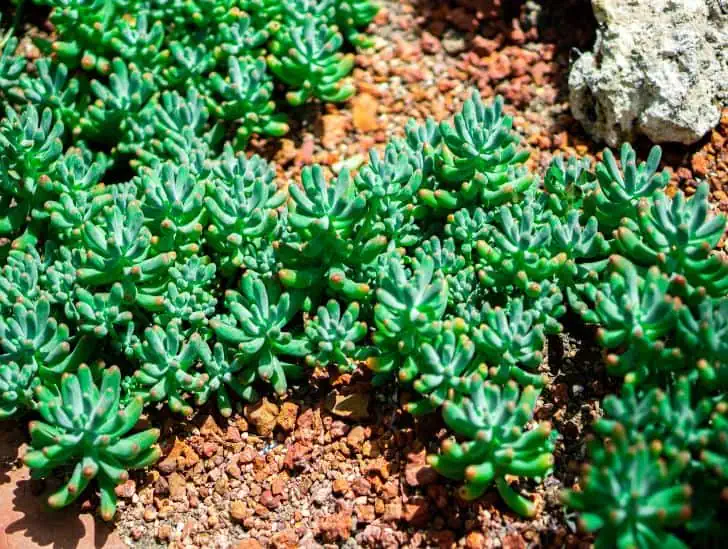
A sedum in a pot.
It is native to various regions, including Asia, Europe, and North America.

Sedum is relatively low maintenance and requires little care except for occasional watering and pruning. For this reason, it would make an excellent addition to your coastal garden.

2. Dudleya

Dudleya is a coastal succulent native to the coastal regions of Mexico and California. It is renowned for its beautiful, bright-colored flowers and unique, rosette-shaped leaves.

In addition to the aesthetic appeal, Dudleya is suitable for the coastal environment and is highly tolerant of the extreme conditions in these regions.

This succulent requires exposure to partial to full sun and well-draining soil to thrive. You can grow it in various soil types, but it must not hold too much moisture.

Since Dudley is drought-tolerant, it can thrive even on natural rainfall alone in most coastal regions. But you can consider watering it sparingly during extended drought periods.

Dudleya prefers cool to moderate temperatures – extreme heat or cold can damage the plant. If you live in warmer areas, you can provide partial shade to protect your succulent from direct sun during the hotter part of the day.

3. Crassula

Crassula is a diverse genus of succulents native to several parts of the world, including Asia and Africa.

These succulents are recognized for their attractive leaves and are frequently grown in coastal gardens due to their adaptability to extreme coastal temperatures.

Crassula plants are generally small but can vary in size, shape, and color. Some species produce fleshy leaf rosettes, while others develop as trailing vines. Most species have clusters of tiny, star-shaped flowers in red, pink, or white shades.

Crassula succulents are generally low-maintenance and easy to care for. They need well-draining soil and moderate to full sun exposure to thrive, although some species can thrive in partial shade. 

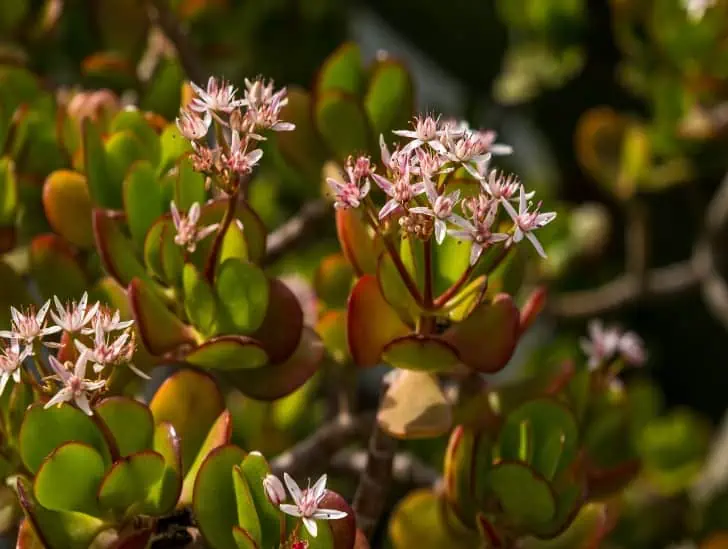
A flowering crassula ovata.
Crassula plants are generally small but can vary in size, shape, and color.

Since these succulents are drought-tolerant, you should only water them occasionally when the soil is completely dry. Overwatering can lead to root rot and other issues.

You can use stem or leaf cuttings to propagate crassula by rooting them in soil and water. They only need minimal pruning once established.

Crassula plants do not require fertilization, but you can occasionally feed them with a balanced fertilizer.

4. Kalanchoe

Although native to Madagascar, Kalanchoe is widely recognized in coastal regions worldwide. There are more than 100 species of this succulent.

Kalanchoe has fleshy, succulent leaves and small tubular flowers which bloom in shades of red, pink, orange, yellow, and white.

These flowers can bloom for weeks or months, making Kalanchoe an excellent option for adding color to your garden.

This succulent requires relatively low maintenance, making it suitable for indoor and outdoor spaces. It does well in bright, indirect sunlight and well-draining soil that should be allowed to dry out before watering.

Kalanchoe is drought-tolerant and can thrive in different climates, but you should protect it from extreme heat and cold.

During the growing season, fertilize your kalanchoe plants monthly to promote healthy development and blooming.

5. Echeveria

Echeveria is another common genus of succulents native to Mexico and Central America. The succulent is recognized for its rosette-shaped leaves and bright flowers and is usually grown as

It is often grown as an ornamental plant in coastal gardens because of its beautiful rosette-shaped leaves and bright flowers.

Echeveria needs exposure to partial to full sun and well-draining soil to thrive. It can thrive on rainfall alone in most coastal regions because it is drought-tolerant.

A closeup image of echeveria in a pot outdoor.
The succulent is recognized for its rosette-shaped leaves and bright flowers.

The succulent does well in moderately warm temperatures, so exposure to extreme cold can harm them.

Echeveria is low-maintenance, as you only need to prune and water it occasionally. And with its attractive appeal, this succulent is an excellent option for homeowners seeking to add a splash of color and texture to their garden.

However, this succulent is susceptible to pests, including spider mites and mealybugs. So, inspect regularly and treat any infestations on time to prevent them from spreading.

6. Aloe

Aloe originates from Madagascar and Africa. The succulent has fleshy foliage and lovely flowers and is often grown in coastal regions as an ornamental plant.

Aloe grows best in direct sunlight and well-draining soil. It can thrive on natural rains alone because it is a drought-tolerant plant, but you must occasionally water it.

Likewise, it thrives in regions with warm temperatures. The succulent does not do well in cold weather or frost, so ensure you move it indoors throughout winter. You can use artificial grow light to give it more lighting.

Aloe is a low-maintenance succulent and only requires periodic pruning and watering. You can propagate it from stem cuttings or by division and should grow it in an area with full sun.

Ensure you drain off excess water when watering. Failure to do so may lead to overwatering, which may cause root rot.

7. Ice plants

Ice plants are a family of coastal succulents native to South Africa and have gained popularity worldwide in coastal regions.

Their bright, daisy-like flowers and ability to tolerate very hot and dry conditions make them popular in coastal and xeriscaping landscapes, where they can help stabilize sandy soils.

Although ice plants are hardy and may thrive in various conditions, they do exceptionally well in full sun and well-draining soils.

A purple ice plant flower exposed to sunlight.
One of the benefits of these succulents is their ability to stabilize slopes and hillsides and prevent soil erosion.

Their drought tolerance and ability to withstand windy, salty conditions make them suitable for coastal gardens and landscapes. You can propagate ice plants by division or stem cuttings to grow them.

One of the benefits of these succulents is their ability to stabilize slopes and hillsides and prevent soil erosion. Ice plants have a mat-forming growth habit, which helps control soil erosion, while their succulent leaves help retain soil moisture.

8. Agave

Agave is another succulent suitable for coastal gardens. Native to North and Central America, Agave is popular in coastal gardens for its gigantic size and beautiful rosette-shaped leaves.

This succulent thrives on soil with good drainage and partial to full sunlight. It is also drought-tolerant and can survive for some time with little water.

Additionally, Agave grows better in environments with warm to hot temperatures. So, avoid growing it outside during winter.

If it is potted, you may bring it indoors and set it near a window to receive natural lighting. Alternatively, you can use artificial grow lights for extra lighting. 

Another thing that makes Agave suitable for a coastal garden is that it requires low maintenance. It only needs routine care and maintenance to thrive.

A agave plant with water droplets.
This succulent thrives on soil with good drainage and partial to full sunlight.

For example, you can prune the leaves occasionally and water them when the soil is dry.

Remember, Agave can be quite large and require significant space. So, consider that when planting it in your garden.

Bottom Line

Succulents are gradually taking center stage for coastal gardens. The need for hardy yet attractive plants make many plant enthusiasts opt for these succulents.

But even with their ability to adapt to harsh conditions, it is crucial to ensure the succulents you choose correspond well to the climate of your coastal region.

If you are looking for flowering succulents to enhance the look of your coastal garden, succulents are your best bet. They require little attention, making them the best choice for your holiday home.

Discover the Secrets of Growing Haworthia fasciata Zebra Plant!

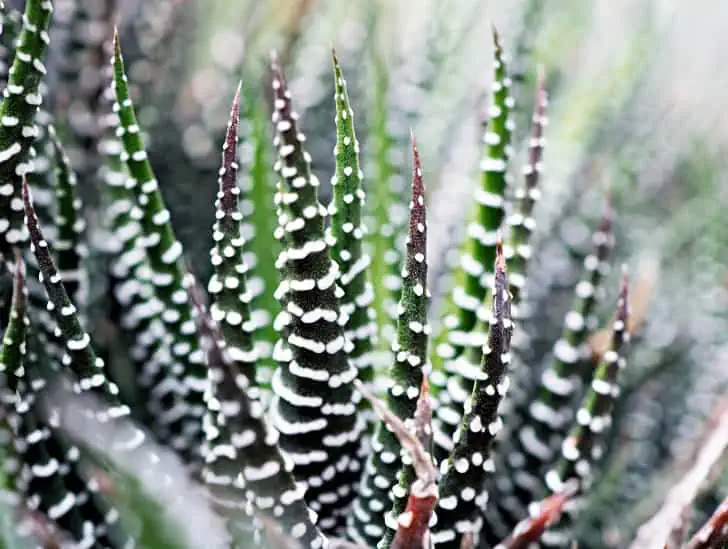
A zebra plant.

Haworthia fasciata zebra plants are attractive succulents with variegated, gray-green leaves with unique white stripes. Native to South Africa, this succulent is relatively small and shares many characteristics with members of the aloe family. Haworthia fasciata is mostly mistaken for Haworthia attenuata even though the former has smoother inner leaves, unlike the latter, which displays tubercles on its leaf surface. The Zebra plant is a relatively slow-growing succulent with a lifespan of up to 50 years. It can take up to 12 years for it to mature.

So, what are some of the secrets of growing Haworthia fasciata (Zebra plant) at home? This succulent thrives in bright light and a well-draining potting mix. Haworthia fasciata must be watered deeply about once every two weeks in the summer but only once every three weeks in winter. Allow the top 1-2 inches of soil to dry completely before watering because overwatering can lead to root rot. Repotting should happen every 2-3 years. Also, consider fertilizing the plant monthly with a succulent-specific fertilizer during the active growing season to enhance its growth.
Zebra Plant: A Quick Overview

The Zebra plant belongs to the Haworthiopsis genus, which has 18 succulent species. The plant shares the genus with other beautiful succulents such as Haworthia attenuata, Haworthia viscosa, Haworthia glauca, Haworthia bruynsii, and Haworthia nigra.
The succulent gets its name from its beautiful zebra-like stripes on its leaves. They form a pattern that is not seen in any other succulent and gives the plant an attractive appearance. The plants also have pointed tips, making them look even more interesting.

The Zebra plant is an evergreen perennial succulent native to South Africa. It usually forms rosettes of thick, narrow, and rectangular leaves. The rosettes can reach up to six inches in diameter.

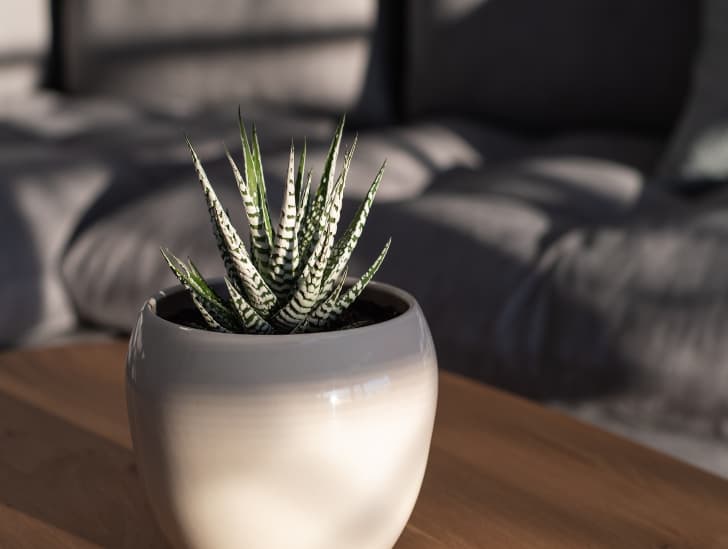
A zebra plant on a white pot.
The plants also have pointed tips, making them look even more interesting.

The succulent flowers during summer produce tiny, tubular, white blooms at the end of their long and slender stem. The flowers exhibit shades of green, red, brown, or white.

Haworthia fasciata can be propagated using offsets or leaf cuttings, making it a great choice for anyone looking to grow a unique and beautiful succulent.

A mature Haworthia fasciata plant produces many offsets that can grow with the mother plant. The offsets can also be plucked from the mother plant and propagated easily into new plants.

Discover the Secrets of Growing Haworthia fasciata

Now that you know more about the Zebra plant, it’s time to discover the secrets of growing this succulent indoors and outdoors.

Watering Guide

The Zebra plant is a perennial succulent adapted to growing in areas with little to no rainfall.

Their natural habitat has forced these plants to find ways of withstanding long periods of drought and be resilient to neglect. It means that the plant can survive with minimal watering.

The zebra plant only requires a relatively small amount of water to thrive. Some gardeners believe the plant only requires about half a cup of water weekly. However, you should always check the soil before watering the plant.

If it feels dry to the touch, then you can go ahead and water it. Ensure you do not overwater your Zebra plant since it can cause root rot and eventually kill the plant.

A simple way to check for soil dryness is to use a wood skewer or bamboo stick to measure water uptake.

Carefully insert the wood skewer or bamboo stick into the potting mix or the base of the plant and wait for a few minutes.

Pull it out and feel it. If the stick feels completely dry with no soil particles attached to it, then it is okay to water your zebra plant. Otherwise, give it a few more days and test it before watering.

Watering a haworthia.
Go easy on watering when the plant is dormant.

Generally, you should water your Zebra plant every three weeks during summer but change the schedule to once every month during winter. Go easy on watering when the plant is dormant.

The best type of water for the Zebra plant is rainwater, free of impurities and chemicals. Feel free to use distilled water in place of rainwater.

However, you should avoid tap water since it contains minerals and chemicals unsuitable for the plant.

Light Requirements

Haworthia fasciata is an outdoor succulent and requires a lot of light to thrive. It can handle full sun during summer, but you should provide some shade during the hottest hours of the day. Ideally, you should provide it with at least six hours of direct sunlight daily.

The succulent can also be grown indoors near a bright window or under artificial lighting such as LED grow lights. Consider positioning your Zebra plant on a south or east-facing windowsill for best results.

Be extra careful when using artificial grow lights. Ensure your zebra plant’s light level is neither too low nor too high. You can use a sunlight meter to measure the light the plant receives and adjust accordingly.

Soil Requirements

Like other succulents, the Zebra plant thrives in well-draining soil. The potting mix should have good sand and perlite to ensure proper drainage. This type of soil helps reduce the risk of overwatering and root rot.

Although many people prefer to purchase succulent potting mixes from their local stores, you can also make one at home. All it takes is some garden soil, perlite, and sand mixed in equal parts.

A zebra plant exposed to light.
The potting mix should have good sand and perlite to ensure proper drainage.

However, you must be careful when mixing because regular soil can get too dense and cause root rot.

Choose the Right Container

Choosing the right container for your Zebra plant is closely related to the soil aspect. This succulent prefers a pot with at least one drainage hole in the bottom to allow the excess water to run away and prevent root rot.

Select a pot size that allows enough room for the roots of your zebra plant to grow without being cramped.

A terracotta pot is ideal for this succulent because it helps absorb excess moisture and keeps the soil dry.

Avoid using any container made of plastic since it can trap too much moisture and lead to root rot. We must emphasize the point of drainage holes because it is crucial if you want to prevent potential root rot.

Temperature and Humidity Requirements

Haworthia Fasciata does well in mild to warm temperatures ranging from 50-90°F (10-32°C). The succulent will not tolerate cold temperatures below 40°F (4°C) and should be kept away from chilly drafts.

Humidity levels should be relatively low for the plant to thrive, with the ideal humidity level ranging between 30-50%.

You can keep track of the humidity levels using a hygrometer. If the humidity outside is too high, you can use a dehumidifier or an air conditioner to restore balance.

Fertilizer Guide

The Zebra plant can be fertilized with succulent-specific fertilizer to enhance its growth during the active growing season.

Fertilizing once a month should be enough, but you can also make more frequent applications depending on the growth rate of your plant.

A close up image of haworthia.
Fertilizing once a month should be enough.

If you are unsure which fertilizer to use, you should use a liquid or water-soluble type with low nitrogen content.

Never overfertilize because too much fertilizer can damage the roots and create problems for the plant.

Pruning Guide

This succulent does not need much pruning, but you can still remove damaged or dead leaves. Use clean, sharp scissors for the job, and avoid using dirty tools that can spread diseases in your garden.

It is also important to watch for pests such as mealybugs and scale. You can use neem oil, insecticidal soap, or alcohol swabs to remove them.

If the infestation is too severe, you may need to discard the plant and start anew with a healthy one.

Repot At the Right Time

Even though Haworthia fasciata is a relatively slow-growing succulent, you still need to repot it once every one or two years. Ensure you use a pot with proper drainage and allow the soil to dry out completely between watering sessions.

A zebra plant being repot,
Ensure you use a pot with proper drainage and allow the soil to dry out completely.

Propagation

The Zebra plant can be easily propagated using offsets or “pups that grow from the mother plant.

To propagate, carefully pluck the pups from the mother plant and place them in a potting mix of equal parts perlite and peat moss.

Water the offsets lightly and keep them in a bright location with plenty of sunlight. The offsets should start sprouting within a few weeks, but check on them regularly for any signs of distress.

Once the pups are established, you can transfer them to their pots and start caring for them as usual.

Summary

The Haworthia fasciata (Zebra plant) is a slow-growing succulent that can give your home a unique look with its striped leaves.

It is fairly easy to care for and can thrive indoors without difficulty if you remember the basics of watering, fertilizing, pruning, repotting, and propagating.

With proper care and attention, your Zebra plant will bring lots of life to any room in your home.

9 Plants You’d Swear Were Cacti, But Aren’t

A echeveria pulvinata.

If you are a gardener, chances are you have been fooled by a plant that looks like a cactus but isn’t. The so-called “cactus imposters” come in all shapes and sizes and can be found in gardens worldwide. While they may resemble cacti, these plants are not members of the cactus family (Cactaceae).

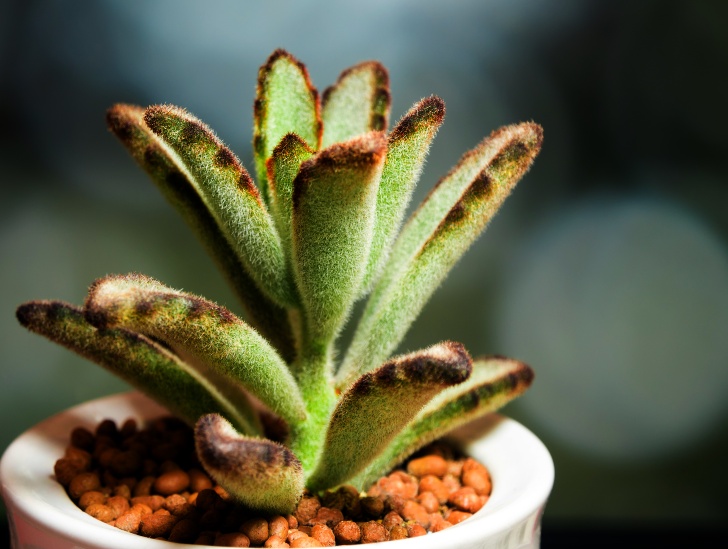
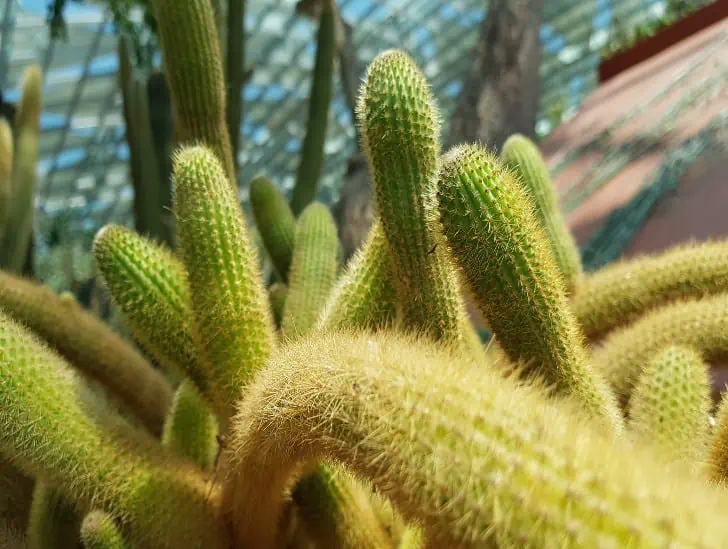
So, what plants look like cacti but aren’t? Some common plants that look like cacti but aren’t members of the Cactaceae family include agave, Rhipsalis baccifera, aloe vera, Euphorbia Tirucalli, Kalanchoe Tomentosa, Echeveria, Aeonium haworthii, and Sansevieria Trifasciata. Others include Haworthia Fasciata, Hildewintera Colademononis, and Opuntia Microdasys.

This article discusses these plants in detail and provides information on identifying and caring for them. Read on to learn more.

What Are the Unique Features of Cacti Plants?

Before we dive deep into the plants that look like cacti but aren’t, let’s take a moment to review the characteristics of cacti.

Cacti are succulent plants that mainly store water in their thick stems and leaves to help them survive in hot, arid conditions. They have spines or glochids along their edges, protecting them from predators, and some species have flowers or fruits.

These plants usually have a dense but shallow root system critical in absorbing and storing water. The roots become so dense during the rainy season but usually break away from the main plant during dry periods, which helps the plant conserve water.

A aloe vera plant.
Even if a plant has spines but doesn’t have areoles, it’s not a cactus.

Additionally, the stems and leaves of cacti are covered by an outer layer (epidermis) which protects them from extreme temperatures and helps to reduce water loss.

All cacti plants have areoles, a specialized area from which flowers, spines, and leaves grow. Only true cacti plants have these structures. So, even if a plant has spines but doesn’t have areoles, it’s not a cactus.

Some cacti plants flower at different times of the year. Their flowers often have specialized shapes that attract certain pollinators. These flowers are unique and only last for a maximum of one week before wilting away.

Plants That Look Like Cacti, But Aren’t

Now that we have discussed the unique features of cacti plants, let’s look at the plants that resemble them but are not true cacti.

1. Agave

Often referred to as a “century plant,” agaves (Agave spp.) look like cacti, but they are members of the Asparagaceae family.

These tough, drought-resistant plants are native to the desert and thrive in hot, sunny climates. They come in a wide range of leaf shapes, sizes, and colors, with some species growing up to 20 feet tall!

Agaves also produce beautiful yellow, orange, or red flowers that attract hummingbirds and pollinators.

Agave with water droplets.
To grow healthy agaves, plant them in well-drained soil and position them in a well-lit spot with plenty of sunlight.

These succulents are popular in many home gardens since they require minimal water and care to thrive. To grow healthy agaves, plant them in well-drained soil and position them in a well-lit spot with plenty of sunlight.

2. Rhipsalis Baccifera

Rhipsalis baccifera (also known as mistletoe cactus or Easter cactus) is native to the tropical rainforest and is a popular houseplant in many parts of the world.

This plant has trailing stems that can grow up to 3 feet long, with tiny white flowers and yellow fruits. It’s often confused with cacti because of its spines, but it’s not a true cactus.

This plant prefers bright, indirect light and moist but well-drained soil when grown indoors. Water only when the soil is dry to the touch. Outdoors, Rhipsalis baccifera, can tolerate more direct sunlight and drier soil.

3. Kalanchoe Tomentosa

Kalanchoe tomentosa, also known as panda plant or pussy ears, is a type of succulent that gets its name from the furry white hairs that cover its leaves.

This plant has thick, fleshy leaves like other succulents, but the similarity ends there. Kalanchoe tomentosa does not have any spines or spikes on its leaves.

Kalanchoe Tomentosa in a pot.
Kalanchoe tomentosa is native to Madagascar and grows best in bright indirect light.

Instead, the leaf margins are scalloped and serrated like those of a cat’s paw—hence one of its common names, pussy ears. Kalanchoe tomentosa is native to Madagascar and grows best in bright indirect light.

4. Aloe Vera

Aloe vera (Aloe vera) is a popular succulent with thick green leaves often seen in gardens or potted indoors. This plant is known for its medicinal properties and has been used for thousands of years to treat various skin conditions.

Even though it looks like a cactus (due to its spikey leaves), aloe vera is part of the Liliaceae family and not a true cactus.

Aloe vera prefers a sunny spot and fast-draining soil. Water it only when the soil is dry, as overwatering can cause root rot.

It can also survive in dry and cool conditions, making it a great choice for those who want an easy-to-care-for plant.

The best way to ensure your aloe vera plant thrives is to provide plenty of bright, indirect light and moisten the soil lightly.

5. Selenicereus megalanthus

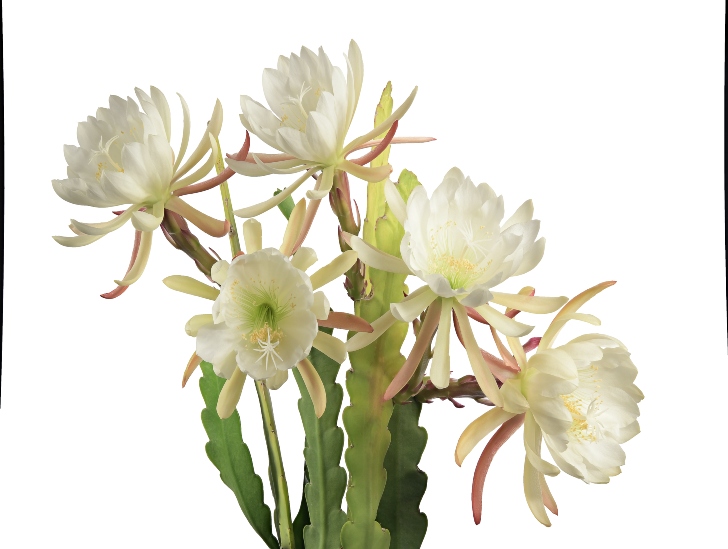
Selenicereus megalanthus is native to southern Mexico and Honduras. It’s also known as the queen of the night.

Selenicereus megalanthus can grow up to 30 feet tall and 10 feet wide, making it one of the largest succulents. However, despite its size and similarity to other members of the genus Selenicereus, the plant is not a true cactus.

Queen of the night plant.
The succulent prefers full sun and well-drained soil. It must also be watered regularly during the summer months.

Instead, it’s more closely related to epiphytic plants such as Rhipsalis baccifera and Schlumbergera truncata.

Many gardeners love this plant for its unique size and shape, but it is not an easy-care succulent. The succulent prefers full sun and well-drained soil. It must also be watered regularly during the summer months.

Additionally, its large size means it needs much space to grow properly. Pay close attention to its growth habit and prune any branches that are too long.

With the right care, Selenicereus megalanthus can thrive in your garden and add a unique touch to the landscape.

6. Euphorbia Tirucalli

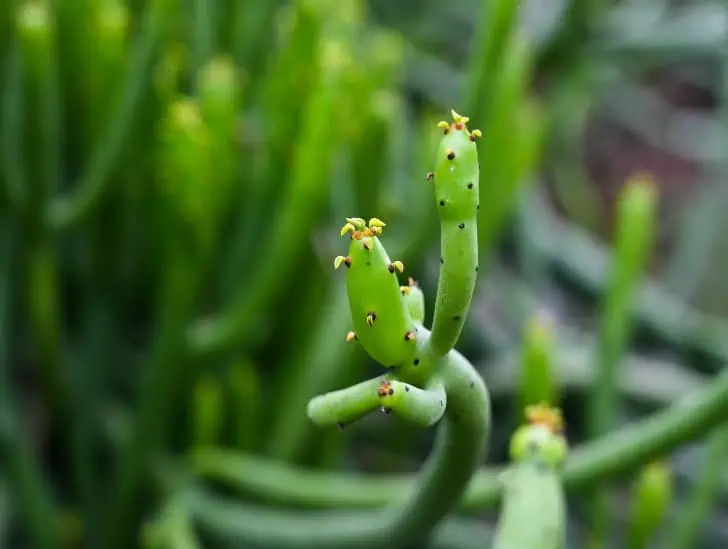
Euphorbia tirucalli, also known as pencil cactus or milk bush, is a type of succulent that gets its name from its pencil-thin stems. Like other succulents, euphorbia tirucalli has thick, fleshy leaves that store water.

However, its unique growth habit sets this plant apart from other succulents. Euphorbia tirucalli grows in an upright tree-like form with branches that can reach up to 20 feet in length.

While it does not have true leaves or needles, the stem segments of this plant are covered in small spines.

Pencil cactus in a pot exposed to sunlight.
Euphorbia tirucalli grows in an upright tree-like form with branches that can reach up to 20 feet in length.

Euphorbia tirucalli is native to tropical Africa and requires bright, indirect light. It prefers well-drained soil and is best watered only when the top inch of soil is completely dry.

Overwatering can cause root rot, so check the soil moisture before you water your plant. This plant is worth considering if you are looking for an unusual succulent with a striking growth habit!

7. Haworthia Fasciata

The haworthia fasciata is a low-growing succulent native to parts of South Africa. Also known as the zebra plant, this small evergreen has thick, pointed leaves covered in white stripes.

The foliage of haworthia fasciata is often compared to that of aloe vera — but unlike its spiky counterpart, haworthia fasciata has smooth leaves without spines.

It can tolerate low light and is fairly drought-tolerant, so it’s a great choice for beginner succulent enthusiasts. Haworthia fasciata prefers well-draining soil and needs to be watered only when the top inch of soil is completely dry.

With its unique foliage and low-maintenance care requirements, haworthia fasciata is an excellent choice for those looking to add an exotic touch to their home gardens.

Keep in mind that overwatering can cause root rot, so be sure to check the soil moisture before watering your plant.

8. Sansevieria Trifasciata

Sansevieria trifasciata, also known as snake plant or mother-in-law’s tongue, is another type of succulent that resembles a cactus.

It gets its common name from its long, snake-like leaves that can grow up to 3 feet in length. The leaves of this plant are thick and fleshy like those of a cactus, but they lack the spikes and spines typically associated with cacti.

Sansevieria trifasciata is an easy-to-care-for plant that thrives in low-light conditions. It is a relatively drought-tolerant plant and prefers to be watered when the potting mix is completely dry.

Additionally, it does not need much fertilizer, so it’s an ideal choice for beginner succulent growers.

Whether you display this plant as a single specimen or in a container garden with other low-light plants, Sansevieria trifasciata is sure to make a stunning addition to your home.

9. Echeveria pulvinata

Echeveria pulvinata is native to Mexico. It has an elongated shape and can grow up to six inches long. The leaves are green with red tips, and the plant produces pink flowers. Echeveria pulvinata is often used as an ornamental plant in gardens.

This succulent prefers indirect sunlight and well-drained soil. It should not be overwatered, as too much water can lead to root rot. Water your plant only when the soil is completely dry and avoid getting water on the leaves.

It is important to feed your Echeveria pulvinata regularly with a cactus-specific fertilizer. This will help keep the plant healthy and promote blooming.

Summary

These plants make great additions to any home or garden! Not only do they resemble cacti, but they are also low maintenance and easy to care for.

So, feel free to experiment with any of them. Remember to keep an eye on the soil moisture, watering schedule, and lighting conditions.

The Top 10 Succulents That Thrive in Full Sun

For many years, succulents have been known for their exceptional ability to tolerate high levels of sunlight and heat. These plants generally require little water to stay healthy. In fact, many of them can go for weeks or even months without any water at all, making them perfect for gardeners who forget to water their plants or live in a climate where rainfall is scarce. However, not all succulents can tolerate full sun – certain species prefer partial or shaded conditions.

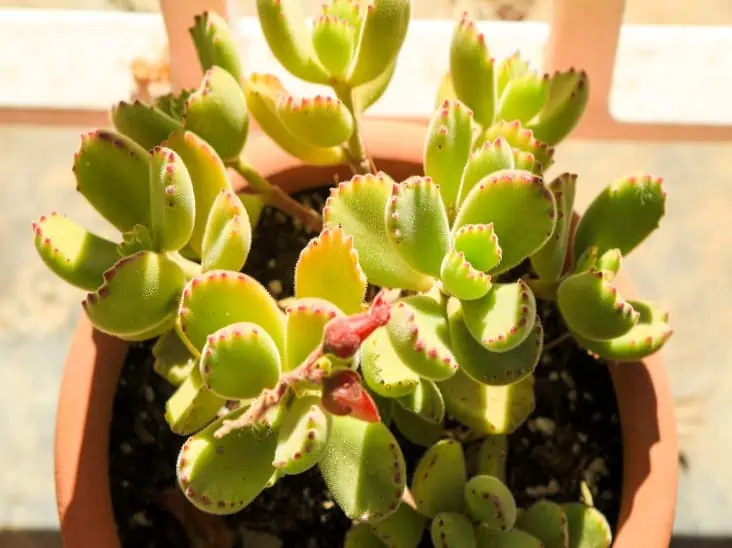
So, which succulents are best for the full sun? Fortunately, several succulent species can handle the heat and flourish in direct sunlight. They include agave, the prickly pear cactus, the bear’s paw plant, the ghost plant, Aeonium, and aloe vera. Others include the hens and chicks plant, jade plant, golden barrel cactus, hedgehog cactus, and the paddle plant.

This blog post will discuss some of the best succulents for full sun. We’ll cover their key features, how to care for them, and some interesting facts about each. So, let’s get started!

1. Agave

The agave plant is known for its thick, spiky leaves and vibrant colors. It’s hardy enough to tolerate long periods of drought and full sun.

Typically, this succulent thrives in the U.S hardiness zone of 5 to 11. It means that the plant is highly adapted to surviving under extreme conditions making them the best option for in-ground and container growth.

Agave in a pot.
The agave plant is known for its thick, spiky leaves and vibrant colors.

Agave plants need well-draining, sandy soil to thrive and should be watered deeply once a month in dry climates.

This succulent produces beautiful flowers in summer and autumn, although they tend to be short-lived. The flowers come in varying colors, such as yellow, white, and purple, which draw birds and butterflies to your garden.

To ensure optimal health, prune the plant regularly to keep it from getting too large.

2. Prickly Pear Cactus

The prickly pear cactus is native to Mexico and is one of the most recognizable succulents. This plant is unique because it has two types of leaves: flat, fleshy pads and sharp spines that protect the plant from predators.

The prickly pear cactus can tolerate temperatures ranging from 25°F to 110°F, making it well-adapted to various climates. It prefers full sun and well-draining, sandy soil. It also requires minimal watering, so it’s an ideal choice for gardeners with busy schedules.

The prickly pear produces beautiful flowers in spring. The colors of the flowers vary from pink to yellow and orange.

Some of the flowers get pollinated, turning into edible fruits. The prickly pear fruit is a popular ingredient in Mexican cuisine and is known for its sweet, juicy flavor.

Overall, the prickly pear cactus is an ideal choice for gardeners who want to add a touch of beauty and color to their landscape. Plus, it’s low maintenance, can thrive in most climates, and live for many years!

3. Bear’s Paw Plant

The bear’s paw plant, also known as the American aloe, is a member of the Agave family and gets its name from its deep green leaves that resemble a bear’s paw.

This succulent prefers full sun and well-draining soil. It also requires very little water, making it an ideal choice for gardeners with busy schedules.

A bear claw plant in a pot.
It is a member of the Agave family and gets its name from its deep green leaves that resemble a bear’s paw.

The bear’s paw plant produces vibrant blooms in shades of yellow, orange, and red during summer. The flowers attract bees and other beneficial insects to your garden.

Additionally, this succulent can tolerate temperatures ranging from 30°F to 110°F and is very low maintenance.

It’s an ideal choice for gardeners looking for a plant that will wow their neighbors without requiring too much effort!

4. Aloe Vera

Aloe Vera is one of the most common succulents belonging to the Aloe genus. The plant has little to no stem with relatively thick, spiky, and meaty leaves characterized by white dots on the surface.

Some people use the juice from aloe vera leaves to relieve pain from burns and wounds. It’s also been used as a medicinal ingredient for centuries.

Aloe vera prefers bright, indirect light and is well-adapted to harsh climates. It’s one of the succulents that can tolerate extended periods of drought without needing much water or maintenance.

The plant may fail to flower indoors because it will need more sunlight, no matter where you position it. However, it flowers prolifically when grown outdoors in a spot that receives plenty of direct sunlight.

Typically, aloe vera produces yellow-orange flowers in the summertime that attract bees and other beneficial insects. It’s a great addition to any garden or outdoor space!

5. Ghost Plant

The ghost plant is a succulent known for its striking silver-grey foliage, which contrasts beautifully with other plants in the garden. This plant has small, fleshy leaves that can tolerate a wide range of temperatures, from 40°F to 100°F. It also prefers full sun and needs very little water.

The ghost plant produces white or pink flowers in summer, attracting bees and other pollinators. The flowers are small but abundant, adding beauty to your garden.

A ghost plant in a owl pot.
it’s very low-maintenance and can thrive in many climates!

The ghost plant is an excellent addition to any garden or outdoor space because of its beautiful foliage and drought-tolerant nature. Plus, it’s very low-maintenance and can thrive in many climates!

6. Sempervivum

Sempervivum, also known as the hens and chicks plant, is one of the most resilient succulents native to the rocky mountains of Europe.

The plant is characterized by its beautiful flowers, bracts, and spirally-patterned leaves. Each rosette on a sempervivum plant is usually a young, monocarpic plant. The pointed tips of its leaves usually display a distinct color that is attractive to the naked eye.

This succulent is a great choice for gardeners who want an easy-to-care-for plant that can thrive in many climates.

The sempervivum prefers full sun and well-draining soil and needs minimal watering during the dry season. It’s also tolerant of moderate frosts, making it a good choice if you live in a cooler climate.

With its hardy nature and easy care, sempervivum is an ideal choice for gardeners looking for a durable succulent that can thrive in most climates and live for many years!

7. Echeveria Plant

The Echeveria plant is a popular choice among succulent enthusiasts. Native to the Americas, it’s known for its rosette-shaped leaves and vibrant colors ranging from purple to orange.

This succulent prefers full sun and will thrive when given plenty of sunlight daily. It also needs well-draining soil and minimal water.

An outdoor echeveria exposed to sunlight.
It’s known for its rosette-shaped leaves and vibrant colors ranging from purple to orange.

Echeveria is an excellent choice for gardeners looking to add a touch of color to their outdoor space.

In the summer, it produces yellow or pink flowers that attract bees and other pollinators. It’s also tolerant of frosts, making it suitable for cooler climates!

8. Aeonium

Aeonium is a term used to refer to a group of succulents that, without a doubt, are one of the most beautiful houseplants. These plants have relatively thin and spear-shaped leaves that can be arranged in a circular pattern.

Aeonium prefers bright, indirect sunlight and is generally a low-maintenance succulent. It’s also highly drought-tolerant and can thrive with minimal watering.

When given the right conditions, Aeoniums produce beautiful yellow or pink flowers that add a touch of color to your garden or outdoor space.

The succulent generally thrives in U.S hardy zones between 9 and 11. Its leaves and stem are non-toxic to both humans and animals, making it a great choice for people who have small children or pets.

Overall, Aeonium is an ideal choice for gardeners looking to add a touch of color and beauty to their indoor or outdoor space!

9. Jade Plant

The jade plant is another type of succulent known for its beautiful foliage. Native to South Africa, it’s a very hardy plant that can survive in many conditions, including dry and frosty climates.

This succulent prefers full sun and needs minimal water to thrive. If given too much water, the leaves may become soft and rot. The jade plant also loves well-draining soil and should be fertilized once or twice a year.

When given the right conditions, the jade plant can produce small white or pink star-shaped flowers in the summer. These flowers attract bees and other pollinators that are good for your home garden.

Overall, the jade plant is a great choice for gardeners who want a low-maintenance, resilient succulent that can thrive in many climates!

10. Pachyphytum

Pachyphytum is a relatively slow-growing succulent with bean-shaped leaves that usually produces a cluster of thick and meaty foliage.

The succulent prefers full sun and needs minimal water during the dry season. It also loves well-draining soil that should be fertilized once or twice a year.

Pachyphytum exposed to sunlight.
Pachyphytum is a relatively slow-growing succulent with bean-shaped leaves.

Pachyphytum produces white flowers in spring that attract bees and other pollinators, adding an extra touch of color to your outdoor space.

This succulent is a great choice for gardeners looking for a durable plant that can thrive in many climates and live for many years!

Summary

Overall, these succulents are great additions to any garden or outdoor space.

The aloe vera is an excellent choice for medicinal use; the ghost plant adds a touch of beauty with its striking foliage, the sempervivum is hardy and low-maintenance, and the echeveria adds vibrant color!

Each plant has unique qualities that make it an excellent addition to any garden.

With their hardy nature and easy maintenance, these succulent plants are ideal for gardeners who want to spruce up their outdoor space with minimal effort!

The Best Succulents for Rapid Growth

A kalanchoe exposed to sunlight outdoors.

Succulents are some of the best houseplants right now, and it is for a good reason. They can thrive in almost any condition, require minimal care and are a great way to inject some color into your living space. There is one problem, though – they don’t always grow fast enough! However, the good news is that some of them grow quickly, so you won’t have to wait too long for them to become a beautiful addition to your home.

So, what are some of the fastest growing succulents? Some of the fastest growing succulents are aloe vera, Crassula, kalanchoe, aeonium, Sedum, and Echeveria. Others include haworthia, sempervivum, stonecrops, opuntia, and agave. While most of these will do well in partial sun, some require full sunlight or shade.

This article describes some of the fastest growing succulents, their characteristics and basic care requirements.

Average Growth Rate for Succulents

Before we dive deep into some of the fastest growing succulents, it is essential to understand that not all succulents grow at the same rate.

Generally, most succulents can take anywhere from two to five years to reach maturity and start flowering.

For instance, a saguaro cactus can take 75-100 years to reach its full size. However, some succulents, such as aloe vera, grow much faster, reaching maturity in one or two years.

Some succulents grow moderately fast, while others are slow growing. It is essential to understand the growth rate of your succulent to ensure you provide it with optimum care.

Fastest Growing Succulents

Now that you have a better understanding of the growth rate of various succulents, here are some of the fastest growing ones.

1. Aloe Vera

Aloe vera is one of the most popular succulent houseplants. It grows quickly if given sufficient sunlight and water and can reach maturity in as little as a year.

This succulent has thick stems and fleshy leaves for storing moisture. Unlike other succulents such as aeonium, aloe vera leaves don’t have sharp edges. Instead, they are well-rounded or pencil-shaped.

A aloe vera plant outdoors.
Aloe vera has thick stems and fleshy leaves for storing moisture.

When the plant is mature, it produces beautiful yellow or orange flowers.

Aloe vera can grow up to eight inches long when provided with the right growing conditions. It can tolerate relatively high temperatures quite well.

This makes it a perfect succulent for your balcony or patio, where you want some greenery but don’t want anything too delicate for survival.

There are more than 500 different aloe species, but only a few can be grown as houseplants. Aloe vera is perhaps the most common variety, but others include Aloe marlothii, Aloe aristata, and Aloe striatula.

2. Crassula

Another fast-growing succulent is the popular Crassula. It has various shapes and sizes, from rosettes to shrubs. This evergreen succulent looks excellent in hanging baskets or planted in large containers where it can spread out.

It has thick, fleshy leaves that can store moisture. The leaves may be rounded or pointed depending on the species and sometimes have a reddish hue.

Crassula grows quickly when given enough light, water, and regular pruning. If you want to speed up its growth rate, plant it in a soil rich in nutrients.

Crassula can also tolerate hot temperatures and drought, making it a great choice for those who want low-maintenance succulents.

There are more than 200 species of Crassula, with some of the most popular varieties including the Jade Plant (Crassula ovata), Crassula helmsii, and Crassula portulacea.

3. Irish Rose Plant

The Irish Rose plant is one of the most famous subtropical succulents native to the Canary Islands. The Irish Rose is a tree-like succulent that can grow fairly large depending on whether it is grown indoors or outdoors.

The succulent can survive both indoors and outdoors perfectly. The only thing it requires is access to good sunlight.

So, if you are growing it indoors, you will need to provide it with sufficient sunlight or install artificial grow lights.

Irish rose plant indoors.
The Irish Rose is a tree-like succulent that can grow fairly large depending on whether it is grown indoors or outdoors.

The Irish Rose plant grows fairly fast and blooms beautiful yellow flowers from late winter to spring. The succulent thrives in full sun during the cold months and in coastal regions.

The succulent has fleshy, rounded leaves that can store moisture in case of drought or excessive heat.

When grown indoors, the succulent will reach up to 5 feet tall. In outdoor settings, however, it can grow up to 8 feet tall and even more if given enough water and sunlight.

The Irish Rose is one of the best choices for those looking for a fast-growing succulent, as it can reach full maturity in one or two years. Its unique beauty and resilience make it an ideal houseplant for all types of gardeners.

4. Kalanchoe

Kalanchoe is another popular succulent with a fast growth rate. It has thick, fleshy leaves that are usually dark green but can sometimes have markings of different colors.

This succulent is known for its vibrant and colorful flowers, making it a great addition to any indoor or outdoor garden.

Kalanchoe is an easy-to-care-for succulent that grows quickly if given enough light, water, and regular pruning. This succulent can reach up to two feet tall when grown indoors. When planted outdoors, it can reach up to four feet tall.

5. Sedum

Have you ever visited your local grocery store and seen some succulents labelled “instant succulents?” If so, you must have come across the beautiful sedum plant because it is always among this group of succulents.

Sedums are fast-growing succulent plants with thick fleshy foliage that store moisture and can tolerate drought or hot weather well. These plants can reach up to two feet tall, depending on the species.

The foliage of Sedum is usually dark green or blue-green and sometimes has a pink or purple blush. Sedums can thrive in both full sun and partial shade, but for best results, you should give them an hour or two of direct sunlight every day.

These succulents are great for container gardens or rockery designs due to their fast-growing nature and low maintenance needs. They can be used as ground covers or hanging basket plants, making them ideal for the novice gardeners.

These succulents also come in different colors and shapes, allowing you to choose the perfect one for your garden.

6. Haworthia

Haworthia is another exciting plant on our list of fast growing succulents. Also referred to as the mother plant, haworthia produces female flowers first before producing male flowers.

The plant is native to South Africa and has fleshy leaves that are usually dark green with markings of white or yellow.

When grown indoors, haworthia grows quickly and can reach up to a foot tall in one year. Outdoors, it can easily grow up to six feet tall when given enough sunlight and water.

A haworthia plant exposed to sunlight.
Haworthia is drought-resistant and can thrive in full sun or partial shade.

Haworthia is an easy-care succulent that doesn’t require much maintenance. It is drought-resistant and can thrive in full sun or partial shade.

This succulent is ideal for rock gardens, container gardens, and hanging baskets since it does not take up much space and come in various shapes and sizes.

So, if you’re looking for a unique and easy-care succulent, haworthia is a great choice.

7. Sempervivum

If you are looking for something more tender to feel and highly attractive, you should try sempervivum. Although this succulent grows slightly more slowly than the other succulents on this list, they are great for areas with cold winters.

Sempervivum has a rosette structure that produces small star-shaped flowers during summer. They usually come in shades of pink, red and purple but can also be found in yellow and orange hues. Its leaves are usually green or grey-green with silver markings.

A sempervivum exposed on a sunlight on the pot.
This succulent grows slightly more slowly than the other succulents on this list, they are great for areas with cold winters.

This succulent does best in full sun and is drought-resistant. It prefers well-draining soil that holds some moisture but should not be too wet. Sempervivum will thrive in pots, rock gardens, and hanging baskets.

The succulent is easy to grow and require minimal maintenance, making it an excellent choice for novice gardeners.

8. Aeonium

Aeonium is one of the most popular succulents due to its unique rosette shape and vibrant colors. It has thick fleshy leaves that are usually green, red, yellow, or purple. The flower heads of aeonium are usually yellow, but some species can produce white and pink flowers as well.

Aeonium prefers full sun and should be watered deeply when the soil is completely dry. It’s drought-resistant and can tolerate cold temperatures better than other succulents.

Aeonium exposed to sunlight.
Aeonium is also low-maintenance and easy to care for.

This succulent is great for container gardens and rockery designs since it adds texture and color to your outdoor space.

Aeonium is also low-maintenance and easy to care for, making it an excellent choice for many gardeners.

Summary

Succulents are known for being some of the easiest plants to grow, and with the right information, you can have a thriving succulent garden in no time.

In this blog post, we’ve listed eight of the fastest growing succulents so that you can get started on your journey to becoming a succulent gardening expert.

We hope you enjoy planting these beautiful plants and watching them thrive!

9 Best Types of Euphorbia to Grow

If you’re looking for a unique and interesting plant to add to your garden, look no further than the Euphorbia! Also known as spurge, this diverse group of plants comes in all shapes and sizes and can add a touch of whimsy to any garden. They are not only beautiful but also easy to care for.

So, what are the different types of euphorbias to grow in your garden? Some of the most common types of euphorbias include euphorbia amygdaloides, or wood spurge; euphorbia characias, or Mediterranean spurge; euphorbia dulcis, or sweet splurge, and euphorbia myrsinites, or donkey tail spurge. Others include more unusual varieties such as Euphorbia x martini and Euphorbia lathyris.

Each plant has unique features that make it stand out from the rest. For example, wood spurge is a low-growing plant that is perfect for covering the ground in shady areas of the garden. On the other hand, Mediterranean spurge is a taller plant that produces beautiful yellow flowers.

This blog post discusses common types of euphorbias to grow in your garden. Read on to find out everything you need to know.

What Makes Euphorbia a Great Plant for Your Garden

Contrary to popular belief that all succulents are cacti, not all cacti are succulents. In fact, there is only one family of plants classified as succulent and cactus, the Euphorbiaceae Family, which contains over 7,500 members, including the genus Euphorbia.

The vast majority of euphorbias are not cacti, but they are often confused as such because of their similarities. Both plants are adapted to arid climates and have thickened, fleshy leaves or stem that store water. They both produce flowers, but Euphorbias produce a much wider variety of flower shapes, colors, and sizes.

A blooming Euphorbia.
There is only one family of plants classified as succulent and cactus, the Euphorbiaceae Family

Euphorbias are native to every continent except Antarctica and can be found in various habitats, from deserts to rainforests. There are both annual and perennial varieties and succulent and non-succulent types. In other words, there is a type of Euphorbia for every garden!

Here are some reasons why Euphorbia makes an excellent plant for your garden. They are:

  • Easy to care for and require very little maintenance.
  • Drought-tolerant and can thrive in areas with little water.
  • Heat-tolerant and can withstand high temperatures.
  • Adaptable and can grow in a wide variety of climates and habitats.
  • Available in a wide range of colors, shapes, and sizes.

What Are the Different Types of Euphorbias to Grow in Your Garden?

Now that you know a little bit more about Euphorbia and why it makes an excellent plant for your garden, let’s look at some of the different types you can grow.

1. Euphorbia amygdaloides

Euphorbia amygdaloides, also known as wood spurge, is a low-growing succulent that is perfect for covering the ground in shady areas of the garden. It has dark green leaves with purple veins and small, yellow flowers that bloom in the spring.

This Euphorbia is native to Europe and Asia and can grow up to 18 inches tall. The plant is easy to care for and requires very little maintenance. Typically, it thrives in moist, well-drained soils and does not require much water.

A close up image of Euphorbia amygdaloides.
It has dark green leaves with purple veins and small, yellow flowers that bloom in the spring.

It is best for USDA hardiness zones 4-8 and relatively rich tones. The Euphorbia amygdaloides will self-seed happily in the right conditions making it an excellent ground cover for those difficult-to-fill shady spots in your garden.

It looks excellent when planted with other shade-loving plants such as hostas, ferns, and impatiens.

2. Euphorbia characias

Euphorbia characias, also known as Mediterranean spurge, is a tall, evergreen succulent that produces beautiful yellow flowers. It is native to Europe and Asia and typically grows up to 3 feet tall.

This Euphorbia is easy to care for and requires very little maintenance. It thrives in well-drained soils and does not require much water. It is best for USDA hardiness zones 8-10.

The Euphorbia characias is an excellent choice for gardens that receive much sun. It looks gorgeous when planted in mass as a border or accent plant. It also makes a perfect cut flower for bouquets and arrangements.

3. Euphorbia x martini

This hybrid euphorbia has characteristic deep green leaves with creamy yellow margins. It’s a compact plant that grows about 12 inches tall and wide, making it perfect for small gardens or planting in containers.

Euphorbia x martini is also relatively low-maintenance, requiring little more than occasional watering and fertilizing. It is best for USDA hardiness zones 9-11 and an excellent choice for gardeners looking for a splash of color.

It looks beautiful when planted in mass as an accent plant or border. It also makes a great cut flower for bouquets and arrangements.

Euphorbia x martini is native to Europe and Asia and typically blooms in the spring. Its blooms are small and yellow and last for several weeks.

4. Euphorbia Lactea

The Euphorbia lactea is a succulent plant that originates from India. It has thick, fleshy leaves arranged in a rosette shape. The leaves are shades of green, with some varieties having white or cream-colored stripes running through them.

The Euphorbia lactea grows best in full sun to partial shade and well-drained soil. It is tolerant of drought and heat, making it an ideal choice for gardens in hot, dry climates.

This type of Euphorbia typically blooms in the spring or summer. Its flowers are small and yellow and last for several weeks.

The Euphorbia lactea is an excellent choice for gardeners looking for a succulent that is easy to care for and provides beautiful color and interest to the garden.

5. Euphorbia myrsinites

Euphorbia myrsinites, also known as donkey tail spurge or myrtle spurge, is a low-growing succulent that produces long, cascading stems covered in blue-green leaves. It is native to Europe and Asia and typically grows up to 12 inches tall.

This Euphorbia is easy to care for and requires very little maintenance. It thrives in well-drained soils and does not require much water. It is best for USDA hardiness zones 4-8.

A close up image of euphorbia myrsinites.
Euphorbia myrsinites, also known as donkey tail spurge or myrtle spurge.

The Euphorbia myrsinites is an excellent choice for gardens that receive enough sunlight. It looks stunning when planted in mass as a border or accent plant. It also makes a great cut flower for bouquets and arrangements.

Euphorbia myrsinites is also known to be deer resistant, making it a good choice for gardeners who live in areas where deer are a problem.

6. Euphorbia Milii

The Euphorbia milii, also known as the crown of thorns or Christ plant, is a shrub that originates from Madagascar. It gets its name from the sharp thorns that line its stems. The Euphorbia milii has small, oval-shaped leaves that are deep green.

The flowers are small and yellow and grow in clusters at the tips of the stems. The Euphorbia milii grows best in full sun to partial shade and well-drained soil. It is tolerant of drought and heat, making it an ideal choice for gardens in hot, dry climates.

7. Euphorbia cyparissias

Euphorbia cyparissias, also known as cypress spurge, is a low-growing succulent that produces long, cascading stems covered in blue-green leaves. It is native to Europe and Asia and typically grows up to 12 inches tall.

This type of Euphorbia is easy to care for and requires very little maintenance. It thrives in well-drained soils and does not require much water. It is best for USDA hardiness zones 4-8.

A close up image of euphorbia cyparissias.
It makes a great cut flower for bouquets and arrangements.

The Euphorbia cyparissias is an excellent choice for gardens that receive much sun. It looks gorgeous when planted in mass as a border or accent plant. It also makes a great cut flower for bouquets and arrangements.

Euphorbia cyparissias is also known to be deer resistant, making it a good choice for gardeners who live in areas where deer are a problem.

8. Euphorbia Marginata

One of the most popular types of euphorbias is the Euphorbia marginata, also known as snow on the mountain. This perennial plant is native to the mountainous regions of Europe, Asia, and North America.

It’s easily recognizable by its white margins and small, round leaves. The Euphorbia marginata is a low-maintenance plant that’s perfect for beginner gardeners. It thrives in well-drained soils and prefers full sun to partial shade.

The Euphorbia marginata is an excellent choice for gardens that receive adequate sun. It looks lovely when planted in mass as a border or accent plant. It also makes a great cut flower for bouquets and arrangements.

9. Euphorbia Tirucalli

The Euphorbia tirucalli, also known as the pencil cactus or milk bush, is a succulent that originates from Africa. It gets its name from its thin, pencil-like stems that can grow up to 20 feet long. The Euphorbia tirucalli has small, oval-shaped leaves that are deep green.

A flowering pencil cactus.
It is tolerant of drought and heat, making it an ideal choice for gardens in hot, dry climates.

The flowers are small and yellow and grow in clusters at the tips of the stems. The Euphorbia tirucalli grows best in full sun to partial shade and well-drained soil. It is tolerant of drought and heat, making it an ideal choice for gardens in hot, dry climates.

Summary

As you can see, there are many different types of euphorbias to choose from. Whether you’re looking for a low-maintenance plant or something that will add height and interest to your garden, there’s sure to be a type of Euphorbia that’s right for you. So why not add one (or more!) of these unique plants to your garden today?

11 Types of Monkey Tail Cactus You Can Grow At Home

The monkey tail cactus is a succulent found in the deserts of North America. It gets its name from the long, thin tail that protrudes from the top of the plant. The cactus has a round, globe-like body covered in short, spiny bristles. It ranges in color from light green to dark green, and it may have a reddish tinge. The monkey tail cactus thrives in warm, dry climates, and it does not require a lot of water or care. It is a popular choice for gardeners who want to add a bit of color and texture to their landscape.

So, what are some of the common types of monkey tail cactus? If you are looking to add a monkey tail cactus to your succulent collection, you need to know that there are over 30 different types of this cactus. Some of them include fringed money tail cactus, ghost monkey tail cactus, tuberous monkey tail cactus, fountain monkey tail cactus, and the globular monkey tail cactus. Others include ribbon monkey tail cactus, Aconcagua monkey tail cactus, prickly pear monkey tail cactus, and the San Pedro monkey tail cactus.

This blog post discusses the different types of monkey tail cactus, their native habitat, and other features that make each one of them unique from the rest. Read on to learn more.

Monkey Tail Cactus Overview

Before we take a closer look at the different types of monkey tail cactus, let’s take a quick overview of the plant.

The monkey tail cactus is a succulent found in the deserts of North America. It gets its name from the long, thin tail that protrudes from the top of the plant. The monkey tail cactus has a round, globe-like body covered in short, spiny bristles. It ranges in color from light green to dark green, and it may have a reddish tinge.

This cactus is a hardy plant that can survive in harsh conditions. It thrives in warm, dry climates, and only requires minimal care to thrive. The monkey tail cactus is a popular choice for gardeners who want to add a bit of color and texture to their landscape.

Monkey tail cactus in huge pot.
The monkey tail cactus has a round, globe-like body covered in short, spiny bristles.

The succulent produces beautiful flowers that can be red, orange, yellow, or white. The flowers are relatively small and bloom in clusters.

Now that we have a general overview of the monkey tail cactus, let’s take a closer look at the different types of the cactus.

Types of Monkey Tail Cactus

There are several different types of monkey tail cactus, and each one has its own unique characteristics. Here are a few of the most common types of monkey tail cactus:

1. Globular Monkey Tail Cactus

The globular monkey tail cactus has a round body covered in short spines. It is mostly green but a few of its species have a reddish tinge.

It is mainly found in the southwestern United States since it thrives in hot, dry climates. The globular monkey tail has a short, stubby tail that protrudes from the top of the plant. Its stem is thick and sturdy, and it can grow up to 12 inches in height.

2. Fringed Monkey Tail Cactus

The fringed monkey tail cactus has a long, thin tail that protrudes from the top. It has a round, globe-like body that is covered in short spines. Its stem is mainly green and plays a critical role in photosynthesis.

It is mainly found in the southwestern United States since it thrives in hot, dry climates.

The fringed monkey tail cactus can grow up to 18 inches in height and has a slender stem. It is named for the fringe of long, thin spines that run along the length of its tail.

3. Prickly Pear Monkey Tail Cactus

The prickly pear monkey tail cactus is a hybrid of the globular monkey tail cactus and the prickly pear cactus. It has a round body that is covered in short spines. It ranges in color from light green to dark green.

A prickly pear cactus.
It has a round body that is covered in short spines.

It is mainly found in the southwestern United States since it thrives in relatively hot climates. The prickly pear monkey tail cactus has a short, stubby tail that protrudes from its top. Its stem is thick and sturdy, and it can grow up to 12 inches in height.

4. Ribbon Monkey Tail Cactus

The ribbon monkey tail cactus has long, thin stems covered in spines. It is mainly found in parts of North America that experience relatively hot and dry climates.

The ribbon monkey tail cactus can grow up to 24 inches in height and has a slender stem. It is named for the long, thin ribbons of spines that run along the length of its tail.

5. Fountain Monkey Tail Cactus

The mountain monkey tail cactus is a taller plant that can grow up to two feet tall. It has a thin, long tail that protrudes from the top of the plant. This type of monkey tail cactus is mostly found in the mountainous regions of the southwestern United States.

6. Aconcagua monkey tail cactus

The Aconcagua monkey tail cactus is a succulent that is native to parts of Argentina. It is found in the Andes Mountains at elevations of up to 10,000 feet. This cactus requires well-drained soil and full sun.

Monkey tail flower.
Known for its bright red flowers and the long, tail-like protrusion.

This type of monkey tail cactus is known for its bright red flowers and the long, tail-like protrusion. The Aconcagua monkey tail cactus can reach heights of up to four feet tall.

To cultivate the Aconcagua monkey tail cactus at home, you need to pay attention to the soil and watering needs. This cactus likes dry, well-drained soil and does not like to be over-watered.

7. Ghost Monkey Tail Cactus

Ghost monkey tail cactus is a succulent native to the Western Cape region of South Africa. It is found in the Cedarberg region. This cactus requires well-drained soil and exposure to full sun.

The cactus is known for its white flowers and the long, tail-like protrusion that gives it its name. The Ghost monkey tail cactus can reach heights of up to four feet tall.

To cultivate the Ghost monkey tail cactus at home, you need to pay attention to the light and watering needs. This cactus generally likes dry, well-drained soil that doesn’t hold water for too long.

8. Tuberous Monkey Tail Cactus

The tuberous monkey tail cactus has a large, globular body covered in short spines. Its stem is mainly green with faded shades of reddish color.

Small monkey tail cactus.
It can grow up to 12 inches in height.

Tuberous monkey tail cactus thrives in the tropical climates of Central and South America. It has a thick stem that is covered in short spines and can grow up to 12 inches in height.

9. Hooiberg monkey tail cactus

Hooiberg monkey tail cactus is a succulent native to parts of the Island of Aruba It is mostly found on the slopes of the Hooiberg Mountain. This cactus requires well-drained soil and exposure to full sun for it to thrive.

It is mostly known for its purple flowers and the long, tail-like protrusion at the top of the plant. The Hooiberg monkey tail cactus can reach heights of up to 3 feet tall.

To cultivate the Hooiberg monkey tail cactus at home, you need to pay attention to soil, water, light, and temperature requirements. It generally does well in dry, well-drained soil and slightly higher temperatures.

10. San Pedro Monkey Tail Cactus

The San Pedro monkey tail cactus is a succulent native to Peru. It is found in the Andes Mountains at elevations of up to 10,000 feet.

The San Pedro monkey tail cactus is known for its bright red flowers. It grows relatively fast reaching heights of up to four feet tall.

Monkey tail cactus with red flower.
The San Pedro monkey tail cactus is known for its bright red flowers.

The cactus does well in well-draining cactus soil that doesn’t hold water for too long. It also likes exposure to full sunlight and slightly higher temperatures.

So, if you are growing the cactus indoors, be sure to find the sunniest spot on a south-facing or west-facing windowsill.

11. Hedgehog Monkey Tail Cactus

Lastly, the hedgehog monkey tail cactus is native to parts of South Africa. It is found in the Langeberg Mountains. It requires relatively cool temperatures and moist soil to thrive in a home environment.

It produces yellow flowers and has a long, tail-like protrusion at its top. The Hedgehog monkey tail cactus can reach heights of up to four feet tall.

To cultivate the Hedgehog monkey tail cactus at home, you need to pay attention to the soil and watering needs. This cactus likes dry, well-drained soil and doesn’t like to be waterlogged.

Conclusion

There are different types of monkey tail cactus, and each one has its own unique characteristics.

The most common types of monkey tail cactus include the globular monkey tail cactus, the fringed monkey tail cactus, the prickly pear monkey tail cactus, and the ribbon monkey tail cactus.

The mountain monkey tail cactus is a relatively taller succulent that can grow up to 2 feet tall, while the tuberous monkey tail cactus has a large, spherical body.

Each type of monkey tail cactus thrives in different climates, so choosing the right one for your area is important.

Monkey Tail Succulent: Does It Bloom?

The monkey tail succulent is a popular houseplant known for its unique appearance. This succulent gets its name from the long, thin leaves that resemble a monkey’s tail. While this plant is easy to care for, many people wonder whether it blooms or not. This is especially so considering the succulent’s name.

So does a monkey tail bloom? Yes, it does bloom. However, it is not a very prolific bloomer and typically only flowers once or twice a year. The blooms are small and bright red or pink, and they appear on the end of the long leaves. Flowers only last a few days before turning into little fruits.

Facts about the monkey tail plant

  • Monkey tail’s origin can be traced to the Bolivian rainforest in South America.
  • They are a member of the Euphorbia family, which includes more than 2000 species of succulents and cacti.
  • The monkey tail is a dioecious plant, meaning that it produces male and female flowers on separate plants.
  • Monkey tails can live for more than 30 years if they are well cared for.
  • It features greenish-yellow stems that can reach up to 12 inches long and are covered in tiny spines.
  • The monkey tail has fleshy leaves that resemble the shape of a mouse’s tail and grow up to two or three inches long.
  • The leaves are green in color and have a bluish-purple tint that turns red when exposed to direct sunlight.
  • Its signature dropping stems are covered with small spines that help protect the plant from predators.
  • The monkey tail’s flowers are light pink or red and less than an inch in diameter at the top of its long stems.
  • They thrive best in hanging baskets or pots with well-draining soil and plenty of light when grown indoors.

Best blooming season for monkey tail cactus

Monkey tail is famed for blooming sporadically throughout the year, with its main season being spring and summer. The flowers will last for about three days before wilting and turning into a small red fruit.

However, some monkey tails can bloom in autumn or even winter with the right conditions. The flowers will be smaller in winter, but they will still offer a splash of color to your garden.

Monkey tail cactus flowering.
The flowers will last for about three days before wilting and turning into a small red fruit.

While the monkey tail is not a particularly prolific bloomer, it’s still exciting to see those bright red flowers popping up on the end of its long leaves. So if you’re looking for a succulent that blooms occasionally, the monkey tail is a great option.

How to encourage blooming for monkey tail

If you’re looking to encourage monkey tail blooming, there are several things that you can do.

Light Exposure

Monkey tails need a lot of light to bloom. If your plant isn’t getting enough sun, it may not bloom at all or even die. So make sure that the room where your monkey tail is located receives ample light during the day.

For better results, make sure it gets at least four hours of direct sunlight each day for the plant’s hormones to develop and produce flowers. You can achieve direct sunlight by placing your plant near a south-facing window with no obstructions.

Watering

Like most succulents, monkey tails don’t need watering often. In fact, overwatering can lead to root rot and death. So wait until the top inch of soil feels dry before watering your plant again.

Monkey tail cactus in a pot.
You can also place your succulent in a tray of gravel or rocks to help keep it moist.

Always ensure you’re using a pot with drainage holes to escape the excess water. You can also place your succulent in a tray of gravel or rocks to help keep it moist.

Proper watering helps encourage blooming as the plant is happy and thriving.

Temperature

Monkey tails prefer warm temperatures, daytime temperatures between 55-70F, and nighttime temps around 50-55F. They thrive best in USDA hardiness zones ten through twelve, with no frosts or freezes during winter months. If you live in a colder climate, you can grow your monkey tail succulent indoors.

Fertilizing

A balanced fertilizer, such as a 20-20-20, should be used every other month when the plant is actively growing. Foliar feeding with a liquid seaweed or kelp solution can also help boost blooming.

Considering the monkey tail plant blooms sporadically, fertilizing is unnecessary every month.

Repotting

If your monkey tail doesn’t bloom at the right season, it could result from stunted growth. By repotting your monkey tail, it will encourage growth and blooming. Make sure to repot during the summer months to avoid shocking your plant with cold temperatures while its roots are exposed.

A person repotting a plant.
Make sure to repot during the summer months.

When repotting a monkey tail succulent, choose a pot two inches larger than the previous one and use well-draining soil such as cactus mix or succulent soil.

A Look at monkey tail flowers

Monkey tail’s bright red flowers are a beautiful addition to any garden. They are star-shaped and grow in clusters on the end of the succulent’s long stems. The flower features five petals and a yellow center.

You may also notice that your monkey tail has small leaves forming on the flower stems after it’s bloomed. These leaves will eventually grow into succulents of their own if you allow them to stay on your plant for a few weeks.

Monkey tail cactus flower.
They are star-shaped and grow in clusters on the end of the succulent’s long stems.

Since they do not last long, the flowers will fade to a brownish red and eventually dry out. Before then, you can let the flowers remain on your plant as they will still be beautiful.

Alternatively, monkey tail flowers can be harvested and dried in arrangements or as potpourri. The flowers will last for several months if dried correctly.

Can you touch monkey tail stems?

The monkey tail plant is known to be toxic when eaten. However, there are no reports of the succulent being poisonous if touched. However, its stem features sharp spines that can irritate.

At a glance, you may be fooled to believe the stem is soft to the touch, but it isn’t. To avoid any harmful effects, wear gloves when handling your monkey tail plant to prevent injury.

How to propagate monkey tail cactus

You can propagate your monkey tail succulent by division or seed.

To divide the plant, gently remove it from its pot and tap off some soil. You’ll notice that one side is thicker than the other. Cut through this area to produce two different plants. This method will also help bloom your plant faster.

A monkey tail in a small pot.
You can propagate your monkey tail succulent by division or seed.

If propagating by seed, place the seeds in a soil-less mix and keep moist. Once germinated, transplant into individual pots. It will usually take around four to six weeks for the monkey tail succulent to sprout.

What is the difference between monkey tail cactus and rat tail cactus?

The rat tail cactus is a close relative of the monkey tail succulent. They are both from the genus Echeveria and have very similar care requirements. However, the monkey tail stems are usually longer than the rat tail and do not branch out.

The monkey tail succulent is also known as Echeveria setosa, but its scientific name has changed over time to Aporocactus flagelliformis. Other common names include orchid cactus and rat-tail cactus due to its long stem resembling a rat’s tail.

The rat tail cactus has wider, flatter leaves that are triangular. Its stem is also less spiny and more cylindrical. The flowers on a rat tail cactus are also smaller and less showy than those on a monkey tail succulent.

Does monkey tail bloom better indoors or outdoors?

The monkey tail succulent blooms best outdoors in full sun. However, it can also be grown indoors but make sure to place it in a bright spot with lots of direct sunlight. Indoor monkey tail succulents may not flower as often as those grown outdoors.

This succulent grows best in a south-facing window that gets plenty of sun during the summer months. You may not need to water as often but make sure the soil is dry between watering.

What type of soil does monkey tail like?

The monkey tail succulent likes a well-draining soil such as cactus mix or succulent soil. Do not use regular potting soil as it will retain too much water and cause root rot.

You can also mix in some sand or perlite to help improve drainage. Proper soil also helps encourage blooming since it will promote root growth.

Final Word

The monkey tail cactus is a wonder succulent that is easy to care for and adds a touch of beauty to any room. With its long, spiny stem and showy flowers, it’s no wonder this succulent has become so popular. Just make sure you provide plenty of sun and well-draining soil, and your monkey tail will thrive.

While its flowers may not last very long, the plant itself will continue to grow and bloom for years. So, don’t worry if your monkey tail succulent doesn’t flower immediately. By following these simple blooming tips, you’ll be able to enjoy your beautiful plant for a long time.