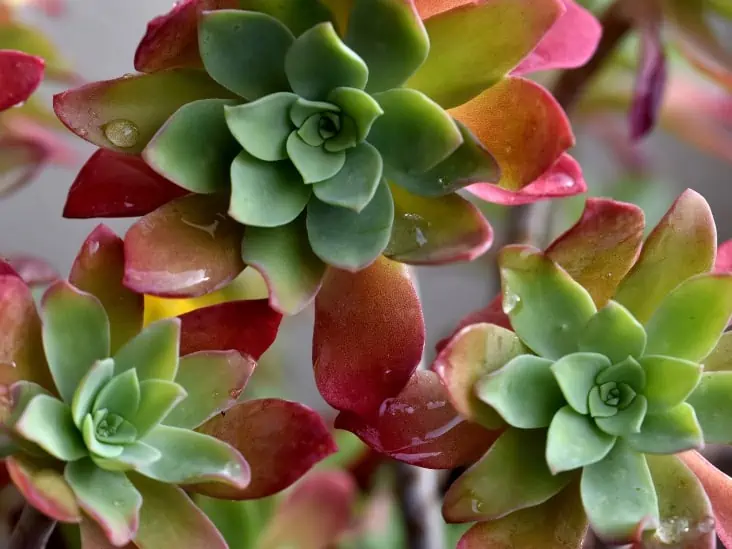
This Is How Often You Need To Water Succulents

You saw an attractive succulent plant at the plant store and decided to purchase it. So, it is now in your home, and you are probably wondering how often you need to water it.

Don’t worry because you are not alone. Most succulent beginners are never sure of how often to water their plants.

The most important thing you need to realize about succulents is that they have unique water requirements compared to other indoor or outdoor plants.

While other plants require daily watering, succulents can go for relatively long periods without watering. Since they are adapted to growing in dry areas, these plants have thickened and fleshy leaves or stems that retain water for a long time.

As such, most of them don’t require frequent watering. However, there are also a few misconceptions about how often to water succulents that you need to be aware of to avoid problems.

In this post, we discuss everything you need to know about watering succulents.  Read on to learn how to keep your succulents healthy.

Do Succulents Need Water to Survive?

Just like any other plant, succulents need water to survive. But the big question is; how much water do they require?

Many gardeners have the misconception that succulents require only a small amount of water once in a while to survive. While it is true that some succulents are tough and can survive with a minimal amount of water, most of them won’t thrive in drought-like conditions.

Although succulents do not require too much water, most of them cannot survive in drought-like conditions.

During the growing phase, succulents usually require plenty of water. It means that regular watering is essential during this phase. 

Some succulents are summer growers, while others are winter growers. The summer growers are active during summer and dormant during winter, while winter growers become active during winter and slide into dormancy during summer.

To understand the ideal watering schedule for your succulents, you should first identify whether they are summer growers or winter growers. Some of the common summer growing succulents include:

  • Adenia.
  • Cissus.
  • Plumeria.
  • Titanopsis.
  • Dorstenia.
  • Sinningia.
  • Xerosicyos.
  • Euphorbia.
  • Agave
  • Echeveria.
  • Synadenium.

Some of the common winter growing succulents include:

  • Aloe.
  • Kalanchoe.
  • Avonia.
  • Bulbine.
  • Cetraria.
  • Othonna.
  • Senecio.
  • Cotyledon.
  • Sansevieria.
  • Sedum.
  • Bulbine.

If you don’t see your succulent among those mentioned above,  conduct a quick online search of its name, and within no time, you will know whether it is a summer or winter grower.

How Often Should You Water Succulents?

Generally, you need to water your succulents at least once a week during the growing phase. Some gardeners prefer watering more than this, but that will depend on a wide range of factors that we shall discuss in a moment.

When watering your succulents, ensure you thoroughly soak the plant until water starts to run out of the container’s drainage holes.

However, before you water your plants, you need to ensure that the soil is completely dry. You can confirm whether the soil is completely dry by sticking a stick into the soil. Wait for a few minutes before you pull it out.

If the stick is damp with soil particles stuck on it, the soil is not completely dry.  But if it comes out quite easily and is dry, then the potting mix is completely dry, and you can proceed to water your succulent.

You should only water your succulents when the soil is completely dry.

When your succulents enter the dormancy phase, you need to increase the interval between watering. During this time, be sure to provide your plants with enough water so that there are no signs of wilting.

This is a critical time you need to apply common sense and do what you believe is right for your succulents.

For instance, if you have summer growing succulents and keep them indoors on a window sill in a heated room during winter, you may be forced to water it slightly more than when you’d have left it outside.

Critical Factors That Affect How Often You Need to Water Succulents

Other than the general rule of thumb mentioned above, some factors determine how often you should water succulents. They include:

1. Season

As mentioned above, some succulents grow during summer while others grow during winter.

Typically, you will need to water your plants more during the active growing season since they absorb water from the soil at a relatively higher rate to make new leaves, stems, roots, and blooms.

During this time, consider watering them up to three times a week depending on conditions such as temperature and light. But you must always ensure that the soil is completely dry before watering.

During the dormant season, the growth stops, and you only need to water them once or twice for the entire season. When in dormancy, the plants rarely absorb water from the soil because almost nothing is happening.

Keep in mind that one of the easiest ways to kill your succulent is by overwatering it during the dormant season. This is the time to let your plant rest easy and sleep.

2. Amount of light

Succulents that get at least ten hours of full sunlight require more watering than those that get less light. Generally, outdoor succulents need more water than indoor succulents because they are exposed to more sunlight and tougher conditions.
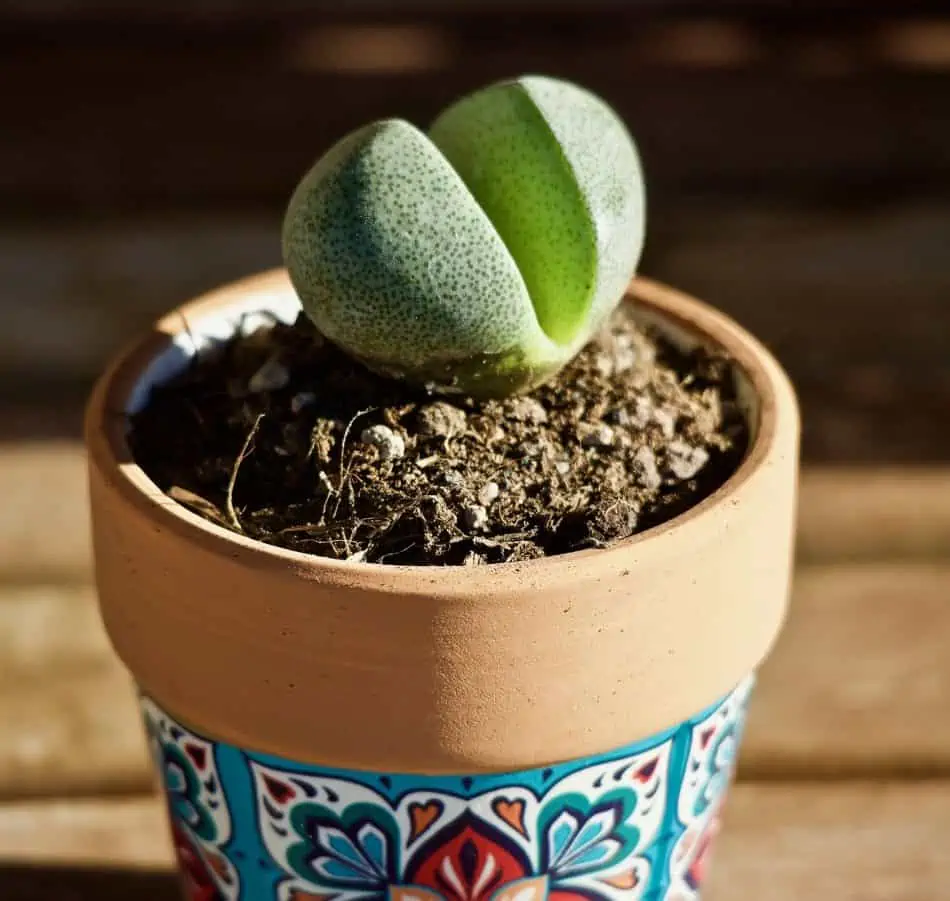
Succulents that get 10+ hours of sunlight require to be watered more often than those that receive less light.

3. Humidity

Another factor that determines how often to water succulents is the amount of humidity. 

Succulents grown in high humidity and relatively cooler temperatures require less frequent watering than succulents grown in hot and dry climates because they retain moisture for more extended periods.

So, if you live in a relatively hotter region and you have to position your succulent pots on your patio in full sun, then you may be forced to water them frequently.

However, if you live in a relatively cooler region and your plants are indoors, you only need to water them once every two weeks.

4. Container size

The size of your container will also determine how often you should water your plants.

Typically, succulents grown in large containers require less frequent watering because the containers hold moisture for a long time.

Plants grown in small and shallow containers require frequent watering because the soil tends to dry out faster.

5. Size of your succulent

The size of your succulent also affects the watering frequency.

While larger succulents require less watering, smaller succulents should be watered more often.

Succulents with relatively thick leaves, stems, and bigger in size store more water than those with thinner leaves, stems, and smaller in size.

Therefore, the bigger succulents can sustain longer periods between watering sessions than smaller size succulents.

6. Soil Type

Your succulent watering routine should be determined by the soil type you use since the time it takes to dry out depends on its density.

The denser the soil, the slower it drains after watering, which can keep the roots moist for longer periods. To prevent root rot, you should reduce the frequency of watering.

In simple terms, soil density is determined by a mix of two main ingredients: organic and inorganic compounds.

If your soil has a higher proportion of organic compounds, it will be denser, and consequently, it will retain more water. Hence, you should water it less compared to well-drained soil.

7. Dormancy Time

Every succulent experiences a dormant phase annually. Understanding when your succulent will enter this dormant period is crucial because it will affect your watering routine.

Typically, watering should be reduced during dormancy to avoid overwatering, which can lead to irreversible damage.

It’s important to note that not all succulents enter dormancy at the same time. So, take time to find out when your succulent will likely go through this phase.

What Is the Right Way to Water Succulents?

Now that you know how often to water your succulents and the critical factors that affect the watering frequency, it is time to understand how to water them right.

Yes, there is a right and wrong way to water succulents. So, don’t be surprised.

Most succulents are desert natives, and there is one thing that makes them unique plants.  While most of us know that deserts don’t receive a lot of rainfall, we don’t know that when it rains, it pours.

Desert rainstorms are monsoons that allow plenty of water to come out of the skies when it is time. You need to try and replicate the same scenario when watering your plants.

When watering your succulents, be sure to drench them. Pour water on them slowly, and don’t stop until you have plenty of it running out of the drainage holes at the bottom of the container.

Succulents usually require periodic but long and deep drinks that soak the soil to the bottom. So, when it is time to water your succulents, make sure you drench them.

Let the soil dry out completely and drench again and repeat the cycle. Follow this pattern, and you will have happy and healthy plants.

What Is the Best Type of Water for Succulents?

Besides the watering frequency, you also need to be careful with the type of water you use on your succulent plants. Rainwater is always the best choice, but it may not always be available.

If your tap water is so hard or highly alkaline, you need to find an alternative. Hard/alkaline water introduces a lot of minerals to your potting mix.

With time, the minerals build up, causing harm to your succulents in the long run. However, repotting annually with all fresh potting mix can help prevent a dangerous buildup of the unwanted minerals hence saving your plants.

You may also want to water your succulents with filtered, bottled water to avoid mineral buildup.

If it snows where you live, melt some snow during the winter months and store the water for use during the summer months.

Avoid Overwatering

Overwatering is the #1 killer of most succulents. Not in the sense that they get too much water, but instead, they get watered before the soil dries out completely.

When you don’t allow enough time between watering sessions, the potting mix is constantly damp, which can cause a lot of problems.

The most common issue related to overwatering is root rot and stem rot.

If you start to notice rotting stems on your succulents, it is most likely that you have been overwatering them, and the roots have already rotted as well.  Overwatering can also cause leaf cracks in succulents.

Underwatering Is Equally Bad

While overwatering is more dangerous than underwatering, you should also avoid underwatering your succulents.

Your succulents may dry out and wilt if you fail to water them for too long. The leaves become more transparent and start turning brown or yellowish.

Stems can also pucker when the plant is severely dehydrated. This can be fixed with one or two proper watering sessions.

Once you water your plant and the soil becomes saturated, it will revive and become healthy again within a few days.

However, if you wait too long to water, the plant may not recover. Therefore, keep an eye on your succulents and give them enough water when necessary.

Summary

Overall, succulents must be watered correctly and at the right frequency to stay healthy and thrive.

The amount of water needed by each succulent depends on the size of its container, climate conditions, light exposure, type of soil used, and other factors mentioned above.

Consider these factors before deciding how often to water your succulents. As long as you keep an eye on your succulents and only water them when necessary, you will have happy and healthy plants in your home.
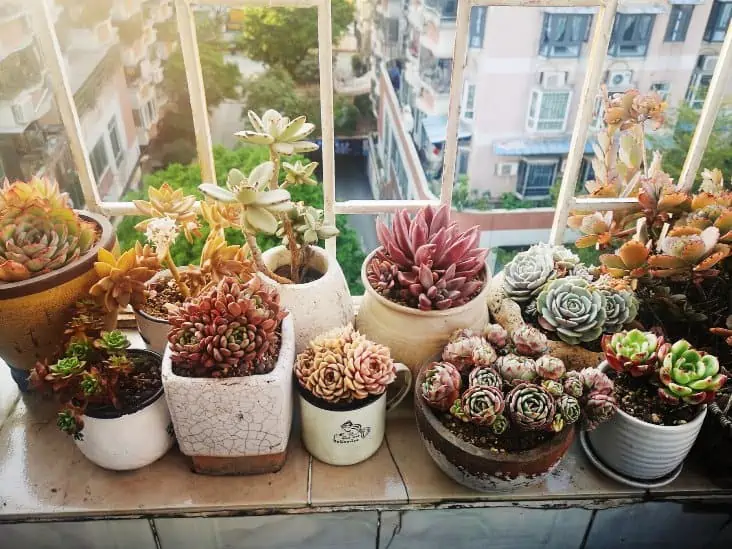
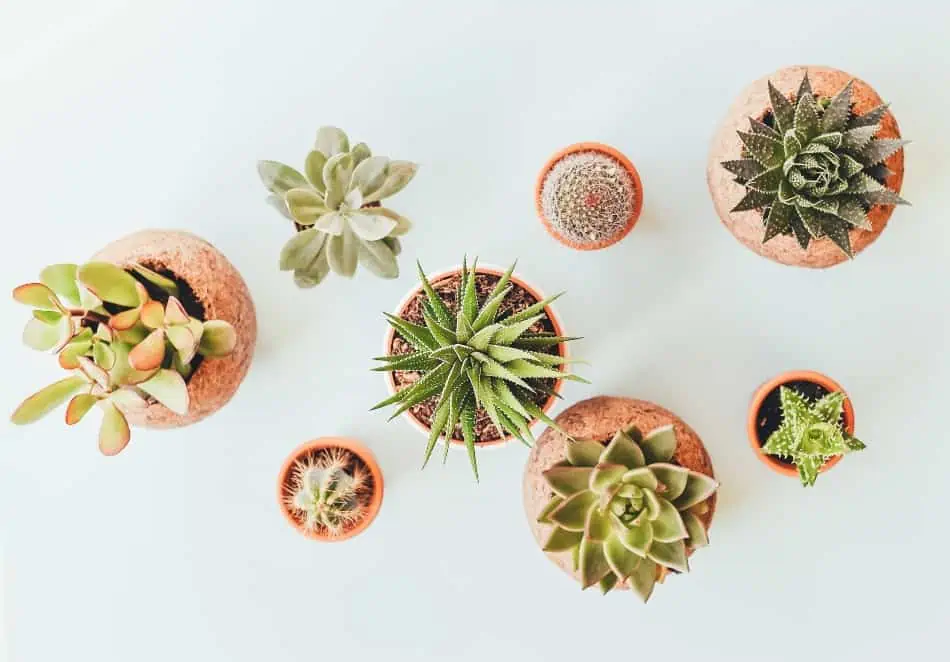
7 Health Benefits Of Having Succulents At Home

Plants have long been known to provide health benefits when placed in homes. They bring a bit of nature inside and improve your quality of life in many ways. But there is one type of plant that rises above all the rest when it comes to keeping you healthy and happy – the succulent.

Succulents have a unique ability that sets them apart from other houseplants and allows them to bring numerous physical, emotional, and mental health benefits when placed in your home. (And it’s not just your Grandma’s aloe plants, either!) Read on to learn why you should spruce up your space – and your health – with succulents.

The Air You Breathe is Cleaner

It is no secret that polluted air is all around. However, unclean air is not only found in big cities with tons of traffic and factories. It is also found in a place you would least suspect – your home. You may already be aware that plants can help to remove pollution from the air in your home, but did you know that succulents are the best choice for purifying the air in your space?

Unlike other plants that only photosynthesize during the daytime, succulents (and cacti) continue the process of photosynthesis overnight – releasing oxygen into your home 24/7. Because they are constantly taking in carbon dioxide and converting it to oxygen, they are continuously removing toxins from the air around you, leaving you with fresh, purified air.

As succulents photosynthesize during the daytime and overnight, they produce oxygen 24/7.

Two of the best air-purifying succulents that you can add to your home are:

  • Aloe plants
  • Snake plants

The constant flow of new oxygen into your space introduces a myriad of benefits, including easier breathing and more restful sleep.

Humidity is No Longer an Issue

Most people don’t consider the humidity levels in a room where they are watching television or playing a video game. For many people, humidity is an outdoor consideration more than an indoor one. But there is actually a need for adequate humidity in a home to ensure good health for all inside.

When the humidity is too high in your home, the following can happen:

  • Your body can struggle to regulate its temperature.
  • The extra moisture can cause fungus, mold, and mildew to grow.
  • The wood and furniture in your home can swell or rot.

Meanwhile, if the humidity level in your home is too low, you may experience the following:

  • Your skin may begin to dry out, causing dry lips and itching skin.
  • Respiratory issues, like wheezing and breathing problems, may arise.
  • You may begin to experience fatigue.
Along with letting you decorate your indoor space, succulents control the humidity in your home.

According to a study done by the Mayo Clinic, it is recommended that your home’s humidity level be between 30% and 50%. While you can use devices like humidifiers to control the humidity in your home, a much more aesthetically pleasing option is to set out a few succulents and let them work their magic!

One succulent that you can use to increase the humidity levels in your home is the jade plant. If you are looking to decrease your home’s humidity, you can try succulents from the Euphorbia family, like the dragon bone cactus.

You Enjoy Enhanced Focus and Productivity

Today, it’s almost a given that your life is busy and in a constant state of movement. With so many daily distractions, it’s difficult to maintain focus throughout the day. Guess what? Succulents have the amazing ability to help improve your focus and increase your productivity. But how?

You already know that succulents photosynthesize during the day and the night, resulting in a steady flow of clean oxygen in whatever space they are placed in. This process increases the amount of oxygen in your home and allows you to breathe in more oxygen during your day. 

More oxygen in your lungs means more oxygen goes to your brain. 

A well-oxygenated brain is a more energized brain that results in:

  • better concentration
  • heightened focus
  • more productivity
  • improved memory

You can place an agave or elephant bush in your home office to ensure that your brain stays healthy and your days stay productive.

You Can Manage Stress Better

One of the most frequently suggested ways to de-stress is to go outside and get some fresh air. However, it’s not always possible to step outside and enjoy the air because of obligations like work and the unpredictability of weather. But succulents allow you to bring that “fresh air” inside your home, where you can enjoy it whenever you’d like.

Often, indoor air is considered “clean.” Unfortunately, most air inside a home has a “suboptimal balance of oxygen, nitrogen, and carbon dioxide, especially in enclosed rooms with poor ventilation.” If you suffer from stress or anxiety, this “suboptimal” air in your home is not helping you. 

Having succulents at home means that you will no longer have to worry about being stressed or anxious.

Placing succulents around your home introduces more clean oxygen into your body; that increase in oxygen helps you maintain a more peaceful emotional state, therefore lessening your stress levels. In fact, veterans that have been diagnosed with post-traumatic stress disorder (PTSD) have been “treated” with oxygen-rich air to help them manage their disorder.

Giving yourself cleaner air to breathe also increases the serotonin levels in your body, which balances your mood and increases your happiness. You can treat your brain and your body with this Haworthia succulent.

Succulents Even Fight Sickness

Another incredible benefit of succulents is that they help prevent sickness. It may seem odd to think that a plant can keep you feeling well, but the idea is not that far-fetched. When you take into account a succulent’s ability to increase oxygen levels and manage humidity levels in a home, it’s rather easy to see how these miracle plants can aid in your physical well-being.

When you are living in a home that is full of polluted air or experiencing humidity issues, you can quickly succumb to many ailments, such as:

  • Dry, itchy skin and lips
  • Coughing and wheezing
  • Asthma flare-ups 
  • Colds and allergies
  • Sore throats

Additionally, the lack of fresh air contributes to higher stress levels in your body, leaving you even more susceptible to illness. (Wouldn’t it be easier to invest in this adorable succulent garden to better both your health and your mood?)

In the 1990s, the Agricultural University of Norway conducted a controlled study on the link between sickness in workers and the presence (or lack thereof) of plants in their office area. They recorded a 25% decrease in illnesses reported by workers who added plants to their work area. The study also reported that the workers with plants in their area experienced less fatigue and better concentration than those without plants in their area.

You Recover from Illness and Injury Quickly 

Not only can succulents decrease your chances of getting sick, but they can also help you recover from illnesses and injuries more quickly. And it all goes back to the extra oxygen that these plants release into your home.
Just like a well-oxygenated brain will result in better focus, well-oxygenated cells will result in faster healing – so much so that oxygen therapy is often used to help athletes recover from their injuries. 

  • When your body is healing from an injury, damaged cells must be replaced with new ones.
  • Likewise, when your body is healing from an illness, healthy cells in your body must fight to deplete the sickly ones. 

The oxygen you breathe goes straight into your bloodstream, feeding these new and healthy cells. The more fresh oxygen you breathe, the faster (and better) your cells can heal you. You can purchase this Donkey Tail succulent to start benefiting from extra oxygen today.

Succulents Have Many Medicinal Uses

You’re probably wondering how there could be more health benefits that succulents can bring into your home, but there are. Succulents passively give you all the benefits listed above, but there are more advantages of having succulents in your house, too. Many succulents themselves have medicinal properties (like the famous aloe plant)!

Aloe vera is one of the most popular succulents that is commonly used for its medical benefits.

Here are some succulents and their medicinal properties and uses:

SucculentMedicinal Properties/Uses
AloeIs commonly used to treat sunburnsCan be used as a laxativeCan be used to treat symptoms of eczema, bruises, and burnsCan be used to treat symptoms of sinusitis, conjunctivitis, and arthritis
Sour FigHas astringent properties that allow it to be used to treat infections in the mouth and throatCan be used to treat fungal infectionsCan be used to ease the pain of earaches and toothachesCan be used to soothe digestive issues
Elephant’s FootCan be used to treat sores and cutsCan be used to treat scabiesUsed by some cultures to make cortisone
BoababCan be used to treat feverCan be used to treat diarrheaCan be used to treat urinary disordersCan be used as an astringentHas anti-inflammatory properties
Pig’s EarCan be used to remove warts and cornsCan be used to ease the pain of earaches and toothachesCan be used to treat boils on the skinHas anti-inflammatory properties

Medical Disclaimer: Please do not use this information to treat any illness or injury before consulting a doctor. 

In Conclusion

One thing is clear – succulents are the best houseplants for your overall health and well-being. From purifying the air that you breathe to soothing a wretched sunburn, these beautiful and beneficial plants are a wonderful addition to any house.

10 Low Care Plants For The Perfect Indoor Cactus Garden

An indoor cactus garden can be one of the best aspects to improve your indoor decor but this can only be possible if you have the right plants. If you are looking for some plants to include in your indoor cactus garden then this blog post is perfect for you. Let’s go through the ten best succulents that can be included in an indoor cactus garden.

Ideal plants for an indoor cactus garden should be low maintenance and easy to take care of. They should also be easy to maintain indoors in terms of watering. Some notable indoor plants for your indoor garden include alove vera, Jade plant, Bromeliads, Agave, Orchid and a majority of cactus species like moon cactus, old lady cactus and Bishop’s cap.

This article will be looking at the most ideal plants you can include in your indoor cactus garden. It will look at their characteristic and care practices and how best to blend with other plants.

1. Bromeliads

Bromeliads make ideal indoor plants because they are simple to maintain and can thrive in a variety of conditions. They grow well indoors when you provide them with indirect light, making it an easy addition for the garden as they will not need much care.

Bromeliads are ideal houseplants since they low-maintenance and can grow perfectly healthy in a variety of climates.

Bromeliads come in many forms which includes some being tall while others may be compact or cascading (Dudleya). They thrive best with moist soil and can be trimmed to fit the space you have available. Bromeliads can make good companions for cactus because they also like the same conditions.

Bromeliads are simple to maintain and thrive in a variety of conditions. When watering, just make sure to allow the soil surface to dry before adding more water.

2. Old Lady Cactus

The Old lady cactus is a unique plant that can be great for the flower garden and is often called “old woman” cactus. The name comes from its distinctive look, resembling an elderly woman with a shawl on her arm. The Old Lady cactus is also stingless and can be planted in the ground or in containers that are well drained. This also make it safe to plant in pots with children and pets.

The Old Lady Cactus is especially beautiful when it features gorgeous flowers.

One of the major benefits is that it looks great when in bloom. The flowers are a bright, vibrant orange color. This plant also makes an excellent choice for those looking to add some greenery to their indoors. Its growth pattern is relatively slow, making it an excellent candidate for those looking to add a green touch to their indoors without worrying about rapid growth.

When grown with other indoor plants, the old lady cactus also makes a great companion. The colors will look amazing when in bloom with other plants that have similar bright and vibrant petals.

The Old Lady cactus prefers soil that is well drained and a warm to hot temperature range. It also prefers direct sunlight for the best blooms.

The Old Lady cactus has been known by many names throughout history, including: lace plant or bird nest plants. This name came from its intricate but delicate growth pattern that resembles an old lady’s dress with her skirt.

3. Agave 

Agave is a drought resistant plant that has a tall, thick and woody stalks. It provides additional height to any design as well as stunning leaf cluster at the top. Agave is one of the most popular additions to a cactus garden due to its high tolerance for hot temperatures and arid environment.

Some other notable features of the Agave include the unique, fleshy leaves that have a blade-like shape and are capable of reaching up to 12 feet in height.

The Agave is not only known for its beautiful leaf clusters but also its hardiness. It can be grown outside as well because it doesn’t require too much water or fertilizer which makes them perfect for people who don’t have enough time or patience to care for their plants.

When grown indoors Agave can have the same height and width but it doesn’t have quite as many leaves.

The Agave is also known to be a great candidate for people who are looking to remove thorns from their cactus garden because not only do they not inflict pain when touched, they also don’t possess any spines at all!

4. Aloe Vera 

The Aloe Vera is a succulent that is known for its medicinal benefits.The Aloe Vera has long and slender leaves, each with a point at the end- making them perfect for poking into open wounds or skin abrasions to soothe pain and promote healing. The plant also contains two clear gel like substances called aloins which can be extracted from cuts.

Aloe vera works best when grown indoors because they require less sun than other succulents. They are excellent for those who need to take a break from watering. Apart from this, they help improve skin conditions like acne, psoriasis and eczema. This means you will not need to go far when trying to find a plant that can help with your skin condition!

Aloe vera is a spineless succulent appreciated for its exceptional beauty and medical benefits.

Unlike other succulents, they do not have harmful spines and can be placed in areas where you have children or pets who might not always behave.

When planted with other indoor plants, the Aloe Vera will ensure the plants get enough sunlight, while they in turn will help with Aloe Vera’s water needs.

The best type of soil for Aloe vera is a light and porous mix that allows plenty of air circulation to prevent rot from setting in. You can also choose to put your plant on top of rocks or stones to replicate the conditions in the desert.

5. Orchid 

Orchid is a perfect indoor plant for those people who have a hard time remembering to water their plants.

They are native to places where rain is scarce or completely absent, so they can go without being watered for weeks at a time!  

The plant also has an interesting history as it was once used in China and Japan by royalty which meant that all orchids were reserved for the most royal in society.

If you often forget to water your plants, Orchids are ideal options for you as they can withstand dry climates.

Orchids prefer to grow in bright light, but an east window is fine too if the other conditions aren’t met.   The orchid also likes to have some potting material below it’s roots and should only need watering every three weeks.

When grown in an indoor garden, orchids are usually placed in pots or containers so they can be brought outside during the summer months.

The plant should also have a cool basement, garage, and/or attic to spend time over winter if you live somewhere that frost is possible year round.  

Orchids prefer temperatures from 40-55 degrees Fahrenheit (with 50 being best). When watering, ensure that the water is not too cold or hot.

The best windows for your house are those that have a lot of sunlight coming in through them, but only if you can control the temperature as well.

If this isn’t possible, then keep the plant near an east window with plenty of indirect natural light to supplement it’s needs.  

6. Ficus tree

Ficus tree is a large tree that is typically grown as an indoor plant.

Ficus tree, like most plants in this list, needs at least six hours of sun a day and just a little water from time to time. When grown in an indoor garden, this plant can survive in temperatures of up to 80 degrees.

For indoor planting, a good rule of thumb is to use soil that has been sterilized with boiling water or bleach (a teaspoon per gallon) and mix it 50/50 with sterile potting compost before using.    Do not forget the humidity tray!

Ficus tree prefers to be watered regularly with a watering can, as it does not like to have wet feet. The tree also does well in the presence of other plants from this list! It complements other house plants like Mrs. McGregor’s cactus and the living room palm tree, as well as other flowering plants like Begonia or any kind of Poinsettia plant.

While in the indoor garden, position the Ficus tree in a sunny area to enjoy its green leaves and the airy look of its branches.

7. Blue Columnar Cactus

The Blue Columnar is a type of cactus that starts to grow its stem directly from the ground, forming a narrow, round-edged column. It is usually found in shades of blue and green with some red on it.

The Blue Columnar Cacti are very easy plants to maintain indoors because they do not need too much water or light. These conditions will work best especially when planted in a pot with sand.

As it is also easily recognized by its round and cylindrical shape, the Blue Columnar cactus can easily turn your indoors into a modern and contemporary space. However, ensure that you give this plant enough light and water when in its initial growth stages.

The Blue Columnar Cactus will grow in pots, hanging baskets or as a free-standing succulent. The cacti have few spines to protect them from predators because they are not juicy like other types of plants so do not worry about your pets eating them.

8. Moon Cactus

The moon cactus is a unique looking succulent with its distinctive shape and moon-like colors. Moon cacti are not only attractive, but they are also low maintenance as well. This plant is a perfect addition to your indoor garden because of the vibrant yellows and oranges that it displays in sunlight.

Moon cacti come in a variety of vibrant colors and do not require much care.

The moon cactus prefers dry soil that can be watered every two or three weeks. The moon cactus stands out with its unique look and is a great addition to your indoor cactus garden.

When potting the moon cactus, make sure to provide a well-draining potting mix and avoid using soil that is too wet. For better results, use a succulent potting mix.

The moon cactus will do best when grown in bright, indirect light and needs to be watered sparingly throughout the year. The moon cactus is an easy addition to your indoor garden because they are low-maintenance plants that can withstand temperatures below 40 degrees Fahrenheit without any harm coming their way.

9. Burro’s Tail

The Burro’s Tail is an indoor plant that is perfect for those with a brown thumb. The Burro’s Tail requires little water and can be placed in any room of the house, including bedrooms

The Burro’s tail prefers bright, indirect light which will help it grow to its full potential. Although this plant does need some sun exposure, too much sunlight may cause leaf scorch or kill the plant altogether.

When grown in an indoor garden, it blends with most plants especially those in hanging baskets. The Burro’s tail is perfect for beginners because it is hard to kill. Only make sure that you keep it away from drafts and cold air vents.

When potting the Burro’s tail, consider its growth pattern because it grows in a hanging pattern. If you are planting the Burro’s tail by the verandah or balcony, place it in a sheltered location with partial sun exposure.

10. Bishop’s Cap

Bishop’s cap cactus is a single-stemmed succulent that grows in a symmetrical triangular shape. This plant is ideal for gardens or pots because it doesn’t grow very tall and can be placed anywhere without taking up too much space

The Bishop’s cap cactus prefers to live in dry soil so never let the potting mix get soggy. It also thrives on sunlight but make sure not to get the plant too hot.

Bishop’s cap cactus can grow to a height of about 12 inches and can be planted in a pot or garden zone. When grown with other indoor plants, ensure you have enough space for this succulent to thrive.

Considering its small size, Bishop’s cap will fully blend in with your other plants and won’t overwhelm the arrangement.

The Bishop’s cap cactus is a great addition to any indoor garden or potted plant because it can grow in different shapes, sizes, colors and even in partial sun exposure. It only takes about three years for this succulent to fully mature which makes these ideal for beginners who are just starting their indoor gardening.

If grown indoors, this type of cactus only needs watering once every few weeks because it can store water for up to six months.

Considerations when creating an indoor cactus garden

1. Positioning

Choose a sunny spot for your cactus garden. This ensures that you will keep the plants healthy and happy.

Always choose a sunny spot when growing succulents indoors.

Outdoor gardens can get lots of sun exposure, but indoor cactus gardens need to be placed in a place that gets direct sunlight for six hours or more each day.

In order to make sure your succulents are getting enough light they should not have any obstructions on their leaves either.

2. Soil Moisture

Make sure the soil is well-drained and has good drainage. Indoor plants can be forgotten easily when it comes to watering and so you may need to create a watering schedule. However, avoid excessive water, as this can rot the roots.

Some succulents like to be watered once a week or more often than others. The rule of thumb is that if your soil feels dry then it needs water. 

Some plants need a little protection for their root system. For example, aloe vera needs to be planted in pots that have holes on the sides so it can get the water and nutrients it needs without being squeezed close against other objects.

3. Ideal Potting Mix

Use potting mix that provides adequate moisture and nutrients to the plants. This will keep them go for longer without watering.

Using a proper potting mix is key to growing healthy and gorgeous succulents at home.

Use potting mix that contains loam, sand and peat moss or compost mixed in equal amounts to create a light mixture for your succulents.

Since they are so small the pots do not have to be too big either! You can use something like an egg carton with its divots around each hole. 

4. Mulching

Contrary to popular belief, indoor plants can grow weeds. Add mulch or pebbles around the base of the plants to keep weeds away from them.

5. Constant Attention

Keep an eye on your plants and make any necessary adjustments as needed. This may be in terms of access to sunlight or simply redesigning your indoor garden.

Indoor plants are also susceptible to disturbance by children and pets, so you may need to keep moving your plants to a new location in case you feel the current location is not idea.

Managing an indoor garden can be a hassle but it can be worth it in the long run. You can grow succulents indoors without too much difficulty and you don’t have to be an expert gardener in order to take care of them properly!

There are many different types of succulents that allow for a variety of arrangements and can make your garden pop. Just make sure, you have the right combinations to ensure your indoor garden no only pops out but also remains intact much longer. The rule of thumb for an indoor cactus garden is that you should include at least one plant from each of the following groups: Small cactus, Aloe and flowering plants.

Can Cactus Be Kept In The Bathroom?

It’s true most cacti live in the driest places and can withstand the intense sun. Despite this, there are those cacti that still need some moisture, especially in the driest months of the year. Such cacti can do well in the bathroom, where there’s plenty of moisture in the air.

But can cacti really thrive in the bathroom? Well, the answer to this depends on the species. Some species can thrive well in low and humid conditions, while others require drier climates. The ones that survive well in the bathroom absorb the excess moisture in the air and use them for their growth. Cacti plants such as snake plants, orchids, jade plants, mistletoe, and zebra plants can do well in the bathroom.

It’s not only the plants that will benefit from the moisture in the bathroom. A touch of greenery from precious cacti can also give a rather dull bathroom some life. Cactuses give your bathroom the beauty it deserves at a cheaper cost with less maintenance. They also purify the air and ensure you get a good supply of oxygen in the bathroom.

If you want to know how cacti survive in the bathroom and which types do well in such conditions, you’re in the right place. Read this article to the end to learn about that.

Can Cactus Do Well in the Bathroom?

Before you introduce your precious cactus in the bathroom, you need to know if they can survive there. Fast forward, everyone understands that cacti need lots of sunlight, and even those who prefer shade still need a few hours of sunlight. So, what happens to your precious cactus kept away in the confines of the bathroom that sometimes don’t even have a window?

Well, cacti are not the same, and not all of them need direct sunlight. There’s no denying that those cacti that can survive in the bathroom still need some light, and you need to find them an artificial light that you can’t get directly from the sun.

If you have decided to grow cacti in your bathroom, make sure you give the plants enough sunlight or artificial light.

Some cacti species can survive well in a humid environment because they can absorb excess water from the air. They absorb the water in the air and keep them for future use. These cacti can thrive well in the humid environment hence ideal for giving your bathroom some beautiful greenery. 

The cacti have different adaptation techniques that enable them to cope with low light conditions. But if your bathroom doesn’t get enough light, you can use artificial lighting to provide grow light to your bathroom cacti.

But even in humid conditions, don’t forget that these cacti still need moisture, and you should never forget to water them. Ensure you water your bathroom cacti from time to time whenever you feel that the soil is dry. If your bathroom has a window, this will be the ideal place to keep them.

Benefits of Keeping Cactus in the Bathroom

If you keep your cactus in the bathroom, it’s not only the plant that will benefit, but you’ll also share the benefits. Here are some of the advantages you get from growing your cactus in the bathroom.

Get a Touch of Greenery

The bathroom is a dull place but also deserves some makeover with a touch of nature. The striking appearance of your cactus plant is enough to give your bathroom the appeal that everyone will notice. If you get the perfect cacti for your bathroom, you’ll get decorative plants with colorful pots. To maintain their striking appearance, make sure they grow in ideal conditions by ensuring your pots get perfect drainage holes at the bottom.

Air Purification and Oxygen

The bathroom area is usually small and enclosed. This is likely to make them get damp and smelly. Having some plants there purifies the air, and there’s no better plant to do this than cacti. While purifying the air, your cacti will also provide the bathroom area with fresh oxygen that everyone needs while having a relaxing bath.

To ensure you receive enough oxygen, cacti use the carbon dioxide in the air for photosynthesis and give out fresh oxygen. So, if you’re craving for some fresh air supply in that small room, it will be a good idea to get some cacti in there.

You’ll Feel More Relaxed

After a long day of work or having some outdoor fun, you’ll feel so exhausted and drenched in sweat. The bathroom becomes the ultimate place to refresh. If your bathroom has some plants, you’ll feel much calmer and relaxed taking a refreshing bath. So, if you’re always looking forward to some refreshing moments in your bathroom, add some touch-ups to it by growing cacti in there.

Gorgeous cactus plants will make it much easier for you to refresh, relax, and feel happier while taking a shower or bath.

Drawbacks of Growing Cacti in the Bathroom

While cacti do great in the bathroom, growing them there also comes with some drawbacks. Here are some cons of growing cacti in the bathroom you should watch out for before you proceed.

The Cactus Can Grow to Big

Imagine taking a shower, but the plants you have in the bathroom keep scratching your back? Some cacti can grow so big that the small space in your bathroom might not accommodate them anymore. The feeling of the plants touching you can be unsettling. Unless you have enough space, some cacti plants might not be ideal for the bathroom, even if they can still thrive there.

As some cacti grow pretty big, not every cactus plant is suitable for small bathrooms.

You Might Forget to Water Them

Just because your plants are in the bathroom with plenty of moisture doesn’t mean you should neglect their need for some water. Many people make the mistake of thinking their plants get enough water from the atmosphere; hence, they don’t need watering. The plants require less frequent watering, but this doesn’t mean they can do without watering completely.

The Possibility of the Cactus Dying

Remember, your bathroom environment is not the natural habitat of your cacti, and the possibility of them dying there is high. Apart from high humidity, the bathroom is also exposed to various chemicals from your shower gels that might not be favorable to them. If you leave the bathroom window open, some may not like the drought.

How to Keep Your Plants in the Bathroom

If you’re going to put some plants in the bathroom, you’ll need to enjoy their beauty. This will depend on how you keep them in the bathroom in the first place. There are several ways to display your plants in your bathroom and enjoy the breathtaking view of nature.

The best and most common way of all of them is the use of hanging baskets placed near the bathroom window. Make sure it doesn’t get splashed with water. Another option is the bathtub tray to give the space a classy look. If your bathroom receives very low light, the window sill can be an excellent location for your cactus.

Cactus Plants That Grow in the Bathroom

There are plenty of cactus plants that can grow well in the bathroom as long as they get the care they need. Here are a few of those species to look for.

Snake Plant

Snake plant is also known as mother-in-law’s tongue. This plant is nearly impossible to kill, and you can find different varieties in almost all growing conditions. The plant can tolerate both low light and bright light conditions. The bathroom is another place you can put snake plants, and it thrives perfectly, as long as you get the correct species.

Orchid Cacti

This is another great plant that grows perfectly in humid conditions and will appreciate that environment in your bathroom. You’ll appreciate having an orchid in your bathroom as it keeps the place bright with its gorgeous flowers for several months. The plant grows in bark instead of soil and prefers damp growth material but not wet. Get different orchids to your bathroom, and make sure you introduce them to the bright, filtered light in your bathroom window.

Mistletoe

This is an epiphytic cacti species that comes with beautiful white and yellow flowers. This plant is used to getting minimal and indirect sunlight thanks to its natural habitats of the South America region. The plant can do pretty well in areas with high humidity; hence perfect for the bathroom. You can put it in hanging pots in the bathroom to display its beauty.

Jade Plant

Jade plant is another great plant that you can introduce to your bathroom, thanks to its long life. The plant is super easy to care for. Jade plants will prefer warm, dry conditions but can still thrive in the moist conditions of the bathroom. Remember to keep the soil around the jade plant moist.

Jade Plant is a long-lasting and low-maintenance cactus that can grow perfectly healthy in a bathroom.

Zebra Plant

This is another plant that prefers bright indirect sunlight and will not mind growing in the bathroom. Make sure you water it often if you want it to grow well. If treated well, the zebra plant will reward you with its beautifully striped foliage and breathtaking golden flowers. You can use it in the bathroom or just indoors generally.

Summary

Now you have your answer. If you love cacti and are wondering whether you can also treat your bathroom to some greenery, then the answer is yes. There are plenty of cacti that can thrive under the humid conditions of the bathroom. However, you have to be careful with the types you introduce because not all cacti appreciate such environments. Also, don’t forget to take care of your cacti, such as watering and giving them the needed sunlight to thrive.

This is How To Save A Rotting Succulent

Succulents are among the most popular house plants. They’re easy to grow and care for and they come in all shapes, sizes, and colors. They add interest and beauty both inside and outside your home. All that, but your Aloe Vera and Cactus plants are rotting – why?

There are measures you can take to save a rotting succulent and to prevent your succulent from rotting in the first place. With proper care, succulents can live a long and happy life. But once rot begins, you need to act fast to save them. 

Read on to learn what causes succulents to rot, how to save them once rot begins, and how to keep your succulents from rotting in the first place.

What Causes Succulents to Rot?

Succulents are made for arid regions with little rain and loosely compacted soil. To get through dry seasons, succulents store water in their leaves and stems. Given they are used to dry periods and soil that drains, two of the main reasons for succulent rot is too much water and poor drainage. 

Taking a closer look at reasons why succulents can rot can help in understanding how to save them. 

Too Much Water

Succulents will continue to try and store water in their leaves and stems, even if it’s not necessary. So, when you overwater them, their tissues will swell, become mushy, and finally burst from trying to hold all of the excess water. 

Overwatered succulents will have leaves and stems that become soft, turn dark, begin to droop, and then drop off. (If you were under-watering, the leaves would be brown and shriveled.) Watch for coloration changes as well— over-watering causes the leaves to yellow and become translucent.

Overwatering is one of the main reasons why succulents develop root rot.

Why does too much water cause these issues, particularly root rot? Like all plants, succulent roots pull both water and oxygen from in-between soil particles. When overwatered, air pockets in the soil are displaced. Then the roots become oxygen deprived. This in combination with too much water, leads to the collapse of root and plant structure, hence root rot.

Poor Drainage

Succulents are not used to sitting in water. If you’ve used regular potting soil, or the soil is too compacted, what might be good for another type of plant, can lead to rot in a succulent. Use a potting mix specifically designed for succulents (more on this shortly.)

Regular potting soil does not offer enough drainage for succulents to get rid of excess water.

Fungal or Bacterial Infections

Although rare in succulents, it’s possible that the soil, pot, or tools used to plant the succulent were contaminated with some sort of pathogen or fungus. And, back to water for a moment, both pathogens and fungi thrive on excessive moisture or dampness. 

Your best bet for this cause of root rot is to give your succulent a new home (pot) with succulent potting mix, sunshine, and water after two weeks.

Cold Weather

Not all succulents can tolerate the cold winter weather, especially if there are extremes in temperature. Large, outside succulents like certain types of cacti are cold-resistant, given they’re often found naturally in high-altitude deserts. For smaller varieties, bring them inside and use a grow light if more direct light and warmth is needed.

Typically, smaller cactus varieties cannot tolerate extremely cold temperatures.

How to Save a Rotting Succulent

The sooner you diagnose root rot, the better the chance of saving your succulent. In other words, there’s first aid and then there’s the 911 level of intervention. 

First Aid for a Rotting Succulent

The best early intervention is to stop watering your succulent for at least a week. Placing it in sunlight will help the soil dry out even more. If the top of the soil is completely dry after a week, then you can consider watering the succulent again.

If the main stem of the plant is still strong and the leaves appear only slightly damaged, you may be able to save the entire plant. 

To do this, remove any rotted leaves and let the roots dry completely before you repot the succulent. Then, sterilize the pot and prepare it with fresh, succulent-specific, soil mix. You’ll also want to wipe or dunk the roots with an anti-fungal solution before repotting as well.

Emergency Care for a Rotting Succulent

You still have options, even if the rotting has progressed beyond the first aid stage. Fortunately, succulents do propagate easily.

If there’s rot in the stem, but there are some viable leaves still on the plant, then you can take cuttings from the leaves and stems, let them dry, and then repot. It’s possible the planted cuttings will eventually root and a new plant will develop.

Many succulents produce “offsets,” or little succulents that sprout up around the base of an existing plant. If so, you can divide these little plants away from the parent. Next, allow the ends of these to “callus,” or harden a bit. As the callus forms, some of the succulent cells may form roots capable of regenerating the plant, so once planted, your succulent will have a fresh start.

The resource tessgarden.com gives step-by-step descriptions for dealing with succulent root rot— from initial diagnosis to specifics around transplanting.

How to Prevent Your Succulent From Rotting

There are three keys to preventing root rot in your succulent— whether you keep them inside, outside, or both. These keys are proper watering, the right kind of pot, and the correct soil mix.

Water Every Two Weeks

Water your succulents only when the soil has completely dried out. A reasonable watering schedule is once every two weeks. In the winter, outside succulents (and some inside ones) go dormant. So, you can cut your watering back significantly— perhaps even to once a month or less.

By the way, if you’re in the habit of misting your plants after watering them – skip misting the succulents. They don’t like it and misting can encourage rot. (The only time to mist is if you’re propagating new little succulent plants from calluses or cuttings.)

Use a Clay Pot

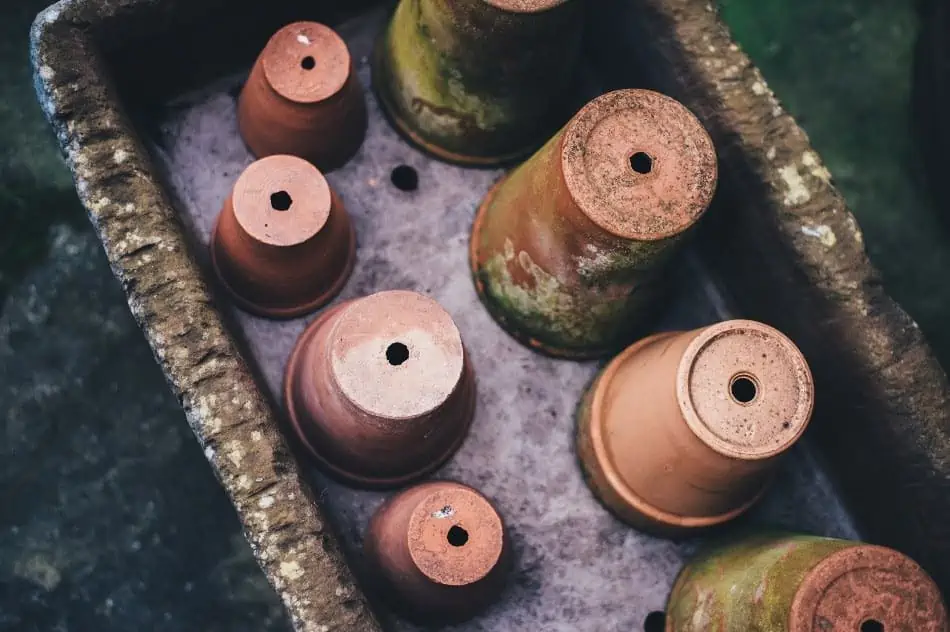
The best pot for succulents is a clay pot. The composition of clay means more air can get to the succulent – as opposed to plastic or similar which has no possibility of aeration. Most clay pots even come with a hole in the bottom for drainage, but double-check just to be sure.

Clay pots with drainage holes in the bottom are ideal containers for succulents.

Succulent Specific Potting Mix

Your best bet for soil is to buy a pre-mix specific to succulents. There are several good kinds of succulent potting mixes— including familiar names like Miracle-Gro and Bonsai Jack Succulent and Cactus Soil

Outside Succulents

A note on outside succulents like Agave or Cactus plants; These do best in areas where the rainfall is less than 25 inches a year. And like their inside succulent friends, they don’t like soggy soil. With outside succulents, you can cover all three keys to a healthy plant by remembering they do best in arid regions and when planted in coarse soil that drains well.

Resources for Saving Your Succulent

There are several great resources online to help you keep your succulent plants happy and healthy. In addition to online, there are also several books on how to care for and revive succulents who are under the weather. (Check out “Succulent Container Gardens” by Debra Lee Baldwin and “Essential Succulents: The Beginner’s Guide” by Ken Shelf.)

You Can Save Rotting Succulents

There’s hope! You can do it— succulents are hardy plants. If you follow the guidance and suggestions in this article, you can prevent root rot and enjoy your succulents for many years to come.

Here Is How Animals Can Eat And Survive From Desert Plants

Animals can survive in the desert, but it is an extremely tough place to live. They have to be able to find water and food without much effort, or else they will die of dehydration and starvation. An animal’s ability to survive in the desert is mainly determined by how well it can find food and water. The plants around them are their main source of both, but these plants are scarce due to the lack of rain and water.

So how can animals eat and survive from desert plants? Desert animals are adapted to eat and survive on the water and nutrients in plants. Plants store a lot of moisture, so animals are able to get their needed hydration from them. Desert bushes usually offer berries that provide an animal with enough nutrition for its next hunt for food or drinkable water source.

This article will discuss some tips on how animals can eat from desert plants, as well as keep up with their need for water. It also explains that most plants are able to provide reliable sources of sustenance as well as hydration for animals living there.

Herbivores that Survive in the Desert

The tips below will discuss some ways that an herbivore in a desert would survive:

The first rule for animals living in the desert is finding food and water. An animal’s ability to survive in the desert is mainly determined by how well it can find food and water. The desert plants around them are their main source of both, but these plants are scarce due to the lack of rain and water.

As desert plants store plenty of water, herbivores use them as water and nutrient sources.

Desert animals are adapted to eat and survive on the water and nutrients in plants. Plants store a lot of moisture, so herbivores have enough hydration from them. Desert bushes usually offer berries that provide an animal with enough nutrition for its next hunt for food or drinkable water source.

Some common desert plants that can be eaten by animals

Acacia trees

 Acacias have been known to survive in some of the harshest climates, and they provide a food source for many desert dwellers as well. The acacia’s thorny branches prevent water loss from its leaves, which means it might not need much rain at all!

Cacti

A Cactus is a great food source for animals, and they usually have lots of water in them too! Many cacti contain up to 95% liquid, so an animal can get hydrated by drinking from the plant’s stem or eating its fruit. What’s more, the cacti’s needles are small enough to be eaten by small animals like birds!

Since cacti consist of around 95% water, they are excellent food sources for desert animals.

Mesquite trees

Mesquites have lots of seeds, which serve as a great food source for many desert dwellers and plants that grow around them. An animal will usually get all the water it needs from mesquite seed pods, and it can also eat the pods!

Desert Bushes

Desert bushes offer berries that provide desert dwellers with enough nutrition for their next hunt for food or drinkable water source. These bushes are usually found in oases, and can provide an animal with more than enough sustenance for their needs. Common desert species that form bushes are:

  • Blackbrush: Blackbrush bushes grow in the hotter, drier parts of deserts and are usually found on hillsides or slopes with a lot of shade to keep them cool. These plants have thorns that can be used by animals for protection from predators, as well as having fruit that is edible to many species!
  • Climbing buckwheat: This desert plant grows in lots of different types of climates and is a favorite food among some animals because it provides them with enough nutrients for their wellbeing!
  • Coyote bush: The coyote bush has fruit that can be eaten by many species, as well as having flowers which provide nectar to smaller animals. The coyote bush also provides animals with a safe place to hide from predators.

A desert’s topsoil is usually dry because it does not get much rain. However, there are some plants that grow to be tall (usually taller than a human) where the soil stays moist thanks to its deep root system and long, narrow leaves which prevent the water from evaporating.

Plant roots can go deep into the soil to find any available moisture, but it’s important that an animal still drink from the surface when it can to prevent dehydration.

Survival tips for desert animals using plants

-Some animals try to find shade during midday hours by digging holes under bushes or trees for protection against the sun.

-A desert animal can survive by eating the leaves of plants or drinking from a plant’s stem. They usually have to work hard and find water, but they are able to do this because their bodies are adapted for it!

Even if animals eat other desert animals, they still need to consume lots of plants to maintain water content and survive.

-There is also some debate about whether herbivores should eat other animals in addition to plants. Regardless, desert animals need to eat lots of green materials that have high moisture content in order to survive.

-Animals that live in the desert have adapted their bodies for hunting at night when it’s cooler, drinking from plants during daytime hours since they can’t rely on a rainstorm or oasis and finding food sources like cactus fruit (which is full of water).

Examples of desert animals that survive by eating desert plants

Ants, gophers and squirrels

Ants, gophers and squirrels who can eat roots from bushes or trees they’ve dug up to find water in them. They have mastered the art of burrowing. Insects survive by eating plants because they don’t need much food or water to live, so it’s easy for them to adapt. They can also find water by sucking out the moisture from leaves.

Cows

Cows depend on plants for their calories and nutrients, but they also need to drink about 40 gallons of water per day! So cacti are a great food source because they usually have lots of liquid in them too.

Sheep and deer

Animals like sheep and deer use their tongue to sweep sand off plants. This  reveals some moisture that might have accumulated in the dirt from a past rain shower or dew drop.

Birds

Birds like the kiwi, which can eat and drink from fruit that falls to the ground. Kiwis have no feathers on their legs or feet, so they’re able to walk around without sinking into the sand. Other common desert birds that survive are the sandgrouse, which lives in Africa and Asia.

Camels

Camels have adapted to living in dry conditions because they’re able to store water from plants inside their bodies when there’s not much outside of it. Camels can also drink up to 20 gallons of water at one time! Some common plants that camels eat in the desert are thorns, which they chew on to get the water out. They have a thick tongue to prevent the effects of pricks and thorns.

Camels can store water inside there bodies, making it much easier for them to survive in dry climates.

Goats

Some desert animals like goats are able to eat plants by ripping them off with their teeth and swallowing leaves in one gulp, which helps reduce the amount of moisture lost while eating! Desert goats can stand on their hind legs to reach higher green leaves in the dryer bushes.

Lemurs

Lemurs are only active during nighttime hours because there’s not enough sunlight for them in their native habitat. Lemurs usually eat leaves from trees and bushes, but can also drink up to twice per day since they’re able to find more sources of liquid than some other animals.

Bees

Bees survive by drinking nectar from flowering desert plants and using it for their energy instead of sunlight. They also collect pollen that has moisture in it which is great for desert animals who want something green like ants.

Scorpions

Scorpions are able to survive by eating dead animals and plants that other animals leave behind. They’re also active during nighttime hours when there’s not as much competition for food sources.

Desert slugs

Desert slugs eat the mucus from cacti, which helps them get moisture without actually taking any liquid in. There is speculation that some animals might not be able to survive in the desert because they can’t get a lot of moisture without going into water sources, which is dangerous for them.

Prairie dogs

Prairie dogs are great at finding food and survival by eating plants like grasses and leaves from bushes or trees. They have something called cecum, which has a lot of bacteria that helps break down plant material.

Rodents

Rodents like mice are able to survive by eating seeds and nuts, which has a high moisture content in them. They also have the ability to store fat so they don’t need as much water or food when living in dry conditions.

There are many more desert animals than just these listed above, but they all share a few common characteristics including: being able to live in hot, dry environments and hunting at night when the air is cooler.

Animals can survive in the desert by adapting to their surroundings and finding ways to find food, water and a way of existing from the plants that grow there. Most plants in the desert provide dependable sources of food and water for animals because they have adapted and found ways to survive in those conditions.

How Do I Know If My Succulent Is Dying?

Taking care of a succulent is supposed to be easy. But to keep it healthy, there are a few things to know. First, how do you know if your succulent is thriving or dying?

As a general rule, common indications that a succulent is dying include:

  • Brown, mushy leaves mean the roots are rotting.
  • Pale, yellow leaves indicate that rot or infection has spread. 
  • Wrinkly, dehydrated leaves mean the roots are drying up.
  • Brown roots indicated rot or infection. 

These are some of the tell-tale signs that may indicate your succulent is not thriving. If you own one or more succulents and are concerned your plant is dying, read below for more about how to tell that your plant needs attention. 

There are Brown Spots on Succulent Leaves

The number one reason for brown spots on succulent leaves is due to over-exposure to the sun, or also known as succulent sunburn. If too much sun is the not culprit, brown spots on the leaves may stem from insect infestation or fungal rot.

Before attempting to take action to revive your plant, investigate further to find out what is causing the brown spots. 

Brown spots on a succulent is a common sign that the plant is slowly dying.

The Succulent Leaves Are Turning Black

Leaves turning black towards the top of the plant mean the plant is most likely going to die; there is no way to nurse it back to health. Overwatering is most likely the reason for the problem. 

Black leaves falling from the bottom of the plant are normal. There is no reason to be alarmed if the black leaves are at the base of the plant. Simply remove those from the pot. 

Your Succulent Has Root Rot

Some succulents are more prone to stem rot over others. However, overwatering could be the cause of the problem. If it’s not too far gone, stem rot may be fixed:

  • Remove the succulent from the pot, carefully detaching all of the rotted soil.
  • Clean the pot with a bleach-water solution and rinse well – or use a new pot.
  • Carefully trim affected roots, cutting about ½-inch above rot. Pat dry with a soft towel.
  • Replant the succulent in a new, dry soil mixture: two-parts soil, two-parts coarse sand, and one-part pumice.
Overwatering is one of the most common causes of root rot in succulents.

Do not water the plant again immediately. Monitor for a few days to a week before watering again. 

Note: If the rot has spread to the stem or leaves, it is too late to repot. 

Succulent has Droopy Leaves

Overwatering is the primary source of droopy leaves. Fixing this problem is similar to how you fix root rot: trim the bottom, repot and then rewater when ready. If you repot the plant, make sure to handle the succulent with extra care. Although considered hardy, the roots of the succulent are fragile and often do not recuperate from trauma. 

Tall, Thin and Stretched Succulent

Lankiness is a sign the succulent is not getting enough sunlight. It can indicate a severe problem. The stretched-out parts can never be fixed. The way to move forward is to nurture the new growth for optimal health. Trim the leaves at the base of the plant and take care of them well. If this does not work, it may be time to start shopping for a new succulent.

Stressed, Red Succulent Leaves

Red leaves may indicate succulent stress; like people, succulents become stressed with too little or too much light or too much or too little water. Stress does not necessarily mean the plant is going to die; it means it may need some additional tending loving care. 

Some growers will intentionally stress their succulent out for the aesthetic appearance of the red leaves. Purposely stressing a succulent out should only be done by those with a “green thumb” and expertise. 

Succulent has Damage from Trauma or Bugs

Damage to succulents may occur if the pot has been tipped over or if any type of infestation from a bug occurs. Small brown spots on the leaves indicate the plant has undergone trauma. With additional care and patience, your succulent can survive.

Tipped containers and bug infestation can damage your succulents and lead to brown spots on the leaves.

Succulent has been Overexposed to Sun

Just like us, a succulent can get sunburn with overexposure to UV rays. Too much sun to the plant and the leaves will turn dark brown. There is no sunscreen for succulents like there is for people; keeping the plant in an adequate location with the right amount of sun will help the plant. 

Care Tips to Keep Your Succulent Healthy

Overwatering, underwatering, too much sun, too little sun, and trauma; can be rather confusing on how to best care for a succulent. Since these potentially bountiful plants cannot speak to tell us they are ill, monitoring your succulent for tell-tale signs is critical. Here are some steps to care for a plant and help it flourish. 

Keep the Plant in Ample Sunlight

An established succulent needs up to six hours of sun per day. If your succulent is new, you will need to slowly acclimate the plant to the sun. Put the plant in front of the window but place the plant behind a barrier such as a light curtain or something not allowing direct sunlight. 

Rotate the Pot Often

Succulents thrive on sunshine; rotating the pot often allows for the entirety of the plant to acquire those rays. If your plant is swaying to one side, rotate the pot and watch your succulent stand straight. 

Seasonal Watering

During Winter or Fall seasons, succulent growth will stall; this is no different than us! The climate in Spring and Summer months aid in growth and rejuvenation. More water is necessary during these seasons as the plant uses more energy to revive. 

The rule of thumb to make sure your plant is not under- or over-watered is to stick your finger about an inch to an inch and a quarter of the soil. If the soil is dry, your plant needs a drink. Remember not to over water the plant; as stated above, more water less often is the key. 

Apply Water Directly to the Soil

Soaking the soil until water exits the drainage holes is an adequate dose. Some gardeners state using an ice cube or two allowing the water to slowly melt into the soil is the best approach. During Spring and Summer, the plant will need more water reaching down to the roots. Soaking the plant is optimal during its peak season.

Clean Your Succulent

No one likes to be dusty or dirty, and that includes your precious plant! When you dust your house, include your succulent. Do not use a dusting polish or chemical agent. Rather, dampen a soft cloth to polish the plant’s leaves. For those hard-to-reach spots, use a soft-tipped paintbrush dipped in water. 

Use a Pot with Good Drainage

Drenched soil leads to plant rot; make sure to use a pot with at least one draining hole and a saucer underneath. Two holes are even better. Terra Cotta pots are a good pot for beginner succulent gardeners. 

Use the Right Soil

Dirt from your yard or standard potting soil leads to an unhappy plant. Succulents require their own soil, the same soil used for Cactus and other drought-type plants. Make sure the soil you plant your succulent in contains sand, pumice, or perlite. If you decide to use regular potting soil, simply mix in some sand, pumice, or perlite. 

You should always use well-draining soil for your succulents to avoid damaging the plants.

Eliminate Bugs and Potential Trauma

Gnats love to inhibit succulents. These pesky bugs are easy to get rid of. 

Spray seventy percent alcohol directly on the leaves; this will remove the gnats

If your succulent is infested with bugs, make sure to move it away from your other healthy plants. Too much water can lead to mealybugs – which can also be defeated with an alcohol spray.

Beyond bugs, make sure your pot is in a location it cannot be knocked over. Such an accident can cause trauma to the plant and result in irreversible damage. 

Summer Fertilization

Fertilizing your succulent during Spring and Summer months helps the plant during its revival period. Do not over-fertilize the plant; it can cause the plant to become weak. 

How to Select a Good Soil and Fertilizer for Succulents

Although unique to standard potting soil, succulent soil and fertilizer do not necessarily need to be expensive. Here are some suggestions for soils and fertilizers. 

Soils for Succulents Need Not Be Pricey

You can find a bag of soil to cost on average around six dollars for one pot, and that includes organic soils. When selecting soil, make sure to purchase a succulent soil that drains. Consider adding perlite or pumice to help with air circulation and drainage. 

Go with a Slow-Release Fertilizer

Fertilizers also average around six dollars per container. Make sure to choose a fertilizer based on whether your plant is indoors or outdoors. Also, select a fertilizer that is slow-release. Slow-release will not over-fertilize the plant, and over time the food for the plant will result in new growth. 

Soils Infused with Fertilizer Are a Great Choice

To get the most bang for your buck, soils infused with fertilizers are a great option as well. No need to purchase two different products, the combination of succulent soil and fertilizer makes caring for your plant easy and cost-effective. 

Conclusion

Your succulent will tell you when it’s not thriving. Pay careful attention to the appearance of the leaves and be mindful of how moist the soil is. Many issues can be remedied before your plant will begin dying. Once the symptoms have become more severe, it may be too late. 

Where Do Most Cacti Grow Around The Globe?

When you hear the word cactus, the first place you associate the plant with is the desert. But do all cacti grow in the desert? Most cacti plants prefer the hot and dry climates of the desert and have devised many ways to thrive in harsh climates. However, not all cacti species grow in the desert.

Cacti grow all over the globe, and you’ll find many species in the desert, rainforests, outdoor gardens, windowsills, jungles, and mountainous regions. This only means that cacti can adapt to different habitats as long as they get the proper care.

But if you want your cacti to thrive, you need to plant them in their right habitat or try your best to copy their natural growing needs. So, if you wish your cacti to thrive and gloom, you have to find out where your specific species grows. Here are some of the places where most cacti species grow.

The Desert

When you mention cacti to many people, the first thing that comes to their mind is the desert. Well, they are not wrong because the majority of cacti plants thrive in the desert. But don’t mistake this for the driest Saharan deserts where there’s no water at all. They still need some moisture and nutrients to thrive. Amazingly, cacti are the strongest plants in existence, thanks to their ability to thrive in harsh conditions.

As most cacti are from desert, they can withstand intense heat, scorching sun, and soil erosion.

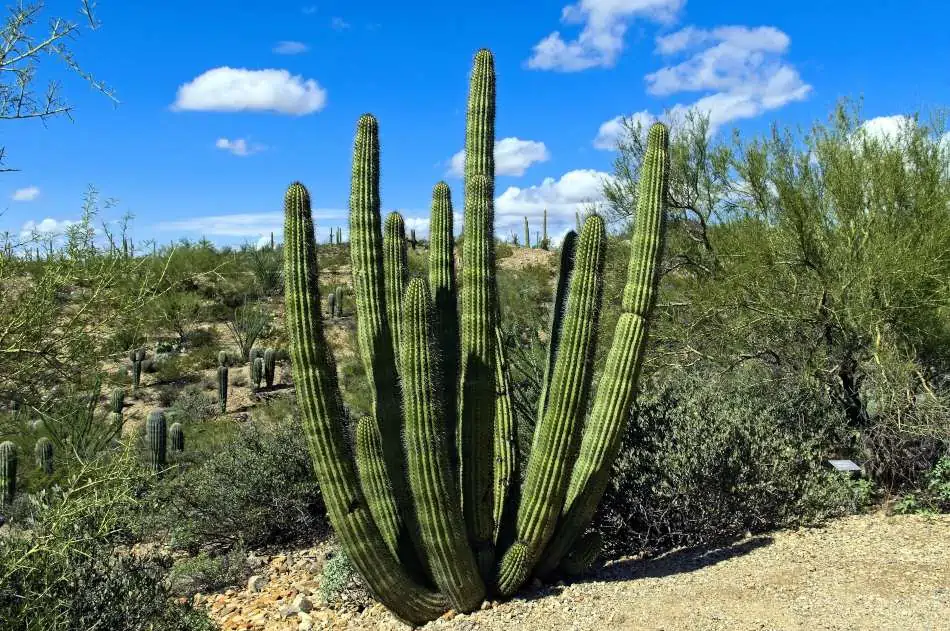
You’ll mostly find cacti of different shapes and sizes in the arid regions of the world.  Many of them come in flat, rounded or cylindrical shapes. They are also shrubby and segmented. You can also find desert cacti in columnar shapes or tree-like giants like the saguaro.

The deserts are mainly characterized by intense heat, scorching sun, high winds, and soil erosion. Cacti that survive in such conditions thrive anyway because they have devised several ways to survive. Some of their survival tactics include the ability to store water for a long time. They also grow sharp spines that prickle any animal that dares to mess with them.

The Jungle

Cacti species that survive in the jungle are usually referred to as jungle cacti. These cacti are mostly found in jungle-like environments. They can also survive in other environments and are mostly know to grow on rocks, tree trunks, or tree branches. For this reason, they’re mostly called epiphytes. They get their nutrients from rotting leaves from the crevices.

These cacti don’t look like desert cacti; hence, many people mistake them for other plants. Jungle cacti species include Disocactus, Acanthocereus, Hattiora, Epiphyllum, and more. Even though they don’t look like cacti, you might not recognize them if you don’t know cacti; you must have probably come across such plants. The most common ones are Thanksgiving, Easter, and Christmas cacti.

Unlike other cacti species, jungle cacti require more water than other cacti. However, they still need less watering than other plants. The species cannot stand the harsh climates and luck spines, unlike other cacti. If you’re to grow any of these cacti, you have to give them different care than those of other cacti species.

Mountainous Regions

Some areas around the mountains experience harsh climatic conditions, with others hardly seeing any rainfall. Also, the soil near the mountains is usually eroded and rocky. For cactus, this is the perfect place to thrive. The kinds of cactus that grow in such areas can collect water from the snow. When snow falls into the spines of these cacti, they liquefy into the water, which then falls into the roots for absorption.

You’ll mostly identify mountain cactus with their woolly spines that usually act as their protection from harsh weather like frost and strong winds. Some also come with a waxy coating to protect them from the scorching sun that can result in water loss. You’ll mostly find the mountain ball cactus in such environments.

The Tropical Climate

The tropical regions experience high moisture content with an average temperature ranging between 20 to 25 degrees centigrade. The areas also experience regular rainfall. You must be wondering how cacti grow in such regions when they’re usually associated with dry areas. Well, cactus can thrive in tropical weather as long as there are a few conditions present.

Cacti that grow in tropical conditions should be potted in clay containers.

If you want your cactus to grow in the tropical weather, ensure you plant them in clay containers. Don’t go for plastic containers as they tend to retain water for a long time, making it too humid for cactus growth. Mix the soil with loam soil or compost to provide proper nutrition for the plant. Add coarse sand and gravel to allow the roots of the plant to breathe.

Give your plants some water once a week and ensure you don’t put them under direct sunlight. Beware of pests that are common in the tropical and can kill your plants.

Coastal Regions

Some cactus species have adapted to thrive in the coastal regions of the world. These regions are also characterized by harsh weather, salty water, and alkaline salt, making it difficult for other plants to survive. These places rarely receive rain, but the cacti in the regions are adapted to the climate and can live for a long time without rain.

The cacti plants that grow near the coastal regions have distinct characteristics that enable them to thrive. They mainly depend on a stream of cold air that moves through the land in the form of a fog. The coastal cactus gets their water from absorbing the moisture in the fog, which they store as much as possible to aid their growth.

Cactus Plant Adaptations That Enable Them to Live Anywhere

Cactus plants have different adaptations that enable them to survive anywhere in the world. They can survive odd climate patterns, extreme temperatures, and little rain. Among the plants found under the sun, cacti are very capable of adapting to any environment, and that’s why they’re available almost everywhere. Here are the specialized features that enable cacti to survive anywhere.

Spines

Cacti leaves are reduced to spines to enable them to limit water loss. Their spines not only help cacti avoid water loss but also guard them against desert herbivores that might want to eat the plants or drink their stored water.

Spines enable cacti to maintain water content and protect themselves from herbivores.

The spines of cacti are made of dead cells that don’t take up water. The spines trap air around the cactus plant, which helps protect them from water loss through evaporation and transpiration. The spines also provide shade for the plant against the scorching sun. They help lower the temperatures around the plant to limit water loss.

Specialized Root System

Cacti have their roots develop in a different way from other plants to enable them to survive in different regions. Some roots are shallow and widespread to absorb water from the little rains in the desert.

Cacti have developed roots in a way that they absorb as much water as possible.

When it rains consistently, some cacti can grow tiny roots to help absorb as much water as possible so they can store it for future use. As soon as it stops raining, the roots dry up quickly to prevent water loss. The root cells of cactus plants have high salt concentrations that enable them to absorb water at a high rate.

Short Growing Seasons and Long Dormancy Periods

Many cactus plants grow only in the short rainy seasons and remain dormant in the dry months. This adaptation ensures the plant only uses water for essential processes such as photosynthesis. As a result, they don’t develop new cells or tissues, so they don’t end up using all their stored water.

Waxy Stems and Spines

The stems and spines of cacti develop a thick layer of wax to prevent as much water loss as possible. The thick layer of wax can shrink and expand at any time. This adaptation enables the cactus to retain as much water as possible. They protect the plants from heat from the sun, which can lead to evaporation.

Unique Stems

The stems of most cacti plants are well adapted for water storage. The stems come in varied shapes, which contribute to enough water storage and retention. Some are spherical, while others come in cylindrical shapes, which bring a low surface area to volume ratio. This reduces the amount of water loss in the atmosphere and reduces the effects of heat from the sun.

Some cacti stems are capable of expanding and shrinking. They expand during the rainy season to enable them to store as much water as possible. When the rains stop, and they start using their stored water, they shrink. Such a cactus includes the rounded ball cactus.

Summary

Understanding the cactus growth regions and their various adaptations are essential if you want to introduce some to your garden. This will help you know how to better care for them and the conditions you must give them to thrive. You must also know how to differentiate cactus thriving from simply growing. If the climate doesn’t favor your plants, they’ll grow and not thrive enough to gloom and adorn your garden.

Health Benefits Of Cactus Tuna Fruit

Disclaimer: The author is not a medical doctor or veterinarian. The information presented is purely to share our experience and for entertainment purposes. As always, check with a doctor and/or veterinarian before making any health or nutrition decisions and consult with a doctor and/or veterinarian regarding any question or problem that you have. The author and blog disclaim liability for any damage, mishap, or injury that may occur from engaging in any activities or ideas from this site.

Whether you want to call it the prickly glochids or the nopal, we can’t deny the fact that the tuna fruit is highly nutritious.

The fruit grows on the relatively large, flat green stems of the Opuntia cactus, mainly found in Latin America and the Caribbean. It is also popular in Mexico.

It naturally grows green before transitioning to pink or reddish-purple upon maturity. The fruit is considered a superfood thanks to its highly nutritious value.

In fact, a significant number of Mexican cuisines incorporate the native fruit in their recipes. It boasts a naturally sweet flavor and can be used in different desserts. It is generally low in sugars and calories, making it ideal for low-carb and ketogenic diets.

It is rich in phytochemicals and antioxidants, which help fight inflammation and keep your immune system quite strong.

Still not convinced to try out the tuna fruit? Read on to discover more health benefits of the fruit.

What Is Tuna Fruit

Before we dive deep into discussing the health benefits of the tuna fruit, let us first understand what we are talking about.

Tuna fruit is one of the most critical ingredients in Mexican cuisine. The fruit has lots of different names, including the cactus fruit, cactus ficus-indica, nopal, Opuntia, Barbary fig, and prickly pear.

It grows from the nopal cactus that is mainly found in hot and dry areas.  There are more than 200 different varieties of the Nopal cactus fruit. Some have pink flesh, while others have yellow or white flesh.

A Prickly Pear Cactus.
Prickly Pear cactus features edible fruits and pads that serve as healthy and nutritious additions to various dishes.

The fruit isn’t the only edible part of the nopal cactus. The softy pads known as nopales can also be eaten raw or used in a wide range of savory dishes. The fruits also serve as a healthy addition to salads, scrambled eggs, stews, lasagna, and soups.

Tuna is widely recognized in the medical community as one of the healthiest fruits. In a 2014 review featured in the Molecules Journal, the fruit is highly rich in phytochemicals with antioxidant and neuroprotective effects.

Researchers also believe that the fruit has special chemical elements that protect the human body against germs and bacteria, supports liver health, and fights inflammation.  A single serving of the fruit may lower one’s blood sugar levels by up to 48%.

How to Prepare the Tuna Fruit for Consumption

Before consuming tuna fruit, it is essential to prepare it properly. It’s best to pick one with pink or reddish-purple skin because they are the ripe ones.

Begin by cutting off the top and bottom parts of the fruit before slicing it in half lengthwise. Scoop out the seeds from both halves with a spoon and discard them.

If you’d like to get rid of the spines, slice off a thin layer from both halves and discard it. Lastly, cut the fruit into cubes and enjoy it raw or cook with your favorite recipes. You can also blend it in smoothies or make juice out of it.

Be careful with the spines since some varieties are rigid and can cause irritation. It is, therefore, wise to wear gloves while handling the tuna fruit.

Remember to wash the fruit under running water before consuming it. This will help remove any pesticide residue or dirt that may be on its surface.

What Are the Health Benefits of the Tuna Fruit?

 The tuna fruit is typically considered a superfood, thanks to the many health benefits it offers. It is nutrient-rich and has good benefits for your body. Below are some of the health benefits you get by eating tuna fruit:

1. Aids Digestion

Tuna fruits are highly fibrous and contain a significant amount of dietary fiber. Dietary fiber is a critical element in the digestive process because it adds bulk to the bowel movements making it easier to pass through the relatively smooth muscles of the digestive tract.

It is also responsible for stimulating peristaltic motion to move the bowels along the digestive tract, alleviating symptoms of constipation and diarrhea.  

The excess fiber in your body can also play a critical role in reducing the amount of cholesterol hence protecting your heart health as well.

2. Potential Role in Weight Control

The truth is that obesity is a global pandemic that needs to be managed at the earliest. You don’t have to wait until your situation worsens, forcing you to resort to extreme measures such as surgery and harmful medications.

A simple solution to obesity could be consuming a lot of food with plenty of dietary fiber. Tuna fruit not only satisfies your craving for sweet foods but also brings you closer to your weight loss goals.

A slim body of a woman.
Studies have shown that tuna fruit is an excellent supplement for those who are trying to lose some weight.

A 2015 study published in the Journal of Nutrition established that cactus fruit consumption could cause a significant reduction in body fat, blood pressure, and cholesterol levels.  The study further shows that the fruit not only promotes fat/cholesterol loss but also keeps your heart healthy.

Another study published in the BioMed Research International confirmed the beneficial effects of reduced cholesterol levels. High amounts of cholesterol and heart diseases are highly connected.

The Current Therapeutic Research Journal published conclusive results of a clinical trial that assessed the effects of cactus fruit on body weight and body mass index.

According to the researchers, the high amount of dietary fiber in the fruit binds to the dietary fat reducing its absorption, which leads to significant weight loss.

The dietary fiber also suppresses your appetite and increases satiety, making it relatively easy to cut calories and stick to a healthy diet.

3. Regulates Blood Sugar Level

Tuna fruit is highly touted for its hypoglycemic activity. It means that eating it or even its extract can lower your blood sugar levels and maintain normal blood sugar levels.

Different studies on both the anti-diabetic and diabetic rats have shown great success when tuna fruit is used to lower blood sugar levels.

A sugar and blood sugar level checker.
Tuna fruit can lower and regulate your blood sugar levels.

The regulation is usually achieved by decreasing the intestinal absorption of glucose. The fruit’s dietary fiber and pectin content aid in the process.

Once the blood sugar levels are brought back to normal, type II diabetes can be managed quite easily.

4. Improved Heart Health

Tuna fruit consists of several dietary elements that are good for overall heart health. The levels of dietary fiber in the fruit play a critical role in lowering the levels of “bad cholesterol” in your body.

It contains sufficient amounts of potassium that can lower blood pressure by decreasing the stress on your cardiovascular system hence relaxing the blood vessels.

The fruit also contains betalains that help strengthen the endothelial walls of blood vessels, decreasing the weakening or damage to the entire system.

Lowering the blood pressure, reducing cholesterol, and strengthening blood vessels help prevent strokes, coronary heart disease, and atherosclerosis.

5. Protects Against Inflammation

This fruit is also highly valued for its anti-inflammatory properties. Keep in mind that chronic inflammation is a major contributing factor to Crohn’s disease, arthritis, diabetes, allergies, and heart disease.

It also contributes to fatigue, depression, recurrent infections, and chronic pain. Although there is a treatment for chronic inflammation, most drugs have severe side effects that may still affect your health in the long run.

Therefore, before you pop those pills in the hope they will heal your chronic inflammation, consider changing your diet. Replacing your daily snacks with tuna fruit is a good start.

A female in pain.
These nutrients are responsible for improving your body immunity and offsetting the harmful effects of inflammation.

In a 2018 study published in the Food & Nutrition Research Journal, cactus fruit may help reduce inflammation.

In one of the studies, individuals who consumed tuna fruit at least twice per day reported experiencing a major reduction in their inflammation. Their antioxidant levels also reduced dramatically.

Scientists attributed the results to the antioxidants and vitamins that occur naturally in tuna fruit. Kaempferol, beta-carotene, and betanin are some of the antioxidants found in cactus fruits.

These nutrients are responsible for improving your body immunity, offsetting the harmful effects of inflammation, and boosting your antioxidant intake.

6. Helps to Build Strong Bones and Teeth

Calcium is an essential part of the human diet, and tuna fruit contains a significant amount of the nutrient in every serving.

Calcium plays a critical role in the creation of bone tissue. In fact, 99% of all the calcium in the human body is found in bones and teeth.

By ensuring you have sufficient calcium intake from your daily diet, you can avoid experiencing a wide range of dental issues and age-related bone disorders such as osteoporosis.

7. Gets Rid of Hangover

Are you wondering how you can recover from a hangover? Reach out for a cup of tuna fruit juice and wait for the results.

The juice is widely regarded as a safe and natural remedy for dizziness, dry mouth, headaches, and a wide range of other hangover symptoms. In fact, tuna fruit juice is one of the few hangover relievers backed by science.

A person in pain.
Tuna fruit is a natural remedy for dizziness, headache, and other hangover symptoms.

While tuna fruit juice doesn’t cure hangover symptoms, it can reduce their severity and make you feel much better. It contains essential nutrients that lower inflammatory markers in your bloodstream, which helps alleviate the side effects of alcohol consumption.

Therefore, if you plan a night out and fancy consuming alcohol while avoiding the hangover that comes with it, drink a glass or two of tuna fruit juice before you step out.

The glass of juice will help you cut the risk of a severe hangover by almost half. However, you need to keep in mind that alcohol consumption is generally unhealthy. Therefore, if you drink, make sure you drink responsibly.

8. Improves Sleep

Lastly, tuna fruit can also help you sleep better. The cactus fruit contains magnesium, an essential mineral that stimulates sleep feelings for individuals suffering from insomnia, restlessness, or long-lasting anxiety.

The fruit stimulates the release of serotonin, resulting in increased levels of melatonin levels. It also provides a sedative effect decreasing nerve function and calming your body.

A combination of all these factors helps you to fall asleep.

9. Glowing Skin and Shiny

Eating tuna fruit has a way of making your skin glow and look healthy. The fruit contains essential vitamins and minerals such as vitamins A, E, and C, which are necessary for healthy skin.

It also contains antioxidants that help eliminate free radicals from the body and protect your skin from damage.

The abundant presence of fatty acids like linoleic acid helps to keep your skin hydrated and soft, making it look younger and healthier. Moreover, the fruit contains vitamins B1 and B2 that aids in cell renewal and growth.

Tuna fruit also helps to fight skin inflammation due to its anti-inflammatory properties. It is an excellent remedy for people suffering from eczema or dermatitis as it reduces redness and irritation. The presence of zinc and copper minerals adds an extra shine to your skin.

10.Promotes Good Liver Health

Tuna and prickly pear fruits are historically used to treat liver problems, and some modern studies have backed up the traditional wisdom.

A 2018 study published in the Journal of Molecular Medicine Reports tested the effects of tuna fruit on liver health.

The researchers found that consuming tuna fruit helped reduce oxidative stress and improve liver function, especially for people with non-alcoholic fatty liver diseases (NAFLD).

It also helps to reduce triglyceride levels and liver inflammation. Thus, a regular tuna fruit intake can help keep your liver healthy and functioning optimally.

Final Thought

So, have you had a chance to try the tuna fruit or its juice? Have you eaten one of those delicious Mexican dishes prepared with tuna fruit as one of the ingredients? Were they tasty? Did you love eating them?

How To Know If Your Cactus Will Flower

Many people love to grow cacti in their homes, but if you want yours to flower, it can be a tricky process. The first thing you need to do is find out what type of cactus it is. There are over 2,000 different types of cacti and the flowering requirements vary with each one. It will take a keen eye to not only answer the question of what type of cactus it is but also determine if it will fower.

So, how do you know if your cactus will flower? The best way to know if your cactus will flower is to read the label. Most labels include a flowering time, which indicates when you should expect it to produce flowers.  If there is no information on the label and you’re not sure when your cactus will flower, it’s best to wait until the plant has been at least two years old before giving up hope.

This article will be looking at the best ways to make sure your cactus will flower. It will also look at steps to make you cactus flower.

How to make a cactus flower

Once you know which type your plant is, there are several ways to get it blooming again:

#1 – If your plant has not flowered for many years and the leaves have been dying off gradually over time then this may indicate that it needs more water than usual.

#2 – If your plant has flowered before then try moving pots around or changing its light exposure level, this might reactivate the plant’s natural response to produce blooms. Additionally, the plant can be given supplemental lighting to encourage blooming.

To make a cactus flower, water the plant more often, change its light exposure level, or use a new soil mix.

If none of those things work then you may need to try repotting the cactus in a new soil mix that is better suited for flowering plants (such as Cacti & Succulents). Make sure not to water your plant too much, and keep it in a dark place for about two weeks.

Alternative ways to determine if your cactus will flower

Other ways to determine if your cactus is a flowering cactusar is to look for a flower-like bud on the cactus and wait until it opens. Here, you will need patience, as it can take a few years for the plant to flower.

A cactus will usually start flowering when it is healthy and happy, not stressed out by too much water or light exposure. If your cactus has flowered before then try moving pots around or changing its light exposure level, this might reactivate the plant’s natural tendency to flower.

To determine the reason why your cactus is not producing any flowers, you should carefully observe and examine the plant.

It can also be determined by looking at the plant’s terminal spine or central rib — this sometimes has a white/pinkish coloration which may indicate that your plant will bloom soon! Once this is noted, you can start giving the plant appropriate care.

If you are still not sure, try to gauge the plant’s age. If it is between two and four years old, then there should be a good chance that you will see its first flower in the next year or so. However, if it is older than four years, then you should not expect to see any flowers for at least another year.

Also look for any signs of flowering on other plants from the same cacti species (this may help indicate if your own cactus will bloom in the future). By studying similar species of cacti, it is possible to get an idea of when they will flower.

My cactus is not flowering, what next?

There are several types of flowering cactii, which can be classified in a number of ways.

If the cactus is not blooming and you cannot tell why, then consult with a professional to determine if there may be an issue that needs addressing. There are many reasons for this lack of flowering: it could be due to insufficient light or water; diseases such as rot or rust; pests such as insects, mites or fungus.

Each of these can be dealt with by a professional in the appropriate manner. For example, if there is an issue due to insufficient light then you may need to change the location it sits in order for blooming to take place. If your cactus has been flowering and now doesn’t then again, consult a professional to determine the cause.

Insufficient light and water, rot, rust, and pest infestation are some of the common reasons why your cactus is not flowering.

However, there are cactus species that do not flower naturally and will only do so when they are pruned back. For example, the Mammillaria species of cactus is one that does not naturally flower and needs to be trimmed down in order for flowers to come out from its body. The plant may also need some protection from frost or other weather conditions if it resides outdoors near such an area.

Why do flowers matter in cactus?

Cactus flowers are important because they allow the plant to reproduce which is essential for its survival. The more cacti there are in existence, the less likely it will become endangered or extinct due to a lack of number in population size.

Additionally, different types of cactus species produce flowers with different colors and sizes that vary from just a few inches to over six feet in height.Flowers will come in various shapes like balls or columns that could be as wide as a foot or as tall as five inches.

Varieties of Flowers:

-Flower Colors are usually shades of cream, yellow, red, pink and purple

-Some flowers can have an onion shape or a sharp columnar appearance that shoot up high into the air

-Other plants will have stems with long spines on them

What does a cactus flower look like?

-Some have long spines while others are small, round balls

-Most flowering plants will grow out of the top or side of the plant but for some types it can actually be on one of their sides. For example, prickly pear blossoms are on the side of their stem

-The flowers will usually be a different color than the plant itself, while other plants can have both colors. For example, saguaro cactus has pink and white petals with green leaves

-Some flowers will be small and come in clusters while other plants have a single flower on them. Common cactus species with clustered flowers include prickly pear, hedgehog and organ pipe

-The flower will have petals that allow the flowers to open up while some types of cacti are more like a closed ball when they bloom. Common cactus with this tendency include a barrel, hedgehog and candelabra.

While some cactus species produce small and clustered flowers, others feature relatively single but large blooms.

-You can also look at the cacti’s flowers to see if they are open or closed when trying to determine how well it will flower

-The best way to know is by looking for buds on your plant before any sign of a bloom has appeared. If you have no buds, it’s unlikely that your cactus will bloom.

-Keep in mind that a lot of factors can contribute to the plant blooming including region and light exposure

-Cacti are very sensitive plants so they may not flower if you don’t care for them properly or provide enough water. You should also note things like temperature changes and the time of year.

-If your cactus is a type that blooms easily, like a barrel or hedgehog, then you can get an idea about whether it will bloom by looking at its flowering season

-Another way to tell if your plant will flower is to look for specific types of flowers and buds on the plants themselves.

-It is possible for a cactus to grow without blooming, which means that it might be able to flower in the future. In such cases, it is best to keep the plant healthy so that its chances of blooming are increased.

-The most simple way to find out if your cactus will flower is to wait until it does, and there’s no guarantee that waiting for flowering means you’ll get flowers

-Before planting a new cactus, take care in choosing one that will be easy to care for and is at the appropriate level of difficulty.

-If you’ve had your plant for a long time (more than one year), then it’s worth discussing with someone who has more knowledge about plants, such as an expert in cactus botany. This way, you will be able to know if your plant needs any special care in order to increase the chances of it flowering.

It is important to know whether or not your cactus plant will flower in order for you to take care of it properly. There are three ways that one can find out if their cactus will bloom- waiting until the moment occurs, maintaining a healthy lifestyle for the plant and doing some research beforehand before planting a new one. If you are interested in knowing whether or not your cactus will bloom, then you should do some research beforehand before planting a new one. If you’ve had your plant for more than six months and it is thriving, has no diseases and receives the appropriate amount of care, then there’s a good chance that it will flower soon!