How to Save and Repair a Broken Cactus: Step-by-Step Guide

Introduction

Cacti are hardy plants, but their stems can still snap or break under certain conditions. Common reasons for a broken cactus include accidental falls or knocks, pest or animal damage (e.g. a curious pet or wildlife nibbling on the plant), improper handling (grabbing or moving the cactus without supporting its weight), and environmental factors like strong winds or rapid temperature changes. When a cactus breaks, acting quickly is crucial. An open wound on a cactus can invite infection and rot, so prompt care helps the plant heal before decay sets in​.

In this guide, we’ll explain how to fix a broken cactus step by step – from assessing the damage to repairing the cactus and ensuring it makes a full recovery.

Step-by-Step Repair Process

Assessing the Damage

Before you begin repairing, examine how your cactus broke. Determine if the broken part is still partially attached or completely detached:

  • Partially attached: If a branch or segment is bent or cracked but not fully severed, you might be able to brace it in place to heal. In this case, proceed with the reattachment steps below.
  • Completely detached: If a piece of the cactus has broken off entirely, you’ll need to decide whether to graft it back onto the original plant or propagate it as a new plant. Factors to consider include the size and importance of the broken piece and the condition of the break. Very large or important pieces can sometimes be grafted back, whereas small pads or segments often do better being potted up as cuttings.

If the broken piece is mushy or rotten at the break, skip to the rot treatment steps – a rotting piece should not be reattached (see the FAQ on rot and our guide on How to Save a Rotting Cactus). Otherwise, if the pieces are firm and healthy, you can attempt a repair. Always wear thick gloves or use tongs when handling broken cactus pieces to protect yourself from spines.

Tip: If the break happened recently and the wound is still fresh (moist), you have a better chance of a successful reattachment. If the broken ends have already dried and callused over, you may need to trim them slightly (as explained below) before rejoining or propagating.
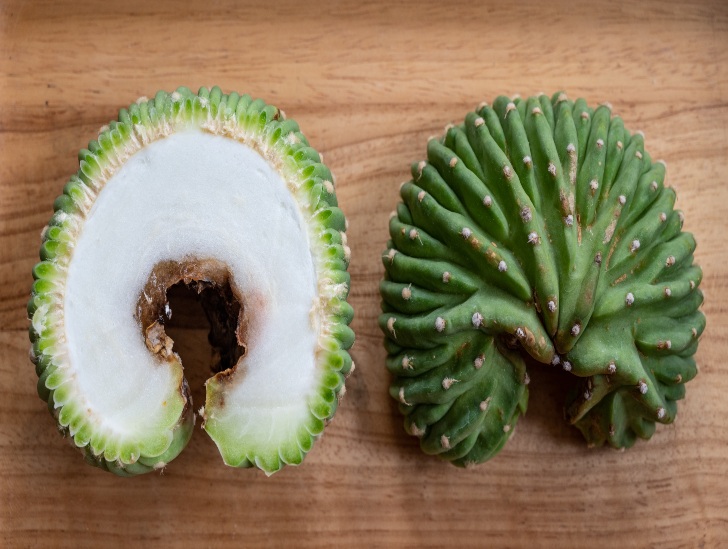
A cactus that has broken into two pieces can often be saved with the right techniques. In the photo above, the top of the cactus has completely broken off, but both the base and the broken piece can still recover. Quick intervention will help prevent rot and give your cactus the best chance to heal.

Reattaching Broken Parts (Grafting the Cactus Back Together)

If you want to repair the cactus by reattaching the broken part, essentially you will be grafting the pieces back into one plant. This works best for a clean break on a larger cactus where you want to preserve its original shape. Here are the steps to reattach:

  1. Prepare the broken surfaces: Examine the break on both the main plant and the broken piece. If the wound surfaces are jagged or have started drying out, use a sterilized sharp knife to cut a thin slice off each broken end​. Removing a thin “pickle slice” of tissue will create clean, flat surfaces of fresh flesh on both pieces​. This step is important because a flat, clean cut on each side will allow the pieces to fuse more easily and removes any dried or damaged tissue. (Remember to sterilize your knife with rubbing alcohol before cutting to prevent introducing bacteria.)
  2. Let the cut ends dry briefly: After trimming, allow the cut surfaces to dry and callus slightly. This might mean leaving both pieces in a dry, shaded location for a few hours up to a day. The cut should not be sopping wet when you join the pieces, but also not so dry that it’s hardened completely. You want the surfaces to be tacky dry – this helps prevent rot but still allows connection.
  3. Reattach and align the pieces: Carefully place the broken piece back onto the main cactus exactly how it was oriented before. Align the cactus so that the vascular rings (the circle of tissue visible in the cross-section) match up as much as possible on both the base and the top piece. This ring is where the cactus transports water and nutrients, and aligning it helps the graft heal. Gently press the pieces together. They will not fuse immediately, so you’ll need to secure them (next step).
  4. Secure the cactus in place: Use soft string, twine, or even rubber bands to hold the broken piece onto the base. Wrap the string around the cactus gently but firmly, avoiding the sharp spines​. Wind the string in a crisscross fashion over the break, going around the cactus and crossing over the top of the graft point and under the pot to anchor if needed. Aim to cover about an inch above and below the break with the wraps. The string acts like a bandage and a splint, keeping the pieces tightly together while they heal. Make sure it’s snug enough to support the cactus but not so tight that it cuts into the flesh. If the cactus is large or the broken arm is heavy, you may also use a stake or stick for extra support — place a stake alongside the cactus and tie the cactus to the stake so it doesn’t wobble. This external support will prevent the repair from shifting.

Once the cactus piece is tied in place, avoid moving or disturbing the plant.

  1. Let it heal: After securing the graft, place the cactus in a location out of direct harsh sunlight (bright indirect light is ideal) and where it won’t be bumped. Do not water the cactus immediately after reattaching – excess moisture at the break can invite rot. It’s best to wait at least a week before the first light watering. In the meantime, the cut surfaces will begin to knit together. Over several weeks, the top piece may start to regain firmness as it reconnects with the base. Monitor for any signs of rot at the graft (such as foul smell or oozing); if you see these, you’ll need to take the pieces apart and let them dry out (see FAQs below). Otherwise, be patient. Cacti heal slowly, and it may be a couple of months before you see new growth or the piece fully fuses.
  2. Remove the support: Leave the string (and stake, if used) in place for at least a few months. Eventually, you might notice the cactus pushing outward against the string or even new growth forming. At that point, you can carefully remove the string to avoid it cutting into the cactus’s flesh​. If the pieces feel firmly attached, the graft was successful. (If not, leave it supported longer.) Some scarring may remain at the break, but over time the cactus can grow and hide the scar.

Propagating a Broken Cactus Segment (Creating a New Plant)

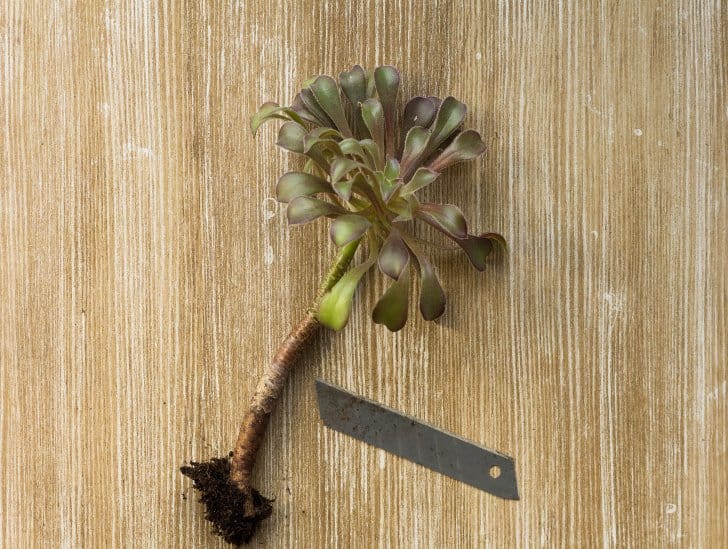
If reattaching isn’t feasible or you’d prefer to grow a new cactus from the broken piece, you can propagate it. Propagating a broken cactus segment essentially means treating the broken piece as a cutting and rooting it in soil. Many cacti can reproduce this way, and it’s often the best option for pads (like prickly pears or Christmas cactus segments) or when the break is too jagged to graft. Follow these steps:

  1. Trim and clean the broken piece: If the break was uneven, use a sterilized knife to cut the bottom of the broken piece so that it has a clean, flat base. Remove any small decayed bits if present. You want a healthy green surface that will form a callus. (If the piece already has a clean break, you may not need to cut it further – just ensure there are no ragged edges.)
  2. Let the cut end callus (dry out): This step is critical for propagation. Place the broken piece in a dry, warm, shaded area (out of direct sun) and let the cut end air-dry for several days. Typically, 2-7 days is enough for a callus to form, depending on the size of the cutting (larger, thicker cacti might require up to a week or more). The cut end will toughen and seal over – it might turn whitish or light brown and feel dry to the touch. This callus tissue protects the cutting from rot when it’s planted​. (Do not pot the cactus or water it during this time!)
  3. Prepare a pot with suitable soil: Choose a pot that’s just a bit larger than the cactus piece (with a drainage hole) and fill it with a well-draining cactus mix. An ideal mix is one formulated for succulents/cacti or a DIY mix of regular potting soil with plenty of perlite or coarse sand mixed in. The soil should be dry. For extra insurance, you can even place a layer of coarse sand or grit on the top where the cutting will sit – this keeps the base of the cutting dry. (Tip: Using a terra cotta pot can help absorb excess moisture, but any pot with good drainage will work.)
  4. Plant the callused cutting: Take the callused cactus piece and place it on the soil in the new pot. Set the dried end slightly into the soil — just enough so the piece can stand upright or is in good contact with the soil. Do not bury it deeply; usually planting the base an inch or two into the soil is sufficient, or even just resting it on top of the soil for flat pads. You may prop the cutting with small rocks or stakes to keep it upright if needed. The idea is to have the cut end touching the soil so it can start sending out roots. (For very large, heavy cactus sections, you might plant a bit deeper (several inches) so it stands on its own​ifixit.com, but avoid burying too much of the green part.)
  5. Initial watering (or lack thereof): Do not water immediately after planting the cutting. The soil should remain dry for about a week to further ensure the cut end heals. After that, you can start lightly watering to encourage rooting. The safest approach is to mist the top of the soil occasionally rather than soaking it​ifixit.com. After about 4-5 days of being in the dry soil, give the soil a light watering or mist – just enough to introduce a bit of moisture but not so much that the cutting’s base sits in water. Over the next few weeks, continue to sparingly water the soil (e.g. a small sprinkle once a week or when the soil is completely dry). Too much water too soon can cause the cutting to rot before it grows roots, so err on the side of underwatering. The cutting has stored moisture in its tissues and can survive on that for a while.
A person watering the plant in the terrarium.
  1. Provide warmth and light: Place the potted cutting in a warm environment with bright but indirect light. Avoid intense direct sun until it has roots (since without roots the cactus can’t take up much water to cool itself, and it could desiccate or sunburn). A spot near a window with filtered sunlight or a bright shade outdoors is ideal. Warm temperatures (70–85°F / 21–29°C if possible) will help speed up root development. Cacti generally root faster in the growing season (spring/summer) than in winter.
  2. Wait for roots to form: Rooting a cactus cutting takes time, so be patient. It may take a few weeks to a couple of months for roots to establish, depending on the cactus species and conditions. You can check for root development by gently tugging on the cutting after a few weeks. If it feels anchored or resists being pulled up, roots have likely formed​. Another sign of success is seeing new growth (such as tiny buds, offsets, or the tip of the cactus starting to grow). Do not tug too hard and don’t disturb a cutting that is starting to root; this is just a gentle check. Once you know it’s rooting, continue a careful watering routine (water deeply but infrequently, always letting soil dry out in between). Over time, the cutting will begin to behave like a normal cactus, and you can gradually give it more light if it’s a sun-loving variety.
  3. Care for the original plant: Don’t forget the original cactus (the part that was left in the pot after the break). If you had to trim its broken end, that stub should also be allowed to dry and callus. Keep it dry for a week or so. In many cases, the original base will heal over and might produce new growth (pups) around the cut in a few months​. Resume normal light watering for the base plant after a week or two, being careful not to soak the broken top. With time, you may see baby cactus shoots emerging from where it broke, especially if it’s a species that readily pups. This way, you could end up with two plants: the original sprouting a new branch, and the rooted cutting growing on its own.

Aftercare for a Repaired Cactus

Whether you reattached the broken piece or propagated it, proper aftercare is crucial to help the cactus recover fully. Here are some aftercare tips for your repaired cactus:

  • Watering: Cacti are prone to rot if overwatered, especially when they have fresh wounds. After a repair, hold off on heavy watering. For a grafted/reattached cactus, wait about 1–2 weeks before the first light watering. Then water sparingly for the next few months. For a propagated cutting, as mentioned, only mist or lightly water until strong roots have formed. Always let the soil dry out completely between waterings. It’s better to under-water than over-water at this stage. Too much moisture is the enemy of a healing cactus – remember that. Once the cactus shows new growth and is stable, you can gradually increase watering to a normal schedule (which for most cacti is infrequent, e.g. every 2-4 weeks depending on climate and season).
  • Soil and Pot: Ensure the cactus is in well-draining soil. If you repaired it in the same pot, make sure the soil isn’t waterlogged. If you rooted a cutting, use a cactus/succulent potting mix with extra perlite or sand. Good drainage prevents rot by keeping the roots and cut base from sitting in water​. The pot should have drainage holes, and it’s often best to use a pot that’s proportionate to the cactus’s size. An oversized pot holds excess soil and water, which can lead to rot. Also, consider the pot’s weight and stability – a heavy clay pot or one with a wide base can help prevent tall cacti from tipping over easily in the future.
  • Light: After a break and repair, cacti benefit from bright light but not extreme heat or direct sun until they’re healed. Too much direct sunlight can stress a recently broken cactus (especially a cutting without roots) and cause it to desiccate or scorch. Place the cactus in a location with bright, indirect light or gentle morning sun and afternoon shade. As it recovers over the following weeks, you can gradually increase sun exposure according to its species’ needs. A healthy cactus needs plenty of light to grow strong stems (to avoid weak, etiolated growth that can break again​), but ease it back into full sun if it was used to it, so you don’t shock it while it’s vulnerable.
  • Temperature: Keep the cactus in a warm environment while it heals. Ideally, keep it in a range of around 65–85°F (18–29°C). Avoid exposing a recovering cactus to cold drafts or freezing temperatures. Cold, damp conditions especially should be avoided, as they can invite rot. If the cactus was outdoors and it broke due to a storm or wind, consider moving it to a sheltered spot until it’s stronger.
  • Monitor for growth and problems: Over the next several weeks to months, watch your cactus for signs of successful healing. For reattached parts, check that the top part remains firm and green. Eventually, you may see new spines or buds forming, which is a great sign. For propagated cuttings, look for new buds or leaves (in the case of leafy cactus like Christmas cactus) and check that the cutting isn’t shriveling significantly (a slight wrinkle is normal, but it should not turn yellow or mushy). Callus formation at the break should be dry and hard; if you see any soft, brown, or black areas, that could indicate rot. Also, after some time, gently feel the base of the cutting for any resistance (indicating root growth).
  • Be patient: Cacti are slow growers. It may take several months for a broken cactus to fully recover and even longer to regain its original height or fill in new growth​. As long as the cactus remains free of rot and is getting a bit of light water and good light, it’s likely working on rooting or healing internally even if you don’t see much happening on the surface. Patience is key. Sudden changes (like overwatering out of impatience) can do more harm than good.

By following these aftercare steps, you greatly increase the chances that your repaired cactus will survive and thrive. Once you notice robust new growth, you can consider the cactus healed. At that point, you can return to a normal care routine. For general cactus care tips (watering, fertilizing, etc.), check out our guide on Cactus Care: 11 Essential Tips for Beginners for more advice on keeping your cactus healthy.

Preventative Measures

After you’ve saved your cactus, you’ll want to prevent future breaks. Here are some preventative measures and tips to keep your cactus from breaking again:

  • Use an appropriate pot: A top-heavy cactus in a small or lightweight pot is an accident waiting to happen. Make sure your cactus is potted in a sturdy container that gives it stability. A wider, heavier pot (like ceramic or clay) can help prevent tipping. Also ensure the cactus is planted deep enough so it’s well-anchored by its roots. If your cactus has grown and now seems too large for its pot, consider repotting into a slightly larger pot that can better support it (especially if it has become very tall or off-balance).
  • Stake or support tall cacti: For very tall or columnar cacti, or those with multiple arms, it’s wise to provide support before a break happens. You can insert a cactus stake or a wooden stick into the pot and loosely tie the cactus to it for stability​. Use soft bands or garden tape that won’t damage the cactus skin. There are also special cactus supports (like metal plant rings or stakes) available. A gentle support will keep a cactus upright during strong winds or if it gets brushed, reducing the risk of it snapping under its own weight. This is especially important for cacti that have experienced rapid growth or those with thinner, weaker stems.
  • Handle with care: Many breaks happen when moving or handling a cactus. Always handle your cactus carefully. Wear protective gloves and consider wrapping the cactus with layers of newspaper or an old towel when you need to lift or repot it (this protects both you and the plant). Support the base of the cactus while moving it; never grab a cactus by an arm or top-heavy section without supporting the bottom, as this can cause it to shear off. If you need to transport a large cactus, secure it so it won’t tip or roll in transit.
  • Proper light and feeding: Believe it or not, the way you care for your cactus can influence how breakable it is. A cactus grown in low light may become etiolated (stretched out and thin), which creates weaker tissues that break more easily​. Give your cactus adequate sunlight for sturdy growth (according to its species’ needs). Also, avoid over-fertilizing or overwatering, which can make a cactus grow too quickly and become physically weaker or unstable. Overwatering in particular can lead to root rot or an oversized, water-heavy stem that can collapse under its own weight​. Keep a balanced care routine to encourage strong, healthy cactus structure.
  • Pest and disease control: Regularly inspect your cactus for pests like mealybugs or fungus that could weaken the cactus tissues. Insect infestations can cause sections of the cactus to decay or become brittle. If you notice any unusual spotting, oozing, or small insects, treat the issue promptly. A healthy cactus is more resilient and less likely to suffer structural damage.
  • Reinforce weak points: If your cactus has a known weak spot (for example, a previous injury or a narrow junction between segments), keep an eye on it. You can preemptively reinforce such an area by tying a soft cloth or nylon around it (not tight, just for support), or by bracing the cactus near that point with a stake. This is similar to how you might support a branch of a fruit tree that’s heavy with fruit – giving it a little extra support to prevent breakage.
  • Safe placement: Lastly, consider where your cactus lives. If it’s in a high-traffic area where people or pets often bump into it, you might want to move it to a safer spot to avoid accidents. Likewise, keep indoor cacti away from edges of shelves or sills where they might get knocked over. Outdoors, place tall cacti in areas less exposed to extreme wind, or use windbreaks for protection.

By implementing these preventative measures, you can significantly reduce the chances of facing another broken cactus. Protecting your cactus’ physical stability and overall health goes a long way in keeping it intact. Remember, it’s easier to prevent breaks than to fix them, so taking a little care in how you situate and tend your cactus will pay off in the long run.

FAQs

Can a cactus heal itself if broken?

Answer: It depends on what you mean by “heal itself.” A cactus won’t magically reattach a completely broken-off piece on its own – if the top of your cactus snapped off, it’s not going to fuse back without intervention. The broken surfaces will simply dry out and seal (callus) to prevent losing moisture. However, this doesn’t mean the cactus is doomed! The base of the cactus (the part still in the pot) can heal over and often sprout new growth (such as new stems or “pups”) after some time. And the broken-off piece itself can potentially grow into a new cactus if you plant it properly. Cacti are remarkably resilient: you can take a piece that’s broken off and replant it to root into a new plant​.

In nature, many cacti pads or segments that fall to the ground will root themselves. So while a cactus won’t rejoin its broken limb alone, both parts can heal in their own way – the mother plant might branch out and the detached piece can become a whole new cactus. Just be sure to help the process along by following the steps above (callusing and potting the piece, or grafting it back onto the original cactus if you choose that route​).

How long does it take for a broken cactus to recover?

Answer: Repairing cactus stems is a game of patience. You will likely see the initial healing (callus formation) within a week or two. If you reattached a part, the joining tissue might start to knit in a few weeks, and a propagated cutting may start growing tiny roots in a few weeks as well. However, noticeable new growth (like new buds or the cactus starting to plump up and grow) can take anywhere from 4-6 weeks to a few months

Cacti grow slowly, and when they’ve been injured, they often focus on healing internally before putting out new outward growth. To fully “recover” to the point where the cactus looks as it did before the break (for example, regaining similar size or filling in a scar), could easily take several months to a year​

Don’t be alarmed if your cactus seems to be in stasis for a long time after the injury – as long as it isn’t rotting and is gradually getting a little sun and water, it’s likely healing beneath the surface. Once you see new green growth or new spines, that’s your sign that the cactus is on the road to recovery. From there, normal growth resumes (still at the cactus’s natural slow pace). So, in short: a broken cactus can take a few months to truly recover, and you’ll need to give it consistent gentle care during that period.

What if my cactus turns brown or mushy after breaking?

Answer: If your cactus tissue is turning brown, black, or mushy at the break site (or anywhere on the plant), that’s a sign of rot setting in. Unfortunately, rot can spread rapidly and a cactus cannot heal from rot by itself. You’ll need to take immediate action to save your plant. Act fast: remove the rotted portion before it spreads. Using a clean, sharp knife, cut away all the mushy or discolored tissue from the cactus​. Cut a bit into the healthy flesh if needed, until you see only firm, green (or white-ish internal) tissue on the remaining cactus. Essentially, you are performing surgery to amputate the rot. If the rot was in the middle of the cactus, this might mean cutting the cactus in two – and you might end up with a top part that is now a separate cutting (which you can try to save by callusing and replanting) and a bottom part that hopefully can recover. After cutting, let the healthy cut ends dry and callus for several days. It’s often helpful to dust the cut surfaces with a fungicidal powder or even simple powdered cinnamon (which has natural anti-fungal properties) to ward off infection while it heals. Once callused, you can pot the salvaged pieces in fresh dry soil and begin the propagation process as described above. Be sure to disinfect your knife between cuts – you don’t want to accidentally spread the rot organisms. Also, discard the infected tissue far away from your other plants. Going forward, carefully monitor the remaining cactus for any further signs of rot. Keep it in a dry, airy environment as it heals. Rot is basically an infection, and the only cure is to cut it out completely​. If the rot was caught early and removed, your cactus stands a good chance of survival. (For a full guide on dealing with cactus rot, including illustrations of what healthy vs. rotted tissue looks like, see our article on How to Save a Rotting Cactus.)


By following this guide, even beginners can confidently tackle the challenge of a broken cactus. Remember: quick action, proper technique (reattaching or propagating as needed), and patience in aftercare are the keys to repairing a cactus stem successfully. With time, your cactus should bounce back from its injury, and you’ll barely be able to tell it was ever broken! Good luck, and happy cactus caregiving.
Desert Plant Adaptations: How Desert Plants Survive Extreme Drought

Introduction

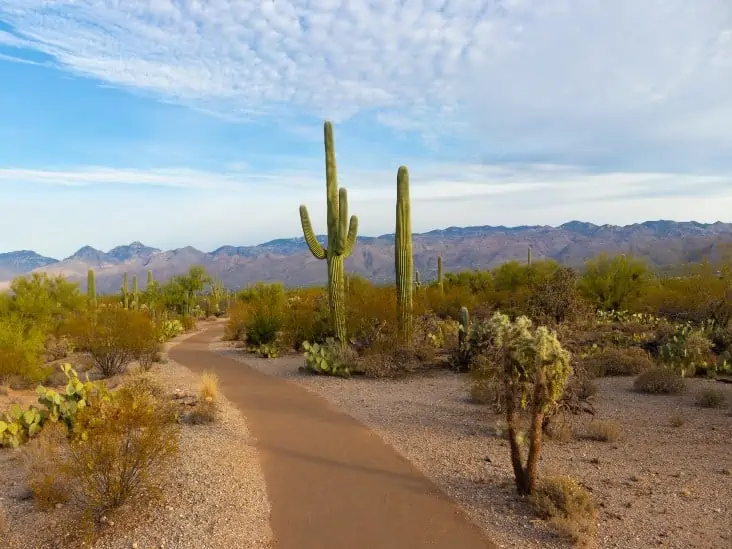
Ever wondered how a cactus can live for months under the scorching sun without a drop of rain? Desert plants survive and even thrive in some of the harshest environments on Earth thanks to remarkable adaptations. In this article, we’ll explore desert plant adaptations – the clever strategies and features that enable plants to endure extreme heat, intense sunlight, and very little water. You’ll learn how desert plants survive prolonged droughts by storing water, minimizing water loss, growing special roots, and timing their life cycles to make the most of rare rains. By the end, you’ll have a deep understanding of plant adaptations in deserts and why they’re so important for life in these arid regions.

What to Expect: We’ll start by looking at the challenges of the desert climate. Then, we’ll dive into the key adaptation strategies desert plants use: succulence (water storage), drought tolerance (withstanding dry periods), and drought avoidance (escaping dry seasons entirely). Along the way, we’ll discuss examples of cacti, shrubs, and wildflowers with unique survival mechanisms, bust some common myths, and answer frequently asked questions. Let’s uncover the secrets of how desert plants beat the heat and drought!

The Challenges of Desert Climates

Deserts are defined by their dryness. In general, a desert is an area that receives less than about 10 inches (250 mm) of precipitation per year

Rainfall is infrequent and unpredictable, often coming in short bursts separated by long rainless stretches. On top of that, high temperatures, intense sunlight, and strong winds lead to rapid evaporation, so any moisture in the soil doesn’t last long. The result is a climate where water is extremely scarce most of the time.

Such arid conditions create multiple challenges for plants:

  • Water scarcity: Obviously, the biggest challenge is the lack of water. Plants need water for photosynthesis and cooling (via transpiration). In deserts, they must survive on meager rainfall and conserve every drop.
  • Extreme heat: Daytime temperatures in hot deserts routinely soar above 100°F (38°C). High heat can dry out plant tissues and soil quickly. Plants must avoid overheating and excessive water loss.
  • Intense sunlight: With few clouds, deserts get a lot of sun. The sunlight is so strong it can damage plant tissues (UV exposure) and heat them up, increasing evaporation.
  • Cold nights: Surprisingly, deserts can get very cold at night (and cold deserts have frigid winters). Plants may face not only heat by day but cold stress at night, needing adaptations for a wide temperature range.
  • Poor soils: Desert soils are often sandy or rocky with low organic matter, meaning they hold little water and nutrients. Some desert soils are also high in salt, which can be another stress on plants.

In short, desert plants live in an environment that would quickly kill most regular plants. They survive by adaptingthrough specialized structures, behaviors, and life cycle strategies that tackle these challenges head-on​

Let’s examine the main categories of desert plant adaptations.

Overview of Desert Plant Adaptation Strategies

Desert plants have evolved an array of strategies to cope with drought. Most of their adaptations fall into three broad categories: succulence, drought tolerance, and drought avoidance

Think of these as three different game plans for dealing with water scarcity:

  • SucculenceStore water when it’s available and use it slowly. Succulent plants (like cacti and aloes) have fleshy tissues that hold water, giving them a reserve to survive dry spells.
  • Drought ToleranceWithstand drying out. These plants can tolerate significant dehydration or go dormant during drought. They often have features to reduce water loss (like dropping leaves) and deep roots to find any available moisture.
  • Drought AvoidanceEscape the drought. These are often short-lived plants (annual wildflowers) that avoid dry periods altogether. They germinate, grow, and reproduce only during the rare wet periods, then persist as seeds when conditions turn harsh.

Many desert plants use a combination of these strategies. For example, a cactus is succulent (stores water) but also highly drought-tolerant (it can survive losing a lot of water and essentially “pause” during extreme drought). A creosote bush has some succulence in its tissues, is very drought-tolerant (dropping leaves, enduring dehydration), and can live a long time through cycles of rain and drought. In the sections below, we’ll explore each strategy in detail and highlight the fascinating adaptations that make them possible.

Succulence: Storing Water for the Dry Times

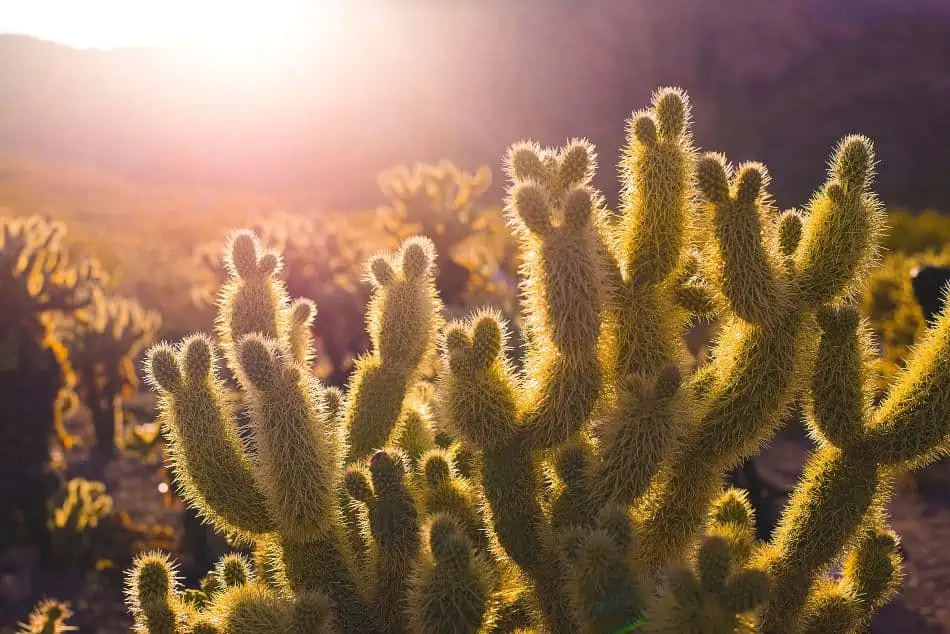
A cholla cactus.
In hot deserts, cacti increase water intake through roots and minimize the loss by reducing leaf amount or size.

One of the most common desert plant adaptations is succulence – the storage of water in fleshy, swollen stems, leaves, or roots. Succulent plants essentially act like living water tanks. When rain does fall, they absorb as much water as possible and hold onto it, then slowly use it over time. This is how a cactus can survive months (or even years) without rain.

How Succulence Works: Succulent plants have specialized tissues filled with water-storage cells. For example, a cactus’s thick green stem is packed with sponge-like tissue that can soak up water quickly and swells up after a good rain. An adult saguaro cactus can hold over a thousand gallons of water in its tissues when fully hydrated​ enough to sustain it for an entire year without any new water supply​. These plants often visibly expand after rainfall; many cacti have pleated, accordion-like stems that can expand and contract like a bellows as water is stored or used up​. This flexibility prevents the cactus skin from splitting under the internal water pressure.

Extensive Shallow Roots: To maximize water uptake, most succulents have broad, shallow root systems. Desert rains tend to be brief and light, wetting only the upper layers of soil. Succulent roots stay close to the surface to rapidly collect this water before it evaporates​. For instance, the roots of a large saguaro cactus extend horizontally about as far as the plant is tall, but are usually only a few inches deep​. By spreading wide but not deep, the cactus can soak up water from a large area during a rainshower. In fact, most of a saguaro’s water-absorbing roots lie in just the top half-inch (1.3 cm) of soil​! This adaptation lets succulents grab moisture from even a light drizzle.

Water Conservation Features: Storing water is only half the battle – succulents must also guard that precious water against loss. Succulent desert plants exhibit multiple traits to conserve water:

  • Waxy, waterproof skin: Succulent stems and leaves are often covered in a thick waxy cuticle. This waxy layer makes the surface almost waterproof when the plant’s pores are closed, greatly reducing evaporation​. You might notice many cacti and agaves have a glossy or bluish “waxy” look – that’s the cuticle doing its job.
  • Reduced or no leaves: Leaves are usually the biggest source of water loss in plants (through transpiration). Many succulents minimize this by having very small leaves or none at all. Cacti are extreme examples – most cacti have no traditional leaves. Instead, their leaves have evolved into spines (more on spines in a moment). Other succulents like agave have thick leaves with small surface area relative to volume. Some succulents that do have normal leaves will shed them in dry seasons to save water. For example, the ocotillo (a desert shrub) grows clusters of small green leaves after rain, but drops them during drought, surviving on water stored in its stems.
  • CAM Photosynthesis: Many succulents use a special form of photosynthesis called CAM (Crassulacean Acid Metabolism) to reduce water loss. In regular plants, stomata (tiny openings in leaves/stems) open during the day to take in CO₂ for photosynthesis, but this also lets water vapor escape. CAM plants do the opposite – they open stomata at night when the air is cooler and more humid, taking in CO₂ and storing it. Then during the hot day, CAM plants keep stomata closed while using the stored CO₂ for photosynthesis. This adaptation means they lose far less water – CAM plants lose only about one-tenth as much water per unit of carbohydrate produced compared to typical plants (C3 plants)​. Cacti, aloes, and many agaves are CAM plants. This clever timing allows succulents to photosynthesize efficiently without the massive water loss that most plants experience under the desert sun.
  • “Idling” metabolism: In extreme drought, CAM plants have another trick – they can enter a standby mode. If things get so dry that even opening stomata at night would lose too much water, a CAM plant will keep its stomata closed day and night. Essentially, it temporarily stops normal gas exchange. In this state, the plant’s metabolism slows to a crawl (like an engine idling) just to maintain basic cell functions​. The succulent can sit tight like this, using minimal water, until a rain comes. Once rain arrives, the plant can ramp up from idle to full metabolic activity within a day or two​, rapidly resuming growth and reproduction when water is available. This ability to “wait it out” is a key drought survival tactic for succulents.

Defense and Sun Protection: Succulents often need to defend their stored water from thirsty animals. A juicy cactus is a tempting meal for wildlife seeking water. Thus, many succulents are armored with spines, thorns, or toxic compounds:

  • Spines and Thorns: Cactus spines are actually modified leaves that have lost their surface area and become hard, pointed needles – a perfect example of form following function. Spines obviously deter animals from munching on the plant’s flesh, but they have other benefits too. Spines provide shade to the cactus surface, breaking up the sunlight that hits the green stem. This helps keep the plant a bit cooler and reduces evaporation. A dense spine covering can even create a layer of slightly cooler, more humid air next to the cactus skin, further reducing water loss. Spines also disrupt air flow around the cactus, which helps prevent drying winds from whisking away moisture. Additionally, in some cacti, spines aid in collecting moisture from the air: they can trap dew or fog, which then drips down to the base of the plant for uptake​. So while they look menacing, spines are multi-purpose survival tools.
  • Chemical defenses: Some desert succulents produce bitter or toxic chemicals in their tissues to make them unpalatable. The milky sap of certain euphorbia succulents, for example, is irritant or poisonous. This discourages animals (and even insects) from tapping the plant for water.
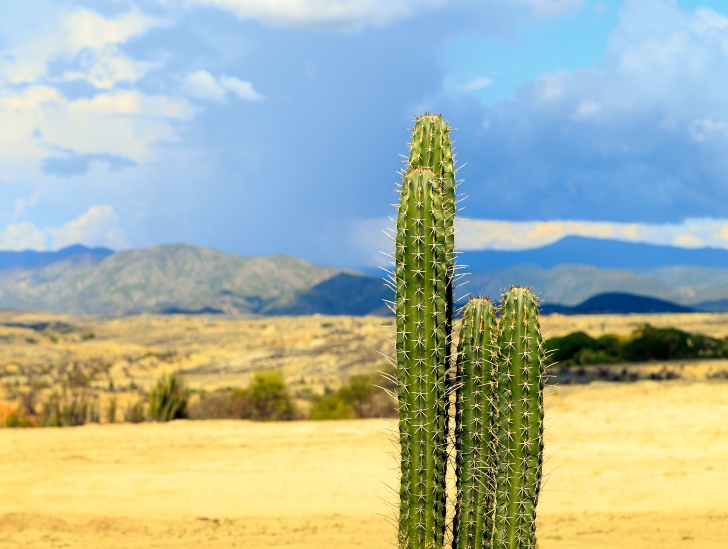
A desert cactus.
These plants also grow very small leaves to prevent water loss.

Examples of Succulent Desert Plants: When thinking of desert plants, succulents often come to mind first:

  • Cacti (Family Cactaceae): Almost all cacti are succulents. The saguaro of the Sonoran Desert is a famous example – it can weigh over 2 tons when filled with water and sustain itself through long droughts​. Prickly pear cacti have thick pads (stems) that store water and are armed with clusters of spines and tiny hair-like glochids. Many cactus species have shallow roots and CAM metabolism as described above.
  • Agaves and Aloes: These are succulents with fleshy leaves. Agaves (like the century plant) store water in sword-like leaves that have waxy coatings and often spines on the tips or edges. Aloes (found in Old World deserts) similarly have plump, gel-filled leaves (think of Aloe vera) to hold water.
  • Elephant Tree (Bursera microphylla): A succulent tree of the Sonoran desert, it has a swollen trunk to store water and tiny leaves that drop during drought.
  • Euphorbias: In African and Asian deserts, Euphorbia species have evolved to resemble cacti (with succulent, water-storing stems and spines), despite being unrelated – a case of convergent evolution in desert environments.
  • Stone Plants (Lithops): In African deserts, lithops are small succulents that look like pebbles. They store water in two fleshy leaves and avoid detection (and dehydration) by blending into the rocky landscape!

Succulence is a highly successful strategy in deserts around the world. However, not all desert plants are succulents. Next, we’ll look at those that survive by tolerating drought and reducing water loss without necessarily storing much water.

Conserving Water: Minimizing Water Loss

Whether or not a plant is a succulent, any desert plant must conserve water to survive. Water conservation adaptations focus on reducing transpiration (the loss of water vapor from leaves) and avoiding tissue damage from heat and sun. We’ve already touched on some in the succulence section, like waxy coatings, CAM photosynthesis, and spines replacing leaves. Here we’ll expand on additional clever tricks desert plants use to minimize water loss:

  • Tiny or No Leaves: Many desert plants have very small leaves, or they shed their leaves during the driest months. Less leaf surface area means less area from which water can evaporate. For instance, the creosote bush (Larrea tridentata), common in the Mojave and Sonoran deserts, has tiny evergreen leaves that are just a few millimeters long. During extreme drought, creosote can drop some leaves to further cut down water loss​. Some desert acacias and palo verde trees have tiny compound leaves that cast dappled shade but don’t lose much water. No leaves at all is even more effective: the cactus-as-stems strategy shows that leaves aren’t always necessary if the stem can do the photosynthesis.
  • Waxy or Oily Coatings: Desert shrubs often have leaves with waxy, resinous coatings (like a thin layer of varnish). This adaptation, seen in creosote bush and many others, helps seal in moisture. The resin on creosote leaves, for example, makes them shiny and waterproof, greatly slowing evaporation.​ You can often feel this if you touch such leaves – they may feel thick or sticky with oils. These coatings can also reflect some sunlight. Similarly, many succulents’ waxy bloom (the whitish or bluish film on cactus pads or agave leaves) reflects sunlight and reduces UV damage.
  • Leaf Orientation and Movement: Some desert plants avoid direct sun by how they position their leaves. Vertical orientation is one strategy – for example, the palo verde tree has tiny leaves that stand vertically (upright) so that the midday sun hits only their edges rather than broad faces, thereby reducing solar heating. Leaf folding or drooping is another: certain grasses or shrubs will fold their leaves or make them droop during the hottest part of the day, then reopen in the cooler evening. By folding, the leaf hides its stomata and reduces exposure to dry air. Some Australian desert plants (like certain eucalypts or acacias) present only a narrow edge to the midday sun.
  • Reflective or Hairy Surfaces: A number of desert plants have leaves or even stems covered in fine hairs or light-colored scales. These hairs reflect sunlight, shading the surface of the leaf, and also trap a layer of moisture. A great example is the brittlebush (Encelia farinosa) of the Sonoran Desert. Its leaves are covered in tiny white hairs, giving the plant a grayish look. The hairs help reflect intense sunlight and keep the leaf cooler​. During extreme drought, brittlebush will drop its leaves, but when conditions improve, it regrows them quickly​. Another example is desert sage and winterfat (Krascheninnikovia) – these have silvery fuzzy leaves that act like natural sunblock and windbreaks. This hairy coat strategy is mentioned broadly as a xerophytic adaptation: developing a dense, hairy leaf covering to reduce water loss​.
  • Sunken Stomata and Other Leaf Anatomy Tricks: Some desert plants have stomata (pores) that are sunken in pits or grooves on the leaf surface, sometimes also lined with hairs. This creates a pocket of humid air near the stomata, cutting down on water loss. Others might only have stomata on the underside of leaves (in shade). Thick leaves with internal water-storage (succulence) also tend to have fewer stomata.
  • High Temperature Tolerance: To avoid needing water for cooling, desert plants are often just very tough in the face of heat. Their enzymes and cell membranes can function at higher temperatures than those of most plants, meaning they don’t need to transpire as much for cooling. Some produce special heat-shock proteins that protect cellular functions during extreme heat.
  • Drought-Deciduous Behavior: We touched on this with ocotillo and creosote – many desert perennials simply decide to drop leaves and go dormant when moisture is insufficient. By shedding leaves, a plant dramatically cuts down its water loss (no leaves, no transpiration). The trade-off is that it can’t photosynthesize during that time, but surviving dry years is more critical. When rain finally comes, these plants quickly grow new leaves and resume normal function. Ocotillo can leaf out within days of a good rain and then turn bare a few weeks later as the soil dries – doing this multiple times a year if the rains are intermittent.

In essence, desert plants have an arsenal of features to hold onto every bit of water they have. Shiny wax, tiny or no leaves, protective hairs, and smart timing of gas exchange all contribute to making desert plants incredibly water-efficient. These are the kinds of plant adaptations in deserts that make the difference between life and death when rain is absent for months on end.

Next, we’ll explore root adaptations – because finding water is just as important as saving it.

Root Adaptations: Finding and Absorbing Water

When water is scarce, you have to grab it before it’s gone. Desert plants show extreme adaptations in their root systems to locate water in the soil. Generally, desert plant roots employ one of two tactics (or a mix of both): spread wide or go deep. Each strategy is suited to different types of water availability.

  • Shallow, Spreading Roots: As mentioned with succulents, many desert plants have shallow roots that radiate far from the plant’s base. This allows them to quickly soak up water from a large area during brief rain events. After a rain, the upper soil may only stay moist for a short time, so these roots must be efficient. Cacti, for example, often have a mat of fibrous roots just beneath the soil surface. A young saguaro cactus (only a few feet tall) can have roots extending out several yards in all directions but staying within a couple inches of the surface. When a downpour happens, the ground might get wet, say, 2 inches deep over a broad area – and the cactus will take full advantage of that. Agaves and other succulents similarly have radial root systems to capture fleeting moisture. Some desert plants even grow additional temporary roots after rain – they sense the moisture and sprout new rootlets to absorb it. Once the soil dries, those fine roots may wither away to avoid wasting energy.
  • Deep Taproots: The opposite approach is seen in certain desert trees and shrubs – they send down extremely deep roots to reach groundwater or permanent moisture reserves. These are often called phreatophytes, meaning they tap into the phreatic (groundwater) zone. A classic example is the mesquite tree (Prosopis). Mesquites are known to have some of the deepest roots in the plant kingdom. In favorable soil conditions, mesquite roots have been documented reaching 50 to 60 meters (over 150–200 feet) deep in search of water! This incredible depth lets them find water long after the surface has dried out. Even if no rain falls for months, a mesquite with a deep taproot can drink from the water table or damp subsoil. Similarly, the Desert Willow and certain acacias push taproots down toward underground moisture. In the Namib Desert, the famous Welwitschia plant has a long taproot system believed to reach deep water sources (while its two long leaves also gather dew above ground).
  • Extensive Lateral Roots in Woody Shrubs: Desert shrubs like creosote combine strategies – they have relatively deep roots (not as extreme as mesquite) but also wide-ranging lateral roots. A creosote bush’s root system can cover an area many times the diameter of its canopy, intertwining with neighbors. This wide reach ensures that the plant can scavenge any rainfall that percolates down as well as draw from a larger soil volume in dry times​. Creosote roots might extend a few meters deep at most, but spread very broadly.
  • Shallow vs. Deep Trade-offs: Each root strategy has pros and cons. Shallow roots (as in succulents) allow immediate use of light rains but can’t access deeper moisture. Deep roots (as in mesquite) grant access to reliable water but usually require the plant to invest energy in growing slowly until it hits water; also, deep-rooted plants often need a good soaking rain to recharge the deep soil before they can really thrive. Interestingly, these strategies can influence when a plant grows: shallow-rooted succulents often capitalize on ephemeral moisture (they’ll green up quickly after a small rain), whereas deep-rooted shrubs/trees might stay dormant until a significant rain has come to penetrate the soil. Once the deep soil is moist, they can sustain growth for weeks or months, even if the surface dries out​. Neither strategy is “better” – they are just different ways to deal with desert conditions. That’s why in deserts you often see a mix of succulents (small, shallow-rooted) and shrubs/trees (deep-rooted) occupying different ecological niches.
  • Roots for Storage: A few desert plants even use their roots as water storage organs (a form of succulence underground). Some caudiciform desert plants and bulbs will store water in thick, swollen roots or tubers safe from the heat above.

Remarkable Root Feats: It’s worth marveling at some record-setters. We noted mesquite’s 200-foot deep roots​ that’s roughly equivalent to a 20-story building depth! Another plant, the wild desert gourd (Cucumis humifructus in the Kalahari) is known as the “wild watermelon”; its thick taproot helps it endure, and it even deposits its watermelon-like fruits underground for moisture. In the Sahara, acacia trees have been found with roots over 100 feet long to find water. These root adaptations underline a key point: if water won’t come to the plant, the plant will go to the water.

By either spreading wide or drilling deep, desert plants maximize their water uptake opportunities. Along with water storage and conservation traits, a well-adapted root system gives desert plants a critical edge in a dry land.

Drought Tolerance: Surviving Extreme Dryness

Some desert plants survive drought by tolerating very dry conditions within their tissues – conditions that would kill ordinary plants. Drought tolerance adaptations allow the plant to continue living (though often in a suspended state) even as it loses water and the soil remains dry for long periods. This often involves entering a dormant state and protecting the most vital parts of the plant until better conditions return.

Key aspects of drought tolerance include:

  • Desiccation Tolerance: A few remarkable plants can lose a huge percentage of their water content and essentially “dry out” almost completely, then rehydrate and spring back to life when water is available. These are sometimes called “resurrection plants.” While most resurrection plants are small herbs or mosses (e.g., the Rose of Jericho in arid regions), even some desert shrubs can withstand severe dehydration. During drought, their cells produce special sugars and proteins that stabilize membranes and enzymes, allowing the plant’s tissues to survive without water. When rain comes, they rehydrate and resume normal metabolism. This is uncommon among large desert plants, but some smaller ones (certain ferns, mosses, and a few angiosperms) have this ability.
  • Dormancy (Drought Deciduousness): As discussed, many desert perennials avoid damage by going dormant in dry times. This can mean dropping leaves, halting growth, and essentially shutting down most functions to conserve water and energy. The plant lives off stored resources (like water in its stems or carbohydrates in its roots) at a very low metabolic rate until moisture returns. We see this in shrubs like brittlebush and jojoba, and in trees like mesquite which may shed leaves in a prolonged drought. The above-ground parts might even appear dead, but the plant is still alive. Once rain comes, these plants quickly leaf out and resume activity, using their deep roots or stored water to get started.
  • Protective Compounds: During dormancy or drought stress, plants often accumulate compounds like proline (an amino acid) or other osmoprotectants that help maintain cell structure. They might also increase antioxidants to deal with stress. While these changes aren’t visible externally, they are part of physiological drought tolerance.
  • Heat Tolerance and Recovery: Drought usually coincides with heat, so drought-tolerant plants are also heat-tolerant. Some can endure leaf temperatures that would scald other plants, or they have mechanisms to dissipate heat (like rough bark that radiates heat away, or small insulated leaves). When rain comes, drought-tolerant plants can be quick responders. For instance, brittlebush that looked like a bunch of dry sticks can leaf out and even bloom within weeks of significant rainfall​.
  • Longevity and Patience: Many drought-tolerant desert plants are long-lived, enduring many cycles of drought and rain. The creosote bush is a prime example – individual creosote plants can live for decades, and clonal colonies (a ring of stems that are one genetic individual) can survive for thousands of years by slowly replacing themselves. One clonal creosote ring in the Mojave Desert, nicknamed “King Clone,” is estimated to be over 11,000 years old! Such longevity is possible because in bad years the plant conserves resources, and in good years it grows a bit – a slow and steady strategy.
  • Rapid Recovery: When conditions improve, drought-tolerant plants often have the ability to recover quickly. They may have buds that are ready to sprout new leaves or flowers as soon as they get a signal (water). Some cacti that look shriveled will plump up within days of rain. CAM succulents, as mentioned, can go from idle to full throttle in 24–48 hours after a rain​. This rapid turnaround is crucial: in the desert, you take advantage of moisture while you have it.

Example – Creosote Bush (Larrea tridentata): This iconic desert shrub employs multiple drought tolerance tricks. Its small wax-coated leaves conserve water, and it can drop them in severe drought​. It has an extensive root system to draw from a large soil volume. Even when surface soils are parched, creosote can often find a bit of moisture below. The resin on its leaves not only prevents water loss but also tastes bad to herbivores (so it doesn’t get eaten when it’s one of the few green things around). Creosote can essentially pause growth during dry years, then live on and on, sprouting new shoots when rains come. That’s how it dominates large areas of the southwestern US deserts.

Example – Saguaro Cactus: We usually think of saguaros as succulents (they are), but they are also extremely drought-tolerant. A fully hydrated saguaro can use its stored water to survive for a year or more without any rain​. As it uses water, it slowly shrinks in girth, but it can tolerate this gradual depletion. Its pleated skin folds in without harm. The cactus can lose a significant fraction of its weight in water and not die; it’s basically designed to function while dehydrated. Only when it nears a critical threshold will it really suffer. If rains return in time, the saguaro quickly rehydrates and even can go on to flower and set seed using the water it saved.

In summary, drought tolerance is about enduring the hardship. These desert plants may not look perky during the worst of times (many look dry, leafless, or scraggly when water is scarce), but they are alive and waiting. Their ability to ride out extreme dryness is what makes them true survivors.

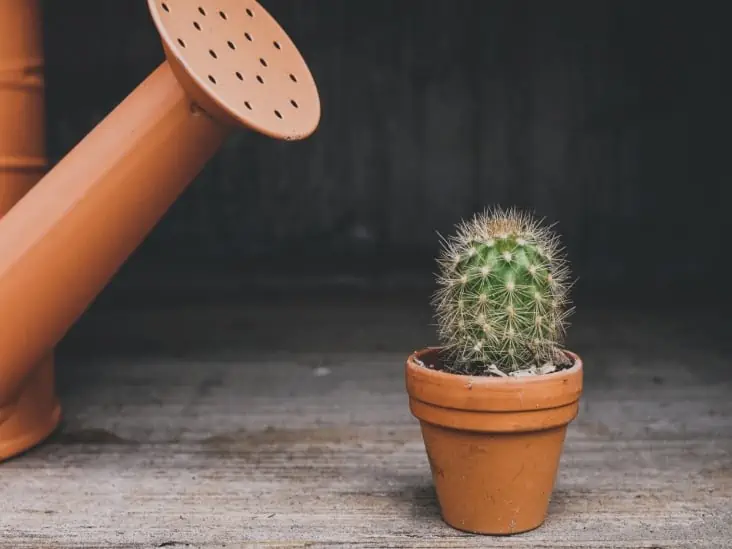
A small cactus with a water can.
Transpiration is the circulation of water throughout the plant which then evaporates into the air.

Drought Avoidance: Living Fast and Dying Young (But Leaving Seeds)

The third major strategy is completely different: instead of enduring drought, avoid it altogether. Enter the world of desert annuals and ephemerals – plants that time their life cycle to the rare wet periods and lie low (as dormant seeds) during drought.

How Drought Avoidance Works: These plants are often called ephemeral wildflowers or annuals (though some are short-lived perennials). They have short lifespans, maturing from seed to flowering to seeding in as little as a few weeks. They typically germinate after substantial rainfall, when the desert soil is moist enough to sustain growth for a while. They quickly grow leaves, shoot up, and bloom with vibrant flowers, then produce a bunch of seeds and die before the dry season kicks in. The new seeds then remain dormant in the soil seed bank, which can last for years until the next good rains trigger the cycle again​.

This strategy is all about timing and opportunity:

  • Rainfall Triggers: Desert annual seeds are very picky about when they germinate. They often have tough seed coats or chemical dormancy mechanisms that prevent sprouting until conditions are just right. For many, it’s not enough to just have a little rain – they wait for a significant soaking that signals a likely sustained wet period. For example, in the Sonoran Desert, many annuals will only germinate after about 1 inch (2.5 cm) or more of rain within a short period during the cooler season​. This ensures that once they sprout, there will be enough moisture for them to grow, flower, and set seed.
  • Cool-Season Growth: In some deserts (like Sonoran and Mojave), the favorable growing window is the winter or early spring, when temperatures are milder. Seeds often germinate in fall or winter after rains, plants grow slowly through the cool months, then burst into bloom in spring. By late spring, as heat and aridity return, they’ve already produced seeds and dried up. That’s why desert wildflower displays happen in spring.
  • Seed Dormancy & Longevity: Not all seeds germinate in the first rain. A portion will remain dormant even if conditions seem good – this is a bet-hedging strategy. For instance, only some desert lupine seeds will sprout in a given year; others will wait, sometimes 5, 10, or more years in the soil​. This way, even if a “false start” wet period happens and then the seedlings die of drought, there are backup seeds for future attempts. Some desert plant seeds can remain viable for decades, ready for the once-in-a-decade “superbloom” when heavy rains come.
  • Rapid Life Cycle: Once conditions are right, these plants move fast. Many have preformed buds that quickly develop, or they can grow leaves and stems in a matter of days. They put most of their energy into flowering and seed production (since they have no guarantee of a next year). They often channel all resources into seeds and then the parent plant withers. There’s no saving itself – the seeds carry the torch forward. Because of this, desert annuals can carpet the desert floor with color after rains, then vanish completely, existing only as hidden seeds when the desert is dry.
A prickly pear cactus with fruits.
Prickly Pear is a fruit-bearing cactus requiring low maintenance and hot climate.

Examples of Drought Avoiders: Desert wildflowers are a highlight of many arid regions:

  • Desert Gold Poppies (Eschscholzia glyptosperma) and Arizona Lupines (Lupinus arizonicus): These are part of the spring wildflower displays in the Sonoran Desert. They germinate in fall/winter, bloom in spring with brilliant orange or purple flowers, set seeds, and die by summer​.
  • Desert Marigold (Baileya multiradiata): A yellow wildflower that can bloom multiple times a year if rains allow, but also survives as short-lived perennial in better conditions. It times its growth to moisture availability.
  • Annual grasses: Some desert grasses avoid drought by the same seed strategy, growing only in wetter years.
  • Devil’s Claw (Proboscidea althaeifolia): This interesting plant in the Southwest has sprawling green growth and unique seed pods in good seasons, but survives as a durable seed otherwise.
  • Rain Lilies and Bulbs: Not all drought-avoiders are annuals; some are bulbs or perennials that stay dormant underground. For example, desert lily (Hesperocallis) bulbs wait out dry times and sprout leaves and a lily flower after significant rains. Similarly, rain lilies in arid areas bloom days after a rain then disappear.

The drought avoidance strategy is all about exploiting good times and enduring bad times as a dormant seed or bulb. It’s a boom-and-bust lifestyle. When conditions are right, these plants “boom” – growing rapidly and often stealing the show with lush greenery and flowers in an otherwise brown landscape. When the short wet season is over, they “bust” – dying off, but having left a bank of seeds that can ensure the species continues.

This approach is so effective that in some deserts, the majority of plant species are annuals or ephemerals. For example, in parts of the Sonoran Desert, hundreds of species of wildflowers and small plants fit this profile, lying unseen as seeds most years and only occasionally blanketing the desert after winter rains.

Other Fascinating Desert Plant Adaptations

In addition to the big three strategies above, desert plants have some other interesting adaptations worth mentioning:

  • Night Blooming: Some desert plants (especially succulents like cacti and yuccas) bloom at night. The night-blooming cereus cactus, for example, opens its fragrant white flowers after sunset. Why? Because nighttime is cooler and more humid, so the flowers won’t dry out as quickly and the plant loses less water by opening them then. Additionally, night bloomers often rely on nocturnal pollinators (like bats or moths). By avoiding the daytime heat, they conserve water and still get pollinated. The beautiful large white flower of a saguaro cactus also tends to open at night and into early morning, taking advantage of cooler hours.
  • Spatial Distribution: Desert plants often grow spaced far apart, a pattern that minimizes competition for scarce water. In some cases, plants even produce natural herbicides or growth inhibitors to keep other plants away. For example, creosote bush roots secrete chemicals that suppress the growth of nearby seedlings (a phenomenon called allelopathy). This ensures less competition for water around established creosotes.
  • Succession and Nurse Plants: Young cactus seedlings might actually need a bit of help to get started. Often, they sprout under the partial shade of “nurse plants” like palo verde or mesquite. The nurse plant’s shade provides cooler temperatures and protection for the seedling’s early growth. Once established, the cactus can survive on its own and the nurse may die off or coexist. This is an adaptation at the community level – desert plants often form partnerships that aid survival of new generations.
  • Salt Tolerance: Some deserts have salty soils (like playas or coastal deserts). Halophytic adaptations (salt tolerance) are necessary there. Certain desert succulents can excrete excess salt or compartmentalize it in their tissues. For instance, saltbush (Atriplex) has bladder cells on leaves that store salt, and it can shed those leaves to dump the salt. This isn’t about drought per se, but it’s another stress desert plants handle.
  • Efficient Photosynthesis and Growth: Deserts might lack water, but they often have abundant sunlight. Many desert plants have high photosynthetic rates when water is available, converting sunlight to biomass very efficiently. Cacti and CAM plants take in CO₂ at night very effectively. Some grasses and shrubs use the C4 photosynthetic pathway, which is more water-efficient than the normal C3 pathway and is advantageous in high light and heat. These biochemical tweaks maximize productivity per drop of water.
  • Thick Bark and Trunks: Desert trees like the baobab (in African arid regions) or certain arid-climate acacias have thick trunks not just for water storage but also as insulation against heat and fire. A thick corky bark can reduce water loss and reflect heat. Baobabs store water in their massive trunks (succulence in a tree form) and shed leaves annually to avoid drought stress.
  • Reduced Growth Form: Many desert plants are short or low-growing (think of mats or small shrubs) – this helps avoid excessive exposure to wind and creates a boundary layer of still air. By hugging the ground, they also may take advantage of slightly higher humidity right at the soil surface.

Each desert plant species is a case study in survival, with its own mix of adaptations. The variety of desert plant adaptations is truly astonishing – from cacti that swell with water and brandish spines, to wiry shrubs that wait patiently for rain, to seeds that can sleep for years until awakened by a downpour. These strategies all center on a common goal: get water, save water, and make it to the next opportunity to reproduce.

FAQ: Desert Plant Survival

Q: How do desert plants survive with so little water?
A: Desert plants survive by using specialized adaptations to collect water, store it, and drastically reduce water loss. They often have extensive root systems to gather water quickly from rain or from deep underground. Many store water in fleshy tissues (succulents) and have protective features like waxy coatings and spines to prevent evaporation. They may also drop leaves or go dormant during extreme drought. In short, every part of a desert plant is geared towards saving water and enduring dry periods.

Q: Why do desert plants have thorns or spines instead of leaves?
A: The spines on cacti and other desert succulents are actually modified leaves that have evolved to minimize water loss. Regular leaves would transpire too much water in the desert, so cacti ditched them in favor of spines. Spines have a tiny surface area (so they don’t lose water like a broad leaf would) and they help in other ways – they protect the plant from animals and provide shade and wind protection to the plant’s surface​. Essentially, spines let the cactus have the benefits of defense and a bit of shading without the water cost of real leaves.

Q: What is CAM photosynthesis and why is it important for desert plants?
A: CAM (Crassulacean Acid Metabolism) is a special type of photosynthesis where a plant opens its stomata at night to take in carbon dioxide, then closes them in the day while it photosynthesizes. This adaptation is important for desert plants because it drastically cuts down on water loss. By opening stomata at night when it’s cooler and more humid, CAM plants like cacti and agaves lose far less water than if they did so in the hot daytime. It’s a key reason succulents can live in extremely dry climates – they’re photosynthesizing on a night schedule!

Q: How long can a cactus live without water?
A: It depends on the species and conditions, but many large cacti can survive many months, even years, without rainfall. For example, a fully hydrated saguaro cactus can live about a year or more by using the water stored in its tissues​. Smaller cacti with less storage might last a few months. They survive by slowing down their growth and metabolism to use water very efficiently. Cacti will shrink and use up their water reserve gradually. They’re experts at “stretching” their water supply over long droughts.

Q: Can I grow desert plants (like cacti or succulents) in non-desert climates?
A: Yes, many desert succulents and plants can be grown in gardens or indoors around the world, but you have to mimic some of their preferred conditions. They generally need lots of sunlight and very well-draining soil (to avoid root rot, since they’re not used to sitting in water). You should water them sparingly, allowing the soil to dry out between waterings – essentially imitating the infrequent rains of a desert. Be careful in humid or rainy climates; too much water is usually the biggest threat to desert plants in cultivation. Also, some desert plants are sensitive to frost, since they don’t experience hard freezes in their native range. As long as you provide a bright, dry environment and protect from extreme cold, you can enjoy cacti and other desert plants far from the desert.

Q: Why are many desert plants spaced far apart?
A: If you hike in a desert, you’ll notice plants often aren’t growing in dense clusters; instead, each plant occupies its own patch of soil. This spacing is partly due to competition – each plant needs a certain amount of water from the soil, and if they grow too closely, there isn’t enough to go around. Some desert plants actively prevent others from growing nearby by using up all available water or even by secreting inhibitory chemicals into the soil (for example, creosote bush does this) to create a zone where its own offspring or other plants can’t easily sprout. The result is a more even spacing, which ensures each plant gets its share of limited resources.

Q: Do desert plants need sunlight since they try to avoid it (with spines, hairs, etc.)?
A: Desert plants do need sunlight – they are still doing photosynthesis and typically get plenty of sun in their open habitats. The adaptations like spines or hairs that reduce sunlight on the plant are there to moderate extremes, not to eliminate light. Desert sun can be so intense that it could overheat or dehydrate the plant, so features like reflective hairs or spines casting shade just reduce the stress a bit. But there’s still ample sunlight hitting the green tissues for photosynthesis. In fact, many desert plants are adapted to full sun and would not do well in shade. They just have adaptations to use that sun without getting scorched or losing too much water.

Conclusion

Desert plants have evolved an incredible suite of adaptations to survive in an environment that is hostile to plant life. From water-storing cacti that hoard rainwater behind waxy skins, to hardy shrubs that drop leaves and wait out droughts, to fleeting wildflowers that spring to life with the rain and then vanish as seeds – each strategy shows the ingenuity of evolution in solving the problem of extreme water scarcity.

Key Takeaways: Desert plant adaptations include:

  • Water Storage (Succulence): Many desert plants store water in fleshy stems or leaves, combined with shallow roots and CAM photosynthesis, allowing them to weather long dry periods.
  • Water Conservation: Adaptations like waxy coatings, spines instead of leaves​, tiny or deciduous leaves, hairy reflective surfaces, and nighttime activity all help minimize water loss​.
  • Special Roots: Desert plants either spread wide, shallow roots to grab quick rains, or send deep taproots to find underground water​.
  • Drought Tolerance: They can withstand drying out by going dormant, dropping leaves, or surviving on minimal water, then quickly recover when moisture returns​.
  • Drought Avoidance: Many annuals avoid drought by living only in wet spells, completing their life cycle rapidly and enduring dry years as seeds​.
A agave plant.
Agave is among the species which store water in their roots and leaves.

Understanding these adaptations not only gives us an appreciation for the resilience of life, but it’s also important for conservation. Deserts are fragile ecosystems, and their plants are often slow-growing and long-lived. Human impacts and climate change (altering rainfall patterns) can threaten these specialized species. By knowing how desert plants survive, we can better protect them and even learn from them. For instance, xeriscaping (water-wise landscaping) takes inspiration from desert plants to create gardens that use less water – a practical application of this knowledge.

Next time you see a cactus or a desert wildflower, you’ll recognize it as a master of survival. These plants have turned the desert – a place of extreme heat, aridity, and challenge – into their home, using ingenious adaptations to every challenge the environment throws at them. In the story of life on Earth, desert plants stand out as some of the most resourceful and tough beings around. Their ability to survive and thrive in extreme deserts is not just a curiosity; it’s an inspiration for efficient water use and resilience in the face of scarcity.

References: