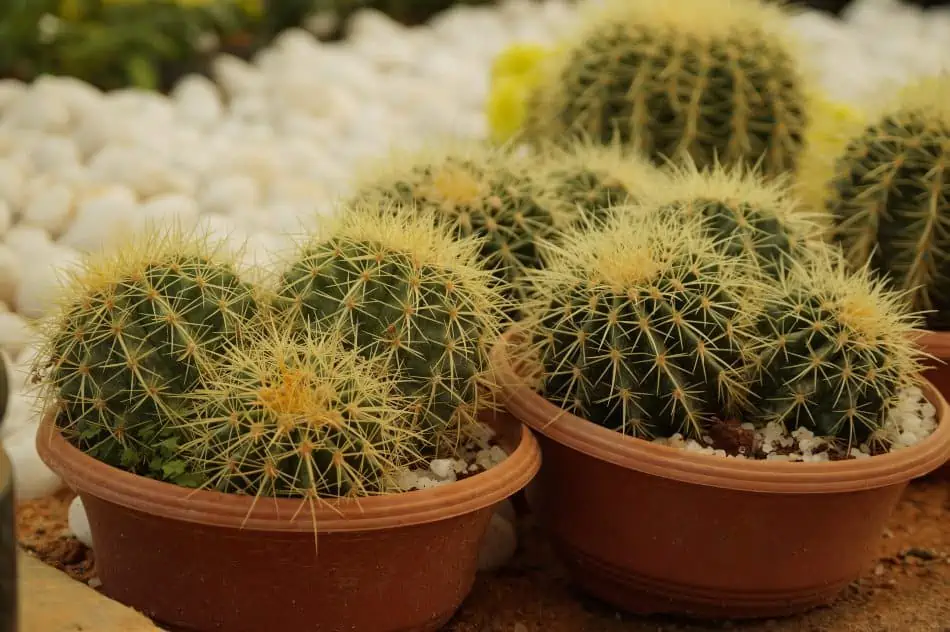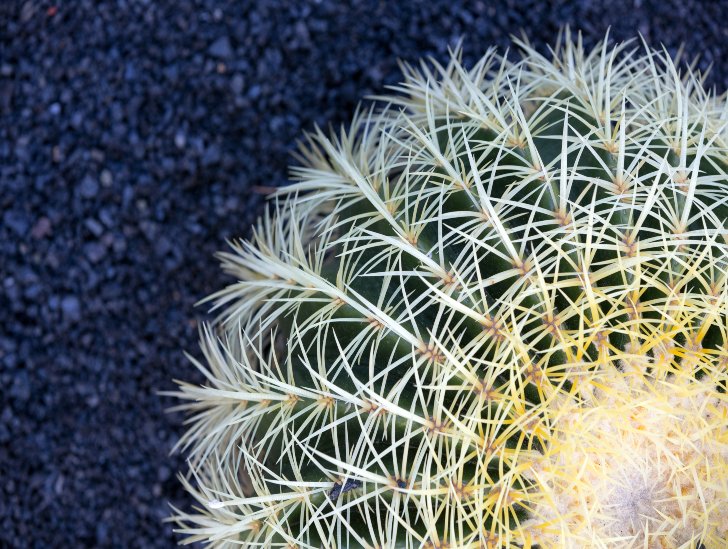

Can A Cactus Grow Anywhere In The World?

Cacti are among the easiest plants to grow as long as you understand their needs and can take good care of them. In fact, only a few plants can compare to their size, color, and beauty. Since most of them grow slowly, space is never an issue. However, just like other plants, cacti require specific conditions to thrive. This brings us to the big question that we shall cover throughout this article.

Can a cactus grow anywhere in the world?  The simple answer to this question is Yes. Contrary to popular belief that cacti can only thrive in arid areas, the truth is that these plants can survive in almost all climates. There is evidence showing that some cacti species thrive in tropical rainforests and colder climates in different parts of the world.  Typically, cacti are not fussy plants and will always thrive as long as you provide them with the right growing conditions and treat them well.

In this post, we discuss everything you need to know about cacti plants and their habitats. We shall also highlight some of the physical features unique to these plants that make them ideal for almost any climate.

What Is the Natural Habitat for Most Cacti Plants?

Let us start with what most of us know. Cacti plants are naturally adapted to living in arid areas that do not receive a lot of rainfall. In this case, the term “arid” is only used to refer to dry areas which receive sporadic rain.

In most cases, these areas are not true deserts because no plant or animal would survive in a true desert. This is the primary reason why you will find most cacti species growing in parts of North and South America.

In fact, every country in North and South America has at least a few naturally occurring cacti species growing there. 

However, further analysis reveals that most of the cacti species in these two continents grow around the Tropic of Capricorn in South America and Tropic of Cancer in North America. Some species also grow in the Caribbean Islands.  These are not desert areas.

To help you understand the concept of natural habitats better, we have come up with four different categories of cacti you need to know.

1. Desert cacti

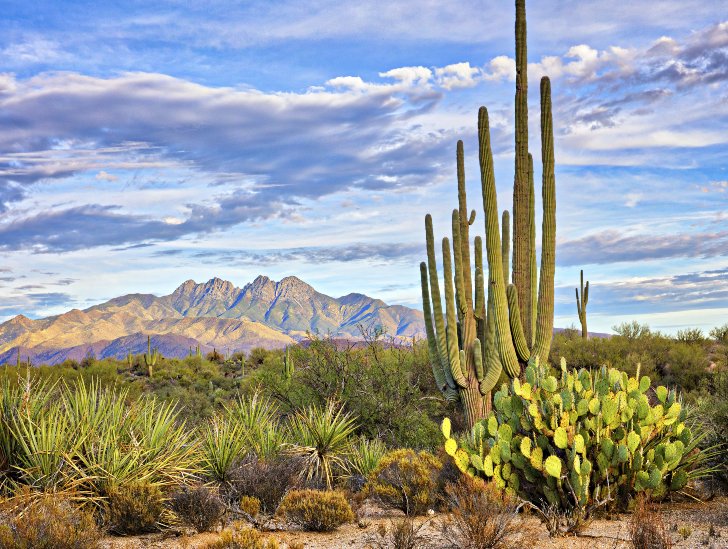
This is perhaps the most common type of cacti. In fact, when most people think of cacti, they tend to think of deserts, but that is not always the case. The term desert is mostly misused to mean dry areas that don’t receive plenty of rainfall.

For instance, if we take the Sonoran desert in the United States, where you will find a wide range of cacti species growing, you cannot say that the area is completely dry. In this case, we are talking about a desert that has two rainy seasons, which provide these plants with plenty of water.

Desert cacti

Being the second-largest desert in North America, the Sonoran desert covers parts of Arizona and California and stretches to Mexico’s border. The first rain season occurs in the summer while the other happens in winter.

During this time, cacti plants that grow in this region absorb plenty of water to sustain them throughout the dry season.

2. Jungle cacti

You will find this type of cacti in the tropical rainforests that stretch across Central America, Brazil, and parts of Asia. Climatic conditions are quite different here compared to deserts.  Typically, these areas receive plenty of rainfall throughout the year.

Cacti species that grow in this region usually require a lot of water than their desert counterparts. Most of them have true leaves and grow pretty fast.

Most jungle cacti are either lithophytic or epiphytic, meaning that they grow on rocks or in trees, respectively. These plants receive most of their nutrients from the air or dead leaves. However, it is essential to note that they are not parasitic.

Jungle cacti that grow in trees do so for support and do not depend on their host for nutrients. One of the best examples of jungle cacti is the Christmas/Holiday cactus.

3. Mountain cacti

Some cacti species also grow in mountain regions, especially in the Andes Mountains. The Andes is the longest mountain range in the world that stretches for about 7,000km from the western coast of South America.

The temperature in this region can vary significantly from nice and warm to freezing.  Nonetheless, some cacti species have adapted to living in such high regions.

The cacti plants that dwell here shrivel in fall and winter to cope up with the freezing temperatures. The shriveling can be compared to the popular sap cycles in some plants. During these cycles, the plant’s sap “goes down” in fall and “rises” in spring to survive rising and falling temperatures.

4. Coastal cacti

We also have cacti species that have adapted to growing in coastal regions. Keep in mind that coastal areas can sometimes be harsh, and the salty water, air, and soil can make it difficult for some plants to survive there.

For instance, along the coastal strip of Chile, you will find some cacti plants that can survive for years without rain. Such plants have unique features that help them endure such harsh climatic conditions.

Since the sea water is mostly cold, a stream of cold air moves over the hot land every morning, forming fog. The coastal cacti plants find the water they need to survive by absorbing as much moisture from the fog as possible.

5. Tropical cacti

Tropical cacti are mainly ornamental plants that thrive in humid climates. You will mainly find them in South America, the Caribbean Islands, and Central America.

These plants require plenty of water since they grow in warm climates with moderate yearly rainfall.

The amount of sunlight these plants receive also affects their growth significantly. They need approximately eight hours of light daily to stay healthy.

The most common tropical cacti are the Christmas/ Holiday cactus and Easter cactus. They have different colors and blooming seasons.

Physical Characteristics Unique to Cacti Plants that Helps Them Survive Anywhere and Everywhere

As mentioned earlier, these succulents have unique features that help them survive in different climates and environments. Some of the standout features that are unique to cacti plants include:

1. The spines

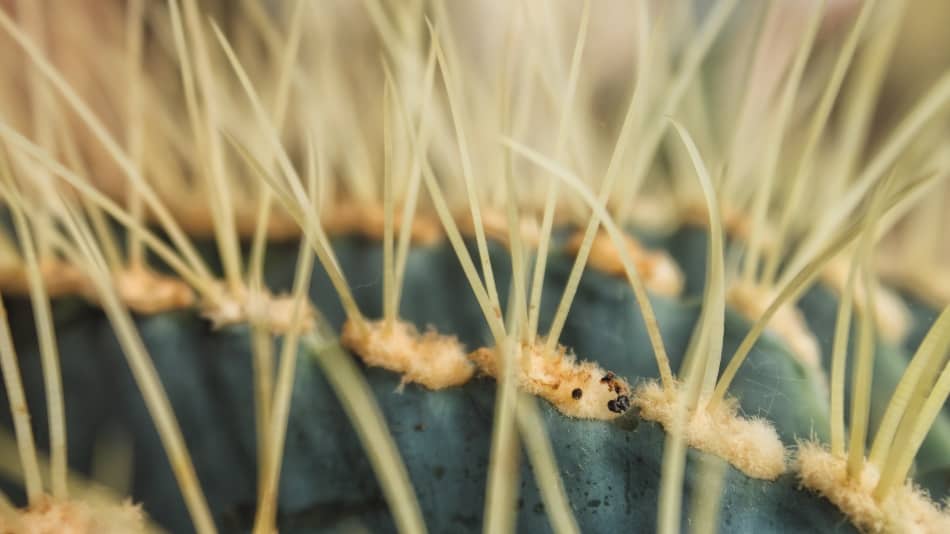
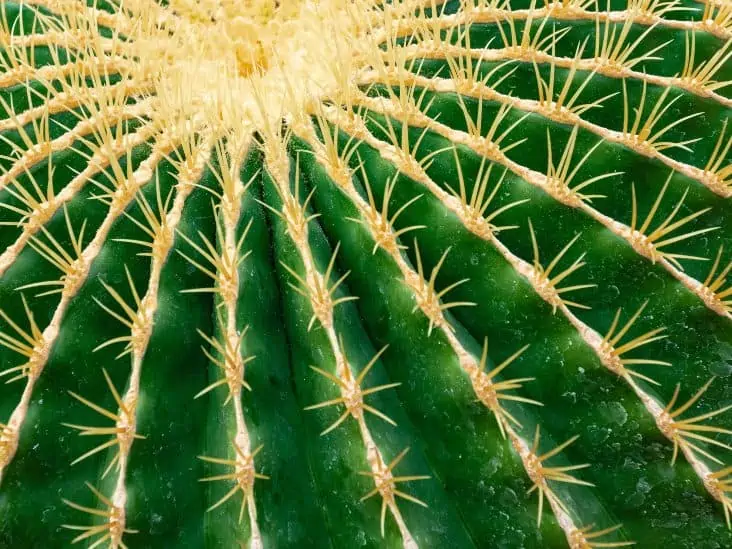
The needle-like structures on the surface of most cacti species are perhaps the most known feature distinguishing cactus from other plants. The spines play a critical role in the survival of a cactus plant.

First, they take the position of leaves on the plant. The lack of true leaves means that the plant has fewer stomata, which consequently mean reduced water loss through transpiration.

Secondly, spines play a critical role in protecting the plant from predators such as animals and human beings.  In some cacti species, they help with absorption of rainwater by directing water droplets towards the plant’s roots. 
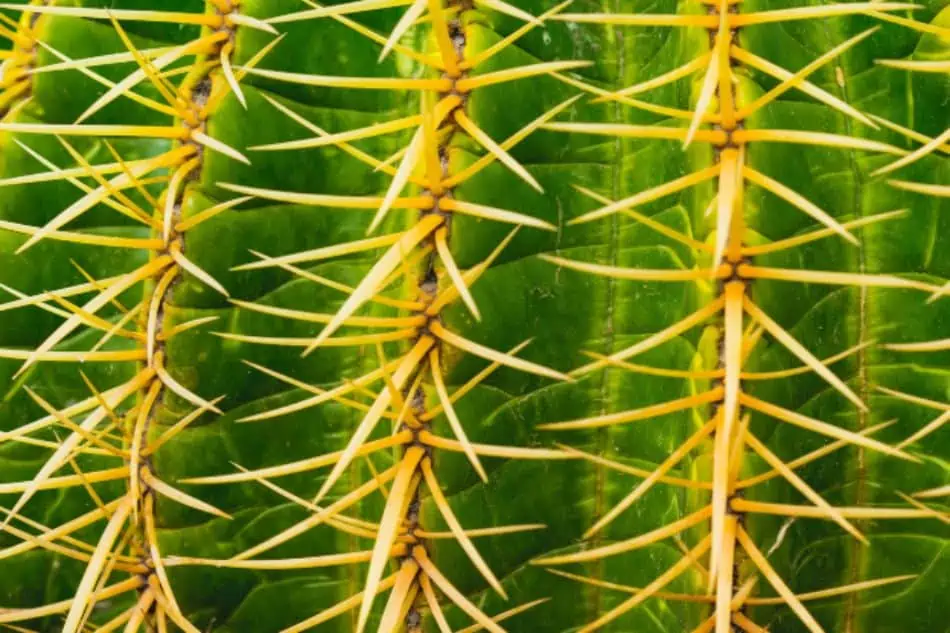
The spines play a critical role in the survival of a cactus plant

2. Areoles

An areole refers to a raised structure on the surface of a cactus plant from which spines originate. Areoles can only be found on cacti plants. They are circular/oval-shaped and mostly appear like raised fusion-discs full of sharp spikes or small hairs.

Although some other plants may have spines, if the spines are not originating from an areola, then the plant is not a cactus.

3. Specialized root system

These succulents also have a slightly different root system compared to other plants growing in harsh climatic conditions. Instead of having a deep root system, cacti plants usually develop an extensive shallow root system that spreads widely and only sits a few inches below the surface.

Whenever there is rainfall, the fibrous roots absorb water from the surface pretty quickly and more efficiently. The roots grow exponentially during the rainy season, but when it gets drier; they wither and break off from the parent plant to minimize water loss.

4. Deep-layer stomata

All cacti plants have an adaptation known as deep-layer stomata. These are specialized cells that close when temperatures rise significantly to prevent water loss.

As a result, the plant can go for days without using any water from its reservoir. In fact, research shows that some cacti species can survive for more than two years without water.

5. Waxy cuticles

Cacti also have waxy cuticles that help them reduce moisture loss from their stems and leaves during the day.

The wax helps trap a thin layer of air around these parts, preventing dehydration and allowing the plant to remain hydrated even in hot and dry weather.

The wax also reduces the rate of water loss through transpiration, thus allowing cacti to survive in arid climates.

6. Thick and expandable stem

Cacti plants have succulent stems that help them store water. Unlike other plants, the stems of cacti can expand and contract depending on the availability of water.

When it rains, their bodies swell up as they absorb the much-needed moisture. In dry seasons, they shrink and become wrinkled to reduce water loss through transpiration.

Sometimes, the stem of the cactus may even split to create more surfaces for sun exposure and subsequent photosynthesis.

The splitting also helps reduce stress during droughts since it’s easier for them to contract into smaller sizes when water is scarce.

Can a Cactus Plant Survive in Cold-Winter Climates?

The truth is that you can grow cacti plants in cold climates as long as you know what to do and how to do it right.  While most of us may think that these succulents are only meant to thrive in dry areas, the opposite is also true.

To successfully grow a cactus plant in cold-winter climates, you must understand how these plants grow and their essential requirements.  Keep in mind that cacti plants are succulents that store water in their stems and roots.

Cacti require well-draining soil which doesn’t hold water for too long. You can easily make your own soil by mixing coarse sand and some compost in the ratio of 2:3. Avoid growing your cactus in pure sand because it doesn’t hold nutrients for long.

Although these plants do need some water to survive, you should be careful with watering, especially in the cold-winter regions. The best thing to do is to water your plant when the soil is completely dry. However, it is always good to let mother nature do the watering for you during the rainy season.

Avoid watering your plant in fall and winter because most cacti species enter a period of dormancy during this time. If you water during this period, the excess water may freeze in the stem of your plant leading to death.

Protect your plant from snow and ice and expose it to as much sunlight as possible during spring and summer. With time, your plant will get used to the cold climate and start to thrive.

While most of us may think that cacti plants are only meant to thrive in dry areas, the opposite is also true

Summary

Cacti are amazing plants that can grow anywhere in the world. You can grow these plants in your backyard or in pots and position inside the house. With their unique features, you can be sure of getting something incredible that will make your house feel like a home.

The most important thing you need to do is understand your plant’s needs and do your best to provide a conducive environment for better results.
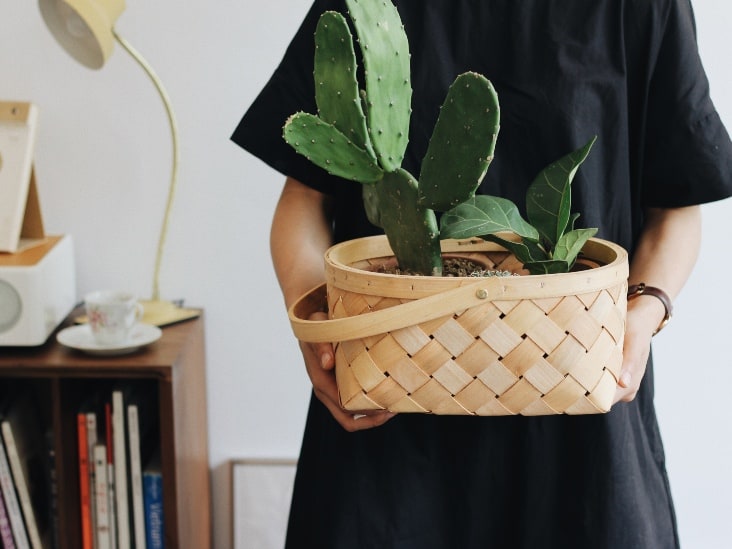
Is It Good To Have A Cactus At Home?

Have you ever wondered why people grow cacti plants in their homes?  The truth is that these plants are not only beautiful but also healthy.  Cacti and many other indoor plants can help put you at ease in your home. In fact, the benefits of growing these succulents indoors exceed the downsides.  As long as you know how to take care of your plant, it will also take care of you.

So, is it good to have a cactus at home? The simple answer is Yes. Cacti and other houseplants have a wide range of health benefits to offer us. Furthermore, these succulents are relatively easy to grow and maintain. Indoor cacti can boost your productivity, make you breathe better, and make you feel happy. They also make your house feel like home and have unique therapeutic properties.  

In this post, we discuss some of the benefits of having cacti plants in your home and where to position them to get the best out of them. Read on to find out everything you need to know about growing cacti at home.

Is It Good to have a Cactus at Home?

As mentioned above, cacti plants bring a lot of positive vibe and energy to your house.  These are simple plants that can live anywhere as long as you know how to take care of them. They are a great option if you are looking to add a bit of greenery and visual interest to your living space.

With their low-maintenance status and unique appearance, these plants are perfect to use as indoor plants. However, there are lots of other reasons why cacti make excellent indoor plants. Below are some of the top benefits of growing cacti in your home. 

1. Indoor cacti plants reduce stress

Many studies have been conducted to establish the effect of indoor plants on stress levels in humans. A study conducted in 2010 confirmed that indoor plants could reduce tension/anxiety, depression/dejection, fatigue, and feelings of anger/hostility.

These are just some of the ways an indoor cactus plant can help you feel better. If you had just one or a couple of these plants in your house, it could make you a better person. Imagine stepping out of your home every day feeling good and ready to face the day.

Pencil cactus in a clay pot.
Walking into the office feeling fresh and happy seems like a good bargain.

You can also have a cactus plant in your office to keep the positive energy and good vibe around you all day. Walking into the office feeling fresh and happy seems like a good bargain, isn’t it?

2. Taking care of a cactus plant will make you feel happy

Most of us can agree that there is no better feeling in the world than taking care of something and seeing it nourish. The truth is that taking care of plants can give you the same sense of accomplishment as taking care of a pet.

In fact, pets and indoor cacti plants make a wonderful companion because they are good to look at and don’t demand too much from you. 

You don’t need to be a plant expert to give your cactus the best care.

Furthermore, you feel good when you see your plants thriving and living happily. Although it can take you some time to figure out what your plants like, that shouldn’t be a major issue. As soon as you figure out your plants’ light requirements, appropriate pot size and soil, water requirements, and fertilizer needs, you are good to go.

When you see your plant growing well, you feel proud of being a successful cactus gardener.

Also, there is so much to learn about your cactus plant. The benefits of growing these succulents in your home are vast, and you will learn many things along the way. You will know how to propagate them, re-pot, and also discover the different types of cacti plants. 

Cactus in a mug.
Taking care of plants can give you the same sense of accomplishment as taking care of a pet

3. Improves air quality

Plants are awesome, and human beings cannot survive without them. Therefore, having some in your house helps to bring the benefits closer to you. Green plants such as cacti absorb carbon dioxide from the air and release oxygen. This is one of the basic ways of improving air quality.

Keep in mind that all human beings need oxygen to survive and get rid of harmful toxins from their bodies.

Apart from absorbing carbon dioxide, these plants can also improve air quality in other ways. In 1973, NASA scientists conducted a scientific study that identified over 107 volatile organic compounds (VOC) in the air inside one of their space stations.

Occupants of the station often suffered breathing difficulties and other respiratory complications that were later identified as the Sick Building Syndrome (SBS). Experiments were initiated to help deal with the issue, and one of the tests involved growing plants inside the space station.

After a few months of growing plants inside the station, it was discovered that the number of VOCs had not only been reduced but eliminated altogether.

By having cacti plants inside your house, you could reduce the amount of air impurities by over 50%. Indoor plants can also lower the amount of dust and bacterial buildup in your indoor spaces.

Always remember the fact that there are many toxins within your home created by pet dander, furniture carpets, plastics, paint, and certain cleaning products that can cause harm when inhaled. Cacti plants can reduce the impact of such impurities significantly.

4. Cacti plants have unique therapeutic and medical properties

That is right. A lot of people talk to their plants, which makes them feel better. It is human nature to develop a close relationship with things we value in life – whether humans or not. Just the same way some people talk to their pets, others speak to their plants.

But, the fascinating part about this interaction is that plants actually benefit from the conversation as well. In fact, some gardeners believe that talking to plants can help them grow faster and stronger.

Dog sniffing cactus.
A single cactus plant can offer you much more than you expected.

When you speak, you are releasing carbon dioxide, which plants need to manufacture food. This means that when you talk closely to your indoor plant, it gets extra carbon dioxide allowing it to speed up photosynthesis.

On the other hand, indoor cacti plants have a way of making you feel relaxed and comforted. In fact, a single cactus plant can offer you much more than you expected. Technically, the benefits of growing a cactus plant in your home are endless.

5. Boost productivity

Controlled tests have actually shown that having a cactus plant in your office (including home office) can increase productivity by over 12%. This is because they help reduce the amount of carbon dioxide in the air.

Excessive amounts of carbon dioxide in the air can make you tired, restless, anxious, and can also cause headaches making you less productive. If you can manage to control the amount of carbon dioxide present in the air you breathe, it can clear up your mind and help you focus more.

The more productive you are, the better you feel about yourself and your job, and that can lead to a better life. After all, if your boss notices significant improvement in your output, you could get a job promotion that may result in a pay raise.

Cacctus plants in a pot on top of the cabinet.
The more productive you are, the better you feel about yourself and your job.

6. Growing a cactus in your home can enhance your memory

Psychology research conducted by the University of Michigan in the United States outlined a wide range of mind-blowing benefits one enjoys when interacting with nature. Interaction can mean taking a walk in the park, looking at plant photographs, or growing plants in your home.

The study showed that interacting with nature can enhance one’s memory by up to 20%, leading to improved performance at work and school.

Therefore, it is a great idea to grow cacti plants in your house and place them in your study room, home library, home office, or any other room where you and your kids typically do your work.

Should You Place a Cactus in the Living Room?

There is no doubt that cacti plants bring positive energy to your home. These are beautiful plants with intense protective energy. 

However, the biggest problem with these plants is their spines/needles. This is the primary reason why you need to identify a good spot in your house where you will put these plants.

A good living room should be calm, relaxed and secluded from the other rooms in your house. This should be a place where you can feel comfortable and relaxed. If you have your cacti plants all over the place, they will constantly poke you with their spines.

To get good vibes, place your cactus plants in the fame and reputation quadrant of your home.  The fame and quadrant section is the part of your home dedicated to what and who you are and what you portray to the outside world.

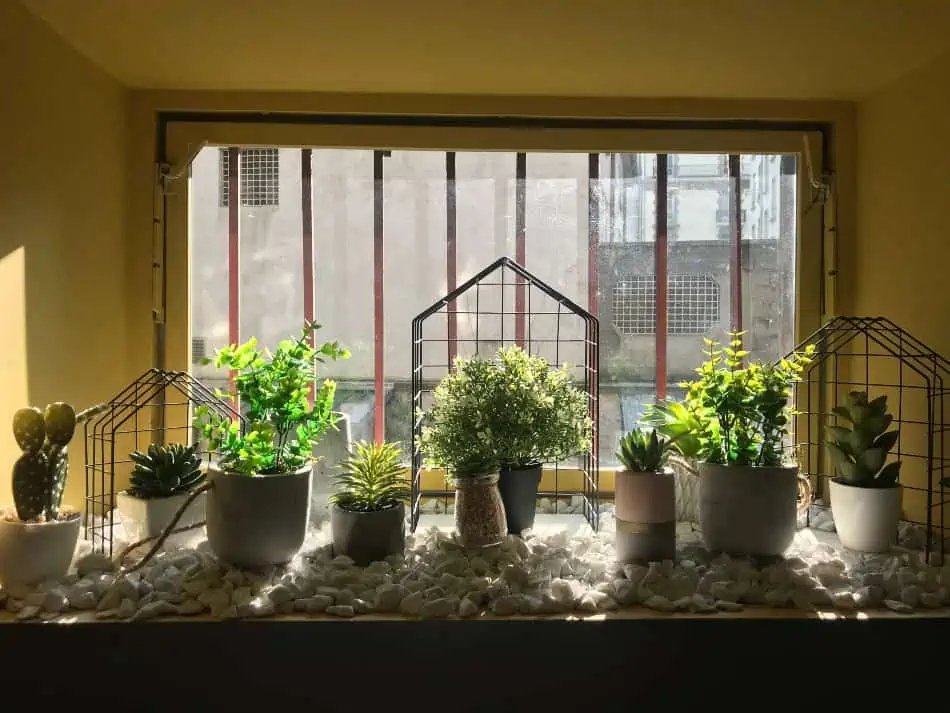
This is mostly the corner of your house that is direct across the main entrance. You can also position your cacti plants along with windows since they emit a lot of protective energy. Other places you can place your plant include your study room, home office, and library room.

Plants near the window exposed to sunlight.
You can also position your cacti plants along windows since they emit a lot of protective energy

Summary

Cactus plants are great plants to have in your home since they bring subtle beauty and an incredible visual experience, especially when they flower. The only thing you need to ensure when growing these plants in your home is to have them in the right place. Avoid positioning them in your living room and kitchen.

Where In The World You Can Find Cactus?

Members of the cactus plant family are unique and tend to exhibit a wide range of shapes and sizes. Even though these succulents can be found in many parts of the world, most cacti species except four tropical species are native to America.  Like every group of living things, the differences between different cacti species vary considerably.

In fact, each cactus species is well adapted to growing in specific areas that experience a certain climate. For instance, most species within the Echinocereus genus are cold-hardy and can withstand frost.

So, where in the wold you can find cactus? Generally, most cacti species grow in hot and dry regions in North and South America. In North America, these desert plants are prevalent in Mexico, Canada, and many parts of the Southwestern United States. In South America, they are mostly found in Brazil. Some cacti species also grow in Central America and adjacent Islands such as the Caribbean and Galapagos. Rhipsalis baccifera is the only exception that can be found growing in parts of tropical Africa, Madagascar, Mauritius, Seychelles, and tropical America.

Read on to discover everything you need to know about this amazing desert plant and where it grows. We cover essential details that will enrich your knowledge.

Cactus Plant: A Quick Overview of Its Structure and Unique Features

The family of Cactaceae comprises a significant number of flowering plants with succulent stems. The term succulent is used to refer to stems that can store water for relatively long periods.  This is one of the unique features of this plant that helps it to survive in arid conditions.

The presence of a unique structure known as the areole also makes these plants unique. The primary function of the areola is to produce flowers, branches, and spines. Keep in mind that different kinds of spines serve different purposes.

Some spines are soft and feathery to help protect the cactus from intense UV light, while others are tough and sharp to help protect the plant from predators.  The presence of spines instead of true leaves also plays a critical role in minimizing water loss through evaporation and transpiration.

The plant surface is covered with a waxy-like substance known as cuticle that also plays a critical role in minimizing water loss. Cacti plants have also developed a unique survival mechanism known as revered opening and closing of stomata.

While regular plants open their stomata during the day and close them during the night, the reverse is true for a cactus. Their stomata open during the night and remain closed during the day to help conserve water.

A closeup image of a cactus.
The presence of spines instead of true leaves plays a critical role in minimizing water loss through evaporation and transpiration

These plants tend to vary in size, depending on their species. Perhaps, the tallest cactus is the Mexican giant cardon that can grow to a height of 60 feet (18 meters). In contrast, the smallest cactus is believed to be the Blossfeldia liliputana that is less than three centimeters in diameter when fully grown.

Natural History of Cacti Plants

Most cacti species are native to America. In fact, there is no known cacti species native to Europe, Australia, or Africa.  To date, not much is known about early cacti plants because only a few cactus fossils have been found.

The oldest fossil that was found in the United States dated to more than 50 million years ago and was highly similar to modern-day prickly pear.

However, scientists believe that some cacti plants grew in the tropical environment until about 65 million years ago when the world’s climate started to change from year-round rainfall to alternating patterns of dry summers and wet winters.

Later, when deserts began to form, the plant was forced to adapt to the dry, desert conditions. Although most cacti species are synonymous with deserts, some grow in tropical regions of Mexico, Brazil, and the Caribbean Islands.

One of the most common tropical cacti species is the Christmas cactus, which grows in Brazil’s tropical rainforests.

Where Do Cacti Live?

Most cacti species grow naturally in the wild.  This is where they are meant to be. The three places you will find these plants growing naturally are; deserts, mountains, and forests.

Deserts

Many people tend to think that all cacti plants grow in deserts, but that is not the case. Only a few cacti species are truly adapted to growing in arid conditions such as deserts and semi-deserts.

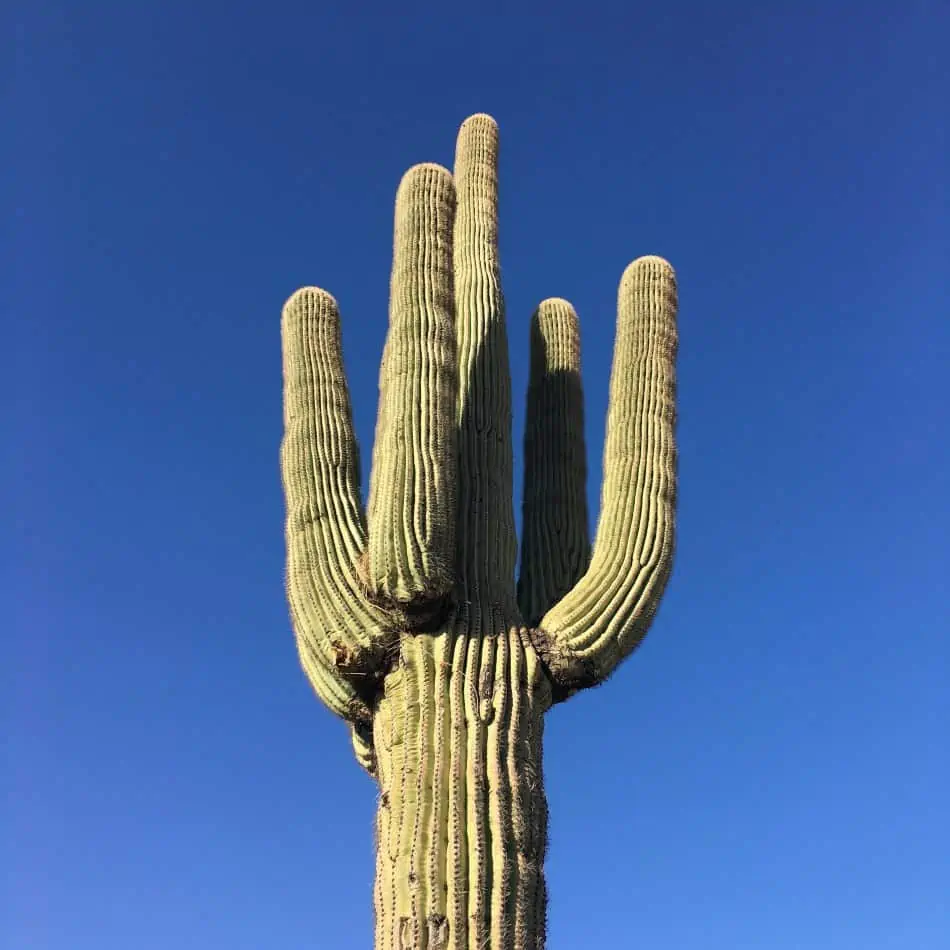
The giant Saguaro cactus is perhaps the most prominent face of desert cacti. The giant plant grows in the Sonoran Desert and can live for up to 200 years. The Sonoran desert is the second largest desert in North America, covering parts of Arizona and California. It also stretches to the Mexico border.

The desert receives three short rain seasons- one in summer and two in winter.  The Saguaro is well-adapted to live in these conditions and grows well among other desert plants.

A Saguaro cactus in desert.
Saguaro cactus in desert

Mountains

Some cacti plants are also found in mountainous regions. The Andes is one of the longest mountain ranges in the world that serves as home to a significant number of cacti plants. The mountain stretches from the western coast of South America for approximately 7,000km.

Copiapoa is one of the oldest cacti species growing in the Andes. The plant is well adapted to living in rocky areas that can go for years without receiving rain.

The primary reason why the Copiapoa can survive for such a long period without water is the sea. Cold air from the adjacent Caribbean and Pacific seas moves over the hot land producing a lot of fog. This happens almost every morning, helping the plant find the water it requires to survive by absorbing moisture from the fog.

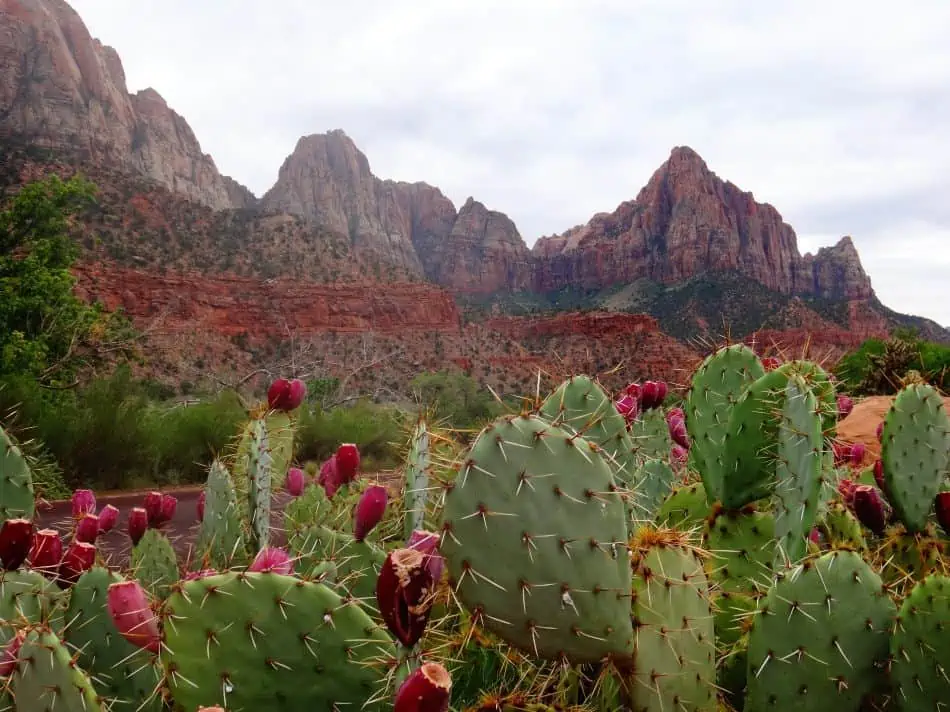
A prickly pear cactus.
Prickly pear cactus

Forests

A significant number of epiphytic cacti species grow in the tropical rainforest that stretches across Central America and northeast of Brazil. Climatic conditions are quite different in these regions since they receive plenty of rainfall.

Cacti species that grow here, such as the Christmas cactus, don’t need physical modifications or unique features to survive since there is plenty of water available.

Geographical Distribution of the Cactus Family

In this section, we cover the general range of altitude and latitudes that favor the existence of cacti plants.

Altitude

Some cacti plants do well in low altitudes, while others do well in high altitude areas. These succulents can be found growing down along the coast of the Pacific and Atlantic oceans as well as other low-altitude regions such as the infamous Death Valley in California.

In some parts of North America, cacti plants can be found growing up to 3350meters (11,000 feet) above sea level, particularly in the White Mountains in California. Some of them grow in even higher altitudes in areas of the Sierra Nevada range.

In parts of South America, particularly on the Western edges of Andes, some cacti plants grow in regions as high as 4,500 (15,000 feet) above sea level.

In most cases, the high altitude species are low growing plants similar to those found in the southern and far northern altitudes. The higher altitude cacti species are often spiny or wooly to survive the intense UV light that strikes the surface due to a thinner atmosphere.

A cactus on the mountain.
Some of the cactus grow in even higher altitudes in areas of the Sierra Nevada range.

Some of the common species found in the high altitude regions include Austrocylindropuntia floccosa and Opuntia polyacantha.

Latitude

In North and South America, most cacti species are found at latitudes that many people may find quite surprising.  To the northern parts of America, these plants are mostly found in Southern Canada, specifically Ontario, to the East and British Columbia to the west.

In the much drier and milder western range, you will find them growing in northern regions than eastern regions. Unfortunately, only a few cacti species can survive the extreme cold conditions in this region.

To the tip of southern America, you will find low-growing cacti plants such as the Pterocactus australis, Maihueniopsis darwinii and Maihuenia patagonica.

Don’t Mistake Other Desert Plants for Cactus

Cacti are not the only plants that grow in deserts. There are lots of other plants in these areas that many people mistake for cactus. Some of the common non-cactus plants you will find in the desert include century plants, commonly referred to as Agave and the Dudleya plant.

Dudleya has succulent leaves and stems and a unique physical appearance that closely resembles a cactus plant.

Other plants commonly mistaken for cacti include bears grass, desert pineapple, some types of Yuccas, and stool plants.

Agave plant with spikes.
Agave and the Dudleya plant are some of the plants that you can find in the desert.

The only stem plant that is not a cactus is the candelilla, which is covered with many slender branches. The plant doesn’t have areolas or spines, and its flowers are quite small compared to cacti flowers.

Summary

This simple overview covers some critical information you need to know about the general habitats where cacti plants grow. Keep in mind that there may exist micro-climates that host unique cacti species suited for those conditions within each habitat.

The occurrence of cacti plants in extremely cold and wet regions may come as a surprise to many, but that is how things are.

We hope you have learned a few things that can make you a better gardener. Subscribe to our email list for the latest gardening tips on cacti plants.

How Long Does A Cactus Live?

Have you ever wondered how long cacti plants live? If so, you are not alone. Most gardeners who grow these plants in their homes never see them die as long they are treated well. Most cacti plants are low maintenance plants thanks to their unique survival abilities.  If you want to know how long these succulents live, you are in the right place. We will discuss that in detail below.

So, how long does a cactus live?  Generally, the lifespan of a cactus plant ranges from 10 years to 200 years depending on the species of the cacti. Outdoor plants tend to live longer than their indoor counterparts because outdoor conditions tend to be perfect. However, with good care, indoor plants can still live for many decades.

Keep in mind that there are over 2,000 cacti species, and each one of them has its own lifespan. Read on to find out everything you need to know about cacti plants and how long they live.

Which Is the Longest Living Cactus Species?

It is believed that the longest living cactus species is the Saguaro which belongs to the genus Carnegiea and species gigantea. The saguaro cactus is native to both Mexico and Arizona and can survive for between 150 and 200 years in the wild.

In fact, it is believed that the oldest Saguaro found in Arizona was up to 300 years old, but died in the mid-1990s. The plant lived in the Saguaro National Park and succumbed to bacterial infection. Typically, older cacti plants are more vulnerable to diseases and infections than younger plants.

A fully grown Saguaro cactus can reach a height of 50 feet, and that is what makes it unique.  Also, Saguaro plants are unable to live independently in their early years. So, an adult Saguaro nurses and protects a baby Saguaro by giving it essential nutrients.

In some cases, the older plant may die in the process, leaving the young Saguaro plant behind. It is also interesting to note that during the first ten years of this plant’s life cycle, it may not grow beyond two inches tall.

A Saguaro cactus.
The Saguaro cactus can live for 150 – 200 years in the wild

Why Do Cacti Live for So Long?

A wide range of factors helps a cactus survive for such a long time.  For starters, it is good to mention that cacti plants are naturally desert plants. In this ecosystem, there are a few animals that feed on these plants.

Generally, in the inhospitable desert environment, life is tough. Therefore, cacti plants have to find a way of adapting to the surroundings and living comfortably. They need to do everything possible to survive and reproduce.

Since conditions conducive to flowering and reproduction don’t come along too often, cacti plants have developed slow metabolism and longer lifespans to ensure they get an opportunity to reproduce before they die.

How Long Do Indoor Cacti Plants Live?

Once they are out of their natural habitat, cacti plants are vulnerable to a wide range of issues that may endanger their lives. Therefore, it is upon you to take care of your plant and help it survive.  Fortunately, it doesn’t require a lot of effort to keep your plant in great shape.

Make sure you water your plant properly and provide it with sufficient exposure to light so that it can survive for many years.

Most importantly, you need to ensure your plant is not overwatered and your potting mix is well-draining. Also, before you bring your cactus indoors, be sure to read everything about it and understand its species.

You will be in a better position to take care of your plant if you know the specific species you own since there are significant variations in light and water requirements between different species.

If you cannot identify the species of your plant on your own, be sure to seek expert help.

A collection of cactus in a shelf.
Indoor cacti

How Long Do Outdoor Cacti Plants Live?

Outdoor cacti plants typically live longer than indoor plants. This is because they receive the perfect amount of sunlight and get enough water to survive in a desert-like environment.

Furthermore, outdoor cacti are naturally protected from different pests and diseases or fungal infections that may affect the plant indoors.

Depending on the species, outdoor cacti can live up to 50 years or more. And with proper care and maintenance, you can expect your outdoor cactus to provide you with many years of joy.

Just make sure you don’t over-water your cactus and check for potential signs of disease or pests. Also, keep the surrounding area clean, so your plant can get enough light and air circulation.

Do Cacti Plants Experience Problems While Aging?

Although these succulents live for a relatively long time, they will typically start showing their age with time. The damages and blemishes they pick up over time begin to be prominent triggering degradation in the plant’s cosmetic appearance.

Things such as exposure to excessive and direct sunlight will start causing severe sunburns that may lead to permanent blemishes on the surface of your plant.

Just like animals, older cacti plants may require a lot of attention and care to remain alive. Sometimes, part of the cactus will break off under its own weight, and there is nothing you can do about it.

The fallen stems may sometimes root and start growing into a new plant, but that is not a guarantee. All you have to do once you start seeing signs of aging in your plant is to treat it with a lot of care. Try to provide it with perfect conditions and minimize disturbance.

The Resilience of a Cactus Plant

Water and sunlight are necessities for all plants. Lack of water and exposure to sunlight can ruin your plants appearance and affect its growth. This might eventually kill it. Few plants can withstand prolonged absence of water and sunlight.

In this section, we discuss how the cactus is adapted to living in harsh conditions and the plant’s water and sunlight requirements:

How are cacti plants adapted for survival?

Although living for such a long time is impressive, doing so in an arid environment is even more incredible. Living in such an inhospitable environment without a steady supply of water can be tough.  This explains why cacti plants have developed several adaptations to help them survive.

These plants grow shallow roots that spread far away from the plant so that they can absorb as much water as possible whenever it rains. Growing a dense network of shallow roots means absorbing more water when there is rainfall which is essential to their survival.

During the short rain season, cacti plants develop temporary root hairs on the fibrous roots to help maximize water absorption. After the rain season, the root hairs dry off and break off from the primary roots because they are no longer needed.

A desert cactus
They minimize water loss through transpiration since they are made of tough fiber.

Cacti plants don’t have leaves and true branches. Leaves and branches usually facilitate huge water loss through evaporation and transpiration. Instead of leaves, these plants have spines that serve two purposes.

First, they minimize water loss through transpiration since they are made of tough fiber. Second, they protect the plant against predators in the desert.

Unlike other plants, cacti experience reversed opening and closing of stomata. While other plants open their stomata during the day and close them during the night, the reverse is true for these plants. The reversed opening and closing of stomata help to minimize water loss through transpiration.  

The main stem of the plant is thick, fleshy, and has a waxy waterproof coating. This modification allows a cactus plant to store large volumes of water without running the risk of water loss.

These succulents also have a unique ability to reduce or expand the size of their stem as the volume of water stored in the stem fluctuates.

A prickly cactus.
Cacti plants have developed several adaptations to help them survive in desert

How long can a cactus live without water?

Being a hardy plant, a cactus can live without water for a considerable amount of time. However, the actual amount of time tends to vary significantly from one species to another.

While some cacti species won’t survive for more than two weeks without water, others can go for up to two years.

Typically, outdoor species are more resistant to water shortage than indoor species. For most indoor species, you need to keep a close eye on the plant throughout the year.

Watering your plant at least once a week is a good frequency. However, you should always let the soil dry out completely before you water again.

How long can a cactus live without sunlight?

Just like other green plants, cacti need sunlight for photosynthesis. Failure to expose your plant to sunlight for recommended amounts of times can be catastrophic.

Luckily, these plants are resilient and can tolerate shade for relatively longer periods compared to other plants. Light requirements of cacti plants also tend to vary greatly depending on the plant species.

Most cacti species will become weak and malnourished in the absence of sufficient light for prolonged periods.

Although cacti species that are highly shade-tolerant won’t die even in the absence of light, they won’t be healthy either. They won’t flourish and may fail to flower altogether.

Cacti species that do well in colder regions can survive for up to four months without sunlight, but those that do well in arid areas may not survive for that long.

It is recommended, therefore, to keep an eye on your cactus plant and ensure it receives the required amount of sunlight throughout the year.
A matured cactus.
Most cacti species will become weak and malnourished in the absence of sufficient light for prolonged periods

How Long Can a Cactus Plant Live Without Fertilizer?

Although most cacti species are naturally adapted to survive in nutrient-poor environments, they will still need some form of nutrition.

Too much fertilizer can damage your plant as it is highly susceptible to salt build-up because of its water-storing tissues.

Most species can survive without fertilizer for up to a year, but you should always keep an eye on your plant’s health.

It is important to note that cacti plants are slow-growing species and usually require very little fertilizer. If you decide to use it, do so sparingly.

It is also important to feed only during the active growing season when the plant requires more nutrients for growth. This will vary depending on the species of your cactus plant.

How Can I Increase the Lifespan of My Cactus Plant?

The lifespan of a cactus plant is mainly determined by its species and growing conditions. But, you can increase the life expectancy of your cacti plant by providing them with ideal temperature, humidity, and soil moisture levels.

Be sure to provide adequate light to the plant since most species of cacti require at least six hours of full sun per day. Also, add some compost and fertilizer to the soil once or twice a year, as it will help your cactus to thrive.

Finally, water your cactus regularly during the growing season. Allow the soil to dry out between watering sessions, and do not overwater, as too much water can cause root rot.

Summary

There are over 1,500 cacti species that come in different sizes, shapes, and colors. The average lifespan of these plants varies greatly from one species to the other. Species such as the Saguaro can live for up to 200 years while jungle cacti species such as Christmas cactus have an average lifespan of between 20 to 30 years.

Outdoor plants generally live longer than indoor plants. The level of care you provide to your cactus plant will have a significant impact on its lifespan.

We hope you have learned something new that will help you become a good gardener. Feel free to share this information with your friends by clicking on the social media buttons below.

When Should I Fertilize My Cactus?

A significant number of gardeners out there often think that cacti plants don’t need fertilizer. However, that is not the case. Just like any other plant, cacti need nutrients to help them grow and thrive. While they can get some of the nutrients they need from the potting mix; commercial fertilizer will help them grow fast and bloom beautifully.

So, when should I fertilize my cactus? The best time to feed your succulent is during early spring just before the growing season kicks in. But, if you are well organized, consider setting up a schedule that allows fertilizing your plant two or three times per year; in spring, summer, and fall. Be careful not to feed your plant with fertilizer that is too strong because the effects can be devastating. Most cacti species will appreciate fertilizer that is high in phosphorus than nitrogen but diluted to its half or quarter strength. A 5-10-5 (NPK) solution usually works well in most situations.

Read on to find out everything you need to know about feeding your cactus plant. We discuss essential tips that will help you take care of your plant in the best possible way to help you achieve success.

Cacti Fertilizer Needs

Alongside soil, watering, and light, cacti plants fertilizer needs are quite different from other plants. In the natural conditions where these plants grow, feeding is limited due to the inadequate availability of nutrients. Therefore, they have developed a coping mechanism of how to survive on limited nutrients.

You must stick to this principle to avoid hurting your plant with an excessive supply of nutrients. Generally, cacti plants don’t require heavy fertilization. In fact, plant experts say that if you want to achieve better results, strive to replicate the natural growing conditions of the plant.

To get the best out of your plant, consider giving it multiple small feedings instead of one gigantic flood of fertilizer.

How Do You Know When It’s Time to Feed Your Cactus?

Cacti plants require fertilizer during the active growing season more than any other time. In most cases, the active growing season starts in spring and stretches to early fall. Therefore, you need to come up with a feeding schedule that focuses on fertilizing your plant during this time.

Some gardeners prefer using a time-release feeding mechanism that will automatically feed the cactus for relatively long periods, such as three months, to make sure they do not miss feeding the plant during the peak time.

The primary objective here is to ensure you provide the nutrients when the plant needs them. Keep in mind that most cacti plants wake up from dormancy in spring, and this is the time you will start to notice new growth.

If you are a beginner, it might take you some time before you establish an appropriate feeding schedule for your plant. Do not be in a rush to do things. Start small and improve with time. If you have a plant that grows in winter, make sure you fertilize it at that time.

A soil on the gravel.
Do not be in a rush to fertilize, start small and improve with time

How Often Do You Need to Fertilize Your Cactus Plant?

Now that you know cacti fertilizer requirements and when to apply the fertilizer, the next thing you need to know is how often you need to do it to achieve better results. However, before you decide how often you need to feed your plant, remember one thing; cacti plants are adapted to growing in soils that are poor in nutrients.

This is the primary reason why these plants tend to grow slowly compared to other plants. Therefore, whatever you do, ensure you stick to this principle as much as you can. Avoid overfeeding at all costs because it will only cause more harm than good.

While you can fertilize your plant as often as you want, most plants will generally be fine with one feeding session each year.

Proper and regular fertilization speeds up cacti growth, and that is what you need. Some gardeners with a huge plant collection even prefer mixing a small amount of fertilizer every time they water their plants, and it works fine.

Old lady cactus flowering.
Make an effort to apply fertilizer just before the onset of their growing season.

Generally, it is a good practice to feed your cactus two or three times a year. Make an effort to apply fertilizer just before the onset of their growing season and leave them to rest during the dormancy season.

How to Tell If Your Plant Needs Fertilization

The best way to know when to fertilize your cactus is by observing its growth. When the plant grows fast and healthy, you can skip fertilizer for some time.

However, when it starts showing signs of nutritional deficiency, that’s the perfect time to ring the peak time and give it a dose of fertilizer.

Cacti plants that show signs of nutrient deficiency have pale, yellowish leaves.

If you notice the color and texture of your plant’s foliage changing, it means your cactus needs feeding. Therefore, make sure you apply fertilizer immediately to restore the health of your cactus.

How Much Fertilizer Does Your Cactus Require?

Since most of us purchase general-purpose fertilizer for our cacti plants, you need to adjust the dosage accordingly to meet the needs of your cactus. Most cacti species require less fertilizer than other plant species. Therefore, you will need to dilute the fertilizer accordingly.

If you fertilize regularly (once every month), make sure you are using small amounts of fertilizer- about one tablespoon of fertilizer in three or four gallons of water. 

However, if you only fertilize your plants two or three times in a year, consider using one tablespoon of the fertilizer in one gallon of water.  General recommendations suggest diluting your fertilizer to ½ or ¼ of its strength before you apply it.

Be careful not to use a high concentration of the fertilizer to avoid causing harm to your plants. Plant fertilizer that is not properly diluted is caustic and can cause severe fertilizer burn, which will damage roots and eventually kill your plant.

A soil on hand.
Most cacti species require less fertilizer than other plant species. Therefore, you will need to dilute the fertilizer accordingly

Highly concentrated fertilizer can also cause a sudden change in the pH of water. The ideal pH for most cacti plants and other succulents is around 6.5. When properly diluted, fertilizer cannot impact on water and soil pH.

However, highly concentrated fertilizer can significantly lower the soil and water pH, which is dangerous to the survival of the plant. In case you don’t know how to dilute the fertilizer appropriately, seek help from a plant expert.

Signs That You Are Overfeeding Your Cactus Plant

You should avoid overfeeding your cactus plant by all means. Overfeeding can lead to various plant problems, such as fertilizer burn and root rot.

Some of the common signs that you are overfeeding your cactus include yellowing foliage, wilting leaves, poor growth and development, and brown spots on the stem.

If you suspect your plant is getting too much fertilizer, stop feeding it immediately until the symptoms subside.

Once the symptoms subside, adjust your feeding schedule accordingly and stick to it. Doing this will help you achieve better results without risking the health of your succulent.

Can I Use Mineral Fertilizer to Feed My Cactus?

Mineral fertilizer is a popular choice for many gardeners and farmers because it is readily available, affordable, and easy to apply.

But while mineral fertilizer may be suitable for other plants, you should refrain from using it on cacti since it produces an unbalanced ratio of nitrogen and phosphorus.

Regularly applying mineral fertilizer to your cactus can cause more harm than good because it can cause root burn, eventually leading to your plant’s death.

So, if you plan to feed your cactus, use a balanced liquid, slow-release organic fertilizer, or an all-purpose gardening fertilizer specifically formulated for cacti plants. This will help you achieve better results without risking the health of your succulent.

Remember to dilute the fertilizer appropriately before applying it to your plant. As mentioned earlier, using an undiluted or too-strong solution on your cactus can lead to root burn and other problems.

So, ensure you get the right ratios when preparing the fertilizer solution for your cactus.

Fertilizing Indoor Cacti

Many of us might have discovered the beauty and low-maintenance of growing cacti plants in pots. Potted plants are a welcome beauty to our indoor spaces and will always make you feel better and happy.

While growing cacti plants in containers is more of a low-maintenance option, you still need to feed them regularly to achieve better results.

Golden Barrel cactus flowering.
You should start watering your indoor plants at the start of spring through summer and early fall.

Keep in mind that cacti plants grown in the ground get most of their nutrients from the surrounding soil. The numerous amounts of microorganisms in the soil constantly break down organic matter, adding nutrients to the soil.

However, the potting mix you use in your growing container doesn’t undergo this process. Therefore, potted plants need supplemental nutrients to thrive. The additional nutrients come in the form of fertilizer.

Below is an outline of the essential things you need to keep in mind when feeding your indoor cacti:

  • Consider using a liquid, low-nitrogen, and high-phosphorus fertilizer, or find an appropriate organic fertilizer alternative.
  • If you water your potted cactus regularly (at least twice every month), apply fertilizer at its quarter strength. Don’t go beyond this proportion because it may be dangerous.  If you don’t water your plants regularly, consider using fertilizer at its ½ strength.
  • The best time to apply the fertilizer is when you are watering your plant. Generally, you should start watering your indoor plants at the start of spring through summer and early fall. Do not water your plant during winter unless it is absolutely necessary.

Inducing  Flowering with Fertilizing

If you are like most people, your biggest joy is to see your cactus bloom and beautify your home. Unfortunately, not many people enjoy the privilege of seeing their desert plant flowers. Our bonus fertilizing tip may help you with that problem.

One of the secrets our experts have learned over many years of growing cacti is that proper fertilization can get your plant bloom almost on-demand.

We know how useful this technique can be because some cacti species don’t bloom easily. Some may even take up to 30 years before they start flowering!

The secret to getting your cactus plant flower fast is to add a small amount of dissolved ammonium sulfate to the water. Alternatively, you can dissolve the ammonium sulfate powder into the water directly.

Ammonium sulfate is a specialty plant fertilizer that is hard to find at local garden shops, but you can find it online.

Make sure you apply the ammonium sulfate early in spring when your cactus plant is just coming out of the dormant winter phase. This is the time your plant is starting to prepare for the flowering season that mostly happens in summer.  Therefore, the ammonium sulfate is meant to give it some little head start.

Since you don’t need a lot of ammonium sulfate to do the trick, one bag should be enough to last for years.

A cactus blooming.
The secret to getting your cactus plant flower fast is to add a small amount of dissolved ammonium sulfate to the water

Final Thoughts

Fertilizing your cactus plant shouldn’t be a difficult task. We hope the information you have read in this post provides you with a good headstart you need to do a good job. So, if you are now itching to fertilize your cactus, find a good fertilizer, and get started.

Also, if you have enjoyed reading this post, and you want to share it with your friends, feel free to hit the share button and keep the conversation going.

Does A Cactus Need Fertilizer?

Most of us can agree to the fact that cacti plants are some of the hardiest and most resilient plant species in the world. Generally, they are low-maintenance plants that need little care to thrive. These plants can store water for a relatively long period and adapt to different environments quite well. But the big question is, do cacti plants require fertilizer to survive? Can these plants thrive and bloom without any form of fertilization? We are here to help you understand the right thing to do.

So, does a cactus need fertilizer? The simple answer is yes.  Just like any other plant, cacti need nutrients to thrive and bloom. Occasional fertilization helps the plant replenish the essential nutrients it has used from the soil throughout the season. At minimum, fertilizing your cactus plant at least once or twice a year is a good thing to do. However, if you are well organized and can set up a good schedule, fertilizing it three times a year (in spring, summer, and fall) can yield great results.

Keep reading to understand everything you need to know about fertilizing your cactus plant and how to do it properly.

Before we start, here is a list of our favorite and recommended Fertilizer (Here)

Why Is Cactus Fertilization Important?

What is the first thing that hits your mind when you hear about cacti? Most probably, you picture a thorny desert plant that is used to surviving in hostile environments. You probably think the perfect environment for these plants is a harsh desert with two weather extremes; longer periods of no rainfall and shorter periods of sporadic rains.

You picture a plant that must always strive to absorb and store as much water as possible whenever it rains to survive. But did you know that there is the other side of a cactus plant, especially when it is domesticated?

The moment you decide to start growing cacti plants in your indoor or outdoor garden, you should be prepared to treat them right to achieve the results. Fertilizing your plant can help to keep it happy and healthy, no matter the season.

Top view of small cactus plants in a pot.
Feeding your cactus will help it adapt, actively growing, and flower beautifully

Just like any other houseplant, feeding your cactus will help it adapt, actively growing, and flower beautifully. The right kind of fertilizer applied the right way and at the right time helps your plant obtain all the necessary nutrients needed to thrive.

Furthermore, proper fertilization encourages healthy growth and flowering.

Now that you know why it is essential to feed your plant, it is also important to know the right type of fertilizer to use and how to fertilize the plant correctly.

Types of Cactus Fertilizers

As mentioned earlier, fertilizers contain essential nutrients your plant requires for healthy growth. Cactus fertilizer can either be organic or inorganic and are mostly available in powder, liquid, solid, or granular form.

A soil, Mineral and fertilizer.
Fertilizers contain essential nutrients your plant requires for healthy growth.

A significant number of gardeners prefer using inorganic fertilizers because their chemical composition is consistent.  This doesn’t mean organic fertilizers are bad, but most of them may lack essential elements which might cause a deficiency. You may also be forced to use them for a prolonged period to achieve better results.

The main elements of cacti fertilizers include:

1. Nitrogen (N)

The primary purpose of nitrogen is to encourage good top growth. It also plays a critical role in building protoplasm, protein, and other essential components of plant cells.

2. Phosphorous (P)  

Phosphorous/phosphate encourages good root growth to provide the plant with strong anchorage. This mineral element also helps in seed germination (in case you want to propagate your cactus by seed) and ripening of fruit.

3. Potassium (K)

The primary purpose of potassium is to encourage good flowering and development of fruits. You will need a fertilizer that is high in potassium when you are trying to make your cactus plant bloom.

During spring (when your plant is in an active growth cycle), consider using a low nitrogen release fertilizer. A 5-10-5 (NPK) compound works best. Carefully mix your fertilizer in the potting mix, and it will keep your cactus plant happy until summer.

Another good alternative is to use a water-soluble fertilizer. Once you have obtained your water-soluble fertilizer, mix ½ tablespoon per gallon of water and spray carefully onto the base of your plant.

When using water-soluble fertilizer, consider applying the fertilizer at least once every two weeks during the active growth season.

Water-soluble fertilizer tends to work best for desert cacti than using a granular mixture. However, both methods are quite good, and the final decision will largely depend on what you prefer.

During the dormant period (winter), do not feed your plant with fertilizer because it is in a “resting” mode. 

What Is the Best Fertilizer for Your Cactus Plant?

Now that you know the types and major components of cacti fertilizer, you may be asking yourself how to determine the best fertilizer for your plant.

Before we dive deep into the selection criteria, there are a few things you need to keep in mind.

First, you should know that cacti plants are not heavy feeders. This means they do not require a lot of fertilizer to thrive. In fact, these succulents tend to respond well when fertilizer is applied at a half or quarter strength.

Also, you should keep in mind that strong fertilizers, especially those with high nitrogen component, may cause problems to your plant. Although most cacti plants do not require a specific fertilizer blend, they often do well when fed with a highly diluted multi-purpose fertilizer.

Always go for a low-nitrogen, water-soluble fertilizer for better results. Use a 5-10-10 (NPK) fertilizer blend or 10-10-10 (NPK) diluted to its ¼ strength. You can also come up with your own custom blend by combining a 5-10-10 blend with a 1-7-6 blend.  The resultant blend may help in maintaining a consistent amount of nutrients in your potting mix.
A gravel with sand.
Cacti plants are not heavy feeders, this means they do not require a lot of fertilizer to thrive

The bottom line is to ensure you are feeding your cactus plant with the best possible blend of fertilizer. A few manufacturers sell already diluted fertilizer ready for use.  Feel free to find one if you do not want to handle the dilution process by yourself.

Signs That Your Cactus Needs Feeding

The truth is that cacti plants are highly sensitive to fertilizer. As a result, you must watch out for signs of nutrient deficiency before you consider feeding them.

Your cactus’ leaves and stems will become yellowish if it is not getting enough nutrients. You may also notice that the overall growth rate has significantly slowed down. This is an indication that your plant requires feeding.

But it doesn’t mean that the appearance of these signs indicates that your cactus needs more fertilizer.

Stressful conditions such as prolonged dryness and too much water can deprive your plant of vital nutrients.

If you are uncertain, water the soil deeply before adding a diluted fertilizer solution. Give your cactus time to respond before adding more fertilizer.

Fertilizing Your Cactus Plant

As the growing season approaches, take time to inspect your plant regularly. Consider inspecting it at least once every week and check for signs of new growth such as fresh needles, new leaflets, or increased size. You should only start feeding your plant when there are signs of growth.

One important thing you need to keep in mind when fertilizing your plant is to use your fertilizer sparingly. Too much fertilizer can lead to poor root growth and stunted growth.

If you are using a 10-10-10 (NPK) or 5-10-10 fertilizer blend, be sure to dissolve one tablespoon of the fertilizer in one gallon of water.

A woman putting fertilizer to cactus.
Remember the fact that you are not supposed to overfeed.

Use the resultant mixture to water your cactus plant until the soil is completely moist. However, you need to be careful to avoid overwatering your plant since it may have adverse effects on your plant.

If you are using a 1-7-6 (NPK) fertilizer blend, consider using the slow-release method to feed your plant. Take one tablespoon of the 1-7-6 (NPK) fertilizer blend and mix it with one gallon of water. Use the mixture to water your plant sparingly.

When watering a potted plant, allow the mixture some time to sink in properly.  Also, make sure you are pouring the mixture slowly to allow the plant enough time to absorb it and drain out whatever is excessive.

Always check if the topsoil of your container is completely dry before watering again. This should happen after approximately two weeks.

No matter how you choose to feed your plant, remember the fact that you are not supposed to overfeed. You might think you are doing the right thing, but overfeeding is dangerous to your cactus the same way overwatering is.

Essential Things to Keep in Mind When Feeding Your Cactus Plant

  • Overfeeding may cause more harm than good. Applying too much fertilizer can cause severe burns or even death.
  • Be careful with your plants during summer if you are using chemical fertilizers. A slight mistake can be catastrophic.
  • Know the type of fertilizer that will work best for your plant. If you have no idea where to start, consult experts.
  • Always start slow and improve with time if you don’t see the desired results.
  • Fertilizer can damage recently potted or repotted cacti plants. Consider delaying fertilization until after your cactus establishes itself in the new pot. This occurs after two to three months.
  • Some cacti species, such as the holiday cactus, are usually dormant in summer and active in winter. Therefore, for such plants, develop a reverse fertilization schedule so that you feed them at the right time.
A soil on hand.
Overfeeding may cause more harm than good so always start slow and improve with time

When Is the Best Time to Feed Your Cactus?

The best time for fertilizing your cactus plant is during the growing season, usually from late spring to early fall.

Consider applying the right fertilizer once every two weeks only when you notice new growth in your plant.

However, if you are using a slow-release fertilizer blend, consider fertilizing your cactus every three months instead. Take time to observe your plant and adjust your fertilizing schedule accordingly.

At the end of the day, every cactus is unique and different, so pay attention to your plant’s needs when creating a fertilizing schedule. Most importantly, remember not to overfeed or overwater your cactus.

What Happens If I Overfeed My Cactus Plant?

Overfeeding is as detrimental to your cactus plant as overwatering. Too much fertilizer can burn the roots and leaves of your cactus, leading to stunted growth or even death.

Moreover, excess fertilizer might wash away essential trace elements from the soil, resulting in nutrient deficiency.

Therefore, if you suspect you have overfed your cactus, withhold the fertilization immediately.

Consider flushing the soil with large amounts of water to eliminate any excess fertilizer and restore nutrient balance in the soil.

Furthermore, if the leaves of your cactus are yellowing or wilting even after providing optimal care and fertilizing correctly, consider consulting an expert for help.

They will diagnose the exact problem and provide professional advice on how to maintain the health of your cactus and restore its beauty.

Can I Use Organic Fertilizers on My Cactus?

Yes, organic fertilizers are as effective in providing essential nutrients to your cactus as chemical fertilizers.

These fertilizers usually come from natural sources such as guano, bone meal, compost, earthworm castings, and fish emulsion.

Organic fertilizer is an excellent choice if you are looking for an eco-friendly way to feed your cactus.

Moreover, these fertilizers also help improve the structure of your soil over time and promote microbial activity in the soil.

Final Thoughts

Providing good growing conditions and following a proper feeding schedule are critical elements you need to adhere to when growing cacti plants. Doing things right will give your plants the best chance of staying healthy and happy throughout the year.

Now that you know how to fertilize your cactus, don’t be afraid to go out there and practice what you have learned here. Go create your own beautiful and happy cactus gardens and enjoy life!

Hope you enjoy this article, here is a list of our favorite and recommended Fertilizer (Here)

5 Most Common Mistakes In Cactus Care And How To Avoid Them

Cacti are popular plants to grow at home (both indoors and outdoors) because they require very little maintenance and are among the coolest looking plant varieties. Because of their unique needs compared to most plants you keep in a garden, there are specific guidelines that need to be followed for care. Many misinformed care strategies may hurt the plants. 

These are five common mistakes in cactus care: 

  1. Caring for all cacti the same way 
  2. Overwatering and Underwatering 
  3. Using small containers and bad soil conditions 
  4. Offering too little sunlight or scorching them 
  5. Using pesticides incorrectly 

Many things in life need to be done in moderation. This is particularly true when caring for cacti as our common mistakes show that too much or too little of something can be equally damaging to the plant. We will cover the common mistakes that arise in cactus care and what you should be doing to make sure that your cacti are appropriately cared for. 

Common Mistakes in Cactus Care

Cacti can be very easy to care for when done so correctly, but it can also be challenging as they are very different from plants that we are familiar with. They are native to the Western Hemisphere, often being found in arid environments where drought is frequent. However, there is variation in the environments they are found in, with some being drier and more intense than others. 

Cacti have become a popular plant species to grow and take care of at home, providing that care mimics their growth and survival in the wild. The following are five common mistakes in cactus care and how you can modify these mistakes to care for your cactus plants best. 

1. Caring for All Cacti the Same Way 

Cacti are not only unique from other plants, but they are incredibly unique among each other. There are upwards of 2,000 species found throughout North and South America, all in varying weather and living conditions. Because they are naturally found in different climates, soil conditions, and environments, certain species are best suited for some areas over others. 

Cacti all share a common survival strategy to preserve water, but the conditions in which they do it can be quite different. The first common mistake in cactus care is treating all cacti as if they are the same. While there are general cactus care guidelines we will point out throughout this article, not every recommendation will suit all species the same. 

Cactus in a pot outside.
Cacti all share a common survival strategy to preserve water, but the conditions in which they do it can be quite different

To best care for your cactus plants and promote the growth of a healthy plant, you should be looking at specific care protocol for your individual plant types. This will ensure that you are mimicking the conditions that each species would be exposed to in their natural environment. Some species of cacti are easier to care for than others. 

For example, the Mammillaria genus of cacti likes to stay dry compared to others in the cacti family (Cactaceae). This means that they will need to be watered significantly less than other cacti for ideal growing conditions. Referring to individual species for best-growing conditions will ensure that the plant can thrive. 

There are certain species of cacti that are better suited for home growth than others. Here are some of the easiest ones to grow (listed by genus and offering many species within each): 

  • Opuntia: Referred to as prickly pear, Opuntia needs bright light as young plants and full sun as adults. They withstand high temperatures and dry environments. Seedlings should be consistently moist, but adult plants are very drought tough. They can completely dry out between watering but need to be soaked. 
  • Echinopsis: The Echinopsis genus is characterized by bulbous cacti. They like intense light, need thorough watering when their soil is dry, require good drainage, and do well with fertilizer.  
  • Mammillaria: These need less sunlight than many other species, do not want lots of water and need fast-draining soil. 
  • Rebutia: Different species of Rebutia will require varying sun conditions, and most do not want high temperatures. They need their soil to dry before re-watering. 
  • Parodia: Keep Parodia away from excessive direct sunlight and shade them during the hottest parts of the day. Their soil should remain moist, so regular watering is required. 
  • Ferocactus: These are often barrel-shaped cacti that appreciate direct sunlight, well-drained soil, and limited water. Only rainfall is required to water Ferocactus unless drought occurs. 
Prickly pear cactus in a pot exposed to sunlight.
Opuntia needs bright light as young plants and full sun as adults.

If you are considering cacti to grow at home, these are among the easiest to grow successfully.

A wide range of species falls under each genus, giving you plenty of cactus aesthetics to choose from. 

2. Overwatering and Underwatering 

One of the coolest features about cacti, which are considered succulents, is their ability to store water. Most cacti store water in their stems and thrive in environments will little access to water. When caring for cactus plants at home, there is typically always access to water, which can be good and bad. While we water most of our plants every day, cacti are not suited for it. 

Two common mistakes deal with how much water is being given to your cactus; you can overwater and underwater it. It is all about finding a happy medium as too much water will overwhelm the plant, and too little will cause it to dry out. It is recommended that cacti should be watered around once a week, but there may be differences depending upon the specific species. 

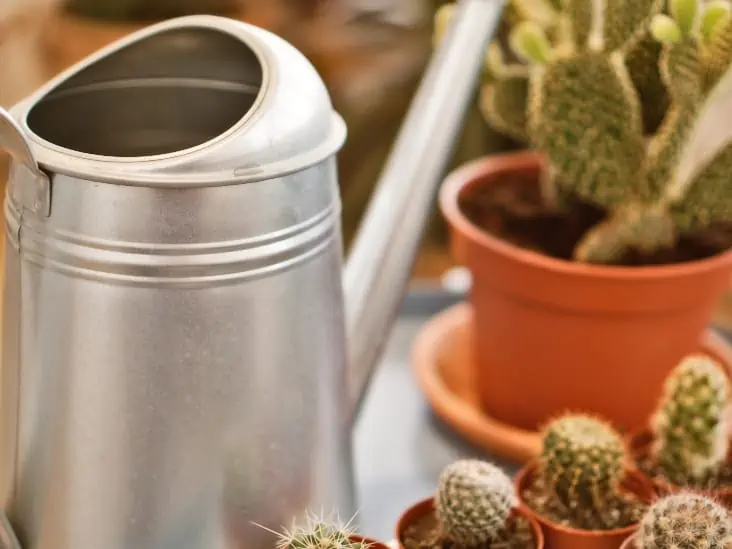
A water can beside the cactus.
It is recommended that cacti should be watered around once a week, but there may be differences depending upon the specific species

When watering most cacti, you will want to do so when the soil mixture is near or completely dry. The best watering technique is to soak the soil so that the cactus will be able to pull enough moisture from the mixture. Once the soil appears dry again, this is the signal to re-water (should occur every week or so). Too much water can cause the roots to rot when sitting. 

You may also notice physical signs on the cactus that show the impacts of watering at different levels: 

  • Coloring: If the plants are not watered for considerable amounts of time, green plants will often appear more yellow. In extreme situations, parts of the cactus will turn brown or black, which indicates death.
  • Plumpness: If the cactus looks very engorged or mushy looking, you may have overwatered it. Limit watering in this case, so the plant has a chance to return to ideal conditions. 
  • Wrinkles: If the leaves or outer appearance look shriveled, this is a sign of underwatering. Make sure that containers are sufficiently watered when watering does occur. 

The time of year will also determine the watering schedule. The weekly recommendations are for the summer and growing months, while wintertime will require less watering because of dormancy. Only water when soil is completely dry in the winter to avoid drying the cactus out. Soil type will also impact watering habits. Fast-draining soil will require more water as it leaves the container. Larger containers will need more water than small ones.

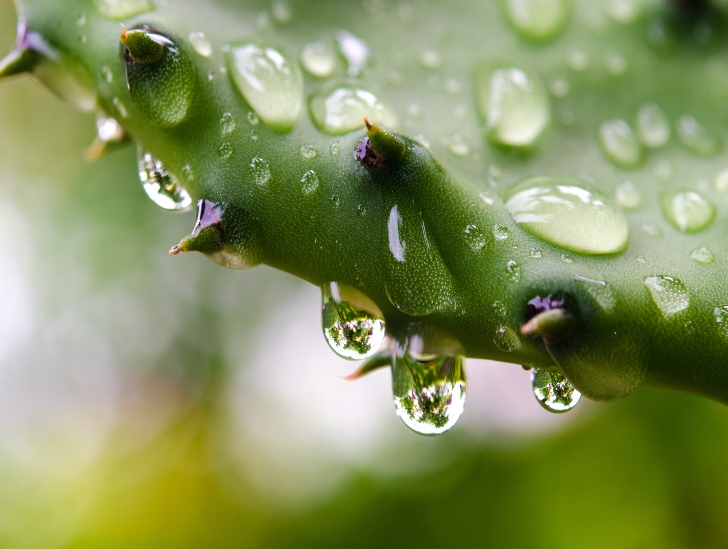
Water droplets on cactus.
Cacti are naturally drought resistant and will be able to handle drier environments.

Always look at the specific requirements of your species but err on the side of underwatering as opposed to overwatering. Cacti are naturally drought resistant and will be able to handle drier environments as opposed to being overwhelmed with moisture. 

3. Using Small Containers and Bad Soil Conditions 

The physical conditions in which cactus plants are kept will also have a significant impact on their ability to survive. There are two parts of this common mistake, which include using containers that are too small for growing and bad soil choices. These two factors work together to provide an unsuitable environment for many cactus species. 

If you are growing a cactus in a pot, you should examine both the size of the cactus and its roots. Many people will choose too small of a container for their cactus, which will limit the growth capabilities depending on the species. If there are longer roots, you will need a deeper container. It is recommended to choose a container that is slightly larger than the plant. 

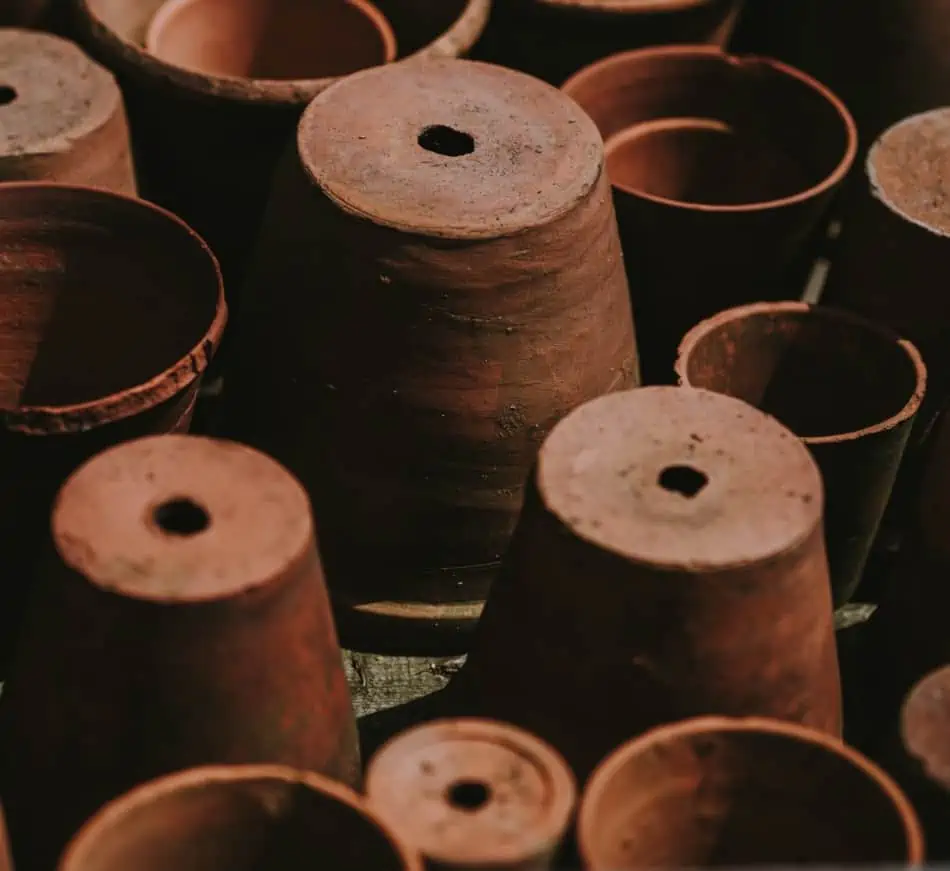
A clay pot with a drainage whole.
The containers you plant the cacti in should also have holes at the bottom to allow for this drainage to occur

For both plants in containers and those in the ground, the soil is critical. It is a common mistake to use regular potting or gardening soil for cactus, which does not contain proper draining qualities and can lead to root rot more quickly than cactus mix or soil. You should be mimicking growing the conditions that cacti find themselves in many desert environments. 

The best soils for cacti have the following characteristics: 

  • Rocky: This allows water to easily pass through the soil so that it does not sit and negatively impact the roots. 
  • Rich in nutrients: Many cactus mixes will include nitrogen, phosphorus, and potassium. 
  • Contain peat: If kept in extremely dry environments, peat moss is often added to help the plants maintain and hold moisture, so the soil does not dry out too fast. This will vary based on the species you grow. 
  • Fertilized: To help aid in the growth of your cacti, consider adding fertilizer to the soil every couple of months. They do best with light fertilizing as full-strength can be overwhelming to their composition and growth. Some soils are enriched with fertilizer and will not require additions. Phosphorus-rich solutions are best for growth. 

The containers you plant the cacti in should also have holes at the bottom to allow for this drainage to occur. Without holes, the soil remains moist, leading to premature death and decay of the roots. As cacti proliferate, they need to be repotted every two to three years so they have access to fresh soil with new nutrients. 

A soil on hand.
The soil should be mimicking the conditions that cacti find themselves in many desert environments

4. Offering Too Little Sunlight or Scorching Them 

Sunlight is crucial to the growth of all plants for photosynthesis. Cacti do engage in photosynthesis, but it is CAM photosynthesis, allowing them to maintain moisture by collecting carbon dioxide at night. The amount of light given to cacti is one of the most important factors in keeping the plant healthy. A common mistake is providing them with too little or too much light. 

There are two main issues where sunlight is concerned: 

You want to provide a good light balance for the plant, which will largely depend on the species you are growing. Some cacti require indirect sunlight, bright light, or a restriction on the hours exposed. 

Plants near the window exposed to sunlight.
At home, keep your Cacti near a window

If your cactus is receiving too little light, here are some common solutions: 

  • Keep it near a window: To avoid burning but allow for more light, keeping a cactus near a window will give it the light it needs without high intensity. 
  • Use artificial lighting: If you cannot provide enough natural light, artificial light will work. You will just need to make sure it is exposed to these lights for longer as they are not as powerful or strong as natural lighting will be. 
  • Move it outside: Many species will thrive in outdoor environments with ample sun. You can always put it in an area that will be partially shaded if it cannot withstand direct light all day. 

A common misconception is that cacti should be left in full sun all day since they are naturally in the desert. For some varieties, this is absolutely true and they need lots of light for growth. Others may be more intolerant, especially if it is a hot and intense sunlight. Brightness may be more important than direct sunlight, which can be achieved near a window for indoor plants. 

Most cacti will require 4 to 6 hours of sunlight per day, with specific species being suited for full sun. 

Some cacti are found in tropical environments rather than deserts, so intense sunlight is not going to allow them to thrive. Understanding your specific species will help determine this! Cacti can get a sunburn and they will tell you with yellowy skin color. If you notice this, take the cactus out of direct sunlight and grow it either indoors or in areas that will receive shade. 

5. Using Pesticides Incorrectly 

Because we want to keep bugs and insects off our plants for optimal growth, it is a common mistake to use harmful pesticides on your cacti. Most cacti naturally deter bugs and do not really deal with this problem as much as they do bacterial and fungal disease. When bugs do develop, you need to make sure proper insecticides are used as to not damage the plant. 

Bugs will feed on the nutrients accumulated in leaves and stems, with the most common pests being: 

  • Mealybugs: These are dangerous to the plant and will attack it from the stems and the leaves. They are small white bugs that reproduce quickly and will damage the cactus. Try removing with water or tweezers before chemicals. Neem or horticultural oil and rubbing alcohol solutions can also be used before more intense insecticide applications. 
  • Scale: Another difficult pest to remove, scale insects are often found in warm environments (perfect for cacti) and produce honeydew which can contribute to mold creation. If not addressed, leaves will die and it can kill the plant. Similar treatment methods can be used as mealybugs, but armored scales are more difficult to remove. Early intervention is necessary for effective removal. 

One of the most common ailments a plant faces when pesticides are involved is phototoxicity.

When pesticides are combined with sunlight, they can produce a chemical reaction that is similar to that of a sunburn on the cacti. This will result in burning of the cactus skin and is a direct result of a grower’s application of a pesticide. 

The best way to both use a pesticide and prevent phototoxicity is to apply pesticides when direct sunlight is not present. Application will kill bugs or pests but have limited impact on the surface of the plant as long as contact with sun is not made. When the pesticide is left on for the amount of time it needs to kill the bugs, wash it off before the plant will be exposed to sun again. 

A dying cactus.
Using a cactus-specific solution will help to keep your plants healthy and prevent the infestation of bugs or insects.

Prevention is the best way to avoid cactus damage related to pesticides. Make sure all pesticides used will not damage the plant upon impact. Using a cactus-specific solution will help to keep your plants healthy and prevent the infestation of bugs or insects on your plants. 

Taking Best Care of Cacti 

Cacti are incredibly strong plants but they are also sensitive and should be treated with care. They are best served being slightly neglected over being micro-managed with too much water or interference. Our best advice for avoiding the mistakes mentioned throughout this article is to research the specific cacti you will be caring for. 

Because ‘cacti’ is a such a large plant grouping, there is not one set of directions that will apply. The common mistakes apply to all cacti, but which ones will be more resilient to either end of the spectrum is largely dependent on the plant you have. Cacti are excellent for homes, and compared to most plants, are beautiful and low-maintenance additions. 

Why Is My Cactus Going Soft? (Great Tips To Avoid That)

Cacti are relatively hardy plants that can survive for a pretty long time with minimum care and maintenance. However, it doesn’t mean that your plant doesn’t require any specialized care at all. Once in a while, you may notice problems in your plants that require urgent attention.  Drooping, yellowing, and softness are some of the common issues that you may encounter while growing these succulents.

So, why is my cactus going soft? Well, the most likely causes of this problem could range from the improper site and ambient conditions to underlying diseases and root rot. Generally, potted plants require good drainage soil to thrive. The existence of soft spots in the flesh of your plant could be a sign of root rot, disease, or simply a mechanical injury to the stems and pads. The other common causes of this problem are fungal infection and insect damage.

In this post, we discuss some of the common reasons why cacti plants go soft and possible solutions that can help you save your plant from further damage. Everything you need to know is summarized below.

Why Is My Cactus Going Soft?

As mentioned above, a wide range of issues can cause cacti plants to start developing soft spots. It could be a sign of an underlying disease or improper cultivation conditions such as poor drainage potting mix.

Generally, cacti plants tend to have relatively low moisture needs. Most of them do well in temperatures above 70oF in relatively sunny areas and require minimal supplemental nutrients. Potted plants, in particular, require good drainage holes on the growing medium and nutritious potting mix with plenty of grit.

In-ground cacti plants also have similar requirements. The soil must be of good drainage and nutritious as well.

Just like any other plant, cacti can develop diseases or get damaged. A common sign of an underlying disease or damage is the existence of soft spots on the stem of your plant. These spots may also be discolored or corky depending on the extent of the damage.

Here are some of the other common causes of this problem: 

1. Overwatering

Typically, cacti plants don’t thrive in wet and poorly drained soil. Poorly drained soils cause water to fill up air spaces between soil particles, which prevent the much-needed root aeration. The damp conditions also provide favorable conditions for fungi and harmful bacteria to multiply.

As a result, the roots of your plant start to die, and disease-causing organisms get an opportunity to move into the stem tissue causing soft spots to start developing in different parts of the stem.

If you suspect that the problem is overwatering, then you need to stop being overzealous when watering your plant. Always wait until the top two inches of the soil are dry completely before you water again. Other than creating a watering schedule, let the potting mix tell you when you need to water your succulent.

A water can with cactus plants beside.
Typically, you need to water your plant once or twice every week during summer and once every month during winter

For cactus growing in the ground, it takes much longer for the soil to dry out completely after watering. Consider using a probe to check the soil moisture before you water, again. Avoid watering your cactus if it rains.

2. Physical injury

Your pet dog knocks over your indoor potted cactus, and it gets a slight nick in its skin near the soil line, or you unknowingly injure some roots while repotting your plant. While these things might seem minute to you, they can cause extensive damage to the plant.

The injured spots serve as openings that allow pathogens to find their way into plant tissues, causing extensive damage. Unfortunately, it might take you some time before you realize the actual cause of the problem.

To avoid such issues, always take time to check your plant for any wounds. You can do this at least once every week. If you discover any wounds during your inspection, be sure to treat them immediately. 

A pot of cactus fell.
Always take time to check your plant for any wounds.

One of the best ways of treating cactus wounds is by dusting on a cleanser that contains bleach until the wounded spot has scabbed over. Try as much as possible not to bring the wounded area in direct contact with water.

It will take about one week for the cactus to form a scab, but it might take much longer if the wound is pretty large.

Don’t water your repotted cactus plant for a few days to allow for injured roots to heal. During this time, take time to check the plant for any other physical damage on its stem, especially near the base.

3. Poor soil drainage

All cacti species need well-draining soil to thrive. Heavy soils tend to retain water for a relatively long period, which might cause extensive damage to roots and allow diseases to develop.

Be sure to use a well-prepared potting mix for your potted plants. If you don’t know how to prepare your own potting mix, feel free to go for the commercial options available. Make sure the soil doesn’t allow water to stand in the container during watering.

If that is the case with your soil, consider adding perlite to it to enhance drainage. To help promote the rapid drying of the potting mix, avoid using a container that is too large for your plant. Take time to find a right-size pot that will fit your plant size.

Cactus plant in a clay pot outside.
Avoid using a container that is too large for your cacti

For outdoor plants grown in the ground, take some time to thoroughly prepare the ground before you plant your cactus. Add some sand and pumice to enhance drainage and check for pests and insects.

4. Fungal and bacterial infections

In most cases, bacteria and fungus are introduced to cactus plants from openings in the flesh. The open spots might be from animal or insect activity, heavy weather such as hail, or inanimate objects.

While the injury might seem insignificant, the damage caused by bacterial and fungal infection can be extensive. Warm and moist conditions tend to accelerate the production of fungal spores, which in turn stimulate the production of harmful bacteria.

Once the fungus and bacteria start eating up your plant, you will notice the existence of soft mushy spots on the stem and near the base of the plant.

Some of the common symptoms of fungal and bacterial infection to watch for include discolored scabs, sunken spots, black dots, and round soft areas usually surrounded by fruiting bodies.

5. Insect damage

If you live in a warm region, pests and insects could be lurking in your garden. For instance, the longhorn beetle is one of the most dangerous insects since it consumes any new growth of prickly pears and some columnar cacti. This insect creates a burrow in your plant-eating up the water-storage tissue.

Furthermore, it can cause severe rot and introduce a wide range of other diseases.  The longhorn mostly concentrates near the base of the plant, causing extensive damage before it starts moving upwards.

If left unchecked, the effects of this inset may result in extensive damage to your plant.

A pest on the leaf.
The longhorn beetle is one of the most dangerous insects since it consumes any new growth of prickly pears

6. Root rot

The presence of soft spots near the base of your cactus plant may be a sign of root rot. Unfortunately, root rot is a common problem that many gardeners have to deal with quite frequently.

A wide range of things can cause root rot, but the most common cause is overwatering or growing the plant in humid areas. It is good to keep in mind that root rot doesn’t heal on its own, and if you don’t act swiftly, your plant will eventually die.

Sometimes, the soft tissues could also be a sign of stem rot- not just root rot. The first signs of stem rot include the presence of dark brown, yellow, or black spots on different parts of the stem. Stem rot may occur as a result of fungal infection and usually spreads fast to other parts of the plant.

Can You Save a Rotting Cactus?

The answer to this question will depend on the extent of the rot. If the plant has rotted so severely such that its top has tipped over or has sunken in on itself, it might be relatively difficult to save it. However, if it is only showing early signs of rot, there are a couple of things you can do to save it.

The first thing you need to do is remove it from other plants and place it in quarantine that creates a false impression of drought. You can achieve this by placing it in sand, not watering it at all, and using relatively brighter lamps to supply it with the much-needed light.

Rotten cactus cut in half.
You can also cut out the affected spots.

In most cases, this should be enough to kill the minor patches of fungi infections that are beginning to form on the surface of the plant.

If you don’t see change, try to wash away the fungal spots using q-tips or a small soft brush with soap. Carefully scrub the yellow/dark brown spots.

You can also cut out the affected spots. However, if you choose this route, you will need to cut extensively around the affected spots because some of the healthy-looking tissue may already be infected.

Summary

While cacti plants are relatively easy to grow, it doesn’t mean that you don’t need to take good care of them. Doing simple things such as watering appropriately and regular inspection of your plants for signs of pests and diseases can help you avoid so many problems.

We hope you now understand why your cactus is going soft, and you will do everything possible to save it. With a few fixes, you can get everything back on track and a gorgeous cactus plant that will make your home more beautiful!

The 4 Most Common Types Of Cactus Plants (that you can grow too)

What are the most common types of cacti? This is one of the most common questions that new gardeners tend to struggle with when deciding on the type of cactus to acquire. Sadly, for those who don’t understand much about succulents, they tend to think all cacti are the same. They only realize they were wrong when they step into a nursery to acquire their first plant. In reality, the cactus family has a wide range of different species to choose from.

So, what is the most common type of cactus?  Some of the most common types of cacti include

  1. The Golden Barrel Cactus
  2. Prickly Pear Cactus (Opuntia)
  3. Rhipsalis
  4. The Saguaro Cactus

While all of them are perfect for growing at home, the optimum growing conditions for each species tend to vary greatly. Therefore, it is always good to take time and understand the light and water requirements of each species before you make up your mind on which one you prefer to add to your indoors or home garden.

In this post, we discuss everything you need to know about each of the mentioned species.  What is unique about each one of them? Where do they grow? What are some of the features that make them unique? Read on to discover everything you need to know about these common types of cacti.

1. The Golden Barrel Cactus

A golden barrel cactus.
The Golden Barrel Cactus

The Echinocactus grusonii, commonly referred to as the golden barrel cactus is globe-shaped and ideal for growing on patios, in conservatories, or any other type of indoor glass room. This type of cactus grows to as much as four feet tall and three feet wide much like the barrel cactus hence its name. Its crown has whitish woolen hairs at the top.

Its stem is ribbed and produces prickly yellowish spines that are quite dangerous. There is also the spineless type that is hard to find.

 This type of cactus flowers mostly in mid-summer although the flowering is rare. Most people grow the golden barrel cactus for its foliage rather than flowers. In fact, its desert look is more appealing to gardeners than the flowers.

Growing the Golden Barrel Cactus

Think carefully before you decide to grow this type of cactus, especially if you have children and pets since its spines can be quite dangerous. In some cases, wounds from its spines require antibiotics to heal.

On the light side, you can choose to use this plant as part of your home security system by positioning it under low windows as a defensive planting.

Be sure to plant it in a safe spot or container and put it out of reach for kids and pets. Don’t crowd it and make sure you leave sufficient room for new offsets.

The cactus grows fairly quick at first before slowing down after some time. Typically, it might take up to ten years for the golden barrel cactus to reach ten inches in diameter. Just like other cacti plants, golden barrel cactus require little care and attention to thrive.

Top view of a Golden Barrel Cactus.
Be sure to plant it in a safe spot or container and put it out of reach for kids and pets.

Golden Barrel Care

The Echinocactus grusonii requires plenty of sunlight to thrive. Therefore, if you are growing it in a glass room, you may be forced to provide some shade during hot summer days to prevent sunburn. Temperatures averaging 50oF -75oF are ideal for growing but avoid anything below 40oF.

Water it sparingly from spring until fall and stop watering during winter. Overwatering this type of cacti, especially when the temperature becomes too cold, can easily lead to root rot. 

You should also ensure your potting mix drains well and fertilize the plant at least once every four weeks during summer using a high potassium fertilizer.

2. Prickly Pear Cactus (Opuntia)

A Prickly Pear Cactus.
Prickly Pear Cactus (Opuntia)

The prickly pear cactus commonly referred to as Opuntia is a member of one of the largest cactus families.  The cactus is usually identified by its wide, flat, and branching pads. Some people call it the paddle cactus or nopal cactus.

Many varieties of this cactus have detachable spines and glochids that can cause severe allergic skin reactions. The plant is native to the Western Hemisphere in parts of North America and Mexico.  The fruits, pads, and flowers of a prickly pear cactus are edible.

With all the spines and glochids, it may be hard to understand why the Opuntia cactus is so popular until you see its beautiful flowers which blossom from the areola of thorns. 

Although it takes quite long to mature and start flowering, it is worth the wait. The flowers come dazzling in shades of orange, yellow, and red. 

Growing a Prickly Pear Cactus

You can grow the prickly pear cactus from cuttings. Wait until spring or summer to achieve better results with cuttings. If you choose to grow the plant from seeds, start in late spring for better results.

To achieve better results, make sure you grow the prickly pear in a spot that receives plenty of sunshine and has well-draining soil.

Be careful with the planting and only transplant at the same level as they are currently growing. Planting the prickly pear deeper into a container may cause severe rotting of the plant.

Keep in mind that prickly pear cacti can be relatively heavy to lift and place in a hole. Therefore, an extra pair of hands may help.

Opuntia Cactus Care

This type of cacti prefers alkaline to neutral, well-draining soil. Soil with poor drainage can cause severe plant and root rot. The prickly pear is extremely drought-resistant and doesn’t require frequent watering. In fact, avoid watering newly propagated pads for the first month. After that, only water every three or four weeks during the first year.

To encourage flowering, make sure you fertilize your young plants with a well-balanced 10-10-10 fertilizer. For relatively mature plants, consider using a 5-10-10 or even 0-10-10 water-soluble fertilizer to promote fruiting and flowering.

Luckily, prickly pear cactus is not susceptible to pests and diseases but always remember the fact that it can easily be affected by rot if grown in potting mix with poor drainage.

3. Saguaro Cactus

A Saguaro Cactus.
Saguaro Cactus

The Carnegiea gigantea, also known as the saguaro cactus, is one of the defining plants of the Sonoran desert. The succulent is composed of a tall, thick, columnar stem that is about 18-24 inches wide. A typical saguaro will also have several branches curving upwards distinctively.

Its skin is relatively smooth and waxy, and the stem and trunk have stout spines clustered on their ribs.

With the right conditions this giant cactus can live for up to 200 years. This cactus is a slow-growing plant that takes up to 30 years to start flowering.

A ten-year-old Saguaro might only be one or two inches tall. However, a full-grown saguaro can be up to 60 feet tall. When it is fully hydrated, the plant can weigh up to 4800 pounds.

Growing a Saguaro Cactus

The big size of this plant doesn’t mean that you cannot grow it indoors or in your home garden. In fact, the cactus is among the most common indoor cacti plants in the United States and other parts of North America.

However, to grow it successfully, you need to do everything right to help it stay healthy and thriving. The freezing point is one of the critical considerations when determining where to grow a saguaro.

Technically, if the elevation is too high, the extremely cold weather and frost can easily kill the plant. Therefore, it is crucial to ensure your plant receives plenty of sunlight. If you are growing it indoors, position it in a brightly lit spot preferably a north-facing window.

During winter, make sure you bring your saguaro indoors before temperatures drop to below 60oF. Just like the other types of cacti, the saguaro requires well-draining soil that doesn’t hold water for too long.

Saguaro Cactus Care

Although this type of cactus is extremely drought resistant and can survive for too long without water, it doesn’t mean you avoid watering it completely. Saguaro plants grow and flower better if given an adequate supply of water.

Water it moderately during the growing season (from April to mid-September) and sparingly during winter.

Fertilize it every two or three weeks during the growing season from early spring to late summer.

Another thing you need to keep in mind is that saguaro plants have a weak root system. Therefore, avoid growing them in bigger pots and don’t repot them unless it is absolutely necessary.

4. Rhipsalis Cactus

A Rhipsalis Cactus.
Rhipsalis Cactus ( Photo by David J. Stang – source: David Stang. First published at ZipcodeZoo.com, CC BY-SA 4.0 )

Rhipsalis baccifera or the mistletoe cactus is a tropical cactus native to rainforests in relatively warm regions. The plant is primarily epiphytic meaning it lives in trees. However, some varieties of this cactus are lithophytic meaning that they grow on rocks.

The cactus features a cylindrical- pendant stem that branches frequently. Rhipsalis cactus lacks spines and only has beautiful hair-like structures on their surfaces. Its flowers and fruits are relatively smaller in size and spineless.

A majority of Rhipsalis species grow in tropical zones of Brazil, but a few of them are also found in South America and the Caribbean.

Growing Rhipsalis Cactus

The mistletoe cactus is relatively easy to grow from cuttings since seeds take quite a long time and require near perfect environmental conditions to germinate. Simply take a cutting and let the severed end callus for several days. 

After that, plant the callused end of the cutting into a well-draining potting mix that has been lightly watered. Most cuttings start growing roots after two to six weeks.

Rhipsalis Cactus Care

Make sure you plant your mistletoe cactus in well-draining soil. You can make your own potting mix by combining regular garden soil with coir, gravel, orchid bark, or sphagnum to enhance drainage.

One thing you must keep in mind is that Rhipsalis is not a drought-resistant plant. Therefore, frequent watering is essential to keep the plant healthy.

However, take great care not to overwater it since it can cause weak stems and root rot. Typically, Rhipsalis cactus requires watering at least once every week.

Avoid applying fertilizer on newly potted mistletoe plant and wait for at least one year when the soil begins to become depleted of nutrients. If you must apply fertilizer to your plant, consider using a diluted half-strength fertilizer specially formulated for cacti.