How To Water Your Madagascar Palm Correctly?

Growing a Madagascar palm can be quite an adventure. This leafy tropical beauty is not only striking to look at, but it also comes with an interesting story. Its native home is Madagascar, an island off the coast of Africa. It was brought to the United States in the early 1900s as a landscape specimen. Today, the Madagascar palm is one of the most popular palms for indoor gardens because it does not require a lot of sunlight, and it is relatively easy to grow. These plants are not only beautiful but also require well-timed watering to thrive.

So what are the golden rules for watering the Madagascar palm? Never let it dry out completely. Ensure that the roots are always getting enough water. Ensure that all containers have drainage holes so the plant does not sit in water. It is best to water the plant in the morning. Avoid getting the leaves and trunk wet, leading to fungal problems. Use a rain gauge or some other measuring device to track how much water you are giving the plant.

Madagascar palm stands out from your home garden, but how best can you tap this beauty for much longer? It all boils down to proper watering. Here are 10 golden rules that will help you keep your plant healthy and happy.

1.      Never let it dry out completely

A Madagascar palm may not need much water, but this doesn’t mean you let it dry out completely. Take note that the plant will need water as soon as the soil feels dry to the touch. The best way to tell is to stick your finger in the soil up to your knuckle. If it’s wet, don’t water it; if it’s dry, give it a drink.

2.  Make sure that all containers have drainage holes so the plant does not sit in water

Every pot must always have a hole at the bottom for excess water to escape. This prevents your plants from drowning and getting root rot you need to ensure ventilation points on every container.
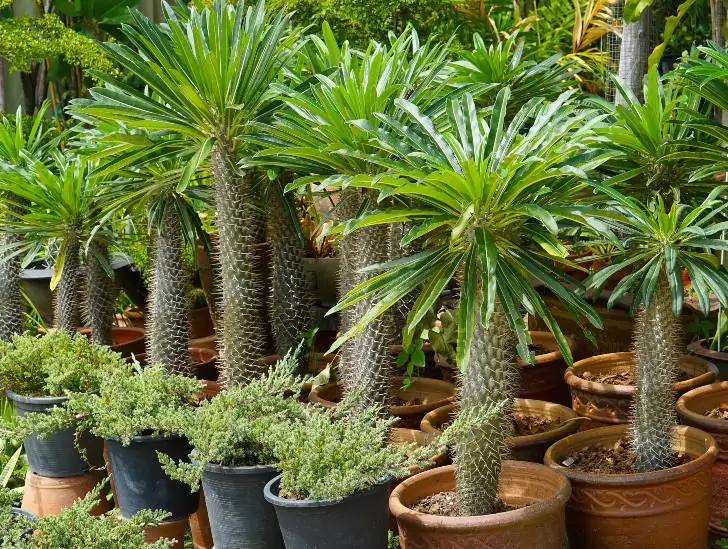
A madagascar palm on a pot.
This prevents your plants from drowning and getting root rot.

While some containers come complete with drainage holes, others may not. If there isn’t a hole, you can always drill one yourself or just use it as an opportunity to up-cycle those old containers that are no longer useful.

3.  Water the plant in the morning.

If your daily schedule makes watering difficult for you, water early in the day so moisture can have time to dry up before night falls. This is especially important for plants that are kept outdoors where humidity levels increase at night and the moisture will be trapped inside if you water it later in the day.

Watering your Madagascar palm in the morning also helps prevent fungal problems. While water works as a moisturizer for your plant, it can also harbor fungi that will cause disease if you overwater the plant at night time or when humidity levels are high.

4.  Avoid getting leaves and trunk wet.

The bark on the tree looks beautiful but avoid getting this part of the plant wet to prevent any fungal problems. Water the leaves and the soil instead. Not only will this help keep your plant healthy, but it will also make sure that it stays attractive.

Madagascar palm leaf.
Avaoid watering the bark of the tree, water the leaves and the soil instead.

In case you accidentally get these areas wet, dry them off as soon as possible. A soft cloth or a paper towel will do the trick. You can also use a hair dryer to speed up the process.

5.  Monitor the amount of water you are giving your plant

It’s important to be mindful of how much water you’re giving your plant so that it doesn’t get too much or too little. There is no point in wasting time guessing if your plants need watering or not. Instead, invest on a simple tool that will help you measure exactly how many cups of water
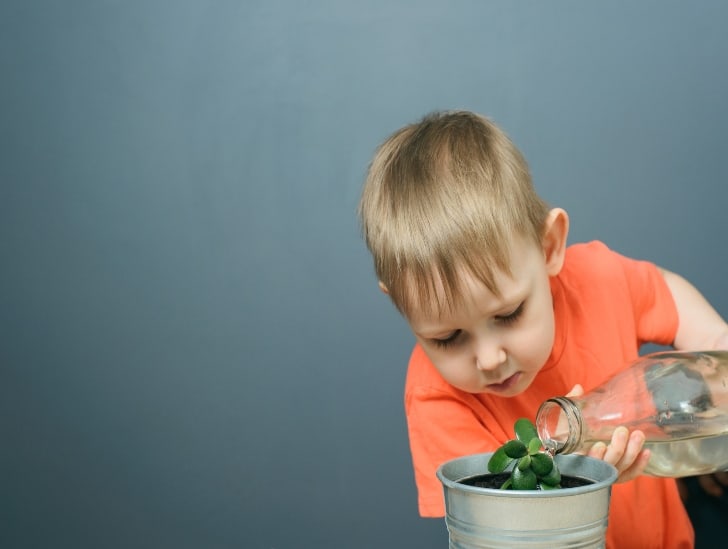
A boy watering the plant.
It’s important to be mindful of how much water you’re giving your plant.

For the cause, you can use a rain gauge, a moisture meter, or a simple measuring device like a ruler or cup to measure how much water you’re giving your plant. Use the same tool every time so that over time, you will be able to monitor exactly how much water is getting into your pot and know if it needs more or less.

Alternatively, you can also opt for automated watering systems that are convenient to use and save you time and effort.

6.  Watering deeply and less often is better than watering a little bit every day

This helps prevent the soil from becoming saturated and allows air pockets to form, which helps with drainage. When you do water, give it enough to wet the entire root system. If you’re using a rain gauge or something similar, make sure that the plant gets an inch of water at least every time you water it.

7.  Be careful not to over-water your plant

When caring for your Madagascar palm, you may be tempted to water it more often, especially if you’re living in a place with high humidity levels. However, over-watering can be just as harmful to your plant as not watering it enough. The best way to avoid this is to wait until the soil feels dry before watering and stick to the recommended amount of water given above. For better results, water your plants once a week.

watering the plant.
Over-watering can be just as harmful to your plant as not watering it enough.

8.  Watering often encourages shallow root systems 

Shallow roots cause the plant to be more susceptible to strong winds, making it easier for them to break off and causing other problems like rot in moist soil. It’s best if you can encourage deep rooting by avoiding frequent watering.

9.  Water at the base of the plant

Watering at the base helps get the water to where it is needed most-the roots. If you’re using a watering can make sure that you are spraying the water directly onto the soil and not on the leaves. You can also pour some water into the potting mix before watering to help wet everything evenly. While at it, ensure the water spreads all around the pot and not just at the base.

10.  Watering your Madagascar palm in a container is different from watering plants in the ground

It is worth noting that watering a potted Madagascar palm is different from watering plants in the ground. You will need to keep an eye on how much water you’re giving it and adjust your schedule accordingly. Notably, watering containers require more attention than those planted directly into the soil. This means that if you grow Madagascar palms inside, there’s a higher chance of overwatering since these pots can’t drain the water.

Madagascar palm tree on a white pot.
Watering containers require more attention than those planted directly into the soil.

11.  Fertilize the plant every other month with a balanced palm fertilizer

Your watering a fertilizing regime should be adjusted according to the plant’s needs. Planting within a container requires additional care and attention to detail which you will need to follow if you want your Madagascar palm tree to thrive. With this in mind, make sure that you pay close attention when watering and fertilizing it so as not to cause any damage or other problems for your plant down the line.

Fertilizing your palm helps it grow healthy and strong. A balanced palm fertilizer has the right mix of nitrogen, phosphorous, and potassium essential for plant growth. Be careful not to use a too strong fertilizer as this can damage the plant. Follow the instructions on the package carefully and stop fertilizing if you see any signs of distress or leaf yellowing.

Signs of overwatering in a Madagascar palm

Overwatering is a common problem with Madagascar palms and can cause several issues. Some of the most obvious signs that you’re overwatering your plant include:

·         The soil around it becomes wet for more than two days in a row

·         Brown, scorched leaves at their base or tips

·         Fungal infections on the roots cause the plant to rot

·         Wilting even when the soil is moist

If you notice any of these signs, it’s time to cut back on the watering and take a closer look at your care routine. It may also be necessary to repot the palm if the potting mix has become too wet. Other notable remedies for overwatering include increasing air circulation around the plant and reducing humidity levels.

Conclusion

Watering a Madagascar palm correctly requires more than just following a set schedule. There are several things to consider, such as the plant’s location (in- or outdoor), potting mix, and fertilizer schedule. With a little bit of attention, you can help your palm thrive and look beautiful for years to come. With these guidelines, you are in a better position to water your palm the right way and avoid any common problems.
How to Make a Beautiful Desert Terrarium?

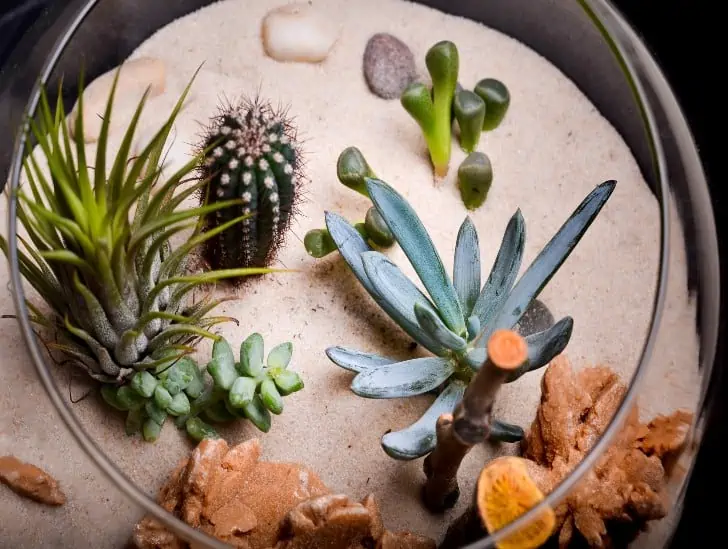
A round sand terrarium.

Indoor plants play a much bigger role in the design and feel of your interior spaces. For those without a backyard where they can create an outdoor garden, indoor plants help them stay connected to nature. If you are a big fan of succulents, nothing beats the joy and delight of having your own desert terrarium.  When done right, desert terrariums can be stunning and a great addition to your indoor space.

So, how can you make a desert terrariumThe most important thing you need to keep in mind is that desert terrariums require a lot of bright light, a well-draining potting mix, and a good container to thrive.  For the container, you can use a transparent glass cylinder or cube. Don’t seal the top of the container to allow moisture to escape. The overall design of your terrarium can either be sparse or barren. A sparse design features only one succulent and a bit of tumbleweed, while a barren design goes all out and includes all sorts of succulents such as Echeveria, Sempervivum, and Sedum.

This guide highlights a step-by-step process you can follow to create your own desert terrarium in no time. Read on to learn more.

Why Should You Make a Desert Terrarium?

When planted and taken good care of, succulents, including cacti, can be a magnificent addition to your indoor spaces.

The open and transparent containers used in the process provide you with an incredible opportunity to create some beautiful layering and an eye-catching design.

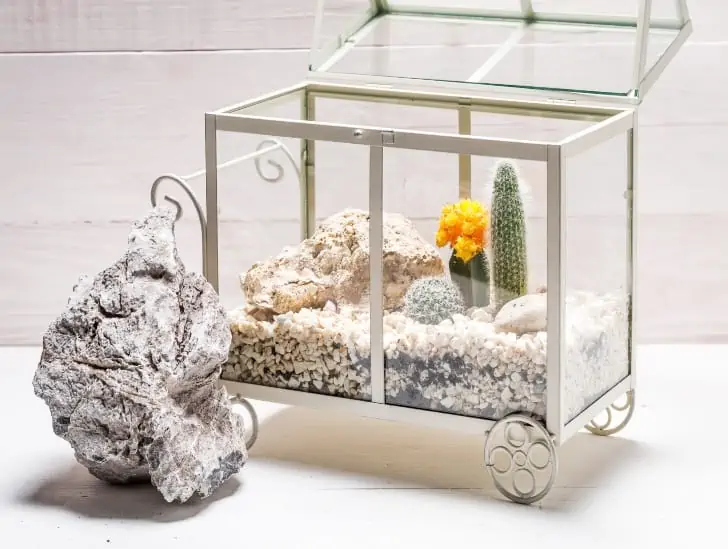
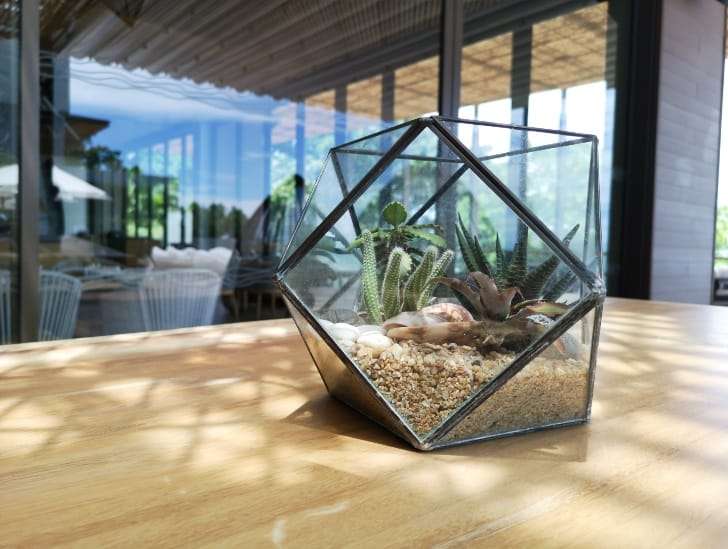
A glass Hexagon desert terrarium.
an incredible and beautiful layering and an eye-catching design.

Although handling some succulents such as cacti can be pretty troublesome, your ability to maintain an open planter is greatly enhanced by the open space.

Furthermore, there are many types of succulents you can add to your desert terrarium to give it an even more exciting edge.

How to Make Desert Terrarium

Before you start the process of making your own desert terrarium, keep in mind that most succulents appreciate a relatively dry, arid environment that mimics the desert environment.

These plants don’t need frequent watering, and the containers don’t require sealing. If you strive to do everything right, you will end up with an exciting design that will transform into a fabulous feature of your home décor.

With proper maintenance, your desert terrarium will be a source of joy for many years to come. So, let us jump straight in and find out what you need to do to accomplish the mission:

Step 1: Choosing the Right Container

Typically, cacti and other succulents are known to tolerate a little bit of neglect. It is relatively easy for one to maintain these plants, and that is partly because of the fact they require smaller containers.

We suggest you use a clear glass cylinder or cube. The container should be 4 to 6 inches tall with an opening of at least 2 to 3 inches wide.

However, there is one major issue with using a glass container; it lacks a drainage hole at the bottom. Water can easily build up, soaking the soil and causing severe root rot.

You must be creative and think outside the box to address this challenge.

First, the ideal glass container for your terrarium must be of decent depth to achieve good drainage. You must also ensure it is not enclosed because cacti plants are not big fans of humidity.

The container must be completely open because even a semi-enclosed one can still cause a damp environment.

Finally, you will have to add a layer of gravel at the bottom of your container to ensure proper drainage.

Step 2: Assembling the Materials

To make a desert terrarium, you will need a wide range of materials. They include a clear open glass bowl, at least five cacti or other succulents plants of your choice, special succulent potting mix, pebbles for drainage, decorative glass pebbles, paper towels, a small stick, and decorative sand.

A person creating a terrarium.
Be careful when buying the potting mix.

Most of these materials can be obtained from your local plant store and won’t cost a lot of money. Be careful when buying the potting mix because that is the most critical thing in your entire setup.

Step 3: Drainage Is Everything

To make a stunning desert terrarium, you need to ensure you achieve the required drainage standards.  To do this, carefully place a layer of pebbles at the bottom of your glass bowl. Make sure the pebbles are approximately 3cm deep.

The primary purpose of the pebbles is to capture excess water runoff and prevent the roots of your succulents from sitting in water for too long.  If you allow the roots to stay in water for too long, it could lead to severe root rot that will eventually kill your plant.

Step 4: The Potting Mix

Make sure you are using a potting mix that is specifically formulated for cacti and other succulents. Ideally, the mix should contain a relatively high amount of sand, loam, and grit to allow for better drainage.

A group of terrarium.
Make sure you are using a potting mix that is specifically formulated for cacti and other succulents.

Now fill your glass bowl two-thirds of the way with your preferred potting mix. Water it slightly to compress it, then top up with a little more potting mix until the level is about 2cm from the top edge of the bowl.

Some of the best potting mixes to use in a desert terrarium include:

  • Commercially produced potting mix: Many manufacturers produce good quality potting mix comprising smooth grains. This is critical in preventing compaction problems, improving drainage, and retaining water more effectively.
  • Organic potting mix: This type of potting mix is made from organic sources like manure, mosses, and other natural materials. It is important to note that organic mixes retain moisture better than commercial products as they have larger particles. 
  • Clay-based potting mix: This type of potting mix is made from clay, pumice, sand, and other natural materials. It has a high water-holding capacity and is ideal for dry climates as it drains very quickly.

Step 5: Choosing Your Hardscape Materials

Open planters provide you with the perfect opportunity to show off a sleek piece of hardscape. It may be a variegated and complex maple leaf stone or a simple chunk of driftwood. One thing to remember when choosing your hardscape material is to ensure you will not harm your succulents.

For instance, wood could end up soaking up so much moisture that it will keep your plants moist above the soil, which is not good at all.

A terrarium with cactus.
Remember when choosing your hardscape material is to ensure you will not harm your succulents.

So, if you must use wood, you should consider sealing it with some sort of sealant or vanish, which can be found in any garden store or hardware.

Step 6: Get Creative

Now that you have done enough preparation and everything is in order, it is time to get creative and start creating your desert terrarium.

Carefully arrange the succulents the way you would like to display them while they are still in the pots that they came with from the plant nursery.

Everything at this stage is down to your personal preference. You can have anything from a 1-plant terrarium to a diverse arrangement of succulents.

If you want a diverse terrarium, consider adding succulents with different textures, colors, and heights. Relatively tall plants should go at the back of the terrarium, while the shorter ones should be at the front.

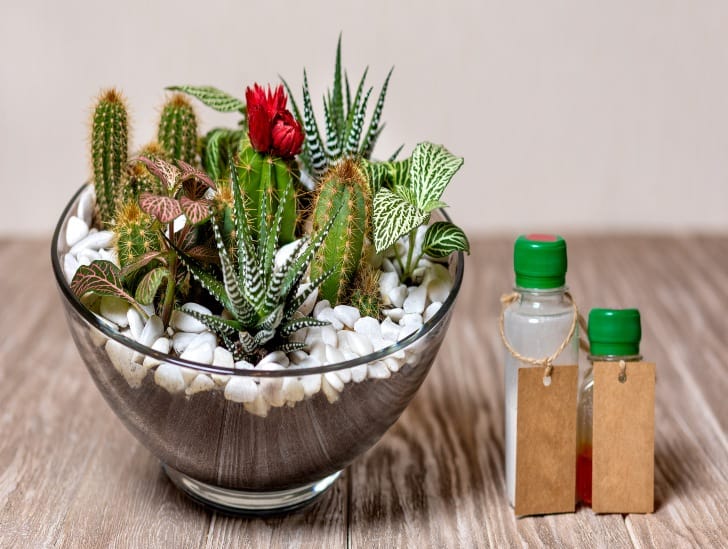
A group  cactus and plants on a glass bowl.
You can have anything from a 1-plant terrarium to a diverse arrangement of succulents.

Space the plants at least 5cm apart to avoid overcrowding.  You can alter the arrangement if you want to achieve a specific pattern. It is up to you to decide what you want.

Step 7: Plant Your Succulents

Carefully take out the first plant by turning the pot upside down and gently squeezing or tapping its bottom. Brush off the old potting mix and tease out the roots. Be cautious to avoid damaging the root ball.

If you are dealing with cacti plants, be sure to use a paper towel to hold the cacti when popping them out of the pot. Their tiny spines can easily lodge into your skin and cause injuries.

Make sizeable holes in the potting mix you had prepared earlier to mark where each plant will go. Carefully position each plant in its respective glass bowl and firm the soil around it. Repeat this step until you are done with all plants you have.

Once you are fully satisfied with your plant arrangement, clean the edge of your glass bowl using a paper towel to get rid of any soil residue.

Step 8: Add Sand

Now is the right time to add a thin layer of sand over your succulent soil. To accomplish this, gently angle the plants away from where you are spreading the sand.  Make sure you use a paper towel to avoid sustaining injuries.

Don’t worry if some of the sand gets lodged in your succulents because you can easily get rid of it using an old brush.

Step 9: Decorating

It is essential to add some vibe to your desert terrarium to make it look beautiful. To decorate it, consider adding small rocks, glass pebbles, or any other miniature decorations you have in mind.  The ultimate goal is to make it more stunning.

Step 10: Mist Your Terrarium

Since you had already watered your potting mix and compost, the final thing you need to do once you are fully satisfied that everything is in order is to mist the terrarium over the top using a spray bottle.

Your terrarium will be fully set up after the misting, and it is your time to start enjoying your hard work.

Care and Maintenance of Your Terrarium

All the above efforts will go to waste if you don’t give your new desert terrarium proper care and maintenance.

The most significant danger to your newly created desert ecosystem is overwatering.  Cacti and other succulents can still survive and thrive with minimal care. So, it is essential to understand the water requirements for the succulents in your terrarium and only water when necessary.

Typically, you should allow the potting mix to dry out completely before watering again. During watering, consider soaking the roots and allowing excess water to drain away.

Your primary objective should be to ensure that your succulents drink enough without sitting in the water for too long.

Preferably, you should use rainwater but if you don’t have rainwater, go for distilled water. Avoid using tap water unless you don’t have any other option.

Position your desert terrarium in a good spot that receives plenty of bright light because succulents love light. If you struggle to find a perfect location in your house, feel free to use grow lights set on a 12-hour cycle.

These plants can survive without fertilization but consider adding some special succulent fertilizer occasionally.

It is critical to inspect your terrarium regularly for any pests or diseases and take corrective action immediately. To enjoy your desert terrarium, pay close attention to its health.

Lastly, consider trimming the roots once they start growing outwards. Trimming can be done once or twice per year, depending on how fast the roots grow.

To trim the roots, gently remove the succulent from the potting mix and use a sharp pair of scissors to snip the damaged or excess roots. Replant your succulents following the correct procedure.

Final Thoughts

That is it about making a desert terrarium, and we hope you are now fully charged to give it a try. Follow the guidelines outlined above, and you will have a stunning desert terrarium in no time.

6 Golden Rules for Watering Lithops (Living Stone)

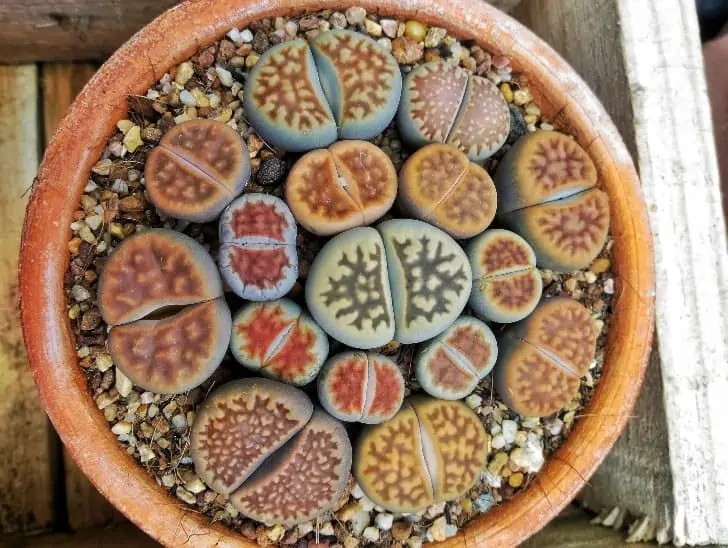
Whether you call them lithops or living stones, they are simultaneously the easiest and the hardest succulent to care for. These plants are native in very arid regions, some receiving less than 4 inches of rain annually. Watering the lithops is the most essential care – and one part that most gardeners go wrong.

While all the succulents are adapted to storing water in their leaves, none does it so well like the lithops. When it comes to watering, these plants practically demand to be ignored. Lithops tend to fare far better with minor interventions than other plants. They have a very different watering cycle and below are 6 comprehensive and MUST READ rules and guidelines on how to water lithops.

1. Know When Lithops Needs Watering

Lithops can go for months without water. When in doubt, it’s best not to water the plant. When the plant is thirsty, it will always show some signs that show it should be watered. Your lithops will begin to wrinkle or sink in the pot.

Give your plant a light squeeze, and if it is soft, it’s time to water. Lithops grow better during the warm seasons. During the summer, the plant will enter its dormancy, and less growth is taking place. During this time, you are supposed to leave the plant alone. Do not water your lithops during this season.  

Sometimes during the dormancy, the leaves start to shrink; give your plant a little drink. During this time, use little water so that just the top inch of the soil is moist. Remember that this plant is good at retaining moisture, and it is self-sufficient when no growth occurs.

During the autumn, the plant starts another growth period, and it may require watering. During this time, water your lithops at most once every two weeks. The plants will begin to bloom at this period, and you’ll know it’s time to start watering again when the leaves begin to separate.

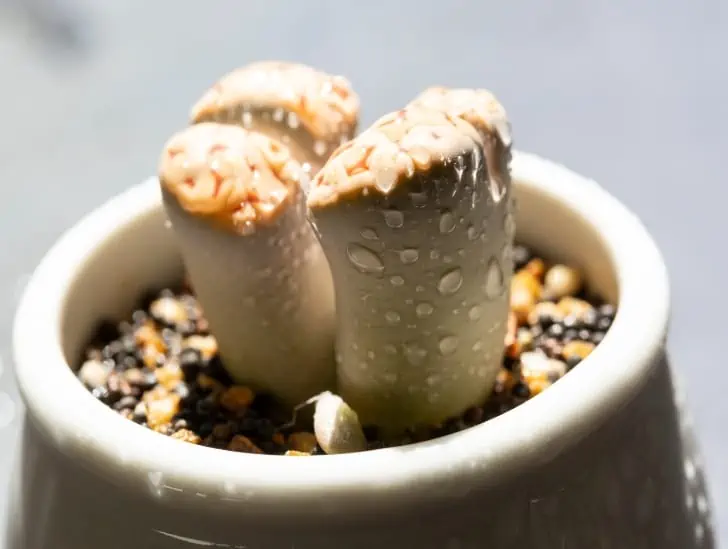
A freshly watered Lithops.
When the plant is thirsty, it will always show some signs that show it should be watered.

During the winter season, respect your lithops dormancy. Around this time, the old leaves of the plant will start dying, and new ones will begin to grow inside. Watering the plant at this stage could negatively affect the plants’ growth of the fresh leaves. Yes, it feels wrong to give lithops little water, but the plant will thank you for it.

2. Know How Often to Water your Lithops

Lithops grow underground because they don’t have a stem. These help the plant to retain a lot of moisture and do not require frequent watering. Lithops do well in the soak and dry methods like other succulent plants.

A watering can.
When watering lithops, drench the soil and wait until the pot is completely dry before watering again.

When watering lithops, drench the soil and wait until the pot is completely dry before watering again. The plant prefers to be left dry than to be overwatered which is the leading cause of lithops death in many places.

The plants need to be watered more during the autumn and spring. It does not require any water during the winter season. During the warmer climate, watering the plant once every two weeks is ideal. It’s a general thumb rule to follow, but the basic will always be to let the soil dry out first before watering.  

3. Water Lithops in a Fast-Draining Soil

Lithops grow well in fast-draining soil. Unlike other succulents, this plant requires a different soil type that will ensure maximum growth takes place. Lithops do well in a medium with very little organic matter but with many rocks. These will ensure that the soil doesn’t remain damp for long when watered.

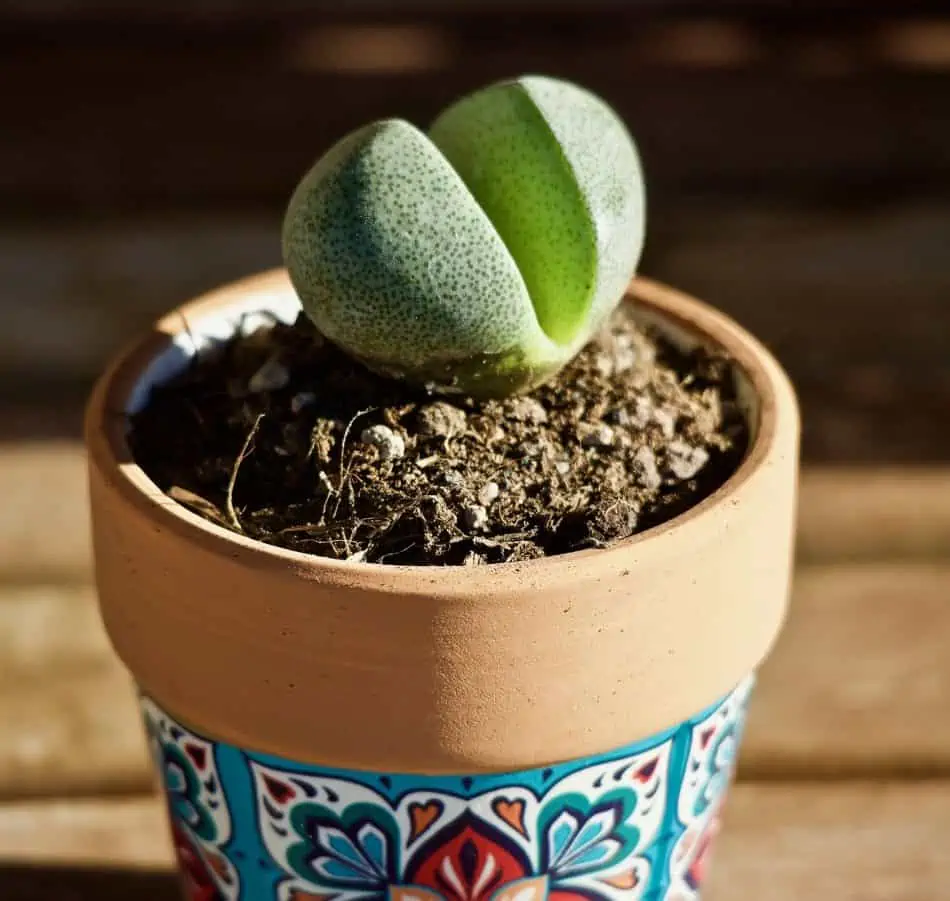
Lithops on the pot.
Lithops grow well in fast-draining soil.

The optimal growing medium for lithops is coarse sand, perlite, gravel, pumice, or lava rocks. This combination will drain water quickly, leaving a little moisture for the plant. The soil content should be made up of approximately 1/5 soil, and the rest should be minerals.

When slow-draining soil is used for growing lithops plants, root rot starts to take place because soil retains water for a long time. The moist can also lead to the yellowing and muzzling of the leaves of your plant. Those are signs that your lithops are dying from much water. Typically, the potting medium should dry at most in three days.

4. Ensure your Lithops are in a Suitable Pot when Watering Lithops

Lithops prefer deep pots to wide ones. They tend to have a long root system that goes deep into the soil. When watering lithops, ensure that it is in a pot that has many holes at the bottom to drain excess water.

When watering lithops, it is essential you water it until it starts draining from the bottom of the pot. These will create a continuous flow of water; hence water is not retained in the soil for long. A suitable medium of soil should always follow a good pot.

A lithop in the pot.
Lithops prefer deep pots to wide ones.

Clay pots are the best pot when it comes to precautions of water retention. The porous material used in making the clay pot draws excess water surrounding the roots to its wall—this helps reduce the moisture content, disastrous to the plant.   

5. Stop Watering Lithops after Flowering

You need to remember only to water after the old leaves are dry and stop watering after the flowers begin to die. After flowering, new growth is forming, which comes down to the way lithops utilize water.

When the new plants are forming, the old leaves are the source of nutrients and water for the new plant. During this time, the roots are on pause. When you water the plant, you confuse the plant from using the water from the roots while actively absorbing it from the old leaves. This confusion can engorge the plant.

Again, after the old leaves have dried up, you can now give your lithops a deep watering. Wait until the water completely dries up before embarking on watering. Water it again when signs of wrinkles appear. If a month has passed and you can’t see some signs of wrinkles, and you haven’t watered them, you can moisten the upper layer of the soil.

After a month, with no sign of wrinkles, do not pour a lot of water into the plant. Moistening the top layer gives the roots a bit of moisture. There is a high chance that it is becoming dormant because of the heat and too much water can cause it to swell and split then dies.

6. Mornings represent Best time for Watering Lithops

When you want to water the lithops, especially during hot days, morning hours are the best hours. The temperatures are low, and the plant has enough time to draw enough water from the soil. By avoiding watering in the afternoon, you avoid having hot water seating on the plant, possibly burning the plant.  

A sunrise.
When you want to water the lithops, especially during hot days, morning hours are the best hours.

Watering this plant in the evening may not be a good practice. These may make the plant sit on the moisture for the whole night, attracting bacteria. Watering lithops in the morning gives space for the evaporation of excess water for the soil. Do not overwater the plant.

Lithops plant prefers less water. The leaves of the lithops are buffy because they store enough water for the plant. This rule is essential because many novice gardeners tend to overwater the plant, thinking they are helping the plant.

Signs of an underwatered lithops are the same as that of an overwatered one. Some of the common symptoms of overwatered lithops include yellow leaves, mushy stems, and rotting of the roots; brown spots on the lithops.

The two leaves may end up splitting or even notice the absence of the roots!! To save a lithops that has been overwatered, you need first to understand the problem.

Since overwatering is the most common cause of the death of this plant, let us look at how to save the plant from dying. I hope after it recovers you will follow the rules above well.

Steps to save overwatered lithops

  1. Remove the overwatered lithops from the pot
  2. Identify all the damaged roots and cut them out with a sharp knife
  3. Wash the remaining leaves in running water to remove the soil
  4. Using a proper disinfectant, disinfect the healthy part of the root system
  5. Using a new pot and new potting soil, repot the plant
  6. Use adequate watering habits moving forward to prevent future root rot

Bottom Line

Watering is the most essential part of caring for your lithops plant. When you follow the above rules correctly and keenly, the plant will flower during its time, and you will have it around you for a long time. Ensure you know when to water your plant and do it with the right amount of water and in the right soil content.

Before buying the plant for your garden, ensure that you have suitable potting soil and a proper pot that will drain the water well. Do not water the plant immediately until the shock period of the plant is over. With just a few lithops, you can get your seeds and increase your garden. Because they are tough, lithops are ideal for houseplants.

Ultimate Guide: How To Care For Sansevieria Plant

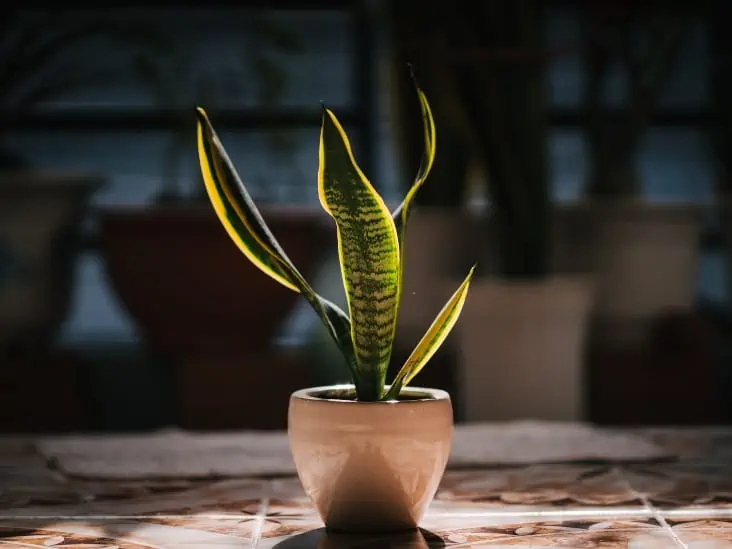
The Sansevieria plant is a tough and resilient houseplant that can survive in low light conditions. This hardy plant can grow from 4 to 6 feet tall with leaves up to 3 inches wide. The Sansevieria has long been popular as an indoor plant because of its ability to thrive without much care or attention. In fact, it’s so easy to care for that it is often given as a gift during the winter holidays. With just basic care every few weeks, this lovely perennial will provide years of enjoyment and satisfaction. We take a look at how to care for Sansevieria plant.

How do you care for sansevierias? For the plant to thrive, you need to use a well-draining succulent soil mix. Sansevieria does not like wet soil, so avoid overwatering. It can adapt to light changes so you can put it anywhere there is light. To accelerate growth, it is best to put it where there is ample sunlight until it reaches four inches. During winter, you might need to put your sansevieria in a warm room then bring it out when it gets warmer.

According to NASA’s Clean Air Study, sansevieria is one of the few plants that can be used to remove toxins from the air naturally. This guide will help you understand everything you need to care for the plant keep it healthy longer.

 Sansevieria Plant Varieties

Sansevierias are native to Southern Asia and Africa but can be found in most parts of the world. The five types of sansevierias have their unique features listed below:

  • Dracaena trifasciata “Hahnii” – Also called bird’s nest snake plant, it only grows to six inches and the leaves look like a bird’s nest.
  • Dracaena trifasciata “Laurentii”  – Its margins have a creamy yellow color. This type has to be divided when propagated.
  • Dracaena trifasciata “Twisted Sister”  – Its leaves are twisted and have horizontal stripes with yellow edges. This type grows up to 14 inches tall.
  • Dracaena pearsoniiis – Commonly known as rhino grass, it grows to 12 inches tall and its leaves are succulent and tinted red.
  • Dracaena trifasciata “Bantel’s Sensation – This variety grows up to three feet tall and its narrow leaves have white vertical stripes.

How to Care for Your Sansevieria Plant

Sansevieria is easy to care for. All you need to do is follow the simple instructions listed below and you are good to go.

Light

Sansevierias are highly adaptable and can thrive in different kinds of light. It prefers bright or medium indirect light but can grow well under low lights and direct sunlight.

Water

Only water your plant when the soil is completely dry. Water until you see the liquid flowing down the drainage hole and ensure that no water remains in the saucer.

A plant being watered.
Have specific times for watering and not wait until the plant is too dry.

Temperature

The plant thrives in warmer temperatures ranging between 55-85 degrees. Avoid keeping the plant under temperatures of under 50 degrees.

Humidity

Sansevierias grow well in dry environments so there is no need to increase the humidity levels.

Food

Use liquid fertilizer to feed the plant at least once every six months. You can also use mild cactus fertilizer that you dilute to half strength. Do not fertilize the plant during winter.

A woman giving a fertilizer to the plant.
Do not fertilize the plant during winter.

Planting and repotting

The best time to plant and repot sansevieria is during spring. When potting sansevierias, ensure that you use a durable pot as weak pots can break due to the strong roots. The plant is a slow grower and rarely needs to be repotted. If exposed to ample sunshine, it might experience a growth spurt that makes it necessary to repot.

Toxicity

Sansevieria is toxic to humans and pets. Ingesting the plant can irritate the mouth and stomach and, can lead to vomiting.

Soil

Sansevierias prefer well-draining soils as they are succulent plants. You can use cactus potting soil to plant it.

A plant being transferred.
The plant is a slow grower and rarely needs to be repotted.

Pruning

When pruning sansevierias, ensure you use sterile scissors, shears, or knives. Remove the leaves at the soil line as well as any mature or damaged leaves to encourage the growth of new leaves. Control the height of the plant by pruning the tallest leaves.

Pruning is best done during the growing season; spring. When done during the off-season, the plant can get stressed, and this can affect its health.

Common issues with sansevieria

Although largely believed to be a resistant plant, sansevieria are also susceptible to pests and diseases. These may range from the leaves curling to the plant turning yellow or root rot.

Here is why it happens and how to prevent it.

Blades curling on your sansevieria

Sansevieria can go for weeks without being watered, and it is common to put too much water. When the plant is overwatered, the leaves fold. However, they curl when the plant is left dry for too long. The plant also droops and can start turning brown. You can prevent the plant from being completely dry by ensuring that you water it when you notice it is 50% dry.

If you find your plant was dry for too long, give it a soak, and here is how you do it:

  • Put your plant in the tub or sink and fill it with water. The water should be 3-4” high.
  • Let your plant soak up the water through the drainage hole for about 45 minutes.
  • Feel the top part of the soil and see if the water has reached the top 2 or 3 inches. If not, you can lightly water to speed up saturation.
  • When the soil is damp, drain the sink and let the plant rest while it continues draining. Afterward, place the plant on the saucer and put it in its original spot.

Sansevieria turning yellow

There are different reasons why your plant might be turning yellow including the following:

Moisture

Proper soil moisture is important when it comes to the care of sansevierias. The main reason the leaves turn yellow is the plant being overwatered. Sansevierias do not need too much water to thrive as the roots can rot and die. To prevent this, ensure the plant drains well and avoid using too much water.

Watering consistency

You can stress the plant by inconsistency in your watering, and this can lead to the plant developing yellow leaves. To prevent this, have specific times for watering and not wait until the plant is too dry.

Pests

When sansevieria becomes weak, it is likely to get infested with insects. Spider mites can drain moisture from the plant, making it turn yellow. These and other bugs are commonly found in house plants and can spread to the leaves and blades of the plant. The pests can make your plant suffer from serious nutrient deficiency that accelerates the yellowing.

Stinky soil

If you notice a rotting smell from your plant, it likely has root rot. Root rot occurs when the roots are exposed to a lot of water. You can avoid it by ensuring that the soil is well-drained at all times.

Droopy or falling leaves

When sansevierias are healthy, the leaves are erect and grow upwards. The plant will appear droopy if there is too much water or the light is not enough. To prevent this from happening, you can reduce the watering frequency, change the soil to one that drains better, and put the plant in a location with better lighting.

A sansevierias being given with enough sunlight.
The leaves are erect and grow upwards when the it is healthy.

Care during winter

Sansevierias can die when exposed to low temperatures (under 50 degrees) for too long. During winter, you can bring the plant indoors and keep it in a warm place. It is best to keep the soil on the drier side as the plant goes into a state of dormancy. Water the plant every six weeks or when you notice the soil is more than 50% dry.

How to grow snake plants using seeds

While it is faster and easier to propagate sansevieria plants, they can also be grown using seeds. However, the seeds have low germination, and it takes between three and six weeks for a seedling to sprout.

A healthy Sansevieria Plant.
The Sansevieria plant has been a favorite of indoor gardeners for many years.

To grow snake plants using seeds, fill a three-inch pot with potting mix or seed starting soil. Sprinkle the snake plant seeds on the soil and put them in a warm and sunny place. Cover the pot with plastic wrap to retain humidity and warmth. Once a seedling sprouts, you can remove the wrap and ensure the soil remains moist and not wet. You can report the plant once it is about four inches tall.

Final Thoughts on Sansevieria

It is no surprise that this resilient succulent has remained popular for so long. Thanks to its unique and exotic appearance, the Sansevieria plant has been a favorite of indoor gardeners for many years. You do not need to be a green thumb to grow this houseplant, but you may need to learn how to care for Sansevieria plant as a beginner. The above tips and tricks will help you to do just that. Get the most out of your Sansevieria plant by following these foolproof guidelines for how to care for the Sansevieria.

6 Amazing Facts You Didn’t Know About Desert Rose

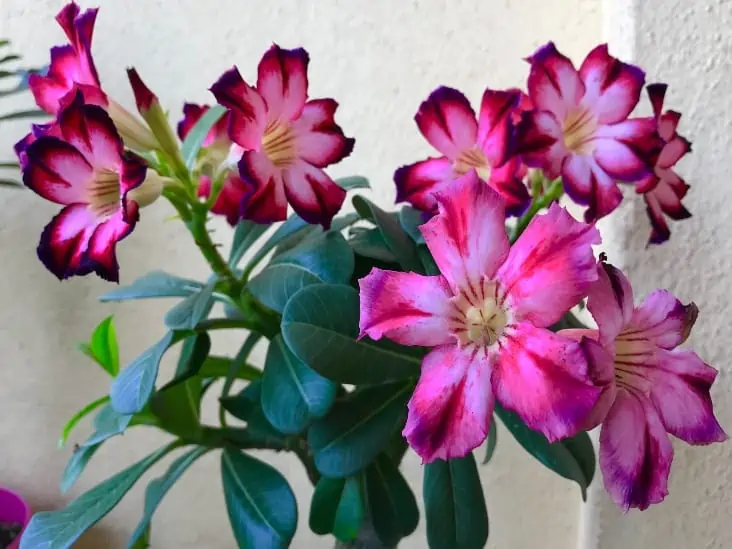
The desert rose is a beautiful and unique plant native to the deserts of North Africa. It has many different names: Moroccan oleander, Algerian iris, Egyptian jasmine, and Arabian tulip. It got its name “Desert Rose” (a reference to its pink color) because it grows exclusively in dry regions. This succulent blooms beautiful flowers in different shades of pink and has a succulent stem that is a beauty to behold. Apart from this, there are some amazing facts about the plant you didn’t know that will surprise you.

A full bloom Pink Desert Rose.
Adenium refers to one species, a succulent shrub or tree in Africa and Arabia.

So what are the amazing facts about the desert rose you didn’t know? Although the Adenium Obesum is the commonly known type of the plant, it has various other species. The plant has a medicinal value and has been used for many years in various countries to cure certain illnesses. Its sap is poisonous and can have severe effects on humans and animals. What’s more, it is used in the smudging ritual for cleansing, has a lifespan of up to five hundred years, and is traded internationally.

You probably know and admire the desert rose for its beautiful flowers, leaves, and stem. Apart from its beauty, there are various other things you need to know about the succulent. In this article, you will learn various facts about the plant you didn’t know that will amaze you.

1.     It has Medicinal Value

All the parts of the desert rose have medicinal value and are used as traditional medicine in different countries. In Oman, the stem, roots, flowers, and leaves of the plant are crushed and blended to make a mixture used to treat sexually transmitted diseases.  They also use the skin of the stem and the roots to make a lotion used in treating skin diseases and killing lice. The plant produces white latex that is used in treating septic wounds and tooth decay.

The desert rose has been used over the years in African countries to cure various diseases. In Somalia, the different parts of the plant are used in treating nose infections. The plant has toxic white latex used in killing pesticides. In Kenya, the latex is used in killing lice. Kenyans also make a powder from the plant’s stem that they then apply on livestock to kill parasites. The sap is used as an abortion agent to terminate unwanted pregnancies in humans and animals.

Traditional medicine men in Nigeria use different parts of the desert rose to cure various illnesses. This includes headache, joint and muscle pains, and various skin diseases. In the medical world, some properties of the plant are used in some drugs formulation. Research is ongoing to identify if it can cure some types of cancers. 

2.     It is Poisonous

You love the desert rose for its beautiful flowers, leaves, and stem, but did you know it has a dangerous toxins? The sap in its roots and latex in the stem contain toxins. If ingested and the toxin reaches the heart, it can cause heart failure and, in severe cases, death in humans and animals. However, in African countries, the poison is used in hunting activities. It is applied in the sharp edges of hunting arrows used in hunting large animals.

A poisonous magenta Foxglove.
A Poison to animals.

The poison kills quickly, and once shot by a poisoned arrow, an animal drops dead within two kilometers from where it was shot. The poison can be used alone or in combination with other poisonous concoctions. The skin of the stem and leaves are blended to make a mixture used in poisoning fish. The poison is mainly used for hunting purposes in Tanzania, Kenya, Cameroon, Nigeria, and Senegal. The poison is also used for criminal purposes in Senegal and Mauritania, such as poisoning people.

3.     Used in Cleansing Ritual

In various Native American homes, the smudging ritual is done to cleanse the home spiritually. It is a meditative routine done to dismiss negative energy, improve moods, and purify the home. So, what does the desert rose have to do with the smudging ritual? The plant is used during the ritual as a meditation element and to signify mind clarity. Its presence during the ritual is believed to create a calm effect and make a meditator relaxed by eliminating evil thoughts. As a person conducts the ritual, they declare their intentions focusing on the desert rose to invite positive energy in their being and home.

4.     Comes in Multiple Varieties

Most probably, you are familiar with Adenium Obesum, the most commonly known type of the desert rose. What you may not know is there are other types of the plant that most people don’t know exist. These are the Adenium oleifolium, Adenium socotranum, Adenium somalense, and Adenium swazicum. The different types have different flower colors, stem width, leaves sizes, and growth heights.  

Adenium Oleifolium

Oleifolium is commonly found in Botswana and South Africa. It features a large stem with narrow, olive-green leaves. Its flowers can either be pink, salmon, or red and are tubular-shaped.

Adenium Socotranum

The socotranum is commonly found in Socotra, between Yemen and Somalia. It is the biggest in the family, growing up to 15 feet in length and its flowers are larger than those of the other types. Its trunk grows to a diameter of eight feet. The plant has no leaves, and its flowers are pink.

A tree like Adenium.
This Adenium is more tree-like than other varieties.

Adenium Somalense

Somalense is mostly found in Eastern Africa. They have twisted branches and narrow leaves. They grow up to 12 feet in length, and their trunks are usually twisted. Their flowers are trumpet-shaped and can either be white, crimson red or pink.

Adenium Swazicum

Swazicum is the smallest of all the desert roses, growing no more than two feet in length. They are found in South Africa and Swaziland, and they have showy reddish-pink and pink flowers.

5.     It has a Long Lifespan

The desert rose has a long life span of up to 500 years. It boasts notable characteristics that enable it to live through the decades. For instance, its stem has a swollen base that keeps on swelling with the passing of years and can reach up to two meters in diameter. The stem stores essential nutrients that it keeps feeding the other parts of the plant through different weather conditions.

To identify the age of a desert rose, measure the diameter of the stem. This is a slow-growing plant, and every millimeter represents one year. It is a seasonal succulent that sheds leaves when not in season. The plant, interestingly, gets enough nutrients even when other plants start dying due to unbearable weather conditions.

6.     It is Traded Internationally

By now, you already know the various benefits of the desert rose. You are probably considering planting it in your home for a beautiful look, or medicinal value, or even for your hunting escapades. However, you are wondering where you can get the plant since you don’t live close to a desert. You need not worry as the plant is available for sale, probably in a market near you.

A Pinned world map.
Desert Rose traded internationally

The desert rose is traded globally for its various properties, but mostly for ornamental purposes. While it is popular for its medicinal and toxic nature in Africa, it is popular in the West for its aesthetic value. For both reasons, it is exported and imported in large quantities thanks to its ever increasing demand. All you need is to walk into a market near you or search the internet for where you can buy the plants in your area.

How to Grow the Desert Rose at Home Successfully

The desert rose is widely planted for its beautiful flowers, leaves, and succulent stem. Some people grow it around their compounds as a fence, and in Tanzania, it is used in marking grave positions. Its stem and branches produce wood that some people use as firewood. For whatever reason you plant it, take precautions when handling it to avoid getting into contact with its toxic sap by wearing protective clothing. When growing it, always ensure members of your household and pets are safe from its effects. 

A plant that is being taken care indoors.
Desert Rose adds character to your home

The desert rose grows well in dry areas. Ensure it gets enough sunlight and avoid giving it too much water.  Always ensure the soil is completely dry before watering and avoid pouring water directly on the plant. It can be propagated from seeds or branches and stem cuttings. The stems of plants grown from cuttings may not be as succulent as those produced from seeds.

It is no wonder that something as beautiful and hardy as the desert rose can be found in a place like this. The plant has withstood many hardships to grow where it does, but now you know how to care for one so they will continue living on. With its amazing facts, it is easy to see why so many people want a desert rose of their own. Make sure your Desert Rose gets enough water, fertilizer, sunlight and protection from pests. With these tips in mind, we hope you enjoy caring for your own little piece of the Sahara Desert at home or office.

Low Care Plants For The Perfect Indoor Cactus Garden

Creating a perfect indoor cactus garden is easier said than done. Ensuring that your cactus garden remains vibrant irrespective of the season is a perfect way to brighten your spirit. Most succulents and cacti are great indoor plants for your cactus garden because they require minimal maintenance to create that perfect display that your guests will love.

Unlike other plants, you will not need to water, feed or prune them regularly.  Nevertheless, elements such as changing temperatures, poor exposure to sunlight and dry air make it challenging for some succulents and cacti to thrive.

So, what are the best low-care plants for your indoor cactus garden? Most cacti and other succulents stand out as the best low-care plants for your cactus garden. Their unique water storing ability and tolerance to dry conditions make them ideal for a low-care plant. This includes low care cacti like saguaro cactus, Star cactus, Bunny ears Cactus, San Pedro cactus, barrel cactus, cholla cactus. Others include tolerant succulent species like hens and chicks, Burro’s tail, African milk tree and bishop’s cap.

This article looks at the ideal plants for your cactus garden. It will discuss different types of plants that will thrive with low care and spell out the unique features that make them stand out as low care plants.

Saguaro cactus

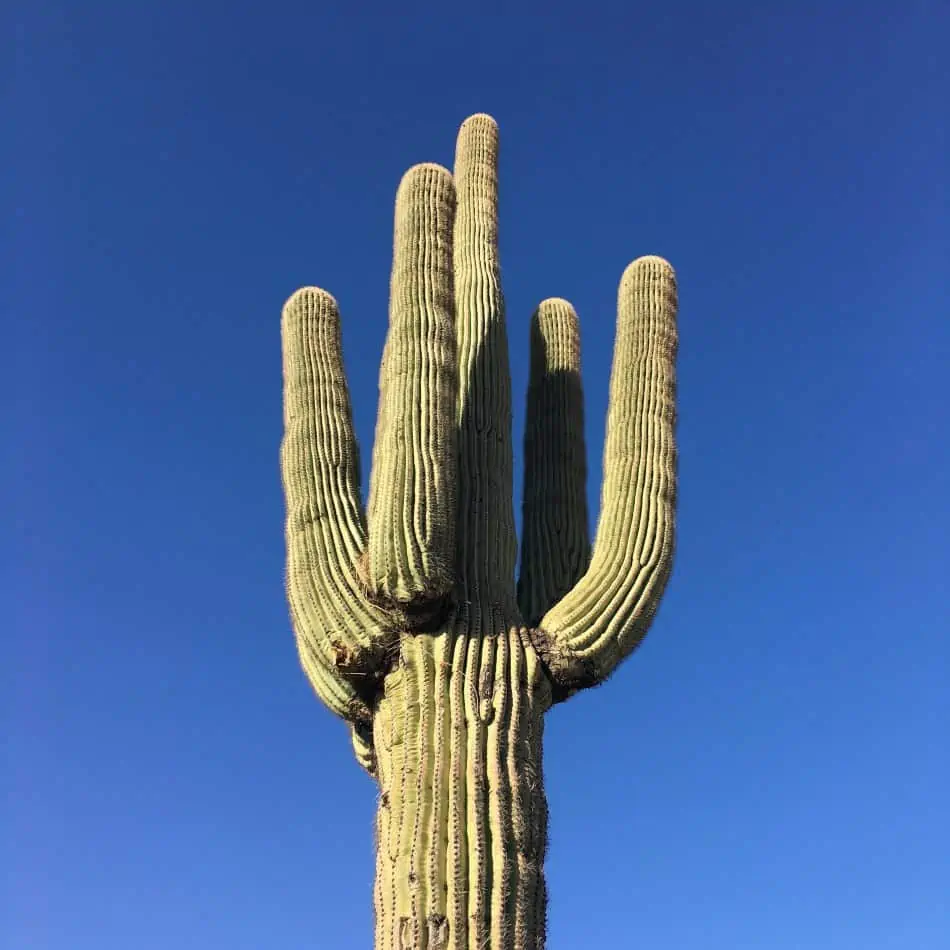
The saguaro cactus is probably the first plant that comes to mind when you think of a low care plant. Saguaro cactus can live in a pot for 150 years without moving it outdoors but much longer in the wilderness. The plant is a slow grower and establishes strong roots making it a perfect houseplant.

On average, saguaro cactus roots can go up to 4 inches deep when potted. A Saguaro cactus can take up to 10 years to get to 1.4 inches in height. It may take another 60 years before the plant grows up to 10 feet tall. At this point, it can start producing arms. Some saguaro cactus may only produce one arm, while others can produce a dozen of them.

A mature Saguaro Cactus.
Saguaro is a low-maintenance cactus that takes up to 10 years to reach 1.4 inches in height.

Flowering in the saguaro cactus occurs between May and June. It produces white, bright flowers, about four inches wide. Saguaro flowers have pretty yellow stamens and emit a sweet scent.

Star Cactus

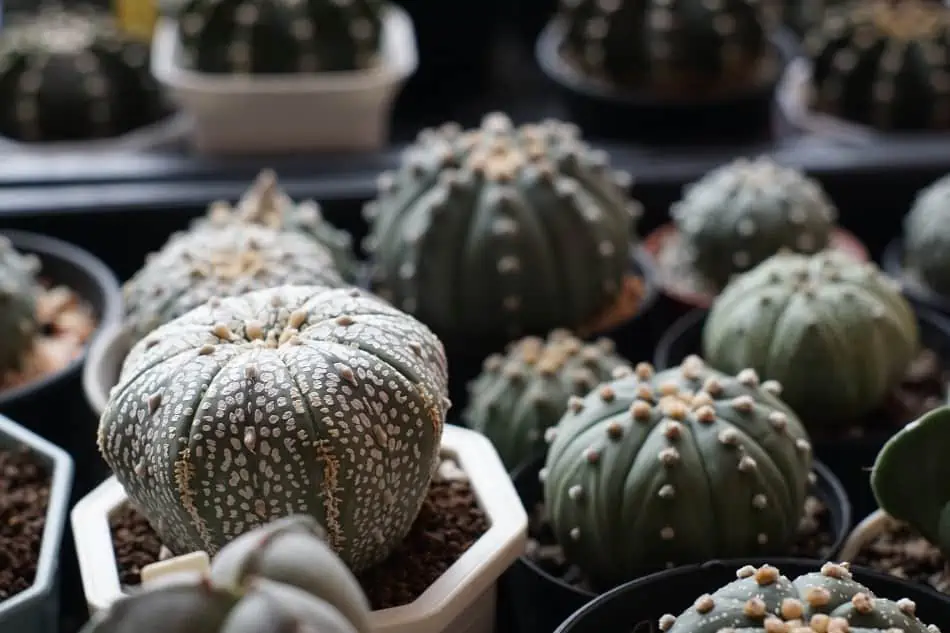
The star cactus is popularly known as the sand dollar plant. Notably, the star cactus looks like a star when mature, thus the name. It features a round shape, divided into star-like slices and only grows two inches tall. Star cactus is usually green, but some varieties may have brown patches. 

This cactus develops pretty spine pads that are completely covered with white scales and dots. During spring, the star cactus produces bright, yellow flowers. Even with minimal care, this plant will reward you with big pretty flowers. These flowers develop into reddish or gray woolly berries, covered with small dots.

Star cactus in a pot.
Star cactus is a round-shaped succulent with star-like slices and bright yellow blooms.

Star cactus is not cold-resistant but can still survive in a temperature range of 20-25 degrees Fahrenheit. During winter, this plant thrives in significantly low temperatures. So, as much as the plant thrives best in higher temperatures, you do not need to care for your plant differently during winter.

Bunny ears cactus

This tolerant desert cactus, also called angel’s wings, is a perfect cactus for beginners or busy gardeners. Notably, this plant has no leaves or stems. Instead, it has green oval-shaped pads resembling rabbit ears and is covered with tiny bristles. This is an ideal low-maintenance plant yet still attractive for your home decor.

A Bunny ear cactus,
Bunny Ears cactus is an excellent plant for beginners since it does not require much care.

Bunny ears cactus grows approximately 6 feet in width and 4 feet in height, but some may grow taller. If you are lucky enough, this plant may produce bright, yellow flowers, 2 inches wide, during summer. After blooming, the flowers turn into red or purple-colored fruits.

San Pedro cactus

Originally found in Peru, the San Pedro cactus is a fast-growing species that is quite popular for its value in traditional medicines and religious ceremonies. Some believe that the plant brings healing and promotes radical introspection in a religious context.

While growing this succulent in your garden as an ornamental plant is safe, consuming its by-product (mescaline) remains illegal in some countries like the US. The cactus is relatively poisonous, so you should keep it at a safe distance from your pets and children.

San Pedro grows up to 6 feet in width and 18 feet in height.  The individual stems of the San Pedro cactus are green but turn to blue-green with age. Each stem has five ribs measuring approximately 2 to 6 inches tall.  During winter, this cactus produces yellow flowers that measure around 8 inches in diameter.

The plant requires minimal water to survive, but it still needs some attention and love, especially during summer. For better results, place it in a well-lit area to ensure it gets enough sunlight. If you need to reproduce the plant, you can propagate it once the stem is 4 meters tall.

Barrel Cactus

The barrel Cactus is popularly known for its fascinating color and cute cylindrical shape that beautifies any space. Growing up to 6 feet in width and four feet in height, this resilient cactus adapts well in warm climate conditions. Wild barrel cactus plants can grow up to 10 feet.

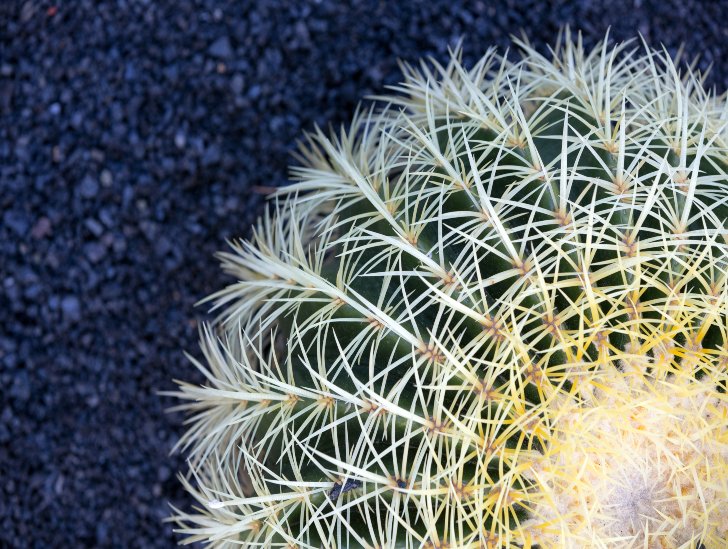
A top view of a golden cactus barrel.
This architectural beauty remains an endangered species.

Barrel cactus produces flowers with reddish-orange petals located at the top of the cactus. Although the plant’s fruits and flowers may not be considered edible, the pulp of the stem is widely used for making candy. The taste of the pulp varies depending on the species. As a result, this architectural beauty remains an endangered species.

Cholla Cactus

Popularly known as jumping chollas, this plant is found in the Northern Mexico dessert. Different species of this plant have a wide variety of shapes, including creepers, shrubs or trees.

The most common and standout feature in the cholla cactus is the nasty spines. Cholla cactus has sharp spines covered by a sheath which makes them quite glamorous. That said, the spines can cling onto fur, so place your plant away from your curious pets’ or kids’ reach.

A flowering cholla cactus.
Cholla is resistant to pests but may get infested once in a while.

The cholla cactus thrives best when placed in a plastic or clay pot. These pots are ideal for such cactus species because they get rid of excess moisture. Remember to repot your plant at least once a year. Cholla is resistant to pests but may get infested once in a while. So be sure to spray them using Pad or Stem Spray Method whenever such pest attack signs abound.

Hens and Chicks Plant

The hens and chicks plant belongs to the family of succulent plants and produces flesh, thick and evergreen leaves. Generally, this plant is relatively tiny and has a beautiful round shape, making it perfect for interior home décor. 

You can find this cute plant in multiple colors, from purple to dark green. Hens and chicks leaves are rounded and covered with downy hairs. Leaves change color depending on the climate or exposure to the sun.

A hens and chicks plant.
Hens and Chicks Plant features fleshy evergreen leaves and can be found in a couple of colors.

Mother plant referred to hen grows in every direction to produce ‘chicks’ under it in the form of offsets.  Eventually, each chick matures and becomes an independent plant. Give new plants enough water, and once they develop a strong root system, you can water them once a month. 

After it matures, the offset separates itself from the hen, but you will need to cut it off in some cases. Breaking away from the offset from the mother is beneficial since much energy and nutrients are used to support the chick.

African milk tree

Originally from Africa, the African milk tree produces tiny yellow and white flowers and emits a white liquid when broken or cut. Some countries like India mix the liquid with mud and use the mixture to sharpen axes and knives. However, the liquid is not safe for consumption and may even cause skin and eye irritation. As such, keep the plant away from pets and children. 

When grown indoors, the African milk tree can grow up to 5 meters tall. This cactus is slow-growing, so you will not need to repot it frequently. You will also need to be patient before seeing the plant flower, as it equally takes time to get to this stage. Generally, flowering occurs once the plants reach 30, 60, and sometimes 70 years old. In some cases, the plant never blooms altogether, especially in a controlled environment.

The African milk tree is a resilient and bright light plant that requires minimal care. So, it is ideal if you have a super busy schedule or travel a lot but still desire to find a relaxing and stunning view when you get home. The plant adapts perfectly to indoor spaces and can survive in any environment.

Bishop’s cap

Known for its unique shape, the bishop’s cap is a must-have desert plant for any garden enthusiast, thanks to its vibrant and easy-going style. At a young age, the plant has a spherical shape, but it resembles a Bishop’s miter as it grows taller.

An adult Bishop’s cap is star-shaped and has five ribs with tiny white dots. The number of ribs might vary depending on the climate. Notably, this plant can grow up to 8 inches in diameter and about 3 feet in height.

This resilient succulent grows slowly and takes its time to produce flowers. Beautiful yellow flowers begin to appear at the top of the plant once it matures. During spring, the flowers develop a reddish-orange color at the center. 

For better results, expose the plant to at least seven hours of indirect light daily. You can use a piece of sheet cloth to protect the plant from direct sunlight. Additionally, it has a small root system making it ideal for small pots.

These low care plants will give your indoor garden beautiful greenery look all year round. They are amazing and excellent displays for any indoor space. The only thing most of these plants need is enough water and sunlight.

10 Low Care Plants For The Perfect Indoor Cactus Garden

An indoor cactus garden can be one of the best aspects to improve your indoor decor but this can only be possible if you have the right plants. If you are looking for some plants to include in your indoor cactus garden then this blog post is perfect for you. Let’s go through the ten best succulents that can be included in an indoor cactus garden.

Ideal plants for an indoor cactus garden should be low maintenance and easy to take care of. They should also be easy to maintain indoors in terms of watering. Some notable indoor plants for your indoor garden include alove vera, Jade plant, Bromeliads, Agave, Orchid and a majority of cactus species like moon cactus, old lady cactus and Bishop’s cap.

This article will be looking at the most ideal plants you can include in your indoor cactus garden. It will look at their characteristic and care practices and how best to blend with other plants.

1. Bromeliads

Bromeliads make ideal indoor plants because they are simple to maintain and can thrive in a variety of conditions. They grow well indoors when you provide them with indirect light, making it an easy addition for the garden as they will not need much care.

Bromeliads are ideal houseplants since they low-maintenance and can grow perfectly healthy in a variety of climates.

Bromeliads come in many forms which includes some being tall while others may be compact or cascading (Dudleya). They thrive best with moist soil and can be trimmed to fit the space you have available. Bromeliads can make good companions for cactus because they also like the same conditions.

Bromeliads are simple to maintain and thrive in a variety of conditions. When watering, just make sure to allow the soil surface to dry before adding more water.

2. Old Lady Cactus

The Old lady cactus is a unique plant that can be great for the flower garden and is often called “old woman” cactus. The name comes from its distinctive look, resembling an elderly woman with a shawl on her arm. The Old Lady cactus is also stingless and can be planted in the ground or in containers that are well drained. This also make it safe to plant in pots with children and pets.

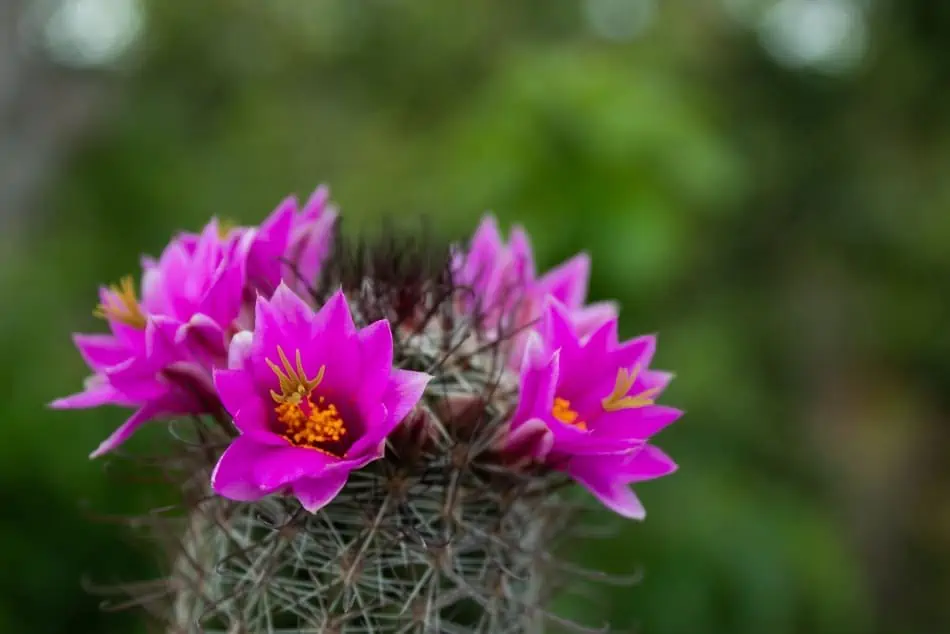
The Old Lady Cactus is especially beautiful when it features gorgeous flowers.

One of the major benefits is that it looks great when in bloom. The flowers are a bright, vibrant orange color. This plant also makes an excellent choice for those looking to add some greenery to their indoors. Its growth pattern is relatively slow, making it an excellent candidate for those looking to add a green touch to their indoors without worrying about rapid growth.

When grown with other indoor plants, the old lady cactus also makes a great companion. The colors will look amazing when in bloom with other plants that have similar bright and vibrant petals.

The Old Lady cactus prefers soil that is well drained and a warm to hot temperature range. It also prefers direct sunlight for the best blooms.

The Old Lady cactus has been known by many names throughout history, including: lace plant or bird nest plants. This name came from its intricate but delicate growth pattern that resembles an old lady’s dress with her skirt.
3. Agave 

Agave is a drought resistant plant that has a tall, thick and woody stalks. It provides additional height to any design as well as stunning leaf cluster at the top. Agave is one of the most popular additions to a cactus garden due to its high tolerance for hot temperatures and arid environment.

Some other notable features of the Agave include the unique, fleshy leaves that have a blade-like shape and are capable of reaching up to 12 feet in height.

The Agave is not only known for its beautiful leaf clusters but also its hardiness. It can be grown outside as well because it doesn’t require too much water or fertilizer which makes them perfect for people who don’t have enough time or patience to care for their plants.

When grown indoors Agave can have the same height and width but it doesn’t have quite as many leaves.

The Agave is also known to be a great candidate for people who are looking to remove thorns from their cactus garden because not only do they not inflict pain when touched, they also don’t possess any spines at all!

4. Aloe Vera 

The Aloe Vera is a succulent that is known for its medicinal benefits.The Aloe Vera has long and slender leaves, each with a point at the end- making them perfect for poking into open wounds or skin abrasions to soothe pain and promote healing. The plant also contains two clear gel like substances called aloins which can be extracted from cuts.

Aloe vera works best when grown indoors because they require less sun than other succulents. They are excellent for those who need to take a break from watering. Apart from this, they help improve skin conditions like acne, psoriasis and eczema. This means you will not need to go far when trying to find a plant that can help with your skin condition!

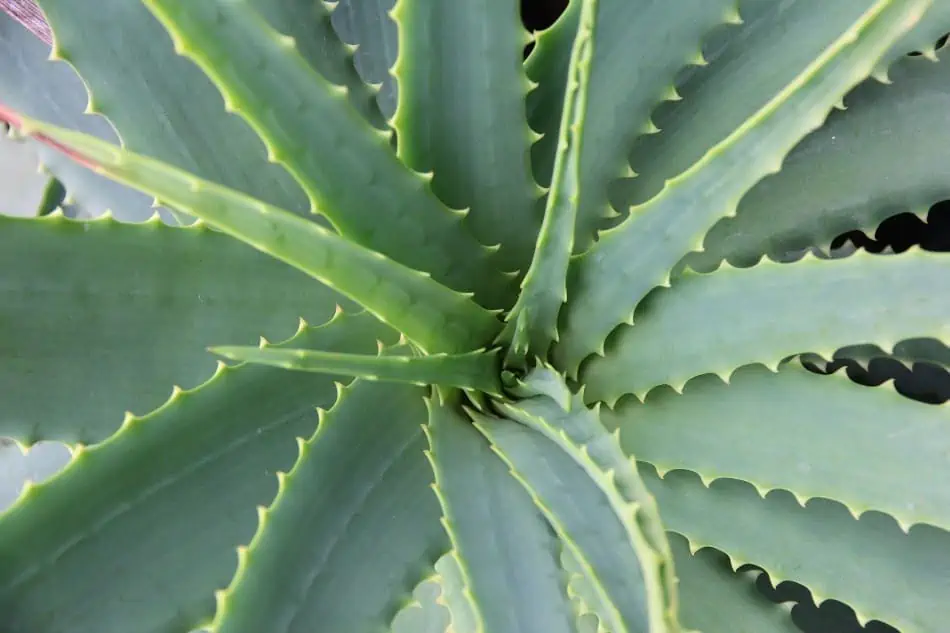
Aloe vera is a spineless succulent appreciated for its exceptional beauty and medical benefits.

Unlike other succulents, they do not have harmful spines and can be placed in areas where you have children or pets who might not always behave.

When planted with other indoor plants, the Aloe Vera will ensure the plants get enough sunlight, while they in turn will help with Aloe Vera’s water needs.

The best type of soil for Aloe vera is a light and porous mix that allows plenty of air circulation to prevent rot from setting in. You can also choose to put your plant on top of rocks or stones to replicate the conditions in the desert.

5. Orchid 

Orchid is a perfect indoor plant for those people who have a hard time remembering to water their plants.

They are native to places where rain is scarce or completely absent, so they can go without being watered for weeks at a time!  

The plant also has an interesting history as it was once used in China and Japan by royalty which meant that all orchids were reserved for the most royal in society.

If you often forget to water your plants, Orchids are ideal options for you as they can withstand dry climates.

Orchids prefer to grow in bright light, but an east window is fine too if the other conditions aren’t met.   The orchid also likes to have some potting material below it’s roots and should only need watering every three weeks.

When grown in an indoor garden, orchids are usually placed in pots or containers so they can be brought outside during the summer months.

The plant should also have a cool basement, garage, and/or attic to spend time over winter if you live somewhere that frost is possible year round.  

Orchids prefer temperatures from 40-55 degrees Fahrenheit (with 50 being best). When watering, ensure that the water is not too cold or hot.

The best windows for your house are those that have a lot of sunlight coming in through them, but only if you can control the temperature as well.

If this isn’t possible, then keep the plant near an east window with plenty of indirect natural light to supplement it’s needs.  

6. Ficus tree

Ficus tree is a large tree that is typically grown as an indoor plant.

Ficus tree, like most plants in this list, needs at least six hours of sun a day and just a little water from time to time. When grown in an indoor garden, this plant can survive in temperatures of up to 80 degrees.

For indoor planting, a good rule of thumb is to use soil that has been sterilized with boiling water or bleach (a teaspoon per gallon) and mix it 50/50 with sterile potting compost before using.    Do not forget the humidity tray!

Ficus tree prefers to be watered regularly with a watering can, as it does not like to have wet feet. The tree also does well in the presence of other plants from this list! It complements other house plants like Mrs. McGregor’s cactus and the living room palm tree, as well as other flowering plants like Begonia or any kind of Poinsettia plant.

While in the indoor garden, position the Ficus tree in a sunny area to enjoy its green leaves and the airy look of its branches.

7. Blue Columnar Cactus

The Blue Columnar is a type of cactus that starts to grow its stem directly from the ground, forming a narrow, round-edged column. It is usually found in shades of blue and green with some red on it.

The Blue Columnar Cacti are very easy plants to maintain indoors because they do not need too much water or light. These conditions will work best especially when planted in a pot with sand.

As it is also easily recognized by its round and cylindrical shape, the Blue Columnar cactus can easily turn your indoors into a modern and contemporary space. However, ensure that you give this plant enough light and water when in its initial growth stages.

The Blue Columnar Cactus will grow in pots, hanging baskets or as a free-standing succulent. The cacti have few spines to protect them from predators because they are not juicy like other types of plants so do not worry about your pets eating them.

8. Moon Cactus

The moon cactus is a unique looking succulent with its distinctive shape and moon-like colors. Moon cacti are not only attractive, but they are also low maintenance as well. This plant is a perfect addition to your indoor garden because of the vibrant yellows and oranges that it displays in sunlight.

Moon cacti come in a variety of vibrant colors and do not require much care.

The moon cactus prefers dry soil that can be watered every two or three weeks. The moon cactus stands out with its unique look and is a great addition to your indoor cactus garden.

When potting the moon cactus, make sure to provide a well-draining potting mix and avoid using soil that is too wet. For better results, use a succulent potting mix.

The moon cactus will do best when grown in bright, indirect light and needs to be watered sparingly throughout the year. The moon cactus is an easy addition to your indoor garden because they are low-maintenance plants that can withstand temperatures below 40 degrees Fahrenheit without any harm coming their way.

9. Burro’s Tail

The Burro’s Tail is an indoor plant that is perfect for those with a brown thumb. The Burro’s Tail requires little water and can be placed in any room of the house, including bedrooms

The Burro’s tail prefers bright, indirect light which will help it grow to its full potential. Although this plant does need some sun exposure, too much sunlight may cause leaf scorch or kill the plant altogether.

When grown in an indoor garden, it blends with most plants especially those in hanging baskets. The Burro’s tail is perfect for beginners because it is hard to kill. Only make sure that you keep it away from drafts and cold air vents.

When potting the Burro’s tail, consider its growth pattern because it grows in a hanging pattern. If you are planting the Burro’s tail by the verandah or balcony, place it in a sheltered location with partial sun exposure.

10. Bishop’s Cap

Bishop’s cap cactus is a single-stemmed succulent that grows in a symmetrical triangular shape. This plant is ideal for gardens or pots because it doesn’t grow very tall and can be placed anywhere without taking up too much space

The Bishop’s cap cactus prefers to live in dry soil so never let the potting mix get soggy. It also thrives on sunlight but make sure not to get the plant too hot.

Bishop’s cap cactus can grow to a height of about 12 inches and can be planted in a pot or garden zone. When grown with other indoor plants, ensure you have enough space for this succulent to thrive.

Considering its small size, Bishop’s cap will fully blend in with your other plants and won’t overwhelm the arrangement.

The Bishop’s cap cactus is a great addition to any indoor garden or potted plant because it can grow in different shapes, sizes, colors and even in partial sun exposure. It only takes about three years for this succulent to fully mature which makes these ideal for beginners who are just starting their indoor gardening.

If grown indoors, this type of cactus only needs watering once every few weeks because it can store water for up to six months.

Considerations when creating an indoor cactus garden

1. Positioning

Choose a sunny spot for your cactus garden. This ensures that you will keep the plants healthy and happy.

Always choose a sunny spot when growing succulents indoors.

Outdoor gardens can get lots of sun exposure, but indoor cactus gardens need to be placed in a place that gets direct sunlight for six hours or more each day.

In order to make sure your succulents are getting enough light they should not have any obstructions on their leaves either.

2. Soil Moisture

Make sure the soil is well-drained and has good drainage. Indoor plants can be forgotten easily when it comes to watering and so you may need to create a watering schedule. However, avoid excessive water, as this can rot the roots.

Some succulents like to be watered once a week or more often than others. The rule of thumb is that if your soil feels dry then it needs water. 

Some plants need a little protection for their root system. For example, aloe vera needs to be planted in pots that have holes on the sides so it can get the water and nutrients it needs without being squeezed close against other objects.

3. Ideal Potting Mix

Use potting mix that provides adequate moisture and nutrients to the plants. This will keep them go for longer without watering.

Using a proper potting mix is key to growing healthy and gorgeous succulents at home.

Use potting mix that contains loam, sand and peat moss or compost mixed in equal amounts to create a light mixture for your succulents.

Since they are so small the pots do not have to be too big either! You can use something like an egg carton with its divots around each hole. 

4. Mulching

Contrary to popular belief, indoor plants can grow weeds. Add mulch or pebbles around the base of the plants to keep weeds away from them.

5. Constant Attention

Keep an eye on your plants and make any necessary adjustments as needed. This may be in terms of access to sunlight or simply redesigning your indoor garden.

Indoor plants are also susceptible to disturbance by children and pets, so you may need to keep moving your plants to a new location in case you feel the current location is not idea.

Managing an indoor garden can be a hassle but it can be worth it in the long run. You can grow succulents indoors without too much difficulty and you don’t have to be an expert gardener in order to take care of them properly!

There are many different types of succulents that allow for a variety of arrangements and can make your garden pop. Just make sure, you have the right combinations to ensure your indoor garden no only pops out but also remains intact much longer. The rule of thumb for an indoor cactus garden is that you should include at least one plant from each of the following groups: Small cactus, Aloe and flowering plants.

9 Best Types Of Succulents That Make Excellent Houseplants

The use of succulents as indoor plants is quickly catching on.  This is because succulents are easy to take care of. They also require little water to survive, making them ideal as indoor plants. If you have a  busy schedule or are forgetful, you need not worry that your plant would die for lack of attention.  Succulents have water-storing tissues which help them survive for long, even while indoors with little to no attention. It is little wonder then that they are loved not only by beginners but also professional gardeners. Succulents help bring a little of nature indoors with their striking features of distinct leaf shapes, sizes, and textures.

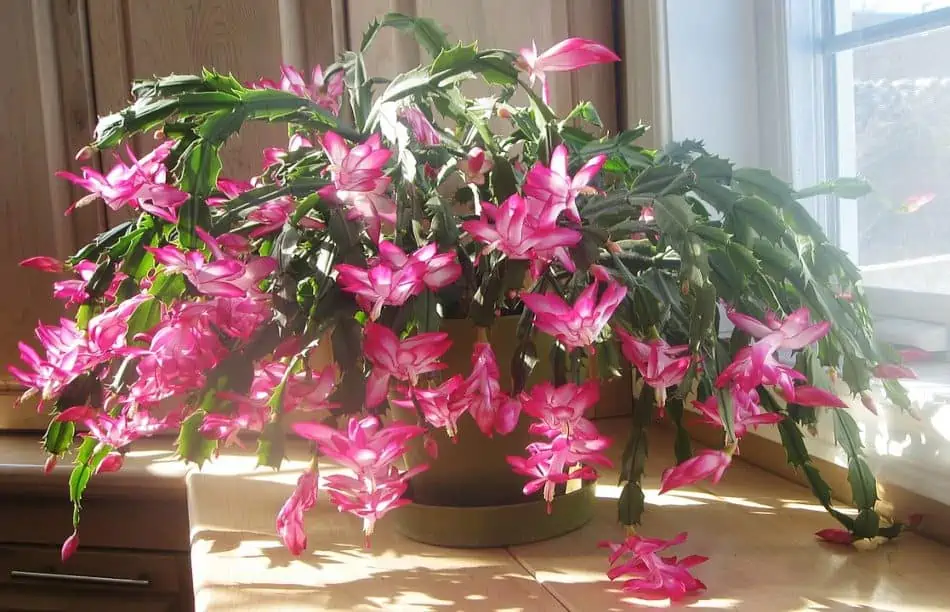
So, what are some of the best succulents out there that make excellent houseplants? Granted, not all succulents make excellent houseplants. For example, Aeonium, Agave, Haworthia truncate, Crasulla ‘Gollum’  to name but a few can only make great outdoor plants despite them being succulents. They include Aloe, Cacti, Stonecrop, Prickly Pear, White-pitahaya, Jade plant, Ponytail palm, Snake plant, Panda, Burro’s tail, Christmas cactus and Hens-and-chicks.

This article will consider nine of these succulents that make great houseplants at length. It will take into account the origins, physical characteristics, and ideal conditions for growing the same.

1. Burro’s Tail

This amazing houseplant has been dubbed the donkey tail plant, and for a good reason. It grows up to 60 centimeters long and has the shape of a donkey’s tail. Interestingly, it is a cactus and a great indoor plant with its origin in Africa. With its fleshy blue-green leaves and flowers that turn pink in the summer, you can see why this plant adds to the overall ambiance of your house.

The ideal conditions for its growth include plenty of sunlight and moderate watering throughout the year. The sun helps in giving the leaves their color. However, when watering, avoid too much water lest you damage its roots. It is also advisable to handle the plant with care because its leaves are gentle and can break easily from the stem.

2. Jade Plant

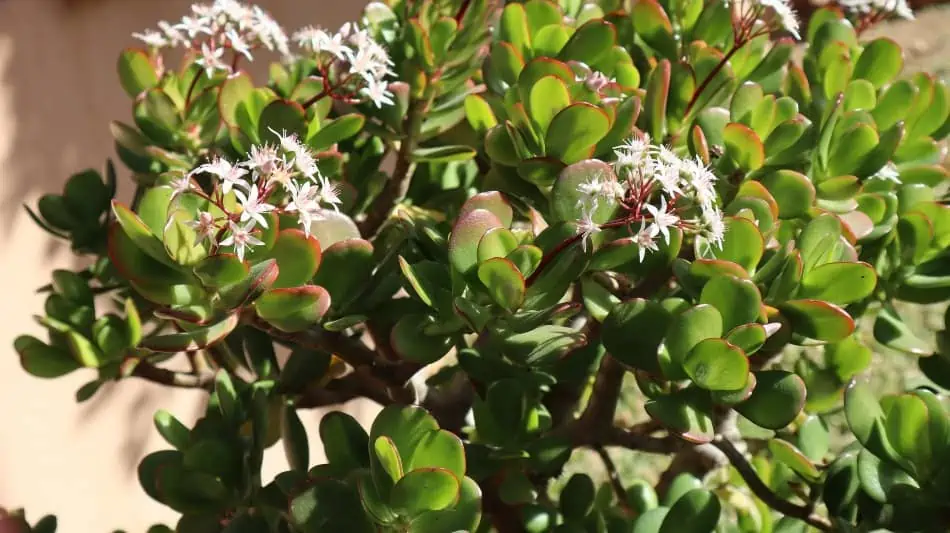
This miniature tree-like succulent is also referred to as the money plant or money tree by the Chinese. According to them, the Jade plant brings wealth and prosperity. With its small pink and white flowers and oval-shaped leaves, this decorative plant is loved for its resilience on growth and ease in maturity. It’s a native to South Africa and Mozambique, but  practically possible to grow anywhere with similar conditions as the native lands.

Jade Plant is a tree-like succulent that features white to pink flowers.

Granted, the Jade plant rots easily. As such, make sure you let the soil dry before watering it again. It is also advisable to avoid watering the plant immediately after planting. You can take up to a week to do so with no harm to the plant. This house plant has a longer lifespan compared to other succulents, and that’s one of the reasons it has been passed from generation to generation. Jade plant grows to heights of 90 centimeters or 3 feet and does well in dry conditions. That said, avoid watering it during winter because the plant is usually dormant during this period and may not need much nutrient uptake.

3. Panda Plant

Well, let’s first clarify that this plant has no relationship with the black-and-white, bear-like animal found in China. Named Cocoon plant and Chocolate soldiers, the Panda plant is native to Madagascar, an island country southwest of Africa. With its red, small-sized and rimmed foliage, the plant has become a favorite for gardeners and succulent enthusiasts.

The Panda plant with tiny rimmed leaves requires at least 6 hours of sunlight daily.

The Panda plant needs plenty of sunlight, about six hours of exposure. As such, planting it inside a container and putting it near the window will work just fine. When watering the Panda, keep it to the minimum, only doing so each time the soil feels dry to avoid too much water affecting its roots. The Panda can grow up to 61 centimeters or 2 feet in height.

4. Snake Plant (mother-in-law’s tongue)

This evergreen perennial plant with upright green leaves and yellow edges might as well be the most famous of all the houseplants. During the night, the Snake plant converts carbon (IV) oxide into oxygen; an impressive feat for such a small plant. It is also named Saint George’s sword and viper’s boasting hemp.

The snake plant is touted to have cancer-fighting capabilities by absorbing pollutants from the environment. This is in addition to being  a snake repellent.

This succulent prefers indirect sunlight and can do well in the shade, albeit with a slow growth rate. Exposing the plant to too much strong sunlight will kill it as direct sun rays burn its leaves.

5. Crown of Thorns (Euphorbia milii)

If you are a Christian, the term Crown of Thorns worn by Jesus is not alien. This plant is believed to have been part of that crown that Jesus wore just before his crucifixion. Native to Madagascar, the plant has tear-shaped leaves, sharp thorns, and deep red bracts. It adapts to warmer climates where it can grow up to 150 centimeters or 5 feet.

The Crown of Thorns thrives when exposed to direct sunlight, and so three to four hours of sunlight daily is enough to get the blooms all year round. Make sure to place it near the window, and move it if you must when the sun moves. This ornamental houseplant is a real gem for any succulent enthusiast looking to improve their indoor décor.

 6. Christmas Cactus ( Schlumbergera truncate)

Colors like white, yellow, purple, and pink are always common during the holidays, and that is what this plant, a native of the tropical rain forest in Brazil, is all about. The Christmas Cactus has branches that can grow up to 90 centimeters or 3 feet long. The plant also goes by other names like Thanksgiving cactus, Holiday cactus, and Crab cactus. Considering its native lands, the Christmas cactus prefers a humid environment.

Christmas cactus produces gorgeous flowers when grown in relatively humid environment.

Direct sunlight may burn leaf segments; so be sure to place it in areas that do not experience direct sunlight around the house.  You can water this succulent every 2 to 3 weeks to allow the soil to dry fully.

7. Aloe Vera (Aloe barbadensis)

Wonder what else can come out of the Arabian Peninsula apart from oil? Well, the Aloe vera that grows wild in arid climates is native to the Arabian Peninsula. It’s quite a popular succulent, if not the most popular of them all. Thanks to its juice, some consumer products have been given a lifeline. The benefits ascribed to this wonder plant include:

•          Healing burns,

•          Promoting better oral health

•          Clearing acne

•          Improving digestion

•          Improving indoor decor

Aloe Vera offers a variety of exceptional health benefits while adding a touch of green to your interior décor.

For lovers of home décor, you can kill two birds with one stone by improving your indoor outlook while getting medicinal values whenever needed.

Aloe vera has thick green or sometimes grey-green serrated leaves, and it grows well away from direct sunlight, preferring instead just the brightness of the sun. With the right conditions, it can grow up to 100 centimeters long or a little over 3 feet.

8. Hens-and-Chicks

You might be wondering why the name Hens-and-chicks for a plant. Well, this succulent is a member of the alpine family that has this habit of producing a flock of offspring that stays closer to the mother plant. It is known by many other names, including houseleeks, hens, and semps.  Remarkably, they are known to survive both falls of snow and frost; an impressive feat among succulents.

Hens-and-chicks grows well in dry conditions and is thus easy to care for as a houseplant. This explains why it is popular among the busy succulent lovers

9. Ponytail Palm

The word ponytail brings to mind a kind of hairstyle, but this plant is far from that. With a stem that looks like an elephant’s trunk and leaves capping the stem, the plant looks so interesting. The ponytail is native to Mexico and grows to about 3 feet as a houseplant. Otherwise known as the elephant foot, this succulent plant has become popular in the last few years as a houseplant, and it’s easy to see why. Its popularity stems from the fact that it thrives on neglect, meaning you need to do very little. 

Succulents are slowly taking center stage in home décor. The need for much greener and eco-friendly interiors has seen many succulents enthusiasts opt for these plants for their indoors. Even with his, it is important to consider the growth conditions of your chosen houseplant by ensuring it corresponds with that of your region. Whether you are looking for flowering succulents or simply yearning to see green at home, succulents are your best bet. The fact that they do not need much attention makes it the best choice for busy individuals or frequent travelers.

The Best 14 Low Light Succulents For Your Home

The first thought that comes to your mind when you think of succulent is the desert environment with lots of sunlight. What if you find out that a good number of succulents don’t need the scorching sun? Some plants prefer shade, while others only need a few hours of direct sunlight.

However, don’t confuse low light with no light because these plants still need to photosynthesize, and they can’t do that without light. You must ensure your indoor succulents still receive sunlight but not direct exposure. If you’re to keep them indoors, they need a well-lit room or a spot near the window where they can receive some light. Grow light can also work well for such plants.

If you’re thinking of growing low-light succulents in your home, you have an overwhelming number of options to choose from. Here is a list of the best low-light succulents you can grow in your home.

1.  Aloe

Aloe is one of the most popular succulents you can come across. This plant does well in low light and can grow large. You’ll recognize the aloe plant with its fleshy pointed leaves. Aloe grows up to three feet when planted outside but does pretty well when given partial light or artificial light.

Many people grow aloe vera for its medicinal purposes. The gel found in the leaves of this plant is known to provide essential soothing and moisturizing effects. Also, give it low water at least once every three weeks in dry months, which should reduce in winter months.

2.  The Snake Plant

The snake plant is among the best house plants. The plant is known to tolerate a large variety of circumstances, such as low watering and low light. The plant can still thrive with low light but also does well in brighter conditions.

For it to grow well, keep it away from direct sunlight. Ensure you find brighter areas of the house. Do not overwater this plant. If you take good care of it, the snake plant will reward you with various colors to adorn your indoor garden.

3.  Kalanchoe

The most popular kalanchoe variety is found in small shrubs, which grow in thick leaves of different shapes and forms. Some come with smooth leaves covered with fine frizzy hair.  Kalanchoe does well in pots and makes a great indoor plant that needs low light.

This plant is one of the easiest to grow and is highly adaptable to various conditions. The plant survives well under low light but can also do well under bright indirect light. Kalanchoe can also tolerate intense heat. The plant is known to produce colorful floors that adorn your house in clusters of blooms.

4.  Echeveria

Echeveria is among the most recognized succulents and grows in beautiful shapes with colorful leaves. You’ll find this succulent variety in different colors, including blue, green, purple, and pink leaves. The center stalk of this plant tends to elongate in an attempt to reach out to reach the sun.

A couple of hours of sun daily is enough for Echeveria to grow healthy indoors.

Four hours of sun every day is enough for this plant to grow well and avoid elongating searching for the sun. This plant will not require much attention from you and will still perform well under neglect. Just don’t forget to water it once in a while in hot weather and twice the entire winter.

5.  Burro’s Tail

If you love hanging plants, Burro’s tail will be your best low-light succulents. This succulent is easy to grow and propagate. The fallen leaves easily develop roots and begin to grow if they get a conducive growth environment.

Burro’s tail prefers growing in ample light but can still do well in lower light levels. Apart from sunlight, they also prefer more watering in summer, which should reduce in winter. This plant has extremely fragile leaves that can easily fall off the plant when you brush on them. You must be very careful.

6.  Hoya

Hoya is another great succulent plant known for its thick and nearly heart-shaped leaves. The plant is also called the Hindu Rope or Wax plant. You must understand that not all Hoya species are succulents, but those who are don’t need direct sunlight to thrive.

Hoya plants need partial shade, and you must protect it from intense heat and frost. The plant grows well in beautiful hanging baskets indoors.

7.  Holiday Cacti

You can’t miss cacti species in the list of low-light succulents, and the holiday cactus represents the list well. This plant falls under the epiphytes, which means they live under trees that protect them from the sun. The cacti varieties under holiday include Thanksgiving, Christmas, and Easter cacti.

While holiday cacti love humid environments, they can do totally fine without plenty of sunlight.

All these plants don’t need lots of light to thrive. They love humidity and will thrive better if you water them more than other cacti varieties. The lack of light encourages these plants to bloom, especially in autumn. The shortening life exposure in the autumn is what allows them to bloom.

8.  Agave

Foxtail Agave is a perfect low-light succulent that every landscaper loves. The plant portrays a flamboyant presence and is highly tolerant of drought. The stalks of this plant grow up to eight feet wide and five feet tall and can extend up to 10 feet. Its bushy stalks bloom in summer.

The plant is suitable for growing in pots where it tolerates shade and sun in equal measures. Make sure this agave receives moderate temperatures. It’s also a drought-tolerant plant that can survive neglect.

9.  Ponytail Palm

Ponytail palm is succulent and not a palm tree-like other people think. The plant comes with a bulbous pump where it stores water, which categorizes it under succulents. It got its name from the long, slender, and hair-like leaves. While this plant loves the sun, it can still allow you to grow it in a controlled environment with low light.

Make sure the ponytail palm receives well-drained soil. The plant needs minimal watering as it can survive up to three weeks without water. The edges of the leaves of this plant turn brown over time and fall off from the main branch.

10. String of Bananas

This is a dangling succulent that needs baskets or a shelf placed under low light conditions. You’ll notice this plant with its long tendrils and slightly curved leaves resembling tiny bananas. If you were to plant it outdoors, make sure you give it a hanging box or a hanging planter in partial shade.

11. Scarlet Ball Cactus

Here are cacti species that fall under low light succulents. This magnificent plant survives well in shade and low light conditions. For it to thrive well, give it bright sun but protect it from intense heat. The plant can grow solo or can form beautiful clusters. The plant itself grows in a greyish green color but blooms in yellow and bright orange flowers.

12. Zebra Cactus

This is yet another cactus plant that loves low light and makes a good choice of succulent to add to your indoor collection. Even though zebra plants grow pretty well under low light, sometimes it’s best to give it bright or direct sunlight under given periods of the day. When grown in low-light conditions, this plant will need very little water.

If you are growing the Zebra plant in low-light environment, give the succulent just a little bit of water.

The Zebra plant is no doubt a lovely miniature plant. It has a vivid dark green color with beautiful white markings. This appearance is what gave it the name zebra. It does powerful indoor décor work, especially if you place it on your office desk.

13. Jade Plant

If you want your jade plant to look healthy and keep its structure and texture, put it under low light. The plant portrays green or red color depending on the amount of sunlight it receives. Many people have this plant either in their rooms or the office as it’s regarded as a symbol of luck.

Jade plant is a low-light succulent that is often associated with luck, fortune, and prosperity.

The plant needs shade to protect it from direct sunlight. Don’t water jade plants because too much water can end up killing them. But it’s also one of the easiest plants to save as the Jade plant easily grows back even after its leaves have fallen. It’s a highly resilient and hardy plant.

14. Haworthia

Haworthia succulent collection comprises a host of beautiful low-light species that you won’t hesitate to add to your succulent collection. Most of these plants grow in rosettes and form thick fleshy leaves. In the wild, you’ll notice that haworthia tends to hide in bushes and rocky crevices in search of shade. This means they can do well indoors where there’s lots of shade.

Haworthia species with thinner leaves make the best houseplants. They thrive well in areas with low amounts of sunshine. Haworthia is available in different varieties, so you won’t have a hard time finding one that you can plant.

Summary

If you want to grow some succulents indoors and are worried about the low-light inside your house or the office, don’t worry because there are plenty of succulents to grow indoors. You can get a countless number of attractive succulents to grow in low-light. Just understand that low light doesn’t mean that the plant receives no sunlight at all.

5 Gorgeous Cacti To Put On Your Desk

We’ve discussed cactus for every part of your home, including the garden, kitchen, living room, and bedroom. But one thing that doesn’t come to mind is where you spend most of your productive time, the office. Your office also needs some life, and there’s no better way to ensure that than to get some amazing cactus plants.

Add some color and warmth into that space by incorporating some low-maintenance cactus that can do well in low light with little to no watering. You need something that won’t take away your busy office hours to care for; hence cactus makes a good choice. But not all of them will fit this description well because some need way too much attention. Not to talk about those that will grow so huge and too fast that you’ll need to move them outdoors.

So, what types of cacti meet the perfect description of desk plants? Well, you can never go wrong with any of the choices below as long as your climate allows it.  Let’s have a look at these five cacti for your office desk.

1.    Christmas Cactus (Schlumbergera truncate)

Christmas cactus is sure to brighten your day at the office with its unmatched beauty. A beautiful bloom from the cactus is all you need for the holidays, and Christmas cactus will not disappoint. Its smooth segment leaves and soft spines provide the perfect décor that you need to brighten a dull day in the middle of winter.  You’ll love how the stems and the leaves hand and drape from your containers.

It’s not names of Christmas cactus for nothing. The plant lives up to its name by blooming in bright orange-pink, red and white flowers from its long leaves with flattened segments. And the timing is also perfect as the blooms come out during the Christmas period. If you want it to keep blooming and brighten your office longer, give it cooler temperatures of 50 to 60 degrees F.

Since Christmas Cactus does not require too much light, it is an ideal low-light desk plant for almost any type of office.

Christmas cactus can do well in a small and not so well lit office because it doesn’t require too much light. You’ll appreciate some winter blooms if you give your Christmas cactus some darkness. You’ll do it some justice by giving it filtered light coupled with moderate irrigation. To enjoy the beauty, consider growing it as a hanging plant or place it where it can easily drape.

If you give it excellent care, this winter plant will not disappoint as a houseplant of any setting. It might even surprise you with additional blooms if you give it some exceptional care. Planting it in your office ensures you get something to gift your employees for the holiday season. You might also have some decors to take home with you for the holidays.

2.    Zebra Cactus (Haworthia fasciata)

If your office space is characterized by all kinds of artificial lighting, fluorescent light fixtures, and some warm and dry air, you might think there’s no room for plants. Well, you’re wrong because the environment is highly welcoming to Zebra cactus.

Zebra cactus is a perfect plant for the office because it doesn’t require sunlight but will appreciate the artificial lighting. It prefers bright light, so you can do it some justice by switching on the office bulb when you go home in the evening. The plant can also do well in spaces with low light, so you don’t have to worry if your desk space is slightly dim. The cactus needs minimal watering and almost zero maintenance.

Zebra Cactus is a low-maintenance desk plant with dark brown leaves and white stripes that grows up to 4 inches tall.

Another thing you’ll appreciate about the Zebra cactus is the fact that it won’t interfere with your space. The cactus grows to 4 inches in height, which is a perfect size for an indoor plant. The Zebra Cactus takes its name from the appearance. You’ll recognize it in its small size and the horizontal white stripes on the leaves. Its leaves form shapes similar to that of aloe plants. The leaves are thick, smooth inside, and take a dark green color.

The beautiful plant doesn’t need much of a fuss or attention. As long as you give it an occasional drink and keep it away from direct sunlight, it won’t be much of a bother. While it grows so slow and doesn’t flower often, you can expect some blooms in summer. You’ll love the flower treats because it’s how the plant shows you that it still has some life despite the slow growth.

3.    Saguaro Cactus (Carnegiea gigantea)

The slow-growing nature of saguaro makes it an excellent plant for your desk. Another great trait that makes saguaro a perfect workmate in your office is that it doesn’t require too much watering. If you’re the kind of person who travels a lot for work and has to leave your plant uncared for long, you’ll love saguaro. Just make sure you give it some sparing watering once a month, and it will appreciate.

But one thing you should never deny saguaro is light. Ensure there’s some bright light coming in through your office windows. The beauty of saguaro lies in its barrel-shaped bodies and pleated trunk interior. The pleats in the plant enable it to gather water and store it in its tissues for the longest time.

Saguaro Cactus is a slow-growing plant that should be watered about once a month but requires plenty of sunlight.

As for the blooms, it will take you a very long time before you see any. Experienced gardeners say it can go up to 35 years without blooming. But even without any flowers, saguaro still looks stunning in its majestic and treelike appearance. When it’s ready to produce flowers, you’ll notice them at the end of the arms or the sides of the cactus. The blossoms will open at night and close during the day, so you must be accurate with your timing to notice some.

4.    Old Lady Cactus (Mammillaria hahniana)

Old lady cactus is a gorgeous looking plant you can use to adorn your office. The cactus forms some beautiful tall spheres that come in white hairs and spines. Its beauty doesn’t end there. Old lady cactus will also adorn your office with pink blooms in the middle, appearing like a crown on ahead. And the fact that you get all this beauty and sweetness from a cactus is just so amazing.

Old Lady Cactus produces gorgeous flowers around the plant in a crown-like alignment.

Old lady cactus will appreciate some good care and can grow quite well in groups. Yes, just like your grandma at home, old lady cactus doesn’t like being alone. So, if you have space, consider growing it in groups using a large pot, and it won’t take long before you enjoy the beautiful collection of spheres.

To add old lady cactus to your collection of indoor plants, you’ll have to plant it in a sandy potting mix and only water when you notice that the soil is dry. Make sure your pot offers good drainage, so your plant doesn’t sit in water. Old lady cactus will need less watering during winter and more during summer. Also, make sure it receives around 4 to 6 hours of direct sunlight. If this is not possible, give it some grow light.

5.    Parodia Schumanniana

If you love some sense of security in your office, then you’ll get that if you plant Parodia schumanniana. The cactus comes with some pricks that define its beauty.  Parodia is an easy to grow indoor cactus that can do well in low light. The cactus can grow up to six feet long when the conditions allow it. It won’t need you to repot or move outside because it’s a slow-growing cactus that won’t get in your way.

On the aesthetics part, Parodia will not disappoint either. The beauty starts from its bristle-like spines that look yellow at the start but later turn gray or brown. When summer knocks, you’ll start to see some stunning bright yellow flowers. After the blooms, you’ll also notice a round green fruit adding to the beauty.

Something unique about Parodia schumanniana is that it won’t do well in direct sunlight. So, if you thought all cacti need light, then you’re wrong. It’s also a one of a kind cactus that needs more watering even in winter. As you water it, make sure the drainage is also perfect for preventing the precious roots from rotting.

Choose Your Cactus Now

If you thought these desert-native plants wouldn’t make good office plants, then you’re wrong. It just needs some creativity from you to have some sense of life apart from yours breathing the air inside. The cacti mentioned above will not get in your way by taking too much of your productive time. They’ll also fit well in your small desk space as they don’t grow too big.

Most of them need little to no care, so you can plant, water, and forget they even exist for some time. Just make sure you mimic their natural habitats before you forget about them; otherwise, they’ll die. So, if you think your office needs some greenery and you don’t want to deal with the huge workload of caring for indoor plants, think of these cacti, and you’ll never regret it.