How do I Know if my Cactus is Healthy?

If you are a cacti enthusiast, you would already know that these desert plants are resistant even to the harshest of environmental factors. However, this does not mean that they are immune to attacks from animals, diseases and bugs. Cactus can withstand some form of neglect, but it needs proper care to remain healthy and thriving. A healthy cactus is a sign of good prospects and hope for reproduction in the future.

So, how do I know if my cactus is healthy? A healthy cactus will be evident from its physical features.  A strong, succulent stem, upright leaves, evenly green outlook and strong roots stand out as some of the characteristics of a healthy cactus. A healthy cactus will hold a considerable amount of water without showing any signs of weathering and will bloom bright colored flowers each flowering season without fail.

This article will take a look at the characteristics that stand out for a healthy cactus. It will discuss ways to keep the plant healthy and how to spot any signs of poor health.

Physical characteristics of a healthy cactus

The Stem

A cactus stem, unlike other plants, is specialized for several functions. Apart from acting as the pillar for the whole plant, it also works as:

  • A water reservoir to help store water for the plant to be used in times of drought
  • Making food for the plant through photosynthesis

Based on this, a healthy cactus ought to have a strong, upright stem. In most cases, the stem will be green. The green color on the stem should be even with no sign of discoloration or rough patches.

A healthy stem enables photosynthesis that keeps the plant alive. Unlike other conventional plants, cacti take in carbon dioxide at night when the temperatures and evaporation are low in a process known as CAM photosynthesis. This carbon dioxide would then be used during the day to make oxygen and sugar.

Leaves/pads

While some cacti have little spiny leaves, others have pads or spikes to compensate for the same. A healthy cactus portrays vibrant pads with no signs of withering or leaning over. Depending on the cacti species, the pads would multiply with time, thus providing the pant with a chance to propagate into new plants. Usually, the pads may be attacked by bugs or herbivores trying to feed on them. This leads to dents and discoloration of the outer skin. However, note that as the cactus ages, discoloration may be noted in the stem or leaves, and this is normal.

Flowers

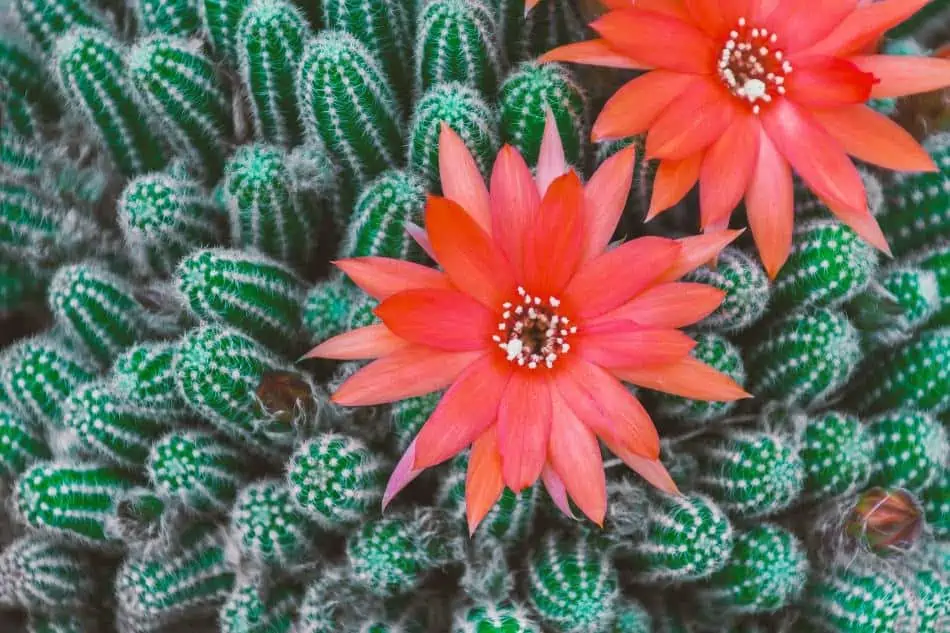
Almost all cacti have flowers. Usually, the flowers are short-lived and would appear in specific seasons. A healthy cactus blooms brightly colored flowers every season. Depending on the cacti species, a flower would have 5 to 15 petals, usually blended with the sepals. It also features a multi-loved stigma surrounded by several stamens.
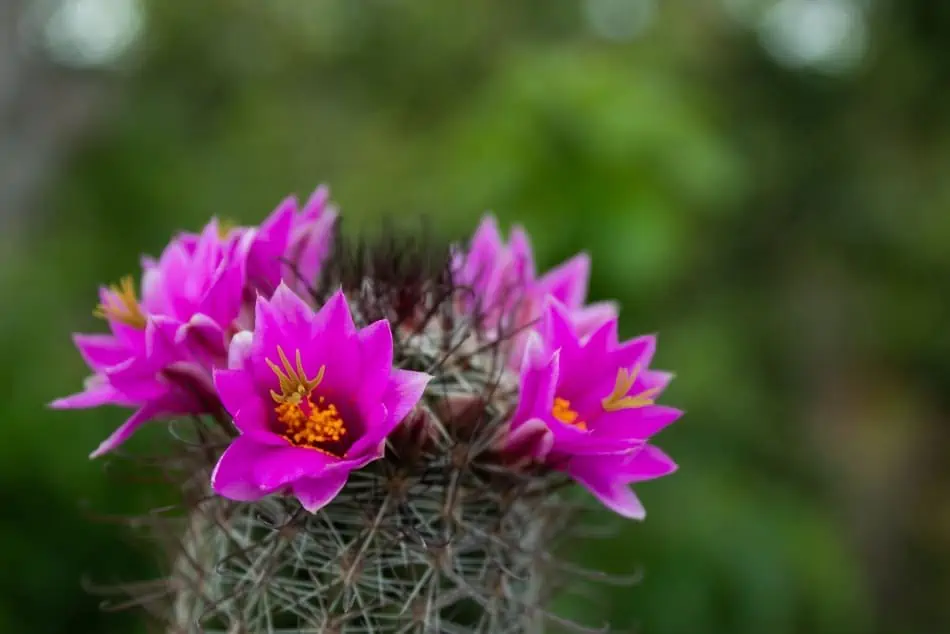
If your cactus does not produce flowers every season, it might not be completely healthy.

An unhealthy cactus may skip some flowering seasons or fail to flower altogether. This may be a result of nutrient deficiency or lack of enough water. Notably, the ability of a cactus plant to bloom can be determined by its age. While some cacti may take years to mature and produce flowers, others may stop flowering after a certain age. It is, however, important to ensure that your cacti get enough sunlight and watering as desired.

Fruits

The flowering season is usually followed by an abundance of fruits and seeds, depending on your cactus species. A healthy cactus would produce juicy fruits and healthy, full-size seeds following its flowering period. Some edible cactus species like the prickly pear, barrel and dragon cactus produce juicy edible fruits. A healthy cactus would be consistent in producing fruits and seeds for a better part of its lifespan.

Spines

A healthy cactus plant features multiple erect spines all across its surface. These are meant to help protect the plant against external attacks from herbivores. The spines keep the cactus healthy by insulating it against cold or dry weather. Weak or broken spines are signs that the plant is in trouble and at risk of dying off from external attacks.
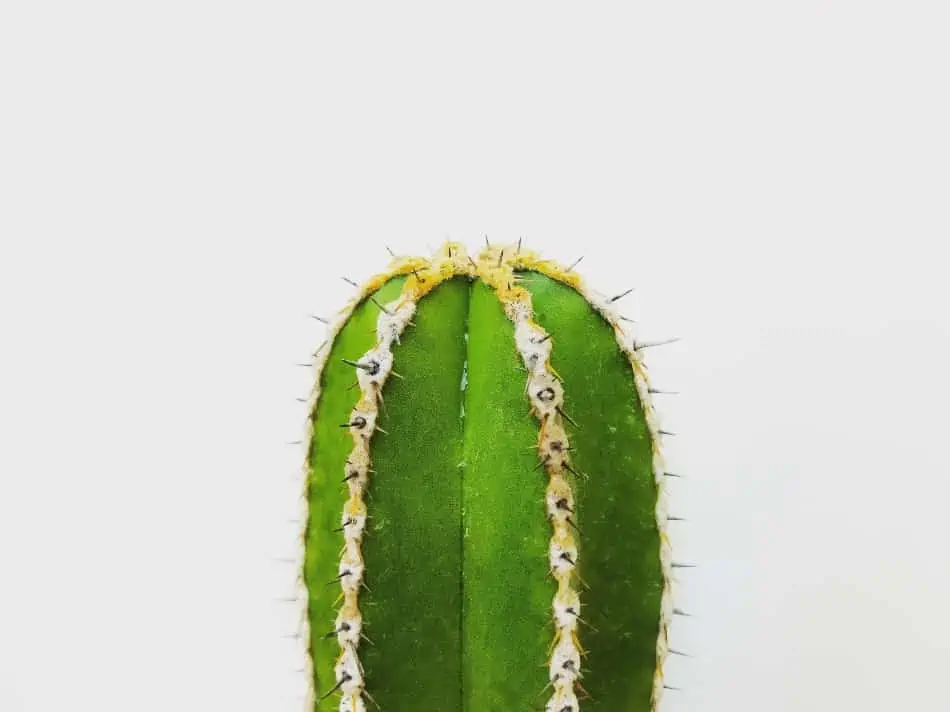
Unhealthy cactus plants have weak or broken spines.

Skin surface

A healthy cactus plant features a moist, shiny and ribbed surface. The ribbed surface is an adaptation that helps the plant expand comfortably without the risk of bursting as it absorbs more water to its reservoir. A healthy cactus also features a waxy surface that helps the plant reduce evaporation in times of drought. The waxy skin also comes in handy to help deter insects and other bugs from eating into the plant’s moist and soft interior.

Roots

Unhealthy roots in a cactus can spell disaster. The plant is commonly attacked by root rot, leading to death if it doesn’t get urgent attention. As such, it is important to understand the characteristics of healthy roots.

You wouldn’t accurately determine the health of cactus roots unless you uproot the plant. This may be done when repotting. Healthy roots are usually whitish or grey. They are moist, and some would feature vibrant hairs around them. Roots with brownish or black coloration may be a sign of poor health not only for the roots but also for the plant as a whole.

Soil

For a cactus to remain healthy, the soil’s condition must be ideal enough to ensure efficient nutrient uptake by the plant.  A cactus growing on light, porous soil is a healthy cactus. Such soil guarantees just the right drainage to avoid dumpy conditions that may lead to root rot and eventual death. When planting, you may opt to make your own soil mix at home or opt for the commercial soil mix available in most arborist stores, here are our recommended ones.

The quality of the soil mix influences the healthiness of your cactus plant.

Potting container

A good sizeable potting container with drainage holes is a guarantee to have a healthy cactus.  As long as the container can still comfortably hold the plant with no signs of roots outgrowing through the drainage holes, it should be an indication of a healthy cactus.

Consider repotting your cactus every year or whenever signs of roots getting overcrowded are noted for better results. A larger container gives space to the plant to grow even bigger and more vibrant.

How to keep a cactus healthy

Cacti are resistant plants, alright, but this does not mean you neglect them altogether. Cactus plants, especially those grown indoors or in gardens, require constant attention to keep them healthy and thriving.

Watering

Cacti are desert plants, but they need sufficient watering to keep them vibrant and improve their growth and reproduction rate when grown indoors. However, watering a cactus needs skill and strategy. Unlike other moisture-loving plants, cacti need some waiting period between watering to allow the plant to use up most of the water already fed. Since they store their water in their succulent stems, cacti do not need frequent watering. Only water when at least two inches of the topsoil feel dry.

Sufficient lighting

Cacti love light, and you may not be too lucky if you keep them in the dark place. Lack of light causes the plant to change color and eventually die off.  When growing your cacti indoors, ensure you provide enough light. Do this by strategically positioning your plants in a west-facing or south-facing window. At least six hours of light per day is enough to keep your cacti healthy, vibrant and thriving.

However, beware not to expose new or young plants to too much light. This may scorch the outer skin and expose it to external attacks by bugs and fungal diseases.

Use proper potting soil and container

The survival of your cacti is highly dependent on the soil and container used. For better results, always ensure you use proper-sized containers with drainage holes. These will help drain excess water to avoid cases or root rot.

When planting, use the proper soil mix ideal for planting cactus (Here are our recommended ones), The soil should not be heavy as these will retain too much water. A soil mix with lighter soil will be ideal in this case.

Fertilization

Cactus may be a dessert plant where nutrients are limited, but this doesn’t mean it doesn’t need fertilizer. A properly fertilized cactus will grow and mature faster, will produce brighter and more regular blooms and will have a vibrant appearance overall.

Fertilizer promotes the growth of a healthy cactus and makes it mature even faster.

Cacti do not need a specific blend of fertilizer, but a highly diluted, all-purpose fertilizer will do the magic. Use a low nitrogen water-soluble fertilizer with a ratio of 5-10-10 or 10-10-10 for better results.

A healthy cactus is a happy cactus. As a cactus enthusiast, you not only have to get acquainted with the characteristics of a healthy cactus but also take steps to ensure that it remains so for the rest of its lifetime. With proper care and expert attention, your cactus will live to serve its purpose, whether indoors or in the garden.

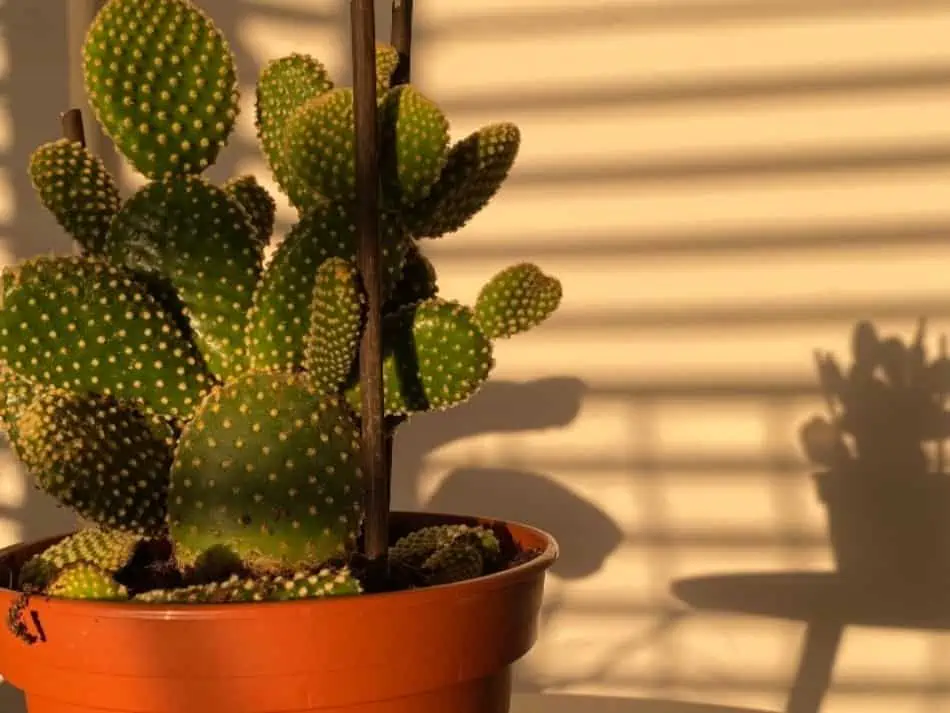
This Is How To Cut And Propagate A Cactus Easily

Cactus is undoubtedly a great addition to your indoor or outdoor garden, thanks to its unique shape, striking sizes, and colorful flowers. Having said this, you may have been prompted to ask, ‘how can I reproduce my cactus?’ Well, the answer is simple; through propagation! Propagation is one of the most effective ways to increase your collection of cacti without spending a penny. All you need to do is learn the best practices in cutting and propagating cactus.

So how do you cut and propagate a cactus? Most cacti species can be propagated through stem, leaf or offshoot cuttings. For species whose stems grown in segments like the Christmas cacti and the prickly pears, individual segments are cut off the main plant before propagation. For offshoot propagation, the sections are cut or snapped from the parent plant before being repotted in a new container.

How to cut and propagate cacti from stem cuttings

Step 1:

Take your cutting from the top of a mature cactus. Ensure you go for a mature and disease-free piece from your cactus. In the case of columnar cacti, go for the thin stem that will root faster.

When propagating cactus via stem cuttings, select mature and healthy pieces of the plant.

Step 2:

Cut off the stem just a few inches from the top. Do this using a clean cutting tool to avoid infection risk to both the propagated and parent plants. Ensure the cut is as clean as possible without any traces of dents or crushes.

Let the new cutting rest in the sun for a few days to allow the wound to form a callous.

Step 3:

Fill your pot with good potting soil ideal for cactus. This should be a light soil mix that allows proper drainage (Here are our recommended ones).

Step 4:

Once the end of your cutting dries out, stick it upright into the soil mix with the wound end facing down. You may want to dip your cutting in some rooting hormone before planting to help spur root development.

Allow the plant to develop roots before you actually plant it.

Step 5:

Lightly water the soil. Keep doing this every few days to help encourage the development of roots.

By following these steps, your cactus should root within a few weeks. However, the speed of root growth will be dependent on the cactus variety, size of the cutting and efficiency in watering. You can then introduce your new cacti to sunlight to help maintain color and shape. The roots will keep growing, but you may not experience any substantive stem growth within the first year.

How to cut and propagate cactus through crafting

What you will need:

  • The Rootstock and Scion
  • Sharp Knife
  • Electric Tape
  • Rubber bands
  • Heavy Gloves

Grafting is a process where two pieces of plants are blended to produce a stronger hybrid. Here, the top portion (scion) is grafted onto the plant with roots on the ground (rootstock). For cactus, grafting is often preferred for ornamental or colorful species like the moon cactus and the coral cactus.

To propagate ornamental or colorful cactus species like the moon cactus, you should use grafting methods.

Step 1:

Choose a healthy scion and rootstock. The two plants will need to be closely related and similar in size. The more closely related they are, the better the chances of survival and overall development into a healthy plant.

Disinfect your knife by rubbing in alcohol or simply washing with warm soapy water. This helps avoid the introduction of fungal infections and other diseases.

Step 2:

After determining that the diameters are similar, cut the two plants using a sharp knife. You can choose to do a diagonal cut or a v-shaped cut, depending on your preference. Make the cuts as perfect as possible to help create a perfect match.

Step 3:

Place your scion onto the rootstock without leaving any gaps in between. For better chances of survival, ensure that the ring in the middle of the stem, hereby called the vascular cambium, matches up. This part comes in handy to help transport nutrients from the roots to the top of the plant.

Step 4:

Secure your graft by wrapping and electric tape, rubber bands or twine around the grafted area. Keep the grafted cactus in a warm location away from direct sunlight.

Step 5:

Water your cactus cautiously to avoid water getting in contact with the grafted area. With time, the vascular cambiums will match and create a new plant.

Within a few months, the graft should merge successfully, and you can then remove the binding. As a rule of thumb, the rootstock should be a fast-growing plant, while the scion can be a slow-growing variety. Some common cacti species that can be used as scions include trichocereus and Spachianus.

Propagating through offsets/offshoots

Propagation by use of offsets or pups is another popular and effective way to reproduce cactus.  This is especially so for cactus species that produce such offsets. Some cactus species would send out mature offsets to grown on their own while in the wild. However, you can do this personally for your indoor cactus. By removing these offsets, the parent plant focuses more on its strength, health and production of even more offsets. Notably, propagation of cactus through offsets has the highest success rates compared to other methods.

Step 1:

Identify a mature cactus with enough offsets already. You can then pick out offsets that are about 2 inches long. These are healthier and stronger to withstand the new environment and thus grow faster.

Step 2:

Remove the pups from the parent plant by hand. Do this by twisting it a little from the point of connection with the parent. Break it off gently to avoid causing unnecessary tears or cuts. Alternatively, you can use a sharp knife to cut the offset from the parent plant.

Step 3:

Set the offset aside for a few days as you prepare your potting mix and container.

Step 4:

Plant the offset by inserting about a quarter of the stem into the soil and leave it in the shade for a few days. Take care not to water your new plant immediately after planting as this may increase chances of infection attack or rotting. Instead, wait for about 5-7 days to start some light watering regime.

Cutting and propagating cactus through pads

Reproducing cactus by pads is as popular as it is easy if looking to expand your collection. However, not all cactus species can be propagated using pads. Some species do not grow pads and thus propagated by other means already discussed. Follow these steps to propagate your cactus through pads:

Step 1:

Using a pair of tongs, break off a mature pad from the parent plant. Alternatively, you can snap it by hand if you have thick gloves to put on for protection against spikes. This should be a clean job for most cacti species, but if the process proves challenging, you can use a sharp knife to cut off the pad.

To propagate a cactus through its pads, carefully obtain mature pad from the parent plant.

Step 2:

Allow the pad to callous over for a few days before laying it flat on top of your potting soil. Soak the soil as you would when watering your other cactus. Do this regularly by ensuring the soil remains moist but not too dump. This helps spur root growth, and in no time, your plant will hold on to the soil and growth into a strong, healthy plant.

How to root a broken piece of cactus

As much as we can propagate most cactus varieties through cuttings when the need arises, sometimes accidents may occur, and a cactus breaks off from the mother plant.  In such a case, the best course of action would be to find a way to turn the broken piece or cactus cutting into a new plant. A cactus will root much easily when the right conditions are met. The following are some vital steps you can take to root a broken cactus.

Step 1:

Get a sharp knife and disinfect it with alcohol or soap and warm water. This should come in handy to avoid the risk and spreading diseases to the new and existing plants.

Step 2:

Carefully inspect the broken piece. If you notice any jagged or uneven part, cut it off with your knife. Jagged cuts tend to rot off easily, thus making rooting a challenge.

Step 3:

Set your piece aside for some time to heal and callous over. The time taken for this to happen will highly depend on the size and variety of your cactus. The weather conditions will also contribute to the same, and this may anywhere from a couple of days to even weeks. The piece should be kept in a bright spot but should not face direct sunlight.

Step 4:

Prepare your pot by filling it with the right potting soil for cactus. Your pot should have proper drainage holes to help drain any excess water during your watering regimes.

Step 5:

Deep your cutting in rooting hormone to help catalyze the development of roots. This step is, however, optional.

Step 6:

Plant your piece by inserting the broken, dried end into your potting mix. The piece should get in about a third into the soil. Keep the piece erect and pack some soil around to secure it. You can then place your pot in a bright area but avoid direct sunlight.

Step 7:

Do not water your new plant immediately. Give it a timeline of about 2 to 4 weeks. Once the soil is completely dry, you may start your watering regime.

Step 8:

As the roots start to form, introduce your plant to sunlight, albeit in bits. Roots should form within two to six weeks. To check for root development, try pulling the plant gently. If you feel some resistance, then it is a sign that roots are already developed. Increase the intensity of sunlight as the roots develop even further.

When not to propagate a cactus

Cacti have become popular in homes and gardens thanks to their ease of propagation.  Even for a beginner, rooting and propagating a cactus should be a walk in the park as long as you follow the basic guidelines.

This said, it is not always that you can propagate a cactus. There are certain conditions and seasons under which it may not be a good idea to cut or propagate your cactus. To increase the success of your propagation, avoid these conditions and seasons:

During a Heatwave

During a heatwave, most plants are usually stressed up and would be focusing on survival. As such, they may not be in the best condition to multiply. The plant will face many challenges to develop new roots due to the stress at this point. As such, it pays to be patient until the heatwave passes or a milder condition sets it.

When grown outdoors, avoid propagating your cacti during a heatwave.

However, in cases where your cacti are kept indoors, the heatwave may not be too harsh compared to the outside environment. In such cases, you may consider propagating from the comfort of your room. Alternatively, you can keep your cactus in a temperature-controlled environment away from the effects of the heatwave experienced outdoors.

During freezing temperatures

During winter, cacti go dormant thanks to the frost and freezing temperatures. As such, they will not be actively growing until the conditions are right. This will not be the best time to propagate your cactus due to the slow growth experienced. With slow growth comes the risk of rot and attack by diseases.

In winter or during freezing temperatures, you should not cut, prune, or propagate your cactus plants.

Additionally, this is not the best time to cut or prune your cactus as it will face a hard time trying to grow back and thrive. This is also the reason it is not advisable to fertilize or feed your cactus in any way during the cold season.

Factors to consider when propagating a cactus

  • Always ensure that you get your cutting, pads or offsets from a healthy plant. This should help improve the success of your propagation and led to a healthy, thriving new plant.
  • Water your main plant a few days before you take out its cuttings. This will ensure that the cuttings are well fed and not flaccid. Flaccid cuttings may not root as easily, and some never do.
  • Always ensure you take out the cuttings, offsets or pads from different parts of the plant. This helps retain the shape and overall look of the parent plant.
  • Ensure your cuts are clean, devoid of any jagged parts. Slight tears on the cutting decrease the chances of the plant ever developing roots.
  • Always wear heavy hand gloves when breaking off your offsets or pads from the parent plant. This helps avoid injuries from cactus spines.

Can Cacti be propagated from seed?

Talk of cactus propagation, and what comes to mind immediately is cuttings, pads and offsets. So can cactus be grown from seeds? The fact is, as much as this may not be a popular form of propagating cactus, some varieties do well when grown from seeds.

Unlike propagation from cuttings, the success rate of using seeds for cactus is lower, and the plant may take much longer to grow and mature. Nevertheless, using seedlings is an ideal way to grow rare cacti species that may not do well with propagation from cuttings or those that do not produce pups of offsets.

The best season to grow a cactus from seeds is early spring.

The best thing about growing cacti from seeds is that they get acquainted with the climatic conditions from day one. This helps in adaptation to the region and will thus grow much healthier.

Notably, some cacti species can produce seeds through self-pollination. These include such species as mammillaria, Echinocacti and Cereus. However, some cacti species may need some help for pollination to happen. This can be done by shaking the stamens to enable pollen to get into the pestle.

While most cacti species would flower, few end up producing seeds due to challenges in pollination.

When growing cacti through seeds, take the following into consideration:

  • Cacti seeds perform best when sown in early spring
  • Cacti seeds can be pretty tiny, and there are chances of losing a good number. To avoid this, use a white cloth or other material when working on them for better visibility.
  • The best way to find good quality cacti seeds is by buying them from certified dealers. However, you can also collect them from fruits if working on a tight budget.

Propagation of cactus cannot be possible without the right tools and expertise. It all starts with mastering the art of cutting the pieces into ready specimens for planting.  Whether you are looking to propagate your cactus through cuttings, pads or offsets, always set the piece aside to callous over before planting. This helps improve the chances, speed and rate of rooting.

The option you choose when propagating your cactus will be largely dependent on the cactus variety and its age. Ensure you have the right information about your cactus species before cutting or propagating the plant.

5 Gorgeous Cacti To Put On Your Desk

We’ve discussed cactus for every part of your home, including the garden, kitchen, living room, and bedroom. But one thing that doesn’t come to mind is where you spend most of your productive time, the office. Your office also needs some life, and there’s no better way to ensure that than to get some amazing cactus plants.

Add some color and warmth into that space by incorporating some low-maintenance cactus that can do well in low light with little to no watering. You need something that won’t take away your busy office hours to care for; hence cactus makes a good choice. But not all of them will fit this description well because some need way too much attention. Not to talk about those that will grow so huge and too fast that you’ll need to move them outdoors.

So, what types of cacti meet the perfect description of desk plants? Well, you can never go wrong with any of the choices below as long as your climate allows it.  Let’s have a look at these five cacti for your office desk.

1.    Christmas Cactus (Schlumbergera truncate)

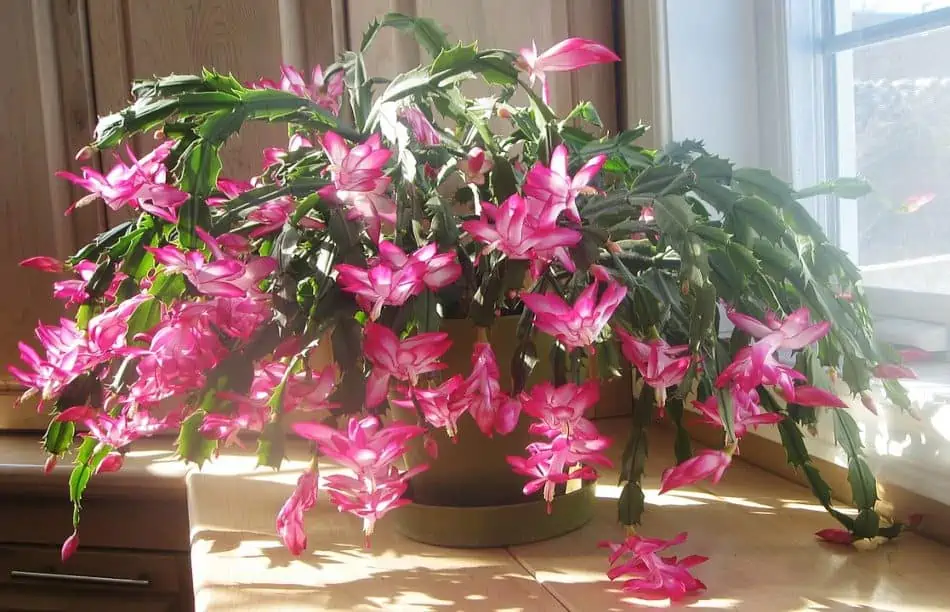
Christmas cactus is sure to brighten your day at the office with its unmatched beauty. A beautiful bloom from the cactus is all you need for the holidays, and Christmas cactus will not disappoint. Its smooth segment leaves and soft spines provide the perfect décor that you need to brighten a dull day in the middle of winter.  You’ll love how the stems and the leaves hand and drape from your containers.

It’s not names of Christmas cactus for nothing. The plant lives up to its name by blooming in bright orange-pink, red and white flowers from its long leaves with flattened segments. And the timing is also perfect as the blooms come out during the Christmas period. If you want it to keep blooming and brighten your office longer, give it cooler temperatures of 50 to 60 degrees F.

Since Christmas Cactus does not require too much light, it is an ideal low-light desk plant for almost any type of office.

Christmas cactus can do well in a small and not so well lit office because it doesn’t require too much light. You’ll appreciate some winter blooms if you give your Christmas cactus some darkness. You’ll do it some justice by giving it filtered light coupled with moderate irrigation. To enjoy the beauty, consider growing it as a hanging plant or place it where it can easily drape.

If you give it excellent care, this winter plant will not disappoint as a houseplant of any setting. It might even surprise you with additional blooms if you give it some exceptional care. Planting it in your office ensures you get something to gift your employees for the holiday season. You might also have some decors to take home with you for the holidays.

2.    Zebra Cactus (Haworthia fasciata)

If your office space is characterized by all kinds of artificial lighting, fluorescent light fixtures, and some warm and dry air, you might think there’s no room for plants. Well, you’re wrong because the environment is highly welcoming to Zebra cactus.

Zebra cactus is a perfect plant for the office because it doesn’t require sunlight but will appreciate the artificial lighting. It prefers bright light, so you can do it some justice by switching on the office bulb when you go home in the evening. The plant can also do well in spaces with low light, so you don’t have to worry if your desk space is slightly dim. The cactus needs minimal watering and almost zero maintenance.

Zebra Cactus is a low-maintenance desk plant with dark brown leaves and white stripes that grows up to 4 inches tall.

Another thing you’ll appreciate about the Zebra cactus is the fact that it won’t interfere with your space. The cactus grows to 4 inches in height, which is a perfect size for an indoor plant. The Zebra Cactus takes its name from the appearance. You’ll recognize it in its small size and the horizontal white stripes on the leaves. Its leaves form shapes similar to that of aloe plants. The leaves are thick, smooth inside, and take a dark green color.

The beautiful plant doesn’t need much of a fuss or attention. As long as you give it an occasional drink and keep it away from direct sunlight, it won’t be much of a bother. While it grows so slow and doesn’t flower often, you can expect some blooms in summer. You’ll love the flower treats because it’s how the plant shows you that it still has some life despite the slow growth.

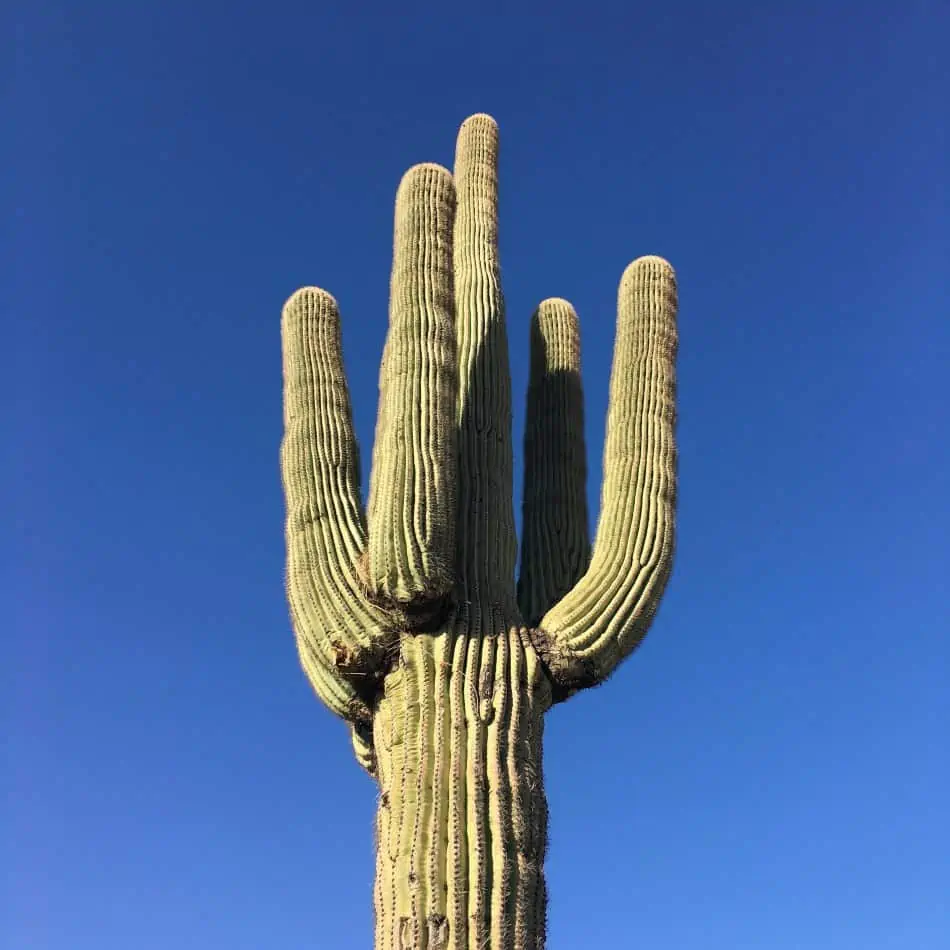
3.    Saguaro Cactus (Carnegiea gigantea)

The slow-growing nature of saguaro makes it an excellent plant for your desk. Another great trait that makes saguaro a perfect workmate in your office is that it doesn’t require too much watering. If you’re the kind of person who travels a lot for work and has to leave your plant uncared for long, you’ll love saguaro. Just make sure you give it some sparing watering once a month, and it will appreciate.

But one thing you should never deny saguaro is light. Ensure there’s some bright light coming in through your office windows. The beauty of saguaro lies in its barrel-shaped bodies and pleated trunk interior. The pleats in the plant enable it to gather water and store it in its tissues for the longest time.

Saguaro Cactus is a slow-growing plant that should be watered about once a month but requires plenty of sunlight.

As for the blooms, it will take you a very long time before you see any. Experienced gardeners say it can go up to 35 years without blooming. But even without any flowers, saguaro still looks stunning in its majestic and treelike appearance. When it’s ready to produce flowers, you’ll notice them at the end of the arms or the sides of the cactus. The blossoms will open at night and close during the day, so you must be accurate with your timing to notice some.

4.    Old Lady Cactus (Mammillaria hahniana)

Old lady cactus is a gorgeous looking plant you can use to adorn your office. The cactus forms some beautiful tall spheres that come in white hairs and spines. Its beauty doesn’t end there. Old lady cactus will also adorn your office with pink blooms in the middle, appearing like a crown on ahead. And the fact that you get all this beauty and sweetness from a cactus is just so amazing.

Old Lady Cactus produces gorgeous flowers around the plant in a crown-like alignment.

Old lady cactus will appreciate some good care and can grow quite well in groups. Yes, just like your grandma at home, old lady cactus doesn’t like being alone. So, if you have space, consider growing it in groups using a large pot, and it won’t take long before you enjoy the beautiful collection of spheres.

To add old lady cactus to your collection of indoor plants, you’ll have to plant it in a sandy potting mix and only water when you notice that the soil is dry. Make sure your pot offers good drainage, so your plant doesn’t sit in water. Old lady cactus will need less watering during winter and more during summer. Also, make sure it receives around 4 to 6 hours of direct sunlight. If this is not possible, give it some grow light.

5.    Parodia Schumanniana

If you love some sense of security in your office, then you’ll get that if you plant Parodia schumanniana. The cactus comes with some pricks that define its beauty.  Parodia is an easy to grow indoor cactus that can do well in low light. The cactus can grow up to six feet long when the conditions allow it. It won’t need you to repot or move outside because it’s a slow-growing cactus that won’t get in your way.

On the aesthetics part, Parodia will not disappoint either. The beauty starts from its bristle-like spines that look yellow at the start but later turn gray or brown. When summer knocks, you’ll start to see some stunning bright yellow flowers. After the blooms, you’ll also notice a round green fruit adding to the beauty.

Something unique about Parodia schumanniana is that it won’t do well in direct sunlight. So, if you thought all cacti need light, then you’re wrong. It’s also a one of a kind cactus that needs more watering even in winter. As you water it, make sure the drainage is also perfect for preventing the precious roots from rotting.

Choose Your Cactus Now

If you thought these desert-native plants wouldn’t make good office plants, then you’re wrong. It just needs some creativity from you to have some sense of life apart from yours breathing the air inside. The cacti mentioned above will not get in your way by taking too much of your productive time. They’ll also fit well in your small desk space as they don’t grow too big.

Most of them need little to no care, so you can plant, water, and forget they even exist for some time. Just make sure you mimic their natural habitats before you forget about them; otherwise, they’ll die. So, if you think your office needs some greenery and you don’t want to deal with the huge workload of caring for indoor plants, think of these cacti, and you’ll never regret it.

How Do You Know If A Cactus Is Rotting?

Cacti are slow-growing plants, and it can take years before you notice any signs of life. Sometimes they may stay dormant for a long time, that you even start doubting your gardening skills. Start wondering whether you’re doing the right thing. Am I watering correctly? Do they need more sunlight? Is the soil the correct type?

While sometimes your cactus might show you signs of life after years of torturing your brain, other times you’ll have to deal with the shock of your life. A rotting cactus!

Rot is a common cactus problem that can affect the roots, the crown, the tip, and the leaves. Common causes of rot in cactus include overwatering, high humidity, wound, insect infestation, among other issues. The causes of the rot may vary from one cactus to another, but the signs will look the same. Other signs may be difficult to detect, especially root rot, but others can be quite obvious.

How do you know if the cactus is rotting? The telltale signs of a rotting cactus include;

  •  Change in color
  • Softening and mugginess
  • Producing foul smell
  •  Weak roots
  • Drooping leaves
  • Black sports

Let’s have a look at the detailed description of these problems, their cause, and how far they can go to affect your precious cactus. Read through to the end as you might save your cactus from rotting before it dies.

Change in Color

While not all change in your precious cactus plant is bad, an older cactus is likely to develop some brown patches or change its color. You’ll notice such changes at the base of the stem creeping upwards. You might also notice the patches turning gray over time. There’s no cause for alarm if this is the problem.

But if you notice your entire cactus turning yellow to brown, it could be your worst fear. A rotting cactus! The specific parts that will show the color change depending on the source of the problem. Cacti don’t only rot from the roots. The rot might also start from the stem. You might notice the rot easily when it occurs on the base of the soil or the stem segments. You might also see the cactus turning brown from the top, which is no doubt a tip rot.

If your cactus is turning yellow or brown, it might be the sign that the plant is rotting.

As soon as you notice that any part of your cactus plant shows rotting signs, you need to act fast to save it. This sign of rot doesn’t mean that your cactus is dead, as you can still save it. Act quickly, so the color change doesn’t spread all over the plant and end up killing it. If it’s rotting from the tip, the simple solution might be to prune it and allow it to start growing afresh.

The Cactus Is Softening

There are many reasons why your cactus may go soft, and one of the reasons can be your dreaded fear, a rotting cactus. Your cactus may start going soft if you expose it to improper ambient conditions, too much watering or diseases attack it. You’ll likely notice soft spots in the flesh. The rotting spot may discolor and become corky with a mushy and wet center.

Overwatering might make your cactus softer, which another sign that your plant is rotting.

A potted cactus will generally require good drainage soil to stay healthy. You must also know that cactus require minimal moisture to thrive, whether indoors or outdoors. The absence of well-drained soil and too much watering can cause softness in your precious plant. Other causes of this softness may be a bacterial attack, insect damage, or physical injury.

If you notice these soft spots near the base, you’d be dealing with root rot. The first culprit to root rot is excess watering in humid conditions. A stem rot might also cause the softness of your cactus. If your cactus is rotting from the stem, the culprit might be a fungal infection. It’s not easy to save a cactus plant that’s already softening as it will start seeping liquid and falling off.

Your Cactus Smells

Cactuses don’t smell bad. In fact, some produce very sweet-scented flowers. If you can sniff some foul smell, then something is wrong. A smell is not a good sign but an indication that a huge part of your precious plant is completely rotten. Anything rotten is likely to smell.

The foul smell can sometimes be a result of a condition called Erwinia soft rot. The Erwinia bacteria attack the plant through natural openings and wounds. The rot can spread very fast in humid and wet weather. It can affect any part of the cactus, including the roots and the crown. The soft rot first appears as watering looking scabs. After some time, the plant tissues start turning brown to black. Your cactus will start emitting a foul-smelling seepage from the rotten area.

If this is the case, then you must know that the cactus is already dead. All you have to do is to dispose of. It’s also worth noting that this kind of rot can spread to other cacti and succulents in your garden. Be careful on how you handle and dispose of the dead plant to contain the spread.

Weak Cactus Roots

Once you’ve planted your cactus, you expect the roots to go deep in the soil and support the plant. But rotting can still find the roots deep inside the soil and destroy them. You’ll notice your cactus has no good roots if it appears like it wants to fall off from the pot. A plant that appears loose in the soil is stressed. There could be something serious ailing the cactus. Finding this out early enough can help save it.

If you have noticed that your cactus roots are getting weaker, the plant might be rotting because of overwatering.

If you’ve been overwatering your plant, the chances are that the roots will rot. Many cactuses need airy and well-drained soil. The potting should never be wet or waterlogged for too long because this will damage the roots. Most root rots happen in winter because the cactus might not withstand the low freezing temperatures. If you happen to water it at this time, you’ll worsen the situation causing the plant to rot.

Many desert cactuses are more exposed to root rot if grown indoors. This is because they’re used to dry conditions, which you might not maintain in your house garden. If you plant your cactus indoors and now plan to take it out, do it gradually. A sudden change in temperature conditions may affect the roots causing them to rot.

Drooping Leaves

You don’t need anyone to tell you that your cactus is stressed when you can already see the sign on the leaves. Well, you won’t notice any change in the leaves during the early stages of rotting. The only time the plant will give you an obvious sign of unhealthiness on the leaves is when the problem has already escalated. The leaves might remain vibrant and beautiful while the root is already dying.

A healthy cactus has its leaves standing strong with vigor. But when the leaves are pointed downwards or sagging, you have something to worry about. Maybe it has some disease attaching it from the roots or the stem, and you can’t see it yet. This can also be a sign of underwatering or overwatering your cactus.

Underwatered cactus showcases wrinkly appearance with droop branches, but it’s not a sign of rot. The plant is wilting and will go back to its happy self once you water it. Overwatered cactus will get soft and droopy. With time, the moisture content in the soil becomes too much for it to bear, and it begins to rot. When the rot is in its final stages, the leaves might also feel squishy and soft. At this stage, it would be too late to save your lovely cactus.

Black Spots

Black spots in your cactus are not ornaments; hence you cannot take them for granted. You’ll mostly notice these spots in saguaro and prickly pears than any other cactus, and they can be a disaster. These spots indicate a dry rot usually caused by lack of enough water, sunlight, fertilization, and high humidity. Other times, black spots form due to damage by living organisms like fungi, pests, and bacteria. All these factors slowly damage the roots of the cactus plant, causing them to rot.

Typically, cacti with black spots cannot be saved. It is better to get rid of the plant to save others from the infection.

Unfortunately, it’s not easy to cure your cactus of this rot. The best thing to do is get rid of the plant entirely to protect others from the infection. If you can only see the black spots in some parts of the cactus, cut out the damaged section. Ensure the remaining section receives sparing watering, so the problem doesn’t recur.

Bottom Line

Cactus is an easy plant to grow and take care of. But this doesn’t mean they’re immune to diseases and harsh conditions. Things that look like a good remedy for your plant, such as water, can turn out to be the biggest poison if not used well. Don’t underwater or overwater your plant.

Some cactuses are very resilient and can recover from problems no matter how severe they look. But this depends on how early you realize there’s a problem. Others won’t recover even if you identify the problem early enough. You should do all it takes to ensure your cactus is not exposed to any conditions that can cause the rotting.

How to Grow a Bunny Ears Cactus?

The Bunny Ears cactus (Opuntia Microdasys) is a popular cactus species native to Mexico.  This low-maintenance succulent has grown to become a favorite for ornamental plant enthusiasts, thanks to its cute, rabbit-ear-shaped pads. If you are looking for an ideal cactus species for your desert, xeriscape or rock gardens, Bunny Ears cactus got you covered. What’s more, they also make good indoor plants and are neglect resistant, thus ideal for the busy folk or those who travel frequently. The success in growing this prickly companion, however, lies in its care. It is important to understand how best to grow and care for the cactus from infancy to a full-grown cactus.

So, how do you grow a Bunny Ears cactus? Bunny Ears cactus is mostly propagated through its pads. The pad is potted using a good cactus mix that includes 40 percent sand, 40 percent potting soil and 20 percent peat moss. The plant needs consistent moisture, low humidity and plenty of light during its growing season. Fertilization should be done every other water period, and repotting should be done every 1 or 2 years.

This article will be looking at how best you can grow and care for the Bunny Ears cactus. It will be expounding on growth factors like propagation, potting and repotting, fertilization, watering, lighting and pest control.

Basic features of the Bunny Ears cactus

  • Bunny Ears comes from the Opuntia genus that majorly contains flat cacti species. The genus is one of the most popular and widespread across the U.S.
  • The cactus grows in a shrubby form and may reach heights of 40 to 60 centimeters.
  • Bunny Ears has no defined central stem but rather bears individual segments in the form of oval-shaped pads. From these pads form additional segments that always grow in pairs.
  • The cactus stands out with its paired succulent stems that grow up to 15 centimeters long and 12 centimeters wide.
  • The cactus features some distinctive whitish-yellow prickles, otherwise called glochids. These are hair-like spines rarely seen in other cactus species. These hairs grow in clusters and are more sensitive than human hair.
  • Bunny Ears cacti have close relatives in O.Rufida cactus that features reddish-brown glochids. In fact, they are treated as the same species in some quarters.
  • When well cared for, the cacti blooms around the summer from June to July. Their flowers measures about 5 centimeters in width.
A Bunny Ears Cactus grows up to 40-60 centimeters in height and produces gorgeous flowers from June to July.

Potting and repotting

Bunny Ears cactus will do best in some well-draining sandy soil. For better results, look for a clay pot with drainage holes that help drain excess water. Fill this pot with good cacti potting soil. For potting soil, you may decide to go for the commercial, pre-packaged version or create your own soil mix at home.  

In case you decide to make your soil mix, ensure that it includes 40 percent sand, 40 percent potting soil and 20 percent peat moss. This would help improve aeration around the plant’s root system and prevent the soil from getting too soggy. Whatever the case, always ensure that the soils used do not pose any risk of water clogging as this may lead to root rot for the cactus.

To grow a healthy Bunny Ears Cactus, select a clay pot with enough drainage holes to get rid of excess water.

Bunny Ears may be slow-growing but will develop an extensive root system with time. As such, it is recommended that you repot the cactus every 1 to 2 years. The best time to do this is during the summer, just after the blooming period ends.

When repotting, always ensure that your container of choice is at least 2 to 5 centimeters larger than the previous pot. Too big a container, and you run the risk of water clogging that leads to root rot.

The Bunny Ears cactus needs close attention during the first year of its repotting as this is the most vulnerable phase. This would involve regular watering to help spur healthy root development. Such close inspection also helps ensure that no pests attack the plant at this stage.

Special care for specific seasons

Bunny care requires specific care and attention during each season.  Failure to follow the right regime for these seasons may result in your plant experiencing growth challenges and may fail to bloom. Here are some important care tips for each season:

Spring, summer and Fall

Bunny Ears is actively growing during these warmer months and would take advantage of full light and average temperatures of about 80 degrees Fahrenheit. Keep the soil moist during these seasons, but just enough to avoid excess water that may lead to root rot. You can only add water once the soil feels dry to your touch. With these in place, your prickly companion will flower in early summer with bright yellow blooms.

To grow a healthy Bunny Ears Cactus, keep the soil moist during warmer months of the year.

Winter

Bunny Ears cactus enters some semi-dormant mode during winter. As such, you may not need to do much in terms of fertilization or watering. During this period, strive to offer a controlled climate that resembles that of its natural habitat.

As the fall season comes to an end, relocate your cactus to an area with lower temperatures of about 50 degrees Fahrenheit. This should be away from any heating vents or radiators. Ensure that the plant does not experience any light. While in this location, the plant may exhibit some unusual coloring by turning light grey. However, this should not be much of a worry as this dormant state is a vital part of the plant’s growth and sustainability.

Watering

Just like any other desert plant, the Bunny Ears cactus does not need much water but just enough to improve nutrient uptake and keep the plant healthy. While in its natural habitat, Bunny Ears adopts a shallow root system to help tap on the little rainwater that comes by once in a while.

During its initial stages, extra care should be taken as the plant adapts to its new environment. Once they develop an extensive root system, watering should be done sparingly as they can tolerate long periods of dry weather. This is what makes the Bunny Ears a favorite choice for busy individuals or those that travel frequently.

However, just the right watering will help encourage blooming and improves the plant’s overall health. As a rule of thumb, water the cactus once the first inch of soil feels dry to the touch.

Since a Bunny Ears Cactus can withstand dry climate, it should be watered only when the first inch of soil is dry.

For better results when watering, you may decide to use a tray under the pot to help drain out any excess water. During the winter, you may not need to do any watering but make sure you start the watering regime as soon as the spring season starts. Between Spring and Fall, the plant is actively growing and will need enough water to stimulate nutrient uptake.

Take care not to overdo your watering as this may result in root rot or worse still, the pad tips withering out.

Propagation

So you finally have a full-grown Bunny Ears cactus and wishing that you had multiples of the same? Well, the good news is you do not need to go back to your favorite arborist or rush to buying other specimens. Instead, you can easily and conveniently propagate your cactus through its flatty pads.

The best time to propagate the Bunny Ears cactus (and any other cactus, for that matter) is during the early summer.  Once the bunny cactus is fully mature, it produces multiple healthy pads that you can easily detach from the mother plant.

However, caution should be exercised during this process as the cactus can be very clingy to the skin, thanks to its glochids. Always ensure that you wear thick gloves to avoid the risk of injuries from pricks to the skin. Alternatively, you may use a pair of tweezers to break the pads off.

Bunny Ears Cactus can be easily propagated through its pads.

During propagation, group the cacti cuttings in at least three pads. Let the cuttings callus for a few days before planting. You can then remove the baby stems before planting the pads in ideal pots with fresh cacti soil mix.

Bury the cutting about 2.5 centimeters deep and place your pot in a well-lit location. This is an ideal depth, deep enough to offer the right support and shallow enough to let roots develop without the risk of rotting.

In some cases, you may see the need to dip your pads in rooting hormone before planting.  This practice helps catalyze the propagation and rooting process.

Temperatures and lighting

Being a desert plant, Bunny Ears cactus thrives in slightly higher temperatures. It prefers temperatures that range between 21 and 37°C. During the winter season, however, the cactus prefers much cooler temperatures.

Bunny Ears cactus is known to drain any excess water just before winter kicks in. The practice helps it avoid freezing during the cold months. This explains why watering during this period can be detrimental to the health of the plant.

From late Fall, the cactus should be exposed to temperatures that range between 10 to 18°C.

Following these strict temperature specifications is vital for the plant’s survival as anything contrary could mean serious harm to the cactus’ overall health. As such, you may need to keep changing locations of the plant depending on the season to help keep it at the optimum recommended temperature ranges.

Although Bunny Ears Cactus grows healthy in sufficient lighting, you should avoid exposing the plant to direct sunlight.

The Bunny Ears is one of the cactus species that prefer sufficient lighting. This may not be much of a problem if you are growing in the garden or outdoors. However, when growing indoors, you may need to mind your positioning.

Place your cactus in a south-facing, unobstructed window but should not get in contact with direct sunlight. West-facing and East-facing windows are also viable choices to position your Bunny Ears. If natural light is hard to come by, you may see the need to use grow lights for the same.  Regardless of the season, Bunny Ears thrives best with a humidity of between 10 to 30 percent.

Fertilization

Contrary to popular opinion that desert cactus like the Bunny Ears do not require fertilizer, these prickly companions will fare much better with the right fertilization. Liquid houseplant fertilizer with an NPK ratio of 20-20-20 works best for this type of cactus.

The fertilizer should, however, be diluted to at least half of its recommended strength.  This is because Bunny Ears cactus cannot withstand a high concentration of NPK. If you are more focused on seeing the cactus bloom, you may need to use 5-10-10 fertilizer.

Whatever the case, always ensure that you fertilize the cactus during its active season, preferably during the summer. Take caution not to overdo the fertilization as this may mean an abnormally rapid growth. This stimulated growth usually leads to misshaped and weak pads. Do not fertilize newly potted Bunny Ears cactus until it develops a strong root network.

The best fertilizer for Bunny Ears Cactus is the liquid houseplant fertilizer with an NPK ratio of 20-20-20.

Proper fertilization of the Bunny Ears cactus leads to a healthy plant and promotes the likelihood of the plant flowering. A happy bunny cactus has more chances to bloom and develop healthy fruits compared to a neglected one. If you are too busy or travel frequently, create an ideal timetable as a reminder. Alternatively, you can find someone to take over when you are not around.

Pest control

Bunny Ears cactus occasionally faces attacks from several pests. These include:

Mealybugs – these create some white patches on the cactus’ pads, giving it an unappealing look.

Scale Insects – they cause a brown cab effect on the cactus’ pads

Getting rid of these pests on the Bunny Ears cactus can be tricky thanks to its glochids that easily attach to the skin. For more efficient control, use a pair of thick gloves to handle the plant. You can then dip some cotton swabs into 70% isopropyl rubbing alcohol and dab the pests. Repeat the process after a week, depending on the extent of damage to the plant.

Flowering Season

Bunny Ears cactus may flower at any time when it deems conditions right. However, it is known to start budding in late spring. Once the segment is fully formed, budding would start at the tip.  It then goes on to blossom into 2-inch wide flowers.

The Bunny Ears cactus produces creamy yellow flowers that go ahead to fade into peach as soon as they are fertilized. The flowers would later turn into some 2-inch long fruits that may vary in color ranging from red to purple. Notably, Bunny Ears cactus is a good bloomer and bloom encouragement may not be necessary.

Apart from the edible stem, the Bunny Ears cactus produces edible fruits. The fruits can be eaten raw or cooked on the BBQ. This was one of the main sources of food for natives in times gone by. Considering its prickly nature, you may need to be extra careful when harvesting the fruits. Ensure you have thick protective gear in your hands before harvesting the fruit.

FAQs on the Bunny Ears cactus

Q. Is Bunny Ears cactus poisonous to pets?

Bunny Ears stem, flowers and fruits are non-toxic and thus safe when placed around pets. However, it would be noted that the cactus has glochids that may be irritating when it comes to contact with the skin. As such, you may find it prudent to place it in positions out of reach for curious pets and children.

Q. Why is my bunny years stunted?

Bunny Ears cactus may experience student growth or poor health as a result of overwatering or under-watering. In some cases, this may lead to the plant drying out end eventually dying.

Q. Why the name Bunny Ears cactus?

If you look closely, the cactus sprouts a pair of segments at the end of each tip. These segments resemble a bunny’s ears, thus the nickname.

Q. Why is my Bunny Ears falling over?

The most common cause of bunny years falling over is overwatering. Once the soil around the cactus becomes too soggy, its roots rot and become too weak to support the plant.

Q. What causes brown patches on my Bunny Ears cactus?

Brown patches on the pads of the Bunny Ears cactus can be a result f several factors. It may be a case of pest infestation as the pests love drawing the sap from the cactus. A drop in temperatures and overwatering may also lead to brown patches.

Conclusion

With the right care, Bunny Ears cactus can be an excellent choice for any cactus enthusiast. The good thing about the Bunny Ears cactus is that it can withstand neglect. As long as they are exposed to enough sunlight and placed in a warm environment, you are good to go. Occasional fertilizing and regular watering helps keep the plant healthy and encourages blooming at the right time.

When working with Bunny Ears cactus, always ensure that you repot them once they are ripe for the same. This not only keeps it healthy but also encourages the production of tiny pads that can then be used during propagation.

Bunny Ears cactus is as captivating to grow as they are to look. It makes just the perfect addition to your indoors, thanks to its bunny appearance. The next time you come across it, you may consider trying it out for your indoors or, better still, your desert garden.

What Is So Special About Cactus Plants?

Ever wondered why a cactus plant is highly referred both in its natural habitat and at home? Well, this prickly plant has remained a wonder to both man and animals, thanks to its unique features.  Any animal or human who has come in contact or seen a cactus will attest that no other plant comes close to it in terms of its uniqueness. It goes against the norm expected for most plants, and this has made it stand out.

So, what is so special about cactus plants? Apart from being one of the longest living plants on earth, it is also one of the most resilient and can withstand the harshest climatic conditions. The plant also grows in unique shapes and sizes seldom seen in conventional plants. They are also nocturnal and display unique growth patterns.

This article will be looking at some of the most notable features that make this plant uniquely special. It will look at how this prickly plant is wired differently, and factors that make it stand out in its growth pattern.

They are nocturnal

 While each plant is wired differently, most of them are known to be active during the day. This is especially so in terms of their ability to take up nutrients and make food. During the day, the sun provides the best environment and conditions for photosynthesis, thus keeping most plants active. However, cacti seem to take a different route since they work best at night.  Unlike most plants that open their stomata during the day, cacti have their pores open at night.  This is an adaptation meant to help avoid water loss that would otherwise happen during the day when the sun is up.

During the night, temperatures are low. This is coupled with the calm breeze that helps them retain as much water as possible.

To avoid water loss, cacti plants open their stomata at night.

They are stem succulents

By virtue of being part of the succulent family, cacti are known to store water within its system. Unlike other succulents that store its water in the leaves, cacti do not have leaves and will let its stems take up this role. The huge, thick stem help function as a water storage ‘tank’.  This explains why most cactus, have huge, round stems. During the dry season, this plant uses up the water already stored in its stems awaiting the little rains that come by occasionally in the deserts.

Unique growth patterns

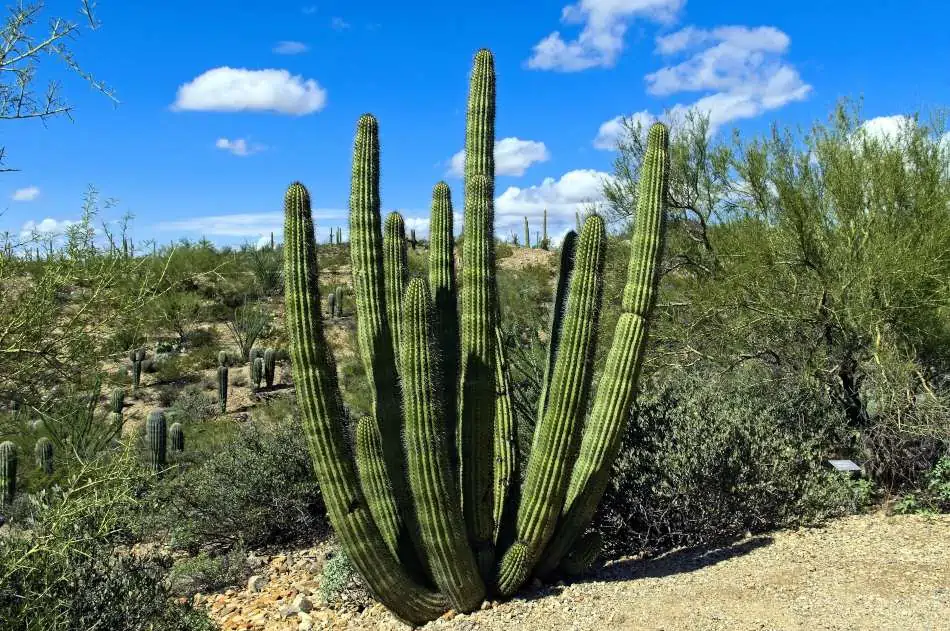
Cactus is known to display some of the most bizarre growth patterns in the plant kingdom. This may range from its size to shape and texture. Some varieties like the arborescent cacti would take up the shape of the normal tree but will have a single huge trunk coupled by several branches. Then there are the columnar cacti that grow in cylindrical shapes. Depending on the variety, its stems may or may not have branches.

These prickly plants have it all from the massive-shaped cactus like the Saguaro to the smallest varieties like the moon cactus. Each cactus species has a unique growth pattern based on its adaptation and environment.  Some species like the barrel cactus grow into huge cylindrical shapes while others like the pencil cactus depict the smallest of stems, you can almost mistake them for some type of grass. This huge contrast is what makes cactus stand out from the rest.

Depending on the species, cactus plants can grow as tiny as Moon Cactus and as large as Saguaro Cactus.

They are drought resistant

This may be rather obvious, but at the same time, it is a feature you would not find in most plants. Most cactus species are adapted for the deserts. As such, they have developed unique features and characteristics that help them adapt to this environment. Not many plants would survive in the desert, considering the fact that little rains and lack of enough nutrients may be detrimental to plant survival. However, cacti have mastered the art of thriving on such harsh environments thanks to its unique adaptations like succulent stems, lack of leaves and shallow root systems.

They can flower any time

Unlike other plants that have specific blooming seasons, most cacti species do not follow this trend. Their flowering will depend on the weather conditions and availability of food. As such, they tend to flower when they are ‘happy’. This is characterized by enough water and nutrients in the soil.

Usually, some cactus species that rarely flower in their natural habitats would bloom better when grown at home, thanks to close monitoring, water availability, and the right fertilizer. While some would follow up this flowering with some fruits, others would simply fade out awaiting the next appropriate season to bloom again.

Cacti plants are especially loved for their unique and colorful flowers that they produce throughout the year.

Unique skin surface

It is always easy to spot a cactus plant by simply looking at its skin surface. Most cactus plants have a characteristic shiny, waxy skin that helps them survive through the harsh conditions in the desert. In most cases, the outer part of the stem is ribbed. These ribs come in handy to help the plant stretch out and accommodate as much water as possible without the risk of bursting. While the ribs also help in offering shade to the plant’s skin, the shiny waxy skin, on the other hand, comes in handy to help reduce the evaporation rate of the plant.

Multipurpose  spines

Most plants have spines, alright, but for the cactus, its spines stand out, thanks to its functions and positioning.  In most cases, the spines would grow all over the plant’s stem. Apart from offering some aesthetics to the plant, the spines have other special functions in terms of helping the plant survive harsh environmental conditions. Mostly, the spines take the place of leaves and thus help reduce water loss that would otherwise happen through the stomata.

The main purpose of cactus spines is to help the plant survive in harsh conditions and protect it from predators.

On the other hand, these prickly features on the cactus act as a defence mechanism against attack from herbivores. During the dry season, the cactus will be the only green plant remaining. This makes it the main target for herbivores looking for food. With these spines, the plant deters such animals from devouring them. In some cactus species, the spines help collect and direct the little rainwater into the roots. Others have huge spines that also help offer shade to the plants’ skin to avoid unnecessary water loss.

Complex root system

Roots are meant to help a plant tap nutrients from the soil while offering support. Unlike other plants that have extensively deep roots, the cactus depicts a shallow root system. This is a special adaptation meant to help collect as much rainwater as possible. The desert experiences occasional rains, and when it does rain, it comes in small portions that may not seep deep into the soil.

With the shallow roots, it becomes much easier for the cactus to take advantage and use up as much water as possible. These roots would grow exponentially during such wet conditions to help the plant take up as much water as possible. When it dries up, the extra roots will break off from the main root system to help conserve as much water as possible.

Areoles

Areoles are small raised structures visible on the stems of most cactus species. These have become a distinguishing trait for the cactus family as you would not find these in any other plant. Cactus spines originate from its areoles. They are usually oval-shaped or circular and would be covered by sharp spikes or small hairs.

Extensive lifetimes

Cactus is one of the few plant species that have been documented to live for hundreds of years. This may result from their slow growth, but most importantly, their adaptations that help them survive and thrive even in the harshest of conditions. Some species like the Saguaro have been documented to live for well over 200 years.

They use ants as an additional defence mechanism

A cactus’ first line of defence against herbivores is the spines. However, these may not always be effective since there are other predators like mealybugs and other harmful insects and pest that may be destructive to the cactus. As such, most cactus species employ other forms of defence to help them survive the harsh environment. One of these is the ability to attract ants within its vicinity to help deter small animals and harmful insects from feeding on it. It does so by producing nectar and other attractive juices for ants. In their bid to quench their thirst, the ants will flock to the plant thus acting as additional bodyguards to the cactus.

If you are a cactus enthusiast, you will agree that these prickly plants never cease to amaze. With their hundreds of species and respective uniqueness, you would be spoilt for choice on what to go for. Its exotic-looking features are enough to keep you glued to this special family of plants.

10 Amazing Large Cactus Plants With Names

If you have the notion that cactuses have stunted growth just because they grow in harsh desert conditions, then you’re wrong. That climate that other plants find harsh and unfavorable for growth is perfect for many cacti varieties. Cactuses are capable of growing into giant trees when exposed to their natural habitats. Well, they can take years to grow large, with others like saguaro taking up to 200 years to reach full maturity, but they eventually reach the size no matter how long it takes.

Cactus plants vary in size, shape, and habitat. While many people will associate large cacti with the wild, they also make a statement in home gardens. The large cacti still make perfect indoor plants because of their slow growth. You can move them outside once they start to enlarge. Another thing about large cacti is that they’re not too demanding in terms of care and can ideally create a bold and trendy statement if they find perfect growth conditions.

Take a look at these ten large cacti types that add the perfect statement to your gardens. You can pick your favorite one according to what you want to achieve. Whether you want large cacti for a garden ornament, indoor beauty plants, or beautiful fence posts, one of these cactuses will come to your aid.

1.  Saguaro Cactus (Carnegiea gigantea)

Saguaro cactus is the largest in the U.S and is treated as an icon to west American. The cactus grows up to 40 feet tall if the conditions allow it. However, the cactus grows at a very slow rate, with most of its growth noticeable at the tip or the top. It can take saguaro up to 10 years to record an inch in its height.

Saguaro cactus can reach a height of six and a half inches by the time it reaches 70 years. This is the time when you might start seeing the long-awaited blooms. Saguaro will continue producing milky white flowers with a sweet scent after reaching this age. You’ll see the blooms adorning your garden in late spring and early summers.

Saguaro is one of the most popular large cactus species that can reach approx. 45 feet in height by the age of 200.

By 95-100 years, saguaro will reach around 15 to 16 inches, and you might see its first firm arm. Saguaro cactus reaches its maturity by 200 years old, and it records up to 45 feet tall at this age. Others might have several arms at the maturity time, while some may not produce even one branch. If you plant saguaro now, the chances are that you’ll not live to witness its maturity. But you’ll still appreciate something your grandchildren will remember you for.

2.  Golden Barrel Cactus (Echinocactus grusonii)

Just like the name, barrel cactus is another large growing cactus you can ever find at home or in the wild. The barrel is common in households and home gardens with their yellow flowers. It has turned out to be a popular addition to gardens in many regions hence has a widespread demand. It’s very hard to find the golden barrel cactus in the wild because it has been dug for years. But no, it’s not disappearing because its popularity as a garden ornament continues to grow with many people transplanting.

The globe-shaped cactus makes a perfect ornament for patios, conservatories, and other indoor rooms. But these cactuses only flower when you move them outdoors as they can have a hard time blooming indoors.

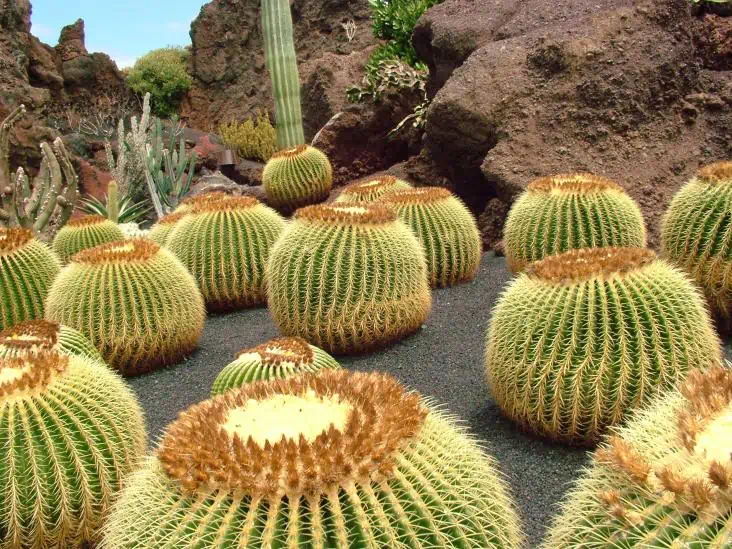
Golden Barrel is a cactus with a globular shape that features white woolen hairs and produces yellow flowers.

The cactus is known to record rapid growth during its first few years of planting and slow down after that. During the first few years, the cactus will grow up to three feet tall and three feet in diameter. You’ll then have to tend to your cactus for up to ten years for it to grow to 10 feet in diameter and height. They can reach this size when exposed to conditions similar to natural habitat.

The cactus grows in a ribbed stem with yellowish spines though you can also find spineless ones. The crown forms white-colored woolen hairs at its top. Golden barrel makes a perfect ornament for an exotic appearance as well as its hardy nature. The golden spines on its spherical shape body have given it a pincushion shape. This has earned it the nickname ‘mother-in-law’s cushion.’

3.  Totem Pole Cactus (Pachycereus schottii)

The totem pole is a slow-growing cactus, but this doesn’t mean it won’t grow large eventually. The club-shaped cactus is an undemanding one making it fun to grow in your home and perfect for beginner gardeners. It forms irregularly-shaped green stems with some areolas and odd-shaped tubercles. The plant develops individual stems that branch at the base and higher in vertical stems.

Totem pole cactus mainly reaches 6 inches in diameter and takes a silvery sheen appearance. When fully matured, the cactus can grow to a maximum height of 10 to 12 feet. It’s a pretty simple cactus to grow. It won’t get bothered by insects and pests and grow pretty well as long as it doesn’t receive too much water.

One thing that makes the totem pole cactus unique is that it’s among the cactuses that bloom at night. The flowers appear in late spring and take a light pink shade. They open at dusk and close by mid-morning. The multiple upright arms add to its large size. They make a perfect showy display for the garden. You can be creative with them by using them along with pools and ponds. They can also work well along a tall wall for some architectural effect.

4.  Candelabra Cactus (Myrtillocactus cochal)

Candelabra cactus is another large cactus you’re likely to find in the hillside, which is its natural habitat. This cactus mostly grows up to ten feet tall and ten tall feet wide. When grown outdoors in mild conditions, candelabra cactus goes up to 40 feet tall and develops a crown of 25 feet wide. But they can look smaller when used as houseplants because you’ll be controlling their growth.

Apart from the size, you’ll recognize this cactus with its cup-shaped flowers that open when the sun is up and closes when the sun goes out. This is another edible cactus though the fruits are somehow acidic.

Candelabra Cactus is a funnel-shaped plant that grows up to 40 feed in height and produces ivory flowers.

Apart from growing in the hillside, the cactus can also adorn rock gardens and xeriscape. This is a drought-tolerant plant that is very easy to care for. But this cactus is unique from its kind because it thrives so well when given more water, especially during the summer months.

Candelabra cactus is admirable from all aspects of it. It has a beautiful funnel shape, ivory flowers, dark green branches, and a unique woody trunk. Its branches produce six to eight ribs with a central spine surrounded by shorter radial spines in every areola. Its white, cupped flowers appear in late spring to early summer. The cactus does well when mixed with other succulents in the garden. It mostly appreciates rock gardens or raised planters.
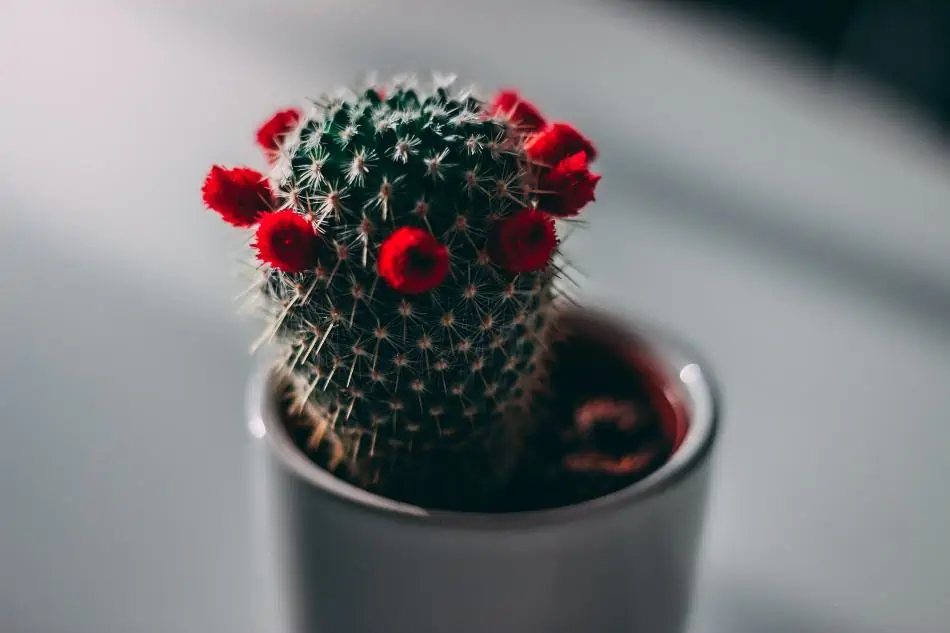
5.  Golden Ball Cactus (Parodia leninghausii)

Golden ball cactus grows into large clusters, making it a perfect fit for the category of large cactuses. Others call this cactus lemon ball, while others call it yellow tower cactus. All the names perfectly fit this cactus that grows up to three feet tall. The balls are resistant to fire hence perfect for protecting the landscape against fire hazards.

Don’t confuse this cactus with golden barrels, although they almost look the same. Their biggest differentiating factor is that the golden balls start in a globular shape, which turns columnar as they grow older. They make perfect plants for beginner gardeners as they’re easy to grow as long as they get some shade during the hottest hours.

This beautiful cactus comes with gentle yellow spines that have a soft glow. When given enough space, the plants can reach up to 24 inches tall and four inches wide. But you can manage the size better by growing them in pots.

6.  Mexican Fence Post Cactus (Pachycereus marginatus)

Just mentioning the name ‘fence post’ already tells you that this is indeed a large cactus. Well, a Mexican fence post can grow up to 16 feet high. It also forms individual stems that grow between three and eight inches in diameter. Its radial spines appear yellowish to gray. The cactus itself grows in a green tree-like shape. They grow in columns and tend to be solitary.

Mexican Fence Post Cactus with columnar shape is commonly used as a living fence in outdoor gardens.

This beautiful cactus is perfect as a fence for your garden. In fact, Mexicans use it as a living fence thanks to its upright growth and showy columnar shape. It got its ‘fence post’ name due to the fact that many Mexicans use it as a fence post. The cactus not only adorns your garden with beautiful posts but also with beautiful blooms that appear around mid and early spring.

For Mexican fence post cactus to grow well, you need to treat it to frequent watering, especially when it’s too hot outside. The plant doesn’t like frost, so consider protecting it with Styrofoam cups on the tips. If you want some dramatic effect in your home, consider planting near bright colored walls. It’s a relatively low maintenance cactus that can also do well when planted in desert or tropical settings.

7.  Cowboy Cactus (Euphorbia Acruensis)

Cowboy cactus is also known as Euphorbia and is a very rare succulent making them a kind of gem. Although they’re not true cactus, they can still form the category of the largest indoor plants of the cacti family. Like other cactuses, the cowboy is easy to plant and care for.

They’ll not be too demanding of your time as long as you give them enough light and water when dry. The slow-growing plant can work well in indoor care as long as it receives enough light and ventilation. The plant makes a great architectural feature in mixed planting when used in an outdoor space.

The Cowboy Cactus is a low-maintenance plant that can grow healthy if there is enough light and ventilation.

The cowboy cactus stuns every gardener with its beautiful deep green color and stunning upright shape. The plant grows up to 1.5 meters tall if it’s happy. Watch out for the white sap in the plant as it can cause skin and eye irritation. If you have children and pets at home, refrain from planting cowboy cactus indoors because the spikes and the milky sap can be dangerous.

8.  Old Man Cactus (Cephalocereus senilis)

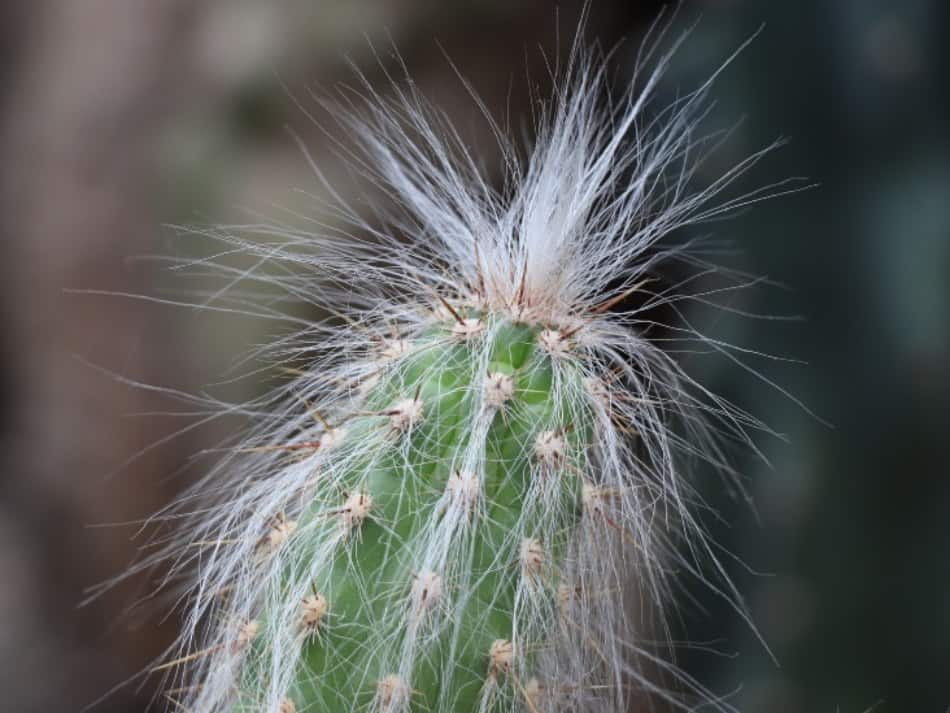
The old man is one of the most popular cacti you can find in gardens and the wild. Its popularity can be attributed to the fact that the old man cactus is easy to propagate both in seeds and cutting. The old man grows tall and forms a columnar. It has a branching growth with the body covered in long and wooly hair that almost resembles a beard. This is where it got its beautiful name from. The cactus falls in the large cacti category because it can grow up to 49 feet when used as an outdoor plant. When potted, the old man cactus can grow really slow but still look great.

The Old Man Cactus is characterized by white hair and produces white to pinkish flowers when it reaches 20 feet in height.

Not only the white hair covering the body has made old man cactus attractive, but there’s more to its beauty. The stunning succulent also wows its growers with beautiful blooms that come from the stems. When the cactus reaches a height of 20 feet, it will start producing the stunning flowers that mostly come out at night. The flowers have attractive colors, which appear pink outside and white within. When matured, old man cactus produces pinkish-red fruits covered in yellowish hair. You can plant the old man cactus in clusters to harness its beauty.

Younger old man cacti are completely covered in white hair, while the older ones have hairs in the growing tips of the stem. While the wooly hairs can look appealing and inviting to touch, stay away from them as the plant has very sharp spikes beneath the wools.

9. Eve’s Needle Cactus (Austrocylindropuntia subulata)

Don’t let the name needle fool you that this is a needle-sized plant. Eve’s needle perfectly fits the category of large cactuses as it’s capable of growing up to 13 feet tall and 10 feet wide when exposed to its natural habitat. The plant also has awl-like and green-yellow leaves that grow up to five inches when the cactus is mature enough.

Eve’s needle takes its name from the many sharp and tall spines that form in its stem. Younger plants don’t have the spines, but the older ones are full of these yellowish-red and needle-like spines. Eve’s needle produces cylindrical deep green leaves. This cactus rarely blooms, but when it does, you’ll see long, coppery red, snowy flowers that are no doubt worth the long wait. The flowers produce thick, rounded, and thorny fruits. The edible fruits can be up to 10cm long.

Avoid planting Eve’s needle indoors in households full of children and pets. The spines can be a danger to the skin and clothes. The drought-tolerant plant is perfect for xeriscaping. They can do well in almost all conditions except super cold climates. Give it regular watering but be careful not to overwater lest you expose it to rot.

10. Organ Pipe Cactus (Lemaireocereus thurberi)

Organ pipe cactus grows in long stems that resemble sausage links. They got the name organ pipe because of their multi-limbed grows that look like pipes of church organs. The cactus is a tall columnar plant with several ribbed stems branching above the ground. Organ pipe cactus can grow up to 30 feet with 30 feet wide clumps. Their slow growth makes them look smaller in most gardens though their beauty still glows as required.

The Organ Pipe Cactus comprises multiple long stems that grow up to 30 feet in height.

This cactus produces a beautiful glow that mostly blooms in the evening. The blooming season for the organ spine is in spring. The color varieties of the cactus include purple, white, and pink with numerous petals. Because of their beauty, they can make a perfect statement in the courtyard patio gardens. You can also grow them as raised planters or hedges. They can do well in the sun and minimal winter temperatures.

Organ pipe cactus and other similar species are loved not only because of their beauty; they also produce delicious fruits that natives fancy. Their red fruits are very fleshy and sweet. The cactus is a slow-growing plant, so they can do well in containers when young before transferring them to the garden. They require enough watering, but you should never over irrigate.

Summary

Cacti make a perfect addition to the home garden whether you prefer large, tall, or smaller ones. Their beauty starts right from the stems all the way to the beautiful blooms that adorn your garden with the best color shades. Some can even produce delicious fruits that you can enjoy every time they appear.

The large cactuses can display stunted growth at the beginning, but they’ll eventually grow to full maturity and take their ideal size. Just make sure you mimic their natural habitats, and they won’t disappoint. They’re also perfect plants for beginner gardeners because they’re not too demanding in terms of care. Some can even survive neglect but still do well.

What Is The Classification Of Cactus?

Every living organism can be classified into different scientific groups it belongs to depending on its physical characteristics. The highest category is the kingdom while the lowest classification is the species. As you move from the top (kingdom) to the bottom (species) of the classification tree, the characteristics of the organism become more specific and defined. 

So, what is the classification of cactus? Cacti belong to Kingdom Plantae, Phylum Tracheophyta, Division Anthophyta, and Class Magnoliopsida.  These succulents belong to Subclass Caryophyllidae, Order Caryophyllales and Family Cactaceae. There are approximately 150 genera in the entire Cactaceae family, but they are generally divided into three subgroups: Opunitieae, Pereskieae, and Cactoidea. There are over 2000 different cacti species that fall into two main categories, namely Opuntias and Cactoids.

In this article, we cover everything you need to know about the classification of the cactus plant. We shall also highlight some of the critical features of a cactus plant and how these succulents interact with human beings. So, let us get started.

Understanding Cactus Etymology

The word cactus is derived from the Greek word Kaktos which means a spiny thistle, possibly the cardoon. The Greek term was modified to cactus in 1753.

Although cactus is a common term, there is some dispute over the word’s proper plural form. If we stick to the original Greek word (Kaktos), the correct plural in English would be “cactoi” or “cactuses.”

However, as a word in Botanical Latin, distinct from Classical Latin, the term cactus is forced to follow the standard Latin rules for pluralization to become “cacti.” In fact, “cacti” has become the standard pluralization for cactus in English.

Regardless, the term “cactus” is commonly used as both singular and plural in many parts of the world and is cited as both singular and plural by the Random House Unabridged Dictionary.

What Are the Main Elements of a cactus Plant Used in Its Classification?

Every living organism has its unique features that usually play a critical role in its classification. Here are the main features of a cactus plant that determine its classification:

1. Stem

Cacti plants have succulent stems that store water. The stem can be smooth or covered with small bumps known as tubercles. Other stems can be ribbed in shape. The ribs become more visible when the cactus is short of water but invisible when the plant has stored plenty of water.

The stems of cacti plants are mostly some shade of green because they contain chlorophyll, which is needed during photosynthesis.

They also have stomata that open and close at different times of the day to allow the passage of gases. Some cacti plants have waxy stems.

2. Leaves

Most cacti plants don’t have real leaves. It is one of the features that help them survive in deserts. Instead of leaves, they have spines that protect them from predators.

The stems are modified to perform photosynthesis. However, some cacti species have tree-like leaves, which may be short-lived or permanent. It all depends on where the cactus grows naturally.

Although most cacti do not have actual leaves, some species might steel feature tree-like leaves.

3. Areoles

Areoles are fur-like areas on the stem of the cactus plant from which flowers and spines grow. Areoles may be oval, circular, separate, or entirely separate but still connected to each other.

The multicellular hairs of the areoles give them a brownish or yellowish woolly/fur-like appearance. They produce spines and flowers in most cacti species and then become inactive after that.

4. Roots

Most cacti plants have fine roots that spread out around the base of the succulent to absorb water.  Most of them grow shallow roots that are only a few inches below the ground surface. However, some species have a taproot that is much larger than the body to support the taller column-like cactus.

 Tree climbers (a special type of cacti plants) usually have unique roots produced along the stem whenever the cactus comes across something that it can cling or root onto.

5. Flowers

Cacti flowers differ from species to species.  The flowers can either grow in clusters or as single blooms. Their colors range from white to red, yellow, and magenta. 

Some cacti species bloom in spring, while others bloom in summer.

Various cacti species produce different colored flowers, typically in spring or summer.

6. Spines

You need to keep in mind that cactus spines aren’t thorns. Spines are modified leaves, while thorns are mostly modified branches. Spines grow from the areoles and are still present even in cacti species with leaves.

Some cacti species, especially the tree-living ones, only grow spines when they are still young. Cacti spines differ in thickness and may appear bristle-like or hair-like. They can be curved, hooked, or straight.

Some cacti species have minute spines that shed quite easily and can cause severe pain and irritation when they penetrate your skin.

Cacti spines and thorns can cause severe pain and skin irritation.

The Six Classifications of a Cactus

Below are the six classifications of a typical cactus plant:

1. Kingdom

Kingdom is the highest classification group. We only have two Kingdoms, namely Plantae and Animalia.  Since cactus is a plant, it automatically becomes a member of the Kingdom Plantae. On the other hand, all animals are members of Kingdom Animalia.

2. Phylum and Division

Cacti plants belong to the Phylum Tracheophyta because they are vascular plants. These succulents belong to the Division Anthophyta because they are flowering plants. The other name for flowering plants is angiosperms.

3. Class and Subclass

These desert plants are part of the Class Magnoliopsida and Subclass Caryophyllidae. They belong to Class Magnoliopsida because they are dicots.  All plants categorized in Class Magnoliopsida and subclass Caryophyllidae are insect-pollinated, and their seeds have two cotyledons.

4. Order and Family

Cacti plants belong to the Order Caryophyllales and the Family Cactaceae. Caryophyllales is a relatively large group of approximately 26 families of flowering plants with over 12,500 different species.

This includes the succulent plant families Cactaceae (cacti), Aizoaceae, Portulacaceae( Purslanes), Didieraceae and the carnivorous plant families Nepenthes and Droseraceae.

Order Caryophyllales also features essential horticultural and agricultural crops such as bougainvillea, Caryophyllaceae, spinach, rhubarb, and beet.

5. Genus

There are over 150 genera in the extensive Cactaceae family. The different genera are further classified into three tribes or subgroups: Opunitieae, Pereskieae, and Cactoidea.

Almost all cacti plants fall into the Cactoidea subgroup. Two genera, namely the Maihueniahe Persicae and Pereskia, make up the subgroup.

Cacti plants in these genera mainly have woody stems and semi-deciduous leaves. Their areolas are also wolly and spiny at the leaf axils.  These cacti plants produce flowers and fleshy fruits.

The Opunitieae mainly comprises the prickly pear varieties, including Pterocactus, Tacinga, Quiabentia, and Pereskiopsis.  These cacti varieties usually have fleshy branches, and their areolas have fine hairs. Their fruits are seedy, and the leaves are cylindrical or flat.

6. Species

There are over 2000 different cacti species that fall into two main groups, namely Opuntias and Cactoids.

The common features to both categories include fleshy stems modified to perform photosynthesis, small absent leaves and flowers with ovaries buried in a receptacle. Cacti plants in both categories also possess areoles and develop shallow roots.

The other cacti species that don’t belong to the two categories mentioned above fall in any of the two remaining categories: Pereskia and Maihuenia.

Mature cacti plants that fall in any of these species usually have woody barks that highly resemble trees. They also have true leaves that perform photosynthesis, and their flower ovaries are not sunken in a receptacle.

Those that fall into the Maihuenia category tend to have small globular bodies with tiny leaves at the top. However, some members of this group look like normal trees.

Cacti Plants and Humans

Human beings have been growing cacti plants as houseplants for many years. Some people use cacti fruits and nopales as food and herbal medicine.

The prickly pear is one of the commonly cultivated cacti. Both its stems and fruits are edible in many parts of the world. The cactus is native to Mexico and the southwestern parts of the United States, where it is highly cherished and used for food and medicinal use.

The prickly pear juice is used to relieve skin rashes and wound pains. In Africa and parts of Australia, the prickly pear is used as cattle food and a natural thorn fence to protect cattle from predators and thieves.

Prickly pear is one of the most popular cactus plants producing edible fruit and pads.

Other cacti species have also been useful to human beings. For instance, the giant Saguaro Cactus bears edible fruit while the Peyote produces a juice with a hallucinogenic effect mostly used in Native American religious ceremonies.

Final Thoughts

Cactus is a flowering plant with over 150 genera and approximately 2,000 species. Classification of cactus, just like any other living organism, depends on its physical traits.

Although most of these succulents are native to North and South America, we have a few species spread worldwide. Mexico remains the leading country with the highest number of cacti species.

While some cactus species inhabit tropical and subtropical areas, most of them grow in deserts and are well adapted to surviving in the harsh environment.