How Does a Cactus Survive in the Desert?

The ability of the cactus plant to survive in the desert with no water plus harsh weather conditions all – year round baffles many people. I carried out some in-depth research on this topic in my quest to understand this mystery. I compiled this article based on scientific facts, and I’m happy to share the information with you. 

How does a cactus manage to survive in a hostile desert climate? The cactus plant survives in the desert by using the adaptation technique. This plant’s leaves, roots, and stems have adapted to the desert to enable it to absorb, and conserve water.

The science behind how a cactus can thrive in the desert while other plants can’t is easy to understand. Read on to understand better how the plant adapts into the desert environment.

The cactus plant’s adaptation techniques

The cactus plant is one of the few easily recognizable plants on the planet. The plant is a staple of many cartoons due to its unique features. There are over 2000 species of this plant scattered in deserts all over the globe. 

Human beings have utilized some species of this plant for centuries for their medicinal value and as a source of food. This plant can also serve as a great garden or house plant. 

The plant attracts tourists in the desert each year, with its unusual shapes and beautiful blossoms.  The plant is a native of Africa, America, Australian, and Europe, and many different species exist in the desert environment.  

A cholla cactus bearing fruits.
The plant attracts tourists in the desert each year, with its unusual shapes and beautiful blossoms. 

It is astonishing how the cactus can live for up to 200 years in the hot desert climate, right? Thanks to its adaptation capabilities, the plant is not only able to survive but thrive in the environment. 

Characteristics like spines, shallow roots, stomata on the stem and waxy skin make the plant a reservoir despite the harsh climate.

1. Spines instead of leaves

The plants don’t have real branches or leaves, like other plants. Instead, cacti have modified leaves known as spines. The branches of the cactus plant have small bumps known as areoles, and this is where the thorns sprout from the plant. 

This brings about the question of how the plant can carry out photosynthesis without leaves. Well, the plant’s stems are what conduct photosynthesis for these plants compared to other plants where the leaves are what carry out the procedure. 

Therefore, cactus doesn’t need leaves to photosynthesis the way other plants do. The added advantage of that is the desert has plenty of sunshine so it’s easy for the stems to have access to sunlight. 

The spines play a significant role when it comes to avoiding water evaporation. 

So, how does the cactus carry out photosynthesis during the summer?

During the summer, most desert shrubs droop and stop photosynthesis. Not the cactus plant. The plant continues to manufacture food, and that’s the reason you’ll see the cactus standing tall even during the hot summer months. 
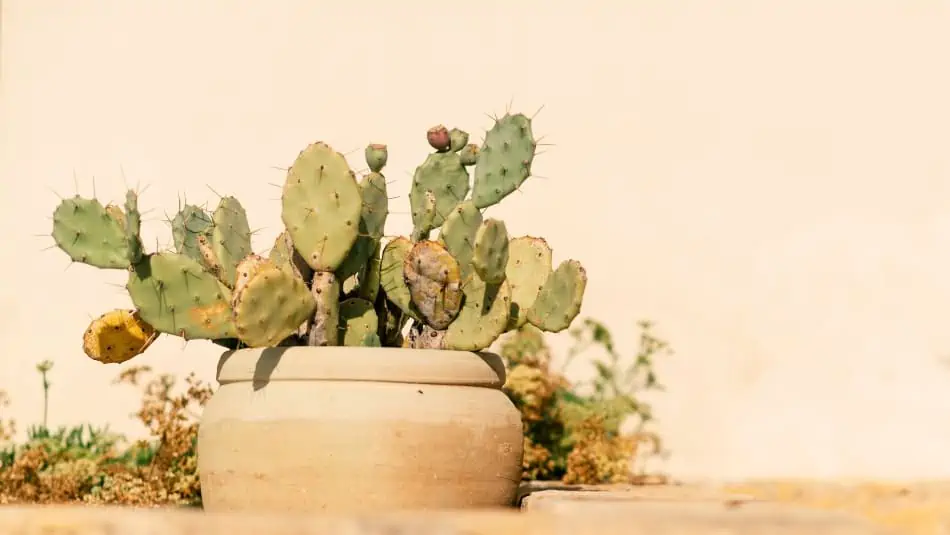
Cactus in a pot.
Cactus spines

2. The roles that spines play in a cactus’s survival

Air trapping to reduce moisture loss

The spines create a buffer that traps air around the spine. The air trapping is necessary for restricting airflow; otherwise, the water might escape from the plant in the process.  

The buffer contains moist air, and this plays a vital role in preventing water from evaporating from the plant in the hot desert heat.

Water collection for survival

The Chilean Atacama Desert is one of the driest deserts on earth. However, this desert experiences heavy fog in the early morning hours. The locals refer to the heavy dew as “camanchaca.”

Once dew from the fog settles on the spine, it liquefies into the water and then drips on the ground below. The cactus roots then absorb this water to help nourish the plant and keep it alive.

The spines also have a hierarchical groove structure. The unique grooves that help the cactus plants collect water. 

Shade provision to avoid the hot desert sun

The cactus spine may look like it can’t offer much shade because it has a thin radius. However, the needles have a dense population with a single plant having thousands of them, and this is for a reason.

The dense population serves the purpose of covering as much surface area as possible.  Therefore, the shade that these spines provide adds up to protect the plant from losing water.
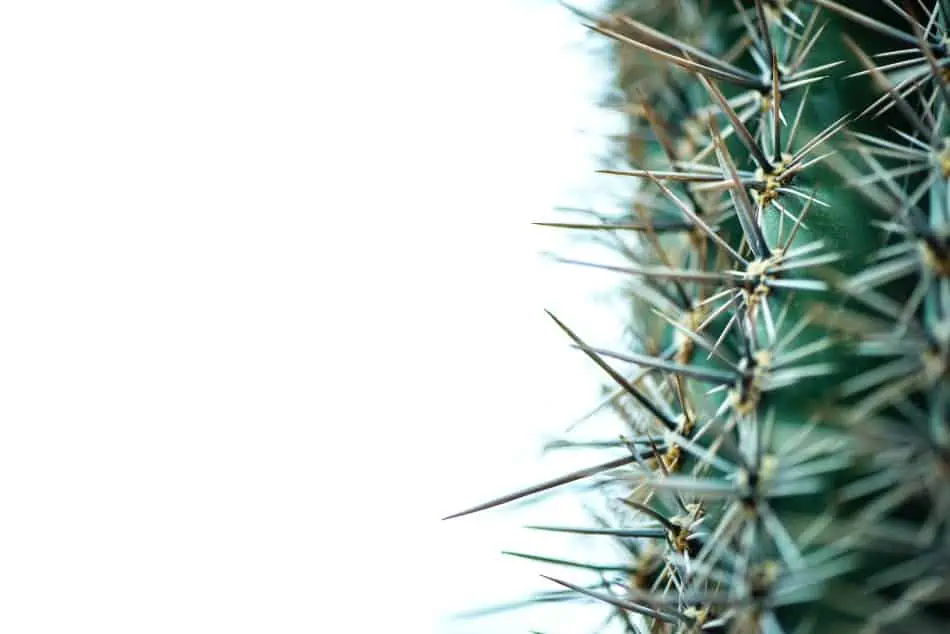
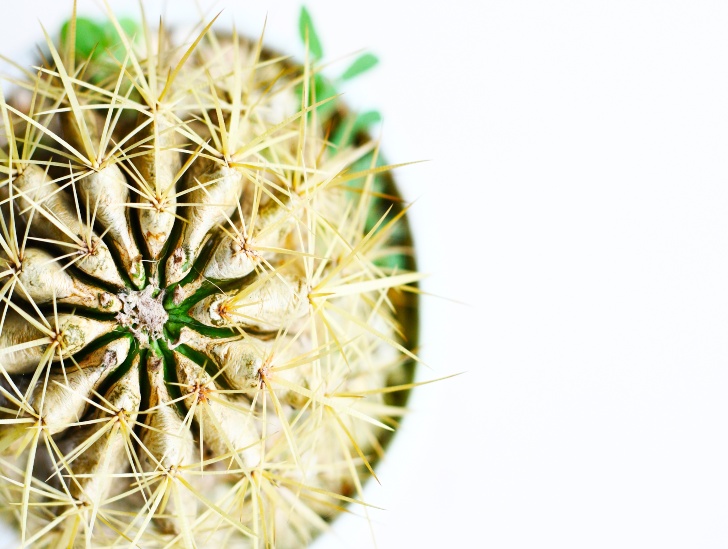
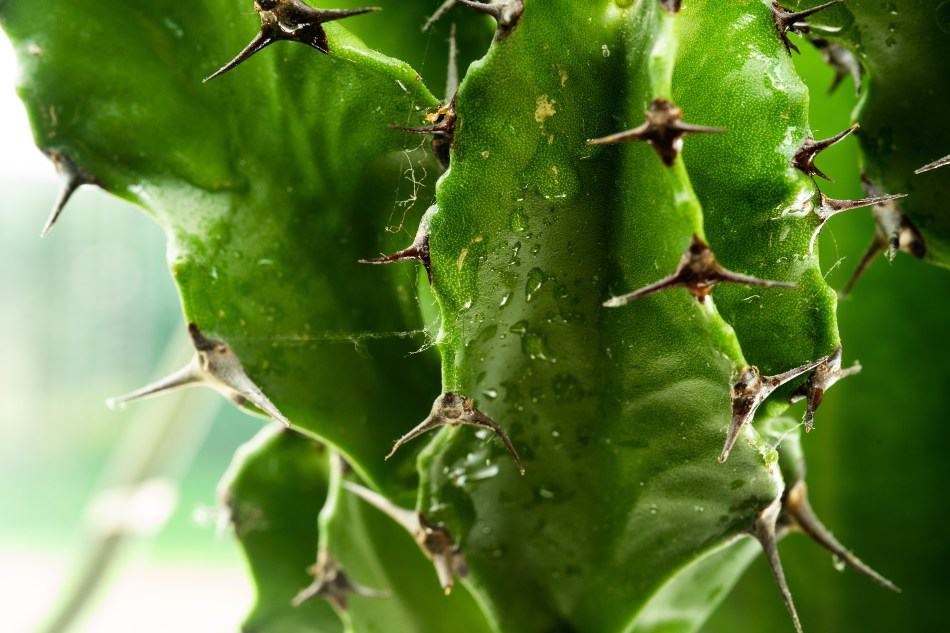
Close up image of a cactus with spines.
The cactus spine provide shade to the plant

Protection from predators

The desert is full of herbivorous animals that would love to munch away on the plants. The spines are prickly and can pierce through the skin, the reason why they are excellent for keeping these animals at bay.

3. Shallow root systems for quick water absorption

The desert experiences rains from time to time. The cactus plants have shallow roots that absorb water from the ground. 

The plant also grows temporary roots when the ground becomes damp with the goal for absorbing plenty of water during the rains. It only takes about two hours for a cactus plant to grow these roots.  After the rains stop, the roots dry up. 

In addition to roots that are close to the ground for maximum water absorption, the roots are also extended to enable them to cover a large area.  After water intake, the roots then transport this water to the stems for storage.

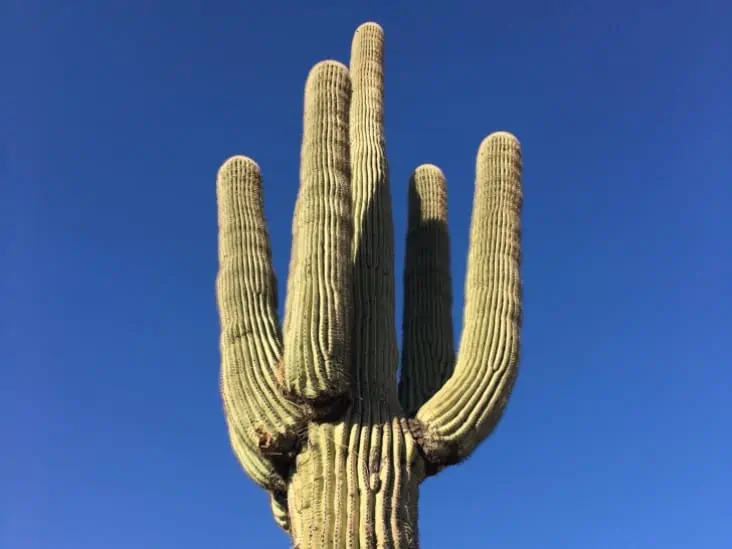
Some plants like the saguaro cactus can store up to 4200 pounds of water.

4. Stomata on stem to discourage evaporation

Are you wondering how it’s possible for the cactus to store water in the hot desert weather that could otherwise encourage evaporation? 

Well, here is how. 

Every plant has stomata on the leaves for carbon dioxide intake. Together with sunlight and water, plants use the gas to manufacture food in a process known as photosynthesis. 

As a plant inhales carbon dioxide, it also exhales oxygen and in the process loses a lot of moisture. Moisture loss shouldn’t be a big deal in plants that grow in climates that have regular rain, but for the cactus plants that grow in the desert, this is a different story. 

Desert plants need to conserve as much water as possible for survival during times where there’s no rain. Remember that it only rains once in a long while in the desert. 

For this reason, the plants only carry out the photosynthesis process at night. Temperatures are much cooler at night.  

Photosynthesis needs sunlight. So how is the plant able to carry out the process if the stomata are only one during the night when there is no sunlight?

 Since it’s hot in the desert during the day, the cactus plant’s stomata only open up at night when temperatures are cooler, hence fewer chances of water loss. Scientists refer to the process of night photosynthesis as crassulacean acid.

The stomata’s opening and closing work like clockwork. By dawn, the pores close, and automatically open at night. 

To further avoid water loss, the cactus stomata is very small. In addition, it’s found deep in the tissue as opposed to the surface, which would otherwise cause water loss. 

5. Stem water storage

The stem usually has thick skin than that of regular leaves, and this is why cactus uses it as a reservoir. Since a desert experiences sporadic rain, the feature allows the plant to store water for lengthy amounts of time, before the next rainfall. 
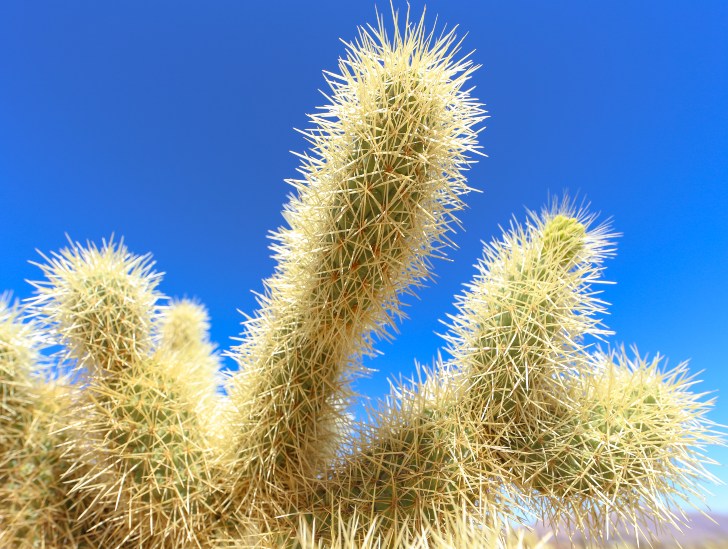
A cholla cactus.
The stem usually has thick skin than that of regular leaves, and this is why cactus uses it as a reservoir.

6. Waxy skin for water retention

The plant’s surfaces have a waxy skin. This skin covers most of the leaves, apart from the stomata since the plant needs inhalation and exhalation of carbon dioxide and oxygen. This wax helps to avoid water evaporation. 

The wax also helps to keep the plants cool in the hot climate. Else the plant would dry out, due to extreme heat. 

7. Expandable stems for maximum water intake

To enable the plants to store as much water as possible during the rainy season, the cactus has an expandable stem. These stems expand to allow as much water intake as possible for use during the days when there’s no rain. 

If you were to cut up the plant, you would notice that it resembles an accordion. The structure allows channeling of water to various parts of the plant.

These stems shrink as the plant continues to use up the water in anticipation for the next rainy season.  

8. Short growing season for water conservation

Unlike most plants that grow continuously, the cactus has periods where it stops growing. Growth requires a lot of water, which is already limited in the plant’s habitat.

For this reason, the plants only grow for a season, then pauses for a while, before the next growing season. It’s no wonder that the cactus plants grow slowly, but stay alive longer than most plants.

9. Spherical shapes to reduce surface area

The plant’s body assumes a sphere, especially during seasons where it has stored a lot of water. The sphere shape reduces the plants surface area, which means that only a small part gets sunlight exposure, avoiding dehydration. 

10. Thick tissue for maximum water storage

Due to evolution, the plants have formed a thick layer of plant tissue. The dense tissue is essential for water storage and retention deep within the plant. 

Cactus plant with fruits.
Cactus spherical shapes and thick tissue for maximum water storage

Related Questions

What does a cactus need to survive? Cactus is one of those low maintenance plants that need close to nothing to survive. If you’re considering using this unique for landscaping purposes, lal you need to do is plant it in dry soil, place it in direct sunlight and water it regularly. Avoid water logging by creating drainage in potted plants and avoid too much watering during cold seasons.

How much water does a cactus need to survive? Watering your plant once a week should be enough. Some seasons are cold, which means less watering. Before you water, check about half an inch of the topsoil layer. If the layer is dry, then your plant needs water. To ensure that you don’t water too much or too little, water until the drainage holes begin to leak water. 

Can A Cactus Grow Indoors? 5 Easy Tips To Do It Right

With the fantastic benefits that a cactus comes with, I recently decided to do a bit of research on the plant. I always wondered if it’s possible to grow cactus indoors. So, I decided to research a bit, and today, I want to share my findings with you. 

So, can a cactus grow indoors? Cactus can grow indoors In fact, all the different varieties such as the forest, desert, and Christmas cactus can do well indoors depending on how you take care of them. How healthy they grow depends on if they are getting enough sunlight and you are not overwatering them. 

How can you grow cactus – a plant adapted for the desert indoors?

The biggest motivator for growing cacti should be because they are easy to maintain as they don’t require a lot of work. Succulents will mostly die during the winter due to too much water. Therefore, there is a need to keep them indoors and without water often. 

1. Growing forest cacti

These types of cacti grow in tropical and subtropical areas globally. Tropical regions are areas such as Mexico, parts of South America, and Caribbean islands. The Christmas cactus belongs to this group.  

For people looking for hanging plants, this is a great option. When they bloom, they produce flowers in lilac or pink colors.

Use these tips to help you grow the forest cacti:

  • Drainage: The pots should have drainage holes in the container and ensure soil drains well for them to grow well. 
  • Light: these cacti love sunlight but not the direct one. During summer, you can move them outside on the porch which is unheated until when the temperatures get below 50 degrees. 
  • When the plant is flowering, water regularly. During the resting period, only water them when the soil is dry on touch. 
  • To encourage branching and flowering, prune in June. You can also use the pruned ones to grow more cacti. To grow more cacti, just cut them and place them in vermiculite as they root easily. 
  • In the case that your cactus is not blooming, it could be because of the temperature of light they are getting. Keep the temperature at 50-55 F then resume watering and move it to a warmer location. 
A cactus plant near the window.
Forest Cacti

2. Growing desert cacti

Desert cacti species are quite a variety. Whether they grow or not depends on how well they are taken care of. Just like the forest cacti, the desert ones require intense light most especially during winter. 

You can follow the pointers below towards having healthy desert cacti:

  • During the active growth period, you need your cacti to stay in temperatures from 70 F and above. You may notice scorching if it had not been hardened before. 
  • The blooming stage is quite sensitive, and you only water them when they start shriveling. When you water, make sure you water well. Note that some species bloom better when they are underpotted. 
  • During the growing season, it’s essential to consider a cacti fertilizer. Use one that’s specially designed for cacti. 
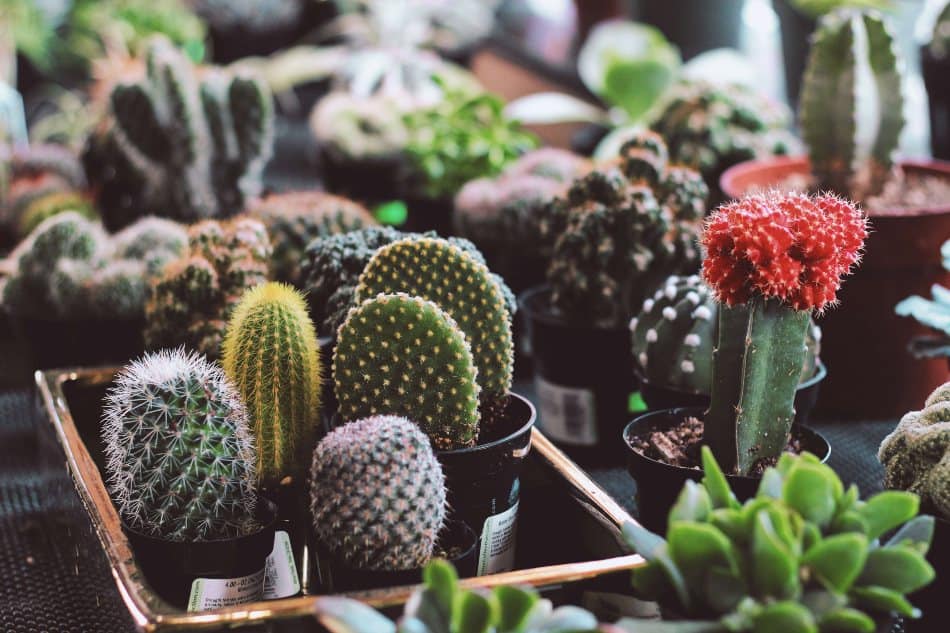
Different kinds of cactus in pot.
Desert Cacti

5 Easy-to-do Tips to growing cactus indoors

Cacti come in different colours ranging from blue, green and grey. How you take care of them is what determines if they are healthy or not. Watch out for the tips below to help you grow cactus indoors. 

1. Use fertilizer

Using an appropriate fertilizer meant for cactus helps in its growth. Use a low-nitrogen but soluble fertilizer. The best time to apply the fertilizer is when you notice new growth. This can be done every 2 months, three times. 

Do not apply fertilizer on a recently potted cactus. Wait until you can see some growth before the application process. 

Not that, there are some species that grow during winter. Unlike fertilizing during summer, for these species, work your schedule to fertilize them during winter. 

2. Choose colors wisely

Naturally, green cacti are more tolerant to environments with low light. If your room is well-lit, you can go for cacti that are pink or purple. However, if your room has low light, go for the green ones. 

Small golden barrel cactus.
Green cacti are more tolerant to environments with low light.

3. Supplementing light

Cacti do well with natural light. However, during winter, there’s not much light. Glowlights can act as a supplement for the natural light for the few months before its summer again. This ensures your cactus grow healthily. 

4. Propagation

There are different ways to the reproduction of cacti. You can cut leaves from an already grown cactus, use seeds or graft. Grafting is mostly done for weak cacti species or those that are hard to propagate. 

5. Watering cactus

Cactus will always rot if you overwater them. During spring and fall, cacti will need regular watering. However, during summer, they will need less water, maybe once a week. A cactus may turn pale if it is deprived water, adjust according to its needs.  

Dealing with common cactus problems

There are common cacti problems which can be resolved to ensure they are healthy. 

1. Yellowing or bleaching

It is common to find cactus turning yellow or white. What this means is that the plant is getting excess sunlight. Remove the cactus away from direct sunlight and place them in probably a window that has less sunlight. It should improve with time.

Sunburned Golden Barrel cactus.
It is common to find cactus turning yellow or white.

2. Thinning

Other times, you’ll notice the top of the cactus thinning or it growing towards the direction of the light which may cause an imbalance. This means it is not getting enough light. Move the cactus to a location where it will get adequate light for healthy growth. 

3. Pests

Some of the common pests that attack cacti are mealy bugs, scale insects, spider mites, and fungus gnats. It can be challenging to control these pests because they hide in places that are hard to notice, and also because they may have grown resistant to pesticides. 

Mealybugs are found usually in clusters and are most likely to be on the leaf veins. They mostly suckle the root juices causes the cactus to rot because of bacterial infections. 

Scale insects are usually located on the leaves and stems of the cactus and can be scraped off. 

Fungus gnats look a bit similar to mosquitoes and hover above the soil surface in the pot. During the larval stage, they usually live in the soil and are more likely to cause root damage because they consume the organic matter in the ground. 

Spider mites look like dust and can easily damage the cacti epidermis. They suck the cactus juice. If the plant is infected, there will be some small brown dots and webbing. 

Pest control 

Controlling pests can be a daunting task, especially if some of the pests are resistant. One sure way to reduces the chances of pests invading cacti is by growing them healthily. Keep them in the right conditions, such as placing them under the right amount of light and watering just enough. 

  • Mealybugs and spider mites can be washed off. First, cover the soil that’s in the pot with something waterproof and then wash the pests off.
  • Hygiene is equally as important. Keep dead leaves away from the pot to avoid attracting any pests. 
  • To contain the pests, spray the cactus with a dilute solution containing alcohol (preferably a ratio of 1:3) Be on the lookout because this solution can damage sensitive cacti. First test on a small part of the cactus to see if there is a reaction before spraying the whole plant only for it to damage the plant’s epidermis. 
  • Sticky traps that are precisely yellow can be used to control fungus gnats. 
  • Insecticidal soap is also another option. You can spray the plant. However, waxes and oils from the plant can be damaged by the detergent. Read the instructions to see if it’s safe to use the soap on your plant. A test on a small area of the plant is also recommended. 
  • Insecticides such as neem can also help but always read the label before using anything that could potentially damage the cacti. 
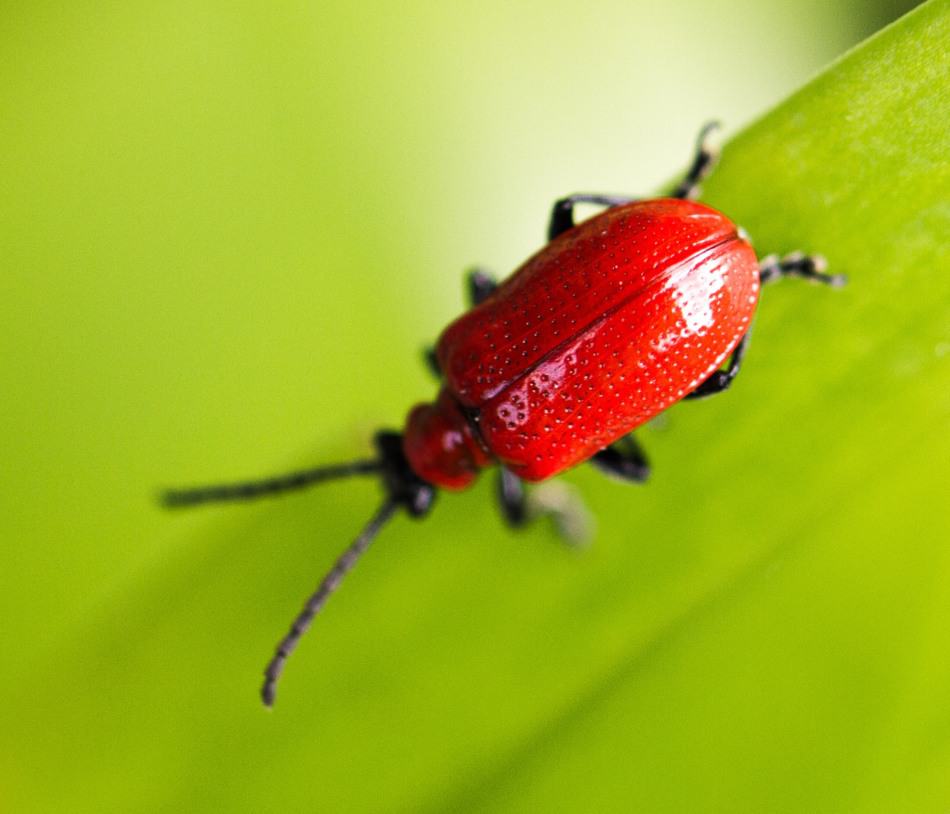
A pests in a plant.
Controlling pests can be a daunting task but your cactus will thank you

Related Questions

Can cactus be placed in the bedroom? Yes, absolutely. The succulent is suitable anywhere in the house as long as there is enough space and sunlight. Go for a less thorny one to avoid accidents. Especially if you have a pet, don’t leave them unsupervised in the room as the cactus may prick them. 

What is the lifespan of a cactus? Cactus has a lifespan usually between 10-200 years which depends on the species. The truth is, outdoor succulents will tend to live longer than the indoor ones. However, with a good maintenance routine, the household ones can live for decades. 

What are some of the best cacti species for indoors? We have so many cacti species globally. Some of the best are Christmas Cactus, Bishop’s Cap, Old Lady Cactus, Saguaro Cactus, African Milk Tea, Rat Tail, Angel Wings, Scarlet Ball, and the Barrel Cactus. 

Where Cactus Store Water To Survive In Deserts?

Well, the secret lies in how this plant is adapted to absorb, store, and use water efficiently over a prolonged period.

So, where cactus store water? Primarily, cactuses store water in collapsible-water storage cells found in the stem. However, some cactuses also store water in their roots that are modified to perform this function. The collapsible water-storage cells appear as holes or spaces in the stem and retain water for a fairly long time.

Furthermore, ribs/flutes are present, which creates room for the water to retain. The ribs/flutes are invisible when the cactus is fully swollen but become visible when the stem shrinks.

Just like any other living thing, cactus needs water to survive. However, given the areas where it grows, water is often scarce. To compensate for this and adapt to the hot temperatures well, this plant has developed a wide range of special abilities that allow it to store the little water that it receives for a relatively long time. For instance, the needle-like spines of cacti are highly modified leaves that not only protect it from predators but also help to reduce the loss of water by restricting air flow near the cactus.

How Is the Cactus Cortex Modified to Store Water? 

During its evolution, the cactus cortex underwent various modifications that give the plant more water-storage capacity. The cactus cortex is divided into two sections, namely; the inner water-storing region and the outer photosynthetic layer.

The outermost layer is green, which allows the plant to absorb carbon dioxide used in photosynthesis even though it is quite different from a typical plant leaf.

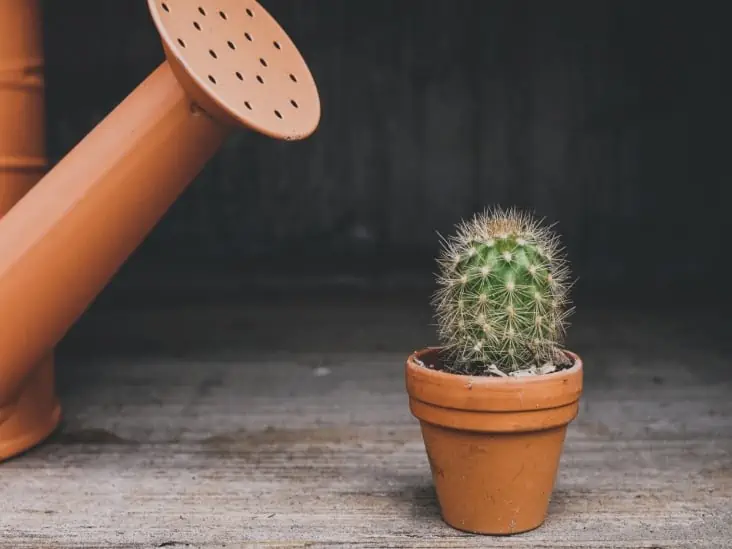
Small cactus in a pot with a water contaoner beside.
The selective advantage of storing water isn’t just what keeps the collapsible water-storage cells alive.

The innermost layer is succulent and comprises of numerous collapsible water-storage cells that store enough water to keep the plant healthy and hydrated even during prolonged dry spells.

These cells have fewer chloroplasts and a highly flexible, lignified, and elastic wall that allows the cell volume and shape to change rapidly as water is absorbed or released.

The selective advantage of storing water isn’t just what keeps the collapsible water-storage cells alive but rather the fact that the water can readily be made available to photosynthetic cells of the cactus plant.

The water is also readily available to flower buds, axillary buds, developing fruits, and other parts of the plant. 

Water-storage cells have thin, flexible walls that contract or shrink rapidly as water is transferred in and out of the cells. In all cactuses, the cell walls of the inner cortex are thin and highly flexible and can easily fold to prevent unnecessary water loss.

A close up image of cactus with water droplets.
The innermost layer store enough water to keep the plant healthy and hydrated

On the other hand, the cells that need water in cactus are thick and more resistant to shrinkage. As the volume of water within the cactus shoot reduces, the cells of the inner cortex give up more water transferring it to other plant cells hence minimizing water stress and allowing the process of photosynthesis to continue.

The evolutionary expansion of collapsible water-storage tissues in the cortex of plants can sometimes create problems to the epidermis.

Since plants produce epidermis cells only at the shoot and root tips, a succulent stem that swells after a downpour can limit the amount of water absorbed.

But, this isn’t the case for most cacti plants since they have a pleated stem surface comprising of either ribs or tubercles that ensures maximum water absorption.

What Role Do Mucilage Cells Play in Water Storage in Cactus?

A surprising aspect of water storage in a cactus plant is the role of mucilage cells. These cells are common in many cacti plants and are believed to be highly adaptive in the cactus to help it retain more water.

A image of a cell.
Source: Plant Anatomy Laboratory

Mucilage cells are also present in other plants. It is the presence of these cells that make some plants feel slimy when cut. Mucilage cells form a predominantly carbohydrate tissue that is capable of binding and holding water quite firmly.

But with water held tightly in the mucilage cells, how does that help the other cells of the cactus plant? Well, as is the case with the cactus cortex described above, the collapsible water-storage cells must always provide water to other plant cells and not keep it for themselves while the rest of the plant suffers.

In most cases, the cactus plant experiences prolonged spells of drought; hence, they should be able to digest the mucilage tissue and release water to other plant cells.


How Is the Cactus Root System Modified  to Enhance Water Absorption?  

Since they grow in deserts, you may be tempted to think that cacti grow deeper roots to help them search for a constant supply of groundwater. However, this isn’t the case.

Generally, the cactus plant develops an extensive shallow root system that lies just under the earth’s surface and may extend several feet away from the plant to increase the rate of water absorption. 

When it rains, the cactus shoots out more roots. But, during prolonged droughts, some roots dry up and break off from the plant to conserve water supply.

Typically, the cactus plant becomes more hydrated than the soil it is growing in, and sometimes it faces the risk of losing water to the ground. To avoid such a scenario from happening, the plant tries to disconnect itself from the soil as much as possible during the dry spells.

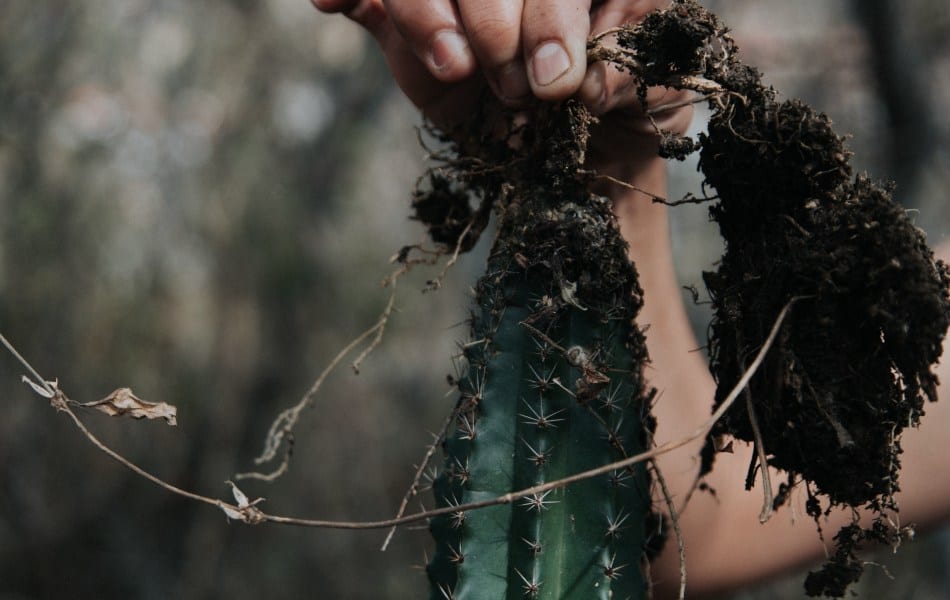
A freshly picked cactus from the ground.
Some cacti have succulent roots that store food and water


Some cacti send down a long and strong taproot soon after germinating. The taproot provides strong anchorage so that the plant isn’t washed away in rainstorms and also allows it to tap deeper subsurface soils with more moisture.

Examples of cacti that develop a taproot include the saguaro and the giant Mexican cereus. Saguaro’s taproot may extend up to 5 feet into the soil. 

Some cacti have succulent roots that store food and water. A perfect example is the Cereus Greggii, commonly referred to as the Arizona queen of the night that has an enlarged root system weighing up to 27 kilograms.

The part of the root that becomes enlarged is the xylem tissue that stores starch and water.  Most cacti don’t have aerial or adventurous roots since they tend to increase water loss. Cactus roots also change their characteristics as the water supply fluctuates.

For instance, after a downpour, the existing dehydrated roots become more water conductive, and new roots are rapidly formed to help in soaking up the little available rainwater.

During the dry spells, the roots fall off, and the existing roots dehydrate and shrink, creating an air gap that helps to prevent water stored in the roots from escaping back to the soil.

Are There Any Other Useful Traits  That Help the Cactus to Survive in Deserts?

Apart from the collapsible water-storage cells, mucilage cells, and a specialized root system, cacti have also developed a waxy skin, prickly spines, and reversed opening and closing of the stomata to lower the rate of water loss.

In fact, in some cacti, the prickly spines also collect rainwater and direct it to the plant roots.  All plants have stomata that open and close to collect carbon dioxide used during photosynthesis.

Stomata refer to the numerous little pores found on plant surfaces. During the process of photosynthesis, plants convert the collected carbon dioxide into sugars.

Typically, stomata open during the day and close at night. But, this process can be quite troublesome in desert plants such as the cactus since a lot of water escapes through these pores each time they open.

If a plant is trying to conserve its water reservoir, it can be a risky business to open the stomata and lose water.  While most plants open their stomata during the day, cacti and other desert plants open their pores at night.

The cooler night temperatures, lack of sunshine, and the calm breeze help cacti to retain a lot of water during the process. However, the lack of sunlight at night doesn’t allow cacti to manufacture food at that time. 

Therefore, it stores carbon dioxide at night and embarks on photosynthesis in the morning when sunlight is available. Even the leafy cacti such as the Pereskia have developed similar traits to make their living in the desert a little bit easier.

Sunset image with Mature cactus.
The cooler night temperatures, lack of sunshine, and the calm breeze help cacti to retain a lot of water

Related Questions

Where do succulent plants store water?  Typically, all succulent plants store water in stems, roots, and fleshy leaves. All cacti are succulent plants as are other non-cactus desert plants such as euphorbia, aloe, and elephant trees.  However, there is a wide range of other adaptations that are essential to ensure effective water absorption and storage.

Why do cacti have spines? The needle-like structures present on the surface of cactus are known as spines and represent modified leaves. The lack of actual leaves makes it possible to imagine the plant as one large stem with spines instead of leaves. One of the primary functions of the spine is to protect the cactus from plant-eating animals. It also provides shed for the cactus itself and minimizes water loss.

Can you drink the water from a cactus?  Drinking water from a cactus isn’t recommended since you are ingesting a new substance that your body has to process.  If you must drink water from the plant, drink from a fishhook barrel that isn’t toxic. The cactus fruit is edible as well.