Unveiling Cactus Secrets: What Makes Spine Diversity So Unique?

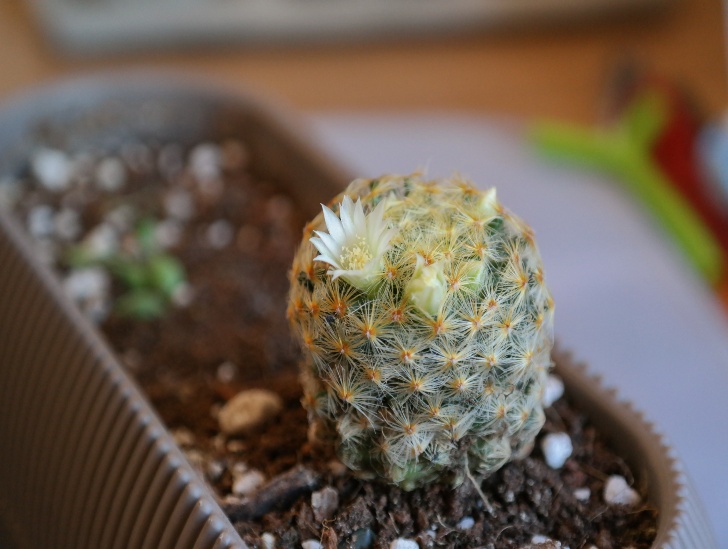
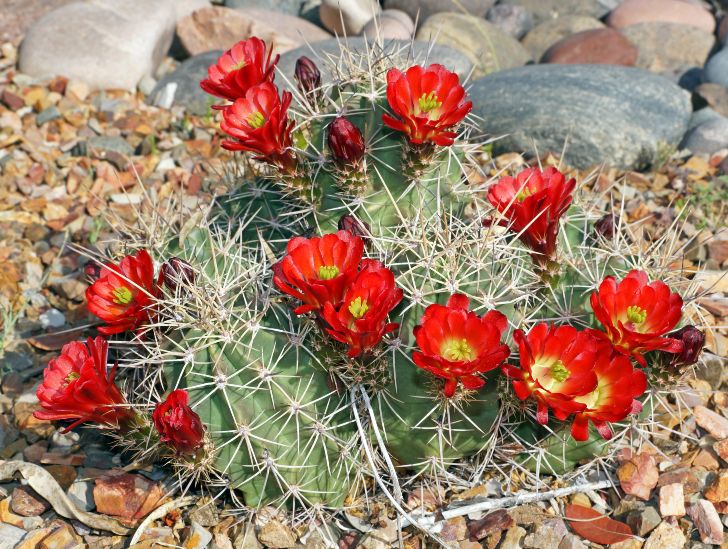
Cactus in a pot with pebbles.

Cacti, those iconic desert dwellers, have long fascinated botanists, gardeners, and nature enthusiasts alike. Their ability to thrive in harsh, arid landscapes seems almost mystical, and their strikingly diverse forms and shapes never fail to capture our imaginations. While the hardiness of cacti is well-known, one of their most intriguing features often hides in plain sight – their spines. The incredible diversity of cactus spines is a closely guarded secret. Each spine is not merely a defense mechanism; it’s a testament to the evolutionary ingenuity of these remarkable plants.

So, what makes spine diversity in cacti so unique? Spines have evolved in diverse forms to help cacti plants adapt to their specific environmental challenges, whether it’s to deter herbivores or reduce water loss in arid regions. The shape, size, and arrangement of spines are often key identifiers for plant species, aiding botanists and enthusiasts in classification. Spine diversity also adds unique aesthetics to plants, contributing to their visual appeal and making them popular in horticulture and landscaping.

Today, we will delve deep into the captivating world of cactus spines, uncovering the hidden secrets that make their diversity unique and utterly astonishing. Read on to learn more.

Adaptation to the Environment

The diverse forms of spines found in plants such as cacti and succulents are a result of their remarkable ability to adapt to the specific challenges presented by their environments.

This adaptation is a crucial survival strategy that allows these plants to thrive in some of the harshest and most arid regions.

One of the primary environmental challenges cacti and succulents face is water scarcity. In arid and desert environments, rainfall is infrequent, and water resources are limited.

Spines help these plants conserve precious water by reducing the surface area through which water can be lost.

Unlike broad leaves that would lose water rapidly through transpiration, the reduced surface area of spines minimizes this loss, allowing the plant to store water for extended periods.
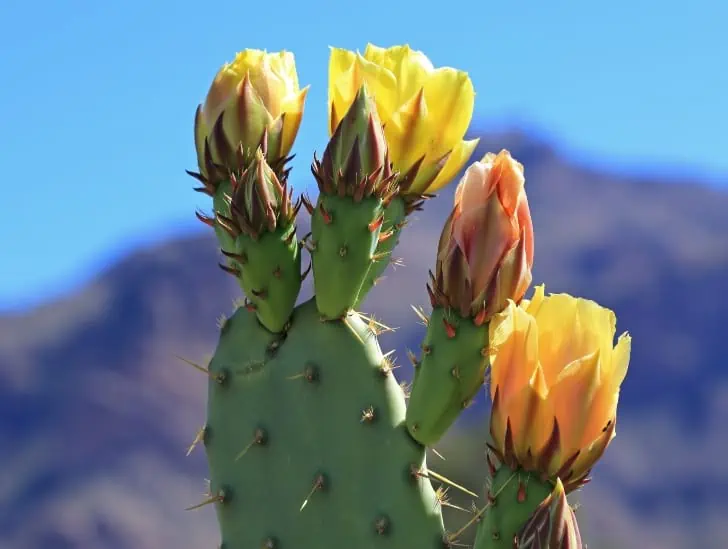
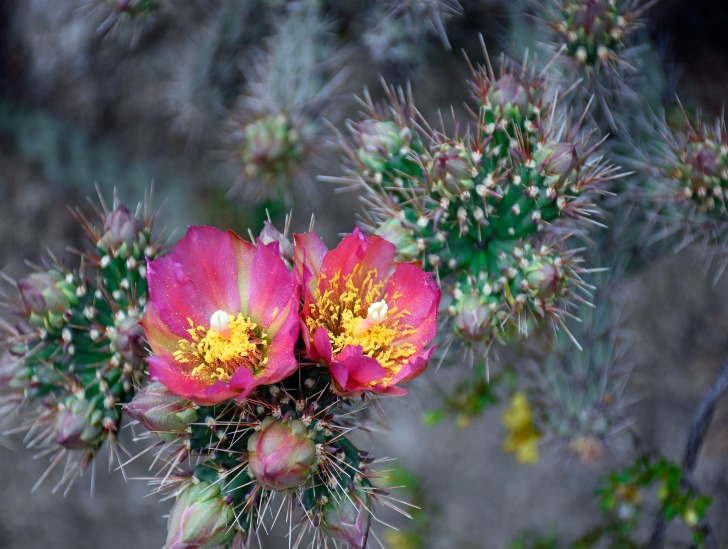
A blooming cactus.
One of the primary environmental challenges cacti and succulents face is water scarcity.

Spines also serve as a deterrent to herbivores. In harsh desert environments where food sources are scarce, herbivores may be tempted to feed on succulent plants.

Spines, often sharp and pointed, create a formidable defense mechanism, discouraging animals from grazing on the plant.

This protection ensures the plant’s survival, allowing it to grow and reproduce despite the constant threat of herbivores.

The other core function of spines is temperature fluctuation. The environments where cacti and succulents thrive can experience extreme temperature fluctuations between day and night.

Spines play a role in temperature regulation by providing shade to the plant’s surface during the hottest parts of the day.

This shading effect reduces heat absorption and helps maintain a more stable temperature within the plant’s tissues, protecting it from the damaging effects of extreme heat.

Moreover, spines play a crucial role in reducing wind stress. In open desert landscapes, strong winds can be a significant stress factor for plants.

Spines can help reduce wind stress by breaking up and diffusing the force of the wind as it blows across the plant’s surface. This prevents physical damage to the plant and reduces the risk of uprooting.

Classification and Identification

Cactus spines’ diversity is an intriguing evolutionary feature and a vital tool for botanists in classification and identification.

The shape, size, color, and arrangement of spines can vary greatly between different species of cacti and succulents, making them key identifiers.

For example, the iconic saguaro cactus has long, sharp spines that grow in clusters along its ridges, while the prickly pear cactus has smaller, more numerous spines that cover its surface.

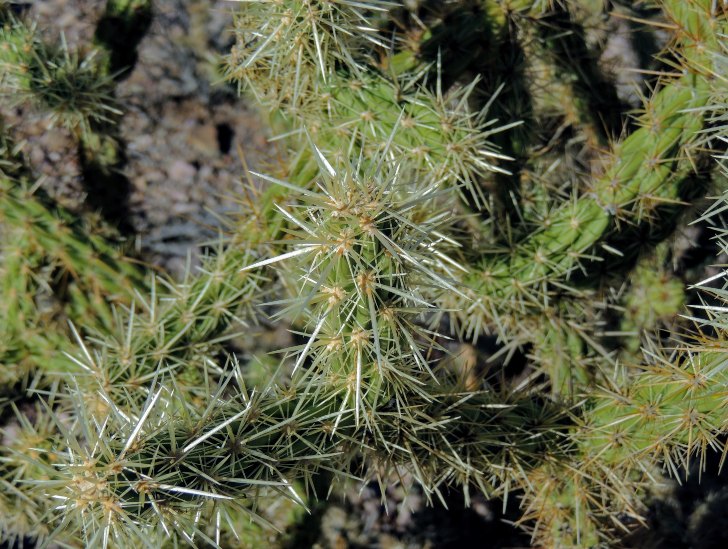
The flowering golden barrel cactus has dense and woolly spines that provide insulation in colder environments, while the cholla cactus has barbed spines that detach easily to disperse seeds.

The precise location of spines on a plant can also be a distinguishing feature.

A cactus plant.
The iconic saguaro cactus has long, sharp spines that grow in clusters along its ridges.

Some species have spines primarily on the stem, while others may have spines on both stems and leaves. The presence or absence of spines on specific plant parts is a critical identifying factor.

Spines can exhibit a wide range of colors, including white, brown, black, and even vibrant hues like red or yellow.

When combined with other identifying features, the color of spines helps botanists and enthusiasts differentiate between species.

Some species feature specialized spines with unique characteristics. These may include flattened, ribbon-like spines, hooked spines, or spines with distinctive patterns or textures. These specialized spines are particularly valuable for pinpointing specific species.

Aesthetic Appeal

The aesthetic appeal of spines is a fascinating aspect of cacti and succulents, contributing significantly to the allure of these plants.

Their diverse forms and striking visual characteristics make them highly prized in horticulture and landscaping.

Spines introduce a unique texture to the overall appearance of cacti and succulents. They break up the monotony of the plant’s surface, creating intricate patterns and visual interest.

Whether short and densely packed or long and gracefully arched, spines add a layer of complexity to the plant’s texture.

Many cacti and succulents, particularly those with columnar or globular growth forms, take on an architectural quality thanks to their spines. These plants resemble living sculptures; the spines contribute to their structural elegance.

A cactus plant.
The iconic saguaro cactus has long, sharp spines that grow in clusters along its ridges.

Moreover, some cacti and succulents undergo fascinating seasonal changes in their spines.

Spines may change color or take on different textures during different times of the year, providing an ever-evolving visual spectacle in the garden.

In landscape design, cacti and succulents with striking spines can serve as focal points, drawing attention and providing visual interest. They create captivating scenes when used as standalone specimens or in group plantings.

The visual intrigue of spined plants makes them appealing subjects for photographers. Their intricate details and the play of light and shadow on their spines offer endless creative opportunities.

Water Storage

Spines have adapted to store water in certain species, enhancing a plant’s survival ability in harsh environments.

These specialized spines have a hollow center that acts as a reservoir for water, which the plant can access during periods of drought.

The old man cactus, with its long white spines, is an excellent example of this adaptation. Its dense covering of spines protects it from sun and wind damage while also serving as a water storage system.

Similarly, the golden barrel cactus has a spongy inner tissue that can hold large amounts of water, making it highly resilient during drought.
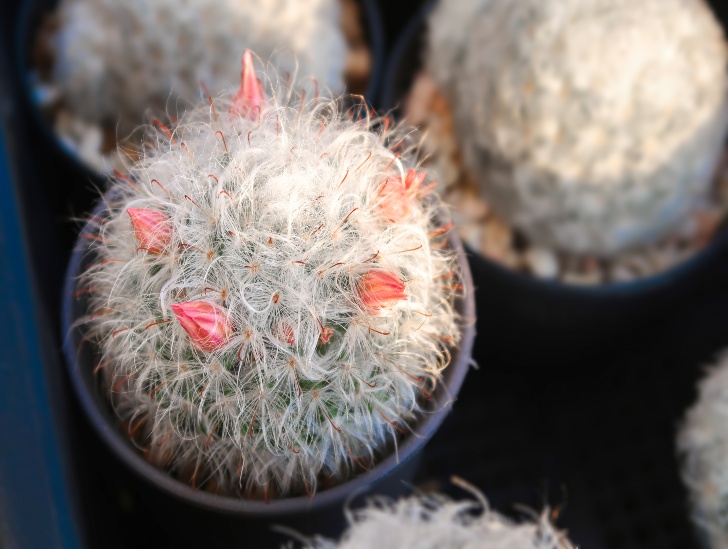
Old man cactus exposed to sunlight.
The old man cactus, with its long white spines, is an excellent example of this adaptation.

The ability to store water in spines is an essential survival strategy for plants growing in arid regions, where rainfall may be scarce and unpredictable.

It allows them to thrive even in the most challenging conditions and contributes to their remarkable resilience.

Cultural Significance

Spines are often associated with the symbolism of resilience and fortitude. The ability of cacti and succulents to thrive in harsh, arid environments despite limited resources is a powerful metaphor for enduring challenges and adversity in life.

In many cultures, spined plants are revered as symbols of strength and tenacity, inspiring people to overcome difficulties.

Some cultures believe that spines have protective qualities, capable of warding off evil spirits or negative energies.

Spined plants may be planted near homes, entrances, or sacred places to provide a spiritual shield or safeguard against evil forces.

In fact, spined plants have played essential roles in religious and spiritual ceremonies for centuries. They are sometimes used as ritual offerings or symbolic representations of sacred elements.

The presence of spined plants in rituals underscores their spiritual significance and connection to the divine.

In some cultures, these plants are cultivated and displayed for their decorative value. Their unique and exotic appearance makes them popular choices for ornamental landscaping, botanical gardens, and interior décor. Spined plants add a touch of authenticity and cultural diversity to living spaces.
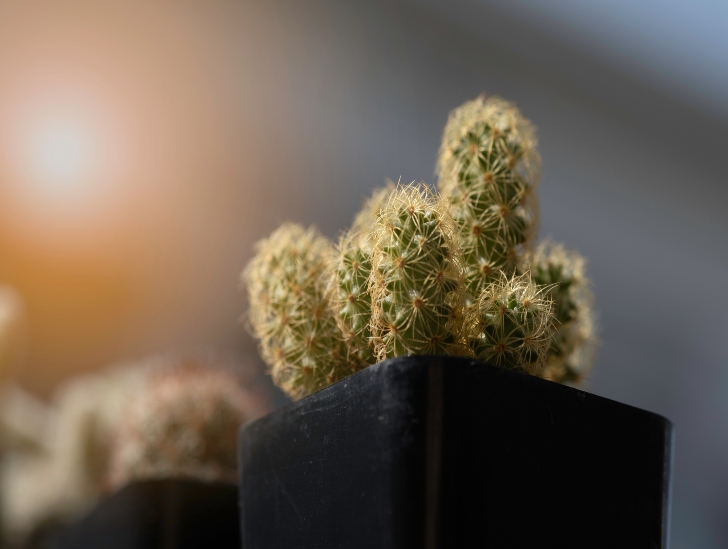
A lady finger cactus exposed to light.
Spined plants have played essential roles in religious and spiritual ceremonies for centuries.

These plants are sometimes featured in cultural celebrations and festivals.

For instance, cacti with vibrant blooms may be incorporated into floral arrangements for special occasions, adding a touch of natural beauty and cultural significance to the event.

Spined plants have also inspired artists, poets, and writers for generations. Their unique forms, textures, and symbolism have been featured in various forms of artistic expression, from paintings and sculptures to literature and music.

Light Reflection

The reflective properties of spines can help plants reduce solar radiation and conserve water. The spines’ color and orientation determine their ability to reflect sunlight, protecting the plant from excessive heat and evaporation.

In some species, spines are arranged in a way that minimizes light absorption while maximizing reflection.

This allows plants to maintain a more temperate microclimate around themselves, shielding them from extreme temperatures.

The reflective properties of spines also contribute to a plant’s energy efficiency.

By reducing the amount of solar radiation they absorb, plants can conserve water and reduce their metabolic rate, allowing them to survive longer periods without rainfall.
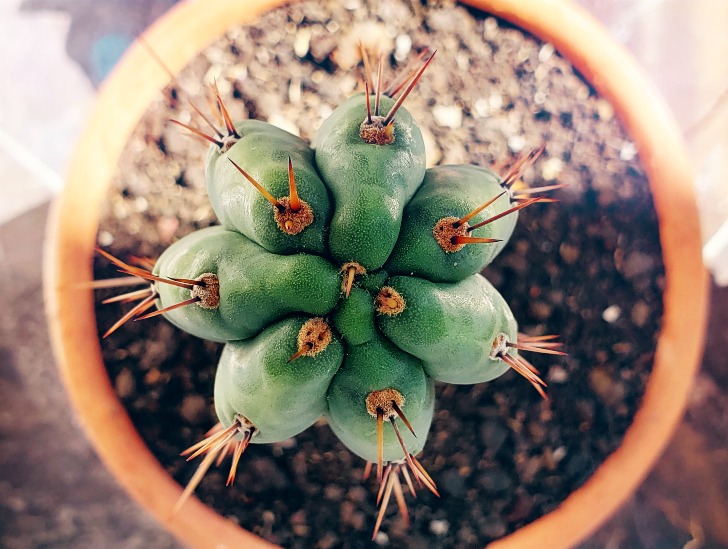
A san pedro cactus top view.
The spines’ color and orientation determine their ability to reflect sunlight, protecting the plant from excessive heat and evaporation.

In addition, spines help protect plants from UV radiation, which can cause damage to cells and disrupt photosynthesis. This is particularly important in high-altitude environments where sunlight intensity is much stronger.

The reflective properties of spines help mitigate the effects of UV radiation, allowing plants to thrive in these challenging conditions.

Summary

Spines are a defining feature of cacti and succulents, serving essential functions in their survival, classification, and aesthetic appeal.

Their diverse forms and functions make them an integral part of these unique plants’ fascinating adaptations to thrive in challenging environments.

So, next time you admire a cactus or succulent’s dazzling display of spines, take a moment to appreciate their complex role in the plant’s growth and resilience.

Eulophia Petersii Desert Orchid: A Beginner’s Guide to Growing and Caring

A blooming red cactus orchid.

The Eulophia Petersii Desert Orchid, often referred to simply as the Desert Orchid, is a hidden gem in the vast world of succulents. The plant is known for its unique appearance, hardiness, and adaptability. This stunning succulent has been gaining popularity among gardeners thanks to its exquisite beauty and low-maintenance nature. The desert orchid is adapted to thrive in harsh environments, making it an ideal choice for both experienced and beginner gardeners.

So, how do you grow and care for the desert orchid? Ensure you keep your desert orchid in bright, indirect light throughout the year. Water it sparingly during the active growing season, but give it a rest during winter. Stop fertilizing and watering during this time. Fertilize it with a high-phosphorous fertilizer to encourage blooming. You don’t need to prune your desert orchid unless you want to control its size. Repot your succulent every two or three years, but don’t repot when the plant is blooming.

This guide discusses the basics of growing and caring for your desert orchid. Read on to find out everything you need to know.

Desert Orchid: Quick Overview

The desert orchid is native to Central America, specifically Mexico, Guatemala, and El Salvador. It is a clump-forming plant that can reach up to two feet tall with fleshy stems and bright green leaves.

The blooms make the desert orchid unique – they’re usually white and shaped like stars.

The desert orchid cactus is recognized by its long, flattened stems, usually a couple of inches wide. The leaves of this succulent grow to impressive lengths, reaching up to ten feet.

A white orchid flower on desert.
The desert orchid cactus is recognized by its long and flattened stems.

Although slow-growing, this succulent will bloom profusely during the winter months with its beautiful star-shaped blooms. Most flowers are five to eight inches in diameter and quite showy.

Sometimes, the desert orchid blooms at night and are pollinated by long-tongued moths or bats. The flowers form from notches in orchid stems at areolas. Most of the blooms are relatively short-lived and produce edible fruits when pollinated.

How to Grow and Care for Desert Orchid

The desert orchid is relatively easy to care for succulent, thriving in bright indirect light with a sparingly watering routine. Here are some of the essential tips for growing and caring for your desert orchid:

Planting

Choosing a perfect location for your desert orchid is critical to its long-term survival and success. You should choose a spot that receives plenty of bright, indirect light throughout the year.

Choose a relatively smaller planter with plenty of drainage holes at the bottom. Ideally, the planter should be filled with a mix of fast-draining and well-aerated soil.

A cactus eccentric shape like penis.
You should choose a spot that receives plenty of bright, indirect light throughout the year

Alternatively, go for a hanging basket because it perfectly suits the plant’s long stems. Keep the tray moist but not waterlogged to improve humidity.

Avoid planting a desert orchid while it is blooming. Instead, wait until at least one month after the flowers die to plant.

When potting a desert orchid, partially fill your planter with a moist, well-draining potting mix. Place your plant in the container and fill the sides to the expected level. Tamp the potting mix gently.

When planting a cutting, let it callous over for about a week before you insert it into the soil. The cut end should face up when you place the cutting in the soil.

Watering

The desert orchid does not require frequent watering during the active growing season. However, you must water it occasionally to help the plant absorb nutrients from the soil.

An ideal schedule is to water your plant every two weeks during the active growing season (summer and spring).

Always water your desert orchid deeply and allow the soil to dry out completely before watering again. This should take about two weeks, depending on the environmental conditions.

Use rainwater or distilled water to avoid salt build-up in the soil. Avoid tap water at all costs because it contains harmful chemicals and salt that can damage your desert orchid.

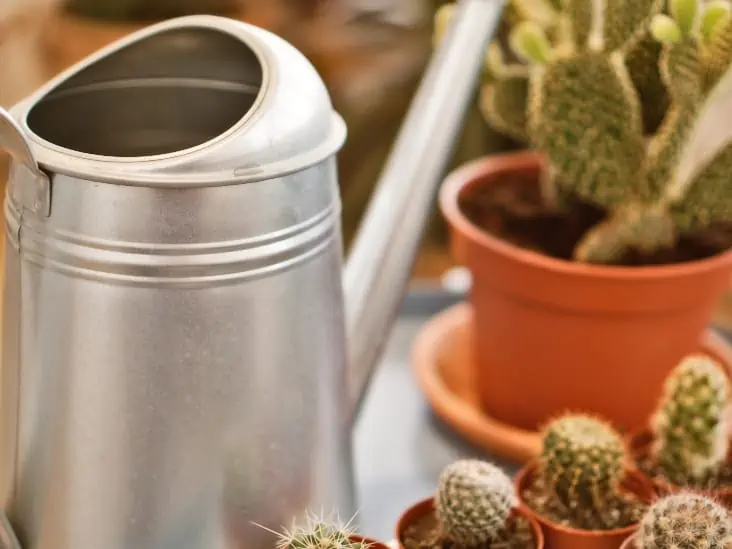
Watering a cactus.
Always water your desert orchid deeply and allow the soil to dry out completely before watering again.

The best time to water your succulent is in the morning or early afternoon. Avoid watering late in the evening because this can lead to root rot due to overnight dampness.

Stop watering and fertilizing your plant during winter. This will help the desert orchid stay dormant and prepare it for the active growing season.

Light Requirements

For optimal growth, your desert orchid needs lots of bright, indirect light throughout the year.

Consider positioning it on a south-facing window where it can get at least five hours of direct sunlight daily.

If you live in an area with extremely hot summers, use a sheer curtain to protect the plant from intense sun rays.

Alternatively, you can use artificial lights such as LEDs or fluorescent bulbs to provide your desert orchid with bright light throughout the year.

Place it about ten inches away from the bulb and ensure it is switched on for at least 14 hours daily.

You may notice leggy growth if your desert orchid isn’t receiving enough light. The presence of yellow leaves or signs of wilted growth clearly indicates too much light exposure.

With the right amount of light, your desert orchid should have light or dark green leaves and stems with a slight red tinge on the edges.

A blooming cactus.
Your desert orchid needs lots of bright, indirect light throughout the year.

During winter, move your plant to a room that doesn’t receive much light because it is dormant. You can turn off the artificial lights completely or reduce the amount of time they are turned on to about five hours a day.

Temperature and Humidity Requirements

The desert orchid prefers temperatures of between 65 and 75 degrees Fahrenheit during the active growing season.

Ensure your plant is not subjected to cold drafts or temperatures below 50 F. If this happens, leaves can start wilting and eventually die.

During winter, allow the temperature to drop as low as 50 degrees Fahrenheit, but not lower than that. This will help it stay dormant until spring when it bursts into life again.

The succulent thrives in moderate humidity. When grown indoors, maintain relative humidity between 40 to 50 percent.

You can boost humidity around the growing area by placing the growing container on wet rocks.

Fertilizing

During the active growing season, you should fertilize your desert orchid once every month using a high-phosphorous fertilizer such as 20-20-20. This will help encourage blooming and promote lush foliage growth.

Always dilute the fertilizer according to the instructions on the package.

Apply it on moist soil and avoid direct contact with the plant since too much fertilizer can cause salt build-up, which is toxic to your succulent.

Stop fertilizing two weeks before winter arrives to help the succulent go dormant. You can provide a light fertilizer dose during summer or spring if you need to boost your plant’s growth.

Repotting

Opinions on when to repot orchid cactus vary greatly depending on whom you ask.

Some people believe repotting should be done every two or three years, while others believe the desert orchid can survive up to seven years in one pot.

Consider repotting your desert orchid every two or three years to keep the potting mix fresh and give the plant plenty of nutrients for growth. Repot during spring before the active growing season.

When repotting, move just one container size larger. For instance, if you are repotting a plant in an 8-inch pot, move it to a nine or 10-inch container. This will prevent your desert orchid from getting rootbound.

Also, use fresh soil during repotting because old soil can contain pests and diseases that will harm your succulent.

Pruning and Propagation

Prune your desert orchid regularly to ensure that it retains its characteristic compact shape. Pruning also helps encourage blooms in late spring or early summer.

Use sharp, clean pruners to avoid damaging your succulent. When propagating the cuttings, note that desert orchids are slow growers and may take up to six months before showing signs of life.

A golden barrel cactus on hand being repot.
Pruning also helps encourage blooms in late spring or early summer.

Use cuttings with a minimum of four segments for maximum chances of success. Let the cutting callous for about a week before inserting it into moist soil. Place in bright, indirect light and keep the soil constantly moist.

Pests and Diseases

Look out for aphids, mealybugs, spider mites, and other pests. You can use a mild insecticide or neem oil to get rid of them or simply remove them by hand.

Common diseases affecting desert orchids include root rot and powdery mildew. Keep the soil moist but not soaking wet to prevent root rot, and use a pot with drainage holes for proper air circulation.

Powdery mildew is caused by humidity levels that are too high, so maintain moderate humidity around your succulent.

These diseases can be treated using fungicides or copper-based chemicals. Consult with a professional for the right product to use on your succulent.

Summary

Caring for a desert orchid requires dedication and patience. Follow the tips in this guide, and you’ll be able to maintain a healthy, lush-looking succulent all year round.

Don’t forget to observe proper watering schedules, light requirements, temperature, humidity levels, and appropriate fertilizing and repotting.

If you notice any signs of pests or diseases, act immediately to avoid further damage to your succulent. With the right care, you’ll be able to enjoy a beautiful desert orchid for many years.

Why Euphorbia Obesa Is the Perfect Addition to Your Cacti Collection

A euphorbia obesa in a pot.

Commonly referred to as a “baseball plant,” Euphorbia obesa resembles a ball more than a plant. This succulent cactus boasts a unique, symmetrical shape comprised of green ridges and is native to South Africa. While it looks fragile, Euphorbia obesa is quite resilient and hardy—making it an ideal plant for novice gardeners or those looking for a low-maintenance succulent. The succulent is dioecious, meaning that male and female flowers grow on separate plants, but both are equally showy. Euphorbia obesa is an easy-to-care-for succulent that can be grown indoors or outdoors.

So, what makes Euphorbia obesa a perfect addition to your cacti collection? The succulent has a unique shape that makes it an interesting conversation starter. Its symmetrical ridges appeal to the eye and catch the attention of anyone who views it. Euphorbia obesa is a low-maintenance succulent that can thrive with minimal maintenance. This species is relatively rare and not as commonly found as other cacti, adding an element of uniqueness to your collection. The plant develops striking geometric patterns and distinctive ridges as it ages, adding character and visual interest over time.

This blog post highlights why Euphorbia obesa is an excellent addition to your plant collection and why you should consider this succulent for your home garden. Read on to learn more.

Euphorbia obesa: Overview

People call it a “baseball plant” due to its shape. It is plain and thornless, unlike other types of cacti. Being circular, the cacti usually have a diameter of between 6cm and 16cm, depending on its age.

The cactus is native to South Africa, and while its thick, smooth ridges give it an appearance of fragility, it is pretty hardy.

As a low-maintenance succulent, Euphorbia obesa requires little water and can thrive indoors or outdoors – making it perfect for novice gardeners or busy individuals looking for a low-maintenance houseplant.

A Euphorbia obesa.
People call it a “baseball plant” due to its shape.

The succulent is dioecious, meaning that male and female flowers grow on separate plants. Both sexes bear flowers with yellow-tipped petals, but the female flower produces red or purple bracts, which will later yield small fruits.

As the plant ages, it may develop geometric patterns and ridges, adding character to its appearance.

In its natural habitat, Euphorbia obesa is a disease-resistant plant that can survive in temperatures ranging from 20°C to 28°C.

Why You Should Have Euphorbia obesa in Your Cacti Collection

Now that you have a good idea of what Euphorbia obesa is, here are some reasons why you should consider having this succulent in your cacti collection:

1. Distinctive Appearance

Euphorbia obesa earns its nickname (baseball plant) from its unique and striking spherical shape that closely resembles a baseball or small globe.

Its distinct appearance sets it apart from many other cacti, making it a captivating addition to any plant collection, especially for experienced gardeners seeking unique succulents.

The shape of Euphorbia obesa is not only visually appealing but also offers an intriguing opportunity for gardeners to experiment with various display options.

Its round form makes it an ideal focal point, whether placed as a centerpiece on a windowsill, in a succulent arrangement, or within a collection of cacti.

Its distinct shape creates a conversation piece that can’t help but draw attention and spark discussions among your visitors.

Beyond its initial appeal, the plant’s appearance evolves over time, enhancing its visual interest. As the succulent matures, it develops intricate geometric patterns and prominent ridges that encircle its spherical body.

Euphorbia Obesa in a pot.
Its distinct shape creates a conversation piece that can’t help but draw attention.

These patterns contribute to its unique charm, and watching these features emerge can be a rewarding experience for those who appreciate the subtle transformations that plants undergo.

When placed alongside other cacti or succulents with varying shapes and textures, Euphorbia obesa creates a visually dynamic contrast.

Its rounded form stands out against the spikier, more elongated shapes commonly found in many other succulents, adding an element of diversity and balance to your collection.

2. Beautiful Flowers

Euphorbia obesa is dioecious, meaning that male and female flowers grow on separate plants. Both sexes bear small yellow-tipped petals, but the female flower emits a soft red or purple bract that eventually yields small fruits.

These unique colors provide an intriguing contrast to the pale green ridges of the plant’s body.

While some cacti produce large and showy flowers, the modest blooms of Euphorbia obesa are small and subtle. The delicate, understated beauty of its blossoms is more enchanting when viewed up close.

The succulent usually blooms in late summer or early fall—when many other cacti are dormant.

The blooms remain attractive and colorful for an extended period, creating a beautiful addition to your plant collection during the cold season.

3. Uncommon Species

Euphorbia obesa holds a position of intrigue and rarity in the world of succulents.

Its classification as an uncommon species means that adding it to your plant collection presents a distinctive opportunity to cultivate a plant that is not as widely encountered as some of its more common counterparts.

Euphorbia in a pot on hand.
Euphorbia obesa holds a position of intrigue and rarity in the world of succulents.

For experienced gardeners and collectors who have amassed a variety of succulent plants over time, the allure of the unusual becomes increasingly appealing.

Euphorbia obesa’s status as a rare species adds a layer of exclusivity to your collection. It stands out not only for its captivating appearance but also for its scarcity among other cacti and succulents.

Pursuing rare and uncommon species can be a passion for many experienced gardeners.

Euphorbia obesa satisfies this craving by offering a unique chance to cultivate a plant that might not be readily available at local nurseries or garden centers.

As you share your collection with fellow enthusiasts, the rarity of the baseball plant becomes a topic of interest and admiration, allowing you to contribute to the diversity of plants within your gardening community.

Additionally, acquiring and caring for a less common species like Euphorbia obesa can offer educational insights and challenges.

Researching its specific care requirements and growth habits adds depth to your gardening knowledge, enriching your expertise and broadening your understanding of plant diversity.

Incorporating Euphorbia obesa into your collection showcases your discerning taste and contributes to preserving unique and lesser-known plant species.

The rarity of this species ensures that your garden becomes a canvas for showcasing the extraordinary and creating conversations around the beauty of the uncommon.

4. Low Maintenance

Euphorbia obese is a low-maintenance succulent that can thrive with minimal care. This species does not require frequent watering and prefers to be kept slightly dry.

It thrives in a well-draining soil mix and bright, indirect sunlight. This cactus can survive warm temperatures ranging from 20°C to 28°C, making it an ideal choice for gardeners in warmer climates.

Furthermore, its disease resistance nature makes it less prone to common pests and other plant-related ailments.

Euphorbia obesa is an ideal plant for beginner gardeners because its low-maintenance requirements make it an excellent choice for those who are just starting out or still building their collection.

Euphorbia Obesa exposed to sunlight.
Euphorbia obese is a low-maintenance succulent that can thrive with minimal care.

It can also be a suitable option for experienced gardeners looking for a low-maintenance yet unique addition to their existing plant collection.

5. Conversation Starter

Euphorbia obesa’s unusual shape often sparks conversations among enthusiasts and visitors, making it a great focal point for any garden.

Its eye-catching visual appeal and rarity make it a perfect centerpiece for succulent arrangements or mixed collections of cacti.

The succulent’s distinct features also provide an opportunity to learn more about its cultural history and botanical background. Its African origin is reflected in its scientific and common names.

Learning more about its cultural background can be an enjoyable and enlightening experience for both novice and experienced gardeners.

6. Educational Value

Euphorbia obesa’s growth patterns and adaptations can provide opportunities to learn about plant biology, adaptation to different environments, and the intricacies of succulent care.

Because of its unusual shape, it can also be a fun tool for teaching children about different species and the importance of natural diversity.

7. Fascinating Growth Patterns

Euphorbia obesa offers a captivating journey of growth and transformation that unfolds over time. This aspect of its development adds a layer of intrigue and ongoing visual interest for gardeners seeking dynamic additions to their collections.

As the succulent matures, it undergoes a series of changes in its appearance that contribute to its unique charm.

One of the most fascinating features is the emergence of intricate geometric patterns and well-defined ridges that encircle its spherical form. These patterns create a mesmerizing visual texture, giving the plant an almost sculptural quality.

A euphorbia obesa.
Euphorbia obesa offers a captivating journey of growth and transformation that unfolds over time.

Observing the growth patterns of Euphorbia obesa becomes a rewarding experience as you witness the gradual evolution of the designs.

The contrast between the round body of the plant and the angular patterns that emerge adds depth and complexity to its overall aesthetic.

This transformation is a testament to the resilience and adaptability of succulent plants, and it provides a tangible connection to the natural processes of growth and change.

Final Thoughts

The baseball plant is a beautiful and unique succulent that adds a captivating look to any cacti or succulent collection.

Its unusual shape, uncommon rarity, and low-maintenance needs make it an ideal choice for seasoned gardeners or those just starting out.

Whether you’re seeking an eye-catching centerpiece for your garden or a conversation-starting addition to your collection, Euphorbia obesa is an excellent option.

Mammillaria Nejapensis: The Colorful and Resilient Cactus of the Desert

Mammillaria Nejapensis in a pot top view.

The Mammillaria nejapensis, commonly referred to as the silver arrow cactus or owl eye cactus, is a popular flowering cactus that belongs to the Cactaceae family. It is native to Mexico and usually forms globular stems with white, sharp spines. The spine length varies depending on the cultivar but averages about 2.5 cm. This cactus is also known for its bright and colourful flowers, which bloom in spring and summer, producing yellow-orange petals with a light pink centre.

So, what makes the Mammillaria nejapensis cactus so popular? The cactus is incredibly resilient and can withstand extreme temperatures. It is drought tolerant, preferring dry conditions but can also tolerate low temperatures. The Mammillaria nejapensis is relatively easy to care for, requiring just occasional watering and pruning of spines to thrive. It makes a great addition to any garden or backyard, especially in areas that experience high temperatures. Planting this cactus in sunnier spots will promote faster and more prolific flowering.

This blog post discusses everything you need to know about Mammillaria nejapensis. Read on to learn more about this resilient and colourful cactus and how to care for it.

Mammillaria Nejapensis: Quick Overview

The Mammillaria nejapensis cactus showcases a distinctive appearance that sets it apart from other cacti species.

It typically forms solitary or clustering globular stems, which can grow up to 10 centimetres in height and diameter. Its surface is covered with prominent, tightly packed tubercles, giving it a distinctive knobby texture.

Each tubercle features silvery-white or creamy-yellow radial spines that emerge in a star-like pattern, creating contrast against the cactus’ green body.

The central spines are darker and slightly longer than the radials. As the cactus matures, it may produce small, funnel-shaped flowers in shades of pink, white, or yellow, adding an elegant touch to its appearance.

Mammillaria Bocasana flowering in a pot.
Its surface is covered with prominent, tightly packed tubercles, giving it a distinctive knobby texture.

The cactus is native to Mexico. It primarily thrives in the arid and semi-arid climates of its natural habitat, characterized by rocky, well-draining soils and limited rainfall.

This cactus species can often be found growing in crevices between rocks or nestled under the protection of larger plants, making it well-adapted to survive in harsh and challenging conditions.

The Mammillaria nejapensis is a slow-growing cactus species that takes time to establish itself and mature. It tends to maintain a compact size, making it well-suited for container gardening and smaller spaces. Its clustered growth habit adds an interesting visual dynamic to your home garden.

Mammillaria Nejapensis: Classification

Mammillaria nejapensis belongs to the Cactaceae family and is closely related to other Mammillaria species, such as Mammillaria bombycina and Mammillaria pectinifera.

Despite belonging to the same genus, these cactus species have distinct characteristics that make them easily identifiable.

For example, the Mammillaria nejapensis has a distinctive globular form covered in tightly packed, white-and-yellow spines.

It can easily be distinguished from other cacti in its family due to its unique coloration and growth habit.

Mammillaria Nejapensis: Indoor or Outdoor Succulent?

Many people believe that Mammillaria nejapensis is an outdoor succulent, but it can also thrive indoors if the growth conditions are right.

The cactus thrives in an outdoor environment where it can get plenty of sunlight it needs to grow.

Mammillaria lasiacantha flowering.
It will greatly benefit from exposure to bright, direct sunlight.

If you must grow your Mammillaria nejapensis indoors, consider moving it outdoors during the warmer months. It will greatly benefit from exposure to bright, direct sunlight.

Whether grown indoors or outdoors, the most important things you need to pay close attention to include well-draining soil, proper watering, sunlight, temperature, and humidity.

Mammillaria Nejapensis: Flowering

This cactus usually flowers during spring and summer. The blooms are a combination of white, cream, and light pink colors. The flowers can be numerous, covering the entire top of the plant.

You can encourage blooming by holding back on your watering schedule during winter. Providing your plant with too much water during the cold season can deter flowering.

Applying fertilizer at quarter strength every two or three weeks during the active growing season may also encourage your Mammillaria nejapensis to set more flowers.

Mammillaria Nejapensis: Care Instructions

To properly care for the Mammillaria nejapensis cactus, you must provide the right environment and soil conditions. Below are some tips that will make your plant thrive:

1. Light Requirements

Mammillaria nejapensis generally thrives in properly lit environments. The amount of light your cactus receives will largely depend on whether it is grown indoors or outdoors.

If you are growing it indoors, choose the brightest spot in your house. A south or east-facing windowsill is a perfect spot for your cactus. A west-facing windowsill can still work perfectly.

Window spots are good because they are generally sunnier than other spots in your house. In fact, these spots receive the most sunlight from outdoors.

When choosing where to position your plant indoors, don’t hesitate to move it around a couple of times until you find the perfect spot. The primary objective is to ensure your cactus receives plenty of sunlight.

Mammillaria nejapensis exposed to sunlight.
If you are growing it indoors, choose the brightest spot in your house.

The cactus prefers an open spot with plenty of sunlight when grown outdoors. However, you need to ensure the plant is not completely exposed to intense heat because it can lead to irreversible sunburn.

Consider providing it with bright, partial shade during the hottest time of the day. In fact, you should consider positioning your Mammillaria nejapensis in a sunny spot with plenty of afternoon shade. It will thrive without any issues.

2. Soil Requirements

The Mammillaria nejapensis prefers well-draining soil, so avoid using regular soil or potting mix. An ideal soil mix for this cactus combines 60% pumice and 40% peat or compost.

You can either combine these materials on your own at home or purchase a mix of good quality from your local plant store.

Whether you purchase the medium or make your own at home, it is important to ensure that it has good drainage properties and enough room for the roots to breathe in.

A well-draining potting mix will ensure your plant’s roots remain healthy and won’t rot. It is also light and nutrient-rich, crucial for the growth and development of your Mammillaria nejapensis.

3. Water Requirements

Mammillaria nejapensis is a resilient cactus that can survive in harsh and challenging conditions. However, this doesn’t mean you shouldn’t water it regularly. It only means you should be careful with how much water you give.

For outdoor Mammillaria nejapensis, natural rain should take care of the plant’s watering needs if you don’t live in an arid area.

However, if it doesn’t, consider watering your cactus once a week during summer and once every two weeks during winter.

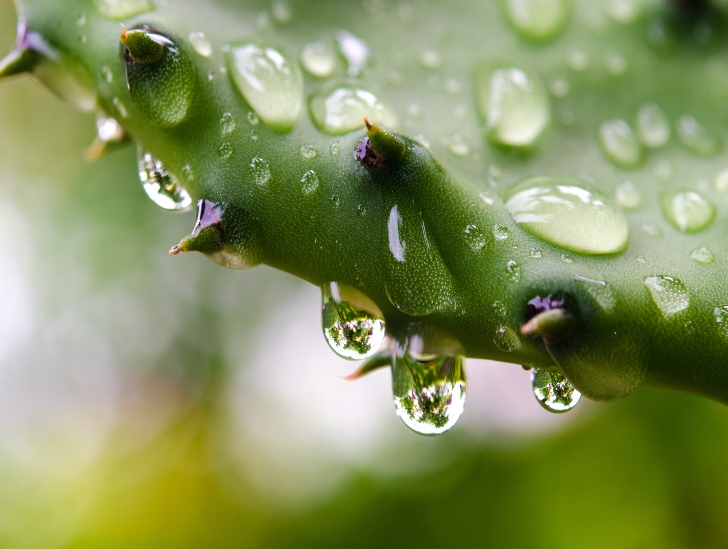
A water droplet in a cactus.
Mammillaria nejapensis is a resilient cactus that can survive in harsh and challenging conditions.

You should only water your Mammillaria nejapensis when necessary. Check for signs of moisture on the soil before you water your plant, and only do so if necessary.

Generally, you should wait until the soil is dry before watering it again. Also, consider allowing the water to drain off completely after each watering session.

Indoor Mammillaria nejapensis may not need to be watered as much as outdoor Mammillaria nejapensis, especially if it is not exposed to a lot of sunlight.

4. Frost Tolerance

The Mammillaria nejapensis can withstand winter frost only up to a certain point. The cactus can survive in temperatures as low as -5°C (23°F), but it may suffer damage if exposed to temperatures beyond this threshold.

Extremely cold temperatures can force the cactus into a state of dormancy, reducing its growth rate and making it appear less vibrant.

To avoid frost-related issues, consider keeping your Mammillaria nejapensis indoors during winter or in a greenhouse where the temperature and conditions can be easily controlled.

For gardeners living in areas that experience extremely harsh winters, it is highly recommended that you plant your Mammillaria nejapensis in containers. That way, you can easily move them indoors when outdoor temperatures fall below freezing.

If you cannot afford to bring your plants indoors during winter, consider protecting them using frost cloths.

Be sure to choose a good quality cloth that can withstand temperatures well below freezing without letting frost get through.

5. Feeding Requirements

Mammillaria nejapensis does not require frequent fertilizer application during its growth period, especially if you have already added a good amount of compost to the soil during sowing.

Mammillaria nejapensis top view in a pot.
Mammillaria nejapensis does not require frequent fertilizer application.

Once your cactus has grown for several months, consider feeding it with a balanced fertilizer like an 8-8-8 formula once every two weeks. This will provide the essential nutrients it needs for healthy growth and development.

6. Humidity Requirements

Mammillaria nejapensis is a very resilient cactus that can survive in dry climates. However, it still benefits from having the right amount of humidity in its environment.

If growing your Mammillaria nejapensis indoors, consider placing it on a pebble tray filled with water. This will provide extra humidity to the air, and your plant will greatly benefit from it.

In addition, consider misting the leaves of your cactus once or twice a week using lukewarm water. This will help to increase humidity levels and keep the plant healthy and vibrant.

Final Thoughts

Mammillaria nejapensis is an easy-to-care-for cactus that can grow indoors and outdoors. It requires plenty of bright, direct sunlight but should not be exposed to intense heat or frost.

So, if you are looking for a unique and easy-to-care-for cactus to add a touch of vibrancy to your home garden, the Mammillaria nejapensis is worth considering.

What Makes Lobivia Arachnacantha a Must-Have for Cactus Lovers?

Spider cactus on a rocky garden.

Calling all cactus lovers! If you’re searching for a new addition to your cactus collection that will captivate your heart and mesmerize your eyes, look no further than the Lobivia arachnacantha. Also known as the Spider Cactus or Arachnid Cactus, the Lobivia arachnacantha is a beautiful cactus species native to the high-altitude mountains of Bolivia. This stunning species is a true gem among cacti, boasting unique features, captivating growth habits, and a rich history.

So, what makes Lobivia arachnacantha a must-have for cactus lovers? One of the most remarkable features of this cactus is its unique spines that resemble delicate spider legs, giving it an otherworldly charm. The cactus boasts a compact and globular shape, making it a perfect choice for indoor and outdoor cultivation. The other intriguing aspect of the Lobivia arachnacantha is its unique growth habits. Unlike many cacti that grow solitary, this species tends to cluster, forming delightful clumps of spidery wonders. But what truly makes the Lobivia arachnacantha a must-have for any cactus enthusiast is its resilience and adaptability.

This blog post takes you on a journey into the world of the Lobivia arachnacantha, exploring its unique features, growth habits, and more. Read on to learn everything you need about this stunning cactus species.

Lobivia Arachnacantha: Quick Overview

Lobivia arachnacantha, commonly known as the Spider Cactus, belongs to the Cactaceae family and is a member of the Lobivia genus. It is characterized by its unique appearance and intriguing growth patterns.

Its name, derived from the Greek words “lobos,” meaning “lobe,” and “arachne,” meaning “spider,” perfectly captures its distinctive appearance.

The cactus features a globular or cylindrical shape, and its stem is covered in prominent tubercles, which are small, rounded projections. These tubercles give the cactus a textured and bumpy appearance.

Spider cactus on pots.
It is characterized by its unique appearance and intriguing growth patterns.

One of the most captivating features of this species is its striking supination. It generally has long, hair-like spines that emerge from the tubercles, resembling spider legs, hence the name “Spider Cactus.

Native to the high-altitude regions of Bolivia and Argentina, Lobivia arachnacantha thrives in rocky areas and arid environments.

It is well-adapted to withstand harsh conditions such as low rainfall and intense sunlight. This cactus has evolved to grow in altitudes ranging from 3,000 to 12,000 feet above sea level.

Lobivia arachnacantha is a slow-growing cactus species. It forms a solitary globular shape in its early stages, which elongates over time.

As it matures, it may produce offsets or “pups,” which grow around the base of the main plant. This allows the cactus to reproduce, forming a cluster of plants.

Lobivia arachnacantha plays an essential role in its ecosystem. As a native cactus species, it contributes to biodiversity and provides shelter for various tiny organisms.

Its flowers also serve as a valuable nectar source for pollinators, aiding in the reproduction of other plant species in its vicinity.

What Makes Lobivia Arachnacantha a Must-Have Plant for Cactus Lovers?

Now that you have a better understanding of the Lobivia arachnacantha let’s explore why it is such an attractive and desirable cactus species.

1. Distinctive Appearance

The Lobivia arachnacantha is an eye-catching cactus species. Its unique spherical shape and spidery spines give it a captivating appearance that sets it apart from other cacti. Its intricate web-like spines create a mesmerizing pattern resembling a spider’s web.

The visual effects mesmerize and enchants, creating a plant that draws attention and sparks conversation. As it grows, its spines continue to develop and expand, creating a dynamic and evolving visual display.

This growth pattern ensures the plant remains captivating and engaging, encouraging ongoing interest and admiration.

Spider cactus on a pot top view.
Its intricate web-like spines create a mesmerizing pattern resembling a spider’s web.

The contrasting colors of the spines against the cactus’s green body create a visually striking contrast that further emphasizes the spider web-like pattern.

When light plays across the surface, the spines can create fascinating shadows and highlights, adding depth and dimension to the plant’s appearance.

Due to its visually striking appearance, Lobivia arachnacantha can serve as the centerpiece of cactus displays, arrangements, or terrariums.

Its presence can anchor and enhance the overall aesthetics of a collection, drawing the eye and complementing other cacti species or decorative elements.

2. Compact Size

Lobivia arachnacantha typically remains relatively small, making it suitable for indoor cultivation or small spaces. Its compact size makes it easier to manage and care for than larger cactus species.

A mature Lobivia arachnacantha can reach a maximum height of 10-15cm, although this can vary depending on the environment and care.

Its size makes it ideal for container gardening or as accent plants in outdoor gardens.

Container gardening is a great way to express creativity and experiment with various design elements to create captivating displays.

The cactus may form offsets or “pups” around its base as it matures. This allows it to reproduce and create a cluster of visually appealing and space-saving plants.

3. Low Maintenance Requirements

Lobivia arachnacantha is a low-maintenance cactus species, making it a perfect option for novice gardening enthusiasts or busy gardeners.

It requires minimal attention and can survive in various environments and soil types as long as the surrounding environment is not too damp or humid.

Due to its native habitat, Lobivia arachnacantha is well adapted to withstand intense sunlight and low rainfall.

Spider cactus in a pot exposed to sunlight.
Lobivia arachnacantha is a low-maintenance cactus species.

As such, it can tolerate periods of drought and requires minimal watering once established.

It also does not require frequent pruning or maintenance since it grows slowly. The cactus can survive for long without fertilization and should only be fertilized when necessary.

4. Unique Growth Habits

Unlike other cacti species, Lobivia arachnacantha has some unique growth habits.

It generally grows in a globular shape and forms a solitary plant when young. As it matures, the cactus can produce offsets or “pups” around the base of the main plant. This allows it to reproduce and form clusters of plants that create an attractive visual display.

Lobivia arachnacantha’s pattern of growth makes it easier to propagate. The offsets from the parent plant can be removed and planted elsewhere, allowing it to spread quickly and easily.

It is also not uncommon for Lobivia arachnacantha plants to produce flowers. These flowers typically bloom between winter and spring, creating a burst of beauty and color.

5. Rare and Unusual

The spider web-like spines are quite uncommon in the cactus world, making Lobivia arachnacantha a rare and sought-after species among collectors who appreciate unique and unusual cacti.

Its rarity and uniqueness make it an ideal plant for those looking to build a distinctive collection of rare cacti species or add something special to their existing collection.

6. Charming Flowers

While the primary attraction is its spines, Lobivia arachnacantha produces vibrant and captivating flowers during the blooming season.

Typically, the Lobivia arachnacantha flowers during spring or summer add a touch of color and life to the plant’s overall appearance.

A spider cactus blooming.
They usually have a trumpet-shaped form and may be solitary or clustered together in bunches.

Depending on the cultivar, the flowers can be red, yellow, orange, or white. They usually have a trumpet-shaped form and may be solitary or clustered together in bunches.

These flowers are highly attractive to pollinators such as bees and butterflies and serve a critical role in the environment since they produce nectar.

7. Ideal for Container Growth

Due to its small size, Lobivia arachnacantha can thrive in containers, making it an excellent choice for enthusiasts who enjoy creating visually appealing cactus arrangements and miniature gardens.

Container gardening also offers greater flexibility since the plant can be easily moved and repositioned to suit your aesthetic needs or environmental conditions.

Moreover, containers provide drainage for excess water that may accumulate in soils with poor aeration and thus prevent root rot and other diseases from developing.

However, you need to be careful with the type of container you use to ensure that the plant has enough space to grow and that its roots are not constricted.

8. Having the Cactus in Your Home Contributes to Conservation

Many species within the Lobivia genus, including Lobivia arachnacantha, are threatened in their natural habitats due to habitat loss and illegal collection.

By cultivating and propagating Lobivia arachnacantha, cactus enthusiasts can contribute to the conservation of this unique and valuable species.

Not only does this help ensure the survival of Lobivia arachnacantha, but it also raises awareness about its importance and encourages people to value and protect these rare species in their natural habitats.

9. Resilience and Adaptability

One of the main reasons that make the Lobivia arachnacantha a must-have for any cactus enthusiast is its resilience and adaptability.

It can survive in various climatic conditions since it is quite tolerant to temperature fluctuations and can withstand intense sunlight and low rainfall.

Close up image of spider cactus.
It can survive in various climatic conditions.

As such, it makes an ideal choice for both novice gardeners looking for a resilient cactus species that will add joy and beauty to a home garden.

Summary

The Lobivia arachnacantha is a stunning cactus species that comes with many benefits, making it a must-have for cactus enthusiasts. Its distinctive appearance and intriguing growth patterns provide visual intrigue and captivate the eye.

It is also low maintenance, compact in size, and rare – all traits that make it an ideal choice for those looking to add a unique element to their collection.

So, if you’re looking to bring something special and distinctive into your cactus arrangements, the Lobivia arachnacantha is worth considering.

How to Grow and Care for Melocactus Azureus: A Comprehensive Guide

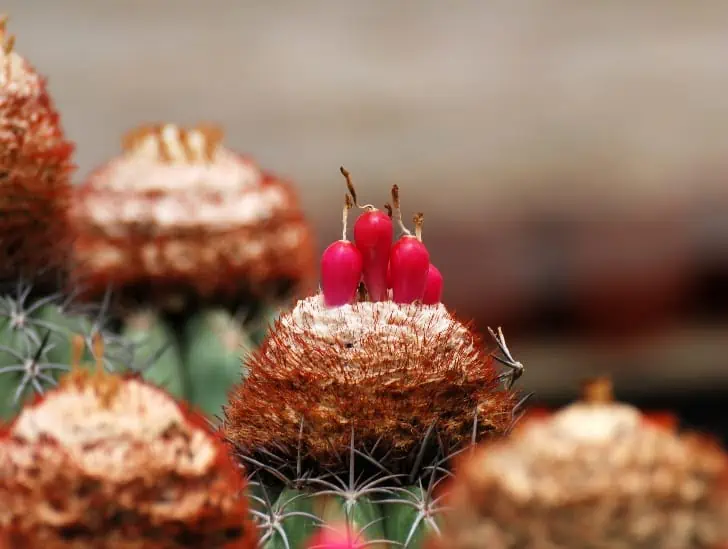
A closeup image of a Turks' Cap Cactus.

Melocactus Azureus, commonly referred to as the Turks’ Cap cactus, is a species of cacti native to South America. The cactus belongs to the genus Melocactus which consists of 40 different species. The Azureus species is usually dark green, oval and features nine to ten sharp ribs lined with spines. The cactus can reach up to seven inches tall and 5.5 inches wide. The Melocactus Azureus remains one of the most popular cacti choices for indoor or outdoor gardening since it requires little care and maintenance to thrive.

So, how do you care for and grow your Melocactus Azureus? Melocactus Azureus prefers bright, indirect sunlight. Place the cacti in an area where they can receive plenty of light but avoid direct exposure to the sun. The cactus requires frequent watering to thrive. Water it once every two or three days but ensure the soil is completely dry before watering. Melocactus Azureus requires relatively warm temperatures to stay healthy. Anything above 70 degrees Fahrenheit will do. Also, consider feeding it during the active growing season and repot every two or three years.

This blog post discusses everything you need to know about the Melocactus Azureus and how to care for it. Read on to learn more.

Melocactus Azureus: A Quick Overview

Melocactus Azureus, also known as the Turk’s Cap Cactus, is a globose species of cacti native to the tropical climate of Brazil. It has a striking frosty blue epidermis and can reach up to 50 cm tall.

The plant has several ribs with areoles that contain white to brown spines. It is winter-dormant and requires full sun for optimal growth.

It grows at a relatively medium speed and can take a couple of years to reach full maturity. The cactus flowers in late spring and summer producing pink to white flowers. When pollinated, these flowers transform into pepper-shaped fruits.

Turks' Cap Cactus in a pot.
It has a striking frosty blue epidermis and can reach up to 50 cm tall.

Although Melocactus Azureus has spines, they are not sharp and can be handled without protective gear.

This cacti species is a must-have for every succulent lover due to its unique appearance and low maintenance requirements.

How To Grow and Care for a Melocactus Azureus

Now that you have a basic understanding of the Melocactus Azureus, let’s look at how to care for and grow this striking cactus.

1. Selecting Your Plant

Everything starts with selecting the right plant for your garden. When selecting your Melocactus Azureus, look for one with evenly distributed spines free from visible damage or pests.

Also, make sure that the plant is firm and has a healthy appearance.

You must remember that the Melocactus Azureus is a slow-growing species, so you don’t need to be in a rush when selecting one. Take your time and pick a healthy plant that has the potential to grow for years in your garden.

2. Water Requirements

Unlike other cacti species, Melocactus azureus loves regular watering for it to stay healthy. This is perhaps because the species is native to the tropical climate of Brazil, which receives plenty of rainfall throughout the year.

Therefore, consider watering your cactus once every two or three days. However, you must check the soil before watering. Water only when the soil feels dry to avoid causing root rot.

Watering a pencil cactus.
You must check the soil before watering.

Using your finger or a wooden stick is the easiest way to check the soil. Stick it into the soil, and if you feel moisture, wait for the soil to dry before watering.

Cut back on your watering frequency during winter because the plant is winter-dormant and requires less water during this season. During this time, you can afford to water your plant once every week.

You should also pay close attention to the watering method you use. For Melocactus Azureus, the ideal method is bottom watering. This ensures that the water reaches all parts of the cacti and prevents root rot.

3. Light Requirements

Melocactus Azureus prefers bright but indirect sunlight. You should place your cactus in an area where it can get plenty of sun without any direct exposure to the burning rays of the sun. Too much direct sunlight can cause burns on the plant.

If you live in an area where the sun is too intense, you should place your cactus in a location that gets filtered sunlight. This will provide it with enough light and keep it from getting damaged.

However, this is only possible if you grow it outdoors. So, how can you achieve the same conditions for an indoor Melocactus azureus?

For an indoor cactus, find a spot in your house that receives plenty of direct sunlight for most time of the day.

turks' cap cactus exposed to sunlight.
You should place your cactus in a location that gets filtered sunlight.

It can be a south or east-facing windowsill or balcony. The primary objective is to ensure that the plant is getting enough light.

Consider supplementing natural light with fluorescent lights for an extra boost. This will allow your cacti to receive the required amount of sunlight, even during winter when there are reduced daylight hours.

But you must be careful with the type of lights you use. Too much artificial light can also damage your cacti, so find a balance between natural and artificial lighting. Ideally, you should use lamps that emit full spectrum wavelength.

4. Temperature and Humidity

Closely related to the aspect of light is temperature and humidity. These two factors also play an essential role in the growth of your Melocactus Azureus.

The ideal temperature for this species is anywhere between 70 to 80 degrees Fahrenheit during the day and 60 degrees Fahrenheit at night. Anything higher or lower can be detrimental to its growth.

Regarding humidity, the ideal relative humidity for Melocactus Azureus is around 40 to 50%.

It means that it should not get too dry or too humid. Maintaining the right humidity level can be challenging, especially if you are growing your cacti indoors.

To increase the humidity levels in your home, try misting or using a small humidifier. This will keep the air moist and help your cactus absorb more water from the soil.

5. Soil Requirements

This cactus thrives in well-draining soils. The ideal soil should have a high proportion of organic matter along with some sand, gravel, and clay. You can also use a commercial cacti potting mix for the same purpose.

Once you have found the suitable soil, loosen it up so air and water can move freely through it. This will ensure that your Melocactus Azureus gets the right amount of moisture and nutrients.

A turks' cap cactus top view.
The ideal soil should have a high proportion of organic matter along with some sand, gravel, and clay.

Avoid growing cactus in regular garden soil because it doesn’t facilitate the fast draining of water.

You can easily make an appropriate soil mix for your cactus by combining three parts potting soil, one part sand, and one part perlite or vermiculite.

6. Fertilizing Requirements

The Melocactus Azureus does not require frequent fertilizing for it to thrive. You can feed your cactus once a year with a general-purpose or cacti fertilizer at half-strength. You can easily find the right fertilizer at your local plant store.

Ensure you dilute the fertilizer with clean water to suit your cactus. Keeping it at full strength could prove too strong for your cactus and might do more harm than good.

Consider fertilizing your cactus in spring or summer to aid growth. You don’t need to feed your plant during winter because it is usually dormant at this time.

Avoid over-fertilizing because it can cause the cactus to become unhealthy and weak.

7. Potting and Repotting

The Melocactus Azureus should be planted in a pot slightly bigger than its root ball size. This will allow it to spread and grow freely.

With time, the cactus will outgrow its current pot hence the need for repotting. Ideally, you should repot your Melocactus azureus every two or three years. When repotting, use the same soil mix as you did for planting or replace it with a fresh one if need be.

Avoid using regular garden soil because this species prefers well-draining soils. Also, avoid disturbing the roots too much during repotting because they are prone to rotting if left exposed for an extended period.

Turks Cap cactuses in a pot.
When repotting, use the same soil mix as you did for planting or replace it with a fresh one if need be.

The new pot must be slightly larger than the previous one to accommodate further growth. You can also use a bigger pot if you want your cactus to look fuller and more impressive.

8. Pruning

Lastly, you should keep an eye on the size of your Melocactus Azureus. The cacti can grow quite large hence the need for regular pruning and trimming.

To maintain a healthy look, remove any dead leaves or parts that look weak or diseased. This will help reduce losses in case of a disease outbreak and make your cactus look neater.

Be sure to use sharp and clean pruning shears when pruning your cactus. This will help keep the wounds small and prevent infection from setting in.

Summary

Taking care of a Melocactus Azureus requires you to provide it with the right growing conditions for optimal development.

That includes the right soil, humidity level, and fertilizing schedule, among other considerations.

With proper care and attention, your cactus can continue to thrive for many years. So, make sure you stick to the guidelines provided here for a healthy plant!

The Ultimate Guide to Caring for Your Toothpick Cactus

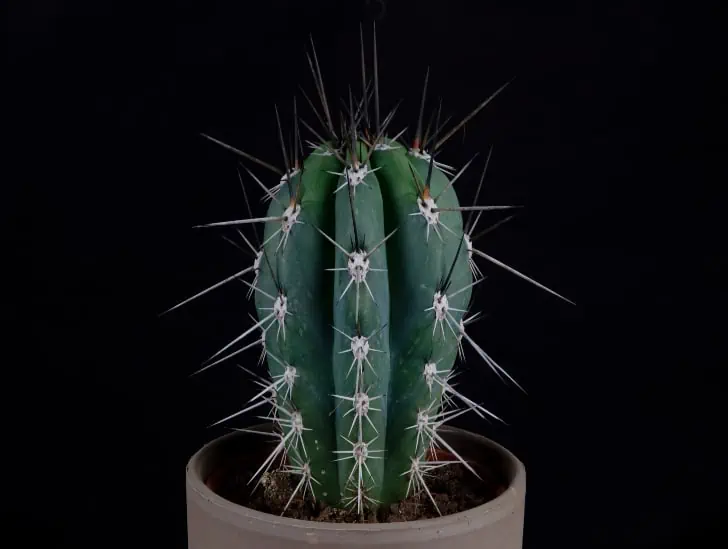
Toothpick cactus on a pot.

Native to Bolivia and Argentina, the Toothpick cactus sports a beautiful, fanned-out shape and delicate white flowers. This plant is unique in appearance and makes an excellent addition to any home. Its relatively long spines resemble a toothpick you would use on your teeth hence the name “Toothpick cactus.” The spines come in tight clusters of up to ten. Like any other cactus plant, the Toothpick cactus requires proper care to remain healthy and thrive in your home.

So, how do you care for a Toothpick cactus? To begin with, you will need to provide your Toothpick cactus with plenty of light. Your cactus should receive at least four hours of direct sunlight per day. Toothpick cacti love well-draining soil with plenty of gravel. The soil should have a good balance of nutrients and be slightly acidic, with a pH ranging from 5.5 to 6.5. It’s also important to water your Toothpick cactus regularly. However, moderation is key. Avoid over-watering because it can lead to irreversible damage. Feed your cactus with a well-balanced organic fertilizer during the active growing season. Be sure to follow the instructions on the packaging for application rates.

This blog post discusses everything you need to know about caring for your Toothpick cactus. Read on to learn more.

Toothpick Cactus: A Quick Overview of the Plant

Stetsonia coryne, commonly called the Toothpick cactus or Argentine cactus, is one of the most fascinating and eye-catching cacti species. The succulent is mainly cultivated as a houseplant in different parts of the world.

It features dense clusters of spines that resemble toothpicks. The cactus is native to the semi-deserts and deserts of Paraguay, Argentina, and Bolivia. The cactus can reach up to nine meters tall in its natural habitat, making it one of the tallest cacti species.

A toothpick cactus.
It is one of the most fascinating and eye-catching cacti species.

This cactus is a relatively slow-growing succulent that can take up to ten years to reach maturity. It produces branches that resemble candle flames and eventually bloom in late spring with white flowers.

Caring for Your Toothpick Cactus: Tips and Tricks

The key to a healthy Toothpick cactus is the right care. Here are some tips to help you keep your cactus thriving:

1. Watering

The Toothpick cactus is one of the best drought-tolerant succulents that doesn’t require frequent watering. The Toothpick Cactus can survive for several months with water. You only need to water it when the potting mix is completely dry.

Typically, you should water your cactus in the summer months and reduce the amount of water during winter. Make sure to use lukewarm water and not cold or hot.

When potted, water it slowly from the top and wait for it to flow to the bottom. Stop watering once you notice plenty of water flowing through the drainage holes. Don’t let it sit in excess water for too long because it can lead to root rot.

The cactus grows actively in spring, summer, and fall, sliding into dormancy during winter.

Consider watering it twice a week during the active growing season but cut it down to once a week or two weeks during winter.

The best type of water to use is rainwater or distilled water since it is free from chemicals and other contaminants that can harm your cactus.

A woman watering the cactus.
Don’t let it sit in excess water for too long because it can lead to root rot.

Avoid tap water since it contains chlorine and other minerals that can wreak havoc on your cactus.

Long-term use of tap water can lead to soil compaction. Do everything possible to avoid soil compaction since it can hinder the growth and development of your Toothpick cactus.

2. Light

The Toothpick cactus loves a lot of bright light and direct sunlight to stay healthy. Generally, it requires at least four hours of direct sunlight daily to thrive.

Place the plant near an east-facing window or outdoors in partial shade during summer. A south-facing windowsill can still be a good option if you don’t have an east-facing one.

You should avoid exposing your Toothpick cactus to extremely hot or cold temperatures because it could damage it.

If growing your cactus indoors, use artificial grow lights to ensure your plant gets enough light. This is especially important during winter when the days are shorter and natural sunlight is scarce.

Aim for at least eight hours of indirect sun or fluorescent light.

3. Temperature and Humidity

Closely related to the aspect of light is temperature and humidity. If you want your Toothpick cactus to thrive, it needs temperatures between 55-90°F (13-32 °C).

Regarding humidity, the Toothpick cactus thrives in dry conditions like its natural environment. It doesn’t require high humidity levels like other succulents.

Consider placing a shallow dish of water near the cactus to help increase humidity levels but keep it away from direct sunlight.

Alternatively, you can purchase a humidifier and set it up near the cactus. Be sure to monitor the levels of humidity. It is best not to have any extreme highs or lows.

4. Soil

Cacti plants thrive in well-draining soil that mimics the arid conditions of their natural habitat. The best type of soil for cacti is a mixture that provides good drainage while retaining some moisture.

Ideally, you want the soil to stay moist, not wet. You can purchase commercial soil from your local plant store or make your soil at home.

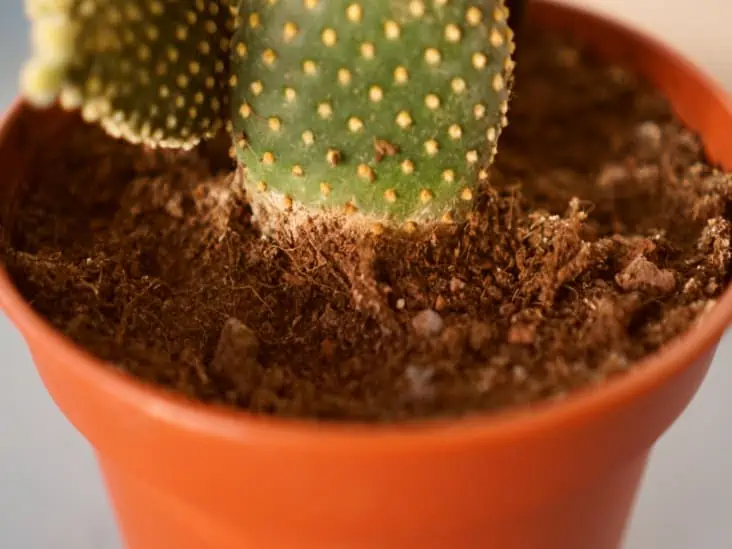
A cactus soil.
The best type of soil for cacti is a mixture that provides good drainage while retaining some moisture.

To make your cactus soil, consider using a mixture of standard potting soil and sand in a ratio of 2:1. It means that for every two parts of potting soil, add one part of sand.

You can also add some pumice or perlite for better drainage and aeration. You should avoid using too sandy or clay-like soils because they can cause root rot.

If growing outdoors, choose an area with sandy, well-draining soil. If growing indoors, repot your cactus every two to three years to refresh the soil.

5. Container

Closely related to the aspect of soil is the type of container. One of the most critical factors you must remember when choosing a container for your Toothpick cactus is drainage.

Always choose a pot with plenty of drainage holes to allow excess water to drain quickly. This prevents root rot, one of the most common problems for most cacti plants.

Choose a pot with plenty of room for your cactus to grow and spread its roots. Generally, bigger pots are always better than smaller ones since they allow the roots to spread.

You should also pay attention to the potting material. Ensure that the material used allows air to flow through it. Terracotta or ceramic containers work best because they have excellent drainage and aeration properties.

Avoid plastic pots as much as possible since they tend to trap moisture and can increase the risk of root rot.

6. Fertilizer

The Toothpick cactus doesn’t require much fertilizer, but it can benefit from a light application of liquid fertilizer once or twice a year during active growth periods (spring and summer).

Use a balanced fertilizer manufactured explicitly for cacti and succulents, such as 10-10-10 or 20-20-20. Make sure to read the instructions on the packaging and mix the fertilizer with equal parts of water.

Only fertilize your cactus during its active growing season, and never use a high-nitrogen fertilizer, as it can burn the plant’s roots.

7. Pruning

Pruning is not necessary for a toothpick cactus, but you should remove any dead or damaged stems or leaves that may be present.

You can also prune your cactus to control its shape and size. You can easily cut off excess growth with a sterile knife if your cactus is getting too tall or wide for its pot.

A lady finger cactus exposed to light.
You should remove any dead or damaged stems or leaves that may be present.

Be sure to sanitize the knife before use and wear gloves if you have sensitive skin. After pruning, let the cactus heal by keeping it dry for several days.

It would be best to avoid direct sunlight after pruning since it can cause damage to the plant’s exposed parts.

8. Repotting

Even though a Toothpick cactus is a relatively slow-growing plant, it may need repotting every two or three years.

Repotting your cactus is essential to provide fresh and nutrient-rich soil to continue growing healthy and strong.

It’s best to repot your cactus during its active growing season in the spring or summer. Choosing a pot one or two sizes larger than the current one is also essential.

For instance, if your cactus is currently in a 5-inch pot, choose a 6- or 7-inch pot for repotting. Make sure to use fresh and well-draining soil, as mentioned before.

Remove the cactus from its current container and shake off any excess soil when repotting.

A golden barrel cactus on hand being repot.
Repotting your cactus is essential to provide fresh and nutrient-rich soil.

After repotting, avoid direct sunlight for several days and keep the new soil consistently moist until your cactus has become established in its new home.

Summary

The Toothpick cactus is a low-maintenance succulent that doesn’t require much care.

To ensure the health and growth of your cactus, choose the right pot with lots of drainage holes, only use fertilizer during its active growing period, and report it every two to three years.

Your Toothpick cactus will surely thrive and bring you joy for many years with proper care and attention. Good luck!

Lady Finger Cactus: The Ultimate Care and Maintenance Guide

A lady finger cactus flowering.

The Lady Finger Cactus, also known as Gold Lace Lady Finger Cactus, is a relatively petite cactus native to Mexico. The cactus gets its name from its long and slender finger-like stems. With its delicate silhouette and beautiful golden spines, the Lady Finger Cactus adds an exotic charm to any home décor. However, you must take special care of your Lady Finger Cactus to ensure that it stays healthy and blooms.

So, how do you take care of a lady finger cactus? Typically, this cactus enjoys a slightly bright, sunny position on a south-facing windowsill. This is because it requires up to six hours of direct sunlight to thrive. Keep the temperature above 20 degrees Fahrenheit and be careful how often you water. Lady Finger Cactus likes dry, well-draining soil and should be watered once every two weeks. Too much water can cause root rot and other issues. Only water it when the soil is completely dry. You must also ensure that the potting mix in which you cultivate the Ladyfinger cactus is well-draining.

This blog post discusses how to care for a Ladyfinger Cactus in detail. Read on to find out everything you need to know.

Ladyfinger Cactus: An Overview

Before we dive into the details of caring for a Ladyfinger Cactus, let’s take a quick look at its background and most essential characteristics.

The Ladyfinger Cactus is native to central Mexico and grows in clusters of finger-like stems. This cactus has slender, bright green stems decorated with stunning golden spines.

The stems grow up to 15 inches in height. It produces fragrant white flowers between April and August.

Lady finger cactus in a brown pot.
This cactus has slender, bright green stems decorated with stunning golden spines.

In its natural habitat, this cactus can grow up to 6 feet tall, but it usually maxes out at around 15 inches when cultivated indoors.

Although rare, there are a few cultivars of this cactus that a determined cactus lover can find. The two most common cultivars are the Mammillaria elongata, commonly referred to as the monstrous ladyfinger cactus, and the Mammillaria elongata copper king cactus.

Ladyfinger Cactus Care Tips

Ladyfinger cacti are relatively easy to care for as long as you keep a few key points in mind. Here is what you need to know:

Light

As mentioned earlier, this cactus thrives in bright, direct light even when grown indoors. A south-facing windowsill with plenty of direct sunlight is the ideal spot to position your ladyfinger cactus indoors.

You can still position it on a west or east-facing windowsill if you don’t have a south-facing one.

Lady finger cactus exposed to sunlight.
This cactus thrives in bright, direct light even when grown indoors.

One of the most important things you need to remember is that a ladyfinger cactus won’t survive in low-light environments.

Therefore, consider installing artificial grow lights if your indoor environment doesn’t provide your cactus with enough light. These lights are quite easy to manage and will provide your cactus with enough light even in the dimmest apartment.

When grown outdoors, consider providing your ladyfinger cactus with access to full sun. However, be careful with how you introduce the succulent to increased light levels after winter to avoid sunburn.

Although this cactus loves a lot of direct sunlight, too much of it can permanently damage the plant.

Therefore, instead of sticking your ladyfinger cactus outside for a full day right away, start by introducing it to direct sunlight for a few hours in the morning.

Gradually increase the amount of direct light as the days go by until your cactus is used to full sun conditions.

Watering

The Ladyfinger cactus requires low levels of water to thrive. You should only water your cactus once every two weeks when the soil is completely dry.

Too much watering can lead to root rot, a fungal condition that affects succulents grown in damp environments.

To avoid this, ensure the potting mix you use to grow your Ladyfinger cactus is well-draining. Always stick your finger into the soil to check if it is still moist before watering. If it feels moist, wait for a couple of days to pass before checking again.

The watering method you use will also make a big difference. Consider watering the soil directly rather than misting or spraying the leaves since it can cause fungal diseases.
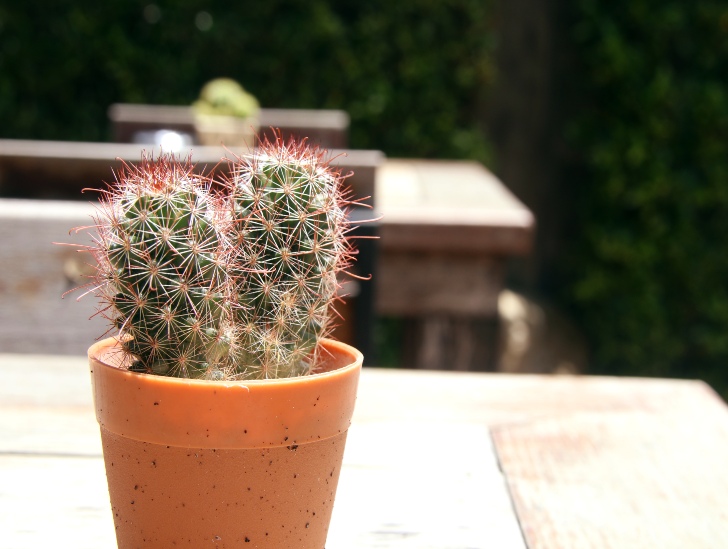
Alternatively, use the bottom-watering method, which involves placing the pot in a container of water and allowing the soil to absorb moisture from below.

This watering method ensures that your cactus is evenly watered without trapping too much moisture within the potting mix.

A water can beside the cactus.
Consider watering the soil directly rather than misting or spraying the leaves since it can cause fungal diseases.

The best time to water your ladyfinger cactus is in the morning since it allows the spines to dry off, reducing the chances of fungal diseases caused by excess moisture.

Avoid watering your cactus in the afternoon when the evaporation rate is high because your plant may not have enough time to absorb enough water before it evaporates. If you cannot water in the morning, consider watering in the evening.

Temperature & Humidity

Ladyfinger cacti thrive in hot and dry conditions. This cactus can survive temperatures of up to 90°F (32°C) but does best when the temperature is kept between 70-80°F (21-27°C).

Avoid exposing your Ladyfinger cactus to cold temperatures since it can cause the spines to drop off.

Humidity is not very important when growing a Ladyfinger cactus since it thrives in dry environments.

However, ensure you don’t expose your cactus to too much humidity because it can cause fungal diseases and other problems.

Soil

Like other cacti species, ladyfinger prefers well-draining soil. Remember, any form of excess moisture in the soil will eventually lead to root rot.

Therefore, you must do everything possible to ensure your ladyfinger cactus only sits in potting mix that allows excess water to drain away as fast as possible.

Avoid potting mix with huge amounts of water-retaining components such as peat moss, coconut coir, and clay.

Lady finger cactus planted.
If you purchase commercial soil, go for one explicitly labeled for use with succulents or cacti plants.

Your soil should only contain small amounts of these ingredients and large amounts of soil amendments such as coarse sand, perlite, and pumice.

If you purchase commercial soil, go for one explicitly labeled for use with succulents or cacti plants. This type of soil is specially manufactured to ensure it provides cacti plants with the best-growing medium.

If you cannot find a cactus mix readily available in your local garden center, consider making one yourself using the ingredients mentioned above.
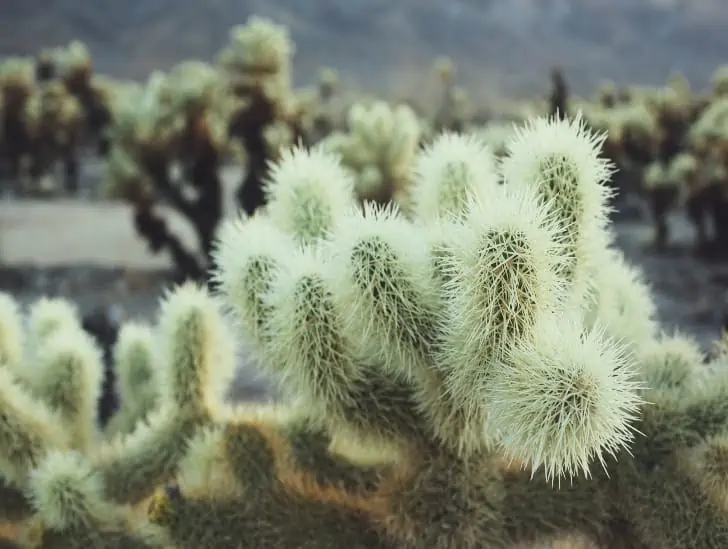
Growing Container

Once you have picked the correct type of soil, you must also choose the right container for your cactus.
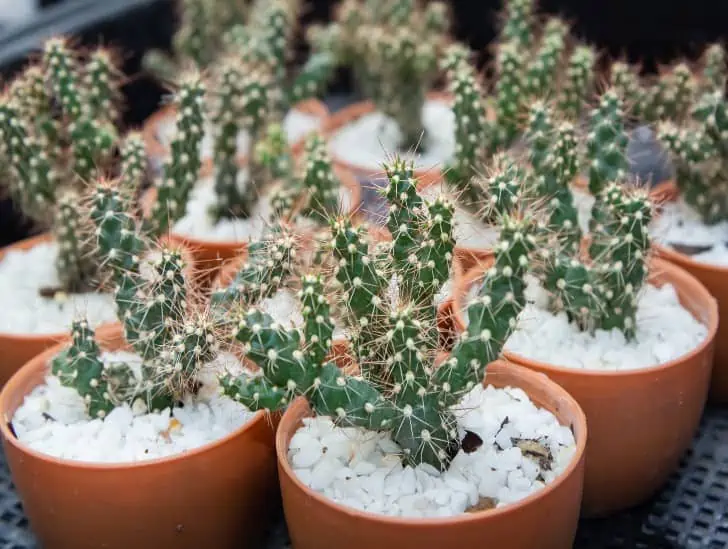
No matter how well-draining your potting mix may be, a container that does not have enough drainage holes will only cause your cactus to suffer.

Look for pots with several small drainage holes at the bottom and ensure they are large enough to allow excess water to escape easily.

You can use any type of pot you like, be it plastic, terracotta, or ceramic, but remember, the larger the pot, the more soil your cactus will have to absorb moisture.

Finally, pick a shallow and wide pot because ladyfinger cacti do not require too much depth.

Fertilizer

Give your Ladyfinger cactus a balanced liquid fertilizer every month or two during the active growing season. Be careful with the type of fertilizer you use since it can easily burn your cactus.

Always dilute the fertilizer to half its recommended strength before applying it to avoid nutrient toxicity and root damage.

Avoid fertilizing during winter when the plant is dormant to lower the chances of burning your cactus.

Pruning

A ladyfinger cactus does not require frequent pruning since it does not grow too tall and does not become too bushy.

However, you may want to occasionally trim off any dead or diseased stems and spines as they appear. This will help keep the cactus healthy and looking good always.

When pruning, make sure you wear gardening gloves and protective eyeglasses to avoid being hurt by the spines.

Propagation

The easiest way to propagate ladyfinger cacti is using stem cuttings. To do this, use a sharp knife or garden scissors to remove a healthy stem from the main plant.

Allow the cutting to sit for a few days to allow the wound to heal before planting it in well-draining soil.

Keep the cutting away from direct sunlight since it can cause sunburns and wait until you see new growth before watering.

Repotting

Your ladyfinger cactus requires re-potting every two or so years. This will help keep the soil fresh and give your cactus more space to grow.

When re-potting, make sure you use a pot slightly larger than the current one but don’t over-pot your cactus since this can cause root rot.

Lady finger cactus in a black pot.
When re-potting, make sure you use a pot slightly larger than the current one .

If you are re-potting into the same pot, make sure to replace some of the old soil with a fresh cactus mix.

Apply a modest amount of top dressing, such as gravel or sand, to improve drainage and enhance your plant’s beauty.

Summary

Growing a ladyfinger cactus is relatively easy, provided you understand its needs and take the necessary steps to meet them. Make sure you have the right type of soil, container, and fertilizer before planting your cactus.

Also, don’t forget to occasionally prune off dead stems and spines as they appear. Follow the tips mentioned above, and your cactus will give you plenty of years of enjoyment.

Cholla Cactus 101: A Look at 8 Different Species

Native to parts of North America and West Indies, the cholla cactus (Cylindropuntia sp.) is a member of the Opuntiaceae family. Most cholla cacti are densely covered in sharp, barbed needles called glochids. These glochids detach easily from the plant and can become lodged in the skin, causing irritation. Chollas are sometimes referred to as “jumping cacti” because the glochids can detach and become embedded in unsuspecting passersby.

There are more than 20 species of cholla cactus, including barrel cactus (Ferocactus cylindraceus), buckhorn cholla (Cylindropuntia acanthocarpa), chain-fruit cholla (Cylindropuntia fulgida), and Christmas cholla (Cylindropuntia leptocaulis). Others include pencil cholla (Cylindropuntia kleiniae), staghorn cholla (Cylindropuntia versicolor), and teddy bear cholla (Cylindropuntia bigelovii).

While all cholla cacti share some common characteristics, there are also some notable differences between the various species. This blog post will explore some of those differences and briefly overview each type of cholla cactus.

Cholla Cactus: An Overview

Before we dive into the different types of cholla cacti, let’s first take a look at some of the plant’s key characteristics. As we mentioned, chollas are members of the Opuntiaceae family and are native to North America and the West Indies.

Most species grow in arid or semi-arid environments, such as deserts and dry grasslands. They typically have a cylindrical shape and can range in height from a few inches to several feet. Many chollas are covered in sharp, barbed needles called glochids.

A cholla cactus in a pot.
Most species grow in arid or semi-arid environments, such as deserts and dry grasslands.

These glochids detach easily from the plant and can become lodged in the skin, causing irritation. This characteristic of Chollas have given them the name “jumping cacti”.

Different Types of Cholla Cactus

There are different types of Cholla cactus you’re likely to come across. They include:

1. Barrel Cactus (Ferocactus cylindraceus)

As its name suggests, the barrel cactus is shaped like a barrel. It is native to the southwestern United States and northwestern Mexico.

Barrel cacti can grow up to 6 feet tall and 3 feet wide. They are typically green in color, but some barrel cacti can also be yellow, red, or orange.

Barrel cacti have spines that are up to 2 inches long. The flowers of the barrel cactus are usually red, orange, or yellow.

One of the most notable differences between the barrel cactus and other types of cholla cactus is that they don’t have glochids. Instead, it has long, sharp spines that can cause serious injury if they come in direct contact with human skin.

In its natural habitat, the barrel cactus typically grows in desert climates. It is a slow-growing cactus that can live for hundreds of years.

2. Buckhorn Cholla (Cylindropuntia acanthocarpa)

Buckhorn cholla is native to the southwestern United States and northwestern Mexico. It gets its name from its fruit, which is shaped like a buck’s horn.

Buckhorn cholla typically grows to be between 3 and 5 feet tall. It has green stems that are covered in sharp spines. The flowers of buckhorn cholla are usually yellow, orange, or red.

A Buckhorn Cholla flowering.
It gets its name from its fruit, which is shaped like a buck’s horn.

Like barrel cactus, buckhorn cholla does not have glochids. Instead, it has long, sharp spines that can cause serious injury if they come in direct contact with your skin.

The Buckhorn cholla does well as an outdoor decorative plant in desert climates. It is a slow-growing cactus that can live for up to 50 years.

3. Jumping Cholla

The jumping cholla is a tree-like cactus native to the deserts of Arizona, California, and Mexico. It gets its name from the fact that its barbed spines can easily detach from the plant and become embedded in the skin of passing animals or humans.

Jumping cholla typically grows to be between 6 and 10 feet tall. It has green stems that are covered in sharp spines. The flowers of the jumping cholla are usually white, pink, or purple.

Close up image of a Cholla cactus.
It is also used for erosion control in desert areas.

Like other types of cholla cactus, jumping cholla does not have glochids. Instead, it has long, sharp spines that can cause serious injury if they come in direct contact with your skin.

The jumping cholla is not typically used as an ornamental plant due to its dangerous spines. However, it is sometimes used for erosion control in desert areas.

4. Cane Cholla

Native to Oklahoma, Arizona, and parts of Texas, the cane cholla is also known as a “walking stick” cactus because of its long, thin stems. It can grow up to 20 feet tall in the wild but is often much smaller when grown in a pot.

Cane cholla has green stems that are covered in sharp spines. The flowers of cane cholla are usually white, pink, or purple.

The cane cholla is not typically used as an ornamental plant due to its dangerous spines. However, it is sometimes used for erosion control in desert areas.

Besides animal dispersal, this cactus also spreads by breaking off at joints when it is brushed against. The broken segment of the cactus then sticks to animal fur or human clothing and is carried to a new location where it can take root and grow.

Some people have the cane cholla in their home gardens as an ornamental plant. However, this cactus is not recommended for home gardens because of its potential to spread and become invasive.

5. Christmas Cholla Cactus

Aptly named, the Christmas cholla cactus usually produces beautiful red berries around the holiday season. It is a small cactus that grows only about 2 feet tall.

The Christmas cholla cactus has green stems that are covered in sharp spines. The flowers of the Christmas cholla cactus are usually white, pink, or purple.

This type of cholla cactus thrives in both deserts and grasslands, making it a familiar sight in many home gardens. The Christmas cholla rapidly grows to colonize an area, making it somewhat of a nuisance if not kept in check.

Despite its menacing appearance, the Christmas cholla is actually a relatively harmless plant. However, the sharp spines can cause skin irritation if they come into contact with bare flesh. Handling this plant cautiously and wearing gloves when working around it is important.

Pruning the Christmas cactus is relatively easy and can be done with a sharp pair of shears or a pruning knife. Simply cut away any stems that are getting too long or out of control.

If you have pets or small children, keeping them away from the Christmas cholla cactus is important, as the spines can cause pain if they come into contact with skin.

6. Claret Cup (Echinocereus triglochidiatus)

The claret cup cactus is native to the southwestern United States and northwestern Mexico. It gets its name from the deep red color of its flowers, which bloom in early spring.

The claret cup cactus is a small plant that grows only about 2 feet tall. It has green stems that are covered in sharp spines. The flowers of the claret cup cactus are deep red and bloom in early spring.

Claret Cup flowering.
It gets its name from the deep red color of its flowers, which bloom in early spring.

It is one of the most popular cacti for gardens and landscaping because of its showy flowers and lack of water requirements. The claret cup cactus is easy to grow and care for and relatively resistant to pests and diseases.

Typically, it only requires watering about once a week and can even tolerate some drought conditions. It prefers full sun but can also grow in partial shade. It is important to plant the claret cup cactus in well-draining soil to avoid root rot.

The claret cup cactus is a beautiful plant that is easy to care for and makes a great addition to any garden or landscape.

7. Diamond Cholla

The diamond cholla is a type of cactus native to the deserts of Arizona and California. It is a member of the family Cactaceae, which includes all cacti. The diamond cholla gets its name from its diamond-shaped leaves.

Diamond Cholla can grow up to 12 feet tall and 6 feet wide. It has many small, sharp spines on its stems and leaves. The diamond cholla blooms in the spring and summer months. Its flowers are white or pink.

The fruit of this cactus is edible. So, if you’re wondering whether you can eat raw cactus, this is the answer. Diamond has a sweet taste and is often used in jams and jellies.

The diamond cholla is also a popular plant for landscaping. It is drought-tolerant and does not require much water to grow.

8. Staghorn Cholla

The staghorn cholla usually exhibits branching habits and is commonly seen in the deserts of Arizona and California. It gets its name from its antler-like branches, which are covered in sharp spines.

Cholla cactus bearing fruits.
It gets its name from its antler-like branches, which are covered in sharp spines.

The staghorn cholla typically grows to be about 2-3 feet tall. Its branches are green or blue-green and are covered in sharp spines. The flowers of this cactus are typically yellow or white.

The staghorn cholla is a popular plant for landscaping because it is easy to care for and does not require much water. It is also drought-tolerant. This cactus can be propagated from stem cuttings.

Summary

As you can see, there are many different types of cholla cacti. Each has its own unique appearance and characteristics. While they all fall under the cholla cactus family, each one is different. Be sure to do your research before you go out and purchase a cholla cactus!

8 Golden Rules for Watering Monkey Tail Cactus

Monkey tail cactus hanging.

The monkey tail cactus, also known as the rat tail cactus, is a succulent native to Mexico. This cactus gets its name from its long, thin, tail-like stems that can grow up to 3 feet in length.

The monkey tail cactus is a popular plant for indoor and outdoor gardens, as it is relatively easy to care for. However, one of the most challenging aspects of caring for this plant is watering it properly. One mistake can be fatal to the plant.

The first rule of thumb when watering any cactus is too little water rather than too much. Consider watering your monkey tail cactus once every two weeks during spring and summer and once every month during fall and winter. Make sure your planting pot has plenty of drainage holes to allow excess water to drain away properly. Also, remember that the monkey tail cactus is highly sensitive to fluoride and chlorine. So, if you are using tap water to water it, let it sit out for at least 24 hours to allow these chemicals to evaporate.

If you’ve just planted Monkey Tail Cactus for the first time and wondering how to water, this article is for you. We’ll discuss everything including watering your monkey tail cactus, including how often to water it, what type of water to use, and what to do if you think you’ve overwatered your plant. Read on!

Monkey Tail Cactus: General Water Requirements

One of the ways of caring for your monkey tail cactus is to adhere to strict watering requirement. So, what are those basics that apply when it comes to watering your Money Tail Cactus?

As a general rule of thumb, you should water your monkey tail once every two weeks during spring and summer and once every month during winter. However, these are just general guidelines.

A hanging monkey tail cactus
It is always better to err on the side of too little water rather than too much.

The actual frequency with which you water your plant will depend on various factors. Some of the things that play a role include the size of your pot, the type of potting mix you’re using, and the temperature and humidity levels in your home. You should also consider whether or not your plant is receiving enough light.

Generally, it is always better to err on the side of too little water rather than too much. Overwatering is one of the most common mistakes of caring for cacti and succulents, and it can be fatal to your plant.

So, if you’re unsure whether or not to water your monkey tail, it’s always better to wait a few extra days.

Keep in mind that it is relatively easy to revive an underwatered monkey tail cactus, but much more difficult to save an overwatered one.

If you think you may have overwatered your plant, carefully get the plant out of the pot and check the roots. If they are mushy or have started to rot, unfortunately, you cannot do much.

Golden Rules for Watering Monkey Tail Cacti

Now that we have covered the basics of watering monkey tail cacti, let’s go over some specific tips that will make you a pro.

Rule #1: Use the Right Type of Water for Your Monkey Tail Cactus

Ideally, you should use rainwater or distilled water for your plants. This is because tap water often contains high levels of fluoride and chlorine, which can harm your cactus.

If you cannot access rainwater or distilled water, the next best option is to let your tap water sit out for at least 24 hours before using it. This will allow the chemicals to evaporate.

A green rain barrel for plants.
You should use rainwater or distilled water for your plants.

Collect as much rainwater as possible during the rainy season and store it in a clean container for future use. This will ensure you never have to worry about using tap water, which is crucial to your plant health.

Rule #2: Water Your Monkey Tail in the Morning

The best time of day to water your monkey tail is in the morning. This is because the plant will have the entire day to absorb the water and dry out before nighttime.

Always aim for the hours between 6:00am to 10:00am for the best results. When temperatures are cooler, and there is higher humidity.

Watering your cactus in the evening can increase the risk of fungal diseases, as the plant will be sitting in moisture for several hours overnight.

If you cannot water your plant during this time frame, the next best option is to water in the late afternoon, around 4:00 pm.

Rule #3: Check the Soil Before Watering

Before watering your monkey tail cactus, checking the soil is always a good idea. The easiest way to check the soil for moisture is to stick your finger about an inch into the potting mix.

If the soil is dry, it’s time to water. If the soil is still damp, wait a few more days before watering again.

Another way to check the soil is to lift the pot. A pot that is light in weight means the plant is thirsty, while a heavier pot indicates that the plant still has enough moisture.

Monkey tail in a rocky soil.
Before watering your monkey tail cactus, checking the soil is always a good idea.

You can also purchase a moisture meter, which will help you to gauge more accurately when your plant needs water. The moisture meter is usually calibrated to show the percentage of water in the soil, so all you need to do is insert it into the potting mix and read the display.

A meter that reads “dry” means it is time to water, while a reading of “moist” or “wet” means the plant is still hydrated.

Rule #4: Do Not Water on a Schedule

One of the most common mistakes of watering plants is sticking to a rigid schedule. Just because it’s been two weeks since you last watered your monkey tail cactus doesn’t mean it’s time to water again.

The watering frequency will vary depending on the time of year, the size of the pot, the type of potting mix, and the temperature and humidity levels in your home.

In general, smaller pots will need to be watered more frequently than larger pots, and pots placed in direct sunlight need to be watered more often than those in shaded areas.

During the hot summer months, your monkey tail cactus will need to be watered more frequently than during the cooler winter months.

The best way to water your plant is to check the soil before watering and only water when the soil is dry. This may mean watering once a week, or it may mean watering every few days.

The key is paying attention to your plant and water when needed, not on a schedule.

Rule #5: Avoid Getting Water on the Plant’s Foliage

When watering your monkey tail cactus, be careful not to get water on the plant’s foliage. This can cause the plant to rot.

Instead, water at the base of the plant, saturating the potting mix. If possible, use a watering can with a long spout to direct the water exactly where you want it to go.

If you get water on the plant’s foliage, remove any excess moisture with a clean, dry cloth.

Rule #6: Ensure Your Planting Pot Has Plenty of Drainage Holes

Your pot must have adequate drainage to prevent the roots of your monkey tail cactus from rotting.

If you are unsure whether your pot has enough drainage holes, add a few more. It is better to err on the side of too many holes than not enough.

Monkey tail in a pot.
If you are unsure whether your pot has enough drainage holes.

To test drainage, fill the pot with water and then empty it out after a few minutes. If the pot drains quickly, it has adequate drainage. If the water takes longer than five minutes to drain out, add a few more holes to the pot.

Rule #7: Choose the Right Watering Method

You can use different watering methods to water your monkey tail cactus, and the best method for you will depend on the size and type of pot you are using.

The easiest way to water small pots is to submerge the entire pot in a sink or basin of water. Allow the pot to soak for a few minutes, until the potting mix is saturated. Then, remove the pot from the water and allow any excess water to drain before placing it back in its spot.

For larger pots, you can use a watering can, or a garden hose fitted with a spray nozzle. Fill the pot with water, allowing it to soak until the potting mix is saturated, then remove any excess water from the saucer beneath the pot.

Rule #8: Use the Right Potting Mix

When potting or repotting your monkey tail cactus, be sure to use a potting mix designed for cacti and succulents. These mixes are usually light and airy, and they drain well.

A golden barrel cactus being repot.
Be sure to use a potting mix designed for cacti and succulents.

Do not use standard potting soil, as it will not drain properly and could cause your plant to rot.

When purchasing a potting mix, read the label and look for one specifically designed for cacti and succulents.

If you can’t find a potting mix specifically designed for cacti, you can make your own by mixing together equal parts sand, perlite, and potting soil.

Final Thoughts

Monkey tail is one of the easiest plants to care for if you do it right. Following these simple tips can keep your monkey tail cactus healthy and happy! Remember to only water when the soil is dry, and give your plant a good soaking each time you water it.

Avoid letting your plant sit in water, and empty the drip tray after each watering session. With just a little bit of care, your monkey tail cactus will thrive.