Cactus Fruit: How To Cut, Health Benefits, Tips, And Risks

Disclaimer: The author is not a medical doctor or veterinarian. The information presented is purely to share our experience and for entertainment purposes. As always, check with a doctor and/or veterinarian before making any health or nutrition decisions and consult with a doctor and/or veterinarian regarding any question or problem that you have. The author and blog disclaim liability for any damage, mishap, or injury that may occur from engaging in any activities or ideas from this site.

Cactus fruit is a staple produce item for many people in Mexico, especially during the summer when the fruit is at its most ripe. The fruit is widely available across Mexico as it grows wild, on plantations for mass production, and can even be grown at home.

What is cactus fruit? How to cut and eat cactus fruit? Cactus fruit refers to the fruit that grows on the prickly pear cactus, often called tunas. The fruit can be eaten after using a knife to score and then remove the skin. The fruit may be cut into chunks and eaten raw or is used as a key ingredient in many dishes and beverages.

The popularity of cactus fruit is growing outside of Mexico because of its delicious natural flavors, versatility, and health benefits. You may have heard of cactus fruit referred to as prickly pear or tuna fruit. If you do not know much about the fruit, how to eat it, or what to use it in this article will give you all you need to know.

All About the Prickly Pear and Its Fruit

A prickly pear cactus.
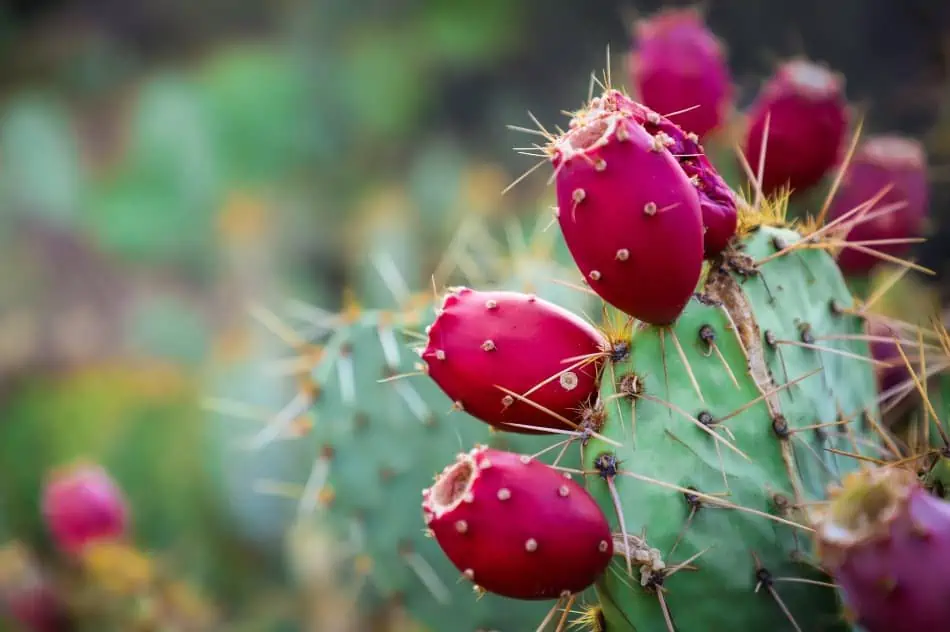
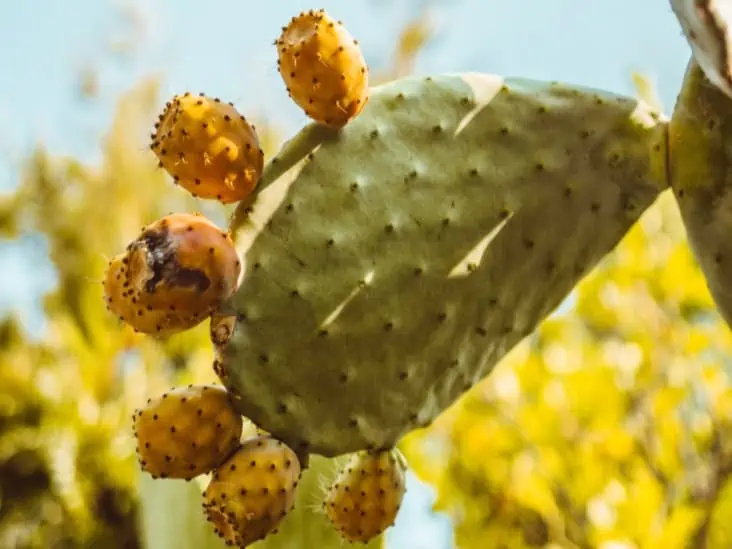
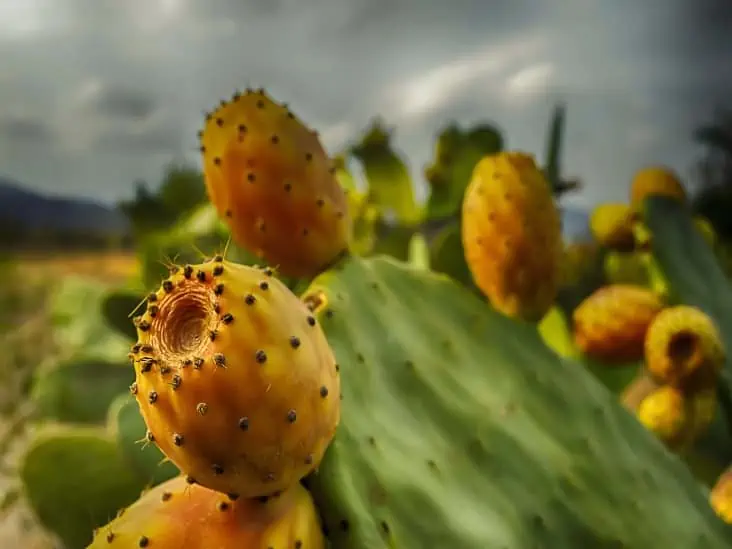
Prickly pear cactus bears fruit that might have yellowish-orange, green, or dark pinkish color.

Prickly pear cacti have flat, thick pads that look like large leaves, but actually function more like branches or stems to the plant. The pads are responsible for water storage, photosynthesis, and flower production. These pads are also known as nopales. Nopales are edible and often sold in stores under the name nopalito.

The fruits of prickly pears, more commonly known and sold in stores as tunas, vary based on the species of prickly pear. The cactus fruit will vary in size, with the largest varieties comparable to the size of a kiwi. The cactus fruit is round, with some varieties being longer and others more spherical. The color of cactus fruit can vary from shades of yellow, green, and deep magenta. The sweetness of the cactus fruit will depend largely on the color of its skin.

Yellow-green cactus fruits are the less sweet variety, but they are most popular in Mexico. In contrast, the deep magenta cactus fruits are very sweet; they are compared to bubblegum or syrup by some.

On both the cactus fruit and cactus pads are glochids, tiny, barbed spines. These spines can be difficult to see, making them extra bothersome if one is to stick to your skin. Glochids need to be removed entirely before consuming the cactus fruit, which will be explained further in the article!

Where Can You Get Cactus Fruit?

Cactus fruits can be store-bought or, depending on where you live, harvested fresh off the prickly pear cactus. Keep reading to know what to keep in mind while picking your cactus fruit!

Picking Cactus Fruit

A gloves.
To protect your hands from glochids and spines, wear safety gloves while handling cactus fruit.

For safety, protecting your hands is very important while picking cactus fruit. Because of spines on the cactus pads, and glochids on both the fruit and pads, you will not want to touch the cactus or its fruit with your bare hands.

To protect your hands, you can use:

  • Thick, protective gloves
  • A thick towel or cloth
  • A pair of long tongs

You will also need a durable bag or basket to safely hold the fruit until you get the chance to remove the glochids later.

No cactus fruit is poisonous, so all are safe to pick, but some will be better tasting and for cooking than others. You will want to look for the darker-skinned, sweeter fruits. Fruits of lighter color are less ripe and will taste less sweet. However, check darker fruits for any wrinkling or bruising that may suggest they are over-ripe. To pick the fruit off the plant, just grip and twist the fruit. Ripe fruits should come off without much force.

Store-Bought Cactus Fruit
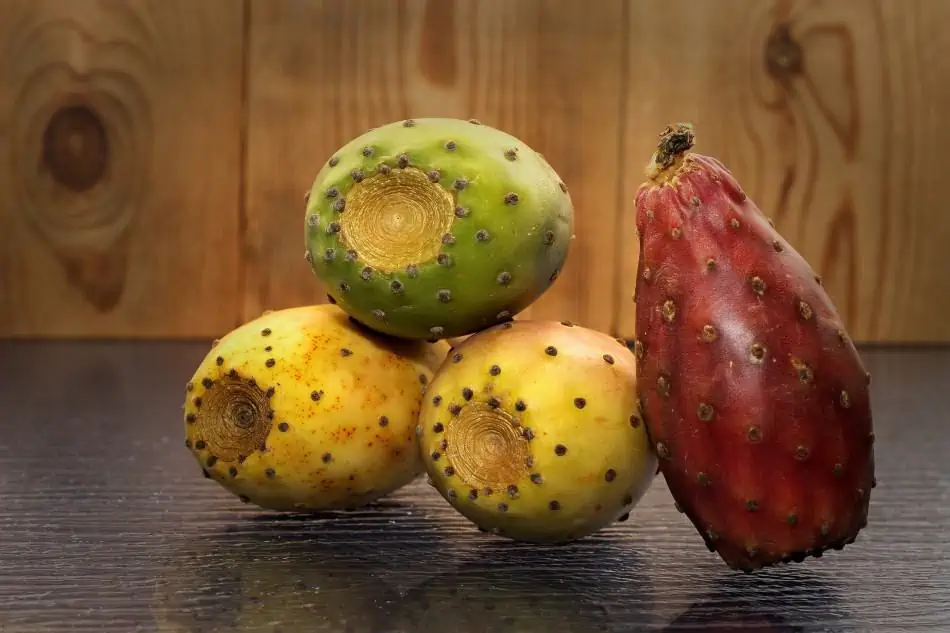
A cactus fruit.
If you do not want to waste time and energy on removing glochids, you can purchase the fruit in the store.

Store-bought cactus fruit will usually have the glochids removed before being put on the shelves. This makes picking up the cactus fruit at a store a convenient option. 

When shopping in your store’s produce section, you will want to be mindful of the color of the cactus fruit to get the sweetness you are looking for. Also, look out for any bruising that may have been caused by damage to the fruit during shipping or any wrinkling that may suggest the cactus fruit is overripe.

How to Remove the Glochids

A potato peeler, tape, glue and flame.
You can use household items to remove glochids from cactus fruit: potato peeler, flame, non-toxic glue, or tape.

Luckily, the skin of cactus fruit is not eaten. With the skin removed, it is highly unlikely any glochids would ever be consumed. Still, you will want to be very careful that there are no glochids on the fruit before you begin handling it.

Removing glochids is essential if you picked cactus fruit yourself. Again, store brought fruit is, in most cases, safe to handle already. Remember to pay attention to the tops and bottoms of the fruit, because the glochids are often more closely clustered there.

There are a few ways to go about removing the glochids. Pick one that is most convenient for you and what you have handy in your kitchen!

  1. A Potato Peeler. With thick gloves and a potato peeler, you can remove the glochids by cutting them off with the potato peeler.
  1. An Open Flame. A flame will singe off any glochids. You can take advantage of this by using a small flame and a long pair of tongs to hold the cactus fruit over it. Rotate the fruit carefully as not to burn the skin. Continue until all the glochids are removed.

The spots where the glochids are clustered and growing from getting darker when they have fallen off. Do not worry if you hear popping noises or see little sparks from the fruit as the glochids are coming off.

  1. Non-Toxic Elmer’s Glue. This method will use the stickiness of the glue to pluck the glochids off the fruit. Again, while using gloves, apply a thin layer of glue over the surface of the fruit. It may be helpful to use a small brush to apply the glue, as you cannot smooth the glue out with your hands. When the glue is visibly dry, peel it back gently, lifting the glochids from the cactus fruit’s skin.
  1. Tape. If you do not have glue, you can follow the same process using tape that has a non-toxic adhesive. Just secure the tape on to the fruit’s skin and gently peel back, removing the glochids.

Helpful Tip: If any glochids, especially the hard to see ones, do latch on to you, you can use the glue or tape method to remove them from the skin as well!

How to Thoroughly Wash Cactus Fruit
A person washing his hands.
Before consuming cactus fruit, it is crucial to thoroughly wash it and remove remaining glochids.

Washing the cactus fruit is important as is washing any fruit, but also because washing will further remove any of the finer, hard to see glochids.

If you picked your cactus fruit, you will want to make sure it is clean after coming in from outside. If you bought your cactus fruit you will want to make sure it is cleaned thoroughly after any shipping and handling and can ensure any glochids missed in large scale removal are washed away.

  1. Use a colander and place enough cactus fruit to fill only roughly halfway, the exact amount will vary with the size of your colander and cactus fruits.
  2. Rinse under cold water, gently swirling around the cactus fruit in the colander for at least thirty seconds to a minute. You can add fruit and vegetable wash to this step if you wish. Be careful to be abrasive enough that they are all moved around and rinsed thoroughly, but without bruising the fruit.
  3. When finished, lay out to dry or carefully pat dry.

How To Cut Cactus Fruit and Remove the Skin

A cactus fruit.
After getting rid of all glochids, you should cut the cactus fruit and remove the two layers.

Once your glochids are thoroughly removed, and the fruit is clean, you are ready to cut into it! Cutting a cactus fruit will mainly serve to remove the skin, revealing the delicious pear-shaped fruit inside.

The skin of the cactus fruit has two layers to it. This is important to know, so you are sure to remove the skin thoroughly. There is the thin outer layer of skin and attached to that is a thicker, softer layer around the fruit as well. The underneath layer may seem like part of the fruit as it has a pulp-like consistency, but it should be noticeably different than the fruit underneath, and it is attached to the outer layer, so it should easily peel off it with it.

  1. Start by slicing off the end of the fruit. Remove about a quarter of an inch off each end.
  2. Make four lengthwise slices in the skin from top to bottom. The slices should cut through the tough outer skin and the pulpy layer of skin underneath too.
  3. Now your skin should be divided into four sections. Starting from the top peel back each section one by one.

Once you have the cactus fruit peeled, how you eat it is up to you! Eating the fruit raw is very common. To do so, you can simply cut the fruit in half lengthwise and eat it with your hands, or you can enjoy it by chopping the fruit into cubes or slices.

When you cut open the cactus fruit, you will see that the center has small, round seeds. These seeds are tough and cannot be bitten through but are safe to consume. It is a personal preference if you choose to remove the seeds by scooping them out or spitting them out while eating or to eat the fruit and seeds in entirety simply. 

Health Benefits of Cactus Fruit

A person measuring her waist line.
Cactus fruit is a nutrient promoting weight loss, decreasing blood sugar levels, and improving digestion.

Like any other fruit, cactus fruit can be a healthy and nutritious part of any diet. Choosemyplate.gov recommends 2 cups of fruit a day for most women and men. Cactus fruit is a great way to get your daily fruit intake up!

Cactus fruit has many health benefits:

  • Cactus fruit is micronutrient dense.

Like all fruits, cactus fruit contains essential micronutrients. The cactus fruit is a source of iron, magnesium, vitamin C, potassium, calcium, and vitamin B6. Vitamin C and magnesium have the highest percentage values in a serving of cactus fruit.

  • Cactus fruit is a great weight-loss food.

As a food low in calories, but high in micronutrients, cactus fruit is a great choice for those looking to lose weight or maintain a healthy weight. The fiber found in the cactus fruit keeps people fuller for longer, a helpful component to weight loss.

  • Cactus fruit can improve digestion.

High levels of fiber and anti-inflammatory properties make the cactus fruit a great way to support proper digestion. The fruit can help food move along the digestive tract and be digested efficiently.

  • Cactus fruit is good for heart health.

The cactus fruit is a great source of fiber, which is why the fruit has been associated with lowering cholesterol. Soluble fiber may help lower total blood cholesterol levels and provide other heart benefits as well. (Source:mayoclinic.org)

  • Cactus fruit can decrease blood sugar levels.

Cactus fruit has been shown to decrease blood sugar levels, making this fruit a helpful dietary component for many people with diabetes. (Source:webmd.com)

Cosmetic Uses of Cactus Fruit

An oil being applied on the skin.
Olives derived from prickly pear are rich in vitamin E and can be used as a skincare product.

Just as the prickly pear cactus has an array of positive health effects when eaten, it can be a powerful ingredient in cosmetic products. Specifically, the oil derived from seeds found in the prickly pear cactus have become a major ingredient in many skincare products.

Prickly pear seed oil is high in vitamin E.  The oil has been found to have three times the vitamin E found in argan oil. (Source: munskin.com) Along with vitamin E the oil contains lower concentrations of other essential fatty acids, antioxidants, and vitamin K.

Prickly pear seed oil benefits the skin by reducing the appearance of fine lines, preventing the formation of wrinkles prematurely, brightening dark under-eye circles and reducing hyperpigmentation. Some find that the prickly pear oil’s antiinflammation properties can be of help to those who suffer from rosacea as well. (Source: victoriahealth.com)

Using prickly pear seed oil protects the skin’s barrier and increases moisture. The moisturizing properties of prickly pear seed oil can also benefit dry, damaged hair or dry, brittle nails, and cuticles.

The oil from prickly pear seeds in light and absorbs quickly when used. Unfortunately, prickly pear seed oil is among the costliest of beauty oils available. The price tag reflects the large amount of seeds that are required to exact even just an ounce of the oil.

Possible Side Effects and Risks

While cactus fruit has many potential health benefits, you should exercise caution introducing any new food into your diet, and the fruit is no exception.

Some side effects of eating prickly pear can include:

  • Nausea
  • Diarrhea
  • Increased stool volume and/or frequency
  • Headaches

When eating cactus fruit, be sure to practice healthy portions and proper washing for the safest possible experience. If you are pregnant, breastfeeding, or on any medication ask your doctor if cactus fruit is a safe addition to your diet and discuss possible consequences.

Ways to Eat Cactus Fruit

Cactus fruits on deserts, salads, and sweetener.
Cactus fruit can be used as a primary ingredient in salads, sorbet, syrup, jam, or gummy candy.

While cactus fruit is great when eaten raw, it can also make a great key ingredient in many delicious recipes. The sweet flavor of cactus fruit can be used in many different recipes and treat, ranging from simple to more complex. Here are a few ideas on how to use your cactus fruits in a new way!

  1. Add Cactus Fruit to Salad. Whether adding it into a fruit salad or as a sweet note in a savory salad, the cactus fruit mixes well with other fresh flavors. Adding cactus fruit to a salad brings in a kick of sweetness and pop of color to the dish.
  2. Fruit Jam. Cactus fruit can be a great base for a beautifully bright jam. The jam will store well and be a versatile item to have around the kitchen, going great with toast, on yogurt, in pastries, and more!
  3. Cactus Fruit Sorbet. A perfect summer treat to cool down with can be a scoop of sweet and brightly colored cactus fruit sorbet. Simply substitute cactus fruit, the main ingredient in your favorite sorbet recipe. You can even save from fresh cactus fruit to throw on top!
  4. Cactus Fruit Gummy Candy. The sweet taste of cactus fruit is reminiscent of candy naturally. By combining the fruit with pectin, added sugar, and optional ingredients, you can make your own gummy candy from the cactus fruit!
  5. Cactus Fruit Simple Syrup. By cooking prickly pear fruit down in a simple syrup recipe, you can create a fruity syrup that is perfect for adding to drinks or topping ice cream.

Drinks Made with Cactus Fruit

Drinks made from cactus fruits.
Cactus fruit can be used to make different drinks, including lemonade, aguas frescas, margaritas, and sangria.

Prickly pear syrup and juice are also commonly used to add flavor and sweetest to drink. Whether you prefer non-alcoholic options or want to add a boozy kick with the cactus fruit flavor, there is a drink option for everyone to try and enjoy.

Prickly pear juice or syrup are commonly added to:

  • Lemonade. The sweet flavor of the cactus fruit combines with the tartness of lemon to make a perfect balance of flavors. The combination is a mix of refreshing summery flavors everyone can enjoy.
  • Aguas Frescas. Aguas frescas, meaning cool waters, are non-alcoholic drinks made by mixing fruit juices, sugar or honey, and water. Cactus fruits are a perfect compliment to these sweet refreshments.
  • Margaritas. The sweetness of cactus fruit syrup pairs great with the sourness from lime juice and adds a pop of bright pink color that will surely make your margaritas stand out!
  • Sangria. Adding cubes of cactus fruit to this fruity drink only makes sense! You can add cactus fruit to your favorite sangria recipe or find a new recipe made just to compliment the fruit’s flavor. Popular ingredients in a cactus fruit sangria are white wine, citrus, and even mint leaves.

Different Types of Prickly Pear Cactus Fruit

As mentioned earlier, there are many species of prickly pear cactus, which is where the variation in fruit size, color, and taste comes from.

  • Indian Fig Prickly Pear. This is the most commonly known and consumed species of the prickly pear cactus. The fruits of this cactus vary in color yellow, to shades of pink and red. The fruits are very sweet and commonly used to make cactus fruit flavored candies, jellies, or drinks.
  • Spineless Prickly Pears. While this species does not have sharp spines, the glochids are still present on the cactus pads and fruits. This variety is very similar to the Indian fig prickly pear. Spineless prickly pears bear sweet fruit with flavor that is compared to kiwi. The fruits of this prickly pear cactus are smaller in size than most and contain smaller seeds than other varieties.
  • Purple Prickly Pear. These prickly pears are recognized for a beautiful, light purple hue on the pads. Cooler temperatures, drought, and other stresses on the plant will bring out the blue hue more significantly. The fruits of this prickly pear cactus are mildly sweet in taste.
  • Naranjona. Naranjona is a type of cactus fruit with a honey-sweet flavor that has a subtle spice to it. The texture is especially smooth. These cactus fruits are round and orange in color, which is where they get their name from. Naranja is the Spanish word for orange.
  • Juana. Juana cactus fruit, also called roja, are a notably tart variety. The juana cactus fruit is round and with purple and reddish toned skin. The seeds are this fruit are chewier than other varieties, making it preferable to some people who enjoy eating the raw fruit and seeds.
  • Xoconostle. This species of cactus fruit is very sour and best when used in cooking as opposed to being eaten fresh. This species is also unique in that it has an edible peel, which is sour as well. This cactus fruit may be used in sauces and as a spice. Xoconostle cactus fruit is small and a light yellowish green in color.

If you are interested in the fruit of the prickly pear cactus, knowing a bit about the different types can be helpful knowledge. Likewise, if you are following a recipe which uses prickly pear, be sure to get the suggested species or that the species you use compliments the recipe you are making.

Cooking the Pads of the Prickly Pear Cactus
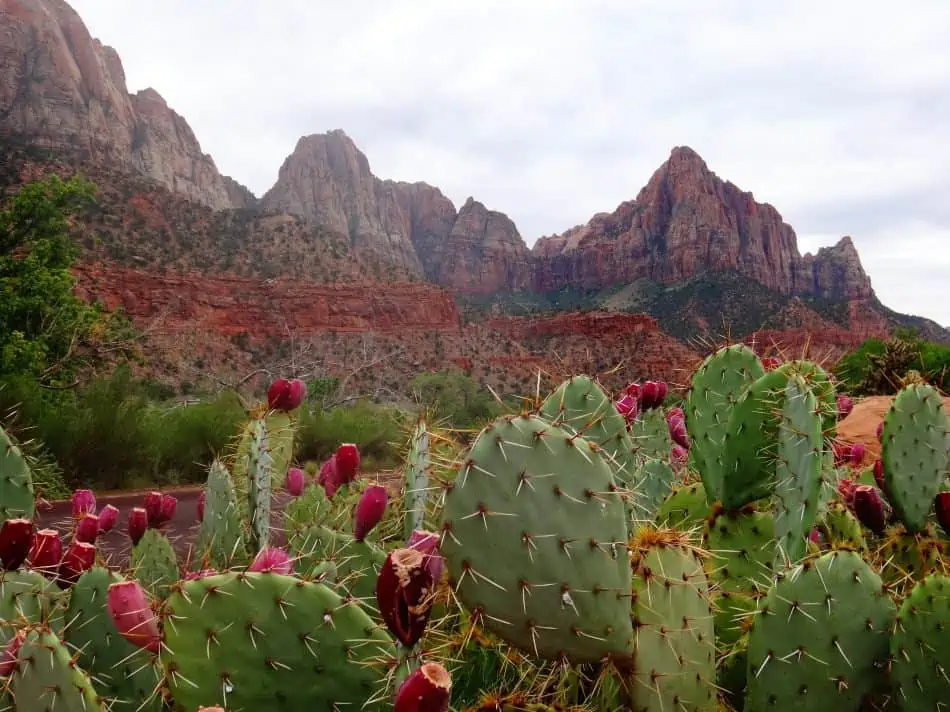
A prickly pear cactus bearing fruits.
Prickly pear pads can be used as a food ingredient. Nopales is a Mexican dish incorporating these cactus pads.

Just as the fruits of the prickly pear cactus are edible and commonly incorporated into Mexican cuisine, so are the pads of the cactus. As mentioned, they are sold as nopales or nopatilos and are eaten like a vegetable. The pads are thick and fleshy; some may even describe them as appearing slimy before being cooked.

When they are cooked, the flavor of nopales is comparable to green beans. For cooking, nopales are sold whole or can be found cut into strips or cubes for convenience.

Nopales can be cooked in a variety of ways:

  • Boiling Nopale. Boiling nopales may require multiple changes of water, because the sap in the pads is very thick and gets released during boiling. Once the nopale is soft and finished boiling, rinse the pads in cold water to remove any sap that may have been in the last batch of water.
  • Grilling Nopale. Grilled nopale is tender and should have slightly browned skin.
  • Sautéing Nopale. Sautéed nopale will be similar to grilled with a tender texture and browning on the skin.  
  • Steaming Nopale. Another method of cooking nopale is steaming. This will make the skin and insider texture entirely tender.

Once cooked nopales are very versatile and useful in a wide variety of dishes. Common ways of eating nopales include:

  • Tossing into salads
  • Cooking into stews and soups
  • Adding into omelets
  • Baked into breads
  • As a side serving of vegetables
  • Soaking the noaples in brine and using it as a condiment

Conclusion

Cacti are an intriguing group of plants that are unique in their appearance and resilience in tough terrain. Among cacti, the prickly pear cactus stands out on its own. With all of the uses and benefits from the plant’s fruit and pads, it is no wonder the little plant with a spiky, tough exterior is so widely consumed and enjoyed.

Interest in the cactus fruit is widely growing. Research continues to strengthen the relationship of cactus fruit consumption to health benefits, to the point some are beginning to argue it deserves the title of superfood. The cosmetic industry is just learning of its powerful cosmetic effects and finding new ways to incorporate the prickly pear’s seed oil into beneficial products for consumers.

A peeled prickly peared cactus fruit.
Research continues to strengthen the relationship of cactus fruit consumption to health benefits, to the point some are beginning to argue it deserves the title of superfood.

And of course, the traditional Mexican recipes of cactus fruit and the raw, natural flavor of the fruit are being enjoyed by more and more people. Likewise, those just discovering the fruit are sure to get creative and cultivate new, delicious recipes with it.

Whatever way you come to hear of cactus fruit, you now know what this little fruit is all about, and that it is more than just a passing fad on the market. Share your favorite way of eating or preparing cactus fruit with us below. We’d love to try it out!

What Is The White Hair On Some Cacti Plants? Introducing The “Old Man” Cactus

Cacti plants have different appearances depending on their species and where they grow. For instance, a jungle cactus such as the holiday cactus plant has a different appearance from the Saguaro plant that thrives in arid areas.  However, one cacti species that stands out from the rest is the Cephalocereus senilis that is covered in white hair.

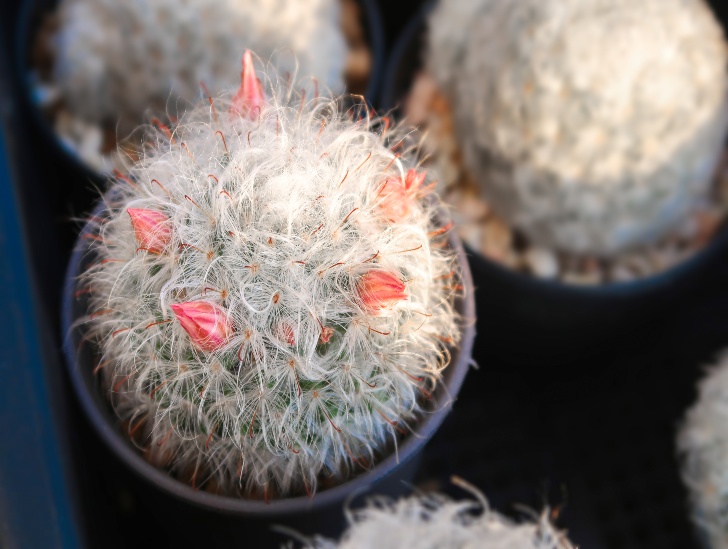
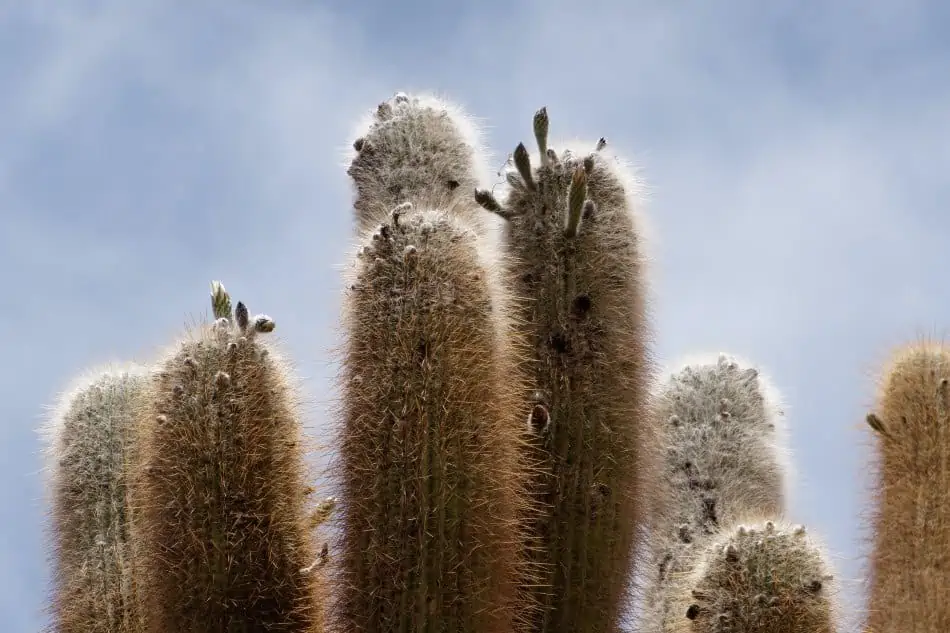
What is the white hair on some cacti plants?  The white-haired cactus plant is known as the “old man” cactus or Cephalocereus senilis. The most striking feature of this cactus is the shaggy coat of relatively long white hairs suggestive of unkempt hair on an old man. The coat is particularly noticeable in young plants. As the plant grows old, its stem begins to lose its covering, and some of the hairs start to fade away. Therefore, if your cactus plant is covered with white hairs, you could be cultivating the old man cactus plant.

In this post, we discuss everything you need to know about the old man cactus plant. Read on to find out where this beautiful grows, its optimum growing conditions, and how to take good care of it.

Why Cephalocereus Senilis Called The Old Man Cactus?

A matured old man cactus.
Due to white hairs all along the stems, Cephalocereus Senilis is commonly known as an Old Man Cactus.

Before we dive deep into other aspects of this plant, it is good to know why many people out there choose to call it the Old Man cactus.

One of the reasons why this plant is known as the Old Man cactus is obvious; the existence of long white hairs on the surface. After all, most of us associate white hair with old people. However, this is not the only reason why this plant attracted such a unique name.

Apart from the white hair, the plant is also incredibly long-lived. Typically, when grown in the wild, the Old Man cactus can live for as long as 200 years and grow to about 20 feet tall.

Cacti experts say that the primary reason why this plant can survive for such a long time is that its long, soft, and white hair protects it from both excessive heat and cold, which helps it to retain moisture for a relatively long period.

Although the relatively long hairs are quite soft, the plant still needs to be handled with a lot of care. The shaggy white hair covers sharp spines that can cause severe injuries when they penetrate your skin.

The species name of this plant (Senilis) is derived from Latin and loosely translates to “Old Man” in English.  The Old Man cactus is typically tall, thin, and its head and stem are covered with white hairs just like an old man.

Cephalocereus Senilis: A Brief Background

The Old Man cactus is a native of Mexico. It is one of the many species of cacti that grow in this country. The plant is also known as the Hoary Old Man cactus, and it thrives in semi-desert regions and rocky slopes at elevations of up to 5,900 feet above sea level.

The plant is a member of the family Cactaceae and the genus Cephalocereus. The Old Man cactus is closely related to other cacti species such as the Peruvian old man, Hedgehog cactus, and old man of Mexico. It blooms between April and May. The flowers are nocturnal and white or pale pink.

The Old Man cactus is one of the slowest-growing cacti. However, if you provide it with optimum growing conditions, it can grow up to 1 inch per year.

The plant can grow to a height of about 20 feet and a diameter of 2 feet. It typically takes between 50 and 60 years for the plant to reach its full potential size.

Growing an Old Man Cactus at Home

If you are looking for a beautiful houseplant with unique properties, then you should consider growing the Old Man cactus. Its unique appearance is quite reminiscent of an old man lightly cushioned by beautiful long wavy hair.

In this section, we cover some of the essential things you need to know about growing the Old Man cactus at home.

Cultivation

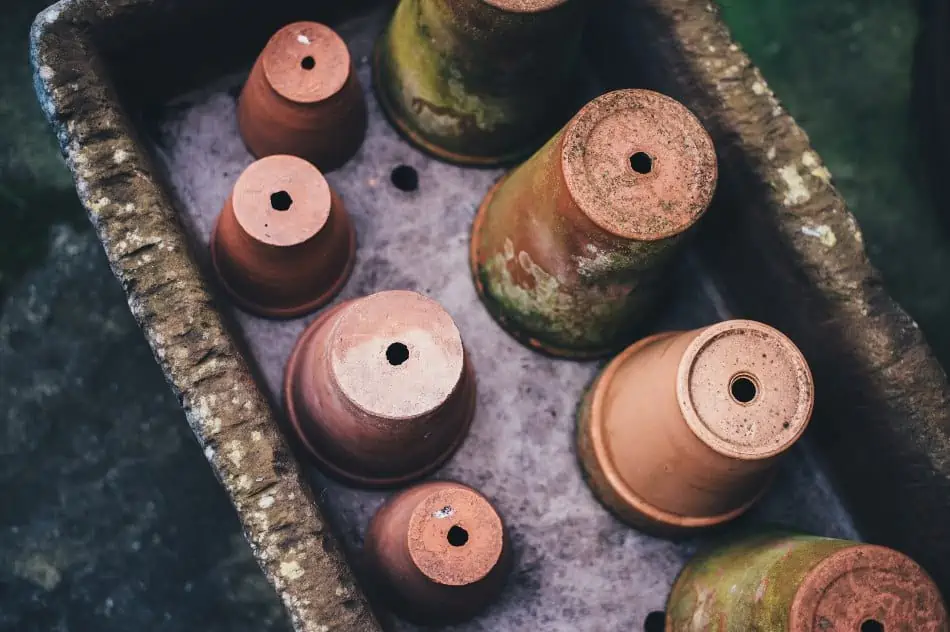
A pot with drainage hole.
Along with using suitable soil mix, you should select a pot with drainage holes for the soil to drain properly.

The Old Man cactus does well in fast-draining soil and full sun. If you prefer potting your plant, make sure you use a good potting mix, and the container should also have plenty of drainage holes to let out water pretty quickly.

You can purchase commercial soil or prepare your own potting mix by adding equal parts of pumice, perlite, or coarse sand to regular soil. If you are growing your plant outdoors, be sure to mix grit or sand with equal parts of native soil or compost to improve drainage.

The plant does well in slightly alkaline soil, so adding a handful of calcium to the soil at the planting time is an excellent way of keeping it happy.

When it comes to watering, make sure you water your Old Man cactus only when the potting mix is completely dry. During watering, soak the pot thoroughly and allow excess water to drain out as quickly as possible.

This plant requires very little fertilizer to thrive. Therefore, there is no need for overfeeding it because the results can be catastrophic. Always use a well-balanced water-soluble fertilizer once or twice a year to feed the plant.

Feeding should happen between April and October and make sure you dilute the fertilizer top its half strength.

Propagation

A top view of a soil, container and other gardening materials.
To propagate Old Man cactus, you should either use seeds or obtain fresh cuttings and root them in soil.

There are several ways of propagating Old Man cactus, but propagating from seed is the most effective way. In fact, some experts believe that it is the only way of propagating the plant. However, when kept indoors, these plants rarely produce any flowers or fruits, which make propagating from seed quite difficult.

Another way of propagating the plant is by removing and potting the small offsets that usually form at the base of the plant.

Be patient until the offsets are about two inches tall, and then break them off from the main plant. The good news is that pieces of any part of the Old Man cactus can easily grow into a new plant.

Once you take a cutting, let it cure for at least two days before rooting. This helps to prevent rotting.

Once the cutting form callus, carefully insert it into a mixture of half sand and half moist peat moss.  Position your container in a brightly light space, but make sure you are keeping your plant out of direct sunlight.

Keep in mind that it might sometime before you start noticing any significant growth. Just be patient and give your cuttings the best care possible.

Watering and Feeding

Water your Old Man cactus only when the potting mix is completely dry. During watering, soak the pot thoroughly and allow excess water to drain out as quickly as possible.

This plant requires very little fertilizer to thrive. Therefore, there is no need to overfeed it because the results can be catastrophic. Always use a well-balanced water-soluble fertilizer once or twice a year to feed the plant.

Feeding should happen between April and October, and make sure you dilute the fertilizer to its half strength.

Pests and Diseases

One of the good things about the Old Man cactus is that it is not susceptible to any serious pests or diseases. However, mealybugs and scale can be a problem, especially when the plant is not getting enough light.

If you notice any pests on your plant, the best course of action is to remove them by hand. You can also use a cotton swab dipped in rubbing alcohol to remove them.

Make sure you check for any signs of rotting, such as yellowing or wilting of the plant. This usually happens when the plant is getting too much water. If you notice any of these signs, cut back on watering and ensure the pot has good drainage.

Old Man cactus requires extra care

Old man cactus on hand.
The Old Man cactus requires special care to grow healthy and stay alive for years.

Unlike other cacti plants, the Old Man plant requires a bit of special care if you want to keep it alive for many years.  But it doesn’t mean that the Cephalocereus Senilis is hard to grow at home. It only requires special attention to thrive.

Everything starts with the potting mix- therefore; make sure you follow our advice on a well-draining potting mix. In fact, the plant is an endangered species, and having one in your home can be a massive privilege.

During summertime, when the sun is so bright, don’t be afraid to take your plant out and let it enjoy the bright light. The Old Man cactus loves the bright light and heat. If you don’t want to move it out, position it in a window that receives plenty of sunlight and let it rest there throughout the summertime.

During winter, keep your plant indoors but strive to provide as much light as possible in a cool and dry setting.  Typically, the plant grows well in temperatures of between 50oF and 60oF. Also, make sure you reduce the watering frequency during winter.

Bonus care tip: Consider planting your Old Man cactus in terracotta or unglazed pots because they are good at absorbing moisture and keeping the potting mix relatively dry.

Once you have potted your plant, do not disturb it at all. Avoid changing spots now and then and only consider repotting once every three to five years.

Does the Old Man Cactus Grow Better Outdoors or Indoors?

This plant is native to Guanajuato and Hidalgo in Eastern Mexico. These areas are relatively dry most parts of the year.  Coming from such conditions means that the plant is a little bit picky and requires specific conditions to survive and thrive at home.

If you can provide the right conditions outdoors, your plant will grow massively large and flower impressively.  You will have every reason to smile because the Old Man cactus can be a stunning addition to your outdoor cactus garden.

Old Man cactus expose to sunlight.
Don’t be afraid to take it outdoors during summer because it loves bright light and heat.

However, if you feel like you cannot provide the plant with the right growing conditions outdoors, feel free to keep it indoors where you can easily control the environment.  But don’t be afraid to take it outdoors during summer because it loves bright light and heat.

After How Long Does the Old Man Cactus Flower?

Just like other cacti plants, the Old Man cactus will flower under the right conditions. But one thing you must keep in mind is that this is a slow-growing plant, and you might have to wait for a relatively long time before you start to see it bloom.

When everything is done right, it can take between 10 and 20 years for this cactus to start blooming. If you feel like you have waited for too long, be sure to consult a cactus expert in your area to help you out.

Sometimes, you might not be providing your plant with the right conditions to aid in its flowering.

How Many Years Does the Old Man Cactus Live?

The lifespan of this plant is relatively long. If you can provide it with the right growing conditions, your plant will live for decades and might even outlive you. That’s why we advise that you take good care of it and ensure it stays healthy all year round.

On average, an Old Man cactus growing outdoors can live up to 100 years. However, those kept indoors have a shorter lifespan of between 50 and 60 years.

But this is still a long time, and you can be sure your plant will provide you with plenty of enjoyment during its lifetime.

The Old Man Cactus Is an Incredible Cactus!

The Old Man cactus is a unique plant that can add joy and personality to your home. The plant is popular because of its long, white hair that makes it look like an old man or a fairy tale troll.

Over the past few years, a few people have shifted to calling it “The Bunny cactus or the White Persian Cat cactus.”

No matter how you call it, we can’t deny the fact that this is a personable cactus that you should consider adding to your collection!

How Does A Cactus Live Without Water?

Some of us seem to be born with a green thumb, while others among us are constantly accused of houseplant homicide. Fortunately, for those of us who are herbology-challenged, there is a wide variety of cacti capable of tolerating our foibles. Cactus plants require little attention, can withstand infrequent watering, and do okay in a fairly wide range of temperatures. They may be the perfect option.

How does a cactus live without water? Well, simply put, it doesn’t—but it’s easy to understand why you might think otherwise. The truth is that cacti, like all living things, need water to survive. But they’ve evolved and adapted in ways that make them very efficient users of the water they receive. That means that they’re able to go long stretches between watering and get by well on just a little bit. 

Whether you live in an area with a climate that is perfect for outdoor cactus cultivation or you’re just looking for a houseplant that you can’t kill—you can’t go wrong with a cactus. Once you understand all of the ways they’ve adapted to become resistant to drought, you’ll have a better idea of how to keep them happy. They will add beauty to your indoor or outdoor spaces and require little in return.

A Cactus Can Be Happy Without Much Water

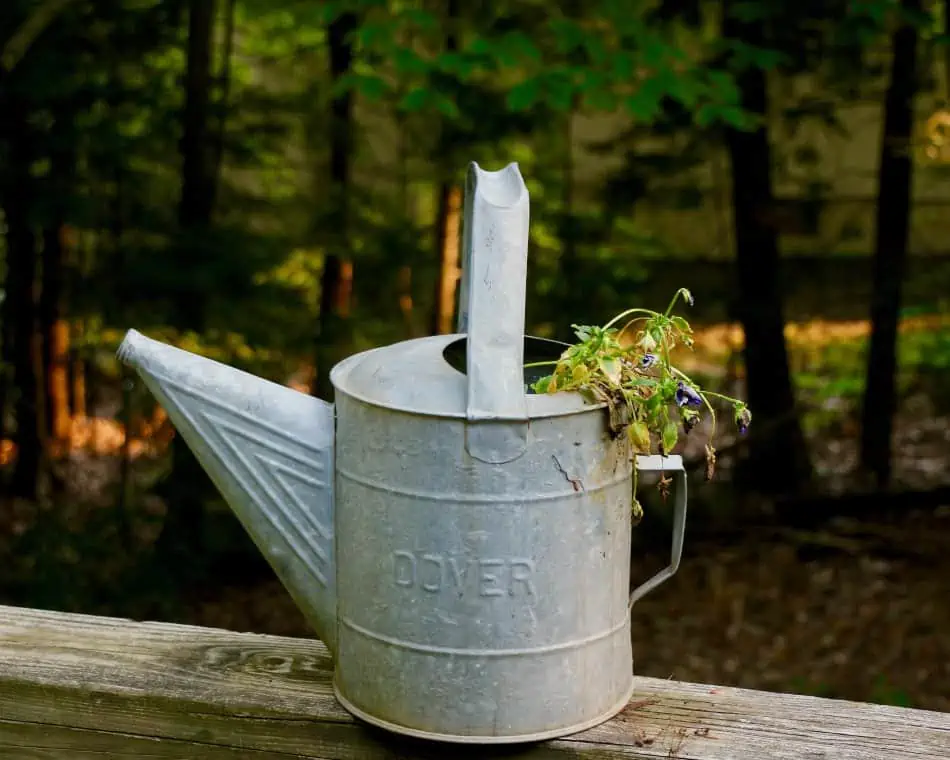
A water can with a plant.
Cacti are drought-resistant and do not require frequent watering.

Perhaps the first and most important thing that you need to know about cacti is that there are more than 1,000 individual species. In fact, the plant genus that is home to all cactus plants is so diverse that it includes some cacti that have leaves instead of spines. The natural habitat of cacti ranges from the southernmost tip of South America all the way north to western Canada.

If you’re like a lot of people, the first thing that comes to mind when you think of a cactus is cartoon coyotes or cowboys in ponchos with stubby cigars. But the tall, lobe-branched cacti that you see in those settings are just one of a wide variety of species. Unless you live in the desert southwest of the United States or in northern Mexico, that probably isn’t the best cactus to set your sights on.

One thing that works in your favor is that no matter what species of cactus you decide to bring home as an indoor or outdoor botanical confidence builder, you’ll be getting a drought-resistant and hearty houseguest. Let’s look at some of the ways that cacti have evolved to be such efficient water users.

Leaves

A cactus plant.
Having sharp spines can help cacti absorb water and stay hydrated.

The easiest way to recognize a plant as a member of the cactus is family is to notice what they don’t have—leaves! But that’s not 100% accurate for a couple of different reasons. The first reason is that their spines are highly-adapted leaves. The second is that some members of the cactus family have leaves instead of spines.

So why did most cacti evolve spines where their leaves ought to be? And how do spines make a cactus more efficient at water consumption than other plant species? The leaves of most broad-leafed plant species have at least two important jobs to do. First, they are an important part of the plant’s respiratory system. Second, they play a crucial role in photosynthesis. Many broad-leafed plants rely on their leaves to contribute significantly to their water gathering efforts as well.

The part of a plant that takes in the carbon dioxide that the plant will convert to oxygen during photosynthesis is called a stoma, and it is usually located in the leaf stem of broad-leafed plants. Of course, photosynthesis is the process by which plants convert sunlight to nourishment.

So, beyond taking in the fuel for photosynthesis, leaves also collect the sunlight that provides the missing ingredients. Cacti have come up with creative twists on each of these processes to become better at surviving without much water.

Stomata

Most plants don’t have to worry about conserving water the way that cacti do. So, their stomata are located in places that tend to permit a great deal of evaporation. They open during daylight hours, which further compounds the rate of evaporation. Cacti can’t afford to be so cavalier with their precious stores of water.

Because most cacti have evolved and adapted to make survival possible in environments that would kill most broad-leafed plants, they’ve had to get creative about the respiratory and light-absorbing processes that they use to accomplish photosynthesis.

A cacti’s stomata are still located at the base of their spines, which we noted earlier, are just highly-adapted leaves. The spines themselves make a big difference in the rate of evaporation because of their reduced surface area in comparison to broad leaves. But the real difference in how a cactus plant’s stomata help them survive on limited water can be found in their adopted schedule.

Most plants take the easiest route between where they are and where they want to be. When it comes to photosynthesis, that means opening their stoma during daylight hours to take advantage of the abundant light. But if a cactus were to do this, they would lose unacceptable amounts of moisture to evaporation during the heat of the day.

Day and Night

Cactus on a storage near the window.
Compared to other plant families, cacti respire at night to prevent evaporation of too much water.

Because cacti have to do everything they can to conserve water, they’ve adapted a unique biological clock that strikes a balance between the need to breathe and the fear of losing all of their stored water. A cacti’s stomata open at night when there is less risk of evaporation. Since desert environments have plentiful sunlight, they are able to get by on what they collect through the membranous coatings on their stalks.

Conducting all of their breathing at night means that cacti have to store the carbon dioxide that they take in overnight until they can use it in photosynthesis when the sun comes up. This is another evolutionary adaptation that makes cacti capable of doing what they do in the places where they do it.

Spines

A top view of a cactus plants.
Spine not only protect cacti from predators but also help them absorb more water.

We’ve already noted the difference that surface area makes in the different rates of evaporation between leaves and spines. The fact that a cactus taps the cells of its main body for light absorption means that cacti don’t miss the metabolic contributions that are lost in this trade-off. When you get right down to it, most cacti are nothing more than fleshy, leafless stems with an array of spines.

But why does a cactus have spines if the stomata are located on the stalk, and the stalk does the lion’s share of the photosynthetic work? There are two main functions that the spines serve in the life of the cactus plant. The first one is pretty obvious if you think about it, but the second function might not be as easy to pick up on just by looking at a cactus.

The first thing that spines do for a cactus is to protect it from grazing animals. Think about all of the broad-leafed plants that get munched on by birds, insects, and mammals. Now, think about how attractive a plant would be to those same grazers if it was located in the middle of a desert and filled with life-sustaining moisture. If it weren’t for their body armor of effective spines, cacti wouldn’t stand a chance.

Spines also do their part to help a cactus plant capture every drop of water that comes within its range. The spines may be angled to channel water toward the plant’s stalk and downward toward the root system, or they may be fine enough to gather the morning dew until it forms droplets that will fall to the ground. Each species has its way of doing things, but in the end, it’s all about the H2O.

Stalks

When you look at a tree, you see a trunk, branches, stems, and leaves. When you look at ornamental or edible flowering plants, you see a stalk, stems, leaves, and flowers. But, as we noted earlier, a cactus is just a root network underground with a single stem that is covered in spines. The body of the cactus plant has a number of advantages that cacti rely on to survive in dry climates.

It isn’t as simple as changing one or two things about the way you do business when you set out to evolve and adapt to the harshest climates on the face of the planet. It takes an all-hands-on-deck approach. So, cacti have had to incorporate contributions from every part of its body to maximize water efficiency and become capable of thriving where other plants wouldn’t survive at all.

Body Styles

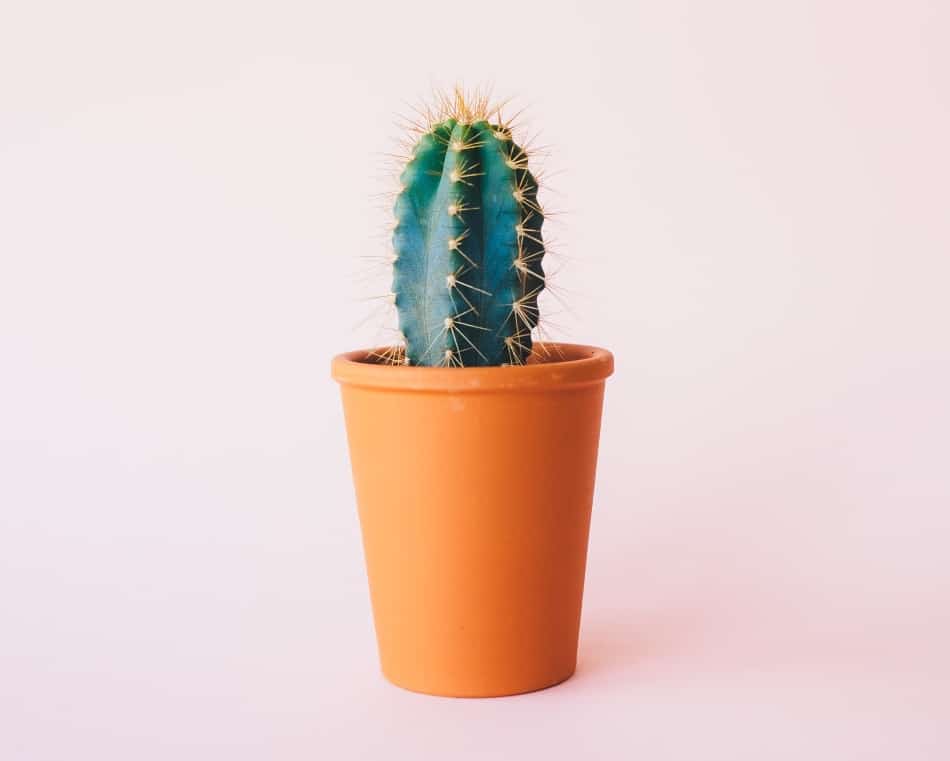
Cactus in a clay pot.
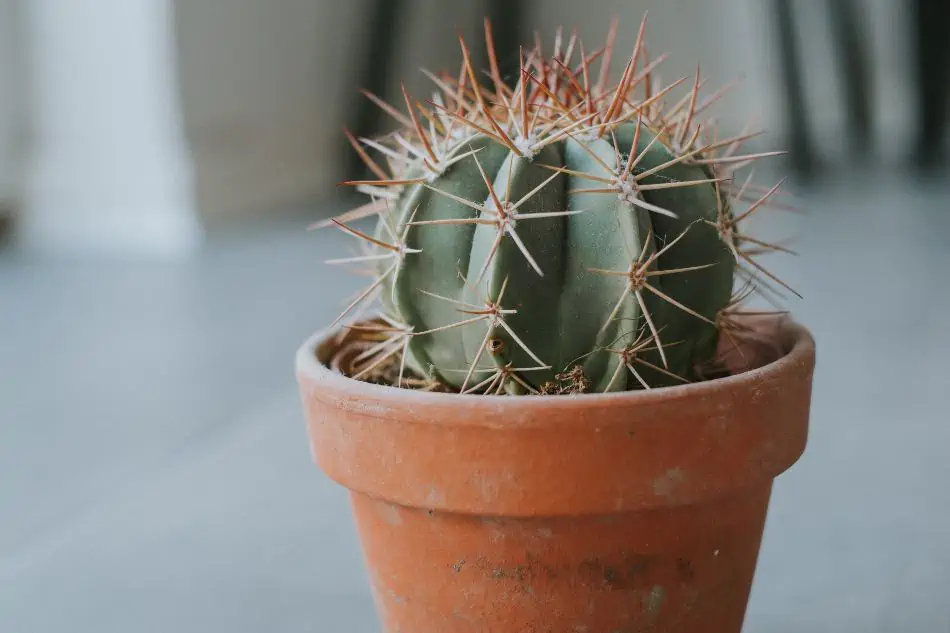
The majority of cacti have globular body shape, which enhance the ability of a cactus to preserve water.

The stem or stalk that makes up the main body of a cactus plant is a highly specialized version of a trunk or stalk that you would find on broad-leafed plants like trees and flowers. It has evolved to be as efficient at water storage and conservation as it is possible for a plant to be. This has required cacti to adapt the internal composition, exterior surface, and even shapes that their main bodies feature.

Most cacti bodies are globular, and some even incorporate ridges. These features enhance a cactus plant’s ability to conserve water. Storage capacity and water retention are the primary concerns for most cactus plants, so it just makes sense that they devote so much of their bodies to ensuring that these two tasks get taken care of.

Of course, everything that lives also wants to grow and reproduce. Even the way that cacti approach these basic biological imperatives reflects the central importance of making the most out of the limited amount of water they get. The life cycle of a cactus plant is directly linked to its ability to gather, store, and conserve water.

Storage and Conservation

Cactus in a pot.
Globular shape, the presence of ridges, and waxy surface allow cacti to better absorb and conserve water.

There are at least three key features of a cactus plant’s body that play important roles in the ability to store and conserve water. The first is the globe-shaped body style that many cactus plants have. The second is the presence of ribs or ridges on the body that act like accordion folds that allow the cactus plant’s body to expand as it absorbs more water. The third feature is a thick, waxy exterior surface.

The benefit of a globular body is that it offers more internal storage capacity with less exposure to the pressures of evaporation. Whereas a vining body-style like you find with ivy or a tall, thin stalk and broad flower like you find with sunflowers leave the plant at a disadvantage to evaporation, a cactus holds all of its water inside.

The ridges and ribs that accentuate many cactus plants’ bodies offer important benefits to this approach toward water conservation. When rain is infrequent, and dewfall is minimal, a cactus has to be able to grab as much as it can during the rare times when water is plentiful. If the plant’s body weren’t capable of accommodating the swelling that comes along with taking on water, it wouldn’t be able to make the feasts sustain it through the famines.

Of course, it wouldn’t matter how much water a cactus could absorb if it weren’t able to hold onto that water for long periods of time. The wax-like coating that is on a cactus plant’s exterior surface works like a waterproof raincoat in reverse. Instead of keeping the water out, it works to hold the water in.

Life Cycle

Without getting too philosophical about it, we can probably agree that there is more to life than simply surviving. So, it makes sense that a cactus wants to survive not just for the sake of surviving but for the purpose of growing and reproducing. But with water at a premium, the cactus has to factor the energy demands of growth and reproduction into its plans.

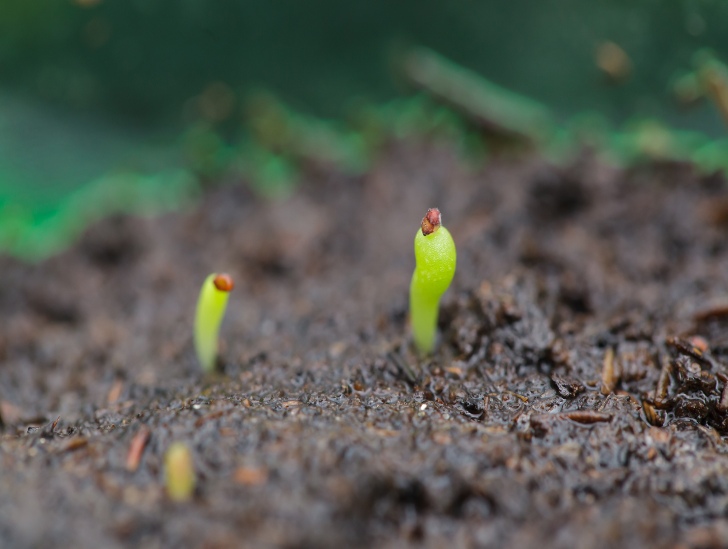
A cactus seed growing.
It makes sense that a cactus wants to survive not just for the sake of surviving but for the purpose of growing and reproducing.

That means that most cacti only grow larger during times when water is abundant. It also means that most cacti have evolved to go dormant with regard to blossoming except for those times when water is plentiful. In this way, their life cycle resembles those of other species that have evolved as highly-specialized desert dwellers. A desert landscape after a rainstorm will look vibrant for a time only to return to normal as things dry out.

But even the end of its life isn’t enough to get a cactus plant to give up its water reserve. Scientists have cut into the bodies of cactus plants many months after they have died only to find that they still retain the essential, life-sustaining moisture that they were storing when they died.

Roots

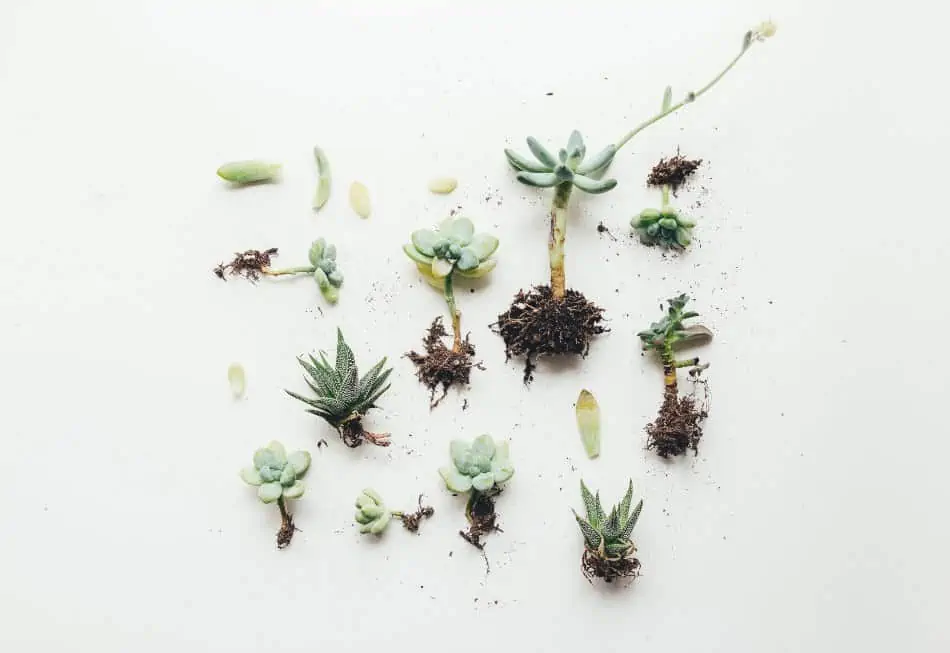
Succulent plants with roots shown.
Broadly dispersed root system of cacti is dedicating to saving the plant when there is a deficit of water.

The final aspect of a cactus plant’s physical adaptations that need to be considered in relation to its water consumption is the root system. Most plants can rely on their root system for stability and water collection at the same time without having to make any trade-offs in the process. But for a cactus, that just isn’t the case.

Most cactus plants have shallow and broadly dispersed root systems. This means that all of the water gathering capacity of the plant is close to the surface. The approach makes sense when you consider the low availability of moisture deeper in the soils of desert landscapes. But the trade-off is that some cacti are susceptible to blowing over in strong windstorms.

Even the root system of a cactus plant is committed to the survival of the plant during long stretches when water isn’t available. The root network of a plant will grow when water is plentiful but die-off and shrink back toward the plant’s body when the plant can’t afford to spare the water required to sustain the wider root system.

While it is true that sending roots deeper would provide the plant with more stability, it would also require more energy to grow and more water to sustain. For most cacti, the extra stability just isn’t worth the expenditure of vital resources. Cacti get a better return on their investment by keeping their roots closer to the surface where they can soak up every drop of rainfall possible.

Summary

This article has outlined the numerous ways that cactus plants have evolved and adapted to be the premier specialists at water conservation in the plant world. The evolutionary tricks that the cacti have picked up throughout history incorporate the leaves, stems, stalks, and roots. It is a team effort when it comes to being efficient at water consumption. That is what it takes to thrive where few other plant species can survive, and that is what set cacti apart from most plants.

If you want to add more greenery to your apartment, office, or home, then you can’t go wrong with a cactus. You won’t have to worry about getting someone to water your plants while you’re on vacation or what will happen to your office décor if you’re traveling for business for a week or two. And now that you know how rare cactus blossoming is, you’ll appreciate the beauty of their flowers that much more.

What Is The Difference Between Succulents And Cacti?

Succulents and cacti are unique plants in that they are explicitly designed with survival tactics in mind. Found in dry and often hot climates, these plants have adapted for efficient water retention, given their harsh environment. Their unusual structure and appearance have made them popular in many homes.  

What Is the difference between succulents and cacti? Succulents comprise a broad category of plants that store water. Cacti are a family of plants within the larger succulent family, making all cacti forms of succulent. For a succulent to be considered a cactus, it needs to have an areole, which is specific only to cacti species. 

Areoles and other specific characteristics help you to identify cacti from similar-looking succulent variations. Succulents are found in a wide variety of plant families, all with the ability to store water, bringing their similarities into view. In this article, we will break down the different types of succulents and cacti, so you know what to look for in spotting the differences. 

Scientific Differences Between Succulents and Cacti 

Top view of different succulent plant.
Succulents represent a broad category of plants among which cacti are just one of the families.

Let’s first examine the differences between succulents and cacti in their classification and scientific differences. This will help to explain how they are related to one another and what separates them. 

A succulent is defined as any plant that has naturally adapted its structure to maximize the storage of water. They are characterized by thick tissue that can store water in their stems, leaves, or roots depending on the specific plant species. Cacti are a type of succulent that use their stems and branches for storing water. 

Therefore, all cacti are succulents, but not all succulents are cacti.

Plant Taxonomy Classification Hierarchy for Succulents and Cacti 

Plants are classified into hierarchal categories to organize and group related plants. This hierarchy starts with larger groupings and becomes more specific as plants are more similar to one another. Knowing how this classification works is essential to understand how succulents and cacti are related (as well as any other plants). 

The general classification hierarchy for plants and organisms is: 

  1. Kingdom: This category differentiates between different varieties of life, including animals, plants, fungi, bacteria, and other small organisms. 
  2. Phylum/Division: Division is the more common term used in botany, and there are around four divisions in the plant kingdom. These divisions point to plants with ferns, conifers, flowers, and mosses.  
  3. Class: This splits plants into groups of dicots and monocots. It differentiates between plants with two seed leaves and one seed leaf, respectively. 
  4. Order: This classification further breaks down the different classes into more specific groups. 
  5. Family: Plants that start to share many features are arranged into families. Usually, this is where groupings of plants are referred to with species of plants being placed into these categories. 
  6. Genus: Within a family, specific plants are grouped that are more similar to each other than others. 
  7. Species:  This refers to the individual plant that is being examined. Typically, plants are written as genus and then species for their scientific classification. For example, a saguaro cactus is scientifically known as Carnegiea gigantea, with Carnegiea being the genus and gigantea being the species within the genus. 
  8. Variety: Some plants may be further broken down into variety if there are minor differences within a species. This will be noted with ‘var’ and the variation name, but many species will not have variations. 


In comparing succulents and cacti, we are going to go as far down as differences in family. Of the 452 plant families identified by botanists, over 50 families contain succulent plants. Not all families that contain succulents are entirely comprised of them, but all cacti are classified under the Cactaceae family. This specific family contains over 1,800 species of plants. 

Some of the common plant families that include succulents are:  

A Yucca, Adenium, Faucaria, and Aloe Vera plants.
Yucca, Adenium, Faucaria, and Aloe Vera are from the following succulent families: Agavaceae, Apocynaceae, Aizoaceae, and Aloaceae respectively.
  • Agavaceae/Asparagaceae: This family includes popular plants like Agave and Yucca.
  • Aizoaceae: This family contains a significant number of succulent species, with nearly 2,000 different ones falling under this category. Popular plants include ice plant, Conophytum, Faucaria, and Lithops. 
  • Aloaceae: This family includes aloe, which has been further broken down for specificity into the Xanthorrhoeaceae family. 
  • Apocynaceae: Adenium and Pachypodium are among popular plants in this family. Periwinkle, milkweeds, and oleander also fall into this category. 
  • Bromeliaceae: Pineapples, Dyckia, and Spanish moss are popular plants in this family. 
  • Cactaceae: Other than the Aizoaceae family, Cactaceae make up the largest family of succulents. These are the families that contain plants with the definable areoles that separate cacti from other succulents. 
  • Crassulaceae: In this family, you’ll find jade plant and stonecrop, among other succulents. This family is responsible for the identification of unique photosynthesis processes that are specific to cacti and some succulent variations. This is known as CAM photosynthesis. 
  • Euphorbiaceae: Many plants in this family are not succulents, but the ones that are usually have leaf and stem succulents. They are one of the few succulent varieties that can be poisonous. 

Succulent is a general term for plants that store water with cacti being a specific family of succulent plants. If you break down the classification hierarchy for cacti, it looks like this: 

  • Kingdom: Plantae (plants)
  • Division: Magnoliophyta (flowering plants) 
  • Class: Magnoliopsida (two seed leaves, larger flowers) 
  • Order: Caryophyllales (includes many succulent plants) 
  • Family: Cactaceae (Cactus family) 
  • Genus: Will vary by specific plant 
  • Species: Most specific to individual cactus plants
  • Variety: Must be looked at on an individual cacti species basis 

Noting the scientific differences in taxonomy and classification helps botanists and gardeners to understand how the plants they work with are organized better as well as similar behaviors for growth patterns and care. 

Structural and Visual Differences Between Succulents and Cacti 

A cactus in a pot.
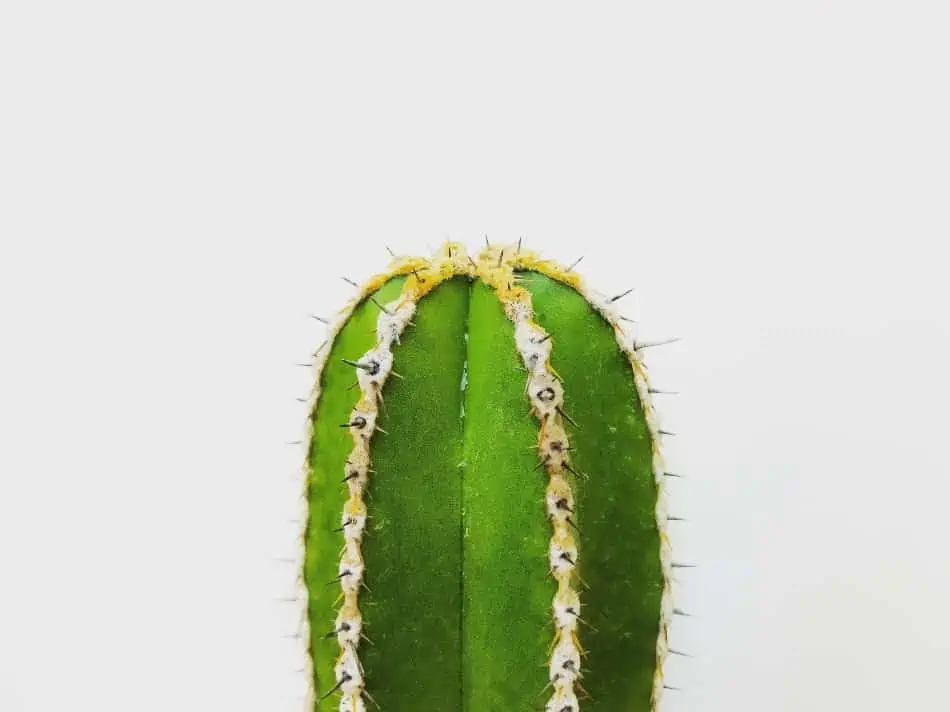
Cactus comprises areoles, small spots out of which hair-like spines or spikes grow.

Looking at the specific structure and characteristics of a cactus makes it easier to know what to look for in comparing them to a broader range of succulents. Cacti separate themselves from other succulent families and species in specific ways. Remember, all cacti are considered succulents, but some succulents are not related to cacti. 

The most significant difference that separates a cactus from any other succulent or plant is the presence of areoles. These are spots on a cactus that hair, spines, bristles, and spikes come out of. These may vary in their appearance, including size, color, and shape. Some species may grow new branches from these areas, but they are most similar to the creation of a bud. 

Areoles are specific to cacti, so you can easily spot the difference between this family and other succulent plants. Because there are so many species of cacti, areoles are one of the only characteristics that remain consistent across the family of plants. 

Other characteristics that are common among this family (but not all) include: 

Top view of different kinds of succulent.
While succulents have regular leaves, cacti species comprise spines, which mainly protect them from predators.
  • Stem succulents: Most water is stored in the stems of the cacti as there is often most space and mass for water retention. 
  • No leaves: Cacti do not have leaves – they have spines instead. 
  • Dormant in winter: To protect themselves from low desert temperatures, cacti remain dormant during wintertime and will continue to grow in the summer. 
  • Spiny protection: The spikes that protrude from the areoles are designed as a defense mechanism against animals and predators. 
  • Flower producing: All cacti will produce some form of flower, as they are classified under the Magnoliophyta division of plants. 

Many other succulent species may also contain similar characteristics to cacti but will not contain areoles. The only similarity among all succulents is their ability to store water. There is significant variation between various succulent plants, with cacti typically being distinguished and separated due to the different characteristics and sheer number of variations to study. 

While cacti typically store water in their stems, other succulents use their leaves (no leaves for cacti) and roots for water storage as well. Most succulents do contain leaves, with many of them being oriented in unique and mesmerizing patterns. These leaves are often thick to retain water. Additionally, not all succulents are flowering plants, unlike cacti, and they don’t typically have spikes. 

Differences in Care and Survival for Succulents and Cacti 

The survival and growth of succulents and cacti vary widely as different species are native to varying environments. These plants have adapted to maximize their chances of survival, whether it is related to climate, nutrients, or protection from their surroundings. 

There are five primary categories where succulents and cacti draw both similarities and differences:  

  • Water demands and care
  • Light requirements and photosynthesis methods 
  • Weather variations and needs 
  • Protection from predators 
  • Propagation methods and techniques 

Understanding these requirements and needs for survival not only compares succulents to cacti, but it also allows for more effective care techniques and approaches. 

Water Demands for Succulents and Cacti 

A person watering.
Since succulents and cacti similarly store water, water demand and care techniques are related.

Succulents and cacti are more similar than they are different in terms of plant care as they are both designed for survival. Specific species of both may have different care routines, but for the most part, they need to be cared for in similar ways. In terms of watering, these plants do not do well in wet environments or if they are overwatered. 

All succulents are designed to take advantage of environments where little water is provided, making sparse watering necessary. For at-home care, it is recommended that these plants are only watered once a week and with ample drainage. This is a fairly regular schedule for these plants to be best suited for growth, especially during the summer months. 

Cacti and succulents also need lots of water when they are watered. This means that they need to be drenched to absorb enough water to fill their stems (cacti) or leaves and roots (succulents). This will leave them with a plump or bloated appearance as they fill with water. 

In the winter months, watering should occur far less frequently due to dormancy. Almost all cacti and some succulent species will become dormant in the wintertime. Specific succulents will not become dormant, creating another difference between cacti and succulents. 

Light Requirements and Use for Succulents and Cacti 

Trees exposed to direct sunlight.
While both succulents and cacti need lots of sunlight to survive, cacti require more direct sunlight.

All succulents need sufficient light to survive. Some succulent varieties, including the cacti family, have adapted their photosynthesis process to account for arid climate conditions. Many desert succulents use CAM photosynthesis or crassulacean acid metabolism photosynthesis. It was named for the succulent family that this method was discovered. 

Stomata (holes in leaves) in all plants will open to complete photosynthesis by collecting carbon dioxide. In CAM photosynthesis, this opening only occurs at nighttime during cooler temperatures so that the cacti do not lose moisture they need to maintain. They hold the carbon dioxide until the daytime when the process is completed with sunlight. 

Some, but not all succulents, will use this CAM photosynthesis process to best adapt to their natural environments. Pineapple is another common succulent that uses this process. This is another difference that distinguishes between cacti and many succulent species. 

While succulents and cacti do not need much water to survive, they do need lots of sunlight. Most species of both will require full sun to thrive, with cacti generally requiring more sun than other succulent varieties. For succulents, sunlight often impacts their ability to maintain vibrant colors, with limited sunlight keeping them green. 

Weather Variations and Needs for Succulents and Cacti 

The four seasons.
Despite similarities, cacti and other succulent families differ in how they deal with different seasons and weather conditions. Cacti are more tolerant to hot and dry environments, while any other succulent prefers mild climates.

While both designed for water retention, the environments that succulents and cacti grow in can be quite different. Cacti and other desert succulents are quite similar in the tolerance to hot and dry weather conditions, while other succulents are native to tropical environments with more temperate climates. 

Cacti can withstand more considerable temperature changes than many succulent species as deserts get very hot in the summer and very cold in the winter. This helps to explain why they practice dormancy in the winter months when temperatures drop significantly. Many succulents cannot survive these massive temperature fluctuations. 

Most succulents and cacti thrive in warm environments, between 65 and 90 degrees Fahrenheit, with specific variations adapting to temperatures that fall above and below. Most cacti do not do well in humid environments, while some succulents, especially tropical variations, are more welcoming and tolerant of these wetter conditions. 

To compare the two, cacti are typically far more tolerant of extreme weather conditions than most common succulent species. This hardiness is due to their native environments, which are typically desert-based compared to succulents, which can be found in many conditions. While they may have limited access to water, succulents are found all over the world in high and low climates.  

Protection from Predators for Succulents and Cacti 

A reptile.
Cacti have developed various types of spiky and sharp spines to defend against predators.

Many plants grow or adapt in structure to protect themselves from predators. Especially in desert climates, succulents are susceptible to being eaten as they often contain water and can be nourishing to many animals. To avoid this, many plants have developed rigid or harmful defense mechanisms to keep animals away. 

Cacti are most famous for this protection as they often contain a variety of spines and sharp, spiky features. Growing from the areoles, these structures can be dangerous and injure those who try to touch or eat them. A vast majority of succulent varieties do not contain these spikes, making them much easier to uproot and eat if needed. 

Cacti separate themselves from most succulents in their threatening appearance and ability to ward off predators. If you have touched many common succulents, you’ll find that they are quite soft to the touch. These make it easy for animals to eat them. Plants such as aloe and agave contain sharp edges on their leaves for similar defense purposes. 

Beyond physical structure, their chemical composition is also used for protection. The majority of cacti species are not poisonous, relying on the anatomical structure for defense. Conversely, some succulents are deemed poisonous, especially for animals. 

These are some common succulent species that may be harmful to humans or animals: 

  • Aloe vera: While it can be ingested or used topically (and often is by humans) for antioxidants and burn relief, aloe is toxic for dogs, cats, and horses. 
  • Euphorbia family: This family of plants is toxic to both humans and animals. The sap found in them can be irritating to your skin. This same reaction can occur internally if ingested.
  • Jade: This is a common succulent variety, and it is toxic to animals. There are different variations of jade plants, and all should be avoided by animals. 
  • Kalanchoes: These succulents are not dangerous to humans but can make animals sick if ingested. They are characterized by small pink or red flowers arranged in clusters. 

Generally speaking, most succulents and cacti are not poisonous.

The most danger arises from their structural spikes and injuries that may occur from physical contact. This is more of a concern with cacti than succulents as they are not usually as spiky. 

Propagation (Breeding) Requirements for Succulents and Cacti 

A person arranging small plants in a small pot.
To propagate succulents, you need to remove its part from the root of the plant. On the contrary, propagation of cactus can be done by removing its stems.

Propagation is the process of reproducing or breeding a plant by taking a portion of the plant from its parent. This can be completed with sexual reproduction, requiring pollen and egg to join for seed creation. This occurs in the floral sections of a plant. Asexual reproduction uses roots, stems, or leaves to create identical offspring from one parent plant.  

Succulents and cacti propagate quickly, which is another survival strategy for various species. This is not only important in nature, but if you are interested in growing these plants, it makes it a simple process to do at home. Succulents are generally reproduced by separating them from the root of the plant, while cacti can be propagated by removing individual heads. 

The method of cutting succulents and cacti for propagation engages in asexual reproduction. Because not all succulents are flowering, this method is taken advantage of most frequently. Because all cacti are flowering plants and not all contain structures for cutting, cacti can reproduce through both sexual and asexual reproduction. Stem cutting is often the easiest. 

You may find that leaves or structures of both succulents and cacti that naturally fall have formed into a new plant. This is a survival mechanism, especially if the plant has been damaged or tampered with. Its fallen component can grow into a new plant and continue the survival of the species. 

Different Types of Succulents and Cacti 

There are thousands of species of both succulents and cacti, offering an extensive range of plants that vary in conditions for growth as well as physical appearance. We wanted to point out some of the most common variations in succulents and cacti and the key characteristics that separate them from one another. 

While cacti are considered succulents, they are generally not included among popular succulent species because they have such specific characteristics and thousands of species within their own family. We will break them down into two separate categories for clarity. 

The most common and popular succulent varieties include: 

A Haworthia plant, Echeveria plant, Jade plant, and Sempervivum.
Haworthia, Echeveria, Jade Plant, and Sempervivum are among the most common succulent
  • Aloe vera: One of the most popular succulents for their historical healing qualities, they are characterized by long and thick leaves that branch out from one stem. Aloe is often covered in small serrations as protection. 
  • Zebra plant: Scientifically known as Haworthia, they are white and green with a pattern similar to a zebra. They have pointy leaves and will bloom small flowers.
  • Snake plant: Also known as Sansevieria trifasciata, they have tall and upright leaves, giving them a unique look compared to other succulent varieties. The leaves have unique streak patterns and will thrive in low-light environments. 
  • Echeveria: One of the most popular succulent varieties for their rose-like configuration, this genus is found in the Crassulaceae family. They come in a beautiful range of colors and have commercially become most recognizable among all succulents.
  • Agave: Native to Mexico and the southwestern United States, multiple species fall under this genus. Many agaves are spiked for protection, and some species are edible. Flowers, stalks, and the sap are used to make many edible products, including syrups and nectars.  
  • Stonecrop: Sedum is a popular succulent that is often used as a groundcover in garden applications. They come in many varieties, often with small spiky leaves and will produce flowers. 
  • Jade: Scientifically known as Crassula ovata, they are characterized by thick branches with hearty but small leaves. ‘Jade’ points to their green coloring, but this can vary based on the plant. 
  • Hens and chicks: Also known as Sempervivum, these are also rose-like in appearance. Their leaves are typically more pointed and spikier than Echeveria. 

All of these plants are designed to thrive in low-water environments are typically characterized by having waxy or glossy looking surfaces to retain moisture best.

When filled with water, the leaves, roots, or stems will appear swollen or expand to accommodate more water in their tissues. 

Cacti also come in a variety of species (over 1,800!), and most of them are found in the Western Hemisphere. Because there are so many, we have broken them down by their growth shape and appearance, with specific species mentioned in each. 

These are general categories for different types of cacti: 

  • Tree-like: Your larger cacti typically fall into this category, including saguaro (Carnegiea gigantea) with a long stem and tall branches. This is one of the most popular visual representations of large cacti in the desert. Pereskia is a rarer genus that looks like tropical trees, with bark that does not often resemble most cacti. 
  • Columnar: Tall and shaped like a column, these cacti are usually single tubes and are put into the Cereus genus due to their elongated bodies. These include organ pipe cacti (Stenocereus thurberi) and hedgehog cactus (Echinocereus).
  • Globular: As their name suggests, these small cacti are shaped like little globes or balls. Some common types include golden barrel (Echinocactus grusonii) and moon cactus (Gymnocalycium mihanovichii). 
  • Bush-like: These often grow in a cluster-formation with various branches and pads growing from stems. Popular variations include prickly pear (Opuntia) and Christmas cactus (Schlumbergera), 

The broad species variety has made both succulents and cacti popular because they appear in very unique and beautiful appearances. For home growth, they are both easy to care for and low maintenance due to their limited watering requirements and ability to grow in a wide variety of environments. 

Succulents vs. Cacti

This article has demonstrated that succulents and cacti have specific differences but draw many similarities as all cacti fall under the broad category of succulent plants. With areoles being there one key distinguisher, physical appearance is often the best way to determine the difference between the two upon visual inspection. 

Cacti and succulent terrarium.
Succulents represent a broad category of plants among which cacti are just one of the families.

Cacti tend to be much more resilient plants as they are often found in more arid and challenging climate environments, such as the desert. Many succulents cannot withstand the intense temperature fluctuations that cacti experience in their native environments. Natural environments for species determine the conditions in which they can best thrive. 

Whether you plan to grow them at home or merely appreciate them in nature, their unique adaptations for survival have resulted in long-lasting and exciting looking plants that are appreciated by scientists and gardeners alike. While all cacti are succulents for their water-storing abilities, not all succulents are cacti, and they definitely stand out! 
Can A Cactus Get Sunburn? And How To Prevent It

There is a misconception out there that cacti plants love excess sunlight because most of them grow in deserts. In fact, a significant number of gardeners believe that a cactus plant will happily sustain full blazing sunshine all day long, and nothing will happen to it. But, is it true?  Are these succulents resistant to sunlight, no matter how severe it is?  We shall find out in a moment.

So, can a cactus get sunburn? Yes. Although these plants are fairly hardy, they are still susceptible to a wide range of diseases and environmental stress. Exposing your cacti to high-intensity sunlight that they cannot handle will result in sunburn and shriveling of your plants.

And the most unfortunate thing is that sunburn is not only unsightly but also dangerous to your plant’s health.  Severe sunburn can cause irreversible damage to your plant, leading to death.

In this blog post, we discuss everything you need to know about cacti plants and sunburn. How does sunburn occur? How can you know that your plant is experiencing sunburn? How can you stop it, and how can you prevent it from happening in the future?  So, let us get started.

General Light Requirements for Succulents

Before we start looking into sunburn, it is essential to understand the light requirements of a cactus. As with all other plants, cacti also need light for photosynthesis — the process in which they make food from sunlight.

Most succulents require bright sunlight and warmth throughout the day, but some species can tolerate partial shade. It is always recommended to look up the specific light requirements of your plant, as they can vary.

Generally, you should strive to provide your succulent with at least six hours of direct sunlight daily. And if your plant is placed near a window, it should have some protection from the afternoon sun’s intensity since this can be too strong for most cacti species.

If growing succulents indoors, consider positioning them on a south or west-facing window. This will help them get enough sunlight without putting too much stress on them. You can also opt for artificial lighting to supplement natural light if required.

If your plant starts looking dull and pale, you may need to increase its light exposure. On the other hand, scabrous or swollen surfaces, yellowing leaves, and soft spots are all signs of sunburn.

Can a Cactus Get Too Much Sun?

A sunlight.
Excess exposure to light might cause sunburns and damage the plant.

As mentioned earlier, all plants need plenty of food to survive. Sunlight is an essential requirement in the process of photosynthesis, which helps every green plant to manufacture food. Technically, it means that if your cactus doesn’t receive sunlight, it won’t synthesize food, and it will eventually die.

But, there is a limit to how much sunlight every plant species requires.  If the amount of sunlight provided exceeds a certain threshold, it is no longer useful to the plant. Instead, it becomes damaging, and unless you take measures to save your plant, it will eventually die.

It is true that cacti plants, just like other succulents, love sunshine and can withstand direct sunlight for certain amounts of time. In fact, most cacti species tend to thrive in relatively warm temperatures of between 60oF and 80oF. Some species, such as the Old man cactus, will still do well in higher temperatures.

However, when you combine high temperatures and direct sunlight, then your plants may start straining to contain the intense heat and will start running into trouble. In the same way, you would be comfortable sitting under direct sunlight for an hour when the temperature is maintained at 70oF but will quickly take cover when it rises to 80oF.

It is the ultraviolet (UV) rays and the strong intensity of sunlight that will burn your cactus and not actually the heat. But still, relatively higher amounts of heat can also lead to rapid water loss and higher internal temperatures, which makes your plant more susceptible to physical damage, including sunburn. 

How Do You Know Your Cactus Is Getting Sunburned?

Cactus on hand.
One of the first signs of cactus sunburn is discoloration of stems and the presence of yellowish color.

When a cactus is exposed to too much sun, it will start to develop internal stress.  However, if you manage the exposure effectively, the plant may adapt to the extra sunlight and heat by producing some brightly colored pigments. If you fail to manage the exposure effectively, then it will become sunburned.

One of the earlier signs of sunburn is the development of patches on the leaves of the plant. If only a section of the plant is exposed to excessive sunshine, there may only be a few parts of the plant showing symptoms of sunburn.

Depending on the severity of the burn, the patches may be brown, black, or tan in color. Typically, the more severe the sunburn, the darker the discoloration will be.

A severely sunburned cactus may also be permanently scarred. The dark, discolored patches that develop on sections of your plant that have suffered sunburn are usually permanent. But it takes some time before the damage becomes irreversible.

If you notice the appearance of dark scars on different parts of your cactus, be sure to touch the spots and feel their texture. If they are slightly dark, but their texture feels smooth, then it is only a sign of impending sunburn, and the damage is reversible at this stage.

All you have to do is move the plant to shade before the actual permanent scarring occurs. With time, your plant will heal, and the scars will disappear.

It is also good to mention that a cactus may respond to excess sunlight and heat by changing from green to yellow-green. This is usually a sign of stress and a pre-sign of potential sunburn. Although this change doesn’t leave behind any scars, the effects can be quite severe if you don’t act quickly.

The moment you notice the green-yellow color, consider moving your plant to shade and let it rest there for some time. The green-yellow sections will disappear when the temperatures drop, and the stressed tissue of the plant will return to normal. 

Cactus outside along the wall.

Why Is Your Cactus Getting Sunburned

At this point, you might be wondering why cacti plants suffer from sunburn in the first place.  Well, there are two major causes of sunburn that you need to know.

Sudden change in growth conditions

Although most cacti species love sunlight and a little more heat, they need time to adapt to it.  Keep in mind that almost every cactus plant you will find in your local store is grown in a greenhouse. This means that the growth conditions that these plants are accustomed to are consistent.

When you bring your new cactus home and put it in direct sunlight, the conditions change drastically, and the result can be unpleasant. Exposing your plant to full and direct sunlight at this point will only result in severe sunburn within a few hours or days.

Another critical aspect of growth you need to be careful with is moving your cactus from one place to another.

For instance, if your plant has been growing with one side facing south where it is exposed to maximum light and the other facing nothing which is shadier, then turning your plant 180 degrees could be a big mistake.

When the other side that has been in the shade for a long time is suddenly exposed to direct sunlight, it can develop severe sunburn within hours. If you want to turn your plant, do it gradually, giving the other part that has been in shade enough time to adapt to the new conditions.

Change in habitat

By now, you need to have understood the fact that the cactus family is large and features over 2500 different cacti species that grow in different habitats.

For instance, you will find the jungle cactus in tropical rainforests while the Saguaro will grow happily in the blazing heat of the Arizona desert. You will even find some cacti species in the high Andes Mountains of South America and the foggy coast of California.

What we mean is that before you go out and purchase a cactus plant, take time to understand where your preferred species is found and the general conditions it prefers to grow in. This way, it becomes a little bit easier to provide the right conditions because you already have a clue.

When you finally bring your cactus in, pay close attention to the growing conditions the plant has been in and try to simulate them in your home. Also, if you are bringing your plants outside after the winter season, be sure to introduce them to the spring sunlight gradually.

Caring for Sunburned Cactus

A person holding the plant on a clay pot.
You can take care of your sunburn cactus by putting away from sunlight, watering, and protecting from pests.

If you catch the sunburn before it becomes severe, you can save your plant from the irreversible damage.

The first thing you need to do is to get it out of direct sunlight. If you notice any yellowing on the surface of your plant and it is in full sun, be sure to move it even if you have to assume the task of taking it in and outside every day.

But we understand the fact that moving the plant is only possible if it is in a pot that is small enough to move.  If you have a large cactus plant that you suspect is developing sunburn and you cannot move it, then try to cover it using a shade cloth during the hottest part of the day.

Secondly, keep your plant watered but be careful not to overwater it because it can lead to other problems. Typically, if a cactus is stressed or sunburned, it will go into a state of dormancy regardless of the season.

During this stage, the plant is going to cease growing and focus on repairing the damaged tissues and re-establishing itself. Frequent watering may help the cactus in the long run, but don’t be tempted to overwater it.

Lastly, strive to protect your plant from pests and other diseases. Keep in mind that if your plant is sunburned, then it is weaker and more susceptible to disease and pest infestation.

Therefore, take time to check for bugs and ants that may cause more damage than what the plant has already suffered from sunburn. If you notice signs of diseases or pest infestation, be sure to take appropriate action.

How to Prevent Sunburn in the Future

Cactus on pot and other plants near the window.
You can prevent sunburns by gradually changing the environment and slowly exposing them to sunlight.

When it is time to move your cacti plants outside after spending winter indoors, you need to be careful with the process. Do it gradually to avoid stressing the plant. Typically, you should introduce your plants to increased levels of sunlight slowly over two or three weeks.

During the first few days, consider putting your cactus into full sunlight for just a few hours a day and slowly increase the time every few days.

Once the plant has received plenty of sunlight for the day, move it to a shady area, or if you cannot move it, cover it with a shade cloth. Moving your plant to a shady area or covering it during the hottest part of the day will help to prevent sunburn.

Also, avoid fertilizing your cactus during the summer. Fertilizers are high in salts and minerals that can damage your plant, especially when exposed to direct sunlight. Wait until winter before you start fertilizing again.

Finally, remember to water them regularly but not too much because plants will often suffer from sunburn when they are stressed.

Be observant and identify signs of sunburn early before it is too late. This way, you can take the right steps to protect your cacti plants effectively.

Light vs. Temperature: Is There a Difference?

When it comes to succulents and sunlight, it is not just the intensity of light that matters but also the temperature.

Many cacti species are sensitive to heat and can easily suffer sunburn if the temperature is too high. This can happen when the plants get too close to a windowpane or are positioned in direct sun for too long.

So, if you want to avoid sunburn, pay attention to the temperature of your succulents as well. If you can feel intense heat radiating from the outside surface of a pot, then that is an indication that the temperature inside may be too hot for your cactus plant.

Can I Save a Sunburned Cactus Plant?

Yes, you can save a sunburned cactus plant. The key is to identify the signs of sunburn early and take effective steps to protect the plant from further damage.

Move the cactus out of direct sunlight, provide enough but not too much water, and avoid fertilizing during summertime.

Lastly, check for signs of pest infestation or disease and take appropriate action. The most common pests that may infest your cactus are mealy bugs, scales, and spider mites.

With the right care, your sunburned cactus plant can recover and thrive.

Summary

We hope you understand how to take care of your cactus to prevent sunburn.  Caring for these succulents can sometimes be difficult, but you have to learn the tricks along the way. If you have got any questions or comments, please let us know in the comments section below.

Cactus Type: The 10 Most Popular On Earth

Many people are looking to incorporate green spaces in their homes. Fortunately, one doesn’t need to have a green thumb to do just that. Cacti and succulents are easy to care for and are low-maintenance options for those who want to add a touch of green but have difficulty keeping regular plants alive or those who simply don’t have the time to tend to a garden.

What are the most popular types of cactus? The most popular types of cactus as listed by cactus enthusiasts and cactus growing sites include:

  • Moon cactus
  • Ladyfinger cactus
  • Easter cactus
  • Old lady cactus
  • Bunny ear cactus
  • Blue columnar cactus
  • Star cactus
  • Barrel cactus
  • Fairy castle cactus
  • Saguaro cactus

What makes them popular? We will talk about each one in detail and how easy or difficult they are to care for and propagate.

1. Moon Cactus (Gymnocalycium mihanovichii)

A Moon cacti.
Moon cacti with spherical shape and vibrant red color, which can flourish in warm and dry environments

Moon cactus, also known as Hibotan cactus or ruby ball cactus, is a hybrid and grafted variety of cactus. It is one of the most popular and easiest to recognize because of its perfectly spherical shape with thorns and bright colors, due mainly to its inability to produce chlorophyll. Its inability to photosynthesize means that the moon cactus needs to be grafted onto a compatible rootstock that produces plenty of chlorophyll upon which the moon cactus can sustain itself.

These cacti come in vibrant shades like red, orange, yellow, peach, and purple. They are most commonly grafted onto rootstocks like Hylocereus and Stenocereus. They also make perfect gift plants because they are small, generally an inch in diameter.

Water, Temperature, and Sunlight Requirements

Moon Cacti are native to the deserts of South America. They can be found anywhere warm, dry, and sunny because they are easy to cultivate and propagate. Moon Cacti thrive in temperatures at least 48 degrees Fahrenheit.

These cacti love bright but indirect sunlight. Prolonged exposure to direct sunlight can be harmful to them. As such, they are best placed in a shaded area or under taller plants where sunlight cannot penetrate directly. You can also take them indoors and put them in a spot where they are shielded from sunlight during the brightest time of the day.

It is best to bring your Moon Cacti indoors during the winter, especially when the temperature drops below 40 degrees Fahrenheit. If not, cover them up with a light blanket to protect them from the cold weather. Otherwise, they will freeze when the cold weather gets harder.

Water requirements are minimal. You will need to water your moon cacti deeply and allow the soil to dry entirely at the base before you water again. Overwatering would cause root rot. During the winter, we recommend that you stop watering your adult moon cacti completely.  If you have a young Moon Cacti, give it just a bit of water.

Moon Cacti love shallow pots with proper drainage holes. It is also recommended that you put a thin layer of gravel into the bottom of your pot to better drain the water.

How to Propagate

You can start propagating your moon cactus when a baby sphere appears on the surface.  Multiple spheres usually appear at the same time. Wait for these baby spheres to grow large enough and carefully nip them off the mother sphere.

Prepare your rootstock by slicing off its top portion. Make sure your rootstock is already well-rooted and stable and planted in a pot with excellent drainage. Slice off the bottom of your baby sphere and graft it onto the rootstock.

Check out this video to know how grafting a Moon Cactus is done:

2. Ladyfinger Cactus (Mammillaria elongata)

A top view of Mammillaria Elongata.
Mammillaria Elongata, known as a Ladyfinger Cactus, is a cactus with finger-like stems of cylindrical shape

Also called gold lace cactus, ladyfinger cactus is a petite cactus with clustered cylindrical and finger-like stems that grow only up to 6 inches tall and 1.2 inches in diameter. While it grows slowly, this plant is easy to care for.  If you provide it with enough light, it grows well when placed indoors.

This cactus has an invariable number of curved spines that vary from white to brown to golden yellow. It flowers in spring and the blooms, usually one centimeter in diameter, are either white, pinkish, or pale yellow.

Water, Temperature, and Sunlight Requirements

Ladyfinger is native to central Mexico but is now cultivated in other countries with a warm and sunny climate.

This cactus loves partial to full sun. So plant it in a spot that gets about four hours of sunlight each day. Moreover, ladyfinger cactus is not cold hardy, so if you live in a place that can get colder than 20 degrees Fahrenheit, plant it in a container and keep it indoors. Just make sure that it gets lots of sunlight. In the winter, the Ladyfinger goes dormant, so you can water it sparingly to prevent rotting.

Ladyfinger cacti do not need frequent watering. It is best to use the soak-and-dry method, where you soak the soil completely in water and then let the soil completely dry out before you water it again. That also means that you should plant them in well-draining soil in a pot with a sufficient drainage hole.

While most other cacti have ribs that serve as storage devices, ladyfingers have raised tubercules, where the spines emerge. The flowers will also bloom from the axils of the tubercles on the previous year’s growth. During watering, these tubercules will expand to store water.

How to Propagate

You can propagate ladyfingers from cuttings. Gently pull away one of the cylindrical stems from the clump or use a cutting knife to break a stem off. Wait several days for the end of the cut stem to callous over before you plant it in well-draining soil.

3. Easter Cactus (Rhipsalidopsis gaertneri)

A flowering easter cactus,
Easter cactus is pretty similar to Christmas and Thanksgiving cacti, but it is native to drier forests

The Easter cactus, which is also called Spring cactus, is a segmented type of cactus that blooms at certain times of the year, specifically around late winter to early spring.  Since this coincides with several winter holidays, it is called a holiday plant. Other holiday plants include the Christmas cactus, which blooms during the winter holidays, and the Thanksgiving cactus.

The holiday plants are all hybrids of the Brazilian forest cactus. But while the Christmas and Thanksgiving varieties are from the rainforests of Brazil, the Easter cactus is from drier forests.

The Easter cactus is unique as it has flattened stems or segments, which also serve as the leaves. These segments are lightly serrated on their edges. Its star-shaped flowers come in a range of colors, from white to pink, to peach, to orange, to purple. These blooms open at sunrise, and they last for several weeks.

Water, Temperature, and Sunlight Requirements

People growing Easter cacti would say that it can be a bit of a prima donna. These plants tend to act up, dropping entire segments, if they are not watered correctly and refusing to flower for years if they do not feel like it.

Easter cacti love being in bright, but indirect, sunlight. And unlike dessert cactus species, Easter cacti need cooler temperatures. When exposed to nighttime temperatures in the 55 to 60 degrees Fahrenheit range, they will have an easier time setting buds and blooming. They also flower more easily and abundantly in February and March.  If you want to see those blooms, water them sparingly in October and November.

With Easter cacti, you would need to keep the soil lightly moist and wait for it to dry out before you water them again. Proper care for Easter cacti also requires that you re-pot them every couple of years in spring. They love being in pots, so you can just change the soil and plant them again in the same pot.

If your area is dry, make sure to provide these cacti some humidity. Place each pot on top of a saucer or tray filled with pebbles and a little water. The evaporation will provide moisture in the air around the plants.

You can fertilize Easter cacti after they flower.

Growth and Propagation

Easter cacti are slow but steady growers. They tend to spread out rather than grow tall.

To propagate your Easter cactus, cut off a part of the stems with two or three segments. Allow the cut to dry for a couple of days and insert it a few centimeters into a pot with soil. Make sure to plant it with the lower segment on the soil and the upper segment at the top.

Keep the newly planted cuttings slightly moist.

4. Old Lady Cactus (Mammillaria hahniana)

A Mammillaria Hahniana plant with a reddish-purple flower.
Mammillaria Hahniana, also called Old Lady Cactus, is gorgeous cactus with reddish-purple flowers

Old Lady cactus is a powder puff-looking type of cactus that is popular because of its attractive lone spherical stems covered in sharp white spines and white down. It is made even more unique by its pretty reddish-purple flowers that form a crown or halo on top. Cactus enthusiasts love having this kind of cactus in their collection because it is easy to care for.

This plant can grow up to 4 inches tall and 8 inches in diameter. It may, however, evolve to grow up to 10 inches tall over several years. This cactus hates being alone and often produces new spheres, thus growing in groups.

The Mammillaria family has around 200 species of cacti, and most of them are native to Mexico.

Water, Temperature, and Sunlight Requirements

Old Lady cacti are known to be an outdoor variety, but they can thrive indoors, too. They love dry and hot conditions, with minimal water, so it is still best to keep them outside where they can get lots of sunlight. Generally, they would need around four to six hours of sunlight a day for long-term health. But during the hottest time of the day or a heatwave, you may want to keep them in bright, partial shade to avoid sun damage.

If you choose to keep them indoors, just be sure to place them in a warm and sunny area, typically by the window. However, keep in mind that the spot by the window is cooler during the cold months. As such, don’t hesitate to move your old ladies around to more suitable locations as the seasons and the temperatures change.

Moreover, the plant goes dormant during the winter. So not a lot of growth takes place around this time. Their growth peaks during the spring and summer.

We recommend that you wait for the soil to become completely dry before watering it again.

Old Lady cacti also thrive in soil rich in potassium. So add in a potassium fertilizer during the summer months.

How to Propagate

To propagate your old lady cactus, start by gently removing offsets from the mother plant. Be sure to wear gloves to protect your fingers from the sharp spines. Allow the newly cut offset to dry out and wait for a scab-like growth over the area where you had cut it.

Plant the calloused end into the soil. Place the pot in a bright spot without direct sunlight and water once a week or when the soil is dry. Allow the new plant to establish itself before placing it in direct sunlight.

5. Bunny Ear Cactus (Opuntia microdasys)

A Opuntia Microdasys.
Made up of individual oval-shaped segments, Opuntia Microdasys is among the low-maintenance cacti

Bunny Ear cactus, also known as Angel’s Wings and Polka-dot Cactus, originated from northern Mexico and the desert regions that stretch to Arizona. This cactus has no central stem, and its body is made up of individual oval-shaped segments. New segments form on top of existing segments, and they usually come in pairs, just like a bunny’s pair of ears.

The new segment growths are usually red, but they turn dark green as they mature and are covered with closely spaced polka-dot-like glochids, which are tiny mounds of prickles. These fuzzy glochids resemble bunny hair.  They are loosely attached, so a strong breeze can easily blow them off.

Flowers, meanwhile, sprout from the terminal ends of the Bunny Ear’s segments. Budding starts in late spring, and flowers bloom in early summer. Its 2-inch-wide flowers are creamy yellow that fades to peach. They will eventually turn into 2-inch-long purplish-red fruits.

Water, Temperature, and Sunlight Requirements

Bunny Ears are low-maintenance, and growing them is easy and straightforward, especially if you are living in a dry place with low humidity and plenty of sunlight. You only need to water them when the top of the soil gets dry. However, you need to keep in mind that they need consistent moisture in the spring and summer.

Bunny Ears love full sunlight during the spring and summer. During the winter season, their exposure to sunlight should be reduced to partial. Because Bunny Ears love low-humidity conditions, you might consider getting a dehumidifier in the room if you are keeping them indoors.

Use pots with good drainage holes to allow water to drain properly, and make sure to remove excess water from the tray if you are using one. In the fall and winter, you can water sparingly, like every three to four weeks.

The ideal temperature for Bunny Ears is 70 to 100 degrees Fahrenheit. However, during the cold months, they will also require lower temperatures of 50 to 65 degrees Fahrenheit. They need this cooler spell throughout the entire winter when the segments turn light gray.

Growth and Propagation

In their native habitat, Bunny Ears grow up to 2 to 3 feet tall with a spread of 4 to 5 feet. When grown at home, they are slow-growing plants that can reach 2 feet tall and spread to 2 feet. They make excellent container plants.

You can propagate them by removing a segment off a segment from the plant. Wait for the end to callus for a few days then plant it an inch deep into the soil. Water regularly. New roots will shoot within a few weeks. Cuttings work best during early summer and when done in groups of three or more.

As for fertilizing your bunny ears, you can apply a diluted cactus formula or houseplant food every other water period in the spring and summer with a diluted houseplant food or cactus formula.

6. Blue Columnar Cactus (Pilosocereus pachycladus)

A Blue Columnar cactus in a orange pot.
Blue Columnar cactus native to warm countries is a tall tree-like cactus with greenish-blue, turquoise color

The Pilosocereus genus of columnar cacti originated in Mexico, Brazil, the Caribbean, and other warm countries. Those who would like their cacti big and majestic would love the Blue Columnar cactus. This popular tree-like cactus can grow up to 33 feet tall and develop a distinct light blue-green or turquoise trunk with plenty of erected branches that can grow to 4.4 inches in diameter.

 The surface of the cactus will be covered with areoles, where long, white bristles grow out. The spines of this cactus are translucent with an orange or yellowish hue that turn to gray as they mature. Blue Columnar cactus flowers are funnel-shaped and are up to 3 inches long and 2 inches in diameter. These flowers are usually white, green, and reddish outer segments.

This cactus type is popular because of its color and size, its hardiness, and low maintenance.

Water, Temperature, and Sunlight Requirements

If you want this cactus to grow to its full splendor, plant it on the ground. This kind of cactus tends to do better outdoors because it needs plenty of direct sunlight and space. It would outgrow containers faster than your average cactus, so keeping it in a pot may mean having to continuously upgrade to a bigger pot.

This plant also needs slightly more water than most other cactus species, especially during the summer. And while you need to make sure the soil is well-drained and does not contain sphagnum moss and other water-retaining organic material, you should keep it moist during the growing season.

The Blue Columnar cactus thrives best in hot temperatures. But it can tolerate temperatures of at least 20 degrees Fahrenheit.

How to Propagate

This cactus can be propagated easily from cuttings. Just sever a branch and let the cut end dry out and callous. Then plant it in moist and well-drained soil.

7. Star Cactus (Astrophytum asterias)

A top view of a Star Cactus.
Star Cactus is a spinless cactus of grayish-brown color, which is divided into 5-8 sections

The Star Cactus goes by many names: Sand Dollar Cactus, Sea-urchin Cactus, and Star Peyote. It is a spineless cactus with a chubby round body that looks like a sand dollar. It has gently ridged sides that are covered with tiny white dots. Its body is divided into five or eight sections, each lined with little clumps of fine white hairs.

This cactus, which originated from Mexico, is green to grayish-brown. It can grow 2 to 6 inches in diameter. With proper care, it can give you a 3-inch yellow flower on top around March to May. This flower can turn to gray, pink, or reddish berries or drupes with wooly hair in late spring.

Water, Temperature, and Sunlight Requirements

People love this cactus because it is easy to grow and thrives on neglect, thanks to its excellent water storage capacity. However, it still needs to be watered occasionally. Depending on specific environmental conditions, you can water it two to four weeks apart. If left dry for too long, its body will turn brown and flatten out. During the winter, however, you will need to water ever more sparingly as the plant is dormant.

This cactus loves being kept in a pot so that you can take it indoors. You just need to make sure its container has good drainage and does not keep excess moisture. You should also make sure it gets direct sunlight for a few hours each day.

While the Star Cactus loves the sun, it can tolerate temperatures as low as 20 degrees Fahrenheit.

How to Propagate

The only way to propagate Star Cacti is through seeds. The seeds need to be planted as soon as you harvest them, as this boosts their chance of germinating and producing new plants.

Just remember to keep the soil moist from germination up to when the baby cacti are ready to be transplanted to their own pots. Ideally, you can transplant them when they are half an inch tall.

8. Golden Barrel Cactus (Echinocactus grusonii)

A golden barrel cactus.
Golden Barrel cactus is characterized by the spherical body and yellow lowers growing in mid-summer

The Golden Barrel cactus is popular due to its exotic appearance and hardy nature. It is native to arid desert regions but is now rarely found in the wild. Instead, it is commonly seen in gardens and homes across North America and Europe.

This cactus has a spherical shape with deeply ribbed lobes and is coated with evenly spaced rows of golden spines, making it look like a pincushion. It is almost perfectly round when it is young, but as it matures, it usually stretches and becomes more oval.  It can grow up to three feet in height and diameter. Its bright yellow, funnel-shaped flower blooms from the crown in mid-summer. And when it is fertilized, the flower produces a fleshy yellow fruit that bears seeds.

Water, Temperature, and Sunlight Requirements

This cactus grows best outdoors as it loves the sun. However, at the height of summer, move it away from direct southern sunlight to prevent it from getting burnt. You can also grow it in a pot and keep it indoors if it is in a bright, sunny, and warm room. The only drawback to growing it inside the house is that it makes it unlikely for the plant to produce flowers.

We suggest you water your Golden Barrel once a week during the summer. Adequate water in springtime would encourage it to flower. In the winter, however, the plant is dormant and won’t need much watering. Water it only once between December and February.

Keep your Barrel Cactus at low to moderate temperatures during the day, specifically between 50- and 75-degrees Fahrenheit on average. Do not expose your cactus to a temperature that is lower than 40 degrees Fahrenheit as extreme cold and frost could kill it. Moreover, this cactus does best without humidity, although it is fine in a regular household environment.

This cactus grows naturally in low-fertility soil, so it has low nutrient needs. As such, fertilize it with a low-nitrogen liquid fertilizer only once a year, particularly at the start of its growing season in spring, after its dormant state.

How to Propagate

Golden Barrel cacti are usually propagated by seed. Plant the seeds just below the surface in a cactus mix and keep the potting medium warm and moist slightly. The seeds will readily germinate. When the seedlings are big enough, you can transplant them into a larger container.

9. Fairy Castle Cactus (Acanthocereus tetragonus)

A fairy castle  cactus.
Fairy Castle cactus is a tall columnar cactus with lots of curved branches making up a castle-like shape

The Fairy Castle cactus is native to North America, Central America, northern South America, and the Caribbean. It is a tall, columnar cactus that produces many curved branches resembling castle turrets.

This slow-growing cactus is easy to care for. It can reach up to 6 feet, and the stems are five-sided with spines along each plane and have woolly bases. The turret-like limbs are bright green, and they turn a darker, brownish shade as they age. The Fairy Castle produces large white or yellow flowers, but this happens rarely and not until the cactus is at least ten years old.

The Fairy Castle Cactus is popular among beginners and is often sold as an indoor cactus.

Water, Temperature, and Sunlight Requirements

Fairy Castle cacti love partial sun and partial shade. As such, if you are growing them indoors, place them in a bright and sunny area, away from air conditioning and drafts.

This cactus is not cold hardy.  If the temperatures get below 30 degrees Fahrenheit, you should take it inside the house. It actively grows in spring and the fall.

When watering, wait until the water comes out of the container’s drainage holes to ensure it’s been done thoroughly. Allow the soil to dry out completely before you water your Fairy Castles again. You can cut the watering in half during the winter as they stay dormant.

How to Propagate

You can propagate Fairy Castle cactus by seeds or by stem cuttings. For cuttings, simply sever a stem from the main plant using a knife, wait several days for the cut stem to dry out and harden, then plant in moist and well-drained soil. Water using the soak and dry method and allow the new cactus to form roots before transplanting it.

Propagating through seeds is not recommended as this cactus is a slow grower. But if your plant has already produced a fruit, you can harvest the seeds and sow them in well-draining soil.

10. Saguaro Cactus (Carnegiea gigantea)

A full grown Saguaro cactus.
Saguaro is a giant cactus with smooth and waxy skin, which grows from 15 to 60 feet in height

The Saguaro is a tree-like cactus species that can grow to a great height, anywhere from 15 to 60 feet. It is made up of a tall, fluted columnar stem that can go as thick as 24 inches. It has a smooth and waxy skin, and its trunk and arms have two-inch spines clustered on its ribs. Saguaros feature pleats that expand like an accordion when they drink water and contract as they use up this water supply.

This cactus is a very slow-growing plant that takes five to seven decades before its barrel-like body would start growing its first arm. This means that the adult Saguaros you see in photos, with several arms curving upward, are at least 125 years old. The average old Saguaro boasts five arms and a length of 30 feet.

Saguaro cacti only grow in the arid Sonoran Desert, which covers parts of California, Arizona, and Northwestern Mexico. Saguaro flowers are the state flower of Arizona. While this cactus can only be found in this region, it is one of the most popular and recognizable cactus species, as shown in many movies.

Its flowers are creamy-white with yellow centers. They are three inches wide and usually bloom in May and June during cooler desert nights. These flowers are clustered near the end of the arms.

Additionally, Saguaros are an essential part of the desert’s ecology, both as a food source and as a habitat.

Saguaro Cactus Care

Saguaros are found in areas of the Sonoran Desert that don’t get freezing temperatures.  Also, they cannot be found in areas beyond 4,000 feet above sea level. As such, they can only survive on the south slopes.

Taking a Saguaro home is illegal, so you cannot exactly grow one. Besides, an adult saguaro is estimated to weigh six tons.  Hydrated, it weighs even more.  It is impossible to care for one in your backyard.

Bottom Line

There you have it—our top 10 cactus types.  If any of these appeal to you, we are sure you will be able to get your hands on them if you look hard enough.  Whatever kind you get, you’re sure to enjoy it.

Why Do Cacti Have Spines?

We’ve all seen the pictures of the tall cacti that populate the deserts of the American West. The spines that we see Wile E. Coyote picking from his backside aren’t just there to protect the plant. A cactus spine has several functions.

Why do cacti have spines? A cactus has spines for several different reasons. They are:

  • Reproduction
  • Shade
  • Water Regulation
  • Cooling
  • Protection

The spines are one of the many amazing things that cacti produce. If you are skeptical about the plant or are looking for something to make your desert garden, keep on reading and learn some fantastic properties the cactus has to offer.

What Function Do Cactus Spines Have?

When it comes to all the things that cactus spines can do, you would be shocked. Everyone knows that they keep predators at bay, but did you know they also aid in reproduction? The main functions of cactus spines are:

Top view image of cactus.
Cactus spines bear multiple functions, including reproduction, shading, water regulation, cooling, and protection

Reproduction

Life in the desert is a tough go. The animals that live there make a hard life with little water and even less food. One of the favorite foods of desert animals is the cactus. Animals like the hummingbird and bats are the primary pollinators of the plant. Its skin contains large amounts of water as well. These animals do this at their own peril, because some tiny cacti material can remain lodged in their skin and lead to serious illness or death.

Golden barrel cactus closeup image.
Its skin contains large amounts of water as well.

The spines do a fantastic thing when they are encountered with one of these animals. When they go in for a nice juicy bite of cactus juice, the needles will pierce their skin and remove from the cactus. What they do next is amazing and perpetuates the species. When the barb detaches from the plant, it takes a tiny bit of cactus material with it. As the animal moves, the spine will dislodge and begin to take root where it lands.

Shade

The temps in the desert can reach as high as 130 degrees Fahrenheit. All the plants and animals search for precious shade, which could mean the difference between life and death. An unexpected place that a cactus gets shade is from its spines. As the sun moves, a tiny sliver of shadow protects the essential parts of the stem or trunk.

A cactus spine is tiny and isn’t a place you would think the shade would be abundant. The good thing is that a cactus can have thousands of them, and when they are all closely located, they do an excellent job of being shady. The larger the surface of the cactus, the more spines there will be.

Cacti in a pot.
Cacti get shade from their own spines, preventing the essential parts of the plant from drying out

The giant Saguaro cactus has longer prongs that won’t reach maturity until the plant is over 100 years old. These prongs have a tiny forest of smaller spines at their base that protect the genetic material. This critical spot at the bottom of each prong provides the shade that allows the plant skin to retain water.

You wouldn’t think it, but some cacti have a root system that can spread out over 100ft in search of water. The arms and spines of larger plants will cast shade on the ground that will keep the sun from eroding its waterbed.

Water Regulation

If you live where most cacti live, you would understand how important water can be. A desert receives less than 10 inches of rain a year. That means that if it does rain, it is infrequent, and every drop must be utilized for survival.

Spines on a cactus are inactive, which means that they do not absorb water. What they do is provide an area for tiny particles to be collected and funneled down to the wet skin beneath. Their surface area means that a high percentage of water that does hit the plant gets where it needs to go.

Different kinds of cactus.
Spines keep a cactus hydrated through collecting tiny water particles and transferring them to the plant skin

Cooling

The spines on a cactus keep cooler air closer to the skin of the plant. The temperature is kept cooler, but not free from the heat. It works by making sure that there aren’t large drops or rises in the skin temp. The heat range in the desert can swing more than 70 degrees once the sun goes down. At night, the cactus soaks up cool air and the morning sun turns it into water vapor. Which the plant then uses as a cooling agent or for a drink.

Spines on the cactus act like an extra layer of clothing by shedding or collecting heat. The temps in the desert have a high fall off in degree from the daylight until the moon is up. A shift in temperature could be damaging the plant or even kill it.

Glochids, the tiny hair-like spines at the base of prongs, trap water moisture as it splashes off the large leaves. This splashing creates a far more wet environment that will promote the growth of lush plant skin.

Protection

The legendary sharpness of cactus spines doesn’t need much of an explanation. They provide ample protection from all the plant-eating animals of the desert. That doesn’t mean that animals aren’t relying on the fruit of the cactus. Smaller animals, like mice and rodents, disregard the spines and eat the fruit regardless.

What you might not see are some nasty tiny fibers that could cause infection if not removed. Spines are barbed like fishhooks. When one of them enters the skin of an animal, or you, it creates more debris if it is removed. The remnants aren’t quickly taken care of and will cause a nasty infection if they remain in the skin.

A reptile with cactus behind.
The sharpness of spines protects the cactus from plant-eating animals, especially in the desert

What Is A Cactus Spine?

If you were to call the spines on a cactus prickles or thorns, you’d be wrong. When it comes to thorns, they are just a kind of branch for a smaller plant. A spine is a mutated leaf bud. It grows from the areoles on the surface of the cactus.

When it is mature, a spine shares little or nothing in common with a leaf. Think of it as a fingernail. It grows new material only at the base, and everything else has dead cells. When you talk about spines, it would be a mistake not to also talk about glochids.

Glochids

Growing closer to the surface of the areole are tiny hair-like spines called glochids. The average spine can pierce the skin and lodge deep into your flesh. However, once they are removed, they can be treated like any other wound.

When it comes to glochids, you might not be that lucky. Not only can they pierce your skin, but they will embed themselves so that they cannot be removed. The size of them makes it an impossible task to remove one. Things to look for when treating a possible glochid wound are:

Sabra dermatitis (Prickly-pear contact dermatitis)

Sabra dermatitis is an illness that is associated with glochids from certain fruits. The pickers will have problems with scabies like outbreak that they can’t remember receiving the wound. Sabra can also be caught when the glochids of certain fruits become airborne. Finding tiny cactus spines in your throat sounds like an unpleasant experience.

Once a person has been diagnosed with sabra dermatitis, picking the fruit must come to an end. An ointment or salve, maybe a tiny dosage of antibiotic, is the best way to treat dermatitis. Once the medicines have run their course, around a week, you should be able to return to your normal routine.

A Prickly pear cactus bearing fruits.
Glochids from some cactus fruits can lead to Sabra Dermatitis, which is an irritant contact dermatitis.

Removing Glochidia

If you see pustules and swelling around an area there’s a good chance a tiny sliver of glochid remains. The barbs on the outside of the sliver will root the material there unless you take steps to remove it.

If a tiny sliver of a glochid remains in your skin, you could be in for a world of hurt. The most effective way to remove them is to do it the old fashioned way with tweezers. The tweezer is going to take time and might be painful. A newer approach is to wax them like you would body hair.

Place a bead of wax along the infected area, allow it to dry, and it is party time. This method will also be pretty painful, but much quicker and less effective. You could have to do it a few times to make sure that they are all removed.

The Cacti Of North America

The cactus is an interesting plant that evolved to become a stem succulent. That means that they have developed what was once leaves to process water taken inside the trunk of the cactus. Photosynthesis is the process that plants use to create food and oxygen. When the leaves of the cactus began to evolve out, the stem, or trunk, began to photosynthesize and store water. The root system also saves a decent amount of water, but most storage happens in the trunk.

The leaves have gone away over time to become the beloved spines of recent discussion. They are members of the family Cactaceae with almost 1800 subspecies of cactus. They come in a cast array of sizes and colors. A large portion of these types is found in the Americas from Patagonia to Northern Canada. The most common forms of cactus in North America are:

  1. Echinocereus
  2. Ferocactus
  3. Mammillaria
  4. Opuntia engelmanii
  5. Saguaro
  6. Coryphantha
  7. Triangle cactus

1. Echinocereus

This cactus is very prevalent in the Southwest, with about 70 species residing there. They are long cylinders that have some neat colored spines that can make some fantastic designs. A significant feature of the Echinocereus is its flowers. It has a bright red flower that can be eaten if needed. The flowers are also in bloom for much longer than their cousins.

People often choose this breed for its decorative feel. The skin color, combined with the spines coloration, will add much-needed variety to your garden. It requires a rocky and sunny environment to survive and will have a hard time with wet, cold climates.

2. Ferocactus

A Ferocactus in a pot.
A Ferocactus is a barrel-shaped cactus native to Southwest and Western parts of Mexico

A Ferocactus is a smaller barrel-shaped cactus that is low to the ground and usually forms in clusters. It starts like other cacti, as a long blade, but as they get older, they spread out by creating ribs. Ferocactus is native to the Southwest and Western parts of Mexico. It is a drier climate cactus. It has to have an arid climate but can withstand some severe drop of temps as well.

The incredible innovation of this type of plant is that it shifts to be closer to areas where water can pool or be stagnant. The root system will extend itself towards a constant water source. Also, the plant itself moves by increasing several ribs in the direction of the root system. These ribs extend the barrel shape of the cactus.

3. Mammillaria

A flowering Mammillaria.
Mammillaria can be found throughout the Caribbean as well as in certain parts of Northern South America

This plant is what most people call the pin-cushion cactus. It is the type of cactus that comes in tiny pots and is grown on your windowsill. Mammillaria is the most prevalent species of cactus with over 200 species in this family alone. They grow mostly in Mexico but can be found all over the Caribbean and parts of northern South America.

The explosion of the popularity in this cactus has made locking down all the naming nomenclature an intensive pursuit. For decades, plant nurseries named every cactus Mammillaria. Thereby negating any scientific opinion on the subject. Be cautious when purchasing any cactus that is labeled Mammillaria. If you are going to add a Mammillaria to your garden, be sure that it is the correct species. Not all have flowers, and some never leave the tiny pot stage.

4. Opuntia engelmannii

This cactus is better known by the name Texas Prickly-Pear. It is a long flat blade that has clusters of spines on its face. They are found in the Southwest US and Northern Mexico. That also can bloom with beautiful yellow flowers, which make a nice contrast with their blue-green skin. The blooms are fascinating in that they only live for one 8-hour period from April to May. Making them somewhat of an oddity to be watched as well as tended in the garden.

They are best known for growing in large clusters, some as large as 11 feet high. For generations, the prickly-pear that is produced has been a food staple for many indigenous people in the Southwest.

5. Saguaro

Saguaro is the type of cactus that is most often depicted in the media. It is a tall trunk, usually with a couple of branches. A saguaro can grow to be 40 feet tall and weigh 5000lbs. What makes this type of cactus grow so vast is the gigantic root system that it forms. A root system for a saguaro can grow up to 100 feet in every direction from the cactus base. That’s a tremendous amount of space. But, it could take them as long as 75 years to gain any real size.

After the first year of planting, they are still only 1/4in tall. They also need large amounts of water to reach this size. That is why the largest specimens are reported in Arizona, where they get more rain than their Mexican cousins. The largest Saguaro ever found was 78 feet tall. As large as an average pine tree.

A Saguaro Cactus.
Saguaro cactus

6. Coryphantha

One of the most exciting cacti in the Americas is coryphantha. This plant has a fantastic flower that can range from bright yellow to a deep purple. It grows from the top of the cactus, which makes it more unique than others. Another thing that makes it stick out is that it doesn’t have ribs, but tubercules. This plant is also well known for having a spine grouping that fans out like a large umbrella. It does great at providing shade, which is essential for these arid living plants. The coryphantha has two subgenera and over 50 sub-species.

7. Triangle cactus

It wouldn’t be a list without the most popular cactus in Florida! The home of several gators and snakes also houses one of the most amazing plants in the family. They are also found around the Caribbean and are distinguished by their columnar shape and protruding arms. The triangle cactus can grow to over 20 feet and in a much shorter lifespan than their brother, the Saguaro. They have a distinctive flower that encompasses all shades of white into a vibrant flower, which looks great in any desert garden.

Cactus as Food

Not only are the cacti of the desert an excellent place to search for water, but they are also a decent source of food. A unique way to tell if a cactus is good to eat is by the shape of the leaves. If they are oval-shaped and look like ping pong paddles, they should be good to eat. These types of cactus are called Nopales or Prickly Pear. The meat from the cactus is famous across the Americas and even some locations in Europe.

The texture of the plant is sticky with a middling crunch factor. They are usually canned or made into acitrones, which means they are just candied and stored in syrup. Preparation means that all spines, skin, and areolas are removed from the plant. Some prefer to eat the meat raw, while others will steam it like you would a normal veggie side. It is a versatile plant that can be added to almost any meal with surprising results.

Steamed cactus is one of those condiments that you find out west that blows your mind. It can be added to any meal with eggs or added to a taco. One of the most popular and tasty, sounding dishes comes from Mexico, where they pair it with spicy peppers and corn. A very palatable option is to throw the chunks into a tossed salad in place of cucumber. It will give the dish a refreshing flavor, not unlike guacamole.

Can A Cactus Grow In Any Climate?

The cactus is a fascinating plant that has adapted to grow in some of the harshest conditions on Earth. Everything about it, from its stem to its spines, is designed to maximize its ability to store water for itself in areas where the soil is dry and rainfall scarce. Cactuses are also an excellent choice for a beginner in houseplants because they require so little maintenance

Can a cactus grow in any climate? Cactus plants can grow in any climate, although they are native to North and South America. The majority of cactuses are found in the hottest, driest areas on Earth. However, certain species of cacti grow in rain forests, on mountain ranges, and even in Alaska and parts of Antarctica.

Cactuses can survive on very little water and thrive in the temperature extremes found in deserts around the world. That being said, there are varieties of cactus that grow in rainforests where water is abundant, on lush mountain bases, at high elevations, and low elevations. It is a plant that can grow anywhere in the world, although it’s native to the Americas.

Where Do Cactuses Grow?

Cactuses can grow in any climate, but the vast majority of species are native to North and South America. Interestingly, there is one species that is found naturally in Africa, Madagascar, and Sri Lanka, but no other major continent has native cactus species.

Throughout the Americas, cactuses grow throughout South America in deserts, mountains, and rain forests, up through Mexico, through the United States, and into the southern reaches of Canada.

Huge cactus plants.
Although cacti can grow in any climate, the majority of the species are native to the Americas

The stereotypical, large cactuses dotting a vast prairie or desert landscape that most people think of are found throughout Mexico and the southwestern United States, and these are often the largest and tallest of the cactus species. Species that grow in climates other than dry, arid deserts are usually smaller, inconspicuous plants.

How Many Species of Cactus Are Out There?

There are nearly 2,000 species of cactus, with a wide variety of shapes and sizes. A deep-dive into cactus varieties will tell you that they are extremely varied in appearance and size, and it is difficult to separate them into a few distinct categories of physical appearance. Most cactuses are what are called “succulents,” meaning they have fleshy stems that are designed to absorb and hold substantial amounts of water.

Different kinds of cactus in a pot.
There is a wide array of cactus species with unique shapes and sizes, which require different care techniques

How Are Most Cactus Alike?

Outer Appearance

Though their sizes vary significantly based on the species and location, most cactuses have sharp spines as well as thick skins that are designed to keep water from evaporating. Their spines are intended to keep the fleshy stems from being eaten, but that doesn’t stop many small animals from burrowing into cactuses and using them as homes and food sources.

Root Systems

Most cactuses grow on the ground and have wide-spreading root systems that allow them to gather water from a wide area. While most have fine roots, several species have taproots that go deep into the ground. The cactus that’s found in Africa, Rhipsalis baccifera, is found on tree branches instead of growing on the ground.

Areoles and Spines

All cactuses also have what are called areoles, small brown protuberances that are often woolly or hairy in appearance, and from which sprout both spines and flowers. Cactuses have what are called spines, which are different from thorns in that spines are modified leaves, while thorns are modified branches.

Cactus spines are extremely varied in appearance, with some being straight, some being hooked, some being a combination of both, and some appearing as what are called glochids, which are very short, fine clusters of spines which are particularly irritating when caught in the skin.

A cactus’s spines are not like leaves, which aid in photosynthesis; rather, most spines seem to be a defense mechanism to keep the stem from being eaten by animals.

How Cactuses Affect the Ecosystem

Cactuses are an important part of their ecosystem. Their root systems serve to keep soil erosion at bay, and they are a food source for a wide variety of animals, insects, and even people.

Several animals have a symbiotic relationship with cactuses, such as woodpeckers that make their homes in a cactus and keep insect invaders at bay. Humans have used cactus stems and fruit as a food source for centuries as well.

How Does a Cactus Reproduce?

Cactus plant flowering.
Cacti reproduce through flowers, which possess male and female parts simultaneously

Like most plants, cactuses produce flowers that are used for reproduction. Flowers have both male and female parts, and pollen from one flower is passed to another flower where it fertilizes the egg. These fertilized eggs grow into fruit that holds seeds, which are then eaten by animals and spread throughout the surrounding area.

Varieties and Sizes of Cactus

The size of a cactus varies based on its species. Several of the most common species of cactuses include:

SaguaroPronounced “se-WAR-o,” this is one of the best-known cactus species and can grow to a height of 40 feet, although some older plants in the American southwest and Mexico have been known to reach 60 feet. It has a thick central stem and an arm-like branch that branch off the main stem.
BarrelThese shorter types of cactuses have a very thick, squat stem and don’t have parts that branch off. They come in a wide variety of shapes and sizes, but the largest can grow up to 10 feet tall; others only grow to inches.
Prickly PearThese cactuses are characterized by round, broad “leaves” that are covered with spines, and are typically much shorter than their saguaro and barrel relatives. The largest variety of prickly pear cactus can grow up to 5 feet tall, but they also spread out over a large area, with some covering up to several square feet in-ground space.

Are Cactuses Good Houseplants?

Because of their self-sufficient and hardy nature, cactuses make very popular houseplants and make most of the must-have houseplant lists.  They require minimal upkeep, and smaller varieties can grow in small pots without becoming too obtrusive.

They require a small amount of water, but the qualities that allow them to thrive in arid climates make them a popular choice among people looking for attractive additions to their home décor.

Cactus plants in a shelf.
Due to their benefits and the ease of taking care of them, indoor cacti are ideal plants to have at home

Popular Houseplant Varieties

Obviously, smaller species of cactuses are more suitable for in-home décor. Some of the most popular species of house-cactus are:

  • Angel-wing (a variety of prickly pear)
  • Saguaro
  • Old lady
  • Bishop’s cap

You may notice that the saguaro is included even though it can grow quite large in the wild; it has an extremely slow growth rate though (often taking two centuries to reach its full height), and keeping it in a small pot also keeps it small. Cactuses are also popular in landscaping, often in the southwest U.S. states of New Mexico and Arizona.

Taking Care of Your Cactus

With a minimal requirement for watering and some species only needing three hours a day, a cactus can make anyone feel like an expert horticulturist. Depending on the variety you choose, most cactuses need water once every 10-14 days or so. They do best when they have sunlight all day, but they can thrive on as little as three hours a day.

A woman having fun while holding cactus.
A cactus can make anyone feel like an expert horticulturist.

You definitely want to put your cactus in a spot in your house where it can get the most sunlight. If you have small children or pets, that is an additional concern; while some house varieties have softer spines, many of them are very sharp and can be painful if touched by a curious toddler.

So, What’s the Plural of Cactus?

If you’ve been wondering whether the plural of cactus is “cactuses” or “cacti,” either is correct. “Cacti” conforms to Latin rules for plurals, while “cactuses” is more common in English rules. Cacti is a more common plural form among English speakers. Cactus can also double as a plural form, though this is much less common.

7 health benefits of having cactus in your house

While cacti can make gorgeous additions to your indoor plant displays, you may be wondering if having cactus in the home is good for you and your family’s health. Sure, they look pretty and can tie a room together, but do they serve any further purpose?

So, is it good to have cactus at home? Actually, the answer is a resounding yes. There are many benefits, both emotional and physical, from having cacti in the home. These include better air quality, increased mood, more productivity, therapeutic benefits, and in children, a sense of responsibility and accomplishment.

In this article, we’ll be exploring each of the health benefits of having cactus indoors as well as discussing the best cacti to grow in your home.

1.  Better Indoor Air Quality

When we breathe, we convert oxygen into carbon dioxide. Carbon dioxide is the toxin that we expel and the toxin that plants thrive on and convert back into oxygen.

A cactus absorbs the released carbon dioxide in the home and reverts it into fresh, clean oxygen for you and your family to breathe while you’re inside. This is an obvious plus for your overall health, especially when you consider how polluted indoor air is (hint: it’s often 2 to 5 times more polluted than outdoor air!).

These plants will also reduce levels of some home pollutants, such as nitrogen dioxide and benzene. So, the more cacti you have inside, the better your air quality will be.

2.  Having Cacti Indoors Can Make You Happier

Cactus in a mug.
Cute indoor cacti that can make you feel relaxed, calm, and extremely happy!

Having plants like cacti indoors can bring a feeling of calmness and increase your mood. After all, who just wants to be stuck inside without the beauty of nature? This isn’t just a theory; it’s been proven time and time again by studies like this one. The cutesy and colorful appearance of cacti helps to relieve stress and also decreases stress-related depression as we actively transfer our stresses into caring for the cactus.

Not only can cacti make you happier, but they can also make your spouse happier and increase the bond between you and your family. This is because, by caring for plants, we naturally become more empathetic and caring for those around us, as well.

Overall, having a cactus indoors can improve the bond we have with ourselves, with our friends, and with our family members.

3.  They Can Make You More Productive

Whether you work from home or have a cactus in your office, these little potted plants can make you more productive during the workday. Along with increasing your mood, having an indoor cactus can make you feel more energetic and ready to take on the day.

Not only do they make you more productive, but they’ll also make your children more productive. Children who spend time around indoor plants tend to learn better, meaning having cactus in your home could help them to focus better on their homework, become interested in their learning topics, and keep their minds vital and energetic.

4.  An Indoor Cactus is a Great Learning Experience

Cactus plants in a container near the window.
Kids can develop certain behavioral skills and learn how to be responsible for by taking care of cacti.

No matter if your green thumb is looking a bit on the black side or if you have a child that is interested in the things of the natural world, having a cactus indoors is a great learning experience and can provide you or your child with a sense of accomplishment.

If you’ve never cared for a plant or are looking to broaden your gardening horizons, looking after an indoor plant is a rewarding experience that won’t take up too much of your time with maintenance, while still allowing you to enjoy the natural elements indoors.

For children, having a cactus at home will give them a chance to learn responsibility as they water and check on the conditions of the cactus (such as making sure it’s receiving enough light and isn’t being exposed to cold conditions). This can better prepare them for potentially looking after a future pet or for being in a school setting.

5.  They Can Help You Heal

Though this may not apply to every household, it’s worth mentioning that having a cactus indoors has the potential of helping someone who’s sick recover more quickly. Plants in hospital rooms have been shown to help patients heal faster due to their soothing effects and stress-reducing properties.


If you’ve recently had a medical procedure, caring for your indoor cactus may even significantly reduce the time it takes to recover.

6.  Caring for an Indoor Cactus Can Be Therapeutic

A person checking the moisture of the cactus.
Indoor cacti are ideal for healing trauma since the process of taking care of them can be therapeutic

Having a cactus at home and caring for it can be therapeutic for those who have endured some type of trauma. Rather than focusing on the traumatic event solely, the mind can wander to the cactus, caring for it, and focusing on its needs while working through the events underwent.

7.  They Can Reduce Outdoor or Indoor Background Noise

It’s become a popular trend to use flora to lower the noise you hear in your garden, but did you know that having a plant indoors could help with noise issues, as well?

Indoor cactus in apot.
Placing cacti next to your doors, windows or in your workspace can help to lower the noise level and induce a calming effect.

Cacti can help reduce the amount of background noise you hear in your home whenever you’re trying to relax. This is due to their surface area bouncing noise off of it and away from you. Placing cacti next to your doors, windows, in your workspace, or around comfort rooms can help to lower the noise level and induce a calming effect.

The Best Cacti to Have at Home

While any cactus would have positive effects on your health at home, there are a few species that we’d recommend due to their vibrant colors, bigger sizes, and unique appearances:

  • Christmas Cactus: This cactus adorns itself in vibrant red, pink, white, or orange flowers and fans out in drooping, long branches. Christmas Cactus can get quite large, so it’s best to place them near a big window.
  • Moon Cactus: the Moon Cactus is small and compact, making it perfect for a desk. It boasts a bright, rounded bulb of yellows, oranges, pinks, and reds top a deep green stem.
  • Old Lady Cactus: Cute and fuzzy (though spikey, so be careful), the Old Lady Cactus is covered in white fur and boasts a colorful ring of pink blooms in the summer.
  • Bunny Ears Cactus: It’s as adorable as it sounds and will surely increase your mood. Bunny-Ears Cactus pads look like a rabbit’s ears and are covered in tiny white hairs that give them a fluffy appearance. In the warmer months, these cacti will blossom in summer, producing yellow flowers and fruits.
  • Star Cactus: This dainty cactus is in the shape of a star and can be placed just about anywhere in your home. During the summer months, the Star Cactus pretties itself up with a large, yellow flower right in the center of the plant.

These cacti would provide your home with brilliant color, improving the overall look and feel of your home, as well as your mood. They’re all also easy to care for, taking away any stresses you may have of maintaining a plant.

A christmas cactus.
Having a Christmas Cactus at home will not only benefit you but also create a charming environment.

Final thoughts

While, at first glance, it may not seem as though having a cactus at home would provide you and your family with many health benefits, the truth is quite the contrary. There are a plethora of benefits to having a cactus at home, helping to improve both your physical and mental condition, as well as potentially improving the relationships in the home -all while simultaneously adding a splash of natural color and liveliness to your decor.

Where Are Cacti Found?

Cacti have an exotic flair that makes them incredibly attractive to gardening fans. They can be found in almost every store in the world, and have growers in every corner of the map, too. But, did you ever wonder where cacti originally came from?

Where are cacti found? Cacti can be found in almost every major continent, though they are most commonly found in North and South America. Certain cacti can also be found in Africa and Southeast Asia.

If you recently got a baby saguaro or just started to get into the succulent craze, you’re probably wondering about the native regions of cacti. The truth is there is no one location where you are bound to find them. Let’s talk about the most common regions where you can find cacti, shall we?

Where Are Cacti Found?

Though there are exceptions, cacti are generally found in climates known for hot, dry, sun-filled weather. That is why they are most commonly seen in deserts. While most cacti require desert areas to thrive, it’s possible to see certain species of cacti live it up in rainforests, tundra, and temperate climates.

What Makes A Cactus A Cactus?

Most people assume that cacti are just giant succulents, but that is not quite true. Cacti are a category of succulents that are known for growing spines and bumps that help protect it. They are also recognized by their ability to conserve water and for their waxy exterior coating.

The other thing that distinguishes a cactus is a feature called areoles.  These are the round bumps that the spines and flowers grow from. 

Top view of different cactus.
Different types of cacti that are able to keep hydrated and protect themselves by means of spines and bumps

Where Are You Most Likely to See A Cactus?

When people think about cacti, they tend to think about the hot regions of the American Southwest—like Arizona, Texas, and New Mexico. There is a good reason for that. Most cacti that you will see being sold in stores come from this region, or in similarly dry parts of Mexico and Central America. 

Most people don’t realize that South America has a massive array of cacti that call the continent home. Areas in South America that are known for having cacti include deserts in Chile, Brazil, Peru, and the Amazon Rainforest.

How Far North Do Cacti Naturally Occur?

The furthest you will see cacti growing naturally is around central Canada. These cacti are known for being hardy and tend to be petite in stature, rather than the tall, prickly species you would expect to see near Mexico.

Where Do the Most Popular Cacti Come From?

A prickly pear cactus fruit.
Prickly Pear, one of the most popular fruit-bearing cacti species native to Arizona

Almost all cacti originate in the Americas, so it’s fair to assume that the cacti species you adore come from the United States, Central America, or South America. If you’re curious about the specific regions of your favorite prickly plant, look at the information on these popular picks below:

  • Saguaro. The stereotypical “cactus” is native to the Sonora region of Mexico, the Sonoran Desert in Arizona, as well as Southern California. Saguaros take decades to grow to a tall height, so if you see a tall saguaro, it’s safe to say it is a native grower.
  • Cholla Cactus. This beautiful (but painful to touch) cactus is native throughout the American Southwest and Northern Mexico.
  • Disocactus. Though these flowering cacti are rare and noted for their “dual split” blossoms, they remain highly sought-after by collectors. Unlike most popular cacti on this list, disocacti are native to South American rainforests and require heavy watering.
  • Mammilloydia. This genus of petite, ball-shaped cactus is found in the Chihuahuan region of Mexico. Mamilloydias are extremely popular among cactus collectors due to their low-maintenance upkeep.
  • Queen of the Night. Famous for its striking white flowers that only show themselves at night, this elegant cactus is native to Texas and Arizona. Some even say that the blooms’ sweet scent is what makes the desert air smell so good.
  • Prickly Pear. Approximately 90 different species belong to this genus, making it one of the largest genii in the cactus world. These fruit-bearing plants were native to everywhere from the bottom of Chile to central Canada. The most popular species are native to Arizona.
  • Barrel Cactus. Also known as Ferocactus, these barrel-shaped cacti are native to most of Mexico and the American Southwest. People typically think of these cacti when they assume you can drink the water from a cactus in times of dehydration. (You should not do that, though, since the water can be too alkaline!)
Golden Barrel cactus in a pot.
These barrel-shaped cacti are native to most of Mexico and the American Southwest.

What Cacti Species Can Be Found Outside of The Americas?

Cacti are almost entirely an Americas-only phenomenon. One cactus species has its origins in Africa and Asia. This cactus is called Rhipsalis Baccifera, or “Mistletoe Cactus,” due to its striking resemblance to the Christmastime plant.

Rhipsalis typically grows in deserts of Central Africa, as well as on the island of Sri Lanka. Smaller pockets of the cactus have been reported in other pockets of Southeast Asia as well, but these regions are extremely small.

A Mistletoe cactus.
Rhipsalis Baccifera, also known as Mistletoe Cactus, which is native to Specifically Americas

How Can Cacti Exist in Canada?

Though cacti typically prefer hot weather, there is nothing that says cacti can’t thrive in colder temperatures. Many cacti species have plant leaves that are thick enough to regulate their temperatures in those areas. 

How hardy a cactus is depends on the species. Some can handle the cold, but most cannot.

Don’t Prickly Pears Exist Outside of The Americas?

Many people believe that there are prickly pear species that are native to countries outside the Americas. This is not true. Prickly pears all originated in the Americas with other cacti. Their edible fruit made them a popular plant to cultivate.

Since they have an easy time hybridizing, the species you see outside of the Americas are often specialty breeds. Those that aren’t and are found outside of the Americas regularly are usually considered pests or invasive species. Knowing that, it’s easy to see why there is so much confusion about them.

Where Can You Grow Cacti?

While it’s best to have cacti grow in the areas they are native to, it’s important to realize that these plants have an amazing range of climates where they can thrive. If you pick the right species, there is no reason to assume that you cannot grow a cactus near you—even if you don’t live in the United States.

A Agave Palmeri.
Agave Palmeri, a cold-resistant cactus, which is native to the Southwestern parts of the US but can be grown even outside the Americas

For example, Agave Palmeri, which is native to the Southwestern corner of the United States, can be grown outside in the Midwest or East due to its cold-hardy nature. Many cactus aficionados in Asia and Australia now grow agave plants of their own indoors and outdoors thanks to its adaptability.

If you are genuinely interested in growing a cactus, there are tons of species that are famous for being able to handle indoor growth with ease. Barrel cacti, in particular, are popular choices for indoor homes—as are agave plants.

Conclusion

If you were hoping to find out about cacti species that are native to Europe or mainland Asia, we’re sorry to disappoint. The only places you will find the common cacti people enjoy growing are in North and South America.

Unlike almost any other type of plant, cacti are a “New World” phenomenon, with the center of all cacti cultivation being in the American Southwest and Mexico. The only cacti that are not native to the Americas are Mistletoe Cacti. These are found in Asia and Africa.

While growing cacti in their native regions is ideal, cacti can now be found growing throughout the world. So, while cacti are only traditionally found in the Americas, you can now find them in almost any desert, home office, or succulent collection in the world.