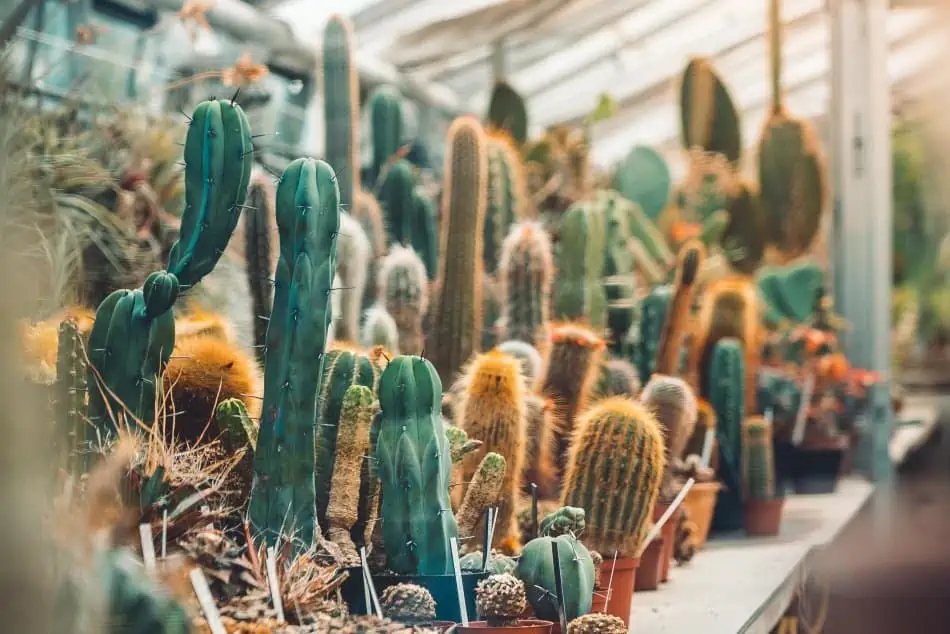
Can A Cactus Grow Anywhere In The World?

Cacti are among the easiest plants to grow as long as you understand their needs and can take good care of them. In fact, only a few plants can compare to their size, color, and beauty. Since most of them grow slowly, space is never an issue. However, just like other plants, cacti require specific conditions to thrive. This brings us to the big question that we shall cover throughout this article.

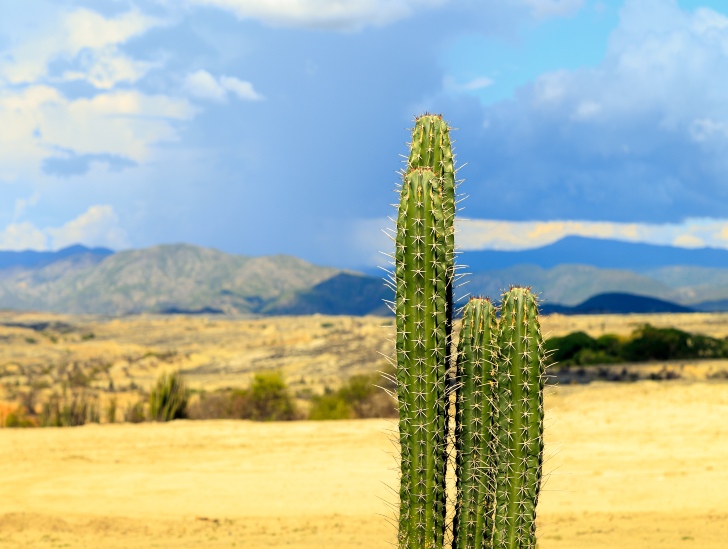
Can a cactus grow anywhere in the world?  The simple answer to this question is Yes. Contrary to popular belief that cacti can only thrive in arid areas, the truth is that these plants can survive in almost all climates. There is evidence showing that some cacti species thrive in tropical rainforests and colder climates in different parts of the world.  Typically, cacti are not fussy plants and will always thrive as long as you provide them with the right growing conditions and treat them well.

In this post, we discuss everything you need to know about cacti plants and their habitats. We shall also highlight some of the physical features unique to these plants that make them ideal for almost any climate.

What Is the Natural Habitat for Most Cacti Plants?

Let us start with what most of us know. Cacti plants are naturally adapted to living in arid areas that do not receive a lot of rainfall. In this case, the term “arid” is only used to refer to dry areas which receive sporadic rain.

In most cases, these areas are not true deserts because no plant or animal would survive in a true desert. This is the primary reason why you will find most cacti species growing in parts of North and South America.

In fact, every country in North and South America has at least a few naturally occurring cacti species growing there. 

However, further analysis reveals that most of the cacti species in these two continents grow around the Tropic of Capricorn in South America and Tropic of Cancer in North America. Some species also grow in the Caribbean Islands.  These are not desert areas.

To help you understand the concept of natural habitats better, we have come up with four different categories of cacti you need to know.

1. Desert cacti

This is perhaps the most common type of cacti. In fact, when most people think of cacti, they tend to think of deserts, but that is not always the case. The term desert is mostly misused to mean dry areas that don’t receive plenty of rainfall.

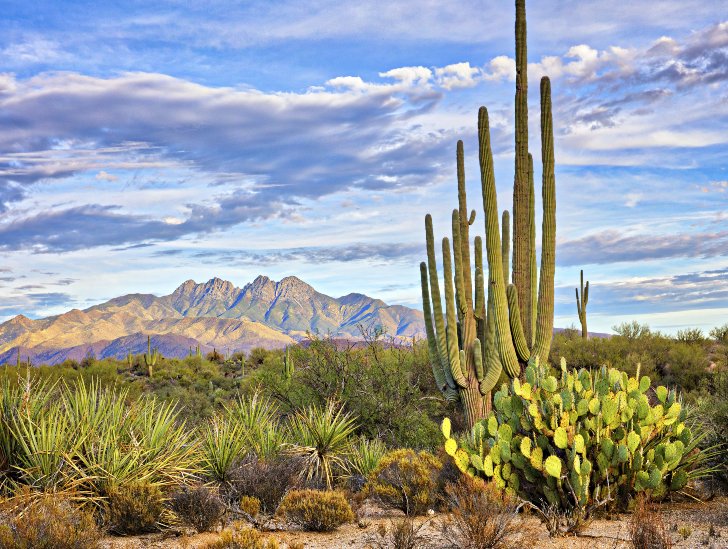
For instance, if we take the Sonoran desert in the United States, where you will find a wide range of cacti species growing, you cannot say that the area is completely dry. In this case, we are talking about a desert that has two rainy seasons, which provide these plants with plenty of water.

Desert cacti

Being the second-largest desert in North America, the Sonoran desert covers parts of Arizona and California and stretches to Mexico’s border. The first rain season occurs in the summer while the other happens in winter.

During this time, cacti plants that grow in this region absorb plenty of water to sustain them throughout the dry season.

2. Jungle cacti

You will find this type of cacti in the tropical rainforests that stretch across Central America, Brazil, and parts of Asia. Climatic conditions are quite different here compared to deserts.  Typically, these areas receive plenty of rainfall throughout the year.

Cacti species that grow in this region usually require a lot of water than their desert counterparts. Most of them have true leaves and grow pretty fast.

Most jungle cacti are either lithophytic or epiphytic, meaning that they grow on rocks or in trees, respectively. These plants receive most of their nutrients from the air or dead leaves. However, it is essential to note that they are not parasitic.

Jungle cacti that grow in trees do so for support and do not depend on their host for nutrients. One of the best examples of jungle cacti is the Christmas/Holiday cactus.

3. Mountain cacti

Some cacti species also grow in mountain regions, especially in the Andes Mountains. The Andes is the longest mountain range in the world that stretches for about 7,000km from the western coast of South America.

The temperature in this region can vary significantly from nice and warm to freezing.  Nonetheless, some cacti species have adapted to living in such high regions.

The cacti plants that dwell here shrivel in fall and winter to cope up with the freezing temperatures. The shriveling can be compared to the popular sap cycles in some plants. During these cycles, the plant’s sap “goes down” in fall and “rises” in spring to survive rising and falling temperatures.

4. Coastal cacti

We also have cacti species that have adapted to growing in coastal regions. Keep in mind that coastal areas can sometimes be harsh, and the salty water, air, and soil can make it difficult for some plants to survive there.

For instance, along the coastal strip of Chile, you will find some cacti plants that can survive for years without rain. Such plants have unique features that help them endure such harsh climatic conditions.

Since the sea water is mostly cold, a stream of cold air moves over the hot land every morning, forming fog. The coastal cacti plants find the water they need to survive by absorbing as much moisture from the fog as possible.

5. Tropical cacti

Tropical cacti are mainly ornamental plants that thrive in humid climates. You will mainly find them in South America, the Caribbean Islands, and Central America.

These plants require plenty of water since they grow in warm climates with moderate yearly rainfall.

The amount of sunlight these plants receive also affects their growth significantly. They need approximately eight hours of light daily to stay healthy.

The most common tropical cacti are the Christmas/ Holiday cactus and Easter cactus. They have different colors and blooming seasons.

Physical Characteristics Unique to Cacti Plants that Helps Them Survive Anywhere and Everywhere

As mentioned earlier, these succulents have unique features that help them survive in different climates and environments. Some of the standout features that are unique to cacti plants include:

1. The spines

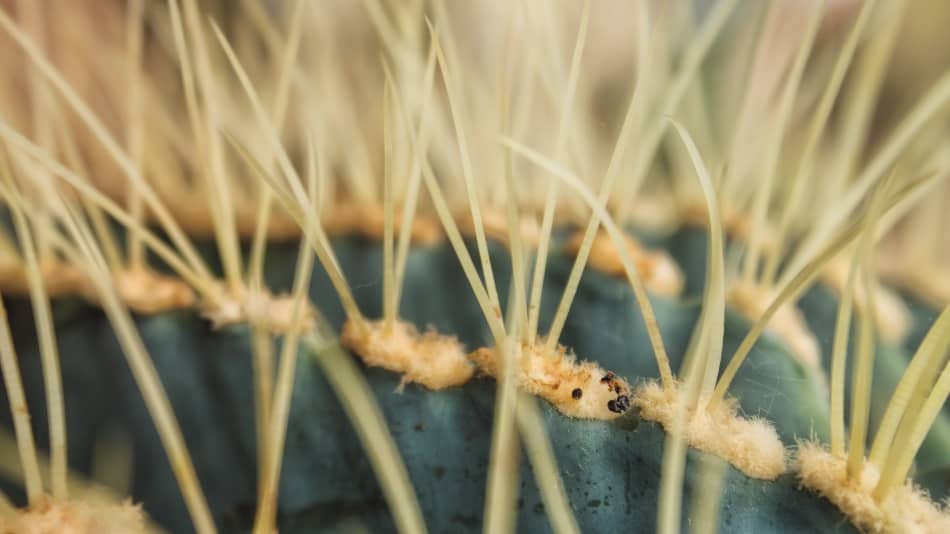
The needle-like structures on the surface of most cacti species are perhaps the most known feature distinguishing cactus from other plants. The spines play a critical role in the survival of a cactus plant.

First, they take the position of leaves on the plant. The lack of true leaves means that the plant has fewer stomata, which consequently mean reduced water loss through transpiration.

Secondly, spines play a critical role in protecting the plant from predators such as animals and human beings.  In some cacti species, they help with absorption of rainwater by directing water droplets towards the plant’s roots. 
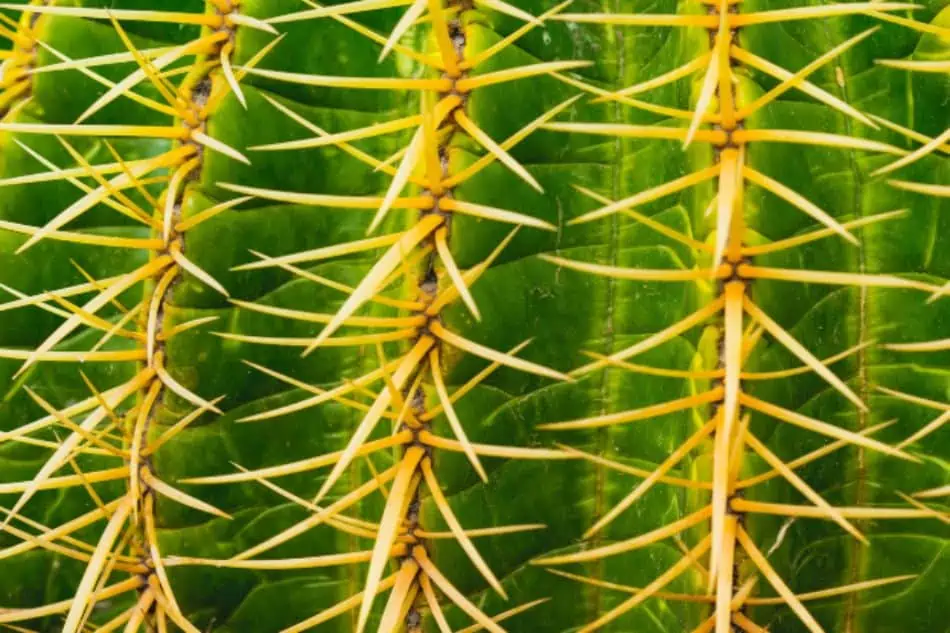
The spines play a critical role in the survival of a cactus plant

2. Areoles

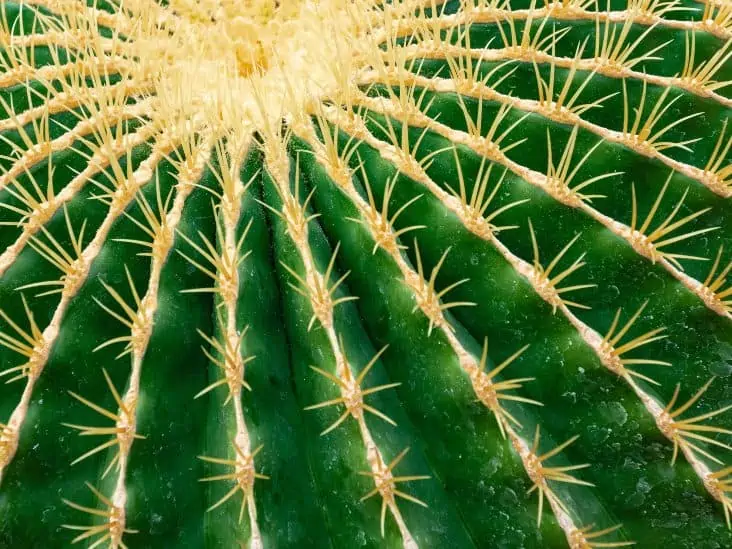
An areole refers to a raised structure on the surface of a cactus plant from which spines originate. Areoles can only be found on cacti plants. They are circular/oval-shaped and mostly appear like raised fusion-discs full of sharp spikes or small hairs.

Although some other plants may have spines, if the spines are not originating from an areola, then the plant is not a cactus.

3. Specialized root system

These succulents also have a slightly different root system compared to other plants growing in harsh climatic conditions. Instead of having a deep root system, cacti plants usually develop an extensive shallow root system that spreads widely and only sits a few inches below the surface.

Whenever there is rainfall, the fibrous roots absorb water from the surface pretty quickly and more efficiently. The roots grow exponentially during the rainy season, but when it gets drier; they wither and break off from the parent plant to minimize water loss.

4. Deep-layer stomata

All cacti plants have an adaptation known as deep-layer stomata. These are specialized cells that close when temperatures rise significantly to prevent water loss.

As a result, the plant can go for days without using any water from its reservoir. In fact, research shows that some cacti species can survive for more than two years without water.

5. Waxy cuticles

Cacti also have waxy cuticles that help them reduce moisture loss from their stems and leaves during the day.

The wax helps trap a thin layer of air around these parts, preventing dehydration and allowing the plant to remain hydrated even in hot and dry weather.

The wax also reduces the rate of water loss through transpiration, thus allowing cacti to survive in arid climates.

6. Thick and expandable stem

Cacti plants have succulent stems that help them store water. Unlike other plants, the stems of cacti can expand and contract depending on the availability of water.

When it rains, their bodies swell up as they absorb the much-needed moisture. In dry seasons, they shrink and become wrinkled to reduce water loss through transpiration.

Sometimes, the stem of the cactus may even split to create more surfaces for sun exposure and subsequent photosynthesis.

The splitting also helps reduce stress during droughts since it’s easier for them to contract into smaller sizes when water is scarce.

Can a Cactus Plant Survive in Cold-Winter Climates?

The truth is that you can grow cacti plants in cold climates as long as you know what to do and how to do it right.  While most of us may think that these succulents are only meant to thrive in dry areas, the opposite is also true.

To successfully grow a cactus plant in cold-winter climates, you must understand how these plants grow and their essential requirements.  Keep in mind that cacti plants are succulents that store water in their stems and roots.

Cacti require well-draining soil which doesn’t hold water for too long. You can easily make your own soil by mixing coarse sand and some compost in the ratio of 2:3. Avoid growing your cactus in pure sand because it doesn’t hold nutrients for long.

Although these plants do need some water to survive, you should be careful with watering, especially in the cold-winter regions. The best thing to do is to water your plant when the soil is completely dry. However, it is always good to let mother nature do the watering for you during the rainy season.

Avoid watering your plant in fall and winter because most cacti species enter a period of dormancy during this time. If you water during this period, the excess water may freeze in the stem of your plant leading to death.

Protect your plant from snow and ice and expose it to as much sunlight as possible during spring and summer. With time, your plant will get used to the cold climate and start to thrive.

While most of us may think that cacti plants are only meant to thrive in dry areas, the opposite is also true

Summary

Cacti are amazing plants that can grow anywhere in the world. You can grow these plants in your backyard or in pots and position inside the house. With their unique features, you can be sure of getting something incredible that will make your house feel like a home.

The most important thing you need to do is understand your plant’s needs and do your best to provide a conducive environment for better results.
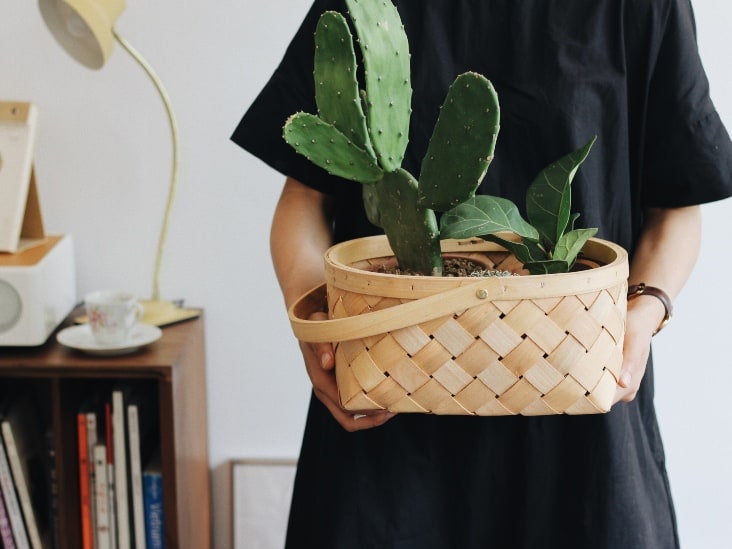
Is It Good To Have A Cactus At Home?

Have you ever wondered why people grow cacti plants in their homes?  The truth is that these plants are not only beautiful but also healthy.  Cacti and many other indoor plants can help put you at ease in your home. In fact, the benefits of growing these succulents indoors exceed the downsides.  As long as you know how to take care of your plant, it will also take care of you.

So, is it good to have a cactus at home? The simple answer is Yes. Cacti and other houseplants have a wide range of health benefits to offer us. Furthermore, these succulents are relatively easy to grow and maintain. Indoor cacti can boost your productivity, make you breathe better, and make you feel happy. They also make your house feel like home and have unique therapeutic properties.  

In this post, we discuss some of the benefits of having cacti plants in your home and where to position them to get the best out of them. Read on to find out everything you need to know about growing cacti at home.

Is It Good to have a Cactus at Home?

As mentioned above, cacti plants bring a lot of positive vibe and energy to your house.  These are simple plants that can live anywhere as long as you know how to take care of them. They are a great option if you are looking to add a bit of greenery and visual interest to your living space.

With their low-maintenance status and unique appearance, these plants are perfect to use as indoor plants. However, there are lots of other reasons why cacti make excellent indoor plants. Below are some of the top benefits of growing cacti in your home. 

1. Indoor cacti plants reduce stress

Many studies have been conducted to establish the effect of indoor plants on stress levels in humans. A study conducted in 2010 confirmed that indoor plants could reduce tension/anxiety, depression/dejection, fatigue, and feelings of anger/hostility.

These are just some of the ways an indoor cactus plant can help you feel better. If you had just one or a couple of these plants in your house, it could make you a better person. Imagine stepping out of your home every day feeling good and ready to face the day.

Pencil cactus in a clay pot.
Walking into the office feeling fresh and happy seems like a good bargain.

You can also have a cactus plant in your office to keep the positive energy and good vibe around you all day. Walking into the office feeling fresh and happy seems like a good bargain, isn’t it?

2. Taking care of a cactus plant will make you feel happy

Most of us can agree that there is no better feeling in the world than taking care of something and seeing it nourish. The truth is that taking care of plants can give you the same sense of accomplishment as taking care of a pet.

In fact, pets and indoor cacti plants make a wonderful companion because they are good to look at and don’t demand too much from you. 

You don’t need to be a plant expert to give your cactus the best care.

Furthermore, you feel good when you see your plants thriving and living happily. Although it can take you some time to figure out what your plants like, that shouldn’t be a major issue. As soon as you figure out your plants’ light requirements, appropriate pot size and soil, water requirements, and fertilizer needs, you are good to go.

When you see your plant growing well, you feel proud of being a successful cactus gardener.

Also, there is so much to learn about your cactus plant. The benefits of growing these succulents in your home are vast, and you will learn many things along the way. You will know how to propagate them, re-pot, and also discover the different types of cacti plants. 

Cactus in a mug.
Taking care of plants can give you the same sense of accomplishment as taking care of a pet

3. Improves air quality

Plants are awesome, and human beings cannot survive without them. Therefore, having some in your house helps to bring the benefits closer to you. Green plants such as cacti absorb carbon dioxide from the air and release oxygen. This is one of the basic ways of improving air quality.

Keep in mind that all human beings need oxygen to survive and get rid of harmful toxins from their bodies.

Apart from absorbing carbon dioxide, these plants can also improve air quality in other ways. In 1973, NASA scientists conducted a scientific study that identified over 107 volatile organic compounds (VOC) in the air inside one of their space stations.

Occupants of the station often suffered breathing difficulties and other respiratory complications that were later identified as the Sick Building Syndrome (SBS). Experiments were initiated to help deal with the issue, and one of the tests involved growing plants inside the space station.

After a few months of growing plants inside the station, it was discovered that the number of VOCs had not only been reduced but eliminated altogether.

By having cacti plants inside your house, you could reduce the amount of air impurities by over 50%. Indoor plants can also lower the amount of dust and bacterial buildup in your indoor spaces.

Always remember the fact that there are many toxins within your home created by pet dander, furniture carpets, plastics, paint, and certain cleaning products that can cause harm when inhaled. Cacti plants can reduce the impact of such impurities significantly.

4. Cacti plants have unique therapeutic and medical properties

That is right. A lot of people talk to their plants, which makes them feel better. It is human nature to develop a close relationship with things we value in life – whether humans or not. Just the same way some people talk to their pets, others speak to their plants.

But, the fascinating part about this interaction is that plants actually benefit from the conversation as well. In fact, some gardeners believe that talking to plants can help them grow faster and stronger.

Dog sniffing cactus.
A single cactus plant can offer you much more than you expected.

When you speak, you are releasing carbon dioxide, which plants need to manufacture food. This means that when you talk closely to your indoor plant, it gets extra carbon dioxide allowing it to speed up photosynthesis.

On the other hand, indoor cacti plants have a way of making you feel relaxed and comforted. In fact, a single cactus plant can offer you much more than you expected. Technically, the benefits of growing a cactus plant in your home are endless.

5. Boost productivity

Controlled tests have actually shown that having a cactus plant in your office (including home office) can increase productivity by over 12%. This is because they help reduce the amount of carbon dioxide in the air.

Excessive amounts of carbon dioxide in the air can make you tired, restless, anxious, and can also cause headaches making you less productive. If you can manage to control the amount of carbon dioxide present in the air you breathe, it can clear up your mind and help you focus more.

The more productive you are, the better you feel about yourself and your job, and that can lead to a better life. After all, if your boss notices significant improvement in your output, you could get a job promotion that may result in a pay raise.

Cacctus plants in a pot on top of the cabinet.
The more productive you are, the better you feel about yourself and your job.

6. Growing a cactus in your home can enhance your memory

Psychology research conducted by the University of Michigan in the United States outlined a wide range of mind-blowing benefits one enjoys when interacting with nature. Interaction can mean taking a walk in the park, looking at plant photographs, or growing plants in your home.

The study showed that interacting with nature can enhance one’s memory by up to 20%, leading to improved performance at work and school.

Therefore, it is a great idea to grow cacti plants in your house and place them in your study room, home library, home office, or any other room where you and your kids typically do your work.

Should You Place a Cactus in the Living Room?

There is no doubt that cacti plants bring positive energy to your home. These are beautiful plants with intense protective energy. 

However, the biggest problem with these plants is their spines/needles. This is the primary reason why you need to identify a good spot in your house where you will put these plants.

A good living room should be calm, relaxed and secluded from the other rooms in your house. This should be a place where you can feel comfortable and relaxed. If you have your cacti plants all over the place, they will constantly poke you with their spines.

To get good vibes, place your cactus plants in the fame and reputation quadrant of your home.  The fame and quadrant section is the part of your home dedicated to what and who you are and what you portray to the outside world.

This is mostly the corner of your house that is direct across the main entrance. You can also position your cacti plants along with windows since they emit a lot of protective energy. Other places you can place your plant include your study room, home office, and library room.

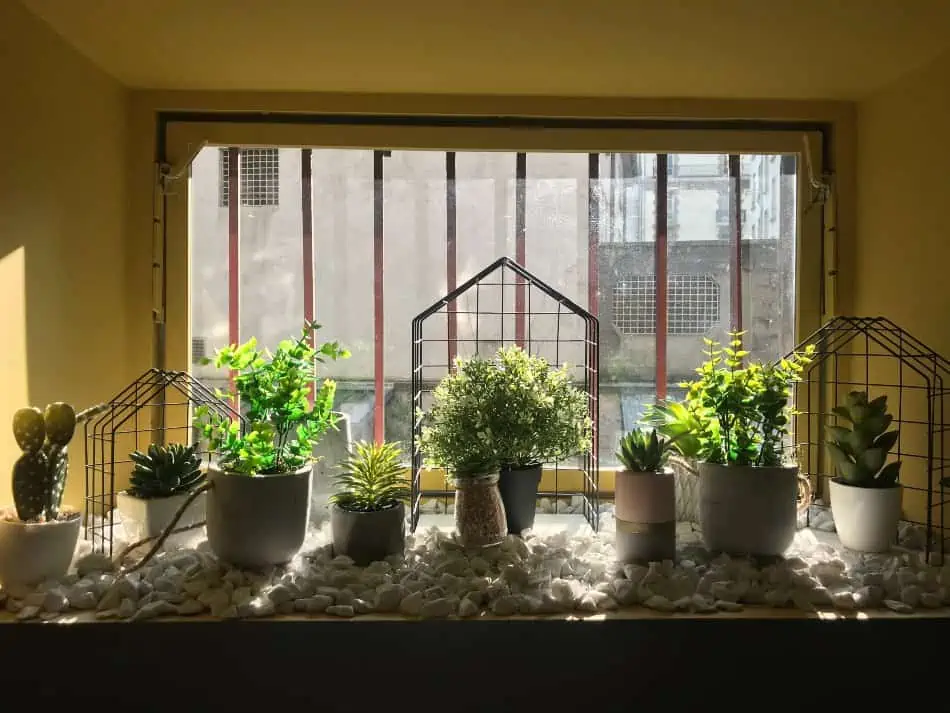
Plants near the window exposed to sunlight.
You can also position your cacti plants along windows since they emit a lot of protective energy

Summary

Cactus plants are great plants to have in your home since they bring subtle beauty and an incredible visual experience, especially when they flower. The only thing you need to ensure when growing these plants in your home is to have them in the right place. Avoid positioning them in your living room and kitchen.

Where In The World You Can Find Cactus?

Members of the cactus plant family are unique and tend to exhibit a wide range of shapes and sizes. Even though these succulents can be found in many parts of the world, most cacti species except four tropical species are native to America.  Like every group of living things, the differences between different cacti species vary considerably.

In fact, each cactus species is well adapted to growing in specific areas that experience a certain climate. For instance, most species within the Echinocereus genus are cold-hardy and can withstand frost.

So, where in the wold you can find cactus? Generally, most cacti species grow in hot and dry regions in North and South America. In North America, these desert plants are prevalent in Mexico, Canada, and many parts of the Southwestern United States. In South America, they are mostly found in Brazil. Some cacti species also grow in Central America and adjacent Islands such as the Caribbean and Galapagos. Rhipsalis baccifera is the only exception that can be found growing in parts of tropical Africa, Madagascar, Mauritius, Seychelles, and tropical America.

Read on to discover everything you need to know about this amazing desert plant and where it grows. We cover essential details that will enrich your knowledge.

Cactus Plant: A Quick Overview of Its Structure and Unique Features

The family of Cactaceae comprises a significant number of flowering plants with succulent stems. The term succulent is used to refer to stems that can store water for relatively long periods.  This is one of the unique features of this plant that helps it to survive in arid conditions.

The presence of a unique structure known as the areole also makes these plants unique. The primary function of the areola is to produce flowers, branches, and spines. Keep in mind that different kinds of spines serve different purposes.

Some spines are soft and feathery to help protect the cactus from intense UV light, while others are tough and sharp to help protect the plant from predators.  The presence of spines instead of true leaves also plays a critical role in minimizing water loss through evaporation and transpiration.

The plant surface is covered with a waxy-like substance known as cuticle that also plays a critical role in minimizing water loss. Cacti plants have also developed a unique survival mechanism known as revered opening and closing of stomata.

While regular plants open their stomata during the day and close them during the night, the reverse is true for a cactus. Their stomata open during the night and remain closed during the day to help conserve water.

A closeup image of a cactus.
The presence of spines instead of true leaves plays a critical role in minimizing water loss through evaporation and transpiration

These plants tend to vary in size, depending on their species. Perhaps, the tallest cactus is the Mexican giant cardon that can grow to a height of 60 feet (18 meters). In contrast, the smallest cactus is believed to be the Blossfeldia liliputana that is less than three centimeters in diameter when fully grown.

Natural History of Cacti Plants

Most cacti species are native to America. In fact, there is no known cacti species native to Europe, Australia, or Africa.  To date, not much is known about early cacti plants because only a few cactus fossils have been found.

The oldest fossil that was found in the United States dated to more than 50 million years ago and was highly similar to modern-day prickly pear.

However, scientists believe that some cacti plants grew in the tropical environment until about 65 million years ago when the world’s climate started to change from year-round rainfall to alternating patterns of dry summers and wet winters.

Later, when deserts began to form, the plant was forced to adapt to the dry, desert conditions. Although most cacti species are synonymous with deserts, some grow in tropical regions of Mexico, Brazil, and the Caribbean Islands.

One of the most common tropical cacti species is the Christmas cactus, which grows in Brazil’s tropical rainforests.

Where Do Cacti Live?

Most cacti species grow naturally in the wild.  This is where they are meant to be. The three places you will find these plants growing naturally are; deserts, mountains, and forests.

Deserts

Many people tend to think that all cacti plants grow in deserts, but that is not the case. Only a few cacti species are truly adapted to growing in arid conditions such as deserts and semi-deserts.

The giant Saguaro cactus is perhaps the most prominent face of desert cacti. The giant plant grows in the Sonoran Desert and can live for up to 200 years. The Sonoran desert is the second largest desert in North America, covering parts of Arizona and California. It also stretches to the Mexico border.

The desert receives three short rain seasons- one in summer and two in winter.  The Saguaro is well-adapted to live in these conditions and grows well among other desert plants.

A Saguaro cactus in desert.
Saguaro cactus in desert

Mountains

Some cacti plants are also found in mountainous regions. The Andes is one of the longest mountain ranges in the world that serves as home to a significant number of cacti plants. The mountain stretches from the western coast of South America for approximately 7,000km.

Copiapoa is one of the oldest cacti species growing in the Andes. The plant is well adapted to living in rocky areas that can go for years without receiving rain.

The primary reason why the Copiapoa can survive for such a long period without water is the sea. Cold air from the adjacent Caribbean and Pacific seas moves over the hot land producing a lot of fog. This happens almost every morning, helping the plant find the water it requires to survive by absorbing moisture from the fog.

A prickly pear cactus.
Prickly pear cactus

Forests

A significant number of epiphytic cacti species grow in the tropical rainforest that stretches across Central America and northeast of Brazil. Climatic conditions are quite different in these regions since they receive plenty of rainfall.

Cacti species that grow here, such as the Christmas cactus, don’t need physical modifications or unique features to survive since there is plenty of water available.

Geographical Distribution of the Cactus Family

In this section, we cover the general range of altitude and latitudes that favor the existence of cacti plants.

Altitude

Some cacti plants do well in low altitudes, while others do well in high altitude areas. These succulents can be found growing down along the coast of the Pacific and Atlantic oceans as well as other low-altitude regions such as the infamous Death Valley in California.

In some parts of North America, cacti plants can be found growing up to 3350meters (11,000 feet) above sea level, particularly in the White Mountains in California. Some of them grow in even higher altitudes in areas of the Sierra Nevada range.

In parts of South America, particularly on the Western edges of Andes, some cacti plants grow in regions as high as 4,500 (15,000 feet) above sea level.

In most cases, the high altitude species are low growing plants similar to those found in the southern and far northern altitudes. The higher altitude cacti species are often spiny or wooly to survive the intense UV light that strikes the surface due to a thinner atmosphere.

A cactus on the mountain.
Some of the cactus grow in even higher altitudes in areas of the Sierra Nevada range.

Some of the common species found in the high altitude regions include Austrocylindropuntia floccosa and Opuntia polyacantha.

Latitude

In North and South America, most cacti species are found at latitudes that many people may find quite surprising.  To the northern parts of America, these plants are mostly found in Southern Canada, specifically Ontario, to the East and British Columbia to the west.

In the much drier and milder western range, you will find them growing in northern regions than eastern regions. Unfortunately, only a few cacti species can survive the extreme cold conditions in this region.

To the tip of southern America, you will find low-growing cacti plants such as the Pterocactus australis, Maihueniopsis darwinii and Maihuenia patagonica.

Don’t Mistake Other Desert Plants for Cactus

Cacti are not the only plants that grow in deserts. There are lots of other plants in these areas that many people mistake for cactus. Some of the common non-cactus plants you will find in the desert include century plants, commonly referred to as Agave and the Dudleya plant.

Dudleya has succulent leaves and stems and a unique physical appearance that closely resembles a cactus plant.

Other plants commonly mistaken for cacti include bears grass, desert pineapple, some types of Yuccas, and stool plants.

Agave plant with spikes.
Agave and the Dudleya plant are some of the plants that you can find in the desert.

The only stem plant that is not a cactus is the candelilla, which is covered with many slender branches. The plant doesn’t have areolas or spines, and its flowers are quite small compared to cacti flowers.

Summary

This simple overview covers some critical information you need to know about the general habitats where cacti plants grow. Keep in mind that there may exist micro-climates that host unique cacti species suited for those conditions within each habitat.

The occurrence of cacti plants in extremely cold and wet regions may come as a surprise to many, but that is how things are.

We hope you have learned a few things that can make you a better gardener. Subscribe to our email list for the latest gardening tips on cacti plants.

How Long Does A Cactus Live?

Have you ever wondered how long cacti plants live? If so, you are not alone. Most gardeners who grow these plants in their homes never see them die as long they are treated well. Most cacti plants are low maintenance plants thanks to their unique survival abilities.  If you want to know how long these succulents live, you are in the right place. We will discuss that in detail below.

So, how long does a cactus live?  Generally, the lifespan of a cactus plant ranges from 10 years to 200 years depending on the species of the cacti. Outdoor plants tend to live longer than their indoor counterparts because outdoor conditions tend to be perfect. However, with good care, indoor plants can still live for many decades.

Keep in mind that there are over 2,000 cacti species, and each one of them has its own lifespan. Read on to find out everything you need to know about cacti plants and how long they live.

Which Is the Longest Living Cactus Species?

It is believed that the longest living cactus species is the Saguaro which belongs to the genus Carnegiea and species gigantea. The saguaro cactus is native to both Mexico and Arizona and can survive for between 150 and 200 years in the wild.

In fact, it is believed that the oldest Saguaro found in Arizona was up to 300 years old, but died in the mid-1990s. The plant lived in the Saguaro National Park and succumbed to bacterial infection. Typically, older cacti plants are more vulnerable to diseases and infections than younger plants.

A fully grown Saguaro cactus can reach a height of 50 feet, and that is what makes it unique.  Also, Saguaro plants are unable to live independently in their early years. So, an adult Saguaro nurses and protects a baby Saguaro by giving it essential nutrients.

In some cases, the older plant may die in the process, leaving the young Saguaro plant behind. It is also interesting to note that during the first ten years of this plant’s life cycle, it may not grow beyond two inches tall.

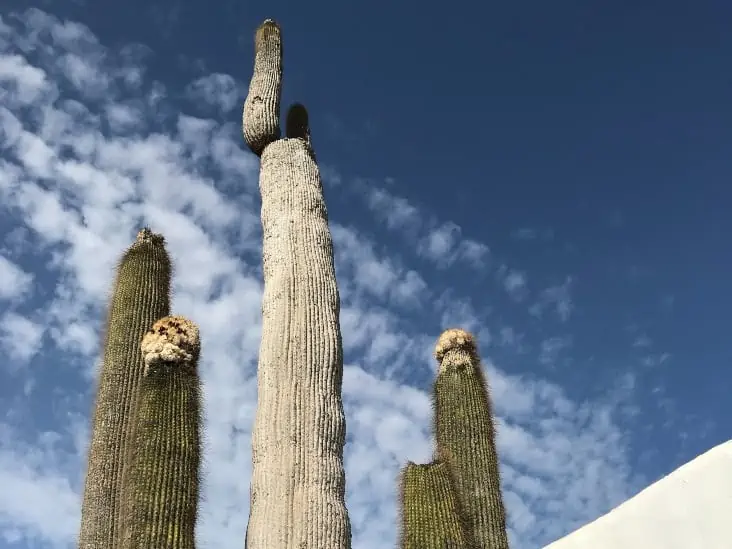
A Saguaro cactus.
The Saguaro cactus can live for 150 – 200 years in the wild

Why Do Cacti Live for So Long?

A wide range of factors helps a cactus survive for such a long time.  For starters, it is good to mention that cacti plants are naturally desert plants. In this ecosystem, there are a few animals that feed on these plants.

Generally, in the inhospitable desert environment, life is tough. Therefore, cacti plants have to find a way of adapting to the surroundings and living comfortably. They need to do everything possible to survive and reproduce.

Since conditions conducive to flowering and reproduction don’t come along too often, cacti plants have developed slow metabolism and longer lifespans to ensure they get an opportunity to reproduce before they die.

How Long Do Indoor Cacti Plants Live?

Once they are out of their natural habitat, cacti plants are vulnerable to a wide range of issues that may endanger their lives. Therefore, it is upon you to take care of your plant and help it survive.  Fortunately, it doesn’t require a lot of effort to keep your plant in great shape.

Make sure you water your plant properly and provide it with sufficient exposure to light so that it can survive for many years.

Most importantly, you need to ensure your plant is not overwatered and your potting mix is well-draining. Also, before you bring your cactus indoors, be sure to read everything about it and understand its species.

You will be in a better position to take care of your plant if you know the specific species you own since there are significant variations in light and water requirements between different species.

If you cannot identify the species of your plant on your own, be sure to seek expert help.

A collection of cactus in a shelf.
Indoor cacti

How Long Do Outdoor Cacti Plants Live?

Outdoor cacti plants typically live longer than indoor plants. This is because they receive the perfect amount of sunlight and get enough water to survive in a desert-like environment.

Furthermore, outdoor cacti are naturally protected from different pests and diseases or fungal infections that may affect the plant indoors.

Depending on the species, outdoor cacti can live up to 50 years or more. And with proper care and maintenance, you can expect your outdoor cactus to provide you with many years of joy.

Just make sure you don’t over-water your cactus and check for potential signs of disease or pests. Also, keep the surrounding area clean, so your plant can get enough light and air circulation.

Do Cacti Plants Experience Problems While Aging?

Although these succulents live for a relatively long time, they will typically start showing their age with time. The damages and blemishes they pick up over time begin to be prominent triggering degradation in the plant’s cosmetic appearance.

Things such as exposure to excessive and direct sunlight will start causing severe sunburns that may lead to permanent blemishes on the surface of your plant.

Just like animals, older cacti plants may require a lot of attention and care to remain alive. Sometimes, part of the cactus will break off under its own weight, and there is nothing you can do about it.

The fallen stems may sometimes root and start growing into a new plant, but that is not a guarantee. All you have to do once you start seeing signs of aging in your plant is to treat it with a lot of care. Try to provide it with perfect conditions and minimize disturbance.

The Resilience of a Cactus Plant

Water and sunlight are necessities for all plants. Lack of water and exposure to sunlight can ruin your plants appearance and affect its growth. This might eventually kill it. Few plants can withstand prolonged absence of water and sunlight.

In this section, we discuss how the cactus is adapted to living in harsh conditions and the plant’s water and sunlight requirements:

How are cacti plants adapted for survival?

Although living for such a long time is impressive, doing so in an arid environment is even more incredible. Living in such an inhospitable environment without a steady supply of water can be tough.  This explains why cacti plants have developed several adaptations to help them survive.

These plants grow shallow roots that spread far away from the plant so that they can absorb as much water as possible whenever it rains. Growing a dense network of shallow roots means absorbing more water when there is rainfall which is essential to their survival.

During the short rain season, cacti plants develop temporary root hairs on the fibrous roots to help maximize water absorption. After the rain season, the root hairs dry off and break off from the primary roots because they are no longer needed.

A desert cactus
They minimize water loss through transpiration since they are made of tough fiber.

Cacti plants don’t have leaves and true branches. Leaves and branches usually facilitate huge water loss through evaporation and transpiration. Instead of leaves, these plants have spines that serve two purposes.

First, they minimize water loss through transpiration since they are made of tough fiber. Second, they protect the plant against predators in the desert.

Unlike other plants, cacti experience reversed opening and closing of stomata. While other plants open their stomata during the day and close them during the night, the reverse is true for these plants. The reversed opening and closing of stomata help to minimize water loss through transpiration.  

The main stem of the plant is thick, fleshy, and has a waxy waterproof coating. This modification allows a cactus plant to store large volumes of water without running the risk of water loss.

These succulents also have a unique ability to reduce or expand the size of their stem as the volume of water stored in the stem fluctuates.

A prickly cactus.
Cacti plants have developed several adaptations to help them survive in desert

How long can a cactus live without water?

Being a hardy plant, a cactus can live without water for a considerable amount of time. However, the actual amount of time tends to vary significantly from one species to another.

While some cacti species won’t survive for more than two weeks without water, others can go for up to two years.

Typically, outdoor species are more resistant to water shortage than indoor species. For most indoor species, you need to keep a close eye on the plant throughout the year.

Watering your plant at least once a week is a good frequency. However, you should always let the soil dry out completely before you water again.

How long can a cactus live without sunlight?

Just like other green plants, cacti need sunlight for photosynthesis. Failure to expose your plant to sunlight for recommended amounts of times can be catastrophic.

Luckily, these plants are resilient and can tolerate shade for relatively longer periods compared to other plants. Light requirements of cacti plants also tend to vary greatly depending on the plant species.

Most cacti species will become weak and malnourished in the absence of sufficient light for prolonged periods.

Although cacti species that are highly shade-tolerant won’t die even in the absence of light, they won’t be healthy either. They won’t flourish and may fail to flower altogether.

Cacti species that do well in colder regions can survive for up to four months without sunlight, but those that do well in arid areas may not survive for that long.

It is recommended, therefore, to keep an eye on your cactus plant and ensure it receives the required amount of sunlight throughout the year.
A matured cactus.
Most cacti species will become weak and malnourished in the absence of sufficient light for prolonged periods

How Long Can a Cactus Plant Live Without Fertilizer?

Although most cacti species are naturally adapted to survive in nutrient-poor environments, they will still need some form of nutrition.

Too much fertilizer can damage your plant as it is highly susceptible to salt build-up because of its water-storing tissues.

Most species can survive without fertilizer for up to a year, but you should always keep an eye on your plant’s health.

It is important to note that cacti plants are slow-growing species and usually require very little fertilizer. If you decide to use it, do so sparingly.

It is also important to feed only during the active growing season when the plant requires more nutrients for growth. This will vary depending on the species of your cactus plant.

How Can I Increase the Lifespan of My Cactus Plant?

The lifespan of a cactus plant is mainly determined by its species and growing conditions. But, you can increase the life expectancy of your cacti plant by providing them with ideal temperature, humidity, and soil moisture levels.

Be sure to provide adequate light to the plant since most species of cacti require at least six hours of full sun per day. Also, add some compost and fertilizer to the soil once or twice a year, as it will help your cactus to thrive.

Finally, water your cactus regularly during the growing season. Allow the soil to dry out between watering sessions, and do not overwater, as too much water can cause root rot.

Summary

There are over 1,500 cacti species that come in different sizes, shapes, and colors. The average lifespan of these plants varies greatly from one species to the other. Species such as the Saguaro can live for up to 200 years while jungle cacti species such as Christmas cactus have an average lifespan of between 20 to 30 years.

Outdoor plants generally live longer than indoor plants. The level of care you provide to your cactus plant will have a significant impact on its lifespan.

We hope you have learned something new that will help you become a good gardener. Feel free to share this information with your friends by clicking on the social media buttons below.

The 4 Most Common Types Of Cactus Plants (that you can grow too)

What are the most common types of cacti? This is one of the most common questions that new gardeners tend to struggle with when deciding on the type of cactus to acquire. Sadly, for those who don’t understand much about succulents, they tend to think all cacti are the same. They only realize they were wrong when they step into a nursery to acquire their first plant. In reality, the cactus family has a wide range of different species to choose from.

So, what is the most common type of cactus?  Some of the most common types of cacti include

  1. The Golden Barrel Cactus
  2. Prickly Pear Cactus (Opuntia)
  3. Rhipsalis
  4. The Saguaro Cactus

While all of them are perfect for growing at home, the optimum growing conditions for each species tend to vary greatly. Therefore, it is always good to take time and understand the light and water requirements of each species before you make up your mind on which one you prefer to add to your indoors or home garden.

In this post, we discuss everything you need to know about each of the mentioned species.  What is unique about each one of them? Where do they grow? What are some of the features that make them unique? Read on to discover everything you need to know about these common types of cacti.

1. The Golden Barrel Cactus

A golden barrel cactus.
The Golden Barrel Cactus

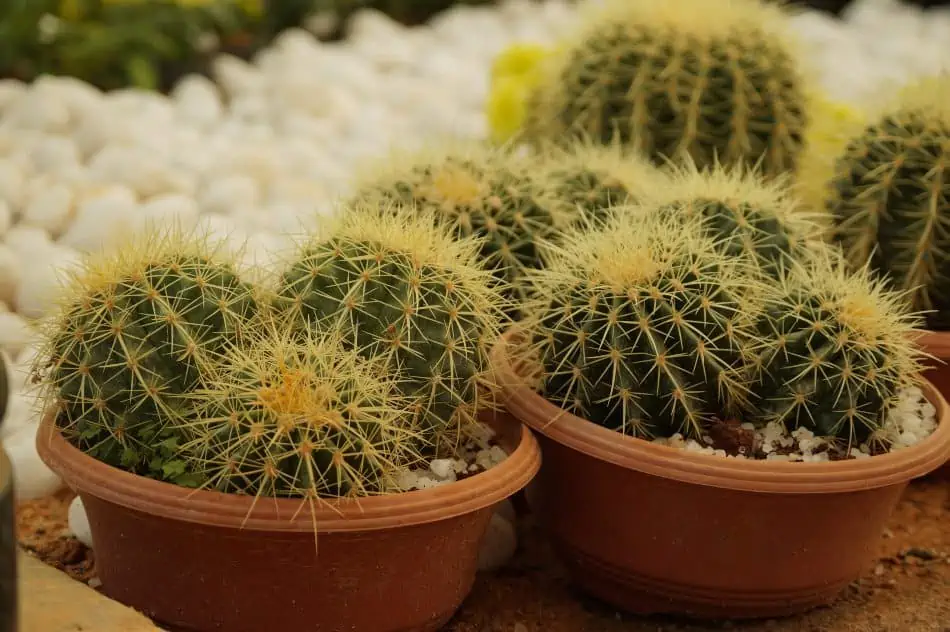
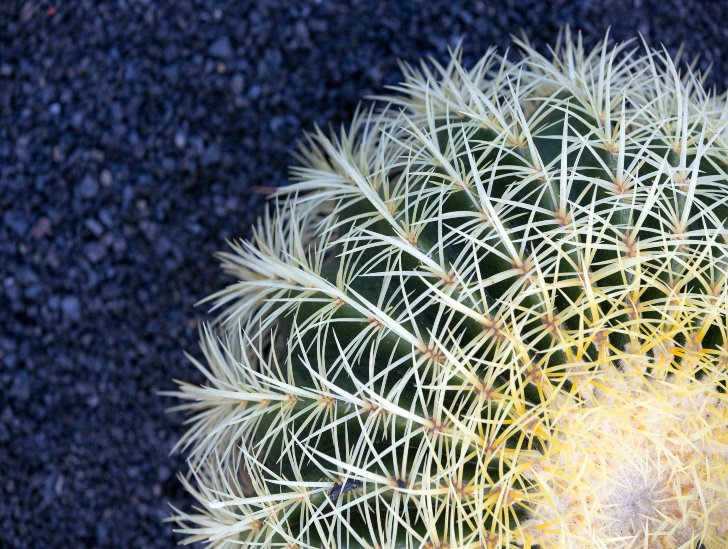
The Echinocactus grusonii, commonly referred to as the golden barrel cactus is globe-shaped and ideal for growing on patios, in conservatories, or any other type of indoor glass room. This type of cactus grows to as much as four feet tall and three feet wide much like the barrel cactus hence its name. Its crown has whitish woolen hairs at the top.

Its stem is ribbed and produces prickly yellowish spines that are quite dangerous. There is also the spineless type that is hard to find.

 This type of cactus flowers mostly in mid-summer although the flowering is rare. Most people grow the golden barrel cactus for its foliage rather than flowers. In fact, its desert look is more appealing to gardeners than the flowers.

Growing the Golden Barrel Cactus

Think carefully before you decide to grow this type of cactus, especially if you have children and pets since its spines can be quite dangerous. In some cases, wounds from its spines require antibiotics to heal.

On the light side, you can choose to use this plant as part of your home security system by positioning it under low windows as a defensive planting.

Be sure to plant it in a safe spot or container and put it out of reach for kids and pets. Don’t crowd it and make sure you leave sufficient room for new offsets.

The cactus grows fairly quick at first before slowing down after some time. Typically, it might take up to ten years for the golden barrel cactus to reach ten inches in diameter. Just like other cacti plants, golden barrel cactus require little care and attention to thrive.

Top view of a Golden Barrel Cactus.
Be sure to plant it in a safe spot or container and put it out of reach for kids and pets.

Golden Barrel Care

The Echinocactus grusonii requires plenty of sunlight to thrive. Therefore, if you are growing it in a glass room, you may be forced to provide some shade during hot summer days to prevent sunburn. Temperatures averaging 50oF -75oF are ideal for growing but avoid anything below 40oF.

Water it sparingly from spring until fall and stop watering during winter. Overwatering this type of cacti, especially when the temperature becomes too cold, can easily lead to root rot. 

You should also ensure your potting mix drains well and fertilize the plant at least once every four weeks during summer using a high potassium fertilizer.

2. Prickly Pear Cactus (Opuntia)

A Prickly Pear Cactus.
Prickly Pear Cactus (Opuntia)

The prickly pear cactus commonly referred to as Opuntia is a member of one of the largest cactus families.  The cactus is usually identified by its wide, flat, and branching pads. Some people call it the paddle cactus or nopal cactus.

Many varieties of this cactus have detachable spines and glochids that can cause severe allergic skin reactions. The plant is native to the Western Hemisphere in parts of North America and Mexico.  The fruits, pads, and flowers of a prickly pear cactus are edible.

With all the spines and glochids, it may be hard to understand why the Opuntia cactus is so popular until you see its beautiful flowers which blossom from the areola of thorns. 

Although it takes quite long to mature and start flowering, it is worth the wait. The flowers come dazzling in shades of orange, yellow, and red. 

Growing a Prickly Pear Cactus

You can grow the prickly pear cactus from cuttings. Wait until spring or summer to achieve better results with cuttings. If you choose to grow the plant from seeds, start in late spring for better results.

To achieve better results, make sure you grow the prickly pear in a spot that receives plenty of sunshine and has well-draining soil.

Be careful with the planting and only transplant at the same level as they are currently growing. Planting the prickly pear deeper into a container may cause severe rotting of the plant.

Keep in mind that prickly pear cacti can be relatively heavy to lift and place in a hole. Therefore, an extra pair of hands may help.

Opuntia Cactus Care

This type of cacti prefers alkaline to neutral, well-draining soil. Soil with poor drainage can cause severe plant and root rot. The prickly pear is extremely drought-resistant and doesn’t require frequent watering. In fact, avoid watering newly propagated pads for the first month. After that, only water every three or four weeks during the first year.

To encourage flowering, make sure you fertilize your young plants with a well-balanced 10-10-10 fertilizer. For relatively mature plants, consider using a 5-10-10 or even 0-10-10 water-soluble fertilizer to promote fruiting and flowering.

Luckily, prickly pear cactus is not susceptible to pests and diseases but always remember the fact that it can easily be affected by rot if grown in potting mix with poor drainage.

3. Saguaro Cactus

A Saguaro Cactus.
Saguaro Cactus

The Carnegiea gigantea, also known as the saguaro cactus, is one of the defining plants of the Sonoran desert. The succulent is composed of a tall, thick, columnar stem that is about 18-24 inches wide. A typical saguaro will also have several branches curving upwards distinctively.

Its skin is relatively smooth and waxy, and the stem and trunk have stout spines clustered on their ribs.

With the right conditions this giant cactus can live for up to 200 years. This cactus is a slow-growing plant that takes up to 30 years to start flowering.

A ten-year-old Saguaro might only be one or two inches tall. However, a full-grown saguaro can be up to 60 feet tall. When it is fully hydrated, the plant can weigh up to 4800 pounds.

Growing a Saguaro Cactus

The big size of this plant doesn’t mean that you cannot grow it indoors or in your home garden. In fact, the cactus is among the most common indoor cacti plants in the United States and other parts of North America.

However, to grow it successfully, you need to do everything right to help it stay healthy and thriving. The freezing point is one of the critical considerations when determining where to grow a saguaro.

Technically, if the elevation is too high, the extremely cold weather and frost can easily kill the plant. Therefore, it is crucial to ensure your plant receives plenty of sunlight. If you are growing it indoors, position it in a brightly lit spot preferably a north-facing window.

During winter, make sure you bring your saguaro indoors before temperatures drop to below 60oF. Just like the other types of cacti, the saguaro requires well-draining soil that doesn’t hold water for too long.

Saguaro Cactus Care

Although this type of cactus is extremely drought resistant and can survive for too long without water, it doesn’t mean you avoid watering it completely. Saguaro plants grow and flower better if given an adequate supply of water.

Water it moderately during the growing season (from April to mid-September) and sparingly during winter.

Fertilize it every two or three weeks during the growing season from early spring to late summer.

Another thing you need to keep in mind is that saguaro plants have a weak root system. Therefore, avoid growing them in bigger pots and don’t repot them unless it is absolutely necessary.

4. Rhipsalis Cactus

A Rhipsalis Cactus.
Rhipsalis Cactus ( Photo by David J. Stang – source: David Stang. First published at ZipcodeZoo.com, CC BY-SA 4.0 )

Rhipsalis baccifera or the mistletoe cactus is a tropical cactus native to rainforests in relatively warm regions. The plant is primarily epiphytic meaning it lives in trees. However, some varieties of this cactus are lithophytic meaning that they grow on rocks.

The cactus features a cylindrical- pendant stem that branches frequently. Rhipsalis cactus lacks spines and only has beautiful hair-like structures on their surfaces. Its flowers and fruits are relatively smaller in size and spineless.

A majority of Rhipsalis species grow in tropical zones of Brazil, but a few of them are also found in South America and the Caribbean.

Growing Rhipsalis Cactus

The mistletoe cactus is relatively easy to grow from cuttings since seeds take quite a long time and require near perfect environmental conditions to germinate. Simply take a cutting and let the severed end callus for several days. 

After that, plant the callused end of the cutting into a well-draining potting mix that has been lightly watered. Most cuttings start growing roots after two to six weeks.

Rhipsalis Cactus Care

Make sure you plant your mistletoe cactus in well-draining soil. You can make your own potting mix by combining regular garden soil with coir, gravel, orchid bark, or sphagnum to enhance drainage.

One thing you must keep in mind is that Rhipsalis is not a drought-resistant plant. Therefore, frequent watering is essential to keep the plant healthy.

However, take great care not to overwater it since it can cause weak stems and root rot. Typically, Rhipsalis cactus requires watering at least once every week.

Avoid applying fertilizer on newly potted mistletoe plant and wait for at least one year when the soil begins to become depleted of nutrients. If you must apply fertilizer to your plant, consider using a diluted half-strength fertilizer specially formulated for cacti.

Is Cactus Poisonous or Dangerous To Kids?

Disclaimer: The author is not a medical doctor or veterinarian. The information presented is purely to share our experience and for entertainment purposes. As always, check with a doctor and/or veterinarian before making any health or nutrition decisions and consult with a doctor and/or veterinarian regarding any question or problem that you have. The author and blog disclaim liability for any damage, mishap, or injury that may occur from engaging in any activities or ideas from this site.

Growing a cactus inside your house does not only beautify your indoor spaces but also gives a refreshing aura to your home.  A lot of people find it quite relaxing to see a beautiful plant such as cactus in the middle of the center table or the four corners of their living room. However, some gardeners are afraid of growing cacti in their homes since they aren’t sure if these plants are safe for their kids or not. 

So, is cactus poisonous to kids? Most cacti species are safe for both humans and animals. Their toxicity levels are quite low, but the spines and needles are quite dangerous.  The best way to know if your plant is poisonous is by determining its species. There are a few species that can potentially pose a significant danger to your kids. If you don’t know the type of cactus you own, be sure to seek immediate medical attention if your child accidentally ingests the plant.

In this post, we discuss everything you need to know about the safety of cacti plants and what you can do to keep your kids safe. We shall also highlight some of the cacti species that are poisonous.

Are Cacti Plants Poisonous To Children?

Due to the sensitivity of some cacti plants such as the Christmas cactus, they need an indoor environment to thrive.  The stems and leaves of such plants cannot be exposed to direct sunlight. However, before you take this step, you will want to be sure about the safety of the plant, especially if you have kids and pets in your home.

Research shows that plants have been one of the world’s leading poison contributing factors inside homes. A significant number of indoor plants have been found to contain substantial amounts of toxins that may be harmful to humans.

But, does it mean that all cacti plants are poisonous? No.

The good thing about most cacti species is that their toxicity level is almost zero. You don’t have to worry about the effect of the plant on your family’s health. In fact, this is one of the top reasons why a significant number of people out there prefer growing cacti indoors.

In some rare cases, infants may be sensitive to the Christmas cactus, but it doesn’t mean that it will cause any harm to them. The plant is absolutely safe for your baby, and there is nothing to worry about.

However, there are certain times when small kids may try to ingest the cactus while playing. For precautionary measures, make sure you position your plant in a slightly elevated area where your kids cannot reach easily. 

Although the plant may not contain toxic elements, it is definitely not fit for human consumption. Only the fruits of a few cacti species are edible.

A closeup image of a cactus.
The good thing about most cacti species is that their toxicity level is almost zero

Poisonous Cacti

One thing you should note is that not all cacti plants are safe. Although most of them have amazing features, some of them are also not safe at all.

By poisonous, we are not referring to the leaves and spines even though their spines are quite dangerous as well if they find their way into your skin.

Keep in mind that the spines serve as a defense mechanism to protect the plant against predators and also serve a reproductive purpose. They usually cling onto a host, and when they fall off, they start growing into new plants.

So, how are these plants poisonous? Well, some cacti plants are highly corrosive to the human skin, and when they are ingested, they may a wide range of illnesses. These are the plants you need to watch out for and, if possible, avoid them completely.

While you may have had no need to research before buying your cactus plant, the dynamics change if you have kids and pets in your home.

Take time to establish safe cacti species to grow at home and generally avoid the following species that are poisonous:

1. San Pedro Cactus (Echinopsis Pachanoi)

The San Pedro cactus is known for its beautiful flowers and spines. It mostly grows in the Andes Mountains in Argentina, Chile, Ecuador, and Bolivia. This cactus species is mainly used for healing and recreation purposes, but it contains high amounts of mescaline and other psychedelic alkaloids.

Mescaline is listed as an illegal substance in most countries since it is known to cause hallucinations when ingested.

A san pedro cactus.
San Pedro Cactus

The chemical substance can also distort one’s thought process.  Therefore, it not advisable to grow the San Pedro cactus in your home because it can cause devastating effects to your kids when they ingest it.

Some of the side effects that one can suffer from ingesting this cactus include dizziness, stomachache, nausea, vomiting, and palpitations.

2. The Peruvian Torch (Echinopsis Peruviana) Cactus

The Peruvian Torch is widely known for its relatively fast-growing nature. This cactus species grows large spines and is mostly found on the slopes of the Andes Mountains in Peru.

This plant is named after one of the famous cities in Peru. It is easy to cultivate as a home plant, but you should avoid it if you have kids or pets to protect.

A unique feature of the Peruvian Torch that makes it attractive is the gorgeous flowers that grow near the top of the stem. Its flowers open up at night and have a relatively strong fragrance.

However, ingesting this cactus can be dangerous since it is known to cause hallucinations and a wide range of disordered thoughts. You can still cultivate the Peruvian cactus as an outdoor plant, but make sure you keep it away from your children and pets.

A Echinopsis Peruviana.
Echinopsis Peruviana

3. Peyote Cactus (Lophophora Williamsii)

The Peyote cactus is one of the few spineless cacti species you will come across. While you may assume that the cactus is safe because it has no spines, the opposite is quite true. Peyote cactus is a slow-growing plant that is mostly found in the western parts of the USA and Mexico.

This plant is traditionally used to heal illnesses such as diabetes, fever, childbirth pain, skin diseases, and rheumatism since it contains mescaline.

However, the same mescaline content has psychoactive properties. When ingested, one will start feeling psychoactive, and the side effects may be adverse.

For instance, an overdose of peyote cactus can lead to a psychotic breakdown, which is quite dangerous for individuals with mental problems because it aggravates the issue.

The plant also has strong emetic effects and a bitter taste that can be nauseating hence the need to keep it away from kids. Peyote cactus is also known to cause variations in breathing, blood pressure, papillary dilation, and heart rate.

4. Canary Islands Cactus (Euphorbia Canariensis)

The Canary Islands Splurge cactus is a top choice for many gardeners because it is relatively easy to maintain and does well in well-drained soil and full sunlight. In fact, this is one of the few low-maintenance cacti plants you may come across.

It is named Canary Islands Splurge because it mostly grows in the coastal belt of the Canary Islands. It thrives in extremely cold temperatures and produces beautiful flowers along its edges.

Even though it is lovely and easy to grow, you will rarely find Euphorbia Canariensis in homesteads for obvious reasons.

The plant is highly toxic and cannot be consumed. In fact, it produces a milky sap that irritates human skin and eyes.  Handling the plant requires great care since any slight breakage will expose your skin to its milky juice, which might result in severe skin burn.

If ingested, the sap can cause cold sweats, sneezing, and even fainting.

5. The Cholla Cactus

The cholla cactus shoots like needles and is commonly found in the desert regions of the southwestern United States and northern Mexico. It grows in dense clumps with long stems that can reach heights of up to four feet tall.

The cholla cactus produces edible fruits, but its spines are highly dangerous and irritating, so you should never touch it unless you have protective clothing. To make matters worse, the spines are barbed and will break off in your skin when touched.

The cholla cactus is known to cause severe allergic reactions in humans, including hives and swelling of the face, lips, and tongue. If ingested, it can also affect your digestive system since it releases a toxin that causes intense stomach pain and vomiting.

It is also poisonous to animals. Since the spines are highly dangerous, it’s best to keep cholla cacti away from children and pets at all times, so they don’t get hurt or poisoned.​

Are Cacti Plants Poisonous to Pets

Just like kids, you need to be cautious when exposing your pets to a cactus plant. Some pets love eating plants, and you will want to be wary of the harm it can cause to your pet.

Fortunately, most cacti species are safe for your pets, but you will still need to avoid the poisonous species mentioned above. Generally, cats and dogs find plant leaves and flowers attractive. The worst can happen if your pet was to ingest a poisonous cactus.

A cactus in a pot with a ceramic dog beside.
Cats and dogs find Cactus leaves and flowers attractive.

The best thing you can do with your pet is to make sure it cannot reach the cactus plant at all. Keep everything away, and don’t hesitate to contact a veterinary officer in case your pest ingests your plant.

Precautionary Measures Recommended to Keep Your Kids Safe

Even though we have mentioned that a significant number of cacti species are safe, it is still important to take precautionary measures to keep your little ones safe. To be safe, make sure you do the following:

  • Keep all plants out of reach of young children
  • When spending time outdoors with your young ones, teach them to stay away from plants and not eat any non-food items
  • Do not assume that a plant is safe for your kids just because you think so.
  • Leave tags on all plants and other items you bring home from a plant nursery. If you don’t know the names of the items, ask an expert at the plant nursery to help you identify them and get a name tag for each item
  • Make sure your children’s caregivers know the names of all plants inside and outside your house

Can Cactus Needles Kill You?

Cactus needles are pretty dangerous because they are sharp and cover a relatively large surface area. They can easily cause puncture wounds, skin infections, and rashes in humans.

However, it is highly unlikely that cactus needles can cause death if you take proper precautionary measures and avoid touching them with bare hands.

If you are exposed to a high number of cactus needles or their toxins, then it is possible that you could experience an adverse reaction that leads to death.

You should seek immediate medical attention if you experience severe reactions such as difficulty breathing, throat swelling, dizziness, or confusion.

Is Cactus Water Poisonous?

Besides sharp needles, cactus plants also contain a type of sap called cactus water. This liquid is stored in the plant’s stem and leaves and can be toxic if ingested by humans or animals.

The water contains a toxic substance known as saponin, which can cause severe gastrointestinal issues if ingested. In extreme cases, it can also cause kidney failure or death.

Cactus water is also known to cause stomach irritation and vomiting when consumed, so it’s best to stay away from it entirely. Avoid contact with your eyes, nose, or mouth when dealing with cactus water.

If you come in contact with the liquid, wash your skin and eyes immediately with running water and seek medical attention for any poisoning symptoms.

What Is the Most Dangerous Cactus?

The most dangerous cactus is the cholla, which is native to the Southwestern United States and Northwestern Mexico. This cactus has sharp spines that are barbed and hooked, making them particularly dangerous as they can easily stick to the skin.

If you come in contact with a cholla, it’s best to use tweezers or a pair of pliers to remove the spines and seek medical attention if you experience any signs of infection.

Other dangerous cacti include the jumping cholla and some species of Euphorbia. It is essential to avoid contact with these cacti as they can cause serious injury, illness, or even death.

Final Thoughts

Although cacti plants are an incredible option for indoor plants, they are not 100% safe. Therefore, it is essential to take all necessary precautions to keep them away from your kids and pets, and anyone that can negligently ingest them. 

Before you purchase any cactus plant, conduct thorough research to establish its safety, especially if you have kids at home.

If you think there is something we have failed to discuss in our post, please let us know in the comments section below.

How To Have Healthy And Gorgeous Skin Using Prickly Pear Oil

Disclaimer: The author is not a medical doctor or veterinarian. The information presented is purely to share our experience and for entertainment purposes. As always, check with a doctor and/or veterinarian before making any health or nutrition decisions and consult with a doctor and/or veterinarian regarding any question or problem that you have. The author and blog disclaim liability for any damage, mishap, or injury that may occur from engaging in any activities or ideas from this site.

Most of us want a product that “does it all” when it comes to skincare and beauty. This probably explains why you have been struggling with different skincare products. Fortunately, there is a new kid on the block that might solve all of your problems. We are talking about the prickly pear oil that is highly-moisturizing and soothing derived from a cactus plant.

How can you have healthy and gorgeous skin using prickly pear oil?  Also known as the Barbary fig seed oil, prickly pear oil is extracted from the seeds of the prickly pear plant and is enriched with fatty acids and vitamins, which are skin-friendly components that can help you achieve better results. It also contains the rare D7 Stigmasterol chemical component that plays a critical role in ensuring cellular regeneration.  Furthermore, the oil contains a powerful antioxidant, anti-aging, and anti-inflammatory properties that help to keep your skin healthy and good-looking.

In this post, we discuss some of the crucial benefits of prickly pear oil for the skin and how you can use it to have a healthy and gorgeous skin. Read on to discover the secrets of maintaining smooth and good-looking skin.

What Is Prickly Pear Oil?

Before we dive deep into our discussion, let us talk about the plant itself and how the oil is extracted. The Opuntia Ficus Indica plant belongs to the cactus family of plants and is commonly referred to as prickly pear.

Some people call it the Barbary Fig tree or the India Fig Opuntia. Native to Mexico and other parts of South America, this cactus plant can grow up to two meters high and withstands the hostile desert environment quite well. The plant also grows in the Northern parts of Africa, especially in Morocco.

Opuntia Ficus Indica is also referred to as the miracle plant due to its ability to survive long spells of drought and still produce healthy fruits that are edible. The fruit contains small black seeds from which the precious prickly pear oil is extracted.

The plant bears gorgeous, pink blossoms and fruits that are so nutritious. Pure seed oil sells for quite high prices, and it is for a good reason.

Cactus fruit.
Cactus fruits (prickly pear)

Its seeds are so tiny and pack a low concentration of oil. This makes the process of extracting oil extremely labor-intensive. For instance, approximately 800KG of prickly pear seeds need to be cold-pressed to produce about one liter of the prickly pear oil.

Everything has to be done carefully, and the extraction process has to be thorough to get the maximum amount of oil out of the seeds.

How Has the Prickly Pear Been Used Historically?

Over the years, this cactus plant has been used for many purposes. Not only has it been used for culinary purposes and healing, but it has also been used to make paint. The prickly pear’s versatility is quite extraordinary.

The Chinese use it to dress abscesses while Native Americans and Mexicans enjoy eating the fruit and making syrup out of it to treat asthma and whooping cough. In traditional Mexico, the plant was used to treat diabetes and high cholesterol. 

In recent years, prickly pear oil has become a popular ingredient for use in skincare. But that is not all. In an exciting turn of events, scientists are now considering ways to use the plant as a sustainable energy source, although research is still at the early stages.

A prickly pear cactus lime drink.
Mexicans enjoy eating the fruit and making syrup out of it to treat asthma and whooping cough.

What Are the Major Components of Prickly Pear Oil that Make It So Effective?

All vegetable oils – prickly pear is both a vegetable and a fruit- contain essential and nonessential fatty acids. When the human skin doesn’t get enough of the essential fatty acids, its outer barrier is profoundly affected, increasing the risk of developing dry and irritated skin.

Among all the beauty products you will find on the market, prickly pear oil has the highest percentage of unsaturated fatty acids. These fatty acids are essential to stimulating healthy cell production and regeneration.

A beauty products.
Among all the beauty products, prickly pear oil has the highest percentage of unsaturated fatty acids

Here are the main components of prickly pear oil and how they help your skin:

Fatty Acids

Prickly pear oil contains about 88% of non-saturated fatty acids. It also contains approximately 60.5% linoleic acid, which is Omega-6 essential fatty acids that nourish and repair the skin. This component also strengthens the skin’s outer barrier allowing it to retain moisture for longer.

Fatty acids also fight inflammation and have strong acne-reducing properties that help to keep the skin smooth and good-looking. Linoleic acid also helps in healing minor burns and cold sores. 

Polyphenols

Polyphenols boast powerful antioxidant, anti-carcinogenic, and anti-inflammatory properties that are critical in keeping the skin healthy.

They also help in fighting oxidative stress, which occurs as a result of an imbalance between free radical production and your body’s ability to defend effectively against them. These compounds also help with redness, irritation, and can treat sun damage.

Vitamin E (Tocopherols)

Prickly pear contains almost 150% more vitamin E than any other beauty product on the market. Vitamin E is found in Tocopherols – a group of eight different organic chemical compounds that are found in prickly pear.

Vitamin E acts as a free radical scavenger that stops the free radicals from causing damage, which may lead to early signs of skin aging. The compound has serious anti-inflammatory properties that help wounds heal faster.

It can also repair sun damage caused by environmental pollution or UV rays.

Phytosterols

Phytosterols are similar to cholesterol since they bind to water. This is great news to your skin because the water-binding Phytosterols help it retain moisture for longer periods making it appear strong and healthy.

The compounds also play a critical role in collagen production that helps to keep your skin young-looking and soft.

In fact, scientific studies have established that water-binding Phytosterols can reverse the effects of aging.

A skin ointment.
The oil helps to get rid of dirt from the surface of the skin while delivering deep nourishment

How Does Prickly Pear Oil Benefit Your Skin?

Let us now talk about some of the skin benefits you get from using prickly pear oil. Keep in mind that these benefits are universal and will help you, no matter the type of skin you have: 

Skin rejuvenation

Prickly pear oil packs powerful anti-aging properties that rejuvenate the skin making it appear smooth, young, and good-looking. This is partially due to the amino acid content present in the oil.

Amino acids play a critical role in stimulating collagen production, improving skin elasticity, and preventing the formation of skin lines and wrinkles.

 The oil is also rich in vitamin E and other antioxidants that help to fight free radicals in your skin, causing healing and preventing damage.

Improved skin hydration

With prickly pear skin oil, you say goodbye to dry and irritating skin and welcome a smooth and moisturized skin. Hydration is one of the most known properties of prickly pear oil. Not only does it moisturize your skin, but it does so in a unique way that makes it glow.

In addition to moisturizing your skin, the oil acts as a powerful anti-wrinkle serum that smoothens the outer skin layer, which prevents signs of skin aging from showing.

In fact, if you are looking to tackle signs of early aging before they happen, prickly pear oil is your best bet.

Ideal for any skin type

Individuals with sensitive skin usually have a hard time choosing beauty products that will serve them well. In most cases, such people are unable to use any type of oil because the effects can be devastating.

Another great benefit of prickly pear oil is that it works for almost all skin types thanks to its powerful moisturizing properties.

Flowers attached on person.
Prickly pear oil will soothe your skin and nourish it, leaving it feeling fresh and glowing

Instead of causing inflammation and that burning effect on sensitive skin, it will do the opposite- It will soothe and nourish it, leaving it feeling fresh and glowing.

Brightens dark spots

Prickly pear is also unmatched in its unique ability to brighten the skin and get rid of any dark spots. The oil packs relatively high levels of vitamin E and K and a wide range of other natural antioxidants that stimulate collagen production.   

Increased collagen production improves the overall appearance of dark spots and uneven skin pigmentation. Vitamin K also helps to lighten dark under-eye circles hence minimizing spider veins.

Skin purification

The nutrients contained in prickly pear oil combined with its gentleness make it an incredible ingredient in highly sensitive skin cleansers. The oil helps to get rid of dirt from the surface of the skin while delivering deep nourishment when used as a cleanser or an ingredient in a cleanser.

It is also an effective ingredient when it comes to promoting skin hydration, healing skin damage, fighting signs of aging, and enhancing the overall appearance of your skin.

Final Thoughts

Prickly pear oil is a perfect choice when it comes to skincare. It boasts a wide range of healthy components that will keep your skin moisturized, smooth, and good-looking.

However, when it comes to buying prickly pear oil, we recommend searching for an option that is certified as 100% organic. If you are not careful, you may end up with generic products that will only bring you more stress and frustration.

Is Cactus Fruit Poisonous? Here Is The Truth

Disclaimer: The author is not a medical doctor or veterinarian. The information presented is purely to share our experience and for entertainment purposes. As always, check with a doctor and/or veterinarian before making any health or nutrition decisions and consult with a doctor and/or veterinarian regarding any question or problem that you have. The author and blog disclaim liability for any damage, mishap, or injury that may occur from engaging in any activities or ideas from this site.

While most people think that cactus fruits are inedible, the truth is that nearly all cactus fruits are edible and full of healthy nutrients.  Other parts of the plants such as the pads are edible as well. Just like any other fruit, this wild fruit is not only nutritious but also tasty. But, if you have never tasted the fruit, you may be wondering,” is cactus fruit really safe for human consumption?” Don’t worry, we are here for you.

So, is cactus fruit poisonous? No. Although there are many different forms of cactus fruits, none of them is toxic. All cactus fruits are safe to eat. The only difference you may notice among fruits from different cacti species is that some are more bitter and sour than others. However, all of them are edible and won’t cause any harm. A significant number of the edible cactus fruits belong to the Opuntia species.

Read on to discover more about cactus fruits and some of the most commonly eaten cacti fruits.  So, let us dive right into it.

What Are the Major Components of Cactus Fruits?

A typical cactus fruit such as the prickly pear is divided into three major components, namely, seeds, peel, and pulp. The three are covered by a thorny skin that you must get rid of to access the nutritious flesh that is edible. The fruit is made up of about 85% water, 15% sugar, 1% protein, and 0.3% ash.

The flesh of the fruit is an excellent source of minerals and different types of amino acids, such as asparagines, arginine, and alanine. Some of the essential vitamins found in the fruit include ascorbic acid (vitamin C) vitamins E and K. Powerful antioxidants and flavonoids are other vital constituents of cactus fruits. 

Cut citrus fruits.
Some of the essential vitamins found in the fruit include vitamin C, vitamins E and K

The betalain pigments give the fruit its color and also have some powerful antioxidant properties.  The general composition of the fruit indicates that it can be a source of a wide range of healthy nutrients that can boost your body’s health.

Considering the chemical components of these fruits, it is quite easy to conclude that their nutritional capacity is good and can be used as an excellent dietary complement.  The increasing trend in demand for natural ingredients and food products that promote good health, the multiple functional parts of the cactus fruit fit well this trend.

Furthermore, cactus fruits may be considered as the “bridge of life” since they are the only food and water resource for desert animals during the prolonged dry seasons in the desert.

Is Eating Cactus Fruits Dangerous?

Most cactus fruits are not poisonous, but some of them have a terrible taste. Many of the edible fruits are from the Opuntia species that features over 200 different types of cactus plants. 

Cactus fruits from this species are commonly referred to as nopales, cactus pear, or simply the prickly pear. The egg-shaped fruit and even the leaves of all Opuntia species are edible and won’t cause you any problems. However, harvesting the fruits and preparing them can be a little bit strenuous. 

Cactus fruit drink.
It is covered by a thorny skin that you must get rid of to access the nutritious flesh that is edible.

Fortunately, your effort doesn’t go in vain. In many parts of North and South America, cactus fruits are cherished, and those who do not have the plant in their gardens will buy these fruits from grocery stores. Nopales are sold either as fresh fruits or canned fruits. The choice is yours.

What Kinds of Cactus Fruits Are Edible?

While there are many types of cactus, only a few of them are commonly consumed. But, it doesn’t mean that the others are poisonous. It only means that people prefer eating fruits from certain types of cactus more than others. Here are some of the most commonly consumed types of cactus fruits:

Prickly pear fruits

The prickly pear fruit grows from the flat prickly pads of the Opuntia cactus. Although the prickly pads are also edible, a lot of people choose to stick to the fruit alone. The prickly pear can be green, pink, or red, depending on the level of ripeness.

Typically, as the fruit ripens, it changes color from green to different shades of orange then red.  The green fruits are bitter, but the red ones are sweet. Some people call the fruit nostile or tuna, while the prickly pads are often referred to as nopal.

Peeled cactus fruits.
They contain high amounts of dietary fiber, essential vitamins, and minerals.

Prickly pear fruits contain prickly hair-like splinters known as glochids. You need to carefully remove the glochids when preparing the fruit for consumption. Wear protective leather gloves or a thick towel to stop the glochids from penetrating your skin and causing severe irritation.

Prickly pear is packed with essential fatty acids, carotenoids, and powerful antioxidants.  They also contain high amounts of dietary fiber, essential vitamins, and minerals such as potassium, magnesium, calcium, Vitamin A, and Vitamin C. 

Dragon fruit

Dragon fruits come from the yellow and red pitaya vine cactus.  The fruits have a sweet bolder taste and are usually more expensive compared to other cactus fruits. Unlike the other cactus fruits that develop from spines, dragon fruit develops from the flowers of the pitaya vine cactus.

It is also known as pitahaya, pitaya, or strawberry pear. However, pitaya comes from the Stenocereus genus and tastes sour while the pitahaya comes from the Hylocereus genus and is very sweet.

A dragon fruit.
Dragon fruit

One of the biggest advantages of dragon fruit is that it is incredibly easy to prepare. All you have to do is cut the fruit into two halves and carefully scoop out the flesh. Its flesh may be pink or white and contains tiny seeds that are similar to those of kiwi fruit.

You can eat the dragon fruit raw or boil it. Just remember that the skin is not edible.  

This cactus fruit is a good source of Vitamins A and C as well as minerals such as phosphorus, magnesium, and calcium. It is also low in calories and high in dietary fiber, making it a great food choice. 

Mangaba

The mangaba fruit is native to Brazil and other parts of South America. It is a small yellow or orange fruit that grows on mangaba trees. The fruit has a sweet and sour taste with a hint of saltiness. It is often used to make jams, jellies, and ice cream in Brazil.

Mangaba is rich in Vitamin C, carotenoids, and other antioxidants. These nutrients help to boost the immune system, protect the body against infections, and scavenge harmful toxins and free radicals.

Acai Berry

This is a type of pitaya that is native to Brazil. Acai berries are oval or round and have a purple color. They are usually 1-2 inches long and 0.5-1 inch wide. The berries grow in clusters on acai palm trees.

The taste of acai berries is a combination of chocolate and mint. The berries are quite famous and are used to make different types of food and drinks, such as ice cream, jelly, smoothies, and wine.

Acai berries are an excellent source of antioxidants, essential fatty acids, dietary fiber, and vitamins. They also contain high levels of calcium, potassium, and iron.

Barrel cactus fruit

The barrel cactus fruit can be picked and eaten raw. It has no spines/glochids, which makes it one of the easiest cactus fruits to handle. The flower buds of the barrel cactus are also edible but may taste a little bit sour.  

Even the roots of the plant are edible. A fully ripe barrel cactus fruit will have a tart flavor similar to lemons. The tiny seeds inside the flesh add a slightly nutty flavor to it. An unripe barrel cactus fruit is green while a ripe one is bright yellow.

The best time to harvest the barrel cactus fruits is after they turn bright yellow. Simply pluck them off with your bare hands, slice them into two halves and scoop the flesh from the skin. You can dry the seeds and toast them. They serve as an incredible addition to yogurt, granola, and bread.

Barrel cactus fruit is high in vitamins A and C. It is also low in fat and low in calories, making it a great addition to any healthy diet.

Pitaya

The Pitaya is a type of dragon fruit native to Mexico and Central America. Pitayas are oval or round and have a red, yellow, or green color. They are usually 3-6 inches long and 2-4 inches wide. The flesh is white or pink and contains tiny black seeds.

Pitayas are an excellent source of antioxidants, vitamins, minerals, and dietary fiber. They are also low in calories and have a high water content, making them ideal for people trying to lose weight.

Saguaro fruit

Saguaro cactus is probably the largest in the family of cacti. It grows in many parts of North America, and its fruits develop from the flowers that usually form at the top of the plant. Like any other prickly pear, Saguaro fruits ripen from green to orange, then red.

When fully ripe, Saguaro fruit will split open, exposing the delicious red flesh. Most Saguaro fruits ripen in June when the temperatures are favorable. To harvest the fruits effectively, you will need a pole that is about 20 feet long to knock the fruits off the top of the plant.

Once you have harvested the fruit, be sure to separate it from the husk then remove the seeds and the pulp with a tablespoon. If the fruit had not split, use a knife to split it.

Saguaro fruit is a highly nutritious low-fat, low-calorie food that contains a lot of soluble fiber, Vitamin C, and Vitamin B12. It also contains high proteins.

Cereus peruvianus fruit

Lastly, we have to mention the Cereus peruvianus cactus fruit that largely resembles an apple. In fact, a lot of people refer to it as the apple cactus. The fruit has plenty of delicious flesh inside and is similar to the dragon fruit.

A Cereus peruvianus fruit.
Cereus repandus By Etan Tal – Own work, CC BY 3.0

It is round with a skin that usually turns from blue to purple to orange and finally red when completely ripe. Its skin splits when the fruit is ripe and ready for harvesting. The skin is spineless and smooth, making it an easy cactus fruit to handle.

Cereus peruvianus fruit is full of Vitamins A and C and a good source of healthy minerals such as calcium, phosphorous, and magnesium. The fruit is refreshing, delightful, and juicy to taste.

Do Cactus Fruits Have Any Health Benefits?

Yes. Cactus fruits offer a host of health benefits. Since they are low in calories and full of water, they are great for people on a weight loss journey. The fruits can help to boost metabolism and promote satiety.

Cactus fruits are rich in antioxidants and vitamins that can help to protect the body against diseases such as cancer. The antioxidants in cactus fruits can also help reduce inflammation and improve cognitive function.

The dietary fiber in cactus fruits can help to promote gut health by preventing constipation and diarrhea. The fiber can also help to reduce cholesterol levels and blood sugar levels.

Cactus fruits are a good source of minerals such as magnesium, copper, zinc, and iron. These minerals are essential for proper bone development, immune function, and metabolism.

Summary

Cactus fruits are edible and safe. Scientific research has proved that consuming cactus fruits offer a wide range of health benefits to the body. They can prevent lipid oxidation, lower the blood sugar level, and speed up the wound healing process.

Cactus fruits are also known for their potent anti-inflammatory, antiviral, and antioxidant properties. So, if you have always thought that cactus fruits are poisonous, it is time to go and try one.

Are Cactus Fruits Good For You?

Disclaimer: The author is not a medical doctor or veterinarian. The information presented is purely to share our experience and for entertainment purposes. As always, check with a doctor and/or veterinarian before making any health or nutrition decisions and consult with a doctor and/or veterinarian regarding any question or problem that you have. The author and blog disclaim liability for any damage, mishap, or injury that may occur from engaging in any activities or ideas from this site.

Have you ever tried eating a cactus fruit? Despite its unusual appearance, the prickly pear is delicious and loaded with a wide range of healthy nutrients. Also referred to as the tuna fruit, nopal cactus fruit, or the cactus pear, this fruit packs a naturally sweet flavor and can be served as a dessert. It is low in calories and sugars making it an ideal choice for low-carb and ketogenic diets.

Are cactus fruits good for you? The simple answer is “YES”. Each prickly pear fruit is packed with high levels of vitamin C, potassium, dietary fiber, calcium, magnesium, polyphenols, flavonoids, and B-family vitamins. These fruits are also loaded with antioxidants and healthy minerals that play a critical role in managing blood sugar levels, lower cholesterol, and reduce inflammation.  

In this post, we discuss some of the health benefits of cactus fruits and simple ways you can consume the fruit. Read on to find out everything you need to know about the prickly pear fruit.

What Is Prickly Pear Fruit?

Before we jump into discussing the health benefits of this wild fruit, let us take a few minutes to understand it better.  The prickly pear or cactus fruit is mostly found in Mexico and southwestern regions of Mexico. The fruit is mainly used in Mexican cuisine and comes with different names. 

Edible prickly pear mostly comes from Nopal cactus, which thrives in hot, arid areas. The fruits can only be consumed when the plant is still relatively young. When the cactus gets older, the fruits become a little bit tougher and hard to eat.

Peeled cactus fruit.
The fruits are oval, and their color usually ranges from light green to yellow, red, and pink.

There are over 200 different species of Nopal cactus spread across North and South America, all of which produce some form of prickly pear fruits. However, not all varieties of prickly pear are edible. The most commonly consumed prickly pear fruit is of the O.ficus-indica species, commonly referred to as the Indian Fig Opuntia.

The most interesting thing about the cactus fruit is that it grows at the very edge of the spiny leaves of the cactus plant. The fruits are oval, and their color usually ranges from light green to yellow, red, and pink, depending on the cactus species and level of ripeness.

Some Interesting Cactus Fruit Nutrition Facts

Whether you want to boost your immune system, get leaner, or feel energized, you can always count on prickly pear fruits for the best results. A single cactus fruit packs up to 24% of the daily recommended vitamin C intake together with high doses of nutritional copper, potassium, calcium, and magnesium.

Compared to some of the other common fruits, cactus fruits are quite low in carbs. Each prickly pear packs a paltry 9.9 grams of carbs, which includes approximately 3.7 grams of nutritional fiber. You will also get small amounts of thiamin, vitamin B6, selenium, iron, and vitamin A from this fruit.

Prickly pear is also a great choice if you are on a low-fat diet because it contains less than one gram of fat per serving. Isn’t it a perfect addition to your body slimming plan? In fact, its rich, sweet flavor will easily satisfy your cravings without getting you into any health problems.

What Are the Health Benefits of Cactus Fruit?

There are many health benefits of cactus fruits. They include its ability to improve the digestive process, lower cholesterol levels, boost the immune system, reduce inflammation, aid in weight loss, and decrease the risk of developing diabetes. Let us discuss some of these benefits in detail.

A cactus bearing fruits.
There are many health benefits of cactus fruits. They

Boosts immunity

Research published in the American Journal of Clinical Nutrition shows that consuming a small portion of the cactus fruit daily helps in the removal of toxic substances from your body. The antioxidant activity is caused by the high levels of vitamin C and vitamin E in the fruit.

In fact, a single serving of the cactus fruit contains more than 35% of the recommended daily intake of vitamin C. Also referred to as ascorbic acid; vitamin C plays a critical role in boosting your immune system and stimulating the production of more white blood cells.

It acts as a powerful antioxidant protecting you from harmful microorganisms that may be lurking in your body. Vitamin C also plays a critical role in the production of muscle tissue and metabolic processes.

Reduces inflammation

This wild fruit is also highly valued for its powerful anti-inflammatory properties. Research shows that chronic inflammation is a major contributing factor to arthritis, coronary heart disease, and Crohn’s disease. It can also lead to chronic depression, pain, fatigue, and a wide range of other recurrent infections.

While treatment for inflammation is available, most drugs have side effects that may affect your health in the long run. Therefore, before you visit that drug store, consider changing your diet. Replacing your conventional snacks with cactus fruits can be a good starting point.

In a 2018 study published in the Food & Nutrition Journal, it was proved that the prickly pear can prevent and reduce inflammation effectively. Researchers attribute this effect to the high number of vitamins and antioxidants that occur naturally in cactus fruits. Beta-carotene, betanin, glutathione, and kaempferol are just some of the antioxidants found in cactus fruits.

Aids in weight loss

Did you know that eating cactus fruits can play a critical role in helping you achieve your weight goals? Well, a 2015 study published in the Nutrition Journal suggests that eating prickly pear can aid in a significant reduction in body fat, blood pressure, and cholesterol levels. The findings of the research show that this wild fruit not only promotes weight loss but it is also essential in keeping you healthy.

A woman measuring her waistline.
Eating prickly pear can aid in a significant reduction in body fat, blood pressure, and cholesterol levels

Another study published in the BioMed Research International Journal confirmed the effects of prickly pear on cholesterol levels. High levels of cholesterol are linked to heart diseases and obesity. Therefore, eating cactus fruits will benefit not only your waistline but also your heart.

It can fight cancer

According to the American Journal of Clinical Nutrition, cactus fruits have relatively high levels of betalains, polyphenols, and flavonoids. These compounds are potent antioxidants that neutralize free radicals before they cause healthy body cells to start mutating.

The phytochemical compounds found in cactus fruits also slow down the overall growth of cancer cells in the liver, colon, prostate, and breasts without affecting the functioning of other healthy cells in the body. 

Lowers blood pressure

A four-ounce prickly pear is packed with up to 227miligrams of potassium, which is equivalent to about 6% of the recommended daily intake and only five milligrams of sodium equivalent to 2% of recommended daily intake.

A high-potassium, low-sodium diet can prevent high blood pressure or help you manage blood pressure that is already high. High blood pressure is a dangerous disease that also increases your risk of developing stroke and kidney disease. 

Vegetables and fresh fruits are high in nutritional potassium and low in sodium, which is critical to keeping your blood pressure in check.

Protects your heart health

Cactus fruits are packed with a significant number of nutrients that are good for heart health. The levels of dietary fiber in the fruit can play a crucial role in lowering levels of bad cholesterol in your body.

Furthermore, the significant amount of potassium in the fruit lowers blood pressure by relaxing blood vessels and reducing the overall stress on your cardiovascular system. 

Finally, betalains found in the cactus fruit are directly connected to strengthening the endothelial walls of blood vessels hence reducing the chances of weakening the blood circulatory system.

A heart.
Prickly pear can lower the risk of developing heart diseases

Overall, consuming prickly pear lowers your risk of developing coronary heart diseases, stroke, and atherosclerosis.

Aids indigestion

Prickly pear boasts a high amount of dietary fiber like most fruits and vegetables. Therefore, these wild spiny fruits can aid in the digestion process by preventing constipation.

The dietary fiber bulks up a stool to help pass food particles through the digestive tract quite easily hence eliminating the risk of bloating, constipation, and other gastrointestinal issues such as gastric ulcers.

Lowers LDL Levels

Regular consumption of cactus fruit can lower cholesterol levels by approximately 30%. The fruit is a rich source of soluble fiber, which helps reduce the absorption of LDL cholesterol from the intestines.

It also reduces fat oxidation, preventing atherosclerosis. Reduced levels of LDL cholesterol may reduce the risk of heart attack and stroke.

High in Antioxidants

Cactus fruit is rich in antioxidants, which help protect cells from damage caused by free radicals.

The antioxidant content of cactus fruits may help protect against chronic diseases such as cancer and diabetes, as well as improve overall health.

Improves the health of your liver

The liver is a vital body organ, and disregarding its importance can adversely affect your physical well-being and health.

The primary role of the liver is to filter blood from the gastrointestinal tract and carry out the metabolic processing of drugs while eliminating harmful toxins.

You must monitor your diet closely to maintain a healthy liver. Occasional consumption of carcinogens can pose a threat to this organ.

Cactus fruit is rich in antioxidants, which reduce the oxidative stress induced by compounds in the liver.

Consequently, it exhibits hepatoprotective properties primarily by neutralizing free radicals and enhancing the liver’s antioxidant capacity.

How Can You Eat a Cactus Fruit?

Fortunately, there are many ways you can enjoy cactus fruits.

You can cut open the fruit and scoop out the edible flesh with a spoon. This is an easy way to eat since you don’t need special tools.

The inside of the fruit is succulent, sweet, and juicy. You only need to be careful to avoid the spines that surround the fruit.

Another way to enjoy cactus fruit is to blend it into a smoothie. This is a great way to get all the nutritional benefits of cactus fruit in an easy-to-consume form.

Cut open the fruit and scoop out the flesh, then add other ingredients like bananas, mangos, and honey to make a delicious smoothie.

You can also blend your cactus fruit into cactus juice. The refreshing and nutritious beverage can be enjoyed on its own or mixed with other juices for an exciting flavor.

Toss chunks of peeled cactus fruit into a blender, add water, then strain off any remaining solids before drinking.

If you’re looking for a unique way to enjoy your cactus fruit, try making candied cactus fruit.

Cut the fruit into thin slices and simmer it in a syrup of sugar and water until it’s tender and candied. Sprinkle with a bit of cinnamon for an even more delicious treat.

Cactus fruit is also a great addition to salads, salsa, guacamole, or chutney. Cut open the fruit, scoop out the flesh, and add it to your favorite recipes to enjoy the unique flavor of cactus fruit.

What Else Is Edible from the Prickly Plant

Are you wondering what else you can consume from the prickly plant? Well, apart from the fruits, you can also eat the pads as vegetables and the petals as salads. You can chop the pads into small pieces, boil or grill them and add to your salads or serve as a side dish.

Cactus fruit drink.
Many people out there also enjoy adding cactus fruits to their smoothies.

You can also eat them raw, although the slightly bitter taste might not be a thing for you.  Many people out there also enjoy adding cactus fruits to their smoothies. No matter how you want to eat the prickly pear, you can always be sure of getting a wide range of healthy nutrients.

Final Thoughts

The prickly fruit is one of the healthiest fruits you can include in your diet. It is rich in vitamins, minerals, and dietary fiber that offer a wide range of health benefits. In fact, the fruit is a staple in parts of Latin America, and Mexico mostly served with eggs and salads. 

However, before you consume the prickly pear, make sure you remove the skin and carefully peel it off to get rid of the spines. If you don’t, the glochids can lodge themselves in your throat, gums, and lips, which can be quite painful.

If you have not tried the prickly pear yet, then you might be missing something important. Find it today, try it out, and let us know how it feels in the comments section below.

How Long Does a Cactus Flowers Last?

It is no secret that a lot of people cherish cacti plants not only for their appearance but also for the beauty and size of their flowers. This is the primary reason why they stand out from other plants in your garden. The way these succulents flower and bloom is close to a miracle. It is a unique moment that no plant lover will want to miss. But how long does the show last? We are here to help you understand.

So, how long does a cactus flowers last? The length of time that cacti flowers last tend to vary greatly depending on the species of the plant. While some plants bloom and wither within one day, others will retain their flowers for periods of up to six weeks. Some of the crucial factors that determine how long a cactus flower lasts include the temperature of the surrounding environment and the amount of watering it receives.

In this post, we focus on different aspects of flowering among cacti plants and what you can do to ensure you get the best floral show possible. Read on to discover some of the interesting things about cacti flowers and the behavior of these unique plants during the blooming season.

How Old Must a Cactus Plant Be to Start Flowering?

A cactus plant will only start flowering when it is fully mature and exposed to the right conditions. Age is a crucial factor in the whole process.  While some cacti plants will begin to flower at a relatively younger age, others may take more than 30 years before they start to show any signs of flowering. 

That is not all. In most cases, the plants won’t bloom even if they are mature enough unless they get the proper care. They must be exposed to the right light conditions and receive sufficient watering and fertilization.

A flowering cactus.
Cacti won’t bloom even if they are mature enough unless they get the proper care

Generally, columnar cacti plants will take many years before they bloom for the first time if grown from seed. However, if you carefully root a branch from an already mature and flowering plant, the newly propagated plant will keep blooming even after it has been separated from the mother plant.

Unfortunately, some columnar cacti plants, such as the Saguaro, have branches that cannot root no matter how hard you try. This means that the only option you’ve got with such cacti species are grown from seed with a 40 to a 55-year waiting period before you can see the first flower.

A few plants in this category can produce flowers for the first time after ten to 20 years. A good example is the Peruvian cactus plant.

The short-stem cacti with mature stems usually flower within five years from germination.  Hedgehog cactus is a good example that falls into this category. This plant produces large beautiful pink or red flowers in plenty during spring.

Easter lily cactus is another good example of short-stem cactus plant that starts to produce huge funnel-shaped flowers within the first five years after germination.

For round cacti, you won’t have to wait for too long before you start to see the first signs of flowering. In most cases, cacti plants that fall into this category will begin to bloom three to four years after sprouting.

Although most of them are round when they are still young,   they tend to elongate into medium columnar plants with time. In fact, the most floriferous cacti plants belong to this category. They include the pincushion cactus and the Rebutia SPP cacti plants.

When Does a Cactus Flowers Bloom?

Most cacti plants bloom in the spring, opening their flowers during the day. The spring flowering season usually starts from mid-February to mid-June, with the peak happening around mid-March to late April, depending on the amount of rainfall and temperature.  

The spring-blooming plants can create an incredible floral show that can last for days or weeks.  Even if rains are sparse during this time, most cacti plants are poised to put on a magnificent floral show because they draw up their stored water and use it to flower.

The only difference is that they won’t flower as much as they could if rainfall was abundant. Typically, wetter years spur more flowers. The cactus show continues throughout spring with some species such as the Opuntia spp starting to flower in May, followed by the giant Saguaro in June. 

Old lady cactus flowering.
The spring flowering season usually starts from mid-February to mid-June.

While a lot of cacti species will start to bloom in the spring, others do so in summer.  Most cacti plants that flower in the summer are generally the large species that tend to store a lot of water in their stems.

The stored water helps them bloom reliably, even when the temperatures soar. For instance, Saguaros are well known for their striking flowers that start to bloom in June through to July.  However, these giant plants that can reach up to 60 feet tall won’t start flowering until they are at least 40 years old. 

Creating the Perfect Blooming Environment for Your Cacti Plants

Your cacti plants require the right conditions to bloom. Keep in mind that even if your plant is fully mature, but the conditions aren’t right, it won’t flower. Almost all cacti plants usually need bright and hot desert-like sunlight to bloom properly.

They also need a period of dormancy that usually occurs during winter to get ready for the blooming season. In this section, we highlight some of the critical conditions that you must achieve to help your plants bloom.

What temperature does a blooming cactus plant require?

If you want your cacti plants to bloom, you must ensure that the temperature is right. Most cacti plants take a break during the cold winter months and bloom actively during spring and into the summer.

The best range of temperature to spur flowering in your plant is between 55 and 60 degrees F. You must strive to maintain this temperature for about six weeks just before the flowering season kicks in.

Maintaining this temperature during the period of dormancy (winter) will help the plant to devote much of its energy towards creating flower buds.

During spring, you can gradually increase the temperature and closely monitor how the plants respond. Most cacti plants love relatively high temperatures and will cope quite well when carefully transitioned from an indoor setting to outdoors.

If you don’t want to take your plants outdoors, be sure to keep them near a south-facing window where they will receive plenty of sunlight.

How much light does a blooming cactus need?

Just before the blooming season kicks in, you will need to expose your plants to lots of darkness. Your plant requires between 12 to 14 hours of uninterrupted darkness for at least eight weeks to bloom.

Top view of flowering cactus.
Your plant requires at least six hours of direct sunlight

During this period of dormancy, exposing your plants to some minimal indirect sunlight is okay, but you have to make sure the darkness cycle is not interrupted. However, things might change once your plant starts to put on the beautiful floral display.

During the flowering period, strive to provide it with at least six hours of direct sunlight. This shouldn’t be a difficult thing to achieve since there is plenty of sunlight during spring and summer when these plants bloom. 

Typically, your plant will show some signs of distress if it is not receiving sufficient sunlight. You may start to notice some discolouration on its spines, and the flowers will begin to wither.

The plant may also start to stretch towards the light direction. If you notice any of these signs, carefully relocate your plants to a spot that receives more direct sunlight and it shall self-heal and bloom more.

How much water does a cactus plant need when blooming?

Even though cacti plants are extremely drought-tolerant, they still need sufficient water supply, especially during the flowering season. Keep in mind that in their natural desert environment, these plants receive the bulk of their annual water during monsoon’s rains. 

The amount of water absorbed and stored in their stems during this period is usually sufficient to last them for too long. But, you don’t have to expose your flowering cacti to such harsh conditions. 

A small cactus in a pot and a water can.
Water your flowering plants once or twice per week to keep the flowers healthy.

Always check your potting mix frequently and be sure to water whenever the topsoil is completely dry. Check the soil by hand and be sure it is completely dry before you water again.

Generally, water your flowering plants once or twice per week to keep the flowers healthy. But, you need to be careful not to overwater your cacti plants because overwatering is much more dangerous than underwatering.

Why Is My Cactus Not Blooming?

While cacti plants are incredible exotic plants that create quite a magical show when blooming, these plants may sometimes fail to flower. As we have mentioned earlier, you must strive to provide the right conditions for your plants to bloom.

Therefore, if your plants are fully mature and haven’t started blooming, it could be they are not getting the right amount of light/darkness, water, temperatures, or are grown in the wrong type of potting soil.

But what if all the conditions are right, but still you cannot see any signs of blooming? In such a case, it could mean that you are growing one of those cacti species that take too long to bloom.

As mentioned earlier, some cacti species may take up to 50 years to start flowering. In other words, you will have to be patient for at least 50 years before you can see the first floral display on these plant species.

Cactus plants on display.
Some cacti species may take up to 50 years to start flowering so you will have to be patient

Summary

Almost all cacti plant flower as long as they are fully mature and are exposed to the right environmental conditions. Even after blooming, the length of time the flowers last will depend on a wide range of factors and how you take care of your plant. The good thing is that as long as you do everything right, you can be sure to enjoy a magical floral display that can last for weeks. 

Have you heard any experience with flowering cactus that you’d love to share with us? Let us hear it in the comments section below.