The Essential Guide to Properly Watering Your Pencil Cactus

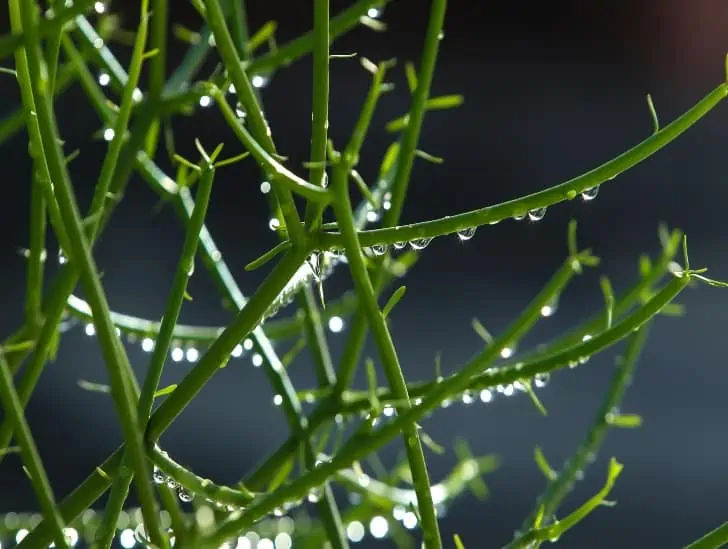
Watering a pencil cactus.

The pencil cactus, Euphorbia tirucalli, is a succulent native to parts of Africa. It gets its name from its long, thin stems that resemble pencils. The pencil cactus is a beautiful, low-maintenance plant that is easy to care for, making it an excellent option for beginner gardeners.

One of the most important things to remember when it comes to caring for your pencil cactus is proper watering. Pencil cacti are native to arid regions and thus have adapted to survive prolonged periods without water.

You need to water your pencil cactus deeply, but infrequently. When you water your plant, make sure to give it a good soaking so that the water reaches the roots. Let the soil dry out completely between watering sessions. Avoid getting water on the leaves and use room-temperature water. Remember to water your plant less frequently in winter. The plant enters a period of dormancy in winter and won’t need as much water as other times of the year.

This blog post highlights some golden rules for watering a pencil cactus. Read on so you don’t make any mistakes that might endanger your plant.

Pencil Cactus: General Water Requirements

One of the ways of caring for pencil cactus is to stick to its ideal watering requirement. Before we dive into the specifics of watering a pencil cactus, it’s essential to understand the plant’s general water requirements.

Pencil cacti are succulents, which means they store water in their leaves and stems. This allows them to survive prolonged periods of drought.

However, that doesn’t mean they don’t need water at all. In fact, all plants need water to survive. Water is essential for plant growth and helps transport nutrients throughout the plant.

A woman spraying water at the cactus.
When you water your plant, ensure the water can easily drain out to avoid waterlogging the soil.

When it comes to watering a pencil cactus, the key is to strike a balance. Overwatering can be just as damaging as underwatering. So, how do you know when to water your plant and how much water it needs?

Typically, you should consider watering your pencil cactus deeply, but infrequently. Let the soil dry out completely between watering sessions and reduce watering during winter since the plant will enter a period of dormancy and won’t need as much water.

The most important thing you need to do is avoid overwatering since the succulent is highly susceptible to root rot. When you water your plant, ensure the water can easily drain out to avoid waterlogging the soil.

Common signs of root rot in a pencil cactus include yellow leaves/stem, mushy stems, and a foul odor. If you notice any of these signs, it’s essential to act immediately and address the problem.

The best course of action is to replant the cactus in fresh, dry soil. If the root rot is severe, you may need to trim away any affected parts of the plant.

Watering Your Pencil Cactus: The Golden Rules

Cactus plants can survive in the desert conditions characterized by prolonged drought and harsh weather. However, this doesn’t mean you don’t need to take caution when watering your pencil cactus. Here are the golden rules for watering this succulent:

Golden Rule #1: Water Deeply, But Infrequently

As we’ve mentioned, one of the most important things to remember when watering a pencil cactus is to strike a balance. You don’t want to underwater or overwater your plant.

A good rule of thumb is to water deeply, but infrequently. When you water your cactus, make sure to give it a good soaking, so it reaches the roots. Avoid getting water on the leaves and use room-temperature water.

Golden Rule #2: Let the Soil Dry Out Completely Between Watering Sessions

It’s essential to let the soil dry out completely between watering sessions. This will help avoid waterlogged soil, which can lead to root rot.

If you’re unsure whether the soil is dry, stick your finger in the soil up to the second knuckle. If the soil is dry, it’s time to water your plant.
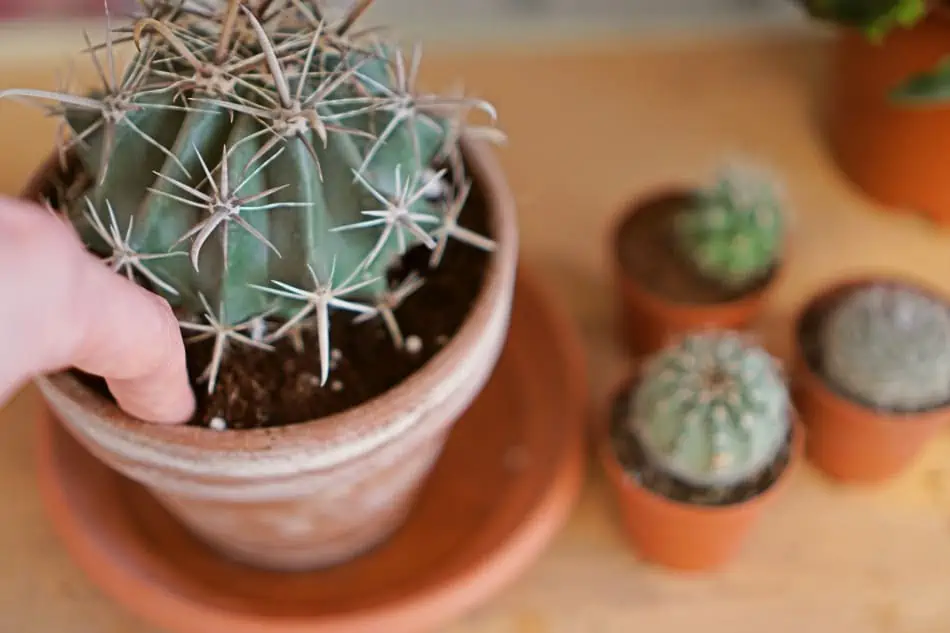
A person checking the if the soil is dry.
It’s essential to let the soil dry out completely between watering sessions.

Alternatively, you can purchase a moisture meter to take the guesswork out of watering. The moisture meter is designed to measure the water content in the soil.

It has three probes that you insert into the soil. The meter will then give you a reading of how moist the soil is. This is a helpful tool, especially if you’re new to watering plants.

Golden Rule #3: Water Less Frequently in Winter

During winter, your pencil cactus will enter a period of dormancy and won’t need as much water. This is because the plant isn’t actively growing during this time.

Generally, you should water your plant about once every two to three weeks during winter. However, you may need to water it less frequently if the weather is cool and dry.

In some cases, the pencil cactus can go for entire winter months without being watered. Just make sure the soil is completely dry before watering your plant again.

Golden Rule #4: Avoid Overwatering

One of the most important things to remember when watering a pencil cactus is to avoid overwatering. This succulent is highly susceptible to root rot, so it’s essential to ensure the soil can drain well.

Waterlogged soil is one of the leading causes of root rot in plants. When roots are constantly wet, they start to break down and rot. This can lead to a host of problems for your plant, including yellowing leaves, mushy stems, and a foul odor.
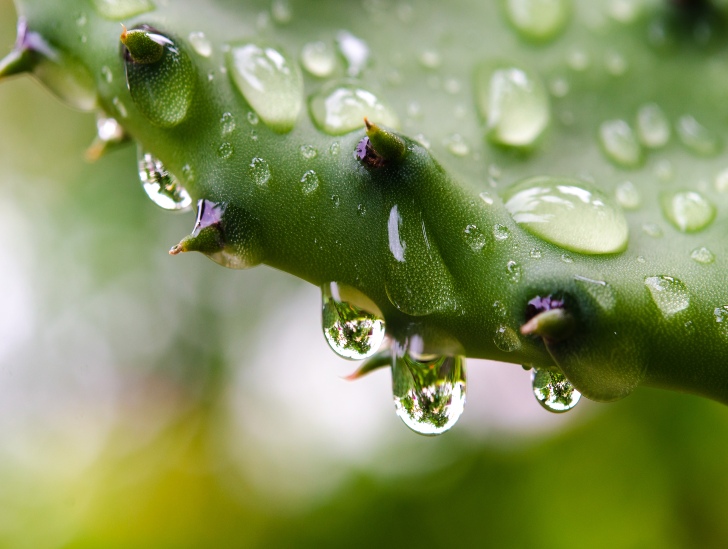
Water droplets at the cactus.
One of the most important things to remember when watering a pencil cactus is to avoid overwatering.

If you notice any of these signs, it’s essential to act immediately and address the problem. The best course of action is to replant the cactus in fresh, dry soil. If the root rot is severe, you may need to trim away any affected parts of the plant.

Golden Rule #4: Water Early in the Morning

It is also critical to water your pencil cactus at the right time of the day. The best time to water your plant is early morning, before the day’s heat sets in. Aim for the hours between 6:00 am and 10:00 am.

If you water your plant during the heat of the day, the water will evaporate before reaching the roots. This can stress your plant and lead to problems down the road.

Watering your plant in the morning will also allow it to absorb the water before the sun goes down. This is important because the plant will need to store water to get through the night.

If you cannot water it early in the morning, the next best time to water your plant is in the evening, after the sun has gone down. Avoid watering it too late at night, so the plant has time to dry out before morning.

Golden Rule #5: Use the Right Watering Method

How you water your plant is just as important as how often you water it. When watering a pencil cactus, it’s best to use the soak-and-dry method.

To use this method, water your plant until the soil is saturated. Let the water drain out of the pot and into the saucer beneath it.

Once the water has drained, remove the saucer from beneath the pot. This will allow the soil to dry out completely before you water your plant again.

The soak-and-dry method is the best way to water a pencil cactus because it allows the roots to get the oxygen they need. It also helps avoid root rot, which can be a problem with this plant.

If you’re using a different watering method, such as bottom watering, let the water drain out completely before putting the pot back in its saucer. This will help avoid root rot and keep your plant healthy.

Golden Rule #6: Use Room-Temperature Water

Last but not least, it’s essential to use room-temperature water when watering your plant. Cold water can shock the roots and lead to problems down the road.

Avoid using warm water since it can also cause the plant to wilt. Room-temperature water is the best way to go.
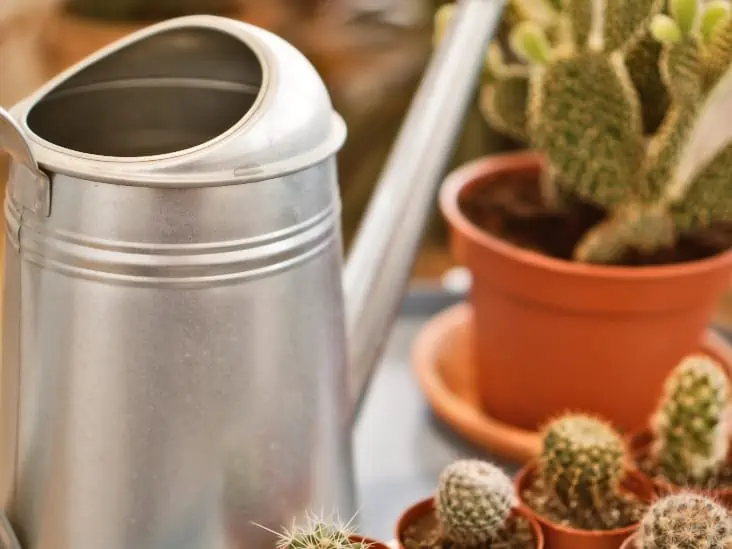
A watercan beside the cactus on the pots,
Cold water can shock the roots and lead to problems down the road.

If you’re not sure whether the water is too cold or too warm, it’s best to err on the side of caution and let it sit out for a bit before watering. This will help ensure that the water is just right for your plant.

Golden Rule #6: Use Rainwater or Distilled Water

If you can, try to use rainwater or distilled water when watering your pencil cactus plant. These types of water are free of chemicals and other impurities that can harm your plant.

If you don’t have access to rainwater or distilled water, use tap water but let it sit out for 24 hours before using it. This will allow the chemicals to dissipate and make the water safer for your plant.
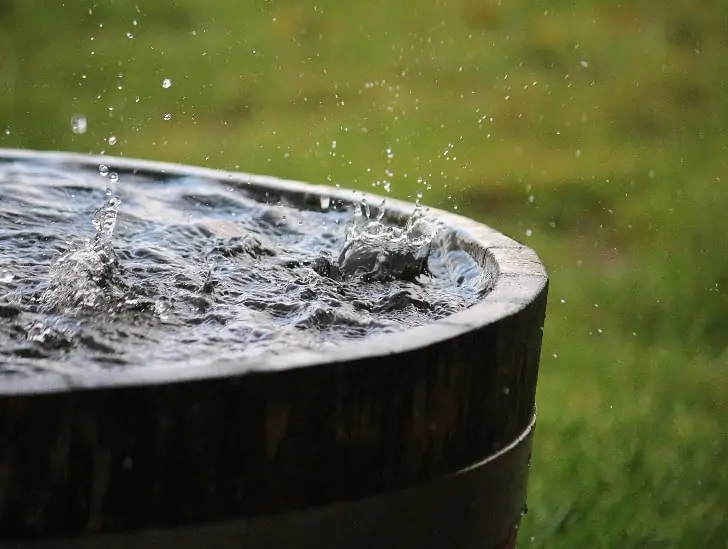
A water container with water.,
Try to use rainwater or distilled water when watering your pencil cactus plant.

Tap water contains a wide range of minerals, such as calcium and magnesium. These minerals can build up in the soil and lead to problems for your pencil cactus. The best way to avoid these issues is using rainwater or distilled water to keep your plant hydrated.

Final Thoughts

Following these simple tips can keep your pencil cactus healthy and happy for many years. Remember, when it comes to watering this succulent, less is more!

Allow the soil to dry out completely between watering intervals, and never let your plant sit in water for too long. With just a little bit of care, your pencil cactus will thrive and reward you!
9 Plants You’d Swear Were Cacti, But Aren’t

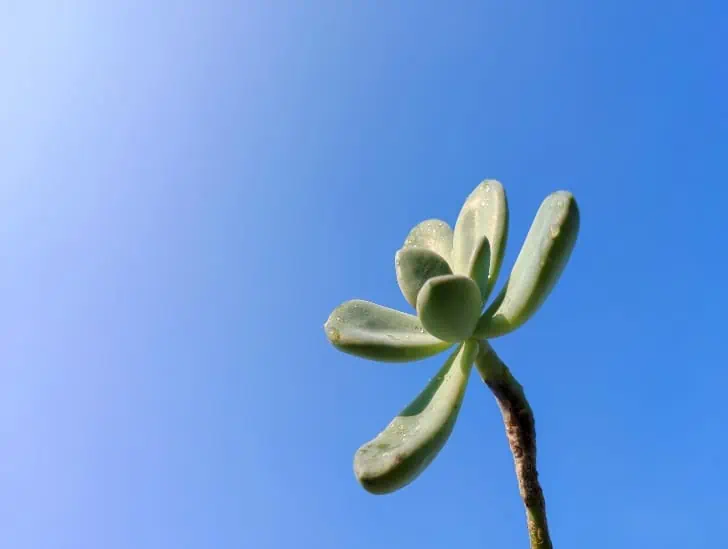
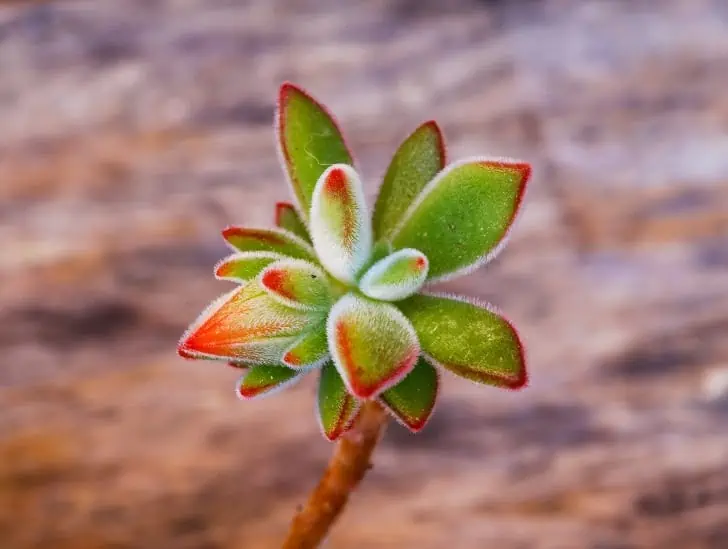
A echeveria pulvinata.

If you are a gardener, chances are you have been fooled by a plant that looks like a cactus but isn’t. The so-called “cactus imposters” come in all shapes and sizes and can be found in gardens worldwide. While they may resemble cacti, these plants are not members of the cactus family (Cactaceae).

So, what plants look like cacti but aren’t? Some common plants that look like cacti but aren’t members of the Cactaceae family include agave, Rhipsalis baccifera, aloe vera, Euphorbia Tirucalli, Kalanchoe Tomentosa, Echeveria, Aeonium haworthii, and Sansevieria Trifasciata. Others include Haworthia Fasciata, Hildewintera Colademononis, and Opuntia Microdasys.

This article discusses these plants in detail and provides information on identifying and caring for them. Read on to learn more.

What Are the Unique Features of Cacti Plants?

Before we dive deep into the plants that look like cacti but aren’t, let’s take a moment to review the characteristics of cacti.

Cacti are succulent plants that mainly store water in their thick stems and leaves to help them survive in hot, arid conditions. They have spines or glochids along their edges, protecting them from predators, and some species have flowers or fruits.

These plants usually have a dense but shallow root system critical in absorbing and storing water. The roots become so dense during the rainy season but usually break away from the main plant during dry periods, which helps the plant conserve water.

A aloe vera plant.
Even if a plant has spines but doesn’t have areoles, it’s not a cactus.

Additionally, the stems and leaves of cacti are covered by an outer layer (epidermis) which protects them from extreme temperatures and helps to reduce water loss.

All cacti plants have areoles, a specialized area from which flowers, spines, and leaves grow. Only true cacti plants have these structures. So, even if a plant has spines but doesn’t have areoles, it’s not a cactus.

Some cacti plants flower at different times of the year. Their flowers often have specialized shapes that attract certain pollinators. These flowers are unique and only last for a maximum of one week before wilting away.

Plants That Look Like Cacti, But Aren’t

Now that we have discussed the unique features of cacti plants, let’s look at the plants that resemble them but are not true cacti.

1. Agave

Often referred to as a “century plant,” agaves (Agave spp.) look like cacti, but they are members of the Asparagaceae family.

These tough, drought-resistant plants are native to the desert and thrive in hot, sunny climates. They come in a wide range of leaf shapes, sizes, and colors, with some species growing up to 20 feet tall!

Agaves also produce beautiful yellow, orange, or red flowers that attract hummingbirds and pollinators.

Agave with water droplets.
To grow healthy agaves, plant them in well-drained soil and position them in a well-lit spot with plenty of sunlight.

These succulents are popular in many home gardens since they require minimal water and care to thrive. To grow healthy agaves, plant them in well-drained soil and position them in a well-lit spot with plenty of sunlight.

2. Rhipsalis Baccifera

Rhipsalis baccifera (also known as mistletoe cactus or Easter cactus) is native to the tropical rainforest and is a popular houseplant in many parts of the world.

This plant has trailing stems that can grow up to 3 feet long, with tiny white flowers and yellow fruits. It’s often confused with cacti because of its spines, but it’s not a true cactus.

This plant prefers bright, indirect light and moist but well-drained soil when grown indoors. Water only when the soil is dry to the touch. Outdoors, Rhipsalis baccifera, can tolerate more direct sunlight and drier soil.

3. Kalanchoe Tomentosa

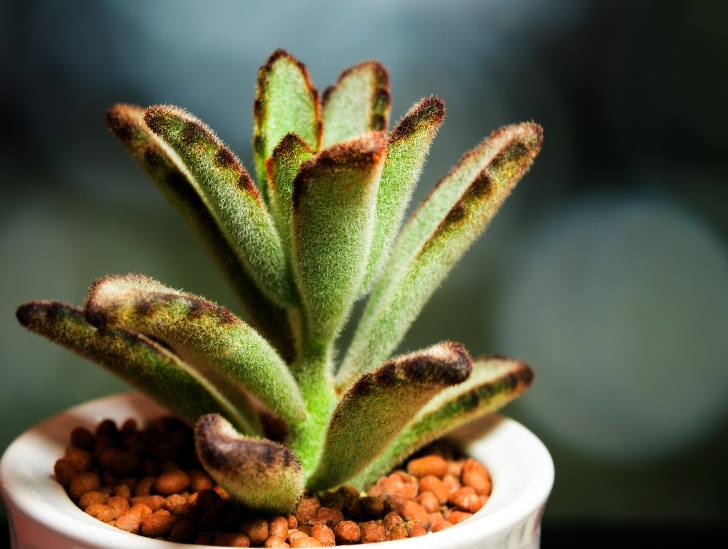
Kalanchoe tomentosa, also known as panda plant or pussy ears, is a type of succulent that gets its name from the furry white hairs that cover its leaves.

This plant has thick, fleshy leaves like other succulents, but the similarity ends there. Kalanchoe tomentosa does not have any spines or spikes on its leaves.

Kalanchoe Tomentosa in a pot.
Kalanchoe tomentosa is native to Madagascar and grows best in bright indirect light.

Instead, the leaf margins are scalloped and serrated like those of a cat’s paw—hence one of its common names, pussy ears. Kalanchoe tomentosa is native to Madagascar and grows best in bright indirect light.

4. Aloe Vera

Aloe vera (Aloe vera) is a popular succulent with thick green leaves often seen in gardens or potted indoors. This plant is known for its medicinal properties and has been used for thousands of years to treat various skin conditions.

Even though it looks like a cactus (due to its spikey leaves), aloe vera is part of the Liliaceae family and not a true cactus.

Aloe vera prefers a sunny spot and fast-draining soil. Water it only when the soil is dry, as overwatering can cause root rot.

It can also survive in dry and cool conditions, making it a great choice for those who want an easy-to-care-for plant.

The best way to ensure your aloe vera plant thrives is to provide plenty of bright, indirect light and moisten the soil lightly.

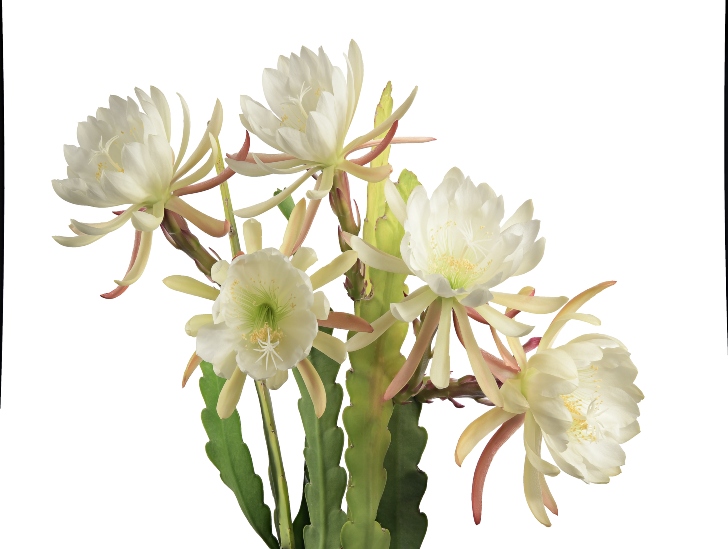
5. Selenicereus megalanthus

Selenicereus megalanthus is native to southern Mexico and Honduras. It’s also known as the queen of the night.

Selenicereus megalanthus can grow up to 30 feet tall and 10 feet wide, making it one of the largest succulents. However, despite its size and similarity to other members of the genus Selenicereus, the plant is not a true cactus.

Queen of the night plant.
The succulent prefers full sun and well-drained soil. It must also be watered regularly during the summer months.

Instead, it’s more closely related to epiphytic plants such as Rhipsalis baccifera and Schlumbergera truncata.

Many gardeners love this plant for its unique size and shape, but it is not an easy-care succulent. The succulent prefers full sun and well-drained soil. It must also be watered regularly during the summer months.

Additionally, its large size means it needs much space to grow properly. Pay close attention to its growth habit and prune any branches that are too long.

With the right care, Selenicereus megalanthus can thrive in your garden and add a unique touch to the landscape.

6. Euphorbia Tirucalli

Euphorbia tirucalli, also known as pencil cactus or milk bush, is a type of succulent that gets its name from its pencil-thin stems. Like other succulents, euphorbia tirucalli has thick, fleshy leaves that store water.

However, its unique growth habit sets this plant apart from other succulents. Euphorbia tirucalli grows in an upright tree-like form with branches that can reach up to 20 feet in length.

While it does not have true leaves or needles, the stem segments of this plant are covered in small spines.

Pencil cactus in a pot exposed to sunlight.
Euphorbia tirucalli grows in an upright tree-like form with branches that can reach up to 20 feet in length.

Euphorbia tirucalli is native to tropical Africa and requires bright, indirect light. It prefers well-drained soil and is best watered only when the top inch of soil is completely dry.

Overwatering can cause root rot, so check the soil moisture before you water your plant. This plant is worth considering if you are looking for an unusual succulent with a striking growth habit!

7. Haworthia Fasciata

The haworthia fasciata is a low-growing succulent native to parts of South Africa. Also known as the zebra plant, this small evergreen has thick, pointed leaves covered in white stripes.

The foliage of haworthia fasciata is often compared to that of aloe vera — but unlike its spiky counterpart, haworthia fasciata has smooth leaves without spines.

It can tolerate low light and is fairly drought-tolerant, so it’s a great choice for beginner succulent enthusiasts. Haworthia fasciata prefers well-draining soil and needs to be watered only when the top inch of soil is completely dry.

With its unique foliage and low-maintenance care requirements, haworthia fasciata is an excellent choice for those looking to add an exotic touch to their home gardens.

Keep in mind that overwatering can cause root rot, so be sure to check the soil moisture before watering your plant.

8. Sansevieria Trifasciata

Sansevieria trifasciata, also known as snake plant or mother-in-law’s tongue, is another type of succulent that resembles a cactus.

It gets its common name from its long, snake-like leaves that can grow up to 3 feet in length. The leaves of this plant are thick and fleshy like those of a cactus, but they lack the spikes and spines typically associated with cacti.

Sansevieria trifasciata is an easy-to-care-for plant that thrives in low-light conditions. It is a relatively drought-tolerant plant and prefers to be watered when the potting mix is completely dry.

Additionally, it does not need much fertilizer, so it’s an ideal choice for beginner succulent growers.

Whether you display this plant as a single specimen or in a container garden with other low-light plants, Sansevieria trifasciata is sure to make a stunning addition to your home.

9. Echeveria pulvinata

Echeveria pulvinata is native to Mexico. It has an elongated shape and can grow up to six inches long. The leaves are green with red tips, and the plant produces pink flowers. Echeveria pulvinata is often used as an ornamental plant in gardens.

This succulent prefers indirect sunlight and well-drained soil. It should not be overwatered, as too much water can lead to root rot. Water your plant only when the soil is completely dry and avoid getting water on the leaves.

It is important to feed your Echeveria pulvinata regularly with a cactus-specific fertilizer. This will help keep the plant healthy and promote blooming.

Summary

These plants make great additions to any home or garden! Not only do they resemble cacti, but they are also low maintenance and easy to care for.

So, feel free to experiment with any of them. Remember to keep an eye on the soil moisture, watering schedule, and lighting conditions.

The Ultimate Guide to Faster Succulent Growth

Succulents are a beautiful addition to any garden. They are low-maintenance, easy to care for and come in various shapes and sizes. However, these plants are also notoriously slow growing, which can be a bit of a bummer. In fact, some of them can take several years to reach their full potential! Fortunately, there are a few tips and tricks you can use to make your succulents grow faster.

So, how can you make succulents grow faster? The first and most important thing you need to do is know your plant. Different succulents will have different needs, and it’s essential to meet those needs to help them thrive and grow fast. Give your succulent adequate sunlight and ensure the temperature is suitable for the type of succulent you have. Your soil must be well-drained and aerated and adhere to a strict watering schedule. You can also repot your succulent to give it some fresh soil and more space. Succulents do best in containers slightly larger than their current pot size.

This blog post discusses tips and tricks to help your succulents grow faster. Read on to find out everything you need to know.

Understanding General Succulent Growth Rate

While there are wide varieties of succulents, all succulents generally have a slow growth rate. This is because most of them are adapted to living in areas with limited water and nutrients available in the soil. As a result, they typically take several years to reach their maximum potential size.

Some of the fastest-growing succulents, such as Echeveria, can grow up to 8 inches in a year, while some slow-growing succulents, such as Sempervivum, take up to 5 years to reach a maximum size of 4 inches.

A woman repotting baby succulents.
Different succulents will have different needs, and it’s essential to meet those needs to help them thrive and grow fast.

Generally speaking, small-rosette-forming species tend to grow faster than large-rosette-forming species.

Most growth occurs during spring and summer when plenty of sunlight and overall weather conditions favor active growth. During the winter, most succulents slide into a state of dormancy and significantly slow their growth.

Tips to Make Your Succulents Grow Faster

To help your succulents reach their maximum potential size faster, you need to provide them with the right growing conditions and ensure they have access to all the necessary resources required for healthy growth. Here are some tips that can help:

1. Get to Know Your Succulent

The first step is to get to know your plant. Different succulents have different needs, so you need to make sure that the environment you provide is suitable for the type of succulent you have.

If you know the exact name of your succulent, Google it for maximum size and growing conditions, and then provide the same.

If you don’t know the exact name of your succulent, don’t worry. You can still provide the right conditions based on their general needs that apply to all succulents. Alternatively, take your succulent to your local plant nursery for identification.

A small ghost plant on hand.
Make sure that the environment you provide is suitable for the type of succulent you have.

Feel free to join Facebook groups and other communities of succulent enthusiasts to get more tips and advice.

Be active and ask questions when you come across something you need help understanding. That way, you learn more about your succulent and its specific requirements.

2. Watering

The amount of water the succulent needs depends on your succulent type, size, temperature, and humidity in your growing environment.

However, it’s generally best to stick with a strict watering schedule and not overwater your plant. Too much water can cause root rot, damaging your succulent and hindering its growth.

The type of water you use can also affect your succulent’s growth rate. Use rainwater or distilled water for better results. Avoid tap water because it contains chlorine, which can harm your plant.

If you must use tap water, let it sit overnight in an open container to allow the chlorine to evaporate.

3. Give Your Succulent Enough Sunlight and the Right Temperature

Most succulents need at least six hours of direct sunlight daily to thrive, although some species may require less or more depending on the type and size. Ensure your succulent is getting enough light and its leaves aren’t turning yellow or weakening.

If you are growing it indoors, position it near a south-facing window for better results. Consider using artificial grow lights if you live in an area with a harsh climate or short days. When using artificial lights, make sure to use only high-quality lights that are specifically designed for succulents.

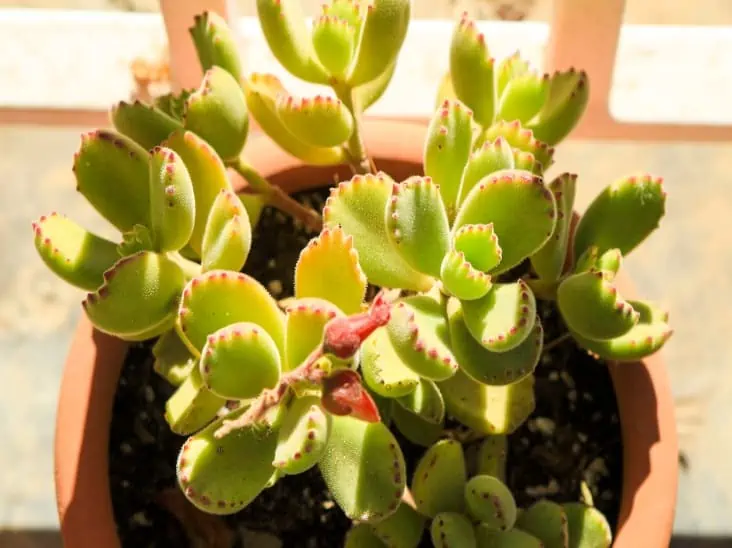
A bear claw plant exposed to sunlight.
Ensure your succulent is getting enough light and its leaves aren’t turning yellow or weakening.

Additionally, ensure your succulent is in an area with the right temperature for its growth. Most succulents need daytime temperatures between 65-75 F (18-24 C) and nighttime temperatures between 50-65 F (10-18 C).

Finally, keep an eye on your plant for signs of sunburn or dehydration, and adjust its lighting accordingly. Some common signs of sunburn include discolored patches on the leaves, shriveled leaves, and weak stems.

4. Succulents Love the Crowd, But Not Too Much Crowd

It is no secret that succulents can thrive in crowded pots. In fact, some species may even prefer living with their siblings. However, don’t overcrowd your succulent’s pot, as it can prevent the roots from getting enough air and nutrients, stunting its growth rate.

If you want to repot your succulent into a larger container without overcrowding, ensure enough space for the roots to spread and grow.

5. Use the Right Soil

Succulents thrive in well-drained, slightly acidic soil. Make sure to use a potting mix specifically designed for cacti and succulents, as this will help ensure proper drainage and air circulation.

Add a layer of sand to the top of the soil to help improve drainage, and don’t forget to add a few teaspoonfuls of slow-release fertilizer as well.

Some gardeners prefer making their soil mix, as it allows them to adjust the ingredients and create a mix tailored to their specific succulent.

Fortunately, it is relatively easy to make your soil mix. Here is a simple method you can follow:

  • Two parts perlite or coarse sand
  • 1 part peat moss
  • 1 part potting soil
  • ½ part compost

Carefully mix these ingredients, and you have potting soil perfect for your succulent.

6. Monitor Your Succulent’s Soil Regularly

Your succulent’s soil should be slightly acidic with a pH of 6.0-7.5, depending on the type of succulent you have. The best way to check your soil’s pH is to use a digital soil tester or a store-bought soil test kit.

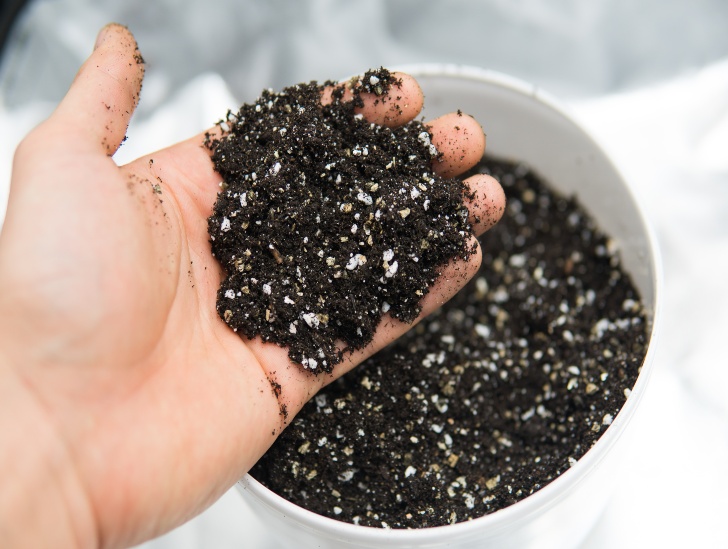
A soil with a mix of perlite.
Your succulent’s soil should be slightly acidic with a pH of 6.0-7.5, depending on the type of succulent you have.

The soil should be kept dry between waterings and should never be saturated with too much water.

If it is, your succulent may suffer from root rot caused by too much moisture in the soil. Also, ensure the pot has enough drainage holes to allow any excess water to escape.

7. Fertilize and Prune Your Succulent

Just like any other plant, regular fertilizing is vital for healthy growth. The type of fertilizer you use depends on your succulent’s needs; always use a slow-release fertilizer designed explicitly for succulents.

Remember to prune your succulent regularly to help control its size and shape. Regular pruning can even encourage a lusher growth habit.

Trim off any dead leaves or stems with a pair of sharp scissors, but never cut away more than a third of the plant at any time.

The best time to trim your succulents is after the flowering season, just before the dormancy sets in.

Avoid pruning before or during the flowering season, as pruning may reduce the number of flowers produced.

8. Regularly Separate Offsets from the Mother Plant

Most succulents produce many offsets as they grow. These offsets are also known as “pups” and can be separated from the mother plant to create new plants.

Removing offsets helps keep your succulent healthy, encourages more flowering, and allows you to share or sell your extra plants.

A offset of hawortia plant.
The best time to separate offsets is during the growing season when the pups are big enough to be removed.

Make sure each offset has roots and shoots before separating it from the mother plant.

The best time to separate offsets is during the growing season when the pups are big enough to be removed without damaging the mother plant. Cut away the pup with a sharp knife and pot it into a container.

The offset will develop roots after a few weeks and should be ready to repot into its permanent home.

9. Be Patient with Your Succulent

If you have followed all the tips above, then all that is left to do is wait for your succulent to grow and mature. Growing succulents can take a while, as they prefer slow-paced growth over rapid growth.

Sometimes, you may find that your succulent grows a lot more slowly than you expected.

Don’t worry; this is normal! Just sit back and enjoy the process; soon enough, you will have a beautiful mature succulent.

Summary

With these five tips, you’ll be able to get your succulent collection growing faster than ever before!

Remember – quality soil, adequate light exposure (but not too much!), proper watering habits, regular fertilization, and occasional pruning will help keep your plants happy and healthy while encouraging rapid growth. After a few months of following these guidelines, you should start seeing results – happy planting!

The Top 10 Succulents That Thrive in Full Sun

For many years, succulents have been known for their exceptional ability to tolerate high levels of sunlight and heat. These plants generally require little water to stay healthy. In fact, many of them can go for weeks or even months without any water at all, making them perfect for gardeners who forget to water their plants or live in a climate where rainfall is scarce. However, not all succulents can tolerate full sun – certain species prefer partial or shaded conditions.

So, which succulents are best for the full sun? Fortunately, several succulent species can handle the heat and flourish in direct sunlight. They include agave, the prickly pear cactus, the bear’s paw plant, the ghost plant, Aeonium, and aloe vera. Others include the hens and chicks plant, jade plant, golden barrel cactus, hedgehog cactus, and the paddle plant.

This blog post will discuss some of the best succulents for full sun. We’ll cover their key features, how to care for them, and some interesting facts about each. So, let’s get started!

1. Agave

The agave plant is known for its thick, spiky leaves and vibrant colors. It’s hardy enough to tolerate long periods of drought and full sun.

Typically, this succulent thrives in the U.S hardiness zone of 5 to 11. It means that the plant is highly adapted to surviving under extreme conditions making them the best option for in-ground and container growth.

Agave in a pot.
The agave plant is known for its thick, spiky leaves and vibrant colors.

Agave plants need well-draining, sandy soil to thrive and should be watered deeply once a month in dry climates.

This succulent produces beautiful flowers in summer and autumn, although they tend to be short-lived. The flowers come in varying colors, such as yellow, white, and purple, which draw birds and butterflies to your garden.

To ensure optimal health, prune the plant regularly to keep it from getting too large.

2. Prickly Pear Cactus

The prickly pear cactus is native to Mexico and is one of the most recognizable succulents. This plant is unique because it has two types of leaves: flat, fleshy pads and sharp spines that protect the plant from predators.

The prickly pear cactus can tolerate temperatures ranging from 25°F to 110°F, making it well-adapted to various climates. It prefers full sun and well-draining, sandy soil. It also requires minimal watering, so it’s an ideal choice for gardeners with busy schedules.

The prickly pear produces beautiful flowers in spring. The colors of the flowers vary from pink to yellow and orange.

Some of the flowers get pollinated, turning into edible fruits. The prickly pear fruit is a popular ingredient in Mexican cuisine and is known for its sweet, juicy flavor.

Overall, the prickly pear cactus is an ideal choice for gardeners who want to add a touch of beauty and color to their landscape. Plus, it’s low maintenance, can thrive in most climates, and live for many years!

3. Bear’s Paw Plant

The bear’s paw plant, also known as the American aloe, is a member of the Agave family and gets its name from its deep green leaves that resemble a bear’s paw.

This succulent prefers full sun and well-draining soil. It also requires very little water, making it an ideal choice for gardeners with busy schedules.

A bear claw plant in a pot.
It is a member of the Agave family and gets its name from its deep green leaves that resemble a bear’s paw.

The bear’s paw plant produces vibrant blooms in shades of yellow, orange, and red during summer. The flowers attract bees and other beneficial insects to your garden.

Additionally, this succulent can tolerate temperatures ranging from 30°F to 110°F and is very low maintenance.

It’s an ideal choice for gardeners looking for a plant that will wow their neighbors without requiring too much effort!

4. Aloe Vera

Aloe Vera is one of the most common succulents belonging to the Aloe genus. The plant has little to no stem with relatively thick, spiky, and meaty leaves characterized by white dots on the surface.

Some people use the juice from aloe vera leaves to relieve pain from burns and wounds. It’s also been used as a medicinal ingredient for centuries.

Aloe vera prefers bright, indirect light and is well-adapted to harsh climates. It’s one of the succulents that can tolerate extended periods of drought without needing much water or maintenance.

The plant may fail to flower indoors because it will need more sunlight, no matter where you position it. However, it flowers prolifically when grown outdoors in a spot that receives plenty of direct sunlight.

Typically, aloe vera produces yellow-orange flowers in the summertime that attract bees and other beneficial insects. It’s a great addition to any garden or outdoor space!

5. Ghost Plant

The ghost plant is a succulent known for its striking silver-grey foliage, which contrasts beautifully with other plants in the garden. This plant has small, fleshy leaves that can tolerate a wide range of temperatures, from 40°F to 100°F. It also prefers full sun and needs very little water.

The ghost plant produces white or pink flowers in summer, attracting bees and other pollinators. The flowers are small but abundant, adding beauty to your garden.

A ghost plant in a owl pot.
it’s very low-maintenance and can thrive in many climates!

The ghost plant is an excellent addition to any garden or outdoor space because of its beautiful foliage and drought-tolerant nature. Plus, it’s very low-maintenance and can thrive in many climates!

6. Sempervivum

Sempervivum, also known as the hens and chicks plant, is one of the most resilient succulents native to the rocky mountains of Europe.

The plant is characterized by its beautiful flowers, bracts, and spirally-patterned leaves. Each rosette on a sempervivum plant is usually a young, monocarpic plant. The pointed tips of its leaves usually display a distinct color that is attractive to the naked eye.

This succulent is a great choice for gardeners who want an easy-to-care-for plant that can thrive in many climates.

The sempervivum prefers full sun and well-draining soil and needs minimal watering during the dry season. It’s also tolerant of moderate frosts, making it a good choice if you live in a cooler climate.

With its hardy nature and easy care, sempervivum is an ideal choice for gardeners looking for a durable succulent that can thrive in most climates and live for many years!

7. Echeveria Plant

The Echeveria plant is a popular choice among succulent enthusiasts. Native to the Americas, it’s known for its rosette-shaped leaves and vibrant colors ranging from purple to orange.

This succulent prefers full sun and will thrive when given plenty of sunlight daily. It also needs well-draining soil and minimal water.

An outdoor echeveria exposed to sunlight.
It’s known for its rosette-shaped leaves and vibrant colors ranging from purple to orange.

Echeveria is an excellent choice for gardeners looking to add a touch of color to their outdoor space.

In the summer, it produces yellow or pink flowers that attract bees and other pollinators. It’s also tolerant of frosts, making it suitable for cooler climates!

8. Aeonium

Aeonium is a term used to refer to a group of succulents that, without a doubt, are one of the most beautiful houseplants. These plants have relatively thin and spear-shaped leaves that can be arranged in a circular pattern.

Aeonium prefers bright, indirect sunlight and is generally a low-maintenance succulent. It’s also highly drought-tolerant and can thrive with minimal watering.

When given the right conditions, Aeoniums produce beautiful yellow or pink flowers that add a touch of color to your garden or outdoor space.

The succulent generally thrives in U.S hardy zones between 9 and 11. Its leaves and stem are non-toxic to both humans and animals, making it a great choice for people who have small children or pets.

Overall, Aeonium is an ideal choice for gardeners looking to add a touch of color and beauty to their indoor or outdoor space!

9. Jade Plant

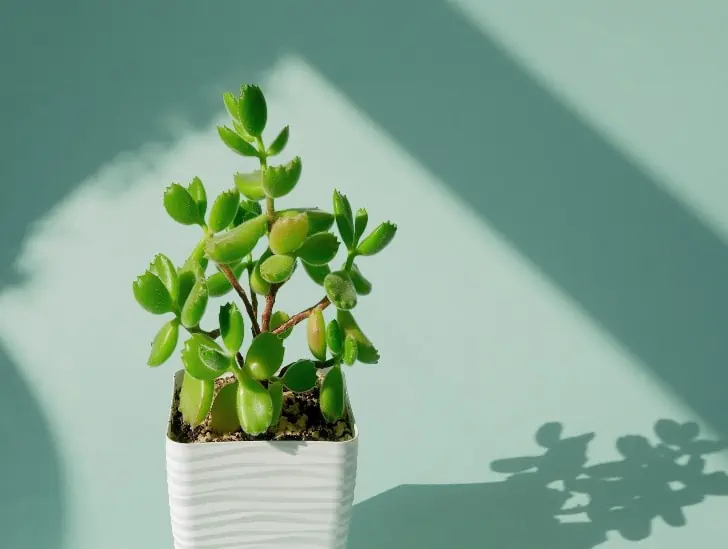
The jade plant is another type of succulent known for its beautiful foliage. Native to South Africa, it’s a very hardy plant that can survive in many conditions, including dry and frosty climates.

This succulent prefers full sun and needs minimal water to thrive. If given too much water, the leaves may become soft and rot. The jade plant also loves well-draining soil and should be fertilized once or twice a year.

When given the right conditions, the jade plant can produce small white or pink star-shaped flowers in the summer. These flowers attract bees and other pollinators that are good for your home garden.

Overall, the jade plant is a great choice for gardeners who want a low-maintenance, resilient succulent that can thrive in many climates!

10. Pachyphytum

Pachyphytum is a relatively slow-growing succulent with bean-shaped leaves that usually produces a cluster of thick and meaty foliage.

The succulent prefers full sun and needs minimal water during the dry season. It also loves well-draining soil that should be fertilized once or twice a year.

Pachyphytum exposed to sunlight.
Pachyphytum is a relatively slow-growing succulent with bean-shaped leaves.

Pachyphytum produces white flowers in spring that attract bees and other pollinators, adding an extra touch of color to your outdoor space.

This succulent is a great choice for gardeners looking for a durable plant that can thrive in many climates and live for many years!

Summary

Overall, these succulents are great additions to any garden or outdoor space.

The aloe vera is an excellent choice for medicinal use; the ghost plant adds a touch of beauty with its striking foliage, the sempervivum is hardy and low-maintenance, and the echeveria adds vibrant color!

Each plant has unique qualities that make it an excellent addition to any garden.

With their hardy nature and easy maintenance, these succulent plants are ideal for gardeners who want to spruce up their outdoor space with minimal effort!

The Top Rosemary Pests and Diseases to Watch Out For

Rosemary is an incredibly popular herb, used in various dishes, tea, and even as an essential oil. But like any other plant, rosemary can suffer from pests and diseases. So, if you are growing it in your garden, it is essential to know what common pests and diseases to look out for and how to prevent them from damaging your plants.

So, what are some common rosemary pests and diseases? Rosemary is prone to various pest infestations, including aphids, whiteflies, caterpillars, mealybugs, and spider mites. Aphids are small insects that feed on the sap of the plant’s leaves.

Whiteflies are tiny white insects that swarm around the plant when disturbed. Caterpillars are the larvae of moths or butterflies that feed on rosemary leaves. Mealybugs are small, soft-bodied insects with a waxy coating on their bodies that feed on rosemary sap. Spider mites are tiny spiders that spin webs around rosemary leaves and suck out their juices. One of the most common diseases affecting rosemary is root rot.

This article discusses everything you need to know about common rosemary pests and diseases and how to prevent them. Read on to learn more.

What Is Rosemary?

Rosemary is an upright, woody perennial herb with fragrant, needle-like leaves. It is native to the Mediterranean but can also be found in other parts of the world.

It mainly grows in the sunny, dry areas of the United States and Europe. The foliage is evergreen in mild climates, with white or pink flowers blooming from spring to autumn.

The plant belongs to the family Lamiaceae and has several cultivars, most notably Arp and Golden Rain. It grows in groups of 5-10 and can grow up to two meters tall.

Rosemary in a pot.
Rosemary is an upright, woody perennial herb with fragrant, needle-like leaves.

Rosemary has a long history of medicinal and culinary use, and its essential oil is used for aromatherapy. Rosemary can be grown in the garden or potted indoors, making it a highly versatile herb.

Common Rosemary Pests and Diseases

Rosemary is susceptible to a variety of pests and diseases. Knowing which ones affect your plants will help you take the necessary steps to prevent them or treat any existing damage. Here are some of the common pests and diseases that affect this plant.

1. Aphids

Aphids are tiny insects that feed on rosemary sap. They are usually green, yellow, or brown.

This pest is difficult to spot with the naked eye, but its presence can be identified by a sticky substance on the leaves known as ‘honeydew’ which they excrete after feeding.

Aphids spread pretty quickly and can cause significant damage to rosemary if not treated. They can also spread diseases to other plants in the garden.

Aphids in leaf.
This pest is difficult to spot with the naked eye.

To prevent infestations, you can introduce natural predators such as ladybugs, hoverflies, and lacewings into your garden. You can also use insecticidal soap or horticultural oils to get rid of them.

2. Whiteflies

Whiteflies are a common problem in rosemary plants. These tiny white insects feed on plant juices and excrete a sticky substance known as honeydew, which can attract sooty mold.

They are difficult to spot with the naked eye, but their presence can be identified by a white powdery film on rosemary leaves, known as ‘whitefly dust.’ They also secrete a fluid that can cause the leaves to curl and become distorted.

The best way to prevent infestations is to keep an eye out for whiteflies and treat them as soon as you spot them. Insecticides containing neem oil, pyrethrum, or spinosad effectively control these pests.

Some gardeners use sticky traps to capture the adult whiteflies, but the method may only be effective if there is a large population.

3. Caterpillars

Caterpillars are the larvae of moths or butterflies that feed on rosemary leaves. They can cause significant damage to the plant and make it unsightly if not treated promptly. To prevent infestations, you should regularly inspect your plants for signs of caterpillar activity.

Some of the most common species affecting rosemary are the cabbage looper, diamondback moth, and western, yellow-striped armyworm.

The best way to get rid of caterpillars is to use insecticides containing bacillus thuringiensis or spinosad. You can also release beneficial predators such as parasitic wasps, ladybugs, and green lacewings to help control the caterpillar population.

4. Mealybugs

Mealybugs are relatively tiny insects that feed on the sap from plants. Their white, cottony coating can identify them, and they excrete a sticky substance known as honeydew.

Mealybugs can cause damage to rosemary plants if left untreated. To prevent infestations, you should inspect your plant regularly for signs of mealybugs, such as yellowing leaves or wilting.

Mealybug in a plant.
Mealybugs are relatively tiny insects that feed on the sap from plants.

To get rid of mealybugs, you can use insecticides containing neem oil, pyrethrum, or spinosad and encourage beneficial predators such as ladybugs and lacewings into your garden.

You can also spray a solution of water and dishwashing liquid directly on the affected areas to control them.

5. Spider Mites

Spider mites are tiny spider-like creatures that spin webs around rosemary leaves and suck out their juices.

They can cause yellow spots on the foliage and make it look unhealthy. To get rid of spider mites, you should regularly inspect your plants for signs of mites and spray the affected areas with a jet of water.

Insecticides containing neem oil or pyrethrum can also be used to control them. You can also introduce beneficial predators such as predatory mites, minute pirate bugs, and ladybugs into your garden to help keep spider mite populations under control.

6. Scale in Rosemary

Scale insects usually have a waxy outer shell, making them difficult to spot. They feed on the sap of rosemary plants and can cause yellowing or wilting of leaves if left untreated.

The best way to get rid of scale is to use insecticides containing bifenthrin, imidacloprid, or spinosad.

You can also introduce beneficial predators such as parasitic wasps, ladybugs, and green lacewings into your garden to help control the scale population.

Common Rosemary Diseases

Rosemary can be affected by various fungal diseases such as root and crown rot, powdery mildew, leaf spot, and rust.

Root rot is perhaps the most damaging of these diseases as it can cause the roots to become soft and blackened, eventually leading to wilting and death.

Root rot is mainly caused by overwatering. Naturally, a rosemary plant is adapted to surviving in relatively dry conditions and should only be watered when the soil is completely dry. when overwatered, the plant starts developing root rot, which can be fatal.

To prevent root rot, you should ensure your rosemary plants are planted in well-draining soil and only watered when the soil is dry.

Fungal diseases result from warm, damp conditions and can be prevented by avoiding overhead watering and ensuring your plants have plenty of air circulation.

You can apply a fungicide such as copper sulfate or mancozeb to the affected areas to reduce the spread of disease. If you spot any signs of fungal disease, remove affected leaves or branches immediately to prevent them from spreading.

Powdery mildew is another fungal disease appearing as white or greyish leaf spots.

You can prevent this by ensuring your plants have plenty of air circulation and avoiding wetting the leaves when watering. If you spot any signs of powdery mildew, remove the affected foliage immediately.

To control leaf spot and rust diseases, apply a fungicide such as mancozeb or copper sulfate to the affected areas to reduce the spread of the disease. You should also remove any affected leaves or branches immediately.

Preventing Rosemary Pests and Diseases?

The best way to prevent rosemary pests and diseases is by practicing good cultural practices such as proper watering, mulching, avoiding overcrowding of plants, weeding regularly, and removing any diseased or infested plant material.

You can also use insecticides containing neem oil or pyrethrum to help control pests and introduce beneficial predators such as ladybugs and lacewings into your garden to help control the pest populations.

A person watering the rosemary plant.
The best way to prevent rosemary pests and diseases is by practicing good cultural practices.

Also, inspect your plants regularly for signs of pests or disease and take immediate action if necessary. You can keep your rosemary looking healthy and beautiful with a little effort!

What Pests Does Rosemary Repel?

Rosemary, like other herbs, is an excellent repellent for a wide variety of pests. It is known to repel mosquitoes, flies, fleas, and other insects due to its strong scent. The leaves can be dried and crushed into a powder sprinkled around the garden to keep away insects.

Rosemary plant in a white pot.
It is known to repel mosquitoes, flies, fleas, and other insects due to its strong scent.

Rosemary oil has also been an effective repellent for various pests, including fleas, ticks, and moths. You can add the oil to soaps, shampoos, or sprays to help keep away these pesky pests.

The best way to reap the benefits of rosemary is to plant it in your garden – not only will it help deter pests, but you can also enjoy the incredible smell and flavor of its leaves!

Conclusion

Caring for rosemary plants requires vigilance to protect them from common pests and diseases like aphids, whiteflies, caterpillars, mealybugs, spider mites, powdery mildew, and root rot caused by overwatering or poor drainage in the soil.

However, with proper care including regular inspection for signs of infestation/infection, avoidance of heavy watering practices, adequate air circulation, and timely removal/treatment of pests & pathogens – you can ensure healthy growth & development of your beloved rosemary plants!

the String of Dolphins: A Comprehensive Guide

A string of dolphins is an excellent choice if you are a gardener looking for a unique and exciting hanging plant. This trailing succulent has long, slender leaves resembling dolphins swimming in the sea. The succulent is also an easy-to-care-for plant that requires minimal maintenance, making it perfect for novice gardeners. Let us look at what you need to know about the string of dolphin care.

So, what do you need to know about the string of dolphins? The evergreen succulent belongs to the Aizoon genus of plants native to the Mediterranean regions and North Africa. The succulent has attractive, long, narrow leaves that are blue-green and slightly curved like dolphins swimming in the sea. It also produces small yellow flowers that attract bees and other pollinators throughout the year.

This blog post discusses everything you need to know about the string of dolphins. First, we’ll go over the basics of care and then talk about how to cultivate your string of dolphins plant best.

Read on to learn more.

What Is a String of Dolphins?

A String of Dolphins is an evergreen succulent that belongs to the Aizoon genus. It has small, pointed leaves that resemble dolphins jumping out of the water.

It can grow up to two feet tall and three feet wide, making it ideal for use as a ground cover or as an accent plant in containers or hanging baskets. Its leaves are typically green but can be red or yellow depending on the amount of sunlight it receives. 

One great thing about this succulent is that it doesn’t require much attention. So, even busy gardeners can keep one in their outdoor spaces without worrying about it taking too much time or effort.

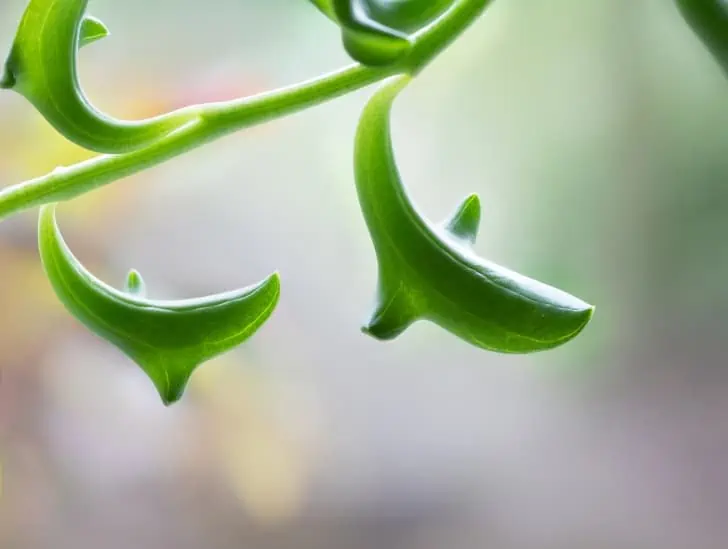
A string of dolphin.
It has small, pointed leaves that resemble dolphins jumping out of the water.

It also requires minimal watering, making it perfect for those just starting gardening or who don’t have much time to dedicate to their plants.

Additionally, the String of Dolphins is known for its ability to filter air pollutants from the atmosphere, making it an excellent choice for those who want to make their outdoor spaces healthier places to be.

It’s also worth noting that this type of succulent is relatively easy to propagate. All you need is some scissors and soil, and you should be able to propagate your new plants quickly and easily!

How to Care for a String of Dolphins?

The string of dolphins is an easy-to-care-for succulent that requires minimal maintenance. Its plump leaves retain water for a relatively long time, making it drought-tolerant and ideal for those who cannot keep up with a regular watering schedule.

Here is a quick overview of the essential factors to consider when caring for your string of dolphins:

Sunlight

The string of dolphins needs plenty of bright, indirect light. It thrives best in a location with direct morning sun and filtered afternoon sunlight. You may also want to set up a fan or misting system to help keep the air around the plant cool. Keep the succulent out of direct sunlight to avoid sunburn.

If you are growing your string of dolphins indoors, ensure that it is placed in an area with bright light but away from direct sunlight. Ideally, you should have it on a south-facing windowsill to benefit from the natural light.

If you live in an area that doesn’t receive plenty of natural sunlight, you may want to use artificial grow light to supplement the plant’s sunlight needs.

When and How to Water

The string of dolphins should be watered deeply and infrequently — about once a week or every two weeks. Over-watering can be an issue, so check the soil before watering again. During the winter months, you can reduce the watering frequency to once every two or three weeks.

The best time to water your string of dolphins is in the morning when temperatures are cooler and the leaves have had time to dry out overnight. Water deeply at the base of the plant, not directly on its leaves.

A string of dolphin with water droplets.
Over-watering can be an issue, so check the soil before watering again.

Ideally, aim for the hours between 6:00 am and 10:00 am. However, if you cannot water your plant during these hours, you can still water it late in the evening.

Use the bottom-up watering technique to avoid over-saturating the soil. Apply water slowly until it drains out of your container’s bottom and stop.

Temperature Requirements

The string of dolphins tends to thrive in temperatures ranging from 55-85°F (13-30°C). Keep in mind that the plant may go dormant during winter, so reduce watering and keep it away from cold drafts.

Note: Avoid temperatures below freezing, as this can cause damage to your string of dolphins.

A string of dolphin in a shade.
Keep in mind that the plant may go dormant during winter, so reduce watering and keep it away from cold drafts.

Soil & Pot Requirements

The string of dolphins needs well-draining soil mixed with sand or grit for better aeration. A good potting mix would be a combination of one part potting soil and two parts peat moss or coconut coir.

Fortunately, you can purchase good quality potting mix from your local garden center or online. Put the soil in a shallow planter with drainage holes; your succulent should be good.

Fertilizer

The string of dolphins does not need much fertilizer but may benefit from occasional fertilization during the growing season. If you opt to fertilize your succulent, use an all-purpose or balanced fertilizer and apply it once every two weeks.

Make sure you use a fertilizer specifically designed for succulents and cacti, as these are more likely to provide the right amount of nutrients your string of dolphins needs.

Never over-fertilize your succulent; excessive fertilizer can cause burn marks on the leaves and even kill the plant. Never fertilize your succulent in the winter months!

Pests & Diseases

The string of dolphins is relatively resistant to pests and diseases, so if you take good care of your plant, you should have few problems. Avoid overwatering or leaving water sitting in the pot for too long, as this can lead to root rot — a fungal disease that can cause severe damage to your succulent.

A string of dolphin esposed to sunlight.
Keep an eye out for mealybugs and aphids — they can be especially troublesome to this succulent.

If you notice any pests on the leaves or stems of your string of dolphins, spray them off with a hose and check for signs of damage. Keep an eye out for mealybugs and aphids — they can be especially troublesome to this succulent.

Pruning

The string of dolphins can be pruned infrequently, but you may want to trim off dead or dying leaves now and then. If any leaves are damaged beyond repair, they should be removed immediately.

Also, if you notice some stems growing too long and becoming spindly, you can prune them back to encourage new growth. Pruning your succulent is essential for maintaining its shape and keeping it healthy.

Propagating the String of Dolphins

The string of dolphins can be propagated through stem cuttings. Take a stem cutting with at least two sets of leaves and leave it to dry for several days, then place the stem in well-draining soil.

Keep the soil moist but not soggy, and provide plenty of light. With patience and care, new plants should emerge from the stem cuttings within a few weeks.

The temperature is one of the most important things you need to pay close attention to when propagating the string of dolphins. Keep the propagation container away from cold drafts and avoid exposing it to temperatures below 55°F (13°C).

Does the String of Dolphin Bloom?

Typically, this succulent only produces a few flowers. Although it is possible for it to bloom, this is usually only possible when the plant is exposed to extreme temperatures (both hot and cold).

If you see any blooms, expect small yellow or white flowers with a six-petal star shape. Unfortunately, these flowers don’t last very long, so enjoy them while you can!

How Often Should I Repot My String of Dolphin?

This succulent is a relatively slow grower, so it will not need to be repotted often. Repot the string of dolphin when the roots become overcrowded and pot bound, which usually happens every one or two years.

Make sure you use a good quality potting mix and provide plenty of drainage holes. As with other succulents, take care not to overwater it.

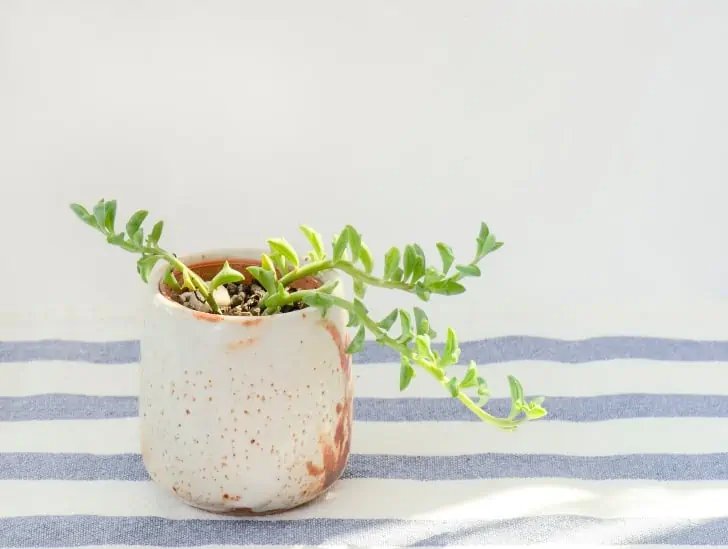
A string of dolphin in a pot.
The best time to repot your string of dolphins is in spring.

Typically, the new container should be slightly bigger than the old one, and make sure you don’t water your succulent until it has had a few days to adjust.

The best time to repot your string of dolphins is in spring. This will give the plant plenty of time to adjust and grow before cooler temperatures arrive in autumn.

Although it requires minimal care, the string of dolphins can be a tricky succulent to keep alive, especially when you repot it. Therefore, be sure to do everything correctly.

Conclusion

The string of dolphins is a unique and exciting succulent that is easy to care for as long as it gets plenty of light, water, and temperature.

With its trailing stems, this succulent makes an excellent choice for a hanging planter or a windowsill.

If you take good care of your string of dolphins, it can last for years and create a stunning display in any room.

Be sure to provide the right amount of water, light, and fertilizer during the growing season, and enjoy its unique foliage all year round!

Should You Mulch Your Succulent Garden?

Succulents are relatively hardy plants but need extra care to thrive. While most gardeners agree on the benefits of mulching in other types of planting, the consensus isn’t as clear on succulents. Some believe that mulching can trap in too much moisture and lead to root rot, while others argue that not mulching can leave succulents vulnerable to soil erosion and temperature swings.

So, should I mulch my succulent garden? Ultimately, whether you choose to mulch your succulent garden depends on several factors, including the climate in which the plants are growing and their overall health. If you live in an area with frequent temperature changes, and your succulents are in good health, mulching can help protect them from the extreme weather elements. Furthermore, mulch can keep the soil moist longer, reducing the need for frequent watering. However, if you live in an arid climate or have succulents that are struggling, it’s best to avoid mulching altogether.

This blog post discusses everything you need to know about mulching your succulent garden, so you can make the best decision for your plants.

We will cover everything from what type of mulch to use to the benefits and drawbacks of mulching. Let’s get started!

What Is Mulch?

Before we dive deep into discussing whether you should mulch your succulents, let us figure out what mulch actually is and its primary purpose in our gardens.

Mulch is a material that covers the soil to protect it from temperature changes and erosion. It also helps retain moisture in the soil, which can be especially helpful for succulents when exposed to extreme heat or dryness.

Additionally, mulch can help to ward off pests such as slugs and snails. It can also act as an insulator against weeds, providing a protective barrier between them and the plants you’re trying to grow.

Hens and chicks planted on the Mulch.
Mulch can be an effective way to protect your succulents from disease and pests as well as maintain their health.

Common types of mulch include straw, bark chips, shredded leaves, and compost. When used correctly, mulch can be an effective way to protect your succulents from disease and pests as well as maintain their health.

What Are the Advantages of Mulching Your Succulent Garden?

If you are unsure whether or not to mulch your succulent garden, it is important to weigh the advantages and disadvantages of mulching before deciding. Here are some of the benefits you should know.

1. Moisture Retention

One of the main advantages of mulching a succulent garden is moisture retention. Typically, mulch acts as a barrier between the soil and the air, helping to keep moisture in the soil longer by slowing evaporation. This helps prevent succulents from drying out during extreme heat or drought.

Mulching also prevents the soil from becoming hydrophobic. Hydrophobic soil refers to soil that has become too dry and lost its ability to soak up water. It means that water doesn’t get to your succulent’s roots even if you water your garden regularly.

Sedm planted on the mulch.
Mulch acts as a barrier between the soil and the air, helping to keep moisture in the soil longer by slowing evaporation.

Hydrophobic soil could potentially lead to dehydration of your plants and even death. While exposed soil dries up fast, mulched soil stays moist longer and prevents hydrophobia.

2. Weed Control

Using mulch in a succulent garden can help to control weeds as well. Mulch acts as an insulator between the soil and any weed seeds in the area, making it difficult for them to germinate. This helps prevent you from spending time and effort manually removing weeds.

Additionally, mulch can also provide aesthetic appeal to your succulent garden. If you’re looking for ways to spruce up the look of your outdoor space, adding mulch can be a great way to bring color and texture into the area.

3. Protection from Extreme Temperature Changes

Mulch acts as a protective layer against temperature fluctuations. It helps keep the soil cool during hot days and warm in cold temperatures, providing your plants with an optimal growing environment.

It can also help prevent physical damage to your succulent garden from extreme weather conditions such as hail and strong winds.

This is especially important for succulents that are more vulnerable to physical damage due to their delicate nature.

4. Source of Organic Food for Your Succulents

Organic mulch, such as compost, can also serve as a food source for your succulents. As the mulch decomposes, it releases vital nutrients such as nitrogen and phosphorus into the soil, providing your plants with essential nutrition.

A top view of Succulents in a pot.
Organic mulch, such as compost, can also serve as a food source for your succulents.

While many types of succulents can survive without fertilization, the organic nutrients released into the soil by decomposing mulch won’t do any harm to your plants. In fact, it makes them grow a little bit faster.

5. Helps Soil Organisms to Survive

Dried-out hydrophobic soil can be a hostile environment for soil organisms, such as earthworms and other beneficial microorganisms.

In this case, adding organic mulch to the soil can help to introduce moisture and provide shelter for these helpful creatures.

Overall, this helps create a healthy ecosystem in your succulent garden that supports bioactivity and encourages growth.

6. Reduces Soil Erosion

Mulching your succulent garden also helps to reduce soil erosion. It keeps the soil in place and prevents it from being washed away by heavy rains or winds. This can be especially beneficial for succulents planted on a slope with a greater risk of soil erosion.

Remember that soil erosion can be a major issue in areas with high rainfall, so mulching can help keep your succulent garden safe from potential damage.

Are There Disadvantages to Mulching Your Succulent Garden?

While there are many advantages to mulching your succulent garden, there are also some disadvantages you should be aware of.

The main disadvantage of mulching is that it can cause the soil to become too wet and soggy in areas with high rainfall. This can lead to root rot and fungal diseases, which can cause your succulents to weaken or even die.

Furthermore, using too much mulch can also smother the roots of your succulents. Too much mulch won’t allow for proper drainage and oxygen production, making it difficult for your succulents to survive.

It is important to use the right type of mulch in the right amount and ensure that it is not too thick or packed tightly on top of your succulent garden.

What Are the Different Types of Mulch for Succulents?

Mulch comes in varying materials and colors, so choosing the right type for your succulent garden is important. Some of the most common types of mulch for succulent gardens include:

1. Woodchip Mulch

Woodchip mulch is perhaps the most common type of mulch used in succulent gardens. It is made from coarsely shredded wood and provides good drainage, which helps prevent the soil from getting too soggy.

Plants planted on the woodchip mulch.
Woodchip mulch is perhaps the most common type of mulch used in succulent gardens.

It also breaks down slowly, so it can provide long-lasting protection for your succulents. Plus, its brown color adds an earthy texture to your garden.

2. Pine Bark Mulch

Pine bark mulch is another popular choice for succulent gardens. It is reddish-brown and consists of pieces of shredded pine bark slightly smaller than woodchip mulch.

It provides good drainage and helps keep the soil temperature stable, making it an ideal choice for succulent gardens in areas with extreme temperatures.

3. Pebbles & Stones

Pebbles are not a kind of mulch that will decompose and add nutrients to your garden soil. However, they are an excellent choice for succulent gardens because they provide good drainage and help keep the soil from becoming too moist.

Moreover, pebbles come in varying colors, sizes, and shapes, making them an attractive addition to your succulent garden.

Pebbles and stones don’t break down with time and don’t need to be reapplied over time.

But they can still be a high-maintenance option because dead leaves and exposed bits can easily destroy the aesthetic if left uncleaned.

4. Straw/Lucerne

Straw is an excellent mulch option for your succulent garden since it helps to prevent weeds from sprouting and retains moisture in the soil.

It also helps to keep the soil cool, which is beneficial for succulents that prefer cooler temperatures. Furthermore, straw has a nice light-yellow color that adds visual appeal to your garden.

However, it may not be the best option for people who live in areas that experience frequent rainfall since straw may not be able to hold up against heavy downpours.

How to Apply Mulch to Your Succulent Garden 

When applying mulch to your succulent garden, there are certain steps you should take to ensure success:

First, remove existing weeds from around each plant before applying the mulch.

Next, spread a layer of mulch between 1-2 inches deep over the area where you want to plant your succulents; this will help keep weed growth at bay and create an ideal environment for planting.

A succulent planted on the pot with mulch black stone,
Pebbles are an excellent choice for succulent gardens because they provide good drainage and help keep the soil from becoming too moist.

Finally, water lightly after applying the mulch; this will help it settle into place and begin decomposing so that it can start providing nutrients for your plants right away!

Summary

Mulching is a great way to protect and nourish your succulent garden while reducing weeding time and conserving moisture in the soil.

It can also help regulate soil temperature while adding organic matter as it decomposes over time – making it an ideal choice for those looking to get more out of their gardening experience.

8 Perfect Plant Choices for Your Open Terrarium

Small plant at an open terrarium.

Creating an open terrarium is an excellent way to add a unique style to your home or garden. Open terrariums are ideal for those who want to bring the outdoors inside but don’t have the space or budget for a full-blown greenhouse. However, choosing the right plants for an open terrarium can be tricky. That is why we are here to help you.

So, what are some of the best plants for open terrariums? Open terrariums typically contain succulents, cacti, mosses, ferns, ivy, and other low-maintenance plants that thrive in sunny yet humid environments. When selecting plants for your open terrarium, it’s important to remember that not all species will work well together; some may compete for resources like light and water, while others may not be compatible with one another due to different environmental needs. Therefore, it’s important to research each plant before adding it to your open terrarium to ensure they will all get along nicely.

This article discusses some of the most popular and best plants for open terrariums. Read on to find out everything you need to know.

What Is an Open Terrarium?

Before we dive into the best plants for open terrariums, let’s take a quick look at what an open terrarium is and why it is good for your home.

Generally, an open terrarium is a glass container with no lid or cover that can be used to display plants indoors or outdoors. Unlike closed terrariums, which are completely enclosed, open terrariums allow air to flow freely.

This makes them great for areas with low humidity and plenty of sunlight. Furthermore, plants in an open terrarium require relatively little maintenance compared to closed ones; they only need enough water and occasional pruning to keep them healthy and thriving.

A echaveria plant on a open terrarium.
The plants in open terrariums can add a layer of warmth and coziness to any room.

Having an open terrarium in your home offers a wide range of benefits. Not only do they look great, but they also help to purify the air in your home by removing pollutants like formaldehyde and benzene.

Additionally, the plants in open terrariums can add a layer of warmth and coziness to any room.

The Best Plants for Open Terrariums

Now that we know what an open terrarium is, let’s move on to the best plants for them. Each group of plants mentioned here is well-suited for open terrariums and will provide a unique touch to your home or garden.

1. Succulents

Succulents are one of the best choices for an open terrarium due to their hardy nature and ability to thrive in drier conditions. Examples of succulents that work well in open terrariums include aloe, jade plant, crassula ovate, and echeveria.

These plants don’t need much water or sunlight to thrive. They come in many shapes and sizes, so you can mix and match different kinds together within your terrarium to create interesting patterns and textures.

Succulents will thrive perfectly in the dry air of an open terrarium, so you won’t need to worry about over-watering them. That said, checking up on your succulents now and then is still important—just make sure the potting mix is completely dry before watering!

You should also consider feeding your succulents every few months with a liquid or slow-release fertilizer to ensure they stay healthy. The best time to apply fertilizer is during the active growth or flowering season.

Avoid fertilizing your succulents during the winter months since they are in a dormant period during this time.

2. Cacti

Cacti are another great choice for an open terrarium due to their hardy nature and ability to store water for long periods. Examples of cactus species that work well in open terrariums include prickly pear, barrel cactus, and star cactus.

These plants need plenty of light and warmth to thrive, so placing your terrarium in a bright spot away from any drafts or cold spots in your home is important.

Little succulent and cacti on open terrarium.
Cacti are another great choice for an open terrarium due to their hardy nature and ability to store water for long periods.

Cacti don’t need much water; simply mist the potting mix once every week or two to keep them happy. Ensure you don’t over-water your plants; only provide enough water to moisten the soil without making it soggy.

3. Ferns

Ferns make excellent additions to terrariums because they can tolerate being enclosed in glass walls with no natural air circulation.

There are many varieties of ferns available, some that thrive in low light conditions while others prefer bright light. Ferns are often used as ground cover plants because they stay small and grow horizontally rather than vertically.

Some popular fern varieties include Asplenium nidus (Birds Nest Fern), Nephrolepis exaltata (Boston Fern), Adiantum (Maidenhair Fern), and Selaginella (Clubmoss).

Taking care of ferns in an open terrarium is quite simple; all they need is regular misting and watering to keep them healthy. They don’t require a lot of sunlight, making them ideal for areas with low light conditions or those without access to direct sunlight.

If you want your ferns to thrive, ensure the potting mix is kept moist (but not soggy). For best results, apply a slow-release fertilizer to the potting soil once or twice a year.

4. Mosses and Liverworts

Mosses and liverworts are small flowering plants that don’t need much direct sunlight or water to survive. They tend to do well in damp environments like terrariums and don’t require as much care as other plant varieties.

Mosses and liverworts come in different varieties, so you can experiment with combining different types together to create interesting effects within your terrarium.

Additionally, mosses and liverworts help keep humidity levels in your terrarium stable, which is important for the health of the other plants you might have inside the terrarium.

To get the best results, add a layer of moss or liverwort to the potting soil and mist it every few days with rain or distilled water. You don’t need to apply fertilizer as these plants typically do not need added nutrients to thrive.

Some of the best mosses and liverworts for terrariums include Selaginella, Riccia Fluitans (Floating Moss), Marchantia polymorpha (Pennywort), and Pellia epiphyllum (Liverwort).

These plants are perfect for creating lush, green environments inside your open terrarium. Experiment with different varieties to create your own unique and beautiful miniature garden.

5. Ivy Plant

Ivy plant is another great option for open terrariums. It can be grown as a groundcover or allowed to climb the walls of your terrarium, creating a stunning display of curling vines and glossy green leaves.

Ivy is easy to care for; all it needs is indirect light, regular misting with distilled water, and occasional liquid fertilizer applications during the active growing season.

A ivy plant on aopen terrarium.
It can be grown as a groundcover or allowed to climb the walls of your terrarium, creating a stunning display of curling vines and glossy green leaves.

Some of the best ivy varieties for terrariums include English Ivy (Hedera helix), Algerian Ivy (Hedera canariensis), and Irish Ivy (Hedera hibernica).

These plants are perfect for creating an enchanting miniature garden with cascading vines and glossy green leaves.

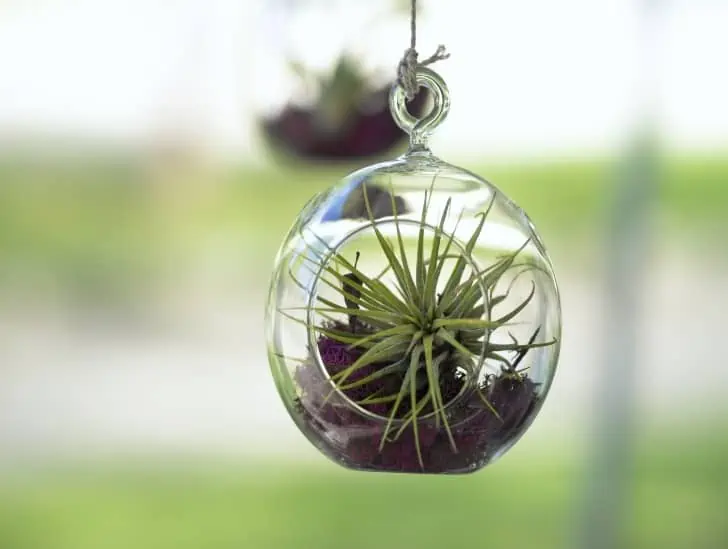
6. Air Plants

Air plants have become increasingly popular in recent years due to their unique look and easy-care requirements. Unlike other kinds of plants that need soil to grow, air plants get their nutrition from the air.

They prefer bright light but can also tolerate lower light levels if necessary—just be sure to mist them regularly, so they don’t dry out.

Air plant hangging on the Open terrarium.
Unlike other kinds of plants that need soil to grow, air plants get their nutrition from the air.

Air plants are great for creating a carpet in your terrarium; they come in all sorts of colors (green is the most common) and look beautiful when combined with other types of plants.

Some of the most common air plants for terrariums include Tillandsia, Xerographica, and Ionantha.

7. African Violet

The African Violet is a popular houseplant with its bright purple flowers and thick, fuzzy leaves. While African Violets typically prefer warmer temperatures and higher light levels than those found in terrariums, they can still do quite well in open terrariums if the conditions are right.

African Violets need regular watering (about once a week) and should be fertilized once a month. They prefer well-draining soil and should not be overwatered to avoid root rot.

African violet plant on a terrarium.
They prefer well-draining soil and should not be overwatered to avoid root rot.

These plants can also benefit from a little humidity, so you may consider adding a pebble tray or misting your terrarium every few days to increase the humidity level slightly.

8. Croton Plant

Lastly, the Croton plant is another great choice for open terrariums. This tropical plant is known for its bright, colorful foliage and striking shape. It is native to South and Central America but has become popular in terrariums worldwide due to its low-maintenance requirements.

Croton plants need bright, indirect light and regular misting to thrive. They also require fertilizer twice a month during the growing season.

Croton comes in various colors, including yellow, red, orange, and green. They are perfect for creating a tropical oasis in your terrarium!

To get the best out of your Croton plant, prune it regularly and give it enough humidity. Your Croton will be a beautiful addition to your terrarium with proper care!

Summary

All plants mentioned here are great choices when it comes to creating an open terrarium because they all require little attention yet add a lot of beauty to your space.

When selecting your plants for an open terrarium, remember that each type has different requirements when it comes to lighting, temperature, soil type, etc. So be sure to conduct thorough research before purchasing any of them for your project!

This will help you make informed decisions that will ensure that your open terrarium is filled with healthy plants that will last for many years.

The Best Succulents for Rapid Growth

A kalanchoe exposed to sunlight outdoors.

Succulents are some of the best houseplants right now, and it is for a good reason. They can thrive in almost any condition, require minimal care and are a great way to inject some color into your living space. There is one problem, though – they don’t always grow fast enough! However, the good news is that some of them grow quickly, so you won’t have to wait too long for them to become a beautiful addition to your home.

So, what are some of the fastest growing succulents? Some of the fastest growing succulents are aloe vera, Crassula, kalanchoe, aeonium, Sedum, and Echeveria. Others include haworthia, sempervivum, stonecrops, opuntia, and agave. While most of these will do well in partial sun, some require full sunlight or shade.

This article describes some of the fastest growing succulents, their characteristics and basic care requirements.

Average Growth Rate for Succulents

Before we dive deep into some of the fastest growing succulents, it is essential to understand that not all succulents grow at the same rate.

Generally, most succulents can take anywhere from two to five years to reach maturity and start flowering.

For instance, a saguaro cactus can take 75-100 years to reach its full size. However, some succulents, such as aloe vera, grow much faster, reaching maturity in one or two years.

Some succulents grow moderately fast, while others are slow growing. It is essential to understand the growth rate of your succulent to ensure you provide it with optimum care.

Fastest Growing Succulents

Now that you have a better understanding of the growth rate of various succulents, here are some of the fastest growing ones.

1. Aloe Vera

Aloe vera is one of the most popular succulent houseplants. It grows quickly if given sufficient sunlight and water and can reach maturity in as little as a year.

This succulent has thick stems and fleshy leaves for storing moisture. Unlike other succulents such as aeonium, aloe vera leaves don’t have sharp edges. Instead, they are well-rounded or pencil-shaped.

A aloe vera plant outdoors.
Aloe vera has thick stems and fleshy leaves for storing moisture.

When the plant is mature, it produces beautiful yellow or orange flowers.

Aloe vera can grow up to eight inches long when provided with the right growing conditions. It can tolerate relatively high temperatures quite well.

This makes it a perfect succulent for your balcony or patio, where you want some greenery but don’t want anything too delicate for survival.

There are more than 500 different aloe species, but only a few can be grown as houseplants. Aloe vera is perhaps the most common variety, but others include Aloe marlothii, Aloe aristata, and Aloe striatula.

2. Crassula

Another fast-growing succulent is the popular Crassula. It has various shapes and sizes, from rosettes to shrubs. This evergreen succulent looks excellent in hanging baskets or planted in large containers where it can spread out.

It has thick, fleshy leaves that can store moisture. The leaves may be rounded or pointed depending on the species and sometimes have a reddish hue.

Crassula grows quickly when given enough light, water, and regular pruning. If you want to speed up its growth rate, plant it in a soil rich in nutrients.

Crassula can also tolerate hot temperatures and drought, making it a great choice for those who want low-maintenance succulents.

There are more than 200 species of Crassula, with some of the most popular varieties including the Jade Plant (Crassula ovata), Crassula helmsii, and Crassula portulacea.

3. Irish Rose Plant

The Irish Rose plant is one of the most famous subtropical succulents native to the Canary Islands. The Irish Rose is a tree-like succulent that can grow fairly large depending on whether it is grown indoors or outdoors.

The succulent can survive both indoors and outdoors perfectly. The only thing it requires is access to good sunlight.

So, if you are growing it indoors, you will need to provide it with sufficient sunlight or install artificial grow lights.

Irish rose plant indoors.
The Irish Rose is a tree-like succulent that can grow fairly large depending on whether it is grown indoors or outdoors.

The Irish Rose plant grows fairly fast and blooms beautiful yellow flowers from late winter to spring. The succulent thrives in full sun during the cold months and in coastal regions.

The succulent has fleshy, rounded leaves that can store moisture in case of drought or excessive heat.

When grown indoors, the succulent will reach up to 5 feet tall. In outdoor settings, however, it can grow up to 8 feet tall and even more if given enough water and sunlight.

The Irish Rose is one of the best choices for those looking for a fast-growing succulent, as it can reach full maturity in one or two years. Its unique beauty and resilience make it an ideal houseplant for all types of gardeners.

4. Kalanchoe

Kalanchoe is another popular succulent with a fast growth rate. It has thick, fleshy leaves that are usually dark green but can sometimes have markings of different colors.

This succulent is known for its vibrant and colorful flowers, making it a great addition to any indoor or outdoor garden.

Kalanchoe is an easy-to-care-for succulent that grows quickly if given enough light, water, and regular pruning. This succulent can reach up to two feet tall when grown indoors. When planted outdoors, it can reach up to four feet tall.

5. Sedum

Have you ever visited your local grocery store and seen some succulents labelled “instant succulents?” If so, you must have come across the beautiful sedum plant because it is always among this group of succulents.

Sedums are fast-growing succulent plants with thick fleshy foliage that store moisture and can tolerate drought or hot weather well. These plants can reach up to two feet tall, depending on the species.

The foliage of Sedum is usually dark green or blue-green and sometimes has a pink or purple blush. Sedums can thrive in both full sun and partial shade, but for best results, you should give them an hour or two of direct sunlight every day.

These succulents are great for container gardens or rockery designs due to their fast-growing nature and low maintenance needs. They can be used as ground covers or hanging basket plants, making them ideal for the novice gardeners.

These succulents also come in different colors and shapes, allowing you to choose the perfect one for your garden.

6. Haworthia

Haworthia is another exciting plant on our list of fast growing succulents. Also referred to as the mother plant, haworthia produces female flowers first before producing male flowers.

The plant is native to South Africa and has fleshy leaves that are usually dark green with markings of white or yellow.

When grown indoors, haworthia grows quickly and can reach up to a foot tall in one year. Outdoors, it can easily grow up to six feet tall when given enough sunlight and water.

A haworthia plant exposed to sunlight.
Haworthia is drought-resistant and can thrive in full sun or partial shade.

Haworthia is an easy-care succulent that doesn’t require much maintenance. It is drought-resistant and can thrive in full sun or partial shade.

This succulent is ideal for rock gardens, container gardens, and hanging baskets since it does not take up much space and come in various shapes and sizes.

So, if you’re looking for a unique and easy-care succulent, haworthia is a great choice.

7. Sempervivum

If you are looking for something more tender to feel and highly attractive, you should try sempervivum. Although this succulent grows slightly more slowly than the other succulents on this list, they are great for areas with cold winters.

Sempervivum has a rosette structure that produces small star-shaped flowers during summer. They usually come in shades of pink, red and purple but can also be found in yellow and orange hues. Its leaves are usually green or grey-green with silver markings.

A sempervivum exposed on a sunlight on the pot.
This succulent grows slightly more slowly than the other succulents on this list, they are great for areas with cold winters.

This succulent does best in full sun and is drought-resistant. It prefers well-draining soil that holds some moisture but should not be too wet. Sempervivum will thrive in pots, rock gardens, and hanging baskets.

The succulent is easy to grow and require minimal maintenance, making it an excellent choice for novice gardeners.

8. Aeonium

Aeonium is one of the most popular succulents due to its unique rosette shape and vibrant colors. It has thick fleshy leaves that are usually green, red, yellow, or purple. The flower heads of aeonium are usually yellow, but some species can produce white and pink flowers as well.

Aeonium prefers full sun and should be watered deeply when the soil is completely dry. It’s drought-resistant and can tolerate cold temperatures better than other succulents.

Aeonium exposed to sunlight.
Aeonium is also low-maintenance and easy to care for.

This succulent is great for container gardens and rockery designs since it adds texture and color to your outdoor space.

Aeonium is also low-maintenance and easy to care for, making it an excellent choice for many gardeners.

Summary

Succulents are known for being some of the easiest plants to grow, and with the right information, you can have a thriving succulent garden in no time.

In this blog post, we’ve listed eight of the fastest growing succulents so that you can get started on your journey to becoming a succulent gardening expert.

We hope you enjoy planting these beautiful plants and watching them thrive!

The Top Air Plants for Low-Maintenance Living

Air plants are a great way to bring life and color into your home. They require minimum maintenance than other houseplants and can also be arranged uniquely to spruce up the look of any room. Whether you are new to gardening or want an easy-to-care-for houseplant, an air plant is an excellent choice. However, some air plants are relatively more suitable for beginners than others.

So, what are some of the best air plants for beginners? The most popular air plants among novice gardeners are Tillandsia xerographica, Tillandsia stricta, and the Aerangis mystacidii. Others include the Tillandsia caput-medusae, Tillandsia ionantha, Tillandsia cyanea, Tillandsia butzii, Tillandsia Streptophylla, and the smaller, compact species such as the Tillandsia funckiana. While it is relatively easy to care for these plants, you should remember that each species will require different watering and light requirements.

This blog post discusses everything you need to know about some of the best air plants for beginners. Read on to learn more.

Understanding Air Plants: A General Overview

The term “air plants” refers to a group of plants that get most of their nutrients from the air. They are not rooted in soil, but rather absorb moisture and nutrients through their leaves.

Air plants come in various shapes, sizes, and colors, some with intricate patterns on their leaves. They require little maintenance and can be placed anywhere as long as they receive enough light and humidity.

Most of these plants are native to warm, humid climates, but they can still thrive in dry environments as long as they are properly cared for. Most air plants prefer indirect sunlight and should be watered only when the leaves start to look dry.

In general, air plants need bright, indirect light; regular misting with distilled water (or rainwater if available); and occasional fertilizing with a balanced fertilizer every two weeks during the growing months.

What Makes Air Plants Ideal for Beginners?

Air plants are ideal for beginners because of their easy maintenance and hardy nature. They require minimal watering, can thrive in a range of light conditions, and only need to be fertilized occasionally.

These plants come in different shapes and sizes, making them suitable for any space. They are also highly versatile, as they can be hung from the ceiling, placed on shelves, or even mounted onto a wall.

A airplant hanging.
These plants come in different shapes and sizes, making them suitable for any space.

Furthermore, air plants don’t require a lot of soil to grow, making them ideal for gardeners who don’t have access to outdoor space or those who don’t want the mess associated with potting and re-potting plants.

What Are the Best Air Plants for Beginners?

Now that you know the basics of air plants, let’s look at some of the best air plants for beginners.

1. Tillandsia Cyanea

The Tillandsia Cyanea is an excellent option for beginner air plant growers. This species has long, thin leaves with bright purple tips and soft pink flower spikes when it blooms.

Tillandsia Cyanea is a classic air plant that doesn’t need soil to thrive. All you need to do is water your plant once every two weeks by either misting or soaking it in water for ten minutes or so.

You can also fertilize the plant lightly every month to keep it healthy and growing strong. With proper care, the plant will bloom at least once a year, producing a spectacular sight to behold.

Tillandsia Cyanea in a pot.
The Tillandsia Cyanea is an excellent option for beginner air plant growers.

The Tillandsia Cyanea is also known to be an easy air plant to propagate. All you need is a sharp pair of scissors and patience. Cut off a healthy stem, remove the lower leaves, and leave it to dry for around two days.

After that, plant the stem in moist soil or sphagnum moss and voila – you have a new Tillandsia Cyanea plant.

2. Tillandsia Ionantha

The Tillandsia Ionantha is another popular air plant for beginners. It has bright green leaves with lovely purple tips and yellow flowers when it blooms.

When it comes to maintenance, the Tillandsia Ionantha needs weekly misting or soaking in water to keep its leaves moist and healthy. It also needs to be fertilized once a month during the growing seasons.

This air plant is also easy to propagate, just like the Tillandsia Cyanea. All you need is a pair of scissors and patience, as it can take some time for the offsets (i.e., babies) to grow big enough to be transplanted.

3. Tillandsia Funckiana

The funckiana variety of air plants has stunning silver-green foliage, which forms into tight clusters when mature.

While this species requires more frequent watering than other varieties (up to twice per week), its vibrant colors make it well worth the extra effort necessary for upkeep.

A Tillandsia Funckiana.
The funckiana variety of air plants has stunning silver-green foliage.

Additionally, unlike other air plants, funckiana does not bloom; instead, it creates multiple offshoots from its stem, which can be propagated easily into new plants.

4. Ionantha Mexican

The Ionantha Mexican is an excellent choice for those who want an easy-to-care-for air plant that still looks beautiful when fully grown.

This species has small but thick green leaves that turn pinkish-red when exposed to higher levels of sunlight or slightly cooler temperatures.

It thrives in bright light but needs protection from direct sunlight during the hottest parts of the day; water this succulent once every week by giving it a quick misting with a spray bottle filled with filtered water.

This air plant should be watered less frequently during winter but should still receive some moisture.

Fertilizing the Ionantha Mexican is unnecessary, though you can give it a light application every two weeks during the active growing season (spring and summer).

Once established, this air plant is very easy to propagate and will provide you with plenty of new plants in no time.

5. Tillandsia Xerographica

If you’re looking for something more unique, Tillandsia xerographica is the perfect fit. This species is recognizable by its sprawling leaves, which have a distinct silvery hue.

While this variety requires more attention than others on this list, it’s still fairly easy to maintain as long as you keep up with misting, give it plenty of light, and keep it out of direct sunlight.

A Tillandsia Xerographica hanging on a stick.
If you’re looking for something more unique, Tillandsia xerographica is the perfect fit.

Tillandsia Xerographica is known for its unique shape, making it a great statement piece in any room. Take time to admire its intricate details, and you won’t be disappointed.

6. Tillandsia Streptophylla

Tillandsia Streptophylla is an attractive, fast-growing air plant that produces bright pink blooms each spring. Its thick leaves form a rosette shape and can grow up to 8 inches in diameter. It prefers bright light but can tolerate some shade as well.

When it comes to water and fertilizer, the Streptophylla needs to be misted or soaked at least twice per week and be given light application of fertilizer once every two weeks during its active growing season.

To propagate this air plant, remove healthy pups (offsets) from the mother plant and place them in a new container with some soil.

Once established, Tillandsia Streptophylla can be an easy and rewarding air plant to care for. Its beautiful blooms and lush foliage will undoubtedly capture your attention.

7. Tillandsia Stricta

Tillandsia stricta is great for novice gardeners as it requires minimal maintenance. This species needs plenty of light but should generally be kept out of direct sunlight to avoid scorching the leaves. It also doesn’t need to be watered or fertilized regularly.

This air plant has thin, upright leaves and small, light-colored flowers when it blooms. It also propagates easily and quickly with offsets that grow on the parent plant.

8. Tillandsia Caput Medusae

This air plant derives its name from its resemblance to the head of Medusa! Its long green leaves start out as a tight curl and unfurl as they age until they look like a mass of snakes surrounding the center of the plant.

It thrives in bright indirect light and should be watered weekly for optimal growth. The caput medusae is also very easy to propagate, with offshoots that can be transplanted into new plants.

Tillandsia Caput Medusae exposed to sunlight.
This unusual air plant is sure to draw attention wherever it is placed.

It blooms with small purple flowers that add to its already striking appearance. This unusual air plant is sure to draw attention wherever it is placed. Being a low-maintenance air plant makes it a great addition to any home or garden.

9. Tillandsia Capitata

Lastly, the Tillandsia Capitata is a striking air plant that will make an impact. Its large, curved leaves are stiff and have silver-green mottling and white tips. It prefers bright light but can tolerate some shade as well.

The Capitata should be watered at least once a week and fertilized every two weeks during its active growing season. This air plant also produces offshoots that can be transplanted into their own pot for easy propagation.

The Tillandsia Capitata makes a beautiful statement piece in any room and is sure to turn heads with its unique shape and mottling pattern.

Summary

All these air plant varieties are excellent options for beginners looking for an attractive houseplant without all the fuss that often comes with many houseplants.

They require minimal maintenance but still provide vibrant colors and exciting shapes that will help add character to your home décor.

We hope you enjoyed reading this article and are ready to try these easy-care air plants in your home. Good luck!