Why Is My Cactus Turning Yellow?

You finally got a cactus plant, and it’s been sitting pretty in your house. You can’t wait for the beautiful flowers to start blooming! The lady at the nursery mentioned a few things you should do to prevent your plants from turning yellow, and as usual, you forgot some…We are here to help you with that.

What might make a cactus plant turn yellow? A few things might lead your cactus plant to turn yellow, such as insufficient lighting, insect infestation, excess watering, or even lack of proper nutrients. The wrong kind of soil can also affect your plant’s color or survival.

Read on to see more in-depth info on the topic. Information is power, and it can help you learn how to take care of your cactus plants best.

6 Reasons Why your cactus is turning yellow

The cactus is a striking plant and can give your home a fresh new contemporary look. The succulent comes in many different shapes and sizes, and the beautiful flowers it sires also come in various vivid and gorgeous hues. 

Besides its unusual beauty, the plant is easy to care for, and can even take some neglect. Unlike most plants that require constant care, this plant requires minimal effort. 

As much as it’s easy to take care of this plant, it might sometimes end up not surviving, under some conditions. The hue might also start changing from green to a yellow color. 

Nothing is as disheartening as watching your cactus turn yellow right in front your eyes. The first thing you might ask yourself is what could have caused the change — usually, it’s the conditions around the plant that are the source of the problem. 

Worry not, these are just simple oversights. There are a few things that are easy to adjust, and will not take a lot of your time. All you need to do is start making small adjustments here, and your plant will thrive. 

1. Inadequate light
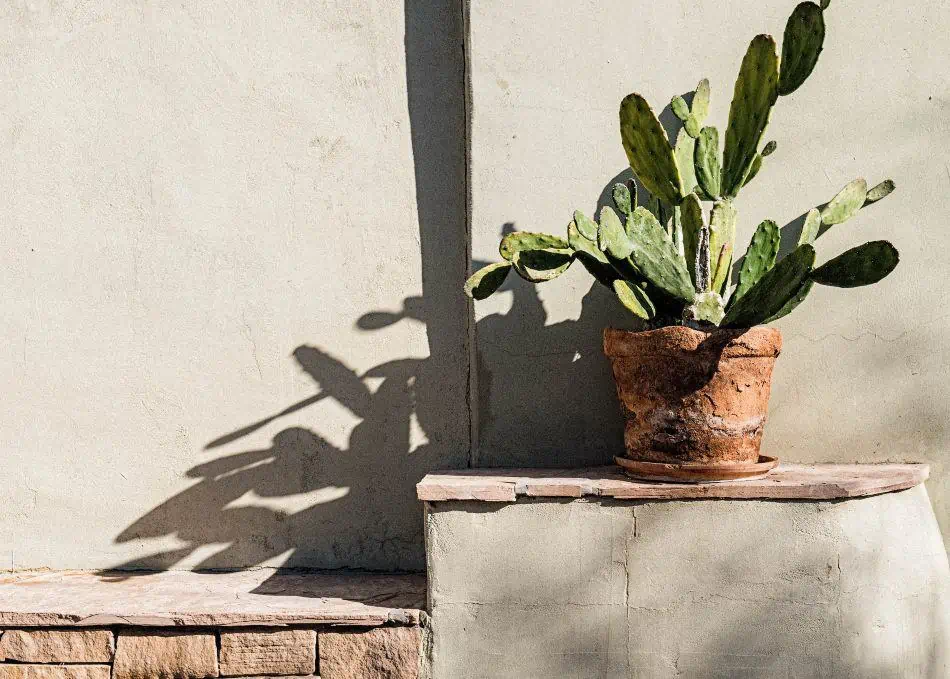
A cactus exposed to sunlight.
Too much or too low can affect your cactus

There’s such a thing as too much or too little light when it comes to the cactus plant. The amount of light that your plant will need will depend on the species. 

You might be tempted to put your succulent on the windowsill, but this might result in sunburns, which can turn the plant yellow.  Remember, not all species require too much light. 

The only way to find out if your plant is getting adequate light to observe its behavior. If the plant’s color is turning from green to yellow, this indicates too much light. 

If the plant is indoors and starts to grow towards a source of light such as a window, this indicates that it’s not getting the amount of light it needs to grow. 

Move the plant to a location that has natural light such as a window. Make sure to turn the plant regularly to ensure that all the parts get sufficient lighting.

If the weather conditions keep changing rapidly, your plant may scorch, and this might harm it for life. If the sun becomes scorching and your plant is on the window, move the plant away for a few hours, then return it when temperatures regulate to normal.  

If your plant is outdoor, place it in a sunny place in the morning, and then under a shade in the afternoons. The afternoon sun is hot and may end up discoloring the plant. 

Some experts recommend putting your plants in the most South or Western window in your house. 

2. Soil type
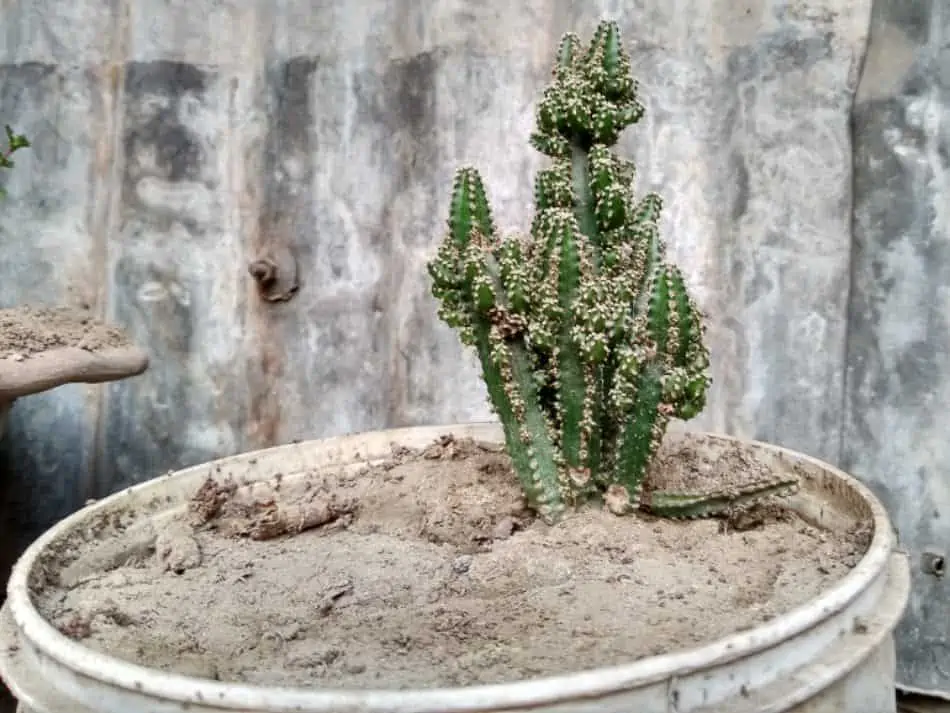
A cactus on the container with a soil.
Cactus soil

According to SFGate, cacti need properly draining soils. Heavy soil types such as clay soil might end up retaining too much water, which may make that plant’s roots rot. 

Once the roots start rotting, the plant will be unable to transport nutrients from the soil, making the plant turn yellow. 

Ensure that your container isn’t too big, as bigger containers tend to make the soil stay wet for too long. If your soil’s drainage is not good, try adding a little bit of sand to solve the problem.

3. Underwatering or overwatering

A child watering the plant.
Lack of sufficient water can harm your cactus

It might seem like it’s okay to let the cactus go without water for months since it’s a desert plant, but lack of sufficient water can harm your cactus. 

Watering is an essential part of every plant. Even cactus in the desert does everything in its power to collect and conserve water because water is necessary for the plant’s growth.

However, too much or too little could harm your plant. The cactus plant swells when it has sufficient water. 

During summer and spring, when the plant is in the growing season, it may start using up more water from its reserves, and this may cause it to look shriveled. The plant may also turn yellow, and this is usually visible from the parts closest to the soil going upwards.

Although cactus can store plenty of water, too much might be detrimental to its health. Too much water makes it impossible for air to travel to the roots, turning it yellow. 

With little or no aeration in the soil, fungi and bacteria are also likely to grow, which might eventually kill your plant. 

Another sign that you’re overwatering your plant is the darkening of leaves. The plant might also start rot. 

How do you know whether you’re providing the right amount of water for your cactus?

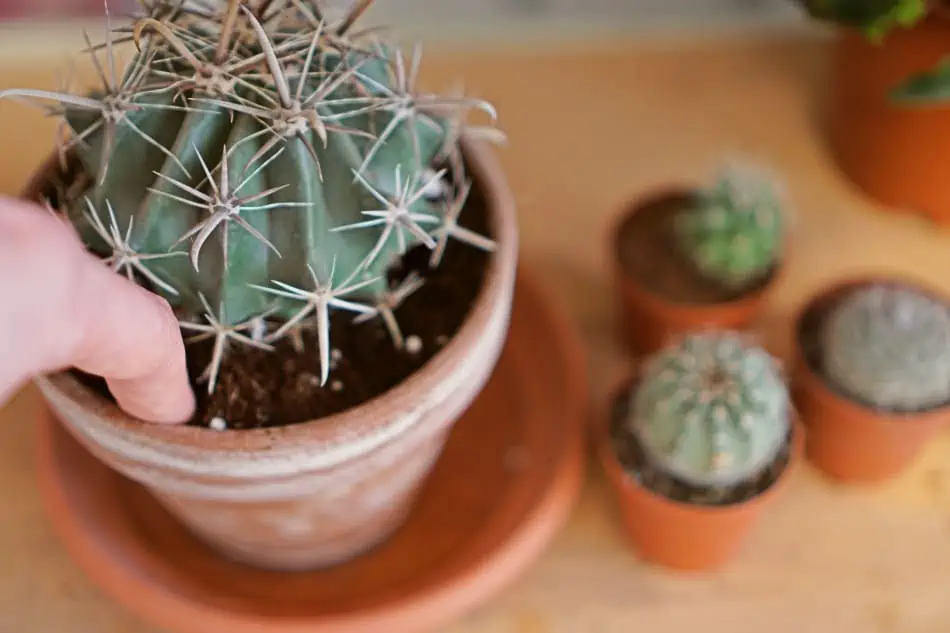
  • Using your fingers

Insert your finger into your soil to test soil dryness. Ensure that the top one or two inches of soil in your pot is dry. This indicates that the plant needs watering

A person checking the moisture content of the soil using their fingers.
Insert your finger into your soil to test soil dryness.
  • Use a moisture meter

You can also use an electronic moisture meter to help you establish whether your soil has enough moisture. The gadget is inexpensive, and you can get it from your local plant store.

All you need to do is push the gadget into the soil. If the marker is dry, it shows that the soil is dry enough for watering. Otherwise, refrain from watering your plant unless it is necessary. 

  • Use a wooden or bamboo stick

Insert a wooden stick into your pot. Remove the stick, and on touching, it should feel dry. If it feels wet, do not water your plants, as you will be overwatering them. 

Generally, water your plants bi-weekly. Ensure that your pot has some perforations. When watering, ensure that at least some water starts leaking from the holes, and this is when you can tell that your plant has had enough. 

4. Wrong temperature

Desert climate is sweltering during the day and freezing at night time. For some plants like the Christmas cactus epiphyllum and jade, the cold weather at night is essential for blooming. Therefore don’t worry too much during cold weather

During summer, the soil might dry out too fast, leaving your plant without adequate water. If your plants are outdoors during the hot season, you might need to water them weekly, instead of doing it once every two weeks, otherwise, they’ll turn yellow.

The temperature in your house is humid from cooking and breathing. Unlike in the desert where there’s free movement of air, the temperature stays humid because you close your windows and doors at night. Your soil ends up absorbing this humidity, and this might encourage the yellowing of your plant, as well as root rot. 

5. Bug infestation

A bug in the cactus.
Insects might love your cactus too

Some bugs like scale insects, mealy bugs, spider mites, slugs or snails attach themselves to cactus as they suck on the succulent plant juices. When these critters detach from the plants, they leave marks.

The insects also spread fast, and tend to attack plants in colonies. When this happens, the plant may look discolored. The best way to remove these bugs is to use an insecticide that you can get from your local pest control store. 

6. Lack of proper nutrients

Cacti need nutrients to thrive. A reason why your plant could be turning yellow is due to improper nutrient absorption by the roots. This problem is common where the roots are rotting.

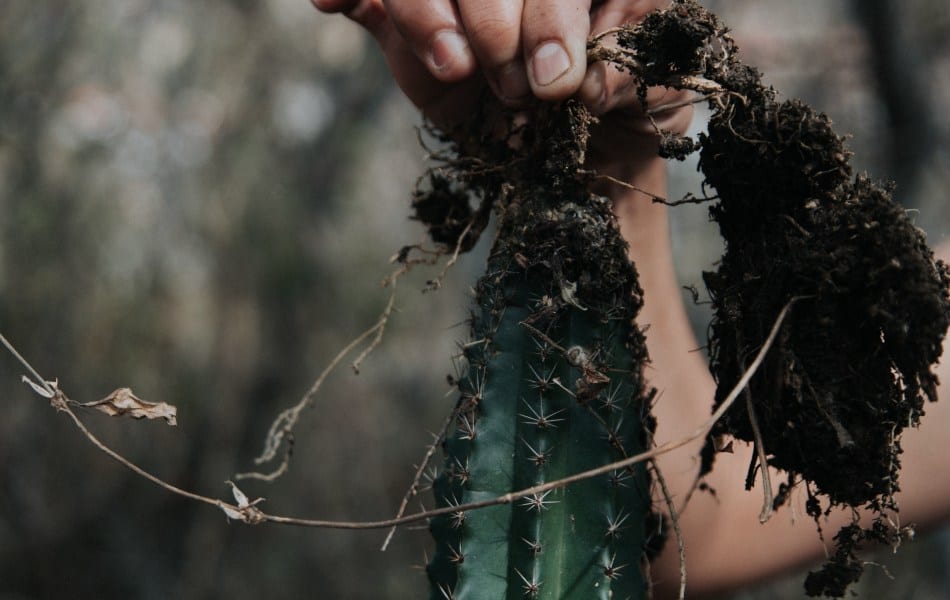
Inspect your roots to see if there are any signs of rotting. If the roots have started to rot, you may need to regrow them. Scrap off the rotten parts, change the soil in the pot, and replant your roots. 

Related Questions

Why does my cactus look shriveled? The cactus soaks up a lot of water, and when it has sufficient water in its storage, it looks plump and turgid. When the water starts drying up, especially during the dry seasons or due to inadequate watering, it starts losing water, which makes the plant look shriveled. When this happens, water your plant, and it will begin to regain its health once again. 

Why is my cactus turning brown? Your cactus might be turning brown because of a mite infestation. Mites are spider-like insects that attach themselves to the upper parts of the plants, to suck juices. This type of infestation is more common in indoor cactus than in outdoor cactus. It’s essential to thoroughly inspect your plant if you’re purchasing it from a nursery, as it might already have mites.

Can A Cactus Grow In Shade?

Lots of people buy cacti because they think it will be a great plant to freshen up their home that requires little to no maintenance. However, after several attempts to keep a cactus living, I have realized that cacti still require care and, more importantly, the proper placement.

Can cactus grow in shade? There are some cacti that thrive in low light, but most cacti need light. In fact, the best place to keep a cactus indoors is somewhere where it can get at least 4 hours of light. Cacti need to be in the sun or bright, indirect light. Windowsills facing the south or east are usually the best indoor locations for a cactus.

As a desert plant, cacti need plenty of light. However, the amount of light each cactus needs depends on its type. Doing some research on your specific type of cactus may be beneficial. In this article, we will try to help you understand how much light your cactus needs.

How Much Light Does an Indoor Cactus Need?

As a general rule of thumb, cacti do best when they can get at least four hours of sunlight a day. If your cactus is a flowering cactus, you may want to give it more sunlight during the growing season, which is usually March through September, to encourage flowering.

It is recommended that you place your cactus in windowsills facing the south or east because those directions get the most direct sunlight. If your cactus is a fresh cut or has just been transplanted into a new pot, wait one to two weeks before putting it in a location with direct sunlight so not to damage its new growth.

If there is not an area in your home where your cactus can receive this much sunlight every day, you can supplement natural light with an artificial grow light. If you choose to use an artificial grow light, leave it on for 10-14 hours a day, depending on the time a year and how much natural sunlight reaches it in the location you have chosen for it.

Easter Cactus exposed to sunlight.
If your cactus is a flowering cactus, you may want to give it more sunlight during the growing season.

To find the best spot for your cactus to receive light, take note of what areas in your home receive the most sun and for how long. You may find there is a sunny location in your home that is not in the south or east after you take note of the sunlight coming into different locations at different hours of the day.

Monitoring your cactus after you have put it in one of these locations will tell you all you need to know about whether it is a good location to leave it or not. You will easily be able to tell if the cactus is receiving too little or too much light by regularly checking the condition of its stems and leaves over time.

When growing a cactus indoors, it needs:

  • 4 hours of direct sunlight a day
  • A windowsill facing south or east
  • Time to get adjusted to its new home
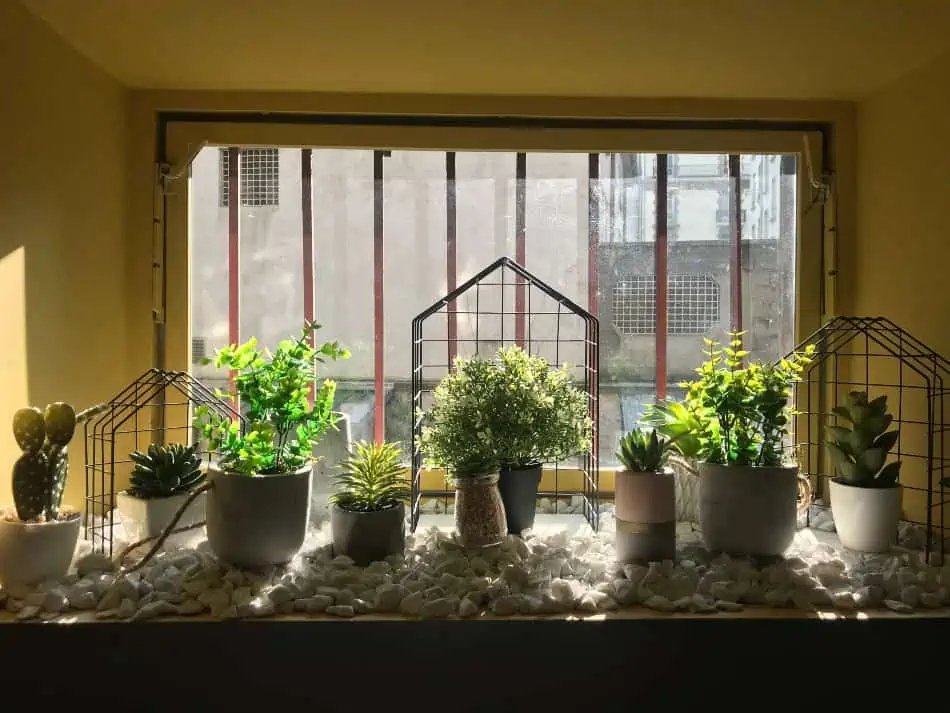
Plants near the window exposed to sunlight.
Windowsills facing the south or east are usually the best indoor locations for a cactus

How Do You Know if a Cactus Needs More Light?

If your cactus is not getting enough light, it will start to stretch in the direction the light is coming from. This is known as etiolation. For instance, if a cactus is planted in the center of the pot and it begins to experience etiolation, you will notice it stretching away from the center. If this happens, try finding a spot that receives more light for your cactus. While your cactus can recover from not having enough light for a period of time, if your cactus experiences etiolation, the growth pattern it develops is permanent unless you prune it or clip it off.

You may also notice your cactus growing more on one side than the other. This just means one side of your cactus is getting more light than the other. Rotating your cactus regularly can prevent this and promotes more well-rounded growth all over the plant.

Your cactus may also experience thinning of the top growth if it is not getting enough light. If you move your cactus to a location where it receives more light, do so slowly over several days to introduce it to its new home and prevent scorching.

Other signs of your cactus not getting enough light is discoloration, fading colors, and root rot where the soil stays wet for too long. Cacti have a deep green color when they are healthy. Unhealthy cacti will fade to a pale green color.

If a cactus needs more light, signs include:

  • Etiolation
  • Thinning of top growth
  • Discoloration or fading
  • Root rot

How Do You Know if a Cactus Needs Less Light?

As you may already know, cacti love light. However, too much light or rather, too much heat from sunlight, can damage your plant.

If your cactus is getting too much light, it will start to change colors. It will look bleached, or even turn shades of yellow or orange. It may even get sunburnt. This typically happens if your cactus is in a window with too much direct sun exposure or if you introduce the cactus to more light too fast.

Sunburn on a cactus looks brown or calloused. It will also look rougher than the rest of the plant. The damage done to sunburnt cacti is permanent, but the leaves or stems that are sunburnt can be pruned and removed. If this happens to your cactus, move it to a location where it gets less light or receives more indirect sun exposure.

If you do choose to move the location of your cactus, especially if you are moving it to an area where it gets more light, allow it plenty of time to become adjusted to the new light. Do this by slowing moving your cactus closer to the light source over a period of a few weeks.

If a cactus needs less light, signs include:

Different kind of plants in a shelf.
Cactus may even get sunburn typically happens if your cactus is in a window with too much direct sun exposure

Can Cactus Grow in Bathroom?

Yes! You can grow a cactus in the bathroom! The bathroom is actually a great place to keep a cactus because they can draw in moisture from the air as needed. However, as with growing any cactus, make sure it has ample light.

If your bathroom is south or east facing, or has windows with ample sunlight, you will definitely be safe placing your cactus in your bathroom. However, if your bathroom does not get ample sunlight, you may want to consider using an artificial light or choosing a cactus that thrives in low light.

While cacti are known as a desert plant that enjoys hot and dry environment, there are actually some cacti that thrive when placed in a bathroom with low light and high humidity. Those types of cacti include orchid cacti, mistletoe cacti, and more. Some research on your specific type of cactus and its light, water, and environment requirements would help make sure that it will thrive in your bathroom.

There are also many different places you can put your cactus in the bathroom. While the amount of light is the most important aspect in finding a place to put your cactus, you are not limited to just the window sill. You can place a cactus on a shelf or on your countertop, on the back of your toilet, or even hanging by the window. The possibilities are endless!

Adding any kind of greenery or foliage to your bathroom can actually be beneficial. They can improve air quality by removing pollutants, boost your energy, and improve your mental health. Not to mention, when you put a plant in a humid bathroom, they absorb the extra moisture in the air which helps it grow. It’s good news for anyone who tends to forget about watering their plants!

Cactus in the bathroom.
While cactus is a desert plant it can grow in the bathroom

Related Questions

Other than plenty of sunlight, what does my cactus need to thrive? Water. While your cactus doesn’t need a lot of water, it still needs some to survive. A good rule of thumb is to water your cactus when the soil seems dry. Water your cactus thoroughly and if it soaks up the water fast, dowse it one more time. Usually, Cacti need water at least once a week.

If your cactus is not getting enough water, the leaves will begin to pucker, shrivel, and become discolored. If your cactus has been watered too much, it will feel mushy, begin to brown, or experience root rot.

Does the temperature of my home affect my cactus? Yes. Cool temperatures can lead to water being absorbed slower and it sitting in the pot much longer which could lead to root rot. As temperatures change, make sure you are checking the soil before you water your cactus and do not water it unless the soil is dry. You may only need to water your cactus once a month if it is in a cool environment.

A cactus in a pot near the window.
As temperatures change, make sure you are checking the soil before you water your cactus.

Hot temperatures can affect cacti, as well. While they are desert plants that thrive in hot environments, hot temperatures mean the water will dry up much quicker. If the temperature in your home is on the warm side, you may need to water your cactus more than once a week. A high temperature, especially for a cactus sitting in a window, can also lead to burning.

Is Cactus a Flower, a Plant, or Tree?

From adding a home’s aesthetic value to being a tourist attraction in different parts of the world, the cacti are exotic with over 2,000 species. I had previously been wondering if cactus is a flower, a plant, or a tree. Stick around to see my findings. 

Would you classify a cactus as a flower, plant or tree? Cactus is a plant belonging to the family Cactaceae which comprises 127 genera and has over 1700 species. Cactus are not flowers, but the areoles which are sort of branches are what give rise to the flowers. Cacti are not trees as trees have woody stems which cacti don’t. Cacti can grow up to the height of trees, but they have succulent stems that do not classify them as trees.

Cacti can be as tall as 19m with the Pachycereus pringlei being the tallest and the Blossfeldia liliputiana being the shortest with a record of 1cm at maturity. It is reasonable to think that cactus are trees, especially for those that are quite tall. However, there are the epiphytes that grow on trees, which makes it clear that they are not trees. 

What is the most explainable definition of a plant?

If you come across a succulent plant that has spines, it is most likely of the cactus family. 

In simple terms, a plant can be young trees, shrubs, vines, bushes, grasses or herbs.  As mentioned, all cacti species are plants. With over 1700 species, cacti grow globally. Some of the common cacti species are: 

  • Prickly pear
  • Saguaro cactus
  • Peyote
  • Chin cactus
  • Star cactus
  • Christmas cactus
  • Thanksgiving cactus
  • Moon cactus
  • Barrel cactus
  • Cholla cactus
  • Totem pole cactus

We have several characteristics that make cactus a plant:

1. Photosynthesis

Unlike other plants that photosynthesize with their leaves, cacti do so with their stems. At night, they take in carbon dioxide, which is then used during the day. 

2. The stem succulent

A cactus is classified as a succulent. In other terms, a succulent is a plant that has thick juicy stems or leaves that store water. A cactus stores its water in stems, and some species are adapted to arid areas. 

3. Special skin surface

One attribute that makes cacti not lose a lot of water is the fact that they have waxy surfaces that prevent evaporation. Some species also have ribbed surfaces that prevent splitting even when the plant expands during desert rainstorms.

4. Cactus spines

Cacti have spines that protect them from being eaten by animals. The spines also act as insulation during the dry seasons. 

Is cactus a flowering plant?

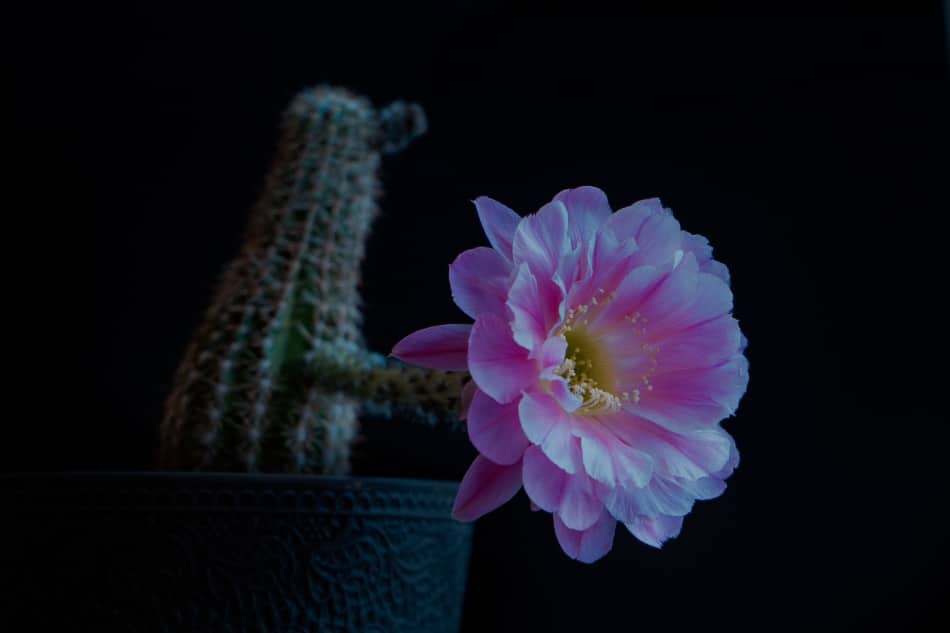
A flowering Cactus.
Blooming cactus

Yes, cacti are referred to as flowering plants. 

Do all cacti bloom?

Every type of cactus is capable of blooming. It only depends on how you care for it and its age. Some species bloom when they are over 30 years. Others will not bloom if they are not in the right light conditions. For the Holiday cacti, they only thrive if they get short days and longer nights. 

Potted cacti need to be regularly checked as you need the right amount of water, fertilizer, and light for it to bloom. 

  • Short stem cacti

Short stem cacti such as the hedgehog cacti that have mature stems that are below 2ft usually flower in five years or less. Such species often produce red flowers which are in plenty during spring. 

Old Cactus Flower.
Some species often produce red flowers which are in plenty during spring. 

The Easter lily cactus produces white, lavender, magenta, and red flowers. For the Peanut cactus, stems usually crawl on the ground when they are ⅔ long and produce orange flowers in spring that are 1 inch and above wide.   

  • Round cacti

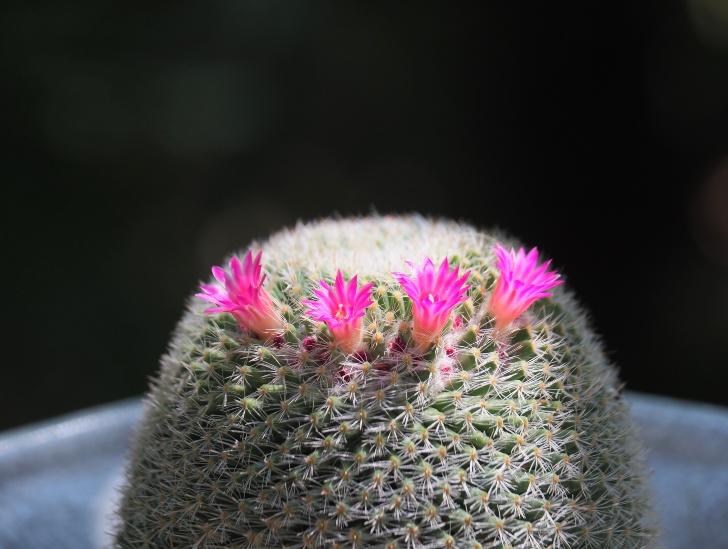
The Mammillaria is an example of a round cactus. These types bloom in a span of between three and four years after they sprout.

Although they are round when they are young, as they grow, some form small columns, their flowers are magenta, red, pink, yellow, green, and white. They grow outdoors and are native to South America. 

  • Columnar cacti

One thing about this type is that when you grow from the seed, they take years before blooming. However, if you cut a clipping from a mature blooming cactus, it will continue thriving even after the separation. 

Note, the Saguaro has to be grown from the seed since their branches when planted won’t root. They take between 40-55 years to flower. 

A peruvian Apple Cactus.
The Peruvian apple cactus will take about 10-15 years to produce white flowers.

There are other columnar cacti such as the Peruvian apple cactus will take about 10-15 years to produce white flowers. The Senita cactus produces pink flowers. 

How do you encourage blooming?

It can sometimes be quite a challenge to get a desert cactus that’s designed to grow in arid areas to bloom indoors. However, you just need to mimic these conditions, and you get them to bloom. 

1. Buy a blooming cactus

When purchasing, the only sure way to know that your cactus will bloom is buying one that’s blooming already. Some of the best varieties to buy that bloom easily are Spiny cactus, Christmas cactus, Easter cactus, Bolivian cactus, and Dwarf cactus.

2. Place them in the right temperatures

If your cactus is to bloom, then you need to place it in the proper temperatures. You want them to bloom if possible on an annual basis. 

Golden Barrel Cactus exposed to sunlight.
Most cacti bloom during summer.

Most cacti bloom during summer. During winter, ensure that you keep your cacti at 50 degrees Fahrenheit. This way, you can be sure it will flower during spring. 

3. Expose them to light

During the growing season, you can keep your cacti outdoors to get enough sun and light. Direct sunlight is ideal during this period as you make sure that it drains water well to avoid its roots decaying. 

Most cacti need approximately four hours a day of sunlight. You may sometimes notice you cacti turning yellow; this could be because they are getting excess light. Try to balance out for healthy, growing cacti that have high chances of blooming.

4. Water appropriately

As much as most of the cacti are drought-prone, they still need adequate water, especially the growing season for them to bloom. Water the succulents when you notice the soil is dry. Have good drainage so that the soil doesn’t soak and cause the roots to decay.

During winter, water rarely only when the pot is extremely dry.  In spring and summer, water at least once a week. Preferably, use rainwater as tap water may cause buildup, which tampers with the nutrient flow to the cactus. 

For varieties such as the Holiday cacti, they love water. Have a regular water schedule to ensure they have enough water. Consistent misting will help them produce healthy flowers. 

Be on the lookout not to overwater as it may cause stunted growth. On the other hand, underwatering will cause shriveling. 

5. Use an appropriate fertilizer

The only time you are allowed to use fertilizer is during the growing season. Purchase a fertilizer that’s only designed for cactus. Ensure it has a high ratio of potassium and low on nitrogen. To apply the fertilizer, take one tablespoon of fertilizer and mix it in a gallon of water. Then water the cactus until the soil becomes moist. 

Apply the fertilizer every two weeks during its growing season. When cacti are dormant, they don’t need any additional nutrients. 

Ensure you have a potting mix for the cactus. 

Can cactus be classified as a tree? 

There’s not really a definite explanation of a tree. However, it is generally agreed that a tree is a perennial plant that has an elongated stem and trunk that supports the trees and branches. It comprises of woody plants. A tree should be ideally above 32ft those that are less qualify as shrubs.

A cholla cactus bearing fruits.
Cacti can be tree-like. 

The tallest cactus is the Saguaro with it reaching about 40ft. Cacti can be tree-like.  However, they are not trees for the fact that even when their trucks are quite woody, when they dry out, they become very light and porous. 

Cacti don’t have leaves but instead have spines with fleshy stems, unlike trees that have quite woody stems. So cacti are not trees. 

Related Questions

How long do cacti flowers last? Cactus flowers last only for a day. Some of the species will flower at night, and moths and bats then pollinate them. The reason they bloom at night is that they want to preserve water, especially for those that grow in the desert.  Their big flowers are easy targets for pollinators. 

Which species of cacti last longer? The lifespan of different cacti is between 10 and 200 years. Those that grow outdoors tend to outlive the indoor ones. The Saguaro Cactus is thought to have the longest lifespan of between 150 and 200 years. The Neobuxbaumia macrocephala lives approximately 200 years while the Cephalocereus columnatrajani lives 145 years. 

Is it safe to drink cactus water? On the extreme, only consider this if you are out of options. The saguaro stores about 200 gallons of water, but it can be toxic. The barrel and prickly pear cacti store safe drinkable liquid. The easiest way of getting access to the water is by peeling their fruits and eating them raw. Only do this if its an absolute emergency.  

Where Does A Cactus Grow? 10 Beautiful Places You Can Find Cactus

Cacti make great landscaping plants. My pursuit in understanding more about cactus drove me to find out more on where it grows. Stick around to see what I found out. 

So, where does a cactus grow? Cactus often grow in different climates. Most of them grow in dry and hot regions. However, some thrive in rain forests and mountains. What’s even more surprising is that some also grow in Antarctica and Alaska. They are also found in Mexico and various parts of SouthWestern U.S.
What’s more surprising is that cacti can grow even in the harshest environments. They store water in their stems, leaves, and roots. This explains why they can survive for long, even when it does not rain.   

Where can you find cactus?

Cactus has over 1700 species which most of them are native to the Americas. Different species grow in different environments. Below are some of the climatic regions you can find cacti. 

The Desert

Cactus in Desert in Mexico.
Cacti in Mexico

Some cacti are found in drought-prone areas such as Mexico, Texas, parts of South America, southwestern US and the Atacama desert in Chile which is the world’s driest place. 

Most species of cacti survive in the deserts. What makes them survive is their adaptation to the environment. When it rains, they take advantage of it and store as much water as they can. Their roots are on the surface, which enables them to collect the water and store it in the stems quickly.

The amount of water the cactus stores is approximately 90% of the plant. For example, for the Saguaro, about 750-1000 liters are stored when it rains heavily. 

How does water not evaporate considering the hot nature of the desert?

Unlike other plants that shed off leaves during the hot season, cacti can continue photosynthesis due to their sunken pores on the leaves, and they also have a waxy stem to prevent evaporation.  

The pores often open during the night to release some moisture and close during the day. 

Their spines protect them from animals that would ideally eat them. However, for animals such as camels, the spines don’t prevent them from eating as they have papillae, which help them eat cactus with little discomfort.  

Some of the notable species found in desserts such as California are Prickly Pear, Barrel Cactus, and Cholla. 

Rainforests

A cloud rain forest.
Cloud Rain-forest

Tropical rainforests such as central America, Carribean Islands, northern South America, southeastern Brazil, and Bolivia, are all home to certain species of cacti.

Contrary to what people think, cacti don’t only grow in deserts. There are those that grow in rainforests and are usually known as jungle cacti. Unlike the mostly thorny desert ones, jungle cacti don’t have spines. 

Most of the cacti are found in cloud forests that are in the elevation f between 1,000 and 2,000 meters. 

Some of the popular species are the holiday cacti: Thanksgiving, Easter and Christmas Cacti. These cacti are mainly lithophytic (grow on rocks) or epiphytic (grow in trees). Such succulents mostly get their nutrients from dead leaves, the air or debris in cracks or crotches. 

A flowering christmas Cactus.
These cacti are mainly lithophytic (grow on rocks) or epiphytic (grow in trees).

The cacti that grow in trees do not sap any nutrients from the trees but rather do so for support. They have elongated leaves whose primary purpose is to absorb light. 

When planning to grow jungle cactus, it’s essential to mimic soil close to such natural conditions. To do so, you’ll need an appropriate potting mixture containing stuff like potting soil, pumice, oak leaf mold, orchid bark, among others. 

Always repot your cacti after every two to three years around when it has finished blooming. Ensure the cacti get the right amount of light. Just like in the rainforests, they grow in restricted sunlight, don’t expose them to prolonged summer light.

When they reach the flowering stage, consider using a tomato-type fertilizer every fortnight. Be keen not to use a high-nitrogen fertilizer. 

Mountains

A green cactus near the window.
Green cactus by rocky mountain

As hard to believe as it seems, cacti grow in the mountains. However, they grow in the mountains with low latitudes. Such cacti can be found in Whipple Mountains

In this case, the mountains will tend to interrupt the humid winds and have a side that’s rainy due to ‘catching’ water in the air and facing the wind.

On the other side of the mountain is the rain shadow where there is rarely any rain since the air that goes to the other side comes back when it’s compressed, hot and dry.  Cacti will often grow in this part of the mountain as they have the arid environment they thrive in. 

What makes cacti grow well also in the mountains is the fact that the soil here is usually eroded and is quite rocky. 

Cacti love environments that are windy, rocky, and gravely soil, which is what is found in the mountains. 

The Mountain Ball Cactus is one of the species found in the mountains.

Breathtaking Places Where You Can Find Cactus

Cacti are beautiful, and I have rounded up all things cacti here. I have compiled an impressive list of some of the best places globally where you can find all sorts of species. The list involves locations as far as Texas and Spain. The craze about cactus is clearly not going away any time soon. 

1. The Tehuacán-Cuicatlán Biosphere Reserve

For starters, the Tehuacán-Cuicatlán Biosphere Reserve was listed as a UNESCO World Heritage Site! From the incredible landscape to the cacti galore, this reserve provides some of the best shots. It is around 500,000 hectares of land that’s protected. 

There are four mountian ranges: Sierra Mazateca, Sierra Mixteca, Sierra Zongolica and Sierra de Juarez. 

What makes this reserve stand out is the cactus. There are over 2500 columnar cacti species here! It is considered the largest concentration of cacti species globally. 

The reserve is considered as a ‘biodiversity hotspot’ because of the rare species found here that may be in danger of extinction. It is also among the last areas or remaining wild cactus in such volumes which justifies why it is on the heritage list. 

With such a large reserve to explore, you may spend days hiking while exploring the great cacti species available. There are buses available from Tehuacan to the Reserve. The only trick here is, be sure to sit on the front seats for a clear view. 

Also, if you decide to go on the bus, you can go to the Helia Bravo Hollis which is a botanic garden that’s filled with cactus in between paths. 

2. Moorten Botanical Garden and Cactarium

This garden in Palm Springs was established in 1939 by Patricia and Chester Moorten who were a celebrity couple. At that time, they were helping Walt Disney in designing Disneyland’s Frontierland. 

The Moorten gardens sit on a 0.4-hectare land. As you enter, you can see the Moorten home commonly referred to as the Cactus Castle. The garden is 1.5 miles from Palm Springs, and there is parking space. 

The couple showed their love for botany by exploring and collecting all sorts of desert plants. Moorten garden boasts of about 3,000 of desert cacti as well as other desert plants. 

There is a cactarium greenhouse which has different species of cacti collected from various parts of the world.

A Golden Barrel cactus.
The garden is 1.5 miles from Palm Springs, and there is parking space. 

If you need guided tours, you need to book in advance. You can also make purchases of the available plants. Note that, the gardens are closed on Wednesdays. 

3. The Legendary Cactus Store In Los Angeles

The Cactus Store, located in the neighborhood of Echo Park, has a rare variety of species from all around the world. The store started in 2014, and its daily operations are run by Carlos Morera- a graphic designer, his uncle Johnny Morera-nursery man and cactus specialist, and other friends: Prof Christian Cummings, Max Martin, Jeff Kaplon and Greg Passuntino. 

Before the store came to life, they took about two weeks on trips to the Mexican border to hand pick cactus from different farms. 

Even though the store is only 350 square feet, it has 8,000 pounds in cinderblocks for displaying the various types of cacti. 

The store is best known as a collector’s store. Each cactus is handpicked for its own unique features. For example, a cactus may seem small in size and is more expensive than other ones, but some have been in existence for over 70 years. Some are just found on one particular farm in the whole world. 

A colorful flower from fifferent kind of cactus.
Each cactus is handpicked for its own unique features.

The store ensures that each cactus is unique and has different attributes to the rest. 

What’s even more mindblowing is the fact that the pots in which the cacti grow come in raw form and are from a Mexcian manufacturer. Since cactus hate being in moist soil, these unglazed pts are better because they suck water out quickly as compared to the glazed pots. 

If you are planning to buy any cacti in the store, the prices start from $25 to around $1300 per piece. 

When the store started back in 2014, it was not named immediately, and it got the name, ‘Cactus Store’ from people because they just started calling it that. 

4. Kaktus København

Located in Copenhagen, the store was opened in 2015 by three childhood friends: Gro, Cille, and Maja. 

The store has specialized in over 150 cacti species. Most of the cacti have been sourced from a local Danish nursery which makes all their cacti Danish-bred. 

What’s impressive about this store is that the owners show you how the cacti can create the perfect decor for your house. They also help you know how to care for the cactus. 

The store started way before it was officially opened when Maja and Cille moved in together and started a cactus collection until they covered the whole large windowsill. It was when Cille traveled to Guatemala that she learned how to cook cactus and how to use them. This was when they decided to open the store together with Gro, Maja’s sister. 

Red Cactus.
When planting, plant half the clipping which should be covered by soil.

Some of the tips they give when planting a clipping is: cut a small section of the cactus, leave it to dry for ten days. When planting, plant half the clipping which should be covered by soil. Avoid watering for the first few days to give it time to let the roots grow. Once they grow, you can water. They also mention that you need to be patient as the cactus takes a while to row. 

5. Desert City, Madrid

For nature lovers, this is another magnificent place. There are more than 400 xerophytic species on the 5,000 square meters gardens. 

The garden is divided into five zones: 

  • Arizona: this section has a variety of cacti.
  • Oasis: it’s a forest full of palm trees.
  • Tuscany: has species such as pomegranate, lavender, olive, among others. 
  • Tabernas: this is where landscaping breaks the aesthetics of the rest of the garden.
  • Guajira: this is where the gardening plants, together with cacti and other xerophytes coexist.

There are free guided tours every Saturday and Sunday at 11.30 a.m. If you are coming in groups of more than ten, you have to book in advance.

The owner is Mercedes Garcia. You have an option of purchasing plants of your choice.

6. Getty Museum Cactus Garden 

This magnificent garden was built in 1997. It is a mixture of ancient and modern as California traditions, and the ancient Mediterranean inspired it.  

A notable feature about the cacti plants found here is that the layout is what creates terrific effects. Each section of cacti contrasts with the one next to it. 

There are 1500 species of cacti and succulents here. They sell at between $10 and $800. 

7. Jardin de Cactus

This magnificent garden is in Guatiza, northern Lanzarote. It is situated in a former quarry where extraction of volcanic sand was done to pour on cultivated areas for the retention of moisture. 

The garden’s design was by the artist, Cesar Manrique, who was among the most influential artists.  From the paved ways to the walled bridges, all evident at the garden are courtesy of Cesar. 

The cactus garden has over 450 cacti species with over 4,500 examples. These species are from all five continents. The dark volcanic rocks, together with the green plants coupled with the blue sky, make the garden look magnificent.  

8. Prick London

The prick was one of the first-ever cacti and succulent boutique in Dalston, London. The store’s founder is Gynelle Leon. Most of the plants are from the UK and Europe. 

The store sells over 150 types of plants. Cacti are considered low maintenance and a great addition to the modern way of living. They add to the home decor creating a sophisticated, relaxed look. 

The store has its own design of pots. Gynelle’s passion for cacti began when she started picking giant cacti. She was mostly attracted to the fact that they seemed to last longer than her relationships!

Cholla cactus in a pot.
Cacti are considered low maintenance and a great addition to the modern way of living.

What makes this tore even more attractive is the fact that it is a complete contrast of garden shops. It is almost as enjoyable as shopping for clothes. 

Interestingly, they have a Best Selling Book: Cacti and Succulents: Choosing, Styling, Caring by the shop’s owner, Gynelle. 

9. Cactus Garden Chandigarh, India

The garden covers 7 acres of land. It is India’s most extensive botanical garden. Well known for its beauty of the cacti species in it, it was established in 1987. 

The best months to visit this garden are between September all the way to March. It has numerous species of about 272 varieties of genus Mammillaria cacti with a distinct one from Mexico known as Bursera, and its shape is like a big tree. 

10. Arizona Cactus Garden

Even though this garden is officially the Arizona Cactus Garden, it is located in Stanford University in California. Leland and Jane Stanford built the garden between 1881-1883. It is 30,000 square feet. And it is free to the public daily. 

Currently, the garden contains 500 cacti. The cactus garden is divided into two subsections: The Eastern and Western hemisphere. The Western hemisphere holds cacti species native to the Americas while the Eastern one has the rest of succulent plants such as aloe and jade plants. 

Related Questions

How can you make cactus grow faster? Cactus grow faster if they are exposed to the right amount of water (only water when the soil is dry), fertilizer (once a month during warm months) and light (place the cactus in the sunniest place of your home and keep rotating weekly). Provide an ideal condition during warm months throughout the year for faster growth. 

How can I get rid of cactus spines? There is the option of using tweezers and magnifying glass. The other more straightforward way is applying white glue to the affected part of the skin and wait for about 30 minutes until it’s dry then gently roll the gauze from the skin.  

Are cactus spines poisonous? There are no known cactus spines that are poisonous. What happens is that some small ‘glochid’ spines of some cacti species will easily stick in the skin and can be quite challenging to remove. Wear gloves such as those worn by rose gardeners to avoid this. 

Does A Cactus Need Sun? Shine Your Cactus with the Following Tips

Cacti and other succulents are among the most common houseplants. But, away from the home conditions, these plants have learned to compete for survival all over the world. Most of them are desert plants that have learned how to survive the scorching sun and sporadic rainfall. 

So, does a Cactus plant need sun? Cactus love to be near the window two blossom. You need to ensure that you give your cacti and other succulents the brightest window you can afford in your home. A south facing position will provide good sunlight, and the optimum light depends on the variety of cacti that you are growing.

Cacti come in a wide range of shapes and sizes and tend to grow best in lots of light, high temperatures, low moisture, and good drainage.

However, not all cacti grow in deserts. Some of them, such as the Schlumbergera grow in the rainforest conditions of North and South America and prefer semi-shade and humid conditions.

So, do cacti plants need lots of sunlight to blossom in your home? In this simple guide, we help you debunk the common myth that cacti need lots of sunshine to thrive.

Furthermore, we shall teach you how to take care of your cactus plant by understanding its light requirements and how to ensure that it gets the right amount of light throughout the year.

Read on to find out everything that you need to know.

Do Cacti Plants Need Sunlight?

Generally, succulents, including cacti, love sunlight, and it is always a good idea to position your cacti in a relatively bright place. Although some cacti species such as Rhipsalis and Hitora can tolerate lower light levels, no cactus loves to sit in the dark rooms of your house or on your dark office desk.

Finding a bright spot in your home is the first step in establishing whether you can take care of cacti or not.

Cacti plants can behave quite strangely if they don’t get sufficient sunlight. In most cases, you will notice discoloration in your cactus plants if they need more light. The deep green cacti will slowly fade to pale green while the purple, yellow, or bright pink cacti will revert to plain green.

Insufficient light will also affect the overall growth habit of your cacti. What was once a short, dark, and healthy cactus plant may start to grow tall and pale as it tries to reach for more light.

This will soon lead to strange growth patterns that may cause new growth to be much smaller than the rest of the plant or sometimes, new branches will come out that are quite long and tendril-like.

The unusual growth pattern in cacti is often referred to as etiolation and can only be avoided if you move your plant to a place where it will receive sufficient sunlight.

A fruit bearing cactus.
Succulents, including cacti, love sunlight

How Much Light to Give Cactus

Light is a funny thing since it is hard to measure it. If we were talking about water requirements, we could say that you need to pour one or two cups of water on the plant once or twice in a day, but it is not like you can give your cactus plant 7 lbs of light every day.

It simply can’t happen that way. So, how can we measure the amount of light to give to your cacti?

Well, the best approximation that we can use is to measure the duration. How long should your cactus plant be exposed to light each day? And to make things more precise, you need to understand how much of what kind of light keeping in mind that there is natural and artificial sunlight.

Fortunately, we are here to simplify things for you and ensure that you take good care of your cacti. So, let us start with the basics.

Cacti and other succulents need to have between 10-14 hours of light a day. Don’t expose your cactus plant to more than 14 hours of light in a day. On average, 12 hours of light a day is enough to keep your plant happy.

Remember the fact that your plant needs rest too and exposing it to more than 14 hours of light a day won’t help it in any way. In fact, cacti plants need darkness to take in carbon dioxide that will be used in the process of photosynthesis during the day.

 Know Your Angles

One of the most critical things that you are supposed to do before you even go for that cactus plant is to understand which way your house faces.

If your house faces north or south, that is great because you get all that southern exposure. However, if your home faces east or west, it is going to be a little bit trickier since the east-west sunlight isn’t as bright or as hot compared to the north-south sunlight.

If you are lucky to have a north or south facing house, make sure that you study the sunlight for several days to determine how many hours of sunlight you get in a day.

This will guide you on which type of cacti to go for and what to avoid. Some cacti such as the blue cactus usually require several hours of unrelenting hot sunlight to thrive.

If your house is facing east or west- meaning that you get a less amount of sunlight- go for the darker species of cactus plants since the darker the cactus plant, the less light it needs to survive.

Different kinds of cactus near the window exposed to sunlight.
First, understand which way your house faces

Direct vs Indirect Sunlight

One of the most critical aspects of light you need to consider while taking care of your cacti plants is the intensity of sunlight.

Cacti, like us humans, prefer to bask in direct sunlight rather than indirect sunlight. However, too much direct sun can cause serious damage to your cacti and even lead to death.

Direct sunlight refers to the rays that are directly hitting the plant and is quite strong. Therefore, you need to ensure that your cacti plants get enough direct sunlight but not too much of it.

On the other hand, indirect sunlight refers to filtered, scattered light that is not directly hitting the plant. These rays are weaker than direct sunlight and may barely be enough for your cacti to thrive in.

Therefore, if you are keeping your cacti indoors all the time, ensure that it gets enough indirect sunlight from a nearby window or balcony.

Seasonal Light Differences

The other crucial aspect of light that you need to keep in mind while taking care of your cacti plants is that light levels and intensities differ from season to season.

Summer days can be quite long, and the light intensity is also strong. Therefore, the most critical factor in your summer months is sun exposure. But, you must strive to understand how much sunlight your plant is getting every day as well as the temperature and humidity.

Although they survive in deserts, cacti and other succulents can get scorched and dried out quickly if the sun rays are too intense. You need to be cautious while moving your plant from shade to full sunlight.

Sometimes, the plant can’t withstand the sudden change in the intensity of light and will die even if you think that you have done the right thing to help it. When introducing your cactus plants to new climate or light intensities, make sure that the process is gradual.

Cactus in a pot near the window.
You need to take a lot of precaution during the cold months.

During winter, the days are shorter with less intense light. If your cacti become a little bit dormant in winter, don’t worry about it.

However, you need to know the right time to keep your plants indoors and take proper precautions when you transfer them outdoors.

If temperatures in your region are going to fall below 500F, then it is time to find a perfect window indoors for your cacti plants.

Most importantly, you need to take a lot of precaution during the cold months, especially if it has rained. Sometimes, the wet soil mixed with the relatively cold temperatures can quickly cause your cacti to die.

Many people prefer rotating their cacti between indoors and outdoors as the seasons change just to make sure that they don’t get hurt.

Sunlight vs. Artificial Light

This is a big topic when it comes to growing cacti, but the truth is that neither sunlight or artificial is better than the other. There are situations when sunlight outshines artificial light and vice versa.

Sunlight is amazing since it right there, and it is also free. You can simply put your cactus plant on your windowsill, water it when you remember, and it will thrive. Sunlight has always been there, and the cactus plant is well equipped to harness it and use it appropriately.

In fact, cacti plants were born to bathe in sunlight, and they have a wide range of colors that enable them to absorb different wavelengths and fascinating adaptations to protect themselves when the sunlight is too scorching.

Cactus exposed to sunlight.
Sunlight is amazing since it right there, and it is also free.

Therefore, you will never go wrong when you choose to expose your cacti plants to lots of sunlight whenever possible. If you are in the northern hemisphere, you will notice that you experience prolonged hours of sunlight and that could be a significant advantage to your plant. 

If your house is facing east or west, you should prioritize placing your plants in windows facing east. The sun rises in the east, and typically, the strongest sunlight is in the first half of the day.

You should also take into account external factors such as buildings or trees that may cast shade on your windows hence limiting the amount of sunlight that your plant receives.

Position your cacti as close to the glass window as possible since every inch closer to the light means more light and a happy plant. Keep the glass clean to minimize the amount of blocked or diffracted light.

While natural sunlight is great, artificial light can also help your cacti to thrive. If the light doesn’t penetrate well into your house or have simply run out of windowsill space, then you have no choice but to embrace artificial light as the primary source of light for your cacti.

Artificial lights are also great for propagating since they are less intense and you can use specific light wavelengths to encourage fruiting or flowering.

But, unlike sunlight, artificial lights aren’t free since you have to buy the bulbs and foot the electricity bill. The different types of artificial light that you can use to make your cacti happy include fluorescent, LED, and incandescent lights.

A cactus near the window exposed to sunlight.
While natural sunlight is great, artificial light can also help your cacti to thrive

How Long Should I Keep the Artificial Light On?

When it comes to artificial lights, you should keep them on for 12-16 hours per day. The intensity and duration of the artificial light should be adjusted as days become shorter or longer to ensure that your cacti plants get enough light during all seasons.

Also, pay close attention to the type of artificial light you choose since it will determine the length of time your cacti should receive light.

For example, incandescent and halogen bulbs don’t need to be kept on for long since they have a low intensity, while LED and fluorescent lights are more powerful; hence, they can stay on longer.

Be Wary of Sunburn

Although most succulents and cacti can handle intense sunlight, extreme temperatures and direct exposure to the sun can lead to sunburn. Common signs of sunburn in cacti include wrinkled leaves/stems, discoloration, and pitting.

It is hard to reverse the damage that has been caused by sunburn. Therefore, you must always be careful when growing cacti outdoors and ensure they don’t get too much direct sunlight.

When transferring your plant outdoors, you must do it gradually and keep an eye on your cacti for any adverse reactions such as sunburn.

Keep in mind that not all cacti have the same ability to resist light intensity. If you are growing a variety of cacti plants, pay close attention to the individual characteristics when it comes to light exposure.

For instance, some cacti, such as the Mammillaria elongata, can handle very intense sunlight, while others, such as the Echinopsis hybrid, prefer filtered light.

Therefore, it is prudent to use a shelter or keep them well-watered to minimize direct contact with intense sunlight and create an ideal microclimate for your cacti.

Final Thoughts

When it comes to taking proper care for your cacti plants, light plays a critical role. Being desert plants, cacti require a significant amount of light to stay healthy throughout the year.

Typically, a cactus plant needs approximately 12 hours of light each day to avoid etiolating.

During summer, sunlight can be a good source of light, but you need to be careful since the increased intensity of the sunlight can cause your plants to die. However, artificial light comes in handy during the cold winter months.

Also, if you are living in an area that doesn’t receive much sunlight, artificial lights are the way to go. Whether you depend on natural sunlight or artificial lights, the most critical thing is to ensure that your cacti receive the right amount of light needed to stay healthy.

Are Cactus Plants Poisonous to Dogs? Things to Know about Cactus and Dogs

Disclaimer: The author is not a medical doctor or veterinarian. The information presented is purely to share our experience and for entertainment purposes. As always, check with a doctor and/or veterinarian before making any health or nutrition decisions and consult with a doctor and/or veterinarian regarding any question or problem that you have. The author and blog disclaim liability for any damage, mishap, or injury that may occur from engaging in any activities or ideas from this site.

We can’t deny the fact that dogs are mischievous animals who like to sniff, explore, and eat everything around them. This habit can often get them into trouble and cause severe health issues if they consume something that they shouldn’t have. If you love to grow indoor plants such as cacti, then you may be wondering whether it is poisonous to your dog.

So, is a cactus plant poisonous to your dog? The truth is that a cactus plant isn’t poisonous to your dog, and it is perfectly fine to have this exotic plant around your pet. Nonetheless, you need to make sure that your dog doesn’t eat the cactus plant since you don’t want to take such risks.

We understand your concerns, and we are here to reveal everything that you need to know about the cactus plant and dogs so that you can take appropriate measures to protect your pet from danger.

Dogs are naturally curious and friendly animals, and that means that they can easily smell and try to taste every plant that you grow inside your house. Thus, it is your responsibility to ensure that you don’t bring anything toxic into your home that could harm your dog.

If you do bring anything toxic into your house, you need to ensure that it is out of reach of your pet. So, is cactus poisonous to dogs? Read on to find out critical facts about the cactus plant and dogs.

Why Do Dogs Love to Eat Cactus?

Before we dive into understanding whether a cactus plant is poisonous to your dog or not, you need to know why your canine friend loves to eat cacti.

First, all dogs are naturally curious, and they love to taste everything that comes their way. This is the primary reason why you will most likely see your pet stuffing his/her mouth with some of the weirdest things in your home.

In fact, science tells us that dogs love to explore with their mouths and if your little friend always seems to find something to chew on, it only means that he/she is a big explorer and there is nothing that you can do about it.

Furthermore, dogs are omnivores, and they often enjoy eating plants. They love eating plants so that they can get roughage, which is not only a great source of vitamins but also helps your dog have better bowel movements and pass digested food much easier through their intestines.

A dog looking at the food.
Dogs love to explore with their mouths

Moreover, dogs are natural scavengers, and when you see your little friend fighting for that piece of pizza from garbage even after you just fed him with some high-quality food, it shouldn’t surprise you at all. It is only that nature is kicking in, and there is nothing the dog can do about it.

Nature and your dog’s instincts also kick in for another reason- the “feast or famine” scenario. The explanation behind this situation is quite simple and straightforward.

Dogs used to go for several days, weeks, or even months without food while living in the wilderness, and those instincts still follow them up to date. This means that your dog will stuff everything that comes his/her way, including your indoor cactus plant out of fear of famine.

Besides that, boredom can be another big reason why your dog decides to eat your cactus.

There are also some medical reasons why your dog may chew everything that they come across, including the cactus plant. 

Parasites are the main culprits and if you suspect that your pet has developed some health issues don’t hesitate to take him/her to the veterinary officer.

Is the Cactus Plant Poisonous to Dogs?

The cactus plant contains a fibrous plant material that can easily cause irritation and stomach problems to your dog leading to vomiting and diarrhea. In addition to that, you may be spraying your cacti with insecticides or adding fertilizer and the chemicals can be dangerous to your dog.

A dog sniffing the cactus.
The sap of the cactus plant can be a potential allergen and can be harmful to dogs that tend to develop allergic reactions.

Furthermore, the sap of the cactus plant can be a potential allergen and can be harmful to dogs that tend to develop allergic reactions.

The spines can also cause severe harm to your pet, and we are sure that this is something that you don’t want to happen.

Therefore, in as much as cacti plants aren’t poisonous to your dog, you still need to keep your pet away from them and not allow it to eat the cactus since it can lead to a wide range of digestive problems.  Remember the fact that it is your responsibility to protect your pet at all times.

Signs of Trouble

While the cactus plant isn’t poisonous to your dog, you should be worried if you discover that your dog has consumed plenty of it.

It is thought that the sap substance released by the cactus plant has acidic properties that may cause mild to moderate effects on your dog.

For that reason, you need to act quickly the moment you realize that your pet has consumed cactus before it causes much harm to it.

The symptoms exhibited may vary greatly depending on your dog’s size, age, and general health.  You will know that your dog is suffering if you see the following signs of distress:

  • Vomiting
  • Nausea
  • Stomach pain
  • Diarrhea

If your dog didn’t eat the cactus but had ocular or dermal contact, you may notice the following signs:

  • Swelling around the eyes
  • Temporary or permanent blindness
  • Ulceration
  • Rashes on the skin accompanied by moderate pain
  • Blisters
  • Burning
  • Irritation to the skin
Different Cactus plant on a pot.
While not life-threatening, cactus spines can cause your dog some discomfort and great pain

What To Do If Your Dog Eats Cactus

The easiest and safest way to protect your little pet from eating cactus or any other harmful succulent plant that you grow inside your house is to keep all the plants out of reach of your dog.

By doing so, you will always be sure that your little friend is fine and there will be nothing to worry about.

In case you are unable to keep the plants out of reach, and your dog finds a way of eating any part of the cactus plant, make sure that you contact your trusted veterinarian as soon as possible.

Even if you are unsure of the type of plant that your dog consumed, but it exhibits signs of distress such as excessive salivation, vomiting, diarrhea, or any other unusual behavior, make sure that you contact your veterinarian for immediate assistance.

The last thing you want to do is to see your dog suffer and all you can do is sit back and watch it suffer in pain.

Removing Cactus Spines from Your Dog

Apart from eating the cactus plant, your pet can also get the spines (needles) of cacti stuck in their mouth, feet, coat, eyes, and ears. While not life-threatening, cactus spines can cause your dog some discomfort and great pain.

In fact, a heavy infestation of cacti spines may require immediate veterinary attention. However, one or two needles can easily be removed at home without any complication.  Make sure that you seek veterinary help if your pet becomes distressed since it might be good to sedate the pet before removing the needles.

Before you start the needle removal process, take some time to evaluate the severity of the infestation.

Green cactus with a ceramic dog beside.
Treat spine wounds with uttermost care since they create an opening for harmful bacteria.

Keep in mind that your dog may try to get rid of the spines with his/her mouth or by kicking her legs. You need to be quite careful since the needles can easily become dislodged and stick into your skin.

Treat a cactus spine as a puncture wound and use the right tools while dislodging it from your dog’s skin. You can start with a relatively coarse comb to get rid of the needles, but you need to be careful since blood may spurt out the entry points. Therefore, it is always good to keep a styptic stick and gauze close to you.

If you think that you can’t do the job on your own, don’t be afraid to get someone to help you.

Once you have used the course comb to remove the loose spines from your dog’s coat, remove the individual needles that remain with a pair of forceps or tweezers by pulling each one of them in the direction of fur growth.

While removing the needles, ensure that you clean off any blood and stop bleeding at the entry point.  If your dog has the spines in different areas of the body, it is advisable that you apply antibiotic ointment in one section of the body before moving on to another area.

Treat spine wounds with uttermost care since they create an opening for harmful bacteria. Before you start the removal process, make sure that you have everything that you will need ready.  If the needles are lodged in the mouth or eyes of your dog, seek veterinary assistance.

Conclusion

Dogs are natural explorers, and they will always want to smell or taste everything around them, including your indoor plants such as cacti. 

These animals love to eat cacti for a wide range of reasons, and it is your responsibility to ensure that the plants are kept out of reach of your pet.

While most cacti plants aren’t poisonous to your pet, the chemical composition of the cacti sap can cause gastrointestinal ailments to your little canine friend.

Signs of cacti ingestion in dogs include vomiting, diarrhea, appetite loss, stomach pain, excessive salivation, and nausea.

If you discover any of these signs and suspect that your pet consumed cacti, make sure that you contact your veterinary officer for immediate assistance. Don’t let your little friend suffer in pain as you watch.

A dog biting a wood.
Dogs are natural explorers, they will always want to smell or taste everything around

Related Questions

Are cactus plants poisonous to cats? Cactus is not poisonous to cats upon ingestion. Unlike most houseplants that contain dangerous compounds that may have adverse effects on your cat, this plant is harmless. However, bear in mind that the plant has spines that may accidentally injure your cat. 

How Does a Cactus Survive in the Desert?

The ability of the cactus plant to survive in the desert with no water plus harsh weather conditions all – year round baffles many people. I carried out some in-depth research on this topic in my quest to understand this mystery. I compiled this article based on scientific facts, and I’m happy to share the information with you. 

How does a cactus manage to survive in a hostile desert climate? The cactus plant survives in the desert by using the adaptation technique. This plant’s leaves, roots, and stems have adapted to the desert to enable it to absorb, and conserve water.

The science behind how a cactus can thrive in the desert while other plants can’t is easy to understand. Read on to understand better how the plant adapts into the desert environment.

The cactus plant’s adaptation techniques

The cactus plant is one of the few easily recognizable plants on the planet. The plant is a staple of many cartoons due to its unique features. There are over 2000 species of this plant scattered in deserts all over the globe. 

Human beings have utilized some species of this plant for centuries for their medicinal value and as a source of food. This plant can also serve as a great garden or house plant. 

The plant attracts tourists in the desert each year, with its unusual shapes and beautiful blossoms.  The plant is a native of Africa, America, Australian, and Europe, and many different species exist in the desert environment.  

A cholla cactus bearing fruits.
The plant attracts tourists in the desert each year, with its unusual shapes and beautiful blossoms. 

It is astonishing how the cactus can live for up to 200 years in the hot desert climate, right? Thanks to its adaptation capabilities, the plant is not only able to survive but thrive in the environment. 

Characteristics like spines, shallow roots, stomata on the stem and waxy skin make the plant a reservoir despite the harsh climate.

1. Spines instead of leaves

The plants don’t have real branches or leaves, like other plants. Instead, cacti have modified leaves known as spines. The branches of the cactus plant have small bumps known as areoles, and this is where the thorns sprout from the plant. 

This brings about the question of how the plant can carry out photosynthesis without leaves. Well, the plant’s stems are what conduct photosynthesis for these plants compared to other plants where the leaves are what carry out the procedure. 

Therefore, cactus doesn’t need leaves to photosynthesis the way other plants do. The added advantage of that is the desert has plenty of sunshine so it’s easy for the stems to have access to sunlight. 

The spines play a significant role when it comes to avoiding water evaporation. 

So, how does the cactus carry out photosynthesis during the summer?

During the summer, most desert shrubs droop and stop photosynthesis. Not the cactus plant. The plant continues to manufacture food, and that’s the reason you’ll see the cactus standing tall even during the hot summer months. 

Cactus in a pot.
Cactus spines

2. The roles that spines play in a cactus’s survival

Air trapping to reduce moisture loss

The spines create a buffer that traps air around the spine. The air trapping is necessary for restricting airflow; otherwise, the water might escape from the plant in the process.  

The buffer contains moist air, and this plays a vital role in preventing water from evaporating from the plant in the hot desert heat.

Water collection for survival

The Chilean Atacama Desert is one of the driest deserts on earth. However, this desert experiences heavy fog in the early morning hours. The locals refer to the heavy dew as “camanchaca.”

Once dew from the fog settles on the spine, it liquefies into the water and then drips on the ground below. The cactus roots then absorb this water to help nourish the plant and keep it alive.

The spines also have a hierarchical groove structure. The unique grooves that help the cactus plants collect water. 

Shade provision to avoid the hot desert sun

The cactus spine may look like it can’t offer much shade because it has a thin radius. However, the needles have a dense population with a single plant having thousands of them, and this is for a reason.

The dense population serves the purpose of covering as much surface area as possible.  Therefore, the shade that these spines provide adds up to protect the plant from losing water.

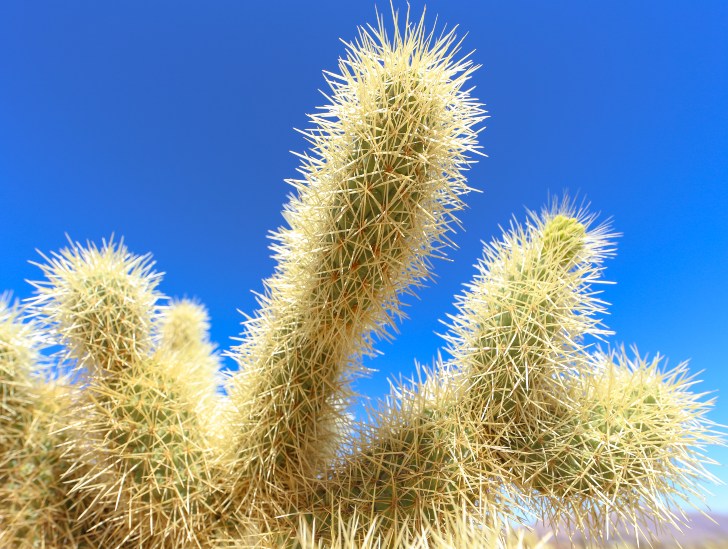
Close up image of a cactus with spines.
The cactus spine provide shade to the plant

Protection from predators

The desert is full of herbivorous animals that would love to munch away on the plants. The spines are prickly and can pierce through the skin, the reason why they are excellent for keeping these animals at bay.

3. Shallow root systems for quick water absorption

The desert experiences rains from time to time. The cactus plants have shallow roots that absorb water from the ground. 

The plant also grows temporary roots when the ground becomes damp with the goal for absorbing plenty of water during the rains. It only takes about two hours for a cactus plant to grow these roots.  After the rains stop, the roots dry up. 

In addition to roots that are close to the ground for maximum water absorption, the roots are also extended to enable them to cover a large area.  After water intake, the roots then transport this water to the stems for storage.

Some plants like the saguaro cactus can store up to 4200 pounds of water.

4. Stomata on stem to discourage evaporation

Are you wondering how it’s possible for the cactus to store water in the hot desert weather that could otherwise encourage evaporation? 

Well, here is how. 

Every plant has stomata on the leaves for carbon dioxide intake. Together with sunlight and water, plants use the gas to manufacture food in a process known as photosynthesis. 

As a plant inhales carbon dioxide, it also exhales oxygen and in the process loses a lot of moisture. Moisture loss shouldn’t be a big deal in plants that grow in climates that have regular rain, but for the cactus plants that grow in the desert, this is a different story. 

Desert plants need to conserve as much water as possible for survival during times where there’s no rain. Remember that it only rains once in a long while in the desert. 

For this reason, the plants only carry out the photosynthesis process at night. Temperatures are much cooler at night.  

Photosynthesis needs sunlight. So how is the plant able to carry out the process if the stomata are only one during the night when there is no sunlight?

 Since it’s hot in the desert during the day, the cactus plant’s stomata only open up at night when temperatures are cooler, hence fewer chances of water loss. Scientists refer to the process of night photosynthesis as crassulacean acid.

The stomata’s opening and closing work like clockwork. By dawn, the pores close, and automatically open at night. 

To further avoid water loss, the cactus stomata is very small. In addition, it’s found deep in the tissue as opposed to the surface, which would otherwise cause water loss. 

5. Stem water storage

The stem usually has thick skin than that of regular leaves, and this is why cactus uses it as a reservoir. Since a desert experiences sporadic rain, the feature allows the plant to store water for lengthy amounts of time, before the next rainfall. 

A cholla cactus.
The stem usually has thick skin than that of regular leaves, and this is why cactus uses it as a reservoir.

6. Waxy skin for water retention

The plant’s surfaces have a waxy skin. This skin covers most of the leaves, apart from the stomata since the plant needs inhalation and exhalation of carbon dioxide and oxygen. This wax helps to avoid water evaporation. 

The wax also helps to keep the plants cool in the hot climate. Else the plant would dry out, due to extreme heat. 

7. Expandable stems for maximum water intake

To enable the plants to store as much water as possible during the rainy season, the cactus has an expandable stem. These stems expand to allow as much water intake as possible for use during the days when there’s no rain. 

If you were to cut up the plant, you would notice that it resembles an accordion. The structure allows channeling of water to various parts of the plant.

These stems shrink as the plant continues to use up the water in anticipation for the next rainy season.  

8. Short growing season for water conservation

Unlike most plants that grow continuously, the cactus has periods where it stops growing. Growth requires a lot of water, which is already limited in the plant’s habitat.

For this reason, the plants only grow for a season, then pauses for a while, before the next growing season. It’s no wonder that the cactus plants grow slowly, but stay alive longer than most plants.

9. Spherical shapes to reduce surface area

The plant’s body assumes a sphere, especially during seasons where it has stored a lot of water. The sphere shape reduces the plants surface area, which means that only a small part gets sunlight exposure, avoiding dehydration. 

10. Thick tissue for maximum water storage

Due to evolution, the plants have formed a thick layer of plant tissue. The dense tissue is essential for water storage and retention deep within the plant. 

Cactus plant with fruits.
Cactus spherical shapes and thick tissue for maximum water storage

Related Questions

What does a cactus need to survive? Cactus is one of those low maintenance plants that need close to nothing to survive. If you’re considering using this unique for landscaping purposes, lal you need to do is plant it in dry soil, place it in direct sunlight and water it regularly. Avoid water logging by creating drainage in potted plants and avoid too much watering during cold seasons.

How much water does a cactus need to survive? Watering your plant once a week should be enough. Some seasons are cold, which means less watering. Before you water, check about half an inch of the topsoil layer. If the layer is dry, then your plant needs water. To ensure that you don’t water too much or too little, water until the drainage holes begin to leak water. 

Can A Cactus Grow Indoors? 5 Easy Tips To Do It Right

With the fantastic benefits that a cactus comes with, I recently decided to do a bit of research on the plant. I always wondered if it’s possible to grow cactus indoors. So, I decided to research a bit, and today, I want to share my findings with you. 

So, can a cactus grow indoors? Cactus can grow indoors In fact, all the different varieties such as the forest, desert, and Christmas cactus can do well indoors depending on how you take care of them. How healthy they grow depends on if they are getting enough sunlight and you are not overwatering them. 

How can you grow cactus – a plant adapted for the desert indoors?

The biggest motivator for growing cacti should be because they are easy to maintain as they don’t require a lot of work. Succulents will mostly die during the winter due to too much water. Therefore, there is a need to keep them indoors and without water often. 

1. Growing forest cacti

These types of cacti grow in tropical and subtropical areas globally. Tropical regions are areas such as Mexico, parts of South America, and Caribbean islands. The Christmas cactus belongs to this group.  

For people looking for hanging plants, this is a great option. When they bloom, they produce flowers in lilac or pink colors.

Use these tips to help you grow the forest cacti:

  • Drainage: The pots should have drainage holes in the container and ensure soil drains well for them to grow well. 
  • Light: these cacti love sunlight but not the direct one. During summer, you can move them outside on the porch which is unheated until when the temperatures get below 50 degrees. 
  • When the plant is flowering, water regularly. During the resting period, only water them when the soil is dry on touch. 
  • To encourage branching and flowering, prune in June. You can also use the pruned ones to grow more cacti. To grow more cacti, just cut them and place them in vermiculite as they root easily. 
  • In the case that your cactus is not blooming, it could be because of the temperature of light they are getting. Keep the temperature at 50-55 F then resume watering and move it to a warmer location. 
A cactus plant near the window.
Forest Cacti

2. Growing desert cacti

Desert cacti species are quite a variety. Whether they grow or not depends on how well they are taken care of. Just like the forest cacti, the desert ones require intense light most especially during winter. 

You can follow the pointers below towards having healthy desert cacti:

  • During the active growth period, you need your cacti to stay in temperatures from 70 F and above. You may notice scorching if it had not been hardened before. 
  • The blooming stage is quite sensitive, and you only water them when they start shriveling. When you water, make sure you water well. Note that some species bloom better when they are underpotted. 
  • During the growing season, it’s essential to consider a cacti fertilizer. Use one that’s specially designed for cacti. 
Different kinds of cactus in pot.
Desert Cacti

5 Easy-to-do Tips to growing cactus indoors

Cacti come in different colours ranging from blue, green and grey. How you take care of them is what determines if they are healthy or not. Watch out for the tips below to help you grow cactus indoors. 

1. Use fertilizer

Using an appropriate fertilizer meant for cactus helps in its growth. Use a low-nitrogen but soluble fertilizer. The best time to apply the fertilizer is when you notice new growth. This can be done every 2 months, three times. 

Do not apply fertilizer on a recently potted cactus. Wait until you can see some growth before the application process. 

Not that, there are some species that grow during winter. Unlike fertilizing during summer, for these species, work your schedule to fertilize them during winter. 

2. Choose colors wisely

Naturally, green cacti are more tolerant to environments with low light. If your room is well-lit, you can go for cacti that are pink or purple. However, if your room has low light, go for the green ones. 

Small golden barrel cactus.
Green cacti are more tolerant to environments with low light.

3. Supplementing light

Cacti do well with natural light. However, during winter, there’s not much light. Glowlights can act as a supplement for the natural light for the few months before its summer again. This ensures your cactus grow healthily. 

4. Propagation

There are different ways to the reproduction of cacti. You can cut leaves from an already grown cactus, use seeds or graft. Grafting is mostly done for weak cacti species or those that are hard to propagate. 

5. Watering cactus

Cactus will always rot if you overwater them. During spring and fall, cacti will need regular watering. However, during summer, they will need less water, maybe once a week. A cactus may turn pale if it is deprived water, adjust according to its needs.  

Dealing with common cactus problems

There are common cacti problems which can be resolved to ensure they are healthy. 

1. Yellowing or bleaching

It is common to find cactus turning yellow or white. What this means is that the plant is getting excess sunlight. Remove the cactus away from direct sunlight and place them in probably a window that has less sunlight. It should improve with time.

Sunburned Golden Barrel cactus.
It is common to find cactus turning yellow or white.

2. Thinning

Other times, you’ll notice the top of the cactus thinning or it growing towards the direction of the light which may cause an imbalance. This means it is not getting enough light. Move the cactus to a location where it will get adequate light for healthy growth. 

3. Pests

Some of the common pests that attack cacti are mealy bugs, scale insects, spider mites, and fungus gnats. It can be challenging to control these pests because they hide in places that are hard to notice, and also because they may have grown resistant to pesticides. 

Mealybugs are found usually in clusters and are most likely to be on the leaf veins. They mostly suckle the root juices causes the cactus to rot because of bacterial infections. 

Scale insects are usually located on the leaves and stems of the cactus and can be scraped off. 

Fungus gnats look a bit similar to mosquitoes and hover above the soil surface in the pot. During the larval stage, they usually live in the soil and are more likely to cause root damage because they consume the organic matter in the ground. 

Spider mites look like dust and can easily damage the cacti epidermis. They suck the cactus juice. If the plant is infected, there will be some small brown dots and webbing. 

Pest control 

Controlling pests can be a daunting task, especially if some of the pests are resistant. One sure way to reduces the chances of pests invading cacti is by growing them healthily. Keep them in the right conditions, such as placing them under the right amount of light and watering just enough. 

  • Mealybugs and spider mites can be washed off. First, cover the soil that’s in the pot with something waterproof and then wash the pests off.
  • Hygiene is equally as important. Keep dead leaves away from the pot to avoid attracting any pests. 
  • To contain the pests, spray the cactus with a dilute solution containing alcohol (preferably a ratio of 1:3) Be on the lookout because this solution can damage sensitive cacti. First test on a small part of the cactus to see if there is a reaction before spraying the whole plant only for it to damage the plant’s epidermis. 
  • Sticky traps that are precisely yellow can be used to control fungus gnats. 
  • Insecticidal soap is also another option. You can spray the plant. However, waxes and oils from the plant can be damaged by the detergent. Read the instructions to see if it’s safe to use the soap on your plant. A test on a small area of the plant is also recommended. 
  • Insecticides such as neem can also help but always read the label before using anything that could potentially damage the cacti. 
A pests in a plant.
Controlling pests can be a daunting task but your cactus will thank you

Related Questions

Can cactus be placed in the bedroom? Yes, absolutely. The succulent is suitable anywhere in the house as long as there is enough space and sunlight. Go for a less thorny one to avoid accidents. Especially if you have a pet, don’t leave them unsupervised in the room as the cactus may prick them. 

What is the lifespan of a cactus? Cactus has a lifespan usually between 10-200 years which depends on the species. The truth is, outdoor succulents will tend to live longer than the indoor ones. However, with a good maintenance routine, the household ones can live for decades. 

What are some of the best cacti species for indoors? We have so many cacti species globally. Some of the best are Christmas Cactus, Bishop’s Cap, Old Lady Cactus, Saguaro Cactus, African Milk Tea, Rat Tail, Angel Wings, Scarlet Ball, and the Barrel Cactus. 

Where Cactus Store Water To Survive In Deserts?

Well, the secret lies in how this plant is adapted to absorb, store, and use water efficiently over a prolonged period.

So, where cactus store water? Primarily, cactuses store water in collapsible-water storage cells found in the stem. However, some cactuses also store water in their roots that are modified to perform this function. The collapsible water-storage cells appear as holes or spaces in the stem and retain water for a fairly long time.

Furthermore, ribs/flutes are present, which creates room for the water to retain. The ribs/flutes are invisible when the cactus is fully swollen but become visible when the stem shrinks.

Just like any other living thing, cactus needs water to survive. However, given the areas where it grows, water is often scarce. To compensate for this and adapt to the hot temperatures well, this plant has developed a wide range of special abilities that allow it to store the little water that it receives for a relatively long time. For instance, the needle-like spines of cacti are highly modified leaves that not only protect it from predators but also help to reduce the loss of water by restricting air flow near the cactus.

How Is the Cactus Cortex Modified to Store Water? 

During its evolution, the cactus cortex underwent various modifications that give the plant more water-storage capacity. The cactus cortex is divided into two sections, namely; the inner water-storing region and the outer photosynthetic layer.

The outermost layer is green, which allows the plant to absorb carbon dioxide used in photosynthesis even though it is quite different from a typical plant leaf.

Small cactus in a pot with a water contaoner beside.
The selective advantage of storing water isn’t just what keeps the collapsible water-storage cells alive.

The innermost layer is succulent and comprises of numerous collapsible water-storage cells that store enough water to keep the plant healthy and hydrated even during prolonged dry spells.

These cells have fewer chloroplasts and a highly flexible, lignified, and elastic wall that allows the cell volume and shape to change rapidly as water is absorbed or released.

The selective advantage of storing water isn’t just what keeps the collapsible water-storage cells alive but rather the fact that the water can readily be made available to photosynthetic cells of the cactus plant.

The water is also readily available to flower buds, axillary buds, developing fruits, and other parts of the plant. 

Water-storage cells have thin, flexible walls that contract or shrink rapidly as water is transferred in and out of the cells. In all cactuses, the cell walls of the inner cortex are thin and highly flexible and can easily fold to prevent unnecessary water loss.

A close up image of cactus with water droplets.
The innermost layer store enough water to keep the plant healthy and hydrated

On the other hand, the cells that need water in cactus are thick and more resistant to shrinkage. As the volume of water within the cactus shoot reduces, the cells of the inner cortex give up more water transferring it to other plant cells hence minimizing water stress and allowing the process of photosynthesis to continue.

The evolutionary expansion of collapsible water-storage tissues in the cortex of plants can sometimes create problems to the epidermis.

Since plants produce epidermis cells only at the shoot and root tips, a succulent stem that swells after a downpour can limit the amount of water absorbed.

But, this isn’t the case for most cacti plants since they have a pleated stem surface comprising of either ribs or tubercles that ensures maximum water absorption.

What Role Do Mucilage Cells Play in Water Storage in Cactus?

A surprising aspect of water storage in a cactus plant is the role of mucilage cells. These cells are common in many cacti plants and are believed to be highly adaptive in the cactus to help it retain more water.

A image of a cell.
Source: Plant Anatomy Laboratory

Mucilage cells are also present in other plants. It is the presence of these cells that make some plants feel slimy when cut. Mucilage cells form a predominantly carbohydrate tissue that is capable of binding and holding water quite firmly.

But with water held tightly in the mucilage cells, how does that help the other cells of the cactus plant? Well, as is the case with the cactus cortex described above, the collapsible water-storage cells must always provide water to other plant cells and not keep it for themselves while the rest of the plant suffers.

In most cases, the cactus plant experiences prolonged spells of drought; hence, they should be able to digest the mucilage tissue and release water to other plant cells.


How Is the Cactus Root System Modified  to Enhance Water Absorption?  

Since they grow in deserts, you may be tempted to think that cacti grow deeper roots to help them search for a constant supply of groundwater. However, this isn’t the case.

Generally, the cactus plant develops an extensive shallow root system that lies just under the earth’s surface and may extend several feet away from the plant to increase the rate of water absorption. 

When it rains, the cactus shoots out more roots. But, during prolonged droughts, some roots dry up and break off from the plant to conserve water supply.

Typically, the cactus plant becomes more hydrated than the soil it is growing in, and sometimes it faces the risk of losing water to the ground. To avoid such a scenario from happening, the plant tries to disconnect itself from the soil as much as possible during the dry spells.

A freshly picked cactus from the ground.
Some cacti have succulent roots that store food and water


Some cacti send down a long and strong taproot soon after germinating. The taproot provides strong anchorage so that the plant isn’t washed away in rainstorms and also allows it to tap deeper subsurface soils with more moisture.

Examples of cacti that develop a taproot include the saguaro and the giant Mexican cereus. Saguaro’s taproot may extend up to 5 feet into the soil. 

Some cacti have succulent roots that store food and water. A perfect example is the Cereus Greggii, commonly referred to as the Arizona queen of the night that has an enlarged root system weighing up to 27 kilograms.

The part of the root that becomes enlarged is the xylem tissue that stores starch and water.  Most cacti don’t have aerial or adventurous roots since they tend to increase water loss. Cactus roots also change their characteristics as the water supply fluctuates.

For instance, after a downpour, the existing dehydrated roots become more water conductive, and new roots are rapidly formed to help in soaking up the little available rainwater.

During the dry spells, the roots fall off, and the existing roots dehydrate and shrink, creating an air gap that helps to prevent water stored in the roots from escaping back to the soil.

Are There Any Other Useful Traits  That Help the Cactus to Survive in Deserts?

Apart from the collapsible water-storage cells, mucilage cells, and a specialized root system, cacti have also developed a waxy skin, prickly spines, and reversed opening and closing of the stomata to lower the rate of water loss.

In fact, in some cacti, the prickly spines also collect rainwater and direct it to the plant roots.  All plants have stomata that open and close to collect carbon dioxide used during photosynthesis.

Stomata refer to the numerous little pores found on plant surfaces. During the process of photosynthesis, plants convert the collected carbon dioxide into sugars.

Typically, stomata open during the day and close at night. But, this process can be quite troublesome in desert plants such as the cactus since a lot of water escapes through these pores each time they open.

If a plant is trying to conserve its water reservoir, it can be a risky business to open the stomata and lose water.  While most plants open their stomata during the day, cacti and other desert plants open their pores at night.

The cooler night temperatures, lack of sunshine, and the calm breeze help cacti to retain a lot of water during the process. However, the lack of sunlight at night doesn’t allow cacti to manufacture food at that time. 

Therefore, it stores carbon dioxide at night and embarks on photosynthesis in the morning when sunlight is available. Even the leafy cacti such as the Pereskia have developed similar traits to make their living in the desert a little bit easier.

Sunset image with Mature cactus.
The cooler night temperatures, lack of sunshine, and the calm breeze help cacti to retain a lot of water

Related Questions

Where do succulent plants store water?  Typically, all succulent plants store water in stems, roots, and fleshy leaves. All cacti are succulent plants as are other non-cactus desert plants such as euphorbia, aloe, and elephant trees.  However, there is a wide range of other adaptations that are essential to ensure effective water absorption and storage.

Why do cacti have spines? The needle-like structures present on the surface of cactus are known as spines and represent modified leaves. The lack of actual leaves makes it possible to imagine the plant as one large stem with spines instead of leaves. One of the primary functions of the spine is to protect the cactus from plant-eating animals. It also provides shed for the cactus itself and minimizes water loss.

Can you drink the water from a cactus?  Drinking water from a cactus isn’t recommended since you are ingesting a new substance that your body has to process.  If you must drink water from the plant, drink from a fishhook barrel that isn’t toxic. The cactus fruit is edible as well.