What Is The Classification Of Cactus?

Every living organism can be classified into different scientific groups it belongs to depending on its physical characteristics. The highest category is the kingdom while the lowest classification is the species. As you move from the top (kingdom) to the bottom (species) of the classification tree, the characteristics of the organism become more specific and defined. 

So, what is the classification of cactus? Cacti belong to Kingdom Plantae, Phylum Tracheophyta, Division Anthophyta, and Class Magnoliopsida.  These succulents belong to Subclass Caryophyllidae, Order Caryophyllales and Family Cactaceae. There are approximately 150 genera in the entire Cactaceae family, but they are generally divided into three subgroups: Opunitieae, Pereskieae, and Cactoidea. There are over 2000 different cacti species that fall into two main categories, namely Opuntias and Cactoids.

In this article, we cover everything you need to know about the classification of the cactus plant. We shall also highlight some of the critical features of a cactus plant and how these succulents interact with human beings. So, let us get started.

Understanding Cactus Etymology

The word cactus is derived from the Greek word Kaktos which means a spiny thistle, possibly the cardoon. The Greek term was modified to cactus in 1753.

Although cactus is a common term, there is some dispute over the word’s proper plural form. If we stick to the original Greek word (Kaktos), the correct plural in English would be “cactoi” or “cactuses.”

However, as a word in Botanical Latin, distinct from Classical Latin, the term cactus is forced to follow the standard Latin rules for pluralization to become “cacti.” In fact, “cacti” has become the standard pluralization for cactus in English.

Regardless, the term “cactus” is commonly used as both singular and plural in many parts of the world and is cited as both singular and plural by the Random House Unabridged Dictionary.

What Are the Main Elements of a cactus Plant Used in Its Classification?

Every living organism has its unique features that usually play a critical role in its classification. Here are the main features of a cactus plant that determine its classification:

1. Stem

Cacti plants have succulent stems that store water. The stem can be smooth or covered with small bumps known as tubercles. Other stems can be ribbed in shape. The ribs become more visible when the cactus is short of water but invisible when the plant has stored plenty of water.

The stems of cacti plants are mostly some shade of green because they contain chlorophyll, which is needed during photosynthesis.

They also have stomata that open and close at different times of the day to allow the passage of gases. Some cacti plants have waxy stems.

2. Leaves

Most cacti plants don’t have real leaves. It is one of the features that help them survive in deserts. Instead of leaves, they have spines that protect them from predators.

The stems are modified to perform photosynthesis. However, some cacti species have tree-like leaves, which may be short-lived or permanent. It all depends on where the cactus grows naturally.
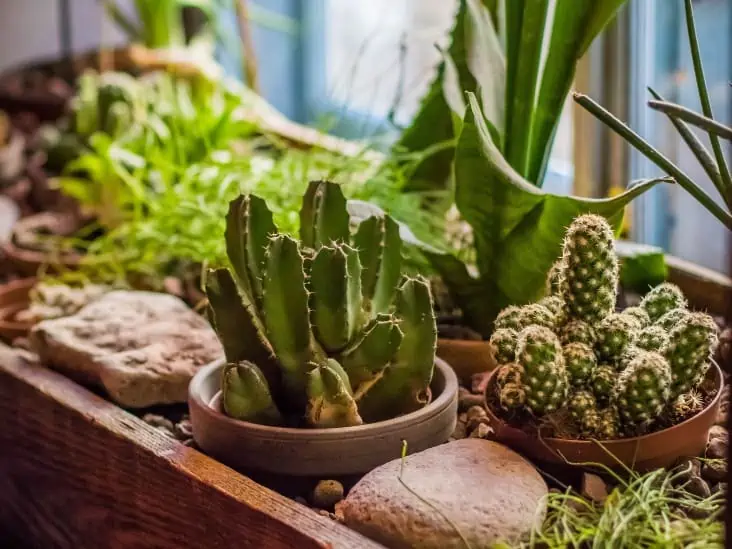
Although most cacti do not have actual leaves, some species might steel feature tree-like leaves.

3. Areoles

Areoles are fur-like areas on the stem of the cactus plant from which flowers and spines grow. Areoles may be oval, circular, separate, or entirely separate but still connected to each other.

The multicellular hairs of the areoles give them a brownish or yellowish woolly/fur-like appearance. They produce spines and flowers in most cacti species and then become inactive after that.

4. Roots

Most cacti plants have fine roots that spread out around the base of the succulent to absorb water.  Most of them grow shallow roots that are only a few inches below the ground surface. However, some species have a taproot that is much larger than the body to support the taller column-like cactus.

 Tree climbers (a special type of cacti plants) usually have unique roots produced along the stem whenever the cactus comes across something that it can cling or root onto.

5. Flowers

Cacti flowers differ from species to species.  The flowers can either grow in clusters or as single blooms. Their colors range from white to red, yellow, and magenta. 

Some cacti species bloom in spring, while others bloom in summer.
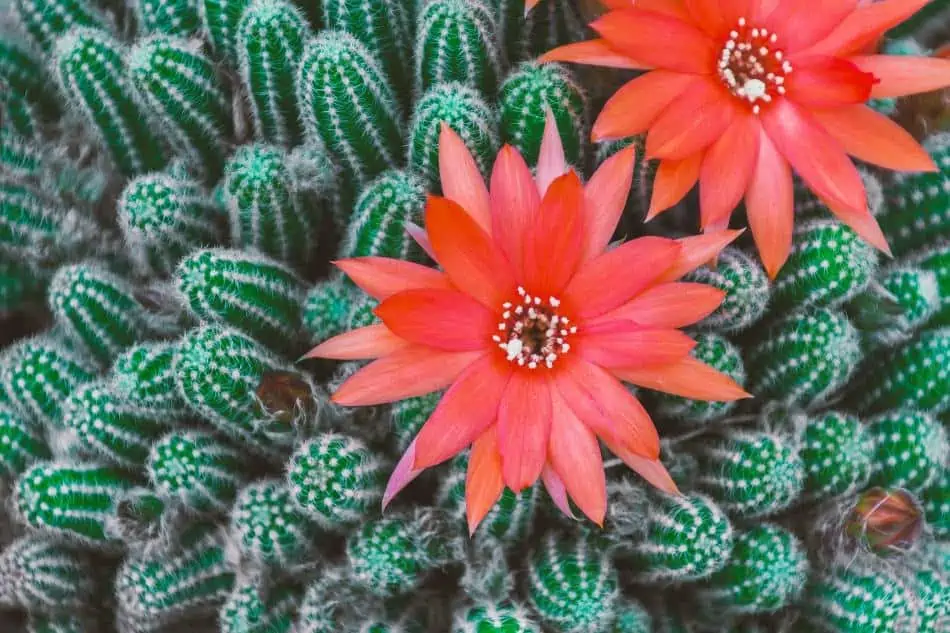
Various cacti species produce different colored flowers, typically in spring or summer.

6. Spines

You need to keep in mind that cactus spines aren’t thorns. Spines are modified leaves, while thorns are mostly modified branches. Spines grow from the areoles and are still present even in cacti species with leaves.

Some cacti species, especially the tree-living ones, only grow spines when they are still young. Cacti spines differ in thickness and may appear bristle-like or hair-like. They can be curved, hooked, or straight.

Some cacti species have minute spines that shed quite easily and can cause severe pain and irritation when they penetrate your skin.
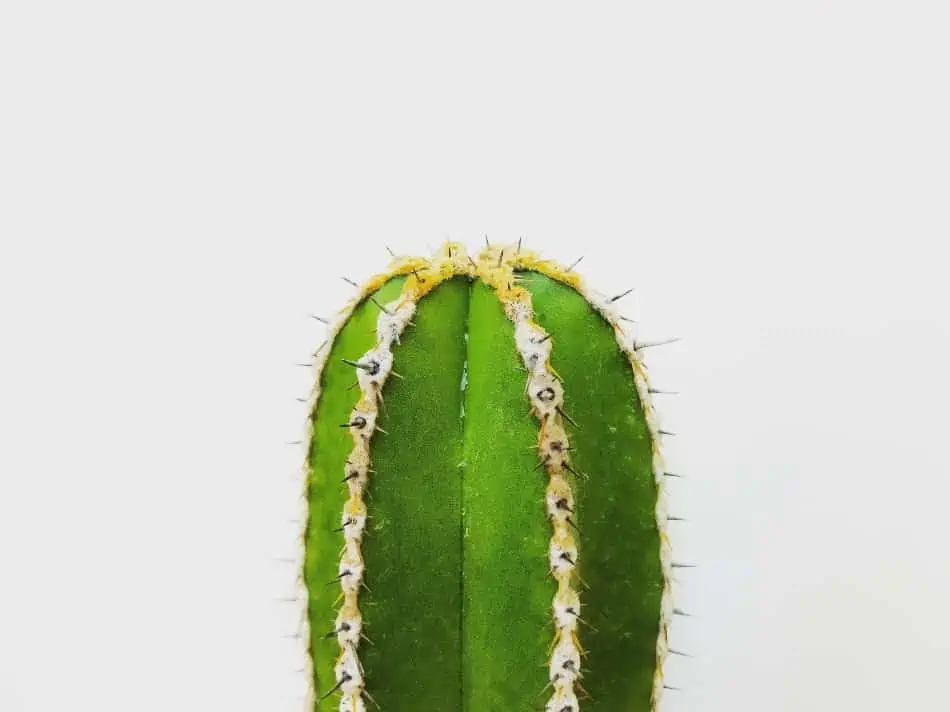
Cacti spines and thorns can cause severe pain and skin irritation.

The Six Classifications of a Cactus

Below are the six classifications of a typical cactus plant:

1. Kingdom

Kingdom is the highest classification group. We only have two Kingdoms, namely Plantae and Animalia.  Since cactus is a plant, it automatically becomes a member of the Kingdom Plantae. On the other hand, all animals are members of Kingdom Animalia.

2. Phylum and Division

Cacti plants belong to the Phylum Tracheophyta because they are vascular plants. These succulents belong to the Division Anthophyta because they are flowering plants. The other name for flowering plants is angiosperms.

3. Class and Subclass

These desert plants are part of the Class Magnoliopsida and Subclass Caryophyllidae. They belong to Class Magnoliopsida because they are dicots.  All plants categorized in Class Magnoliopsida and subclass Caryophyllidae are insect-pollinated, and their seeds have two cotyledons.

4. Order and Family

Cacti plants belong to the Order Caryophyllales and the Family Cactaceae. Caryophyllales is a relatively large group of approximately 26 families of flowering plants with over 12,500 different species.

This includes the succulent plant families Cactaceae (cacti), Aizoaceae, Portulacaceae( Purslanes), Didieraceae and the carnivorous plant families Nepenthes and Droseraceae.

Order Caryophyllales also features essential horticultural and agricultural crops such as bougainvillea, Caryophyllaceae, spinach, rhubarb, and beet.

5. Genus

There are over 150 genera in the extensive Cactaceae family. The different genera are further classified into three tribes or subgroups: Opunitieae, Pereskieae, and Cactoidea.

Almost all cacti plants fall into the Cactoidea subgroup. Two genera, namely the Maihueniahe Persicae and Pereskia, make up the subgroup.

Cacti plants in these genera mainly have woody stems and semi-deciduous leaves. Their areolas are also wolly and spiny at the leaf axils.  These cacti plants produce flowers and fleshy fruits.

The Opunitieae mainly comprises the prickly pear varieties, including Pterocactus, Tacinga, Quiabentia, and Pereskiopsis.  These cacti varieties usually have fleshy branches, and their areolas have fine hairs. Their fruits are seedy, and the leaves are cylindrical or flat.

6. Species

There are over 2000 different cacti species that fall into two main groups, namely Opuntias and Cactoids.

The common features to both categories include fleshy stems modified to perform photosynthesis, small absent leaves and flowers with ovaries buried in a receptacle. Cacti plants in both categories also possess areoles and develop shallow roots.

The other cacti species that don’t belong to the two categories mentioned above fall in any of the two remaining categories: Pereskia and Maihuenia.

Mature cacti plants that fall in any of these species usually have woody barks that highly resemble trees. They also have true leaves that perform photosynthesis, and their flower ovaries are not sunken in a receptacle.

Those that fall into the Maihuenia category tend to have small globular bodies with tiny leaves at the top. However, some members of this group look like normal trees.

Cacti Plants and Humans

Human beings have been growing cacti plants as houseplants for many years. Some people use cacti fruits and nopales as food and herbal medicine.

The prickly pear is one of the commonly cultivated cacti. Both its stems and fruits are edible in many parts of the world. The cactus is native to Mexico and the southwestern parts of the United States, where it is highly cherished and used for food and medicinal use.

The prickly pear juice is used to relieve skin rashes and wound pains. In Africa and parts of Australia, the prickly pear is used as cattle food and a natural thorn fence to protect cattle from predators and thieves.

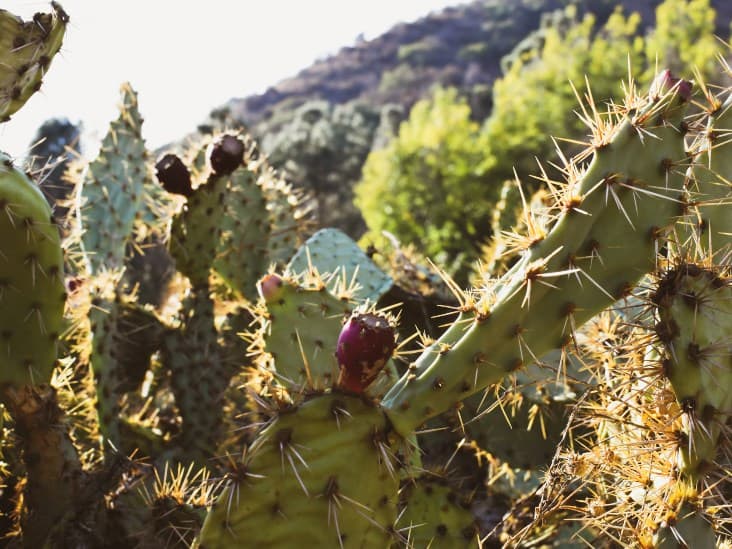
Prickly pear is one of the most popular cactus plants producing edible fruit and pads.

Other cacti species have also been useful to human beings. For instance, the giant Saguaro Cactus bears edible fruit while the Peyote produces a juice with a hallucinogenic effect mostly used in Native American religious ceremonies.

Final Thoughts

Cactus is a flowering plant with over 150 genera and approximately 2,000 species. Classification of cactus, just like any other living organism, depends on its physical traits.

Although most of these succulents are native to North and South America, we have a few species spread worldwide. Mexico remains the leading country with the highest number of cacti species.

While some cactus species inhabit tropical and subtropical areas, most of them grow in deserts and are well adapted to surviving in the harsh environment.

Best Small Cactus Species For Your Indoors

Cactus is a unique plant that comes in a variety of sizes. While some are huge and may grow to heights of up to 40 feet, others are small enough to fit into small pots at home. Small cactus have recently become a huge sensation and used as indoor plants. These come in a variety of colors and shapes and provide additional ambience to the home when blended with other notable house plants. While most of these small cactus varieties are adapted for the deserts, they can also thrive as indoor plants with the right propagation and care.

So what are the best small cactus for your indoors? Small cactus varieties come in various shapes and colors, but the most ideal species for indoors are those that do not need much sunlight can fit into small pots and are slow-growing. Some of these include the following:

  1. Moon Cactus
  2. Bunny Ear cactus
  3. Rat Tail
  4. Old Lady Cactus
  5. Christmas Cactus
  6. Star Cactus

This article will be looking at some of the smallest cactus can be grown as indoor plants. It will look at their features in terms of propagation, adaptations and suitability as indoor plants.

1.     Moon Cactus

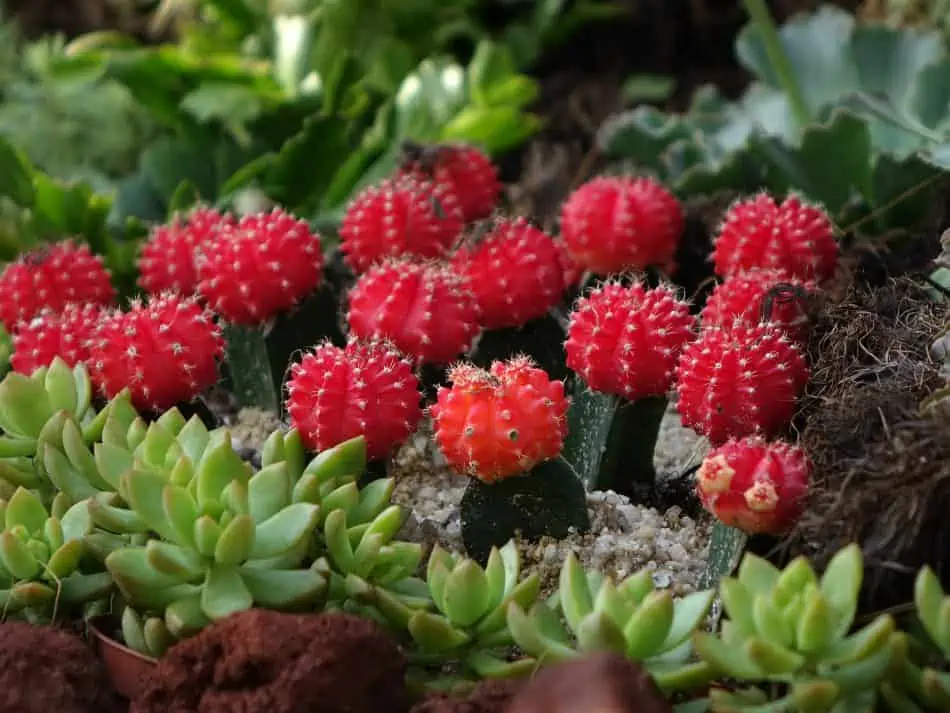
Moon cactus is one of the most recognizable indoor cacti, thanks to its unique shape and a variety of colors that range from yellow to pink, red and orange. These bright neon colors are usually noted in its ball-shaped appearance. They would usually be sitting on top of another green colored typed of cacti.

The moon cactus is a product of human design as the cactus on its own cannot thrive. As such, it needs to be grafted on another green cactus to help offer chlorophyll to make its food. This makes it two plants in one. The beautifully, brightly colored part of the moon cactus cannot produce chlorophyll independently, thus the need to graft it onto another plant.

Moon Cactus is characterized by a ball-shaped appearance and bright colors, including red, pink, yellow, and orange.

Moon cactus is an ideal indoor cacti, especially to the first-timers in horticulture because it’s low on maintenance. They can be used to add some pomp and color to your window seal, living room or porch area. For best results, moon cactus should be positioned in a bright area but away from direct sunlight. In terms of water requirements, moon cactus, just like any other cactus adapted for the deserts do not need much water. Be careful not to overwater as this may lead to root rot and eventually death of the cactus.

When grown indoors, moon cactus can drastically improve the overall look of your home and complement the indoor décor thanks to its variety of colors. You may choose to go for one specific color or use a mix of what is available. What’s more, moon cacti are slow-growing and can grow to a maximum of about six inches. Remember, the health of your moon cactus will highly depend on that of the stock. As such, it is important to choose an ideal stock cactus that will blend well with your moon cactus.

2.     Bunny Ear cactus

The bunny ear cactus is a small desert plant that perfectly fits the indoor environment. It is native to Mexico but can be found in most arid and semi-arid areas. It is one of the most popular indoor plants thanks to its unique appearance with pads that mimic rabbit ears. Growing the bunny ears as an indoor plant is simple; all you have to do is ensure the growing conditions are as close to its natural habitat as possible. So with some dry, sunny and low humidity conditions, you can easily grow the bunny ears as an indoor plant.
Bunny Ear Cactus is a small desert plant native to Mexico that can reach a height of 2 feet when grown indoors.

While in its natural habitat, bunny ears can grow to a height of 3 feet. When grown indoors, however, the cactus grows to a maximum height of 2 feet, making it a perfect indoor plant. What’s more, it is slow-growing, thus giving you enough time to enjoy its trappings and beauty. The bunny ears does not grow spines but instead develop glochids in the form of whitish brown prickles.

For better development, bunny ears should be repotted after every one or two years. This should give you more time to enjoy its interesting features.

3.     Rat Tail Cactus

 The rat tail cactus is an exciting plant native to Central America and southwestern Mexico. It stands out with its long, trailing steps that mimic a rat’s tail, thus its nickname. These stems grow to a maximum of 4 feet. When grown indoors, the rat rail cactus will thrive best when grown in hanging baskets or pots. This enables its trailing stems to get enough space to manifest in its natural growth sequence. 

Rat rain cactus comes in many varieties and will bloom in spring and early summer with violet-red blooms. Depending on the variety, however, it can sometimes produce orange and pink-colored flowers. The flowers are fairly large and tubular but will only last a couple of days. Rat rail cactus can be propagated using its stems that grow rapidly under the right conditions. However, you will need to be careful when handling its stems as it grows spines that can prick your skin easily.

4.     Old Lady Cactus

The Old Lady cactus, otherwise known as Mammallaria Hahniana is a popular, sun-loving powder puff cactus that can be grown indoors. It stands out with its lone spherical stems that can grow to about 4 inches tall and 8 inches wide. When grown indoors, the cactus should be positioned in a sunny area for better development.  If this is not possible, provide some outdoor time during the summer months.

Old Lady Cactus is a small indoor plant that should be placed in a spot with sufficient sunlight.

The best spots to position your Old lady cactus indoors would be by the window as these spots tend to receive enough sun or light for most of the day. However, in cases where you cannot find the best spot with enough light, you may consider using grow lights to help supplement the lighting needs for your cactus.

The Old lady cactus gets its nickname from its white, thin and flexible hairs that may grow as long as 5 centimeters. As the plant reaches maturity, these hairs grow richer and thicker and tend to curl, thus cloaking the plant.

5.     Christmas Cactus

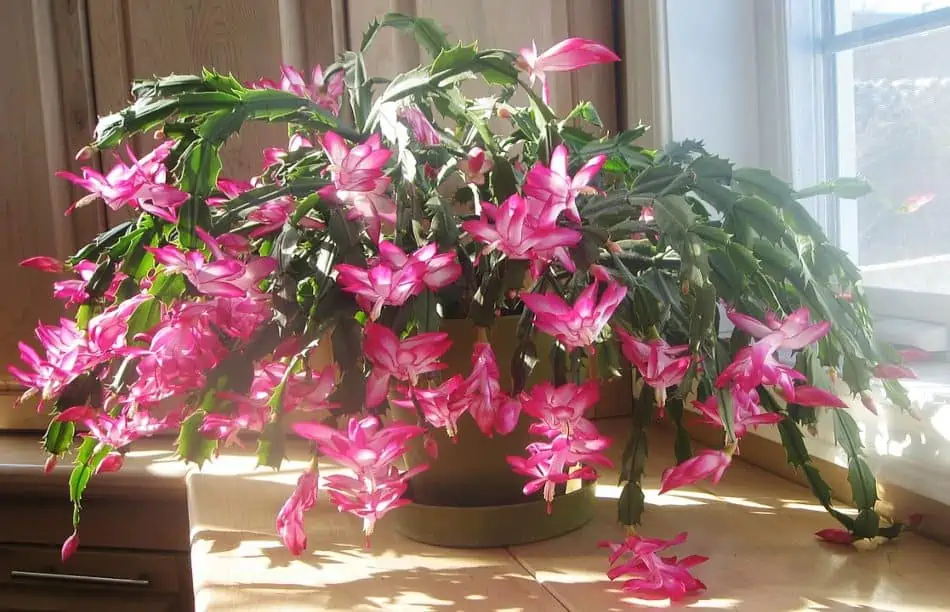
The Christmas cactus (Schlumbergera bridgessii) otherwise known as the Easter or Thanksgiving cactus is an interesting plant that blooms just in time for the holidays, thus its name. Its propagation and care are pretty simple, making it a favorite for holiday gift-giving.

Christmas Cactus is an indoor plant that produces reddish pink flowers when grown away from too much sunlight.

The cactus can be propagated from cuttings and will thrive better under moderate indoor conditions. However, Christmas cactus should be kept away from too much sunlight to avoid its leaves getting burnt. Notably, the Christmas cactus blooms with bright colors, but dramatic temperature swings and lack of enough water may cause flower buds to drop prematurely.

 To help maximize its blooming period, ensure that you maintain optimal temperatures of about 65 degrees and always keep the soil moist during the blooming period. It is also a good idea to apply for high potassium fertilizer once every two weeks and report yearly after every flowering period.

6.     Star Cactus

The Star Cactus (Astrophytum asteria) is one of the few spineless cacti and stands out with its chubby round body that mimics a sand dollar. The fact that it is also easy to grow makes it a perfect candidate for an indoor plant. Its round body may grow to about 6 inches wide. It features some gently ridged sides and covered with some tiny white dots.

The Astrophytum cactus blooms between March and May. Its flowers are bright yellow with orange centers. These would later fade out to give way for some berries or drupes in late spring. When grown indoors, this cactus will not need much attention apart from the occasional watering and access to full sunlight. The star cactus is known to store a lot of water, thanks to its shape. These come in handy in times of drought. However, be careful and avoid over-watering as this may lead to root rot.

The cactus is not poisonous to animals and humans, thus making it just the perfect indoor plant. However, it would be best if you practiced caution when handling it as it can be pretty prickly.

When it comes to keeping your indoors as serene as possible, you do not want to take chances. If you are a cactus enthusiast, you would see the need to go for one of the various small cactus species suitable for indoor environments. While the list is endless, there are common ones that can survive in most environments and are readily available. The best thing about these small cactus species is that they are easy to maintain and will not need much attention apart from the occasional watering and fertilization.

How To Grow And Care Fore Moon Cactus?

You cannot mistake moon cacti thanks to their bright neon colors that come in round-looking balls of yellow, bright pink or orange. They would usually be sitting atop another green colored cactus since it does not produce chlorophyll on its own. A moon cactus is usually a product of human design through grafting to make it two plants in one. This makes it two plants in one with the bottom part being the rootstock while the top part or scion being the actual moon cactus.

So, how do you grow a moon cactus? Moon cacti can be grown from seed, but this takes at least one year to germinate. As such, the best way to grow moon cacti is by grafting it onto a green rootstock with the ability to produce chlorophyll. Choose a cactus soil mix that is rich in organic matter, low pH and fast draining. They do not tolerate direct sunlight or too much water and should be grown in a moderately bright spot using well-draining pots.

Propagating moon cactus

Generally, moon cacti are not ideal for propagation. However, you can easily learn how to graft them at home. Graft a moon cactus by cutting off the scion (the upper part of the moon cactus) from the old rootstock with a sterilized knife. You will notice a circular, vascular tissue on both the host cactus and the scion. Bring them together by aligning their vascular tissues.

Once aligned, use some rubber bands to wrap the scion cactus as well as the bottom of the host container. Once the tissues heal up, you can remove the rubber bands. In some rare cases where you get a moon cactus that produces offsets, you may propagate it on maturity.

Offsets are much easier to separate from the mother plant. Remove one offset and let it dry for a day or two before planting it in a cacti-friendly potting soil. With time, however, you will need to graft it onto a host cactus to increase its chances of survival for longer.

You can propagate your moon cacti either using its scion or by removing one offset from the mother plant.

There are cases where moon cacti require re-grafting. This may become necessary in case the rootstock becomes mushy due to overwatering or other causes. In such a case, you will follow the above grafting procedure to re-graft the scion onto another healthy rootstock.

This said, most moon cactus purchased online or at most gardening stores come complete with instructions on how to graft if not already grafted. If this is not the case, you need not worry as most of its care and cultivation needs do not vary much with the rest of the succulents.

Watering moon cactus

Just like most of the cacti plants, moon cactus doesn’t need much attention when it comes to watering. Usually, the bottom half or host cactus would be adapted for drought and will be tolerant even when neglected for some time.

In cases where the temperatures are a little high, however, moon cactus will require regular watering. In such a case, you will need to pay much attention to the type of soil in question. Moon cactus will not tolerate swampy sol, even for a day. As such, always ensure the soil is completely dry before you embark on your next watering regime.

Ideally, you should plant your moon cactus in a container with drainage holes and water it about once a week.

To avoid too much exposure to moisture, you are better off using containers with drainage holes to help drain excess water from the cactus. Exposing the cactus to too much water can lead to root rot that can eventually kill the whole plant. Watering moon cacti also depends on the size of pot used. For instance, if you grow moon cactus on a small pot, watering once a week will be enough.

Frequency of watering moon cacti also depends on the season and location. During the summer months, for instance, you may see the need to increase the frequency of watering. This is especially so if your cacti grow outdoors. At this time, heat may come in excess, thus causing increased evaporation. During the winter, you can reduce the frequency or stop completely, but just ensure that you always keep them misty.

Just like most of the succulents, moon cactus will thrive in places with low humidity. Use a dehumidifier to help you maintain an ideal amount of moisture for your moon cactus. You do not want to keep it too low or too high as these extremes can be detrimental to your moon cactus.

Potting and repotting moon cactus

Being an indoor plant, the moon cactus will need repotting at some point. This is especially so if you grow the plant indoors. While this can be a seamless process, there are various factors that one must keep in mind to make this process successful and increase the chances of the plant’s survival. We detail eh me below.

Time

While moon cactus can be re-planted at any time, experienced gardeners recommend the springtime as the most ideal for repotting your moon cactus.  This is because at this time, moon cactus will be actively growing, and root development will be developing backup roots. As such, the cactus will be most willing to be moved and will most likely thrive more in its new environment.
Frequency

Moon cacti have a cramped root system. As such, it would be most ideal to repot them once every 3 to 4 years.

Type of Pot

Following its cramped root system, moon cacti do not need a large pot. A small pot with sufficient drainage holes to drain excess water will work best for the moon cactus. For better results, use unglazed shallow pots with drainage holes beneath to avoid water collecting at the root zone.

You should use a small pot for your moon cactus with enough drainage holes for the plant to grow healthy.

Soil Change

One of the main purposes of repotting a cactus is to change the old soil that would, by now, be drained of the necessary nutrients. For moon cactus, you may consider using store-bought soil mix already prepared for planting. Otherwise, you may manually mix coarse sand and peat soil when refilling the new pot. Moisten this mix slightly before repotting the moon cactus into it. Remember the type of soil you choose for planting moon cactus will determine the growth and overall health of the moon cactus.

Preparation for Repotting

Repotting moon cactus needs preparation several days before the actual process. This will involve watering the cactus in its original pot or location to ensure the roots remain moistened. Once ready to move, carefully lift the plant from its original pot, shake off excess soils, and gently place it into the new pot. Fill the empty spaces with the previously prepared new soil. You will need to wait for at least once a week before you start watering your moon cactus in the new pot. This helps give it enough time to use up the previous water, fertilizer and other nutrients.

To successfully repot your moon cactus, water it in its original pot first and then place in a pot with prepared soil.

With successful repotting, your moon cactus should be good for at least 3 to 4 years. During this time, you will be performing the basic care practices like watering, fertilizing and pruning as desired.

Sunlight and temperature

Being a desert plant, moon cactus would thrive in temperatures that you would expect in their natural habitat. They prefer a bright environment but should not be exposed to direct sunlight as this can greatly affect the overall growth of the cactus. As such, it would be best to cover the plant or place it in a shade in cases where it is grown outdoors.

You should place your moon cactus in a bright place but never expose the plant to direct sunlight.

While moon cacti may survive the winter breeze, it is advisable to take it indoors during such conditions. If this is not possible, you may consider covering them with a piece of cloth or light blanket to help shield them from the harsh winter conditions.

Common problems with moon cactus

Moon cactus may be a resistant plant, but this does not make it immune to problems, diseases and other shortcomings. We take a look at some of them.

Short lifespan

Unlike other types of indoor cacti, moon cactus is not destined to live long. This has nothing to do with diseases or harsh conditions but everything to do with its parasitic nature. Since the scion acts as a parasite to the lower rootstock, the food produced by the rootstock is not enough to sustain both plants indefinitely. Over time, it fails to produce enough food, weakens from malnourishment, and eventually dies.

However, there are other notable problems and diseases faced by the moon cactus. This is usually caused by four main factors: water humidity, moisture and light. Too little or too much of these can lead to moon cactus developing growth problems. Some of these problems include the following:

Root rot

Root rot is a common problem with moon cactus. This is mostly brought about by overwatering.  Being a desert plant, moon cactus does not need too much watering, and when this happens, root rot follows. The following are some telltale signs that your moon cactus is overwatered:

  • The rootstock becomes mushy or turns brown
  • The soil remains soggy even after skipping watering for long
  • The roots may turn black, brown or mushy

Remedies of root rot

Salvaging moon cactus suffering from root rot depends on the condition and extent of the rot. If the rootstock is affected and is already mushy, there is nothing much to do other than re-grafting the scion to a new rootstock. However, if the scion is still healthy and only the roots are affected, you can cut off the mushy or black roots, leaving out the white, healthy ones. You can then repot the plant in well-draining soil, and wait for a couple of weeks before watering.

Sudden color change

Moon cactus is known for its bright colors. However, a sudden change in its natural color pigmentation may be a sign of danger. Usually, the plant may turn yellow with white or black spots. This is usually a result of too much light or exposure to direct sunshine.

Salvaging this situation depends on the extent of the damage, while some will simply require change of environment other may call for complete re-grafting for better results.

Fertilizing moon cactus

Moon cactus may be adapted for the desert with little nutrients, but this does not mean it won’t need fertilizer. Fertilizing moon cactus helps it adapt much better to home environments. It also thrives more, and its colors bloom more brightly with the right fertilizer.

For better results, mix one gallon of water with ¼ teaspoon of 15-15-15 water-soluble fertilizer for moon cactus. This should be done weekly during summer and spring seasons.  Apply fertilizer by replacing one of your watering schedules. Do this by applying just the same amount of solution as you would when watering the plant. During winter, moon cactus won’t need much fertilizer and so once a month will do.

To help your moon cactus adept to an indoor environment, you should consider fertilizing the soil.

For the monthly fertilizing or feeding, you may consider flushing the soil completely to refresh the plant nutrients therein. Do this by watering your cactus thoroughly. Ideally you will need to use four times the water volume capacity of the pot. After all the water drains completely, you can then add your cactus fertilizer. Apart from improving nutrient uptake, soil flushing helps prevent the build-up of mineral salts that derail growth. Be careful not to use too much fertilizer or risk weakening the cactus or killing it altogether.

Pests

As resistant as it is, moon cactus can sometimes be infested with mealybugs. If not attended to in time, these white, fury pests can slowly kill the plant. Luckily, you can easily get rid of these pests by brushing them off with a Q-tip. You can then spray it with a mixture of water and half rubbing alcohol. This should be done consistently for a while since they keep coming back. In cases where selected plants have been infected, you may consider separating them from healthy plants.

Pruning

Considering its small size and slow growth, moon cactus does not need much attention in terms of pruning. However, in cases where it gets overgrown, you may consider trimming offer any excessive or broken foliage. This is usually done just after the cactus completes flowering. Take clean and sharp pruning shears and follow the leaves all the way to the main stem to cut from this point. Dispose the plant tissue appropriately and leave the cactus free to blossom once again.

Interesting facts to note about growing moon cactus

Apart from their unique color pigmentations, moon cactus exhibits some other interesting features. The colorful part, hereby referred to as the scion is usually the main plant while the lower part can be any species of cacti that acts as the rootstock. While many species of cacti can be used as the rootstock, the Hylocereus cactus is usually preferred because it roots easily and grows fast.

While many people mistake the colorful part of the moon cacti with their flowers, this is not the case. Moon cactus rarely flowers, but when they do, the flowers come in varying shades of pink. Flowers would usually shoot from the top colored scion and not from the green rootstock. This happens mostly in late spring or early summer. Seeds can also be achieved if the conditions are right and the cactus thrives as expected

Moon Cactus is widely known and highly valued of all cacti. Growing moon cactus is a popular skill among gardening enthusiasts for its beautiful appearance, ease of growth and productivity.

If you are wondering how to grow moon cactus, you have come to the right place. This succulent plant is very beautiful and unusual looking with its interesting color and shape. Its moon-like appearance makes it very popular among people for its beautiful appearance, ease of growth, and productivity.

Moon cacti rarely bloom, but when they do, the colored scion produces pinkish flowers.

Moon cactus can grow to various heights. This will be dependent on the rootstock, but generally, the cactus will stop growing at about 4 inches. Its maximum diameter is between 1 and 2 inches. Even with such size, its stands out with its interesting growth patterns. The plant features 8 to 14 ribs, usually slightly notched and with narrow edges. It grows several slightly curved, weak and flexible graying-yellow thorns.

The moon cactus can be grown together with several other cacti varieties but blends best with the Schlumbergera, otherwise known as the Christmas, Thanksgiving or Easter cactus. Both cacti varieties require the same environmental conditions to thrive. It needs plenty of light but should not be direct. When grown indoors, you may consider positioning it in an east or west-facing window. Some notable signs of too much light is a bleached white pigment or scars developing on the ribs. In some cases, the whole plant may suddenly turn yellow.

Moon cacti cannot survive in temperatures below 9 degrees. However, it prefers relatively humid conditions. As such, they are easy-going in terms of their moisture needs. Always make sure the soil is completely dry before adding in more moisture. Additionally, you may consider misting the top of the cactus to keep their pink, orange, red and yellow colors even more vibrant. Misting helps offer the much-needed moisture without necessarily adding more water to the soil underneath.

Growing moon cacti doesn’t have to be too complicated. However, you will need to keep in mind that you are caring for two plants in one. In most cases, the rootstock may require different conditions and care needs from the main moon cactus at the top. As such, you need much diligence to ensure that you strike a balance for a better relationship between the two. With these in place, this colorful mutant cactus will give your home that ornamental look for much longer.

What kind of cactus live in the desert?

Cactus is one of the most noticeable plants in the world. While most cactus plants are adapted to grow in dry areas, not all are found in the desert. Notably, there are two primary classifications of cacti; desert and forest cactus. Desert cacti come in various types, ranging from the smallest, three-inch fish-hook cactus to the towering Saguaro cactus that grows up to 40 feet.

So, what kind of cactus live in the desert? There are literary thousands of cactus plants adapted for the desert. However, the most common types of cactus that live in the desert include the following:

  1. Saguaro
  2. Cardon
  3. Barrel Cactus
  4. Organ pipe cactus
  5. Prickly pear cactus
  6. Hedgehog Cactus
  7. Cholla Cactus
  8. Fishhook Cactus
  9. Pencil Cactus

This article will look into these and more of the desert cactus in terms of their features and adaptations. We take a look at their growth cycles, regions found, and their suitability as a homegrown or indoor plant.

1.     Saguaro

Saguaro cactus is one of the most recognizable cacti, thanks to its tree-like stature and growth. It can grow up to 40 feet tall with a lifespan of over 150 years. The cactus is native to Arizona’s Sonora Desert. Thanks to its long lifespan, Saguaro may grow its first sidearm at around 80 years of age, while some never do.

Saguaro is grown mainly from seed and rarely does so by cuttings, but when they do, its shape takes a totally different appearance. The cactus has an extended root network that may go up to 100 feet. Its long tap roots run up to 3 feet deep. The spines are notably sharp and may grow up to 1mm per day.

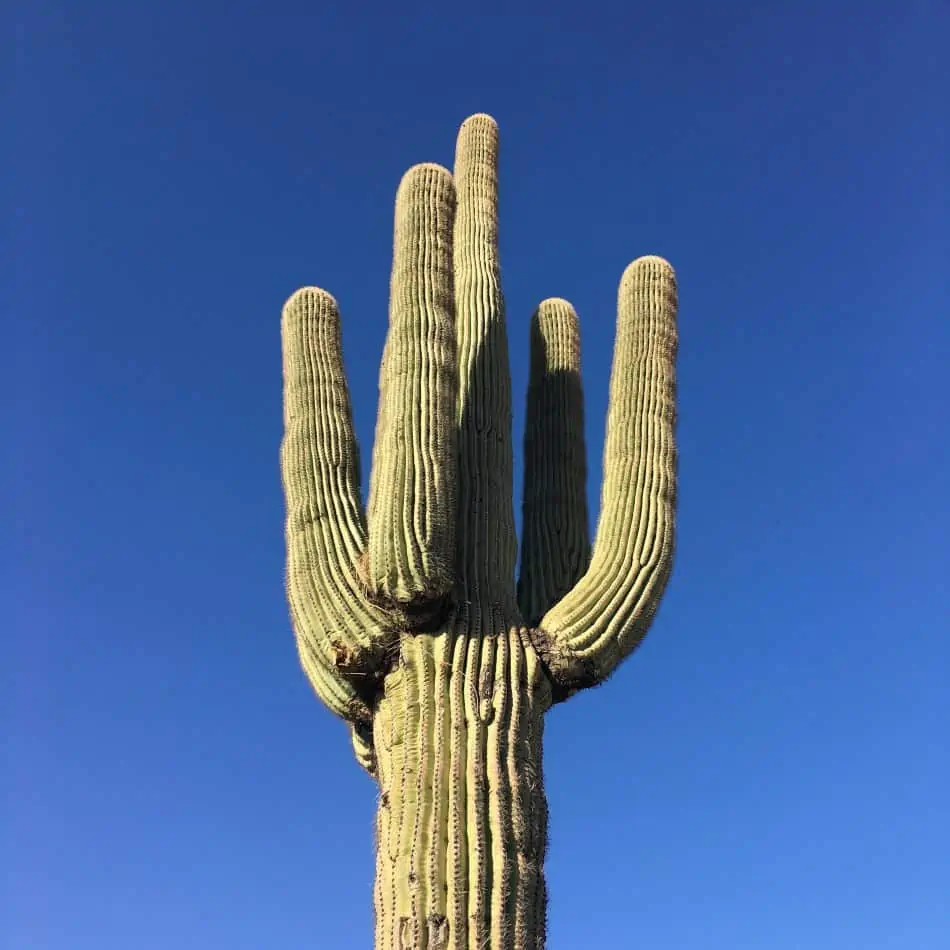
A Saguaro cactus exposed to sunlight.
Saguaro can grow up to 40 feet in height with spines that lengthen by 1mm per day.

This gentle Mexican giant produces white waxy flowers that appear from April through June.  The flowers bloom well after sunset and would close in the afternoons.

Saguaro cactus can be grown indoors as long as they are placed in a brightly lit room with a possibility of being moved outside regularly.

2.     Cardon

Cardon, also known as the elephant cactus, is one of the biggest cacti found in the desert. It is native to northwest Mexico and found in states like Sonora and Baja California Sur. It grows up to 70 ft tall and can weigh up to twenty-five tons.

Fruits from Cardon cactus were a vital food element for Sanora’s Seri people. The cactus has a special relationship with fungal and bacterial colonies on its roots. This allows it to grow even on bare rock with no soil support whatsoever. This is all thanks to the bacteria that helps fix nitrogen from the air, thus breaking down the rock for nutrients.

Cardon resembles Saguaro in shape and growth, but it is more heavily branched with its branches appearing just at the base of the step. This cactus produces large, nocturnal, white flowers that occur along the plant’s ribs rather than only at the stems’ apices.

The Cardon cactus can be grown indoors but needs enough sun and heat as it is adapted for the deserts.

3.     Barrel Cactus

Barrel cactus is one of the most resistant desert cacti and is native to the South and North American deserts. The largest specimens of the cactus are found in southern California’s Mojave Desert. At maturity, some species of the cactus can reach over 3 feet tall.

The cactus stands out with its numerous, pronounces ribs. It also features long spines that may range in color from red to yellow to tan, depending on the plant’s species and age. After several years of growth, flowers will be seen at the top of the plant. Its flowers are mostly orange or bright yellow, but there are varieties with red and pink colors. It has a lifespan of about 100 years.

A barrel  cactus.
Barrel cactus can live anywhere between 50 to 100 years and can grow up to 10 feet tall.

Barrel cactus produces a small pineapple-shaped fruit after flowering. This fruit can stay on the plant for a full year if left untouched. However, the fruit is not edible as it is mostly bitter and fairly dry.

4.     Organ Pipe Cactus

The organ pipe cactus derives its name from its resemblance to a pipe organ. Locally referred to as ‘pitaya dulce,’ organ pipe cactus is native to the United States and Mexico.  It is mostly found in the regions’ rocky deserts.

 The organ pipe cactus has its stems growing from a single short truck. It develops several stems about 6 inches thick. Depending on the region, the plant can grow to a maximum height of 16 o 26 feet. A fully mature plant of the cactus can extend to a width of about 12 feet, with each step featuring 12 to 19 inch, dark brown or black ribs.

The plant produces funnel-shaped white flowers that bloom at night and close at dawn. This makes bats its primary pollinators. It also produces an edible fruit the size and shape of a tennis ball.

The organ pipe cactus can be grown indoors but needs exposure to full sun and irrigation at least once a day during the hot, dry weather.

5.     Prickly Pear

The prickly pear, also known as opuntia or nopal, is one of the flat-stemmed spiny cacti native to the Western Hemisphere. Most of its species are homegrown and are an essential source of food for most inhabitants of tropical and subtropical countries. Its common culinary species, the Indian fig opuntia, may grow 16 to 23 feet tall with a trunk diameter of about 3 feet.

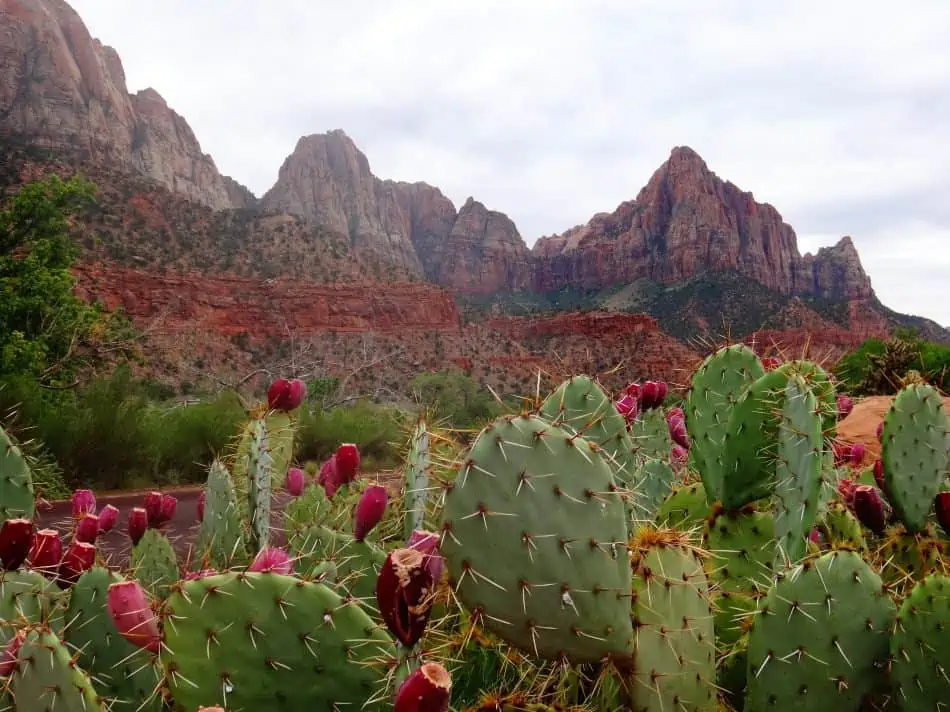
A fruit bearing prickly pear cactus
Prickly Pear is a fruit-bearing cactus that grows up to 23 feet tall.

The plant produces large, solitary, axillary, and bisexual flowers that later lead to a berry-like yellow, white or reddish-purple fruit with arillate seeds. This desert plant can be grown at home with warmer climates preferred. Prickly pear is widely known for its edible fruits and use as a forage crop. Its hard seeds come in handy in the production of oil.

Cutting and propagation of the prickly pear are possible through its stems. While its fruits have mostly been a source of food for the natives, research also shows some cactus varieties have medicinal values. This is all thanks to their pectin and fiber, which may help lower blood pressure by decreasing sugar absorption in the intestines and stomach.

6.     Hedgehog Cactus

Hedgehog cactus is a low-growing desert cactus found mainly in the southwestern United  States. Otherwise referred to as Engelmann’s hedgehog cactus after George Englemann, a renowned botanist and physician, this cacti variety earned its name thanks to its resemblance to hedgehogs.

Hedgehog cactus grows lowly and produces several clumps ranging from about 40 to 50, 12-inch green stems in each clump. Depending on the number of clumps, the plant can grow 2 to 3 feet wide. The cylindrical stems feature between eleven and fourteen ribs with solidly covered spines.

A flowering hedgehog cactus.
Hedgehog Cactus comprises 40-50 stems that grow about 12-inch tall and produces colorful flowers and fruits.

This desert succulent produces colorful flowers that eventually lead to some edible, spherical fruits. At its initial stages, the fruits are fully covered with spines, but these fall off with time as the fruit ripens.

Propagation of hedgehog cactus can be done through offset cuttings or seeds. For better results growing this cacti variety at home, it is recommended to sow in summer or spring.

7.     Cholla Cactus

The cholla cactus is a shrubby desert succulent native to North America.  It grows in joints of various lengths. The joints feature some formidable-looking spines and brightly colored. These spines generally act as reduced leaves and feature an external papery sheath.

The cholla cactus can stick or hold on to anything it gets in contact with, thanks to its tiny curved hooks on the spines. The cholla cactus comes in various types that include:

Slender Stemmed Chollas – Otherwise known as diamond cholla, this cholla variety feature slender, blue-green stems the produce long, white spines.  These are native to the Sonora and Mojave Desert.

Tree-like Chollas – Otherwise known as chain fruit cholla, this variety features a strong central stout trunk when fully mature. It also has its flowers blooming from its older fruits. The plant can be propagated from loose joints or fruits.

A cholla cactus flowering.
These spines generally act as reduced leaves and feature an external papery sheath.

Shrubby Chollas – Otherwise known as Staghorn cholla, this cholla variety stands out with its branching habits that mimic deer horns. During winter, its stems turn purplish while its flowers range from yellow to greenish to red.

Despite being a desert succulent, the cholla cactus can be grown in home gardens and as barrier plants.

8.     Fishhook Cactus

Fish-hook cactus is a general name that applies to any hook-spined species of the Echinomstus, general Mammillaria, and Scierocactus. It is one of the smallest of the desert cacti, growing to about 7 inches high.

This cactus got its name from its spines that resemble fishing hooks. In fact, some species of this desert cacti feature notably strong spines that could be used as actual fishing hooks by the natives throughout the Americas.

Each of its cluster spines features 3 or 4 black, hooked central spines and a couple of white radial ones.  The fish-hook cactus produces brightly colored, pink, or white flowers measuring about 1.4 inches. This eventually leads to a fleshy, shiny, red fruit with black seeds.

9.     Pencil Cactus

The pencil cactus may not be a real cactus per se but rather falls in the Euphorbia family. It got its name from its tiny stems that resemble a pencil in size and shape. When injured, the plant produces some cloudy, milky sap, thus earning the nickname ‘milk bush’. This desert succulent is native to India and Africa.

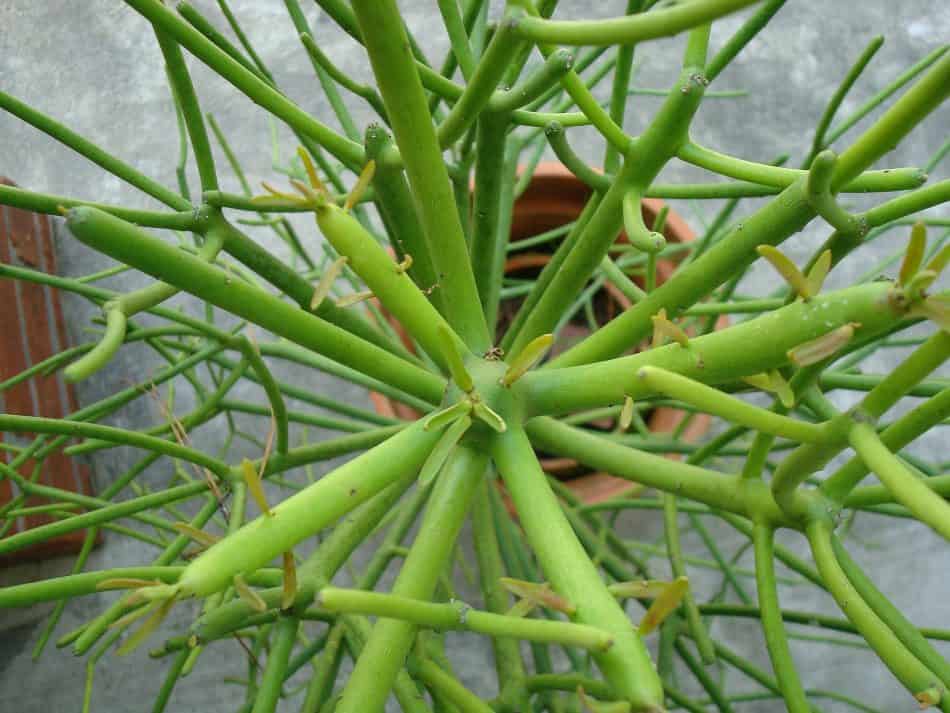
A top view of a pencil cactus,
Pencil Cactus is a low-maintenance plant that comprises thin pencil-like stems.

The pencil cactus can grow to about 30 feet tall. It is a leafless plant, but some tiny leaves would usually appear at the tip of new branches. These eventually fall off as the branch matures. As such, it uses its pencil-sized branches for photosynthesis.

This desert plant can be grown in home gardens with minimum watering and gritty soil.

How are cactus plants adapted to their environment?

Apart from their unique appearance, cacti also have another outstanding feature that sets them apart from most conventional plants. Its ability to adapt thrive in the harshest of environments is remarkable. The cactus is adapted to dry areas thanks to a number of features and characteristics. Here are some of these features:

Shallow root systems

Water is hard to come by in the deserts.  Faced with this reality, cacti adapt through its extensive shallow root system. The roots spread over a larger area but just below the surface to tap on the little rainwater that comes by once in a while. Larger varieties of cacti, like the giant Saguaro, would, however, have one deep taproot to help anchor the frame above by keeping a strong base.

During the rainy season, most cacti develop temporary root hairs to help harness the little water and prevent loss of the same.

Leafless

Apart from a few species, Cacti are generally leafless. This is an adaptive strategy that helps minimize water loss during photosynthesis. Desert cacti have transferred photosynthesis from the leaves to its stem to help reduce moisture loss that would naturally happen through the stomata. It complements this by adopting CAM photosynthesis, a process where the plant’s stomata only open when temperatures are cooler, preferably at night.

Succulence

Cactus stems are specially designed to store a large amount of water, thanks to its succulence. A cactus’ cortical layer is specially adapted to act as a water reservoir through its thin but flexible water-holding cells. This water would then be released in bits when it matters most, preferably during the dry seasons.

Temperature resistance

For plants growing in desert environments, one of their worst enemies is the sun. The scorching heat from the sun can be unforgiving for any living organism, and this is no different for cactus. However, cacti have adapted to this thanks to the accordion effect.

The accordion effect is a process whereby cactus ribs and tubercles expand without bursting and would later retract as the water is used up. This helps minimize the surface area facing direct sunlight.

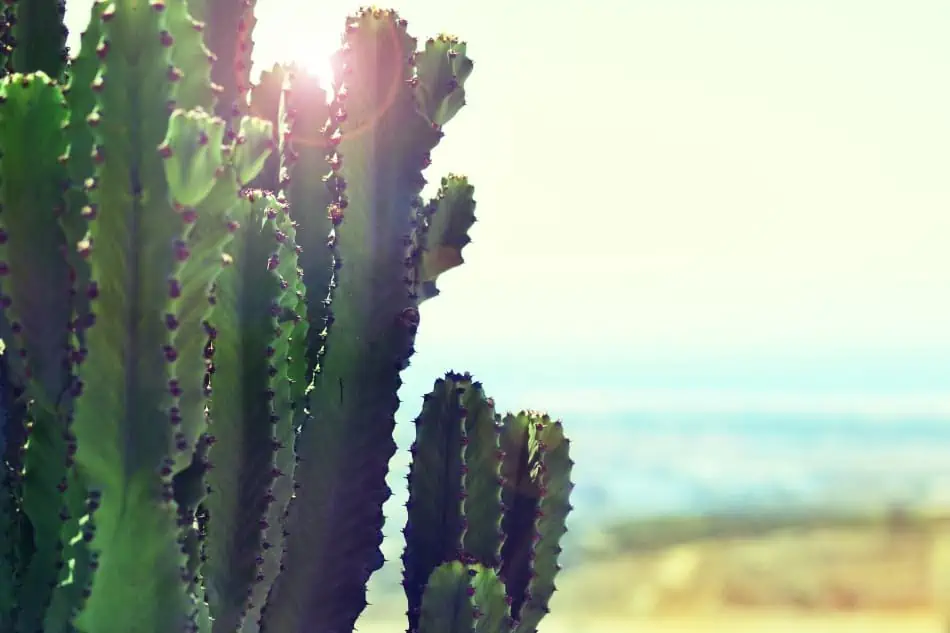
A cactus exposed to sunlight.
Excess direct sunlight can damage the plants, but cacti are more resistant to head due to the accordion effect.

Slow Metabolism

Leaves help catalyze photosynthesis and subsequently plant growth. For desert cacti, however, less green tissue means a slower metabolism. This makes them slow growers. On the flip side, this is a positive adaptation for desert environments. It helps them conserve energy that would otherwise be used in developing additional foliage. Instead, cacti focus on maintaining existing structures that keep them alive.

The slow metabolism also helps cacti attain longer lifespans. Some cacti species have been documented to live for up to 200 years. The longer they live, the better their chances of reproduction.

Protective Spines

The majority of desert cacti feature spines that come in various shapes and colors.  These are not meant for beauty but a protective feature that helps the plant ward off predators.

Considering cacti would thrive and remain green even during drought, some animals would be tempted to tap into their succulent stems. The spines help deter these efforts, thus increasing their chances of survival.

Can Desert Cactus be grown at home?

While cacti are suitably adapted for the deserts, most of them can easily thrive in home environments as long as favorable conditions are met. This said, you can easily grow desert cacti, either in your garden, on the patio, or indoors.

However, harvesting desert cacti in its natural habitat is illegal in most states, and it is essential to get the requisite licenses and approvals before embarking on the same.

How to care for desert cacti at home

Despite their adaptation to the desert environments, cacti need some good care to thrive better.  For instance, frequent watering helps cactus flower much easily and with brighter blooms.  However, take caution not to overdo processes like watering; once or twice a month will do.

Good compost also matters for desert cacti. Ensure you have a well-drained compost to avoid too much dampness. The compost would also look much better with a top layer of pebbles or gravel for a naturally polished look. This will also add to the stability of the plant as it grows taller.

Pot size also matters when growing cacti indoors; they thrive and flower better when grown in small pots.  Being an outdoor plant, cactus needs adequate sunlight too.  When grown indoors, always ensure they are positioned in a brightly lit area. In addition, good loamy soil with neutral soil pH will work best.

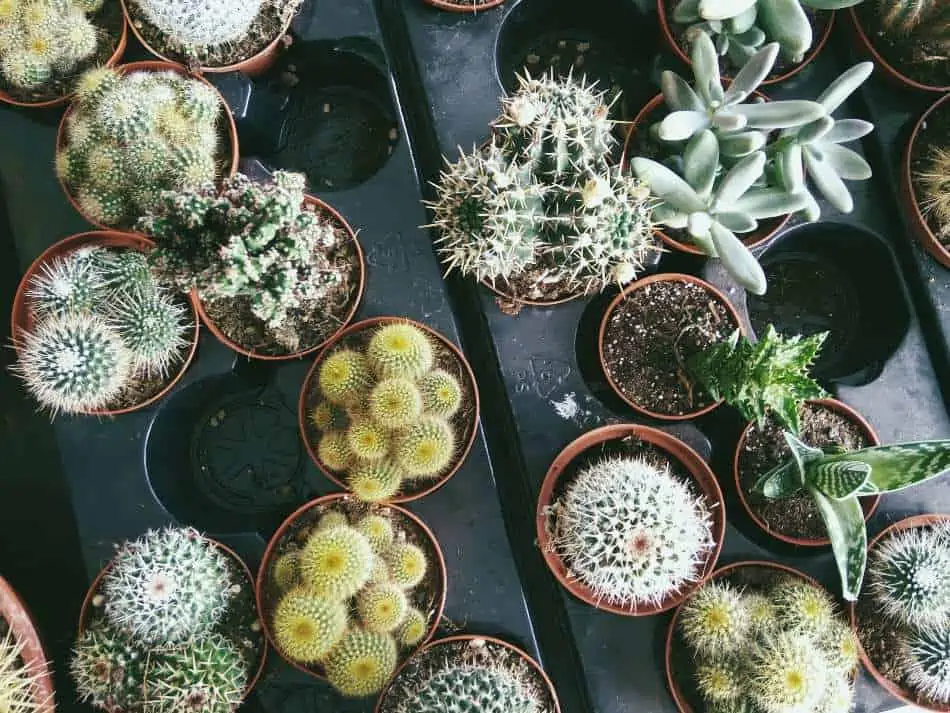
A top view of different kinds of succulent and cactus plants oon a pot.
To grow healthy cacti at home, you should select well-drained soil and appropriate pot size for a specific plant.

Desert cactus has a fragile and intricate web of life. They come in the weirdest shapes and sizes, but all these are meant to help cushion the succulent from the desert’s unforgiving conditions. There are literally thousands of desert cacti species. While some are extinct, others are on the verge of getting wiped out, thanks to illegal human activities and natural disasters. 

As much as most of these desert cacti can be grown at home, others are not recommendable due to their toxicity, size and government restrictions. Before getting a desert cactus for our home garden, ensure you liaise with the relevant local administration for proper approval and licensing. Your choice for a desert cactus type will highly depend on its availability within your area, its purpose at home, and your personal preference.

How To Grow A Mammillaria Cactus?

Gardening can be either a hit or a miss for some people, especially if they have little to no experience. Many may feel that they need a green thumb to start a garden successfully. Although some plants can be much easier to grow, others require a bit more love. The Mammillaria Cactus is no exception. This type of cacti is simple by nature; however, it requires a bit of extra attention to properly grow one.

To successfully grow a Mammillaria Cactus, you need to use proper lighting, give the plant the right amount of water, pay attention to the temperature, and, most importantly, be extremely observant and check for any signs of rotting. 

You do not need a green thumb to grow a plant; however, every bit of useful information helps you achieve maximum results. So, if you’re considering planting a Mammillaria Cactus in the near future, then this is the perfect article for you.

Growing a Mammillaria Cactus

Since you are thinking about growing a Mammillaria Cactus, you’ll need to make sure that you have the right tools to successfully grow your cactus. 

Think of gardening like following a recipe for a new dish: you want to have everything prepared, and you want to make sure you are not missing any key ingredients, but most importantly, you need to follow all the steps. 

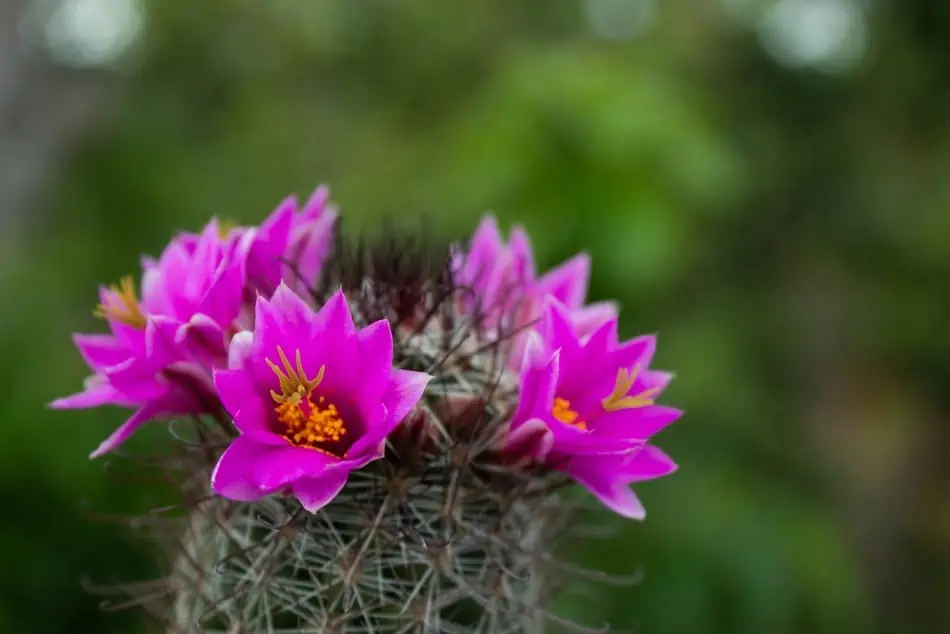
A flowering Mammillaria cactus.
This type of cacti is simple by nature; however, it requires a bit of extra attention to properly grow one

Here is your step by step guide for growing a mammillaria cactus.

What You’ll Need ?

The first step to growing your Mammillaria Cactus is buying all the materials that you will need. 

It is important to note that this may become quite expensive down the line. Nevertheless, if you want to have great results, you’ll need to make a good investment. Here are just a few key items that you’ll need.
  • Soil comes first. One of the most important components of gardening is the soil. Think of it as your plant’s foundation. 

You’ll want to make sure that you purchase a cacti mix. Since cacti do not require many nutrients, you will need to make sure that you do not buy soil that includes built-in fertilizer. One of the best brands for cactus soil is Repotme, which is available for sale on Amazon for $19.95. 

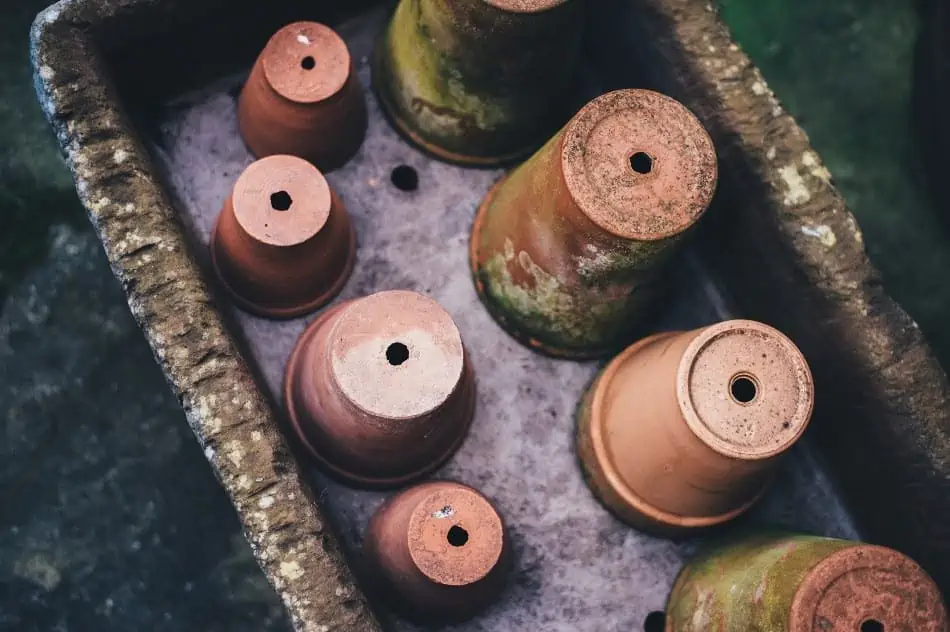
A clay pot with drainage whole.
A cactus is no exception to this rule, and the size of your pot will determine the outcome of your plant. 

When you go out to buy your pot, you’ll want to make sure that it is a small pot with large drainage holes in order to prevent overwatering your cactus. 

Fertilizer is also key. This is not your typical fertilizer. It is important that you take note of this before you go out and buy your supplies. 

You’ll need to purchase a water-soluble fertilizer for your plant’s food since it is high in phosphorus and low in nitrogen, which is useful for cacti. Cactus Juice is a great water-soluble fertilizer which is perfect for cacti and is available for sale on Amazon.

Now it’s time for you to put all of those items to use and begin growing your cactus. Remember, this is a step-by-step process, and there is no skipping or rushing it. This will ultimately determine your plant’s success.

With these key components in place, you’ll be one step closer to growing the perfect Mammillaria Cactus. 

Steps of Growing a Mammillaria Cactus

Growing cactus is not as difficult as most people may come to think, and you can get this project off the ground in a few simple steps. 

Luckily for you, the most difficult part of this entire process is purchasing the materials. Since we just went through those items, you already have an idea of what you need. 

Here’s what you need to do to get the process going:

  • Prepare your soil. As mentioned before, you’ll need to use the right soil. In most gardening cases, you’ll need to have gone the extra mile to prepare your soil, but because you’ve purchased the cactus mix, it’s ready for you to start planting.
  • Add your soil to your container. You’ll need a shallow container for this step and something that is not permeable because you don’t want gases or liquids getting through the surface. A plastic container may be sufficient. 
This container is solely used for the beginning of the process to ensure that your seeds grow properly. 

  • Plant your cactus seed into the soil. When it comes to cacti, there are two ways you can go about planting. You can either use cactus seeds or plant a seed from a cactus pod that will require you to already have a cactus on hand and requires more labor. 
A small pot with small cactus and succulent plants.
When it comes to cacti, there are two ways you can go about planting

Either way, both methods of planting work very well.

  • Seal your container. Once your seed has been planted, you’ll need to put a tight transparent lid over your pot. Saran wrap is more than sufficient for this step. 

Once you have covered your container with saran wrap, you’ll need to place the container in direct sunlight. 

The saran wrap will allow your pot to retain moisture. At this point, it may take several weeks for you to see any sprouting take place.

Now that you have planted your seeds, you will be responsible for taking care of your cactus so that it does not die on your watch. 

One of the leading reasons for plants dying is due to lack of care, or doing way too much to the plant, and not allowing it to grow naturally. 

Mammillaria Cactus Care

So after you have let a few weeks pass, you’re probably wondering what happens next. 

You should already be seeing your cactus spines beginning to peak out of the soil by this point. The weeks following your cactus spines beginning to peak are absolutely vital. So, here are some tips you can follow to make sure that your cactus gets quality care.

  • Uncover your cactus during the day. Since the spines are beginning to peek through the soil, you’ll need to make sure that your cactus has some time to breathe. 

To do this, you’ll need to remove the saran wrap during the day. As your cactus continues to grow, you’ll find yourself leaving your cactus uncovered for longer periods of time. 

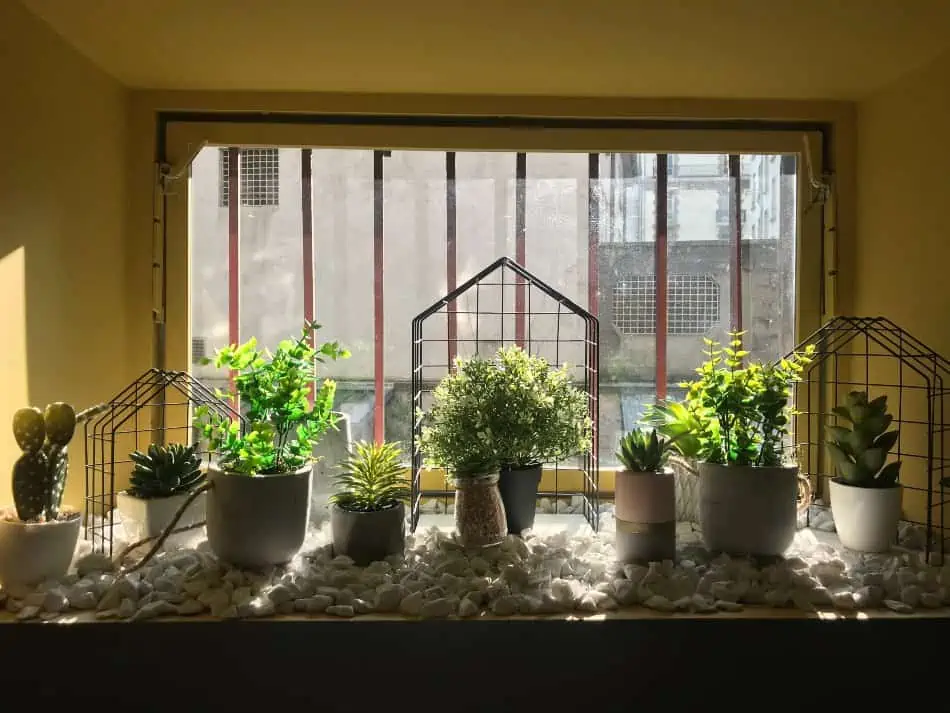
Plants near the window exposed to sunlight.

You’ll need to place the container in direct sunlight
  • Repot your cactus. Now that you have an actual cactus growing, it’s time to remove it from the container where you planted your seedling and add it to your perfectly sized, specially chosen pot. 

Make sure you wear gloves and cover your surface with a sheet because this step can be quite messy. Once you have placed your cactus in its new soil and pot, you may want to let it recover in the shade for a while, and then, over the next few weeks, gradually put it back into the sun.

  • Do not overwater. There’s a reason why cacti survive in the desert and require little water. Believe it or not, a sprinkle of water is enough to make sure that your cactus gets sufficient water and stays hydrated. 

A cactus can retain a lot of water, so it does not require constant watering, which is why it’s also a perfect plant for beginner gardeners. 

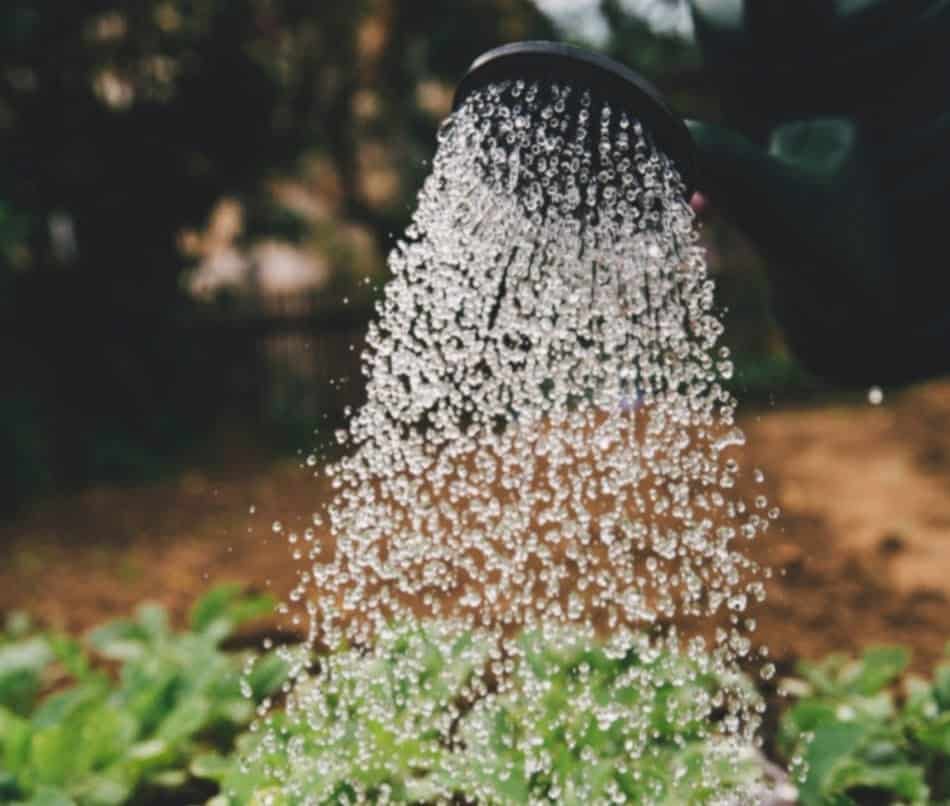
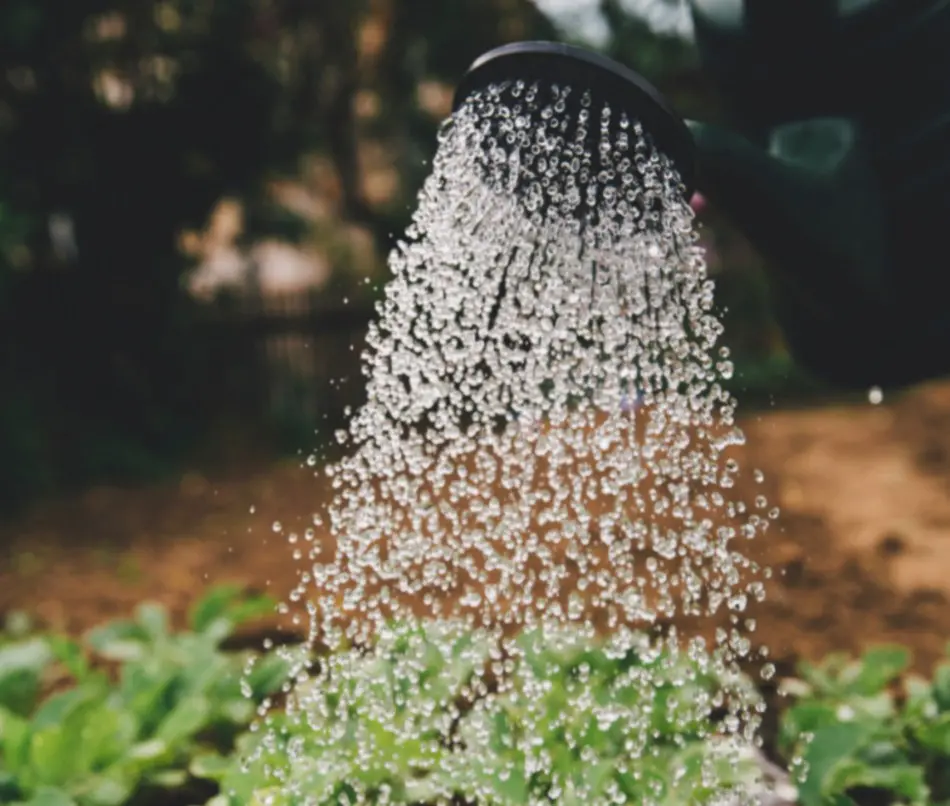
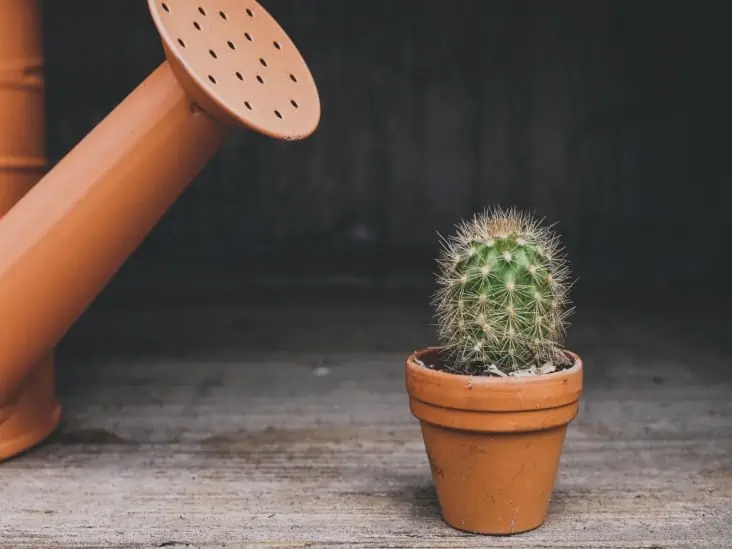
A small cactus on a pot with a water can.
Make sure you keep a close eye on the soil when checking for moisture. 

If you are not sure when it is the right time to water a cactus, a great tip is to allow the soil to completely dry out before adding more water, so make sure you keep a close eye on the soil when checking for moisture. 

  • Fertilize while it’s still young. You want to make sure that you use your liquid fertilizer when your cactus is still in its beginning stages of the growing process. Make sure that you follow the instructions on the packaging to make sure that you properly fertilize your cactus. 

It is important to note that adding too much fertilizer to your cactus may actually prevent the cactus from flowering.

With these tips, you’ll be able to properly take care of your cactus without having to worry about whether or not you are doing things correctly. Remember always to follow instructions on your care materials when caring for your cactus. 

Preventative Measures

Like any gardening process, there may be a point where you’ll run into problems, and you’ll need to make sure that you address those problems immediately to prevent any further issues down the line. 

Here are a few common problems that come with cactus and how you can address those issues.

  • Overwatering leads to rotting. Believe it or not, you can actually cause your cactus to rot by overwatering it. Once it starts, the rot will eventually spread and end up killing the cactus. 
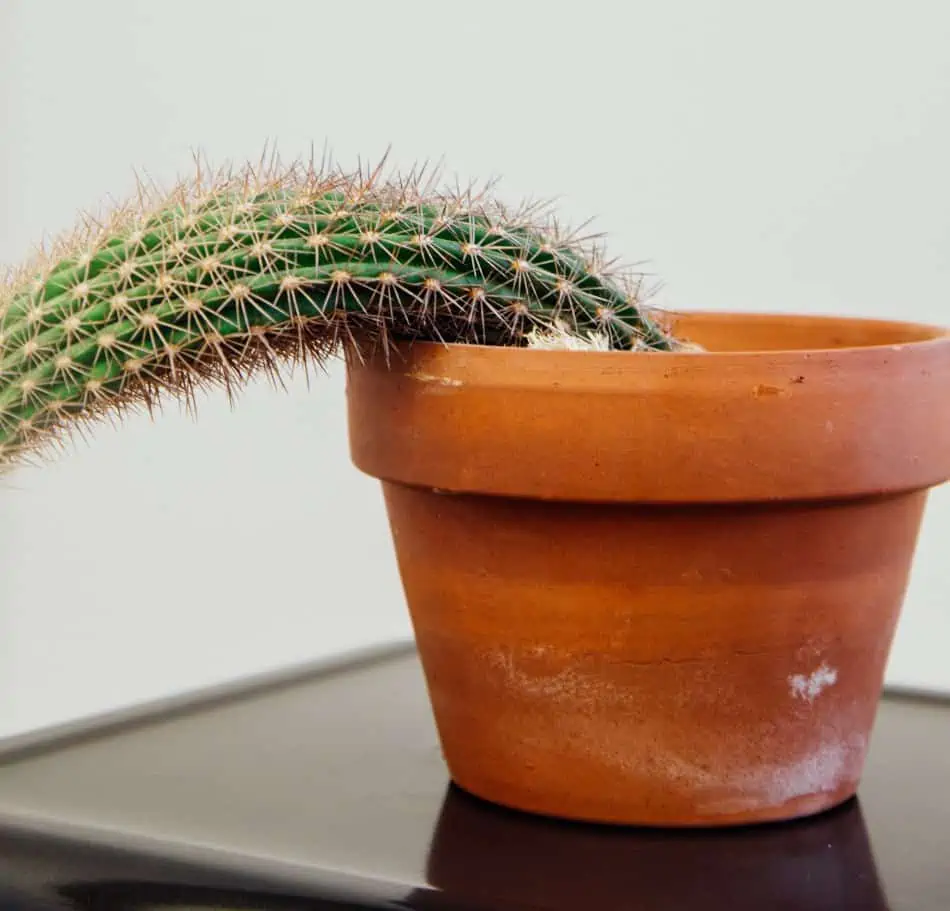
A cactus falling over the caly pot.
You can actually cause your cactus to rot by overwatering it

In order to prevent the spread of rot, you’ll need to remove the rotting piece of the cactus. You can detect rotting if your cactus appears to be a brownish color and begins to soften.

  • If your cactus looks pale, then it needs some sun. The pale color of a cactus is known as etiolation, and a lack of sunlight causes it. However, do not leave it in the sun for long periods of time. You’ll need to put it in the sunlight to prevent further damage gradually. 

Remember, cacti are desert plants, so being in the sun is actually a good thing, do not feel the need to deprive them of sunlight because you think that they might get overheated. 

With these things in mind, you’ll be able to tackle any problem that comes along with the responsibilities of growing a cactus. It’s all about following directions and preparing yourself for any worst-case scenario. 

With the above tips, you’ll be able to put yourself ahead of a problem instead of having to scramble to find a solution.

Tips For Beginners

If you’re reading this article, you are likely a beginner in cactus growing, which means that this section is super useful to you! 

The tips in this section will give you an extra boost to help you properly grow your cactus like an expert.

  • Go the less expensive route first. The worst thing that can possibly happen to you is that you throw your money down the drain. Although gardening is a big investment, you may want to consider purchasing a less expensive cactus to make sure that you get the hang of caring for a cactus. 

Purchasing a succulent might be your best option since they require little care and provide for easy practice. 

  • Keep a constant eye on your cactus. Growing cactus is all about patience, but it also involves keeping a watchful eye and observing any issues that may arise. As mentioned before, you can take some preventative measures by keeping a watchful eye.
  • Keep the pests away! Pests can cause big concern for your cactus and may bring along problems; however, it’s best to stay away from harsh chemicals that can actually harm the cactus. According to When in Manila, a great natural pesticide that you can use is combining some dish soap, vinegar, and water into a spray bottle and spraying it on your plant. 

Sometimes going natural is so much better than having to spend money on harsh chemicals that may actually cause harm to your cactus. Also, the ingredients are already in your home!

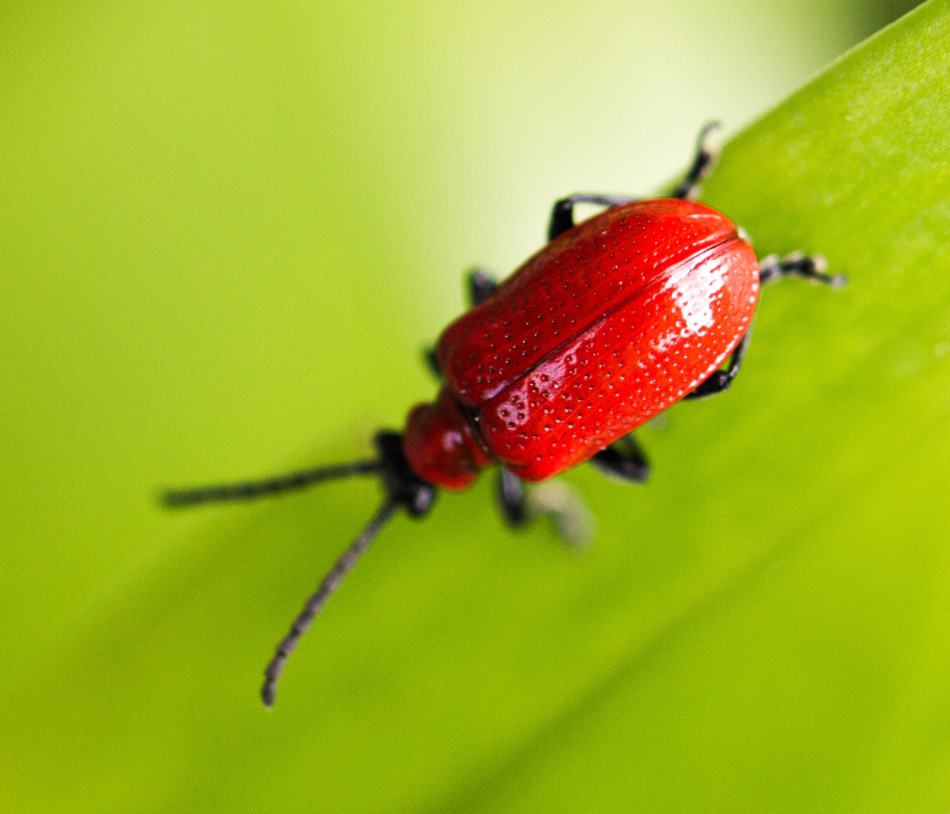
A bug on a plant.
Pests can cause big concern for your cactus and may bring along problems; however, it’s best to stay away from harsh chemicals that can actually harm the cactus
  • Make sure soil is dry before repotting. At some point, you’ll need to repot a cactus, which is a very important step in the growing process. 

When you finally reach the repotting step, you’ll need to make sure that the soil is completely dry when removing it. While you have the cactus in your hands, you’ll want to check for any dead roots and cut them immediately. 

Also, after repotting, make sure that you do not water the cactus for at least a week. 

By following the tips in this section, you’ll be able to grow a beautiful cactus without having to worry about any issues. The tips are intended to be extremely useful for beginners and will gradually turn you from a first-timer to an expert in no time! 

The Mammillaria Cactus

The Mammillaria Cactus, known as the pincushion cactus, is very common in the South West region of the United States and can also be found in parts of the Caribbean. Although these cacti are common in those particular regions, it does not mean that you will be restricted from growing them in your home. They’ll just require some extra attention. 

You’ll know that you’ve come across a Mammillaria Cactus because the cactus’s spines will be either straight or hooked. In addition, there will be small flowers sticking out of the cactus, and they will form a crown across the top, the colors of the flowers will vary. 

According to Gardening Know How there are about 250 species in the Mammillaria Cactus family. Although the pincushion cactus is much more common, there are other types of cacti in the Mammillaria family that you may want to consider planting. Here are a few additional members of the Mammillaria family.

  • Mammillaria Bocasana: This cactus is also known as the Powder Puff Cactus. Although this is a cactus, there is a fuzzy white substance that grows out of the cactus. The flowers on this particular cactus are often white or yellow.
  • Mammillaria Plumosa: Also known as the Feather Cactus, the stems on this cactus are completely covered in a white substance almost like a feather. The flowers on this cactus are usually white and yellow, pretty similar to daisies.
  • Mammillaria Elongata: This cactus is quite interesting due to its structure, which is how it got its nickname, the Lady Finger Cactus. This cactus is very clustered with cylindrical stems, like a cluster of ladyfingers. The spines of the Mammillaria Elongata Cactus are usually a golden yellow color, sometimes even a brownish color.

Although these different cacti forms will vary in shape and size, the attention that goes into growing them will be roughly the same across the board. Growing cacti properly from seeds can be quite complex, so you want to make sure that you follow all the necessary guidelines when you are starting the process. 

A top view of Mammillaria cactus.
There are about 250 species in the Mammillaria Cactus family

Final Thoughts

By properly following the instructions and purchasing the right items, you will be on the verge of growing a beautiful mammillaria cactus. Simply by following the tips and tricks in this article, you’ll be one step closer to becoming an expert, and will have enough confidence to grow an entire field of cacti. 

When going through the growing process, you’ll slowly begin to notice that growing cactus is much more simple than you may have originally thought.

Remember, it’s almost like following a recipe. And if you follow each step correctly, you’ll have a successful experience in cactus growing!

Saguaro Cactus 101: Facts And How To Grow

When you think of a cactus, it’s usually the iconic Saguaro that first comes to mind. It’s synonymous with the Southwest US region, and for a good reason. It’s also one of the few visuals you can actually care for at home as a living souvenir of Southwest Americana. You’ll have a harder time with the coyotes and roadrunners.

The Saguaro, pronounced SUH-WAHR-OH, is a particularly unique cactus plant native to the Sonoran Desert, which includes Arizona, Mexico, and California. It is illegal to transplant the Saguaro cactus from the Sonoran Desert, and Arizona has strict rules protecting the plant, but the Saguaro can be purchased online or at a plant nursery located in the southwest.

While the Saguaro cactus is an enticing purchase for your succulent needs, the plant is rather particular, so it might be handy to do a little background research on the Saguaro before bringing it into your plant family. If you’d like to learn more about the Saguaro cactus and the nuances to its care, you’ve come to the right place.

What is the Saguaro Cactus?

The Saguaro cactus, or Carnegiea gigantea, is probably the cactus you picture when conceptualizing what a cactus is. Like many other cacti, the Saguaro cactus features protective spines and a green body. However, this cactus plant has several notable characteristics that distinguish itself from other cacti.

  • Size: The Saguaro cactus is the largest cactus in the United States. They are typically slow-growing, but at full maturity, the average Saguaro grows upwards of 40 feet tall.
  • Age: This leads to another Saguaro trait, their incredible lifespan. Although Saguaros can reach enormous heights at full maturity, it takes roughly 125 years for a Saguaro to do so. The average lifespan of a Saguaro generally falls between 150-200 years.
  • Shape: Perhaps the Saguaro’s most distinct quality is its shape. The Saguaro features a singular, cylindrical body with several peripheral arms extending from the body and pointing upward. 
  • Blossoms: Like most other cactus plants, the Saguaro is a flower. While the Saguaro’s blossoms are not unique in color, creamy white, or size, 3 inches in diameter, the age at which a Saguaro first blooms is unique. The Saguaro does not experience its first bloom until roughly 35-50 years of age.
A Saguaro cactus blooming.
Saguaro first blooms is unique. The Saguaro does not experience its first bloom until roughly 35-50 years of age

These characteristics certainly make the Saguaro a distinct symbol of Southwest America, but it also features a list of traits that make it particularly adept at surviving in Southwest America.

  • Skin: The Saguaro cactus’s skin is coated in a thick wax that prevents water from escaping its body through transpiration.
  • Spines: The Saguaro cactus is also covered by defensive spines that serve to defend the water stored inside from predatory animals.
  • Roots: The Saguaro cactus uses a single taproot, extending roughly 5 feet into the ground, to access the region’s groundwater. The rest of the Saguaro’s root system is located near the surface, roughly 3 inches below the ground, to collect rainfall.
  • Sponge: When the Saguaro cactus collects this water, it does not use it right away. Instead, the water is soaked up and stored in the cactus’s sponge-like interior.
  • Ribs: As more water gets stored in the Saguaro’s sponge-like interior, the skin of the cactus expands, which allows for more storage space. This is made possible by the exterior pleats and interior ribs that expand and contract with the cactus as it stores and depletes water. 

How to Care for the Saguaro Cactus

Although the Saguaro cactus is endemic to the Sonoran Desert, it is possible to purchase and care for your very own Saguaro cactus at home. However, the Saguaro requires very particular care and may not fare well in homes located in colder climates or higher altitudes.

This section will detail the particular methods of care that the Saguaro cactus requires.

Planting

Prior to planting, introduce water into the soil you will use to plant your Saguaro. Also, be sure to begin the planting process in the late spring/early summer months. Saguaro cacti require an abundance of the sun to grow, which is crucial during this early growth stage.

If pot-planting, do not use an overly large pot as the Saguaro has a rather weak root system. Make sure the pot is base-heavy, though as Saguaro’s can grow to be quite large, upwards of 40 feet in fact.

Initial Watering

Once planted, do not water the Saguaro for roughly two weeks. During the summer months, May through October, the Saguaro requires a deep watering once every 2-4 weeks. 

To water your Saguaro, do not use a watering can or any overhead watering technique. The Saguaro’s roots are close to the surface, and this will result in overwatering. Instead, funnel a small hose into the soil surrounding the Saguaro and soak the soil to about one foot in depth.

A person watering plants.
During the summer months, May through October, the Saguaro requires a deep watering once every 2-4 weeks

General Watering

After about six months, the Saguaro’s roots should start to set into the soil. Continue the same watering practices until the roots firmly establish themselves. This typically takes between 1-2 years after the initial planting. 

Then, water the Saguaro once per month during the summer months and do not water at all during the fall or winter months. To properly water your Saguaro, use the hose-method detailed above.

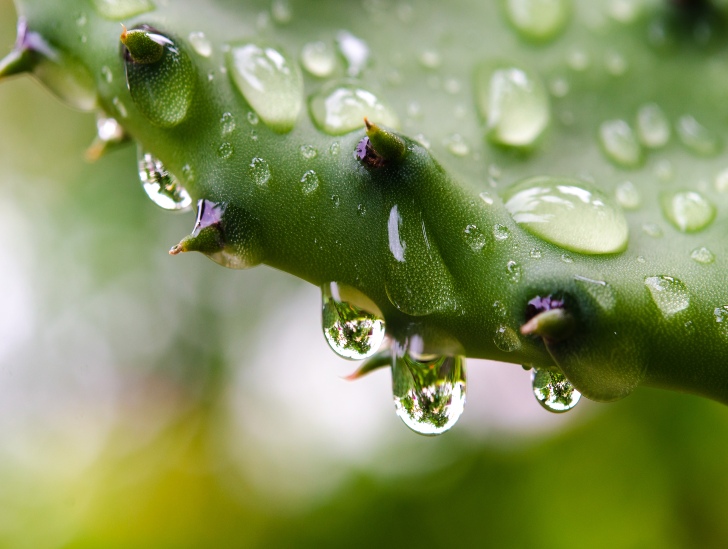
Water droplets on cactus.
To make sure your Saguaro is receiving enough water, check the exterior pleats of your Saguaro.

Lay the hose about 5 feet away from the Saguaro’s main body. Then, let the hose run for roughly 30 minutes. Doing this once a month in the summer months should be a sufficient amount of water for your Saguaro.

To make sure your Saguaro is receiving enough water, check the exterior pleats of your Saguaro. If there is less than an inch of space between each pleat, then your cactus needs more water. You can also check the skin to tell if your Saguaro is underwatered. If the skin is not firm, your Saguaro is underwatered.

Sunlight

The Saguaro requires full sun, so it is imperative that you plant the Saguaro in the southernmost portion of your household to receive south exposure. It might be difficult to grow the Saguaro in overcast regions, but there are methods for overcoming this hurdle.

A Saguaro exposed to sunlight.
The Saguaro requires full sun

Temperature

The Saguaro does not thrive in colder climates, but it can persist through several hours of frost. If you live in a particularly cold environment, a greenhouse is probably necessary. The Saguaro is only tolerant of about 28 degrees Fahrenheit. 

Additional Resources

In addition to watering your Saguaro, providing it with liquid plant feed during the summer months will supplement its growth.

Your Saguaro might also fall victim to bacterial ooze. This can be easily treated by excavating the infected area and applying a mixture of bleach and water, about 10% bleach and 90% water, to the area.

A desert cactus.
Your Saguaro might also fall victim to bacterial ooze.

Why is the Saguaro Cactus Important to the Southwest US?

It is clear that the Saguaro cactus is a unique and iconic symbol of the desert lands that it inhabits. It is also clear that the Saguaro is particularly adept at life in the desert. However, you might be wondering what this cactus plant functionally offers the desert that it inhabits. Functionally, the Saguaro serves various purposes to the Sonoran Desert.

  • Provides food to desert animals: When the Saguaro blooms, many birds and insects visit its flowers. In June and early July, its fruit matures, and many desert-residing animals feed upon its fruit, juicy red pulp with 2,000 accompanying seeds.
  • Provides shelter to desert animals: Gila woodpeckers and gilded flickers create nesting holes by digging into the fleshy body of the Saguaro. These holes are used by other desert-residing birds such as elf owls, purple martins, house finches, and Ash-throated flycatchers. 
  • Provides a hunting perch for predatory birds: Large birds such as the red-tailed hawk nest between the Saguaro’s body and its peripheral arms. They tend to use the tips of these arms as hunting perches.

While the Saguaro is incredibly important to the Sonoran Desert, the desert maybe even more important to the Saguaro.

Why is the Southwest US Important to the Saguaro?

Plenty of people around the world care for their own miniature Saguaro cacti at home, but in nature, they are found only in a quaint patch of desert land in the southwestern United States. 

This is because the Saguaro relies heavily on its climate, and the Sonoran Desert is the only region that provides the perfect climate. The perfect climate possesses these three qualities:

  • Temperature: The Saguaro cactus is highly susceptible to low temperatures. The plant will only thrive in climates with minimal days below freezing per year. This is why the Saguaro is located throughout the southernmost desert states but not the more northern desert states like Nevada.
  • Rainfall: In addition to consistently high temperatures, the Saguaro also necessitates a certain amount of rainfall to survive. For instance, Tucson, Arizona, located in the middle of the Sonoran Desert, averages about 12 inches of rain per year, which is about 9-10 more inches than Las Vegas, Nevada typically receives.
  • Altitude: The Saguaro cactus is only found between sea level and roughly 4,000 feet of elevation. This is due to its susceptibility to low temperatures. 

While these functional qualities make the Saguaro cactus a staple of the southwestern United States and vice versa, there is far more to the Saguaro’s importance than these characteristics.

A Saguaro spines.
Saguaro relies heavily on its climate, and the Sonoran Desert is the only region that provides the perfect climate

The Spiritual Importance of the Saguaro Cactus

Western films might be where the Saguaro cactus garnered its icon status to most people, but the cactus was revered long before cinema’s existence as a method for storytelling. The many indigenous tribes that lived and continue to live in the Sonoran Desert have crafted numerous mythoi for the Saguaro.

While there are numerous tribes with an array of different legends, these legends tend to depict the Saguaro as a human or a being that has the characteristics of a human. Let us take a look at a few of these legends and the tribes that crafted them. 

Akimel O’odham (or Pima) – Origin of the Saguaro and Palo Verde Cacti

The Pima people, or Akimel O’odham, which translates to “river people,” are indigenous to the land that is now northwestern Mexico and central and southern Arizona. One of their legends tackles the origins of both the Saguaro and Palo Verde cactus.

The legend goes that an elderly grandmother lived with her two grandchildren, for whom she ground wheat and corn to make porridge every day. One day the grandchildren fought with each other and knocked over the “water-olla” that was heating the water for the porridge.

The grandmother spanked them as punishment, and the two grandchildren ran away in anger. The grandmother gives chase, but she loses them. Now alone, the older grandchild declares that he will turn into a Saguaro so that he will live forever and bear fruit every summer. The younger grandchild claims that he’ll turn into a Palo Verde to make the bare mountains green.

The grandmother approaches the Saguaro cactus as it whistles, recognizing the voice of the whistling to be the voice of her eldest grandson. She tries to take the cactus in her arms, but its prickly spines impale her.

Tohono O’odham (or Papago) – Legend of the Saguaro

The Papago people, or Tohono O’odham, which translates to “desert people,” are indigenous to the neighboring lands to the Akimel O’odham in the Sonoran Desert. They tell a slightly different origin story for the Saguaro cactus.

The legend goes that a young girl sank into the sand and began chanting a song. The nearby children heard the song and noticed the girl sinking into the sand. They cried for help and tried to pry the girl out of the sand, but it was no use. The young girl’s mother came running over, but by then, it was too late. The young girl was completely submerged by the sand.

One year later, the little girl regrew in that same spot in the sand as a Saguaro.

A shadow of saugaro cactus plant.
The Papago people, or Tohono O’odham, which translates to “desert people,”.

The Saguaro’s Revenge

Many of these legends, including the Akimel O’odham origin story, depict the Saguaro as a human-like entity that enacts revenge on people that have wronged it. This depiction of the Saguaro had a recent return when a true story about a Saguaro’s revenge in the 1980s gained traction on the popular fact-checking site Snopes.

The story goes that two roommates, David Grundman and James Joseph Suchochi, went shooting in the Sonoran Desert a few miles north of Arizona State Route 74. Grundman decided to take aim at some Saguaro cacti nearby and blasted several holes into its main body. According to the story, the Saguaro toppled over onto Grundman’s body, crushing him.

Although Suchochi’s revision of the story asserts that it was only an arm shot off of the Saguaro that crushed Grundman’s body, the story is largely true and serves as an excellent parallel to the Saguaro’s origin stories.

Fun Facts About the Saguaro

This article has delved into many different facets of the Saguaro cactus. However, there is still more information about the cactus plant that we have not yet covered. Here are a few fun facts about the Saguaro cactus that might not be imperative to its care or its symbolism but will undoubtedly be an absolute blast to learn.

  • The Saguaro’s scientific name (Carnegiea gigantea) was named after the famed industrialist and philanthropist Andrew Carnegie: The Saguaro garnered this scientific name after Carnegie established a desert lab in Tucson for indigenous plant research.
  • An adult Saguaro can weigh as much as 10 tons: Roughly 75% of its weight is due to the water stored inside of the cactus.
  • The Saguaro’s creamy white bloom is Arizona’s state flower: The Saguaro’s blossom was adopted by Arizona as its state flower in 1931.
  • Saguaro fruit is an important cultural icon to the Tohono O’odham Nation: The fruit has been harvested by the Tohono O’odham to make jams and jellies. However, it is also used to make wine that is consumed during the Tohono O’odham rain ceremony, Nawait I’m.
  • The average Saguaro cactus can contract or expand in girth up to roughly 20-25% per year: This is due to the amount of water stored inside of the cactus and made possible by the interior ribs of the Saguaro that allow it to expand and contract.
  • In rare cases, the Saguaro has been known to grow crested, fan-like arms rather than its iconic forked arms: This is due to a mutation in the Saguaro cactus’s cells. 
A adult saguaro on desert.
An adult Saguaro can weigh as much as 10 tons

Final Thoughts

At the conclusion of this article, it should not only be clear what a Saguaro cactus is and how to properly care for it, but why this cactus, in particular, is so important to the lands it resides in. 

The Saguaro is certainly an iconic symbol of Hollywood’s great Western films. However, this plant is an even greater symbol to the peoples and animals that are indigenous to the lands depicted in these Westerns.

Ultimately, the Saguaro cactus is a distinct plant that should be revered for its astonishing characteristics, and the support it provides all of those living within the same environment as it.