Why Is My Cactus Turning Brown?

Cacti are remarkably durable and low maintenance plants. In most cases, they only need sufficient exposure to light, well-drained soil, and careful watering to thrive. Pest issues aren’t common with cactus and are easy to deal with when they arise.  Although these succulents are generally considered hardy, stem drying and browning is a common problem that you may encounter. 

So, why is my cactus turning brown?  Cacti plants can turn brown, yellow, or even purple for different reasons. For instance, if your plant is turning brown from the top, the cause could be sunburn. However, if the browning starts from the bottom towards the top, root rot could be the culprit. Red spider mites and corking could also cause your plant to change color from green to brown.

In this post, we discuss all the possible reasons that may cause your cactus to turn brown and what you can do to save it from the problem.  Read on to find out everything you need to know.

Why Is My Cactus Turning Brown?

As mentioned in our introduction, cacti plants can turn brown for many reasons. In this section, we discuss some of the top causes of this problem.

Root rot

If the base of your cactus plant is turning brown and the stem is soft and yellow, the problem could be root rot. 

Unfortunately, plants with root rot can be quite challenging to save because the rot usually starts inside before working its way out. In most cases, symptoms of root rot will only begin to show when the problem is already advanced. 
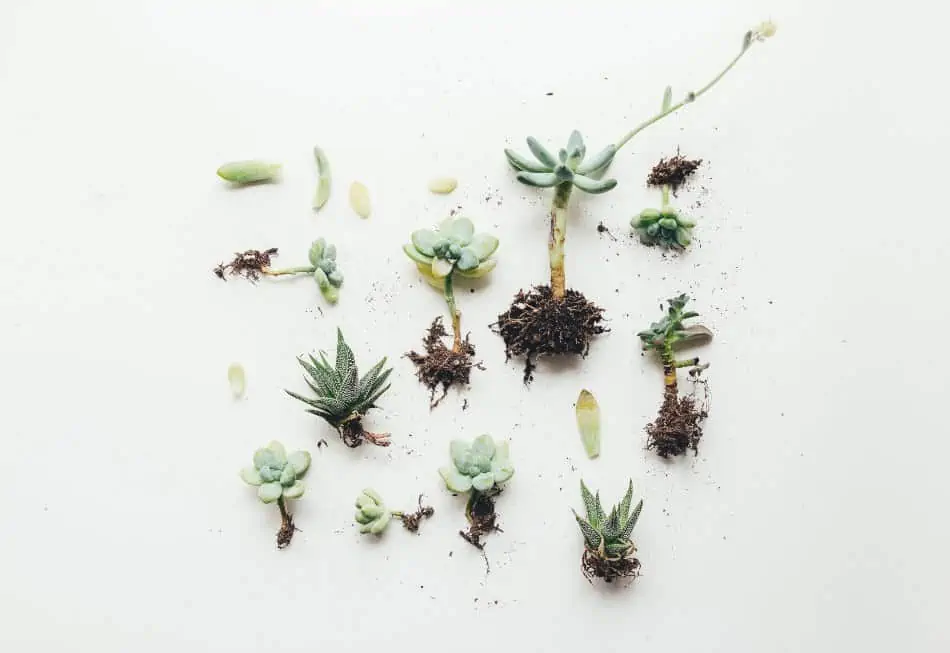
Plants picked from the soil.
The best thing to do is stop watering the plant and repot it in well-draining soil

The moment you notice signs of root rot, the best thing to do is stop watering the plant and repot it in well-draining soil.

You can also try to save your plant by cutting away all the tissue that is showing signs of rot plus some of the healthy tissue surrounding it to ensure the rot doesn’t spread.

Make sure you use a clean, sharp knife and wipe it with alcohol in between the cuts. Once you are done, be sure to apply sulfur powder on the wounds to help the plant heal. Overwatering and poor drainage soils are the common causes of root rot.

Indoor hazards

Your indoor cacti plants are still at risk from the same pests and diseases as their outdoor counterparts. However, indoor plants may suffer additional problems that are only unique to them.

When your indoor plants start to show signs of browning or drying out, be sure to check that they are not located close to a heat vent.

The blowing hot stream of air from the vent can cause plant tissues to dry out despite the thick layer of waxy that protects the plant. AC vents can also cause similar damage, although it may take longer for the damage to appear.

Typically, if your plant starts browning and feeling brittle on one side, yet it isn’t positioned directly in a window, it is time to consider moving it to another spot.

Sunburn

If your cactus plant is turning brown from the top, the most common and likely cause would be sunburn. This may sound abnormal because most of us tend to think that cacti plants are sun-loving, desert plants.

However, not all cacti species thrive in the hot sun. Some of them require minimal light and partial shade to do well. Cacti plants bought from a plant nursery or store may also suffer sunburn if you do not take time to introduce them slowly to the bright, outdoor light.

In most cases, mild sunburn will appear as whitish discoloration on the sun-facing side of the plant. With time, the whitish spots turn to brown scars which are a symptom of severe sunburn. Cacti plants with severe brown burns have permanent damage, and there is nothing you can do about it.

But, if your plant has whitish spots, you can save it by moving it to a shady area. As long as you provide shade on the hottest days of the year, it will fully recover. It will also help if you take some time to learn about your plant’s lighting requirements so that you can provide the best conditions possible.
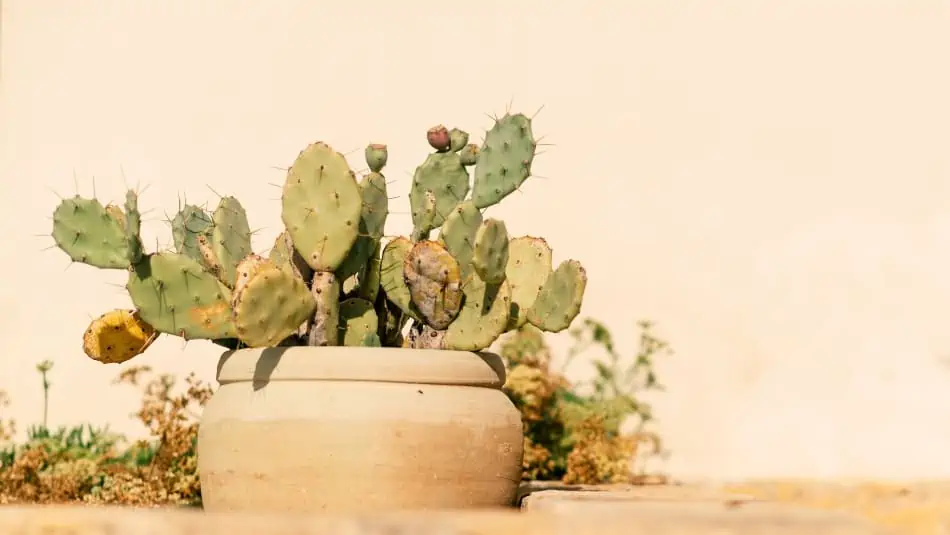
Cactus on pot outside exposed to sunlight.
Some cacti plants should never be exposed to full sunlight all-day

Keep in mind that cactus species that aren’t used to being in direct sunlight must be acclimatized by exposing them to full sunlight for a short period each day.

Start increasing the exposure progressively over several weeks.  It won’t be long before your plants fully acclimatize to the outdoor light conditions. 

It is also good to mention that some cacti plants should never be exposed to full sunlight all day.

Scales

Scales refer to small insects that usually appear as brown spots on cacti plants because of their hard brown shell coverings. These insects feed on plant juices that weaken the cactus plant making it look yellow or brown.

If this is the case with your plant, consider spraying it with a stream of water to get rid of the scales or wash it with a relatively weak solution of detergent. You can use your preferred brand of insecticide for large infestations.

The other way of killing scales is by using cotton swabs soaked in horticultural oil on each side. This forms an oil layer on top of the scales cutting off the oxygen supply to the insects.

With time, the insects suffocate to death.

Frost damage

Just like sunburns, frost damage can also cause cacti plants to turn brown in affected areas. The damage is quite similar, and the only way to differentiate between sunburn damage and frost damage is by checking the temperature.

When tissues of a cactus plant are subjected to freezing temperatures, the cells rapture. Although you may fail to notice the damage right away, the plant will try to self-heal by creating calluses over the damaged tissues.

This is the same type of self-healing mechanism that occurs after a hail storm as well although the brittle spots on the plant are usually patchy.

Frost damage can still happen on indoor plants that come in direct contact with the window glass.
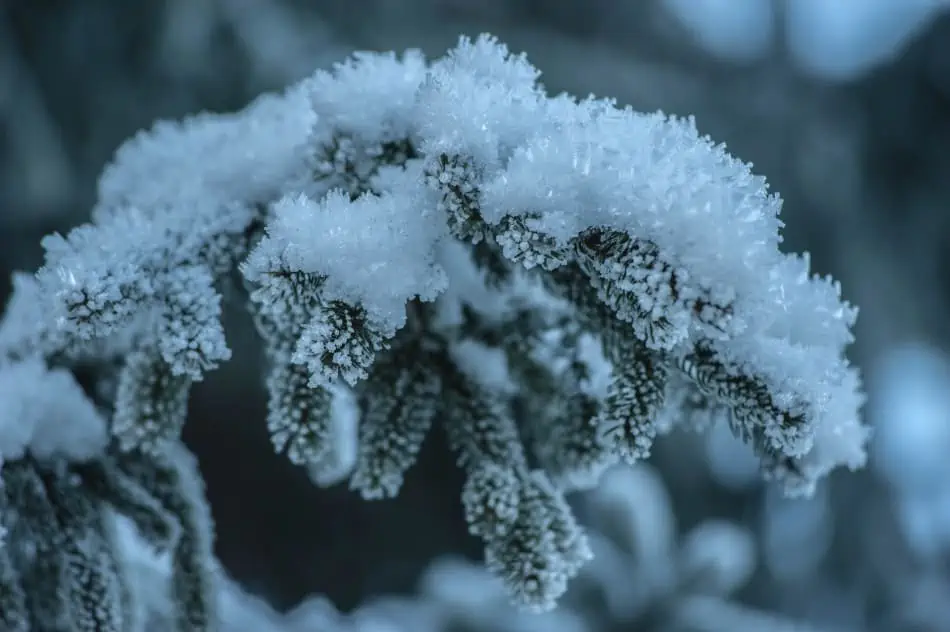
A frozen plant.
When tissues of a cactus plant are subjected to freezing temperatures, the cells rapture

Mites

If your plant is turning brown from the top where new growth is appearing, it could be a sign of mite infestation. 

Red spider mites are tiny insects that suck juices from your plant at the more tender parts. These insects are so small such that it might be relatively easier to look for their webs other than the insects themselves.

Symptoms of mite infestation include rusty brown spots that appear at the top of the plant and the presence of mite webs.

If left untreated, these pests can kill your plant by feeding on the entire outer layer of tissue. Indoor cacti are the most susceptible to red spider mites.

Sometimes, the plants come from the nursery when they are already infested with these mites. To get rid of bugs, consider watering your plant from overhead with a relatively strong stream of water.

Root lice are another common type of mite that may infest your cactus. Root lice can jump from pot to pot for plants grown in greenhouses, making it difficult to control.

The best way to deal with root lice is by separating your new plants from the other plants for a few weeks. You should also avoid soil sharing and recycling to control root lice.

Corking

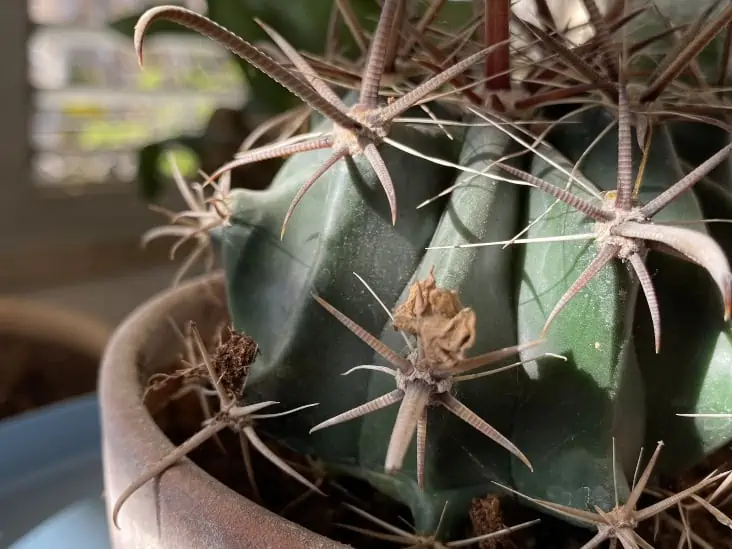
The sudden appearance of firm barklike and brown tissue a few inches above the soil of an otherwise healthy cactus plant could be a sign of corking.
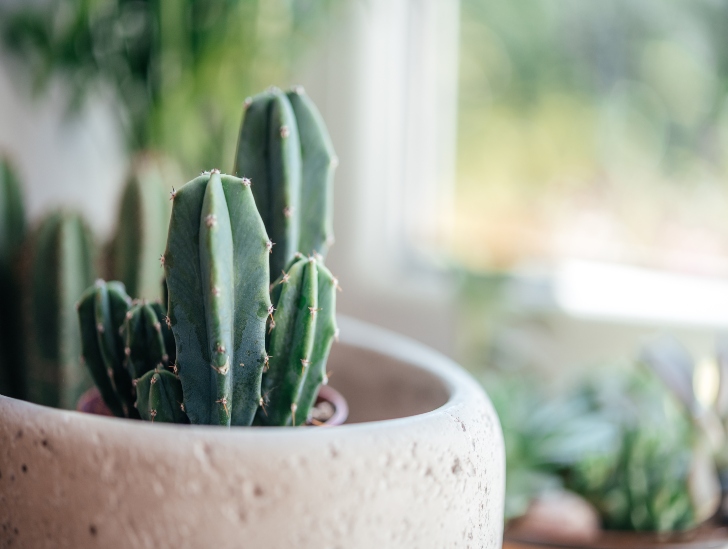
Cactus on the pot near the window.
Corking starts from the base of the plant and moves upwards progressively

Fortunately, this is part of the natural aging process of cacti plants that shouldn’t worry you so much.

In most cases, corking starts from the base of the plant and moves upwards progressively. If your plant is browning due to corking, there is nothing you can do about it because it is a natural process.

Just focus on taking good care of it to slow down the aging process.

How Can You Prevent Your Cactus from Browning?

Are you wondering if you can protect your cactus from turning brown? The good news is that there are lots of things you can do to avoid this problem.

The best way to keep your plant from turning brown is to make sure it is growing in a conducive environment. Also, make sure you quarantine new plants and scrutinize them for pests and diseases before you expose them to your other plants.

To avoid browning as a result of root rot, provide your plant with loose and well-drained soil.  Expose it to sufficient light and avoid overwatering. More than 90% of root rot cases occur as a result of overwatering.
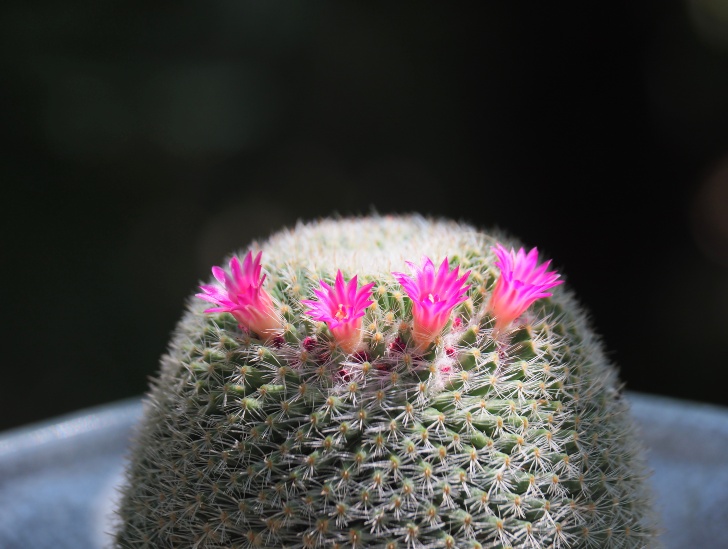
Old lady cactus flowering.
  Expose it to sufficient light and avoid overwatering

In fact, cacti plants recommend underwatering instead of overwatering.  Always remember the fact that overwatering cacti plants is much more dangerous than underwatering.

The Bottom Line

Browning is a relatively common problem that many cacti gardeners have to deal with. Fortunately, this is not a death sentence for your plants. When you notice brown spots start to form on your plant, take time to identify the problem and deal with it accordingly.

Do not panic or try to solve the issue without understanding its cause. If you cannot identify the cause on your own, don’t be afraid to call in a plant expert to help you solve the problem. Keep in mind that growing healthy cacti plants require good care!
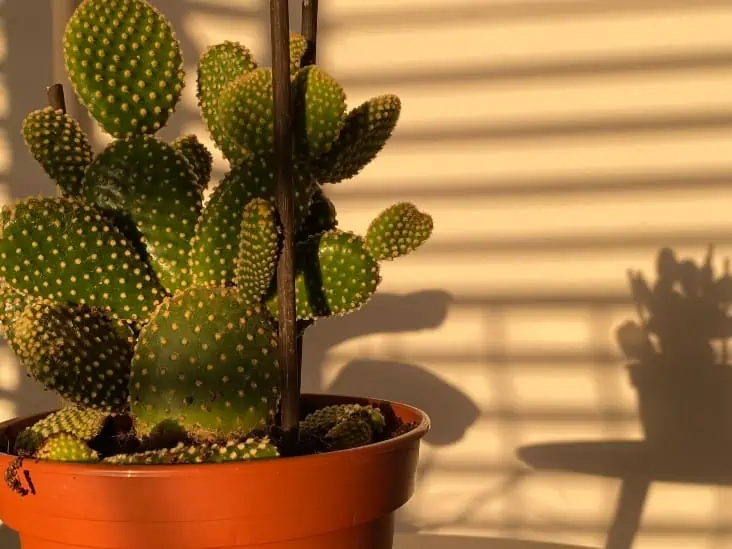
Does Cactus Need Direct Sunlight?

Does Cactus Need Direct Sunlight?

Cacti plants are widely known for their drought-resistant nature and good water storage properties. This is the primary reason why they are referred to as desert plants. Since most of them do well in arid and semi-arid areas, gardeners usually assume that these plants require direct exposure to bright and intense heat to thrive. But is that the case? We shall find out in a moment.

Does cactus need direct sunlight? Most cacti species don’t need exposure to direct sunlight to survive. Just like other succulents, cacti plants will do well when positioned in places with good light and not necessarily direct sunlight. If you are growing your plants indoors, position them on a south-facing window to help them access bright light. If you are growing these plants outdoors, choose a perfect location within your garden with partial shade to help protect them from intense sunlight.

Depending on their place of origin, some cacti species cannot tolerate full and direct sunlight.  Such species tend to suffer from damage and sunburn if you don’t provide them with some form of protection from the intense heat. However, a few other species have developed a wide range of adaptations that help them handle direct and intense sunlight much better.

Read on to find out everything you need to know about exposing cacti plants to direct sunlight and how you can protect your precious little plants from potential damage.

Do Cacti Plants Need Exposure to Direct Sunlight?

Naturally, cacti plants tend to do better when they receive a lot of exposure to light, but they do need protection from intense heat and direct sunlight. Too much heat can cause severe damage to your plants.

Typically, prolonged exposure to direct sunlight can result in sunburn damage leading to permanent scarring or even death.  To prevent this from happening, it is always good to slowly acclimatize your plants to the intense sunlight before full exposure. 

Cactus plant exposed to sunlight outside.
Cacti plants tend to do better when they receive a lot of exposure to light, but they do need protection from intense heat and direct sunlight

Start by positioning them to partial shade and slowly introduce them to more and more sunlight until they are fully acclimatized to the sun and heat. You can start by exposing them to the morning sun, which is less intense and slowly works your way to the more intense afternoon sunlight.

You can also position your cacti under the shade of other tall plants before moving them away and exposing them to direct sunlight.

The primary target here is to increase sun exposure gradually to avoid shocking the plants and causing sunburn or permanent scarring.

Keep in mind that shade-loving cacti species such as Mistletoe Cactus and the Easter Cactus and newly propagated plants are more susceptible to sunburn and permanent scarring. However, grey, red, or blue cacti plants covered with a lot of spines tend to do well under direct sunlight.

Sun-hardy cacti-species that have been accustomed to growing indoors are also susceptible to sun damage and sunburn when moved outdoors abruptly.  Therefore, it is always good to find ways of acclimatizing the plants to intense heat slowly before you position them under direct sunlight.

Newly propagated or young cacti plants won’t do well under direct sunlight. Give them some time to mature before you can start to position them under direct sunlight.

Since different parts of your outdoor spaces get hit by direct sun rays at different times of the day, it might take some trial and error to determine which location will suit your cacti plants best.

Some of them may respond well to the morning sun while others may respond well to the intense afternoon heat.

Monitor them carefully under different circumstances to see how they respond to the different heat intensities.

How Many Hours of Sunlight Do Cacti Plants Need?

Typically, most cacti species need at least four to six hours of sunlight to thrive. These plants love being in bright and sunny locations. Plants that don’t receive sufficient exposure to light may exhibit a wide range of signs.

Perhaps, the most common sign that your plants aren’t receiving adequate light is etiolation/elongation. This is a process whereby plants stretch to seek more light. While it may seem like an excellent self-adaptation mechanism, etiolation produces weak stems and may result in poor growth.

Cacti plants that do not receive sufficient exposure to light may also become pale or revert to their original green color. On the contrary, plants that receive adequate exposure to light demonstrate their true beauty by showcasing a wide range of vibrant colors.

A girl looking at her plants on the window.
If you are growing your plants indoors, position them on a south-facing window to help them access bright light

Can Cacti Plants Receive Too Much Sun?

The simple answer to this question is “yes.” Too much sunlight is what causes sunburn and sun damage in cacti plants and other succulents. The unfortunate thing is that sunburn may happen pretty quickly during a heatwave or when the temperatures soar so high. Sometimes, the process can also occur gradually.

The first sign of sunburn is the appearance of brown/yellow spots on the surface of your plant. Fortunately, if you realize signs of sun stress early, the effects can easily be remedied to avoid further damage to your plants. 

Sunburned cactus.
The first sign of sunburn is the appearance of brown/yellow spots on the surface of your plant.

Simply relocate your plants to a shady area or position them next to other taller plants for protection from excessive sunlight.  If you don’t do anything even after realizing signs of sun stress, some cacti plants will fry to a crisp and eventually die.

Some species may toughen up, adapt to the intense heat and survive the heatwave. Don’t take any chances; make sure you provide your plants with sufficient protection when temperatures start to soar.

Can Cacti Plants Survive without Sunlight?

So, the next question you must be asking yourself is whether your cacti plants can survive in low light conditions. Well, the truth is that cacti plants, just like any other plant, need sunlight to survive. The light energy absorbed is used to trigger chemical reactions that help the plant produce food and energy.

However, cacti plants can still survive in low light conditions for some time. After a few days of insufficient exposure to light, your plants will start to show signs of stress such as etiolation and stunted growth. They will also lose their beautiful vibrant colors and appear pale.

When given too much water and little exposure to light, cacti plants may succumb to root rot. If you don’t take appropriate measures to correct the situation, the plant will start to rot from the roots up and eventually die. In fact, when root rot starts to set in, it can be quite difficult to save your plant from death.

How Can You Keep Your Cacti Plants Alive during Prolonged Heatwaves?

With the effect of climate change, weather extremes are quite common in different parts of the world. Some regions experience extreme heatwaves that can easily cause harm to succulents. Heatwaves, especially during summer, can be challenging to deal with, given that they can last for days or even weeks.

Flowering cactus.
Move them to shadier spots of your garden and if possible, take them indoors.

You risk losing your plants if you leave them unattended during this period. So, what can you do to protect your cactus from the stress and potential damage? Here are some of the things you can do to protect your plants during this period.

Provide your plants with shade

One of the best things you can do during such a period is to prepare ahead of time.  If you anticipate a heatwave in the coming days, find good shelter for your young, smaller, and fragile cacti plants.

Move them to shadier spots of your garden and if possible, take them indoors. The taller, mature, and bigger plants that are accustomed to the outdoor heat may be fine, but you should still monitor them closely.

If you have planted your plants in the ground or in beds, then consider covering them with a shade cloth since you cannot move them.

Avoid repotting

This might not be the right time to repot your plants. Remember the fact that repotting even a mature and well-established cactus plant introduces a lot of stress to it. Therefore, doing it at a time when the temperatures are too high will only make things worse. Wait until the heatwave has subsided and temperatures dropped back to normal before you start to repot your plants.

Do not fertilize

Fertilizing your cacti plants can help them thrive and grow fast. But, you need to know the right time and season to fertilize your plants.

Preferably, you should only fertilize your plants during spring when they are actively growing. During a period of a heatwave, your plant’s main focus is to survive and not grow. So introducing extra nutrients to the plant during this time can only cause more damage than good.

Cactus plants in a pot.
Cacti plants tend to thrive when located in areas that receive plenty of bright light, but not direct sun

The Bottom Line

Cacti plants tend to thrive when located in areas that receive plenty of bright light.  However, this doesn’t mean exposing them to direct sunlight. Some cacti plants are prone to sunburns and sun damage when positioned under direct sunlight.

If you live in the northern hemisphere and grow your plants indoors, consider placing them on south-facing windows which are a good position that provides excellent access to sunlight.  The optimum amount of sunlight required largely depends on the cacti species that you are growing. For instance, while Rhipsalis cactus does well in shaded areas, Echeveria will only blossom when positioned in bright spots.

Can A Cactus Live Without Sunlight?

If you are new to cacti plants, you might be wondering if they can really survive without sunlight. After all, these are desert plants, and you might be tempted to think that you are doing them a favor by keeping them away from sunlight. But is that the case? Probably not.

So, can a cactus live without sunlight? The short answer is NO. Cacti, just like any other plant, need sunlight to survive. Although these desert plants can survive for short periods without sunlight, they need exposure to lots of sunlight to thrive and blossom. Typically, a mini-cacti plant requires at least four hours of direct sunlight daily to thrive.

There are a few cacti species without spines that are pitched as low light plants. A good example of this type of cacti is the Christmas cactus. The problem is that if you don’t provide your cacti plants with sufficient sunlight, they will become thin, sickly, and may eventually die.

In this post, we bring you a complete breakdown of cactus light requirements and what you can do to achieve better results with your plants. Read on to find out everything you need to know.

What Does Sunlight Provide for a Cactus Plant?

Every plant needs sunlight because it plays a critical role in photosynthesis. This is the process of turning carbon dioxide and water into sugar; the plant’s primary energy source. Sunlight also helps your cactus with blooming and growing healthy stems, flowers, and roots.

Whether you’re planning to get an Old Man cactus, prickly pear cactus, Christmas cactus, or whatever desert cacti you wish to have, ensure that they have enough direct sunlight.

Sunlight also provides warmth. This ensures that the plant can access essential nutrients from the soil. During winter, the little sunshine received helps to keep the cactus warm and healthy, even when it’s snowing most of the time.

Additionally, sunlight helps in maintaining a succulent’s aesthetically appealing look. With sufficient exposure to natural light, your cacti will be lush green and bright colored. It also helps keep a good balance of water and moisture in the plant’s cells.

Succulents are unique plant species because they require varying degrees of sunlight. Most of their chemical conversions usually happen in low light and are only completed when the plant has access to enough light.

This is part of the plant’s survival mechanism since it allows it to store carbon dioxide and only complete the process of photosynthesis when there is enough light.

How Much Light Does a Cactus Plant Need To Thrive?

Light (whether sunlight or artificial light) is a funny thing since you cannot measure it. While you can add two tablespoons of fertilizer to your potting soil or pour one cup of water on your plant, you cannot say that I have given my plant 10 lbs. of natural, free-range light.

Therefore, the best approximation we have when it comes to light is to measure the duration. So, a good question would be; how long should your cacti plants be exposed to light each day?

Well, the simple answer is that all succulents, including cacti, need between 10-14 hours of light every day. Here, we are assuming that we are not talking about the shad-loving cacti plants because they would easily fry if you expose them to light for such prolonged periods.

Cactus in the pot outside exposed to sunlight.
Such plants need to be exposed to light for only four to five hours each day.

It is also good to mention that some species of spiny cacti have developed distinct shapes to help minimize the amount of sunlight they need to survive. The spines are highly modified leaves that minimize the amount of water they lose through evaporation.

Such plants need to be exposed to light for only four to five hours each day, and they will be okay. Two critical factors affect light requirements for cacti plants. They are: 

Etiolation

This is a technical term used to refer to a state where your plants “stretch” or become “leggy.” Etiolation can happen in any type of plant, but it is highly noticeable in cacti and other succulents because these plants tend to be so compact.

The process occurs when your plant is not being exposed to sufficient amounts of light. Therefore, it reacts by proliferating (stretching) towards the light direction. The truth is that all plants will always know where light is coming from and how to get there as fast as possible.

While in etiolation, the plant will reduce the number of leaves (spines) it grows. During this process, it may appear weak and ugly. However, it is not unhealthy. As soon as it gets to the spot of light, the cactus plant will resume its normal growth and stabilize it.

Unfortunately, the effects of this process are irreversible. This means that once the plant has grown all stretched out, it will remain that way for the rest of its life. The only solution you have is to prune the etiolated part of the plant.

In most cases, the plant will resume normal growth once the wound has healed, and if you stick the prune section in some soil, it can start growing too.

Cactus outside exposed to sunlight.
All succulents, including cacti, need between 10-14 hours of light every day

Seasonal light differences

It is also pretty evident that the level of sunlight intensity varies greatly from season to season.  During summer, the days are pretty long, and sunlight intensity is pretty strong as well.

Most cacti plants tend to do well in these conditions. However, if you live in a region that is known for extreme summers, you may want to protect your plants from potential sunburn.

On the other hand, winter days are relatively shorter, with less intense sunlight. If your cacti plants slide into dormancy during this season, that will be much better. If not, then you might need to supplement the minimal natural light with more artificial light.

Some people rotate their plants indoors and outdoors as seasons change. This is a good idea as long as you know when to take your plants indoors or outdoors and how to acclimatize them to avoid damage.

How Does Dormancy Affect Light Requirements?

As mentioned in the previous section, cacti plants tend to slide into dormancy during the cold winter months. During this period, their rate of metabolism slows down, and they stop growing. Dormancy occurs because the freezing temperatures don’t provide optimal temperatures for chemical reactions. Therefore, the rate of photosynthesis slows down, which in turn affects plant growth.

Cactus near the wondow indoors.
Cacti plants require the dormancy period to produce seeds, fruits, and flowers.

However, this is a critical part of the plant’s life cycle. While you could artificially continue to provide sufficient exposure to light to trick your plant into thinking it is still summer, the effects can be adverse

Cacti plants require the dormancy period to produce seeds, fruits, and flowers. Therefore, if you trick the plant into thinking it is still summer, you may miss out on this vital phase.  While in dormancy, a cactus plant can still survive with minimal exposure to light.

Sunlight vs. Artificial Light: Which One Is Better for Your Cacti Plants?

This is a highly debated topic. In fact, we can write an entire book on this topic alone! However, the comparison is quite interesting, and a lot of science and personal preference comes into play while making a decision.

The truth is that neither natural sunlight nor artificial light is better than the other. There are situations when sunlight outshines artificial lights and vice versa. So, how do they stack up?

Sunlight

Natural sunlight is quite amazing because it is readily and freely available. You can simply position your cacti plants on your windowsill, water them, and they will still thrive. Isn’t it great?

Sunlight has always been there, and every living thing on earth is well adapted to handle its heat. Cacti plants and other succulents know how to harness their energy and used it to power a wide range of chemical reactions.

In fact, cacti plants were created to bathe in sunlight. They have a wide range of adaptations that help them to absorb different wavelengths of sunlight and protect themselves from the excessive heat. That is why you will never go wrong if you choose to expose your cacti plants to lots of sunlight.

A group of cactus exposed to sunlight.
Cacti plants were created to bathe in sunlight

What Kind of Sunlight Does a Cactus Need?

Cacti plants need natural sunlight to survive. If you do not expose your cacti to sufficient light, they will start etiolating and stretching out of shape.

Therefore, if you are growing a cactus indoors, ensure it is close enough to a window that receives plenty of natural light.

You can also use artificial lights such as LED and fluorescent bulbs to supplement the natural light for your indoor cacti.

As mentioned earlier, you must provide them with 6-10 hours of good-quality light each day for optimal growth.

Remember that too much sunlight can cause sunburn on your cacti plants, so be sure to monitor light levels and adjust accordingly.

How Can You Maximize on Natural Light Indoors?

Natural light tends to fade off as the day progresses. This natural cycle works well for indoor cacti plants. Typically, the morning to midday light is brighter and more intense. However, its strength fades off in the afternoon.

If you are in the northern hemisphere, position your cacti plants on south-facing windows for the best results. This way, your plants will have more hours of daylight, which enables them to thrive.

In regards to east and west-facing windows, the east-facing windows offer the best option because the sun rises in the east, and the strongest sunlight is in the first half of the day.  North-facing and west-facing windows are ideal for cacti plants that prefer partial sunlight.

While positioning your plants on a windowsill, consider external factors such as nearby buildings or trees that may cast a shade on the windows. Also, position your plants as close to the glass as possible.

Keep your window glass clean since dirt and accumulated grime tend to block a significant amount of light. If you run out of windowsill space, consider getting a hanger or windowsill shelf to accommodate the extra plants.

Artificial Lights

Natural sunlight is great, but artificial lights may help you when there is no sunlight for a prolonged period. In fact, if you are into cacti plants so much, there is a high possibility you ran out of windowsill space a long time ago. This means that all plants positioned far away from the window cannot receive natural light.

Furthermore, if you live in a region that experiences extremely colder winter seasons, you may want to bring your plants indoors and at least expose them to some light. If you bring your plants indoors and fail to provide them with sufficient exposure to light, they may etiolate or even die.

Artificial lights are also a great option when it comes to propagating since their intensity is quite low. In fact, specific light wavelengths can be used to encourage fruiting and flowering.

Unfortunately, artificial lights aren’t available freely. You will need to find the right bulb and pay your electricity bill to enjoy their benefits. Fortunately, the upfront cost is relatively low, yet it provides you with a lot of freedom when it comes to growing cacti plants.

Cactus lamp.
Cacti plants were created to bathe in sunlight

How Does Lighting Affect Flowering?

For cacti plants, timing is everything when it comes to flowering and fruiting. When the days are shorter, they produce more flowers and fruits.

That’s why when you keep your cacti plants indoors all year round, they may not flower as expected since there is no natural light that signals when the days are shortening.

Luckily, with artificial lights, you can easily manipulate the light hours. When you expose your cacti plants to more prolonged lighting hours, they will eventually flower and fruit.

To achieve this, you can use a timer that runs for 12-14 hours daily and turns off when it is time for them to rest.

Also, note that different cacti plants have different flowering requirements. For example, some species may require longer lighting hours than others to flower.

Summary

Cacti, just like any other plants, need sufficient exposure to light to thrive. If you don’t provide the right amount of light, your plants won’t bloom and may succumb to various infections. These plants require approximately 10-14 hours of light to thrive, but they can still do well with relatively less amount.

We hope this information gives you a good foundation for growing healthy cacti plants in your home.  Do you have a question or comment? We would love to hear from you in the comments section.

Caring For Cactus In Winter

Most cactus are usually dormant during winter and active during summer. However, some are active during winter. Christmas cactus and Thanksgiving cactus bloom in winter. We know how unfriendly winter can be, and your cactus needs to be taken care of with caution. I sought to find answers on how you can care for your cactus in winter, and I made some pretty exciting discoveries.

Bringing Your Cactus Indoors in Winter

If your cactus has been outdoors during spring and summer, you need to bring it indoors in cooler weathers. This way, your plant will gradually transition without having a ‘shock.’ 

  1. Move your cactus to a shade outdoors, which receives about one or two fewer hours of direct sunlight daily for 1-2 weeks. Do this just before winter when the temperatures are expected to be below 65F at night. 
  2. Move the plant again to a place that receives one of two fewer hours of sunlight as compared to the previous place. 
  3. The idea of moving the cactus gradually is so that it gets used to the temperatures for it to avoid the ‘shock.’ Take the cactus indoors and find a sunny spot. A south-facing window would be perfect. Try keeping the cactus warmer in temperatures of 65-90F. All this is in preparation of winter dormancy.
  4. Make sure you don’t fertilize the plant during winter because it is dormant. 
Cactus in a pot near the window.
You need to bring it indoors in cooler weathers.

To encourage your cactus to go dormant, you need to reduce your feeding schedule to make it less. Don’t water frequently but rather do it possibly once a month. 

Caring for your Cactus Indoors in Winter

1. Place your cactus strategically 

As mentioned, it is advisable to bring your cactus indoors to avoid the harsh winter conditions. Some people opt for different types of grow lights to provide ample light for the plant. However, unless your home is extremely dark, it may not be necessary to purchase these lights. 

Place your plants strategically at a place where they will receive the most light as possible. The light should be sufficient enough to keep your cactus colorful for the few cold months. If you have more than one cactus plant, keep rotating them so that they all get enough light. 

If you are in the northern areas that experience some harsh winters, don’t place your cacti too close to the window. The cold coming in maybe too harsh to them and they may end up not doing very well.  

2. Grouping your plants

If you are a massive cactus lover, you may probably have a collection of different species. As mentioned earlier, some species are active during winter. The idea is, initially, if you started growing the cacti from seed, you should have probably labelled them. Even when you propagate using cuttings, labelling is essential as this helps you know the particular needs for the plant. 

Know each of the plant’s water and light requirements. Cactus are quite sensitive to overwatering, and you need to water just the right amount. You don’t want your roots rotting slowly and the cactus eventually dying. 

Group them in sections of those active and dormant during winter and their different light requirements. That helps reduce the possibility of making mistakes during their feeding time. If you are not quite sure about the schedules, there’s a lot of research online that has been done on different species. This would be resourceful. 

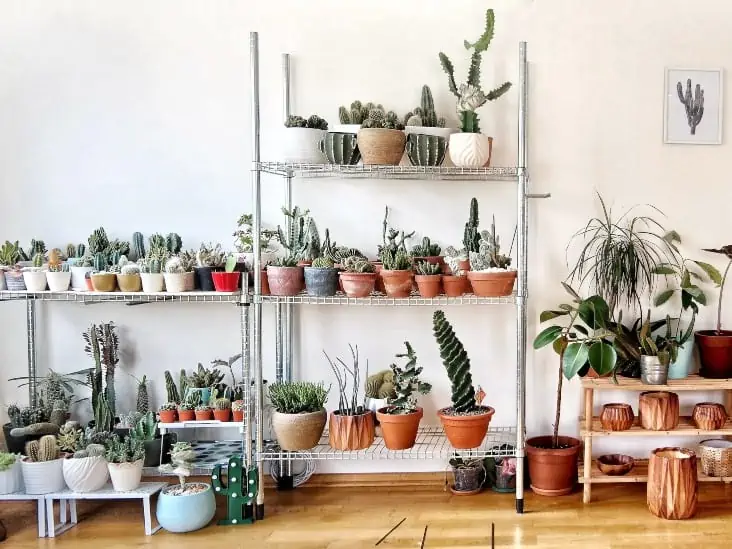
Different kind of cactus on one place.
If your cactus has been outdoors during spring and summer, you need to bring it indoors in cooler weathers

3. No feeding and less watering

As cacti are more prone to rotting as compared to other succulents, proper care needs to be taken to avoid such incidences. Some common signs of root rot are black or colored dots on cacti skin, discolored scabs, sunken spots, and you may even see some oozing of the cactus. 

You need to take into consideration what happens below the soil which you can’t easily see. Cacti depend on the root hairs to provide nutrients. If they start rotting, that means nutrients are not readily available, which drives the cactus to the above signs of root rot. These plants can take some underwatering for some time, but overwatering is pretty bad for them.

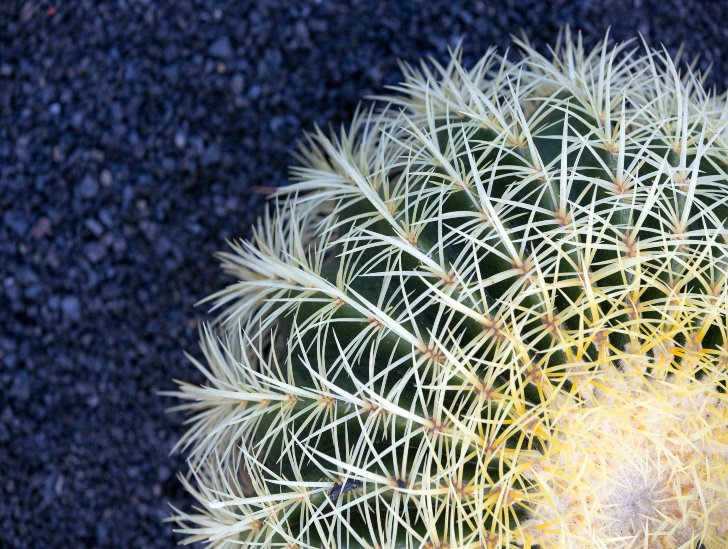
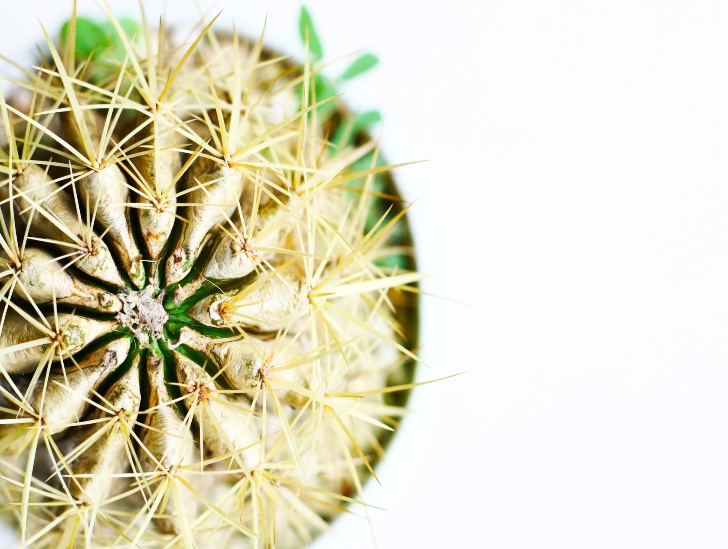
Topview of a golden barrel cactus.
Keep the water levels low and only water when they really need it.

Keep in mind that you should keep the roots happy when watering. This means just enough water to prevent them from drying. Since most species won’t flower in winter, that means the growth rate will be pretty low. Therefore, they just need enough water for survival. 

Also, avoid feeding them. Don’t use any fertilizer at this point as they may end up becoming weak. Keep the water levels low and only water when they really need it. You can use a wooden stick to poke the soil until the lowest point before watering to see if the soil is still wet. Only water when the stick has no soil remains to stick on it. 

The issue of watering is quite sensitive. If you adhere to the above, you might find that your plant only needs water once a month or even longer. Be careful not to underwater such that the soil starts to pull away from the sides of the container. The roots may end up desiccating and collapsing.

The pot you use is a huge determinant of the plant rots. Get a suitable container, preferably terracotta pots that have drainage holes. The importance of these holes is to ensure that any excess water is drained away to avoid water sitting in the soil for long. 

You probably are aware that even the soil you use is a major determining factor how your plant thrives. There are readily available cactus soil mixtures which you can purchase in local garden stores. You can also order online, and they can be delivered to you. Make sure the mix you go with has some coarse sand and vermiculite. The soil mixture and the pot work hand in hand to ensure your cactus doesn’t die of root rot.  

4. Choose your cactus wisely

Purchasing cactus should not be complicated. However, make sure you choose the best species, one that works for your environment. Some cacti species are more tolerant to the freezing temperatures of winter compared to others. 

A Mammillaria Bocasana Cactus flowering.
Make sure you choose the best species, one that works for your environment.

Consider choosing a cactus that will survive through winter. At times, you may need to cover your plants to retain air and moisture to prevent ice from destroying the stems and trunks. 

Some types of cold-hardy cactus

  • The Claret cup cactus

This particular species is from the Echinocereus group. They can withstand temperatures of -20 degrees Fahrenheit/28 degrees celsius. If they are indoors, they can even withstand lower than that. 

  • Mammillaria Bocasana 

This type of cactus belongs to the Mammillaria group that are usually ball-like. Once they mature, they can form rolling mounds of tiny bits of cactus. They can withstand temperatures as low as -20F. 

  • Opuntia

Opuntia is also another group of cacti that’s cold-hardy. Prickly Pear is the most common type in this family. Not only is it among the fast-growing cacti, but it is also drought-tolerant, which means it doesn’t need frequent watering. They grow to an approximate height of 12 inches. 

  • Pediocactus 

One of the popular types of this family is the Mountain spiny star. They are ball-like, and they have a high resistance to cold. They also have the potential of growing up to 12 inches high.

  • Escobaria

Lee’s dwarf snowball, plain’s pincushion, and beehive cactus are some of the popular types in this category. They are very tiny but produce big flowers. 

5. Insect management

Homes will tend to be dry during winter. This is because there are all kinds of heating systems to keep the house warm from the heaters to the furnaces. Insects such as mealybugs love warm places and are most likely to attack your cactus. 

A mealybug.
Insects such as mealybugs love warm places and are most likely to attack your cactus

It is natural for you cactus to be insect-infested. What you do to manage them is what matters.

Mealybugs

They are usually ⅓ or ⅕ inch long and resemble cotton as they appear waxy. Mealybugs are usually in a cluster and move slowly. They are mostly found on cactus leaves and other hidden parts of the plant. 

We also have root mealybugs that suck the root juices and live in the soil. When they suck these juices, root rot is almost nearly inevitable, and they end up causing bacterial infections.

Fungus gnats

They are usually ⅛ or 1/16 inch and look like black flies that can easily be confused with mosquitoes. Mostly, they hover around the soil surface. What’s interesting is that the adult flies can’t harm the cactus, but the larva is pretty dangerous. The larva lives in the soil and consumes both the roots and organic matter, which are meant to provide nutrients to the plant. 

Fungus gnats are more likely to affect cactus seedlings as compared to fully grown cacti, and they may end up killing the young seedlings. 

Spider mites

The first sign that spider mites infest a cactus is the webbing. You will also notice brown spots on younger plants on the epidermis. In terms of size, they are about 1/50 inch. If you try tapping the affected area, they look like dust. They suck the plant’s juices.

Scale

Scale insects, just like mealybugs, are cotton-like and they attache themselves to leaves and stems but can be scraped off.

Try and control these insects so that they don’t destroy your cactus. Get a safe remedy. First, to avoid the attacks, you need to grow your cactus in the right conditions. Make sure if it’s winter you ensure they are getting just the right amount of heat and light. 

For spider mites and mealybugs, you can wash them off. Cover the soil you’ve planted your cactus in to avoid it being washed away and pour a lumpsum amount of water on the plant. The insects should be washed away. 

Consider spraying the plant with a dilute alcohol solution of 1:3 with the ratio being alcohol to water. 

Prevention is better than managing the insects when they have already attacked your cactus. Hygiene should be a priority when growing these plants. Always be on the lookout for dead leaves and discard them as they are a hot breeding ground for pests. Keep your plant in the recommended conditions such as the right sunlight and watering them only when they require the water.  

Caring for Christmas Cactus in Winter

Like previously mentioned, unlike most cacti species that are dormant in winter, the Christmas cactus is active at this particular season. 

The Christmas cactus prefers bright but indirect sunlight. If you decide to grow them indoors, protect them from the southern and western sun exposure. They do well in warm temperatures of 70-80F. 

During winter, try to keep your Christmas cactus in the evening at temperatures of 60-65 °C. It is more likely to form buds in temperatures between 50-55 °C. 

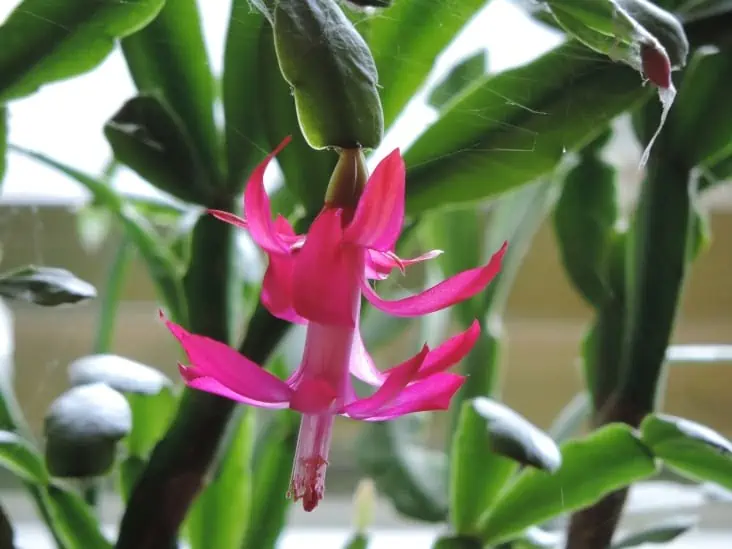
Christmas cactus flower.
Christmas cacti love humid environments.

A word of caution is to avoid putting them in cold drafts and also keep them away from home heaters or fireplaces. Remember to fertilize them in spring when growth appears. 

Christmas cacti love humid environments. For people who live in arid areas, it’s essential to keep your plant moist. The easiest and best way to do this is just placing a tray of water near the plant. The water will evaporate into the atmosphere and provide the needed humidity. 

Another alternative of providing humidity is getting gravel and putting it in a dish then filling it with water. Then place your potted cactus in it. You can also mist your plant with a spray bottle. 

The cold-hardy Christmas cactus

The Christmas cacti tend to bloom around Christmas hence the name. They flower during winter to produce white, red, pink or lilac flowers which are usually 3 inches long. The cold hardiness of this species is higher than for other cacti. They can’t withstand frost, but they need cold temperatures to force bloom. 

freezing Leaves.
These cacti hate frost and snow, so avoid exposing them to these. A slight exposure damages the pads

How to treat a Christmas cactus exposed to cold

As much as these species bloom in winter, they also don’t love freezing temperatures. If they stay out too long, the water that’s usually stored in the tissues will freeze making them expand. This damages the stems.

Once the water thaws, the tissues will contract, but they will be left damaged. This, in turn, leads to rotting spots and dropped leaves. 

When you notice your cactus looks like this, you need to treat it and try to revive it. The first step is removing any tissues that seem rotten. Water the plant lightly and place it at temperatures of 60F or 15 °C. Monitor the plant and if it survives at least six months, you can then fertilize it using a cactus-specific fertilizer. It only requires diluted solutions. 

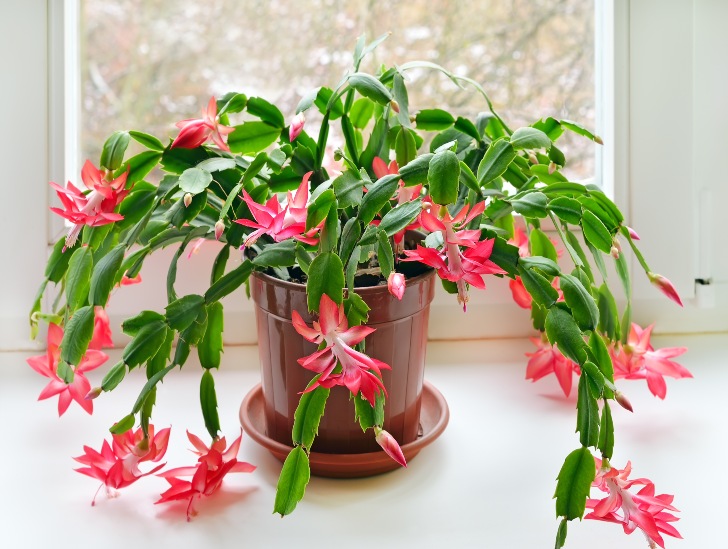
Christmas cactus near the window.
Christmas Cacti bloom in winter, they also don’t love freezing temperatures.

The idea is, if you grow your Christmas cactus outdoors, you need to take it indoors when the temperatures are extreme to avoid doing damage control. 

To encourage the blooming and healthy growth of your plant, make sure you consider repotting. You can re-pot any time between 1 and 3 years. Sometimes, you’ll notice that your cacti roots are poking their way out of the drainage holes. This is a clear indication you need to re-pot. 

All in all, proper care should be taken to all cacti species because they are more likely to have damages in these extreme weather conditions. The above tips should help your cactus stay safe. 

Related Questions

How can I cold protect my cactus? Cactus need to be protected from the freezing winter temperatures. If your cactus is in container plants, you can quickly bring them inside your house to protect it from the freezing temperatures outside. Alternatively, for the landscaping plants, you cover them with frost blankets or bedsheets during late afternoons. Make sure the covers don’t touch the plants. You can look for support frameworks. You can remove the coverings the next day when the temperatures rise above freezing point. 

Can cactus survive with artificial light indoors? When you decide to grow your cactus indoors, you need to consider the light aspect. Light may be insufficient, and they may not thrive. Artificial lights act as a substitute for sunlight. They grow well with no issues. Make sure you attach your grow lights to a timer so that it’s easier to control the light the cactus receives.  

Why does a cactus turn yellow? There are a few reasons why cactus turn yellow. One, they can be sunburned. If they have been living indoors and are taken under direct sunlight, they will certainly become yellow. Introduce them to direct sunlight gradually to avoid this. The other reason is that they may be infested by pests such as mites. These little animals such the cacti tissues. Lastly, it could be because of root rot. Rotting is one of the significant effects of overwatering your cactus. Avoid overwatering; you’d preferably underwater than overwater. 

Cactus Care: How to Grow Healthy Cactus Indoors?

Are you looking to spruce up your indoor space? Growing cacti at your home should be among your top considerations, and here’s why:

  • Cacti have some of the most beautiful blooms and come in different shapes and sizes, offering you plenty of options. 
  • Unlike most indoor plants, these plants need minimal care. 

When growing cacti, the first thing that you have to bear in mind is that there are two varieties of indoor cactus. Each cacti variety needs its own set of care techniques to make it thrive. The two varieties are:

  • Desert cactus
  • Forest cactus

Desert cacti are characterized by spines and can survive harsh desert conditions. Examples here include the saguaro and Opuntia. 

Forest cactus is also known as jungle or tropical cactus. Unlike their desert counterparts, these cacti do not have spines and are not resilient enough to withstand hostile desert environments. 

Examples of forest cacti are thanksgiving cacti (Schlumbergera truncata), Christmas cacti ((Schlumbergera x buckleyi) and Easter cacti (Hatiora gaertneri). 

As much as these two varieties fall under cactus, they both need different conditions to survive.

How to grow healthy cactus At your home

When growing either desert or forest cactus, you’ll either have to choose between the following options:

  • Growing your cactus from a seed
  • Buying a seedling from your local cactus store
  • Propagating your cactus from a pup
  • Root division

The seed method

You can also choose to buy your cactus seeds from a store or harvest them from an existing cactus fruit. While acquiring cactus seed from an existing plant is cheaper, these might require little more work than store-bought ones. 

Store-bought seeds are already pre-packaged. If you want to acquire your own seeds from a plant, look for brightly colored-offshoots on fruits that usually bear flowers. 

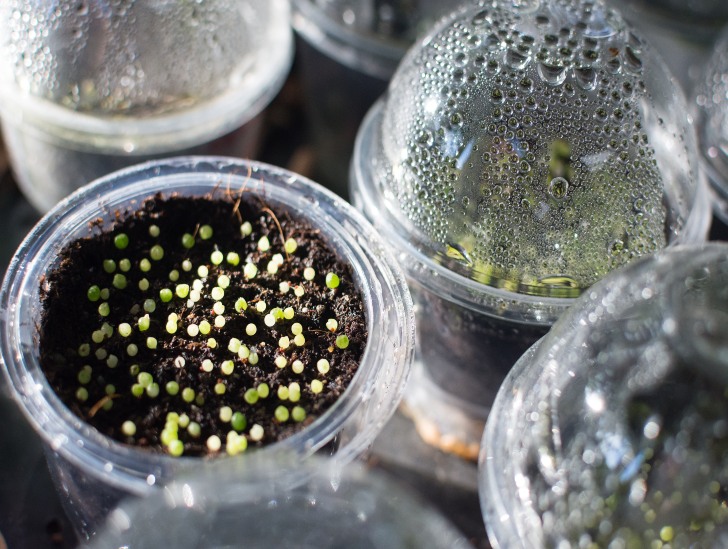
A cactus seedling cups.
Ensure that the soil stays moist, but shouldn’t stand for too long as this will promote rotting.

Remove your pods from the fruit when they are still a little damp to touch. Next, slice off the top and sides of your pods carefully using a knife to expose the seeds.  

Next, scrape off the seed from the pods using the blunt side of the knife. Finally, plant the seed in a shallow container, and ensure that you plant them on top, rather than burying them. 

Ensure that your soil is high drainage, and doesn’t allow the water to stand for long. Use a plastic wrap to cover the top of your container and place your container on a window. If the sun’s too hot, only expose them for a few hours, then put them under shade for the rest of the day.

Seedling Method

There are plenty of plant stores that sell cactus seedlings. 

If you choose to go this route, avoid planting your seedling underneath the soil and instead plant it a little below the soil surface. 

Always water your seedlings from underneath. Watering your seedling from underneath requires you to place the seed flat on a tray. Next, flood the tray with water, helping your seed soak up water from the bottom.

Ensure that the soil stays moist, but shouldn’t stand for too long as this will promote rotting. The number one reason why water would stand for too long is due to poor soil choice. We’ll discuss soil how to mix your cactus soil in a bit. 

Lighting is very important for seedlings. A window sill will do, but be careful not to scorch them. Another option is to use artificial lighting.

If you plan to use artificial lighting, be careful to expose them to the light for between 8 to 14 hours.  A simple way to do this is to switch the light on when you wake up and switch them off a night before going to bed. 

During this period, look out for the following signs, as they will indicate that your seedling is in trouble

  • Black spots which indicate a fungi
  • Algae growth from overwatering
  • Thinning seedlings as a result of inadequate lighting
different kinds of small cactus on different pots.
Once your seedlings start to germinate, transfer them to a bigger container to encourage growth

The Cutting Method

Propagating your cactus from a cutting is perhaps the easiest and most common way to grow cactus. All you need to do is cut off the stem of an existing plant. 

Next, place your cutting under then sun, allowing it to form a callous. Soon your cutting will start rooting, eventually growing into cactus. Be careful not to water your plant until you see roots because the cutting will rot. 

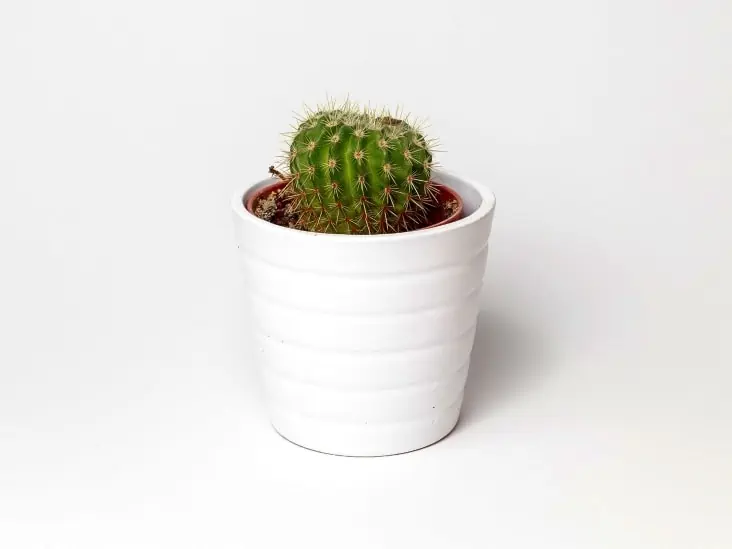
A small cactus on a pot.
All you need to do is cut off the stem of an existing plant. 

Root Division

Root division is yet another easy way to grow your cactus. Ensure that you divide the root as gently as possible to limit trauma.

The best time to carry out the division is during winter. During winter, the plants are dormant; hence there is less interference with their growth.  

 Growing forest cactus indoors

Soil mix

This cactus grows well on rocks (lithophytic) and trees (epiphytic). It’s crucial to note that although the plants grow on trees, they are not parasitic. Therefore, the plants do not acquire their nutrients from the trees and only use the trees as a means of support.

In their forest or tropical habitats, these plants get their nutrients from dead leaves and branches. The leaves often fall in crevices and provide plenty of vitamins and minerals suitable for cactus survival. 

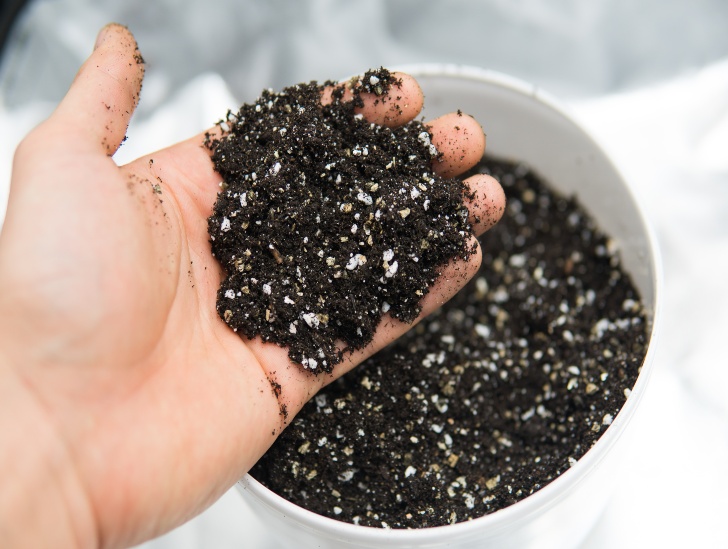
Soil with Perlite.
Your soil needs to easily drain water, to prevent waterlogging.

The soil type usually isn’t a big issue for growing most plants. However, when it comes to jungle cactus, it certainly helps to select the right soil if you want to successfully grow the plants indoors. 

If you want your forest cactus to survive indoors, ensure that your soil mimics the natural environment in which these plants thrive as much as possible.  

When choosing the soil, the first thing that you have to focus on is drainage. Your soil needs to easily drain water, to prevent waterlogging, which might make your plant rot and eventually die. 

Look for a container that is large enough for you to mix your ingredients. An example of suitable containers is a wheelbarrow. 

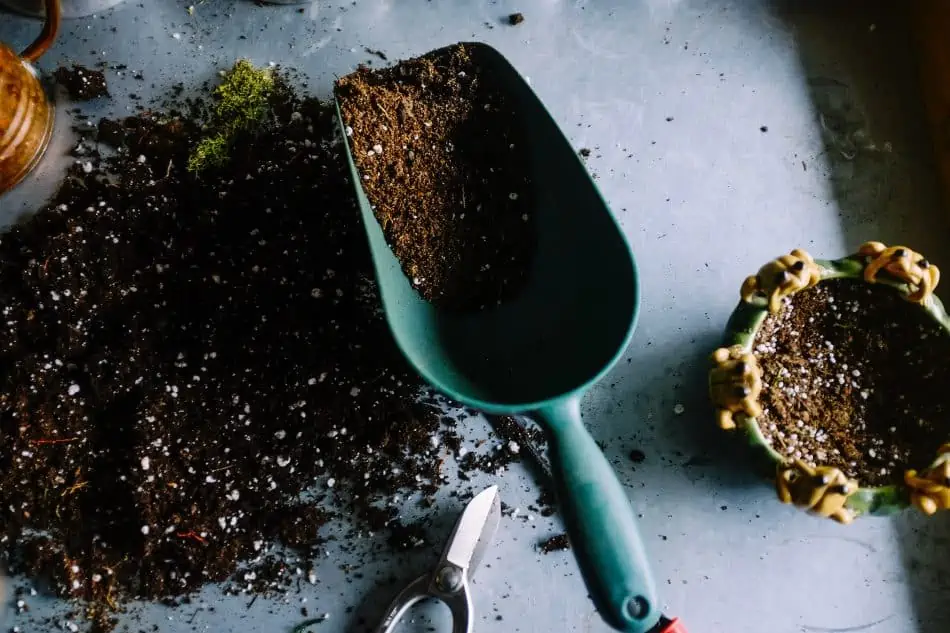
For consistency, use a measuring device to ensure that you get the right proportions. Use a small shovel to mix all your ingredients. 

A small gravel soil.
ensure that your soil mimics the natural environment in which these plants thrive as much as possible

To create a suitable soil mixture to grow your forest cactus, mix the following ingredients;

Potting soil

Avoid soil that has too much forest products such as wood chips or bark because they eventually rot. The products also don’t mix well with other ingredients. 

Pumice

Pumice comprises of large volcanic rocks that are light in weight.  This ingredient is excellent for drainage as it’s porous and airy and allows water to quickly pass through.  If pumice is not available in your area, substitute it with perlite, turface or aquatic plant soil as these have similar features.

Coir

Coir is a fibrous coarse material that comes from shredded coconut. Although the material is organic, it does not compose easily.

Coir is excellent for holding moisture and doesn’t compact after rewetting. Coir might need a bit of loosening before adding it to your soil. Rub it on a mesh to break it into smaller pieces. 

Peat

Peat is a great substitute for coir. Please bear in mind that most potting soils already contain peat, so ensure that you don’t put too much of it in your soil mixture. 

Orchid bark

Orchid bark serves the purpose of aerating your soil. The bark also holds moisture for your soil so that it doesn’t dry out too quickly.  

Oakleaf mold

Oakleaf mold provides nutrients for your plants, just like in the forest or jungle.

The following proportions should work well for your potted cacti;

Mix 25% or potting soil with 25% orchid bark

Next, add 25% peat

Lastly, add 5 coarse gravel, then pearlite

You can play around with the ingredients to find a mixture that works well for your plants. 

It’s crucial to note that orchid bark eventually disintegrates turns into soil. Remember that your potted plant needs only 25% of soil. When the soil starts becoming more than the other ingredients, it will interfere with drainage, and your plants might start rotting.

Therefore, repot your plant every two to three years using a fresh mixture. A good time to repot your plants is also after they bloom. After blooming, your plant will start growing again, and this will require fresh soil, full of nutrients, has aeration and great drainage.  

Watering

Generally, you should water your jungle cactus once a week. Remember that your cactus is used to a humid jungle/forest environment so regular watering is a necessity. 

Always water jungle cactus more during the summer and spring, and taper off during the winter. Twice a week should work well during the hot months and every other week during the cold months. 

A water can with a plant hanging.
Water regularly but be careful not to underwater or overwater

The best indicator that your plants need more water is to check your soil’s top 2 inches. Another indicator of whether your plant needs watering is to check the stem segments. If the segments look dry and shriveled and the soil is dry too, it’s time to water your plant. 

However, if your soil isn’t dry but the stem segments look shriveled, do not water your plant yet. Watering your plant when the soil is too damp will cause your plant to start turning yellow, and eventually rot.  

Lighting

Lighting is essential for the stems, as it makes them healthy. Optimum lighting is also essential for blooming. 

Unlike desert cacti that can take in plenty of direct sunlight, too much light can damage forest cactus. These plants will do well in natural light. However, be careful when it comes to direct sunlight, and ensure they get not more than 5 hours per day. 

A good way to ensure that your plants get sufficient light is to place it in the sun during morning hours, then moving it away when it starts getting hot. 

A cactus outside exposed to sunlight.
Be keen on the climate in your area to see the best lighting needs for your plant.

Generally, the sun starts getting hotter from midday. However, sometimes climate patterns change. The weather might be hot during morning hours and cold in the afternoon. Therefore, be keen on the climate in your area to see the best lighting needs for your plant.

Temperatures

During the warmer seasons like summer, these plants will do well in temperatures of between 55 to 75 degrees. In winter, temperatures of between, 55 and 60 degrees will do. 

Fertilizers

It’s paramount to use a cactus fertilizer. Start fertilizing during summer and spring, when the plants are out of their dormant phase and are growing in size and height. 

Growing desert cactus

Soil mix

It might appear that desert cactus can only grow in sandy soil, but this is not the case. Even desert cactus needs nutrient-rich soil, which also has good drainage and aeration.

Therefore, it’s paramount to mix cactus-friendly ingredients, all of which collectively create the perfect mix for cactus growth. Here, we’ll use most of the jungle ingredients mix, with a few additions like sand and gravel. Some ingredients that are suitable for a perfect cactus mix soil are;

  • Potting soil
  • Pumice
  • Pearlite
  • Peat 
  • Coir
  • Sand
  • Gravel
  • Rocks

Remember that there’s no one size fits all when mixing the ingredients. Experiment with different proportions to find one that works best for you. 

All you have to focus on when finding a good soil mix is aeration, drainage, easy re-wetting, and nutrients. To test the soil, pour some water through it to see how fast it goes through the soil.

If water sits at the top, this soil might retain too much water and harm your plant. If your soil quickly passes water, this is the ideal candidate. 

Watering

Although desert cacti are the more resilient of the two groups, they still need regular watering. Most people assume that desert cacti don’t need water because it primarily grows in the desert.

What people don’t know is that the cactus is only able to survive in deserts where it hardly rains, because of its ability to store water. In addition, cactus also has other adaptations that limit water loss such as stomata only opening at night, lengthy dormant periods and lack of true leaves.

A water can beside cactuses.
You might need to water more during the summer because temperatures are high.

Check the soil every two weeks to assess for dryness. The top two inches should be dry before your water; otherwise, you might be overwatering. 

You might need to water more during the summer because temperatures are high. Weekly or bi-weekly watering is sufficient during the hot months. During winter, it might take longer for the soil to dry up so you might need to water once or twice a month. 

Temperature 

During the summer, spring, and autumn, this plant thrives in temperatures of between 70 and 85 degrees. During winter, the plants can withstand temperatures of between 50 to 60 degrees. 

Lighting

Desert cactus loves light. Keep this plant in an area where it can bask in the sunlight. However, you must be careful not to let the sunlight scorch your plants. 

If you live in an area where it’s impossible for your plants to get enough sunlight, try using fluorescent tubes. Ensure that your tubes are full-spectrum, to ensure that your desert cacti get lighting that is similar to that of natural sunlight.

How do you know whether your plants are getting enough lighting?

If your lighting is insufficient, the plants will start to exhibit a stretchy thin look. 

Plant near the window exposed to sunlight.
Keep this plant in an area where it can bask in the sunlight. However, you must be careful not to let the sunlight scorch your plants

Fertilizing

Look for a fertilizer that is specific for cactus. This will give the plant the right nutrients requirements, unlike general fertilizers.

It’s crucial to re-pot both desert and forest cacti when they start growing too big. Pull out your plant gently, being careful not to shake off too much soil, leaving the root ball with sufficient amounts of soil.

Mix your soil in the right proportions depending on your cactus category. Next, plant your cactus in a bigger container.  

What to do when things go wrong

As much as cactus requires little attention from you, it’s not completely self-sufficient. If your plant is starting to look unhealthy, it’s possible to revive it once you identify and fix the problem. 

Common cactus problems and how to fix them

Shriveled or limp cactus

Inadequate watering makes your plant looks shriveled while overwatering gives your plant an abnormal limp look. Depending on the weather you need to water your plants once every week (dry areas/summer) or twice a month (wet or humid climate/ or during winter). 

Overwatering can cause your plant’s roots to rot. If you want to check your roots’ health, gently pull out your plant from the soil. Healthy roots should be white, while rotting roots should be either black, brown or look mushy. 

If left unchecked the rot could spread to other parts of your plant, killing your plant. Save your plant from root rot by scrapping off the rot. To ensure that your plant does not get a re-infection, repot it with fresh soil. 

Sunscald

Too much sunlight is bad for your plant. If your potting container heats up too fast or your plant is on a window sill, this could amplify the amount of heat your plant receives, leading to burns.

The burns could encourage the growth of fungi such as Colletotrichum (Gloeosporium). 

Initially, your plant will have small spots that will later turn brownish. Later, your plant will produce pink spores that will spread to other parts of your plant, destroying it. You can avert this problem by applying a cacti fungicide. Thereafter, avoid subjecting your plants to extreme heat and sunlight.

Insect infestation

Mealybugs can infest your cacti, and often spread fast to other plants in your home within a short period. Since the bugs sap nutrients of your plant, it may have stunted growth, which can be frustrating.

A simple way to get rid of the bugs is to spray them with water from a hose.  You can also visit your local cacti seller for a mealybug insecticide.

If you plan to buy a potted plant from your local cacti shop, inspect it for bugs. Sometimes, bugs start growing in the shops, and your seller can treat your plant before you go home, or give you a bug-free one.  

In conclusion

When growing cactus, it’s paramount to create an environment that will favor your plants. Set up the right soil, lighting, and temperature right from the start, and you will have healthy plants.  If you’re a first-time plant owner, things could go wrong, but fortunately, there are a few simple things that you can do to correct the problems.

Ultimate Guide: How to Get Your Cactus to Flower?

Getting a cactus to bloom is no easy feat. It can take a lot of time, effort, and, sometimes, feeling like you want to pull your hair out because it seems like it just won’t bloom no matter what you do. Trust me, I’ve been there.

But after several attempts to get my cacti to bloom, I have finally figured it out! And now I want to help you avoid those feelings of pulling your hair out with this ultimate guide on getting your cactus to flower that tells you everything you need to know from shopping and caring for your blossoming cactus.

The Basics

It’s a well-known fact that it can be hard to get an indoor cactus to bloom. This is mostly due to the fact that the cactus isn’t in its native, ideal environment.

Cacti are meant to thrive in desert environments with intense sun and heat and with very little water, so that is naturally the conditions cacti would bloom under.

Our homes are usually not that hot or dry however, there are different things we can do to help a cactus to begin to bloom. Let’s start with the basics of cactus blooms.

What kinds of cacti bloom?

Cacti are a flowering plant, so any cactus is capable of blooming if it is mature and healthy. But a lot of things have to be in place in order for a mature cactus to bloom. The kinds of cacti are known for their ability to easily bloom:

  • Garnet or (Dwarf cacti)
  • Pincushion cactus
  • Spiny cacti
  • Christmas cactus (Zygocactus)
  • Easter cactus (Rhipsalidopsis)
  • Bolivian (Lobivia cacti)
  • Hedgehog cactus varieties
  • Notocactus
A flowering cactus.
Some kinds of cacti are known for their ability to easily bloom

What does cactus blooms depend on?

Age, care and dormancy. As mentioned before, it can take a long time for a cactus to blooms. Sometimes, it can even take up to 30 years for a cactus to mature!

Although, even a mature cactus won’t bloom unless it gets the proper care and lives in the right environment. And, even if it has all these things, cacti experience a dormant period during the winter that will keep it from blooming.

How can I make sure my cactus has all these things?

For starters, when shopping for a cactus, buy one that is already blooming. That way, you know that it is mature and capable of blooming. Then, follow all the basic care requirements cacti have, such as light and water, and make sure to always stay vigilant and cater your care to the different seasons.

A cholla cactus on the pot.
Make sure to follow all the basic care requirements cacti have, such as light and water.

How long does it take a cactus to bloom?

As mentioned before, it can take up to 30 years for a cactus to bloom, so make sure you buy one that already has a bloom on it or that has bloomed in the past.

However, just because it has bloomed once doesn’t mean it will bloom again in a certain period of time. The time it takes a cactus to bloom depends on the level of care you give it and the quality of the environment it is in.

Cactus Care

Light

Cacti need tons of light, just as if they were still in the desert. The best place to put your cactus in your home is a south-facing window, where it will get the most direct sunlight. If you choose to put your cactus in a different location, make sure it can still get at least 6 hours of direct sunlight.

You also have the option of using an artificial grow light to help your cactus along if you don’t think it is getting enough light. An artificial grow light might also become very helpful during the winter.

While a cactus is a very low maintenance plant, it doesn’t mean you can just sit it down and forget about it. You should be checking your cactus frequently, especially after you first introduce to its new home, so you can ensure it is acclimating properly.

Cactus exposed to sunlight.
Cacti need tons of light, just as if they were still in the desert

Your cactus will give you signs if something is not right, especially if it is getting too little or too much light. If your cactus is not getting enough light, you might notice some slight discoloration on its leaves or stems or even the cactus stretching to reach the sunlight. If this happens, just slowly move it further into the sunlight or supplement it with an artificial grow light when the sunlight disappears.

It’s also possible for your cactus to receive too much direct sunlight. Too much sunlight can cause your cactus to burn. If this happens, you will notice sunburn across the skin of the cactus as dark, rough, and maybe even calloused areas.

Too much sun can also cause a cactus to become discolored and faded. If your cactus is receiving too much sunlight, simply move it away from the window where the sunlight is less direct and less intense.

Water

Keeping an eye on your cactus is also important when it comes to water. Cacti don’t need much water at all. Being from the desert, they store water in their stems and leaves for those long, hot dry periods they are so used to in the desert.

To know when it is time to water your cactus, feel the top of the soil. If it is dry, wet the plant thoroughly. If it is still damp, you can wait a while before watering it.

Generally speaking, your cactus shouldn’t need watering more than once a week.

The main problem cactus owners run into is with water. Even if you only water your cactus once a week, or less, if your cactus does not have enough drainage, the roots will sit in water and be prone to root rot, doing permanent damage to your plant. If this begins to happen, you will notice the leaves and stems of your cactus becoming soft and limp.

A small cactus and a water container beside,
Be sure to use specialty cactus potting soil instead of regular potting soil.

To avoid root rot, not only should you avoid overwatering your cactus, but you should also take certain precautions when you go to pot your cactus.

Choose a pot for your cactus that has a drainage hole and line the bottom of the pot with a layer of pebbles for the best drainage possible.

Also, be sure to use specialty cactus potting soil instead of regular potting soil because regular potting soil holds too much water. Using it could lead to root rot, as well.

Fertilizer

Since cacti are hearty plants, they don’t really require the use of fertilizer. With proper water and light, all cacti will thrive. However, if you want to give your cactus an extra boost and make sure it has valuable nutrients for blooming, giving it a dose of fertilizer wouldn’t hurt.

Choose a specialty cactus fertilizer or a regular fertilizer that is lower in nitrogen and higher in phosphorous. If you fertilize your cactus, do it doing the growing season, spring and summer. You will only need to fertilize your cactus once or twice a year.

Just remember that more fertilizer does not equal more or faster blooms. Fertilizer just ensures your cactus is getting enough of the food and nutrients it needs.

Blooming!! What Now?

Once you have gotten your cactus to bloom, the work isn’t over! Take care of a flowering cactus the way you took care of it before it began to bloom. The blooms mean you are doing something right and the cactus is thriving!

Don’t alter your care just because you see blooms. Continue to water it on your regular schedule and do not move it to a different location. A cactus that is in bloom is no different than the cactus before it bloomed.

A top view of flowering cactus.
Take care of a flowering cactus the way you took care of it before it began to bloom

About the Blooms

Cacti bloom by producing flowers anywhere from the leaves or areole, or along the ribs or warts of the cactus. The flowers on a cactus are just like any other flower with petals, stigmas, stamens, and all other parts of a flower. In fact, it can even be pollinated by or used for pollination by bees and other insects.

What are cactus blooms like?

Different cacti produce different kinds of blooms. Some blooms are small, others are large or brightly colored. The type of blooms you will see depends on the cactus you buy.

How long do the blooms last?

The length of the blooming time also depends on the type of cactus you buy. Some blooms will be gone within 24 hours. Others could last 1-2 weeks.

When does a cactus bloom?

Different cacti bloom at different times of the year. Some cacti bloom in the spring after resting up all winter long. Others bloom in the heat of summer after they have stored up a significant amount of water.

A flowering golden barrel cactus.
Different cacti bloom at different times of the year.

Some cacti, such as the holiday cacti, bloom during the holidays they are named for. And a few cacti even bloom at night.

The Dormant Period

Cacti will naturally experience a dormant period starting as early as the fall and lasting throughout the winter as they are expecting a drop in temperature and daylight hours.

During this time, their growth will slow down or even halt for the season. The dormant period is also a time where your cactus won’t bloom (unless it’s a Christmas cactus).

Your cactus will need less light and even less water during the winter. This may happen naturally in the area they are located, or you could move the plant to an area where it only gets three to four hours of sunlight a day. The soil will dry out even slower in the winter meaning that it will take longer between necessary waterings.

This only means to stay extra vigilant to ensure not to let water stand. As long as you took the necessary precautions as far as soil and drainage, and do not water the plant until the soil is completely dry, you should not run into any issues like root rot.

Just make sure to remember to slowly transition the cactus back to its regular location and watering frequency when things start to warm up in the spring.

Troubleshooting

Even after you’ve gone through all these steps, you may find that your cactus still hasn’t bloom If you find yourself asking, “why is my cactus not flowering?” then it’s time to troubleshoot.

Every cactus is different and unique, so just one change that makes one cactus bloom might not make your cactus bloom.

Cactus exposed on the sunlight.
Try playing with the lighting it is in.

When you try to troubleshoot your cactus blooms, it’s important to try one thing at a time so you know exactly what works and what doesn’t. It may take some time, but it will be well worth it when you see those beautiful blooms!

Light

Every cactus needs plenty of light, but different kinds of cacti have different preferences. If your cactus is thriving in the light that it is in but still not blooming, try playing with the lighting it is in.

Put it in a window with even more sun or move the plant a few feet away from the window. Or, try using an artificial grow light. Try turning the pot regularly for even growth. If you find that light is not the problem, then move on to the next area.

Water

Just like light, water is essential to a happy, healthy cactus, but just a little. The first place to start when troubleshooting the watering of your cactus is to evaluate how frequent you water it. Are you watering your cactus on a schedule? Or are you waiting until the cactus tells you it is ready for water? Make sure that you test the soil before you water it.

If you water it when the soil is dry but it still isn’t blooming, try testing the soil deeper in the pot. It may still be damp deep down. To test this, stick a pencil in the side of the pot. If it comes out clean, it is completely dry and you can water it. If dirt sticks to the pencil, it is too damp so withhold from watering it until later.

A person flowering the plant.
To know when it is time to water your cactus, feel the top of the soil

Time of Year

Always keep the time of year in mind. If it is fall or winter, you are more than likely not going to see a bloom on your cactus any time soon (unless it is a Christmas cactus). Be patient and wait until the prime growing season when it starts in the spring.

You will have a better chance to see it bloom in the prime growing season than any other season, especially compared to its dormant period. Monitor it closely to see the small buds starting to pop up!

The important thing to remember when it comes to encouraging blooms on your cactus is that your cactus needs to be in tip-top shape in order to bloom.

If it is not getting the proper amounts of water and sun, you will be less likely to see it bloom. As long as your cactus is happy and thriving, it will eventually bloom. Monitor it closely to know what it needs. Also, give it plenty of time and patience!
Bottom Line

There is no special technique that gets your cactus to bloom. Just care for it properly all year round if you want to see it bloom during the prime growing season.

Since all cacti have the potential to bloom, it doesn’t matter what kind you have as long as you have seen a bloom on it before. That way, you know it’s mature enough to bloom.

With the perfect amount of sun and water, your cactus will have everything it needs to bloom when it is ready. Some other things that can help it along include fertilizer and drainage.

Play around with all the different elements of caring for a cactus to find the right formula for your particular cactus. Every cactus is different, so don’t get discouraged if something works for someone else’s cactus but not your own.

It will take a lot of experimentation and daily monitoring for you to find what works for you.

Most importantly, don’t forget, you can do it! Getting a cactus to bloom may be difficult and take a lot of time, but it is not impossible! You can do anything you set your mind to and if you want to see your cactus bloom, it will happen. When you are dedicated to providing great care for your cactus, it will happen. Just like everything else, a little time and patience are all that you need.

Are Cactus Spines Poisonous?

Disclaimer: The author is not a medical doctor or veterinarian. The information presented is purely to share our experience and for entertainment purposes. As always, check with a doctor and/or veterinarian before making any health or nutrition decisions and consult with a doctor and/or veterinarian regarding any question or problem that you have. The author and blog disclaim liability for any damage, mishap, or injury that may occur from engaging in any activities or ideas from this site.

Cactus plant is so appealing to us because it’s stress-free when it comes to maintenance, not forgetting its beautiful blooms. As much as we love cactus for home decor, it is important to know whether the spines are poisonous or not.  

So, are cactus spines poisonous? Cactus spines are not poisonous for humans or animals. However, a spine puncture can lodge deep into the skin and even get to the collagen and muscles. It’s also crucial to note that a spine can also have bacteria and fungi on its surface that may cause infections in your body. 

It’s paramount to consider what plants we bring into our homes as some might be detrimental to our health. Continue reading to see what to do in case you get a spine injury. 

Purposes of Spines on Cactus

  • Protection against predators

Animals like the desert tortoise, wild pigs, or bighorn sheep use the plant for food. 

This plant’s spines do an excellent job protecting itself using the needles. The thorns pierce the skin upon touch and some for instances from the Cholla variety can even fly to the face and cause painful injuries.

  • Providing shade to prevent water evaporation

The cactus plant needs all the shade it can get from the hot desert sun. One cactus plant may have thousands of spines, and these collectively work together to shield the plant from the hot sun that may promote moisture loss.

  • Water collection in foggy areas

The cactus plant can take advantage of unlikely situations to quench its thirst. In foggy areas, the plant can collect water from the air using its spines. When the fog settles on the spikes, it later liquefies and falls on the ground below, and the roots absorb the water for conservation.

  • Air trapping

Did you know that airflow around plants contributes to moisture loss? Water loss via airflow is worse in the desert where there are strong desert winds. With no sufficient plant cover to break the magnitude in which the winds hit the plants, there is bound to be a massive loss of water.

Thanks, to the spines, moisture loss is minimal for the cactus plant. The needles create a buffer that restricts airflow around the plant, saving the plant from losing a lot of water.

What do you do when you get pierced by a spine?

A puppet hand holding the cactus.
It’s possible to remove the cactus spine from your body safely

You’re neither a predator, nor are you a cactus smuggler, but a cactus spine can easily injure you. The following are scenarios that might leave you with spine injuries;

  • Outdoor activities like hiking, horse riding or biking in an area that has cactus
  • Caring for either an indoor or outdoor cactus plant
  • Trying to rescue a loved one or pet from the snare of a cactus plant

The scenarios regarding how a spine could end up injuring you are endless. It’s therefore vital to learn how to safely remove a thorn from your body safely, to avoid worsening the situation. 

According to Science Daily, punctures from the barbed variety of cactus such as the “jumping” Chollas can easily puncture deep and become challenging to remove. The University of Illinois at Urbana Champaign embarked on a study to find out how exactly the spines are so effective at causing injury. 

The research involved comparing several cacti such as the prickly bear, saguaro, Cholla, barrel cactus, and rose cactus. The scientist tested the effect of the spines upon pricking both chicken and pig flesh.

The results showed the following:

  • After an attempt to remove the spines from chicken flesh, the spine had a coating of chicken flesh on it, meaning that it came off with torn tissue.
  • On removing the needle from the pig meat, only a portion of the spine came out, meaning that only a part of the spine broke off, and the remaining part was buried deep within the pig’s flesh.

Such gory findings, right?

Cactus spines do not contain any poison that can kill you upon perforating your skin. However, the thorns are painful and can cause infections that might turn septic, if you don’t take care of the problem the right way.

It’s also possible for spines to leave pustules that could stay on your skin for months. Pustules can leave black marks that comprise of dead skin, and the only way to get rid of these is via surgical removal. 

A cholla cactus.
It’s possible to remove the cactus spine from your body safely if you do it the right way.

In worse case scenarios, the wound contract a staph bacterial infection that may be hard to treat even with antibiotics. It’s also possible for a person to get gangrene that may result in amputations. 

The good news is that it’s possible to remove the cactus spine from your body safely if you do it the right way. The natural reaction to do is to either try to pull out the sine with your bare hands or teeth.

Please do not try to use your hands because the spines will transfer from whatever area of the body to your hands. Trying to use your teeth is even worse because the painful spikes could lodge in your tongue or lips.

There’s no one size fits all, in spine removal. However, the following pointers may help you remove cactus in a safe manner that won’t cause more damage. 

Here’s what to do if you get pierced by a spine accidentally

A bandaid.
To remove the spines use small tweezers

If you have an entire stem attached to the needles on your body, start by cutting off the bigger chunks using a pair of scissors or pliers. Leave about half an inch of the spine on your skin for the next step.

To remove the remaining bits that may still be stuck under your skin, use small tweezers. Unlike that large tweezers, the small ones are more effective at removing little bits of spines lodged in your skin. 

Some cacti like the Cholla release dozens of spines in one area. If you have plenty of these needles, start by running the affected part of the body under running water. The water softens the thorns, making them easier to remove. 

Another effective way to remove spines is to use tape. Put the sticky side of your tape on top of the area. Gently pull out the tape, and it should come off with the spines. 

Some spines are translucent, and it might be hard to know whether there’s still any left stuck under your skin. To test whether you’ve managed to pull the whole spine out, try touching the area. If it’s still sensitive to touch, the chances are that there are bits still stuck in your skin tissue.

If you can’t see any spines and your skin is still sensitive, use a magnifying glass to locate the exact position of the spine. Trying to, dig around your skin trying to remove thorns that you can’t see with the naked eye might be tiresome, and might also create more harm than good. 

How to remove prickly pears spines?

A prickly pear cactus with fruit.
Tiny needles may remain if the handler doesn’t properly clean the fruit

Some cactus species such as the Opuntia can be a source of food. The cactus produces the prickly pear, also known as the tuna fruit. The fruit is common for use in appetizers, salads, soups, vegetable dishes, desserts, jelly, candy or entrees. 

During preparation, the preparer has to clean the fruit to remove all spines properly. However, tiny needles may remain if the handler doesn’t properly clean the fruit, and they may end up getting stuck in the lips, throat, or tongue.

To remove these spines, chew on a piece of bread, and swallow it. Your saliva will moisten the bread, and make it soft enough to pull out the needle as you swallow it. The bread trick has worked countless times for Raul Puente-Martinez, a curator and research botanist in a Phoenix desert botanical garden. 

If the spines are impossible to remove using tweezers, you might need to go to your local hospital. Needles in your legs can leave you unable to walk for days and might require a doctor’s attention. If there’s already an infection resulting from the injuries, the doctor might give you an antibiotic to help with healing. 

A dog sniffing the cactus.
As for pets, please leave the spine removal for veterinarians.

It’s common for people to use a blunt knife to scrape off the spines. However, this method might break the needles halfway, and leave bits in your skin. The broken spines may also cause fresh punctures on your skin. 

As for pets, please leave the spine removal for veterinarians. Unlike you who can tell exactly where the pain is, a pet can’t speak up, and it might be too late before you realize the exact locations of spines. 

Related Questions

What is a normal reaction to expect after a spine puncture? Expect skin irritation, reddening, or rashes. Rush to the emergency room immediately if you start experiencing severe reactions like severe swelling, difficulty in breathing, or swallowing. Bear in mind that some spines might be carrying dangerous pathogens like bacteria and fungi which might be causing the reactions. It’s, therefore, best for a doctor to examine you and prescribe the right medication.  

What are the most poisonous cactus species on earth? There are no poisonous cactus species that would cause death, anywhere on earth. There was a debate some years back about a Mexican cactus plant whose punctures resulted in wounds that would never heal. Scientists later established that the septic wounds arose from bacteria and fungi on spines.

Are Cactus Plants Poisonous to Dogs? Things to Know about Cactus and Dogs

Disclaimer: The author is not a medical doctor or veterinarian. The information presented is purely to share our experience and for entertainment purposes. As always, check with a doctor and/or veterinarian before making any health or nutrition decisions and consult with a doctor and/or veterinarian regarding any question or problem that you have. The author and blog disclaim liability for any damage, mishap, or injury that may occur from engaging in any activities or ideas from this site.

We can’t deny the fact that dogs are mischievous animals who like to sniff, explore, and eat everything around them. This habit can often get them into trouble and cause severe health issues if they consume something that they shouldn’t have. If you love to grow indoor plants such as cacti, then you may be wondering whether it is poisonous to your dog.

So, is a cactus plant poisonous to your dog? The truth is that a cactus plant isn’t poisonous to your dog, and it is perfectly fine to have this exotic plant around your pet. Nonetheless, you need to make sure that your dog doesn’t eat the cactus plant since you don’t want to take such risks.

We understand your concerns, and we are here to reveal everything that you need to know about the cactus plant and dogs so that you can take appropriate measures to protect your pet from danger.

Dogs are naturally curious and friendly animals, and that means that they can easily smell and try to taste every plant that you grow inside your house. Thus, it is your responsibility to ensure that you don’t bring anything toxic into your home that could harm your dog.

If you do bring anything toxic into your house, you need to ensure that it is out of reach of your pet. So, is cactus poisonous to dogs? Read on to find out critical facts about the cactus plant and dogs.

Why Do Dogs Love to Eat Cactus?

Before we dive into understanding whether a cactus plant is poisonous to your dog or not, you need to know why your canine friend loves to eat cacti.

First, all dogs are naturally curious, and they love to taste everything that comes their way. This is the primary reason why you will most likely see your pet stuffing his/her mouth with some of the weirdest things in your home.

In fact, science tells us that dogs love to explore with their mouths and if your little friend always seems to find something to chew on, it only means that he/she is a big explorer and there is nothing that you can do about it.

Furthermore, dogs are omnivores, and they often enjoy eating plants. They love eating plants so that they can get roughage, which is not only a great source of vitamins but also helps your dog have better bowel movements and pass digested food much easier through their intestines.

A dog looking at the food.
Dogs love to explore with their mouths

Moreover, dogs are natural scavengers, and when you see your little friend fighting for that piece of pizza from garbage even after you just fed him with some high-quality food, it shouldn’t surprise you at all. It is only that nature is kicking in, and there is nothing the dog can do about it.

Nature and your dog’s instincts also kick in for another reason- the “feast or famine” scenario. The explanation behind this situation is quite simple and straightforward.

Dogs used to go for several days, weeks, or even months without food while living in the wilderness, and those instincts still follow them up to date. This means that your dog will stuff everything that comes his/her way, including your indoor cactus plant out of fear of famine.

Besides that, boredom can be another big reason why your dog decides to eat your cactus.

There are also some medical reasons why your dog may chew everything that they come across, including the cactus plant. 

Parasites are the main culprits and if you suspect that your pet has developed some health issues don’t hesitate to take him/her to the veterinary officer.

Is the Cactus Plant Poisonous to Dogs?

The cactus plant contains a fibrous plant material that can easily cause irritation and stomach problems to your dog leading to vomiting and diarrhea. In addition to that, you may be spraying your cacti with insecticides or adding fertilizer and the chemicals can be dangerous to your dog.

A dog sniffing the cactus.
The sap of the cactus plant can be a potential allergen and can be harmful to dogs that tend to develop allergic reactions.

Furthermore, the sap of the cactus plant can be a potential allergen and can be harmful to dogs that tend to develop allergic reactions.

The spines can also cause severe harm to your pet, and we are sure that this is something that you don’t want to happen.

Therefore, in as much as cacti plants aren’t poisonous to your dog, you still need to keep your pet away from them and not allow it to eat the cactus since it can lead to a wide range of digestive problems.  Remember the fact that it is your responsibility to protect your pet at all times.

Signs of Trouble

While the cactus plant isn’t poisonous to your dog, you should be worried if you discover that your dog has consumed plenty of it.

It is thought that the sap substance released by the cactus plant has acidic properties that may cause mild to moderate effects on your dog.

For that reason, you need to act quickly the moment you realize that your pet has consumed cactus before it causes much harm to it.

The symptoms exhibited may vary greatly depending on your dog’s size, age, and general health.  You will know that your dog is suffering if you see the following signs of distress:

  • Vomiting
  • Nausea
  • Stomach pain
  • Diarrhea

If your dog didn’t eat the cactus but had ocular or dermal contact, you may notice the following signs:

  • Swelling around the eyes
  • Temporary or permanent blindness
  • Ulceration
  • Rashes on the skin accompanied by moderate pain
  • Blisters
  • Burning
  • Irritation to the skin
Different Cactus plant on a pot.
While not life-threatening, cactus spines can cause your dog some discomfort and great pain

What To Do If Your Dog Eats Cactus

The easiest and safest way to protect your little pet from eating cactus or any other harmful succulent plant that you grow inside your house is to keep all the plants out of reach of your dog.

By doing so, you will always be sure that your little friend is fine and there will be nothing to worry about.

In case you are unable to keep the plants out of reach, and your dog finds a way of eating any part of the cactus plant, make sure that you contact your trusted veterinarian as soon as possible.

Even if you are unsure of the type of plant that your dog consumed, but it exhibits signs of distress such as excessive salivation, vomiting, diarrhea, or any other unusual behavior, make sure that you contact your veterinarian for immediate assistance.

The last thing you want to do is to see your dog suffer and all you can do is sit back and watch it suffer in pain.

Removing Cactus Spines from Your Dog

Apart from eating the cactus plant, your pet can also get the spines (needles) of cacti stuck in their mouth, feet, coat, eyes, and ears. While not life-threatening, cactus spines can cause your dog some discomfort and great pain.

In fact, a heavy infestation of cacti spines may require immediate veterinary attention. However, one or two needles can easily be removed at home without any complication.  Make sure that you seek veterinary help if your pet becomes distressed since it might be good to sedate the pet before removing the needles.

Before you start the needle removal process, take some time to evaluate the severity of the infestation.

Green cactus with a ceramic dog beside.
Treat spine wounds with uttermost care since they create an opening for harmful bacteria.

Keep in mind that your dog may try to get rid of the spines with his/her mouth or by kicking her legs. You need to be quite careful since the needles can easily become dislodged and stick into your skin.

Treat a cactus spine as a puncture wound and use the right tools while dislodging it from your dog’s skin. You can start with a relatively coarse comb to get rid of the needles, but you need to be careful since blood may spurt out the entry points. Therefore, it is always good to keep a styptic stick and gauze close to you.

If you think that you can’t do the job on your own, don’t be afraid to get someone to help you.

Once you have used the course comb to remove the loose spines from your dog’s coat, remove the individual needles that remain with a pair of forceps or tweezers by pulling each one of them in the direction of fur growth.

While removing the needles, ensure that you clean off any blood and stop bleeding at the entry point.  If your dog has the spines in different areas of the body, it is advisable that you apply antibiotic ointment in one section of the body before moving on to another area.

Treat spine wounds with uttermost care since they create an opening for harmful bacteria. Before you start the removal process, make sure that you have everything that you will need ready.  If the needles are lodged in the mouth or eyes of your dog, seek veterinary assistance.

Conclusion

Dogs are natural explorers, and they will always want to smell or taste everything around them, including your indoor plants such as cacti. 

These animals love to eat cacti for a wide range of reasons, and it is your responsibility to ensure that the plants are kept out of reach of your pet.

While most cacti plants aren’t poisonous to your pet, the chemical composition of the cacti sap can cause gastrointestinal ailments to your little canine friend.

Signs of cacti ingestion in dogs include vomiting, diarrhea, appetite loss, stomach pain, excessive salivation, and nausea.

If you discover any of these signs and suspect that your pet consumed cacti, make sure that you contact your veterinary officer for immediate assistance. Don’t let your little friend suffer in pain as you watch.

A dog biting a wood.
Dogs are natural explorers, they will always want to smell or taste everything around

Related Questions

Are cactus plants poisonous to cats? Cactus is not poisonous to cats upon ingestion. Unlike most houseplants that contain dangerous compounds that may have adverse effects on your cat, this plant is harmless. However, bear in mind that the plant has spines that may accidentally injure your cat. 

Can A Cactus Grow Indoors? 5 Easy Tips To Do It Right

With the fantastic benefits that a cactus comes with, I recently decided to do a bit of research on the plant. I always wondered if it’s possible to grow cactus indoors. So, I decided to research a bit, and today, I want to share my findings with you. 

So, can a cactus grow indoors? Cactus can grow indoors In fact, all the different varieties such as the forest, desert, and Christmas cactus can do well indoors depending on how you take care of them. How healthy they grow depends on if they are getting enough sunlight and you are not overwatering them. 

How can you grow cactus – a plant adapted for the desert indoors?

The biggest motivator for growing cacti should be because they are easy to maintain as they don’t require a lot of work. Succulents will mostly die during the winter due to too much water. Therefore, there is a need to keep them indoors and without water often. 

1. Growing forest cacti

These types of cacti grow in tropical and subtropical areas globally. Tropical regions are areas such as Mexico, parts of South America, and Caribbean islands. The Christmas cactus belongs to this group.  

For people looking for hanging plants, this is a great option. When they bloom, they produce flowers in lilac or pink colors.

Use these tips to help you grow the forest cacti:

  • Drainage: The pots should have drainage holes in the container and ensure soil drains well for them to grow well. 
  • Light: these cacti love sunlight but not the direct one. During summer, you can move them outside on the porch which is unheated until when the temperatures get below 50 degrees. 
  • When the plant is flowering, water regularly. During the resting period, only water them when the soil is dry on touch. 
  • To encourage branching and flowering, prune in June. You can also use the pruned ones to grow more cacti. To grow more cacti, just cut them and place them in vermiculite as they root easily. 
  • In the case that your cactus is not blooming, it could be because of the temperature of light they are getting. Keep the temperature at 50-55 F then resume watering and move it to a warmer location. 
A cactus plant near the window.
Forest Cacti

2. Growing desert cacti

Desert cacti species are quite a variety. Whether they grow or not depends on how well they are taken care of. Just like the forest cacti, the desert ones require intense light most especially during winter. 

You can follow the pointers below towards having healthy desert cacti:

  • During the active growth period, you need your cacti to stay in temperatures from 70 F and above. You may notice scorching if it had not been hardened before. 
  • The blooming stage is quite sensitive, and you only water them when they start shriveling. When you water, make sure you water well. Note that some species bloom better when they are underpotted. 
  • During the growing season, it’s essential to consider a cacti fertilizer. Use one that’s specially designed for cacti. 
Different kinds of cactus in pot.
Desert Cacti

5 Easy-to-do Tips to growing cactus indoors

Cacti come in different colours ranging from blue, green and grey. How you take care of them is what determines if they are healthy or not. Watch out for the tips below to help you grow cactus indoors. 

1. Use fertilizer

Using an appropriate fertilizer meant for cactus helps in its growth. Use a low-nitrogen but soluble fertilizer. The best time to apply the fertilizer is when you notice new growth. This can be done every 2 months, three times. 

Do not apply fertilizer on a recently potted cactus. Wait until you can see some growth before the application process. 

Not that, there are some species that grow during winter. Unlike fertilizing during summer, for these species, work your schedule to fertilize them during winter. 

2. Choose colors wisely

Naturally, green cacti are more tolerant to environments with low light. If your room is well-lit, you can go for cacti that are pink or purple. However, if your room has low light, go for the green ones. 

Small golden barrel cactus.
Green cacti are more tolerant to environments with low light.

3. Supplementing light

Cacti do well with natural light. However, during winter, there’s not much light. Glowlights can act as a supplement for the natural light for the few months before its summer again. This ensures your cactus grow healthily. 

4. Propagation

There are different ways to the reproduction of cacti. You can cut leaves from an already grown cactus, use seeds or graft. Grafting is mostly done for weak cacti species or those that are hard to propagate. 

5. Watering cactus

Cactus will always rot if you overwater them. During spring and fall, cacti will need regular watering. However, during summer, they will need less water, maybe once a week. A cactus may turn pale if it is deprived water, adjust according to its needs.  

Dealing with common cactus problems

There are common cacti problems which can be resolved to ensure they are healthy. 

1. Yellowing or bleaching

It is common to find cactus turning yellow or white. What this means is that the plant is getting excess sunlight. Remove the cactus away from direct sunlight and place them in probably a window that has less sunlight. It should improve with time.

Sunburned Golden Barrel cactus.
It is common to find cactus turning yellow or white.

2. Thinning

Other times, you’ll notice the top of the cactus thinning or it growing towards the direction of the light which may cause an imbalance. This means it is not getting enough light. Move the cactus to a location where it will get adequate light for healthy growth. 

3. Pests

Some of the common pests that attack cacti are mealy bugs, scale insects, spider mites, and fungus gnats. It can be challenging to control these pests because they hide in places that are hard to notice, and also because they may have grown resistant to pesticides. 

Mealybugs are found usually in clusters and are most likely to be on the leaf veins. They mostly suckle the root juices causes the cactus to rot because of bacterial infections. 

Scale insects are usually located on the leaves and stems of the cactus and can be scraped off. 

Fungus gnats look a bit similar to mosquitoes and hover above the soil surface in the pot. During the larval stage, they usually live in the soil and are more likely to cause root damage because they consume the organic matter in the ground. 

Spider mites look like dust and can easily damage the cacti epidermis. They suck the cactus juice. If the plant is infected, there will be some small brown dots and webbing. 

Pest control 

Controlling pests can be a daunting task, especially if some of the pests are resistant. One sure way to reduces the chances of pests invading cacti is by growing them healthily. Keep them in the right conditions, such as placing them under the right amount of light and watering just enough. 

  • Mealybugs and spider mites can be washed off. First, cover the soil that’s in the pot with something waterproof and then wash the pests off.
  • Hygiene is equally as important. Keep dead leaves away from the pot to avoid attracting any pests. 
  • To contain the pests, spray the cactus with a dilute solution containing alcohol (preferably a ratio of 1:3) Be on the lookout because this solution can damage sensitive cacti. First test on a small part of the cactus to see if there is a reaction before spraying the whole plant only for it to damage the plant’s epidermis. 
  • Sticky traps that are precisely yellow can be used to control fungus gnats. 
  • Insecticidal soap is also another option. You can spray the plant. However, waxes and oils from the plant can be damaged by the detergent. Read the instructions to see if it’s safe to use the soap on your plant. A test on a small area of the plant is also recommended. 
  • Insecticides such as neem can also help but always read the label before using anything that could potentially damage the cacti. 
A pests in a plant.
Controlling pests can be a daunting task but your cactus will thank you

Related Questions

Can cactus be placed in the bedroom? Yes, absolutely. The succulent is suitable anywhere in the house as long as there is enough space and sunlight. Go for a less thorny one to avoid accidents. Especially if you have a pet, don’t leave them unsupervised in the room as the cactus may prick them. 

What is the lifespan of a cactus? Cactus has a lifespan usually between 10-200 years which depends on the species. The truth is, outdoor succulents will tend to live longer than the indoor ones. However, with a good maintenance routine, the household ones can live for decades. 

What are some of the best cacti species for indoors? We have so many cacti species globally. Some of the best are Christmas Cactus, Bishop’s Cap, Old Lady Cactus, Saguaro Cactus, African Milk Tea, Rat Tail, Angel Wings, Scarlet Ball, and the Barrel Cactus.