Does A Succulent Need Direct Sunlight?

Succulents come in a wide variety of colors, shapes, and sizes which means they come with varying needs and conditions to thrive. Some live better indoors, while others prefer cold mountain climates. While deciding on how best to take care of your succulents, it’s important to know the different types of succulents and their varying needs. 

Depending on their color, genus, and native climate, succulents need different amounts of sunlight. As a general rule, succulents enjoy 6-8 hours of sunlight a day. However, succulents, especially when newly planted, will develop brown spots or may die if they get too much direct sunlight. 

For all, you need to know about direct sunlight and your succulents, stick around and just keep reading. 

Succulents That Thrive Outside in Direct Sunlight

First and foremost, succulents need a lot of sunlight to survive. Some types like Cactaceae need as much as 8 hours of direct sunlight a day. That isn’t to say every succulent has the same needs. If you’re looking for outdoor type succulents that love direct sunlight, there are ways to spot them and give them the best care possible. 

Brightly colored succulents love being outside in the sun. While that doesn’t mean they can’t wilt or die if left unwatered too long or in the sun too long, there is a huge variety that thrives in sunny climates. In general, they need to be planted in partial sun. Only water them when the topsoil is completely dry. During the winter months, limit how much you water them.
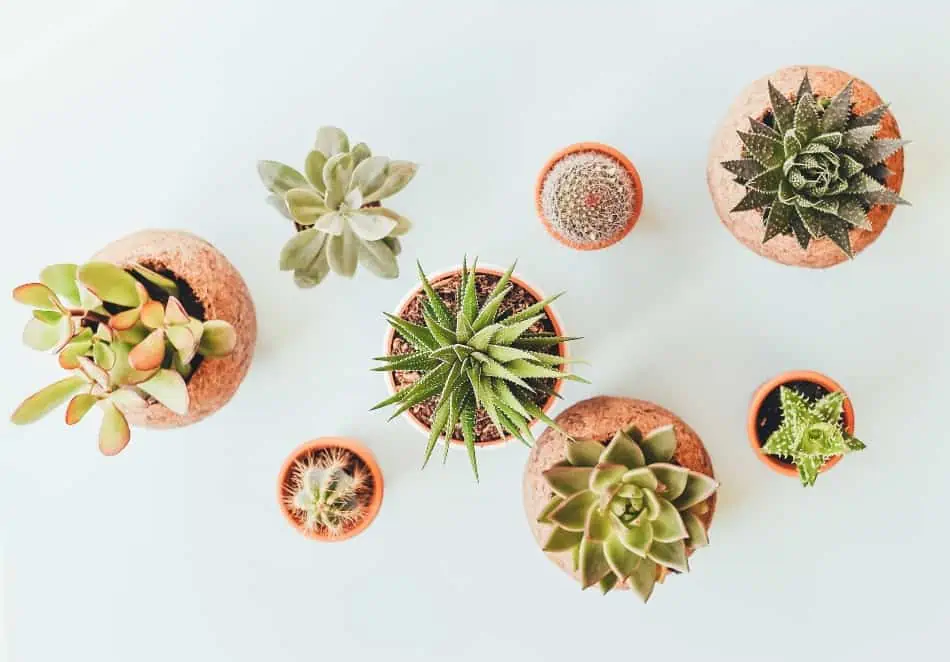
Typically, brightly colored succulents enjoy growing outdoors in the sun.

Here is a condensed list of different types of sun-loving outdoor succulents:

  • Agavaceae or Agave Plants
  • Aloe Carmine
  • Blue Chalksticks 
  • Cactaceae/ Cactuses
  • Copper Pinwheel 
  • Coppertone Stonecrop 
  • Crassulaceae/ Stonecrop
  • Fred Ives
  • Golden Barrel Cactus 
  • Key Lime Pie/ Crinkle Leaf Plant
  • Lipstick Echeveria
  • Paddle Plant
  • Pink Ice Plant 
  • Prickly Pear Cactus (Opuntia)
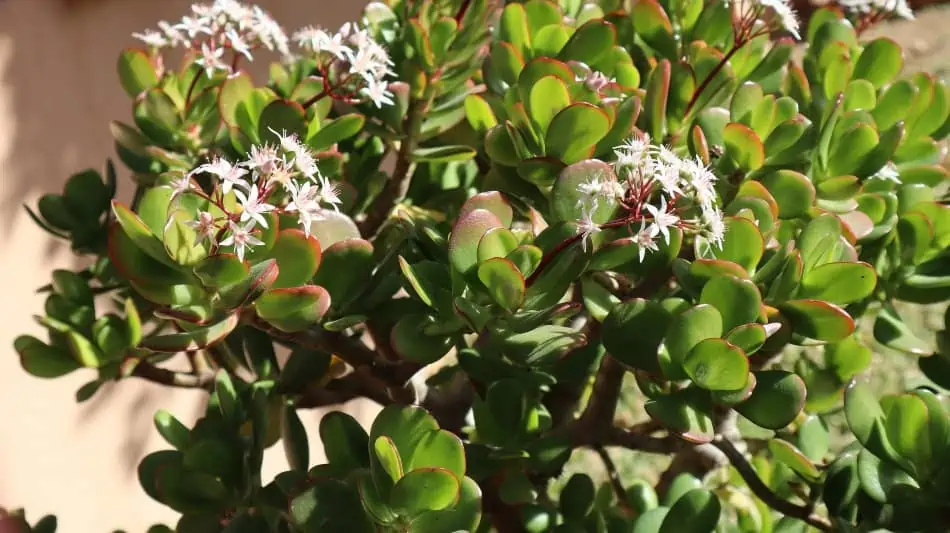
  • Silver Dollar Jade 
  • Sticks on Fire/ Euphorbia Tirucalli
  • Tree Anemone/ Aeonium Arboreum)

Though these succulent variants love the sun, they still require special attention to ensure they don’t get too much. 

Preventing Sun Damage from Too Much Direct Sun 

If you aren’t careful, even outdoor type succulents can suffer from a “sunburn.” Soft succulents especially can wither quickly if they don’t get a respite from too much sun. If left unattended too long in extreme heat, they will develop brown spots on their leaves. Luckily, there are simple things you can do to care for plants. 

Plant or Move Them in a Shaded Area

The best way to protect your succulents from too much sunlight is to move them to a shaded area. If you don’t have them planted in pots, you can put up shade cloths or make sure to plant them near larger plants or trees. 

Consider moving your succulents to a shaded area to protect them from prolonged exposure to direct sunlight.

Water Them More

Though they don’t require a lot of water, succulents in hotter climates will need a little more to counteract high temperatures. Be diligent in checking the topsoil to make sure it doesn’t dry out completely for too long. Usually, this means watering them once a week. 

In Extreme Heat Waves Don’t Repot Your Plants

Because especially high temperatures stress your plants, you shouldn’t repot them. This will cause unnecessary stress for your plant, and it may lead to them dying. To ensure your potted plants are healthy enough to repot, soak the soil once it’s completely dry until water runs out the bottom. 

You should never repot your succulents when they are stressed by extreme heat waves.

Don’t Fertilize Heat Stressed Plants

When overstressed by extreme heat, your succulents shouldn’t be fertilized. It will burn them and stunt their growth. However, when they aren’t overheated, it is still a great idea to regularly fertilize them to promote healthy growth and help them propagate new plants. 

Put Off Growing More Until the Weather Cools

While overly stressed, cutting and propagating new succulents will cause existing plants more stress. It is better to wait until they are healthy and thriving to make more. 

If you are worried about outdoor succulent care, or you are more of an indoor plant lover, there are also a large variety of succulents that grow better indoors out of the direct sun. 

Succulents That Don’t Like Direct Sunlight

Some succulents prefer low light and don’t grow very quickly, which would be ideal for anyone looking for easy to care for indoor plants. These types of succulents like aloe vera or snake plants tend to be naturally green. 

Though they don’t need to be in direct sunlight, it is still crucial to put them by the brightest windows possible. If you have limited windowsill light, you can also get a grow light to help them maintain a healthy, pretty shape. 

Here is a condensed list of indoor-friendly succulents:

  • Aloe Vera
  • Bear Paws/ Cotyledon Tomentosa
  • Burro’s Tail/ Sedum Morganianum
  • Crassula Type
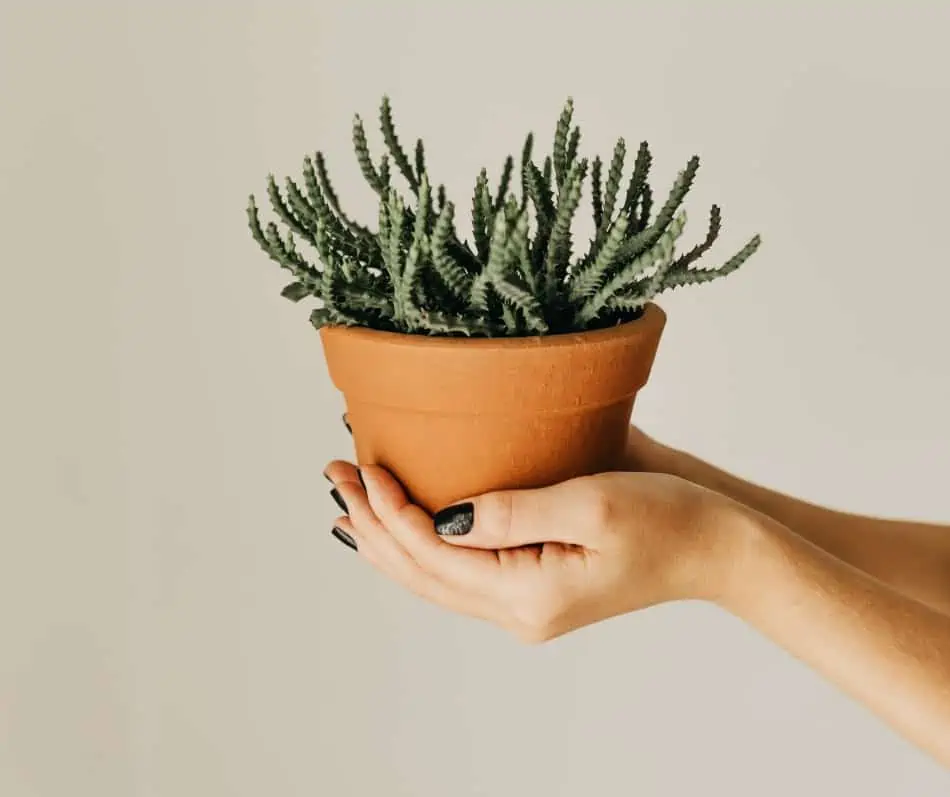
  • Cylindrical Snake Plant 
  • Echeverias Type
  • Gasteria Type
  • Haworthia Zebra Cactus
  • Hoya
  • Jade Plant
  • Kalanchoe Type
  • Ponytail Palm
  • Rebutia
  • Rhipsalis
  • Scarlet Ball Cactus (Paroda Haselbergii)
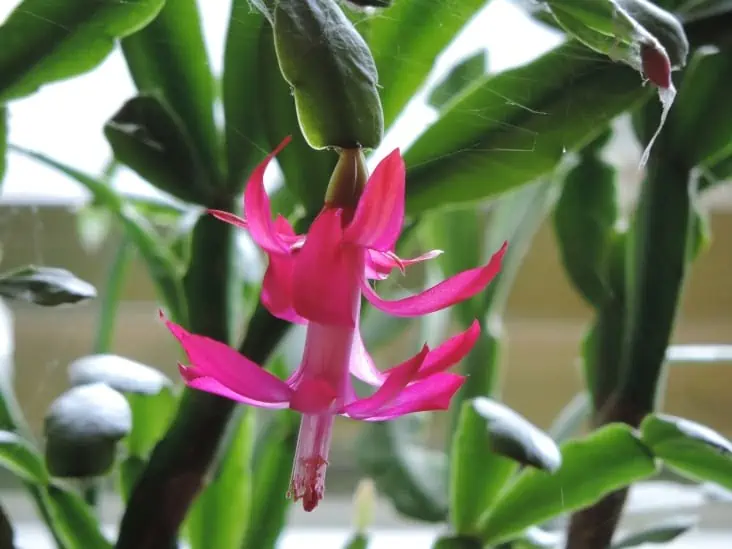
  • Schlumbergera
  • Snake Plant/ Sansevieria Trifasciata
  • String of Pearls/ Senecio Rowleyanus

Once you decide on the type of succulent you want, there are other basic care tips you can follow to ensure it grows healthy. Though they don’t need a lot of care or attention, a trait ideal for the busy or forgetful, it’s still important to keep some basic things in mind.

Other Ways to Care For Your Succulent

The basic needs for any succulent are water, sunlight, and proper planting. They can easily flourish with very minimal care or thought. However, there are simple ways to hurt or kill them by not paying attention or knowing how to adhere to their basic needs. Here are some small tips to help your succulents thrive. 

Rotate Potted Succulents 

Because succulents love sunlight, they naturally grow towards it. However, if you never rotate potted succulents, one side will get less sunlight, and the other will stretch out. If you rotate it, it won’t develop a growth imbalance. 

Water Less During the Fall and Winter 

While growing, succulents naturally need more water. However, during cold/ dormant months they need less water. Overwatering will kill your succulent, rotting the roots. A sure-fire way to know when to water them is to check the top soil 1.25 inches deep. Water them once this soil is completely dry. 

Water Succulents Correctly

Rather than opting for a spray bottle or mist watering your succulents, you should soak the soil. Using a spray bottle will cause the roots to be too small and for the leaves to mold. For potted plants, soak the soil until water runs out drainage holes at the bottom. Before watering again, make sure the soil dries out completely. 

Make Sure Succulents Have Proper Drainage

Proper drainage is crucial for healthy succulents. They don’t like to sit in water for very long. Firstly, you need gritty/ porous soil. Look for gritty mix soil or specially made soil for succulents. For Potted plants, you’ll need drainage holes at the bottom of the pot. Without a drainage hole, water will accumulate and sit, causing the roots to rot. 
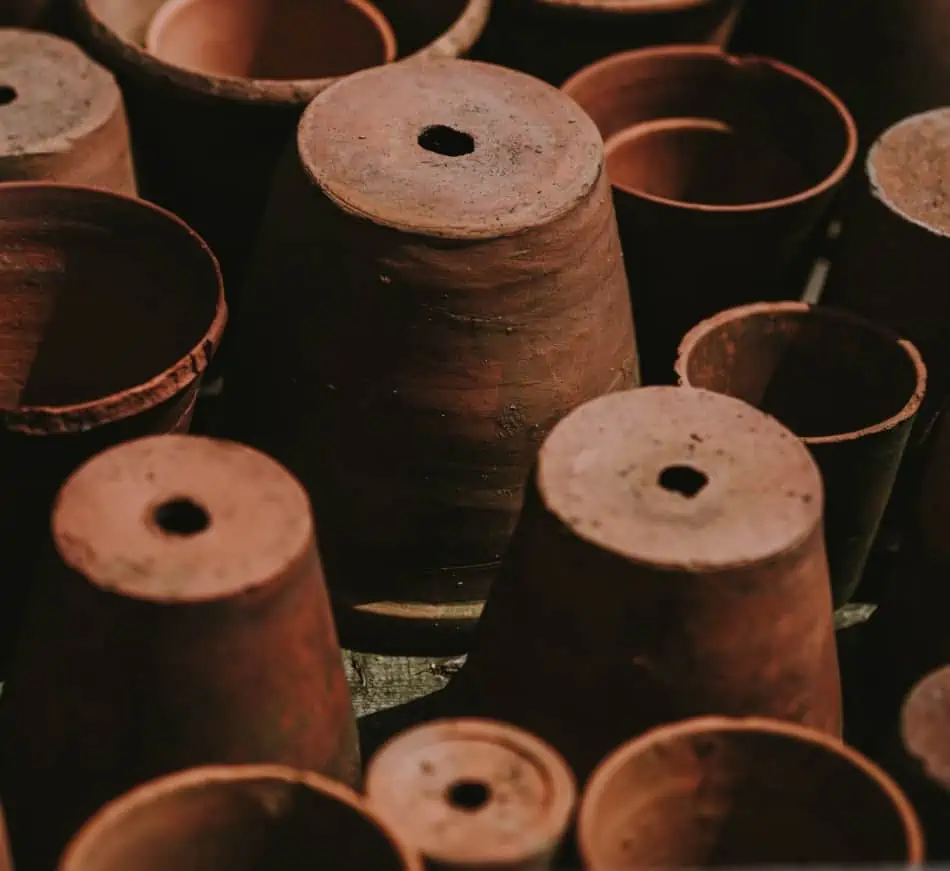
Pot your succulents in a container with drainage holes and use porous soil to avoid water accumulation.

Conclusion

Given the many indoor and outdoor succulent varieties you can choose from, caring for your succulents doesn’t need to be too complicated or stressful. As long as you give your succulents the right amount of sunshine and don’t overwater them, caring for them can be easy and rewarding. 

Are Succulents Good To Keep At Home?

Succulents are resilient plants that can survive a bit of neglect. They are used to warm, dry climates and can go much longer without water than average houseplants.

Succulents are good plants to keep at home. They are resilient and can thrive in indoor environments. Succulents make very low-maintenance houseplants.

Read on to discover what characteristics make succulents good plants to keep at home and some precautions you should take if you keep certain succulents around. We’ll also discuss whether or not succulents make good outdoor plants. 

Why Are Succulents a Good Plant To Keep At Home?

Succulents have adapted to indoor growing as their popularity has grown. Succulents are perfect for those wanting a low-maintenance plant for their home. Most succulents like direct sunlight, so pick your plant based on the light in your home. Decide whether the spot you want to place your succulent receives full sunlight or full shade.

Succulents are low-maintenance plants that have been adapted to indoor growing conditions.

If you have an open window that receives consistent sunlight or at least between four and six hours of constant sun, choose a succulent type that prefers full sun, such as:

  • Cotyledons
  • Small Aloes
  • Agave Parryi
  • Sedum Copperstone

If you have a north or south-facing window that receives little sunlight or areas that are shaded, choose a succulent that does not need full sunlight, like:

  • Hoya
  • Senecio
  • Hatirora
  • Sedum

Consider how the sunlight comes into your home before deciding what type of succulent plant to grow in your home. Though succulents make excellent houseplants, there are many things to consider when choosing the succulent that is right for your home. Let’s look at what makes a succulent a superb houseplant and what you should consider before purchasing one. 

Succulents Are a Resilient Plant to Grow At Home

Generally speaking, succulents are very resilient plants to grow at home. Succulent plants require little care and have adapted to grow with little water and some even in shaded areas. There are three main ways to kill a succulent. Here are the areas you will need to pay extra attention to when caring for your succulent.

Succulents do not require too much care and some of them can even grow in shaded areas.

Do Not Over Water Your Indoor Succulent Plant

Succulents have adapted to survive in dry conditions. The climates they are seen in most commonly are warm, dry climates. Succulents prefer dryer soil that drains water quickly. Overwatering is one of the main things that will kill your indoor succulents. Succulents are drought-tolerant plants that hold excess water in their:

  • Leaves
  • Roots
  • Stems
  • Tissues

As a rule, succulents should be watered every seven to ten days, but if you are unsure, just feel the top inch of soil and water it if it is completely dry. Hardy succulents require even less water. If the soil is still damp, do not water your succulents. Be sure you have a pot that has holes in it to allow for proper drainage. 

Use A Well Draining Soil for Your Succulents

Choosing soil that does not drain well can be another way to kill your indoor succulent. The best option for soil is a Cactus Potting Soil Mix. You could also add perlite to ensure it allows for proper draining or even make your own. 

One other option, especially when making your own soil is the addition of sand. Sand ads a porous quality to any soil and allows water to properly drain out instead of soaking the roots. When making your own solid, stick to a ratio of two parts gardening soil, two parts sand, and one part perlite or pumice. This ratio will give you porous soil that aids in aeration and properly drains water off of the roots of your succulents.

Succulents Do Not Like Intense Direct Sunlight

Though many succulents require full sun, in some climates where the heat is intense, prolonged periods of direct sunlight may prove to be more harmful. Direct sunlight can cause succulents to experience a sunburn, especially younger plants. Typically, succulents require four to six hours of direct sunlight to grow. Moving plants to an area of partial sunlight on particularly bright or warm days will prevent your succulent from becoming sunburned.

Prolonged exposure to intense direct sunlight may damage your succulents.

Keep Some Succulents Away from Pets and Children

If your household contains pets or children, you will need to do some research on the types of succulent plants you bring into your home. There are some specific types of succulent plants that can be poisonous if ingested, even in small amounts. 

Some succulents that are not safe around pets or children include

  • Jade
  • Euphorbia
  • Kalanchoe
  • String of Pearls

If you plan to keep succulents as indoor plants and have pets or children in your household, do your research to be sure you choose a non-toxic succulent for your home. The ASPCA provides a list of toxic and non-toxic succulents if you have any questions about what could be safe for your home.

Can I Keep My Succulents Outdoors?

Succulents naturally do well outdoors, but like indoor plants, need extra attention when choosing where to grow. As you have done with your indoor plants, you should put succulents requiring full sun in areas of full sunlight and succulents that require shade in more shaded areas. With outdoor succulents, you should be careful in situations of temperature fluctuation and be aware of when the weather in your area calls for frost or very extreme heat. 

You can definitely grow your succulents outdoors as long as you take proper care of them.

Pay Attention to Temperature Fluctuations

Temperatures above 90 degrees Fahrenheit or below 40 degrees Fahrenheit pose extreme risks for your succulents. If the temperature reaches those extreme temperatures, you should bring your succulents indoors or transport them to cooler shaded areas outdoors. If they are planted in the ground outdoors instead of in pots, consider using a frost cover or building a shade for your plants.

In these extreme temperatures, you will notice that the colors of your succulents will begin to intensify as they get closer to excessively high or low temperatures. When succulents are left in environments reaching 90 degrees Fahrenheit, the plant will start to burn, turning a brown or black color. If your succulent plants are exposed to extreme sunlight or higher temperatures, the roots and leaves of the plant will appear fried or “sunburned.”

Protect Succulents from Frost

The freezing point of succulent plants is around 32 degrees Fahrenheit. Pay attention to your local weather forecast in the winter months to see when to expect frost. Transfer outdoor succulents kept in pots or potable containers inside during the winter to keep them alive.

If you begin to see tiny ice crystals forming on the plant’s leaves, you will need to bring them indoors immediately. Once ice crystals will form on the leaves of your succulents, they will be harder to revive as they can start to rot.

Conclusion

Succulents make great indoor houseplants and because of their resilient nature, can thrive without much care. Though they are resilient, be sure to plant them in soil that allows for proper drainage and avoid overwatering them. Too much sunlight and improper watering can kill succulent plants. If you have children or pets in your home be sure to check whether the succulents you are interested in are toxic or non-toxic. 

Just as succulents can thrive indoors, many succulents can do the same outside. If you plan on keeping your succulent outdoors, be mindful of the temperatures because succulents are prone to sunburn or rot when at extremely cold or hot temperatures. Opt for moving them indoors or protecting them from the elements outdoors to keep your succulents healthy. 

How Do You Revive A Dying Succulent 6 Easy Steps

A dying succulent doesn’t have to be the end. Succulents are hardy, and even one that is dying can usually be saved. There are various techniques to saving this low-maintenance plant. The key is to identify what is wrong with the succulent and restore its good health.  

Just because succulents are low maintenance does not mean they still can not have issues. If you notice your succulent is showing signs of dying, there is no need to fear. Succulents are resilient plants and can almost always be revived. Read on to find out how you can save your succulent with these six easy steps. 

1. Identifying a Dying Succulent 

There are few tell-tale signs that your succulent may be starting to die off. Thankfully, they are straightforward problems to identify. 

  • Look for brown or decaying leaves.
  • Look for mushy, soggy, or almost transparent leaves. 
  • If the leaves fall off the plant with the slightest touch. 
  • Check the stem; sometimes, the leaves will look okay even though the stem is rotting.

Overwatering is going to be the most common cause of these types of symptoms. Your succulent is closer to a desert cactus than it is to a desert flower.   

That being said, sunspots or sunburns on your leaves may be a sign that your succulent is getting too much sun, or is being underwatered. If your succulent is getting direct sunlight, it may be necessary to relocate it inside. A simple pain of glass may be enough to shelter your succulent from harmful rays. 

2. Prune Your Dying Succulent

Before you do any moving or re-potting of your succulents, you will need to trim and remove any and all leaves that have gone bad. Again, look for any leaves that are discolored or have lost their durability. Succulent leaves should feel pretty solid and can usually handle a little roughing up and not fall off.  

3. Digging Out Your succulent 

You will want to be as gentle as possible, but it is time to dig out or cut your succulents. If your succulent has a sturdy-looking stem, but the leaves are dying and breaking off, you are going to want to dig it out. Be sure to protect as much of the roots as possible. If the leaves are dying, the roots should come out easy enough. 

Make sure you protect the roots when digging out a dying succulent.

Gently work a small shovel or spade around your succulent until you can easily remove it from its current pot. At this point, it is essential to clear the roots of all dirt fragments. You want clean, robust roots for the next step. Succulents planted in the ground outside will need this same step if their leaves have gone bad. 

4. Cutting Your Succulent 

If the leaves on your succulent seem to be healthy, but the stem looks rotten, then it is better to snip the plant. Follow the stem up past any rot until you find a nice healthy-looking spot and give it a snip. This is a good time for extra pruning. Take an extra close look at your stem to make sure all the dead leaves and rot are gone.  

5. Leave Her Out to Dry

Whether you snipped or dug out your succulent, you will need to find a place for it to dry out. Preferably indoors on mesh or a strainer. You are going to want to let your plant dry out completely. This should only take two to three days. 

After a few days, touch the roots yourself to make sure they are dried out. This is important again because overwatering is the most common reason for succulents to die off. Thoroughly dried out roots will reattach to dry soil easier. 

6. Time to Re-pot and Care for Your “New” Succulent! 

Once your snipped or uprooted succulent is dried out, it is time to re-pot. It is best to select a small temporary pot filled with completely dry soil to replant your succulent. You will leave the succulent in this temporary pot for around a month or until you can feel strong roots growing. 

Use a small temporary container when repotting your dying succulent.

You are going to want to find a dry place in your house with no access to sunlight while your succulent nurses itself back to life. A counter with no access to sunlight should be a fine place to put your plant.

When the roots are solid, you can feel free to relocate your succulent to the garden or the windowsill or back in the large pot with all the others. Just be sure not to overwater.  

How to Prevent your Succulent from Dying

If you can prevent your succulent from dying in the first place, you won’t need to worry about bringing it back. Keeping your succulent from dying can be done in a few ways:

  • Using a moister meter to make sure the succulent doesn’t dry out
  • Not overwatering the succulent
  • Make sure the soil is nutrient rich
  • Give you succulent enough space to grow
  • Keep the succulents warm

Purchase a Moisture Meter

This a crucial step, get yourself a moisture meter. You can purchase a moisture meter for five to fifteen dollars. Moisture issues will be live or die for your succulent, allowing your life to be made easy with a moisture meter. 

You are going to want to check multiple spots in your pot in the future. Several plants in the same pot can register different levels. You only want your meter to register one to three. As long as there is moisture present, you should be fine not to underwater. 

Overwatering Your Succulent

A common mistake people make when caring for succulents is overwatering. Succulents are part of the cactus family and don’t need much water to live. Make sure the soil is damp and never looks like mud after watering. Don’t use a mister. Succulents are desert plants and misting will change the humidity level around them. 

Overwatering can also result from improper drainage. Make sure your succulent is in a container with multiple holes on the bottom. 

Overwatering is one of the most common reasons why a succulent is dying.

Indoor succulents will require even less watering than outdoor. As a general rule do not water your succulent until the soil feels one hundred percent dry. Fourteen to twenty-one days is a good number to keep in mind. Especially if your succulent is in a place with little to no sun.

Outdoor succulents should be watered one to two times a week. Being outside they will have more direct sunlight and need to be watered more frequently then indoor succulants. If you’re in a climate that experiances a winter, only water one or twice during that season because the succulents go dormant in cold weather. 

Succulents Need Properly Mixed Soil

It is highly recomnded that you use potting soil for indoor plants only and that you add sand to the soil before planting. Coarse sand is your bet best for proper drainage. This will help ensure no overwatering. Keep in mind that certain potting soil will have added nutrients in them that can harm or burn Succulent roots. This another reason sand needs to be added.

Always use a soil mix that offers proper drainage for your succulents.

The proper ratio if using regular potting soil is two parts coarse sand, two parts potting soil, and one nd a half cups of perlit or pumice. When planting directly into the ground, use a similar mixture to add as top soil before planting your succulent.  

Use a Big Enough Container

Just because succulents can be small doesn’t mean you should cram several of them into a small pot. Each succulent should have several inches around them. Space allows the succulents to keep growing without getting into each other’s way or deprive them of nutrients in the soil.

Keep Your Succulents Warm

Succulents need to be kept warm year-round. Outdoor locations or areas of your home prone to drafts are not a good place to keep your succulent. Any location of your home with consistently warm temperatures is ideal.

Conclusion

Thanks to the hardness and versatility of succulent plants, they can most likely be saved and salvaged. It requires a few steps but nothing too complicated. Once your succulent is entirely replanted, use your moisture meter to ensure your plant will have a long, happy life. In the meantime, go save that plant!

How To Water Succulents In Winter

Succulents are a fun, laidback plant for that requires only a little watering here and there, including during the winter months. Not only are they hardy and require little maintenance, but they can also be a whimsical and beautiful addition to any office desk or windowsill. 

Succulents thrive during the warmer months of the year, but what about during those chilly winter months? Read on to find out how to water succulents in winter, what to avoid, and the steps you can take to keep your succulents thriving and healthy even when it’s chilly out.

Bring Your Succulents Inside for the Winter

We are talking about watering, but first, it must be stated that succulents are not going to thrive in frigid conditions. Anything below 40 degrees Fahrenheit will likely damage or even kill your succulents. So, if you anticipate temperatures dropping below 40 degrees in winter, it’s best to set your succulents up indoors.

Properly preparing and weatherizing your succulents will guarantee that they don’t die in suboptimal temperatures. Make sure to keep your succulents in a warm (but not overly hot) room with plenty of sunlight. 

Keep your succulents indoors during cold winter months to prevent them from dying.

Check them for bugs and infections, tidy them up, and get them ready for their new indoor winter life. Transfer them to the appropriate indoor pots if necessary. 

Also, note that succulents, like most plants, go “dormant” in winter. This means that they are preserving energy and not actively growing or really doing much at all during the cold winter months. Dormant plants require less active maintenance and actually make a passive approach to daily care better for their long-term success. 

Prepare Your Succulents for Successful Watering 

Making sure your succulents have optimal conditions for watering will help ensure they have a successful winter season. A pot that allows adequate drainage will be crucial to not overwatering and allow the unneeded and possibly damaging moisture to pass through the soil and not pool at the roots. 

The appropriate soil that allows for quality nutrients but doesn’t retain water will be ideal for your succulent, but the best soil will be dependent on the actual species of succulents and can vary from plant to plant.

Make sure your succulents are potted in well-draining soils with sufficient nutrients for the plants to grow healthy.

Water your succulents at the root, not on the leaves. Standing water on the leaves can cause damage or decay, so make sure the water goes directly into the soil. Using a mister or spray bottle can actually do more harm than good, and experts recommend a watering can that will allow the water to bypass the leaves and goes straight into the roots. 

Water Your Succulents When Their Dirt Becomes Dry

One of the nice features of most succulents is that they are actually quite low-key and require a lot less maintenance than the average house plant. Succulents should not be watered until their dirt is dry to the touch and not until then. 

Always check if the soil is dry before watering your succulents.

Succulents retain water inside their leaves, meaning while you may feel like you aren’t watering your little plant enough, your succulent is actually holding onto a lot more water than it may seem. Overwatering is one of the leading causes of succulents becoming infected or dying, so be mindful of how much water you’re giving them and how often. 

Water Succulents Less in the Winter

We’ve discussed that succulents shouldn’t be watered when the dirt is wet, but how often will you actually be watering your plants? While each plant and species is different, the average succulent will not require watering more than once a month, possibly even once every other month. 

This contrasts significantly with the once-a-week watering required during summer for most succulent species.

That being said, time is not the best indicator of whether or not you should plant your succulents. The soil is really going to be your best guide, so checking the dirt of your succulents for moisture will be the most consistent and reliable indicator of watering needs. If the dirt is still wet, wait a few days or even another week or so to check again before watering. 

Don’t Overwater or Underwater Your Succulents

Unlike most traditional plants that require more frequent watering, succulents will develop rot or mold if overwatered. Many people worry about their standard houseplants going dry as it can be damaging or even fatal, but this is not the case for succulents. 

Succulents thrive in dry, arid conditions with minimal water, so don’t worry about waiting several weeks between watering, particularly in winter.

Signs of overwatering include:

  • Leaves that fall off
  • Soft leaves
  • Discolored or semitransparent leaves
  • Yellowing leaves
  • Black spots

Additionally, underwatering can be damaging as well to succulents. While succulents require infrequent watering, not watering them at all or forgetting for too long will cause them to wither away. Making sure to check your succulents regularly, even throughout the winter months, will ensure that they are getting adequate hydration.

Signs of Underwatering Include:

  • Shriveled leaves
  • Dried leaves/roots
  • Crunchy leaves
  • Browning/discoloration

It’s much better to underwater than overwater when it comes to succulents, even in winter. Succulents have ways to protect themselves during long periods of minimal water, but they are very susceptible to a whole host of infections and problems related to too much water. 

It is easier to revive a succulent that has received too little water, but too much water might be a death sentence for this plant species.

Provide Proper Drainage

If your succulent is in a pot that doesn’t have drainage holes, consider repotting it for the winter months. While some pots drain just fine outside, they might not be so efficient with draining and the indoor air. Draining is key for succulents during the winter months. 

Succulents should be potted in containers with sufficient drainage holes for the plants to get rid of excess moisture.

When you repot your succulent for the winter months, again make sure you use soil that’s meant for these plants. This will also help with ensuring they’re draining properly. 

Allowing roots to get soaked without airing out invites all kinds of problems, including root rot and bugs. Ew!

Add Humidity in Particularly Dry Climates

If you live in an area that has very dry winter air, then use a humidifier or even keep your succulent in the bathroom. These are both efficient ways to add moisture to the air and keep your succulent from drying out. You can also try a pebble tray under your pot for another source of humidity. 

Know Your Succulent Species for Optimal Care

“Succulent” is a broad term covering a wide and diverse range of plant species, but each succulent, and each succulent variety, is different. Knowing what species your succulents are will allow you to provide the optimal care, soil, and watering schedule. 

For example, the succulent species String-of-Pearls is known by succulent enthusiasts to be a great winter plant because they are so low maintenance, particularly in winter. This plant thrives in colder conditions and isn’t prone to the same problems as more temperamental plants.

Finding a species of succulents that is capable of thriving in your climate will likely help you attain gardening success with minimal effort. Consult your local nursery if you are unable to identify your species of succulents or for further suggestions about what kind of succulents would be most successful in your home. 

A Special Note on Cactus Care

Cacti and traditional succulents are often confused due to their similar look and comparable drought resistant, but cacti are a somewhat distinctive species and require a slightly different approach to certain aspects of their care. 

However, the winter watering schedule should remain the same for cacti as it is for other succulents. Cacti should not be watered until the soil is dry. Just like regular succulents, cacti are susceptible to overwatering, and too much water can damage these hardy little plants.

How Much Light Do Succulents Need?

Learning succulents’ needs is vital to their care, especially how much light they need. There are quite a few types of succulents out there, and they come from just about all over the world. The amount of light a succulent needs to thrive depends on the kind of succulent. 

Succulents can not grow in shaded areas without any light. With the right lightning regiment, succulents can thrive indoors and outdoors. Allowing succulents a mixture of natural and artificial light for 14 – 16 hours a day is optimal.

These unique plants are about as low maintenance as they come, but they have specific needs and care. Don’t worry. We cover them all here. Just keep reading to make sure you’re able to provide your succulents with the proper amount of light. 

Good Lighting Makes a Difference 

Like a lot of plants, succulents need light. Even though these tough little plants can take a lot. As well as do without a lot, light is a must. They can only survive a short while in the shade or with no light at all. Without a good source of the proper light, succulents’ health will start to deteriorate.

Although some succulents require less light than others, light is still a must for them to grow healthy.

Knowing what to look for, and addressing it promptly, can save your plant. Here are some things to look out for to determine if your succulent is getting the right amount of light:

• Color changes that are not common to your type of succulents. Commonly white or yellow

• Any part of the plant that shows decay

• Lengthening limbs, or leaves that seem to be stretching 

• Thinning petals, not the normally lush, curved edges

These plants have adapted to sometimes very harsh environments. Often they will begin lengthening or stretching towards a light source if possible. This can be because it isn’t getting enough light or any at all. They essentially try to save themselves by reaching towards the light.

Succulents and plants, in general, need light to produce chlorophyll. Chlorophyll is needed to continue the photosynthesis cycle that converts energy for the plant to live and function. Without being able to complete this function, succulents will eventually perish.

Luckily, they usually show signs before it gets that far if you are paying attention. Their resilience is pretty remarkable. So don’t give up on them too quickly. If you see any of these signs,  there is still hope.

Make Sure You’re Providing the Right Kind of Light

Natural light is obviously the go-to for plants, if available. But of course, sometimes it can be too much of a good thing. Succulents can be found in areas that have pretty extreme light exposure and droughts. That doesn’t mean that is how they should be cared for.

While natural light is the best option for your succulents, you can also expose them to artificial light.

If you plan on providing natural light indoors, around 6 hours is a good amount for most succulents. This can be a bit more complicated since you can’t control how strong the sun’s rays will be. Direct harsh rays can cause damage to succulents over time. 

This can lead to brittle, flakey petals and even rot. Having a well-managed schedule of a little sunlight is important. But also adding artificial light from a simple LED light with a white fluorescent bulb can make a world of difference for the health of your succulents.

Type of LightTime
Natural Light Only6 – 8 Hours
Artificial Light Only14 – 16 Hours
Both Natural and Artificial Light (Depending on how harsh the sun is)4 Hours Natural Light10-12 Hours Artificial Light

This lighting schedule is a good base of time and how to care for your succulents. Watching how the succulents react per your schedule, you can figure out the best options: 

How Mother Nature Affects Succulents’ Lighting Needs

Mother Nature is incredible yet unpredictable and uncontrollable. This can make depending on natural light for your succulents a little difficult. Some days may give more light, and others may leave succulents wanting more.

Adapt Your Succulents to Lighting in a New Environment

Whether a succulent is transitioning from indoor space or even another outdoor environment, it is best to help them get used to their new digs. Easing them into their new environment is a safe way to give this beauty a good chance to get their bearings.

Planting succulents and walking away isn’t the best choice. Try bringing your succulents to where they will eventually be planted over some time. You can do this by gradually exposing the succulents to the new environment. 

Here are a few tips on adapting your succulents: 

• Keep succulents in a portable container, like a pot.

• Start slowly, especially during warmer seasons 

• Make sure to check the weather for rain.

• Have a place ready to transport your succulents back to that that isn’t in direct light. 

Depending on your climate and daylight hours, starting off with a slow and steady pace is best. Try a few hours the first day and build from that. Always taking temperature and weather into consideration.  Scorching your succulents and it being bogged down with rain are major things to avoid.

Bring the succulents out of the sun after each round of exposure. Not to inside temperatures, just a place still outdoors, yet away from rain and too much sun.

This allows the succulents to adjust to the lighting and temperatures by slowly introducing the succulents to the elements, helping them adapt at a safer pace. They are such hardy plants; adapting is what they do. It is just much better to do so in a healthier way, given a chance.

Getting to Know Your Succulents to Provide the Right Light

Contrary to popular belief, succulents are not meant to fry in the desert sun. They are capable of withstanding drought-like conditions, including sunlight, but these aren’t ideal growth conditions, especially for those meant to grow indoors. This doesn’t mean toss your succulents on the hood of your vehicle in the Texas sun. What it does mean is these cuties can endure a lot. Here, we are going to make sure they don’t have to.

Get to know your succulent type and species to provide them with proper light exposure.

Succulents Come from Areas with All Different Kinds of Light

Succulents are so adaptable that they are found nearly everywhere globally, except for a few places like Antarctica and some of the nearly uninhabitable deserts on earth. Wait, they don’t necessarily thrive in the desert? Exactly! Leaving succulents to fend for themselves in these conditions switches them into survival mode, and we want to encourage them to actually thrive. 

Here are some interesting and possibly surprising places you can find succulents.

• Africa

• Central America 

• The European Alps

Where is a Good Place to Put Succulents for Optimal Lighting?

While it might seem like a succulent is a great way to brighten up a dark corner in your bedroom or a windowless basement, it’ll end with a dead plant. Here are some good places to keep a succulent in your home to make sure they get just the right amount of light:

  • Show them off by placing your succulents on a balcony or porch.
  • The perfect place to have a chat with your plant, the kitchen window.
  • Add simple spa-like elegance to your bathroom out your succulents on full display in your bathroom window

Setting Up Artificial Light for Your Succulents

The lighting setup doesn’t have to be overly complicated for these fairly self-sufficient plants. A full-on greenhouse in your apartment isn’t a requirement. LED or fluorescent bulbs are a good choice for either the main lighting source or in rotation with natural sunlight. 

If you have decided to expose your succulents to artificial lights, consider using LED or fluorescent bulbs.

Make sure to check the dimensions of any lighting setup you plan on using. You want to be sure it will fit properly and safely in the space you have planned for your succulents. Also, keep in mind the lights need to be kept at least 6-12 inches from the succulents to give the right amount of light without scorching them. These are some great options to get your succulents all set up and thriving.

  • A Plus LED Grow Lights 16000Lux Full Spectrum Sunlights
  • Yadoker LED Growing Light Full Spectrum For Indoor Plants
  • LikeSun LED 1000w Grow Lamp for Indoor Plants

Final Thoughts

Succulents are such incredible plants, forgiving and resilient in ways that amaze them. After bringing a little light to learning how much light succulents need, we can conclude with just a little love and the right amount of light, caring for succulents will be well worth it.

Euphorbia Vs. Cactus: What’s The Difference?

Many people often confuse euphorbia for cactus. Well, we can’t blame them because many cactus plants look like euphorbia and vice versa. It’s usually hard to tell the difference between the two plants by just looking at them.

Some Euphorbias possess cacti-like features like branching arms, pokery parts, and ribs. You’ll even get more confused if you go to nurseries, as many euphorbias are sold as cacti there. However, there are distinctive features that differentiate the two plants. These are usually physical features such as the presence of areoles, flowers, leaves, spines, milky sap, and more.

Read through to understand the distinguishing characteristics between cactus and euphorbia. Most of these differences are in their physical features, which you can easily identify.

Euphorbia vs. Cactus: The Similarities

Euphorbia and cactus have many similarities that make many people confuse them for each other. Both plants have succulent stems that help them store water in the stem tissues for future use. These features, as well as the lack of leaves or small leaves, make these plants survive in arid conditions.

Euphorbia and cactus also have thorns and spines, respectively. These features work in place of leaves but are also a form of defense mechanism for the plants, defending them against animals that would want to eat or wound them.

Like cacti, euphorbia also feature thorns that grant them abilities to withstand harsh climates.

The reason behind these similarities is due to convergent evolution. Both plants grow in similar conditions and hence react the same way to the climate. However, they still have different origins. As a result of their environment, the plants develop some striking features that help them survive and thrive in the climates they grow in. Some of these features include branching stems, thick stems to store water, and fibrous roots for water absorption.

But even though the plants adopted the same survival tactics and have similar features, they’re not of the same type. There are still many differences between the euphorbia and cactus.

Euphorbia vs. Cactus: The Differences

You can only differentiate cactus from euphorbia by knowing their physical characteristics. Well, most of these characteristics are not visible, but once you know where to look, you’ll understand the differences. Here are the distinguishing features between euphorbia and cactus plants.

The Areoles in Cacti

The areolas are the fuzzy and cushion-like dots where the spines, flowers, and stems of cacti plants grow. The areoles are found in all cacti species and are either white or yellow. Even if they’re not visible from a distance, you can still notice them if you take a closer look.

Unlike cacti, euphorbia lack areoles and this is one of the ways to differentiate these two plants.

Euphorbia and other plants don’t have the areoles. So, if you confuse any plant with cacti, you have to look closely. If you don’t see the presence of the areoles, then that plant is not cacti. The same goes for the euphorbia plant.

The Thorns

Both cacti and euphorbia species feature some sort of modified stems that come in the form of thorns. For euphorbia, their thorns come in either a pair or single. These thorns are very thick and form part of the stem. If you happen to remove the thorns and leave the branch, you’ll end up with a wounded euphorbia plant.

Cacti thorns come in the form of modified leaves called spines. The spines grow in circles but can also take other shapes. But despite the shapes they take, cactus spines always emerge from the areolas. You can easily remove a spine from a cacti plant and not cause any wound. Some cacti spines are even known to break off the plant easily and penetrate the skin of animals.

While this is another important distinctive characteristic, you must also understand that not all cacti have spines, and not all euphorbias grow thorns. So, for those thornless euphorbias and spineless cacti, you have to look at a different distinguishing feature.

The Flowers

Another essential factor that you can use to distinguish cactus from euphorbia is the blooms. Cacti bloom in beautiful and colorful flowers featuring important parts like petals and stamens. Their flowers are usually vibrant and appealing and can be used as gifts. Like the spines, cactus flowers also grow from the cushion-like areole. The flowers carry both stamens and pistils. This means many cactus plants are self-pollinated.

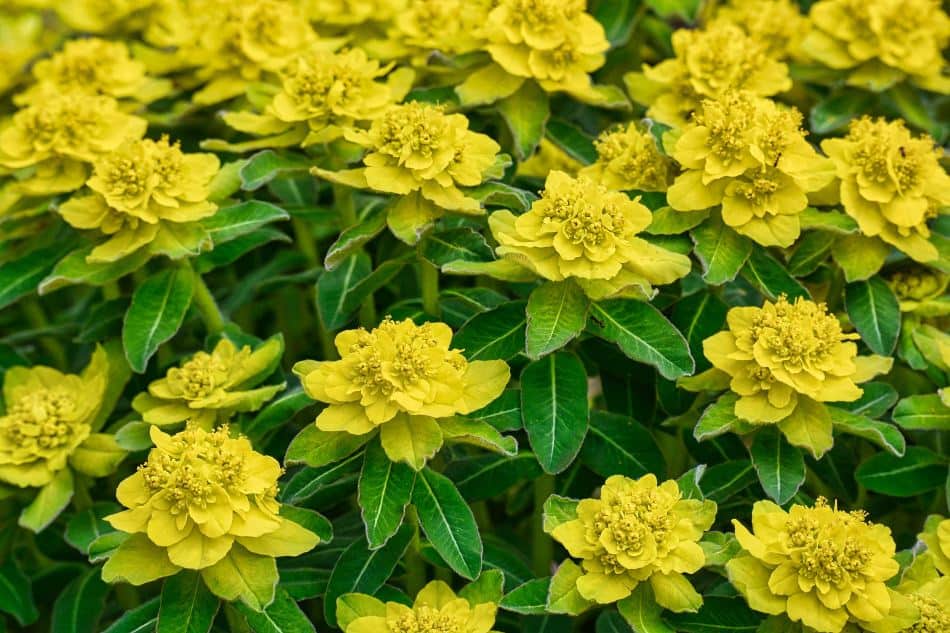
Typically, euphorbia species produce tiny yellow flowers.

As for euphorbia, their flowers are usually small and yellow. These flowers have no petals. These flowers are not as flamboyant as those of cactus and, at times, can go unnoticed. They usually produce unisexual flowers, which can be only stamens or only pistils. This means euphorbia plants can’t self-pollinate like their counterparts.

In some euphorbia species like the crown of thorns, the flowers are surrounded by modified leaves known as very colorful bracts.

The Leaves

There are spiny, cactus-like euphorbias that produce leaves. These leaves are insignificant and fall off seasonally. They might fall off on sunny days, so they don’t cause water loss.

Euphorbia species feature leaves that often fall off seasonally, especially in hot sunny days.

Cacti, on the other hand, have modified leaves called spines. Some cacti also have stems that may look like leaves. However, cacti lack leafy leaves. There are exceptional ones like the Pereskia and Opuntia that have leaves. But even these ones lose their leaves as they grow.

The Genius and Species

Euphorbia doesn’t exist in families like the cactus plant. It’s only a single genus in the family of Euphorbiaceae. The genus is known as spurges and exists in 2000 different species, with some used as ornaments in homes.

Cacti are available in a big family called the Cactaceae. They are available in up to 175 genera with up 2000 species. You’ll find popular genera such as Cereus, Echinocactus, and Opuntia. Most cacti are also used as houseplants.

The Milky Sap

Another way to differentiate euphorbia from cactus is to cut it. Euphorbia plants produce a milky sap from their stems when you hurt them. The sap is not too friendly to animals and humans as it’s sticky and toxic. Often, it can irritate the eyes or skin if it comes into contact with them. It can also cause severe inflammation when it comes in contact with your body. The sap is mostly white, except for that of E.abdelkuri, which is usually yellow.

For cacti, you’ll get a clear sap that doesn’t irritate the skin and is not sticky. However, some cacti still produce white milky sap like that of euphorbia. An excellent example of such is the Mammillaria.

The Evolution

Cacti and euphorbias evolved differently, even though they have almost the same features. Cacti are found in North, South, and Central America. These plants evolved in the New World, even though other species such as Rhipsalis baccifera are native to the Old World.

Euphorbias are succulents that evolved in the Old World. They mostly evolved in Madagascar, Africa, and the drier regions of Asia.

Both of these plants are mostly found in their native growth areas. An exception is the Opuntia cactus which escaped from its natural habitat and now grows as a weed in different parts of the world.

Euphorbia vs. Cactus: Frequently Asked Questions

What is a Euphorbia Plant?

Like cactus, euphorbia is not a single plant but a genus that consists of up to 2000 species. They consist of a single family of Euphorbiaceae called the spurge. Many euphorbia species are popular as houseplants because they require minimal care and can do with minimal watering.

Is Euphorbia Poisonous to Humans and Animals?

When you cut euphorbia, it produces a highly toxic sap that can irritate the eyes and the skin when it comes into contact. If you’re going to cut euphorbia, you should do it carefully. To be safer, make sure you wear protective gloves and eyewear protection. You should also keep euphorbia away from pets such as cats.

Are Cactus and Euphorbia Succulents?  

Both cactus and euphorbia are succulents. However, not all euphorbias are succulent; not all cacti are succulents. Cacti are closely related to most succulent plants like they are to euphorbia. But still, don’t assume that all cacti or all euphorbia are succulents. An excellent example of non-succulent euphorbia is poinsettias. There are also many examples of non-succulent cacti across the globe.

Summary

Cacti and euphorbia indeed have some similarities that can confuse even expert gardeners. To make this even worse, many plant nurseries sell euphorbia as cactus. If you’re planning to add euphorbia or cacti to your garden, it’s essential to know the difference so you learn to differentiate them.

Check the physical characteristics such as lack of leaves, the presence of areoles, and flamboyant flowers to identify cacti. Once you know these features, you should also know that euphorbia is the exact opposite.

Can A Succulent Grow In Shade?

Spring and summer are the time of year when the green thumb in all of us tends to awaken, and we spend a great deal of time choosing the flowers that will accent our properties and the insides of our homes. Succulents are often chosen to grow indoors with limited sunlight, so most people assume that they can grow in the shade when planted outside. But can they really survive in the shade? 

Only certain succulent varieties can grow in the shade successfully, such as aloe vera and jade plants. Although most succulents can tolerate low light conditions, they still require light to survive, and plants that need more than 8 hours of light a day will thrive better outside of the shade than in it.  

So, how much sunlight is enough for succulents? And how much shade is too much? We’ll discuss these questions and more below so you can ensure your plant stays healthy and happy throughout its lifetime. 

Can Succulents Grow in the Shade? 

As mentioned above, only certain succulents can grow in the shade effectively, though they will still require some light to survive. Various species of succulents require different amounts of light. For example, some species require 10-14 hours of light per day, while others may only need half of that to grow. 

Although most succulents require plenty of sunlight, some varieties can tolerate low-light conditions.

Natural sunlight is the best way to keep a succulent happy and healthy. However, exposure to too much sun and your succulent could get sunburned; that’s why some shade is also necessary for succulents. 

But too little sun could also inhibit growth. With that said, as a general rule of thumb, it is safer to keep most succulents out of the shade than in it, though there are varieties of shade-tolerant plants available that you can grow in the shade.  

Which Succulent Varieties Can Grow in the Shade?

As mentioned above, different succulent varieties require different amounts of light, with some plants being more shade-tolerant than others. The following table breaks down a list of succulents that are better suited to grow in the shade: 

Succulent VarietyDescriptionMinimum Amount of Light Required
Christmas CactusThe Christmas Cactus can bloom several times a year. If you take proper care of these, you can see flowers with multiple colors such as red, yellow, and white.8 hours of indirect light
Echeveria Painted LadyThis gorgeous smaller succulent has red leaf tips, with blooms that are a colorful yellow-orange every spring. 6 hours
Panda PlantIf you are looking for a cactus that won’t require much in regard to keeping alive, this is the one for you. Their leaves are made to hold large amounts of water, so they can survive for a few weeks if you forget to water them.6 hours
Aloe VeraAnother easy cactus to grow for beginners, this plant also has excellent medicinal values for topical skin issues.6 hours
Jade PlantThis is another excellent choice for someone just starting to grow cactus. They are easy to maintain and do not require the same amount of water and light that some other species do.4 hours
Flaming KatyIf brightening up your room or patio is what you are trying to do, then the Flaming Katy is a perfect choice. It requires little maintenance and adds a distinctive flavor to wherever you decide to place it.4 hours of bright sunlight
Burro’s TailAnother beautiful species of cactus, the Burro’s Tail only requires watering once per month if it is being grown indoors and every few weeks if it is outdoors.  4 hours of morning sunlight
The Jade plant is a low-maintenance succulent that does not require too much sunlight or watering.

Other succulents that can survive in the shade include:

  • Devil’s Backbone
  • Elephant Foot
  • Euphorbia
  • Foxtail Agave
  • Gasteria
  • Hoya
  • Night Blooming Cereus
  • Rosary Vine
  • Saucer Plant
  • String of Bananas
  • String of Hearts
  • String of Pearls
  • Woodland Stonecrop
  • Zebra Plant

Can You Use Artificial Light for Succulents in the Shade?

With succulents, you have the option of using natural sunlight or artificial light, depending on where you plan on keeping your plant and how much light it needs during the day. Although artificial light is more common for indoor succulents, if you plan on leaving your succulent planted outside in the shade, artificial light will be necessary—especially if your yard naturally doesn’t receive enough light as it is.

Depending on where you have decided to grow your succulents, you can use natural or artificial light.

With that said, you’ll need to be mindful of the type of succulent you choose, how much sunlight it needs, and where you keep it. Again, if you have enough natural sunlight that comes through the shaded area of your yard, then you can keep your succulent in that direct or offset light. On the other hand, if the shaded area in your yard does not have the light needed for your plant, consider artificial lighting. 

Artificial Lighting

Although succulents will survive even with lower light, a lack of sufficient light can also kill a succulent. With that said, if there is no light available even when outside, you will want to keep succulents under artificial light for at least 4-6 hours every day. This applies to all types of indoor lighting and sunlight, as well as incandescent, fluorescent, CFL Bulb, and LED lights. If it is a small, potted succulent, you may need to bring it indoors to provide it with enough artificial light. 

LED and fluorescent bulbs are the best options if you want to expose your succulents to artificial light.

Tips for Growing Succulents in the Shade

If you do decide to plant or keep your succulent in a shaded area of your yard, the following are a few tips to keep in mind: 

  • If the area is heavily shaded by a tree, consider pruning some of its branches so some natural light can seep through. 
  • If an awning covers the growing area, consider raising a potted succulent so you can move it into the sunlight as needed or set up an artificial light station. 
  • To increase the likelihood that a bed of low-light succulents survives, consider mixing container-grown succulents with in-ground ones. 
  • Because your succulent will have limited access to sunlight, the water you give it will not evaporate as quickly as a plant in direct sunlight. With that said, only water half as much as you would if the succulent was in direct sunlight. Remember that too much water is worse for a succulent than too little; too much water will cause its leaves to wilt and die. 
  • If you’re unsure when it’s time to water, stick your finger about two inches into the plant’s soil. If it is dry, it’s time to water. 
  • It is also essential to ensure you’re using porous soil that drains easily so water can evaporate when the succulent is exposed to light. To help with drainage, add in a little coarse sand and compost. This will help with keeping the succulent and its soil at the proper saturation level.

Conclusion

In summary, succulents can survive in the shade as long as you’re able to still provide them with the light they need. Each species will require a different amount of sunlight and water to survive, so be sure to research the succulent you want to raise first before deciding to keep it in the shade. 

Generally speaking, if you want to raise a succulent in a shaded part of your yard successfully, you’ll want to opt for a shade-tolerant plant variety, such as the holiday cactus, aloe vera, jade plant, or hoya. These plants are built to survive low-light conditions and can thrive as long as they still get access to some levels of light throughout the day. 

10 Things You Should Know Before Buying A Cactus

Cactus owners are a devoted bunch. Their plants may not be as cute as kittens or puppies, but they know that their prickly green friends need just the right care to grow and thrive. Unfortunately, some of them make costly mistakes when it comes to caring for cacti. It’s important to learn from their mistakes, so you don’t end up killing your plant!

So, what are some of the things you need to know before purchasing a cactus? Well, you need to know that most of them are sold as seedlings, they need special care to survive at home, most of them are prone to bacterial infection, different species have different needs, and they can be grown in many different ways.

In this post, we discuss some of the critical things you need to know before buying a cactus.

1. Mostly Sold as Seedlings

In garden centers and nurseries, they are usually found in small pots or plastic tubs containing a soil substrate that has been specifically designed to meet their needs.

Cactus plants are typically sold as seedlings and come in a container with a suitable soil substrate.

This substrate contains a base of fine-grained materials, such as pumice stone, that retain water for prolonged periods.

The soil substrate also needs to be light enough to enable it to hold on to the water and allow air pockets between each grain in which roots can develop.

2. Their Spines Aren’t Too Dangerous As Most People Believe

Although their spines make them look as if they’re covered in thorns or needles, not all cacti are uncomfortable to touch.

In fact, this characteristic depends more on the type of spines than it does on whether or not the cactus is thorny.

Cacti generally have two types of spines: short and thick, known as glochids, usually arranged in clusters on the lower third of their stems, and longer and thinner spines, which are called sharp or hard spines.

The shorter, thicker ones are usually brown or grey and soft. On the other hand, sharp spines tend to be white or light and can be up to 8cm long.

In fact, cacti with long and sharp spines are quite dangerous and should be handled with care.

The majority of cacti have both types of spines. The degree of discomfort they cause varies depending on several factors but is generally correlated with the size and position of each spine.

The spines on the bottom third of the plant are usually longer and more numerous, making it harder to touch them without getting hurt.

Cacti with long, sharp spines tend to be considered among the most dangerous, but there are a few species that have very thick glochids that they only use as a defense against herbivores.

3. Need Special Care to Survive at Home

The most common care mistake that gardeners make is overwatering, which can cause the plant to rot. Too much water in winter leads to the plant’s roots becoming damaged and its leaves drooping or shedding completely, while excess humidity causes their stem tissues to turn brown.

Another mistake that people make is moving them from a brighter environment to a darker one, from a cooler area to a warmer environment or from outdoors to indoors. These sudden changes can cause the plant’s roots to dry out and its skin to deteriorate.

Cacti also need fertilization to produce new stem tissue, but most people do not realize that this should be done every two weeks rather than once a month.

Cacti are not too difficult to grow, and they can be very rewarding, especially because they can flower without being treated with hormones or other growth stimulants.

However, you can easily become overwhelmed by how large these plants can grow if given good care. Cacti will grow from seeds and cuttings.

4. Different Cacti Species Have Different Needs

The most important characteristic to take into account is the origin of each species, as there are cacti that live in tropical forests or mountainous areas, some of which need temperatures below 10°C while others can survive daytime temperatures over 30°C, and some can live in completely dry environments.

Some cacti have very adaptable natures and can survive for long periods without water, but they are still plants and need water to thrive.

Allowing them to go without water will just make it more difficult for the plant’s dormant tissues to survive.

5. Cacti Plants Are Prone to Bacteria Infection

The part of a cactus that is most easily infected by bacteria or other microorganisms is its stem, and this also tends to be the part where infections develop.

If left untreated, the infection can quickly spread from the roots to the leaves and stems of these plants via their vascular system.

This can happen for several reasons: keeping them in a damp environment, over-fertilizing them, or simply because the skin has been injured.

The majority of infections are caused by fungi and tend to be treatable with fungicides. However, some bacteria such as pseudomonas can lead to more serious diseases in which the plant’s fabric is destroyed.

Cacti are highly resistant plants that can survive for many years, but they are not immortal organisms.

As with all living things, keeping them in good health means recognizing when something is wrong and knowing what to do about it.

6. Some Cacti Species Do Better Indoors

Some cactus species are more suited to living indoors than others.

Those that come from cold regions should not be left outside because they will need a heated environment to survive the winter months, especially if they are exposed to lower temperatures or raindrops.

Although most cacti are native to deserts and outdoor settings, some cactus species prefer being grown indoors.

To grow a cactus plant indoors, you will need to find a suitable place for it. These plants like bright sunlight, but they need to be protected from direct sunlight, wind and the morning dew.

They are also sensitive to changes in temperature or humidity levels which is why most of them grow best when kept near an air conditioning vent, next to a stove or near a balcony railing that faces the sun.

7. Cacti Live For a Long Time

Some cacti can live for more than a hundred years. Many of them usually slide into hibernation mode when they are not receiving enough light or water, which helps them survive drought conditions and extremely hot weather.

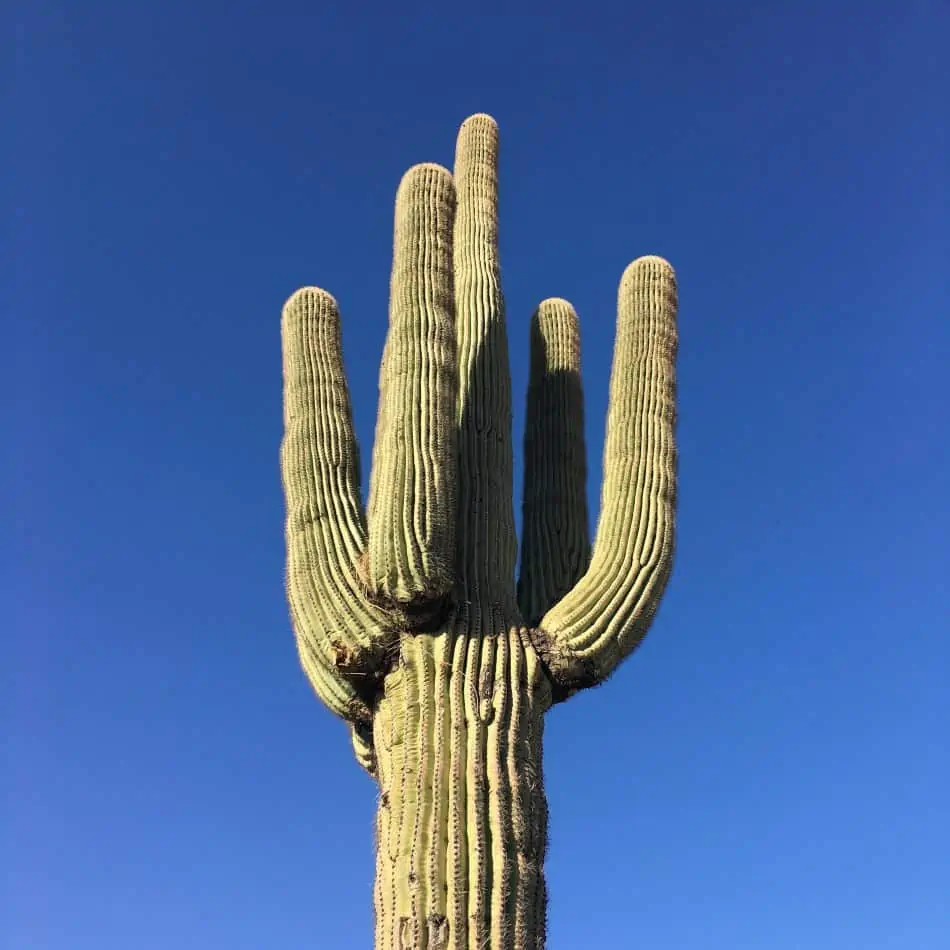
Some cacti, including the Saguaro, can live for hundreds of years.

On average, a cactus plant will live for 80 years. The Saguaro cactus is one of the most well-known cacti, and it lives for around 200 years.

However, domesticated cacti plants tend to be short-lived than those in the wild because most gardeners fail to provide their plants with optimum growing conditions.

8. Cacti Should Always Be Planted In a Good Quality Soil

Cacti need good quality soils to survive and thrive, but the type of soil they will grow best in depends on the species.

The soil used to grow cacti should be light and porous, with a PH level of between 5.5 and 6.5. If the soil you choose has a very high clay content or is too heavy, it will not allow water to filter down to the plant’s roots, and it could also disrupt your cactus’ internal PH levels.

Cacti will need holes in their plant pots to allow excess water or air to exit. This means that you should avoid using peat-based composts because the plants won’t be able to breathe properly, increasing the risk of fungal growth.

9. Cacti Can Be Grown In Many Different Ways

There are three main ways to grow cacti and other succulent plants: in pots, as bonsai or simply planted directly into the ground.

Each method has its own advantages and disadvantages, but they all have one thing in common: the soil used must be porous with good drainage qualities.

Growing cacti outdoors gives them the space they need to develop and spread out their branches.

However, this means that they are exposed to all kinds of weather, which can put pressure on them. This method also requires patience and hard work because your plant needs to be properly maintained.

If you choose to grow your cactus in a pot, make sure the pot’s volume is commensurate with the size of the plant. Just like people, cacti require plenty of rest, so make sure you water them well and don’t keep them in their pots for too many years.

Bonsai cacti are pruned to look like trees, which requires detailed knowledge about how much sun they need and how much water they should receive.

10. They Are Many Different Species of Cacti

Cacti plants belong to the Cactus family, and there are over 2,400 different species. They differ in size, shape and color. There are also some amazing hybrids created by crossing two or more different species together.

These plants are native to warm regions of North America, Mexico, South America and Africa.

There is an amazing array of cacti species, and these fun plants are easy to grow and a great option for anyone who wants to get into the gardening game!

FAQs About Cacti

Besides the ten facts mentioned above, we have also answered some of the frequently asked questions about cacti plants:

Do I Need to Water Cacti?

We are all aware that most cacti species are adapted to growing in dry areas. These plants are known for their extraordinary water storage capabilities. In fact, a cactus plant can survive for several months without water.

However, cacti need regular watering to thrive, especially during the growing season. Consider watering your cactus once or twice a week, depending on the species you have and your area’s climate.

Just be careful not to overwater or underwater it. Overwatering can cause root rot while underwatering can lead to wilting and eventual death of the plant.

Should I Fertilize My Cactus?

Cacti don’t need a lot of fertilizer to stay healthy because they are adapted to growing in nutrient-poor soils. For this reason, you should only fertilize your cactus when necessary.

Organic fertilizer can be applied once or twice a year during the growing season, but make sure you dilute it to half its strength before using it.

Alternatively, use slow-release fertilizer tablets explicitly designed for cacti plants.

What Temperature Do Cacti Need?

Most cactus plants will grow best in temperatures between 65°F and 80°F (18°C-27°C). If possible, try to avoid sudden temperature changes since they can cause stress to the plant.

Also, remember that cacti need protection from frost if you live in an area with cold winters. If the temperature drops below 50°F (10°C), move your cactus indoors to provide it with enough warmth and protection.

Is Cactus a Type of Succulent?

This is perhaps the most common question among people interested in cacti plants.

The answer is yes, cactus is a type of succulent plant. All succulents are adapted to surviving in dry conditions, which makes them the perfect choice for people living in arid and semi-arid climates.

In addition to cacti, there are many other types of succulents that you can grow, such as aloe vera, jade plants, and echeverias.

Is Cactus Edible?

You may think this is a strange question, but it is not. There are a few varieties of cacti fruits and pads that are consumed as food.

Prickly pear, for instance, is one of the most popular edible cacti, and it’s used to make salads, jams, jellies, and even tequila!

Don’t try to eat any cactus plant without knowing it is safe and edible. If in doubt, consult an expert before consuming any type of cactus fruit.

Summary

Cacti are one of the most fascinating plants on earth.

They can live for more than a hundred years and go into hibernation mode when they are not receiving enough light or water, which helps them survive drought conditions and extremely hot weather.

How Often To Water Christmas Cactus?

When it’s winter or springtime, the Christmas cactus becomes popular because many people use it as a gift. You can see the plants sold everywhere in flower shops and grocery stores. This hybrid cactus produces bright flowers that come with a variety of colors sure to captivate anyone. If you grow this cactus at home, you need to take good care of it for you to see it bloom during the holidays.

The best care you can ever give your Christmas cactus is appropriate watering. Unlike other cactus plants, Christmas needs more watering and proper care to live for days. They are epiphytes native to the tropical rainforests and grow on other trees instead of soil. This feature makes them completely different from other cactus in terms of moisture and nutrient needs.

So, how often should you water your Christmas cactus, and how much water do they need? We have all that covered in this article.

Check the Soil to Understand Watering Needs

The best way to understand how often to water your Christmas cactus is to check the soil. As you already know, these cacti are not like the others, and they can’t tolerate drought. Once you notice that the potting soil is dry, you should water your plants.

When watering, make sure excess water drains to the bottom of the pot. You should never allow the soil to get waterlogged. Your Christmas cactus will not appreciate long hours of sitting on top of the water. If they sit on water for many days, especially in winter, the roots will rot.

Always plant your Christmas cactus in a pot with drainage holes.

You should consider the type of potting soil you have under your plants. Check how large the potting container is as well as the sunlight and the temperature reaching your plants. If you want to get your plant to thrive, you must ensure you water whenever the soil is dry.

When to Water Your Christmas Cactus

When you have cactus in your home, you know they react differently to seasonal changes, and Christmas cactus is the same. To water your Christmas cactus the correct way, take into consideration the climate and the season. In a hot and dry climate, you need to give your plant more watering, which can be twice or three times per week.

When grown in hot and dry climate, a Christmas cactus should be watered 2-3 times a week.

If the climate is cool and humid, watering once a week can work well. You should water even less in winter and fall if you want it to bloom.  Watering will also depend on where you place your cactus. If your cactus is exposed to a lot of sunlight, the soil will dry off faster, and your plant will need much more watering. If it’s in a humid and cool place, you’ll have to water it less.

How to Water Christmas Cactus

Now that you know when to water and when not to water your Christmas cactus, it’s also vital that you know how to water it. Do you water from the top or the bottom? Well, according to gardeners, the best way to water your Christmas cactus is from the bottom and not the top. Watering from the bottom ensures that enough water gets to the roots and reaches the plant.

If you water from the top, the water will not saturate the soil. The water will trickle down from the plant, and only a small amount will reach the roots of your cactus. If you use this method, you could think that you’re watering your plant the correct way when it’s under-watered. So, for your cactus to get the much-needed water, bottom watering will be the way to go.

Don’t Over-Water or Under-Water

While Christmas cactus may need more watering than any other cactus, over-watering can become a big problem. If you over-water your cactus, it will develop fungal infection and rot. If you notice that the leaves of your cactus are dropping, those are signs of white rot. Apart from dropping leaves, a cactus that has been attacked by the white rot seems to have white spots on the leaves.

Overwatering and underwatering your Christmas cactus may lead to dropping leaves and wilting, respectively.

But the problem is not only on too much water because too little can also be a problem. Christmas cactus cannot withstand under-watering like other species. A Christmas cactus that doesn’t receive enough water will start to wilt. You’ll also realize that the flower buds of your precious cactus will start to drop. This cactus cannot tolerate dry soil.

Consider Transplanting Your Cactus

Regardless of how well you water your cactus and care for it, you might still notice that it dries out. If you notice it drying often or the flowers wilting, it’s not receiving enough water. The problem may not be the water but the container. Instead of continually watering your cactus, you’ll need to have a bigger container.

Consider repotting your Christmas cactus in a proper container with enough drainage holes and suitable soil mix.

Your Christmas cactus should have a container that drains easily. You need to have a soil mix perfectly made for your cactus and use the right pot for that. You can also combine your plain potting soil and the other with clean sand. Always remember that the size of the container matters.

Is Your Cactus Indoors or Outdoors?

The location of your cactus is one of the things you must consider when it comes to Christmas cactus watering needs. If your cactus is growing outdoors or near the window, you must understand that the temperatures here are too high and the air is dry; you’ll need to water your cactus two to three days a week.

If your cactus is growing indoors in a cool and humid environment, it will need less watering. You’ll also need less watering if your plant receives indirect light, the soil will not dry faster, and your cactus will do just fine with watering once per week.

What’s the Time of the Year?

Your watering season needs to change with the season. How you water your cactus in the hot months is not the same way you water in the cold months.  The temperatures drop in fall and winter, which means your potting soil will take longer to dry out. You won’t need to water it more often. This is also the time for your Christmas cactus to show its beauty. Watering sparingly will stimulate blooming to your cactus.

When October comes, you should stop watering your cactus all together because there will be too much water in the soil. By November, you should resume watering but remember to keep it light because the temperatures remain cool.

When you notice that your precious cactus has started blooming, you must cease watering. You should stop watering for about six weeks and allow your cactus to get enough rest from moisture.

With time, new growth will start emerging from your plant, and you must keep in mind that they’re very delicate. But the new growth means that you should resume watering your plant once a week.

Consider the Humidity around Your Cactus

Christmas cactus thrives well in environments with high humidity. If there’s not enough water in the air, the buds of your Christmas cactus will drop. If your location experiences a dry climate or your indoors have a dry climate, you should ensure you place a container filled with water next to your cactus. If you do this, your plant will get the desired humidity from the water that evaporates into the air.

Another way to increase humidity for your cactus is to put gravel on the tray and fill it with water, then put the potted plant. You can also mist your cactus with water once in a while to increase the humidity around. Another option is to place your plant near a humidifier. Or, you can move it from hot radiation or near the vents where there’s low humidity.

Additional Care Tips

Just because your cactus is receiving enough water doesn’t mean you neglect its other care needs. Many cacti need to be in bright locations and need to be fertilized.  Your cactus will only bloom and give you the benefits of a holiday cactus if you give it enough light and take good care of it.

Even though Christmas cactus love sunlight, you must ensure it doesn’t burn. You’ll identify a burning cactus when its leaves start turning yellow or brown. If this is the case, you should move it to an area with less direct sunlight.

Your cactus will also need fertilizers occasionally. However, don’t be tempted to give it more nutrients than it needs. The best time to fertilize is spring or summer. Don’t fertilize your plant when it starts to bloom or in the colder months.

Summary

Christmas cactus is a highly rewarding plant that is sure to add life to both your indoor and outdoor garden. But this only happens if you take good care of it through appropriate watering. Christmas cactus is more demanding in terms of water needs than other plants, and you must adhere to that. When watering, be careful not to under-water or overwater because that can kill your plant. We hope the information above helps you take better care of your plant.

This Is How To Propagate Christmas Cactus

Christmas cacti are those long plants with segmented leaves. The plant blooms in pretty colorful flowers around spring. They make perfect Christmas gifts when they bloom; hence, the name. Everyone loves this cactus for its vibrant look and what’s to have them in their home garden. But do you know how to propagate Christmas cactus?

Propagating Christmas cactus is easy. You can come up with a new plant by just clipping part of the already existing plant. But good timing is also vital in propagating this cactus. Usually, spring makes the perfect propagation time. You need to propagate it months before it blooms in spring or before it enters the dormancy period of winter.

But how successfully can you propagate Christmas cactus? This article has the answer to that and much more information on how to propagate Christmas cactus.

Ways to Cut Christmas Cactus

The Christmas cactus branches come in several sections that are linked together. At the bottom of the pad is where new roots grow and become a new plant. For proper propagation, you must ensure you separate the pads without damaging the bottom. If you damage the bottom in cutting, all your work will go to waste as the new plant won’t grow.

To propagate your Christmas cactus, you should separate the pads that are linked together.

To ensure you don’t damage your cactus and end up wasting your time, you need to twist the bottom pad when cutting gently. Gentle twisting will make your pad come out easily without tearing any part of the plant.

Another thing you should ensure is to take the short, Y-shaped cutting on the tip of the stem. The cutting needs to have two to three joined segments. For you to succeed, you should ensure you cut your cactus from healthy foliage. After cutting, let it dry for a few hours before transferring it to the pot for rooting. Make sure you don’t expose the stem to excessive moisture.

Rooting Christmas Cactus

Once you’ve cut your Christmas cactus and allowed it to dry, it’s now time for propagation. There are two types of rooting for the plant. You can root your Christmas cactus in water or soil. We’re going to discuss all these to see how they work.

Propagating Christmas Cactus Upright in the Soil

Rooting Christmas cactus in the soil is the best method to use if you want to succeed. If you got large cuttings on your plant, the best way to root them in the soil is upright.  Here is your step-by-step guide on rooting cactus in soil.

  • Lay your cuttings in a dry place for 1-2 days. Make sure you don’t expose them to direct sunlight. The resting period will help the pads adjust from growing shoots to growing roots. If you avoid exposing them to heat and humidity, the plants will be ready for planting in just 48 hours.
  • Place your plants into fresh potting soil. The best soil for this will be cactus and succulent mix. Make sure the soil covers the bottom pad of your plant.
  • Water your new Christmas cactus lightly and let it dry between watering. If you add too much water, the plants will rot.
  • The roots will start forming within 2-3 weeks.
  • Place your plant in a location that receives indirect sun. While the plants will need the sunlight, direct sunlight can also damage them.

Propagating Christmas Cactus on Top of Soil

The first soil propagation method is upright in the soil, while the second one is on top of the soil lying flat. This method works for smaller cuttings or if the bottom pad is slightly damaged. Here’s how this method works:

  • Let your cuttings dry in a dry place away from direct sunlight for 1-2 days.
  • After resting, place your plants on top of the soil horizontally. Make sure you’re using light soil, preferably cactus and succulent mix.
  • Make sure the two cactus pads have direct contact with the soil. The new roots will start forming from this point.
  • Keep the soil slightly moist, and expect to see some new roots by 2 to 3 weeks.
  • Be careful when using this method, as the pads laid horizontally in soil may get too wet and rot. Make sure the soil is only wet at the time of watering.
  • The actual cuttings should be dry as much as possible.

Propagating Christmas Cactus In Water

The next method to plant your Christmas cactus is in water. Many expert gardeners use this method as it’s the fastest method to get your Christmas cactus to root. But you should also know that this method involves extra labor since you’ll still need to transfer your plant to the soil once it roots. The transfer is very delicate, and you might end up destroying the new roots.

Propagating a Christmas cactus in water is the fastest method to get the plant to root.

For this method to work, you’ll need a glass jar with stones and your fresh cuttings from a healthy plant. Below is the method to use to root your Christmas cactus in water.

  • Make sure your cuttings range between three to four inches, with each having about three leaves.
  •  Leave them to dry for about two days so they form a callus and reduce the risk of rotting once you put the pads in the water.
  • Fill the bottom of your glass jar with stones or pebbles up to about two inches.
  • Add water on top of the stones.
  • Place your cuttings inside, ensuring the bottom touches water. The bigger part of your cuttings should rest on the jar. That’s above water and the stones.
  • Keep an eye on the water to ensure it doesn’t evaporate. If it does, add more water.
  • If the water doesn’t evaporate, you should consider changing it after some weeks. Keeping the water fresh all the time keeps away bacteria that might cause rotting.
  • The humidity in the jar will ensure the plant grows without rotting.

Give It Time

I know you must be eager to see your plant root and thrive into a beautiful Christmas cactus. However, you must understand that growth doesn’t happen overnight. How fast your plant roots and grows will also depend on various conditions, including climate and soil. You might do everything right, but your plant may take longer than usual if the natural conditions don’t allow it.

Your plant can take two to three weeks to root successfully. Once it roots, you’ll need to transfer it to a pot for it to start growing normally. Make sure you follow the proper transition process, so you don’t kill it. Watch out for the amount of water and sunlight you give it as this may be very strict at this time. Don’t soak it in water and avoid exposing it to too much sun.

Transferring from Water to Soil

If you root your Christmas cactus in water, you’ll need to transfer it to soil later. Start by keeping your cactus in a good location with enough warmth and indirect light. Well, you can expose it to some direct morning and evening light, but don’t allow it to get too hot.

After transferring your Christmas cactus into a pot, make sure it receives enough warmth and indirect light.

When it comes to watering, make sure you don’t overdo it.  Allow the soil to dry slightly before the next watering. But you still need to water your cuttings more than the regular Christmas cactus. As the plant grows, the watering should also reduce until you can allow the soil to dry completely. If you do it well, your plant will perfectly transition from being in the water to finally growing in soil.

Caring for Your Christmas Cactus After Propagating

If your cactus manages to reach this point, then you can pat yourself in the back for the work well done. However, you should not lower your guard at this point because the plant is still delicate and needs extra care.

To grow a healthy Christmas cactus, water the plant once the soil is dry.

Unlike other cacti, the Christmas cactus needs more watering. Once your plant is potted, you’ll need to water it regularly in summer and spring. However, this doesn’t mean that you saturate it with water, as this will cause root rot. Allow the soil to dry slightly before the next watering. You should stop watering for up to six weeks in winter and ensure you keep it on the dry side. Depending on the climate, you can also consider introducing mild fertilizer at this point.

Stay away from direct sunlight even after your plant is mature enough, as this can burn the leaves. The plant needs brighter light to produce more blooms but can still thrive in low light. The Christmas cactus enjoys high humidity, with temperatures ranging between 60 to 70 degrees.

Summary

Christmas cactus can be a very rewarding plant if you give it proper care. The blooms can brighten your home and give you perfect Christmas gifts for your friends, family, and colleagues.

However, if you propagate your plant and it doesn’t grow, don’t worry. Even expert gardeners do trial and error. Maybe, the problem may not be you or the method you used, but the plant. The best thing to do is to try again and see if it grows. Do your research on the care needs and growth conditions, so you get it right on your next trial.