How Often To Water Christmas Cactus?

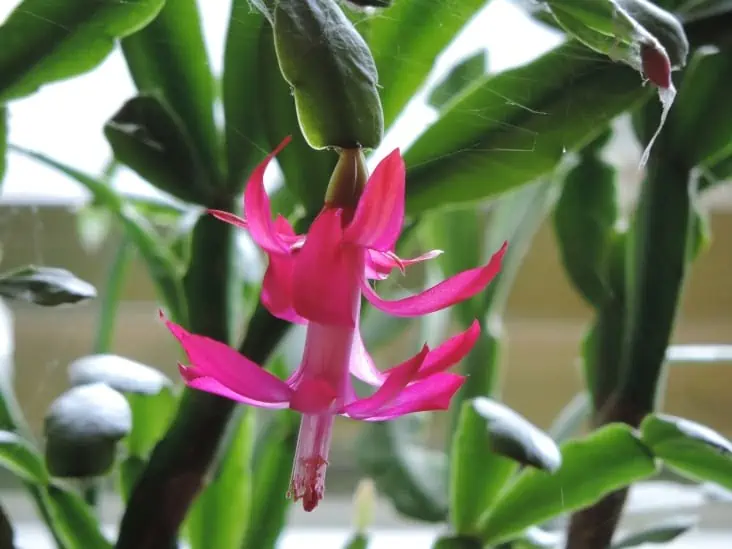
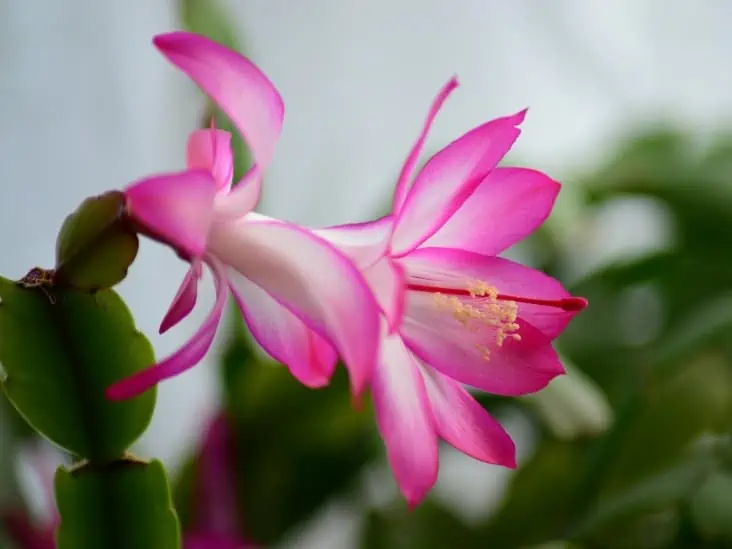
When it’s winter or springtime, the Christmas cactus becomes popular because many people use it as a gift. You can see the plants sold everywhere in flower shops and grocery stores. This hybrid cactus produces bright flowers that come with a variety of colors sure to captivate anyone. If you grow this cactus at home, you need to take good care of it for you to see it bloom during the holidays.

The best care you can ever give your Christmas cactus is appropriate watering. Unlike other cactus plants, Christmas needs more watering and proper care to live for days. They are epiphytes native to the tropical rainforests and grow on other trees instead of soil. This feature makes them completely different from other cactus in terms of moisture and nutrient needs.

So, how often should you water your Christmas cactus, and how much water do they need? We have all that covered in this article.

Check the Soil to Understand Watering Needs

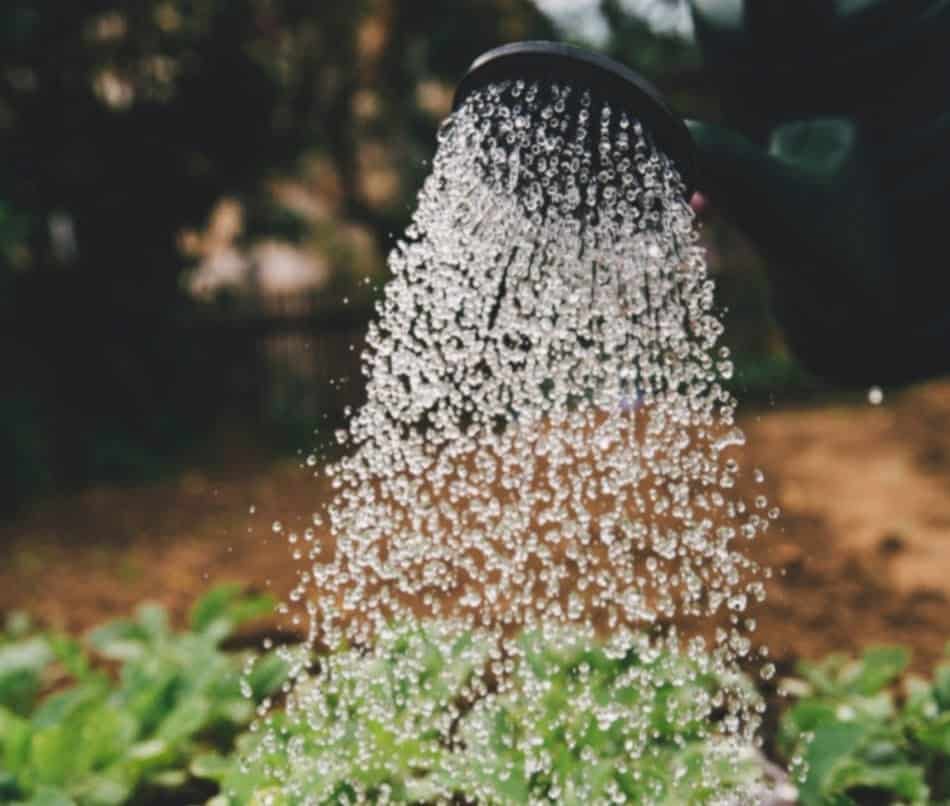
The best way to understand how often to water your Christmas cactus is to check the soil. As you already know, these cacti are not like the others, and they can’t tolerate drought. Once you notice that the potting soil is dry, you should water your plants.

When watering, make sure excess water drains to the bottom of the pot. You should never allow the soil to get waterlogged. Your Christmas cactus will not appreciate long hours of sitting on top of the water. If they sit on water for many days, especially in winter, the roots will rot.
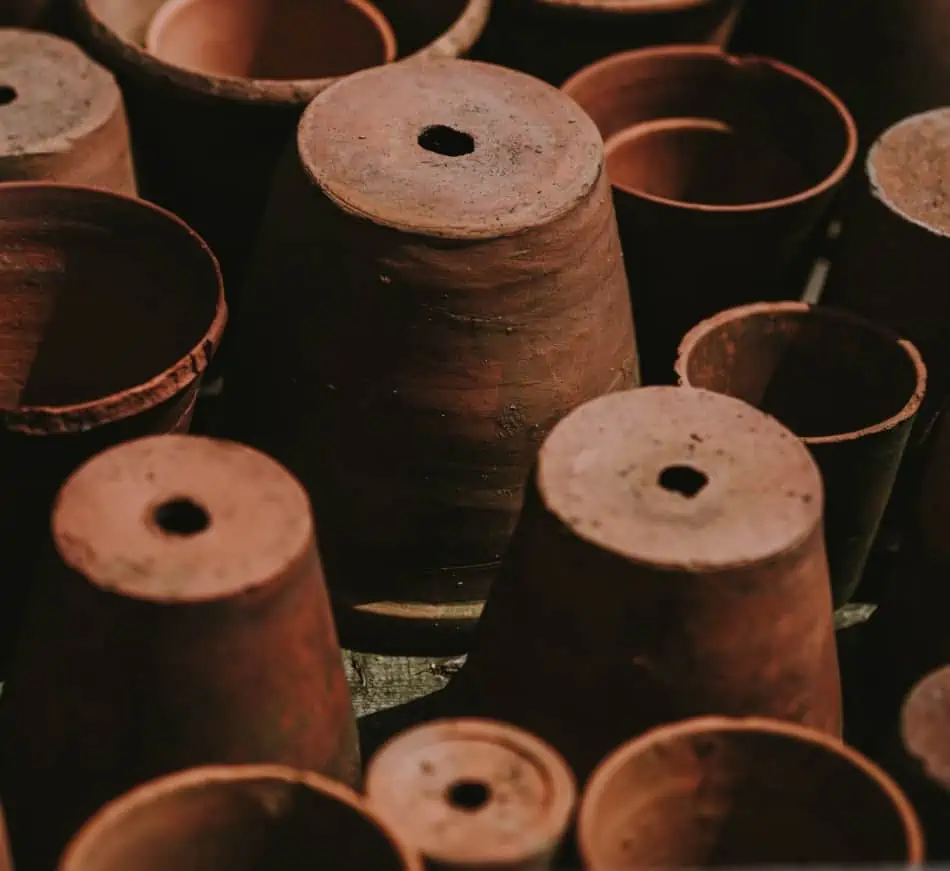
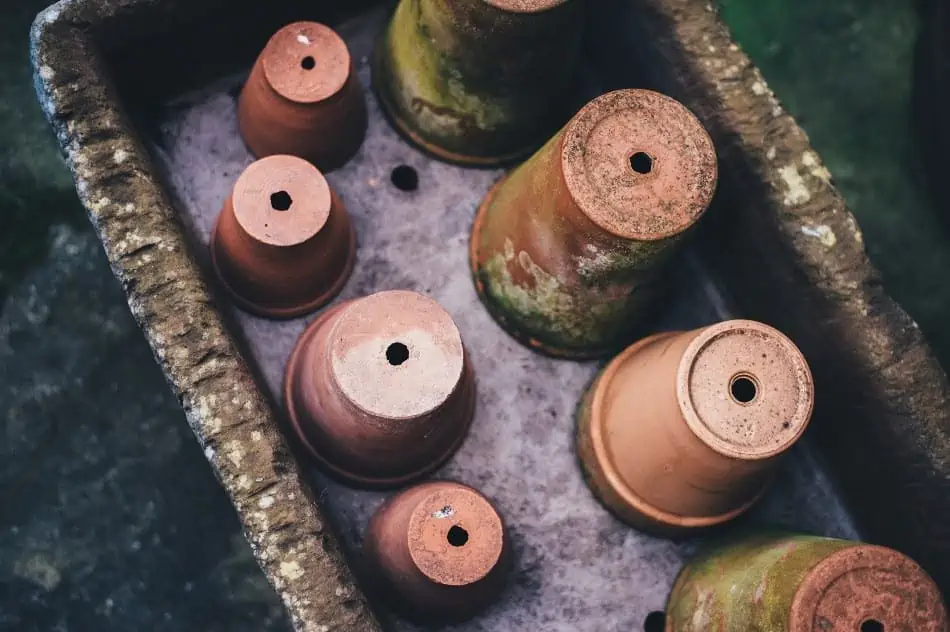
Always plant your Christmas cactus in a pot with drainage holes.

You should consider the type of potting soil you have under your plants. Check how large the potting container is as well as the sunlight and the temperature reaching your plants. If you want to get your plant to thrive, you must ensure you water whenever the soil is dry.

When to Water Your Christmas Cactus

When you have cactus in your home, you know they react differently to seasonal changes, and Christmas cactus is the same. To water your Christmas cactus the correct way, take into consideration the climate and the season. In a hot and dry climate, you need to give your plant more watering, which can be twice or three times per week.
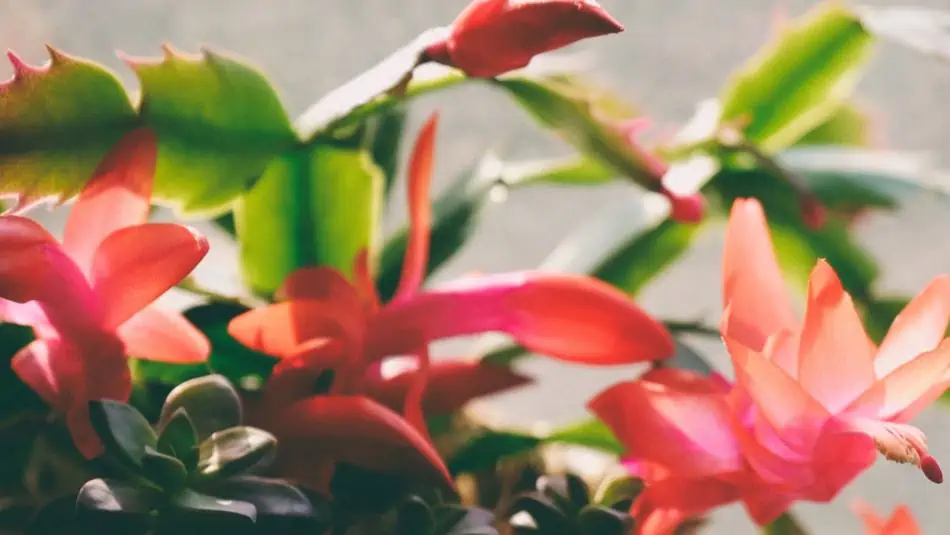
When grown in hot and dry climate, a Christmas cactus should be watered 2-3 times a week.

If the climate is cool and humid, watering once a week can work well. You should water even less in winter and fall if you want it to bloom.  Watering will also depend on where you place your cactus. If your cactus is exposed to a lot of sunlight, the soil will dry off faster, and your plant will need much more watering. If it’s in a humid and cool place, you’ll have to water it less.

How to Water Christmas Cactus

Now that you know when to water and when not to water your Christmas cactus, it’s also vital that you know how to water it. Do you water from the top or the bottom? Well, according to gardeners, the best way to water your Christmas cactus is from the bottom and not the top. Watering from the bottom ensures that enough water gets to the roots and reaches the plant.

If you water from the top, the water will not saturate the soil. The water will trickle down from the plant, and only a small amount will reach the roots of your cactus. If you use this method, you could think that you’re watering your plant the correct way when it’s under-watered. So, for your cactus to get the much-needed water, bottom watering will be the way to go.

Don’t Over-Water or Under-Water

While Christmas cactus may need more watering than any other cactus, over-watering can become a big problem. If you over-water your cactus, it will develop fungal infection and rot. If you notice that the leaves of your cactus are dropping, those are signs of white rot. Apart from dropping leaves, a cactus that has been attacked by the white rot seems to have white spots on the leaves.
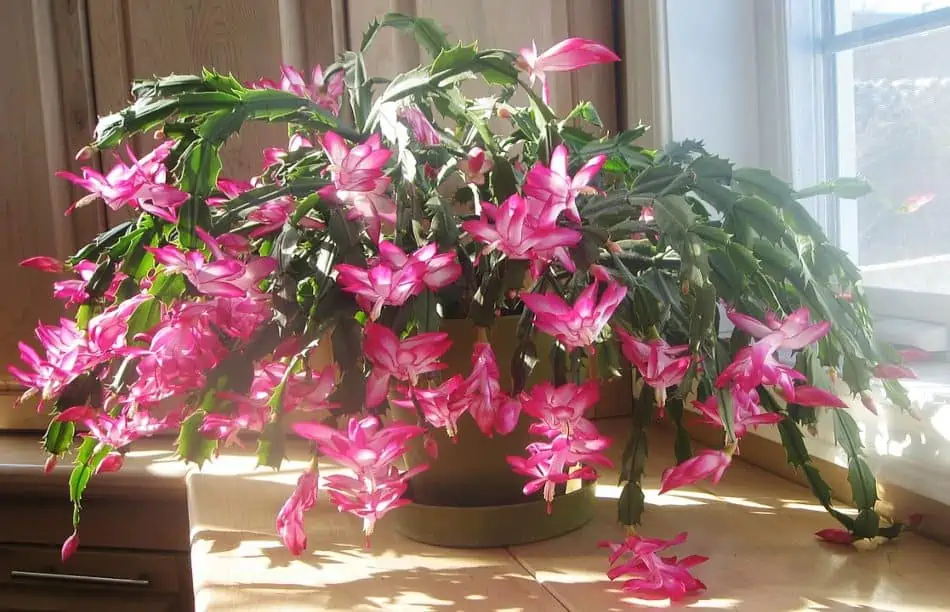
Overwatering and underwatering your Christmas cactus may lead to dropping leaves and wilting, respectively.

But the problem is not only on too much water because too little can also be a problem. Christmas cactus cannot withstand under-watering like other species. A Christmas cactus that doesn’t receive enough water will start to wilt. You’ll also realize that the flower buds of your precious cactus will start to drop. This cactus cannot tolerate dry soil.

Consider Transplanting Your Cactus

Regardless of how well you water your cactus and care for it, you might still notice that it dries out. If you notice it drying often or the flowers wilting, it’s not receiving enough water. The problem may not be the water but the container. Instead of continually watering your cactus, you’ll need to have a bigger container.

Consider repotting your Christmas cactus in a proper container with enough drainage holes and suitable soil mix.

Your Christmas cactus should have a container that drains easily. You need to have a soil mix perfectly made for your cactus and use the right pot for that. You can also combine your plain potting soil and the other with clean sand. Always remember that the size of the container matters.

Is Your Cactus Indoors or Outdoors?

The location of your cactus is one of the things you must consider when it comes to Christmas cactus watering needs. If your cactus is growing outdoors or near the window, you must understand that the temperatures here are too high and the air is dry; you’ll need to water your cactus two to three days a week.

If your cactus is growing indoors in a cool and humid environment, it will need less watering. You’ll also need less watering if your plant receives indirect light, the soil will not dry faster, and your cactus will do just fine with watering once per week.

What’s the Time of the Year?

Your watering season needs to change with the season. How you water your cactus in the hot months is not the same way you water in the cold months.  The temperatures drop in fall and winter, which means your potting soil will take longer to dry out. You won’t need to water it more often. This is also the time for your Christmas cactus to show its beauty. Watering sparingly will stimulate blooming to your cactus.

When October comes, you should stop watering your cactus all together because there will be too much water in the soil. By November, you should resume watering but remember to keep it light because the temperatures remain cool.

When you notice that your precious cactus has started blooming, you must cease watering. You should stop watering for about six weeks and allow your cactus to get enough rest from moisture.

With time, new growth will start emerging from your plant, and you must keep in mind that they’re very delicate. But the new growth means that you should resume watering your plant once a week.

Consider the Humidity around Your Cactus

Christmas cactus thrives well in environments with high humidity. If there’s not enough water in the air, the buds of your Christmas cactus will drop. If your location experiences a dry climate or your indoors have a dry climate, you should ensure you place a container filled with water next to your cactus. If you do this, your plant will get the desired humidity from the water that evaporates into the air.

Another way to increase humidity for your cactus is to put gravel on the tray and fill it with water, then put the potted plant. You can also mist your cactus with water once in a while to increase the humidity around. Another option is to place your plant near a humidifier. Or, you can move it from hot radiation or near the vents where there’s low humidity.

Additional Care Tips

Just because your cactus is receiving enough water doesn’t mean you neglect its other care needs. Many cacti need to be in bright locations and need to be fertilized.  Your cactus will only bloom and give you the benefits of a holiday cactus if you give it enough light and take good care of it.

Even though Christmas cactus love sunlight, you must ensure it doesn’t burn. You’ll identify a burning cactus when its leaves start turning yellow or brown. If this is the case, you should move it to an area with less direct sunlight.

Your cactus will also need fertilizers occasionally. However, don’t be tempted to give it more nutrients than it needs. The best time to fertilize is spring or summer. Don’t fertilize your plant when it starts to bloom or in the colder months.

Summary

Christmas cactus is a highly rewarding plant that is sure to add life to both your indoor and outdoor garden. But this only happens if you take good care of it through appropriate watering. Christmas cactus is more demanding in terms of water needs than other plants, and you must adhere to that. When watering, be careful not to under-water or overwater because that can kill your plant. We hope the information above helps you take better care of your plant.
This Is How To Propagate Christmas Cactus

Christmas cacti are those long plants with segmented leaves. The plant blooms in pretty colorful flowers around spring. They make perfect Christmas gifts when they bloom; hence, the name. Everyone loves this cactus for its vibrant look and what’s to have them in their home garden. But do you know how to propagate Christmas cactus?

Propagating Christmas cactus is easy. You can come up with a new plant by just clipping part of the already existing plant. But good timing is also vital in propagating this cactus. Usually, spring makes the perfect propagation time. You need to propagate it months before it blooms in spring or before it enters the dormancy period of winter.

But how successfully can you propagate Christmas cactus? This article has the answer to that and much more information on how to propagate Christmas cactus.

Ways to Cut Christmas Cactus

The Christmas cactus branches come in several sections that are linked together. At the bottom of the pad is where new roots grow and become a new plant. For proper propagation, you must ensure you separate the pads without damaging the bottom. If you damage the bottom in cutting, all your work will go to waste as the new plant won’t grow.

To propagate your Christmas cactus, you should separate the pads that are linked together.

To ensure you don’t damage your cactus and end up wasting your time, you need to twist the bottom pad when cutting gently. Gentle twisting will make your pad come out easily without tearing any part of the plant.

Another thing you should ensure is to take the short, Y-shaped cutting on the tip of the stem. The cutting needs to have two to three joined segments. For you to succeed, you should ensure you cut your cactus from healthy foliage. After cutting, let it dry for a few hours before transferring it to the pot for rooting. Make sure you don’t expose the stem to excessive moisture.

Rooting Christmas Cactus

Once you’ve cut your Christmas cactus and allowed it to dry, it’s now time for propagation. There are two types of rooting for the plant. You can root your Christmas cactus in water or soil. We’re going to discuss all these to see how they work.

Propagating Christmas Cactus Upright in the Soil

Rooting Christmas cactus in the soil is the best method to use if you want to succeed. If you got large cuttings on your plant, the best way to root them in the soil is upright.  Here is your step-by-step guide on rooting cactus in soil.

  • Lay your cuttings in a dry place for 1-2 days. Make sure you don’t expose them to direct sunlight. The resting period will help the pads adjust from growing shoots to growing roots. If you avoid exposing them to heat and humidity, the plants will be ready for planting in just 48 hours.
  • Place your plants into fresh potting soil. The best soil for this will be cactus and succulent mix. Make sure the soil covers the bottom pad of your plant.
  • Water your new Christmas cactus lightly and let it dry between watering. If you add too much water, the plants will rot.
  • The roots will start forming within 2-3 weeks.
  • Place your plant in a location that receives indirect sun. While the plants will need the sunlight, direct sunlight can also damage them.

Propagating Christmas Cactus on Top of Soil

The first soil propagation method is upright in the soil, while the second one is on top of the soil lying flat. This method works for smaller cuttings or if the bottom pad is slightly damaged. Here’s how this method works:

  • Let your cuttings dry in a dry place away from direct sunlight for 1-2 days.
  • After resting, place your plants on top of the soil horizontally. Make sure you’re using light soil, preferably cactus and succulent mix.
  • Make sure the two cactus pads have direct contact with the soil. The new roots will start forming from this point.
  • Keep the soil slightly moist, and expect to see some new roots by 2 to 3 weeks.
  • Be careful when using this method, as the pads laid horizontally in soil may get too wet and rot. Make sure the soil is only wet at the time of watering.
  • The actual cuttings should be dry as much as possible.

Propagating Christmas Cactus In Water

The next method to plant your Christmas cactus is in water. Many expert gardeners use this method as it’s the fastest method to get your Christmas cactus to root. But you should also know that this method involves extra labor since you’ll still need to transfer your plant to the soil once it roots. The transfer is very delicate, and you might end up destroying the new roots.

Propagating a Christmas cactus in water is the fastest method to get the plant to root.

For this method to work, you’ll need a glass jar with stones and your fresh cuttings from a healthy plant. Below is the method to use to root your Christmas cactus in water.

  • Make sure your cuttings range between three to four inches, with each having about three leaves.
  •  Leave them to dry for about two days so they form a callus and reduce the risk of rotting once you put the pads in the water.
  • Fill the bottom of your glass jar with stones or pebbles up to about two inches.
  • Add water on top of the stones.
  • Place your cuttings inside, ensuring the bottom touches water. The bigger part of your cuttings should rest on the jar. That’s above water and the stones.
  • Keep an eye on the water to ensure it doesn’t evaporate. If it does, add more water.
  • If the water doesn’t evaporate, you should consider changing it after some weeks. Keeping the water fresh all the time keeps away bacteria that might cause rotting.
  • The humidity in the jar will ensure the plant grows without rotting.

Give It Time

I know you must be eager to see your plant root and thrive into a beautiful Christmas cactus. However, you must understand that growth doesn’t happen overnight. How fast your plant roots and grows will also depend on various conditions, including climate and soil. You might do everything right, but your plant may take longer than usual if the natural conditions don’t allow it.

Your plant can take two to three weeks to root successfully. Once it roots, you’ll need to transfer it to a pot for it to start growing normally. Make sure you follow the proper transition process, so you don’t kill it. Watch out for the amount of water and sunlight you give it as this may be very strict at this time. Don’t soak it in water and avoid exposing it to too much sun.

Transferring from Water to Soil

If you root your Christmas cactus in water, you’ll need to transfer it to soil later. Start by keeping your cactus in a good location with enough warmth and indirect light. Well, you can expose it to some direct morning and evening light, but don’t allow it to get too hot.

After transferring your Christmas cactus into a pot, make sure it receives enough warmth and indirect light.

When it comes to watering, make sure you don’t overdo it.  Allow the soil to dry slightly before the next watering. But you still need to water your cuttings more than the regular Christmas cactus. As the plant grows, the watering should also reduce until you can allow the soil to dry completely. If you do it well, your plant will perfectly transition from being in the water to finally growing in soil.

Caring for Your Christmas Cactus After Propagating

If your cactus manages to reach this point, then you can pat yourself in the back for the work well done. However, you should not lower your guard at this point because the plant is still delicate and needs extra care.

To grow a healthy Christmas cactus, water the plant once the soil is dry.

Unlike other cacti, the Christmas cactus needs more watering. Once your plant is potted, you’ll need to water it regularly in summer and spring. However, this doesn’t mean that you saturate it with water, as this will cause root rot. Allow the soil to dry slightly before the next watering. You should stop watering for up to six weeks in winter and ensure you keep it on the dry side. Depending on the climate, you can also consider introducing mild fertilizer at this point.

Stay away from direct sunlight even after your plant is mature enough, as this can burn the leaves. The plant needs brighter light to produce more blooms but can still thrive in low light. The Christmas cactus enjoys high humidity, with temperatures ranging between 60 to 70 degrees.

Summary

Christmas cactus can be a very rewarding plant if you give it proper care. The blooms can brighten your home and give you perfect Christmas gifts for your friends, family, and colleagues.

However, if you propagate your plant and it doesn’t grow, don’t worry. Even expert gardeners do trial and error. Maybe, the problem may not be you or the method you used, but the plant. The best thing to do is to try again and see if it grows. Do your research on the care needs and growth conditions, so you get it right on your next trial.

11 Amazing Facts About Cactus Pear

The prickly pear is one of the most popular members of the cacti species. Thanks to the huge awareness of cacti, it has become a household name in many parts of the world.

The prickly pear has become so established in different parts of the world, including areas where it is not native.

In fact, it is so widespread that its original, natural habitat is still unknown. Some people believe it originated in Mexico, while others argue that it is native to California.

Whatever you believe, there are a lot of things to learn about the prickly cactus. From its delicious fruit to its blooms and flowers, the cactus provides you with a good learning experience.

In this post, we discuss some of the exciting facts about the cactus pear and what makes it unique. Read on to discover more.

1. The Prickly Pear Was Introduced In Europe by Christopher Columbus

There was a time when most parts of the world didn’t know about the existence of the prickly pear. However, things started to change when explorers to the new world began returning with the unusual plant specimens.  Many of them didn’t know if it would survive outside its natural habitat, but they had to try.

Although cacti were a familiar sight to many Americans and some parts of South America, the first cactus seen in Europe was a prickly pear specimen gifted to Queen Isabella of Spain by Christopher Columbus.

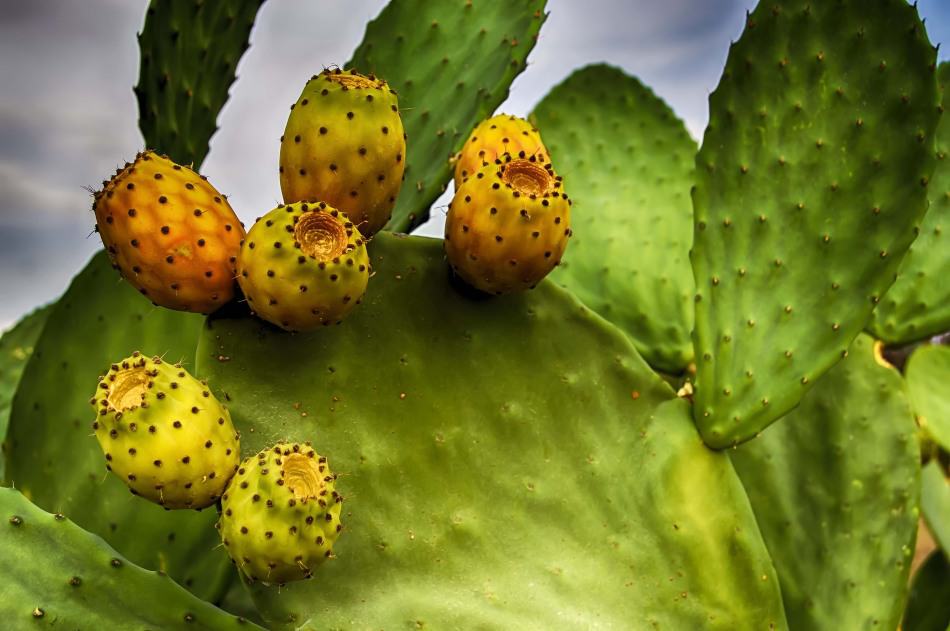
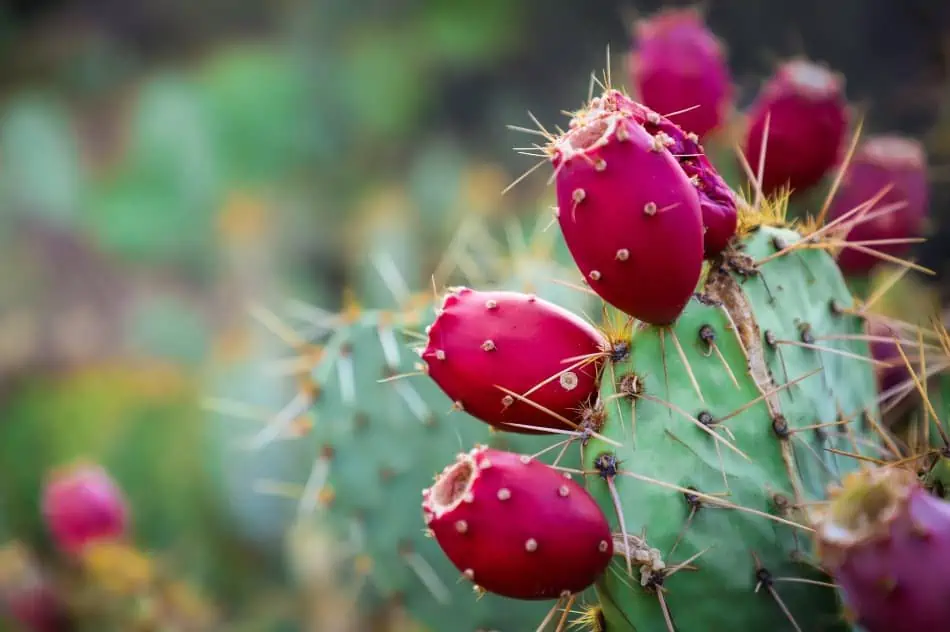
Prickly pear is a fruit-bearing cactus that can be found all across the globe.

Today, these succulents are all over the world. Most of them are found in the United States, including the Caribbean Islands and Galapagos Islands. Some of them can still be found in Old World areas too.

The prickly pear remains one of the most vital members of the wildlife community. Various parts of the plant provide food for iguanas, peccaries, deer, rabbits, tortoises, and many other bird species. They also provide shelter for reptiles, birds, rodents, and cactus wrens.

2. Desert Beauties

When the prickly pears blossom, it is always a scene to savor. The flowers vary in color and size and form exciting patterns.  The colors range from pink to yellow, magenta, red, or orange. Some of the blooms are large, while others are relatively small.

When several of these succulents are seen together during the flowering season, the site is indescribable.  The vibrant colors of their blooms illuminate the desert, giving it life. Bees and hummingbirds usually dance around the flowers for the nectar.

The plant is also home to desert wildlife running away from predators. Reptiles, rodents, quails, and different types of birds can all be found around the prickly pear. Therefore, it is good to be cautious when you are around them, especially in the desert.

When human beings don’t pluck the fruit, it is eaten by squirrels, peccaries, beetles, tortoises, jackrabbits, and iguanas.  The paddle is also edible, but you need to be careful with the spines. Take time to remove them and prepare your fruit appropriately before eating.

The cactus pear fruit is also popular for its natural cochineal dye. The dye is mainly used in our everyday products, such as cosmetics, pharmaceuticals, and textiles. Some of it is even used in waterproof paint for our homes.

Outside of the gorgeous flowers, the prickly pear still plays a critical role in the desert and human ecosystem.

3. Unique Identifying Features

The prickly pear is perhaps a unique cactus in the cacti family. The cactus can easily be identified thanks to its broad, flat, and green pads. The pads are covered with white spines that are approximately three inches long. The spines can be curved or straight.

The plant is also covered with tiny, barbed hairs referred to as glochids. You will notice groups of up to six spines emerging from common center areas known as the areoles. These areas are scattered all over each pad.

The flowering usually starts around May or June. And the fruits usually ripen around July. You will know that the fruit is ripe if it has turned to a bright red color.

The red fruit is also known as “tuna” and offers a wide range of health benefits. It has anti-inflammatory properties and can help you lose weight. It also improves your immune system and alleviates ulcers. 

4. The Spines Serve More Than One Function

As mentioned earlier, a prickly pear’s pad is covered with thorn-like structures known as spines.  While most of us think that these spines are only used for protection, the truth is that they serve more than one function.

Besides protection, they are also used for sun protection, drinking straw, and coats.  They reflect sunlight hence protecting the cactus plant from sunburn. They also keep out the cold on frosty nights.

Prickly pear spines protect the cactus from animals, sun, and enable the plant to absorb water.

Clouds of mist usually condense on the spines forming water which the cactus then absorbs. That is why they are sometimes referred to as “drinking straw.”

When animals pass near the plant, they get caught in the fur and fall far away, propagating into new plants.  This helps to ensure the plant doesn’t become extinct.

The prickly pear is also considered “musical” because its spines were traditionally used as gramophone needles. Don’t be surprised because they did the job pretty well.

5. They Are Intoxicating

Native Americans that interacted with the prickly pear extensively discovered that the plant was somehow intoxicating. Some of them chewed the plants raw, believing that it will take them closer to the gods.

They usually combined the prickly pear with the peyote cactus native to many parts of North America.  The peyote cactus contains mescaline that can be intoxicating when it reaches the human body.

Louis Lewin first examined the peyote cactus in 1888 and was able to extract anhalonin from it.  However, in 1896, Arthur Heffter conducted another experiment on the plant and extracted pure mescaline from it.

A few years later, Ernest Spath achieved a total synthesis that laid a solid foundation for the synthetic production of the intoxicant from peyote and prickly pear cacti. Mescaline is a powerful intoxicant that is illegal in many countries.

It has also been declared illegal worldwide by the United Nations Convention. In the United States, if you are found to be in possession of mescaline, you may be jailed for up to five years.

6. They Photosynthesize

Most of us know that every plant and animal requires food to survive. Plants usually make their own food through the process of photosynthesis.

During the day, their stomata open to absorb carbon dioxide that is used in the process of photosynthesis. However, this process uses a lot of water and would not be ideal for desert plants such as prickly pear.

So, how does the cactus survive?  Well, instead of opening the stomata during the day, prickly pear and other desert plants experience reverse opening and closing of the stomata.

It means that their stomata remain closed during the day to avoid losing a lot of water due to evaporation but opens during the night. During this time, the evaporation isn’t as high as during the day.

But since the plant cannot photosynthesize during the night due to lack of sunlight, the absorbed carbon dioxide is usually stored in the form of an acid.  During the day, the acid breaks down, releasing carbon dioxide into the plant cells to facilitate photosynthesis.

This way, photosynthesis saves up to 90% of water consumption. The only downside of this process is that it requires more energy than the normal photosynthesis process, but the prickly pear has learned how to handle it pretty well.

7. The Cactus Pear Is Both a Fruit and Vegetable

As mentioned earlier, the cactus pear fruit is also known as “tuna.” It is entirely edible and offers a wide range of health benefits.

Before you eat it, you need to ensure it is ripe and take time to get rid of any visible barbed spines that may get lodged in your throat.  However, that isn’t the only edible part of the cactus.

Both fruits and pads of a prickly pear are totally edible.

The green pads are also edible, and many people consider them a vegetable. Most people harvest them in late spring and early summer and dice them into their meals.

Many Mexican cuisines use the pads or fruit as an ingredient, and the culture is slowly being accepted in other parts of the world.

Most people who grew up in parts of South America must have eaten “nopalitos,” a term coined from the Spanish word nopal, meaning the cactus.

8. The Prickly Pear Pharmacy

Native Americans discovered much more than a food source in the prickly pear. Besides the nutritious element, the early inhabitants who loved the cactus also found a verifiable pharmacy in the plant.

The prickly pear has been used to treat cuts and bruises, stomach upsets, cold symptoms, constipation, inflammation, and even diabetes.

Prickly pear can be used as a treatment for diabetes.

If you or your loved one is suffering from a cold, simply heat the pad and place it on your chest to relieve the congestion. It won’t be long before you start feeling well.

9. They Are Great Cold-Hardy Plants

The prickly pear has adapted to handle extreme droughts, high heat, and cold temperatures. However, it can withstand temperatures as low as -20°F and still survive.

The cactus may look fragile on the outside, but it is quite a tough plant in its natural habitat. In fact, they are often seen thriving in areas where other plants won’t survive.

But it is always good to take proper care of your prickly pear during winter to avoid freezing and other cold-related issues.

Prickly pear plants can also be used as a natural windbreak to protect your home from strong winds during winter.

10. It Doesn’t Have True Leaves

The prickly pear has flat, green parts that resemble leaves. However, these parts are not true leaves. They are known as pads and serve as modified branches. These branches serve several functions, including water storage, photosynthesis, and defense against animals.

The pads are usually covered with white spines that protect the plant from predators. They also provide shade to other plants.

The spiny pads also store energy in the form of glucose for the cactus during periods of drought or intense heat.

The leaves of prickly pears are modified spines as well. They usually produce small, yellow flowers that appear at the top of the plant in summer.

The fruits have leathery skin and are edible. They can be eaten raw or cooked. The cactus pear fruit is a popular ingredient for making jams and jellies.

11. Prickly Pear Seed Oil Has Many Benefits

Prickly pear produces edible fruits that have seeds. In most cases, the seeds are discarded as waste. However, they possess unique properties that make them beneficial to humans.

The oil extracted from prickly pear seeds is gaining popularity due to its numerous health benefits.

It consists of essential fatty acids like oleic and linoleic acids, which can help reduce inflammation and preserve skin moisture. Other compounds in the oil include vitamin E, squalene, and phytosterols.

The oil can help reduce the appearance of wrinkles, fine lines, and other signs of aging. It also has antioxidant properties that may help protect skin from damage caused by sun exposure and pollution.

Furthermore, it can be used to nourish dry hair and scalp and treat skin conditions like eczema.

The oil from prickly pear seeds is also gaining traction as a food supplement because of its anti-aging properties.

It can help you maintain healthy cells and reduce the risk of degenerative diseases such as cancer, heart disease, diabetes, and Alzheimer’s.

Final Thoughts

That is it about some of the exciting facts about the prickly pear, and we hope you enjoyed reading this post. 

So, what are you doing next? Grabbing your car keys and heading to your local nursery to find yourself a prickly pear? Go on and let us know if you like it.

How To Grow A Peanut Cactus

The peanut cactus (Echinopsis chamaecereus) blossoms on the rocky Argentinian mountains, their native grounds, all year round. This species is a great choice for indoor gardening, cherished for their fuzzy, peanut-shaped stems and scarlet-orange spring and summer flowers. They are easy to care for, and their otherworldly appearance is priceless and worth any hassle. Like any other cactus, you can easily get impressive results with minimal effort.

What does it take to grow a peanut cactus? To sprout quickly, grow your peanut cactus from the parent’s stems. Harvest a young stem from the cactus stump at the tail-end of fall. Nip the fingers from the plant’s base and regrow the budding shoot in commercial cactus soil mix or a homemade potting mix of sand, peat moss, and loam in the ratio 2:1:1. Each cutting is to be planted in its pot protected from direct sunlight. Give them just the right amount of water and watch the bloom. For better results, enrich their soils with fertilizer, two-three times a year.

This article will expound in depth all the factors that go into successful propagation and care of the peanut cactus. It will delve peanut cactus’s basic traits, best conditions for growth, its varieties and hybrids, aesthetic uses, illuminate tips for cactus propagation, transplanting, watering and grooming. This will include pests and diseases that affect this species. It will also point at special care tactics that suit the plant’s seasonal needs.

Characteristics of the peanut cactus

  • They grow as a clump of stems that mimic human fingers. New stems are usually erect and plump while old ones turn woody and brown. The stems have shallow ribs coupled with six to nine ridges covered in small white bristly spines. They are a low-growing species that grow to about 15 cm tall and 30 cm wide.
  • They grow relatively fast compared to other cacti species. The numerous offsets will easily crowd a pot sooner than other cactus plants can.
  • They flower in early summer and late spring, producing oversized brightly-colored red and orange flowers – 3 inches long and 2 inches wide.
  • Its flowers are funnel-shaped with hairy floral tubes. Depending on the variety, they can either be nocturnal or diurnal. These blooming characteristics make it a desirable choice for cactus gardening.
  • They produce hairy globular fruits with mushy insides. Within the fruit are seeds that can be used to propagate the peanut cactus.
  • They are spiny and wind in a spiral manner. The spines are, however, soft and do not penetrate the skin. This makes them ideal for indoor landscaping for homes with curious kids and notorious pets.
  • They succumb easily to flooding and over-watering.
  • They do not tolerate extremely cold winters.
  • They require full to partial sunlight to get by, especially in summer. Peanut cactus requires at least 6-8 hours of sunlight a day for its survival. This cactus may, however, require some shading, particularly during spring. Under poor lighting, the stems can grow long and thin. It would be best if you aimed to strike a perfect balance for light exposure and shade to prevent scorching the stems or undernourishment.
  • The species goes through a dormancy period where they shrivel up abit and acquires a slight reddish tinge on their stems. The dormancy antecedes the flowering season. During this period which the green creeps back the stems as watering continues in spring.

Propagating peanut cactus

As much as they are flowering desert plants, peanut cacti are easily propagated using stem cuttings or offshoots from the mother plant.

Although you can grow a peanut cactus from seeds, growing the plant by propagating its offsets is a much quicker way.

Here is a step-by-step guide on its propagation:

  • Hold up the spiny offsets using tweezers and cut the stem right from the base. The offsets are easy to detach from the mother plant since they are weakly attached naturally.
  • Dip the snipped part in a growth hormone and cure using an antiseptic solution before planting it into potting mix. An antiseptic solution like cinnamon helps to keep fungal and bacterial activity at bay.
  • Before planting, allow the slit part to form a callous. The callous is a sheath that protects the plant from pathogens.
  • The cultivars are then grown in a potting mix. You may opt to purchase your cactus mix online or make your own soil mix at home.
  • Within a few weeks, your cuttings should develop roots and grow into a healthy cactus with the right care.

Peanut cactus can still be propagated using seeds. However, this is not recommended because the plant will grow at a snail’s pace when propagated compared to cuttings. Cuttings are far along the germination process, unlike seeds that have only just begun. The beauty is that it can form many offsets all at once, many times in its lifetime.

Fertilization

Applying fertilizer to a peanut cactus will cause tremendous growth spurts. However, dosing up the plant with fertilizer, all at once, is not preferred.  They would rather take it in small amounts- keeping them nourished all year long. While applying fertilizer once a year is acceptable, doing it at least twice is the regarded even better. Too much of anything can be harmful, and this also applies for plants. Excessive application of fertilizer can scorch the cactus. A good gardener would probably make a fertilizer feeding chart for better management of the fertilization schedule.

You should fertilize your peanut cactus 1-2 times a year.

Growth options and conditions

Peanut cactus can be grown as a houseplant or outdoor cactus, dictated by the area’s climate. It thrives in zones 10 through 12 of plant hardiness. These zones ranges between 30˚F to well over 45˚F in temperature. This species is known to grow outdoors in regions like California, Florida, Nevada, and Arizona. Despite this, this hardy, versatile species can grow anywhere in the world. You can grow it indoors, provided it does not miss out on adequate sunlight.

If you have decided to grow a peanut cactus indoors, make sure the plant gets enough sunlight.

Watering the peanut cactus

Peanut cacti, like other cactus species, require watering in moderation. The species is adapted to seasonal deluges or no water for days. The soak and dry method is ideal; water is added whenever the soil appears or feels dry. To test this, stick your finger in the mound of soil. Water the cactus if at least one inch of the soil feels dry.

 Water the plant from the sides rather than directly pouring water from the top. Overhead watering is wasteful and, if done in the heat of the day, can cause increasingly high rates of evaporation. Watering below ensures that the water seeps down the soil into the roots. They are best watered at dusk or dawn.This way, they get to utilize the moisture rather than losing it through evaporation.

Under-watered cacti tend to fall over thanks to the little water in their stems. Water plays a critical role in the turgidity and support of stems. Without water, its cells are flaccid, and this may cause them to droop over. It would help if you struck a fine balance in your watering regime to avoid deprivation or overabundance.

Transplanting

Repot your peat cactus every three years using damp soil with excellent drainage. Repotting is a crucial and less recurrent step that happens in the life of every potted cactus. This should be done with care to keep the roots from breakage and injury.

Cacti roots may run out of breathing space, and hence, repotting gives it room for growth. Once a peanut cactus matures, it produces a dozen offshoots and stems. This bunch of stems can be reduced to cuttings that you can pot separately to grow into mature peanut cacti.

Repotting your peanut cactus will give the plant some extra space to grow and protect it from various diseases.

Transplanting is a great hack for disease prevention. Murky and poorly-drained soils harm your cactus’ roots. This can result from overwatering or using poorly-drained soils for cactus potting. To spot an ailing cactus, be on the lookout for wilting.

A sickly peanut cactus improves drastically when potted in fresh soil. Frequently changing the soil can help kick disease to the curb.

The other reason for transplantation would be increased nutrition. In about two years, the cactus plant sitting in the same pot has chugged down any growth nutrients and the soil slowly loses its fertility. New, freshly prepared soil mix is a natural way to replenish long-lost nutrients and boost the plant’s overall health. Commercial fertilizers can still be used, but fresh home-made soil mix comes with purely natural elements that help the cacti thrive till the next repotting.

Fortunately, the peanut cactus does not require any pruning. No tipping, topping, head-tracking, or plant mutilation is unnecessary. Trimming columnar cactus might be tricky and is done when part of the plant experiences damage.

Uses of the peanut cactus

Indoor landscaping

The miniature plant displays a beautiful array of bright crimson-orange, unscented flowers during spring and summer that is such a beauty to behold. They do well when grown on hanging baskets or pots placed to flatter your window sill or office desk.

A peanut cactus can be an ideal addition to your indoor cactus garden.

Peanut cactus can be grown together in the same pot with other flowering cactus perennials sporting different shades of color. This contrast will help create a most desirable floral display. Pair the peanut cactus crimson-orange flowers with yellow flowers from ball cactus or the star cactus’ white flowers, and watch your cactus garden transform.

Outdoor landscaping

This cactus variety is an ideal species for xeriscaping. Grow your peanut cactus in a rock garden. This is a popular xeriscaping trend that you must try. Peanut cactus will get you there and fulfill your gardening fantasies. A flowering cactus is a great way to complement a regular garden. As a rule of thumb, fill up spaces and vacuums. In a garden, this can best be done using succulents like the peanut cactus.

Peanut Cactus Varieties

This plant has been immensely hybridized with other diverse species considered a subset of the same genus. Crossbreeding in cacti is advantageous as it helps introduce new desired traits such as drought tolerance that improve survival. It helps enhance already present desirable traits as well purge and dilute the least desirable qualities.

One of the peanut cactus varieties that came about as a result of crossbreeding is the yellow stemmed peanut cactus (Echinopsis chamaecereus var. lutea).This variety lacks chlorophyll and cannot survive under direct sunlight. It has been grafted with a green stemmed species (Hylocereusundatus) to enhance its chances of survival.

Peanut cactus has been extensively hybridized with members of Echinopsis species, yielding hybrids with larger showy flowers with red, orange, and magenta hues. Duotone blooms of pink and yellow and pink and red colors resulted from hybridization, creating a colorful species. The hybrids are erect and have wider stems. Other clones such asx Chamaelobivia f. cristata have fuzzy stems that resemble caterpillars.

Pests and diseases

Bug infestations

Peanut cactus is highly susceptible to cactus spider mites but can be infested with weevils, mealy bugs, whitefly and scale. Spider mites sap the plant’s juices. They manifest as small yellow or white patches that appear on the stems. To shoo them away, spray the stems with water. You can also use a miticide to mitigate infestation effectively.

For biological control, Phytoseuiluspersimilis is a potent natural predator that helps abate pest infestation. Other bug infestations can be controlled using insecticidal soaps and contact or systemic insecticides.

Black stem and root rot

This is a fungal infection caused by overwatering. The rot creeps from the plant’s base and eventually leads to poor growth, discoloration and eventually, death. Root rot is a deadly manifestation because it occurs in the roots, where you may not easily notice until it is too late. The damage caused with extensive progression may be irreparable.

Prevent your peanut cactus from overwatering to protect the plant from root rot.

Dealing with the stem and root rot

  • Use thick gloves or a newspaper, remove the cactus from the pot.
  • Observe the condition of the root and the stem. Healthy cactus roots are white in color while infected roots appear black or brown. Salvage the rest of the healthy white roots by cutting away the black-brown rotten roots.Discard the plant if all its roots are rotten.
  • Leave the cactus to dry until callouses form on the cut regions.
  • Repot the cactus using fresh cactus potting soil.

To avoid this in the future, watering sparingly will help minimize the rot.

Signs of nutrient deficiency in peanut cactus

Nutrient deficiency diagnosis for the peanut cactus can be easily done from it physical traits. For instance, stems falling over the place can be suggestive of undernourishment. Nutrient deficiency is easily overlooked since its manifestations may either resemble a pest invasion or seem like an accident. The main culprits behind stems dropping down are nutrient depletion in the soil and inadequate exposure to sunlight.

Inadequate nutrients in the soil – In some cases, cactus roots become too weak to support the plant’s frame thanks to malnutrition. To salvage this, a balanced fertilizer is highly recommended, with phosphorus in higher abundance than nitrogen in a 5-10-5 solution.

Insufficient sunlight – Cactus stems tend to droop with inadequate sunlight. Stems begging for sunlight will grow gravitating towards a window or any source of natural light.By nature, plants are phototropic – survival instinct that enables them to reach sunlight. This growth inclination towards the direction of sunlight is referred to as phototropism. With easily detachable stems like the peanut cactus, it is only a matter of time before the stem falls over. So, the next time you notice fallen stems, try and understand why it happened. It is, however, no cause for alarm; you can easily rectify the problem. All you have to do is place the pot under the light that the plant yearns.

Special treatment during winter

The peanut cactus requires that extra care during winter since they cannot tolerate these extremely cold conditions. When night temperatures drop to just about the freezing point, consider taking the plant back to the house.

Place it in a cool place for the rest of the months to come. During this season, you may not need to water the plant as it would be in its dormant stage. Make sure the cactus pot has a drainage hole to pass out the excess water.

Towards the end of winter, bring the plant to a warmer spot. This gradual change of temperature prevents the plant from experiencing heat shock – a major cause of distress in plants that can detrimentally affect its growth. Heat shock manifests as wilting.

Consider taking your peanut plant indoors in winter to protect the plant from freezing temperature.

Before the start of bloom, transplant your peanut cactus to its final home, where it will remain for the rest of the blooming season. Remember, repotting in the flowering season will sabotage the process.

For the peanut cactus, you have to work a little harder to achieve the desired floral display for the season to come. Optimizing growth conditions will likely lengthen the blooming period and yield a spectacular floral bloom. Increase watering as spring approaches. Add liquid fertilizer when watering the cacti. Liquid fertilizers are easier for plants to utilize since they are readily absorbed. Flowering lasts one to two weeks. Once the flowers start to wither, move the plant near a sunny window or outside altogether. Ensure the plant gets access to full sun after flowering.

The peanut cactus is a great cactus option for a gardening experience. They are an easy-to-grow succulent with close-to-nothing requirements that grow fast and bloom in spectacular, showy flowers you can brag about. If it isn’t for the bristly segmented pickles sprouting from the ground as a clump, the flowers that crown the plant’s apex are worth the gardening experience. It will also add to your botanical genius growing this rare and exotic species.

How To Grow A Jumping Cactus

The Sonoran desert can be beautiful to look at when cacti bloom. However, do not be deceived, some cacti species can be nasty when you get closer. One of these is the Jumping Cholla cactus. The cactus gets its name from its habit of ‘jumping’ from its parent plant to the ground or onto the skin of any animal that passes by. This is a unique adaptation that helps the cactus procreate and multiply in different locations.  Once the spine is ripe, it easily detaches from the main plant and will begin rooting once it hits the ground. The jumping cholla cactus is one of the largest cacti in the desert, rivaling the likes of the giant saguaro.

So, how do you grow the jumping cholla? Considering its natural ability to detach from the parent plant onto the ground, growing a jumping cholla should not be much of a problem. The cactus can be propagated from its stem, seeds or offsets.  It grows best under direct sunlight and the soil should be dry and well draining to avoid root rot. Once the plant is mature enough it grows some little sharp spines. Avoid pricks and injuries to the skin when handling it by wearing thick gloves. The Jumping Cholla works well when grown together due to their unique growth pattern.

Facts about the Jumping Cholla

  • The jumping cholla can live for decades in their natural habitat and even longer when grown at home.
  • Unlike most other cacti, they thrive best under direct sunlight. Since they do not need much water, they are tolerant to neglect and can be idea for those who travel frequently.
  • A mature jumping cholla will easily attach to anything that comes close. When it gets in contact with the skin, it is not toxic but can cause a painful irritation. As such, consider keeping them away from reach of children or any curious pets.
  • They are excellent complements to other indoor succulents like yucca, aloe and agave.
  • The jumping Cholla can grow to a height of up to 15 feet.
  • Their blooming season comes between April and June. Its star-shaped flowers come in warm colors like red, pink, orange and yellow-green.
  • The jumping cholla produces some green fruits after the flowering season. The fruits would hang down from the branches. These spineless fruits also have fertile fruits that can be used to propagate the cactus.

Types of Jumping Cholla

The jumping cholla is a general name usually used interchangeably in reference to the Cylindropuntia fulgida (Chain fruit cholla) and the Cylindropuntia bigelovii (Teddy bear Cholla). Both varieties feature joints that detach from the main plant and hold on to anything in the vicinity.

Cylindropuntia fulgida (Chain fruit cholla)

This jumping cactus stands out with its cylindrical jointed stems. These stems usually stand about 8 to 10 feet tall. The light green stems feature some knotty ridges. This variety blooms magenta purple flowers that grow to about 1.5 inches wide. The chain fruit cactus gets its name from the growth pattern of its fruits. Its produces its fruits persistently and its aerosols will keep churning out even more fruits, thus forming a chain of fruits.

Chain-fruit cholla cactus features stems that are 8-10 feet tall.

Cylindropuntia bigelovii (Teddy bear Cholla)

The Teddy bear Cholla features some jointed stems, 2 to 10 inches long. This stem would usually be hidden in a dense array of spines, 7 to 10 inches long. Its branches are not truly cylindrical thanks to the raised areas, hereby called tubercles.

This Jumping Cholla variety features some greenish yellow flowers about 1.5 inches wide. The flowering season is then followed by some deciduous, fleshy fruits.

Teddy bear cholla cactus comprises joint stems that are 2-10 inches long.

Propagating Jumping Cholla cactus

Jumping Cholla cactus is an easy growing plant as long as propagation is done right. You can easily propagate this cactus, either by seeds or by its cuttings.  However, while propagating by seed can be a sure way to get a pure species; this may not be the best method if you are looking to get quick results. Seeds take time to germinate, and when they do, their growth is slow.

Propagation though cutting is a popular method for the cholla cactus.  This can be done easily using is stem offshoots. These stem offshoots grow some weak points where you can easily pluck out and grow in a separate pot.

The Cholla cactus is a sensitive plant, and you do not want to gamble during propagation. Some of the notable factor to take into consideration before propagation is the temperatures, and the season. Ensure that the temperatures are at least 60°F (16°C). These are ideal temperatures that will allow successful rooting.

When taking your cuttings, always ensure that you get the specimen from healthy plants that represent the best of that species. Avoid taking cuttings with dents, blemishes, bruises or those generally looking shriveled or diseased. A healthy cutting will translate into a healthy plant that may not need much attention once it matures. All you will need to do in such case is to water once in a while and keep watch on pests and bugs.

Here is a step-by-step guide on how to propagate a Jumping Cholla:

  • Remove your chosen stem offshoot from the parent plant using a sharp and disinfected knife. Alternatively, you can simply snap it off from the joint using your hands. Always use thick gloves when handling that Cholla cactus to avoid pricks from its spines.
  • For cuts, always ensure that you cut of your offshoot in a slanted manner. This is important in helping protect the parent plant from water collecting at the cut area.
  • Dip the base of your cutting in sulphur or other common rooting compounds to improve the chances of rooting.
  • Let the cutting dry off for a few days until the base is callused. This is an important step to help avoid cases of the cutting rotting once it is planted. It is also important in helping protect you cactus from common soil-borne diseases.
  • Once the cutting is callused, get some good soil mix. You can make this at home or purchase the commercial versions. A good soil mix should contain at least 50 percent peat or compost and 50 percent pumice or perlite.
  • Get an ideal container and fill it with your soil mix. Your container should be well draining with drainage holes that help drain excess water.
  • Place your soil deep enough into the soil to avoid it tipping over. Ideally, the cutting should be covered at least 3 inches into the soil.
  • Apply some little water sparingly if the soil is too dry
  • Position your container in a bright location. This could be by the window or balcony where sunlight can easily reach.

With the right propagation, you should notice some signs of rooting within a few weeks.  A growing tip will be a good sign that roots are already developed and that the plant can now tap nutrients from the soil.

Watering the Jumping cholla cactus

The Jumping Cholla cactus may be a desert plant, but this does not mean that it needs no water. Just like any other plant, the cholla cactus needs water for better nutrient uptake and healthy growth. The only difference in this case is that it does not need much water as it can tolerate longer periods of drought. Based on this, watering should be done in moderation. Overwatering your Jumping Cholla cactus can lead to root rot, and you do not want to go this route. It is better to under-water than over-water the cactus as the latter can be detrimental to its survival.

Although Jumping Cholla is a desert cactus, you still need to offer the plant enough water to grow healthy.

For a Jumping Cholla, watering should be done regularly for the first few months as the plant gets used to the new environment. Once it settles in, watering can be done less often. During your watering regime, always ensure that the top one inch of the soil feels dry before you water it. The frequency of watering can, however, be determined by the weather conditions of the region. For instance, hotter regions may need more frequent watering compared to colder areas thanks to the high percentage of water loss through evaporation.

Light requirements

Just like any other cacti, light is an important element for the Jumping Cholla. This is especially so during the first stages of its life. As such, you may see the need to place it in an area where it can tap maximum sunlight. Such locations may include a south or southeast facing window, a conservatory or even a greenhouse in case of an outdoor garden. However, in cases where access to natural light is a challenge, you can opt for artificial sources of light in the name of grow lights.  These can replace the need for sunlight and you can purchase from any electronics store.

Jumping Cholla cactus requires 10-14 hours of light, especially during the first stage of life.

Access to light for at least 10 to 14 hours a day is recommended to the jumping cholla. This light comes in handy to help trigger chemical reactions for the plant to produce energy and food. However, since the cactus also needs to make its own food through the CAM photosynthesis, it also needs some dark periods for better development.

Fertilization 

The jumping cholla cactus may be adapted to thrive in the barren lands with little nutrients, but this does to mean it does not need some fertilizer when grown at home.  Feed your jumping cholla with a balanced granular fertilizer on a regular basis. In this case, you care better off with fertilizer specifically made for cacti and other succulents. However, you can also use water-soluble, low nitrogen fertilizer on the plant. This will help maintain a consistent flow of nutrients to the plant without compromising on the plant’s survival.

You should fertilize your Jumping Cholla cactus with a balanced granular ferilizer regularly.

Having said this, it is also important to note that too much of the fertilizer can be detrimental to the health and growth of the Jumping Cholla. Too much fertilizer can cause the plant to become weak and eventually droop over. The best fertilizer in this case would be an NPK fertilizer with a ratio of 5-10-10 or better still 10-10-10 but diluted to ¼ of its strength.

The best time to fertilize your cactus would be during your watering regime.  Here, you will dissolve one tablespoon of your soluble fertilizer in one gallon of water.

Repotting the Jumping Cholla cactus

With the right care, your Jumping Cholla will grow fast, and within no time, you will see the need to repot. Repotting is necessary for two main reasons:

  • To help get the plant some fresh, fertile soil free from diseases and pests
  • To help avoid too much crowding of the root once the container becomes too small

These two factors are aimed at ensuring your cactus remains healthy and strong all trough its lifetime. When repotting, consider the type of container to use. For hot areas, you are better using a plastic container as this helps maintain soil moisture for much longer. On the other hand, taller varieties of the cholla cactus may need clay pots as these absorb excess water thus saving the plant from root rot occasioned by over-watering.

Repotting your Jumping Cholla cactus will give the plant some fresh and fertile soil along with extra room to grow.

When repotting the jumping cholla cactus, ensure you brush off excess soil from previous container before repotting in the fresh soil. For outdoor gardens, however, you do not need to do any repotting.  All you need to do is keep monitoring through proper watering and fertilization. Once the plant achieves enough offshoots, it will be time to propagate into new plants.

Pests and diseases

The jumping cholla may be resistant to many pests and diseases but it is mostly susceptible to cochineal scale insects. You will easily notice them thanks to their sticky white appearance. These insects eat up the plant by sucking its sap, thus causing some white and brown patches. For outdoor gardens, you can easily do away with these insects by spraying it with a garden hose. For indoor gardens, however, you may see the need to use a mixture of water and alcohol. Apply these on the plant’s stem focusing on the affected areas.  Within a few days, the insects will be no more.

Another notable pest for the jumping Cholla is the cactus longhorn beetle. These are usually about one inch long and adults are shiny black with distinctive white patches on their antennae. They attack the cactus by burrowing into the stems and laying their eggs. This leads to some black rusty deposits on the stem. In extreme cases, the larvae can attack the roots causing the plant to droop over and die.

The longhorn beetle can be easily eradicated by handpicking from the stem. In cases where the population is high, chemical control can be applied.

Common diseases that can affect the jumping cholla include root rot and stem rot. This is mostly caused by poor watering by either over-watering or under-watering.

Is a Jumping Cholla cactus edible?

The Jumping cholla has edible fruits and buds. However, considering the natural appearance of the cactus, it is adapted to protect itself from predators. As such, you may need to work harder before getting something edible from the plant.

The jumping cholla produces fruits that are edible all year round. These can be eaten, either raw or boiled. In case you want to eat them raw, you can only eat the insides. However, boiling it will mean that you can eat the fruit as a whole. Usually, the larger fruit varieties are better-tasting compared to the smaller ones.

Cholla buds bloom in late April or early May. These buds are highly nutritious, low in calories and high in calcium and iron.

Whether you are harvesting its buds or fruits, it is important to note that jumping Cholla has glochids that can be dangerous to the skin. These, almost invisible spinelets can easily prick into your skin. As such, it is advisable that you brush off any traces before picking or cooking.

Jumping Cholla cactus produces fruits that you can eat either raw or cooked.

Whether you are looking to plant it for aesthetical reasons or for food, the cholla cactus is an interesting plant. As much I may be used as an indoor plant, it is best suited for an outdoor garden. This is all thanks to its ‘jumping’ tendency that can be uncomfortable around children and curious pets. When growing indoors, ensure you prune or cut off excess offshoots to prevent the plant from overgrowing. This should be the perfect opportunity to propagate and get even more plants in your garden.  This is a pretty awesome plant that can thrive even in the harshest of conditions. Just ensure they experience the right warmth, regular watering, full sunlight and pest free conditions. With the right care, these cacti can produce bright flowers that can help bring pomp and color to both your outdoor and indoor landscapes.

13 Beautiful Cactus Blossoms To Add To Your Home

Cactus is a popular plant in many homes for both indoor and outdoor gardens. Even though the plants originate from the desert, most of them can grow happily indoors. Some require very little care and can survive long months of neglect.  But if you want them to blossom and adorn your garden with nothing but beauty, you have to take excellent care of your cacti.

Cactus plants come in different shapes, sizes, and colors. Some boast beautiful flowers, while others have stunning shapes. Others have spines, while others are spineless. There are also some, like the old lady cactus, that grow attractive white hairs. The good thing is that most cacti require little maintenance and can do well in both your indoor and outdoor garden.

So, if you’re looking for ways to add some beauty and glam to your home garden, you have plenty of options to choose from. Here are 13 awesome cactus blossoms that will do well in your home.

1.  Christmas Cactus

You can never go wrong with Christmas cactus if you want to add unique blossoms to your home. This cactus is not named Christmas for nothing as the plant has a way of leaving beauty in every space it touches. The cactus plant brightens the holiday seasons with bright pink blooms perfect for Christmas gifting.

Christmas cactus features bright pink flowers right for the holidays.

Christmas cactus is a little different from other cacti because it requires more watering and blossoms in a humid climate. This might be the reason why this amazing cactus blooms in winter. The plant also does well indoors and requires moderate home conditions.

Even though Christmas cactus needs more watering than other plants, be careful not to overwater it because the roots can rot. The cactus can adapt in low light but will only bloom if you give it enough light. It can bloom twice per year under good conditions.

2.  Cholla Cactus

Cholla cactus is a cactus species that are almost related to the prickly pear cactus. The cactus forms unique rounded and elongated cylindrical stems connected in segmented joints. The Cholla cactus branches have several functions, including photosynthesis, storing water, and producing flowers.

If you’re growing cholla cactus, take good care and allow some clearance for moving around other plants. The plant boasts of dense spines, with some species appearing very colorful. Most cholla cactus plants bloom in orange or greenish-yellow flowers according to their condition. It’s an excellent outdoor addition to sunny gardens of Southwestern-style.

3.  Star Cactus

The star cactus stands up to its name by producing a star-like bloom. The plant has a beautiful round shape sectioned into eight slices. Star cactus also has white hairs and some tiny white dots, which perfectly define its beauty.

Star cactus is a round-shaped succulent sectioned into 8 star-like slices.

The small plant does more than its size by brightening a rather dull day if you make it part of your succulent garden. This cactus is ideal for your indoor garden if you want it to grow well and blossom. The cactus produces yellow and white blooms, which mostly appear in spring.

Star Cactus grows up to 6 inches long. It doesn’t have spines but produces beautiful areoles. It has a greenish body covered in white scales. It’s a great ornament plant that you can add to your cactus garden collection.

4.  Old Lady Cactus

Those white feathers you see on this cactus plant are not actual feathers of animals. Old lady cactus grows these beautiful white hairs that cover its entire body. The plant is not only famous for its white hairs but also its purple or pink flowers that you’ll mostly see in spring.

Even though the hairs may look soft, the old lady is also covered with spines. The plant devised ways to protect its beautiful hairs, and it will not go easy with you if you try to touch it. The old lady is easy to grow and care for. It makes a perfect garden plant for beginners in the cactus world.

5.  Feather Cactus

Like old lady cactus, feather cactus is covered with feather-like hairs that give it its ornament and functional purpose. The feathers shield this plant from intense sunshine. It grows well as a houseplant if you give it a shallow container.

When watering the plant, be careful not to wet the features. While the features appear white, fluffy, and soft, they also camouflage for the sharp spines covering the plant’s body. Feather cactus also blooms in white, pink, and yellow flowers. Take very good care of this amazing cactus because it’s nearing extinction.

6.  Easter Cactus

Like Christmas cactus, Easter cactus is another stunning holiday plant to add to your collection. It’s named Easter cactus because it blooms with bright pink flowers around the Easter period. You can also get white, orange, and lavender colors depending on the conditions you give it.

The Brazilian plant also has green segments that blend well with the flowers to add to the beauty. The spines are stacked on top of one another, giving it a unique shape. This attractive plant also makes a fantastic gift plant to give your friends for Easter.

7.  Parodia Cactus

Parodia is a ball-shaped cactus with beautiful showy plants. Parodia is a slow-growing cactus, but it can take a few years to reach full maturity under the right conditions. The cactus makes a fantastic addition to your cactus garden.

Give it more light and more water than other cactus, and it will reward you with amazing blooms. The flowers vary in colors of red, orange, pink, and yellow depending on the species. The older ones bloom more regularly but mostly around spring and summer.

8.  Moon Cactus

Moon cactus adds plenty of colors to your garden, including pink, white, orange, red, and yellow. Their bright color makes them a perfect addition to this list of amazing cacti blossoms to grow indoors.

Moon cactus is an excellent plant to grow indoors since it adds a bunch of bright colors to your indoor cactus garden.

This plant comes in two types of cacti crafted together to form an amazing plant. Its bottom stock consists of a Hylocereus species. The top part that gives it unique colors is the Gymnocalycium mihanovichii.

The top cactus lacks chlorophyll hence reveals the underlying pigment. Moon cactus requires very little maintenance, and you need to water it occasionally. It’s a small plant that can only grow 6 inches tall, but that’s enough to beautify your garden.

9.  Chin Cactus

If you thought all cacti had those sharp spines, then you haven’t come across chin cactus. Chin cactus doesn’t have hair on their flower buds. Some chin cactus species will appreciate it if you could grow them under a shade, while others will do well under direct sunlight. Find out the species that you have with you so you can give them the desired light requirements. This cactus blooms in red, white, pink, and salmon.

10. Thanks Giving Cactus

Thanksgiving cactus is another fantastic cactus blossom that you should never miss in your home if you love beauty and glam. This is another holiday cactus joining the likes of Christmas and Easter cacti in the holiday plants collection. The plant continues to bloom into winter and does pretty well in cool temperatures. However, make sure there’s no frost.

11. Queen of the Night

Like the name, queen of the night is a night-blooming cactus, hence its name. This cactus is an epiphyllum, meaning it grows on other trees. This is a native to Brazil plant that adorns your outdoor garden with large white blooms. If you give it acidic soil, you’ll get this amazing plant to bloom often. When they bloom, they fill your home with a sweet fragrance that you’ll notice immediately you wake up. It offers you a perfect way to start your day.

12. Prickly Pear Cactus

From the name, you’ll mostly associate this cactus with its spines. But that’s not its only attribute because this amazing cactus also makes an excellent addition to your home. You’ll mostly identify this cactus with its wide, flat, and branching pads. They also got the name paddle or nopal.

Prickly pear is a fruit-bearing cactus that can be added to your indoor cactus garden.

This cactus is not only grown for its beauty, but the natives use it for food as well. Its pads, flowers, and fruit are all edible. The plant blooms in yellow, purple, and red flowers. Its edible pads vary in size, shape, and color.

13. Hedgehog Cactus

This is another small, barrel-shaped cactus to add to your home cactus collection. The plant blooms in pink, red, orange, and lavender flowers. They open in the morning and close at night. Hedgehog cactus also has very sharp spines, so you must be careful when caring for it or picking beautiful flowers. Hedgehog also produces edible fruits. Its flowers open after the spring rains.

Summary

It’s the joy of every gardener to see their plants thrive and bloom when the time is right. Cactus doesn’t disappoint when it comes to this and is sure to reward you with beautiful flowers if you take care of it. If you love cacti that bloom, you have them in the above list of the 13 cactus blossoms for your home.

Well, some don’t flower, but they’re still beautiful in their way. And the good thing about cactus is that they’re not too demanding in terms of care needs.

Here Are 3 Types Of Christmas Cactus You Can Grow Indoor

The holidays are a time to make merry, celebrate and be happy. As such, this is a time synonymous with decorations. Whether we are talking of Christmas or any other holiday, we do our best to improve the overall outlook of our homes. So what better ways to do this than using attractive plants like the Christmas cactus? The Christmas cactus, otherwise known as the holiday cactus, is a common holiday plant and comes in different types based on their growth habits and blooming seasons.

So what are the three types of Christmas cactus you can grow indoors? Christmas cactus (holiday cactus) comes in three main types: Schlumbergera truncata, Schumbelgera bridgesii and Rhipsalidopsis gaertnerii. The difference between these three types of holiday cactus lies in the shape of their leaves and blooming seasons. While the Rhipsalidopsis gaertnerii has distinctively rounded edges the Schlumbergera truncata features clar shaped and distinctively pointed projections at the edges. The Schumbelgera bridgesii on the other hand has tear-drop –shaped or scalloped leaf projections.

This article seeks to break down the specific features and characteristic of the various types of Christmas or holiday cactus. It will look at their growth habits, requirements and blooming seasons.

Schlumbergera Truncata

The Schlumbergera Truncata, also known as zygocactus or false Christmas cactus flowers around Thanksgiving all the way to Christmas. This falls between the months of November and late December. Depending on care and variety, some may bloom up to January.

Schlumbergera Truncata is a false Christmas cactus that blooms around Thanksgiving.

This holiday cactus blooms in a variety of colors that include white, golden-yellow, red and pink.

The Schlumbergera Truncata does well when placed in a partial shade, making it a perfect indoor plant

Schumbelgera bridgesii

The Schumbelgera bridgesii or Schumbelgera buckleyi is commonly known as the Thanksgiving cactus. This is all thanks to its blooms that happen around the Thanksgiving holiday. The cactus starts to bloom from October and will last through November. Its blooms are huge and will spread all over. Its large vibrant flowers are easily noticeable even from a distance.

Schumbelgera Bridgesii produces vibrant flowers from October through November.

Rhipsalidopsis gaertnerii

This is one of the most common holiday plants. They would usually be in bloom at the time of purchase. The cactus stands out with its variety of bloom colors that range from red to white, peach orange, pink and lavender.

Rhipsalidopsis Gaertnerii features colorful flowers, ranging from white, pink, lavender, and peach orange.

The Rhipsalidopsis gaertnerii has an interesting growth pattern. New growth forms a new segment, thus creating a rickety stacked outlook. Its soft pointed nodes at the edges serve as the equivalent of spines in other types of cactus. Unlike the Schlumbergera species that are native to Brazil’s troika forests, the Rhipsalidopsis gaertnerii is native to the Natural forests.

Tropical plants

By virtue of being tropical plants, the Schlumbergera species will require the same care and weather conditions as any other tropical plant. Develop a regular watering regime. Once the top one inch of the soil feels dry, it is time to start watering the plants. You may see the need to reduce your watering during the spring and winter months. This not only helps avoid root rot but also encourages the plant to bloom. The Schlumbergera species requires higher humidity, and you can achieve this easily through a humidity tray. Do this by filing gravel on a waterproof saucer and filling it halfway with water. You can then position your cactus on the gravel surface.

Transplanting/repotting a Christmas cactus

Transplanting a Christmas cactus works best after the blooming season. Usually, this would be later winter or early spring. Repotting a Christmas cactus when blooming is a recipe for disaster because the chances of survival are slim. Once the roots look a little too crowded, then it is time to repot in order to help improve it chances of blooming within the right season.

You should never repot your Christmas cactus when the plant is blooming.

Prepare some wall draining soil and get a sizeable container with a drainage hole to help drain off any excess water.

You can then remove your Christmas cacti from its old pot with some soil ball. Loosen the roots lightly and wash some excess soil away with water. Replant your cactus by ensuring your root ball is at least one inch below the new soil mix. Water it sparingly and place it is a shade with enough light for 2 to 3 days.

How to get a Christmas cactus to bloom easily

What is a Christmas cactus without is flowers? Every cactus enthusiast knows too well that a Christmas cactus without its ability to bloom is as good as dead. While most Christmas cacti will bloom naturally when the right season comes, others may not follow the same pattern and may not bloom at all. As such, you ought to device practical ways to ensure your cactus blooms when the holiday season comes around.

Understand the ecology of the plant

The plant may be called a cactus, but has nothing to do with the desert. Unlike its cousins, the Christmas cactus is, indeed, a forest plant. As such, its ecological needs reflect those of any other forest or tropical plant.

Notably, the Christmas cactus thrives best when potted correctly. You may see the need to plant it in a small pot and repot it later to a larger container as need arises.

Light and temperature

These are two basic factors that will determine the overall health of your Christmas cactus. The cactus flowers more easily and brightly when placed in a cool environment. For better results, expose your cactus to at least 16 hours minimal light and at least 8 hours of enough light per day. This, in essence, means even at night, do not turn on any form of light for the plant as this will break the dark cycle required for better blooming.

For the case of temperatures, the Christmas cactus prefers around 61 degrees. Avoid exposing the plant to hot or cold air drafts. All you need to do is place your cactus in a cool room. A window seal is preferred as an ideal location for better lighting. In some cases, the plant will grow flower buds but would later fall off prematurely. This is usually a case of too much water or lack thereof. In some cases, lack of hair humidity will cause the same.

As long as you meet the light and temperature requirements, it should be easy to get your Christmas cacti to bloom. Other notable factors you may need to keep in mind include the following:

Fertilization – Once the flower buds appear, use high potassium fertilizer every two weeks.

Soil – Use quality soil mix high in humus and other essential nutrients for your cactus. You may opt to make your own mix or buy ready commercial soil mix from reputable dealers.

Transplanting – For better results, consider repotting your Christmas cactus every year. Do this just after the flowering period.

How to propagate a Christmas cactus

A Christmas cactus is always a sign of joy whenever the holidays are nigh. As such, one is never enough. You want to have as many of these as possible. Talking of propagation, there are three basic methods you can use to propagate your Christmas cactus:

Propagating upright in soil – This is ideal for large cuttings with good whole ends. Let your cutting callous for about two days. This is an important step to help spur rooting. You can then place your cutting deep into fresh potting soil.  Water sparingly and wait for about 3 weeks for the roots to develop.

Propagating on flat soil – This is ideal for cuttings with damaged bottoms. Here your goal is to spur rooting at the middle point of your cutting rather than the bottom. After letting it dry for two days, place your cutting flat on top of your potting soil. Ensure that there is a good contact between the soil and the cactus for better results. The cutting should root within 3 weeks if given the right moisture levels.

Propagating in water – This is by far the fastest method to propagate your Christmas cactus. Take a good cutting and let it dry for a good callus before dipping the bottom end in water. Within two weeks, your cactus will be rooting already. You can then take the cutting and plant it in good potting soil. This is a delicate method and any slight mistake will see your cutting rotting away. Nevertheless, it is worth it.

Apart from these, you can propagate your cactus by its seeds. For better results on seen production however, cross pollination is advised.

The Christmas cactus has always been a darling to most cacti enthusiasts. With the right care, you can rest assures of colorful blooms, just in time for the holidays. However, this doesn’t come easy. It takes good care and expertise. The three types of Charismas or holiday cactus can be confusing but a keen look will reveal the differences.  Nevertheless, they serve the same purpose of making our holidays as colorful as it can get. Whether you opt for the Schlumbergera or the Rhipsalidopsis species, this is a cactus plant you do not want to miss in your collection.

Old Man Cactus – How To Grow A Cephaocereus Senilis Cactus

Old Man cactus, or Cephaocereus Senilis in its Botanica name, is one of the great-looking cactus plants you’ll desire to have in your garden. The plant grows long white hairs covering its entire body, making it appear like a senior citizen; hence, its name. Don’t be tempted to try candling the white hairs because the old man also protects himself with some sharp spines that can prickle your hands.

To grow old man cactus, you should try to mimic its natural habitats.  This cactus is native to Mexico and grows in hot and dry climates. It can thrive both in containers and on the ground. When grown indoors, the old man has the potential to portray a lot of character and personality. Whether you grow it indoors or outdoors, make sure it receives lots of sunlight.

If you’re wondering how you can grow your old man cactus the right way and see it thrive, here is a guide for you. Read through to help you get started with your old man cactus.

Old Man Cactus Growing Needs

Old man cactus needs sunny and warmer locations to thrive. You can use a cactus mix, a blend of sand, and topsoil in a container. Make sure you get an unglazed pot so it can easily evaporate to get rid of excess moisture. Too much watering of this plant is the main cause of rot and other diseases. You should also watch out for pests which easily hide on the hairs and kill your cactus without you noticing.

Old Man cactus requires warm conditions and infrequent watering.

The plant is very heat and drought tolerant; hence, it won’t die easily under such conditions. It can make a very xeric landscape plant when it reaches its large, impressive size.  But make sure you plant it away from the play area because of the sharp spines. When taking care of it, you can wear some gloves and protective eyewear. You should also understand that the plant may need some attention at its young age, but this reduces as it continues to mature.

Should You Grow Old Man Cactus Indoors or Outdoors

Old man cactus will reward you with its beauty if you add it to the collection of your indoor plants. Just make sure the temperatures are hot, and you put it near the windows where it can receive lots of sunlight.

While growing this cactus outdoors, especially at its young age, can be challenging, you can do it. Just make sure it gets the right outdoor conditions. If you’re lucky enough to mimic its natural habitats, old man cactus can grow pretty large and will likely flower easily. It will adorn your garden with its beautiful white hairs and its pretty flowers.

If you can’t mimic its natural conditions, then it’s advisable to keep it indoors where it will be easier to control the temperatures.

Growing Old Man Cactus from Seeds

Growing old man cactus from seed can take a long time before you can get something recognizable, but you’ll get the satisfaction of growing your cactus from scratch. Growing them from seed is the best solution, though you can also cut or graft. If you prefer going the seed way, you can order the seeds online or from a nursery nearby.

Growing an Old Man cactus from seeds is a relatively slow process, so you should also consider purchasing a grown cactus.

To plant the Cephalocereus Senilis seed, you should prepare a shallow tray or some good potting soil. Spread the seeds openly on the surface and spray some water using a spray bottle. Use plastic wrap to cover the soil and prevent moisture from escaping. Place your tray or pot in a warm place and make sure it gets indirect light. Make sure the soil remains moist throughout the three months until the seeds start to spout.

If you’re not patient enough to ensure the slow germination period and the slow growth, then growing cactus from seed is not your thing. Try purchasing one which has already grown instead. Make sure you understand how a healthy old man cactus should look like so you don’t end up purchasing one with root rot. Also, make sure you get one grown from a nursery and not those poached from the wild.

Old Man Cactus Fertilization and Care

The old man of Andes will really appreciate and reward you if you give it some extra care in the form of TLC. At its young age, the old man will appreciate some fertilization and a little bit more attention. Of course, this will reduce gradually as the cactus continues to grow. You need to apply the fertilizer once or two times during summer. Use all-purpose plant fertilizer with low nitrogen for your plant.

It will also need you to pay special attention to very specific environmental conditions and soil types. Make sure it receives bright light and heat as it grows. During summer, give your cactus full sun. It will appreciate a window space with southern or western exposure to receive the desired sunlight. You should ensure the topsoil in the container dries out completely before your next watering. Drench the soil completely when watering.

As your Old Man cactus grows, do not forget to give the plant enough direct sunlight during summer months.

When it’s winter, reduce watering. You can do it only once or twice throughout the season. Monitor the pot to ensure it’s completely dry before you water it next. Give it a bright, dry, and cool setting throughout the cold temperature period. It will appreciate temperatures of around 50 to 60 degrees Fahrenheit. 

Your cactus may appear dormant during winter because of the unfavorable conditions. Don’t do anything to it since it will regain back its shine when winter ends. It’s also advisable to encourage dormancy at this time so it can survive the harsh winter weather.

Old Man Cactus Soil and Repotting

There’s specialty potting soil made to suit different kinds of cactus.  The soil needs to have high mineral content to sustain it for a long time. You can mix cactus, potting soil, sand, and some pumice and perlite. This mixture will ensure good water drainage and proper ventilation.

Always pot your Old Man cactus in a pot which offers enough drainage to get rid of excess water.

When it comes to potting, make sure the pot enables good drainage of the soil. Drill one or more holes at the bottom of the pot to ensure this. This way, excess water will escape and leave the soil well-drained to support the cactus. Consider an unglazed pot or terracotta as they come in good sizes and capable of soaking up excess water. Don’t report your cactus often. Take at least three to five years before changing the pots so that the roots can be strong enough.

Old Man Cactus Blooms

Old man cactus can also adorn your home garden with some pretty pink flowers in early spring. It produces its first flowers after 20 years of growth. The sweet flowers only open at night from the head of the cactus and close by down.

When your Old Man cactus is mature enough, it will start producing beautiful pink flowers in spring.

If you want to see the beautiful blooms, you must give your old man cactus the care it deserves. It might fail completely to produce the flowers, especially the ones that have grown indoors. You might consider fertilizing it to get the blooms. The cactus can also produce some long fruits, but this is quite rare in cultivated cactus.

Pruning Your Old Man Cactus

Once the old man cactus is grown enough and stable on the ground, it will become less demanding in terms of care. But this doesn’t mean you should neglect it. You don’t need to prune it because it grows very nicely in one straight line. Its long, soft, and white hairs act like protection from excess heat and cold. It also helps the cactus retain moisture for a very long time, even in very dry conditions. This makes the plant appear healthy and beautiful throughout the year.

Old Man Cactus Disease and Pest Attack

Like any other plant, old man cactus is prone to attack by pests and diseases. Its long, soft hair gives a very good hiding ground for several pests, so you won’t notice them until they’re done an immense distraction.

Another problem you may experience with this cactus is rots which mainly occur when you overwater your plant. The long, soft hair also attracts mildew to the plant, and this can endanger it.

One of the ways to protect your old man of Angles from these dangers is to ensure correct watering. Never give mildew a chance to attack your plant because it’ll spread very quickly and kill your precious plant.

A common pest problem with cactus is spider mite infestation or cactus mealybugs. The pests hide in the long hair. You need to check from time to time, and when you notice any signs of a problem, re-pot your cactus plant. Consider purchasing mild insecticidal soap or insecticide that will help kill mildew. You can also treat your cactus using shampoo. Keep inspecting your cactus to catch any re-infestation that can end up killing your cactus.

Why Shampoo Your Old Man Cactus

Apart from getting rid of pests that hide in the long hair, shampoo is also a perfect way to ensure your cactus stays clean and beautiful.  The fuzzy white hairs capture dirt and dust over time and might not look white anymore.  Mix a liquid castile soap with water to give your cactus some cleaning.

Mix unscented organic castile soap with water and use the solution to clean your Old Man cactus.

It’s important to use organic and unscented castile soap, so you don’t leave any chemicals on your plant. Make sure you carefully wash off the detergent from your cactus, so it doesn’t seep into the soil. Comb the hair upwards and allow it to dry. You’ll love the clean, neat, and new look of your old man cactus.

Old Man Cactus Offsets

Another important part you should never overlook when propagating this cactus is the offsets. Old man cactus grows in clumps, so you need to separate individual cacti, so they grow better. The process can also involve uprooting some offsets from the clumps. Make sure you use a sharp, clean knife while doing this, and wear protective gloves for yourself.

Allow the offsets you’ve uprooted to dry out in the open for some days. The clumps will have some open wounds that can get infected by bacteria and fungi if not well taken care of. The drying process allows the wounds to callous. This will protect them from infections and give them a better chance of surviving when you plant them back.

Old Man Cactus Frequently Asked Questions

Can you grow Cephaocereus Senilis where there are pets?

If you love both animals and plants, you need to find ways for both to cohabit. Luckily the old man cactus and your pets, such as cats and dogs, can cohabit comfortably in one house. The plant is not poisonous to these animals. The animals will also not move near it because of the sharp spines.

What can cause Cephalocereus Senilis to die?

When you plant your old man cactus, you always expect it to thrive and adorn your garden. But that doesn’t happen all the time as your Cephaocereus Senilis can also die instead of growing. But what can be the cause of death?

  • Overwatering

One of the biggest causes of death in many cactus plants is too much water than they need. Cephalocereus senilis is an easy-to-care cactus that can survive very hot temperatures with a little watering. But it only needs a fraction of water; hence, too much water will cause the roots to rot.

Overwatering your Old Man cactus will cause root rot and your plant might even die.
  •  Infections

Fungi and bacteria can also attack your plant, and if you don’t realize it early, it will be too late to save it. If you give it too much water and fertilizer, it will develop a fungal infection known as phytophthora. The cactus will start to wilt and develop green discoloration.

Make sure the fungal doesn’t attack your plant by ensuring good drainage and following the correct fertilization method. If you don’t redeem it early enough, the infections can kill your plant.

  • Pest Infestation

Sometimes your plant will get attacked by all kinds of pests. The hairs act as good protection for the plant but can also harbor spider mites and mealybugs. These pests eat your cactus slowly, and you might not notice until the damage is done. Use mild insecticides on the plant from time to time to keep the pests away.

How fast does old man cactus grow?

Old man cactus is a slow-growing cactus that needs a lot of patience from your side. The seeds take time to germinate, and even after growth, the plant will not achieve much over a long period. You’ll also have to wait 10 to 20 years before you can see the old man cactus bloom. Sometimes it might never bloom, especially when planted indoors.

How big does old man cactus grow?

If you’re going to grow your old man cactus indoors, it’s natural to worry about how big it can get. Will it outgrow the pot soon? Will the indoor space accommodate it? Well, old man cactus is a slow-growing cactus that you can have indoors for a very long time without the need to take it outside. It grows up to 20 feet before flowering and can grow up to twice more height after its first blooms.

How do I make my cactus grow straight?

At times, you may notice your cactus leaning, yet you want it to grow upright. The leaning might not be disease or an unhappy cactus; hence, easy to solve. You can solve this problem by replanting the cactus in dry soil. Alternatively, you can add more soil around the base of a layer of small rocks and gravel on the topsoil.

How do I clean my old man cactus?

The hairs from the old man cactus can trap all kinds of dust and dirt, making it look brownish instead of white. You need to clean it to restore its sparkling white look.  You can use water and mild detergent for this. Make sure you mixed the solution well, brush on the air and rinse well with plain water.

You can also shampoo the hairs of your old man cactus. Just make sure the shampoo or the detergent doesn’t get to the soil.

Conclusion

Cephaocereus senilis is one of the best cacti to grow if you want to adorn your garden with beautiful white hairs. Someone with zero knowledge about cacti will not even realize this is a plant once it’s grown enough.

But for you to achieve its beautiful look, you must learn how to grow and care for this cactus. Make sure the soil conditions are favorable; it receives enough sunlight and appropriate watering. You can also give it some TLC and extra attention if you want it to reward you with beautiful blooms.

It’s also important to note that your beautiful old man cactus can rot if the conditions around don’t favor its growth. Identify the things that can cause rot and death, such as too much water, infections, and fungi. When you do everything right, the old man cactus will appreciate your effort by adorning your garden with its beauty.

How To Identify Different Kinds Of Cactus Plants

The world is a jungle of cactus plants, their presence occupying almost every other continent. The Cactaceae family is most endemic in South America, Africa, and the drier parts of the Mediterranean. The cactus is a family name, which encompasses a plethora of about 2000 cacti species and 87 genera. When you next take a look at cacti species, you get to realize that they come in different forms, shapes, and sizes.

So, how can you tell apart the different species of cacti? This all boils down to the physical and internal characteristics of the the plant. To tackle this identification problem, behold is a list of traits to pay attention to while trying to make out the differences between cacti species;

  • Flowering style
  • Seeds
  • Fruits
  • Size
  • Shape
  • Spines
  • Stems
  • Geographical location

Defining the morphological differences between the different cactus species is a big deal for cactus enthusiasts and botanists. This guide has been coined to help ease your troubles by looking into the factors to look out for when differentiating the various cactus types. Whether this is for your self-gratification or vocational purposes, telling apart this deceptive species requires keen observation and understanding of botany and is definitely worth getting a medal for.

Where is the difference?

To the inexperienced, beginning to comprehend these differences can seem tedious and nearly impossible. These taxonomic differences arise from the species’ different morphological presentations. These differences inspire a conclusive comprehensive narrative on how to identify these desert species. Having a panoramic glance sweeping across the desert, you are bound to count cacti in their numbers at any given time. Cacti bear striking semblance with each other, yet they are different- probably not even in the same species. Cacti are the desert hardcores that thrive on the bare minimum. These plants are made to survive the hot inclement weather. They are leafless, which helps to keep transpiration rates at a minimum. The leaves are in fact, modified into tufts of thorn bristles and spikes. These survive as a protective mechanism to shoo away herbivores and destructive humans. Since water is such a rarity in the desert, cacti have fleshy succulent barks that act as their water storage reservoirs.

To propagate the progeny, cacti produce flashy, brightly colored flowers that attract desert pollinators. Some species of cacti are a great breed with their seeds, bearing seeds in their thousands inside the fruits. These xerophytes are shallow-rooted with tap roots that rapidly absorb the moisture before it leaks deeper into the grounds and beat evaporation. Bearing these phylogenetic characteristics in mind, differentiating cacti from other succulents is a mere stroll in the park. The arduous task is to help differentiate the species within the same family.

1.         Check out the sizes

Size is an important pointer that can help to distinguish these ridiculously similar plants easily. Some are tall plants, while others remain short, spiny but aggressive on the ground. The majority of the species are shrubs, growing to about 2 m in height. Blossfeldia species, for instance  are small in stature with a maximum circumference of 12 mm. The family diversity is so imminent, keeping in mind that the tree-like 10 m tall Browningia species falls in the same group as the dwarfyBlossfeldia. The mighty saguaro tree Carnegiea cacti, the wild west’s epitome, on the other hand, towers the desert skies with gigantic heights (50 ft tall) and offers reliable shades to desert animals.

 The fact that there are tiny species doesn’t mean that their ability to survive the wild is diminished. These short, overlooked species tend to have profusely prominent features. For instance, the diminished Cleistocactus bears numerous spines and brightly colored flowers, fully optimizing protection and reproduction.

2.         You can never go wrong with the shapes

Cacti are one of the most adaptable species considering the bizarre shapes they grow in, some that you wouldn’t imagine on living plants! Their shape diversity can help illuminate the cloud of ignorance surrounding the cacti family’s deceptive and uncanny similarities.

The peculiarity in nature never ceases, even in a desert scenario. Some species undergo a spectacular metamorphosis, one that includes a change in shape as the plant matures. For example, the Geohintonia species is globular when younger, but as it progresses into older age, the plant becomes columnar.

Cactus plants feature different shapes, including cylindrical, columnar, spherical, star-shaped, and others.

Most cacti species are either fleshly cylindrical trunks or stubby globular plants, or even star-shaped. While these are the most common shapes associated with cactus, a unique member of the Hylocereus species grows in a winding manner, climbing their way up tree trunks. They are epiphytes growing in moderately fair weather conditions. An even more baffling genus is the flat-like mat growing Maihuenia cactus. Its stem segments form cushions on the ground.

Then, there is the highly romanticized barrel-shaped Ferocactus species assumed to offer quick relief for a parched desert wanderer because of the barrel-shaped tank we assume has water. The Cephalocereus species, on the other hand, are large and columnar.

The other distinctive feature is its accordion-like ribbed trunk. While having these ribs is not only aesthetically pleasing, they act as water storage pockets for these plants. However, not all cacti species feature ribbed trunks. A famous player on matters ribbed trunks is the Cereus species, which stands out with its 5 to 10 properly defined ribs.

3.         What about the Leaves?

Leaves are a rarity amongst the cacti family. Seeing leaves on a cactus can help rule out almost 90% of the entire cacti family, as it is a rarely observed phenomenon. Even in cases where leaves are present, they are minor and diminished.

Since the majority of cacti do not feature leaves, you can easily determine the species of a plant if observing the leaves.

In fact, most of these leaves can only be spotted when there is a new growth emerging. You can easily differentiate the different cacti species by its ability to grow leaves, either at the seedking stage or when growing new sections. Still, some do not grow any irrespective of its growth stage.

4.         A look at the spines

The vicious spines protruding from their fleshy stems and even fruits is a typical characteristic of most cacti plants. While most cacti species bear this defining characteristic, others like the Ariocarpus do not spot any. If you can spot spines on them, the chances are that you have narrowed down your categorization to a given cacti.

 The spines can be thin or stout, scarce or dense, and these depend on the specific plant morphology. Some cactus types feature crooked hooks while others are straight as we know them. They can either be hair-like, pectinate, or bristle-like depending on the type of cactus in question.  Some cacti types feature spines that appear shiny owing to the waxy sheaths that coat their spine frames. Still others are rough and dry. While spines in some species grow anywhere on the plant without any precise symmetry, some more organized species sprout spines only on the ribs.

Observe cacti spines to determine the species of your plant.

Areoles are found in highly specialized branches or shoots; they are points from which spines arise on the stem. Some cactus types like Frailea features spines that are so weak and frail that they possess little to no threat against your fingertips.

A number of cactus species are blessed enough to bear colored spines. Some can even assume alternating patterns. There is also a unique tendency for younger cacti to grow numerous spines that slowly reduce in number as the plant ages.

5.         Stems can give a hint

Want to tell two cacti apart? It is probably all in the stem. The stems can either be smooth, littered with spines, ribbed, or at least have areoles emerging from them. Some areoles can be closely spaced, while others are neatly packed against each other. Areoles are the emergence points for spines. This presentation gives the impression that a plant has a jointed stem or not.

Take a look at the Tubercles when trying to tell apart some cactus species. These are warty growths that sprout on any outer part of a plant. The rounded projections arise from the cactus stem. While round tubercles are a more common feature in most cacti, triangular tubercles exist on some members of the Leuchtenbergia species.

6.         The Flowers can tell a story

Color

One of its most peculiar features about cactis  is how they flower. They bear slight semblance to angiosperms, blooming out brightly colored large flowers while others have pale colors.

Cactus species produce flowers of different colors, allowing you to easily determine the type of your plant.
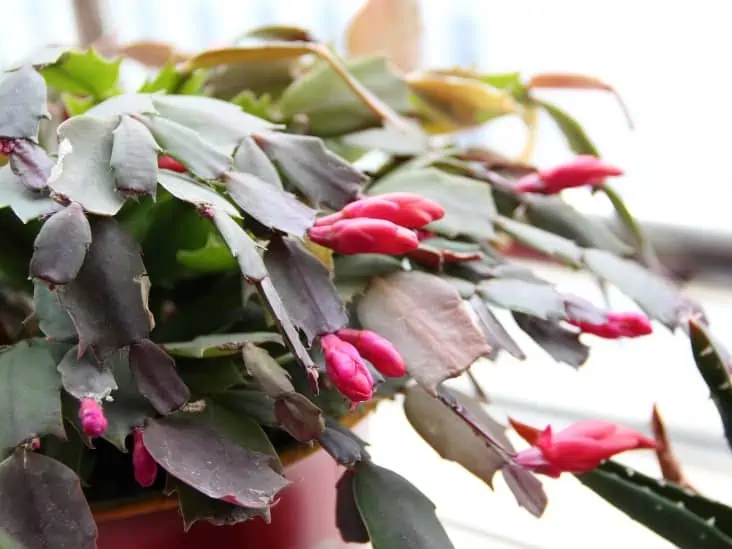
In some cacti species, flowers may fail to emerge and are hereby termed as cleistogamous. Such rare cacti species rely on self-pollination. Cacti flowers come in a variety of colors depending on the cacti type. They can range from deep hues of blue to an electric pink array of color. It is also worth noting that some cacti  flowers are duotone;  they feature two colors- one color towards the outer parts of the flower and the other towards the center.

Blooming habit

You can easily tell cacti types apart based on their blooming habits, timings and seasons. An even more spectacular trait is the nocturnal blooming characteristic associated with some of these desert cacti flowers. Most of them are night bloomers, but should they bloom in the heat of the day, they will open for only a short period. The flowers bloom at night when the transpiration rates are subdued, and daytime heat that can easily scorch these flowers to their death has subsided.

The other feature takes into consideration the aspect of time and season. Cacti have different flowering times depending on whether the plant is seasonal, annual, biannual, or perennial. In hindsight, one can differentiate a flower based on the time they blossom. They may also blossom for some given time during the day till they wither and fall off.

Position of the flower on the plant

You can tell a cactus’ species by the position of the flowers. Some tend to bloom flowers on the plant’s apex, while others have their flowers growing on the barks or stems. Other flowers like those from the Chin cactus are naked because they grow without any bristles, wool, or spines.

Fragrance and floral parts

 Some cacti flowers happen to be pleasantly fragrant while others produce flowers with pungent or strong smell. Some cacti flowers can be delicate and frail while some species boast large conspicuous flowers. The flower tubes may be either hairy or naked and least expected spiny, each unique variation giving the species a competitive edge for survival in the desert.

Flower shape

Depending on the species, the flowers can assume different shapes. These can range from cup-shaped to tube-shaped, star-shaped and funnel-shaped flowers.

7.         They just appear different from most of the plants you’ve seen before

Here is a bonus point with a lot of truth in it.This is not to say that any unfamiliar spiny plant growing along the road is cactus, but have you seen the Ariocarpus species? To a majority of people, these species will appear surreal and alien. These geophytes resemble the stones on the ground as if to mimic an actual land feature. They are quite a marvel to behold. In extreme conditions, these plants appear almost dead; they grow laterally on the ground and are firmly rooted on the ground with the help of the long tap roots that they possess.

8.         Take a look at their fruits

Color

Different types of desert cacti have fruits that are a product of successful fertilization amid climatic adversities. Each species has its own color pigmentation on the fruit and this helps to tell them apart. While most cacti fruits can be green when raw, they eventually turn into a myriad of colors when ripe and this may range from yellow to black and even red. The fruits are hardly an average presentation of the usual.

Fruit-bearing cactus species can be recognized by observing the color of the fruit.

 Shape

While some may have the familiar rounded shape, some species make their fruits a little more dramatic; for instance, the Epithelantha fruits are long erect tubes with conspicuous bright red color that you cannot to conceal. Some fruits may resemble pineapples. This happens when the plant species retains the dried parts of the flower on the apex of the elongated fruit. Then there exist other unique fruit manifestations that are club-shaped and have bracts.

Fruit skin texture

The fruits can either be smooth-skinned or have bristles pointing out from them. These glochids prevent the fruits from being easily foraged by animals and other predators. Being hard enough to keep the progeny alive through reproduction makes total sense to have some of these cacti species protect their fruits, conceived in these harsh weather.

The fruit’s insides

The physical appearance of cactus fruits can be deceiving, take a look inside. This is when you can easily differentiate one cactus fruit from another. When observing the insides, they may appear to be fleshy and juicy, while others can be dry. For species such as Harrisia, fruits can be a vital identification factor. Some species such as the Dragon fruit of the Hylocereus species bear big exotic fruits, while other species feature relatively small fruits. The truth is that much as the fruit contents may appear appealing and palatable, it is safe not to judge by the appearances.

The inside of a cactus fruit tells you more about the species of your plant.

9.         What’s to say about cactus seeds?

It may seem like a rather far-fetched way to bog down the differences, but it still is a significant one nonetheless. Cactus seeds can have smooth, shiny exterior or appear rough and hairy depending on the cactus type.  These seeds can either be foveolate or reticulate. As most cacti bear fruit berries, this means that fruit, if ripped open, contains countless seeds which can either appear black or brown.

10.      Are they solitary, or do they grow in a group?

Cactus growth patterns can help offer some insight into what kind of cactus species they are. Some, like the giant Saguaro cactus grow in solitude as if in isolation while others like members of the Echinocereus species tend to have their stems growing out in piles of hundreds. They grow out as a closely-knit cluster. 

One of the reasons that might explain this distribution pattern is a species’ pollination technique or characteristics. If the seeds are heavy, they will most likely drop off closest from the source, and if they are numerous and lucky enough to germinate, so will see the tufty shrub emerge.

11.      Geographical location

Sometimes the answer is right there with us. The native grounds on which these cacti grow can aid significantly in their identification. As much as these are survivors of the plant kingdom thriving in extreme conditions, they all have their geographical preferences. While some do well in the arid deserts, others thrive in cold alpine high altitude regions, and these differences are remarkable for identification. Others grow on trees that are found in wet and humid areas as epiphytes.

Geographical location can help you determine the type of a cactus, since they are native to certain areas and climates.

The current literature and studies have helped create this intensive simplistic list of characteristics that can help you tick the right boxes in your quest to identify the various cactus species. Cacti family is an excellent source of fascination and bewilderment for scientists, botanists and hobbyists alike. An even easier and practical way of reinforcing this knowledge is by making comparative characteristic analysis using familiar species. Working with what you know is a great way to learn even more. These incredible insights are bound to turn you into a great botanist, especially on matters cacti.

5 Gorgeous Cacti To Put On Your Desk

We’ve discussed cactus for every part of your home, including the garden, kitchen, living room, and bedroom. But one thing that doesn’t come to mind is where you spend most of your productive time, the office. Your office also needs some life, and there’s no better way to ensure that than to get some amazing cactus plants.

Add some color and warmth into that space by incorporating some low-maintenance cactus that can do well in low light with little to no watering. You need something that won’t take away your busy office hours to care for; hence cactus makes a good choice. But not all of them will fit this description well because some need way too much attention. Not to talk about those that will grow so huge and too fast that you’ll need to move them outdoors.

So, what types of cacti meet the perfect description of desk plants? Well, you can never go wrong with any of the choices below as long as your climate allows it.  Let’s have a look at these five cacti for your office desk.

1.    Christmas Cactus (Schlumbergera truncate)

Christmas cactus is sure to brighten your day at the office with its unmatched beauty. A beautiful bloom from the cactus is all you need for the holidays, and Christmas cactus will not disappoint. Its smooth segment leaves and soft spines provide the perfect décor that you need to brighten a dull day in the middle of winter.  You’ll love how the stems and the leaves hand and drape from your containers.

It’s not names of Christmas cactus for nothing. The plant lives up to its name by blooming in bright orange-pink, red and white flowers from its long leaves with flattened segments. And the timing is also perfect as the blooms come out during the Christmas period. If you want it to keep blooming and brighten your office longer, give it cooler temperatures of 50 to 60 degrees F.

Since Christmas Cactus does not require too much light, it is an ideal low-light desk plant for almost any type of office.

Christmas cactus can do well in a small and not so well lit office because it doesn’t require too much light. You’ll appreciate some winter blooms if you give your Christmas cactus some darkness. You’ll do it some justice by giving it filtered light coupled with moderate irrigation. To enjoy the beauty, consider growing it as a hanging plant or place it where it can easily drape.

If you give it excellent care, this winter plant will not disappoint as a houseplant of any setting. It might even surprise you with additional blooms if you give it some exceptional care. Planting it in your office ensures you get something to gift your employees for the holiday season. You might also have some decors to take home with you for the holidays.

2.    Zebra Cactus (Haworthia fasciata)

If your office space is characterized by all kinds of artificial lighting, fluorescent light fixtures, and some warm and dry air, you might think there’s no room for plants. Well, you’re wrong because the environment is highly welcoming to Zebra cactus.

Zebra cactus is a perfect plant for the office because it doesn’t require sunlight but will appreciate the artificial lighting. It prefers bright light, so you can do it some justice by switching on the office bulb when you go home in the evening. The plant can also do well in spaces with low light, so you don’t have to worry if your desk space is slightly dim. The cactus needs minimal watering and almost zero maintenance.

Zebra Cactus is a low-maintenance desk plant with dark brown leaves and white stripes that grows up to 4 inches tall.

Another thing you’ll appreciate about the Zebra cactus is the fact that it won’t interfere with your space. The cactus grows to 4 inches in height, which is a perfect size for an indoor plant. The Zebra Cactus takes its name from the appearance. You’ll recognize it in its small size and the horizontal white stripes on the leaves. Its leaves form shapes similar to that of aloe plants. The leaves are thick, smooth inside, and take a dark green color.
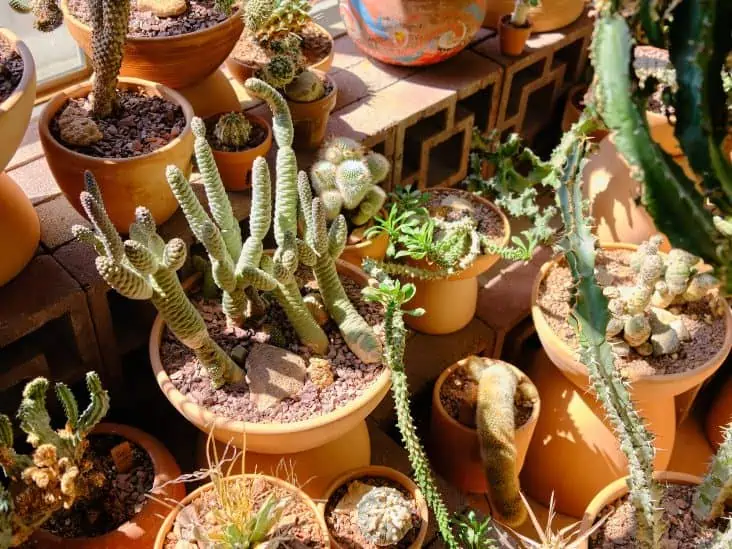
The beautiful plant doesn’t need much of a fuss or attention. As long as you give it an occasional drink and keep it away from direct sunlight, it won’t be much of a bother. While it grows so slow and doesn’t flower often, you can expect some blooms in summer. You’ll love the flower treats because it’s how the plant shows you that it still has some life despite the slow growth.

3.    Saguaro Cactus (Carnegiea gigantea)

The slow-growing nature of saguaro makes it an excellent plant for your desk. Another great trait that makes saguaro a perfect workmate in your office is that it doesn’t require too much watering. If you’re the kind of person who travels a lot for work and has to leave your plant uncared for long, you’ll love saguaro. Just make sure you give it some sparing watering once a month, and it will appreciate.

But one thing you should never deny saguaro is light. Ensure there’s some bright light coming in through your office windows. The beauty of saguaro lies in its barrel-shaped bodies and pleated trunk interior. The pleats in the plant enable it to gather water and store it in its tissues for the longest time.

Saguaro Cactus is a slow-growing plant that should be watered about once a month but requires plenty of sunlight.

As for the blooms, it will take you a very long time before you see any. Experienced gardeners say it can go up to 35 years without blooming. But even without any flowers, saguaro still looks stunning in its majestic and treelike appearance. When it’s ready to produce flowers, you’ll notice them at the end of the arms or the sides of the cactus. The blossoms will open at night and close during the day, so you must be accurate with your timing to notice some.

4.    Old Lady Cactus (Mammillaria hahniana)

Old lady cactus is a gorgeous looking plant you can use to adorn your office. The cactus forms some beautiful tall spheres that come in white hairs and spines. Its beauty doesn’t end there. Old lady cactus will also adorn your office with pink blooms in the middle, appearing like a crown on ahead. And the fact that you get all this beauty and sweetness from a cactus is just so amazing.

Old Lady Cactus produces gorgeous flowers around the plant in a crown-like alignment.

Old lady cactus will appreciate some good care and can grow quite well in groups. Yes, just like your grandma at home, old lady cactus doesn’t like being alone. So, if you have space, consider growing it in groups using a large pot, and it won’t take long before you enjoy the beautiful collection of spheres.

To add old lady cactus to your collection of indoor plants, you’ll have to plant it in a sandy potting mix and only water when you notice that the soil is dry. Make sure your pot offers good drainage, so your plant doesn’t sit in water. Old lady cactus will need less watering during winter and more during summer. Also, make sure it receives around 4 to 6 hours of direct sunlight. If this is not possible, give it some grow light.

5.    Parodia Schumanniana

If you love some sense of security in your office, then you’ll get that if you plant Parodia schumanniana. The cactus comes with some pricks that define its beauty.  Parodia is an easy to grow indoor cactus that can do well in low light. The cactus can grow up to six feet long when the conditions allow it. It won’t need you to repot or move outside because it’s a slow-growing cactus that won’t get in your way.

On the aesthetics part, Parodia will not disappoint either. The beauty starts from its bristle-like spines that look yellow at the start but later turn gray or brown. When summer knocks, you’ll start to see some stunning bright yellow flowers. After the blooms, you’ll also notice a round green fruit adding to the beauty.

Something unique about Parodia schumanniana is that it won’t do well in direct sunlight. So, if you thought all cacti need light, then you’re wrong. It’s also a one of a kind cactus that needs more watering even in winter. As you water it, make sure the drainage is also perfect for preventing the precious roots from rotting.

Choose Your Cactus Now

If you thought these desert-native plants wouldn’t make good office plants, then you’re wrong. It just needs some creativity from you to have some sense of life apart from yours breathing the air inside. The cacti mentioned above will not get in your way by taking too much of your productive time. They’ll also fit well in your small desk space as they don’t grow too big.

Most of them need little to no care, so you can plant, water, and forget they even exist for some time. Just make sure you mimic their natural habitats before you forget about them; otherwise, they’ll die. So, if you think your office needs some greenery and you don’t want to deal with the huge workload of caring for indoor plants, think of these cacti, and you’ll never regret it.