Winter Is Coming: Here’s What Your Succulents Need to Survive!

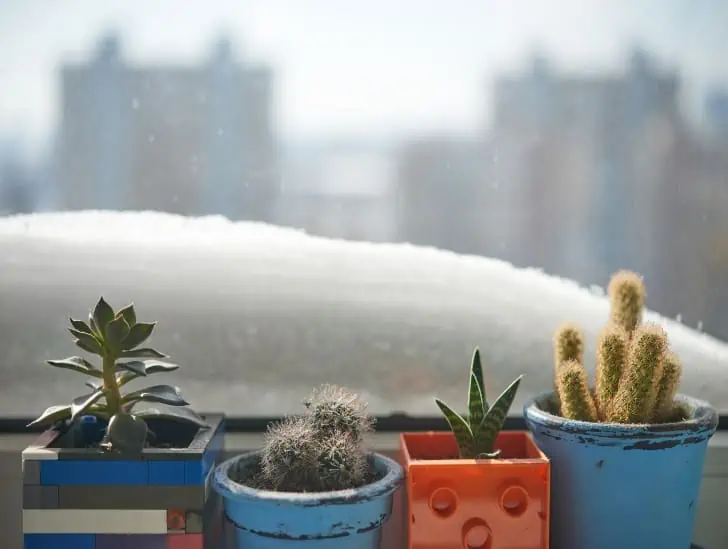
Mini succulent in the windowsill furing the winter.

Succulents are some of the best and low-maintenance plants to have at home. Most of them are gorgeous, colorful and add a lot of charm to your living space—no wonder they have become so popular worldwide. While most of them are hardy and can survive in almost any condition, they still need extra attention during winter. Exposing them to extreme cold can be harmful in many ways. In fact, you need to do everything possible to protect them from freezing temperatures to ensure they remain healthy and beautiful come springtime.

So, what can you do to ensure your succulents survive winter? One of the most important things is to determine the type of succulent you have. While most of them are highly susceptible to cold temperatures, cold-hardy succulents can tolerate temperatures as low as -20 degrees Fahrenheit. Consider bringing your succulents indoors during the cold season and reduce watering to avoid causing problems such as root rot. While it is tough to ensure your succulents get enough sunlight during winter, you should keep them near the brightest window in your house and supplement that natural light with artificial grow lights. Be sure to cover up your succulents if you can’t bring them indoors.

This blog post discusses everything you need to know about preparing your succulents for winter and how to ensure they survive through the cold season. Read on to find out everything you need to know.

Can Succulents Survive Winter

Most succulents naturally thrive in harsh weather conditions. They are excellent drought-resistant plants and love a lot of natural sunlight. In fact, most of them are adapted to surviving in deserts.

This brings us to one of the most critical questions many gardeners have: can succulents survive winter? The short answer is yes; most succulents can survive the cold weather if they are taken care of correctly.

However, whether or not a particular succulent will make it through the winter season depends on its ability to tolerate low temperatures.

Blue spruce covered with snow.
Most succulents can survive the cold weather if they are taken care of correctly.

Some succulents are more sensitive than others when it comes to cold weather. If you live in a place with extreme winter temperatures, it’s best to bring your succulents indoors or provide extra insulation to protect them from the cold.

What Do Succulents Need to Survive Winter?

Protecting your succulents from winter is essential if you want them to make it through the cold season healthy and strong. Here are some things you can do to ensure they survive winter:

1. Determine What Kind of Succulent You Have

The first thing you need to do is determine what type of succulent you have. While most succulents are highly susceptible to cold temperatures, some varieties are more tolerant of cold weather and can survive in temperatures as low as -20 degrees Fahrenheit.

Most succulents sold in conventional plant stores are usually labeled with a zone designation referring to the USDA plant hardiness zone map.

Depending on the zone you live in, the plant label will tell you whether the succulent will survive winter in your area.

The zones are determined by the minimum annual temperature with a difference of 5-10 degrees Fahrenheit between the different zones.

If the zone you live in is significantly lower than the zone indicated on the plant label, there is little chance that the succulent will survive winter in your area.

A succulent in a snow.
Most succulents are highly susceptible to cold temperatures and more tolerant of cold weather.

For instance, if the succulent you have is marked as a hardy zone 8 plant and your area are in zone 5, it will be quite difficult for the plant to survive winters outdoors.

Even the hardiest succulents have a limit to what they can survive. That is why it is important to determine your zone before purchasing succulents for your home garden.

2. Bring Your Succulent Indoors

Even if your succulent is in the right hardiness zone, bringing it indoors during the cold season is always good. Even though extreme temperatures are rare in most areas, all it takes is one cold night to damage your succulents.

If your garage doesn’t go below 50 degrees Fahrenheit, you should consider storing your succulents in there. The most important thing is ensuring they get at least four hours of indirect sunlight daily.

If your garage is not an option, you should still keep them near the brightest window in your house and supplement the limited natural light with artificial grow lights.

A houseplant indoors on winter.
Bringing it indoors during the cold season is always good.

Prepping your succulents before bringing them indoors is important. The first step in the preparation is spraying them with a powerful insecticide. Spray them at least three weeks before your planned date of moving them indoors.

This will ensure the plants are pest-free, which prevents pests from spreading to your other indoor plants.

Once you have sprayed your plant, remove dead leaves, debris, and weeds and check for signs of any infestation. Consider changing the potting mix if you notice flies gathering around the succulents.

Use a well-draining potting mix and a good pot with enough drainage holes. Remember that succulents need good drainage and air circulation to maintain healthy roots.

The last step in the preparation process is to reduce watering. Since succulents will be dormant during the cold season, you need to gradually reduce their water intake until they’re only receiving a small amount every other week.

The best time to bring your succulents indoors is when fall is just around the corner. Don’t wait until the actual winter because you need to do everything possible to ensure your succulents don’t sense the sudden change in the weather conditions.

3. Provide Extra Insulation

Extra insulation is a must if you want your succulents to survive winter outdoors. You can wrap the pots with bubble wrap or burlap sacks and place them in a sheltered spot.

The insulation materials can be purchased online or at your local garden store. Feel free to use bushel baskets if you have some of them lying around. The primary objective is to ensure succulents are fully protected from frost.

When it snows, you can sprinkle additional insulation on top of the pots to protect them from extreme temperatures.

You can also use blankets or tarps to shield your succulents from snow and strong wind.

Moreover, consider adding stones and gravel around the base of your succulents to improve air circulation and further protect them from cold temperatures.

4. Reduce Watering

Many succulents slide into a state of dormancy during winter. Therefore, they don’t require as much water to stay healthy. However, some succulent species remain active throughout the cold season and require more attention.

If your succulents are active winter growers, they still need frequent watering to thrive. Otherwise, you should reduce watering to once every two or three weeks. Some will even be fine with one watering session every month.

Generally, you should only consider watering your succulent when the soil is completely dry. Always check for moisture content in your potting mix to avoid overwatering.

The best way to go about this is to use the “finger test.” Insert your finger into the soil; if it feels moist, you don’t need to water it yet. On the other hand, when it’s dry, it’s time for a light drink of water.

Remember that succulent positioned near a heating vent might need frequent watering because the surrounding warm air can cause the potting mix to dry up more quickly.

5. Provide As Much Sunlight as Possible

One of the most difficult things about moving succulents indoors during winter is ensuring they still get enough sunlight. If they don’t get enough light, your succulents will likely suffer from etiolation (stretching) and eventually shrivel up.

Therefore, you should try as much as possible to provide succulents with a good amount of natural or artificial light daily.

You can achieve this by positioning them near the brightest window in your home. The ideal spot would be a south-facing windowsill.

This is an important factor to remember because winter days are usually shorter. Remember that most succulent species require at least eight hours of indirect sunlight to remain healthy.

A string of dolphin on a pot exposed to sunlight.
One of the most difficult things about moving succulents indoors during winter is ensuring they still get enough sunlight.

With relatively shorter days, it might be impossible to achieve this without supplementing the natural sunlight with artificial grow lights.

But don’t run the lights 24/7 because your succulents still need darkness to complete their regular growth circular.

Consider keeping the artificial lights on for six to eight hours daily. Always turn them off at night and when you’re away from home.

6. Maintain Steady Airflow

Lastly, you must keep the air around your succulents moving to dry up the potting mix to avoid the risk of root rot and pest infestation.

Since most homes lack proper airflow during the winter, you should open windows and doors for a few minutes daily to let some fresh air in.

A cat and succulent plants near the window.
You should open windows and doors for a few minutes daily to let some fresh air in.

You can also consider using an oscillating fan to keep the air in motion. Moving air helps reduce humidity levels, allowing succulents to breathe easily and stay healthy during the cold season.

Final Thoughts

Taking care of succulents during winter can be tricky, but that doesn’t mean it’s impossible.

If the temperatures in your area drop too low, you can bring your succulents indoors or provide them with extra insulation when they stay outdoors.

You should also reduce watering and ensure they get enough sunlight to remain healthy during the cold season.

Following these steps will go a long way in keeping your succulents happy throughout winter and beyond. Good luck!
Discover the Best Succulents for Your Coastal Garden

A dudleya.

Coastal gardens should convey a beachy ambiance – a calm, natural setting that suggests the ocean is nearby. They should evoke a sense of vacation that can slow down a busy person into a relaxation mode at one glance.

Succulents are one of the most versatile plants to help your coastal garden achieve this atmosphere. However, the coastal climate can be taxing due to the high winds, salt exposure, and sandy soil lacking nutrients. That means you must get the right choice of succulents to ensure they survive and look great.

So, what are the best succulents for your coastal garden? The most popular coastal succulents include sedum, dudleya, crassula, kalanchoe, echeveria, aloe, ice plants, and agave. Common in coastal regions worldwide, these succulents are characterized by their fleshy, water-storing stems and leaves, enabling them to thrive in nutrient-deficient soils. These hardy succulents are also drought- and wind-tolerant, capable of handling strong gusts and sloping sites that usually come with an ocean view, hence the best for landscaping and gardening in coastal regions.

This article will discuss eight succulents that suit a coastal garden. It will consider the origin, physical characteristics, and ideal conditions for growth.

1. Sedum

Sedum, also known as stonecrop, is one of the best coastal succulents. It is native to various regions, including Asia, Europe, and North America.

Sedum is renowned for its attractive leaves and ability to thrive in different environments, including coastal ones.

The succulent requires partial sun and well-draining soil to thrive. It is a hardy plant, hence can thrive in places with little rainfall.

But you may need to water it occasionally when drought periods persist. Ensure not to overwater it as this may cause root rot, eventually killing your succulent.

Sedum also does well in moderate to warm temperatures. So, keeping it in cold temperatures could kill it.

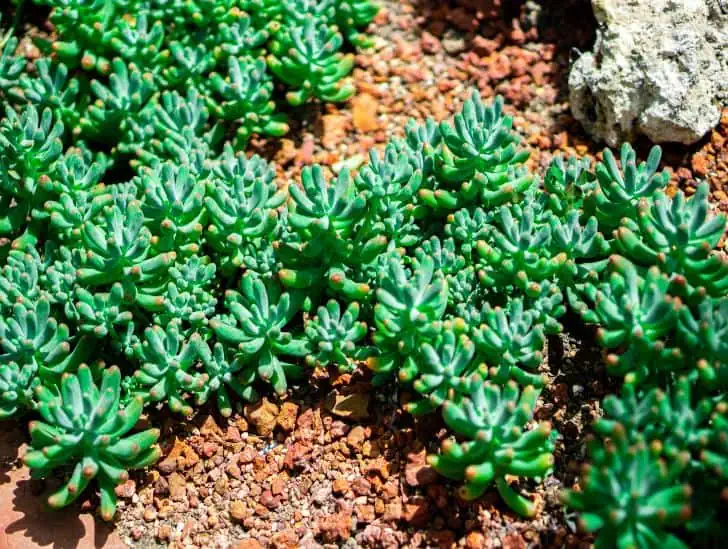
A sedum in a pot.
It is native to various regions, including Asia, Europe, and North America.

Sedum is relatively low maintenance and requires little care except for occasional watering and pruning. For this reason, it would make an excellent addition to your coastal garden.

2. Dudleya

Dudleya is a coastal succulent native to the coastal regions of Mexico and California. It is renowned for its beautiful, bright-colored flowers and unique, rosette-shaped leaves.

In addition to the aesthetic appeal, Dudleya is suitable for the coastal environment and is highly tolerant of the extreme conditions in these regions.

This succulent requires exposure to partial to full sun and well-draining soil to thrive. You can grow it in various soil types, but it must not hold too much moisture.

Since Dudley is drought-tolerant, it can thrive even on natural rainfall alone in most coastal regions. But you can consider watering it sparingly during extended drought periods.

Dudleya prefers cool to moderate temperatures – extreme heat or cold can damage the plant. If you live in warmer areas, you can provide partial shade to protect your succulent from direct sun during the hotter part of the day.

3. Crassula

Crassula is a diverse genus of succulents native to several parts of the world, including Asia and Africa.

These succulents are recognized for their attractive leaves and are frequently grown in coastal gardens due to their adaptability to extreme coastal temperatures.

Crassula plants are generally small but can vary in size, shape, and color. Some species produce fleshy leaf rosettes, while others develop as trailing vines. Most species have clusters of tiny, star-shaped flowers in red, pink, or white shades.

Crassula succulents are generally low-maintenance and easy to care for. They need well-draining soil and moderate to full sun exposure to thrive, although some species can thrive in partial shade. 

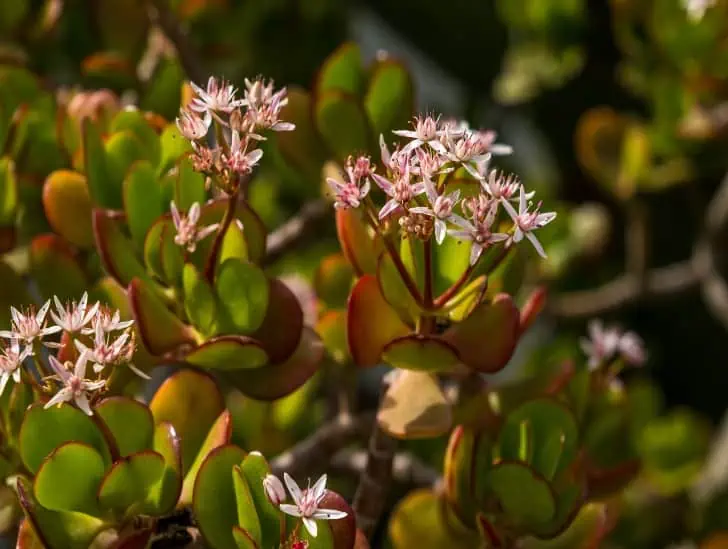
A flowering crassula ovata.
Crassula plants are generally small but can vary in size, shape, and color.

Since these succulents are drought-tolerant, you should only water them occasionally when the soil is completely dry. Overwatering can lead to root rot and other issues.

You can use stem or leaf cuttings to propagate crassula by rooting them in soil and water. They only need minimal pruning once established.

Crassula plants do not require fertilization, but you can occasionally feed them with a balanced fertilizer.

4. Kalanchoe

Although native to Madagascar, Kalanchoe is widely recognized in coastal regions worldwide. There are more than 100 species of this succulent.

Kalanchoe has fleshy, succulent leaves and small tubular flowers which bloom in shades of red, pink, orange, yellow, and white.

These flowers can bloom for weeks or months, making Kalanchoe an excellent option for adding color to your garden.

This succulent requires relatively low maintenance, making it suitable for indoor and outdoor spaces. It does well in bright, indirect sunlight and well-draining soil that should be allowed to dry out before watering.

Kalanchoe is drought-tolerant and can thrive in different climates, but you should protect it from extreme heat and cold.

During the growing season, fertilize your kalanchoe plants monthly to promote healthy development and blooming.

5. Echeveria

Echeveria is another common genus of succulents native to Mexico and Central America. The succulent is recognized for its rosette-shaped leaves and bright flowers and is usually grown as

It is often grown as an ornamental plant in coastal gardens because of its beautiful rosette-shaped leaves and bright flowers.

Echeveria needs exposure to partial to full sun and well-draining soil to thrive. It can thrive on rainfall alone in most coastal regions because it is drought-tolerant.

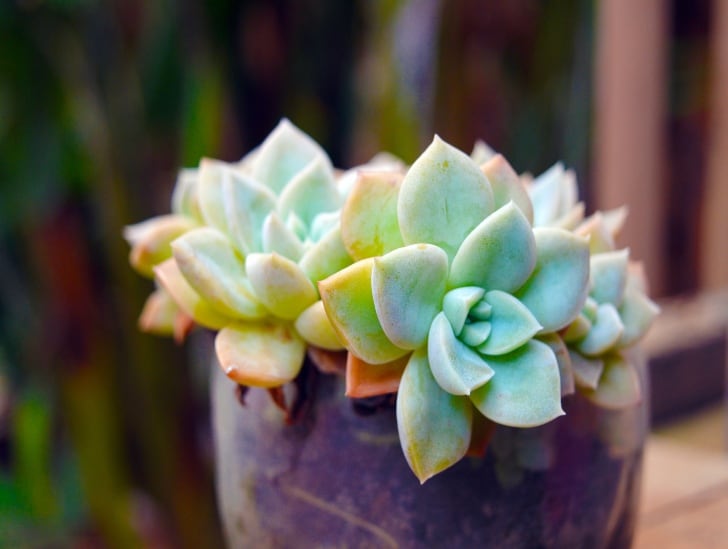
A closeup image of echeveria in a pot outdoor.
The succulent is recognized for its rosette-shaped leaves and bright flowers.

The succulent does well in moderately warm temperatures, so exposure to extreme cold can harm them.

Echeveria is low-maintenance, as you only need to prune and water it occasionally. And with its attractive appeal, this succulent is an excellent option for homeowners seeking to add a splash of color and texture to their garden.

However, this succulent is susceptible to pests, including spider mites and mealybugs. So, inspect regularly and treat any infestations on time to prevent them from spreading.

6. Aloe

Aloe originates from Madagascar and Africa. The succulent has fleshy foliage and lovely flowers and is often grown in coastal regions as an ornamental plant.

Aloe grows best in direct sunlight and well-draining soil. It can thrive on natural rains alone because it is a drought-tolerant plant, but you must occasionally water it.

Likewise, it thrives in regions with warm temperatures. The succulent does not do well in cold weather or frost, so ensure you move it indoors throughout winter. You can use artificial grow light to give it more lighting.

Aloe is a low-maintenance succulent and only requires periodic pruning and watering. You can propagate it from stem cuttings or by division and should grow it in an area with full sun.

Ensure you drain off excess water when watering. Failure to do so may lead to overwatering, which may cause root rot.

7. Ice plants

Ice plants are a family of coastal succulents native to South Africa and have gained popularity worldwide in coastal regions.

Their bright, daisy-like flowers and ability to tolerate very hot and dry conditions make them popular in coastal and xeriscaping landscapes, where they can help stabilize sandy soils.

Although ice plants are hardy and may thrive in various conditions, they do exceptionally well in full sun and well-draining soils.

A purple ice plant flower exposed to sunlight.
One of the benefits of these succulents is their ability to stabilize slopes and hillsides and prevent soil erosion.

Their drought tolerance and ability to withstand windy, salty conditions make them suitable for coastal gardens and landscapes. You can propagate ice plants by division or stem cuttings to grow them.

One of the benefits of these succulents is their ability to stabilize slopes and hillsides and prevent soil erosion. Ice plants have a mat-forming growth habit, which helps control soil erosion, while their succulent leaves help retain soil moisture.

8. Agave

Agave is another succulent suitable for coastal gardens. Native to North and Central America, Agave is popular in coastal gardens for its gigantic size and beautiful rosette-shaped leaves.

This succulent thrives on soil with good drainage and partial to full sunlight. It is also drought-tolerant and can survive for some time with little water.

Additionally, Agave grows better in environments with warm to hot temperatures. So, avoid growing it outside during winter.

If it is potted, you may bring it indoors and set it near a window to receive natural lighting. Alternatively, you can use artificial grow lights for extra lighting. 

Another thing that makes Agave suitable for a coastal garden is that it requires low maintenance. It only needs routine care and maintenance to thrive.

A agave plant with water droplets.
This succulent thrives on soil with good drainage and partial to full sunlight.

For example, you can prune the leaves occasionally and water them when the soil is dry.

Remember, Agave can be quite large and require significant space. So, consider that when planting it in your garden.

Bottom Line

Succulents are gradually taking center stage for coastal gardens. The need for hardy yet attractive plants make many plant enthusiasts opt for these succulents.

But even with their ability to adapt to harsh conditions, it is crucial to ensure the succulents you choose correspond well to the climate of your coastal region.

If you are looking for flowering succulents to enhance the look of your coastal garden, succulents are your best bet. They require little attention, making them the best choice for your holiday home.