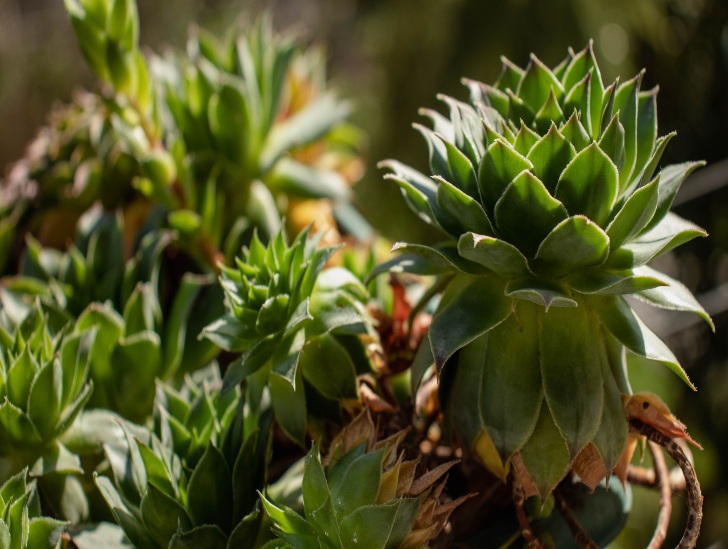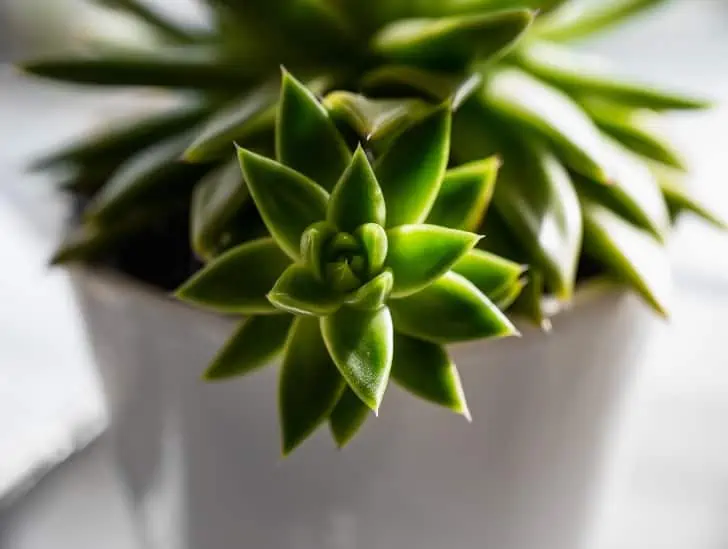
Aeonium Succulents: Do They Need Direct Sunlight?

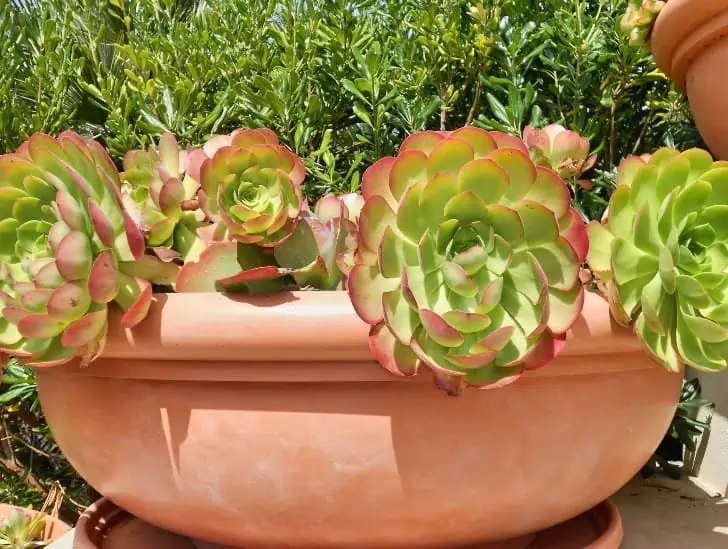
A green pink aeonium exposed to sunlight.

Aeonium is a succulent genus consisting of approximately 35 different species of plants that belong to the Crassulaceae family, which also features the beautiful Echeveria plants. The succulent is native to parts of Morocco, Madeira, and the Canary Islands. Thanks to their magnificent floral display, they are also common houseplants in many homes. While growing aeonium at home is pretty easy, most gardeners are split on the issue of the right light requirements for the succulent. Does it require exposure to direct sunlight, or can it survive in partial shade? Let us find out.

So, does aeonium need direct sunlight? The simple answer is no. While this plant does well in spots that receive plenty of bright, direct sunlight, it can still tolerate partial shade without any problems. Typically, the succulent requires exposure to at least six hours of full sun a day to develop its beautiful leaf colors. If you live in an area that doesn’t receive plenty of sunlight, consider supplementing your plant’s light requirements with artificial grow lights. However, you need to be careful with exposing aeonium to full sunlight because it is susceptible to sunburn.

Do you want to learn more about aeonium and whether you can expose your plant to direct sunlight? Read on to find out everything you need to know.

Aeonium Light Requirements

Before we dive deep into discussing whether aeonium can withstand direct sunlight or not, it’s first essential to understand the plant’s general light requirements.

Generally, aeonium does best when it receives bright, indirect light. This means they should be placed in a spot where they will get several hours of sunlight each day, but where the light is not too harsh – typically six hours of sunlight.

Aeonium exposed to sunlight.
Aeonium are one of the common houseplants in many homes.

This can be tricky to achieve indoors, so if you’re not sure whether your plant is receiving enough light, try moving it to different spots within your house and monitor the reaction.

Find a spot on a south-facing or east-facing windowsill and position your plant there. Be sure to rotate it frequently to facilitate even growth of the plant.

If you start to notice your plant’s leaves turning yellow or brown, then it is a clear sign that your aeonium is not getting enough light and should be moved to a sunnier spot.

Can Aeonium Withstand Direct Sunlight?

Now that we know a bit about aeonium light requirements, let’s discuss whether they can withstand direct sunlight or not.

The answer is: it depends.

Some aeoniums can withstand direct sunlight without any issues, while others may start to wilt or burn if they are exposed to too much sun.

If you are unsure whether your aeonium can handle direct sunlight, it’s best to err on the side of caution and keep it in a spot where it will receive only indirect light.

However, when your plant is overexposed to direct sunlight, it may suffer extensive sunburn that can be pretty challenging to reverse. We cover more about aeonium sunburn below:

Can Aeonium Suffer Sunburn?

The simple answer is yes. If you set your plant in a spot that constantly receives prolonged hours of direct sunlight, your plant may develop sunburn over time.

It can be disheartening to discover that your precious aeonium has developed sunburn, but whether the plant survives or dies will depend on how quickly you act after the discovery.

While serious sunburn can put your aeonium’s life at risk, minor sunburn can be dealt with before things get out of hand.
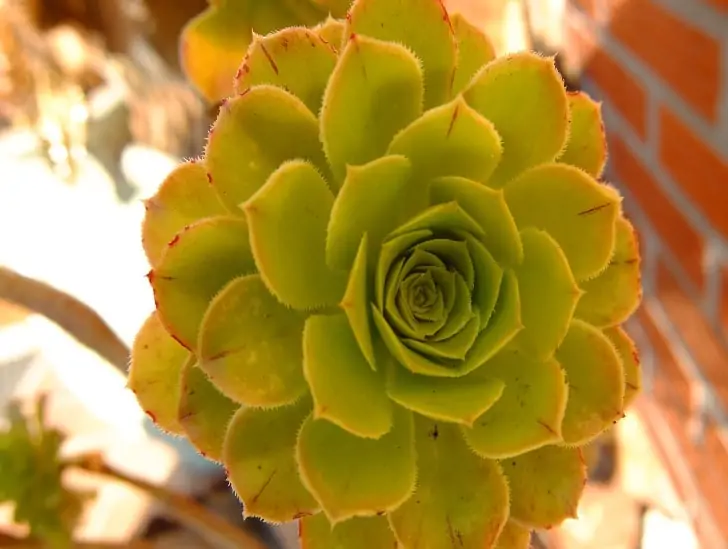
Aeonium plant.
Sunburned aeoniums develop a series of discolored patches on their leaves.

However, before you decide what to do with your sunburned aeonium plant, it is critical to recognize the signs of sunburn in your plants.

Typically, sunburned aeoniums develop a series of discolored patches on their leaves. These patches can be black, brown, or yellow, depending on the severity of the sunburn.

If only part of the succulent was overexposed to the direct sunlight, the patches might only show on the parts exposed to the sunlight. Typically, the more severe the sunburn, the darker the discoloration.

The discolored patches on the leaves of your aeonium plant may also have a different texture than the healthy parts of your succulent. If your plant’s leaves typically have a smooth surface, you may notice that the sunburned patches feel slightly rough.

Minor sunburns may cause little to no change in texture, but a severe burn will definitely make your plant’s leaves feel rough and scarred.

How Can I Avoid Sunburn on My Aeonium without Depriving It of Enough Light?

The best way to avoid sunburn on your aeonium plant is to adhere to its light requirements. Generally, the succulent can thrive in direct sunlight and adapt to different light intensities.

During spring and summer, you need to be careful with introducing your plant to direct sunlight after the cold winter months. Instead of taking your aeonium directly from a relatively dark spot to direct sunlight, make the process gradual.
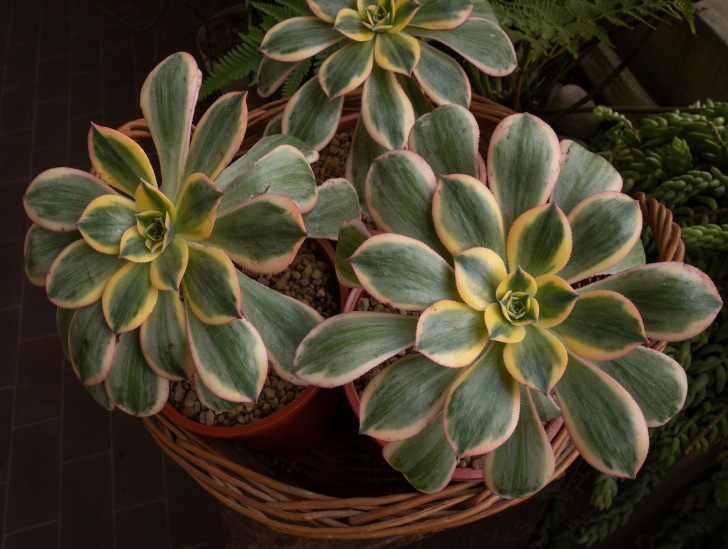
Aeonium plant in a pot indoors.
You need to consider a few environmental factors when exposing your aeonium to direct sunlight.

Start by exposing it to the morning sunlight for a couple of hours and gradually increase the number of hours overtime.

Keep switching the plant between partial shade and full sun until it fully adapts. If moving the plant is not an option for you, consider covering it with a shade cloth. Gradual introduction to direct sunlight will eliminate the risk of it being shocked and sunburned.

You also need to consider a few environmental factors when exposing your aeonium to direct sunlight. Remember that direct sunlight can dry your succulent out pretty fast, putting it at a higher risk of sunburn.

The water loss caused by the relatively high temperatures makes your plant more fragile and susceptible to sunburn. Aeoniums planted in pots are slightly more likely to dry out than those planted in the ground.

This is because aeoniums planted in-ground benefit from the naturally cooler temperatures underground. Growing pots tend to heat up quickly, especially in direct sunlight, which increases the evaporation rate.

To keep your aeonium from drying out quickly, water it regularly to maintain cool temperatures. But you need to be careful not to waterlog your succulent because it can lead to serious root rot issues.

Frequent watering allows the succulent to soak up as much water as possible without worrying about the water that will evaporate before filling up its reserves.

Can Aeonium Recover from Sunburn?

The best way to deal with sunburn on your aeonium is to prevent it. If you don’t take good care of your plant, allowing it to develop sunburn, recovery will largely depend on how severe the damage is.

If the sunburn is light and hasn’t affected a large part of your plant, quick intervention can stop it from spreading and becoming worse. The only thing you need to do is move your plant to partial shade and water it frequently.

However, if the sunburn is more extensive, recovery may take a while. In such a case, you need to move your plant to partial shade and keep a close eye on it.
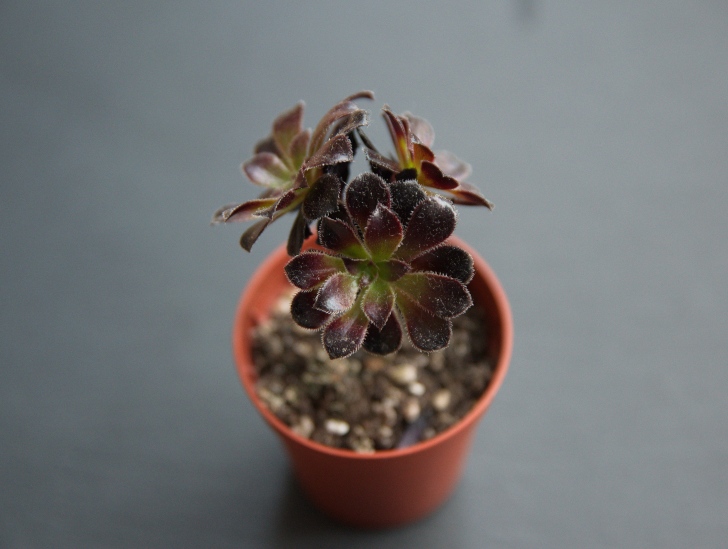
Aeonium black rose in a pot.
Aeoniums planted in pots are slightly more likely to dry out than those planted in the ground.

Sometimes, you may be forced to treat sunburn to save your plant. Treating involves moving the aeonium to a relatively shady area and regularly spraying it with cool water to keep it hydrated.

If you notice signs of drooping leaves or wilting, be sure to add some mulch around the base of your plant to help it in retaining moisture.

If the sunburn hasn’t caused wilting or drooping of leaves, feel free to bring your aeonium back into the sunlight as long as you keep it under partial shade.

Can Aeonium Receive Too Little Sunlight?

Naturally, aeonium is a sun-loving succulent and will start to show signs of distress if it doesn’t receive enough sunlight.

If your aeonium isn’t receiving enough sunlight, you’ll start to see signs of unhealthy growth.

The most common sign of too little light is etiolation. The process of etiolation forces your plant to stretch out in the direction of light. The stretching will make it grow tall and become leggy.

red aeonium succulent in a pot.
It is very rare when growing these succulents outdoors because there is light in all directions.

If you notice signs of etiolation in your plant, the best thing to do is move your plant into a sunnier spot. Typically, when etiolation is happening, your plant is getting stressed out from trying so hard to find a source of light.

However, it is good to mention that etiolation will only happen when growing the succulent indoors. It is very rare when growing these succulents outdoors because there is light in all directions.  

Etiolation will only happen outdoors if you have grown the plant under full shade, which is not recommended.

So, before you pick a spot in your backyard garden for this succulent, make sure there are no tall plants or other obstacles around that can stop it from receiving plenty of direct sunlight.

Summary

Aeonium can tolerate a fair amount of direct sunlight, but it’s essential to be careful not to over-expose it. If you’re ever unsure about how much sun your aeonium is receiving, err on the side of caution and give it a little less light rather than too much. With a little bit of care, your aeonium will thrive under the right conditions!

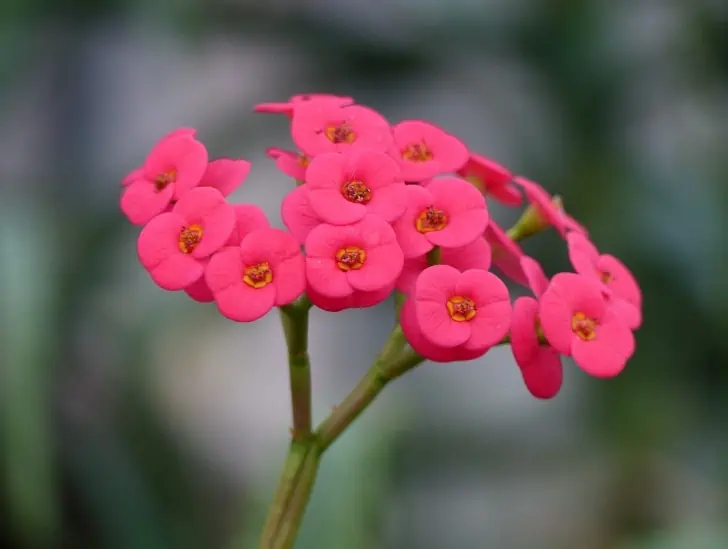
Crown of Thorns — Do They Need Full Sunlight?

Crown of thorns, also known as Christ thorn or Christ plant, is a flowering succulent native to parts of Madagascar. It is part of the spurge family that features different species of succulents. Generally, these plants are low maintenance, easily adaptable, and thrive in indoor and outdoor environments. While it is relatively easy to care for a crown of thorns plant, one of the most common questions beginners ask is; does the plant need direct sunlight to survive? Let us find out.

So, does the crown of thorns need direct sunlight? The simple answer is no. While the crown of thorns is a sun-loving plant, it doesn’t require constant exposure to direct sunlight for it to survive. Typically, the succulent only requires six hours of direct sunlight daily to thrive and flower profusely. Indoor crown of thorns can still thrive under artificial light as long as the intensity is right. Failure to provide your plant with sufficient light may hinder flowering and cause etiolation. When your plant starts to produce elongated, soft new growth, it could be a sign that it is not receiving plenty of light.

This blog post discusses everything you need to know about the crown of thorns and direct sunlight. Read on to learn more.

Crown of Thorns General Light Requirements

Generally, a crown of thorns plant requires as much bright, indirect sunlight as you can provide. The better the light exposure, the more flowers you will get during the flowering season.

Red crown of thorns.
These plants are low maintenance, easily adaptable, and thrive in indoor and outdoor environments.

However, your crown of thorns will still thrive and bloom profusely as long as it gets at least five hours of bright, indirect light every day. For outdoor plants, it is recommended to place them in a spot that receives a few hours of direct sunlight every day.

For indoor plants, consider positioning them on a south-facing or west-facing spot for the best results. Avoid placing the plant in direct sunlight because the intense heat can damage your plant’s leaves.

Crown of Thorns General Temperature Requirements

The ideal temperature range for a crown of thorns plant is between 60°F and 90°F (15°C – 32°C). The plant can tolerate higher temperatures as long as there is enough moisture in the air. However, prolonged exposure to temperatures above 100°F (38°C) can damage your plant’s leaves.

During the winter months, the plant will enter a dormancy period. It is normal for the plant to shed some leaves during this time. The plant can survive temperatures as low as 50°F (10°C), but prolonged exposure to cold temperatures can damage your plant.

When caring for a crown of thorns plant, it is important to keep an eye on the temperature since extreme temperatures can damage your plant and hinder its growth.

Can Crown of Thorns Receive Too Much Sunlight?

While this succulent is sun-loving and can easily soak up intense amounts of sunlight, there are times when the intensity is too much for them. If your crown of thorns is constantly exposed to scorching, direct sunlight, you could end up with a sunburned plant.

When your succulent is sunburned, it cannot carry out photosynthesis more effectively. The primary goal should be to give your plant the correct amount of sunlight exposure. As mentioned above, this succulent tends to thrive in temperatures between 60oF and 90oF.

Crown of thorns exposed to sunlight,
Like other succulents, the crown of thorns becomes stressed when exposed to too much sunlight.

However, too much intense sunlight can harm even the hardiest succulents. The ultraviolet sun rays and the intense heat can cause your plant’s leaves to burn. Furthermore, when the sunlight is too intense, a lot of heat is generated, leading to increased evaporation, making the crown of thorns more susceptible to sunburn.

Like other succulents, the crown of thorns becomes stressed when exposed to too much sunlight. When this happens, the succulent’s first response is to generate pigments that help it adapt to too much direct sunlight.

But the pigments may not be sufficient to protect your plant over a long time. Increased exposure to direct sunlight will eventually cause harm to your crown of thorns.

A sunburned crown of thorns will generally have yellow patches on its leaves. In some cases, these patches will be brown or black, depending on how severe the sunburn is. Besides the discoloration, you can also feel a relatively rough texture compared to the usually smooth leaf surface.

A relatively light case of sunburn on your crown of thorns may be depicted with a brown or whitish discoloration, while severe burns appear as dark spots. Indoor or shaded crown of thorns is more susceptible to sunburn and, in most cases, has a slim chance of survival.

How Can You Prevent Sunburn?

If your crown of thorns is already displaying signs of sunburn, you need to respond promptly to prevent further damage.

If you are caring for an outdoor crown of thorn plants, the best thing is to move it to a location with shade. You should also water it frequently to prevent it from becoming too dry.

Water your plant early in the morning or late evening when the weather is relatively chilly. Watering your crown of thorns in the afternoon when the weather is too hot will fry the root exacerbating the sunburn issue.

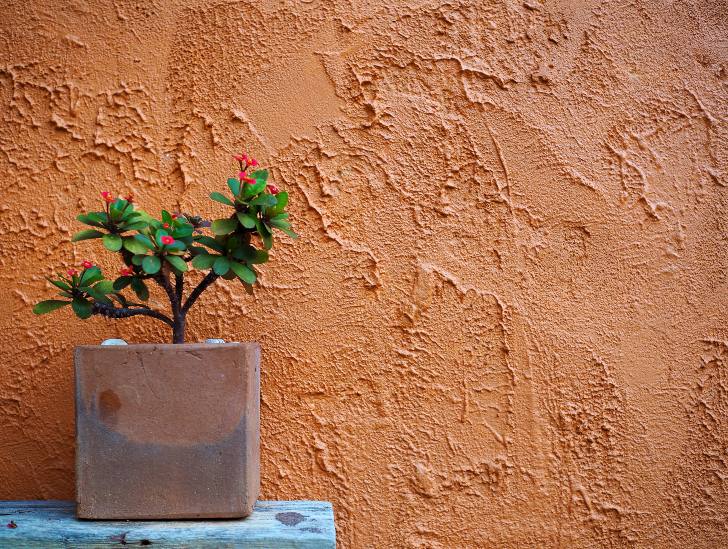
Crown of thorns in a pot.
Generally, moisture in the growing container tends to evaporate faster hence the need for frequent watering.

Additionally, watering your succulents when the weather is too hot only increases the likelihood of the water evaporating before your plant can actually absorb it.

If you can’t locate a spot outdoors with enough shade to protect your succulent from direct sunlight, consider using shade cloth or net to provide it with shade and filter out the ultraviolet rays.

For indoor plants, consider moving them away from the window that receives too much sunlight. If you don’t want to move the plant, make sure you cover the window.

If you are growing your crown of thorns indoors in a growing container, it may require frequent watering than its outdoor counterpart. Generally, moisture in the growing container tends to evaporate faster hence the need for frequent watering.

Can a Sunburned Crown of Thorns Be Saved?

A sunburned crown of thorns can be saved, but it will take time for the plant to heal and recover.

The first step is to identify the severity of the sunburn. If the leaves are merely discolored or have slight brown patches, your plant has a good chance of surviving.

Sunburned crown of thorns.
If you want to restore the original color of the plant, you may be forced to prune the sunburned sections

However, if the leaves are blackened or have big brown patches, the chances of survival are relatively slim.

If you notice your plant is sunburned, immediately move it to a shaded area and water it frequently. Avoid using fertilizers during this time as they may cause further stress to your plant.

Give your plant some time to rest and heal in a shaded area before moving it back to a relatively sunny spot.

You need to keep in mind that the sunburn and brown marks on your crown of thorns plant cannot heal even if you manage to save it. So, if you want to restore the original color of the plant, you may be forced to prune the sunburned sections and wait for new growth.

How Can I Protect My Crown of Thorns from Full Summer Sun?

One of the easiest methods you can use to protect your crown of thorns from damage caused by extreme summer sun is shade cloth.

The primary purpose of shade cloth is to protect your succulent from direct sunlight while allowing just enough sunlight to pass through it.

Furthermore, the cloth prevents the buildup of excessive heat in plant tissues that could lead to the whitish or brown discoloration from the ultra-violet radiation.

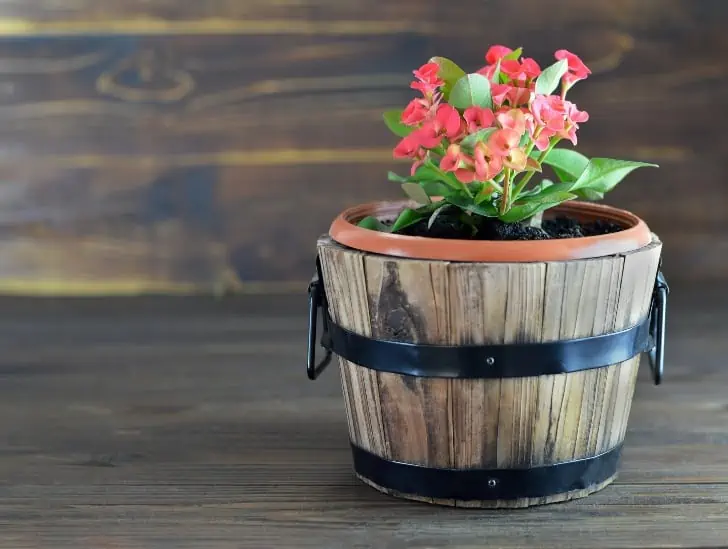
Crown of thorns in a wooden pot.
The primary purpose of shade cloth is to protect your succulent from direct sunlight.

While it is crucial to gradually expose your crown of thorns to light, you need to be careful with how you do it and the amount of light you expose your plant to.

Can a Crown of Thorns Survive Under Artificial Light?

The simple answer is yes, a crown of thorns can survive under artificial light, but it will not thrive as it would under natural sunlight.

Crown of thorns plants are native to Madagascar and other parts of Africa, where they grow under relatively harsh sun. So, they are used to strong sunlight and heat.

When grown indoors, the plant doesn’t receive the same amount of sunlight it would in its natural habitat. As a result, it doesn’t grow as well.

That being said, if you want to grow your crown of thorns indoors, you need to provide it with bright artificial light. The best option is to use fluorescent bulbs that emit full-spectrum light.

Make sure the intensity of the artificial light is not too strong as it could damage the plant. Also, keep the light source at a distance of about 12 inches from the plant.

You should also rotate your plant every couple of days so that all sides of the plant receive an equal amount of light.

Conclusion

The crown of thorns is a beautiful and popular succulent that does well indoors and outdoors. However, like other succulents, it’s susceptible to sunburn, especially when exposed to too much direct sunlight.

To prevent your plant from sunburn, make sure you provide it with enough shade, especially during the hot summer days.

If your plant is already sunburned, immediately move it to a shaded area and water it frequently. With proper care, your plant will eventually recover.

Hens and Chicks: Does It Need Direct Sunlight?

A sempervivum on rocks and exposed to sunlight.

The hens and chicks plant is probably the cutest succulent out there. Native to Southern Europe and northern Africa, the petite plant is loved by gardeners worldwide for its gorgeous texture, easygoing nature, and varied shapes. It is a darling to many people. What is even more interesting is the fact that it is relatively easy to care for the succulent whether you are growing it indoors or outdoors. However, one question that always comes up is; does the hens and chicks plant need direct sunlight? We shall find out the truth in a moment.

So, does the hen and chicks plant require direct sunlight? The answer is yes and no. Generally, the hens and chicks plant thrives in full sun, but it can still do well in partial sun. The need for lighting mostly depends on the variety and species of the plant you have and its natural habitat. Ideally, you should always strive to provide your sempervivum with at least four hours of direct sunlight. Overexposure to sunlight can lead to severe sunburn, which is a big problem to deal with in the long run.

Do you have a hens and chicks plant at home but wondering whether or not you should expose it to full sun? You have come to the right place. Read on to find out everything you need to know.  

The Hens and Chicks Plant General Light Requirements

The hens and chicks plant is generally a sun-loving succulent. It does best when exposed to full sun but can still tolerate partial sun. However, the amount of sunlight your plant gets will depend on the variety you have and its natural habitat.

For example, varieties that are native to shady areas will not do well when exposed to direct sunlight for long periods.

Hens and chicks exposed to sunlight,
It does best when exposed to full sun but can still tolerate partial sun.

The best way to know how much light is ideal for your hens and chicks plant is to observe it closely. If the leaves start to turn yellow or brown, it is an indication that the plant is getting too much sun.

On the other hand, if the leaves are pale green, it means that the succulent is not getting enough lighting.

In general, you should aim to provide your plant with at least four hours of sunlight every day. If you are growing the plant indoors, place it near a sunny window. If you are growing it outdoors, choose a spot that gets plenty of sunlight in the morning and partial shade in the afternoon.

Hens and Chicks Sun or Shade?

To understand whether you need to grow your succulent in full sun or partial shade, you need to figure out what these terms mean.

Typically, when a plant grows in a spot where there is no shade and receives between 10-12 hours of direct sunlight every day, it is referred to as full sun. The number of sunshine hours may reduce drastically in winter.

For a hens and chicks plant, at least eight hours of direct sunlight can still be considered full sun.

Half shade or partial sun is achieved when your succulents receive no more than six hours of direct sunlight every day. It means that the plant could be exposed to plenty of morning sunlight but shaded from the scorching afternoon sun. Or they only get sunlight in the early hours of the morning and late hours of the evening.

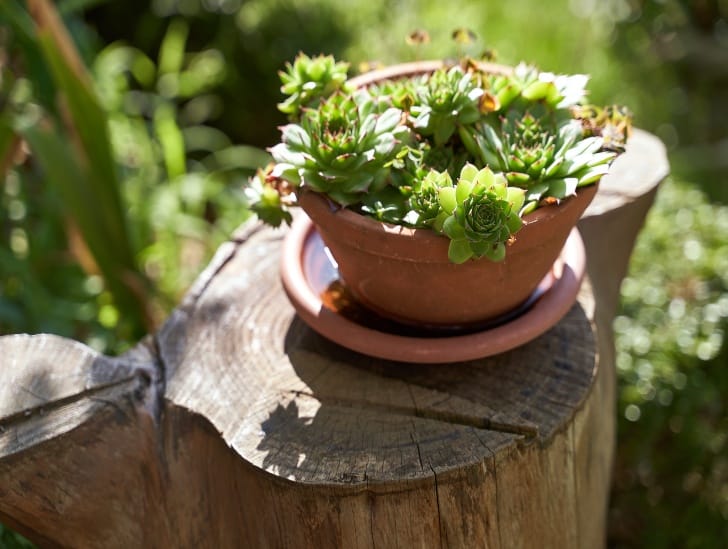
Hens and chicks plant exposed to morning sunlight,
Choose a spot that gets plenty of sunlight in the morning and partial shade in the afternoon.

The case when this succulent doesn’t receive any form of direct sunlight is referred to as full shade. This term can also be used when the sempervivum grows under a tree and is only exposed to scattered sunlight.

Typically, you want to keep your hens and chicks plant under partial sun conditions, cutting the maximum number of hours your plant is exposed to direct sunlight to six a day. This way, your plant can still thrive while avoiding sunburn issues.

Can a Hens and Chicks Plant Receive Too Little Light

Like any other plant, a hens and chicks plant can also receive too little light. When this happens, the leaves of your succulents will start to turn pale green. The problem is not lethal in most cases, and your plant will survive as long as you provide it with enough exposure to light.

However, if the lighting conditions do not improve, your plant will eventually start to stretch out and become leggy. This condition is also referred to as etiolation.

When this happens, the stem of your plant will become thin and elongated, while the leaves will grow further apart from each other. Your plant will also produce fewer offsets.

Ideally, you want to avoid this problem by providing your plant with enough lighting. If you notice that your plant is starting to stretch out, move it to a spot where it can receive more light.

You can also try to increase the number of hours your plant is exposed to sunlight every day. If this is not possible, you can supplement the natural light by using artificial grow lights.

The Hens and Chicks Plant and Sunburn

Generally, the hens and chicks plant enjoy a lot of sunlight. As mentioned earlier, it requires up to six hours of direct sunlight every day to stay healthy.

This is especially true for the sempervivum because it has vibrant, bright colors that will only show if it receives sufficient exposure to sunlight. When the plant gets exposed to enough sunlight, it becomes “happily stressed” and displays its most beautiful color variations.

However, the succulent is still prone to sunburn. Typically, the hens and chicks plant thrives in temperatures between 60oF and 90oF. If it is exposed to extremely hot sun rays, it may develop irreversible sunburn on its leaves.

Sempervivum plant exposed to sunlight.
When the plant gets exposed to enough sunlight, it becomes “happily stressed” and displays its most beautiful color variations.

Fortunately, this succulent is relatively easy to grow because it displays signs of unhappiness and stress pretty quickly. When the plant is stressed due to excessive exposure to sunlight, it will start to develop discolored patches on its leaves.

The patches will be white, brown, or dark red at the early stages of sunburn, depending on the type of sempervivum you have. If you notice early signs of sunburn but do nothing about it, it transitions into a full-blown problem.

Severe sunburn on your hens and chicks plant will mostly show up as black patches on the edges of the leaves that slowly spread towards the center.

If nothing is done, the leaf will eventually dry out. Indoor sempervivum plants tend to turn golden brown or yellow when they are burning from too much direct sunlight.

How Does Sunburn Affect Hens and Chicks Plant?

Leaves that are severely sunburned will eventually die and fall off the plant. If this happens, your succulent may not be able to produce offsets or flowers.

In some cases, the entire plant may die if exposed to too much sunlight for an extended period.

If you notice that your hens and chicks plant is sunburned, act quickly to save your plant. The first thing you want to do is move it to a spot where it can receive indirect sunlight or artificial light.

Sempervivum plant with water droplets.
Another way to prevent sunburn is to water your plant more frequently.

You also want to make sure that the succulent is not placed in an area where it will be exposed to hot afternoon sun rays.

Once you have moved your plant to a safer location, check the leaves for any sign of damage. The leaves will eventually heal and produce new offsets if the sunburn is not too severe. However, if the damage is too severe, the leaves will fall off, and your plant may not recover.

How to Prevent Sunburn on a Hens and Chicks Plant

In order to prevent sunburn, it is important to acclimate your plant before exposing it to direct sunlight. This process can take weeks or even months, depending on the type of succulent you have.

The best way to acclimate your hens and chicks plant is to place it in an area where it can receive indirect sunlight for a few hours every day. Gradually increase the amount of time the plant is exposed to sunlight until it can tolerate six hours of direct sunlight per day.

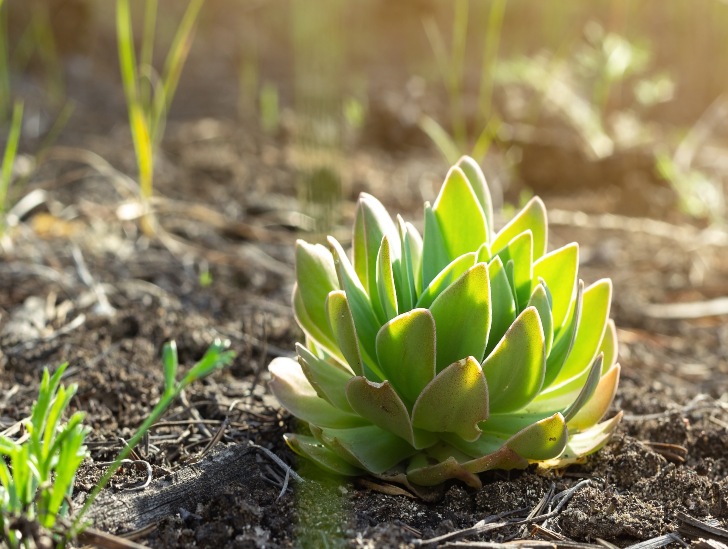
Closeup image of sempervivum plant.
You can also prevent sunburn by using a light-colored pot.

You also want to make sure that the succulent is not placed in an area where it will be exposed to hot afternoon sun rays. If possible, try to find a spot where it can receive morning or evening sun.

You can also prevent sunburn by using a light-colored pot. A white or light-colored pot will reflect some of the sunlight and prevent the plant from getting too much direct light.

Alternatively, use a pot with a built-in sunshade to protect your succulent from the harsh afternoon sun.

Another way to prevent sunburn is to water your plant more frequently. This will help keep the leaves from drying out and prevent them from getting damaged by the sun.

Conclusion

While the hens and chicks plant does need some direct sunlight, it can also tolerate a fair amount of shade.

If you want to make sure your plant is getting enough light, try positioning it in an area where it will receive morning sun and afternoon shade.

You can also prevent sunburn on your plant by using sunscreen or light-colored planting pot. Thanks for following along with our series on the hens and chicks plant!